Introduction
Older adults who are experiencing early symptoms of cognitive impairment and dementia often encounter difficulties executing day-to-day tasks. Among the first tasks affected are those involving spatial learning and spatial memories. Typical examples are remembering the route to where a car is parked, or learning and navigating through a new living environment into which one has just moved (Caspi Reference Caspi2014; Marquez et al. Reference Marquez, Hunter, Griffith, Bryant, Janicek and Atherly2015). Cognitive psychology has characterised how typical ageing affects navigation abilities; older adults typically take longer to learn unfamiliar environments (Head and Isom Reference Head and Isom2010) and perform better when using landmark-based navigation strategies compared to more map-based strategies (Sjolinder et al. Reference Sjolinder, Hook, Nilsson and Andersson2005; Wilkniss et al. Reference Wilkniss, Jones, Korol, Gold and Manning1997). These effects are even more pronounced if individuals develop mild cognitive impairment or Alzheimer's disease (Bellassen et al. Reference Bellassen, Iglo, Cruz de Souza, Dubois and Rondi-Reig2012; Bird et al. Reference Bird, Chan, Hartley, Pijnenburg, Rossor and Burgess2010; Monacelli et al. Reference Monacelli, Cushman, Kavcic and Duffy2003; Pengas et al. Reference Pengas, Patterson, Arnold, Bird, Burgess and Nestor2010), and are often explained via the structural and functional changes that occur in the hippocampus, a brain region that is crucial for spatial learning and spatial memory (O'Keefe and Nadel Reference O'Keefe and Nadel1978; Raz et al. Reference Raz, Ghisletta, Rodrigue, Kennedy and Lindenberger2010).
To compensate for age-related decreases in spatial abilities, navigational aids such as landmarks and signage, as well as architectural properties of the built environment and appropriate floorplans, could support successful orientation and therefore increase independence (Marquardt and Schmieg Reference Marquardt and Schmieg2009; Marquez et al. Reference Marquez, Hunter, Griffith, Bryant, Janicek and Atherly2015; Utton Reference Utton2009). In the case of landmarks, small manipulations to landmark properties such as their saliency (i.e. how much it stands out; Klippel and Winter Reference Klippel and Winter2005) or their positioning in the environment (Waller and Lippa Reference Waller and Lippa2007; Wiener et al. Reference Wiener, de Condappa, Harris and Wolbers2013), can affect the ease routes are learned, as well as the specific navigation strategy used. Despite our knowledge of how navigational aids can generally support navigation, little research has explored how this knowledge can be applied in real-life settings to support people with dementia and to compensate for declining orientation abilities. Applying this knowledge could improve independence, wellbeing and quality of life for older people, people with mild cognitive impairments and people with dementia (Day, Carreon and Stump Reference Day, Carreon and Stump2000; Liu, Gauthier and Gauthier Reference Liu, Gauthier and Gauthier1991; Lynch Reference Lynch1960; Orrell et al. Reference Orrell, McKee, Torrington, Barnes, Darton, Netten and Lewis2013).
Very few existing age-friendly design guidelines (World Health Organization 2007) address ways to support orientation for our ageing population, and those that do focus predominantly on signage visibility. Some dementia-friendly design guidelines suggest additional ways to improve orientation, such as including landmarks in the environment or using/avoiding particular floorplans (for a recent review, see O'Malley, Innes and Wiener Reference O'Malley, Innes and Wiener2015). However, these dementia-friendly design guidelines, if adhered to, are often only targeted towards, and implemented in, living environments exclusively used by people with dementia such as care homes and hospital wards (Lewis et al. Reference Lewis, Torrington, Barnes, Darton, Holder, McKee, Netten and Orrell2010; The King's Fund 2013) and are therefore not benefiting older people with memory difficulties and dementia living in other settings. In the United Kingdom (UK), two-thirds of people with dementia live in the community (Alzheimer's Society 2016), either in their family homes or in alternative housing options (that are typically chosen prior to developing dementia). It is therefore surprising that little work has considered how these other housing options could be designed to be more supportive for those with memory difficulties. This said, the importance of the environment in promoting wellbeing for those living with dementia has now been acknowledged via UK policy directives (Department of Health 2015), creating a new context for the development of enabling environments for those living with dementia in different settings.
Retirement housing is a popular housing option amongst older adults (Moschis, Lee and Mathur Reference Moschis, Lee and Mathur2000), due to the increased home security, people's wish to ‘down-size’, and because of the opportunities to meet and socialise with others of a similar age. Importantly, a substantial proportion of those living in such developments are likely to develop cognitive impairments and dementia whilst living there. Therefore, these and other environments used by people with memory difficulties and dementia need to be designed in a supportive way which would allow residents to live independently for longer and experience a good quality of life (Kitwood Reference Kitwood1995; Marquardt and Schmieg Reference Marquardt and Schmieg2009).
Many of the dementia-friendly design guidelines that aim to reduce spatial disorientation have not been validated systematically (O'Malley et al. Reference O'Malley, Innes and Wiener2015) and it is therefore unknown which orientation aids are most supportive. Additionally, design suggestions are often based on expert opinion and professional practice, rather than the users’ experiences and preferences. To gain insight into the perspective and experience of the person with dementia, family members and/or paid carers have been questioned (Passini et al. Reference Passini, Pigot, Rainville and Tetreault2000). Although carers’ opinions are informative, people with dementia belong to the most excluded groups in society (Dewing Reference Dewing2002) and to appreciate their needs fully it is necessary to give them a voice (Jonas-Simpson Reference Jonas-Simpson2003).
The need to give people with dementia a voice is well demonstrated by a recent study comparing the colour preferences of care workers and residents within a care home (Godwin Reference Godwin2014). Not only were people with dementia able to express their opinions on potential design, their preferences also differed systematically from those of the care workers. Specifically, the most popular colour among residents was blue, which was the least favourite colour among care staff. Care staff, on the other hand, preferred mauve which was the least favourite colour among the residents. Differences in preferences have also been observed in other studies, for example addressing meaningful activities for people with dementia; whilst the person with dementia focused on activities that addressed their social and psychological needs, care staff and family carers focused on those that maintained physical abilities (Harmer and Orrell Reference Harmer and Orrell2008). Overall, these findings demonstrate that people with dementia can express their views, and that their preferences are not necessarily consistent with those of others using the same environment.
Aims
In this study, we conducted interviews with residents of a retirement development who reported memory difficulties to (a) explore the wayfinding experiences of older adults living in a communal retirement development; and (b) to explore their design preferences. For reasons outlined above, it was important to speak directly to users of the environment. This gave them a voice to convey how they use the shared living environment to orientate and provided them with an opportunity to share their design preferences.
Method
Setting
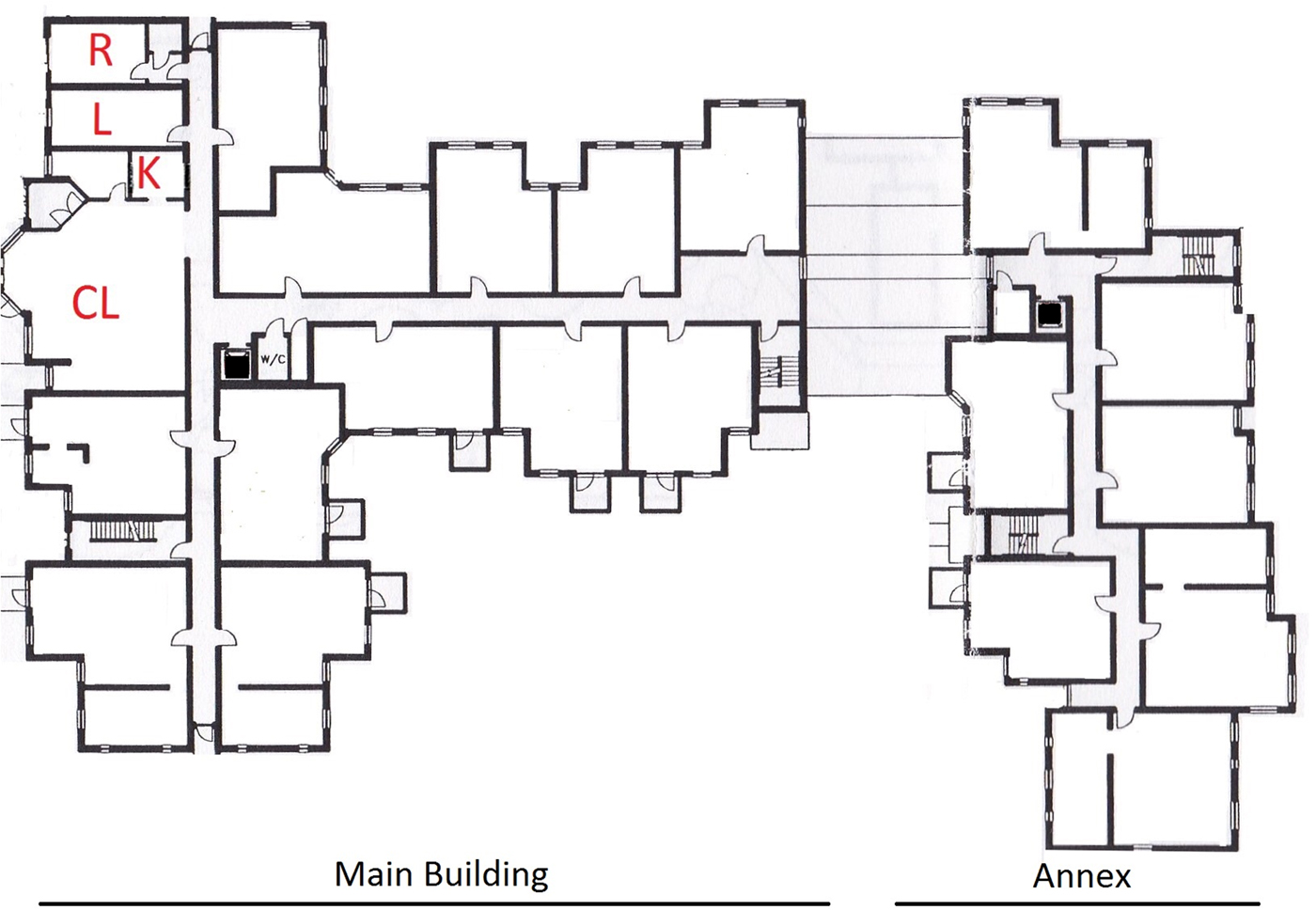
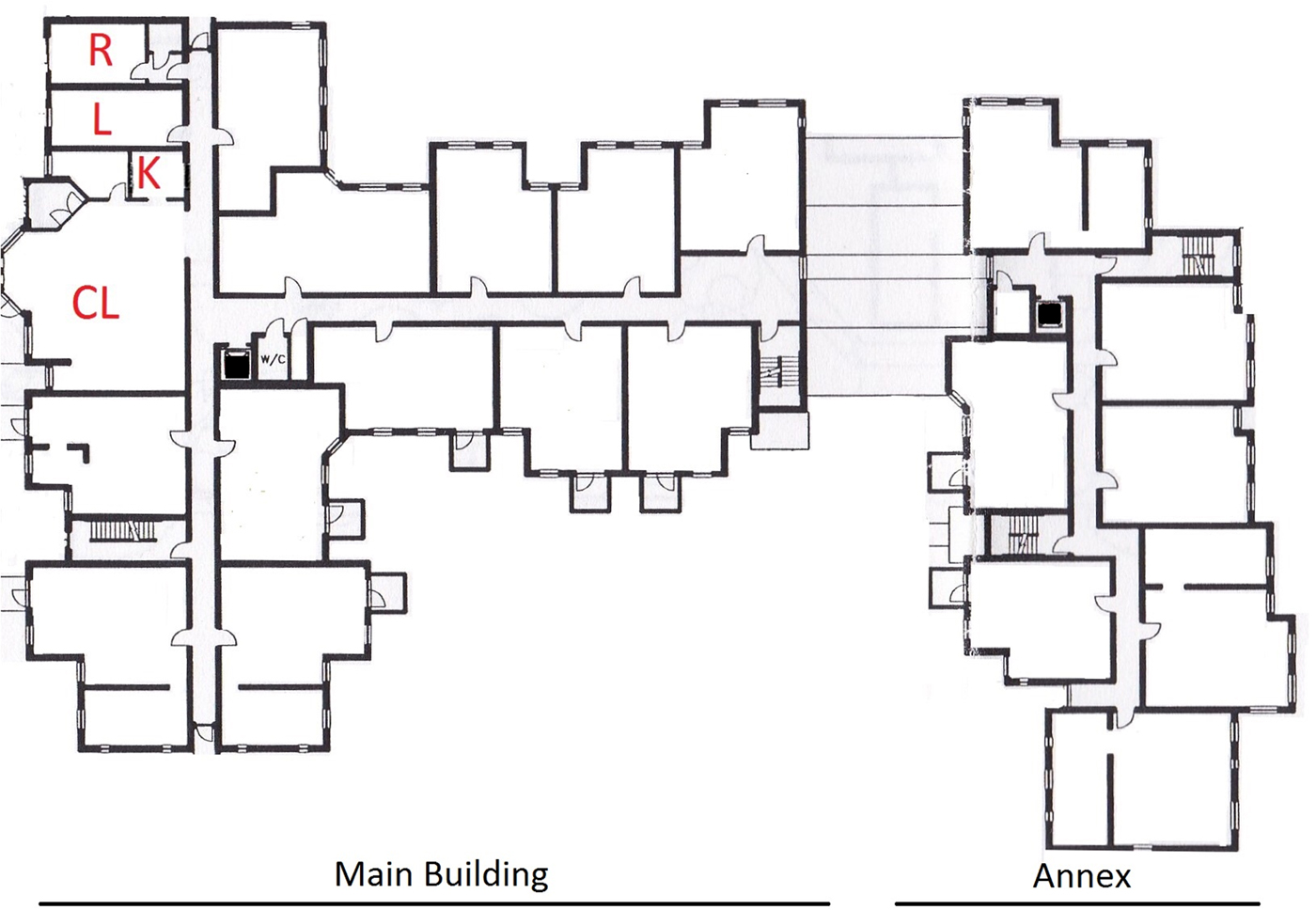
The research was conducted in a retirement development (independent living) in the south of England, UK. This particular development was chosen due to its similarity in interior design to other retirement developments, as well as its multiple floor levels (i.e. three floors) which allow for a degree of route learning/wayfinding to take place (see Figure 1). The development consisted of 42 privately owned self-contained apartments, with a shared communal lounge, kitchen, garden, and refuse and laundry rooms. Forty-two residents lived in the development at the time of the study, seven of whom were males. Residents were made aware that their responses would not be traced back to them, and that the researchers were external and not associated with the property developer.
Floorplan of the ground level of the development.
Ethics
Ethical approval for the interviews was obtained from the Bournemouth University ethics panel (2014). Following the Mental Capacity Act (2005) sections two and three (Department for Constitutional Affairs 2005), capacity to consent was assumed unless participants were unable: (a) to understand the information relevant to the decision to participate, (b) to retain the information, (c) to use or weigh that information as part of the process of making that decision and (d) to communicate that decision. All participants were able to give informed consent. In addition, we used on-going process consent procedures (Dewing Reference Dewing2008), where residents’ non-verbal behaviour and body language were observed; if residents showed changes in their eye contact, vocal intonation, body language or fatigue, residents would have been asked whether or not they would like to continue (Moore and Hollett Reference Moore and Hollett2003). There were no occasions during the study when participants expressed behaviours that indicated they were uncomfortable. All data was anonymised and pseudonyms were given to all participants.
Study sample
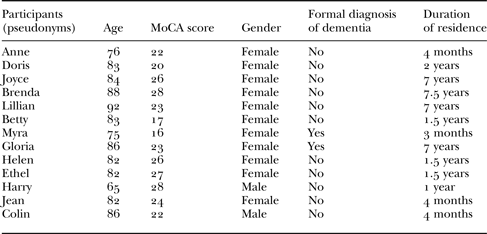
Thirteen participants (11 females and two males) from the retirement development participated in the study. The ratio of female to male participants in this study is representative of the general demographic of those living alone in retirement and residential housing (Office for National Statistics 2014). As the participants all referred to themselves as ‘residents’ of the development, the researchers continued using this term throughout the interview. All residents were aged 65 years or older, with a mean age of 81.84 years. Two of the 13 residents had received a diagnosis of Alzheimer's disease and all participants reported memory difficulties, a strong predictor of cognitive impairment (Waldorff et al. Reference Waldorff, Siersma, Vogel and Waldemar2012). This was confirmed using the Montreal Cognitive Assessment (MoCA; Nasreddine et al. Reference Nasreddine, Phillips, Bedirian, Charbonneau, Whitehead, Collin, Cummings and Chertkow2005), a brief neuropsychological tool; the average MoCA score, 22.8/30, is below the threshold of what is suggested as indicative of ‘healthy ageing’ (26/30; Nasreddine et al. Reference Nasreddine, Phillips, Bedirian, Charbonneau, Whitehead, Collin, Cummings and Chertkow2005). The average duration of residents’ stay at the development was 2.88 years, but four residents had lived in the development for over seven years. Table 1 summarises the participants’ demographic data.
Participant demographic data

Note: MoCA: Montreal Cognitive Assessment.
Research design
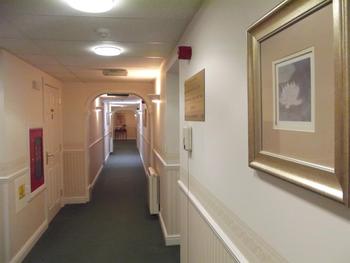
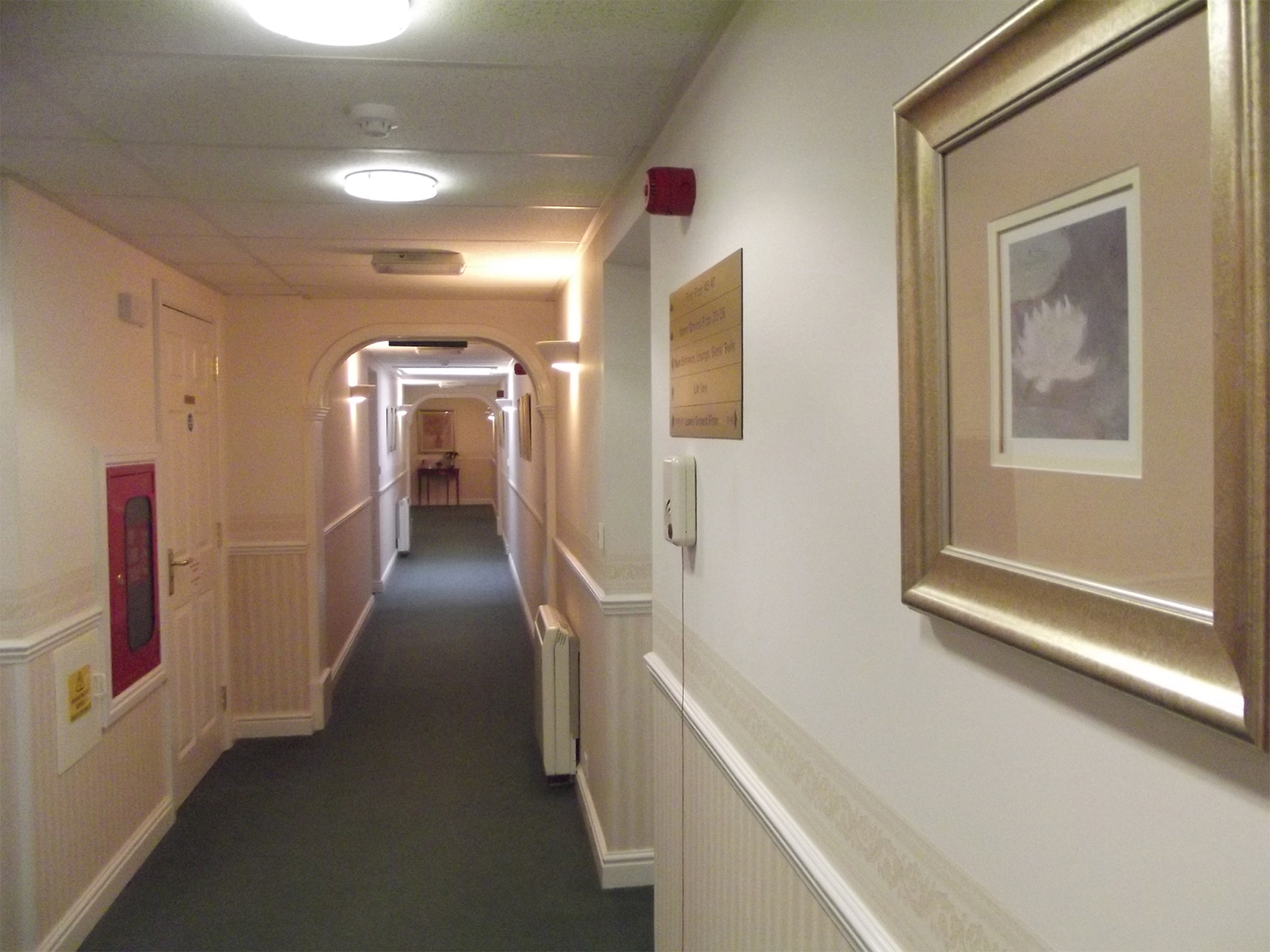
Following ethical approval, one of the researchers (the first author) attended the weekly coffee morning in the retirement development and explained the purpose of the study (for the participant information sheet, see Appendix 1). Thirteen residents volunteered to participate and spoke with the researcher prior to the interview on at least two occasions. The interviews then took place in the participant's own apartment. The researcher (the first author) and resident spent roughly 15 minutes talking about the local surroundings to establish rapport before the interview commenced. A semi-structured interview guide (see Appendix 2) was followed, with new questions asked to follow the direction of the conversation. At the start, all participants were encouraged to walk freely during the interview if they wanted to discuss a particular area. Two of the participants (Myra and Brenda) showed the researcher certain aspects of the corridors (see Figure 2) and the communal lounge whilst discussing them. The interviews lasted between 28 and 80 minutes and data was collected until the themes reached data saturation – in our case after 13 interviews. This is consistent with research by Guest, Bunce and Johnson (Reference Guest, Bunce and Johnson2006) who observed that data saturation was reached within 12 interviews, with the basic elements (meta/sub-themes) present after six interviews.
Image of communal corridors.
Key questions for interviews
The aim of the interviews was to engage directly with residents’ wayfinding experience as well as their design preferences for the communal shared living areas of the retirement development (as opposed to individual apartments). Eight questions (e.g. ‘How would you describe your abilities in finding your way around your home and the communal areas in the retirement development?’ and ‘Are there any areas of the environment that you find particularly helpful or more memorable to help you get your way around’) surrounding their wayfinding experiences and design preferences were prepared (see interview guide in Appendix 2). These questions were informed by existing literature surrounding design and wayfinding, though the specific questions depended upon what residents reported.
Data analysis
Following Braun and Clarke (Reference Braun and Clarke2006), an inductive thematic analysis was used as the specific method, as opposed to a process for an analytical tradition such as grounded theory. First discrete ‘units’ (Lincoln and Guba Reference Lincoln and Guba1985) or ‘incidents’ (Glaser and Strauss Reference Glaser and Strauss1967) were identified and then coded into categories. The definitions and content of the categories changed as the units were categorised. It is also important to emphasise that the researcher played an active role during the analysis as themes do not simply emerge from the data (Braun and Clarke Reference Braun and Clarke2006). The themes are primarily at a semantic (explicit) level, though, where appropriate, latent coding was used (particularly when interpreting and understanding the reasons for disorientation). The transcripts were initially coded by the first author; together with the second author, these codes were checked, modified and verified.
Findings
Three main themes were identified. For an overview, see the theme table in Appendix 3. The first theme expresses disorientation as a result of interior design features and the architectural structure of the development. The second theme highlights how residents overcame and avoided disorientation using specific orientation strategies and environmental cues. The third theme focuses on residents’ design suggestions: including making spaces meaningful and memorable. The themes have been developed with illustrative data (verbatim quotes) examples. Whilst qualitative frameworks and inductive thematic analysis practice does not require one to quantify the number of respondents that articulated each theme (Braun and Clarke Reference Braun and Clarke2006), each theme was expressed by at least two-thirds of the residents. To gain more detail and precision, we provide the number of participants who discussed a particular issue for some sub-themes.
Theme 1: Disorientation as a result of interior design features and the architectural structure of the development
All residents had experienced disorientation within the development on at least one occasion, particularly during the initial period (i.e. first weeks and months) after moving in.
Initial feelings of awkwardness, due to the design of the development, were expressed:
When I first came I found it very awkward … Because they [the corridors] all look the same. (Betty)
At the beginning of course it's a bit of a maze but eventually you get learn when where to go and who's living where and all that. (Lillian)
Although most residents reported that they became more comfortable with the surroundings with increased familiarity, they were able to identify specific reasons as to why they experienced disorientation and the areas they found problematic. These reasons were sub-themed as either design-dependent or location-dependent. Design-dependent reasons relate to the design of the building or design factors within the development, location-dependent reasons relate to the location of where rooms, items or places are situated.
Design-dependent reasons for disorientation: repetitive layout causing confusion
The most frequently reported reason for disorientation was the repetitive design throughout the development, particularly along the corridors (see Figure 2):
You can get completely disorientated and the reason is because all the corridors are the same. You don't know which one you're on, or what level you're on really until you look at the little messages on the side … It's important to have some sort of navigation aid I think in a big place like this. (Colin)
Due to the repetitiveness in design, residents had to rely on the signage – if areas were more distinctive, residents would potentially not need to rely so heavily on signage as a cue when re-orientating.
Design-dependent reasons for disorientation: making separate floors and areas identifiable
Spread over three floors, connected by five staircases and two lifts, residents highlighted difficulties moving and differentiating between the floors. The two lifts were identical in design and easily caused residents to become confused with which lift to use:
Well when I first came, I did get lost. I took the wrong lift and went up to the wrong floor and well in the end I walked down the stairs. I gave up with the lift. (Helen)
…what I found was that no sort of indication as to which lift one should use to get up to the first floor, so I decided it would be better to go up the stairs, and that was a big mistake as that was an easier way to get lost, starting to go upstairs. (Colin)
Many participants reported that they moved to the development to avoid the use of stairs – ensuring lifts are user-friendly, well signposted and distinctive is vital. Even when having to use the stairs though, the poor signage and repetitive design in the stairwells was reported as problematic and disorientating:
…in the stairwells, on the backs of the doors of each floor, there's no sign saying which floor it is. (Harry)
It says that ‘fire exit’. It doesn't say stairs ground floor. (Ethel)
To limit confusion, appropriate use of signage could be introduced. Additionally, incorporating the residents’ views for where signage is best placed would capture the users’ needs and requests.
Location-dependent reasons for disorientation
Where exactly a resident lived in the building, and the specific routes they took, had a strong influence on their experiences of disorientation. The location-dependent reasons were either due to residents’ apartment locations or were influenced by the dissociation between the two areas of the development, the main building and the annex:
I'll be quite honest, there is a jumble down there when you go to that section (the annex) … that's difficult down there. And I have got lost once, I think because I wasn't concentrating. (Ethel)
This ambiguous circulation area, connecting the main building to the annex, caused particular confusion for most of the residents. Here, residents talked about the use of environmental cues (e.g. the table with the flowers) and signage to support them on their route.
The accessibility of the communal spaces was influenced by the positioning of the separate apartments within the development. This played a role in how frequently the communal spaces were used and affected residents’ initial choice of apartment:
I'm right at the end of the building … it's a long walk to go to the laundry (laughs). I usually do Sunday mornings when it's quiet. But, by the time you've put your laundry in and then waited for that to do, and go back again, and put it in the tumble drier, it's three journeys to and fro. (Helen)
I was completely unaware of how long the corridors were to get to some of the properties, and that was one of the reasons, because of the long corridors, that we decided that we didn't want to go for that flat – too far from the services, too far from the entrance exit of the building. (Colin)
The distance between apartments and communal areas should be minimised as it can be seen that this poses problems for residents located further away from communal areas. Additional support should be provided for residents living further away to ensure activities of daily life are met with ease.
Theme 2: Overcoming and avoiding disorientation using orientation strategies and environmental cues
Participants reported multiple strategies to learn the environment and to overcome feelings of disorientation. Whilst some actively tried to familiarise themselves with the environment, others had specific orientation strategies, relying on environmental cues and aspects of design.
Spaces to trigger memories
Spaces filled with distinct features (e.g. photographs, louvre windows and flowers on a table) were frequently mentioned as being particularly memorable:
…when you get, halfway up, there is a rug that's about as big as my entry there and somebody puts flowers there and that's quite nice … I think it's quite nice, it cheers it up. And you think ‘oh that looks lovely’ and there's ‘oh what are they today’ and they're mostly fresh flowers … It's quite nice. (Doris)
Additionally, residents whose apartments were further away from communal areas had specific route-planning strategies to get to the communal facilities (e.g. laundry, refuse):
Oh yes, well I go out my door here, down the corridor, and then, I do it in three sections really. First to the bend, then the next bit, past the table with the flowers, and then the third bit takes me to the lift. Up in the lift and then it's easy from there because you're right outside the lounge and um, you can see the notices. (Helen)
These examples highlight that environmental cues along the route (e.g. the table with the flowers, the lift and signage) were seen as useful in creating a strategy whereby separate distinctive sections of the route could be remembered.
Signage and door numbers – following numbers consecutively
Signage and the apartment door numbers guided some residents to their goal location:
The signage is quite good actually as long as you, you stick to it. (Colin)
Individual apartment door numbers, on the occasion where they were inconsistent (not consecutive) could contribute to disorientation:
It might just be … a bit confusing that you have the numbers mixed up a little bit, it's only some of the numbers, you expect to see all the 40s together and you don't! (Jean)
Remembering the door numbers proved problematic for some residents:
I'm not very good on names of things. I know where things are and I could say to you ‘oh yes I know where so and so lives’ but I probably wouldn't know the number of the flat, I would just know when I got there as it were. (Brenda)
These quotes highlight individual differences in strategy preferences – while some residents relied on signage, others found signage difficult to use. This suggests that one design solution does not fit all.
Avoiding the corridors – shortcutting
Residents living in the annex part of the development reported avoiding the corridors when possible:
here is a shorter way out … I use, what they call, the shoppers entrance. I come through the garden and that cuts off a lot of the corridor. (Helen)
the gate which is a boon for this development … I use that probably more, just as much if not more than I use the main entrance … You don't have to walk along, you don't have to go up in the lift, you don't have to use your fob [key tag], no you're out! So that's a boon that gate for people like me on the lower ground. (Harry)
If buildings are complex and corridor systems become confusing as a result for those living there, it may be sensible to provide clear alternative routes. This ‘shoppers entrance’ example not only avoids corridors, the entrance itself functions as a distinguishable landmark point (i.e. a well-signed door to outside).
Theme 3: Residents’ design suggestions: making spaces meaningful and memorable
Three residents were extremely happy with the design of the development and had no suggestions on how it could be altered or improved, for example:
Leave it as it is. Yeah. Oh I'm more than happy with it – it's the nicest one I've seen. (Lillian)
The majority of residents were able to raise design issues and give their opinions on aspects they thought should be improved. These included the design of the corridors such as the colours and pictures along the walls, and reducing the distances between locations.
The overall design and the distances between locations were critiqued:
I really think that was badly designed because they do have a long way to come, you know two lifts to have to use. Or two flights of stairs or whatever but not for me because as I say I'm well placed. (Gloria)
The importance of short distances between places was further highlighted:
the short distance between here and the lounge is very important and the front door, very important to me. Not having to trek a great deal of distance to get there. (Colin)
Ensuring that distances between the individual apartments and the communal areas are short and minimising the need to move between levels is crucial.
Moving away from the ‘hotel-look’ for long-term living environments
Three residents explicitly mentioned how the development resembled a ‘hotel’ in its design, one thought this was ‘pleasant’ but the other two did not:
All the apartments look the same. And the corridors all look the same … Looked a bit like a hotel. (Betty)
For those who were newer to the development, such as Anne who had lived in the development for four months, the pleasant set up may have appeared luxurious, reminiscent of a holiday environment. Residents who had lived in the development for a longer period (Betty for one and a half years and Harry for one year) spoke less fondly of the hotel look (e.g. repetitive layout, signage). Additionally, although not explicitly described as ‘hotel’ design, many others referenced the repetitiveness and blandness as negative aspects of the design. Based on the reports of residents in this study, it would be prudent for designers to consider that retirement developments are people's long-term homes, not short-term living spaces. Orientation cues which may be suitable in a hotel, such as signage, may not be the most appropriate in a long-term living development.
Using colour to make areas distinctive
The ‘relaxing’ pale-coloured corridors were liked by many of the residents:
It's got to be restful I suppose. You can't have bright colours. (Betty)
The use of colour to differentiate areas along the corridors and separate floors was the most frequently reported design suggestion. For example:
I think each floor, if it was up to me, would have a different coloured carpet. … red, green and blue, you know? Three easy colours. You would know straight away. (Harry)
One resident suggested a colour change each time there is a right angle bend:
Well perhaps every time you come to a right angle bend, the carpet colour could change. (Helen)
Putting up interesting pictures
Another area of interior design that generated conversation was the choice and use of pictures along the walls. While some residents used words like ‘pleasant’ and ‘something to look at’ to describe them, others critiqued them as ‘boring’, ‘impersonal’ and ‘cheap and nasty’. One resident was outspoken in her views of the pictures:
Awful (laughs). Very boring and very repetitive (laughs). Yeah, well I expect they buy them, you know, a job lot. And that's it! (Helen)
‘Repetitive’ and ‘nondescript’ were also frequently used to describe the pictures situated along the corridors. This could be a possible reason why the pictures were never reported by the residents as memorable or useful in guiding them through the development. One resident even noted that:
…if somebody was lost and there was sort of one bright picture, it might help. (Ethel)
The importance of picture choice and selection was further emphasised:
You know William Morris said ‘have nothing that isn't either useful or beautiful, preferably both’ (laughs) I don't think those [the pictures] qualify for us! (Brenda)
Some pictures which captured usefulness and beauty were those of the local surroundings situated in the communal lounge:
There is one of the pictures. At the beginning. Because my nan lived in … umm … she lived… (Myra)
One of the featured pictures in the lounge was, coincidentally, a picture of Myra's grandmother's house. Having local pictures which are relevant and personal to the residents can elicit conversation as well as emotion, making them more memorable and purposeful.
Using a variety of colours and more specific pictures would support residents’ memory of the environment and therefore help them in finding their way. Taken together, design features that make areas distinctive and personal will make the space more memorable, and therefore easier to learn and navigate.
Discussion
This study explored wayfinding experiences and design preferences of older adults with memory difficulties living in a communal retirement setting. The participants in this study had lived in the development for up to seven and a half years, and we did not capture whether their (self-reported) memory difficulties began before or after moving into the development. Despite this, all participants had experienced disorientation in the communal parts of the development on at least one occasion. While this was mostly upon first moving in, experiences of disorientation regularly occurred when having to navigate along less-familiar routes and when travelling to certain parts of the development (e.g. the annex). Participants reported that the main reasons for disorientation were the repetitiveness of the design, the long distances between locations, and the dissociation between the main building and the annex part of the development. Additionally, reports of disorientation were influenced by the participants’ apartment locations, with those living further away from communal areas reporting experiencing disorientation more frequently.
These findings reflect work by Marquardt et al. (Reference Marquardt, Johnston, Black, Morrison, Rosenblatt, Lyketsos and Samus2011), who reported that more intelligible spatial layouts (i.e. more connected to the whole spatial system) that had fewer circulation areas (e.g. stairs and lifts), caused fewer problems for those with dementia when completing daily tasks. In the current study, long corridors appeared to influence residents’ ability to complete some of their daily tasks (e.g. navigating to the laundry room). Although the residents’ physical limitations need to be considered, our findings support the notion that environments designed to avoid unnecessary circulation areas would best support people both cognitively (for route memory) and physically (for mobility) (Elmstahl, Annerstedt and Ahlund Reference Elmstahl, Annerstedt and Ahlund1997; Marquardt and Schmieg Reference Marquardt and Schmieg2009).
To overcome or avoid disorientation, residents mainly reported using design features of the environment, such as signage, door numbers and memorable objects (e.g. louvre windows or a table with a vase of flowers). Particularly when longer routes had to be taken, these environmental cues were incorporated during route planning and when recalling the routes. Residents who reported using door numbers often relied on these being in consecutive order. Accordingly, non-consecutive numbering led to confusion, highlighting the importance of a consistent numbering system (Hölscher et al. Reference Hölscher, Büchner, Meilinger and Strube2009). Unsurprisingly, most residents reported signage as the most readily available cue to support orientation. However, it remains unclear whether or not signage was actually used in day-to-day life: although most residents said it was there to support them, many were unsure of the last time they had stopped to look at it. Rather than using signage, the majority of residents reported that they preferred more personal environmental cues or features such as relevant pictures and memorable spaces.
Preferences in orientation strategies differed greatly between participants. While most reported using environmental features (i.e. landmarks) to help with orientation, some reported actively avoiding confusing areas (e.g. the annex, moving between levels), as well as sticking with the same, habitual routes to avoid confusion. This demonstrates that residents, while relying on landmark information, adopted individual techniques based on their abilities and familiarity with the environment. To investigate further how residents use and learn the environments, it would be particularly interesting to investigate whether spatial strategies change over time, e.g. by comparing reported strategies upon first arrival at the development with those reported after having lived in the development for several months. The ‘hotel-look’, initially favoured by some of the residents upon moving in, was less liked after they had lived there for some time. This clearly suggests that design preferences and the way residents view the environment (e.g. they had accepted it as their home) changes over time. This mirrors previous research into residents’ perceptions of assisted living environments where the communal areas were neither perceived as homely nor personal by the residents (Zavotka and Teaford Reference Zavotka and Teaford1997). These findings are also in line with work highlighting the importance of having ‘homely’, familiar and personal items within care environments for people with dementia (Innes, Kelly and Dincarslan Reference Innes, Kelly and Dincarslan2011).
Repetitive layouts were cited as a major reason for disorientation. Without environmental cues that allow locations to be uniquely identified, repetitive layouts limit the strategies available to learn and navigate along routes through the environment (Waller and Lippa Reference Waller and Lippa2007). Moreover, as we age, we tend to rely more heavily on landmark-based navigation strategies as opposed to strategies that require survey knowledge or cognitive maps (Cherrier, Mendez and Perryman Reference Cherrier, Mendez and Perryman2001; Wiener et al. Reference Wiener, de Condappa, Harris and Wolbers2013; Wilkniss et al. Reference Wilkniss, Jones, Korol, Gold and Manning1997). To support the use of such landmark-based strategies, it is important to provide appropriate environmental cues and landmarks, particularly in larger retirement developments, which often feature repetitive layouts. One way landmarks can be made more memorable and useful for navigation is by increasing their salience. Klippel and Winter (Reference Klippel and Winter2005) suggested three ways in which landmark saliency (how much the landmark object stands out) could be manipulated: structurally (the build and shape of the landmark), visually (the colour and appearance) and semantically (the semantic meaning behind the landmark). In residential environments the saliency of navigation cues could be addressed when deciding upon the pictures used along the walls. Residents in this study explicitly mentioned that they wanted to move away from the ‘nondescript’ pictures currently present in the development. These could be replaced by more salient pictures both semantically (e.g. pictures that are relevant to the residents) and visually (e.g. by using pictures with strong colours). In fact, residents reported a strong preference towards pictures which were taken in the local town as these were most meaningful to them. These pictures not only stimulated conversation between residents but were also more memorable and seen as more unique. These findings link well with previous research in psychology demonstrating that navigators rely on verbal codes to memorise landmarks they encounter along routes (Garden, Cornoldi and Logie Reference Garden, Cornoldi and Logie2002; Meilinger, Knauff and Bülthoff Reference Meilinger, Knauff and Bülthoff2008). It is therefore crucial that landmarks are unique and easily nameable. If residents, as suggested in this study, use pictures on walls as landmarks, these should be different and meaningful. The use of multiple pictures depicting objects of the same category, in contrast, renders these cues/landmarks unreliable: ‘Turn right at the picture with the waterlily’ will only effectively support orientation and navigation if there is only one picture of a waterlily in the environment (Strickrodt, O'Malley and Wiener Reference Strickrodt, O'Malley and Wiener2015). Expanding on this, for people with semantic dementia who typically experience difficulties finding the right words, in particular, pictures would have to be distinct enough (i.e. belonging to a different category such as flowers, cars, animals) to make them more memorable as the disease progresses (Bozeat et al. Reference Bozeat, Lambon Ralph, Graham, Patterson, Wilkin, Rowland, Rogers and Hodges2003). Using interesting and relevant pictures, rather than repetitive neutral images as often used in residential and care home settings, could greatly enhance residents’ sense of wellbeing and act as an aid for successful orientation.
Additional orientation cues can be introduced by the use of colour to differentiate areas within the development, as suggested by the residents. While colour has been used and tested as a reliable cue to support orientation (Helvacıoğlu and Olguntürk Reference Helvacıoğlu and Olguntürk2011), it has not yet been systematically tested in the older population or those with memory difficulties or dementia. Despite this, many dementia-friendly design guidelines have emphasised the use colour has, predominantly along the walls, in supporting orientation (Mitchell, Burton and Raman Reference Mitchell, Burton and Raman2004; The King's Fund 2013). Changes in carpet style or colour between parts of the environment, as participants suggested in this study, is known to cause freezing in those with more advanced symptoms of dementia as breaks in colour can be misinterpreted as steps or holes in the ground (Utton Reference Utton2009; Van Hoof et al. Reference Van Hoof, Kort, Van Waarde and Blom2010). It is therefore important to ensure that colour is used appropriately and does not cause unintended barriers for the residents. The unique design features (e.g. the flowers which were regularly changed by one of the residents and the pictures of local areas) in the development were shown to be beneficial for describing areas, particularly for the residents who had a diagnosis of Alzheimer's disease. These two residents did not report more disorientation, though they found remembering the names of areas and items (e.g. carpet) particularly difficult, and often described their key features (e.g. ‘the green bits’) in place of their name. Interior design with salient features, which are easy to describe, would support orientation in those who experience word-finding and language difficulties (e.g. those with fronto-temporal dementia). Understanding how these design suggestions and orientation strategies are cognitively represented would be the next step in allowing us to investigate how successful certain manipulations are in supporting orientation.
It is important though to ensure that environments are not overloaded with too much salient landmark information (Passini et al. Reference Passini, Pigot, Rainville and Tetreault2000). Davis, Therrien and West (Reference Davis, Therrien and West2009) found that older women performed best in a wayfinding task when exposed to an environment with few salient orientation cues as opposed to environments without salient orientation cues (bare condition) or with too many salient orientation cues (complex salient condition). This suggests that it would be more beneficial to ensure that selected areas of retirement developments are salient, as opposed to making them all salient, something which needs to be emphasised more clearly in existing design guidance documents.
Designing more environments in a supportive way
Many of the design preferences mentioned by residents in this study closely resemble some of the existing dementia-friendly design guidelines, such as: ‘Spaces should be distinct, both in appearance and overall layout. Repeating or mirroring floorplans can be confusing for some people’ (Chmielewski and Eastman Reference Chmielewski and Eastman2014: 16). This strongly suggests that dementia-friendly design suggestions should not be viewed as relevant solely for dementia care environments and should rather be viewed as ‘user-friendly’ for anyone. Their implementation in other environments will result in a better design for all (Marshall Reference Marshall2001), benefiting a wider spectrum of older adults experiencing memory difficulties. Given the wide range of preferences and abilities, the findings reported in this paper highlight that one design solution does not fit all; whilst dementia-friendly guidelines (Fleming Reference Fleming2011; The King's Fund 2013) and the recent UK policy directive on the environment and those with dementia (Department of Health 2015) provide an initial outline of concepts to consider, talking directly to the users would ensure that the design and wayfinding solutions are best suited to their needs and requirements.
It should be noted at this point that the current study focused on one group of residents living in one shared retirement development. However, for a number of reasons we believe that the results will, at least in principle, generalise to other groups of residents living in other environments. Firstly, both our group of residents and our test environment are not uncommon examples of the type of residents and living arrangements in UK retirement housing. With this form of housing continuing to rise in popularity (Evans Reference Evans2009) and with the prevalence of subjective memory complaints amongst older adults at around 30 per cent (Fritsch et al. Reference Fritsch, McClendon, Wallendal, Hyde and Larsen2014; Montejo et al. Reference Montejo, Montenegro, Fernandez and Maestu2011), we believe our study captures a reliable insight into the navigation and orientation experiences of residents living in UK retirement housing. Secondly, the interviews highlighted a number of navigation and orientation strategies and reasons for spatial disorientation issues that are well known in the psychology literature. Finally, some design principles, which are established and accepted to be best practice, are mirrored in the residents’ reports.
Conclusion
By actively engaging with and talking to retirement home residents with memory difficulties, this exploratory study has highlighted a number of reasons for disorientation, the strategies used to learn and navigate the environments (and overcome potential disorientation) and residents’ design preferences. By utilising the thematic analysis of residents’ self-reports, we can conclude that avoiding unnecessary circulation areas and repetitive layouts, and ensuring individual apartments are close enough to communal spaces, are vital to consider when considering the structural build and floorplan of the environment. In relation to interior design, it is important to create areas with distinctive environmental cues that have semantic meaning and relevance to the residents. The use of appropriate and relevant landmarks and design features (e.g. well-known pictures of landscapes) stimulated conversation amongst residents. As a result, these landmarks became more memorable and useful for navigation. Importantly, all environments used by older adults should support and enable successful orientation. Future studies should build on these findings and develop more fine-grained propositions of how living environments can alleviate the orientation difficulties associated with typical and atypical ageing and which environmental features are best captured in memory and are least susceptible to forgetting. Additionally, future studies should consider how people's attitudes and perceptions of living spaces change over time – this would inform designers on how to design suitable short-term and long-term living spaces for people with dementia. Together with results from this, and similar studies (Caspi Reference Caspi2014; Godwin Reference Godwin2014; Marquardt et al. Reference Marquardt, Johnston, Black, Morrison, Rosenblatt, Lyketsos and Samus2011; Passini et al. Reference Passini, Pigot, Rainville and Tetreault2000), this knowledge will allow us to develop improved design principles that minimise spatial disorientation and therefore improve people's independence, quality of life and wellbeing.
Appendix 1: Participant information sheet
Dear participant,
We would like to invite you to take part in our research study. Before you decide, we would like you to understand why the research is being done and what it involves you to do. Please take your time to read the following information carefully and discuss it with others if you wish. Ask us if there is anything that is unclear or if you would like more information. Take time to decide whether or not you wish to take part.
The purpose of this study
The reason for conducting this research is to gain a greater understanding of how residents, with memory difficulties, use their living environment when moving around within it. We are interested in understanding how you may use features in the environment when getting to and from locations. While there are some studies that ask home staff about residents’ orientation (Caspi Reference Caspi2014), very little research asks the residents for their perspective and views surrounding this topic.
This information will be extremely beneficial in helping shape and specify design guidelines for living spaces, by informing the guidelines how people use the environment; it will identify if there are any features that are more helpful than others when moving throughout the home.
The conduct of this study
This study will take the form of a semi-structured interview; the whole study will take place within the retirement development.
Interview: The researcher will be present during the whole interview and will ask some questions concerning the retirement development and aspects of memory. The interview will be audio recorded using a discrete microphone.
What are the criteria to participate?
We require people aged 65 (or over) who have noticed changes to their memory and/or been diagnosed with an Alzheimer's type dementia (mild/moderate symptoms). Participants must be able to give informed consent; we assume capacity to consent until otherwise suggested (process consent will take place throughout the interview – if participants appear uncomfortable through body language during the interview, we will have a break and then decide whether to continue or not).
Why have I been chosen?
For this study we are looking for people who:
• Live within a home environment with shared facilities (communal lounge, kitchen, laundry).
• Have noticed changes to their memory and/or have a form of dementia.
• Aged 65 or over.
What do I have to do?/What will happen to me if I take part?
The interview will take place in one of the living spaces in the retirement development and during this only the researcher and participant (you) will be present unless otherwise discussed. The interview will take the form of a semi-structured interview where I will ask you open-ended questions about the environment. Here you can freely discuss your opinions and feelings.
In addition to the interview, a very brief neuropsychology test called the Montreal Cognitive Assessment (MoCA) will also be administered; this test looks at your ability on different cognitive tasks. This will take roughly 10 minutes.
What type of information will be sought from me and why is the collection of this information relevant for achieving the research project's objectives?
The only data we will use in this study are your interview responses, which will be transcribed and analysed, and the scores on the cognitive assessments (i.e. MoCA). The scores from the MoCA test give a very brief indication of your ability on different cognitive tasks – only members of the research team will have access to this.
Confidentiality
All information collected about you for this study will be kept fully confidential. A unique ID code will be allocated to you, this will be the only identifier used on the stored data; only you and the investigator will know this ID code. After transcription, the audio recordings will be destroyed; transcriptions will be kept for five years (this is in line with University and data protection requirements).
Your rights
We require your informed consent before you take part in any study, and this requires us to give you the above facts before you make a decision. However, if you give us your informed consent and you enter the study, you are free to withdraw that consent and exit the study before the interviews have been transcribed, without any detriment to yourself. You are free to have breaks during the study. Likewise, if the researcher gets the impression from your body language that you are not comfortable during the study, the researcher will ask if you would like a break or would like to stop participating in the study.
Contact details
If you have any queries about the research, you can contact the researcher (Mary O'Malley) on the details below. If you have any concerns about the conduct of this study (or the researcher), you can contact and inform the study supervisors on the details below.
Appendix 2: Interview schedule
The key questions asked during the semi-structured interviews were:
1. How do you find living here in the retirement development?
2. How would you describe your abilities in finding your way around your home and the communal areas in the retirement development?
3. Are there any areas that are easier or more difficult to get to in the retirement development?
4. Are there any areas of the environment that you find particularly helpful or more memorable to help you get your way around?
5. Have you noticed any changes in how you find your way around?
6. How has this impacted on your sense of wellbeing or independence?
7. Is there anything that you think could be done to help people find their way around the retirement development?
8. How would you design your ideal home?
Appendix 3: Theme table