


Introduction
In 2020, almost 28.8% of the Japanese population was aged 65 years and older (Cabinet Office, 2021). Japan has emerged as a super-aged society and faces an increase in the prevalence of dementia in its population. In 2012, one in four Japanese people aged 65 years and older had dementia or suspected dementia, and 4 million people aged 65 years and older may have mild cognitive impairment (MCI), a transitional state of cognition between normal ageing and dementia which may eventually progress to dementia (Asada, Reference Asada2013). Notably, MCI is characterized by preserved functional abilities (Hugo and Ganguli, Reference Hugo and Ganguli2014) and clinically significant memory impairment (classified as amnestic or non-amnestic) that does not meet the criteria for dementia; alternatively, it can also be characterized by a subtle decline in functions not related to memory (Petersen, Reference Petersen2011).
Depression and anxiety, which are associated with deterioration in social functioning, decreased independence, cognitive decline and an increased risk of institutionalization, are common in older people with dementia and MCI (Ballard et al., Reference Ballard, Neill, O’Brien, McKeith, Ince and Perry2000; Enache et al., Reference Enache, Winblad and Aarsland2011; Gulpers et al., Reference Gulpers, Ramakers, Hamel, Köhler, Voshaar and Verhey2016; Monastero et al., Reference Monastero, Mangialasche, Camarda, Ercolani and Camarda2009; Okura et al., Reference Okura, Plassman, Steffens, Llewellyn, Potter and Langa2011; Porter et al., Reference Porter, Buxton, Fairbanks, Strickland, O’Connor, Rosenberg-Thompson and Cummings2003; Solfrizzi et al., Reference Solfrizzi, D’Introno, Colacicco, Capurso, Del Parigi and Caselli2007). The early detection and prevention of MCI can help in the prevention of dementia in older people (Petersen et al., Reference Petersen, Stevens, Ganguli, Tangalos, Cummings and DeKosky2001). Previous studies have suggested that depression and anxiety can be risk factors for cognitive decline and dementia, and can result in progression to dementia (Gulpers et al., Reference Gulpers, Ramakers, Hamel, Köhler, Voshaar and Verhey2016; Heser et al., Reference Heser, Tebarth, Wiese, Eisele, Bickel, Kohler, Mösch, Weyerer, Werle, König and Leicht2013; Rodríguez-Sánchez et al., Reference Rodríguez-Sánchez, Mora-Simón, Patino-Alonso, García-García, Escribano-Hernández, García-Ortiz, Perea-Bartolomé and Gómez-Marcos2011; Singh-Manoux et al., Reference Singh-Manoux, Dugravot, Fournier, Abell, Ebmeier, Kivimaki and Sabia2017). Similarly, in Japan, several relationships between cognitive decline and depressive symptoms in older adults have been reported (e.g. Hidaka et al., Reference Hidaka, Ikejima, Kodama, Nose, Yamashita, Sasaki, Kinoshita, Tanimukai, Mizukami, Takahashi and Kakuma2012; Kume et al., Reference Kume, Takahashi, Itakura, Lee, Makizako, Ono, Shimada and Ota2019); however, the relationship between cognitive decline and anxiety is still not clear. Notably, such psychological symptoms can increase the burden on caregivers (Shin et al., Reference Shin, Carter, Masterman, Fairbanks and Cummings2005). As mentioned earlier, scholars have emphasized the importance of early detection and early treatment of dementia and MCI; however, in clinical practice in Japan, we often hear sarcastic comments – even from medical professionals, patients, and their families – about ‘early detection and early hopelessness’; that is, comments that suggest that even if the disease is detected early, there is nothing to be done but hopelessly despair. It is easy to imagine the anxiety that people living with dementia and their caregivers must be feeling about what will happen to them in the future as their cognitive decline progresses.
Recent international studies have reported the efficacy of cognitive behavioural therapy (CBT) in alleviating depression and anxiety and improving quality of life (QOL) among older people with dementia and MCI (Orgeta et al., Reference Orgeta, Qazi, Spector and Orrell2015; Spector et al., Reference Spector, Charlesworth, King, Lattimer, Sadek, Marston, Rehill, Hoe, Qazi, Knapp and Orrell2015; Stanley et al., Reference Stanley, Calleo, Bush, Wilson, Snow, Kraus-Schuman, Paukert, Petersen, Brenes, Schulz and Williams2013). The underlying concept of CBT is that thoughts and behaviours influence emotions. Therefore, CBT attempts to modify dysfunctional thoughts and behaviours, improve emotions experienced as challenging or negative, and boost feelings of well-being. However, there has been little research on CBT in the psychosocial treatment of depression or anxiety in older people with dementia or MCI in Japan.
Aims of this study
This study examined the feasibility and acceptability of a newly developed CBT program among older Japanese patients with cognitive decline. The program was originally created for a study with older Japanese female adults diagnosed with MCI who reported anxious and depressive moods (Kashimura et al., Reference Kashimura, Nomura, Ishiwata, Kitamura and Tateno2019). To our knowledge, this is the first study investigating the feasibility of CBT treatment for people with decreased cognitive function in Japan. This study involved the following five principles:
-
(1) >33% referrals were recruited for the study (invited to participate and consent);
-
(2) An expected follow-up rate of >70%;
-
(3) Attendance of >6 sessions adherence, as per a previous study (Spector et al., Reference Spector, Charlesworth, King, Lattimer, Sadek, Marston, Rehill, Hoe, Qazi, Knapp and Orrell2015; Stanley et al., Reference Stanley, Calleo, Bush, Wilson, Snow, Kraus-Schuman, Paukert, Petersen, Brenes, Schulz and Williams2013);
-
(4) Intervention could be carried out with fidelity;
-
(5) Ability to collect outcome measures consistent with those which were used in a previous CBT for dementia randomized controlled trial (RCT) for mood and QOL.
Method
Participants
Participants were recruited based on the inclusion criteria outlined below:
-
(1) Diagnosed with dementia or MCI, with a score of at least 20 points on the Mini-Mental State Examination (MMSE).
-
(2) Living within travelling distance of a hospital (i.e. within 60 minutes).
-
(3) Able to perform homework assignments for at least 15 minutes every day.
-
(4) Able to complete more than two-thirds of the program.
Individuals who met the following criteria were excluded:
-
(1) Concurrent psychiatric disorders (e.g. schizophrenia, bipolar disorder, substance-related disorders, and Cluster A personality disorders).
-
(2) A history of epilepsy, with an electroencephalogram that has not been normalized.
-
(3) Cognitive dysfunction (e.g. severe language and executive function disorders) that precludes CBT.
-
(4) Physical health problems which made engagement in CBT difficult.
-
(5) Current engagement in another structured psychological intervention.
-
(6) Inability or unwillingness to participate in the study because of other commitments, lack of motivation, or difficulty in comprehending the program.
-
(7) Hospitalization due to severe depression or anxiety, self-injury or suicide attempt.
These criteria were somewhat different from the CBT criteria adopted in previous dementia studies (Spector et al., Reference Spector, Charlesworth, King, Lattimer, Sadek, Marston, Rehill, Hoe, Qazi, Knapp and Orrell2015; Stanley et al., Reference Stanley, Calleo, Bush, Wilson, Snow, Kraus-Schuman, Paukert, Petersen, Brenes, Schulz and Williams2013). As this study was the first trial of the CBT program for patients with cognitive decline, setting more detailed criteria allowed us to conduct it with utmost caution. The presence or absence of a diagnosis of dementia or MCI was determined based on the results of diagnoses made by the participants’ physicians and specialists, and those diagnoses were based on Diagnostic and Statistical Manual of Mental Disorders, 5th edition (DSM-5) or the National Institute on Aging and Alzheimer’s Association (NIA-AA) diagnostic guidelines and various brain imaging findings. The MMSE is a brief measure of cognitive function used worldwide, with total scores ranging from 0 to 30 (Folstein et al., Reference Folstein, Folstein and McHugh1975; Mori et al., Reference Mori, Mitani and Yamadori1985). The MMSE is a valid test for cognitive function and has good test–retest reliability ( = .89) (Folstein et al., Reference Folstein, Folstein and McHugh1975). This instrument evaluated participants who completed the MMSE for assessing their cognitive decline level relative to the exclusion criteria and assessed score changes across the three assessment periods. This test took approximately 10 minutes to complete.
Setting and recruiting procedure
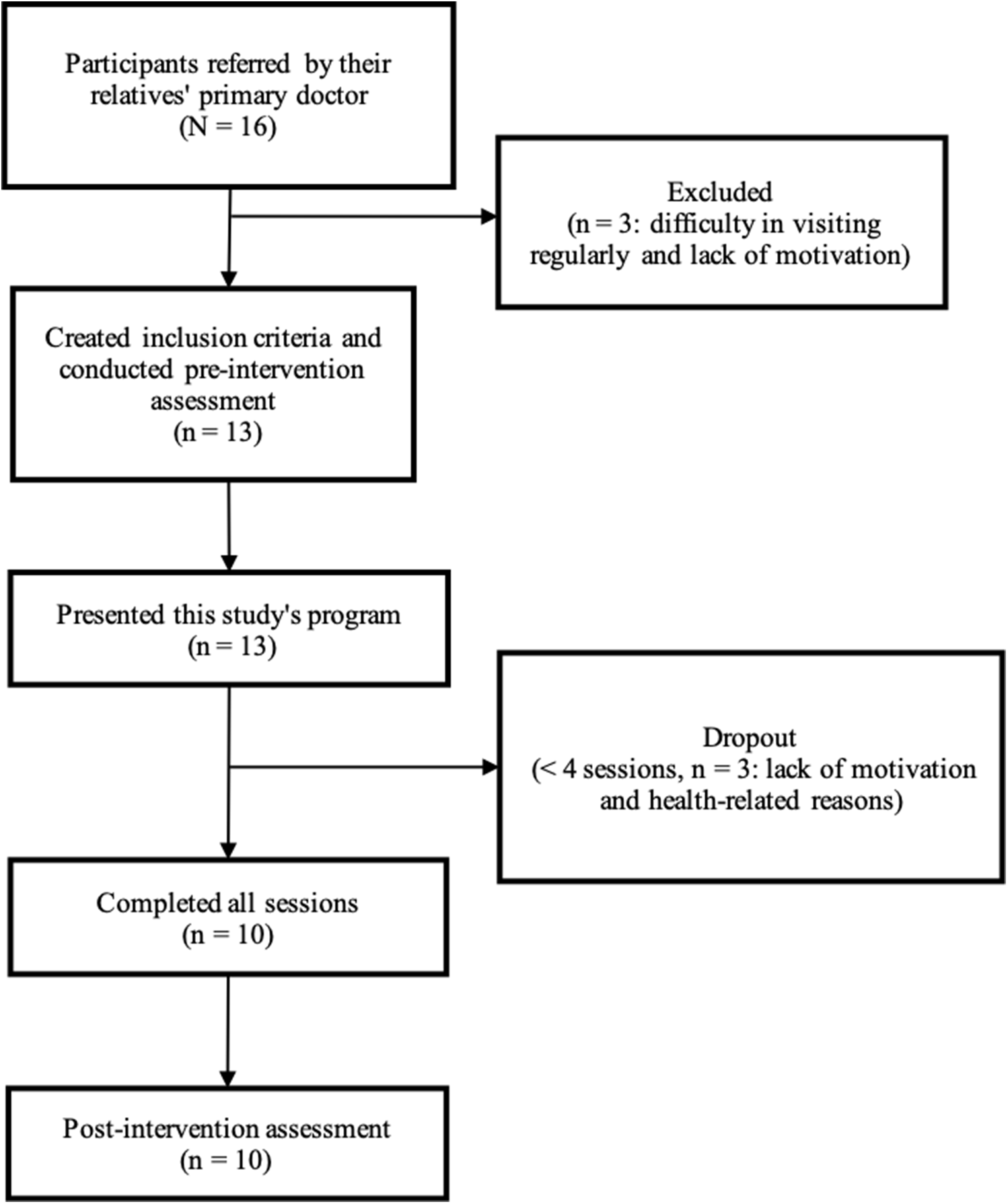
This study was a single-arm, pre–post study (Fig. 1) conducted from 2016 to 2018 (approximately two years) at the psychiatry out-patient department at Nippon Medical School Hospital (the monthly average number of out-patients was approximately 2300; of these, the proportion of patients with dementia or MCI was 3.69%). Owing to the exploratory nature of the study, a convenience sampling approach was used. We conducted the program in an out-patient department. The participants were referred to doctors (i.e. psychiatrists and neurologists) in the research team. We also requested patients’ caregivers to participate in this program. The study team approached the participants who showed initial interest in this study and provided them with relevant information (e.g. purpose, program content, potential benefits of participating, duration, time commitment, rewards, and round-trip travel expenses) before agreeing to participate.
The flow of participants through the study: this figure shows the flow from recruitment to invitation and participation in this program. Thirteen participants met our inclusion criteria and three participants dropped out during the program. Ten participants attended all eight sessions of the program.

Intervention
We developed the CBT program for people with cognitive decline with reference to previous studies (Charlesworth et al., Reference Charlesworth, Sadek, Schepers and Spector2015; Kraus et al., Reference Kraus, Seignourel, Balasubramanyam, Snow, Wilson, Kunik, Schulz and Stanley2008; Spector et al., Reference Spector, Charlesworth, King, Lattimer, Sadek, Marston, Rehill, Hoe, Qazi, Knapp and Orrell2015; Stanley et al., Reference Stanley, Calleo, Bush, Wilson, Snow, Kraus-Schuman, Paukert, Petersen, Brenes, Schulz and Williams2013; Teri et al., Reference Teri, Logsdon, Uomoto and McCurry1997). We prepared case examples for inclusion in the manual based on our clinical experience with older Japanese people. The development of the program did not require further consideration of culturally relevant aspects, because CBT has been widely used in Japan, and CBT developed in foreign cultures can be implemented in Japan without accounting for cultural differences. Therefore, we conducted this study because we thought that its intervention could be implemented without considering cultural adaptations.
In developing the program, several pairs of older people with MCI and dementia and their caregivers were briefly interviewed and asked about the frequency and duration of their visits for counselling and required time for counselling, and whether they would feel less burdened. The reason for this was to consider the physical and mental burden of the participants in the study, as older people in Japan are known to routinely visit the hospital for other diseases. Therefore, the respondents expressed that they felt it would be burdensome to have to go to the hospital every week for counselling over 6 months, and that they would be willing to receive counselling if sessions were limited to approximately 30 minutes every other week and if the program consisted of less than 10 sessions. After summarizing their opinions, we decided that sessions would be 30–40 minutes long and take place every 2 weeks, with the greatest possible consideration about the feasibility of CBT sessions for older adults with any vulnerabilities.
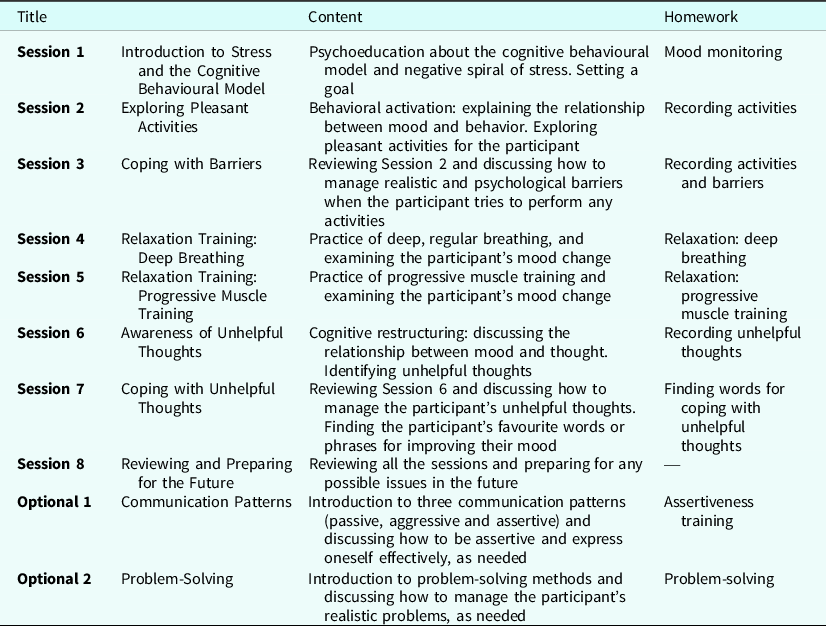
This program differed from that of Spector et al. (Reference Spector, Charlesworth, King, Lattimer, Sadek, Marston, Rehill, Hoe, Qazi, Knapp and Orrell2015) in that it had two fewer sessions, which were not held every week. Furthermore, while their program was dedicated to the treatment of anxiety and structured around coping with anxiety, this program focused on improving overall deterioration in mood (psychological distress, in other words) – evidenced, for example, in worsening anxiety and depression – among the older adults. Charlesworth et al. (Reference Charlesworth, Sadek, Schepers and Spector2015) suggested that ‘less is more’ when working with people with dementia, and James (Reference James2010) recommended that the therapist ‘keep it slow and simple’. Accordingly, we determined that only two or three CBT skills should be included in the program. The program consisted of eight sessions (Table 1) on topics such as psychoeducation, behavioural activation, relaxation training (e.g. deep breathing and progressive muscle relaxation) and cognitive restructuring. It also included two optional sessions (communication skills and problem-solving skills); however, none of the participants engaged in these during the trial. The two relaxation training sessions were developed with reference to a brief relaxation technique (McKay and DuFrene, Reference McKay and DuFrene2011). Session 1 socialized to the CBT model, assessed participants’ pre-therapy skills (Charlesworth et al., Reference Charlesworth, Sadek, Schepers and Spector2015), and asked them to set goals. Based on Spector et al. (Reference Spector, Charlesworth, King, Lattimer, Sadek, Marston, Rehill, Hoe, Qazi, Knapp and Orrell2015) and our own clinical experience to date, we decided that introducing behavioural rather than cognitive tasks in CBT sessions with older adults would facilitate their understanding of the CBT concept and reduce drop-out. Therefore, we conducted behavioural activation at the beginning of the program, in Sessions 2 and 3, and reserved cognitive restructuring for later.
Cognitive-behavioral program framework

The program in this study had eight sessions conducted every two weeks including psychoeducation, behavioural activation, relaxation and cognitive reconstruction. Optional sessions were prepared but not implemented in this trial.
The program used in this study was implemented by adding considerations and modifications to standard CBT for older adults with cognitive decline. In preparing this study, the CBT Guidelines for Anxiety in Older Adults with Dementia by Charlesworth et al. (Reference Charlesworth, Sadek, Schepers and Spector2015), which is based on a detailed review of previous CBT research and practice with older adults, was used as a reference. These guidelines suggest that strategies for accommodating cognitive impairments include: (1) taking full advantage of the scaffolding provided by CBT, including session structure, pacing, within- and between-session strategies used for retention of new learning, and conceptualization as a mnemonic; (2) incorporating cognitive rehabilitation strategies and techniques; (3) including a supportive other; and (4) supporting the learning of pre-therapy skills, including self-awareness. As these details are described in Charlesworth et al. (Reference Charlesworth, Sadek, Schepers and Spector2015), we do not repeat them here. Although their suggestions are based on special considerations for older adults, especially those with cognitive decline, many of the accommodations described are consistent with standard CBTs. A workbook discussing the topics of each session was provided to each participant at no charge. The workbook was A4 size and printed in colour on both sides. We prepared the workbook using Microsoft PowerPoint. We tried to minimize the amount of information per sheet of paper, used a large font size, reduced the amount of text, and used figures and illustrations to make it easy for participants and their caregivers to read. We actively encouraged participants to take notes on their interactions with the therapist during the session that they found helpful, to aid their memory. When family caregivers were in attendance to sessions, we encouraged them to take notes as well. Reading about a topic for the next session as homework was optional.
To monitor mental health, a brief assessment of psychological distress was conducted for both the participants and their caregivers at the beginning of each session, using the Kessler Psychological Distress Scale (K6). The K6 is a brief, self-reported scale to assess psychological distress and has good internal consistency (Cronbach’s alpha coefficient = .89) among adults (Kessler et al., Reference Kessler, Andrews, Colpe, Hiripi, Mroczek, Normand, Walters and Zaslavsky2002). It contains six items on a 5-point scale ranging from 0 to 4. Additionally, they were encouraged to make notes in the workbook.
Therapist
The program was delivered by a Japanese clinical psychologist (the therapist) who was familiar with CBT and had more than 10 years of training. Before this trial, we devised a fidelity checklist in Japanese containing the six most important components of each session: ‘all information covered’, ‘the participant successfully completed the task in the session’, ‘successfully encouraging the participant to think of the material’, ‘successfully teach the material’, ‘successfully introduced the homework’ and ‘keeping the participant focused on the session’. The therapists recorded each session with each participant, and research members (clinical psychologists, neurologists and psychiatrists) who were not directly involved in the sessions rated them on the fidelity checklist referring to the manual. The study team evaluated the sessions on the aforementioned criteria with scores ranging from 1 (not at all) to 5 (very well), and overall fidelity scores ranged from 6 (the lowest) to 30 (the highest). The therapist and the research members engaged in over 10 hours of peer-to-peer training on the program protocol and held regular peer supervision sessions for ongoing cases. If the fidelity scores were low, the members discussed the reason and solution for the next sessions during the peer supervision. Furthermore, the therapist received on-demand clinical supervision from a psychiatrist with over 30 years of clinical experience and over 5 years of CBT supervisory experience.
Measurements
Participants were interviewed three times at the hospital: before the commencement of the program (pre-intervention; week 0), immediately after the completion of the program (post-intervention; week 17), and 3 months thereafter. We collected sociodemographic details of the participants and their caregivers such as age, sex, their interpersonal relationship, the participant’s diagnosis, level of education, job history, and basic living conditions, only at week 0. A well-trained study member who was not involved in presenting the program assessed the participants, except in the self-reported scales below, which they filled out individually. At each assessment period, participants completed the measures listed below in approximately 15 minutes, taking breaks as needed.
Pre-intervention assessment measure
For participants
The Mini-International Neuropsychiatric Interview (MINI)
The MINI (DSM-IV; ICD-10) (Sheehan et al., Reference Sheehan, Lecrubier, Sheehan, Amorim, Janavs, Weiller, Hergueta, Baker and Dunbar1998) is a brief, structured interview that was used at the baseline assessment to evaluate the participants on the exclusion and inclusion criteria.
Geriatric Depression Scale-15 (GDS-15)
The GDS-15 is a 15-item, self-reported scale measuring depressive symptoms in older people (Sheikh and Yesavage, Reference Sheikh and Yesavage1986; Sugishita et al., Reference Sugishita, Sugishita, Asada and Tanigawa2017), with the questions requiring yes (1) or no (0) answers. The GDS-15 has good internal consistency (Cronbach’s alpha coefficient = .83) and clinical usefulness (Mitchell et al., Reference Mitchell, Bird, Rizzo and Meader2010; Sugishita et al., Reference Sugishita, Sugishita, Asada and Tanigawa2017). This scale was administered to the participants only.
Hospital Anxiety and Depression Scale-Anxiety (HADS-A)
The HADS is a self-reported scale measuring anxiety and depression (Kitamura, Reference Kitamura1993; Zigmond and Snaith, Reference Zigmond and Snaith1983) on a 4-point scale ranging from 0 to 3. The scale has two subscales, anxiety (HADS-A) and depression (HADS-D), each containing seven items. HADS has good internal consistency (Cronbach’s alpha coefficient = .60 to .93) and construct validity (Bjelland et al., Reference Bjelland, Dahl, Haug and Neckelmann2002; Herrmann, Reference Herrmann1997). We used HADS-A for participants as well as caregivers because of the low internal consistency of the Japanese version of HADS-D (Hatta et al., Reference Hatta, Higashi, Yashiro, Ozasa, Hayashi, Kiyota, Inokuchi, Ikeda, Fujita, Watanabe and Kawai1998).
Quality of Life-Alzheimer’s Disease Scale (QOL-AD)
The QOL-AD is designed to measure QOL in older adults with cognitive impairment (Logsdon et al., Reference Logsdon, Gibbons, McCurry and Teri2002). It contains 13 items measuring 13 domains rated on a 4-point scale. It has good internal reliability (Cronbach’s alpha coefficient = .82 to .84) (Matsui et al., Reference Matsui, Nakaaki, Murata, Sato, Shinagawa, Tatsumi and Furukawa2006). This instrument consists of two formats: a self-reported format completed by an older adult and an informant format completed by a caregiver. We used this scale for both the participants and their caregivers.
For caregivers
Neuropsychiatric Inventory Questionnaire (NPI-Q)
The NPI-Q is a brief version of the NPI (Cummings et al., Reference Cummings, Mega, Gray, Rosenberg-Thompson, Carusi and Gornbein1994). This questionnaire is a 12-item caregiver-informant scale intended for self-administration, measuring the severity of neuropsychiatric symptoms (NPI-Q) on a scale from 0 to 3, with total scores ranging from 0 to 36 (Kaufer et al., Reference Kaufer, Cummings, Ketchel, Smith, MacMillan, Shelley, Lopez and DeKosky2000). The NPI-Q has good test–retest reliability (.80 to .94) and large inter-scale correlations with the NPI (.71 to .93) (Kaufer et al., Reference Kaufer, Cummings, Ketchel, Smith, MacMillan, Shelley, Lopez and DeKosky2000). The Japanese version of the NPI-Q has demonstrated similar results, with adequate validity and reliability (Matsumoto et al., Reference Matsumoto, Ikeda, Fukuhara, Hyodo, Ishikawa, Mori, Toyota, Matsumoto, Adachi, Shinagawa and Hokoishi2006). We administered this questionnaire to the caregivers to assess participants’ neuropsychiatric symptoms.
Patient Health Questionnaire-9 (PHQ-9)
The PHQ-9 is a self-reported questionnaire measuring depressive symptoms (Muramatsu et al., Reference Muramatsu, Miyaoka, Kamijima, Muramatsu, Yoshida, Otsubo and Gejyo2007; Spitzer et al., Reference Spitzer, Kroenke and Williams1999). It includes nine items rated on a 4-point scale ranging from 0 to 3. The PHQ-9 has good internal consistency (Cronbach’s alpha coefficient = .86 to .89), construct validity, and clinical usefulness (Kroenke and Spitzer, Reference Kroenke and Spitzer2002; Martin et al., Reference Martin, Rief, Klaiberg and Braehler2006). We administered this scale to the caregivers.
Japanese version of the Zarit Caregiver Burden Interview-short version (J-ZBI_8)
The J-ZBI_8, the shortened version of the Zarit Caregiver Burden Interview (Zarit et al., Reference Zarit, Reever and Bach-Peterson1980; Zarit and Zarit, Reference Zarit and Zarit1990), is a self-reported instrument with eight items measuring subjective care burden. The J-ZBI_8 has demonstrated good reliability (Cronbach’s alpha coefficient = .89) and construct validity (Arai et al., Reference Arai, Tamiya and Yano2003). We administered this to the caregivers.
Post-intervention assessment measures
Participants again completed the GDS-15, HADS-A and QOL-AD, and their caregivers again answered the NPI-Q, PHQ-9, HADS-A, J-ZBI_8 and QOL-AD. They both also answered the Client Satisfaction Questionnaire (CSQ-8) and two simplified questions for checking their understanding and usefulness and evaluating the program’s feasibility at the post-assessment period only. The CSQ-8 is an 8-item self-report measure for respondents’ satisfaction with mental health services (quality of service, kind of service, whether needs were met, whether they would recommend the program to a friend, amount of help received, ability to deal with problems, overall satisfaction, and return needed) (Bowling, Reference Bowling1995). A sample item is: ‘How satisfied are you with the amount of help you have received?’. The items are rated on a 4-point scale, with total scores ranging from 8 to 32; higher scores indicate greater satisfaction. The CSQ-8 has demonstrated good reliability (Cronbach’s alpha coefficient = .83) (Tachimori and Ito, Reference Tachimori and Ito1999).
Additionally, we asked participants and their caregivers about the program’s comprehensibility (‘Do you understand the content of this program?’) and usefulness (‘Do you think this program is useful for you?’) with simplified questions. These questions were answered on a 4-point scale: 0, not at all; 1, a little; 2, moderately; and 3, very. Moreover, we asked the participants to respond freely about their impression of this program.
3-month follow-up measures
Participants again completed the MMSE, GDS-15, HADS-A and QOL-AD, and their caregivers again answered the NPI-Q, PHQ-9, HADS-A, J-ZBI_8 and QOL-AD.
Statistical analysis
In addition to examining the feasibility and acceptability of this program, we calculated descriptive statistics of all outcome variables and used a linear mixed model (LMM) to compare the outcome scores evaluating the impact of this program. We included time as a fixed factor and participants as a random factor in our linear mixed model. Furthermore, we used the REstricted Maximum Likelihood method (REML) and Cohen’s d to calculate the effect size. A significance level of p<0.05 was adopted. The LMM is a sound modelling choice for repeated measures data and considered beneficial for small, unaveraged, repeat-measured data, as in this study (e.g. Muth et al., Reference Muth, Bales, Hinde, Maninger, Mendoza and Ferrer2016). We did not conduct pre-power analysis to calculate the sample size required to produce an effect because of the study’s small sample size. All statistical analyses were performed using IBM SPSS Statistics, version 22.
Results
Feasibility and acceptability
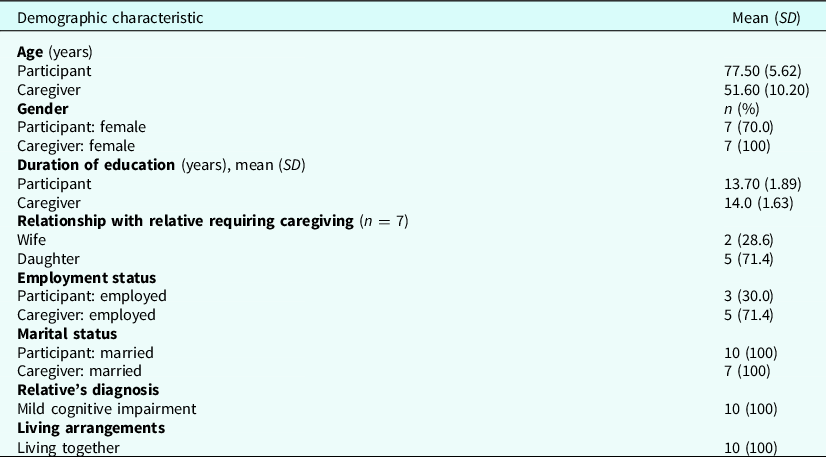
Table 2 illustrates the participants’ demographic data. Initially, 16 participants and 12 caregivers were recruited from one hospital department. However, three of these participants (two dementia and one MCI) were excluded because of unavailability (n = 1), lack of interest (n = 1) and refusal to participate (n = 1). Three more participants (one dementia and two MCI) dropped out during the program because of lack of motivation (n = 1) and health-related reasons (n = 2). Thus, ten MCI participants and their caregivers (n = 7) attended all program sessions, the post-intervention session, and 3-month follow-up and were included in the analysis. Among the three older adults who participated without their caregivers, two reported that they wanted to participate alone because they did not want to inconvenience their families and one said that he/she had lost his/her spouse, and was estranged from other relatives. Each of these three participants participated in this study independently. As assessed by the MINI, no participant had any physical or psychiatric disorders.
Study participants’ demographic data (n = 10)

The average time for each session was 36.04±3.24 minutes. Fidelity was scored for each session with 13 participants, including three drop-outs (a total of 89 sessions), and the average score was 22.84±3.07, with a maximum of 30 (for participants who completed all sessions, the score was 24.19±1.55). There were no adverse events during the trial. Additionally, comparing the participants’ mean K6 scores at the first and the last session yielded a difference of –4.11 [95% CI (–7.55, –0.67; p = 0.02)], with a Cohen’s d effect size of 0.74 [95% CI (–0.05, 1.43)]. The results for caregivers indicated a difference in means of –2.05 [95% CI (–5.32, 1.22; p = 0.18)], with a Cohen’s d effect size of 0.50 [95% CI (–0.29, 1.30)].
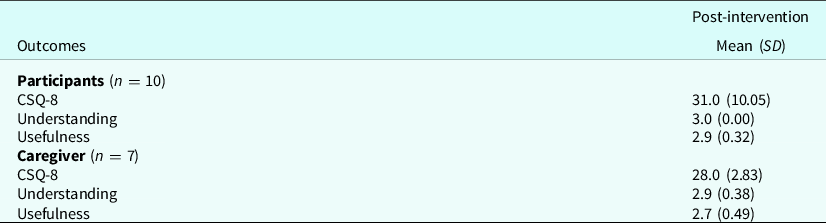
Table 3 indicates the mean scores of program satisfaction obtained using the CSQ-8. Both the participants and their caregivers demonstrated high perceived levels of program satisfaction, comprehensibility and usefulness.
Mean scores and standard deviations of feasibility and acceptability outcomes

This table shows only outcomes with respect to feasibility and acceptability and program satisfaction, understanding and usefulness. CSQ-8, Client Satisfaction Questionnaire. Understanding: one item evaluating participants’ and caregivers’ understanding of the program. Usefulness: one item evaluating whether participants and caregivers perceive the program as useful.
Additionally, the following comments were made by the participants based on their free feedback on the program. These are excerpts from the broader collection of comments from participants gathered during the study.
‘It was very helpful and this counselling changed my way of thinking a lot. I used to blame everything that was wrong with me on my MCI and was pessimistic, but now I can think, “It doesn’t matter if I worry about it now”, and I feel my anxiety has lessened as a result. When I have trouble, I try to picture the therapist’s face and imagine what the therapist would say in such a situation. The homework I did here and reporting on my recent situation helped me to sort out my feelings, and I am sad to think that the place will be closed.’ (67 years old, male)
‘When I am alone, I tend to slack off on everything, but I was able to encourage myself to work by thinking about what I am going to report here. I would like to continue my daily activities this time around, and I will remember to do the breathing exercises. My family said that I might have brightened up a little.’ (82 years old, female)
‘Without this counselling, I don’t think I would have resumed my handicraft hobby. It gave me a good opportunity. I think I understood the content of the sessions, which I thought were difficult, with the help of my daughter, who attended the sessions with me.’ (79 years old, female)
‘I found the second half of the session on my thoughts difficult. I felt that the task of increasing my daily activities and becoming more energetic suited me better, and both relaxation methods seemed to suit me, and I am getting better at sleeping at night.’ (80 years old, female)
‘I think I understood most of the content of the session. Before I started counselling, I used to take my forgetfulness very seriously, but now I say to myself, “What is the point of thinking about it?”. I feel more cheerful than before. My daughter also said to me, “You are able to move more than before, and you don’t talk about your anxiety anymore”.’ (76 years old, female)
‘It was a very new way of thinking for me to understand my feelings in terms of a model, and I think it was significant for me to be able to understand the vicious circle that goes around and around.’ (80 years old, male)
Scores for each outcome at the three stages
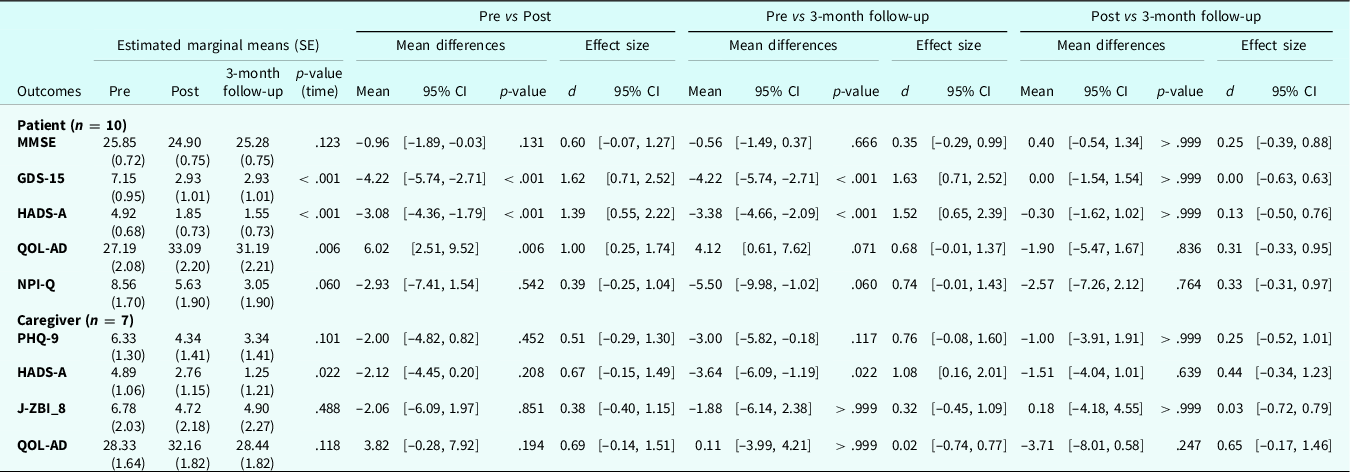
We conducted statistical analyses to compare scores obtained for each outcome at the three periods during the study for the 13 participants, all of whom attended at least one session (on average, 6.8±2.2 sessions). Table 4 illustrates the scores for each outcome over the study period. We used a mixed-effect regression model with time as a fixed effect and participants as a random effect to compare each score. The effect of time was significant for participants at the 99% level for the GDS-15, HADS-A and QOL-AD, and for caregivers at the 95% level for the HADS-A. The Cohen’s d effect sizes were large for all these measures.
Outcome score comparisons for three time periods: prior to the commencement of the program (pre-intervention), immediately after the completion of the program (post-intervention), and 3 months thereafter

Analysis set: the population included in the CBT program [n=10 (participants) and n=7 (caregivers)]. MMSE, Mini Mental State Examination; GDS-15, Geriatric Depression Scale-15 item version; HADS-A, Hospital Anxiety and Depression Scale (Anxiety only); QOL-AD, Quality of Life for Alzheimer’s Disease; NPI-Q, Neuropsychiatric Inventory Questionnaire; PHQ-9, Patient Health Questionnaire-9; J-ZBI_8, Japanese version of the short version of Zarit Caregiver Burden Interview; SE, standard error; 95% CI, 95% confidence interval.
Discussion
Approximately 80% of the initially recruited participants and their caregivers consented to participate in this CBT program. Additionally, 77% of those who participated completed the full eight sessions, the assessment at post-intervention and follow-up 3 months later. Three participants with dementia left the study. The study results and discussion are therefore limited to Japanese older adults with MCI.
Notably, there is some debate about the relationship between people living with dementia and feelings of familiarity, but people experiencing non-familiarity may experience anxiety, loss of sense of direction, anxiety about personal safety, social exclusion, and decreased outings (e.g. Margot-Cattin et al., Reference Margot-Cattin, Kühne, Öhman, Brorsson and Nygard2021). Although this trial was conducted at a medical institution frequently attended by the participants and their caregivers, it was assumed that they were unfamiliar with the program’s psychological assistance (i.e. the counselling offered by the program). Unfortunately, the needs of older adults for psychological counselling and their resistance to such services have not been fully clarified in Japan, but it is believed that the utilization rate of psychological counselling among the Japanese population is lower than in other countries. For those who are likely to show resistance to novel situations (except in the case of a sudden change in health), it may be possible to ease their resistance by meeting directly with them several times before providing psychological support services, building a rapport through interactions, and then introducing the services.
The participants and their caregivers did not experience any adverse events or worsened psychological distress as assessed by the K6 scale, resulting from the interventions across all sessions. Fidelity scores were high, indicating that the program was delivered as intended. The fidelity score might also be satisfactory because the study team carefully discussed each session. We believe that the situation/events would be different with daily support services, similar to those available in a community setting; thus, the fidelity results must be interpreted carefully. These feasibility results are similar to those reported by previous studies (Spector et al., Reference Spector, Charlesworth, King, Lattimer, Sadek, Marston, Rehill, Hoe, Qazi, Knapp and Orrell2015; Stanley et al., Reference Stanley, Calleo, Bush, Wilson, Snow, Kraus-Schuman, Paukert, Petersen, Brenes, Schulz and Williams2013).
In terms of program delivery, each session took approximately 30 to 40 minutes and was shorter than previous CBT programs (Spector et al., Reference Spector, Charlesworth, King, Lattimer, Sadek, Marston, Rehill, Hoe, Qazi, Knapp and Orrell2015; Stanley et al., Reference Stanley, Calleo, Bush, Wilson, Snow, Kraus-Schuman, Paukert, Petersen, Brenes, Schulz and Williams2013). This brevity of time did not constitute a burden on older people with MCI and instead helped them maintain their concentration. After the program, the satisfaction scores on the CSQ-8 scale were high. This indicates that almost all participants and their caregivers who completed every session were satisfied with the program. The program’s comprehensibility and usefulness after completing the full sessions were also high. Based on these results, we can conclude that this CBT program has sufficient feasibility and acceptability. In the future, we will modify this program as a treatment program more specific to ‘MCI’ or ‘dementia’ as in Spector et al. (Reference Spector, Charlesworth, King, Lattimer, Sadek, Marston, Rehill, Hoe, Qazi, Knapp and Orrell2015) and Charlesworth et al. (Reference Charlesworth, Sadek, Schepers and Spector2015), and brush up the content of sessions to make them easier for participants to understand and continue. The program needs to be revised as a treatment program specifically for ‘MCI’ or ‘dementia’.
Although this is a small-sample, single-arm study, with no control group, this study’s results indicate that patients’ anxious and depressive symptoms, as well as QOL, improved from pre- to post-intervention. Furthermore, these results were mostly maintained at the 3month follow-up assessment, suggesting that the program’s effects were sustainable, as shown by the scores on the GDS-15, HADS-A and QOL-AD scales. These results are mostly consistent with those obtained in previous studies (Orgeta et al., Reference Orgeta, Qazi, Spector and Orrell2015; Spector et al., Reference Spector, Charlesworth, King, Lattimer, Sadek, Marston, Rehill, Hoe, Qazi, Knapp and Orrell2015; Stanley et al., Reference Stanley, Calleo, Bush, Wilson, Snow, Kraus-Schuman, Paukert, Petersen, Brenes, Schulz and Williams2013), although they differed from this study in terms of the number of sessions, the pace at which sessions were conducted, and the inclusion criteria for participants. Some interventions included in this program, such as behavioural activation, relaxation and cognitive restructuring, could have contributed to the positive results. Therefore, this study suggests that CBT may be effective for both older Japanese people with cognitive decline, as well as those from other countries. However, while the Spector et al. (Reference Spector, Charlesworth, King, Lattimer, Sadek, Marston, Rehill, Hoe, Qazi, Knapp and Orrell2015) program was structured specifically to treat anxiety symptoms, the present program was structured to improve general mood (e.g. by treating anxiety and depression). It is possible that the difference in focus in treatment may have influenced the results of this intervention. Clarification of the treatment target may influence participant attitudes toward treatment and motivation, and is one of the most important aspects of pre- and post-intervention comparisons in such clinical trials. This issue should be addressed in future studies.
Contrary to previous studies (Orgeta et al., Reference Orgeta, Qazi, Spector and Orrell2015; Spector et al., Reference Spector, Charlesworth, King, Lattimer, Sadek, Marston, Rehill, Hoe, Qazi, Knapp and Orrell2015), the results of this study indicated that caregivers’ anxious symptoms, as shown by the HADS-A scores, also improved following the program. Additionally, the effect of time was significant, and caregivers’ scores on the other instruments also improved following the program. The caregivers attended the CBT sessions and were involved with and exposed to information, activities and homework. This might have affected the older adults and reduced the caregivers’ anxiety scores. Because the needs and motivations of the participating caregiving family members varied greatly, this study did not give specific instructions to the family members present as to the extent to which they would or would not be involved in the sessions or homework, but simply told them, ‘To the extent that family members are able, we would like you to support your relative with MCI by talking to the person and providing support when he or she is in need’. However, it is quite possible that the family caregivers in attendance were naturally listening to the CBT session and may have been learning skills. Additionally, for family caregivers who were worried about what would happen to their MCI relatives in the future and felt that there was nothing they could do, the fact that they received some kind of professional support brought some sense of relief, which may have contributed to lowering their anxiety scores, although the effect of this program is not known. This point may not be unrelated to the fact that the participants in this study were older adults with MCI, not dementia, and their family caregivers. Thus, the results suggested that the program may also have a positive effect on caregivers through mutual participation. Therefore, the findings of this study confirm the benefits of CBT-based programs for both participants and caregivers, even over short periods, and fewer sessions.
This small-scale study emphasizes the potential usefulness of CBT for older people with cognitive decline in Japan. Notably, this study was the first trial of CBT in Japan for older adults with cognitive decline. To date, there have been few reports on the use of CBT among older adults in Japan. When targeting older adults with cognitive decline, it may be necessary to adapt the program structure, interventions and session content for this population. Future scholars should address this issue. In addition, although this may be a slight digression from the focus of this study, it is known that psychiatric symptoms, such as depression and anxiety, can affect cognitive function and vice versa. Recently, the bi-directional relationship between such psychiatric symptoms and cognitive function has been discussed (e.g. Gale et al., Reference Gale, Allerhand and Deary2012; Wu et al., Reference Wu, Xm, Peng, Chen, Zhang, Zhou, Mai, Huang and Ning2021); however, the direction of this causal relationship remains controversial. Nevertheless, the results of these studies still suggest that an intervention may impact cognitive function in older adults with reduced symptoms of depression and anxiety. Unfortunately, the current study did not find any changes in MMSE scores measuring cognitive function before and after the intervention. More broadly, no studies have yet reported improvements in psychiatric symptoms and consequent improvements in cognitive function as a result of psychosocial interventions; moving forward, scholars would do well to consider this relationship.
This study also has clinical importance in that it might increase the number of non-pharmacological choices for treating older people with cognitive decline in Japan. Compared with group therapy, individualized treatment is time-consuming; however, it can be used with a diverse group of people with cognitive decline. Moreover, inviting caregivers into sessions can be helpful for the progression of the sessions, in that caregivers can remind participants to attend the sessions and do their homework, and, more importantly, become coaches for the participants by learning CBT skills together. The Japanese government has aspired to establish a society where people with dementia can live in comfortable and familiar surroundings for as long as possible. Considering that their options for psychological treatment and relevant evidence are lacking for Japan, this CBT program can be expected to support them and ultimately contribute to achieving this societal goal.
Limitations
The present study has several limitations. The criteria for evaluating the feasibility and acceptability in this study were based only on previous studies on CBT for dementia (Spector et al., Reference Spector, Charlesworth, King, Lattimer, Sadek, Marston, Rehill, Hoe, Qazi, Knapp and Orrell2015; Stanley et al., Reference Stanley, Calleo, Bush, Wilson, Snow, Kraus-Schuman, Paukert, Petersen, Brenes, Schulz and Williams2013), and these criteria are expected to be sufficient for evaluation. However, study participants had mixed conditions (e.g. age, participation with or without caregivers). These differences may have affected their results. For example, although older adults of different ages participated in this study, the factor of age seems very closely related to cognitive decline. In addition, caregiver participation may have been a memory aid for or brought a sense of security to the MCI participant; additionally, caregivers may have helped the participants complete their homework. Thus, we should have considered that the varying ages of the participants could have affected the results of this intervention and therefore that it remains unclear whether caregivers should participate in the CBT program. Moreover, although the participants ultimately included 10 people with MCI, it is difficult to lump them all together, as there were differences in their age, subjective symptoms related to cognitive function, and attitudes toward the possibility of developing dementia in the future. In this sense, it cannot be said that the 10 participants in this study were somewhat evenly distributed. To ascertain this, intervention with some control over the characteristics of the participants is required. The more detailed inclusion/exclusion criteria in this study were different from the previous randomized controlled trial studies (Spector et al., Reference Spector, Charlesworth, King, Lattimer, Sadek, Marston, Rehill, Hoe, Qazi, Knapp and Orrell2015; Stanley et al., Reference Stanley, Calleo, Bush, Wilson, Snow, Kraus-Schuman, Paukert, Petersen, Brenes, Schulz and Williams2013). In addition, we conducted the CBT program in a hospital out-patient department, not in a community setting, such as participants’ homes (Stanley et al., Reference Stanley, Calleo, Bush, Wilson, Snow, Kraus-Schuman, Paukert, Petersen, Brenes, Schulz and Williams2013) or any other familiar place for them. This was mainly because we could not deliver the program at home as an outreach service, which may have affected the results. As these participants and caregivers were already proactive regarding health as seen by their visits to the psychiatric out-patient department in a large academic hospital, most of them were highly motivated to participate; different motivations might be seen in patients who were not visiting a hospital. By conducting this CBT program with highly motivated participants, satisfactory results of feasibility and acceptability might be shown. Moreover, financial remuneration (round-trip travelling allowances and rewards for each assessment) may have played a role in continued participation. In particular, the fact that the location of the study was different from that of previous studies may have caused the low number of participants in this study (e.g. recruitment, obtaining consent, and participating in the study). Thus, we cannot compare our results directly with those of previous randomized controlled trial studies. Therefore, in the future, we plan to investigate the retention and attendance rates of this CBT program with an implementation environment similar to previous studies on CBT for dementia and MCI. Finally, in conducting studies on CBT with older adults, it is important to have the guidance of therapists or supervisors who are familiar with treating or supporting them. Unfortunately, this could not be achieved in this study because the number of such specialists is very limited in Japan, and CBT with older people is still under-developed.
This study primarily aimed to examine the feasibility and acceptability of this CBT program, not the efficacy thereof. It was a single-arm trial without random sampling. As complete datasets were available for the few participants (n = 10) in this trial, we did not conduct power analyses to evaluate the sample size required to produce an effect. Therefore, the quantitative results obtained may only be indicative rather than definitive. Therefore, this program’s efficacy should be validated through controlled studies with larger samples.
In conclusion, the findings suggest that, to a limited extent, a short-term program based on CBT could be a feasible and acceptable intervention for older people with cognitive decline in Japan. Furthermore, the results of this program suggested that having family caregivers present at CBT sessions may reduce the caregivers’ own anxiety. Further research using larger samples is required for additional insights regarding its efficacy.
Key practice points
-
(1) A newly developed eight-session CBT program piloted prior to this study was met with high levels of satisfaction both from patients and their caregivers and resulted in very few drop-outs, no adverse events, and no deterioration of mental health conditions over the course of the program.
-
(2) This intervention was found to have improved the depressive and anxious symptoms of older patients with MCI and lessened the anxious symptoms of their family caregivers pre- and post-program, and 3 months after this. Given the small sample size, however, the results of this study should be interpreted as indicative rather than definitive.
-
(3) The implementation of the CBT program with older people with mild cognitive impairment showed exciting results that could also improve the mood of the family members present. It is hoped that we will explore the mechanism underlying the effectiveness of this program shortly.
Data availability statement
The data that support the findings of this study are available on request from the corresponding author, M.K. The data are not publicly available owing to their containing information that could compromise the privacy of the research participants.
Acknowledgements
We would like to express our appreciation to all the participants, their family caregivers, and all staff in the Psychiatric out-patient clinic at the Nippon Medical School Hospital and Musashi Kosugi Hospital Dementia Center. Further, we would like to thank Dr Toshiaki Nomura and Dr Shin Kitamura, who gave us valuable suggestions and advice, and Ms Maho Araki and Ms Mai Kato, a clinical psychologist and certified public psychologist, respectively, for their assistance with the assessments and interventions. In particular, Dr Nomura guided and supervised our CBT sessions and our interactions with the older adults. Finally, we would like to thank Editage (www.editage.jp) for English language editing and the SATISTA Corporation (www.satista.jp) for advice regarding statistical analysis.
Author contributions
Masami Kashimura: Conceptualization (lead), Data curation (equal), Formal analysis (equal), Funding acquisition (lead), Investigation (lead), Methodology (equal), Project administration (lead), Resources (lead), Software (equal), Supervision (equal), Validation (lead), Visualization (lead), Writing – original draft (lead), Writing – review & editing (lead); Akiko Ishiwata: Conceptualization (equal), Data curation (equal), Formal analysis (equal), Funding acquisition (supporting), Investigation (supporting), Methodology (supporting), Project administration (supporting), Resources (supporting), Software (equal), Supervision (lead), Validation (equal), Visualization (supporting), Writing – original draft (supporting), Writing – review & editing (supporting); Amane Tateno: Conceptualization (supporting), Data curation (equal), Formal analysis (equal), Funding acquisition (supporting), Investigation (supporting), Methodology (equal), Project administration (equal), Resources (equal), Software (equal), Supervision (supporting), Validation (supporting), Writing – original draft (supporting), Writing – review & editing (supporting); Aimee Spector: Conceptualization (supporting), Investigation (supporting), Methodology (supporting), Project administration (supporting), Supervision (lead), Validation (lead), Visualization (supporting), Writing – original draft (equal), Writing – review & editing (equal).
Financial support
This study was supported by JSPS KAKENHI under grant numbers JP26590165 and JP18K13356. The funding body was not involved with the design of the study; collection, analysis and interpretation of the data; or writing the manuscript.
Conflicts of interest
The authors declare no conflicts of interest associated with this manuscript.
Ethical standards
The Ethics Committee of Nippon Medical School Hospital (27-01-543) approved the design of this research and the publication of this paper before the commencement of the program. Participants provided written informed consent. The study protocol adhered to the ethical standards outlined in the Declaration of Helsinki (as revised in Brazil) (World Medical Association, 2013). Participants could take part in this program without incurring any expense, as round-trip travelling allowances for each session and rewards (3000 yen) for each assessment (three assessments: pre-intervention, post-intervention, and the 3-month follow-up) were provided to participants.
Publication history
This manuscript was previously posted to ‘Research Square’: https://doi.org/10.21203/rs.3.rs-20136/v1.
However, this publication was intended as a pre-registration and was not peer-reviewed for publication.



Comments
No Comments have been published for this article.