Obesity is a chronic, progressive, relapsing and treatable multi-factorial, neurobehavioral disease characterised by an increase in body fat. This condition leads to dysfunction in adipose tissue and abnormal fat mass, resulting in metabolic, biomechanical and psychosocial health problems(Reference Fitch and Bays1). Although traditionally viewed as an adult disease, the rising prevalence of obesity among children in least-developed and developing countries highlights its significance as a global public health issue in terms of childhood obesity(Reference Zhang, Liu, Ni, Yi and Fang2). The prevalence of obesity in 2–16-year-old children is reported to be 16 % in the UK, consistent with rates in other European countries and the USA(3). In Türkiye, the Türkiye Childhood Obesity Research (COSI-TUR II) stated that 9·9 % of children are obese, and 14·6 % are overweight(Reference Özcebe and Bağcı Bosi4). According to WHO, the percentage of children and adolescents living with overweight or obesity has increased 4-fold from 2 to 8 % between 1999 and 2022. In 2022, 390 million children aged 5–19 years were overweight, with 160 million of them being obese(5). As obesity is gaining importance, especially in the context of childhood obesity, which is linked to a higher risk of persisting into adulthood and having negative consequences on both the economy and public health, the WHO’s ‘Global Nutrition Targets 2025’ has aimed to downregulate the increase in childhood overweight(6).
Unbalanced, unhealthy and inadequate dietary habits acquired during school years often persist into adulthood, increasing the risk of developing chronic diseases such as obesity and type 2 diabetes(Reference Küçükkaraca Zakkour and Yıldıran7–Reference Kaikkonen, Mikkilä and Raitakari9). In addition, research has shown that nutrition influences school achievements and class attendance(Reference Cohen, Hecht and McLoughlin10–Reference Sosu, Dare and Goodfellow13). Adequate, balanced and healthy nutrition in school-age children can enhance their physiologic, psychological and social well-being, improve immune function and increase school success(Reference Noor, Hasan and Gazi14–Reference Haruto16). School-age children tend to build new habits, especially lifelong dietary and lifestyle habits, during this period(Reference Saavedra and Prentice17). Therefore, early interventions for unhealthy dietary habits among school-age children can help improve health and decrease the risk of chronic disease development(Reference Martín-Rodríguez, Bustamante-Sánchez and Martínez-Guardado18,Reference Abrignani, Lucà and Favilli19) . A systematic review of seven studies on the impact of school health promotion interventions on academic performance showed that focusing on nutrition education can enhance academic performance by regulating energy balance among school-age children(Reference Pucher, Boot and de Vries20). Well-designed nutritional education programmes can prevent future chronic diseases in children by promoting healthy food choices and sustainable healthy dietary habits(Reference Koch, Contento and Lee Gray21,Reference Tercyak and Tyc22) . It is essential to increase the knowledge about healthy dietary habits in early adolescence to support healthy food choices and optimum growth and development.
Hedonic hunger is associated with the brain’s reward system(Reference Morales23). It is defined as an appetite for consuming palatable foods, which are usually high-energy, high-fat and high-sugar foods(Reference Lutter and Nestler24). Homeostatic hunger ceases once energy needs are met; however, hedonic hunger is related to satisfaction and is challenging to control(Reference Saper, Chou and Elmquist25). Eating driven by desire rather than hunger can lead to overeating high-fat, high-sugar, high-energy foods, contributing to the prevalence of childhood obesity(Reference Fox, Northrop and Rudser26). A longitudinal 4-year follow-up study evaluating the interaction between hedonic hunger and unhealthy food and beverage intake among adolescents indicated a significant positive relationship over these four years(Reference Mason, Smith and Lavender27). Adolescence is an especially critical period for developing dietary habits, eating behaviours and food choices. Understanding the factors that trigger hedonic eating behaviour or create opportunities for healthy food choices can help predict further eating patterns and provide an advantage in promoting lifelong healthy dietary habits(Reference Katsagoni, Psarra and Georgoulis28).
The Mediterranean diet (MedDiet) is a healthy dietary pattern originating from the countries surrounding the Mediterranean Sea and is traditionally adhered to by the populations in these regions. It is characterised by a high consumption of plant-based foods such as grains, fruits, vegetables, legumes, olive oil, oilseeds and olives, along with a medium-high intake of fish and seafood. Due to these characteristics, the MedDiet is regarded as one of the healthiest dietary patterns(Reference Sofi, Macchi and Abbate29–Reference Bonaccio, Castelnuovo and Bonanni31). Previous studies on school-age children have indicated that high adherence to the MedDiet can prevent several diseases, including obesity, airway inflammation and metabolic syndrome(Reference Katsagoni, Psarra and Georgoulis28). However, low adherence to MedDiet among school-age children has been detected even in Mediterranean countries including Spain(Reference Herrera-Ramos, Tomaino and Sánchez-Villegas32), Italy(Reference Cömert, Çerkez and Tekin33) and Türkiye(Reference Cotton, Dudley and Peralta34). The school-age children commonly do not follow a healthy diet and lifestyle habits in Türkiye(Reference Akman, Akan and İzbirak35,Reference Kalkan, Turkmen and Filiz36) . Therefore, a nutrition education programme promoting MedDiet adherence might improve the dietary quality of school-age children.
Nutrition education is known to positively impact nutrition knowledge, dietary habits and food choice towards healthy eating(Reference Szczepańska, Bielaszka and Kiciak37,Reference Perkins, Daley and Yerxa38) . It may increase awareness of nutrition and its effects on health, especially in children and adolescents(Reference Pem and Jeewon39). This study aims to investigate the effect of nutrition education on hedonic hunger, adherence to the Mediterranean diet and self-efficacy for healthy eating among early adolescents.
Methods
Participants
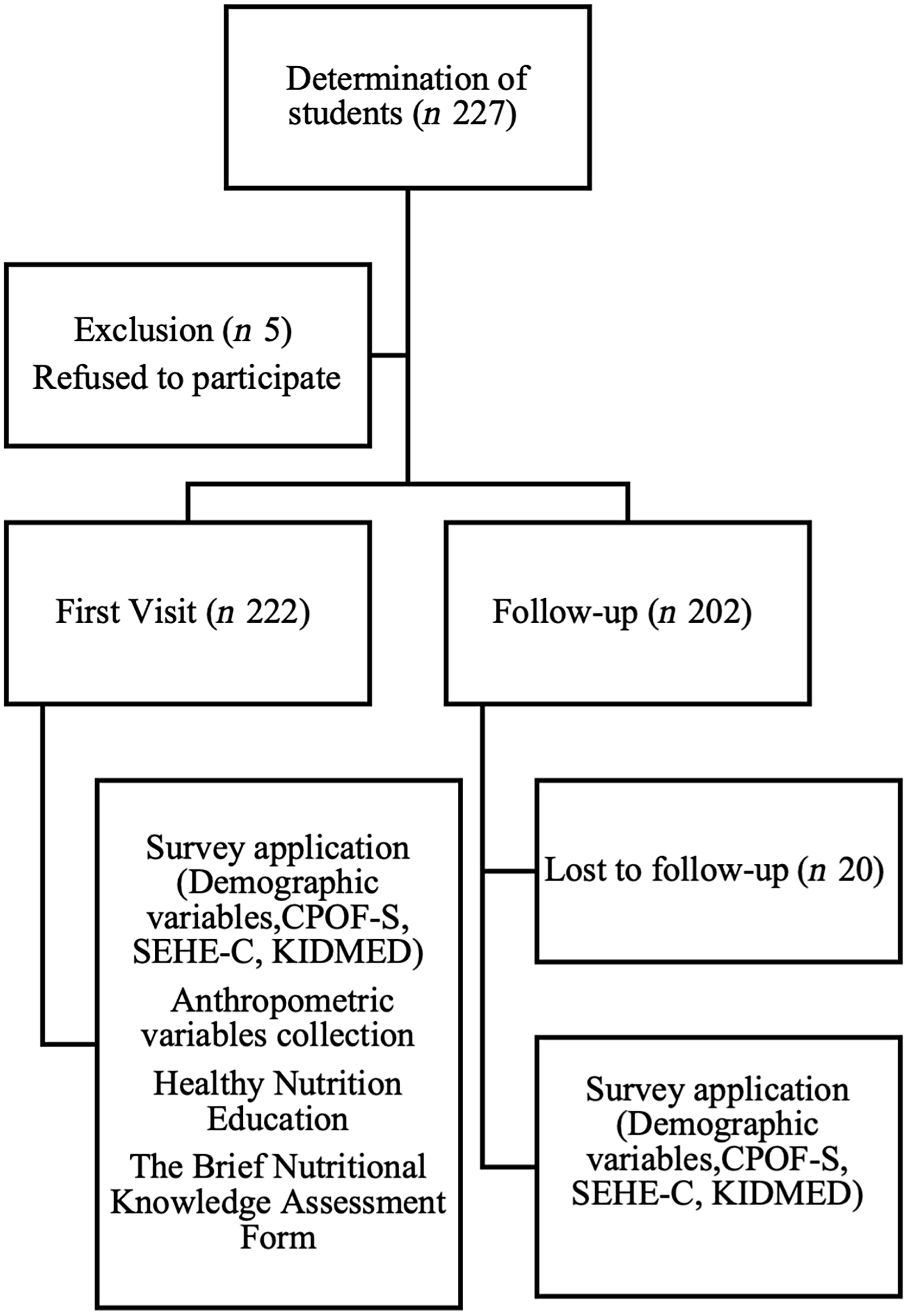
This study was planned as a one-group, pre-test-post-test, quasi-interventional study design. A total of 227 seventh-grade children, aged between 11 and 13 years, participated in the initial visit of the study. However, due to the follow-up loss (n 20) and some students refusing to participate (n 5), the study concluded with 202 students. The consort table of the study is shown in Figure 1. This study was conducted according to the cooperation between Istanbul Medeniyet University, Umraniye District National Education Directorate and Umraniye Gorvernate, in the scope of ‘Protocol of Cooperation for the Implementation of Projects to Protect and Improve Children’s Health’. Students were recruited from middle schools in Umraniye, Istanbul. Permission was obtained from the Umraniye District National Education Directorate, and two different middle schools were selected based on location. These schools have a similar educational environment and are public institutions. All participating parents were informed about the study, and consent forms were signed by the parents before the study commenced. Ethical approval was obtained from the university (E-38510686-000-2300065197). The study was conducted in accordance with the Declaration of Helsinki. Inclusion criteria included continuous enrolment in the seventh grade, parent-approved consent forms and participation in face-to-face lessons. Students who met these criteria completed the survey under the guidance of the researchers. The first survey was distributed to all participants who consented. They were instructed on how to complete the survey. If there were any questions, the researchers answered them. After 15 min, the surveys were collected by the researchers. Data were collected from 1 November 1 to 29 December 2023.
The consort table of the study.

Survey
Two surveys were used in this study. The first survey, administered during the first visit, consisted of seven sections: (1) demographic data (age, grade, parents’ educational status and professions, family income); (2) nutritional habits (meals per day, skipped meals, snack preferences, school-hour meals); (3) anthropometric measurements taken by researchers; (4) Children Power of Food Scale (CPOF-S); (5) Self-Efficacy for Healthy Eating (SEHE-C); (6) Adherence to Mediterranean Diet Scale (KIDMED); and (7) Brief Nutritional Knowledge Assessment Form. This survey contained seventy-seven questions. The second survey, used for follow-up and administered 1 month after the nutrition education session, comprised forty-four questions across four sections: demographic variables, CPOF-S, SEHE and KIDMED. The follow-up duration was limited to 4 weeks due to institutional constraints, including the academic calendar and availability of participants within the school setting.
Children’s Power of Food Scale
The CPOF-S consists of fifteen items answered using a five-point Likert scale (1 = strongly disagree; 2 = agree; 3 = partially agree; 4 = agree; 5 = strongly agree). This scale assesses variations in appetite response when an individual is in close proximity to food at three different levels. Lowe(Reference Lowe40) identified the sub-dimensions of the original scale as follows:
-
1. Food Availability (Imaginary Presence): This sub-dimension consists of six items (items 1, 2, 5, 10, 11 and 13). The scores from these items are summed and then divided by 6 to calculate the sub-factor score. This sub-factor reflects the response to the imaginary presence of food. For example: ‘1. I think about food even when I’m not truly hungry’.
-
2. Food Present (Physical Presence): This sub-dimension includes four items (items 3, 4, 6 and 7). The scores from these items are summed and then divided by 4 to determine the sub-factor score. This sub-factor measures the individual’s response to the physical presence of delicious food that has not yet been tasted. For example: ‘3. If I see or smell a food I like, I get a very strong desire to have some’.
-
3. Tasting the Food: This sub-dimension comprises five items (items 8, 9, 12, 14 and 15). The scores from these items are summed and then divided by 5 to compute the sub-factor score. This sub-factor captures the individual’s response when the food is tasted but not consumed. For example: ‘8. Just before I taste a favourite food, I get very excited’.
High scores on the CPOF-S indicate a higher sensitivity to nutrient-rich environments and a greater psychological influence of food. The validity and reliability study of this scale were conducted on 9–16 years children in Türkiye by Şahin-Bodur G. et al. (Reference Şahin-Bodur, Keser and Akçil-Ok41) in 2021. The Cronbach’s alpha of the CPOF-S was found as 0·878.
Self-Efficacy for Healthy Eating Scale
The scale, developed by Story et al. (Reference Story, Sherwood and Himes42), comprises nine items. The validity and reliability of the scale were conducted in Türkiye with 4th-grade students by Kabasakal et al. (Reference Kabasakal, Arslan and Üner43). The questions assess children’s preference for healthy foods. Some examples of items are: ‘3. When thirsty, choose to drink water instead of fizzy drinks or fruity still drinks, 5. Choosing small fries instead of large ones, 7. Eating less fatty crackers instead of chips’. Each question is scored as follows: 2 points for ‘very difficult’, 1 point for ‘somewhat difficult’ and 0 points for ‘not difficult at all’. The total score ranges from 0 to 18, with higher scores indicating greater self-efficacy in healthy eating. The Cronbach’s alpha of the SEHE-C was found as 0·62.
Adherence to Mediterranean Diet Scale
The KIDMED scale, developed by Serra Majem and colleagues(Reference Serra-Majem, Ribas and Ngo44), consisted of sixteen items answered with ‘Yes’ or No’. In the original scale, items 6, 12, 14 and 16 are scored as –1 if the behaviour is performed, while the remaining 12 items are scored as +1. Based on the total score from the checklist, a score of 3 or less indicates low adherence, a score between 4 and 7 indicates medium adherence and a score of 8 or higher indicates high adherence to the Mediterranean diet. Some examples of questions are ‘3. Do you regularly eat fresh or cooked vegetables once a day?, 6. Do you go to fast-food (hamburger, etc.) restaurants more than once a week? and 9. Do you eat cereal or grain products (bread) for breakfast?’. The validity and reliability study of the scale were conducted by Akar-Şahingöz et al. (Reference Şahingöz, Özgen and Yalçın45) in 6th, 7th and 8th grade 440 students in Türkiye. The Cronbach’s alpha of the KIDMED was found as 0·72.
Brief Nutritional Knowledge Assessment Form
The Brief Nutritional Knowledge Assessment Form contained ten questions relating to topics covered during the healthy nutrition education sessions. These assessment forms were prepared by the researchers, considering the students’ perception levels and their ages, and were approved by experts from four different disciplines: educational science, paediatric medicine, nutrition and dietetics and paediatric nursing. The questions were determined according to literature and previous research questions as well as reliable and validated scales(Reference Wang, Stewart and Chang46,Reference Zarnowiecki, Dollman and Sinn47) . The form was filled out by participants before and after the education sessions. Each right answer was worth 10 points, with higher points indicating greater knowledge of healthy eating.
Anthropometric data
Participants’ weight (kg), height (cm), waist circumference (WC; cm), hips circumference (HC; cm) and neck circumference (NC; cm) were collected by the researchers. Weight was measured using a balanced scale, and height, WC, HC and NC were measured using a tape. BMI was calculated as weight divided by height squared (kg/m2). The researchers also calculated the waist-to-hip ratio and waist-to-height ratio using the WC, HC and height measurements. Anthropometric measurements (weight, height and BMI) were evaluated using z-scores based on national reference data from Neyzi et al.(Reference Neyzi, Günöz and Furman48). NC and WC were categorised using age- and sex-specific percentile references from national datasets(Reference Mazıcıoğlu49,Reference Hatipoğlu50) . For descriptive comparisons, 50th percentile values were used as benchmarks, based on both the aforementioned references and the growth charts published by Neyzi (2008)(Reference Neyzi, Günöz and Furman48). Anthropometric measurements (e.g. weight, height, BMI, WC, NC) were collected only at the beginning of the study. Due to the short follow-up period (4 weeks), no post-intervention anthropometric re-measurements were conducted, as meaningful physical changes were not expected in such a short timeframe.
Determination of Z-scores
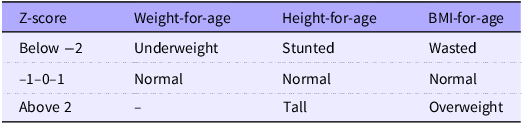
Adolescents’ z-scores were calculated using reference values provided by Neyzi et al.(Reference Neyzi, Günöz and Furman48) based on anthropometric data for Turkish children and adolescents. The calculations were performed using the ‘Oxicology’ software developed by the Association of Paediatric Endocrinology and Diabetes(51). Z-score classifications were presented in Table 1 and followed the cut-off criteria recommended by the WHO(52).
Classification of z-scores(52)

Healthy nutrition education
The presentation was created using PowerPoint (Microsoft) and included pictures, videos, a healthy nutrition pyramid and images of a healthy nutrition plate to facilitate learning and improve retention. The healthy nutrition education was delivered in eight sessions, each lasting two hours, totalling 16 h of face-to-face instruction. These sessions were conducted on different days in a classroom setting. Each child attended 2-h healthy nutrition education. The education covered answers to the following questions:
-
What is healthy, adequate and balanced eating?
-
What are the effects of healthy, adequate and balanced eating on health?
-
What is hunger?
-
What are the differences between hedonic and homeostatic hunger?
-
What are the signs of physical (homeostatic) hunger?
-
What can we prefer when we are hungry? (Healthy Food Choices)
-
What points should we be careful about regarding our dietary habits?
Statistical analysis
The data were analysed using the SPSS 26 programme (IBM). The normality of the data was tested by examining Kolmogorov–Smirnov/Shapiro–Wilk tests, along with skewness-kurtosis values and histograms. The descriptive variables were presented as mean (standard deviation (sd)) and percentage (%). For qualitative variables, a paired-sample t test was used for dependent groups and repeated measures. A one-sample t test was used to compare anthropometric variables with reference growth charts. Changes were considered statistically significant at P < 0·05 and P < 0·01 levels.
Results
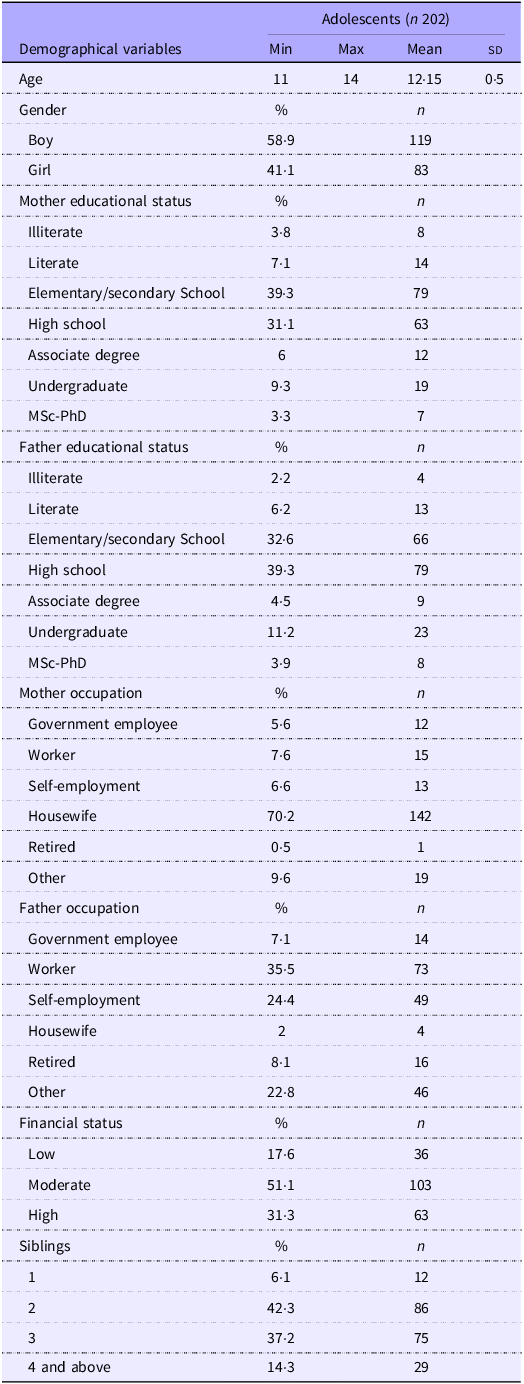
The demographic variables of participants are shown in Table 2. The mean age of the participants was 12·15 (sd 0·5) years, with 58·9 % being boys. The majority of the participants’ mothers and fathers graduated from elementary and high schools. Most of the mothers were housewives, and the fathers were workers. Nearly half of the participants reported having a moderate income and at least one sibling.
Demographic variables of students (Minimum and maximum values; mean values and standard deviations; numbers and percentages)

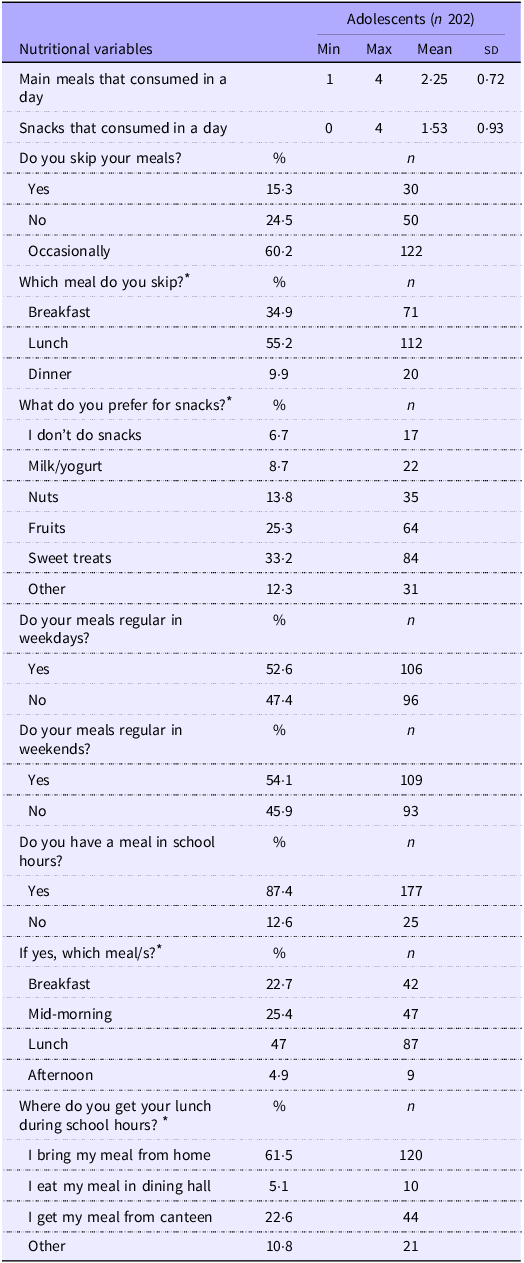
Table 3 shows the participants’ answers to dietary habits/ eating behaviour-related questions. Children typically consumed at least two main meals and two snacks daily. Most of the participants occasionally skipped their meals, mainly lunch. Sweet treats were the primary snack preference. About half of the children reported having regular meals and mealtimes on both weekdays and weekends. Most participants ate at least one meal during the school hours, typically lunch, and they usually preferred to bring their meals from home.
Students’ answers to dietary habits and eating behaviours related questions (Minimum and maximum values; mean values and standard deviations; numbers and percentages)

* Multiple answers.
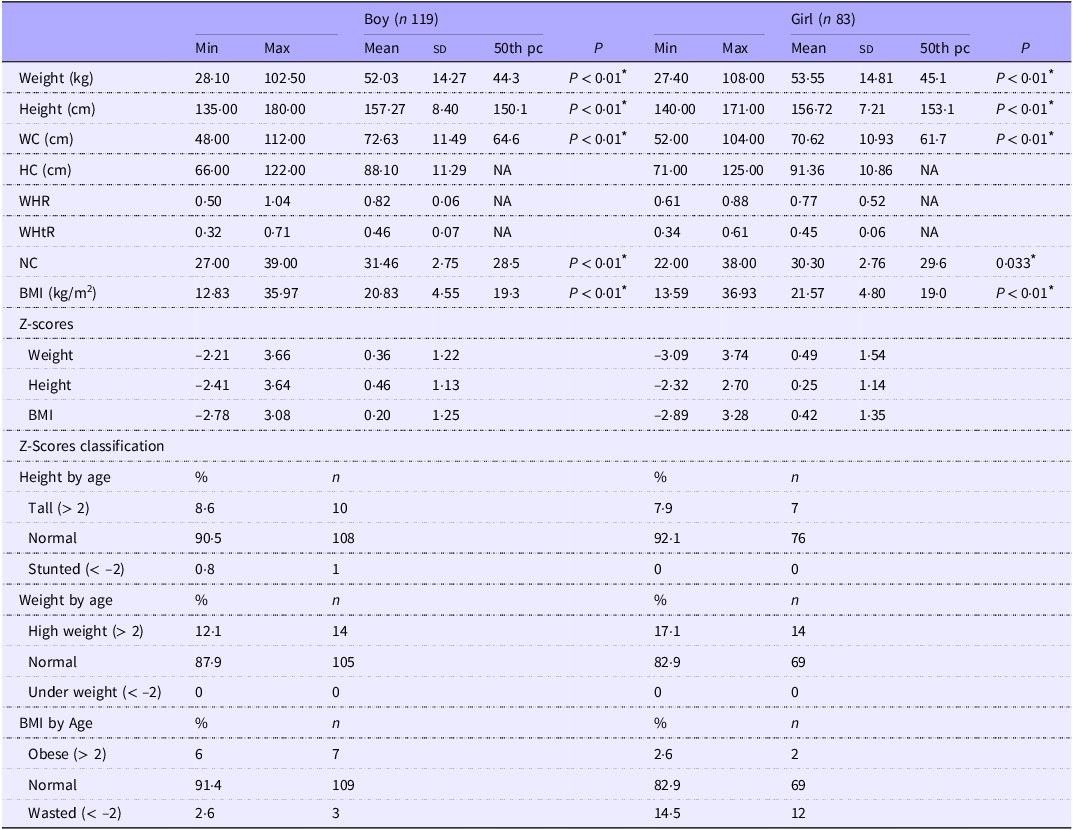
Anthropometric variables of the participants are presented in Table 4. Boys had a mean weight of 52·03 (sd 14·27) kg and height of 157·27 (sd 8·40) cm, while girls averaged 53·55 (sd 14·81) kg and 156·72 (sd 7·21) cm – both significantly above national 50th percentile values (P < 0·01). Waist and neck circumferences were also higher than reference medians in both sexes (P < 0·01). BMI was 20·83 (sd 4·55) kg/m2 for boys and 21·57 (sd 4·80) kg/m2 for girls, again significantly above national averages (P < 0·01). The majority of students fell within the normal range for height-, weight- and BMI-for-age z-scores. According to national references, 90·5 % of boys and 92·1 % of girls had normal height-for-age, while 87·9 % of boys and 82·9 % of girls had normal weight-for-age. Similarly, 91·4 % of boys and 82·9 % of girls had BMI-for-age values within the normal range.
Anthropometric variables of students (Minimum and maximum values; mean values and standard deviations)

WC, waist circumference; HC, hip circumference; WHR, waist-to-hip ratio; WHtR, waist-to-height ratio; NC, neck circumference.
* One-sample t test, statistically significant at P < 0·01 level.
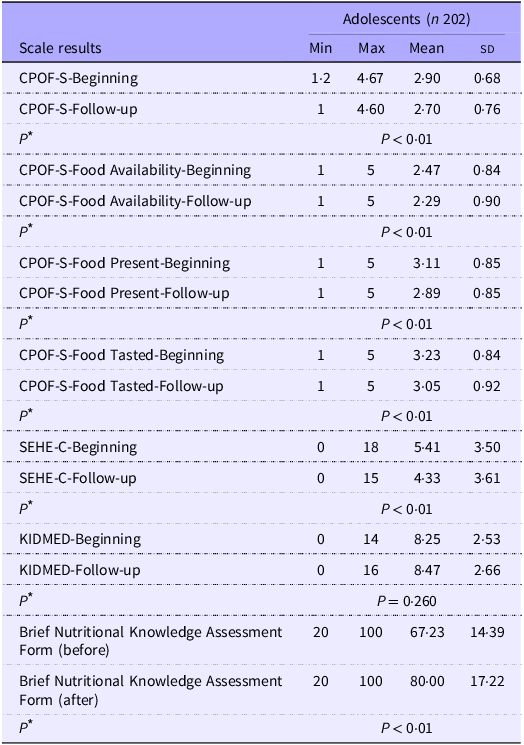
Table 5 shows the results of the questionnaires. It was found that children’s initial hedonic hunger and SEHE-C total scores significantly decreased in the follow-up (P < 0·01). Although participant adherence to the Mediterranean diet increased, this change was not statistically significant. Additionally, according to the pre-post test scores, children’s knowledge about healthy nutrition significantly increased after the healthy nutrition education (P < 0·01).
Scale results for adolescents’ nutritional and behavioural assessments (n 202) (Minimum and maximum values; mean values and standard deviations)

CPOF-S, Children’s Power of Food Scale; SEHE-C, Self-Efficacy for Healthy Eating Scale; KIDMED, Mediterranean Diet Score.
* Paired-samples t test, statistically significant at P < 0·01.
Discussion
This study aims to investigate the effect of nutrition education on hedonic hunger, adherence to the Mediterranean diet and self-efficacy for healthy eating among early adolescents. The study findings revealed that most children (60·2 %) occasionally skip their main meals, mainly lunch (55·2 %), and 33·3 % prefer sweet treats as snacks. In addition, they have higher weights, BMI, NC and heights compared with the national reference values for the 50th percentile(Reference Neyzi, Günöz and Furman48–Reference Hatipoğlu50). Children had lower hedonic hunger and higher healthy nutrition knowledge after the healthy nutrition education and follow-up; however, their self-efficacy for healthy eating decreased in follow-up. These results indicate that while a short-term health nutrition education programme can effectively lower pleasure-based hunger and enhance healthy eating knowledge, it may not be sufficient to improve self-efficacy for healthy eating.
The study indicated that most school-age children have unhealthy dietary habits, including skipping their meals (15·3 %), preferring sweet treats (33 %) and 47·3 % not having regular meals during weekdays. Unhealthy dietary habits are a leading cause of childhood obesity, which has become a growing public health concern worldwide(Reference Kuźbicka and Rachoń53). These findings highlight the urgent need for targeted nutrition education programmes to promote healthier eating habits and address the rising trend of childhood obesity. Implementing such interventions could improve the dietary quality and overall health of school-age children.
Hedonic hunger is considered a contributing factor to obesity because it triggers uncontrolled eating behaviours(Reference Schultes, Ernst and Wilms54). Studies have shown that it is associated with the consumption of high-fat, palatable, high-sugar and high-energy foods, especially in children and adolescents(Reference Bejarano and Cushing55,Reference Stok, De Vet and Wardle56) . Hedonic hunger can contribute to obesity due to consumption of high-energy, high-saturated fat, high-sugar and high-salt foods(Reference Mason, Smith and Lavender27). Yassıbaş et al. (Reference Yassıbaş, Bölükbaşı and Turan57) have found that hedonic hunger is related to food addiction and correlated with the BMI z-scores. In this study, hedonic hunger was slightly above a moderate level among school-age children (mean Power of Food Scale Total PF score: 2·9 initially and 2·7 at follow-up out of 5), with 33·3 % of preferring sweet snacks. Hedonic hunger may contribute to the unhealthy dietary habits observed in school-age children. The study found that healthy nutrition education significantly decreased hedonic hunger, as measured by the CPOF-S. Individuals can become more mindful of healthy eating and making healthy choices by enhancing nutritional knowledge along with healthy eating education. Therefore, increasing students’ nutritional knowledge can help build a healthy lifestyle and promote healthy food preferences.
The creation and sustainment of healthy dietary habits are critical for long-term health, especially during early adolescence(Reference Koca and Arkan58), and enhancing nutrition knowledge through nutrition education is an effective intervention for achieving this among school-age children(Reference Raut, KC and Singh59). In this study, a 2-h healthy nutrition education session increased healthy nutrition knowledge and decreased hedonic hunger among 11–14-year-old students. Consistent with our findings, several studies have shown the positive effects of nutritional education on eating habits and nutritional knowledge(Reference Shen, Lo and Chilinda60–Reference Lee, Lee and Kim62). Shen et al. (Reference Shen, Lo and Chilinda60) investigated the effects of a 1-h after-school-nutrition education program on nutritional knowledge and dietary habits among 5th–9th grade students. This programme aimed to teach six major food groups, the relationship between healthy body weight and a healthy diet and how to read nutritional labels. The study found that while both elementary and junior high school students’ nutritional knowledge increased, snacking frequency and fried food consumption decreased among junior high school students. Another study showed that a 30-min nutritional education based on Indonesian Nutrition Guidelines promoted healthy eating behaviours by increasing vegetable consumption and decreasing fried food, sugar and snack intake(Reference Marliya and Muhammad61). Similarly, Lee et al. (Reference Lee, Lee and Kim62) examined the effects of standardised nutrition education approved by the Korean Ministry of Food and Drug Safety on healthy dietary habits among middle and high-school students. They found that nutritional education increased students’ nutritional knowledge and positively influenced healthy dietary habits, and students who attended the nutritional education sessions were less likely to skip meals, especially breakfast, and consumed more fruits, milk and vegetables, with lower body image misperception(Reference Lee, Lee and Kim62). Although there are differences in the duration of education and the topics focused on according to the objectives of the study, the effect of nutrition education on nutrition knowledge is common. All of the nutrition education sessions covered the topics of food groups, healthy eating and healthy food choices. Enhancing nutritional knowledge with these topics helps individuals make accurate choices about healthy foods that are not influenced by emotional or hedonic impulses. These findings underscore the importance of incorporating nutritional education into school curricula to foster healthier dietary habits and improve the overall well-being of students.
An interesting finding of the study is that although the participants’ knowledge of health nutrition significantly increased, their self-efficacy for eating healthy foods decreased and adherence to the Mediterranean diet did not change after the healthy nutrition education in the follow-up period. In contrast to our findings, other studies have shown that adherence to the Mediterranean diet can be increased by nutrition education(Reference Philippou, Middleton and Pistos63,Reference Morelli, Avolio and Galluccio64) . A study evaluating the effect of a half-day nutrition education session on adherence to the Mediterranean diet among adolescent swimmers (13–19 years old) found higher adherence 6 weeks after the nutrition education(Reference Philippou, Middleton and Pistos63). Another study involving 1277 school-age children reported that a 9-month ‘Eat Mediterranean Program’, aimed at improving nutritional knowledge of the Mediterranean diet, enhanced their adherences to the Mediterranean diet(Reference Rito, Dinis and Rascôa65). These differences might be due to the age of children, as studies showing positive interactions included slightly older children compared with our population. Additionally, our study applied a one-time, 2-h nutrition education session, whereas longer-term nutrition education might be needed to effect behavioural change, as it is well-documented that changes related to healthy eating require time(Reference Schifferstein66,Reference Hall and Kahan67) . In addition, it is important to consider that 98·5 % of participants had low adherence to the Mediterranean diet before the education session in this study. Several factors positively influence a child’s adherence to the Mediterranean diet, including the high duration of out-of-school exercise, parents’ education levels, healthy sleeping habits, high family income and the high family’s adherence to the Mediterranean diet(Reference Fernández-Iglesias, Álvarez-Pereira and Tardón68–Reference Buja, Grotto and Zampieri72). In this study, both fathers (58·9 %) and mothers (49·7 %) had higher educational levels, and most participants came from moderate to high-income families (82·4 %). While other studies have focused on nutrition education around the Mediterranean diet, this study focused on hedonic nutrition and healthy food choices. An educational programme focused on the Mediterranean diet can be organised and monitored to increase children’s adherence to the Mediterranean diet. Furthermore, behavioural change is affected by additional factors apart from nutritional education such as social influences as peer dynamics and family support. Özbey et al. (Reference Özbey, Efe and Bayat73) showed that social media addiction could detract from healthy eating practices among adolescents by elevating exposure to unhealthy food choices. This highlights the importance of integrating social influences into nutrition education to enhance self-efficacy. Children’s psychological health may also contribute to their self-efficacy for healthy eating. Self-esteem has been shown to influence eating behaviours, which can lead to unhealthy eating patterns. It is recommended that nutrition education programmes address psychological aspects to increase self-efficacy for healthy eating(Reference Yang74). However, as we did not determine other predictors, it is difficult to suggest any causative factors for these results.
The study has several strengths and limitations. One limitation is the short follow-up period. Additionally, the nutritional knowledge assessment forms used are not validated and reliable tests; they were created by researchers based on the educational content and approved by the Istanbul Medeniyet University Faculty of Educational Science researchers. The study results are limited by the sample size and are generalised to the specific group in which the study was conducted. Besides, there was no control group, and all participants were from the same geographic area. We did not evaluate parents’ adherence to the Mediterranean diet, nor did we assess the physical activity level or the sleeping habits of children, which might contribute to low adherence to the Mediterranean diet(Reference Duarte, Martins and Silva70,Reference Buja, Grotto and Zampieri72,Reference Grosso, Marventano and Buscemi75) . In addition, an education programme may not be sufficient for achieving behavioural change for adherence to the Mediterranean diet and self-efficacy for healthy eating. However, the study’s strength lies in being the first to evaluate the effect of nutrition education on hedonic hunger and self-efficacy for healthy eating in early adolescents. Valid and reliable questionnaires, such as CPOF-S, SEHE-C and KIDMED, were used to assess hedonic hunger, healthy eating self-efficacy and Mediterranean diet adherence, respectively. Additionally, anthropometric measurements were compared with the reference 50th percentiles, providing insights into the adolescents’ growth values. Moreover, the nutrition education material was approved by Educational Science Assistant Professors and delivered by experienced academicians. Future research can focus on making a behavioural change for adherence to the Mediterranean diet through nutrition education with improved content and long-term duration. In addition to healthy eating education, the effects of sleep habits, family support and psychological aspects on hedonic hunger, self-efficacy for healthy eating and adherence to the Mediterranean diet can also be examined in future research.
Conclusion
In conclusion, the study showed that a 2-h healthy nutrition education session increased nutritional knowledge levels and decreased hedonic dietary status among early adolescents. However, it did not affect adherence to the Mediterranean diet or increase self-efficacy for eating healthy foods. These findings suggest that ongoing nutrition education might be necessary to improve students’ healthy food preferences and promote healthy eating habits. Nutritional interventions could be planned as a strategic public health initiative, involving dietitians, paediatric nurses, paediatricians, school administrators and teachers to build healthy dietary habits and improve nutrition knowledge. Longer and repeated nutrition education sessions that include parents and school administrators, increased physical activity and improved health literacy among parents could help to positively change eating behaviour. Additionally, a curriculum that includes nutrition literacy lessons could support the protection and improvement of children’s health.
Acknowledgements
All authors thank Umraniye District National Education Directorate and Umraniye District Governorate for their support of this project and the directors of Atatürk Middle School and Mehmet Akif Ersoy Middle School. Besides that, they are all thankful to the generous and sincere help of Sevval Gencturk and Zeynep Turker during the collection of the data.
There is no funding for this project.
H. K. B. G.: Conceptualisation, data curation, formal analysis, investigation, methodology, project administration, supervision, validation, visualisation, writing – original draft and writing – review and editing. Ö. A. A.: Conceptualisation, data curation, formal analysis, investigation, methodology, project administration, supervision, validation, visualisation, writing – original draft and writing – review and editing. F. D.: Conceptualisation, project administration, supervision, writing – review and editing. A. D. L.: Conceptualisation, data curation, formal analysis, investigation, methodology, project administration, supervision, validation, visualisation, writing – original draft and writing – review and editing.
No conflict of interest was declared by the authors.
The data that support the findings of this study are available from the corresponding author, Hatice Kübra Barcın Güzeldere, upon reasonable request.
An ethical approval was obtained from the Ethics Board (E-38510686–000–2300065197). All participants were involved in the study after obtaining both their consent and their parents’ consent. The study was conducted in accordance with the Declaration of Helsinki.
Consent for publication: not applicable