




No CrossRef data available.
Article contents
Parasite assemblages of crucian carp (Carassius carassius) – is depauperate composition explained by lack of parasite exchange, extreme environmental conditions or host unsuitability?
Published online by Cambridge University Press: 19 May 2005
Abstract
Recent studies on parasite communities have considered the factors which contribute to variability in parasite infections among populations of one host species. This paper examined parasite assemblages of crucian carp (Carassius carassius) in a natural set-up of two distinctive environments inhabited by the same host species and differing in respect to composition of other fish species: ponds, where extreme conditions prevent other fish species from occurring and lakes, where crucian carp coexist with other fish species. Our aim was to evaluate the significance of parasite exchange, environmental conditions and host suitability for the depauperate parasite assemblages observed in pond crucian carp. As predicted, crucian carp had more diverse parasite species composition in lakes, which supports the hypotheses of increased opportunities for parasite exchange with other fish species and better environmental conditions for the parasites. However, for instance, diplostomids were found only from few fish individuals in very low numbers. Experimental exposure trials with the eye fluke Diplostomum spathaceum in the laboratory indicated that crucian carp were totally resistant to infection, which is exceptional and suggests that the low number of these parasites in crucian carp was due to physiological unsuitability of the host. To obtain a better understanding on the mechanisms underlying the formation of parasite assemblages in these fish, further studies on the relationships between the unique physiology of crucian carp and infection success by other parasite species are needed.
Keywords
Information
- Type
- Research Article
- Information
- Copyright
- 2005 Cambridge University Press
INTRODUCTION
Variability in diversity and abundance of parasite infections among populations of one host species represents one of the most intriguing features of host–parasite interactions. Several hypotheses have been put forward to explain this variability, which include, for example, physical or chemical habitat characteristics in proliferating or inhibiting parasite occurrence. In fish, factors such as lake size, trophic status or distance from other lakes have been shown to affect the composition and abundance of parasites in their hosts (e.g. Kennedy, 1978; Marcogliese & Cone, 1991; Hartvigsen & Halvorsen, 1994; Poulin & Morand, 1999; Karvonen & Valtonen, 2004). However, characteristics of the host population structure have received less attention, although they may have profound effects on factors such as parasite transmission efficiency (Hudson et al. 2002). For instance, studies on parasite assemblages in relation to host population features suggest that host population density or size may play an important part in shaping parasite communities in mammals (Arneberg et al. 1998; Morand & Poulin, 1998; Arneberg, 2002) and in fish (Bagge, Poulin & Valtonen, 2004). In addition to one particular host species, parasite assemblages may be affected also by the number and composition of other host species. The exchange hypothesis of Leong & Holmes (1981) suggests that parasite species composition in one host should reflect the diversity and abundance of the composition in other host species. In this study, we explored parasite assemblages of crucian carp (Carassius carassius) in populations differing with respect to possibilities for parasite exchange between host species.
In Finland, populations of crucian carp are found in 2 distinct habitat types: (1) ponds in which stunted carps are found in high densities and (2) lakes where fish grow considerably larger and have a different body shape (Holopainen, Tonn & Paszkowski, 1997). Cross-transfer experiments have shown that this is caused by better nutrition and higher predation risk in lakes, and not by genetic differences between the populations (Holopainen et al. 1997). Ponds and lakes differ markedly in their physical characteristics. Ponds are usually characterized by brown water, low pH, shallow water depth and hypoxia during the long winter period, which makes them uninhabitable for most fish species. Because of its unique physiology and tolerance to anoxia, crucian carp is usually the only fish species found in these ponds (Holopainen, Hyvärinen & Piironen, 1986; Tonn et al. 1990; Bagge et al. 2004). Crucian carp survive the long winter period by depressing their metabolic level and drifting off to hibernation, which is then compensated by intensive growth and reproductive period in summer temperatures reaching as high as 25–30 °C. However, in lakes, crucian carp are found in a typical lake environment in coexistence with other fish species. This natural set-up of 2 distinctive environments inhabited by the same host species, in monoculture and, on the other hand, in coexistence with other fish species, gives us a unique opportunity to compare effects of the presence of other hosts and different environmental conditions on parasite assemblages of crucian carp.
Crucian carp populations in the ponds are known to harbour very depauperate parasite fauna (Bagge et al. 2004), but reasons for this low species diversity are unknown. However, this may be because (1) the absence of other fish species prevents parasite exchange, (2) extreme conditions in ponds restrict the colonization of metazoans with complex life-cycles or (3) exceptional physiology of the crucian carp forms a barrier especially for endoparasites. To test between these hypotheses, we studied parasite assemblages of crucian carp from 9 pond populations and 7 lake populations. We expected that in lakes crucian carp would be exposed to a variety of parasites because of parasite exchange from other fish species whereas in ponds this would be prevented by the absence of other fish species. Furthermore, more suitable environmental conditions for parasites and their intermediate hosts could result in more diverse parasite assemblages in the lake populations. To test the third hypothesis, we conducted experimental exposures of crucian carp with the complex life-cycle trematode, Diplostomum spathaceum, which is one of the most prevalent parasite species of freshwater fish and is found virtually in all water systems in the study area (Valtonen, Holmes & Koskivaara, 1997; Valtonen et al. 2003).
MATERIALS AND METHODS
Crucian carp were caught from 9 ponds (area 0·02–1·5 ha; see Bagge et al. 2004) and 7 lakes (area 23–250 ha) in Central and Eastern Finland using fish traps. Ponds were devoid of other fish species whereas the lakes, based on the catch statistics from local statutory fishery associations, were inhabited by several other fish species including (in order of abundance) roach (Rutilus rutilus), perch (Perca fluviatilis), bleak (Alburnus alburnus), ruff (Gymnocephalus cernuus), bream (Abramis brama), pike (Esox lucius) and burbot (Lota lota) (T. Valtonen, personal communication). Crucian carp were brought to the laboratory, where they were freshly killed and measured for length. Metazoan parasites were then examined from the first gill arch, skin, fins, eyes and internal organs (heart, liver, kidney, spleen, gall blabber, swim bladder and intestine), and identified under a microscope. Prevalence and mean abundance (Bush et al. 1997) were then calculated for each parasite species.
Crucian carp from one of the ponds (P3) were exposed to Diplostomum spathaceum cercariae in the laboratory. Parasite cercariae were obtained from several naturally infected Lymnaea stagnalis by allowing the snails to release cercariae in a small amount of water for 3 h. Cercarial suspension from each snail was pooled and cercarial density in the combined suspension was estimated from ten 1 ml subsamples. Prior to exposure, eyes of the fish were studied with a slit-lamp microscope under anaesthesia (MS-222 as anaesthetic) to ensure that fish were free from D. spathaceum infection (see Karvonen, Seppälä & Valtonen, 2004a and Karvonen et al. 2004b for methodological details) after which the fish were allowed to recover from anaesthesia. Individual, randomly selected fish (mean length±S.E.: 102·6±1·6 mm) were then exposed to 50, 100, 150, 300, 500 and 1000 cercariae in 1 litre of aerated water for 30 min providing 5 replicate fish for each treatment. In addition, to determine the tolerance limit for the fish, we also exposed single fish to 5 extreme cercarial doses, which ranged from 2900 to 10300 cercariae per fish. After the exposure, fish were maintained in larger tanks for a minimum of 24 h to allow parasite establishment and were subsequently studied for parasites by dissecting the eye lenses. Cercariae used here were also used in concurrent exposure experiments with rainbow trout (Oncorhynchus mykiss). These exposures resulted in heavy infection in the lenses of these fish (Karvonen et al. 2005), which indicates that the cercariae were infectious.
RESULTS
In the ponds, 6 parasite species were detected (Table 1) and the average number of species per pond was 3·78±0·46 (mean±S.E.). Assemblages were dominated by monogeneans (especially Dactylogyrus spp.), which constituted 99·89±0·06% of the parasite specimens. Other species were the endoparasitic trematode Diplostomum spathaceum and the ectoparasite Argulus foliaceus, which were found from few fish in low numbers. No other species were observed. The mean number of species per fish in the ponds was 2·76±0·26. In the lakes, a total of 13 parasite species were detected (Tables 2 and 3). The average number of species per lake was 6·43±0·81, this being significantly higher compared to the ponds (t-test: t14=−2·99, P<0·01). Assemblages were again dominated by monogeneans (84·63±13·99% of parasite individuals), but also other species such as the complex life-cycle nematode Raphidascaris acus, and acanthocephalans Acanthocephalus lucii and Neoechinorhynchus rutili were observed in the intestine, although in low numbers (Table 3). In addition, few dead metacercariae of Rhipidocotyle fennica were found on the fins from 3 populations and they were subsequently excluded from the data. The mean number of species per fish in the lakes was 2·98±0·39, which did not differ from the ponds (t-test: t14=−0·50, P=0·62).


In the experimental exposure of crucian carp to D. spathaceum, no metacercariae were found established in fish regardless of the cercarial dose. In the highest doses exceeding 1000 cercariae per fish, fish seemed restless, indicating that cercariae were penetrating the fish. No mortality of fish occurred during or after the exposures.
DISCUSSION
This study investigated parasite assemblages of crucian carp in two different habitats: ponds where carps live in dense monocultures and in lakes where they coexist with other fish species. Our aim was to explore the reasons for depauperate parasite assemblages found in pond carps (Bagge et al. 2004), especially considering the roles of parasite exchange, environmental conditions and host suitability for parasites. Assemblages in the ponds were dominated almost exclusively by specific monogenean species, which constituted 99·89% of the parasite specimens, although two generalist parasite species D. spathaceum and A. foliaceus were also detected. The one-sided composition of parasites in ponds may be due to their inhabitability for other fish species, which prevents parasite exchange between these species and crucian carp (Leong & Holmes, 1981). Another reason may be that ponds are inaccessible for metazoans with complex life-cycles because they do not sustain required intermediate hosts. In fact, almost all species observed were ectoparasites with direct life-cycles. An exception was D. spathaceum, which was found from two of the populations in very low numbers. This species uses snails of the genus Lymnaea as the first intermediate host and the result indicates that at least some of the ponds provide suitable habitat for these snails.
In lakes, parasite species diversity was higher compared to ponds as it was expected, but no difference was observed in the average number of species per fish. This may be because in lakes fish have higher variation in species occurrence between individuals whereas in ponds fish harbour mainly monogeneans, which are likely to occur in more uniform manner because of effective direct transmission between hosts in high host densities (Bagge et al., manuscript in preparation). Nevertheless, parasite assemblages in lakes were also numerically dominated by the same specific monogenean species found in the ponds, their overall proportion of the total number of parasite individuals in lakes being over 84%. Based on the catch statistics from local statutory fishery associations, these lakes are inhabited by a range of other fish species such as perch, roach and pike. Thus, the result of higher parasite diversity in lake crucian carp supports the hypothesis of enhanced parasite exchange in the presence of other fish species (Leong & Holmes, 1981). Indeed, parasite species other than dactylogyrids found in the lake populations were generalists, which are known to infect several fish species (Valtonen et al. 1997, 2001, 2003; Karvonen & Valtonen, 2004) and are likely to be most readily shared between hosts (see also Karvonen & Valtonen, 2004). Although we did not have parasitological data from the other fish species from the lake populations, it is reasonable to assume that species such as roach and perch would have typical, diverse parasite fauna in these lakes (see Valtonen et al. 1997, 2003). This is because lakes in Central and Eastern Finland share a common history as they are remnants of a large post-glacial lake, which results as noticeably similar fish and parasite fauna in the lakes of this area (Tonn et al. 1990; Valtonen et al. 1997). Furthermore, lakes probably represent a more normal environment especially for hosts required by complex life-cycle parasites. Indeed, in this respect, exchange of parasites and suitability of the habitat are closely connected as parasite exchange does not occur only in interactions between fish (directly transmitted parasites), but also through consumption of intermediate hosts by different fish species (complex life-cycle parasites).
Despite the higher parasite diversity in lake crucian carp, the parasite composition, especially in terms of parasite abundance, differed markedly for instance from roach, the most common cyprinid host in the area. For instance, roach and other cyprinid fish typically have high numbers of diplostomids in the eyes (Valtonen & Gibson, 1997; Valtonen et al. 1997, 2003; Karvonen et al. 2004b). The same phenomenon has been reported from a range of populations probably because of the cosmopolitan nature of these parasites and effective between-population transmission maintained by the avian definitive hosts. However, crucian carp in these lakes harboured extremely low numbers of diplostomids compared to other cyprinids (see above references). It could be speculated that this is due to low exposure, but this is unlikely since crucian carp inhabit similar areas in lakes compared to other cyprinids, and diplostomids generally infect all types of fish hosts, which include even pelagic fish species (Chappell, Hardie & Secombes, 1994; Valtonen & Gibson, 1997). The more likely reason for the low number of diplostomids is the unique physiology of the crucian carp compared to other fish species. For instance, crucian carp can survive in anoxic conditions for an extended period of time and produce substances such as ethanol and acetic acid in their tissues (Holopainen et al. 1986). Indeed, experimental high dose exposures of crucian carp to the diplostomid eye fluke D. spathaceum in the laboratory indicated that these fish were totally resistant to infection. This is exceptional since other fish species such as rainbow trout (Oncorhynchus mykiss) became infected with high numbers of D. spathaceum metacercariae in corresponding exposure to cercariae from the same snails used in this study (Karvonen et al. 2005; see also Karvonen et al. 2003, 2004a). This parasite species is also known to infect over 100 fish species worldwide (Chappell et al. 1994) suggesting that the result is not caused by host specificity. Nevertheless, since we conducted the exposure using crucian carp only from one of the ponds, it could be speculated that local, population-specific circumstances may have played a role. This is unlikely, however, because the abundance of D. spathaceum was low throughout the ponds and lakes, and dissemination of the parasite infective stages from highly mobile avian definitive hosts is likely to reduce genetic differences between the parasite populations.
In general, parasites of crucian carp were found principally on gills, skin and in the intestine, which are all accessible without invading into host tissues. In addition to diplostomids, other invasive parasite species were also virtually absent except for few metacercariae of Rhipidocotyle fennica found on the fins of few lake crucian carp. However, these parasites had died after establishment, which further supports the physiological unsuitability of the crucian carp for invasive parasite species. Some diplostomids were nevertheless found established in fish both in pond and lake populations. This may relate, for instance, to genetics of this particular parasite–host interaction i.e. some rare parasite genotypes apparently have capabilities to infect also crucian carp.
To conclude, the present results indicate that the depauperate parasite species composition in pond crucian carps is likely to be due to lack of parasite exchange in the absence of other fish species, and exceptional environmental conditions, but also to the unique physiological characteristics of the host. Especially the tolerance of crucian carp to D. spathaceum infection is exceptional and needs to be studied further to see if it applies also to other endoparasite species. In general, the importance of different factors contributing to parasite species composition is likely to vary between populations, depending for instance on the detailed composition of the fish fauna and genetic interactions between hosts and parasites, which should be considered in future studies.
The authors would like to thank the persons involved in catching the fish and assisting in the laboratory. The study was financed by the Alfred Kordelin Foundation and by the Finnish Cultural Foundation.
References
REFERENCES
ARNEBERG, P. (
2002).
Host population density and body mass as determinants of species richness in parasite communities: comparative analyses of directly transmitted nematodes of mammals.
Ecography 25,
88–94.CrossRefGoogle Scholar
ARNEBERG, P.,
SKORPING, A.,
GRENFELL, B. T. &
READ, A. F. (
1998).
Host densities as determinants of abundance in parasite communities.
Proceedings of the Royal Society of London, B 265,
1283–1289.CrossRefGoogle Scholar
BAGGE, A.,
POULIN, R. &
VALTONEN, E. T. (
2004).
Fish population size, and not density, as the determining factor of parasite infection: a case study.
Parasitology 128,
305–313.CrossRefGoogle Scholar
BUSH, A. O.,
LAFFERTY, K. D.,
LOTZ, J. M. &
SHOSTAK, A. W. (
1997).
Parasitology meets ecology on its own terms: Margolis et al. revisited.
Journal of Parasitology 83,
575–583.CrossRefGoogle Scholar
CHAPPELL, L. H.,
HARDIE, L. J. &
SECOMBES, C. J. (
1994).
Diplostomiasis: the disease and host-parasite interactions. In
Parasitic Diseases of Fish
(ed. Pike, A. W. & Lewis, J. W.), pp.
59–86.
Samara Publishing Limited,
Dyfed.
HARTVIGSEN, R. &
HALVORSEN, O. (
1994).
Spatial patterns in the abundance and distribution of parasites of freshwater fish.
Parasitology Today 10,
28–31.CrossRefGoogle Scholar
HOLOPAINEN, I. J.,
HYVÄRINEN, H. &
PIIRONEN, J. (
1986).
Anaerobic wintering of crucian carp (Carassius carassius L.) – II. Metabolic products.
Comparative Biochemistry and Physiology 83A,
239–242.Google Scholar
HOLOPAINEN, I. J.,
TONN, W. M. &
PASZKOWSKI, C. A. (
1997).
Tales of two fish: the dichotomous biology of crucian carp (Carassius carassius (L.)) in northern Europe.
Annales Zoologici Fennici 34,
1–22.Google Scholar
HUDSON, P. J.,
RIZZOLI, A.,
GRENFELL, B. T.,
HEESTERBEEK, H. &
DOBSON, A. P. (
2002).
The Ecology of Wildlife Diseases.
Oxford University Press,
Oxford.
KARVONEN, A. &
VALTONEN, E. T. (
2004).
Helminth assemblages of whitefish (Coregonus lavaretus) in interconnected lakes: similarity as a function of species specific parasites and geographical separation.
Journal of Parasitology 90,
471–476.CrossRefGoogle Scholar
KARVONEN, A.,
SEPPÄLÄ, O. &
VALTONEN, E. T. (
2004 a).
Eye fluke-induced cataract formation in fish: quantitative analysis using an opthalmological microscope.
Parasitology 129,
473–478.Google Scholar
KARVONEN, A.,
HUDSON, P. J.,
SEPPÄLÄ, O. &
VALTONEN, E. T. (
2004 b).
Transmission dynamics of a trematode parasite: exposure, acquired resistance and parasite aggregation.
Parasitology Research 92,
183–188.Google Scholar
KARVONEN, A.,
PAUKKU, S.,
VALTONEN, E. T. &
HUDSON, P. J. (
2003).
Transmission, infectivity and survival of Diplostomum spathaceum cercariae.
Parasitology 127,
217–224.CrossRefGoogle Scholar
KARVONEN, A.,
PAUKKU, S.,
SEPPÄLÄ, O. &
VALTONEN, E. T. (
2005).
Resistance against eye flukes: naïve versus previously infected fish.
Parasitology Research 95,
55–59.CrossRefGoogle Scholar
KENNEDY, C. R. (
1978).
An analysis of the metazoan parasitocoenoses of brown trout Salmo trutta from British lakes.
Journal of Fish Biology 13,
255–263.CrossRefGoogle Scholar
LEONG, T. S. &
HOLMES, J. C. (
1981).
Communities of metazoan parasites in open water fishes of Cold Lake, Canada.
Journal of Fish Biology 18,
693–713.CrossRefGoogle Scholar
MARCOGLIESE, D. J. &
CONE, D. K. (
1991).
Importance of lake characteristics in structuring parasite communities of salmonids from insular Newfoundland.
Canadian Journal of Zoology 69,
2962–2967.CrossRefGoogle Scholar
MORAND, S. &
POULIN, R. (
1998).
Density, body mass and parasite species richness of terrestrial mammals.
Evolutionary Ecology 12,
717–727.CrossRefGoogle Scholar
POULIN, R. &
MORAND, S. (
1999).
Geographical distances and the similarity among parasite communities of conspecific host populations.
Parasitology 119,
369–374.CrossRefGoogle Scholar
TONN, W. M.,
MAGNUSON, J. J.,
RASK, M. &
TOIVONEN, J. (
1990).
Intercontinental comparison of small-lake fish assemblages: the balance between local and regional processes.
American Naturalist 136,
345–375.CrossRefGoogle Scholar
VALTONEN, E. T. &
GIBSON, D. I. (
1997).
Aspects of the biology of diplostomid metacercarial (Digenea) populations occurring in fishes in different localities in northern Finland.
Annales Zoologici Fennici 34,
47–59.Google Scholar
VALTONEN, E. T.,
HOLMES, J. C. &
KOSKIVAARA, M. (
1997).
Eutrophication, pollution and fragmentation: effects on parasite communities in roach (Rutilus rutilus) and perch (Perca fluviatilis) in four lakes in central Finland.
Canadian Journal of Fisheries and Aquatic Science 54,
572–585.CrossRefGoogle Scholar
VALTONEN, E. T.,
HOLMES, J. C.,
ARONEN, J. &
RAUTALAHTI, I. (
2003).
Parasite communities as indicators of recovery from pollution: parasites of roach (Rutilus rutilus) and perch (Perca fluviatilis) in Central Finland.
Parasitology 126 (Suppl.),
S43–S52.CrossRefGoogle Scholar
VALTONEN, E. T.,
PULKKINEN, K.,
POULIN, R. &
JULKUNEN, M. (
2001).
The structure of parasite component communities in brackish water fishes of the northeastern Baltic Sea.
Parasitology 122,
471–481.CrossRefGoogle Scholar
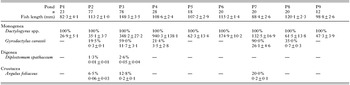
Table 1. Prevalence and mean abundance±S.E. for the parasite species observed in 9 ponds (P1–P9) in Central and Eastern Finland
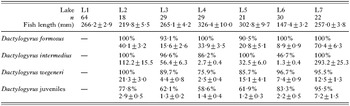
Table 2. Prevalence and mean abundance±S.E. for the Dactylogyrus species observed in seven lakes (L1–L7) in Central and Eastern Finland
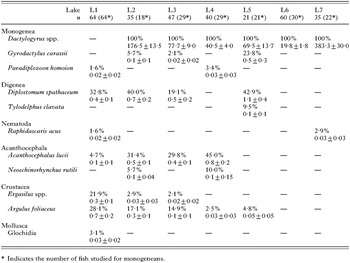
Table 3. Prevalence and mean abundance±S.E. for the parasite species observed in 7 lakes (L1–L7) in Central and Eastern Finland
 You have
Access
- 12
- Cited by