Introduction
Despite their ubiquity in the archaeological record, pot burials have not received detailed attention in the scholarship of Egyptian mortuary behaviour within the Pharaonic period (c. 3000–332 BC; Shaw Reference Shaw2000). While several works encompass them within broad analyses (Masali & Chiarelli Reference Masali and Chiarelli1972; Hendrickx Reference Hendrickx1998; Tristant Reference Tristant and Nenna2012), burials in ceramic vessels are yet to be studied in their own right. In their seminal treatment of Egyptian funerary containers, Ikram and Dodson (Reference Ikram and Dodson1998: 195) do not consider pot burials as “proper coffins”, but rather as an incipient phase along an evolutionary trajectory towards the idealised wooden rectangular type. It is often suggested that pot burials were the preserve of the poor, who ‘made do’ with this type of receptacle while they “aspired to elaborately decorated wooden coffins” (Ikram & Dodson Reference Ikram and Dodson1998: 233; cf. Donadoni Roveri Reference Donadoni Roveri1969; Hendrickx Reference Hendrickx1998; Zillhardt Reference Zillhardt2009). Only a few scholars of Egyptian archaeology acknowledge the extensive cross-cultural attestations of this mode of burial, and there are discontinuities in opinions regarding their geographic, chronological and demographic incidence. Some scholars restrict the use of pot burials to certain regions and time frames, while most agree that, apart from direct interment into the earth, pot burials were the most common form of interment for children, infants and foetuses in ancient Egypt (Donadoni Roveri Reference Donadoni Roveri1969; Masali & Chiarelli Reference Masali and Chiarelli1972; Hendrickx Reference Hendrickx1998). The prior domestic use of the burial vessel is often noted (Donadoni Roveri Reference Donadoni Roveri1969; Kroeper Reference Kroeper1994; Hendrickx Reference Hendrickx1998; Kilroe Reference Kilroe, Pinarello, Yoo, Lundock and Walsh2015), with respective interpretations invariably attributing this as an act of rubbish disposal (Brunton Reference Brunton1927), thereby reducing the value of both the containers and their human occupants to cultural refuse. The present study briefly explores each of the above claims with a view to accessing a more holistic, culturally situated understanding of the incidence, meaning and significance of this ubiquitous aspect of ancient Egyptian mortuary behaviour.
For the purposes of this study, a ‘pot burial’ is defined as a primary inhumation of a human body in or under any ceramic vessel(s). The material and ontological relationships between this mode of burial and the secondary interments of cremated, burnt or unburnt human remains within ceramic vessels described for some cultures in South America (Silverman & Isbell Reference Silverman and Isbell2008), the Indian subcontinent (Allchin & Allchin Reference Allchin and Allchin1982), Southeast Asia (Lloyd-Smith & Cole Reference Lloyd-Smith, Cole, Bellina, Bacus, Pryce and Wisseman Christie2010), Britain and Europe (Lucy Reference Lucy2000), Africa (Allsworth-Jones Reference Allsworth-Jones2012) and South Africa (Boeyens et al. Reference Boeyens, Van der Ryst, Coetzee, Steyn and Loots2009) are certainly worthy of additional exploration, yet they fall beyond the scope of this investigation. Furthermore, it may be argued that there are practical and conceptual differences between the primary inhumation of an individual ‘in’ a pot and ‘under’ a pot. It should be noted that the following discussion generally refers to primary inhumations within ceramic vessels.
The practice of burying deceased human bodies in ceramic pots is one of the most widespread funerary practices across the cultures and geographies of the ancient world. Such interments are variably described as ‘pot burials’, ‘jar burials’ or ‘urn burials’ according to localised ceramic nomenclature. To date, the earliest incidences of pot burial are attributed to the Neolithic Northern Levant in the sixth millennium BP (Bacvarov Reference Bacvarov and Bacvarov2008). William Matthew Flinders Petrie was among the first archaeologists of this region to view pot burials as evidence of intercultural contact following early experimentation with ceramic production and use (Petrie Reference Petrie1896; Bacvarov Reference Bacvarov and Bacvarov2008). Pot burials are attested across the Northern Levant, central Balkans, south-east Europe and Anatolia, the Southern Levant, Mesopotamia, Syria, Bahrain and Africa, and the Caucasus (Bacvarov Reference Bacvarov and Bacvarov2008; cf. Shepherd Reference Shepherd, Crawford and Shepherd2007; Orrelle Reference Orrelle and Bacvarov2008; Littleton Reference Littleton, Agarwal and Glencross2011). Pot burials have also been observed in archaeological contexts in Central and South America (DeMarrais Reference DeMarrais, DeMarrais, Gosden and Renfrew2004), sub-Saharan Africa (Holl Reference Holl, Baroin, Barreteau and Graffenreid1995; Insoll Reference Insoll2015), South Africa (Boeyens et al. Reference Boeyens, Van der Ryst, Coetzee, Steyn and Loots2009), Southeast Asia (Harris & Tayles Reference Harris and Tayles2012), Japan (Mizoguchi Reference Mizoguchi2005), and Oceania (Bedford & Spriggs Reference Bedford and Spriggs2007); and are also described in ethnographic contexts including but not limited to Zimbabwe (Aschwanden Reference Aschwanden1982; Barley Reference Barley1994), Botswana (Orrelle Reference Orrelle and Bacvarov2008), Sudan (Sadig Reference Sadig, Anderson and Welsby2014) and southern Europe (Mishina Reference Mishina and Bacvarov2008).
Incidence
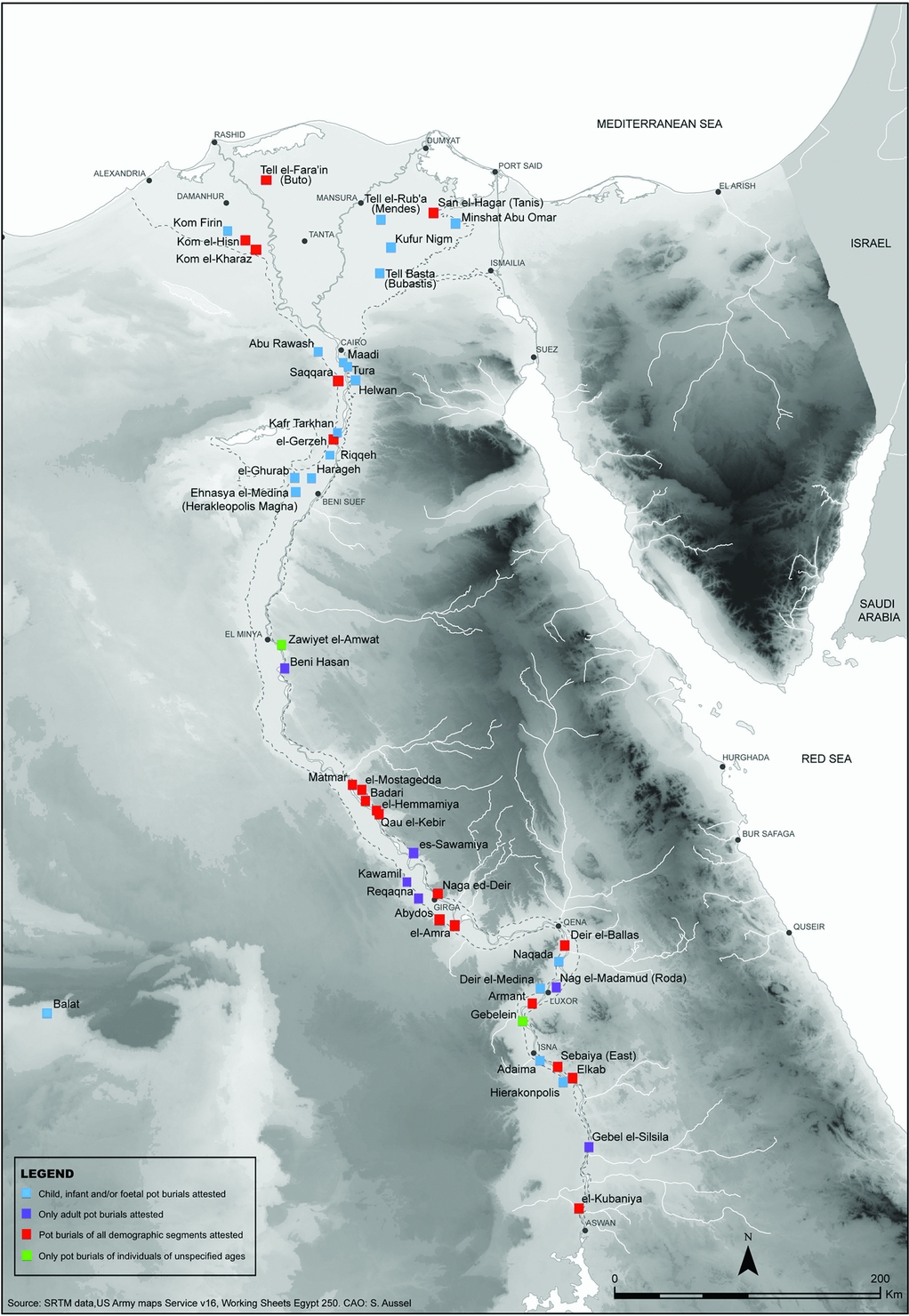
Egypt was, comparatively, quite late to introduce this mode of interment into its funerary repertoire. Midant-Reynes (Reference Midant-Reynes2000) cites the first incidences of pot burial as occurring during the Gerzean/Naqada II Period (c. 3500 BC), some 2500 years after their appearance in the Near East. Midant-Reynes (Reference Midant-Reynes2000) also states that burials in ceramic vessels and those in other forms of funerary containers (including baskets, reeds and, eventually, wooden coffins) appeared roughly simultaneously, thereby suggesting that the objective for these practices was the same: to provide containment of the body and to separate and protect it from the surrounding earth into which it was interred (cf. Minault-Gout Reference Minault-Gout1992; Patch Reference Patch, Hawass and Richards2007; Spieser Reference Spieser, Jener, Muriel and Olària2008; Tristant Reference Tristant and Nenna2012; Insoll Reference Insoll2015). Donadoni Roveri (Reference Donadoni Roveri1969) argues that all forms of coffin may have evolved from the earlier practice of lining tomb walls with clay as a means to protect the body and separate it from the surrounding earth, in much the same way that storage ditches were lined to preserve cereals and foods. While there is general agreement regarding the broad geographic attestation of this mode of burial in ancient Egypt (the present study has identified pot burials at 46 sites; see Figure 1), scholars are divided regarding its chronological continuity. Some limit the practice to the Predynastic to Old Kingdom periods (Garstang 1904; Brunton Reference Brunton1927), whereas others identify its persistence throughout the entire Pharaonic period and beyond (Tristant Reference Tristant and Nenna2012; Kilroe Reference Kilroe, Pinarello, Yoo, Lundock and Walsh2015). The practice was still observed among Coptic communities at the beginning of the twentieth century (Blackman Reference Blackman1968), and is reported to endure in Egyptian rural Christian communities today (El-Shohoumi Reference El-Shohoumi2004). In agreement with Garstang (1904: 56), the present study argues that pot burials actually represent one of the most “unvarying and persevering” modes of burial in Egypt, with their use before, during and after the Pharaonic era spinning “but a single thread in the bond of continuity” that is “yet unbroken and without a flaw”.
Map of Egypt featuring published pot burial sites and attested demographic categories. Cartography: Sandra Aussel.

Despite the widely held belief that pot burials were mainly used for child, infant and foetal interments (Zillhardt Reference Zillhardt2009), many sites feature pot burials of both children and adults (see Figure 1). Although Spieser (Reference Spieser, Jener, Muriel and Olària2008) agrees regarding the longevity of pot burial, she stipulates that only infants were interred in this manner after the New Kingdom (1550–1069 BC). Published excavation data for the sites of Kom el-Hisn (Hamada & Farid Reference Hamada and Farid1948, Reference Hamada and Farid1950; Orel Reference Orel2000), el-Gerzeh (Petrie et al. Reference Petrie, Wainwright and Mackay1912; Hendrickx Reference Hendrickx1998; Stevenson Reference Stevenson2006), Tell el-Faraʽin (Buto) (Petrie 1905) and San el-Hagar (Tanis) (Weinstein Reference Weinstein1973) refute this proposition, with each site variably featuring adult pot burials throughout the Third Intermediate and Graeco-Roman periods. In fact, it is worth noting that, at the time of writing, for some sites such as Reqaqna (Garstang Reference Garstang1902, Reference Garstang1904; Peet Reference Peet1914; Engelbach 1923), Kawamil (de Morgan Reference de Morgan1897; Forrer Reference Forrer1901; Garstang 1904; Hendrickx Reference Hendrickx1998), Nag el-Madamud (Roda) (Hendrickx Reference Hendrickx1998), Beni Hasan (Garstang 1904, 1907) and Gebel el-Silsila (de Morgan Reference de Morgan1897), only adult pot burials have been published thus far.
Interpretations
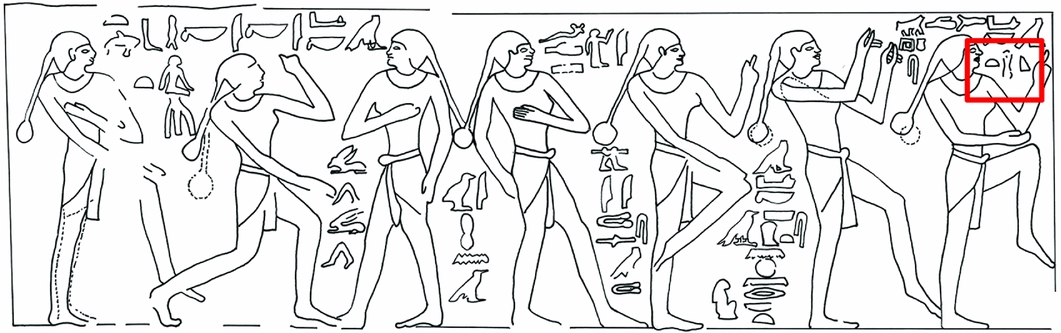
It has been argued that the repetition of this form of burial over large geographic and temporal frames indicates spheres of cultural interaction with a common or similar belief system (Orrelle Reference Orrelle and Bacvarov2008). In the archaeology of Southeast Asia, a metaphorical link between burial jars and the body is acknowledged (Källén & Vinterhav Reference Källén, Vinterhav, Karlstrom and Källén2003). In European, African and Near Eastern contexts, it is proposed that the pot is analogous to the uterus, implying that a return to the womb in death will promote metaphorical rebirth in the afterlife (Aschwanden Reference Aschwanden1982; Mishina Reference Mishina and Bacvarov2008; Orrelle Reference Orrelle and Bacvarov2008), or assure ancestralisation through the processes of “germination, gestation and possibly fermentation” (David Reference David, Baroin, Barreteau and Graffenreid1995: 89). In the Egyptian context, Willems (Reference Willems1988) and Meskell (Reference Meskell1999, Reference Meskell and Chesson2001) have also noted associations between coffins and afterlife ‘rebirth’ beliefs, and Assmann (Reference Assmann1972: 115; 1989: 139–40) describes placement in the coffin as “regressus ad uterum”, in alignment with beliefs concerning posthumous transitions to the afterlife through the body of the sky-goddess. Such interpretations are bolstered by Tarlow's (Reference Tarlow1999) discussions of the role of metaphor in the construction, reproduction and transformation of meaning in archaeological funerary contexts; whereas specific theoretical impetus may be derived from the writing of Hertz (Reference Hertz1960), Bloch and Parry (Reference Bloch and Parry1982) and Conkey (Reference Conkey, Conkey, Soffer, Stratmann and Jablonski1997), who argue that womb metaphors link with sentimental burial associations or rebirth following death. The present study suggests that such symbolism may also have been applicable in the Egyptian context (cf. Donadoni Roveri Reference Donadoni Roveri1969; Zillhardt Reference Zillhardt2009). An early attestation of the association between pots and the gravid uterus has been identified in the Sixth Dynasty tomb chapel of Waatetkhethor at Saqqara (see Figure 2), where dancers appear to be engaged in a ritual performance aiming to remove impediments to birth (Roth Reference Roth1992: 141). They say:
Dancers represented within the tomb chapel of Waatetkhethor, Saqqara, with the relevant text highlighted. Drawing: Mary Hartley.

But see, the secret of birth! Oh pull! See the pot, remove what is in it! See, the secret of the ḫnrt, Oh Four! Come! Pull! It is today! Hurry! Hurry! See [. . .] it is the abomination of birth (Kanawati Reference Kanawati2008: 26, pl. 60).
Although Kilroe (Reference Kilroe, Pinarello, Yoo, Lundock and Walsh2015: 222) argues
that the Egyptian archaeological evidence does not support any association
between pots and wombs, and that attempts to do so are “over interpretative”,
the use of the noun
 ḳḥt, ‘pot/vessel’ (Erman & Grapow Reference Erman and Grapow1926–Reference Erman and Grapow1931: Old
Kingdom: I, 1339; Middle Kingdom: V, 2528) in this situation indicates that it
was a well-known cultural metaphor, easily understood in the audience's
context. In other circumstances, when a purely anatomical approach was
appropriate, for example, in the Kahun medical papyri (UC 32057; Collier &
Quirke Reference Collier and Quirke2004: 58), the designated
terminology for womb or uterus was
 idt, usually expressed by the ideogram for a well or container
of water (Gardiner Reference Gardiner1994: 492, N41),
often using the determinative of the bicornuate uterus of a cow (Gardiner Reference Gardiner1994: 466, F45).
It is also possible that further layers of symbolism may have been applicable,
particularly considering literal and metaphorical understandings of the egg.
The ancient Egyptians had an accurate understanding that the origins of human
life sprang forth from the egg after being fertilised by sperm (Meskell 2002).
Here, the emphasis is placed on the individual within the egg,
into whom the god Amun breathes the breath of life (pCairo,
no. 87, l.15; Assmann 2001: 205). The word
 swḥt (‘egg’) was used to define the ova of birds and fish, and
to describe the ovoid form (Erman & Grapow Reference Erman and Grapow1926–Reference Erman and Grapow1931: IV,
73, I–III), but from as early as the Old Kingdom, it was also used to designate
the place where human life gestates in the female body (Erman & Grapow
Reference Erman and Grapow1926–Reference Erman and Grapow1931: IV, 73, IV; cf. Meskell 2002:
68). In the Middle Kingdom text The dispute between a man and his
ba (pBerlin 3024), the egg is used as a metaphor
for young life, where a man “grieve[s] for her children, broken in the egg, who
have seen the face of the Crocodile before they have lived” (Lichtheim Reference Lichtheim1975: 165). Moreover, Late Egyptian
attestations of swḥt using the egg determinative are
designations for the term “inner coffin” (Erman & Grapow Reference Erman and Grapow1926–Reference Erman and Grapow1931: IV, 74). Thus, it is plausible that such textual references
which analogise between coffins and eggs as places of metaphorical or literal
gestation and (re)birth may demonstrate a well-known connection that had been
established in Egyptian social consciousness for some time, only appearing in
textual form at a later date. It is also possible that earlier textual
associations may have been made but are not extant.
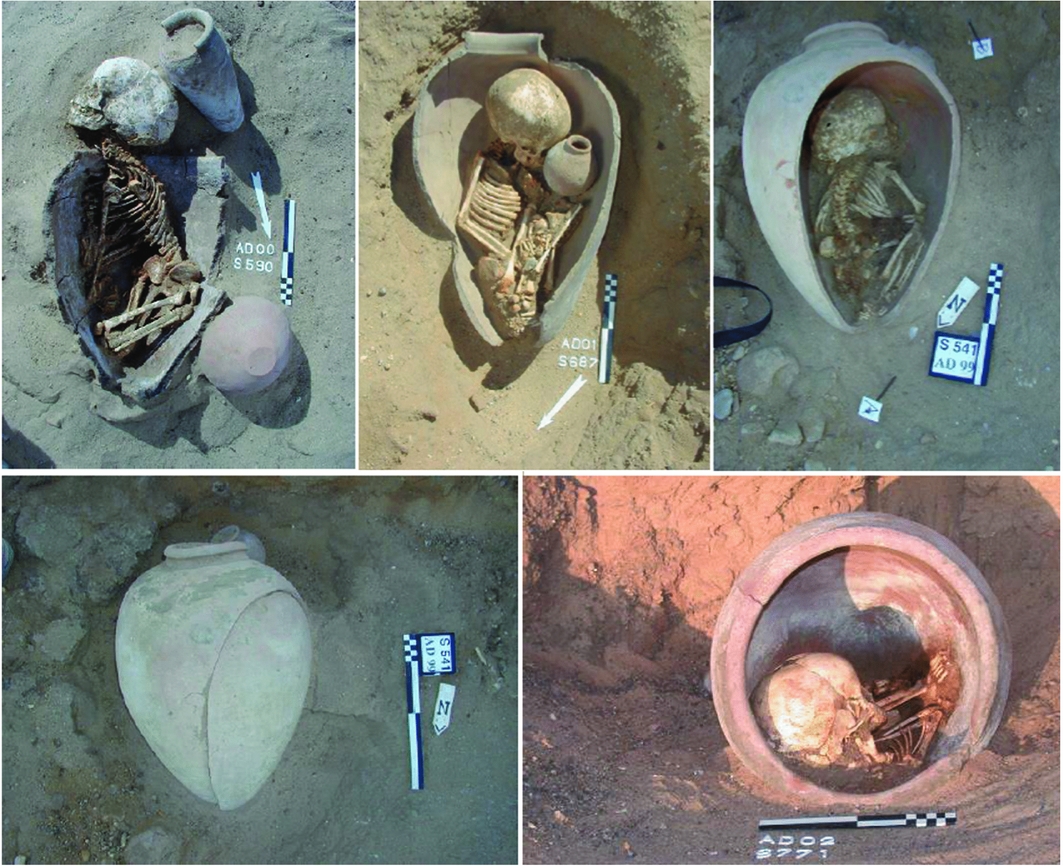
Arguments that endorse interpretations of the pot as a womb may be equally applied to eggs, including the ability to serve as containers, to incubate, to be modified by temperature, to contain and protect, and to be non-porous and watertight (Donadoni Roveri Reference Donadoni Roveri1969; Orrelle Reference Orrelle and Bacvarov2008). All regions featuring this mode of burial, including Egypt, are noted on some occasions to have intentionally damaged the vessel mouth and/or pierced the base. Apart from the pragmatic functions of admitting the body to the vessel in the context of burial, or to provide a means to drain decomposition fluids, such acts of breakage have been interpreted as symbolic means to facilitate ease of rebirth in the afterlife (Bacvarov Reference Bacvarov and Bacvarov2008; Orrelle Reference Orrelle and Bacvarov2008), an argument that could equally apply to eggs and wombs. Furthermore, in the manifold cases of Egyptian pot burials of adults and children, it is hard to dismiss the visual similarities between pots laden with human bodies with limbs contracted into the so-called ‘foetal’ or ‘sleeping’ position (Figure 3) and gravid uteri or eggs. It is clear that further study is required to untangle the symbolic meaning of this particular mode of burial, which has clear associations with gestation and (re)birth. As highlighted by Conkey (Reference Conkey, Conkey, Soffer, Stratmann and Jablonski1997), it is possible that these burials may have different levels of meaning, nuanced according to the multiscalar components of their particular cultural, temporal and geographic contexts (Orrelle Reference Orrelle and Bacvarov2008). In fact, such multiplicities of meaning may be described as characteristic of the “elusive entity” that is Egyptian religion (Frankfort 1975: 21; cf. Assmann 1989).
A selection of child and infant pot burials from the Pre- to Early Dynastic cemetery of Adaïma, Egypt (reproduced with permission of Béatrix Midant-Reynes, Institut Français d'Archéologie Orientale).

(Mis)understandings
In light of the apparent symbolism of these burials, it is worthwhile to consider why so many Egyptians chose to bury their deceased family or community members in pots, as it is clear that they had many options at their disposal, including wrapping in linen, animal skins or reed matting; or placement in receptacles constructed from basketry, mud, ceramics, wood or stone. Many individuals also appear to have been buried without any form of funerary container, their bodies being placed directly into the sand or earth. It is apparent that the final mode of interment was a product of choice (Kroeper Reference Kroeper1994).
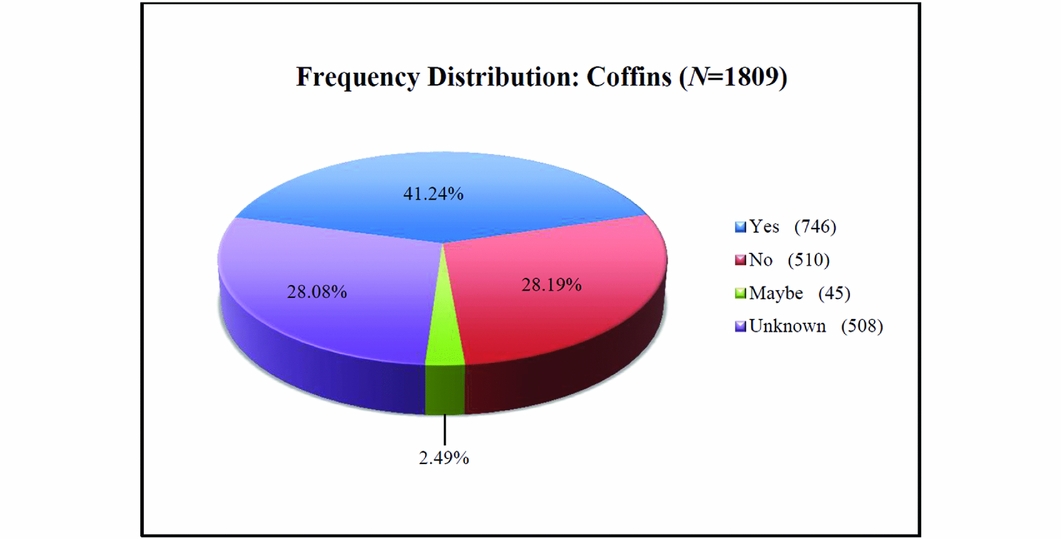
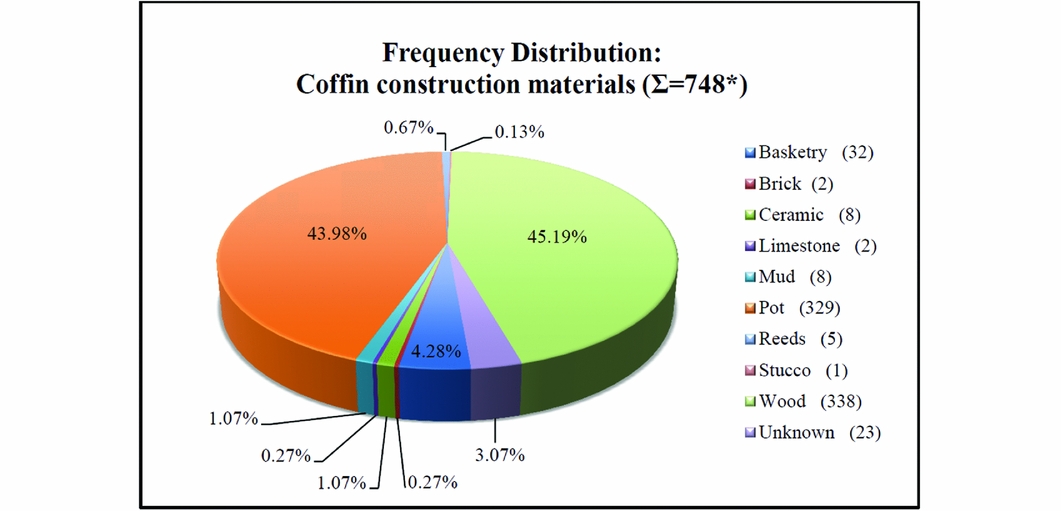
As mentioned, several scholars have stated that apart from direct interment in the sand or earth, pot burials were by far the most common mode of interment for deceased children, infants and foetuses in ancient Egypt. The results of the present research, however, question this hypothesis. Of 1809 child, infant and foetal burials identified within published data of the Early Dynastic to Middle Kingdom Periods (c. 3300–1650 BC), a minimum of 746 individuals were reportedly buried within a funerary container of some description (Power Reference Power2012; see Figure 4). Of these, 338 were wooden coffins, followed by 329 pot burials (see Figure 5). The prevalence of wooden coffins over ceramic vessels for child, infant and foetal burials is noteworthy, considering both the relative scarcity and high cost of wood as a construction material during these early periods of Egyptian history and the propensity of wood to be less well preserved than ceramics in archaeological contexts. Overall, the fact that just over 40 per cent of the known cases of juvenile burials were provided with some form of container is of interest, and may provide further insights into social differentiation in both living and funereal spheres. For the periods canvassed by this research, it is clear that our understanding of the mortuary treatment of ancient Egyptian children, infants and foetuses may require some recalibrations.
Frequency distribution of coffins in child, infant and foetal burials (Egyptian Early Dynastic to Middle Kingdom periods); after Power Reference Power2012: fig. 6.2.

Frequency distribution of child, infant and foetal coffin construction materials (Egyptian Early Dynastic to Middle Kingdom periods). Note: the total number of coffins exceeds the number of individuals with coffins because two individuals received two coffins each; after Power Reference Power2012: fig. 6.23.

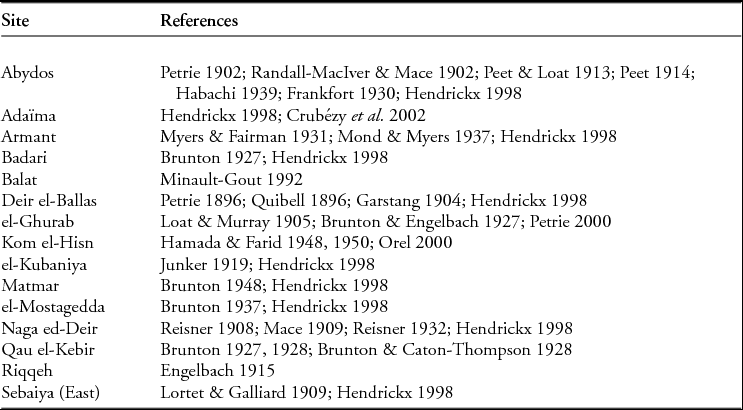
Precisely what it was that motivated the choice of pots as funerary containers divides opinion. As mentioned, most commentary on the subject states that pot burials were the preserve of the poorest members of the community, and the procurement of pre-used vessels from domestic contexts is often cited as a marker of destitution. Castillos (Reference Castillos1982), for example, excluded pot burials from his statistical analyses of the large Protodynastic cemeteries at Qau, Badari and Hemmamiya due to the supposed poverty of this mode of interment. In light of the preceding evidence regarding the preponderance of more-expensive wooden coffins among the dataset, the present study is not favourably disposed to this interpretation and tends to agree with Garstang, who states that this mode of burial is “no proof of poverty” (1904: 56; 1907: 27; cf. Kilroe Reference Kilroe, Pinarello, Yoo, Lundock and Walsh2015). Garstang cites examples of pot burials from Elkab and Reqaqna that are “more elaborately furnished than those of other kinds, which are more plentiful” (1904: 51). One may also cite the pot burial of an infant, interred in a contemporary context alongside the body of Governor Ima-Pepi in the burial chamber of his expansive late Old Kingdom/early First Intermediate Period mastaba tomb at Balat in Dakhla Oasis (Minault-Gout Reference Minault-Gout1992). Accompanying this baby was a quantity of beads, seven of which were covered in gold foil. Those responsible for the multiple burial of Ima-Pepi and this tiny individual in such an opulent manner clearly had vast resources and political power at their disposal. Table 1 provides details of other sites that also feature one or more pot burials furnished with an array of grave goods.
Sites with pot burials furnished with grave goods.

(Re)use
Some cite the reuse of domestic ceramic vessels as funerary containers as further signifiers of poverty (Zillhardt Reference Zillhardt2009), or the diminished value of their occupants, particularly children, infants and foetuses (Menghin & Amer Reference Menghin and Amer1936). Such interpretations do not, however, acknowledge the cultural biographies of objects, a well-recognised approach that provides the capacity for transitions in the function and symbolism of objects across their use-lives (Gosden & Marshall Reference Gosden and Marshall1999; Stevenson 2009). Theories of cultural biography stem from economic models that allow for significant changes in the way an object is used or conceptualised by humans within specific cultural contexts (Appadurai Reference Appadurai and Appadurai1986; Kopytoff Reference Kopytoff and Appadurai1986; Meskell 2004). These changes both modify and are modified by humans, as such transformations form inextricable links between humans and the components of their material world (Gosden & Marshall Reference Gosden and Marshall1999). Such an approach endorses the role of literal and metaphorical ‘recycling’ of objects within cultures, in a manner that does not necessitate ‘devaluing’ as the object moves along its use-life, changing in function or meaning until its eventual accidental or deliberate entry into the archaeological record (Gosden & Marshall Reference Gosden and Marshall1999). Certainly, studies of reuse and recycling as normative practice are emerging in Egyptian archaeological discourse: encompassing coffins and sarcophagi (Baines & Lacovara Reference Baines and Lacovara2002; Manley & Dodson Reference Manley and Dodson2010), tombs and construction materials (Meskell 2001, 2002; Baines & Lacovara Reference Baines and Lacovara2002; Ockinga Reference Ockinga, Dorman and Bryan2007), domestic space (Hope et al. Reference Hope, Jones, Falvey, Petkov, Whitehouse and Worp2010), royal sculpture (Wildung Reference Wildung and Tait2003), objects (Stevenson 2009) and stolen goods (Savage Reference Savage1997). It appears, however, that aspersions are only cast towards reuse and recycling behaviour when the instigators or recipients are children or the ‘poor’.
The present study argues that pots were deliberately selected and reused as funerary containers for what may have been a variety of pragmatic and symbolic reasons mediated within a framework of socio-cultural intersubjectivity (Lloyd-Smith & Cole Reference Lloyd-Smith, Cole, Bellina, Bacus, Pryce and Wisseman Christie2010). Firstly, ancient societies were not ‘throw-away’ societies (Rathje & Murphy Reference Rathje and Murphy2001). With the possible exception of some single or low-use object categories such as bread moulds, if an object was no longer viable for its initial function, it was not immediately disposed of, but rather repaired, functionally or symbolically transformed, stored for future reuse, or broken down to be integrated into another object (Rathje & Murphy Reference Rathje and Murphy2001). Indeed, the very idea of ‘rubbish’ is culturally situated. To view recycled objects as “zero-signifiers” (Lucas Reference Lucas2002: 16) in archaeological narratives is anachronistic and ethnocentric, especially considering that the practice of recycling appears to be a “fundamental characteristic of the human species” (Rathje & Murphy Reference Rathje and Murphy2001: 191–92). Even the removal of an object from circulation among living communities to be placed within a burial assemblage represents an act of functional and symbolic transformation or recycling. Such objects are not excluded from cultural engagement; they are simply engaged in a different way. As long as objects continue to participate in a cultural system, they remain constituted within that system (Lucas Reference Lucas2002). Re-constitution does not equate to dis-constitution. Recycling was an essential component of ancient economic and technological sustainability, and does not necessarily represent a diminishment of ‘value’.
Secondly, the durability and impermeability of pots made them excellent coffins. Scholars have noted that bodies buried in pots are often the best preserved among entire cemeteries (Donadoni Roveri Reference Donadoni Roveri1969; Kroeper Reference Kroeper1994), a fact some may find ironic considering that these were supposedly the community's poorest constituents. Thirdly, there may have been a notion that the (re)use of domestic objects within the mortuary landscape facilitated ‘continuing bonds’ between the dead and those burying them (Klass & Walter Reference Klass, Walter, Stroebe, Hansson, Stroebe and Schut2001; Renfrew Reference Renfrew, DeMarrais, Gosden and Renfrew2004). Here, the accompaniment of familiar objects with the deceased may have provided means to assuage the grief of family and community members by facilitating enduring material and corporeal connections (Stevenson 2009; cf. Insoll Reference Insoll2015). Fourthly, as mentioned, there may have been some symbolic associations between pots, wombs and eggs in ancient Egypt. As the symbols of life par excellence, it is hard to recommend a more fitting means to facilitate the transition into the afterlife.
Conclusion
Regardless of the myriad potential motivations (either in isolation or combination) behind the transformation of pots into funerary containers, it is clear that their prior functions and sometimes incomplete state did not impede their cultural capacity for biographical transformation into perfect “ritual machines” (Willems Reference Willems1988: 239) that in themselves would ‘re-cycle’ (Willems Reference Willems1988; Meskell Reference Meskell1999, Reference Meskell and Chesson2001) the deceased into an ȝḫ: a transfigured and effective spirit in the afterlife (Meskell 2002: 179). Indeed, such multiplicity in object manifestations and meanings harmonises well with Egyptian religious beliefs, where different correlations of phenomena were commonplace, and such differences did not compromise phenomenal coexistence (Frankfort 1975). Theories that expand our understanding of the infinitely variable shifts and transformations within the functional and symbolic cultural biographies of objects stand to greatly enhance and expand engagements with all aspects of material culture in Egyptian archaeology. In the particular case of pot burials, this calls for a reversal of understanding: from refuse to rebirth. The present study therefore calls for the legitimation of pots as authentic, culturally situated, enduring funerary containers and, as such, for their rightful integration into Egyptian coffin typologies.
Acknowledgements
We are grateful to Susanne Binder and Boyo Ockinga of Macquarie University for their comments on this work, especially pertaining to epigraphic and linguistic attestations and nuances. We thank Mary Hartley for her artistic skills and Sandra Aussel for her cartography. Photographs from Adaïma appear courtesy of Béatrix Midant-Reynes for the Institut Français d'Archéologie Orientale. Thanks to Franca Cole of UCL Qatar for providing several articles and unpublished works; and to Tiago Hermenegildo and Shawn O'Donnell of the University of Cambridge for supplying several references. Finally, we thank Stan Hendrickx and an anonymous reviewer for their helpful comments that have improved this manuscript. This research was carried out under the auspices of a Commonwealth of Australia Postgraduate Award.