Introduction
It is estimated that worldwide, there are 24 million people who have dementia. By 2040, the number of persons with dementia will rise to 80 million (Ferri et al., Reference Ferri2005). After the age of 65 years, the prevalence of dementia doubles with every five years age group (Prince, Reference Prince2007). Besides a reduction in quality of life, persons with dementia have a major risk for falls and fall-related negative consequences (Shaw, Reference Shaw2002; van Doorn et al., Reference Van Doorn2003; Kallin et al., Reference Kallin, Gustafson, Sandman and Karlsson2005). Persons with dementia are two to three times more likely to fall (Eriksson et al., Reference Eriksson, Strandberg, Gustafson and Lundin-Olsson2009; Härlein et al., Reference Härlein, Halfens, Dassen and Lahmann2011), injurious falls have lower recovery rates, postoperative complaints are much higher, and a hip fracture is more likely to cause death (Vidán et al., Reference Vidán, Serra, Moreno, Riquelme and Ortiz2005) compared to persons without dementia (Horan et al., Reference Horan, Cunningham, Mcsorley and Sexton1998; Eriksson et al., Reference Eriksson, Strandberg, Gustafson and Lundin-Olsson2009; Haralambous et al., Reference Haralambous, Haines, Hill, Moore, Nitz and Robinson2010; Tangman et al., Reference Tangman, Eriksson, Gustafson and Lundin-Olsson2010). In long-term care settings, e.g. nursing homes, the incidence and prevalence of dementia is fourfold higher and the severity of dementia is also higher compared to home-dwelling persons (Jakob et al., Reference Jakob, Busse, Riedel-Heller, Pavlicek and Angermeyer2002). Therefore, long-term care residents with dementia can be considered a high-risk group for falls (Neyens et al., Reference Neyens2006).
Most falls are not caused by a single risk factor, but occur due to interaction of several determinants (WHO, 2007). Fall risk factors found in different populations are use of psychotropic drugs (Hartikainen et al., Reference Hartikainen, Loennroos and Louhivuori2007; Woolcott et al., Reference Woolcott2009), time and location (Eriksson et al., Reference Eriksson, Strandberg, Gustafson and Lundin-Olsson2009), and diseases or sex (Tangman et al., Reference Tangman, Eriksson, Gustafson and Lundin-Olsson2010).
Although there are studies about fall determinants in institutionalized persons with dementia (Lim et al., Reference Lim, Ng, Ng and Ng2001; Eriksson et al., Reference Eriksson, Strandberg, Gustafson and Lundin-Olsson2009; Vassallo et al., Reference Vassallo, Mallela, Williams, Kwan, Allen and Sharma2009; Tangman et al., Reference Tangman, Eriksson, Gustafson and Lundin-Olsson2010), these studies have mostly been conducted in hospital settings. In hospitals, the acute physical condition, the new environment, and unknown factors contribute to the fall risk. Due to different patient characteristics, different fall risk factors may also be present in long-term care settings compared with hospital settings (Tommasini et al., Reference Tommasini, Talamini, Bidoli, Sicolo and Palese2008).
At present, literature concerning fall determinants in cognitive impaired persons in long-term care is scarce. A review (Härlein et al., Reference Härlein, Dassen, Halfens and Heinze2009) in older persons with dementia included only one study (Nakamura et al., Reference Nakamura, Meguro and Sasaki1996) conducted in a nursing home. Another article (Shaw, Reference Shaw2002) summarized studies concerning falls in cognitive impaired persons and persons with dementia. However, in the latter study, no specific information was given about long-term care residents with dementia. The development of fall prevention methods requires specific knowledge of fall determinants in such a target group (Vassallo et al., Reference Vassallo, Mallela, Williams, Kwan, Allen and Sharma2009; Tangman et al., Reference Tangman, Eriksson, Gustafson and Lundin-Olsson2010). Therefore, the aim of this study is to identify fall determinants for long-term care residents with dementia and cognitive impaired persons in long-term care. To reach that aim, we conducted a systematic literature review of fall determinants among persons with dementia or cognitive impaired persons in long-term care. Taking into account the small number of studies that we expected in this area of research, we included additional languages and databases in the literature search and we broadened the inclusion criteria compared to an earlier review (Härlein et al., Reference Härlein, Dassen, Halfens and Heinze2009).
Methods
Search strategy
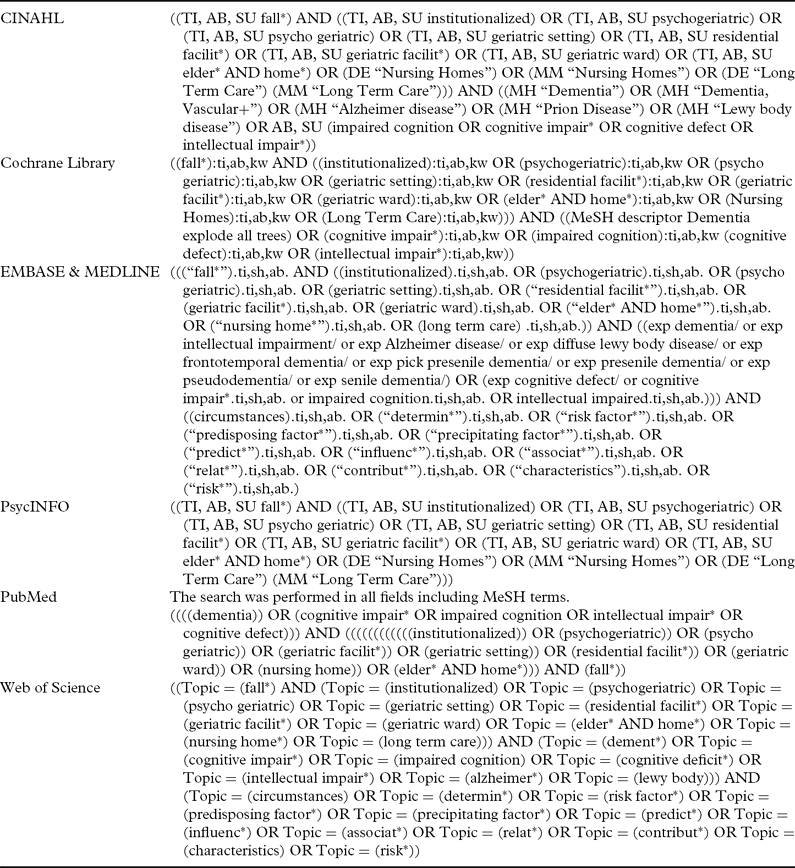
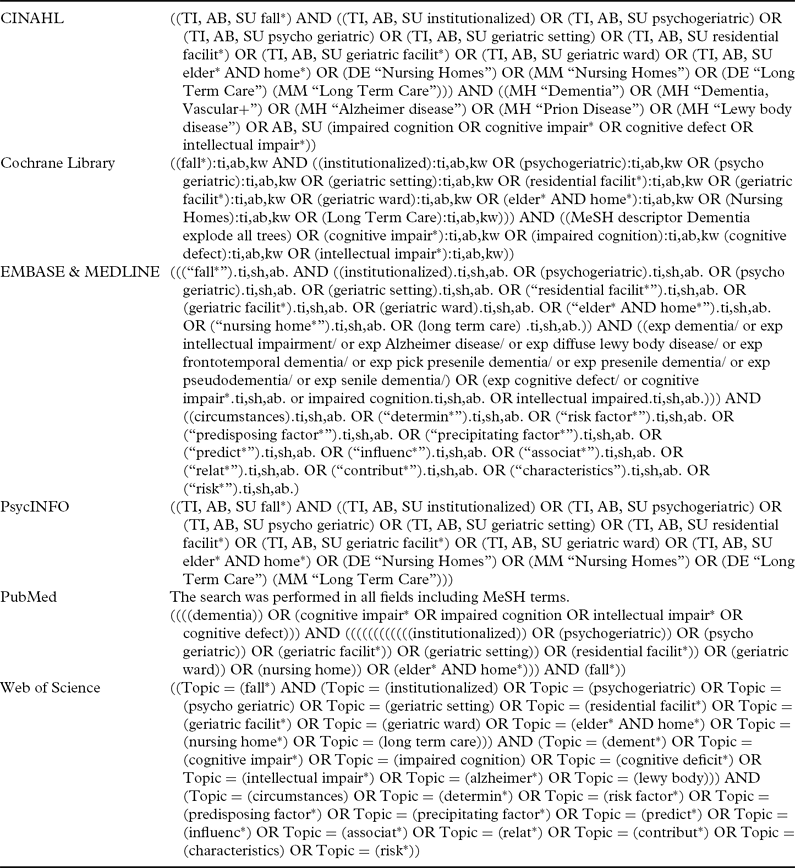
The literature search was performed in December 2011. The electronic databases CINAHL (1981–2011), Cochrane Library (no restriction – 2011), EMBASE (1974–2011), MEDLINE (1974–2011), PsycINFO (1974–2011), PubMed (no restriction–2011), and Web of Science (1988–2011) were searched for studies published in Dutch, English, French, or German until December 2011. The search combined field searches, MESH and Thesaurus terms. We used search terms for cognitive impairment or dementia, for long-term care, falls and determinants. The detailed search strategy, used search fields and search terms are shown in Table 1. Additional to the search in databases, references of identified articles and reviews (Shaw, Reference Shaw2002; Härlein et al., Reference Härlein, Dassen, Halfens and Heinze2009) were also screened. Due to the broad search strategy, we expected to identify a heterogeneous population with many studies not focused on long-term care, but we also expected to increase the number of articles for manual inspection in accordance to our inclusion criteria. Titles, abstracts, retrieved full texts as well as references were independently screened by authors T. F. Kröpelin and J. C. L. Neyens. Disagreement was solved by discussing the articles in question.
Used search terms and fields
Inclusion criteria
Only studies about persons with dementia or cognitive impaired persons, with a sample mean of 65 years and older, living in long-term care facilities and studies providing subgroup analyses for this population were included. To be considered for our review articles had to be published in the public domain. Studies included assessed, e.g. determinants, circumstances or surrounding factors of falls, multiple falls or injurious falls. To gain a broad overview of fall determinants, we aimed to include not only cohort studies but also cross-sectional designs and secondary data analyses.
Data extraction
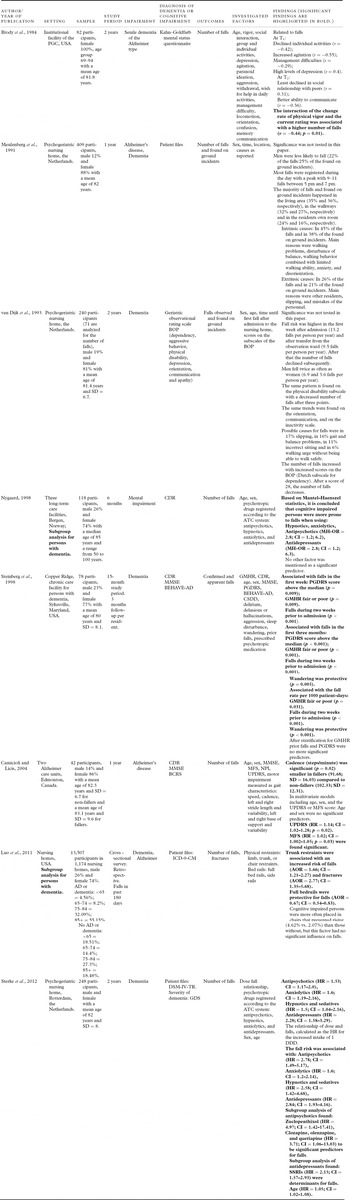
The data extraction was performed by authors T. F. Kröpelin and J. C. L. Neyens independently. Extracted data were: descriptions of the study setting, sample, period, types of cognitive impairments, tools for diagnosis, main outcomes, included fall risk factors, and significance of findings (Table 2). To eliminate disagreement, the results of both authors were compared and resolved by reviewing the articles in question together and discussing differences until agreement was reached.
Study characteristics and findings

AOR = Adjusted Odds ratio; ATC = Anatomical Therapeutic Chemical classification system; BCRS = Brief cognitive rating scale; BEHAVE-AD = Behavioral symptoms in Alzheimer's disease; BOP = Dutch version of the Stockton Geriatric Rating Scale; CDR = Clinical Dementia Rating; CSDD = Cornell scale for depression in dementia; DDD = Daily defined dose; DSM-IV-TR = Diagnostic and Statistical Manual of Mental Disorders 4th revision-Text revision; GDS = Global Detoriation Scale; GMHR = General Medical Health Rating; HR = Hazard Ratio; ICD-9-CM = International classification of disease, 9th revision-Clinical modification; MH-OR = Mantel–Haenszel Odds Ratio; MMSE = Mini Mental State Examination; MFS = Morse Fall Scale; NPI = Neuropsychiatric inventory; PGC = Philadelphia Geriatric Center; PGDRS = Psychogeriatric Dependency Rating Scale; SSRI's = Selective serotonin reuptake inhibitors; UPDRS = Unified Parkinson's Disease Rating Scale.
Quality assessment
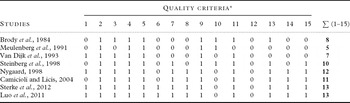
Following an adapted protocol, based on a criteria list used in another systematic review about fall risk factors in community-dwelling persons with dementia (Stalenhoef et al., Reference Stalenhoef, Crebolder, Knottnerus and Vanderhorst1997), the quality of the included studies was assessed by authors T. F. Kröpelin and J. C. L. Neyens independently. Our list consisted of 15 binary items (Table 3). Taking the multi-causality of falls into account, multivariate models seem to be the best way to explain fall risks. By considering the effects of several potential fall risk factors, a more complete understanding of falls and their causes is gained. Therefore, our list of quality criteria included more items assessing statistical methods based on multivariate analysis and is less focused on the methods of data collection compared to the criteria list by Stalenhoef and colleagues (Stalenhoef et al., Reference Stalenhoef, Crebolder, Knottnerus and Vanderhorst1997). Disagreement was eliminated by comparing and discussing the results. Finally, a sum score between 0 and 15 was assigned to every study, with a higher sum score indicating a higher quality of the study.
Quality appraisal of included studies

*1 = Definition of dementia and/or cognitive impairment?; 2 = Outcome definition (falls, injurious falls, recurrent falls)?; 3 = Description of the study type?; 4 = Study period given (follow up)?; 5 = Sample size?; 6 = Defined in- and exclusion criteria?; 7 = Specification of population characteristics (Baseline characteristics)?; 8 = Assessment of baseline differences?; 9 = Data collection by standardized procedure?; 10 = Data collection by trained persons?; 11 = Description of statistical methods?; 12 = Description how missing data were handled?; 13 = Multivariate analysis?; 14 = Presentation of outcomes (e.g. OR / RR / HR)?; 15 = Are the results presented with confidence intervals?
1 = Positive rating;
0 = Negative rating.
Analysis
Results were described per risk factor and findings of articles with higher quality scores were given priority. Only articles with a quality grading of ten points and above were described in more detail, because studies below that threshold were considered of insufficient quality. Regardless of the appraised quality scores, the characteristics of all identified studies are presented in Table 2.
Results
Literature search
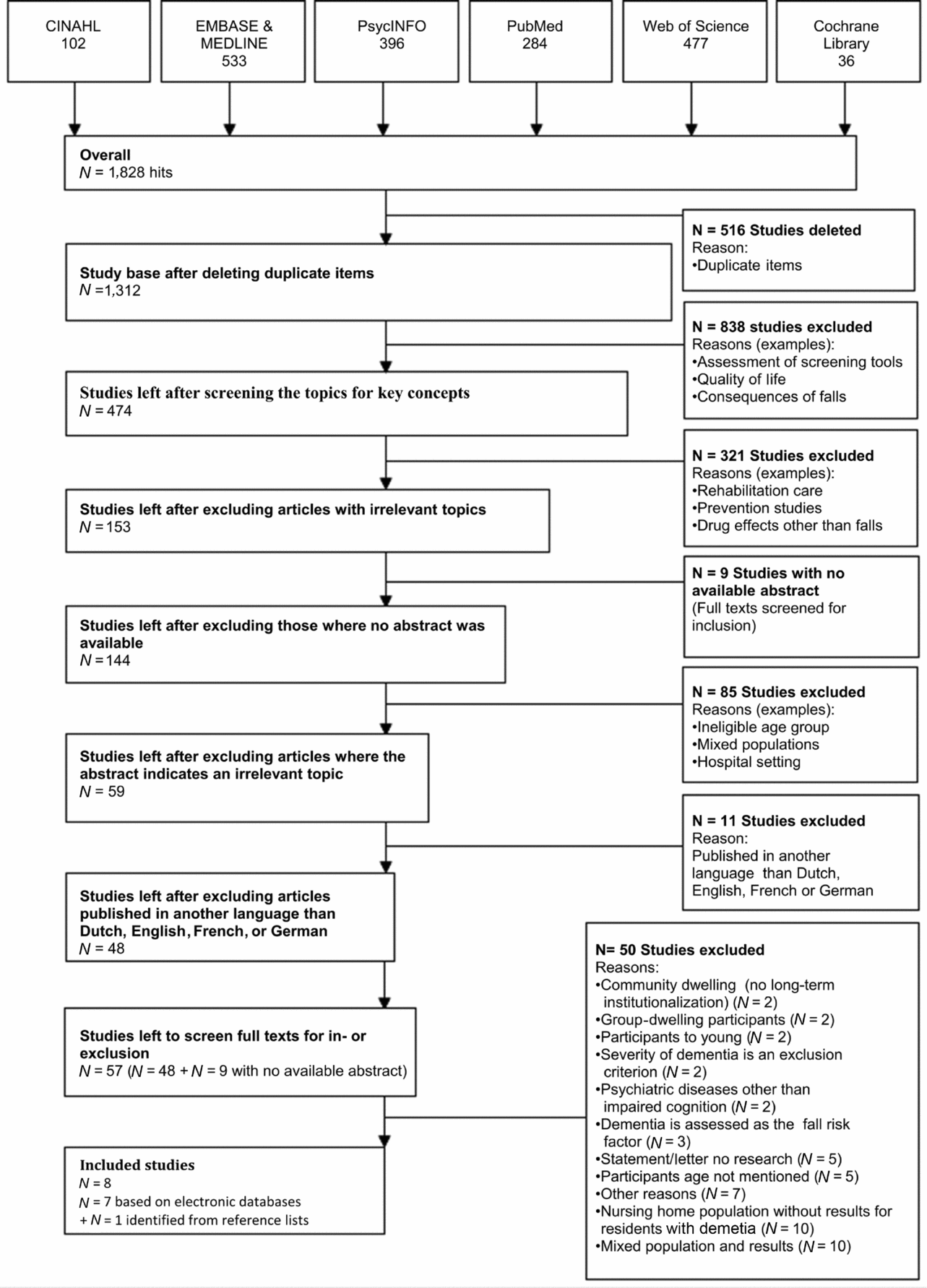
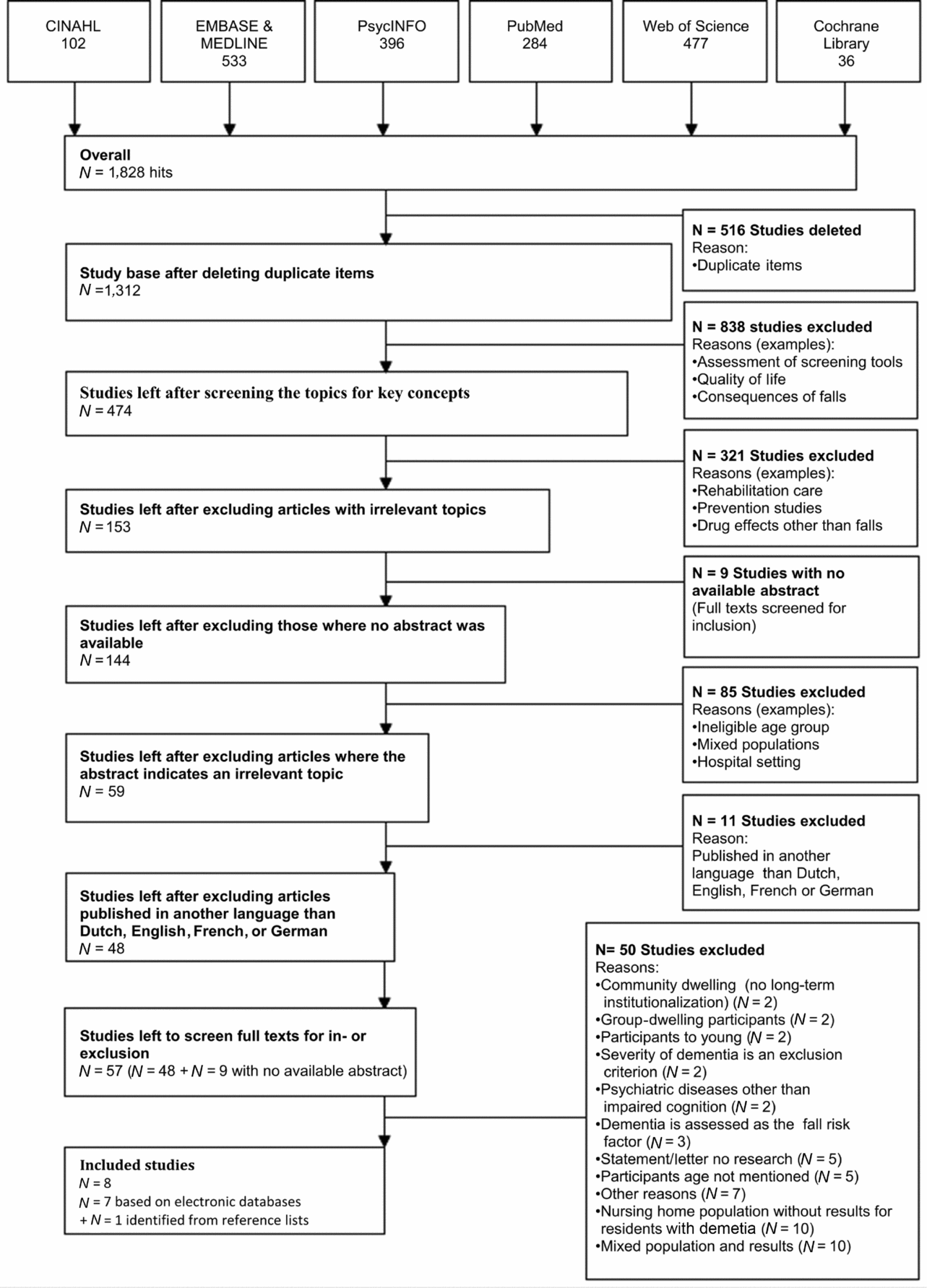
Figure 1 shows database-specific results and the study flowchart. The literature search resulted in 1,828 articles identified through the search in the electronic databases. After screening the titles and abstracts, the full texts of 57 articles were retrieved and screened. This search strategy yielded seven eligible studies for our review. One additional study (Nygaard, Reference Nygaard1998) was found in reference lists of identified studies. Hence, eight studies are included in the review.
Database-specific search results and study-flowchart.
Study characteristics
Three of the included studies were conducted in the Netherlands (Meulenberg et al., Reference Meulenberg, Van Dijk, Van De Sande and Habbema1991; van Dijk et al., Reference Van Dijk, Meulenberg, Vandesande and Habbema1993; Sterke et al., Reference Sterke2012), three in the USA (Brody et al., Reference Brody, Kleban, Moss and Kleban1984; Steinberg et al., Reference Steinberg, Lyketsos, Steele, Baker, Brandt and Baker1998; Luo et al., Reference Luo, Lin and Castle2011), one in Canada (Camicioli and Licis, Reference Camicioli and Licis2004), and one in Norway (Nygaard, Reference Nygaard1998). The sample sizes range from 42 to 13,507 participants. All but one study sample (Brody et al., Reference Brody, Kleban, Moss and Kleban1984) included both male and female participants. In three studies, cognitive impairment was assessed using the Clinical Dementia Rating (CDR) (Nygaard, Reference Nygaard1998; Steinberg et al., Reference Steinberg, Lyketsos, Steele, Baker, Brandt and Baker1998; Camicioli and Licis, Reference Camicioli and Licis2004). Two studies combined the CDR with the Mini Mental State Examination (MMSE) (Steinberg et al., Reference Steinberg, Lyketsos, Steele, Baker, Brandt and Baker1998; Camicioli and Licis, Reference Camicioli and Licis2004). Other studies based their assessment of cognitive impairment on clinical judgment as recorded in patient files (Meulenberg et al., Reference Meulenberg, Van Dijk, Van De Sande and Habbema1991; Luo et al., Reference Luo, Lin and Castle2011; Sterke et al., Reference Sterke2012), the BOP Geriatric Rating Scale (Beoordelingsschaal voor Oudere Patiënten) validated Dutch version of the Stockton Geriatric Rating Scale) (van Dijk et al., Reference Van Dijk, Meulenberg, Vandesande and Habbema1993) or the Kahn–Goldfarb mental status questionnaire (Brody et al., Reference Brody, Kleban, Moss and Kleban1984). The included studies assessed a variety of different fall risk factors: the effects of psychotropic drugs (Nygaard, Reference Nygaard1998; Sterke et al., Reference Sterke2012), age (Brody et al., Reference Brody, Kleban, Moss and Kleban1984; van Dijk et al., Reference Van Dijk, Meulenberg, Vandesande and Habbema1993; Nygaard, Reference Nygaard1998; Steinberg et al., Reference Steinberg, Lyketsos, Steele, Baker, Brandt and Baker1998; Camicioli and Licis, Reference Camicioli and Licis2004), sex (Meulenberg et al., Reference Meulenberg, Van Dijk, Van De Sande and Habbema1991; van Dijk et al., Reference Van Dijk, Meulenberg, Vandesande and Habbema1993; Nygaard, Reference Nygaard1998; Steinberg et al., Reference Steinberg, Lyketsos, Steele, Baker, Brandt and Baker1998; Camicioli and Licis, Reference Camicioli and Licis2004; Sterke et al., Reference Sterke2012), and time after admission (van Dijk et al., Reference Van Dijk, Meulenberg, Vandesande and Habbema1993; Steinberg et al., Reference Steinberg, Lyketsos, Steele, Baker, Brandt and Baker1998) were assessed by several studies. Other determinants, such as physical decline (Brody et al., Reference Brody, Kleban, Moss and Kleban1984) and restraint use (Luo et al., Reference Luo, Lin and Castle2011) were only assessed by one study each. Table 2 shows the summarized characteristics of identified studies.
Assessment of study quality
One study (Meulenberg et al., Reference Meulenberg, Van Dijk, Van De Sande and Habbema1991) was rated with five points, because the article did neither sufficiently describe the study design, the baseline characteristics, and comparisons nor the statistical analysis. Two studies were given a quality score of seven points (van Dijk et al., Reference Van Dijk, Meulenberg, Vandesande and Habbema1993) and eight points (Brody et al., Reference Brody, Kleban, Moss and Kleban1984), because neither study defined inclusion or exclusion criteria or conducted baseline comparisons. Therefore, these studies are excluded from detailed analysis, but their characteristics are presented in Table 2. Three studies with 10 (Steinberg et al., Reference Steinberg, Lyketsos, Steele, Baker, Brandt and Baker1998), 11 (Camicioli and Licis, Reference Camicioli and Licis2004), and 12 (Nygaard, Reference Nygaard1998) points did not clearly describe the inclusion or exclusion criteria and only one study (Nygaard, Reference Nygaard1998) defines thresholds for the severity and subgroups of mental impairment. The two most recent studies (Luo et al., Reference Luo, Lin and Castle2011; Sterke et al., Reference Sterke2012) were appraised with the highest quality score. Both studies were rated with 13 points. A clear trend toward a higher study quality or at least a higher quality of the reporting can be identified from 1984 to 2011. The summarized results of the quality appraisal are shown in Table 3.
Fall determinants in older long-term care residents with dementia
Two studies (Nygaard, Reference Nygaard1998; Sterke et al., Reference Sterke2012) assessed the effect of psychotropic drugs on falls and found a positive association. Luo and colleagues (Luo et al., Reference Luo, Lin and Castle2011) focused on the effect of physical restraints: persons with dementia or Alzheimer's disease are often trunk restrained, which appeared to be associated with an increased risk of falls and fractures in these patients. Full enclosure bedrails had a negative association with falls. Camicioli and Licis reported the effects of gait characteristics measured as cadence (steps/minute) on falls. Cadence was significantly smaller in fallers than non-fallers. They further studied the association between scores on the Unified Parkinson's Disease Rating Scale (UPDRS) or Morse fall scale and falls (Camicioli and Licis, Reference Camicioli and Licis2004). Both scales showed to predict falls. Physical conditions, behavioral disorders and their relation to falls were the focus of Steinberg and colleagues (Steinberg et al., Reference Steinberg, Lyketsos, Steele, Baker, Brandt and Baker1998). Only a score indicating a “fair or poor” General Medical Health Rating (GMHR) was found to be independently associated with falls, especially during the first weeks after admission to a long-term care facility. The GMHR is a standardized tool to rate the general medical health status of patients with dementia; it takes the number and severity of medical conditions as well as prescribed medication into account. None of the studies included in further analyses found a significant association between sex and the number of falls (Nygaard, Reference Nygaard1998; Steinberg et al., Reference Steinberg, Lyketsos, Steele, Baker, Brandt and Baker1998; Camicioli and Licis, Reference Camicioli and Licis2004; Sterke et al., Reference Sterke2012), while the studies by Meulenberg and colleagues and by van Dijk and colleagues reported contrary results for the effect of sex on falls (Meulenberg et al., Reference Meulenberg, Van Dijk, Van De Sande and Habbema1991; van Dijk et al., Reference Van Dijk, Meulenberg, Vandesande and Habbema1993). Only one study (Sterke et al., Reference Sterke2012) found a small, statistically significant effect of age on the number of falls.
Discussion
Our review reveals several fall determinants among older long-term care residents with dementia, namely psychotropic drugs, physical restraints, motor impairment, and medical conditions. We may conclude that the use of psychotropic drugs is associated with an increased risk of falls (Nygaard, Reference Nygaard1998; Sterke et al., Reference Sterke2012). Similar results are reported in several studies conducted in different older populations not included in our review (CBO, 2004; Hartikainen et al., Reference Hartikainen, Loennroos and Louhivuori2007; Woolcott et al., Reference Woolcott2009; Bloch et al., Reference Bloch, Thibaud, Dugue, Breque, Rigaud and Kemoun2011). This is a very important finding, knowing that the use of psychotropic medication in long-term care settings is highly prevalent (Verbeek et al., Reference Verbeek, Zwakhalen, Rossum, Ambergen, Kempen and Hamers2010; Zuidema et al., Reference Zuidema, Jonghe, Verhey and Koopmans2011) and thereby increases the fall risk of this population. Further assessed determinants were physical restraints (Luo et al., Reference Luo, Lin and Castle2011), gait characteristics (Camicioli and Licis, Reference Camicioli and Licis2004), general health (Steinberg et al., Reference Steinberg, Lyketsos, Steele, Baker, Brandt and Baker1998), sex (Nygaard, Reference Nygaard1998; Steinberg et al., Reference Steinberg, Lyketsos, Steele, Baker, Brandt and Baker1998; Camicioli and Licis, Reference Camicioli and Licis2004; Sterke et al., Reference Sterke2012), and age (Sterke et al., Reference Sterke2012). With regard to the residents’ autonomy, restraints are a great ethical issue. Not only because restraints, e.g. trunk restraints, are directly related to injury and death and their application is highly restricted, e.g. in Australia (Australian Medical Association (AMA), 2001), and also their effect regarding fall prevention is questionable (Frank et al., Reference Frank, Hodgetts and Puxty1996). Restraints were found to be associated with an increased risk for (injurious) falls in other older populations (Tinetti et al., Reference Tinetti, Liu and Ginter1992; Shorr et al., Reference Shorr, Guillen, Rosenblatt, Walker, Caudle and Kritchevsky2002; Hamers and Huizing, Reference Hamers and Huizing2005; Castle and Engberg, Reference Castle and Engberg2009). These results can be understood when considering that either restraint use is an indicator for residents likely to fall or restraint use is the reason for increased fall risk due to decreased walking ability and increased behavioral issues (Castle and Engberg, Reference Castle and Engberg2009). Further studies focused on gait characteristics are required (Camicioli and Licis, Reference Camicioli and Licis2004) to assess different gait characteristics (Verghese et al., Reference Verghese, Holtzer, Lipton and Wang2009) and their association with falls. Camicioli and Licis found cadence significantly decreased in fallers. These results are in line with recent evidence that typical dementia-related decline in cognitive functioning is a risk factor for falls, because higher level cognitive functioning influences gait characteristics and gait stability (Ijmker and Lamoth, Reference Ijmker and Lamoth2012). This would also explain an increased fall risk with increasing severity of dementia. The scores on UPDRS and Morse fall scale were predictive for falls (Camicioli and Licis, Reference Camicioli and Licis2004). Taking the widely use of these scales and the ability of the UPDRS to take Parkinson symptoms like present in vascular dementia into account, these scales can support clinicians in rating the fall risk of patients. In our review, we found an association between health and falls; this association is also found in older persons more generally (Tangman et al., Reference Tangman, Eriksson, Gustafson and Lundin-Olsson2010). However, the predictive value of ratings of the general health mainly depends on the symptoms and conditions included. Although no effect of sex on falls was found in our review (Nygaard, Reference Nygaard1998; Steinberg et al., Reference Steinberg, Lyketsos, Steele, Baker, Brandt and Baker1998; Camicioli and Licis, Reference Camicioli and Licis2004; Sterke et al., Reference Sterke2012), studies conducted in other older populations (WHO, 2007) found women to be more prone to falls, though in specific settings, such as psychogeriatric wards (Eriksson et al., Reference Eriksson, Strandberg, Gustafson and Lundin-Olsson2009), men were more prone to falls. It is possible that the effect of sex on falls can be disregarded in cognitive impaired persons in long-term care, because other risk factors, e.g. medication, the cognitive impairment itself, morbidity and impaired mobility, are more relevant or interfere with the sex effect. Age-specific physical decline may play a role, in the effect of age on falls found in our review (Sterke et al., Reference Sterke2012) as well as in other populations (WHO, 2007; Peel, Reference Peel2011). Only wandering was assessed as behavioral issue and was found to be protective for falls (Steinberg et al., Reference Steinberg, Lyketsos, Steele, Baker, Brandt and Baker1998). As health in general was found to be the main predictor for falls in this study (Steinberg et al., Reference Steinberg, Lyketsos, Steele, Baker, Brandt and Baker1998) and wandering could be an indicator for better health. This would explain the preventive effect of wandering. Based on our review, we conclude that no specific fall determinants for persons with dementia living in long-term care were found. The determinants associated with falls in our target population were also found in different older populations with or without diagnosis of dementia, e.g. home-dwelling persons or persons admitted to a hospital.
Our systematic review has some limitations. Although our search strategy also aimed to identify cognitive impairments other than dementia or Alzheimer's disease, only one study included patients with such other impairments (Nygaard, Reference Nygaard1998). Although we met the aim of including articles about long-term care residents with dementia, maybe an even broader search would have yielded additional articles focused on other cognitive impairments such as Parkinson or Huntington's disease. Another limitation is the risk of retrieval bias, because there could be further publications hidden in databases or published in languages not covered by our search strategy. Publication bias may always occur, because significant findings are more readily published than non-significant findings. Finally, we did not present results based on a Funnel plot or Forrest plot because the included articles did not study the same potential fall determinants or did not provide comparable results.
In contrast to the limitations, the strong points of our review are that we presented the summarized characteristics of all identified studies (Table 2) and that due to the broad search we were able to identify studies that provided subgroup analysis for our target population, which is indicated in Table 2.
Future research
There are several recommendations for further research derived from our review. First, more research on the association between drugs and falls in this population is needed. The influence of medication classes other than psychotropic drugs, e.g. cardiovascular drugs or antihistamines on fall risk needs further in-depth analysis. Second, the association between falls and restraints needs further study. Different types of physical restraints seem to be associated with either an increased or a decreased risk for falls. Basic knowledge is required whether restraint use in older long-term care residents with dementia leads to increased numbers of falls or vice versa. Therefore, future research needs to focus on the identification of hazardous or preventive effects of different types of physical restraints and when or whether it is appropriate to physically restrain a resident. With regard to the residents’ dignity and autonomy, this aspect needs further attention to generate evidence that supports changes in the restraint policy for long-term care residents with dementia (Gulpers et al., Reference Gulpers, Bleijlevens, Ambergen, Capezuti, Rossum and Hamers2011; Möhler et al., Reference Möhler, Richter, Köpke and Meyer2011), e.g. the use of movement sensors or lowered beds. Third, the impact of motor impairments, e.g. gait characteristics on falls, should be further studied. More studies with larger samples and thus more statistical power to assess the predictive value of gait characteristics on fall risks are needed to develop prediction models or instruments to assess fall risks. Fourth, none of the included studies assessed muscle strength, balance or behavioral risk factors, e.g. agitation and impulsivity. These (possible) fall determinants should be addressed in future research, because all of them can be modified and may yield preventive approaches or guidelines to decrease the fall risk. Fifth, basic studies concerned with time, location, and circumstances of falls are required, because no recent data focused on these (potential) determinants are available. Finally, in order to generate comparable data, we recommend incorporating the MMSE as assessment tool for dementia or cognitive impairment in future studies. Because the Alzheimer's Society (2012) states that the MMSE is the most common test to assess stages of dementia.
Clinical implications
As we only identified a limited number of studies, only a few clinical implications can be derived from this systematic review. The fall determinants shown in this review can either be modified by prevention methods, e.g. health conditions or prescribed drugs, or are not modifiable by prevention methods, e.g. sex, age, or ethnicity. Clinicians, therefore, should focus on modifiable determinants to decrease falls with preventive approaches. As the use of physical restraints and the prescription of psychotropic medication is rather common practice in long-term care, we have two main recommendations. We first recommend a medication review (Neyens et al., Reference Neyens2011) for residents with prescribed psychotropic drugs or other fall risk increasing drugs. A medication review may decrease adverse drug effects and thereby decrease the number of falls (Baranzini et al., Reference Baranzini2009). Second, the use and effects of physical restraints should be monitored continuously to enable the staff to stop the use of ineffective or hazardous restraint methods regarding fall prevention (Frank et al., Reference Frank, Hodgetts and Puxty1996). Finally, it is recommended to monitor individual patients and their health profile on admission and during the stay in the institution, because after admission to a long-term care facility the fall risk increases (Steinberg et al., Reference Steinberg, Lyketsos, Steele, Baker, Brandt and Baker1998) as well as due to comorbidity (Neyens et al., Reference Neyens2006; Halfens et al., Reference Halfens2011).
Conclusions
Currently, there are only a few studies concerned with fall determinants in long-term care residents with dementia. Therefore, more high-quality studies with sufficient sample sizes are needed to generate knowledge about specific fall determinants for persons with dementia living in long-term care. This may help to verify existing results shown in this review and to provide basic information concerned with time, location, and activities associated with falls. In our review, we found an association between the use of psychotropic drugs, physical restraints, motor impairments measured as gait characteristics and an increased risk for falls. The effects of general health and demographic characteristics require more research before drawing sound conclusions.
Conflict of interest
None.
Description of author's roles
All authors read and approved the final version of the manuscript and contributed to the critical evaluation of the writing. T. F. Kröpelin performed the search process, developed the quality criteria, extracted study characteristics, appraised quality scores to included studies, and drafted the manuscript. J. C. L. Neyens reviewed and replicated the search process, appraised quality scores to included studies, performed the data extraction, supported the drafting of the manuscript, and revised the manuscript. R. J. G. Halfens supervised the study and the writing process, revised the manuscript, contributed to the development of the quality criteria, and the search strategy and reviewed the search strategy. G. I. J. M. Kempen supervised the study and the process of writing, contributed to the development of the quality criteria, supported the layout of tables and figures, and revised the manuscript. J. P. H. Hamers supervised the study and the writing process, contributed to the development of the search strategy, and revised the manuscript. He takes full responsibility for the work, the conduct of the study, and controlled the decision to publish.
Acknowledgments
For this study, no grant was received from any funding agency. For supporting the retrieval of the full text papers, the authors wish to thank Marianne Tilly from the Department of Health Services Research and the team of Maastricht University library. Further thanks go to Donja Mijnarends from the Department of Health Services Research for the opportunity to discuss the quality criteria and helpful comments.