Introduction
Childhood adversities (CAs) including family violence (Fantuzzo et al. Reference Fantuzzo, DePaola, Lambert, Martino, Anderson and Sutton1991; Sternberg et al. Reference Sternberg, Lamb, Guterman and Abbott2006), physical and sexual abuse (Mullen et al. Reference Mullen, Martin, Anderson, Romans and Herbison1996; Molnar et al. Reference Molnar, Buka and Kessler2001; Springer et al. Reference Springer, Sheridan, Kuo and Carnes2001) and neglect (Gauthier et al. Reference Gauthier, Stollak, Messé and Aronoff1996) are associated with the development of psychiatric disorders, and these associations persist into adolescence and adulthood (Kessler et al. Reference Kessler, Davis and Kendler1997; Collishaw et al. Reference Collishaw, Pickles, Messer, Rutter, Shearer and Maughan2007). CAs are associated with liability to mood, anxiety and substance use disorders, with little meaningful variation in these associations across disorders (Kessler et al. Reference Kessler, Davis and Kendler1997; Green et al. in press), suggesting that CAs represent a common developmental origin to adult psychiatric disorders.
One possible explanation for this increased liability to adult psychopathology is that exposure to CA increases vulnerability to the effects of later stressful life events. Hammen et al. (Reference Hammen, Henry and Daley2000) proposed a stress sensitization model that posits that risk for adult depression following stressful life events is higher among individuals with a history of CAs than among individuals without a history of CA exposure. In a study examining this model, they reported that low levels of recent stressful events were associated with an increased risk for major depression only among women with a history of CAs, including parental death, divorce and family violence. By contrast, CA had no involvement in the association between high levels of recent stress and major depression. These results suggest that CA can ‘sensitize’ individuals to psychopathology by lowering their tolerance to relatively minor stressors (Hammen et al. Reference Hammen, Henry and Daley2000).
Since the study of Hammen et al. (Reference Hammen, Henry and Daley2000), stress sensitization effects have been documented in at least five other investigations (Dougherty et al. Reference Dougherty, Klein and Davila2004; Kendler et al. Reference Kendler, Kuhn and Prescott2004; Espejo et al. Reference Espejo, Hammen, Connolly, Brennan, Najman and Bor2006; Harkness et al. Reference Harkness, Bruce and Lumley2006; Rudolph & Flynn, Reference Rudolph and Flynn2007). Each of these studies finds an interaction between CA and later stress, such that depression risk associated with stressful events is particularly heightened among individuals with a history of CAs. Elevated risk for a major depressive episode (MDE) among those with CA exposure was evident after low levels of subsequent stress exposure in some of the studies (Harkness et al. Reference Harkness, Bruce and Lumley2006) whereas in others, heightened vulnerability to MDEs associated with CA exposure was observed only after high levels of stress exposure (Kendler et al. Reference Kendler, Kuhn and Prescott2004; Espejo et al. Reference Espejo, Hammen, Connolly, Brennan, Najman and Bor2006). Stress sensitization effects have also been reported among individuals with dysthymia, such that the association between chronic stress and the severity of depressive symptoms was stronger among individuals with a history of CAs (Dougherty et al. Reference Dougherty, Klein and Davila2004).
Nevertheless, several questions regarding the role of stress sensitization in explaining life-course associations between CAs and psychiatric disorders remain unanswered. Evidence of stress sensitization effects is based on clinical or community samples of primarily females and studies that have focused exclusively on depressive disorders (Hammen et al. Reference Hammen, Henry and Daley2000; Dougherty et al. Reference Dougherty, Klein and Davila2004; Espejo et al. Reference Espejo, Hammen, Connolly, Brennan, Najman and Bor2006; Harkness et al. Reference Harkness, Bruce and Lumley2006; Rudolph & Flynn, Reference Rudolph and Flynn2007). As a result, the generalizability of these findings, particularly to males, remains unclear. Moreover, the stress sensitization model has not been tested for psychiatric disorders other than depression, with the exception of post-traumatic stress disorder (PTSD). Individuals who have been exposed to prior trauma, particularly childhood maltreatment, are more likely to develop PTSD following subsequent traumatic events than individuals with no prior trauma history (Bremmer et al. Reference Bremmer, Southwick, Johnson, Yehuda and Charney1993; Breslau et al. Reference Breslau, Chilcoat, Kessler and Davis1999; Brewin et al. Reference Brewin, Andrews and Valentine2000), although recent prospective data raise questions about these findings (Breslau et al. Reference Breslau, Peterson and Schultz2008).
Prior research examining stress sensitization has also examined a narrow set of CAs, ranging from divorce and parental loss (Rudolph & Flynn, Reference Rudolph and Flynn2007) to abuse and neglect (Harkness et al. Reference Harkness, Bruce and Lumley2006), with little consistency across studies. CAs reflecting family dysfunction, such as maltreatment or interparental violence, have stronger associations with psychopathology than other CAs (Green et al. in press; McLaughlin et al. Reference McLaughlin, Green, Gruber, Sampson, Zaslavsky and Kessler2009), and thus may be most likely to set the stage for stress sensitization effects. Prior research has yet to examine these effects as a function of exposure to a broader set of CAs reflecting maladaptive family environments.
To address these gaps in the literature, we test the stress sensitization hypothesis in a national sample of men and women. We examine whether the association between stressful life events in adulthood and the 12-month prevalence of mood and anxiety disorders differs according to past exposure to CAs. We also examine whether the association between past-year stressful life events and perceived stress differs according to past exposure to CAs. Such a pattern would suggest that individuals with a history of CA perceive such events to be more negative or overwhelming and thus may be more vulnerable to the mental health consequences of stress exposure. We hypothesize that the association between past-year life events and psychiatric disorders, and between past-year life events and perceived stress, will be strongest among individuals with a history of CAs. We extend the literature by examining these effects separately for women and men.
Method
Sample
Data are drawn from the National Epidemiologic Study of Alcohol and Related Conditions (NESARC), a population-based psychiatric epidemiological study of civilian, non-institutionalized US adults aged ⩾18 years. In 2001–2002, 43 093 respondents completed Wave 1 of the NESARC (81.0% response rate). Between 2004 and 2005, 34 653 respondents completed a second interview (86.7% response rate). The cumulative response rate for both waves was 70%. Analyses reported here are based on Wave 2 data, which assessed CAs and stressful life events (Ruan et al. Reference Ruan, Goldstein, Chou, Smith, Saha, Pickering, Dawson, Huang, Stinson and Grant2008; Grant et al. Reference Grant, Goldstein, Chou, Huang, Stinson, Dawson, Saha, Smith, Pulay, Pickering, Ruan and Compton2009).
Measures
Psychiatric disorders
DSM-IV (APA, 1994) mood and anxiety disorders were assessed with the Alcohol Use Disorder and Associated Disabilities Interview Schedule – DSM-IV Version (AUDADIS-IV; Grant et al. Reference Grant, Dawson and Hasin2001). The AUDADIS-IV assesses MDE and anxiety disorders, including generalized anxiety disorder (GAD), panic disorder with or without agoraphobia, social phobia, and PTSD. Substance-induced mood and anxiety disorders, those due to somatic illnesses, or (in the case of major depression) bereavement were ruled out according to DSM-IV definition. AUDADIS-IV diagnoses have been found to be reliable in many general population and clinical reappraisal studies, and the reliability of the AUDADIS-IV mood and anxiety disorder diagnosis and symptom items ranges from fair (κ for GAD=0.41) to good (κ for PTSD diagnosis=0.77) (Grant et al. Reference Grant, Harford, Dawson, Chou and Pickering1995, Reference Grant, Dawson, Stinson, Chou, Kay and Pickering2003; Ruan et al. Reference Ruan, Goldstein, Chou, Smith, Saha, Pickering, Dawson, Huang, Stinson and Grant2008). The current analysis focuses on the presence of 12-month (a) MDE, (b) PTSD and (c) other anxiety disorders (ADs), including panic disorder with/without agoraphobia, GAD and social phobia.
Exposure to CA
Respondents completed a series of questions regarding exposure to CAs occurring before age 17. Emotional and physical abuse and family violence were assessed using questions from the Conflict Tactics Scale (Straus, Reference Straus1979). Emotional abuse items assessed how often caregivers insulted, swore at, said hurtful things, and threatened respondents with violence. Physical abuse items ascertained the frequency of caregiver violent behavior toward the respondent that resulted in marks or injuries. Questions regarding violent behavior directed at the respondent's mother or female caregiver were used to assess family violence.
Neglect was assessed using questions from the Children's Trauma Questionnaire (CTQ; Bernstein et al. Reference Bernstein, Fink, Hondelsman, Foote and Lovejoy1994), which queried how often respondents were left unsupervised when they were too young to be alone, went without things they needed (e.g. clothes, shoes), were not provided with regular meals, or did not receive necessary medical treatment. The CTQ also includes an endangerment item that assesses whether respondents were made to do chores that were dangerous for someone their age. Previously validated questions (Wyatt, Reference Wyatt1985) regarding sexual experiences that were unwanted, involved an adult, or occurred when the respondent was too young to know what was happening were used to assess sexual abuse. We also analyzed an item from the PTSD trauma section that assessed whether or not respondents had been sexually assaulted, raped or experienced unwanted sexual contact. Respondents reported the frequency of these CAs (with the exception of sexual assault) on a scale ranging from 1 (never) to 5 (very often). Physical or sexual abuse, endangerment, and exposure to domestic violence were coded as present if respondents endorsed any exposure. Emotional abuse and neglect were coded as present if respondents endorsed that they occurred sometimes, fairly often or very often.
Three other CAs reflecting the presence or absence of parental dysfunction were assessed: serious mental illness (hospitalization for a mental illness, suicide attempt or completion), criminality (incarceration), and substance abuse.
Stressful life events
The AUDADIS-IV assessed stressful life events occurring in the 12 months prior to the interview (Ruan et al. Reference Ruan, Goldstein, Chou, Smith, Saha, Pickering, Dawson, Huang, Stinson and Grant2008). Eleven events from this section were classified as minor life stressors: respondent moving or having someone new live with him or her; interpersonal problems at work; changes in work or job responsibilities; serious problems with a neighbor, friend or relative; legal problems; being the victim of theft; intentional damage to respondent's property; being mugged; family member or close friend being mugged or assaulted; expected death of a family member or close friend; and legal problems of family member or close friend.
Major life events and traumas were also assessed and included the following 14 events: being fired or laid off; being unemployed and looking for work for more than 1 month; marital separation, divorce, or the break-up of a steady relationship; serious financial crisis or bankruptcy; unexpected death of a family member or close friend; war exposure; life-threatening illness or accident; natural disaster exposure; sexual assault; being the victim of interpersonal violence; being kidnapped or held hostage; being stalked; witnessing someone seriously injured or killed; and respondent or someone close to respondent being the victim of a terrorist attack.
Past-year stressors and CAs were treated as categorical variables (0, 1–2 or ⩾3 events).
Perceived stress
Respondents completed the four-item Perceived Stress Scale (PSS; Cohen & Cohen, Reference Cohen and Cohen1983), a widely used measure of stress appraisal. Items assessed the extent to which respondents felt: able to control important things in their life; confident about their ability to handle personal problems; that things were going their way; and that difficulties were piling up so high that they could not overcome them. Respondents provided ratings of perceived stress for the 12-month period prior to the interview on a scale ranging from 0 (never) to 4 (very often).
Method of analysis
According to the stress sensitization model, the association between stressful life events in adulthood and psychopathology varies according to past exposure to CAs. Therefore, in prediction models for past-year disorders, we expect to observe an interaction between CA exposure and adult stressors, with stronger effects of adult stressors observed among individuals exposed to higher levels of CAs. Accordingly, the analytic strategy proceeds as follows.
Logistic regression analyses were conducted for each psychiatric outcome (MDE, PTSD and ADs). We included CA, past-year stress exposure (either minor or major), and the interaction between CA and stress exposure in each model along with participants' age, nativity, and race-ethnicity; a statistically significant interaction term supports the presence of a sensitization effect. Consistent with stress-sensitization theory, we predicted that the difference in the risk of psychopathology between individuals experiencing high versus low levels of stressful life events would vary according to past exposure to CA (i.e. would be larger among individuals with a history of CA than among individuals without a history of CA). Accordingly, we evaluated the interaction between CA and stress exposure on an additive scale (Rothman, Reference Rothman1974; Rothman et al. Reference Rothman, Greenland and Walker1980) by computing risk differences for psychopathology according to CA exposure. Proportions of individuals with each psychiatric outcome at each level of stress and CA exposure in the population were estimated directly from the logistic regression model containing the interaction term. Model-based risk differences (the difference between the proportions of individuals with a psychiatric outcome at low (1 or 2 events) or high (⩾3 events) levels of past-year stress exposure compared to no past-year stress exposure) were estimated for each CA exposure group (0, 1–2, ⩾3). All analyses were conducted separately for males and females; gender differences in stress sensitization were tested through three-way interaction terms between CA, adult stressful events, and gender in predicting mood and anxiety disorder outcomes.
Mean levels of perceived stress were computed by gender, type (minor, major) and level of past-year stressor exposure. We examined two linear regression models predicting perceived stress from CAs, past-year life events (major, minor) and their interaction to determine whether the association between stressful life events and perceived stress is modified by level of exposure to CAs.
Analyses were conducted using sudaan version 10.0 (Research Triangle Institute, 2008), which adjusts variance estimates for the complex sampling design. NESARC sampling weights were used to account for selection and response probabilities. Statistical significance was evaluated using two-tailed 0.05-level tests.
Results
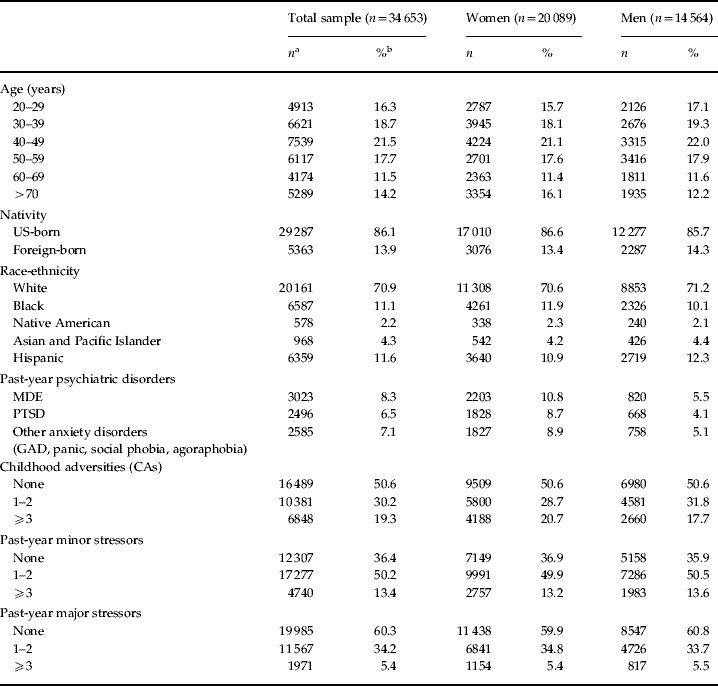
Prevalence of CAs and stressful life events
Nearly half of respondents reported at least one CA reflecting family dysfunction (49.4%). The prevalence of CA exposure was similar among men and women (Table 1). Parental substance abuse (23.0%) and emotional abuse (22.5%) were the most commonly reported adversities. Exposure to multiple CAs was common, with 19.0% of respondents reporting exposure to 1 CA, 11.0% reporting exposure to 2 CAs, and 19.8% reporting ⩾3 CAs.
Demographic characteristics of the National Epidemiological Survey on Alcohol and Related Conditions (NESARC) sample, n=34 653, 2004–2005

MDE, Major depressive episode; PTSD, post-traumatic stress disorder; GAD, generalized anxiety disorder.
a Unweighted counts.
b Weighted proportions.
A majority of respondents experienced a minor stressful event in the year preceding the interview (63.6%). Major life events were less prevalent, but still common (39.7%). There were no gender differences in the prevalence of minor or major events.
Life events, CAs and psychiatric disorders
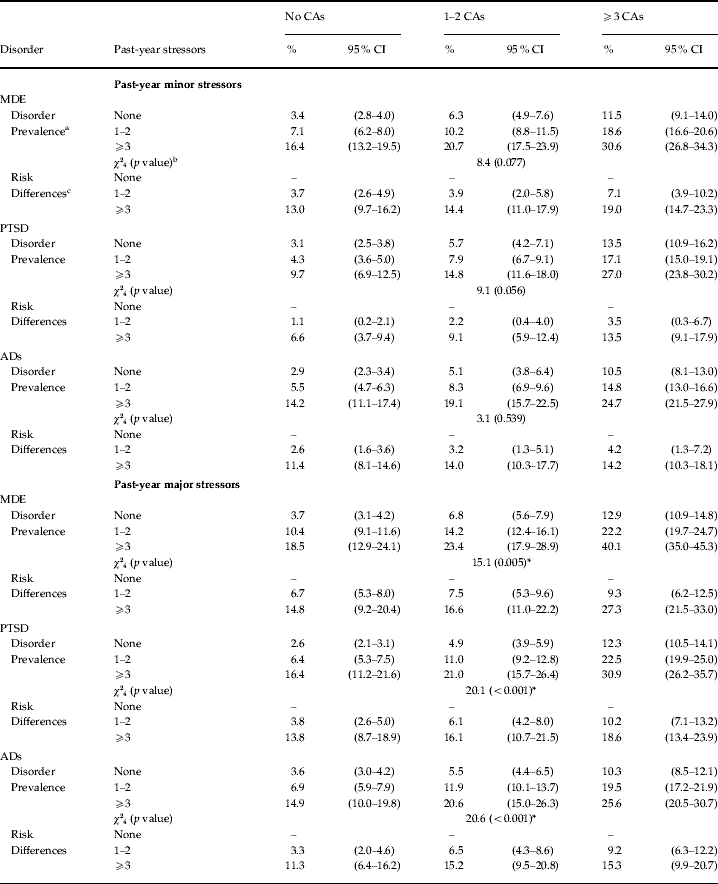
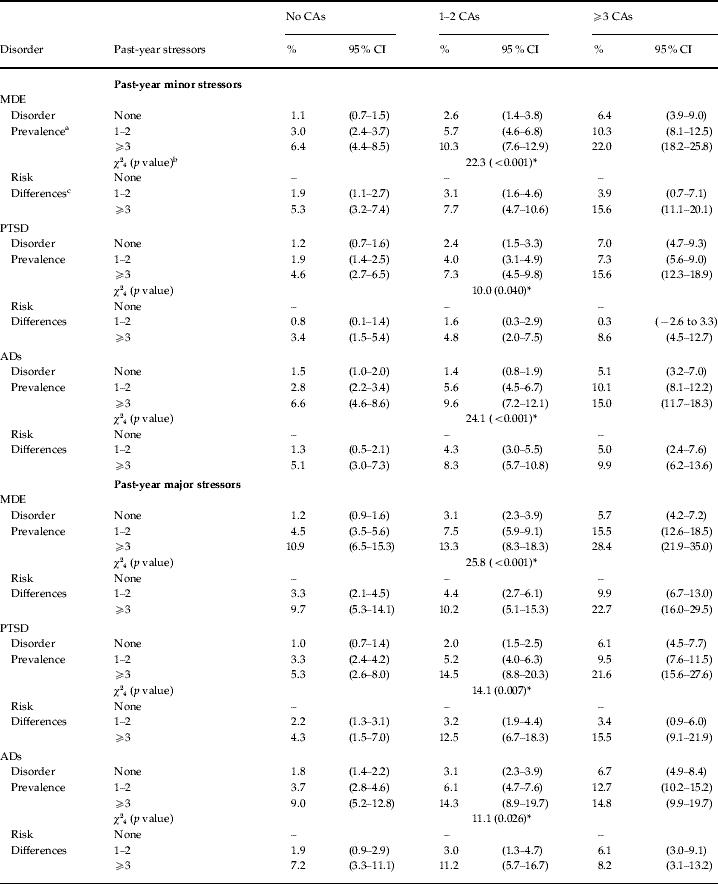
We examined the proportions of respondents who met DMS-IV criteria for 12-month mood and anxiety disorders as a function of both past-year stressful life events and exposure to CAs, adjusting for covariates. Among both women (Table 2) and men (Table 3), the prevalence of MDE, PTSD and ADs increased with greater exposure to past-year life events and CAs. The prevalence of MDE, PTSD and ADs is also greater among respondents with higher levels of exposure to CAs.
PrevalencesFootnote a of 12-month psychiatric disorders among women (n=20 089), by level of exposure to past-year stressors and childhood adversity (CA), National Epidemiological Survey on Alcohol and Related Conditions (NESARC) 2004–2005

MDE, Major depressive episode; PTSD, post-traumatic stress disorder; ADs, other anxiety disorders (panic disorder with and without agoraphobia, generalized anxiety disorder, and social phobia); CI, confidence interval.
a Prevalences and risk differences adjusted for age, nativity, and race-ethnicity.
b χ2 test (df=4) of the interaction between CAs and past-year stressors in models for 12-month disorders.
c Difference in the risk of disorders between individuals reporting 1–2 or ⩾3 past-year stressors, compared to no past-year stressors, across categories of CA.
* Significant at the 0.05 level.
PrevalencesFootnote a of 12-month psychiatric disorders among men (n=14 564), by level of exposure to past-year stressors and childhood adversity (CA), National Epidemiological Survey on Alcohol and Related Conditions (NESARC) 2004–2005

MDE, Major depressive episode; PTSD, post-traumatic stress disorder; ADs, other anxiety disorders (panic disorder with and without agoraphobia, generalized anxiety disorder, and social phobia).
a Prevalences and risk differences adjusted for age, nativity, and race-ethnicity.
b χ2 test (df=4) of the interaction between CAs and past-year stressors in models for 12-month disorders.
c Difference in the risk of disorders between individuals reporting 1–2 or ⩾3 past-year stressors, compared to no past-year stressors, across categories of CA.
* Significant at the 0.05 level.
Stress sensitization effects
To examine the stress sensitization hypothesis, we examined interactions between exposure to CAs and past-year stressful events to determine whether CA exposure modified the effect of life events on risk for mood and anxiety disorders.
MDEs
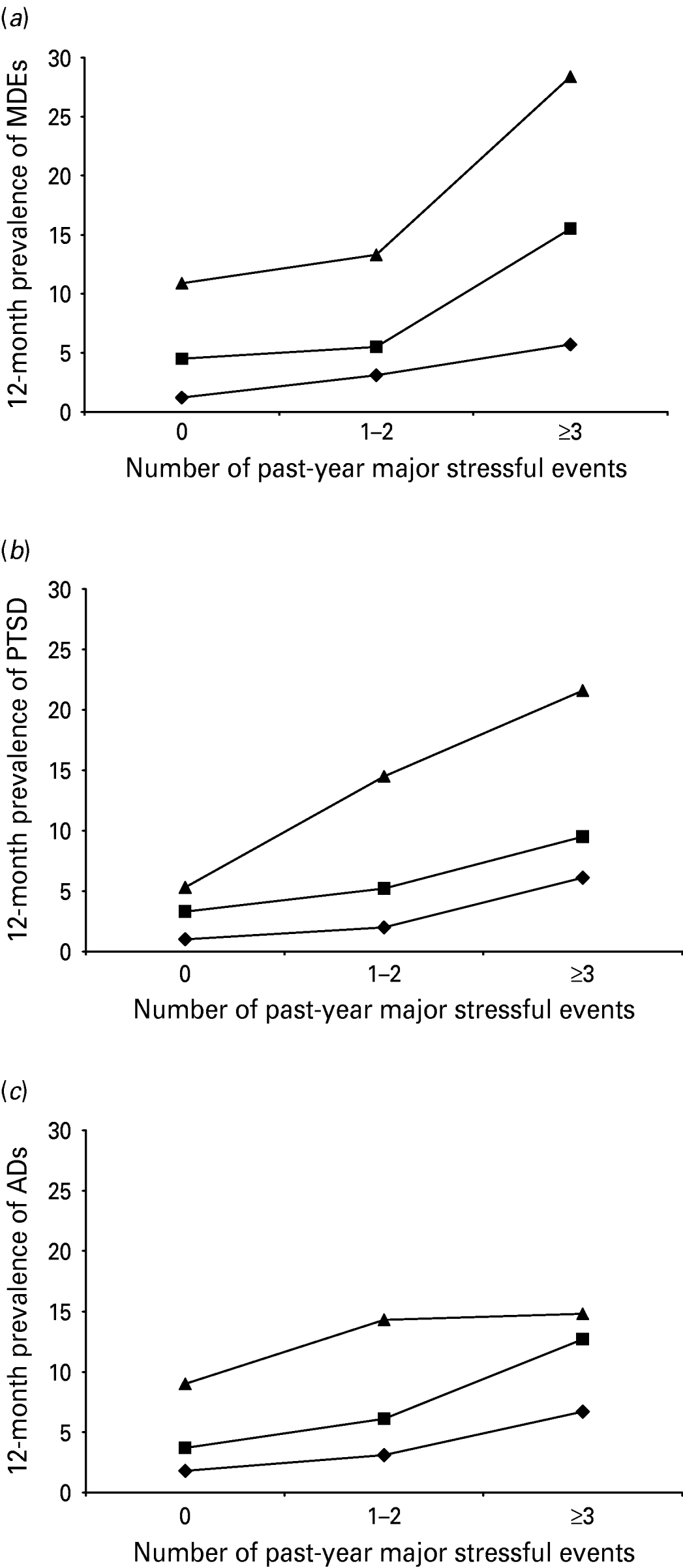
We found support for stress sensitization in MDE among both women (χ24=15.1, p=0.005) and men (χ24=25.8, p<0.001) exposed to major life events (Fig. 1). Stress sensitization effects were evident for women with ⩾3 major events (compared to women with no past-year major events). The risk difference of MDE for women with ⩾3 major events versus no major events was significantly higher among women with a history of ⩾3 CAs (27.3%) than among women with no CAs (14.8%, p=0.002) and 1–2 CAs (16.6%, p=0.012) (Table 2). Among men, the risk difference of MDE for those with ⩾3 major events versus no major events was significantly higher among those exposed to ⩾3 CAs (22.7%) than among men with 1–2 CAs (10.2%, p=0.005) and with no CAs (9.7%, p<0.001) (Table 3). The risk difference of MDE among men exposed to 1–2 major life events was also significantly higher among those exposed to ⩾3 CAs (9.9%) than men with 1–2 CAs (4.4%, p=0.004) and men with no CAs (3.3%, p<0.001).
The prevalence of 12-month (a) major depressive episodes (MDEs), (b) post-traumatic stress disorder (PTSD) and (c) other anxiety disorders (ADs) among men according to past-year exposure to major stressful life events and exposure to childhood adversities (CAs). –◆–, 0 CAs; –▪–, 1–2 CAs; –▴–, ⩾3 CAs.

We also found stress sensitization effects for MDE among men exposed to minor life events (χ24=22.3, p<0.001). The risk difference of MDE among men exposed to ⩾3 minor life events versus no events was significantly higher among those exposed to ⩾3 CAs (15.6%) than men with 1–2 CAs (7.7%, p=0.006) and with no CAs (5.3%, p<0.001).
PTSD
We also found that significant stress sensitization effects were associated with 12-month PTSD among women (χ24=20.1, p<0.001) and men (χ24=14.1, p=0.007) exposed to major life events. For women, stress sensitization was evident for respondents who experienced 1–2 major events, where the risk difference of PTSD was greater among respondents with ⩾3 CAs (10.2%) than among those with 1–2 CAs (6.1%, p=0.022) and no CA exposure (3.8%, p<0.001). Among men, however, stress sensitization was evident among those with past-year exposure to ⩾3 major events. The risk difference of PTSD was greater among men with both ⩾3 CAs (15.5%, p=0.003) and 1–2 CAs (12.5%, p=0.018) than among men with no CAs (4.3%).
Stress sensitization effects associated with PTSD were also evident among men exposed to minor life events (χ24=10.0, p=0.040). The risk difference of PTSD was greater among men with ⩾3 CAs (8.6%) than among men with no CAs (3.4%, p=0.025).
Other anxiety disorders
Significant stress sensitization effects associated with 12-month anxiety disorders were also present among women (χ24=20.6, p<0.001) and men (χ24=11.1, p=0.026) exposed to major life events. For women exposed to 1–2 major life events, the risk difference was significantly greater among those with ⩾3 CAs (9.2%, p<0.001) and 1–2 CAs (6.5%, p=0.011) than among women with no CAs (3.3%). We found a similar pattern in men. Among men exposed to 1–2 major life events, the risk difference of anxiety disorders was higher in those with ⩾3 CAs (6.1%) than men with no CA exposure (1.9%, p=0.012).
Finally, we found evidence of stress sensitization among men exposed to 1–2 minor life events (χ24=24.1, p<0.001). The risk difference of anxiety disorders was higher among men with 1–2 CAs (4.3%, p<0.001) and with ⩾3 CAs (5.0%, p=0.011) as compared to men with no CA exposure (1.3%).
Gender differences
To examine gender differences in stress sensitization effects, we tested three-way interactions between CA, adult stressful events, and gender in predicting mood and anxiety disorders. The only significant interaction of the six examined was between CA, major life events, and gender in predicting PTSD (χ24=14.1, p=0.024). As reported above, stress sensitization effects were evident among women exposed to 1–2 major life events and among men exposed to ⩾3 major life events.
Perceived stress as a function of life events and CA
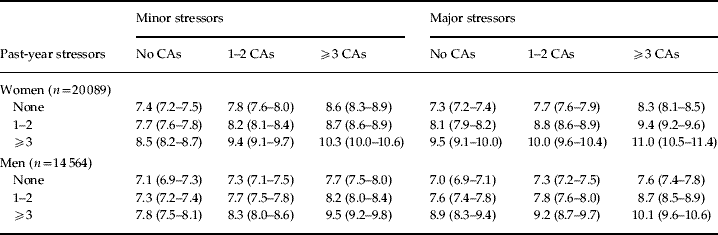
Respondents with greater exposure to CAs had higher perceived stress scores than respondents with fewer CAs at a given level of past-year stressful life events (Table 4). There was a significant interaction between CA and past-year major (χ24=94.6, p<0.001) and minor life events (χ24=32.0, p<0.001) in predicting perceived stress. As exposure to past-year stressful events increases, the corresponding increases in perceived stress are greater among individuals reporting ⩾3 CAs than among individuals with no CAs. Perceived stress was significantly higher among women with greater exposure to CAs in 17 out of 18 (94.4%) possible comparisons within a given level of past-year life events and in 11 out of 18 (61.1%) comparisons among men.
Mean perceived stress scores and 95% confidence intervals by type and level of exposure to past-year stressors and childhood adversity (CA), separately for women and men (n=33 536), data from the National Epidemiological Survey of Alcohol and Related Conditions (NESARC) 2004–2005

Discussion
Our results provide empirical support for stress sensitization effects – an interaction between CA and adult stress – in liability to mood and anxiety disorders in both men and women in a national sample. Our findings are consistent with prior research suggesting that risk for MDEs among women exposed to stressful life events is heightened among those with a history of CA (Hammen et al. Reference Hammen, Henry and Daley2000; Kendler et al. Reference Kendler, Kuhn and Prescott2004; Espejo et al. Reference Espejo, Hammen, Connolly, Brennan, Najman and Bor2006). We extend this literature by documenting stress sensitization effects for PTSD and other anxiety disorders, among both women and men. Although the pathways linking CAs to later stress vulnerability remain to be identified, accumulating evidence suggests that CA exposure is associated with chronic dysregulation in the physiological stress response system, which may increase both reactivity to stress and risk for mood and anxiety disorders (Heim & Nemeroff, Reference Heim and Nemeroff2001), thereby representing a generalized diathesis to psychopathology that persists across the life course (Monroe & Simons, Reference Monroe and Simons1991).
One of the most consistent findings in our analysis was that stress sensitization effects occurred among individuals who experienced ⩾3 CAs. This was true for MDEs, PTSD and other anxiety disorders. To our knowledge, these findings are novel, as previous studies have not examined the degree of CA exposure as a predictor of stress sensitization. Because co-occurring CAs tend to be severe and are strongly associated with poor mental health outcomes (Arata et al. Reference Arata, Langhinrichsen-Roling, Bowers and O'Brien2007; Finkelhor et al. Reference Finkelhor, Ormrod and Turner2007), these results suggest that CAs may need to cross a severity threshold to impact later stress vulnerability.
The basic pattern of findings is consistent for women and men: stress sensitization effects in liability to MDEs, PTSD and other anxiety disorders are present for both women and men exposed to ⩾3 CAs. Gender differences were found, however, in the number of stressful life events needed to trigger such effects. Fewer major events are necessary to trigger stress sensitization effects in liability to PTSD among women compared to men. This finding may reflect differences in the severity of events experienced by women and men. For example, sexual assault is strongly associated with PTSD onset and is more prevalent among women (Kessler et al. Reference Kessler, Sonnega, Bromet, Hughes and Nelson1995). The opposite pattern occurred for MDEs, however, such that stress sensitization effects were evident for men with fewer past-year major events than women. It is possible that sensitization effects are triggered when there is a match between the domain of the recent stressor (e.g. interpersonal violence) and of the CA event (e.g. physical abuse) (Hammen & Goodman-Brown, Reference Hammen and Goodman-Brown1990; Rudolph & Flynn, Reference Rudolph and Flynn2007), or that individuals are at greater risk for psychopathological reactions that are similar to their response to the initial CA. Either of these possibilities could have produced the observed gender differences in the magnitude of current stressors necessary to trigger sensitization effects. Because this is the first study to examine stress sensitization effects in both men and women, these findings warrant replication in future research.
One noteworthy difference between our findings and the results of prior research involves the level of current exposure to stressful life events that generates stress sensitization effects. Such effects were most commonly observed in our analysis among respondents exposed to three or more major life events. By contrast, previous studies have found increased risk for MDEs among females exposed to CAs (compared to those with no exposure) at low levels of current stress, but no difference in MDE risk at high levels of stress (Hammen et al. Reference Hammen, Henry and Daley2000; Rudolph & Flynn, Reference Rudolph and Flynn2007). These previous studies used smaller clinical and/or community samples of young women, which may have led to this discrepancy. It also may have resulted from differences in the way that stress was operationalized: the current study focused exclusively on stressful life events, whereas both chronic stressors and acute events were assessed in studies that reported sensitization at low levels of exposure to stressors (Hammen et al. Reference Hammen, Henry and Daley2000; Rudolph & Flynn, Reference Rudolph and Flynn2007). Consistent with our findings, however, Kendler et al. (Reference Kendler, Kuhn and Prescott2004) also found that the difference in MDE risk between those with and without CA exposure is greater for individuals who experienced high levels of stress, using a measure of both chronic and acute stress exposure. We anticipate that advancements in the measurement of life stress (Monroe, Reference Monroe2008) will facilitate the ascertainment of the level of stress exposure needed to elicit stress sensitization effects, in part, by ensuring comparability in the assessment of stress exposure across future studies.
Finally, we document an interaction between CA and adult exposure to stressful life events in predicting stress appraisal. These findings suggest that individuals exposed to CAs may be more vulnerable to mood and anxiety disorders following adult stressful events because they perceive those events to be more overwhelming or unmanageable. Moreover, they suggest that greater emotional reactivity to daily events among individuals with a history of CAs (Glaser et al. Reference Glaser, van Os, Portegijs and Myin-Germeys2006; Wichers et al. Reference Wichers, Schrijvers, Geschwind, Jacobs, Myin-Germeys, Thiery, Derom, Sabbe, Peeters, Delespaul and van Os2009) may result from more negative appraisals of those events, a possibility that remains to be examined directly in future research.
Several limitations of the current study must be acknowledged. The first involves our use of a stress checklist rather than a stressor interview (Hammen, Reference Hammen1991), which did not allow us to ascertain the severity of events or the temporal sequencing of stressors and disorder onset. We attempted to address this first concern by categorizing events as minor and major stressors, although this strategy undoubtedly involved some degree of misclassification. Moreover, because we examined associations between past-year stressors and 12-month disorders, it is possible that some disorder onsets occurred prior to stressor occurrence. Second, this study is limited by retrospective assessment of CAs. Past research suggests that recall bias of CAs primarily involves under-reporting of CA (Hardt & Rutter, Reference Hardt and Rutter2004), and that the presence of current psychopathology does not result in reporting or memory biases that inflate estimates of the prevalence of CAs (Brewin et al. Reference Brewin, Andrews and Gotlib1993). In addition, prior work examining the validity of retrospective reports of CAs finds that, although such reports may be biased, they are sufficiently valid to be used in epidemiological research, particularly when CAs are well-defined and do not rely on subjective interpretations (Brewin et al. Reference Brewin, Andrews and Gotlib1993; Hardt & Rutter, Reference Hardt and Rutter2004). Under-reporting of CAs in this study would have resulted in attenuation of the associations between CAs and psychopathology, whereas over-reporting of CA occurrence among individuals with past-year disorders would have led to an overestimation of these associations. Consequently, our findings warrant replication in prospective studies. Third, because measures of perceived stress have been found to overlap with measures of distress (Dohrenwend & Shrout, Reference Dohrenwend and Shrout1985), our perceived stress measure may have been confounded by current mood and anxiety disorders. Our findings regarding stress sensitization effects on perceived stress should thus be interpreted with caution.
An alternative interpretation of the interactions between CAs and adult stressful life events in predicting psychopathology is that adult stressful life events act as mediators of the association between CAs and psychiatric disorders. In other words, CAs are associated with adult psychopathology because they increase the risk for stressful events in adulthood (Hazel et al. Reference Hazel, Hammen, Brennan and Najman2008). Kraemer et al. (Reference Kraemer, Kiernan, Essex and Kupfer2008) suggest that when a correlation exists between two exposures (e.g. CAs and adult stressors), a statistical interaction between those exposures in predicting an outcome should be interpreted as evidence of mediation rather than moderation. Therefore, tests of the stress sensitization hypothesis are needed that focus on adult stressors that are uncorrelated with prior adversities (e.g. so-called ‘independent’ life events; Brown & Harris, Reference Brown and Harris1978). Such tests would not be subject to this alternative interpretation.
Our findings have implications for theory, research and practice. First, we find that exposure to CAs increases perceived stress and vulnerability to psychopathology in the context of later stressful life events, providing support for stress sensitization as an etiological model linking CA exposure to a range of mood and anxiety disorders. Although prior research on stress–diathesis models of psychopathology have conceptualized the diathesis as an innate characteristic of the individual, such as a genetic vulnerability (Monroe & Simons, Reference Monroe and Simons1991; Caspi et al. Reference Caspi, Sugden, Moffit, Taylor, Craig, Harrington, McClay, Mill, Martin, Braithwaite and Poulton2003), the current findings suggest that a generalized diathesis to psychopathology may arise from environmental exposures early in life. Second, these findings point to important avenues for future research. The extent to which stress sensitization plays a role in the development of other psychiatric disorders, such as substance use disorders, represents one such area. Most importantly, the mechanisms underlying stress sensitization effects remain to be identified. It is likely that these mechanisms operate through a variety of cognitive, emotion regulation and physiological pathways (Hammen et al. Reference Hammen, Henry and Daley2000; Repetti et al. Reference Repetti, Taylor and Seeman2002; Rudolph & Flynn, Reference Rudolph and Flynn2007). Identification of such mechanisms is crucial to the development of interventions aimed at reducing the deleterious mental health consequences of CAs. Finally, our findings suggest that individuals with a history of CA exposure represent potential targets for interventions aimed at reducing stress-related psychiatric morbidity in adulthood.
Acknowledgments
This research was supported by the Robert Wood Johnson Foundation (Grant no. 053572) and by the National Institutes of Health (Grant nos MH087544, MH078928, MH070627 and DA080887).
Declaration of Interest
None.