Introduction
Traumatic brain injury (TBI) is a major health and socioeconomic issue throughout the world.Reference Kou, Hou, Sun and Chu 1 It is the most common cause of death and disability among young people.Reference Maas, Stocchetti and Bullock 2 In China, the incidence of TBI is rising sharply, mainly due to the dramatic increase in the number of vehicles and high-rise buildings.Reference Ghajar 3
The neurological damage of TBI not only occurs at the moment of impact (primary brain injury) but also evolves afterwards (secondary brain injury).Reference Wu, Hu and Zhuo 4 Secondary brain injury is reported as the leading cause of hospital deaths after TBI.Reference Wu, Hu and Zhuo 4 Early identification of TBI at an accident scene, and its proper assessment and treatment by prehospital care providers, can lower the risk of secondary injury.Reference Maas, Stocchetti and Bullock 2
The ambulance service in China is still in its relative infancy, being arguably no more than 30 years old,Reference Marshall, Gautille and Klauber 5 and is considered as the weakest part of the Chinese medical system.Reference Li, Zhang and Tan 6 Therefore, in order to improve the outcome of TBI, it is important to raise the quality of the ambulance service. In China, the customary health care provider in the ambulance service is the doctor. Research on their performance in prehospital management is scarce. To the authors’ knowledge, this is the first study describing the current situation of prehospital TBI management in China.
Methods
This was a cross-sectional, survey study of doctors who provided prehospital care in Hubei Province.
Data Collection
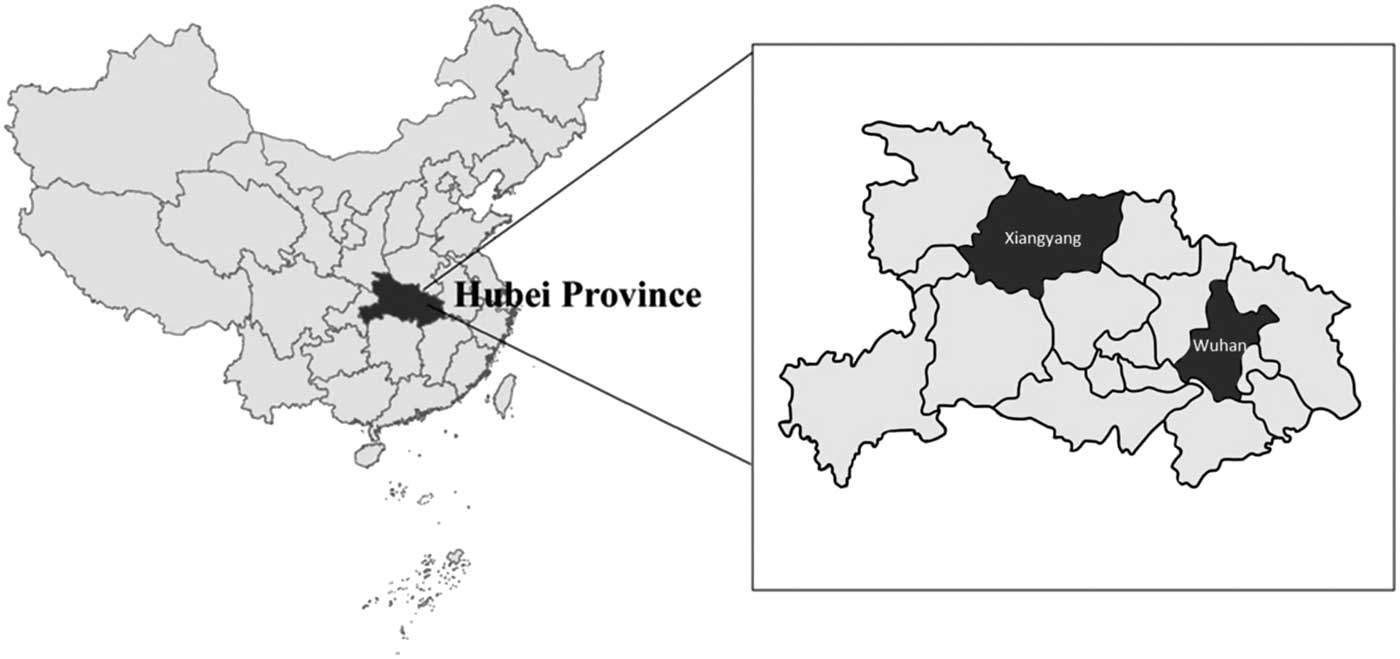
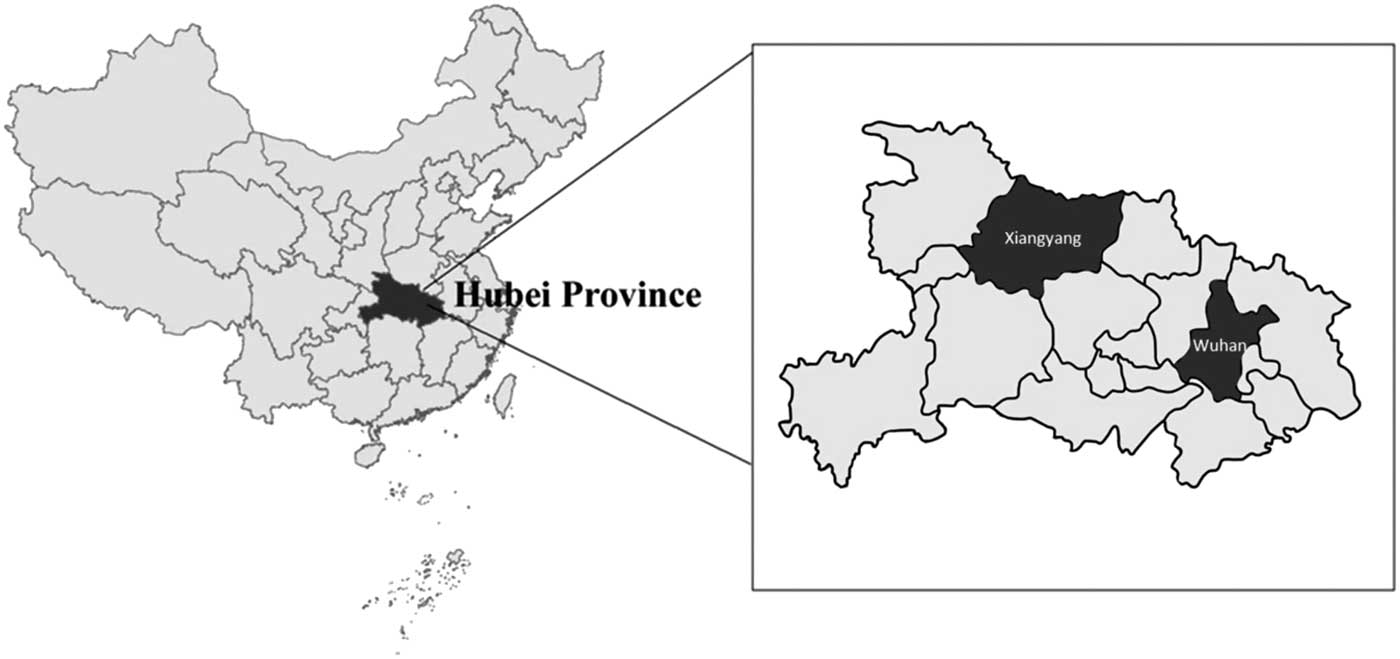
Two cities, Wuhan and Xiangyang, in Hubei Province, China, conveniently were selected as the study field. Hubei Province lies in the central part of China, with an area of 186,000 square kilometers (Figure 1). Hubei is a major industrial construction area in China. It has a population of 58.16 million with 77% of them aged between 15 to 64 years old.Reference Hou and Lu 7 The gross domestic product of Hubei province reached 2.74 trillion Yuan (approximately US $441.94 billion) in 2014, ranking ninth of the 31 provincial-level regions in China. 8 It is less-developed than the metropolitan areas of Beijing and Shanghai, and it is not as poor as western China. Therefore, it can represent the average Chinese socioeconomic level. Wuhan is the capital city of Hubei province, China. The city with a population of 9.8 million is recognized as the political, economic, cultural, educational, and transportation center of central China.Reference Hou and Lu 7 Xiangyang is the second largest city, with a registered population of 5.5 million inhabitants.Reference Hou and Lu 7
Location of Hubei Province and Wuhan City.
The ambulance service in China is managed by an independent organization, the Emergency Medical Centre. Since there is no paramedic profession in China, staff members working in the local Emergency Medical Centres are doctors, nurses, patient carriers, and drivers.Reference Li, Zhang and Tan 6 Of this group, doctors play the crucial role in the ambulance service. 9 For several reasons, many Emergency Medical Centres in China cannot employ enough full-time prehospital doctors to work in the ambulance services. In addressing this problem, different types of prehospital management models were developed in different areas. In the study catchment, the Emergency Medical Centre cooperated with the hospital emergency department (ED),Reference Sun 10 , Reference Li and Pei 11 which takes acute care of patients who present without prior appointment, either by their own means or by ambulance. The Emergency Medical Centre will park the ambulances at the ED. If an accident happened near a cooperative ED, the Emergency Medical Centre would task the ED doctors to the accident site.Reference Zhou, Huang, Xu and Zhao 12 Because of this situation, the total population of all doctors (56 in total) providing ambulance services in Wuhan Medical Emergency Centre,Reference Zhou and Jiang 13 Xiangyang Emergency Medical Centre, and their cooperative EDs, were invited to complete a questionnaire.
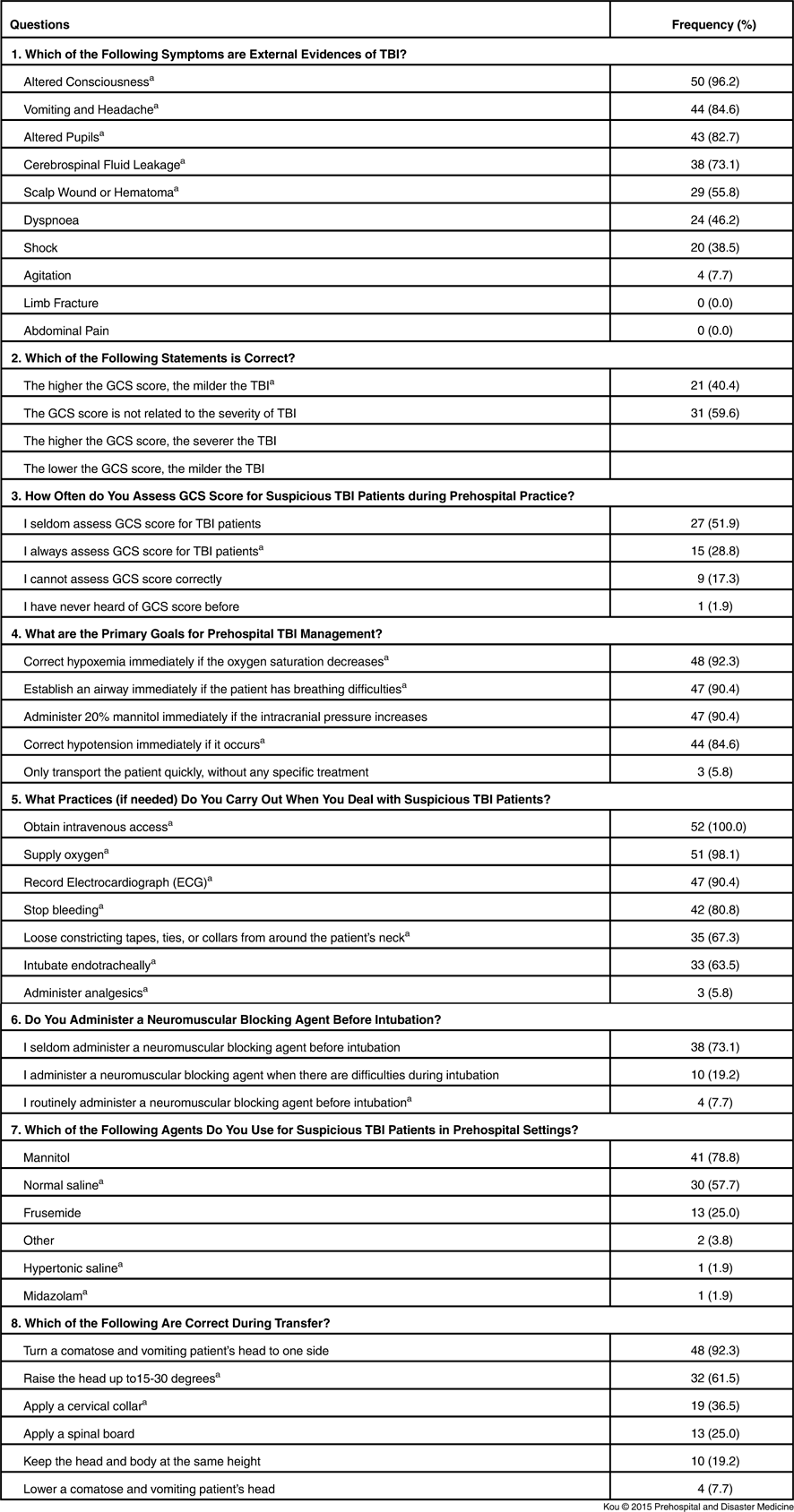
The ambulance service has been in existence for more than a century in Australia. Consequently, it is more-developed and advanced in many respects than in many other countries, particularly in terms of its practitioners’ educational underpinnings. 14 A survey instrument for the purpose of this study was therefore developed according to the Australian prehospital clinical practice guidelines.Reference Chilton 15 The multiple choice questionnaire was revised following feedback from two Australian epidemiologists, two Chinese prehospital doctors, and a Chinese neurosurgeon. The questionnaire included two sections: demographic information and prehospital TBI management. The second section contained three domains: TBI identification, TBI assessment, and TBI treatment (Table 1).
Selected Typical Questions in the Questionnaire and the Results

Abbreviations: GCS, Glasgow Coma Scale; TBI, traumatic brain injury.
a Right answer according to the literature.
Data Analysis
The questionnaire included 19 questions in the TBI management section. The full mark for each question was set as one point. Each domain contained a different number of questions (four questions about TBI identification, five about TBI assessment, and 10 about TBI treatment). The average score (rather than the sum) of each domain was calculated in order to give each domain equal weighing. The average score of the overall 19 questions was also calculated. Data were analyzed with IBM SPSS statistics 21 (IBM Corporation; Armonk, New York USA). Independent samples t-test was used to analyze group differences in the average scores in terms of binary variables, including city, gender, education level, clinical experience, professional title, and organization; one-way ANOVA was used to analyze group differences in the average scores in terms of multiple categorical variables, including age, specialty before prehospital care, and training frequency.
General linear regression was used to identify any factors that were associated with average scores of each domain and the average score of overall TBI management. Based on the results of independent samples t-test or one-way ANOVA, all statistically significant factors were included in multivariate, general linear regression models.
The ethics of this study was approved by Queensland University of Technology Human Research Ethics Committee (number: 1400000349; Brisbane, Queensland, Australia), and Hainan Medical University (Haikou, China) Ethics Unit.
Results
A total of 56 questionnaires were handed out and 52 (93%) were returned.
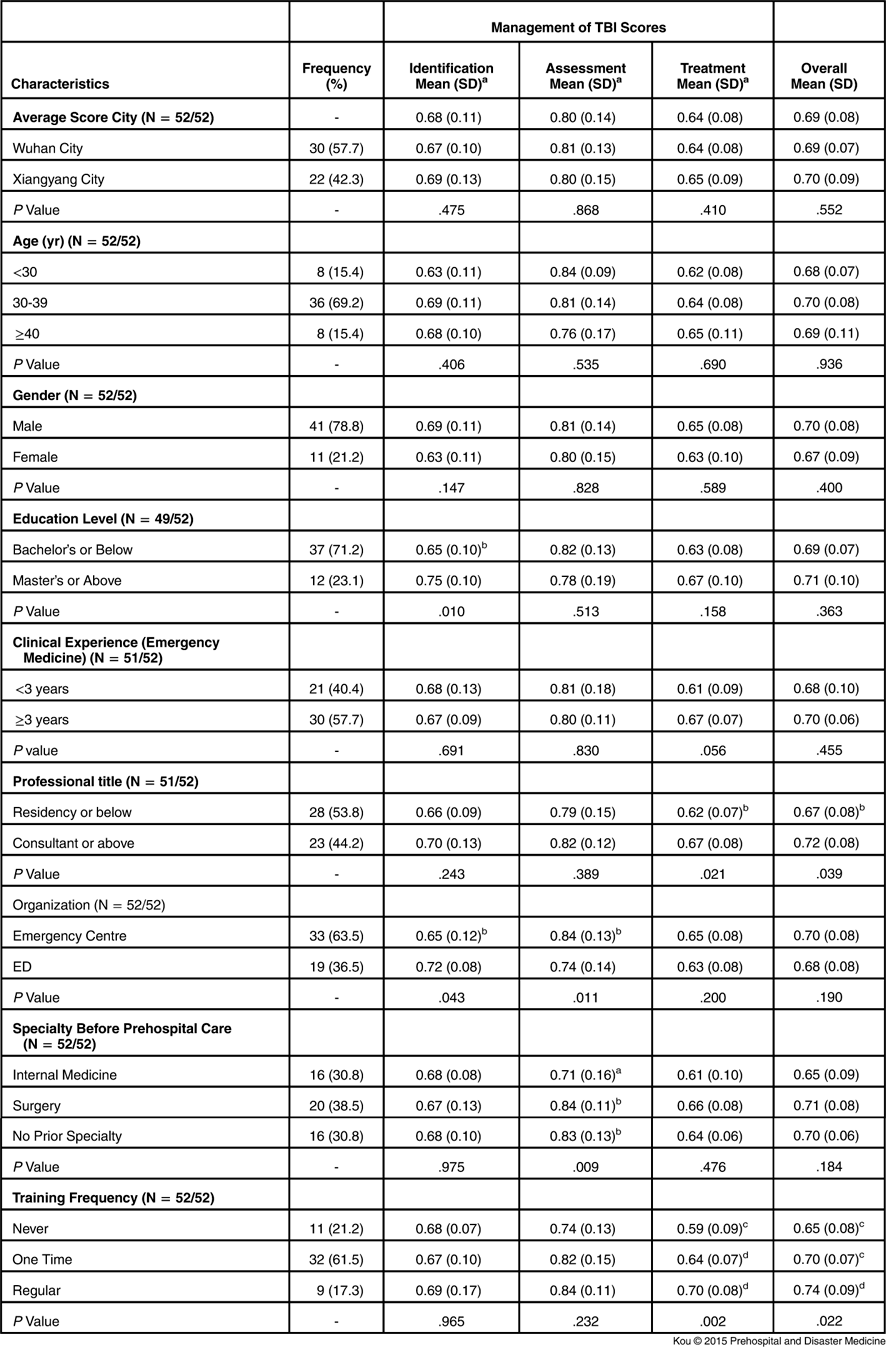
Thirty participants worked in Wuhan and 22 in Xiangyang. Among them, 78.8% were male and 69.2% were aged between 30 and 39 years. The highest qualification of 75.5% of the doctors was Bachelor’s degree or lower. Eleven doctors (21.2%) had never received any training on prehospital TBI management, 32 (61.5%) had received a sole training session before they practiced prehospital care, and only nine doctors (17.3%) received regular training during their prehospital practice. The details of the demographic information are listed in Table 2.
Demographic Information and Factors Associated with Management of TBI

Abbreviations: ED, emergency department; TBI, traumatic brain injury.
a Mean score of different sections in questionnaire.
b P value less than .05.
c,dDifferent groups in post hoc test.
The section investigating prehospital TBI management consisted of three domains: TBI identification, TBI assessment, and TBI treatment (Table 2). Participants received the lowest scores in TBI treatment (0.64; SD=0.08) and the highest scores in TBI assessment (0.80; SD=0.14).
Independent samples t-test and one-way ANOVA revealed that doctors with higher degrees (P=.010) or who worked in the ED (P=.043) achieved higher scores in TBI identification (Table 2). Doctors who formerly practiced internal medicine (P=.009) or who worked in the ED (P=.011) had lower scores in TBI assessment. The score for TBI treatment was higher for doctors who were consultants (P=.021). Doctors who had never received relevant training had a lower score in TBI treatment than those who had received training regularly or who had one training session before they started to practice prehospital care (P=.002). For overall TBI management, doctors who were consultants had higher overall scores (P=.039). Training frequency also had a positive association with the overall score in TBI management (P=.022).
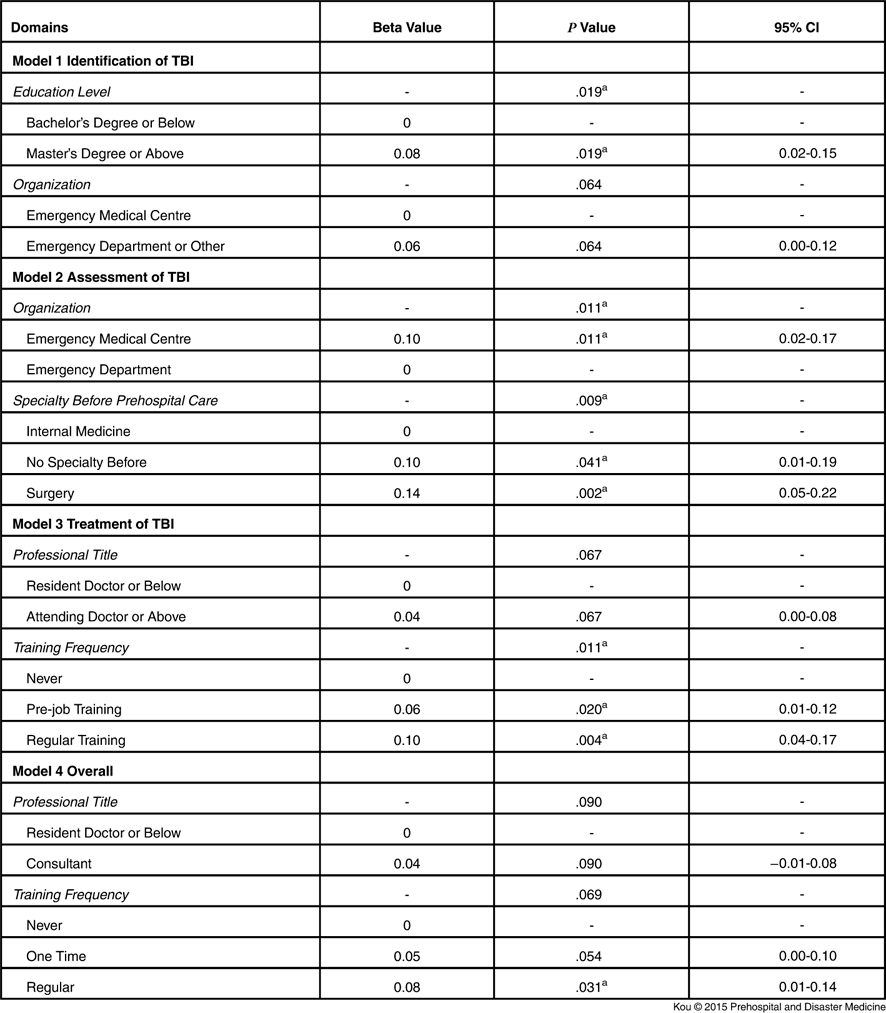
Based on the results of independent samples t-test or one-way ANOVA, factors that significantly were associated with the average scores of three domains and overall TBI management were selected to generate linear regression models. The first model includes education level and organization to assess their influences on the average score of TBI identification. The model indicated that doctors with a Master’s degree or above (P=.019) were associated with better knowledge level and practices in TBI identification (Table 3). The second model consists of organization and specialty before prehospital care. This model showed that doctors who worked in Emergency Medical Centres (P=.011) and who were former surgeons or prehospital doctors (P=.009) were associated with better knowledge and practices in TBI assessment. The third model comprises professional title and training frequency indicating that doctors who had undergone more training (P=.011) were associated with better knowledge and practices in TBI treatment. Professional title and training frequency were included in the last model to assess their influence on the average score of overall TBI management, but no significant factor was found.
Personal Factors Influencing TBI Management Using General Linear Regression Model

Abbreviation: TBI, traumatic brain injury.
a P value less than .05.
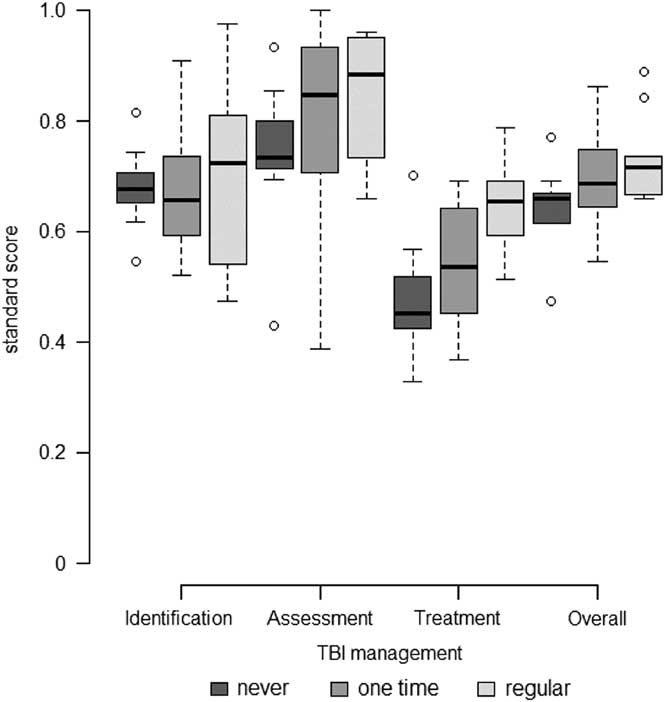
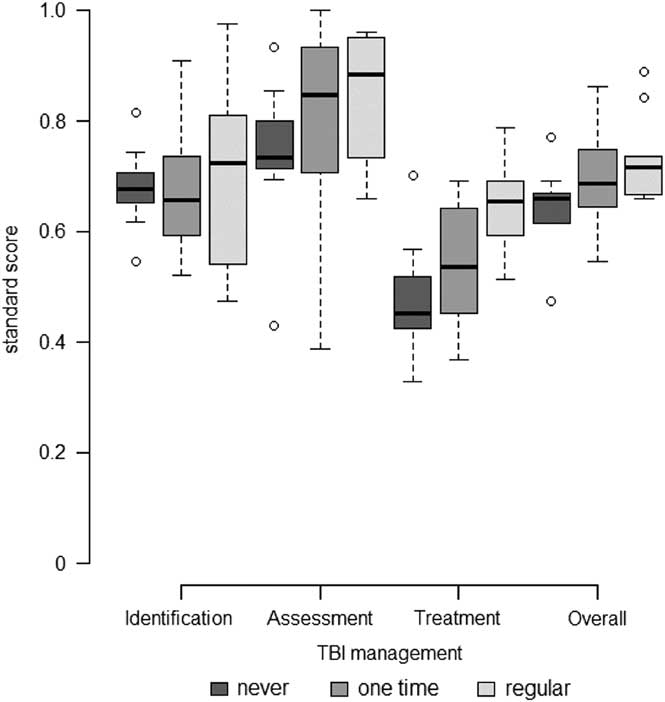
The regression models indicated that training frequency was not an associated factor for the scores for TBI identification and assessment, or for the overall score for TBI management. However, it should be noted that those scores showed an increasing trend when there was an increase in the training frequency (Figure 2).
Trend of Average Score Along with the Increase in Training Frequency.Abbreviation: TBI, traumatic brain injury.
Discussion
This study had several interesting findings. First, the study catchment suffered from a lack of prehospital doctors; second, the age distribution of the doctors was unbalanced; third, demographic characteristics, including education level, organization, doctors’ specializations, and training frequency, were associated with doctors’ practices and knowledge in prehospital TBI management.
In the study catchment, the number of doctors providing ambulance service was insufficient. This study revealed that in total, 56 doctors were providing ambulance service in Wuhan and Xiangyang City. Therefore, on average, these two cities only had 3.7 prehospital doctors per million people. Literature also reported that most of the large cities in China suffered from a lack of prehospital doctors. 16 Australian paramedics “provide rapid response, emergency medical assessment, treatment, and care in the out-of-hospital environment.”Reference Gu 17 They play almost the same role as Chinese prehospital doctors. According to the paramedics’ census, Queensland had 641.4 paramedics per million people in 2011, and the number has grown 31% since 2006. 18
When compared to the age of doctors working in Chinese hospitals, the percentage of young doctors was lower in Chinese prehospital settings. In the study catchment, only 15.4% of the prehospital doctors were younger than 30 years old (Table 2). However, in Chinese hospitals, young doctors under 30 years old accounted for 26%-43% of the doctors. 19 , Reference Yang and Chao 20 This result confirms the current situation that fewer Chinese medical graduates are willing to work with the ambulance service upon graduation. 16 Since China does not have the profession of paramedic, all the doctors working in the ambulance services hold the same medical license as the doctors working in hospitals.Reference Ren, Sun and Yang 21 Therefore, there is no barrier preventing doctors moving from ambulance service to other specialist areas. However, ambulance service contains high risks and heavy physical work, and the salary of prehospital doctors is lower than that of doctors working in hospitals. 16 It is not surprising that few medical graduates want to work in the ambulance service.
This study also detected several factors that were associated significantly with the score of certain domains of prehospital TBI management in the questionnaire. Among them, education level was associated with TBI identification; work organization and doctors’ specializations prior to practicing ambulance service were associated with TBI assessment; and training frequency was an influential factor for TBI treatment (Table 2).
Education Level
Participants in this study holding a Master’s degree or higher attained higher scores in TBI identification compared to participants with a Bachelor’s degree or lower. Like doctors working in Chinese hospitals, prehospital doctors have also been medical students. In China, medical curricula varies greatly, from three years of study at secondary medical schools to five to eight years at universities.Reference Liang and Li 22 Therefore, the education level of prehospital doctors varies. The situation is the same with paramedics in Australia. The qualifications of paramedics in Australia ranged from “no post-school qualification” to postgraduate degree in 2011. 18 It has been reported that medical professionals with a higher education level had a higher probability of passing the US International Paramedic Certification Examination.Reference Lam, Wan and Ip 23 This study documented that doctors in China with a higher education level knew more and practiced better in prehospital TBI identification.
Work Organization
Participants working in Emergency Medical Centres achieved a higher score in TBI assessment than participants working in the ED. As discussed earlier, in the study catchment, the Emergency Medical Centres cooperated with hospital EDs. Therefore, the participants working in cooperative EDs needed to practice Emergency Medicine in hospital as well as work part-time as prehospital doctors. It has been reported that doctors’ practices could be influenced by their work organizations.Reference Fernandez, Studnek and Margolis 24 This study also revealed this phenomenon: the doctors working in Emergency Medical Centres knew more and practiced better in prehospital TBI assessment. The reason why the participants working as part-time prehospital doctors could not perform as well as full-time prehospital doctors remains unknown. However, the different working environment could be one of the reasons.
Specialty
This study also revealed that the doctors who were former surgeons achieved the highest score and the doctors who were former physicians received the lowest scores in TBI assessment. No literature about the association between the performance of prehospital management and doctors’ specialties has been found. Since TBI is considered as a surgical disease, doctors who used to practice Internal Medicine might not have sufficient training in the management of trauma. Therefore, in order to guarantee the quality of prehospital care, professional paramedics dedicated to prehospital care provided, who are trained to deal with all kinds of emergencies, are needed in China.
Training Frequency
In TBI treatment, the participants’ scores were associated positively with the frequency of training that they received. All Chinese doctors have to receive pre-job training before they provide ambulance services.Reference Allery, Owen and Robling 25 Traumatic brain injury is an emergency and all Australian paramedics are trained to manage it in prehospital settings.Reference Gu 17 However, this study revealed that 21.2% of Chinese participants never received any training in the prehospital management of TBI. Therefore, it can be speculated that the content of training for Chinese prehospital doctors must be variable. Literature also reveal that the content of pre-job training for prehospital doctors in China is not standardized, evidence-based, or appropriate.Reference Allery, Owen and Robling 25 However, although the quality of training was not guaranteed in the study catchment, this study still indicated that prehospital doctors receiving more relevant training knew more and practiced better in TBI treatment. In addition, the data of this study showed a trend that prehospital doctors who attended more training sessions performed better in all parts of TBI management (Figure 2). Therefore, it can be assumed that, since China does not have the profession of paramedic, an appropriate training program for prehospital doctors could improve the quality of ambulance service significantly in the short term.
Continuing medical education (CME) is defined as the activities that can improve doctors’ knowledge, attitudes, and skills, and keep them updated with the latest developments that improve performance and outcomes.Reference Lu and Li 26 Evidence suggested that CME containing sequenced interventions with the pattern of learn-work-learn succeeded in improving doctors’ performance.Reference Bloom 27 This study also revealed that regular workplace training sessions were more effective in improving doctors’ practices and knowledge than pre-job training only. Since educational underpinnings for paramedics in Australia is more advanced than that of many other countries, 14 more cooperation between China and Australia, in terms of developing an appropriate CME program for Chinese prehospital doctors, is needed.
Limitations
Several limitations of this report should be acknowledged. First, this research is conducted with convenient samples. Only 52 subjects participated in this study. Therefore, it may have a risk of Type II errors. Second, this review focused on prehospital care of TBI in Hubei Province, China, which, to some extent, restricts the findings from being generalized to other areas in China. Thirdly, scores on a questionnaire or test may or may not reflect real-life practices and patient outcomes.
Conclusion
This study described the current situation of prehospital TBI management. The prehospital doctors’ knowledge level and practices in TBI management were quantified and the influential factors hidden underneath were explored. The results indicated that an appropriate CME program enables improvement of the quality of ambulance service in China.