Cover crops offer growers many benefits, including weed suppression, reductions in soil erosion, and increased soil organic matter (Pimentel et al. Reference Pimentel, Harvey, Resosudarmo, Sinclair, Kurz, McNair, Crist, Shpritz, Fitton and Saffouri1995; Reddy et al. Reference Reddy, Zablotowicz, Locke and Koger2003). The contribution of cover crops to weed control may be affected by many variables, including seeding rate, planting date, and the environment. To maximize the potential benefits of cover crops, successful establishment is critical (Keeling et al. Reference Keeling, Matches, Brown and Karnezos1996; Walsh et al. Reference Walsh, Defelice and Sims1993b). A major consideration when establishing cover crops is herbicide residues, because cover crop stands can be negatively affected by some previous herbicide applications (Cornelius and Bradley Reference Cornelius and Bradley2017; Palhano et al. Reference Palhano, Norsworthy and Barber2018; Smith and Ruark Reference Smith and Ruark2017). Cornelius and Bradley (Reference Cornelius and Bradley2017) found that an early POST application of pyroxasulfone at 0.18 kg ha−1 in soybean resulted in visual injury to annual ryegrass and winter oat with biomass reductions of 82% and 68%, respectively. In similar research, Palhano et al. (Reference Palhano, Norsworthy and Barber2018) found cereal rye, hairy vetch, and wheat emergence in the spring was reduced by pyroxasulfone at 0.48 kg ai ha−1 applied to the previous corn (Zea mays L.) crop. In addition, Tharp and Kells (Reference Tharp and Kells2000) found that application of metolachlor at 1.68 kg ha−1 and pendimethalin at 1.68 kg ha−1 resulted in 96% and 43% visual injury to annual ryegrass, respectively. Walsh et al. (Reference Walsh, Defelice and Sims1993a) reported that applications of imazethapyr at 0.14 kg ha−1 and chlorimuron at 0.018 kg ha−1 in soybean did not cause biomass reductions in hairy vetch, winter oat, and annual ryegrass the spring following application. However, Yu et al. (Reference Yu, Van Eerd, O’Halloran, Sikkema and Robinson2015) reported that imazethapyr at 0.2 kg ha−1 may cause significant injury (65%) to forage radish 1 week after emergence.
An increasing number of growers have been implementing no-tillage farming practices over the past several decades in an effort to become more sustainable. According to the Conservation Technology Information Center (CTIC) (2008), no-till farming practices were used on 17% of farmland acres in the United States in 1990, but by 2004, this percentage had increased to 62%. In the United States, no-till production practices were used on 39% of the soybean acres in 2008 (CTIC 2008). Concurrent with the increase in conservation farming practices, growers are relying more on herbicides for weed control, particularly herbicides with residual soil activity (CTIC 2008; Uri Reference Uri2000). The increase in use of residual herbicides in soybean is likely the result of herbicide-resistant weeds like the Amaranthus (pigweed) species that have developed resistance to many commonly used POST herbicides. One of the primary recommendations for the management and/or mitigation of herbicide-resistant biotypes is the use of residual herbicides, because these products typically provide additional, effective mechanisms of action (Norsworthy et al. Reference Norsworthy, Ward, Shaw, Llewellyn, Nichols, Webster, Bradley, Frisvold, Powles and Burgos2012). According to Riggins and Tranel (Reference Riggins and Tranel2012), herbicide-resistant weeds have limited the effectiveness of many POST herbicides, specifically glyphosate, and have contributed to a new reliance on residual soil-applied herbicides applied PRE and/or POST for weed control. Herbicides with residual properties control weeds for some period that is dependent on persistence in the soil (Helling Reference Helling and Van Acker2005). Though effective for managing weeds in the current crop, herbicides that persist in the soil can injure subsequent crops (Colquhoun Reference Colquhoun2006). Herbicide persistence depends on many variables, including application rate, herbicide chemical properties, soil organic matter content, soil texture, plant residue, weather, and the interval between application and planting (Colquhoun Reference Colquhoun2006; Gevao et al. Reference Gevao, Semple and Jones2000; Koskinen and McWhorter Reference Koskinen and McWhorter1986; Witt Reference Witt, Phillips and Phillips1984).
A variety of herbicides with residual activity are currently used in soybean, including acetochlor, chlorimuron, fomesafen, flumioxazin, imazethapyr, pyroxasulfone, S-metolachlor, and sulfentrazone. These herbicides have varying levels of soil persistence. For example, the approximate half-lives of acetochlor, chlorimuron, fomesafen, imazethapyr, pyroxasulfone, S-metolachlor, and sulfentrazone are 90, 30, 100, 75, 39, 12, and 110 days, respectively (Goetz et al. Reference Goetz, Lavy and Gbur1990; Jablonkai Reference Jablonkai2000; Martinez et al. Reference Martinez, de Souza Silva, Fay, Abakerli, Maia and Durrant2008; Shaner Reference Shaner2014; Sharma et al. Reference Sharma, Banerjee and Choudhury2012; Taylor-Lovell et al. Reference Taylor-Lovell, Wax and Nelson2001; Westra et al. Reference Westra, Shaner, Westra and Chapman2014). Many of these herbicides can be applied POST in soybean, and the potential for carryover into subsequent crops increases because residual herbicide applications are made later in the soybean growing season (Colquhoun Reference Colquhoun2006).
Numerous studies have been conducted to investigate herbicide carryover and its effect on cover crop establishment in the fall. However, very little research has been conducted to evaluate injury and growth the following spring to determine if the cover crop species are able to compensate for any herbicide carryover injury that may have occurred (Palhano et al. Reference Palhano, Norsworthy and Barber2018). In addition, few studies have evaluated the effects of POST applications of residual soybean herbicides on fall-seeded cover crop species. Therefore, the objective of the current study was to determine the effect of common residual soybean herbicides applied PRE, 21 days after planting (DAP), or 42 DAP on the establishment and subsequent spring growth of a variety of cover crop species.
Materials and Methods
Site Description
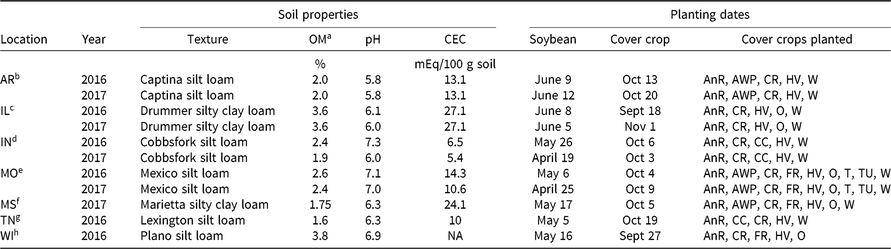
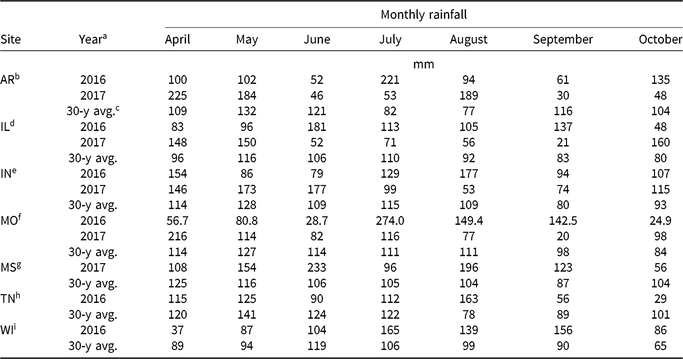
Field experiments were conducted in Boone County, MO; Champaign County, IL; Dane County, WI; Madison County, TN; Washington County, AR; and Jennings County, IN, in 2016–2017 and were repeated in 2017–2018 in Boone County, MO; Champaign County, IL; Jennings County, IN; Oktibbeha County, MS; and Washington County, AR, to evaluate the effects of residual soybean herbicides on cover crop establishment. Soybean was planted at each location between May 5 and June 9 in 2016 and between April 19 and June 12 in 2017. Site-specific planting dates are listed in Table 1, as are soil type and properties. Site-specific precipitation information is presented in Table 2.
Site characteristics of the field trials conducted in 2016 and 2017a.

a Abbreviations: AnR, annual ryegrass; AWP, Austrian winter pea; CEC, cation exchange capacity; CR, cereal rye; FR, forage radish; HV, hairy vetch; NA, not applicable; O, oat; OM, organic matter; T, triticale; TU, turnip; W, wheat.
b Arkansas Agriculture Research and Extension Center, University of Arkansas, Fayetteville, AR (36.093°N, 94.173°W).
c Crop Sciences Research and Education Center, University of Illinois, Champaign, IL (40.09°N, 88.229°W).
d Southeast Purdue Agricultural Center, Purdue University, Butlerville, IN (39.032°N, 85.526°W).
e Bradford Research and Extension Center, University of Missouri, Columbia, MO (38.898°N, 92.216°W).
f R. R. Foil Plant Science Research Center, Mississippi State University, Starkville, MS (33.471°N, 88.782°W).
g West Tennessee AgResearch and Education Center, University of Tennessee, Jackson, TN (35.623°N, 88.847°W).
h Arlington Agricultural Research Station, University of Wisconsin, Arlington, WI (43.308°N, 89.35°W).
Monthly rainfall compared with the 30-year averages at all trial locations from April through October in 2016 and 2017.

a Abbreviation: avg, average.
b Arkansas Agriculture Research and Extension Center, University of Arkansas, Fayetteville, AR (36.092996, −94.173423).
c The 30-year averages (1986–2015) were obtained from the National Climatic Data Center (2018).
d Crop Sciences Research and Education Center, University of Illinois, Champaign, IL (40.089437, −88.229003).
e Southeast Purdue Agricultural Center, Purdue University, Butlerville, IN (39.032428, −85.525611).
f Bradford Research and Extension Center, University of Missouri, Columbia, MO (38.898432, −92.216371).
g R. R. Foil Plant Science Research Center, Mississippi State University, Starkville, MS (33.470807, −88.781666).
h West Tennessee AgResearch and Education Center, University of Tennessee, Jackson, TN (35.622770, −88.846785).
i Arlington Agricultural Research Station, University of Wisconsin, Arlington, WI (43.307943, −89.350072).
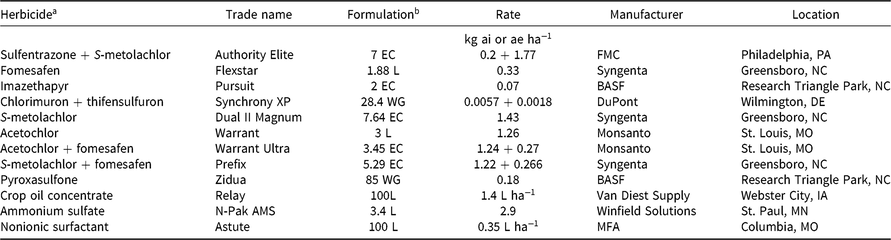
All treatments were arranged in a split-plot design with four replications. Herbicide treatments served as whole plots; subplots consisted of cover crop species. Individual plots were 3 × 3 m. The sources of all herbicides used in the experiments are presented in Table 3. Herbicide treatments were applied either PRE, 21 DAP, or 42 DAP (Table 4). Each cover crop species had a nontreated control plot that did not receive any herbicide application. Applications were made using a CO2-pressurized backpack sprayer equipped with XR 8002 flat-fan nozzle tips (TeeJet®, Spraying Systems Co., PO Box 7900, Wheaton, IL 60187) that delivered 140 L ha−1 at 117 kPa at a speed of 5 km h−1. Soybean was removed at each location by either baling as a forage or harvesting soybean with a combine, and cover crops were planted into the remaining soybean residue by no-till practices. Cover crop planting dates for each site year are listed in Table 1 and ranged from late September through early November, consistent with the local cover crop planting dates. Cover crops were seeded at the following rates: 123 kg ha−1 for cereal rye, triticale, and winter wheat; 34 kg ha−1 for annual ryegrass and hairy vetch; 78 kg ha−1 for winter oat; 56 kg ha−1 for Austrian winter pea; 45 kg ha−1 for crimson clover; 16 kg ha−1 for turnip; and 9 kg ha−1 for forage radish. All sites planted annual ryegrass, cereal rye, hairy vetch, and two other cover crop species suited to local conditions.
Sources of materials used in the experiments.

a Labels for each product from their respective manufacturers can be found at http://www.cdms.net.
b Abbreviations: EC, emulsifiable concentrate; L, liquid; WG, water-dispersable granule.
Herbicide treatments and timings evaluated in the experiments.

a Abbreviations: DAP, days after planting; fb, followed by; NA, not applicable.
Treatment Evaluation and Data Collection
Cover crop visual ground cover reduction was assessed 28 days after emergence and in mid- to late-March. Assessments were made visually on a scale of 0% to 100%, with 0% being no reduction in visual ground cover and 100% equivalent to complete reduction in visual ground cover compared with the nontreated control. Cover crop ground cover reduction was also assessed using digital images taken at 114 cm above each cover crop plot using a digital camera (camera models varied by location) mounted on a Manfrotto MVM500A Fluid Aluminum Video Monopod with 500 Series Head (Manfrotto, Via Valsugana 100, Cassola (VI), Italy). Images were resized using FastStone Photo Resizer (FastStone Soft, 840 9 Street SW, Calgary, AB, Canada) and optimized. Percent ground cover was calculated on a scale of 0% to 100% for each plot, with 0% being no ground cover and 100% equivalent to complete ground cover, using SigmaScan Pro 5® and Turf Analysis 1–2 Macro (Karcher and Richardson Reference Karcher and Richardson2003; Karcher and Richardson Reference Karcher and Richardson2005). Ground cover reduction values were calculated by dividing the differences between the treated and nontreated plots by the nontreated values, with 0% being no reduction in ground cover and 100% equivalent to complete loss of ground cover, compared with the nontreated control.
Statistical Analysis
All data were subjected to analysis in SAS, version 9.4 (SAS Institute Inc., Cary, NC) using the PROC GLIMMIX procedure. Cover crop species and herbicide treatments were considered fixed effects. Data were pooled across location, and site-year and replication were included in the model as random variables. Inferences can be made over a wide range of environments when site-year and replication are considered random effects (Blouin et al. Reference Blouin, Webster and Bond2011; Carmer et al. Reference Carmer, Nyquist and Walker1989). Means were separated using Fisher’s protected LSD at P ≤ 0.05.
Results and Discussion
Ground Cover Reduction to Cover Crops After Emergence
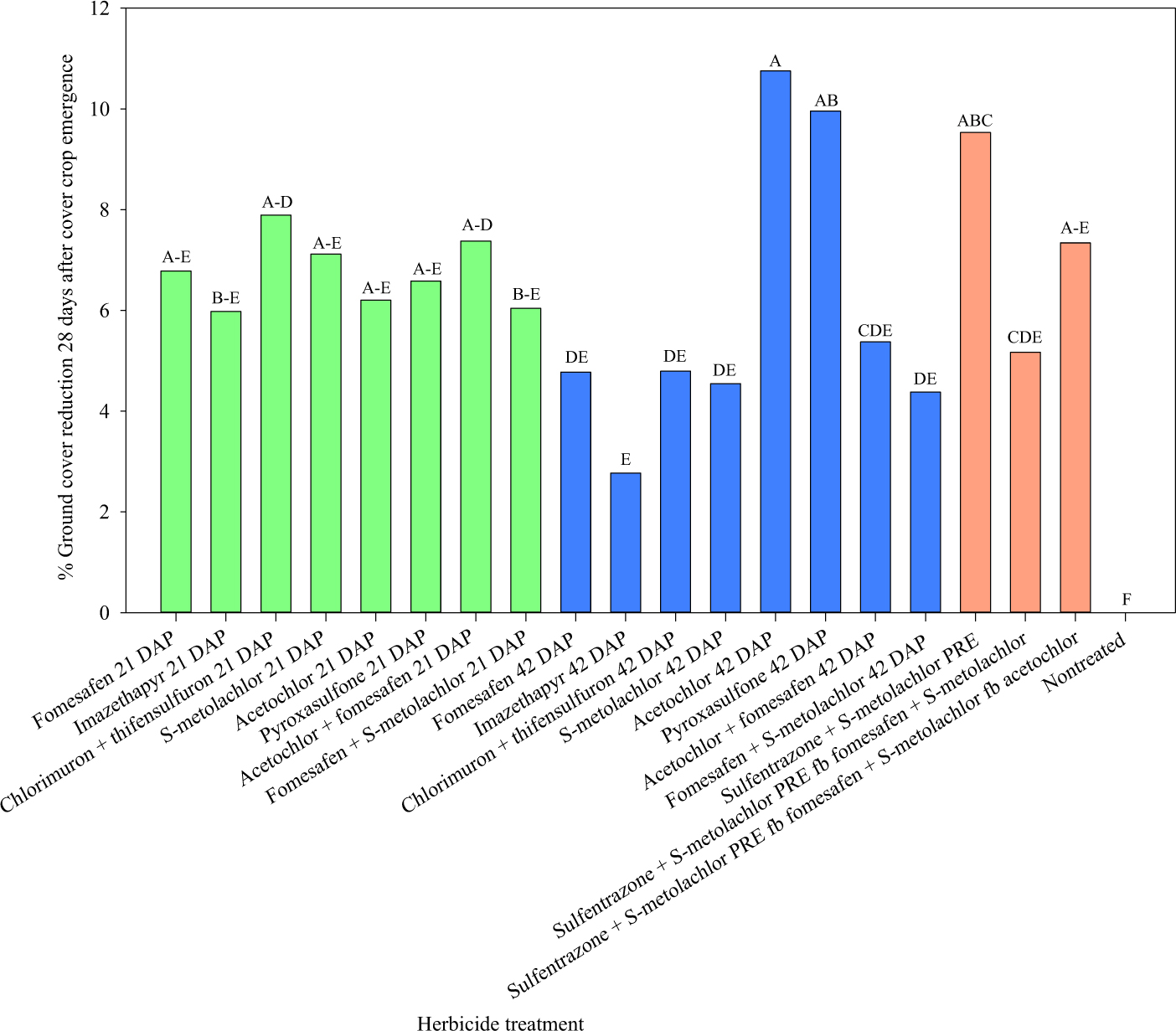
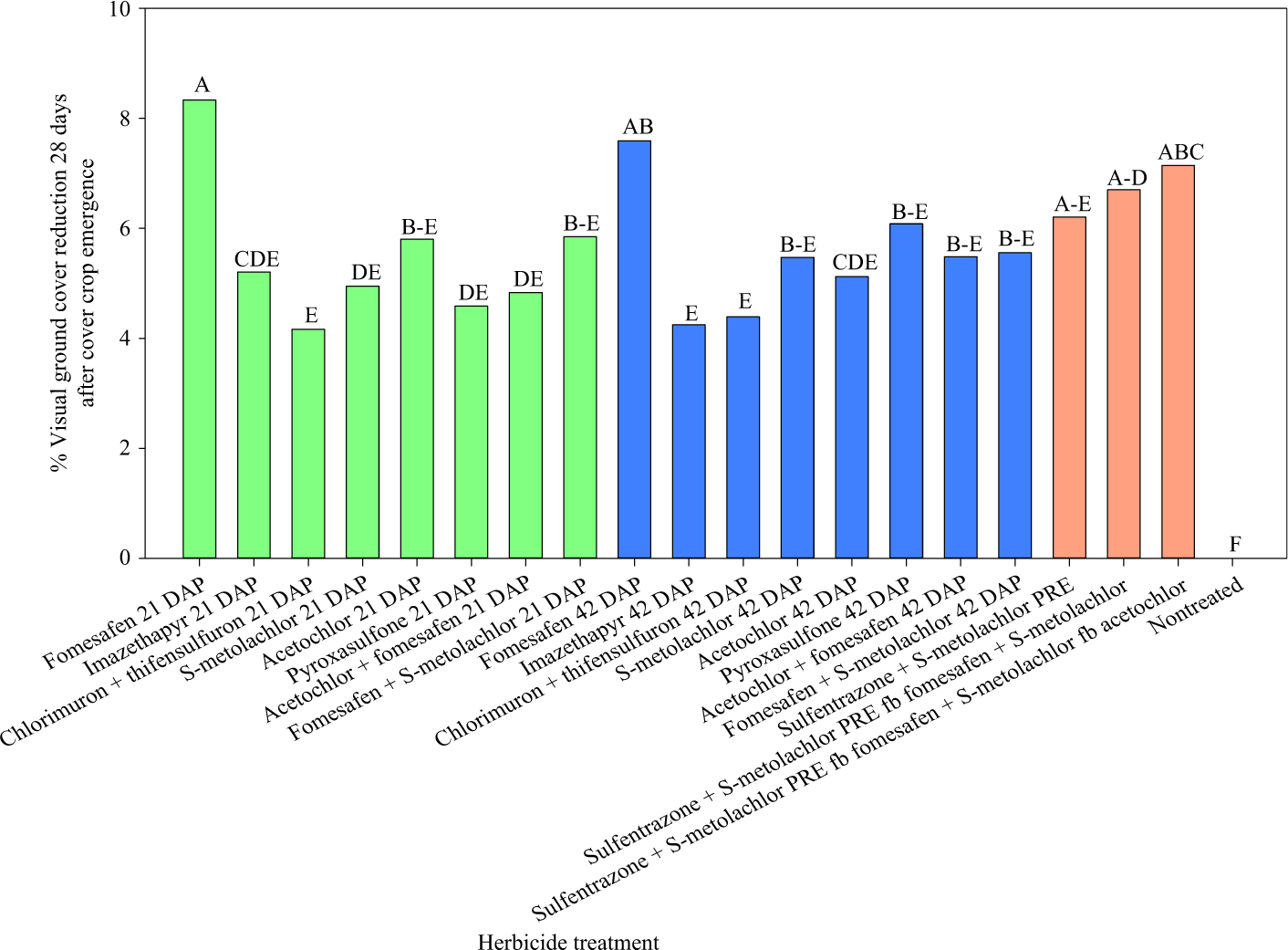
There was a significant main effect of cover crop species (P < 0.0001) and herbicide treatment (P < 0.0001) on cover crop ground cover reduction. However, no interaction (P > 0.05) was present between cover crop species and herbicide treatment. No discoloration of cover crop tissue occurred. Ground cover reductions were highest with applications of fomesafen, chlorimuron plus thifensulfuron, S-metolachlor, acetochlor, pyroxasulfone, and acetochlor plus fomesafen applied 21 DAP, and with applications of acetochlor and pyroxasulfone, sulfentrazone plus S-metolachlor, and sulfentrazone plus S-metolachlor PRE followed by fomesafen plus S-metolachlor followed by acetochlor applied 42 DAP (Figure 1). Similar to these results, Cornelius and Bradley (Reference Cornelius and Bradley2017) found that across multiple cover crop species, soybean herbicides that caused the highest stand reduction 28 days after cover crop emergence included pyroxasulfone, sulfentrazone, fomesafen plus S-metolachlor, and chlorimuron, with stand reduction ≥26%. Sulfentrazone half-life in the soil has been reported to be approximately 110 days, which can lead to injury of susceptible species planted in rotation (Martinez et al., Reference Martinez, de Souza Silva, Fay, Abakerli, Maia and Durrant2008). Pekarek et al. (Reference Pekarek, Garvey, Monks, Jennings and MacRae2010) investigated the carryover potential of sulfentrazone to cotton (Gossypium hirsutum L.) and determined that when planted 352 days after one, two, and three times the rates of sulfentrazone (i.e., 0.21, 0.42, and 0.84 kg ha−1, respectively), cotton injury was 14%, 53%, and 100%, respectively. All treatments except acetochlor and pyroxasulfone applied 42 DAP; chlorimuron plus thifensulfuron, and acetochlor plus fomesafen applied 21 DAP; and sulfentrazone plus S-metolachlor applied PRE had the lowest ground cover reduction values, with reductions ranging from 3% to 7% (Figure 1).
Ground cover reduction of cover crops 28 days after emergence in response to residual herbicide treatments applied in soybean. Results combined across 5 site-years. Different colored bars indicate different application timings. Bars with the same letter are not different (LSD = 0.05). DAP, days after planting; fb, followed by.

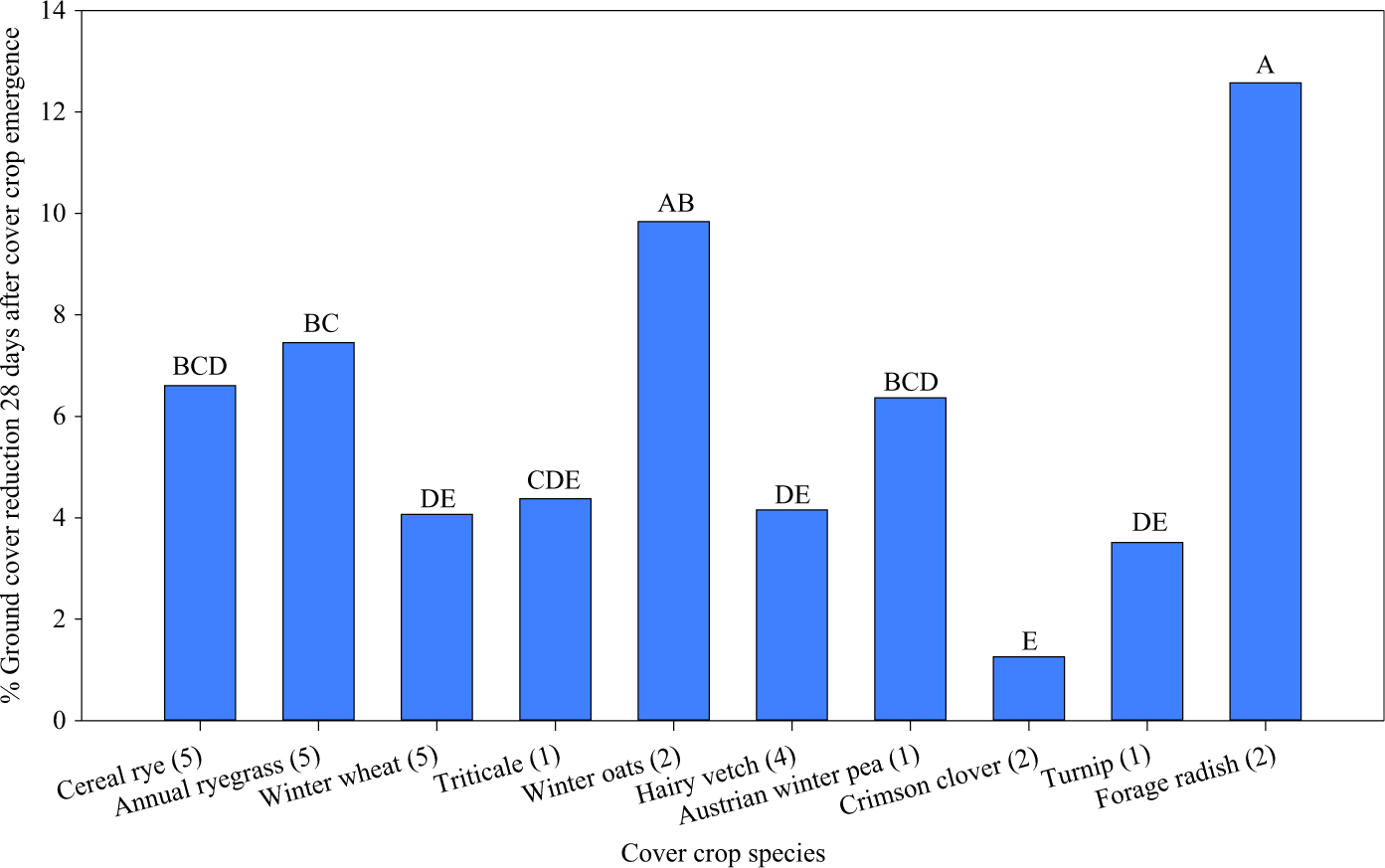
Forage radish and winter oat were the two most susceptible cover crop species to herbicide carryover 28 days after cover crop emergence, with ground cover reductions of 13% and 10%, respectively (Figure 2). Similar results were reported by Cornelius and Bradley (Reference Cornelius and Bradley2017), who found that winter oat was among the most sensitive cover crop species after residual soybean herbicide applications in 2014. However, Cornelius and Bradley (Reference Cornelius and Bradley2017) found crimson clover and winter wheat were among the most sensitive species to stand reductions (22% and 16%, respectively), whereas these two species were among the least sensitive species in this study, with ground cover reductions of 1% and 4%, respectively (Figure 2). These differences may be due to different cover crop varieties or growing conditions. Hairy vetch was among the least susceptible species in this study as well as the study by Cornelius and Bradley (Reference Cornelius and Bradley2017), with ground cover reductions of 4% and 6%, respectively (Figure 2).
Ground cover reduction of cover crop species 28 days after emergence in response to residual herbicide treatments applied in soybean. Numbers in parentheses indicate total site-years for a given cover crop species. Bars with the same letter are not different (LSD = 0.05).

Cover Crop Visual Ground Cover Reduction After Emergence
There was a main effect of cover crop species (P < 0.0001) and herbicide treatment (P < 0.0001) on visual ground cover reduction when evaluated 28 days after cover crop emergence. However, no interaction (P > 0.05) was present between cover crop species and herbicide treatment. Visual ground cover reduction was highest after treatments of fomesafen applied 21 and 42 DAP; sulfentrazone plus S-metolachlor PRE followed by fomesafen plus S-metolachlor followed by acetochlor; sulfentrazone plus S-metolachlor PRE followed by fomesafen plus S-metolachlor; and sulfentrazone plus S-metolachlor PRE (Figure 3). Four of the five treatments that caused the highest visual ground cover reduction contained fomesafen, which has a half-life in the soil of up to 180 days and has a plant-back restriction of 10 months on many crops, including field corn, sweet corn, seed corn, and rice (Oryza sativa L.), and an 18 month plant-back restriction on grain sorghum [Sorghum bicolor (L.) Moench ssp. bicolor] (Johnson and Talbert Reference Johnson and Talbert1993). A study by Palhano et al. (Reference Palhano, Norsworthy and Barber2018) examining the sensitivity of cover crop species to one-sixteenth rates of residual herbicides applied 1 day after cover crop planting determined that fomesafen caused a 10%, 19%,, and 13% reduction in the density of cereal rye, winter oat and wheat, respectively, and that these were among the highest reductions observed for each of these three cover crop species. In the present study, fomesafen, pyroxasulfone, S-metolachlor, and acetochlor plus fomesafen applied 42 DAP; sulfentrazone plus S-metolachlor PRE followed by fomesafen plus S-metolachlor followed by acetochlor, sulfentrazone plus S-metolachlor PRE followed by fomesafen plus S-metolachlor, sulfentrazone plus S-metolachlor PRE, and acetochlor applied 21 DAP; and fomesafen plus S-metolachlor applied 21 and 42 DAP resulted in similar visual ground cover reduction to the cover crop species, and this visual ground cover reduction ranged from 6% to 8% (Figure 3). Across all cover crop species evaluated in their research, Cornelius and Bradley (Reference Cornelius and Bradley2017) found that pyroxasulfone, fomesafen plus S-metolachlor, and imazethapyr applied early POST caused stand reductions of 32%, 28%, and 25%, respectively, whereas PRE applications of chlorimuron, sulfentrazone, and flumioxazin resulted in stand reductions of 26%, 31%, and 24%, respectively.
Visual ground cover reduction of cover crops 28 days after emergence in response to residual herbicide treatments applied in soybean. Results combined across 9 site-years. Different colored bars indicate different application timings. Bars with the same letter are not different (LSD = 0.05). DAP, days after planting; fb, followed by.

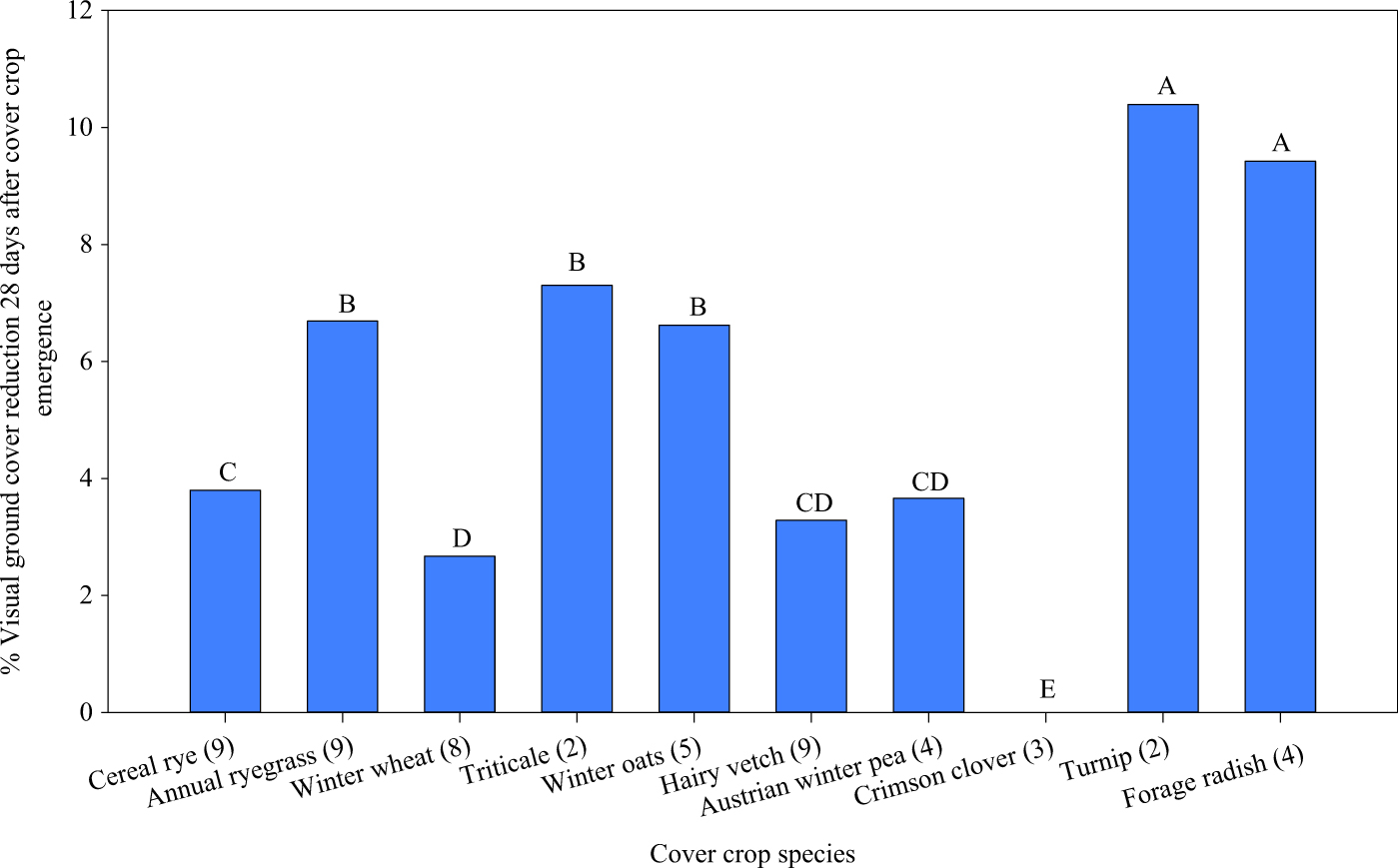
Turnip and forage radish were the two most sensitive cover crop species to carryover from residual soybean herbicides, with visual ground cover reductions of 10% and 9%, respectively (Figure 4). These findings are similar to those of Smith (Reference Smith2015), who reported that forage radish, along with annual ryegrass, were the most susceptible cover crop species to residual herbicide carryover from commonly used corn and soybean herbicides. Cornelius and Bradley (Reference Cornelius and Bradley2017) found that residual soybean herbicides resulted in a 14% stand reduction on forage radish, but also that these same herbicides caused 18% and 16% stand reductions to winter oat and winter wheat, respectively. Across 3 site-years in these experiments, there was no visual ground cover reduction to crimson clover in response to any of the herbicide treatments; therefore, this was the least susceptible cover crop to carryover from residual soybean herbicides (Figure 4). Triticale, annual ryegrass, and winter oat reduction in ground cover was similar at 7%. Other than crimson clover, Austrian winter pea, hairy vetch, and winter wheat, injury was low and ranged from 3% to 4%. Cornelius and Bradley (Reference Cornelius and Bradley2017) also reported that Austrian winter pea and hairy vetch had some of the lowest herbicide carryover injury (≤11% stand reduction). Cornelius and Bradley (Reference Cornelius and Bradley2017) concluded that the degree of cover crop herbicide injury depends on cover crop sensitivity to specific herbicide treatments as well as rainfall patterns after the herbicide application. It is likely that any differences in cover crop sensitivity in the present research compared with the results of others could also be attributed to differences in rainfall and/or soil type.
Visual ground cover reduction of cover crop species 28 days after cover crop emergence in response to residual herbicide treatments applied in soybean. Numbers in parentheses indicate total site-years for a given cover crop species. Bars with the same letter are not different (LSD = 0.05).

Ground cover reduction to cover crops the following spring
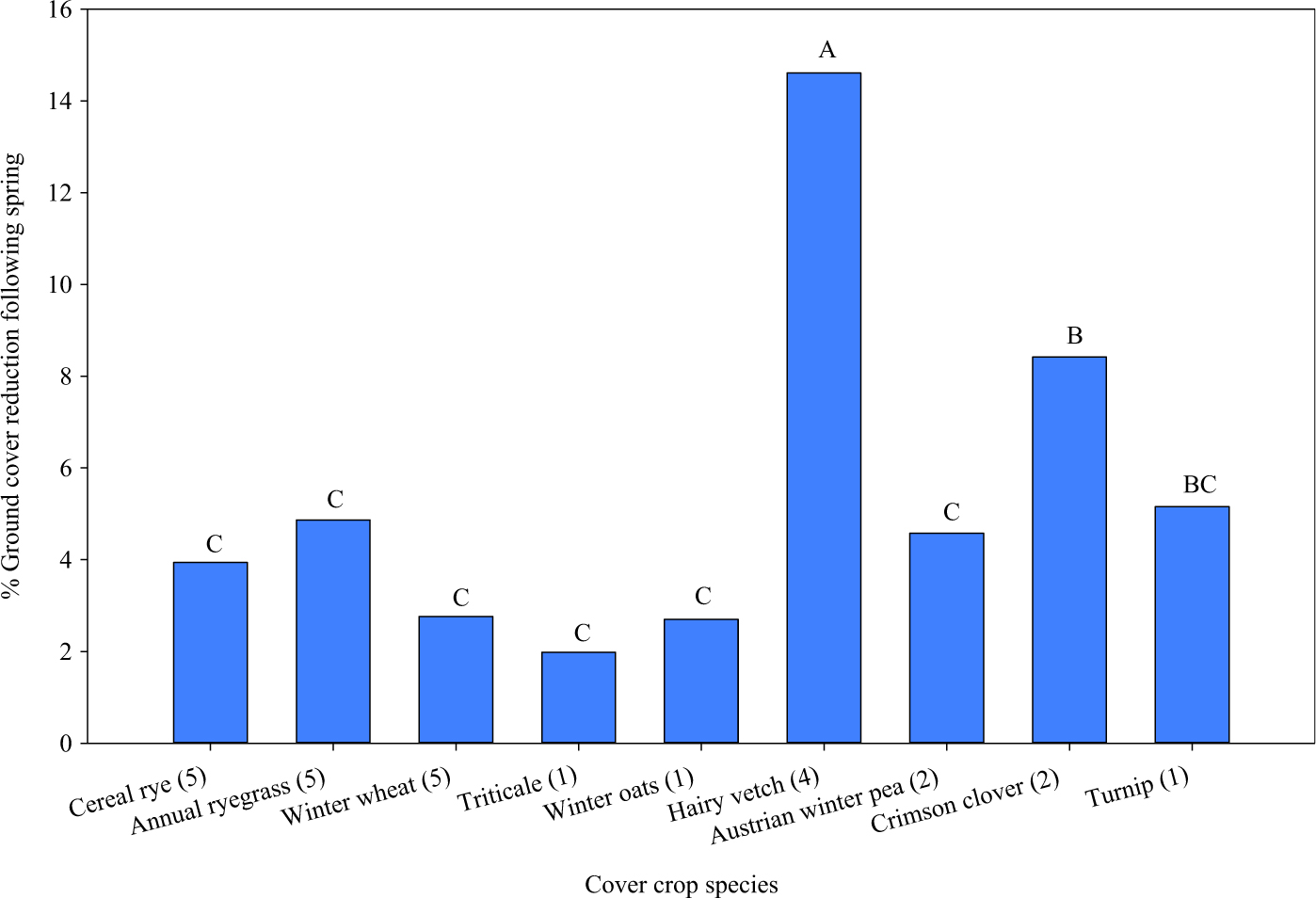
Forage radish was winter killed at all locations and was therefore omitted from all spring assessments. There was a significant effect of cover crop species (P < 0.0001) on cover crop ground cover reduction. However, there was no significant effect of herbicide treatment (P > 0.05) or interaction (P > 0.05) between cover crop species and herbicide treatment. Hairy vetch had the greatest ground cover reduction the following spring (15%) (Figure 5). These results differ from those of Palhano et al. (Reference Palhano, Norsworthy and Barber2018), who found that residual corn herbicides, including S-metolachlor, pyroxasulfone, and acetochlor, caused no density or biomass reduction in hairy vetch the following spring. High ground cover reduction values may be due to inconsistent hairy vetch establishment and stands. Crimson clover had less ground cover reduction than did hairy vetch, but ground cover reduction for crimson clover was higher than all other cover crop species except turnip (Figure 5).
Ground cover reduction of cover crop species mid-March the following spring in response to residual herbicide treatments applied in soybean. Numbers in parentheses indicate total site-years for a given cover crop species. Bars with the same letter are not different (LSD = 0.05).

Cover crop visual ground cover reduction the following spring
There was a significant effect of cover crop species (P < 0.0001) on cover crop visual ground cover reduction when evaluated in the spring after planting. However, there was no significant effect of herbicide treatment or interaction (P > 0.05 for both) between cover crop species and herbicide treatment.
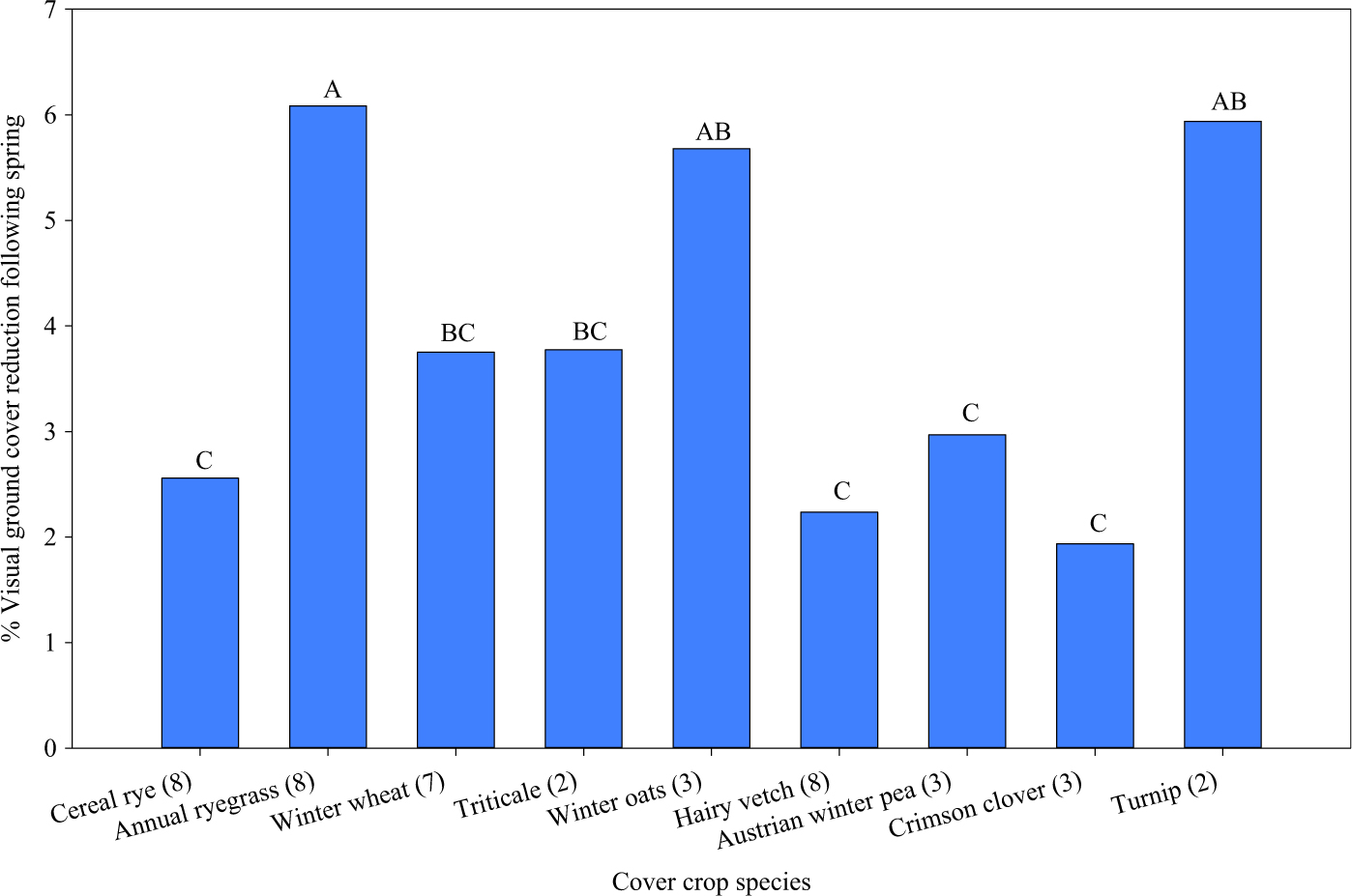
Annual ryegrass, turnip, and winter oat were the three most sensitive cover crop species to residual soybean herbicides in the spring following application, with an average 6% reduction in visual ground cover (Figure 6). Cereal rye, triticale, winter wheat, Austrian winter pea, crimson clover, and hairy vetch were the least sensitive cover crop species, with ≤3% reduction in visual ground cover. Winter wheat and triticale visual ground cover reduction was similar to that observed on winter oat, turnip, cereal rye, hairy vetch, Austrian winter pea, and crimson clover, but winter wheat and triticale were less susceptible to reduction in visual ground cover than was annual ryegrass (Figure 6). Palhano et al. (Reference Palhano, Norsworthy and Barber2018) observed similar results with Austrian winter pea in that residual corn herbicide applications had no effect on stand or biomass reduction of Austrian winter pea in the spring following treatment.
Visual ground cover reduction of cover crop species mid-March the following spring in response to residual herbicide treatments applied in soybean. Numbers in parentheses indicate total site-years for a given cover crop species. Bars with the same letter are not different (LSD = 0.05).

Austrian winter pea and hairy vetch were among the most tolerant cover crops in both the fall and spring (Figures 4 and 6). Likewise, turnip was among the most sensitive cover crop species to herbicide carryover at both intervals (Figures 4 and 6). Forage radish and turnip were the two most susceptible cover crop species 28 days after cover crop emergence. Generally speaking, legume species were less sensitive to residual soybean herbicide carryover than were grass species (Figures 4 and 6). Of the grass species, wheat was among the least sensitive at both the fall and spring evaluations. Annual ryegrass, however, was one of the most sensitive cover crop species to residual soybean herbicide carryover by the spring, which should be considered when using annual ryegrass as a cover crop. This may be due to an inability of annual ryegrass to regrow over the winter months to compensate for any fall carryover injury. Fomesafen applied either 21 or 42 DAP was among the most injurious herbicide treatments in both the fall and spring. As mentioned, many fomesafen-containing products have plant-back restrictions of at least 10 months, because of fomesafen’s persistence in the soil. Combined with the results of the present study, this indicates that growers should be mindful when establishing cover crop species in locations where fomesafen-containing products have been applied in soybean.
The results of this study indicate that fall-seeded cover crops are generally at low risk of herbicide carryover from residual soybean herbicides. Palhano et al. (Reference Palhano, Norsworthy and Barber2018) drew similar conclusions in response to previous applications of residual corn herbicides. However, it is important to consider the role weather and environment can play in herbicide carryover, because individual species sensitivity is dependent on several variables, such as pH, organic matter, rainfall, temperature, and soil texture (Walker and Barnes Reference Walker and Barnes1981). Predicting carryover injury to cover crops after residual soybean herbicide application is highly variable because of many factors, including geographic location, application rate, soil type, precipitation, cover crop sensitivity, temperature, application date, and cover crop planting date.
Author ORCIDs
Derek M. Whalen https://orcid.org/0000-0002-3553-3056
Acknowledgments
The authors would like to thank the United Soybean Board for funding. In addition, the authors would like to thank all the individuals who took part in data collection for their hard work and assistance to this project. No conflicts of interest have been declared.