Introduction: discovery in the Neander valley
In August 1856, during a routine workday in a German limestone quarry, a fossilized skeleton was shovelled out of a cave mouth, and sent tumbling down a steep cliff, landing on the valley floor below.Footnote 1 Though few would have guessed this on the day of the discovery, the skeleton would later become the first scientifically recognized Neanderthal, and the focus of intense scientific interest.Footnote 2 From the roughly human-sized partial skull that survived the fall to its accompanying limb and rib bones, it became clear that there was something distinctly different about this human. Several aspects of the anatomy of the strange fossil skull and skeleton required explanation, but there was no procedural precedent for how the bones should be studied. It was unclear who was qualified to examine them, or what data they should use in formulating claims about them. Those naturalists who studied the Neanderthal came from a variety of disciplines, and borrowed techniques and tools from geology, archaeology and various branches of anthropology.
In the years immediately following the discovery, the identity and significance of the fossilized skeleton were debated not just across disciplines but across nations, as scholars grappled with its potential for illuminating the ancient human past. This paper will examine these studies of the fossilized skeleton from its discovery in 1856 until its classification as a distinct species in 1864.Footnote 3 During this time, as this paper will show, the naturalists who studied the bones might have come from different countries, social contexts and political standpoints, but at the core of their disputes were questions relating to measurement, technique, comparative material and general approach. I will examine the various approaches to the fossils, exploring how the backgrounds and methodologies of the researchers differed, and how those differences factored into debates about the Neanderthal. What techniques did naturalists use to study the bones? How did they measure them and what did they compare them to? What tools did they use? How did they visualize them? Diverse explanations were proposed to explain the skeleton's oddities: some called it a modern murder victim, others a diseased idiot, and still others wanted to define it as a new variety of ape. This paper will show how each of these interpretations was based in methodological practice, as different naturalists placed emphasis on different aspects of the fossil's anatomy, used different contexts for comparison, and disagreed about correct technique.
Tracing the story of the first Neanderthal, from its moment of discovery to its christening as a new human species, will illuminate the methodological difficulties scientists faced in the nineteenth century when attempting to understand human fossils. At the centre of debates over what the Neanderthal was and what it meant was one central question: how could they know? The fossils from the limestone quarry in the Neander valley barely survived their fall: the bones were only saved because the quarry owner happened to pass by and thought they had belonged to a cave bear. Following their recovery, the bones began to pass through a multitude of hands as people attempted to make sense of the skeleton's peculiarities, following a winding path from amateur naturalists to university professors. This paper will follow their journey.
Measuring the fossils: craniometry
The first naturalist to examine the Feldhofer fossils was Johann Karl Fuhlrott, a local schoolteacher. Though Fuhlrott was not a recognized expert of any sort, his interest in natural history had led him to the quarry before. He had built a friendship with quarry owner Friedrich Wilhelm Pieper and he was the naturalist Pieper called whenever interesting fossils were found.Footnote 4 Naturally, then, he was invited to inspect the alleged cave bear bones, but when Pieper revealed the wooden box filled with the fossils, Fuhlrott immediately recognized them as ‘undoubtedly human’.Footnote 5 This was news that alarmed Pieper, who questioned how a human body had ended up in his quarry, wondering if it was the victim of a murder and if the police should be informed. Fuhlrott reassured him: the bones appeared to be very old, so if this was a murder victim, the murder had occurred thousands of years ago.Footnote 6
Having recognized the fossils as human, Fuhlrott set out to understand their oddities. He was not a trained anatomist, but the shape of the skull struck him; its forehead was low and flat, unlike the high doming of most human crania.Footnote 7 Fuhlrott knew of human populations in the Americas who purposefully flattened skulls during growth, and he assumed that this cranium had been similarly modified to take such an odd shape. Fuhlrott alerted the press to this ‘surprising find’, and the local paper reported the discovery of a member of a ‘flathead’ race.Footnote 8 This was not surprising: discussion of human ‘races’ had become common by the nineteenth century, as taxonomists tried to understand human variation.Footnote 9 The study of human-looking fossils was framed by this understanding of race, with the Feldhofer remains being no exception.Footnote 10 The press coverage sparked the interest of anatomists at the nearby University of Bonn, foreshadowing the important role press coverage would play in human-origins research throughout the nineteenth and twentieth centuries.Footnote 11 Fuhlrott brought the fossils to the professor of anatomy at Bonn, Hermann Schaaffhausen, who began a thorough analysis.Footnote 12 In their presentation of the fossils to the world, Schaaffhausen was to take over the job of accounting for their anatomy: Fuhlrott would be responsible for describing the circumstances of the quarry and the discovery.Footnote 13
The fossils had immediately impressed Schaaffhausen as unlike any human he had ever seen. His studies of the skull and skeleton (postcrania) began by placing them in the context of the university's large international collection of human skulls. In the first attempts to measure and understand the Feldhofer fossils, Schaaffhausen's anatomical background inspired him to quantify the fossils' features and compare them to the bones of known human populations. His comparisons with other human skulls soon led him to reject Fuhlrott's hypothesis of artificial flattening. He had seen the skulls of individuals subject to this practice, and he had noted that this process often resulted in a skull that was irregular and uneven.Footnote 14 The shape of the Feldhofer skull, in contrast, was perfectly symmetrical. This could, he felt, only be the result of natural processes, and this fact made the bones much more interesting.
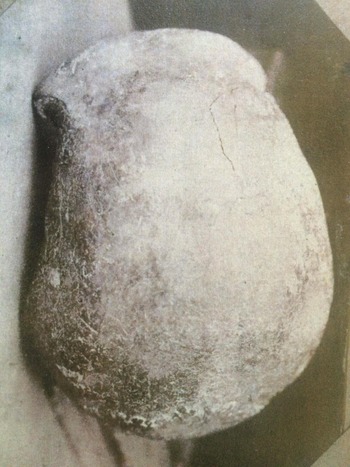
A photograph of the Neanderthal cranium, viewed from above. Huxley Papers, Imperial College London, 1863, Volume 105, Box no 105, Series 19.

Through his use of the comparative method based on quantitative craniometry, Schaaffhausen was able to argue that certain aspects of the fossils were truly unusual, and represented characters that did not appear on the bones of living humans. For example, the skull was of ‘unusual thickness’ for a human, and the bony ridge above the eye sockets, known as a brow ridge, was ‘enormously great’.Footnote 15 Schaaffhausen drew attention to the ‘long, elliptical form’ of the braincase, which he argued was quite different to the braincase of a modern human.Footnote 16 He argued that this combination of features, which together produced the ‘extraordinary form of the skull’, was unknown to exist in any human race, even ‘the most barbarous’.Footnote 17 But it should be remembered that craniometry itself was at this point a relatively new, although rapidly growing, science.Footnote 18 Naturalists throughout Europe had become interested in physical variation between human skulls, and were attempting to examine this variance in new ways. They were applying quantitative techniques to various skull features in order to, for example, identify differences associated with geographical location, or ‘races’. A central focus of craniometry was quantifying brain size and intelligence, usually achieved by measuring the inside of the cranium. Schaaffhausen applied this technique to the Feldhofer cranium, filling it first with water, and later with dried millet seed to double-check his measurements. He found that the skull held 1,033.24 cubic centimetres of water, indicating that the Feldhofer individual had a large brain, one that fell within the range of brain sizes in modern humans.Footnote 19
This measurement of brain size was pivotal for Schaaffhausen, and indeed would go on to exert an absolutely vital influence on the developing debate.Footnote 20 Despite a large brow, flat forehead and strange shape, the fossil's large brain indicated its human status beyond a shadow of doubt.Footnote 21 But the postcranial material also stood out against the range of then known human variation. Schaaffhausen's measurements of the rest of the skeleton, when placed in comparative context, provided further evidence that the Feldhofer creature was an extraordinarily distinct type of human. Schaaffhausen pointed out that the ribs were ‘unusually rounded’, giving the bones more resemblance to those of ‘a carnivorous animal than those of a man’.Footnote 22 Additionally, the limb bones were ‘unusually thick’; with large muscle attachments that suggested the Feldhofer individual had been powerfully muscled.Footnote 23 This strength was echoed in its skull as well; indeed, the robust features of the skeleton helped explain why the brow ridge was so prominent. The large brow was merely a side effect of an expanded frontal sinus, Schaaffhausen argued. This sinus had been enlarged, so that a creature of ‘unusual force and power of endurance in the movements of the body’ could obtain more oxygen.Footnote 24 For Schaaffhausen, the unusual elements of the skeleton all made sense when considered as a whole. His examination of the postcranial features verified that the Feldhofer individual was not a ‘pathological deformity’ and helped explain why the skull was so distinct; this was a previously unknown human race characterized by ‘uncommon strength’.Footnote 25
It is also worth noting that alongside Schaaffhausen's extensive comparisons of the Feldhofer fossils with known human variations, he noticeably made no direct comparisons with other living primates.Footnote 26 This is perhaps not surprising, as Schaaffhausen's training in medicine encouraged him to focus narrowly on humans. He did, however, note that features such as the low forehead gave the skull the look ‘of the large apes’, but he dismissed this as unimportant since such features were also present in races of ‘living savages’.Footnote 27 Drawing from prevailing ideas in craniometry, this fitted with Schaaffhausen's belief that some ‘races’, such as Australians and Negroes, were more ape-like in their form than Europeans. While the Feldhofer fossils exceeded all living humans’ ‘peculiarities of conformation’, they nevertheless followed the same racial pattern and could be accommodated within the human spectrum.Footnote 28 Theoretically, Schaaffhausen himself was not opposed to transmutation, and he was not committed to a specific evolutionary framework. In a paper published a year before his Feldhofer study, he argued that species immutability was not proven.Footnote 29 But his decision to define the Feldhofer fossil as a distinct human race was based firmly in his methodology. Fundamentally, comparative quantitative craniometry told him that skulls varied, but anything with a brain size over a thousand cubic centimetres was human. Moreover, the peculiar elements of the skull made sense when considered in the context of the other bones.
Schaaffhausen and Fuhlrott's conclusions were first presented in early 1857 at the Niederrheinische Gesellschaft für Natur und Heilkunde (Lower Rhine Medical and Natural History Society). At this meeting, Schaaffhausen discussed the methods he used to study the skull along with his findings, while Fuhlrott concentrated on the circumstances of discovery and the local geology. And what is notable about the questions raised at the meeting is that they focused on the age, rather than the humanity, of the remains.Footnote 30 If this was a never-before-seen race of humans, when had the race lived? Schaaffhausen claimed that these ‘remarkable human remains’ were ancient, but how, they asked, did he know? Schaaffhausen repeatedly argued that it was ‘beyond doubt’ that the bones had been buried for an immense amount of time, going so far as to claim that the Feldhofer cave should be ‘regarded as the most ancient memorial of the early inhabitants of Europe’.Footnote 31 Other naturalists, however, were less convinced – and their critique focused on another element of prehistoric practice.
Tongue tests and excavation techniques: proving antiquity
The fact that the pressing concern for German naturalists at this time was the age of these presumed human remains should not be surprising. Human antiquity was a highly contentious issue at this point, as scholars and savants sought ways of settling the debates over whether, and if so for how long, humans had had a prehistory.Footnote 32 Previously, human remains had been unearthed from only recent geological layers, which tended to confirm biblical accounts. But by the 1850s, the association between ‘man’ and mammoth was becoming harder to deny.Footnote 33 With this shift in orientation came a greater interest by naturalists in developing a variety of techniques that could help determine a fossil's antiquity.
The primary methods for interpreting a bone's age involved examining the fossil itself; did it appear to have gone through the fossilization process – had the organic material of the bone been replaced by minerals? This was difficult to determine. Some naturalists saw the presence of ‘dendritic crystallizations’, the formation of small branching crystals on the bone's surface, as evidence for fossilization, but others were less sure.Footnote 34 The appearance of the Feldhofer bones could be compared to specimens known to be fossilized. But this appeal to qualitative individual judgement of surface similarity was considered weak evidence at best.Footnote 35 A slightly stronger method for determining that a bone was fossilized was to test the bone's surface directly in several ways, of which the most common was the tongue test. This technique basically involved a naturalist licking a bone to see if it adhered to the tongue. If the bone stuck to the naturalists’ tongue, then it was likely ancient and fossilized: if not, it was probably modern. Schaaffhausen found that the Feldhofer fossils passed the ‘tongue test’, but he himself entertained great doubts about the reliability of both these methods.Footnote 36 He admitted that he had ‘long been convinced’ that neither method was ‘sufficient to establish the great antiquity of the objects’.Footnote 37 He cited, for example, the discovery of a recent dog skull in Bonn that was ‘in no way distinguishable’ from fossils of extinct animals found in a nearby cave: the remains were all of the same colour and the modern skull ‘adheres to the tongue just as [the fossils] do’.Footnote 38 He still maintained that the Feldhofer fossils were ancient, but accepted that methods of ageing that depended on the physical appearance of the object were ‘no longer of any value’.Footnote 39
Unable to glean evidence for antiquity from the fossils themselves, scholars turned to an examination of their geological context.Footnote 40 This fell into Fuhlrott's domain – but unfortunately he was simply unable to answer many of the questions that were raised. Had the skeleton been found alongside the bones of extinct mammals? What was the age of the strata in which they had been discovered? Excavations in France and Britain had already shown that human remains could be found near the bones of mammoths and other long-gone creatures – but for that to provide an indication of age, investigators had to prove that remains were associated, that they had been deposited at the same time. The possibility of intrusive burials (the interment of a later body in an earlier stratum) or of accidental deposit (by flood, for example) had to be excluded.Footnote 41 Eventually, in order to provide this information, detailed, systematic excavations were planned and undertaken – but this was now impossible for the Feldhofer bones. Valuable geological clues to antiquity had been lost the moment the quarry workers had shovelled the bones out of the cave opening. Fuhlrott had not been present, and so he was unable to say where the remains had come from, or what they might have been associated with. In the hope of fleshing out the bare bones of discovery, Fuhlrott returned to the quarry in 1858, to meet with the discoverers, quarry workers Alessandro and Luigi.Footnote 42 Unfortunately, much time had passed since the discovery, and Fuhlrott did not conduct his visit in a manner that would encourage workers to recall details. He arrived with a lawyer, and failed to provide an incentive for the workers to talk: it was customary to offer money or beer in exchange for cooperation, but Alessandro and Luigi received neither. In return, Fuhlrott learned nothing from the exchange.Footnote 43
The emphasis Schaaffhausen, Fuhlrott and their critics placed on Feldhofer's antiquity was – in the opinion of their audiences – not firmly grounded, and their difficulties illustrate the problems early naturalists faced when trying to understand the Feldhofer skeleton. Many refused to accept Feldhofer as a potentially illuminating piece of human prehistory because they remained unconvinced by the answers to practical questions about the evidence for antiquity. The tongue test technique was falling out of favour, and the bones had been uncovered by casual workers, two among many factors that made it difficult for Schaaffhausen and Fuhlrott to substantiate their claims. As the problem persisted, Schaaffhausen and Fuhlrott turned to naturalists outside Germany to help them in the debate.
Comparing the Neanderthal to living apes
After his failure with the quarrymen, Fuhlrott sought the aid of the respected British geologist Charles Lyell, inviting him to visit the Neander valley and examine the quarry and the remains for himself.Footnote 44 Lyell's visit in 1860 did indeed prove pivotal in the study of the fossils. But the consequences of his visit lay more in the evidence he brought back to London with him than in his activities while there, which largely consisted of repeating observations and tests already carried out by Fuhlrott and Schaaffhausen.Footnote 45 Like Schaaffhausen, Lyell noticed that the bones were covered in dendritic crystallizations. He admitted that these crystallizations ‘afford no sure criterion of antiquity’, but noted that they do appear more often ‘in bones that have been long embedded in the Earth’.Footnote 46 He then employed the tongue test, finding that the bones ‘adhere strongly to the tongue’, much like ‘the ordinary condition of fossil remains’.Footnote 47
Based on what he saw, Lyell concluded the bones were likely – if not definitively –ancient.Footnote 48 Like the other German naturalists who examined the skull, Lyell lamented the intricate difficulties of cave geology and regretted the lack of other animal remains.Footnote 49 Though Lyell brought nothing new to the study of the fossils, his generally positively disposed conclusions did add credibility and authority to the claims of antiquity. It would take him a number of years to publish on his findings, however, which meant his capacity to contribute directly to the debate was limited.Footnote 50 By that time, the fossils had become generally known as the Neanderthal man, shorthand for the man from the Neander valley. Lyell's trip meant that British naturalists were familiar with the remains not only through reputation, but – crucially – also through examination. Lyell had brought back with him a plaster cast of the skull. Now naturalists from a range of backgrounds would be able to scrutinize it using a variety of established and emergent methods.
But this replica of the skull, given him by Fuhlrott, did not just enable British scholars to become involved in the debate. It substantially shifted the emphasis of the evidence that was being deployed. Whereas in Germany the skull had been considered in the context of the subcranial (skeletal) material, in Britain it became the focal point of discussion – understandably, since it was the only part of the fossil anatomy that these scholars could directly access. Initially, Lyell invited two anatomists, his friends and neighbours George Busk and Thomas Henry Huxley, to examine the skull replica.Footnote 51 Both men were prominent figures in Victorian science. At this point in time, Busk was the Hunterian Professor at the Royal College of Surgeons, a fellow of the Royal Society, and the zoological secretary of the Linnean Society, while Huxley was professor of natural history at the Royal School of Mines, and Fullerian Professor at the Royal Institution.Footnote 52 Their combined interests in human variation, prehistory and other primates allowed them to approach the study of the Neanderthal in new ways. The Feldhofer fossils had certainly come a long way since they caught the eye of a schoolteacher and part-time naturalist.
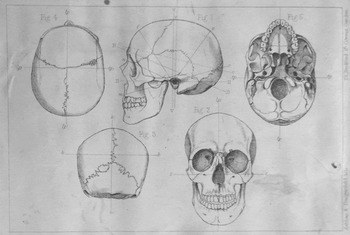
A plate from Busk's unprinted Crania Typica, Busk Papers, Royal College of Surgeons London, Box 275.e.1.

Busk and Huxley set out to measure, illustrate and make sense of the Neanderthal. Working together, they began to ask questions about the Neanderthal not just in terms of human variation, but also in terms of the variation of all living primates. They had a vast amount of material against which they could compare their cast: the Royal College of Surgeons and its associated Hunterian Museum held a large collection of human and primate skulls. Indeed, Busk was in fact already deeply involved in this collection, working on an extensive project that documented human variation. As was Schaaffhausen, Busk was interested in craniometry, and he was examining a wide range of skulls to try to understand how human skulls varied, as he worked on a book titled Crania Typica. This was an effort to present the full range of quantified cranial variations, describing and picturing skulls from all corners of the world.Footnote 53
Crania Typica was never published, but the unpublished plates preserved in Busk's papers document his attempts to understand variations in both recent and ancient human skulls.Footnote 54 He measured, traced and compared skull features from foreheads to brain sizes for different populations, or ‘races’. Busk's careful and meticulous nature found the lack of precision in craniometry frustrating, so while working on Crania Typica he developed a new tool to standardize the study of skulls. He complained that the science needed systematic, universal methods, and suggested that ‘precise numerical values should be employed in place of words’ when describing a skull's features.Footnote 55 Quantification had to replace description, and Busk's instrument could take these measurements quickly, easily and uniformly. The simple tool, a craniometer, was ‘constructed on the principle of a common shoemaker's gauge’ and made it possible, he argued, for skull measurement to be standardized.Footnote 56 In order to encourage widespread use of his tool, he printed illustrations that served as instructions to use it, though like Crania Typica they were never formally published or circulated.Footnote 57
In addition to measuring skulls for Crania Typica, Busk also created tracings of them, using a tool called the camera lucida.Footnote 58 A widely used tool in the nineteenth century, the camera lucida reflected an object onto a piece of paper, allowing a naturalist to trace that object. It was a useful tool for skull comparisons, advocates argued, because the objects could be reproduced in ‘true perspective’.Footnote 59 This ability to maintain perspective led many naturalists, Busk included, to employ the tool not simply for illustrations, but also as a means of making direct comparisons in two dimensions of objects that existed in three.Footnote 60 The camera lucida allowed Busk to illustrate the Neanderthal by tracing the outline of the cast, which he could then superimpose onto other skull tracings for comparison.
However, when it came to studying the Neanderthal skull, Busk and Huxley were at a disadvantage: they had only the cast, rather than the original fossil, and so could not achieve the ‘precise numerical values’ that Busk valued. This did not, however, stop him measuring, and filling anatomical tables with notations of the skull's breadth and length, or from using these as a basis for comparison with other ‘priscan’ (ancient) skulls, and other ‘races’ from central Europe.Footnote 61 Busk and Huxley's preliminary study appeared in 1861, when Busk produced a translation of Schaaffhausen's original paper, followed by his personal commentary on the skull.Footnote 62 As had Lyell, Busk agreed with Schaaffhausen in many regards, especially in terms of its antiquity and human status. He stated that there was ‘no doubt of [the bones’] enormous antiquity’, though this certainty probably came in part from extensive conversations with Lyell about his still unpublished impressions.Footnote 63 Given this antiquity, Busk suggested that the Neanderthal could help answer the enormous question of ‘in what respects, the ancient race or races may have differed from those which at present inhabit the earth’.Footnote 64
Busk's instructions for the application of the craniometer, Busk Papers, Royal College of Surgeons London, Box 275.e.1.

But although both men agreed with Schaaffhausen that the Neanderthal represented a member of an ancient human race, from that point Busk and Huxley's examinations and conclusions began to diverge from those of their German colleague. This was most striking in relation to the skull's most arresting feature: the brow ridge. While Busk and Huxley agreed with Schaaffhausen that this projection above the eye orbits was ‘remarkable’, their methodology suggested a different origin for the feature.Footnote 65 Unlike Schaaffhausen, the British naturalists had compared the skull extensively with other living primates. Placing tracings of the skull alongside those of gorillas and chimpanzees, Busk noted the strong resemblance between the different projections.Footnote 66 He examined this similarity more closely by overlaying various primate skulls on a Neanderthal tracing, viewed from the side, an angle that displayed the projection of the brow ridges.Footnote 67 The fact that Busk saw the ‘remarkable’ brow ridges as ape-like made sense in the context of the role of primates in the scientific culture of London at the time. Comparative anatomist Richard Owen had recently introduced the gorilla to the city, conducting a detailed analysis of its skull and skeleton. Owen, superintendent of the natural-history department of the British Museum, argued that gorillas were brutal apes, extraordinarily different from humans.Footnote 68 In this analysis, Owen had pointed to the gorilla's massive brow ridges as a defining factor of the brutish species.Footnote 69 Busk, familiar with Owen's work, drew a direct connection from the gorilla's brow ridges to the big brows of the Neanderthal.
Thus Busk disagreed with Schaaffhausen's assertion that the brow ridge was the result of an expanded frontal sinus, a feature that enabled the Neanderthal to absorb the levels of oxygen necessary for such a robust, muscular frame. Instead, it was a feature suggestively parallel to apes. Busk made the link – specifically between the Neanderthal and chimpanzees – explicit in his 1861 article when he included comparative illustrations of their respective skulls. He argued that this image, produced by his camera lucida, should ‘render the apparent resemblance between the Neanderthal crania and that of the higher apes the more evident’, by showing the ‘remarkable similarity in contour … between the two’.Footnote 70
Busk's 1861 paper was, however, only the translation of the original account with some preliminary conclusions. Together with Huxley, he prepared for even more intensive examinations of the fossil. Not content with the plaster cast of the skull, Huxley sought more detailed information, particularly pictures of the inner braincase, in hopes of shedding further light on the shape and function of the Neanderthal's sinus and brow ridge. Fuhlrott sent Huxley photographs of the cranium from different viewpoints, along with detailed notes explaining the look of the cranium's surface, allowing Huxley to fill in the details within Busk's outlined tracings.Footnote 71 Exchanges between Huxley, Fuhlrott and Schaaffhausen were to continue for many years to come as Huxley and Busk sought more information, measurements and details from the German naturalists. Throughout these exchanges, however, neither Huxley nor Busk requested information about the rest of the skeleton, and they never saw casts or photographs of the Neanderthal's unusual ribs or thick limbs. Their focus was entirely on the skull.
Huxley's full study of the Neanderthal was presented in two books published in 1863. First came Lyell's Antiquity of Man, which included a section on the skull's anatomy, probably written by Busk and Huxley.Footnote 72 In it, Lyell argued that ‘there can be no doubt that, as Professor Schaaffhausen and Mr. Busk have stated, this skull is the most brutal of all known human skulls’.Footnote 73 The Neanderthal resembled the apes in multiple features, such as ‘the prodigious development’ of the brow ridges and ‘the depressed form of the brain-case’.Footnote 74 A more extensive discussion of the Neanderthal appeared just two weeks later with Huxley's own Man's Place in Nature.Footnote 75 This text, referred to affectionately by Charles Darwin as the ‘monkey book’, contained, among other things, the culmination of Huxley and Busk's extensive study. In this book, Huxley continued to stress the ape-like features of the Neanderthal, calling it ‘the most pithecoid [ape-like] of human crania yet discovered’.Footnote 76 But crucially he also provided a clear account of why such a pithecoid skull should still be considered human. Despite the fact that ‘under whatever aspect we view this cranium, we meet with ape-like characters’, one clear feature made the difference.Footnote 77 As with Schaaffhausen and Busk, the size of the Neanderthal's brain meant that, for Huxley, it was human. Pointing to Schaaffhausen's measurements of brain volume, Huxley stressed that these fell well within the human range.Footnote 78 Thus, while Busk and Huxley placed more stress on the ape-like features of the specimen than Schaaffhausen did, they ultimately agreed with many of his conclusions. The apish elements were, after all, also characters that could be seen in the cranial structures of the ‘lower races’, as well as in the other primates.Footnote 79
The Neanderthal skull, from Thomas Henry Huxley, Evidence as to Man's Place in Nature, London: Williams and Norgate, 1863, p. 138.

Measuring brain size: not a missing link
But another question had to be considered. If the Neanderthal truly displayed a mixture of ape and human characters, was it a missing link – an evolutionary halfway point between the two groups? Darwin's Origin had, after all, been published only three years after the discoveries had been made in the Neander valley, and by the time the fossils reached Britain the questions of evolution, species and the transition between apes and humans were being hotly debated. Discussions of human evolution were at the forefront of both science and public culture, with popular and learned journals joking that ‘man probably lived a hundred thousand years ago, according to Lyell’ and ‘probably had a hundred thousand apes for ancestors, according to Huxley’.Footnote 80 But there were problems in treating this odd, big-brained but apparently apish creature as the missing link. Huxley rejected the notion outright, concluding definitively that ‘in no sense’ can the Neanderthal ‘be regarded as the remains of a human being intermediate between men and apes’.Footnote 81 Clearly this position was not the result of his lack of acceptance of evolutionary ideas.Footnote 82 Instead, Huxley's conclusions, based on these extensive measurements, also centred on his conception of evolution as linear.Footnote 83
Man's Place in Nature had demonstrated that apes and humans were remarkably similar. As such, the difference between them could be envisioned as a gradient, rather than a chasm – and the Neanderthal specimen had a clear place on that gradient. Rather than being a ‘missing link’, for Huxley the Neanderthal discovery helped to ‘fill up … the structural interval which exists between Man and the man-like apes’.Footnote 84 Again, the large brain was crucial here. While features such as brow ridges indicated that the Neanderthal approached the living apes more closely than it did Europeans, the size of the brain kept it within human range. It must also be remembered in this context that incorporated into the notion of the ‘missing link’ was the question of human diversity. People like Huxley viewed geographical variations amongst human crania as evidence that ‘races’ of humans existed, forming an eventual gradation into living apes that potentially mapped onto an evolutionary pattern.Footnote 85 The Neanderthal fitted neatly into this pattern. Initially accepted by Fuhlrott as human beyond doubt, the analyses of the anatomists subjected the skull – and implicitly its large brain – to the techniques of craniometry and framed it within their discussions of race and human variation.
Importantly, however, these scholars had not only sparked wider interest in the skull, but also provided the means by which other researchers could involve themselves in the debates. They had created tools, descriptions, careful measurements and drawings that characterized the skull in meticulous detail. This data allowed other naturalists to make ‘virtual’ examinations of the skull for themselves, on which they could develop their own hypotheses to account for its familiar strangeness.Footnote 86
Challenging the tongue test: the problem of antiquity
Charles Carter Blake, a lecturer on zoology at the London Institution, was the first to challenge Busk and Huxley's interpretation of the Neanderthal. As a member of the Geological Society, Blake did not think that the Neanderthal was as ancient as had been claimed. In a paper published in The Geologist, Blake attacked Busk's claim of enormous antiquity for the fossils.Footnote 87 His critique focused on the use of the problematic ‘tongue test’, which he complained ‘is hardly precise enough to convince practice geologists of the antiquity of the skull’.Footnote 88 ‘No English geologist’, he pointed out, had ‘stepped forward to corroborate this theory’ of antiquity, a critique which neatly combined national with disciplinary authority.Footnote 89 In fact, Lyell, just returned from the Neander valley, had corroborated this theory, but he had not yet made this support clear in print. As part of his inner circle, Busk and Huxley knew this information while Blake did not.
Blake went on to attack the specific features of the skull, using the measurements and figures made by Schaaffhausen, Busk and Huxley. He agreed that it was the brow ridge in particular that made the skull a ‘source of interest’, especially because previously such a ridge had been assumed to be a character ‘peculiar in the highest apes’.Footnote 90 He dismissed Schaaffhausen's suggestion that the feature was there to increase the oxygen supply to the muscles, since it was too difficult to infer the size of the frontal sinus by the ‘development’ of the brow ridge.Footnote 91 But he also disagreed with Busk and Huxley's claim that this was one of many ape-like features seen in the skull. Instead, Blake insisted, the brow ridge was the sole character that the skull shared with the gorilla.Footnote 92 A student of Richard Owen's, Blake took the opportunity to remind readers that brow ridges ‘greatly contribute to enhance the terrific appearance of the old male gorilla’.Footnote 93 This skull, Blake argued, did not in fact share many ape-like characteristics – instead, apart from the brow, it was very similar to that of a human. But how, then, could one explain that brow? The following year, Blake published his solution: the Neanderthal was an idiot.Footnote 94 The famous Neanderthal skull was simply the remains of ‘some poor idiot or hermit, who died in the cave’ deformed and confused.Footnote 95 To strengthen his argument, Blake brought the Neanderthal postcrania back into the discussion, arguing that Schaaffhausen's original description of features such as the peculiarly rounded ribs added evidence that this was an ‘idiot’.Footnote 96 Blake, however, failed to specify how these features provided evidence for ‘idiocy’.
Blake's dismissal of the Neanderthal as an ‘idiot’ has tended itself to be dismissed as evidence of his anti-evolutionary position.Footnote 97 Closer examination of Blake's argument, however, reveals that it was firmly based in his understanding of the methodological question of how to determine the degree of the skull's antiquity. He argued that ‘the apparent ape-like, but really maldeveloped idiot character of its conformation is so hideous … that every effort should be made to determine its probable date in time’.Footnote 98 Notably, he left the question of how one might do this open. But Blake was explicit in his hope that his statements on the Neanderthal ‘would not be taken as throwing any doubt on the transmutation theory’, a concept that he considered to be ‘a very rational hypothesis’.Footnote 99 Human fossil ancestors would eventually be found, he argued, and those would prove transmutation. The Neanderthal skull, however, was not that fossil. This, for Blake, was proven outright by that one key element – the association between brain size and human status. Blake's position, put bluntly, was that the skull measurements provided evidence of a brain so large that it simply could not be that ancient. It was human, even if it was also ‘diseased’.
More than volume: classifying brain shape
Into this sea of anatomists and zoologists linking brain size with human status came William King. In 1863, this professor of geology at Queen's College Galway (Ireland) brought an entirely different perspective to the discussion. King had spent much of his career studying Permian fossils and organizing museum collections, and he brought his palaeontological background of classifying and categorizing to the study of the Neanderthal fossil.Footnote 100 Where others saw human unity, he argued that there was actually distinct difference, and where others saw humanity, he did not.Footnote 101 For King, large brain size was not enough to consider a creature human; the shape of the brain mattered as well. He pointed to the height of the brain case, which was low, as one of the features that separated this individual from humans. He was absolutely clear: a feature that ‘characterizes the whole human species’, regardless of geographical location or race, was the ‘strongly arched form of [the] cranium’.Footnote 102 This the Neanderthal did not possess.
Basing his conclusions on an examination of a cast, combined with Busk and Huxley's illustrations and Schaaffhausen's measurements, King argued the Neanderthal was much more ape-like than any naturalist had recognized. He returned to Busk's presentation of his drawing of the fossil skull next to that of a chimpanzee, and emphasized the similarities of structure between the two. For King, the form and contours of the fossil were ‘abnormal to man, but normal to ape’.Footnote 103 He specifically drew attention to the fossil's pronounced brow ridges and strong muscle attachments in order to make the point that the Feldhofer skull appeared to have closer ‘affinity to the apes’ than to humans.Footnote 104 But interestingly, he concluded by suggesting the creature be named Homo neanderthalensis, distinct from, but still within, the human genus. For King, the large brain still suggested it was human enough to belong to the human genus. Indeed, he accepted that they might have possessed some human traits, such as the capacity to build shelters and make crude tools.Footnote 105 The lack of a high, strongly arched cranium, however, was the key determining factor in King's conception of the Neanderthal: it could not be fully human since this shape probably meant that the most important human characters – such as the ability to speak – had been absent from this species.Footnote 106
King continued to expand on his argument that the skull ‘more closely approximates’ the anthropoid apes than it did Homo sapiens in a paper published in 1864.Footnote 107 He was incredulous that ‘notwithstanding the strong simial [ape-like] tendencies’ of the skull, there were still those who ‘do not appear to think otherwise than it belongs to an individual of our species’.Footnote 108 Clearly, he now wanted to exclude the Neanderthal even from the genus Homo – but realizing that his evidence for such an expulsion was weak, he hid his assertion in a footnote. In that footnote, King wrote that he felt that naming a new genus on only a partial cranium would be ‘clearly overstepping the limits of inductive reasoning’.Footnote 109 But what about the rest of the skeleton, was that not enough to bolster a claim of his separate genus? King did mention the postcrania, repeating Schaaffhausen's general conclusions about the thickness and shape of the ribs. He stated that ‘these characters afforded some grounds for the belief that the Neanderthal fossil had not belonged to a human being’, though there was difficulty in ‘resting a satisfactory argument’ upon bone size and rib shape.Footnote 110 For King, postcrania did not reveal as much information as a skull, which was fundamental. A large brain could classify a creature in the genus Homo, but for King particular features of brain shape – primarily height – must also be taken into account in deciding whether something had human status.
Knowing Neanderthals: before they were other
King's identification of a new human species further widened the diversity of opinions on the Neanderthal's significance and relation to humans. The debate was certainly intense, as scholars took issue not just with opponents’ theories, but also with their approaches, further developing their own positions as they did so. Features such as the emphasis placed on different cranial characteristics took on crucial roles in the debate, alongside the size and shape of skulls, with one eye (almost) always on the comparative craniometrical demonstration of the range of human variation. For example, in response to the idea that Neanderthal was an ‘idiot’, Huxley argued that the stupidity instead ‘lies with those who adopt the hypothesis’, because there was no evidence demonstrating that the precise deformities of the Neanderthal matched any known syndrome.Footnote 111 ‘Idiocy is compatible with various forms of the cranium’, he argued, but ‘none which present the least resemblance to the Neanderthal skull’.Footnote 112 It was not enough to propose a hypothesis; that hypothesis must be supported by actual data. As the aggressive tone might lead one to expect, these debates over the Neanderthal were to last for decades. Many of these issues were not, and could not be, resolved until more fossils were uncovered and new methods applied to their analyses in the twentieth century.Footnote 113 However, the study of this first Neanderthal from 1856 to 1864 illuminates a number of issues in the history of palaeoanthropology. It provides historians with some insights into the discipline's inception, the ways in which different practitioners conceptualized human identity and how that related to their initial appraisal of the ‘not-quite’ human, and in particular the significance of attending to the role of practice in palaeoanthropological debates.
Historians of science have tended to focus on the ways Neanderthals have been constructed as an ‘other’ during palaeoanthropology's history.Footnote 114 As numerous studies have shown, this ‘other’ often emerges as humans define both themselves and Neanderthals by asking what aspects of humanness Neanderthals lack, imagining the lesser species ‘in the mirror’ of the superior Homo sapiens. This scholarship illuminates Neanderthal analyses in the twentieth century, when discoveries began to accumulate and Neanderthals became increasingly conceptualized as a separate fossil species, a true ‘other’.Footnote 115 Indeed, some scholars argue that this issue of defining ourselves in opposition to Neanderthals continues to the present day.Footnote 116 But what about the time before Neanderthals became construed as other? This paper illuminates a period when the strict dichotomies between human and non-human, between ‘us’ and ‘them’, were distinctly blurred. But while Neanderthals were not yet conceived as ‘other’ in this period, their study, then, can still show us how ‘human’ was defined.
The majority of naturalists who studied the Neanderthal in the 1856–1864 period concluded that it was human, and they based that conclusion on the fact that it possessed a large brain.Footnote 117 They studied the skull with the tools of craniometry and anthropometry – the science of human measurement – and assessed it against the quantified range of recorded human variation. Opinions about other, potentially ‘ape-like’, characteristics depended on individual perspectives on the nature of that range – so, while for Huxley and Schaaffhausen human variation was so wide that the skull could fit unproblematically within it, Blake and Fuhlrott needed to invoke pathology. King, on the other hand, with a background in classification and categorization, privileged difference in shape over resemblance in size: the contours of the skull indicated that it had belonged to a being that was not entirely human.
In light of the centrality of practice in the Neanderthal's story, it is significant to recognize that many of these scientists studied only a portion of the skeleton: the skull. While many of them reiterated Schaaffhausen's impressions of the postcrania, they did not conduct their own rigorous analyses of the limbs, ribs and other bones. If Lyell had brought back casts of the Neanderthal's ribs and limb bones, would we perhaps have a different story to tell? How might those bones have influenced the debates on the Neanderthal's human status? This question is worth further exploration, especially as Neanderthal postcrania ultimately played an essential role in twentieth-century constructions of the species, constructions that helped to label Neanderthals as ‘other’.Footnote 118
Conclusion: practice in early palaeoanthropology
In their accounts of twentieth-century Neanderthal studies, historians of science have frequently focused on factors such as social and political context.Footnote 119 They have argued that Neanderthals were used as social and political ‘weapons’, and that institutions, social context and other factors shaped researchers’ opinions of the fossils.Footnote 120 In contrast, this paper has argued that, to understand the role that Neanderthals played in early debates about human prehistory, we need first to understand the tools – conceptual, instrumental, methodological – that were used in its interpretation. In addition to illuminating an early chapter in Neanderthal interpretations, this paper has focused closely on this aspect of scientific interpretation. It has examined their methods of replication, such as shared casts and camera lucida illustrations, and explored their data sets, from the skulls of Australians to those of chimpanzees. It has endeavoured to show that larger claims hinged on these methods in ways that must be recognized. Social, political and institutional factors certainly had an important role to play, but practice equally influenced the study, and therefore the conceptions, of Neanderthals. Interpretations of the Feldhofer fossils were affected by the actions of the quarry workers, as well as by theories of evolution.
In addition to viewing the Neanderthal in light of politics and social issues, some histories of palaeoanthropology, often those produced by practitioners, have sought to understand the early Neanderthal debates largely in terms of evolutionary beliefs.Footnote 121 In this framework, some accounts have dismissed the Neanderthal as uninteresting because it looked too human, while others have called it a ‘beacon’ of light, illuminating the hominin past.Footnote 122 This paper argues that neither of these interpretations fully represents naturalists’ views at the time, since it argues that belief in evolution was at no time a critical factor in the overall interpretations made by participants in the debate. None of the naturalists who viewed the Neanderthal as human did so because they had doubts about evolution. Instead, the Neanderthal remains were subject to interpretation by naturalists who were struggling with methodological questions such as the quantification of variation, the evidence for antiquity and the range of comparative anatomy.Footnote 123
The skeleton from the Feldhofer cave was the first non-human hominin fossil recognized by science.Footnote 124 Thus the story of this Neanderthal is the story of the emergence of a new scientific discipline. As with any new field of inquiry, agreement had yet to be reached on research methodologies and conceptual frameworks, and individuals from a range of different disciplinary backgrounds brought their predispositions and training to bear on the bones. Historians of science have recently suggested that a more comprehensive view of palaeoanthropology is one that recognizes that questions about hominin fossils lie at the intersection of biology, geology, palaeontology and archaeology.Footnote 125 In the case of the Neanderthal, this more comprehensive view reveals that the Neanderthal discussions were much more complex than debates over evolutionary ideas; that instead, larger questions about the natural sciences and issues of scientific method – such as excavation techniques – played a central role in interpretations of the Neanderthal.
As this paper has shown, in the nineteenth century the Neanderthal skull was not yet playing the key role in defining human evolution that it would be given in the twentieth century. It was, instead, the most brutal of all human skulls, a creature that blurred existing categories, raising new questions, and challenging old approaches. As naturalists attempted to make sense of the skull, borrowing approaches and applying various methods to its analysis, the biggest question that arose was not ‘what it was’ but instead ‘how they could know’?