Wastewater treatment is a perennial need despite its increasing expense due to the numerous contaminants discarded by various industries. Contaminants must be removed from wastewater before returning it to streams and riverbeds. The food, textile and pharmaceutical industries, for example, produce coloured contaminants as pollutants (Aksu, Reference Aksu2005). Among the various techniques used to remove organic pollutants from wastewater, sorption is advantageous because of its low cost, availability, ease of operation and efficiency even when removing pollutants at low concentrations (Anvari et al., Reference Anvari, Kheirkhah and Amraei2014; Uddin, Reference Uddin2017). Among the removal agents, smectites are abundant, low-cost natural resources with a large surface area, compositional and structural variability and good cation-exchange capacity (Paiva et al., Reference Paiva, Morales and Díaz2008). Most clay minerals have a negative surface charge and are very effective and widely used in the sorption/removal of organic cations. However, they exhibit a poor capacity for removing anionic pollutants. Studies on the modification of the unique characteristics of smectites are of great interest to the scientific community, with the aim of improving the structural and surface properties of materials for applications in catalysis, sorption and drug transport, among others (Shen et al., Reference Shen, Fan, Zhou, Gao, Yue and Kang2009; Yang et al., 2018). Smectite plays a prominent role in the sorption of cationic dyes (Feddal et al., Reference Feddal, Ramdani, Taleb, Gaigneaux, Batis and Ghaffour2014) and, when modified, it can be used for the sorption of anionic dyes (Fu et al., Reference Fu, Gao, Gao and Li2011; Rodrigues et al., Reference Rodrigues, Villalba, Santos, Melquiades and Anaissi2020; Ullah et al., Reference Ullah, Iftikhar, Ajmal, Shah, Akhter, Ullah and Waseem2020).
In the smectite group, montmorillonite, with its dioctahedral structure, has garnered much interest. Montmorillonite consists of crystalline and lamellar particles described as very thin plates or sheets with an irregular profile, arranged in a T–O–T (2:1 layer-type) arrangement. In this structure, two tetrahedral silicon layers are repeated, alternating with an octahedral layer of aluminium or other metals, such as iron or magnesium (Melo & Alleoni, Reference Melo and Alleoni2009). The T–O–T layers are covalently bonded strongly and are therefore quite stable. The interlamellar space of smectites contains water molecules and exchangeable cations (Na+, Ca2+ and K+) and is responsible for organizing the lamella stacking (Brownlow, Reference Brownlow1975; Meunier, Reference Meunier2005). Sodium smectite (Na+ ions present in the structure) swells more when absorbing water, while with calcium smectite (Ca2+ ions) the amount of water absorbed is less, swelling is compromised and the lamellae remain joined to each other via electrostatic attractions, which are stronger than van der Waals, ion–dipole and dipole–dipole interactions (Brownlow, Reference Brownlow1975; Meunier, Reference Meunier2005).
The ion-exchange properties of smectites are derived from two mechanisms. The first is surface adsorption and the second is true ion exchange, which is the exchange of ions across the basal layer (lamella; Rouquerol et al., Reference Rouquerol, Rouquerol, Llwellyn, Bergaya, Theng and Lagaly2006; Murray, Reference Murray2007; Nogueira et al., Reference Nogueira, Lopes, Silva, Lago, Fabris and Oliveira2011). Ion exchange that occurs in the basal space is called intercalation. The properties of smectites are related directly to their surface structure, which can be modified, giving rise to new materials.
Smectites can be modified using various techniques, such as pillarization with metallic cations, organophilization with cationic surfactants (Malakootian et al., Reference Malakootian, Hossaini, Asadipour and Daneshkhah2018; Ayari et al., Reference Ayari, Manai, Khelifi and Trabelsi-Ayadi2019) and heat and chemical treatment (Kyzioł-Komosińska et al., Reference Kyzioł-Komosińska, Rosik-Dulewska, Pajak and Krzyżewska2014). The use of ferric ions (Fe3+) as smectite-modifying agents for the sorption of negative species in aqueous media has been proposed by several authors (Grygar et al., Reference Grygar, Hradil, Bezdicka, Dousova, Capek and Schneeweiss2007; Fu et al., Reference Fu, Gao, Gao and Li2011; Luengo et al., Reference Luengo, Puccia and Avena2011). One of the modification routes using Fe(III) ions involves the interaction between an aqueous suspension of previously swollen smectite and a solution containing ferric ions, exploiting the ion-exchange capacity of smectite. The modified smectite is then filtered, washed with distilled water and dried at room temperature (Rodrigues et al., Reference Rodrigues, Villalba, Santos, Melquiades and Anaissi2020). Adsorption has been used frequently to remove dyes from aqueous media because of the simplicity of the process, its low cost and the efficiency of decolourizing solutions.
The physical processes involved in the decolourization of effluents are not effective for degrading pollutants because they only promote the immobilization of the dye through phase transfer from the aqueous medium to the solid. Degradation of polluting species can be achieved through chemical processes; however, the large amounts of waste generated by these effluent decolourization processes have become secondary environmental problems (Olivares et al., Reference Olivares, Díaz-Nava and Solache-Ríos2016). Due to growing environmental concerns, the treatment of coloured effluents with modified smectites can generate material that is ready for reuse as a pigment for paints at the end of the sorption process, thus avoiding the need to dispose of this waste in landfills. This form of reuse of solid waste enables the generation of a non-toxic hybrid pigment that is odourless and less damaging to nature and human health. Hybrid pigments are organic–inorganic compounds in which an organic dye (anionic or cationic) is stabilized on an inorganic matrix. The inclusion of chromophores in inorganic matrices provides a hybrid pigment with properties complementary to those of their precursors, such as resistance to greater temperatures or chromophore degradation (Laguna et al., Reference Laguna, Loera, Ibarra, Lima, Vera and Lara2007).
The use of natural raw materials to obtain hybrid pigments has been attracting increasing attention because of their new various application possibilities, such as in paints and cement mortars. With advances in the pigment sector, the pigment production field holds significant promise, mainly in the areas of research, technology, innovation and trade, with an emphasis on reusing industrial waste to obtain new pigments.
Organic–inorganic pigments can be prepared by complexing dye molecules with metal cations present in inorganic supports, such as mixed oxides of aluminium–magnesium hydroxycarbonate (Marzec et al., Reference Marzec, Szadkowski, Rogowski, Maniukiewicz, Szynkowska and Zaborski2019) or silica gels (Zhang et al., Reference Zhang, Fei, Yu, Cao and Zhang2014). These pigments can also be obtained via the sorption of dyes with anatase titanium dioxide (Siwinska-Stefanska et al., Reference Siwinska-Stefanska, Nowacka, Kołodziejczak-Radzimska and Jesionowski2012), smectite modified with cationic polymers (Guillermin et al., Reference Guillermin, Debroise, Trigueiro, de Viguerie, Rigaud and Morlet-Savary2019) or layered double hydroxides, known as anionic smectites (Moujahid et al., Reference Moujahid, Lahkale, Ouassif, Bouragba and Elhatimi2019). Silva et al. (Reference Silva, Silva, Gehlen, Oake, Bohne and Quina2018) reported the preparation of fluorescent hybrid pigments via the sorption of various flavylium cations on palygorskite. In this study, we propose the use of solid residues obtained from the sorption of anionic dyes on modified smectites (Argel® and Volclay®) as organic–inorganic hybrid pigments for colourless paints.
Materials and methods
Materials
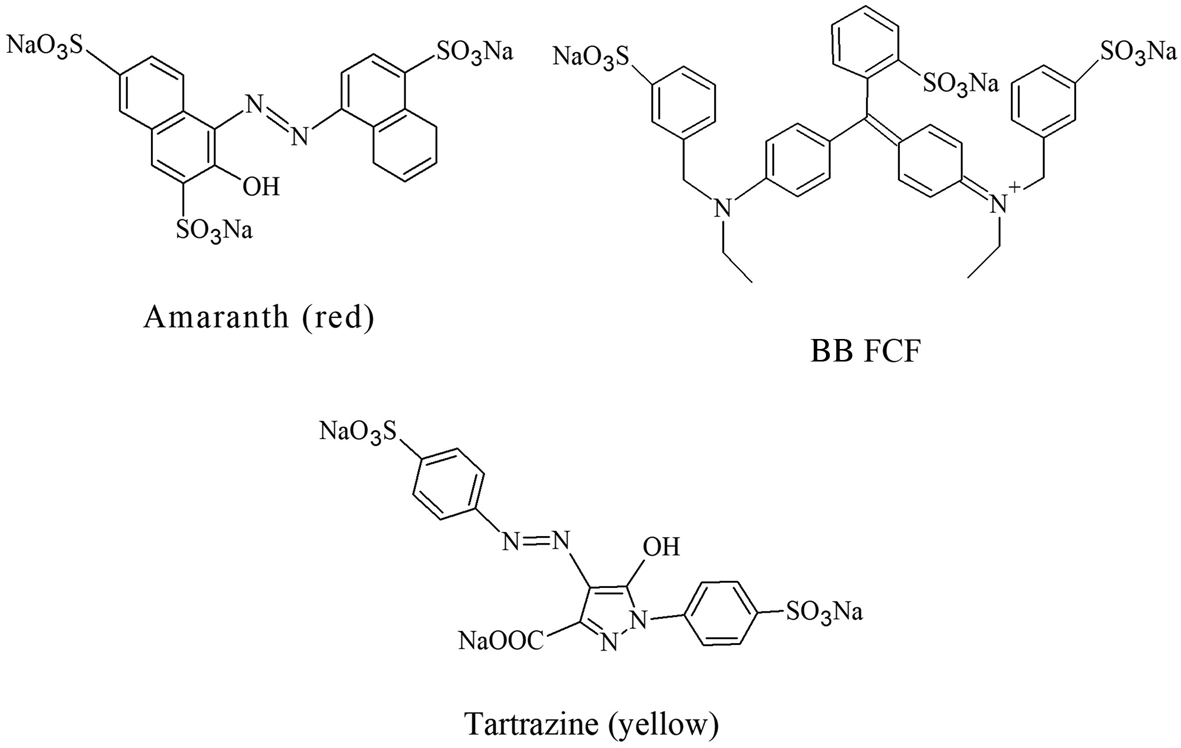
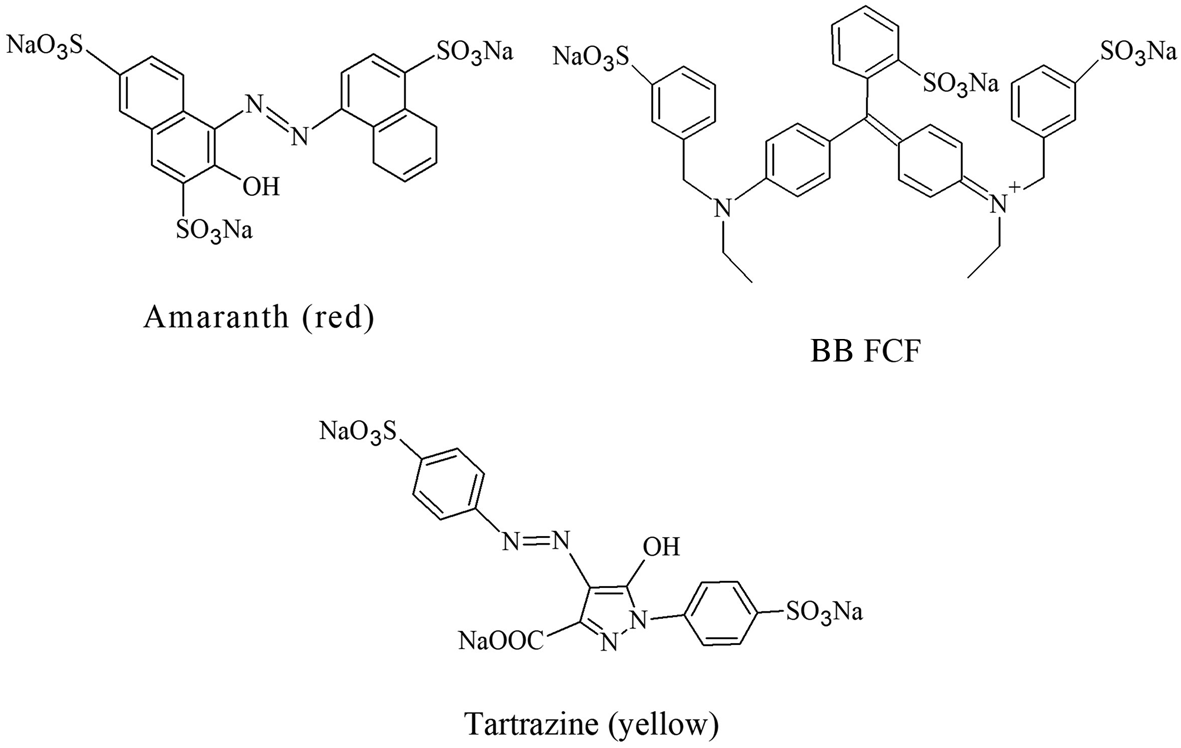
Two smectites (Argel and Volclay) were saturated with Fe(III) (Argel-Fe and Volclay-Fe) and characterized according to a study by Rodrigues et al. (Reference Rodrigues, Villalba, Santos, Melquiades and Anaissi2020). The commercial smectites used were supplied by Buntech (http://www.bentonit.com.br/; São Paulo, Brazil). The smectites were pulverized in an agate mortar to homogenize the granulometry, and they were classified using a Berbel stainless steel granulometric sieve (212 μm, 65 mesh; Caieiras, Brazil). The composition suggested by Buntech is Si8Al(4–X)O20⋅(OH)4⋅nH2O, where X = Na, Mg or Ca (Mariani et al., Reference Mariani, Villalba and Anaissi2013). The chemical structures of the primary dyes (Amaranth red, Brilliant blue FCF (BB) and Tartrazine yellow; Saramanil brand, São Paulo, Brazil) are shown in Fig. 1. Commercial dyes resulting from the combination of primary dyes (Fig. 1) are referred to as golden yellow, pink, black and green dyes. Sodium hydroxide (NaOH) was purchased from Sigma-Aldrich (Barueri, Brazil).
Structures of the primary dyes: Amaranth, BB and Tartrazine.
Stock solution of dyes
A stock solution of each dye was prepared by diluting 100 μL of dye in 10 mL of distilled water to generate a 10−3 mol L–1 solution. A dye mixture (Amaranth red, BB, Tartrazine yellow, golden yellow, pink, black and green) simulating synthetic effluent was prepared by adding 100 μL of each of the seven dyes to 10 mL of distilled water.
Analytical curve
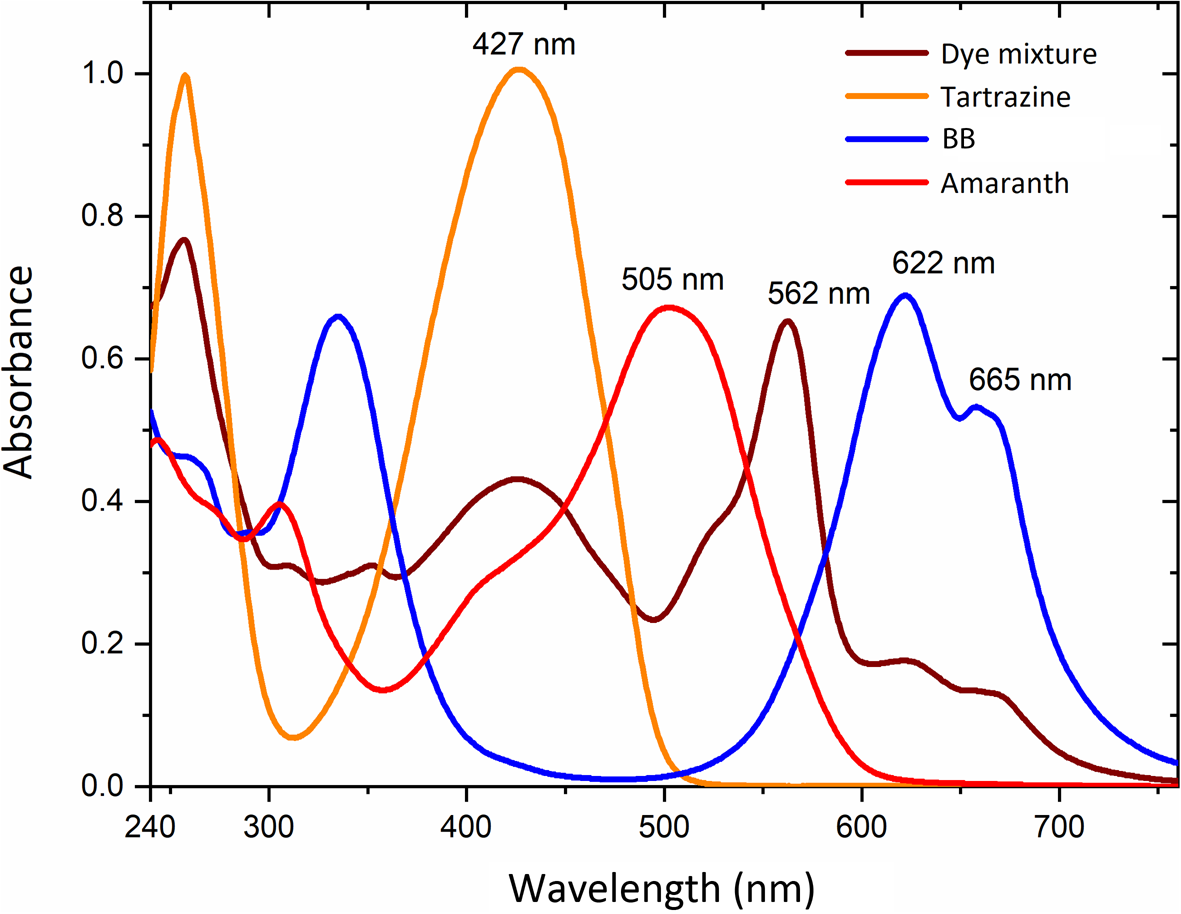
The absorption spectrum in the visible light region for each dye was obtained using a Shimadzu UV-1800 spectrophotometer with a spectral range of 240–760 nm (Fig. 2). After defining the band with the greatest absorbance (λmax), analytical curves were constructed from triplicate measurements of the absorbance of the solutions.
Absorption spectra (UV–Vis) of the Amaranth, BB and Tartrazine dyes and the dye mixture (262.5 mg L–1).

Sorption kinetics study
The effect of the contact time was evaluated at the intrinsic pH of each sorbate/sorbent mixture, where pH = 6.0 ± 0.3 for individual dyes and pH = 3.1 ± 0.3 for the dye mixture. For the kinetics study, 200 mg of the sorbent was added to a Falcon tube containing 5 mL of distilled water and sonicated in an ultrasonic bath for 8 min. After swelling of the sorbent, 15 mL of sorbate stock solution was added and this was kept under constant shaking in a shaker at a controlled temperature of 298 K. After various time intervals (1–30 min), each tube was centrifuged at 3500 rpm for 5 min, and the absorbance of the supernatant was measured using an ultraviolet–visible (UV–Vis) spectrophotometer.
Measurements of removal efficiency and sorption isotherm
Isotherms were constructed by adding various concentrations of the sorbent (Fe-Sm) to 5 mL of suspension containing 200 mg of the previously swollen sorbent, with the aid of sonication in an ultrasonic bath for 8 min, for better dispersion on the sorbate. The sorption experiments were carried out without pH correction at a controlled temperature of 298 K under constant agitation for 240 min in a mechanical orbital shaker (180 rpm, Tecnal, Piracicaba, SP, Brazil). The samples were centrifuged at 3500 rpm for 5 min (Tecnal, Piracicaba, SP, Brazil), and the concentration of the dye in the solution after sorption was determined from the analytical curve of each sorbate using UV–Vis spectrophotometry.
The sorption capacities of Argel-Fe and Volclay-Fe were determined from Equation 1, and the rate of decolourization of the solution was monitored as a function of the decrease in the intensity of the λmax band. The removal efficiency (R) was calculated from Equation 2:
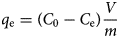
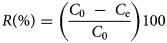
where q e (mg g−1) is the amount adsorbed at equilibrium, V (L) is the volume of the dye solution, C 0 (mg L–1) is the initial concentration of the solute, C e (mg L–1) is the concentration of the sorbate in the solution at equilibrium and m (g) is the mass of the sorbent.
The sorption isotherms were fitted to the Langmuir (Equation 3), Freundlich (Equation 4) and Langmuir–Freundlich (LF) dual-site (Equation 5) models. The Langmuir model considers monolayer sorption on a homogeneous sorbent surface (Langmuir, Reference Langmuir1916), whereas the Freundlich isotherm assumes the formation of multilayers on the heterogeneous surface of the sorbent (Freundlich et al., Reference Freundlich1906), in which the parameters KF and n are related to the sorption capacity and sorption favourability, respectively (Ong et al., Reference Ong, Soetaredjo, Kurniawan, Ayucitra, Liu and Ismadji2014). The LF dual-site model suggests the existence of various binding sites (homogeneous and heterogeneous) with various affinity parameters (Umpleby et al., Reference Umpleby, Baxter, Chen, Shah and Shimizu2001):


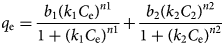
where q m (mg g−1) is the maximum adsorption capacity, KL (L mg−1) is the equilibrium constant of the Langmuir model, C e (mg L−1) is the concentration of sorbate in equilibrium, KF (mg g−1 (L mg−1)1/n) is the Freundlich parameter and n the heterogeneity factor. In the LF dual-site model, b 1,2 (mg g−1) is the maximum sorption capacity, k 1 is related to specific type adsorption and k 2 with non-specific adsorption (Umpleby et al., Reference Umpleby, Baxter, Chen, Shah and Shimizu2001) and n 1,2 is the heterogeneity index (Guilarduci et al., Reference Guilarduci, Mesquita, Martelli and Gorgulho2006).
Preparation of hybrid pigments
After sorption of the mono- and multi-component solutions, the liquid phase was separated from the solid phase via centrifugation. The samples were dried at room temperature and crushed manually using an agate pestle and mortar. The powdered samples were then sieved through a 65 mesh sieve.
Dispersion of hybrid pigments in colourless paint
In a 15 mL tube, 250 mg of pigment was dispersed initially in water (2.5 g). NaOH solution was used as a dispersant and dripped into the dispersion until the pH was adjusted to between 8 and 10 to promote the complete breakdown of the particles and compatibility with the paint. Thereafter, 4.5 g of white paint was mixed into the suspension containing the pigment and stirred on a vortex shaker to achieve homogenization. To simulate real-estate paints, each paint sample was brushed on plaster moulds (5.0 cm in diameter and 2.0 cm thick).
Colorimetry and electronic spectra
The mouldboard covered with paint was dried at an ambient temperature of 298 K for 24 h, followed by colorimetric measurements being taken from two different points on each mouldboard; the average was obtained for three colorimetric coordinates (L*a*b*; L* is the colour lightness, ranging from black (L* = 0) to white (L* = 100), a* is the green (–)/red (+) axis and b* is the blue (–)/yellow (+) axis; DrLange, 1994). The coordinates were determined using a portable colorimeter (3nh, model NR60CP) with a D65 light source (Tecnal, Piracicaba, Brazil). The total colour difference (ΔE), using natural smectite as a reference, was determined using Equation 6, and the degree of saturation (C*) was determined using Equation 7 (DrLange, 1994):


where values with a subscript ‘1’ represent the reference colour and values with a subscript ‘2’ represent the measured colour.
Electronic spectra were obtained in reflectance mode using an Ocean Optics USB2000 spectrophotometer (US BioSolutions, São Paulo, Brazil) coupled to a tungsten lamp (region of 400–800 nm) and a set of double optical fibres.
Results and discussion
Argel and Volclay smectites were enriched or saturated with Fe3+ ions as described by Rodrigues et al. (Reference Rodrigues, Villalba, Santos, Melquiades and Anaissi2020). The saturation methodology is simple and the saturates can be prepared in great quantities (5 g, 50 g, 500 g, 5 kg, etc.). Swelling of smectite occurred for a smectite suspension (1%, w/v) kept under constant agitation (500 rpm) for 24 h. Then ferric chloride (~81 g; 100 mL H2O) was added to the smectite suspension (1%; 2 L). The combination of the smectite suspension and Fe3+ ion solution led to the formation of colloidal agglomerates as a function of the increase in ionic charge. After 4 h under mechanical agitation, the suspension was kept at rest, and the smectite saturated with Fe3+ ions (Fe-Sm) was decanted rapidly. Subsequently, Fe-Sm was filtered and washed with distilled water to remove excess ferric chloride. After drying at room temperature, Fe-Sm was pulverized and sieved (65 mesh) before being stored. Fe-Sm showed great affinity for anionic food dyes; when applied in the removal of dyes from an aqueous medium, it presents a new colour. This suggests the possibility of applying Fe-Sm as an inorganic–organic pigment. Fe-Sm also showed good dispersibility in white and colourless paints.
Sorption isotherm for Tartrazine
The equilibrium sorption of Tartrazine dye on the smectite was evaluated using solutions of the dye at concentrations of 365–662 mg L–1. The absorption spectrum (UV–Vis) of the azo dye showed two main bands, one in the visible region (λmax = 427 nm) responsible for the yellow colour and the other in the near-UV region (λ = 257 nm). The absorption spectra (Fig. 2) are similar to those presented in the literature for Tartrazine dye (Oancea & Meltzer, Reference Oancea and Meltzer2013; Albroomi et al., Reference Albroomi, Elsayed, Baraka and Abdelmaged2017). The greater-intensity band at 427 nm can be attributed to the n → π* transition related to the chromophore group of the molecule (N=N, C=N and C=O), which is characteristic of delocalized π-electrons. The band at 257 nm is attributed to the π → π* transitions of the individual aromatic rings (Oancea & Meltzer, Reference Oancea and Meltzer2013).
According to Klete et al. (Reference Klete, Barry, Balti, Lelli, Schoenstein and Jouini2014), the first pKa value for Tartrazine is 2.0 (sulfonic group), and the second value is 5.0 (carboxylate group). Thus, at pH 6.1 (±0.3), the Tartrazine molecules must be in their anionic form, and the surface of the sorbents has positively charged sorption sites (Rodrigues et al., Reference Rodrigues, Villalba, Santos, Melquiades and Anaissi2020), favouring electrostatic interactions. Sorption via electrostatic attraction has also been used to describe the mechanism of Tartrazine sorption on organo-bentonite at pH 7.23 (Sahnoun et al., Reference Sahnoun, Boutahala, Tiar and Kahoul2018).
The experimental equilibrium data for the Tartrazine dye were fitted using various isotherm models (Fig. S1). The equilibrium curves show an increase in sorption without reaching a plateau, indicating that the maximum saturation capacity of the accessible sites was not reached. The sorption isotherms of Tartrazine on Argel-Fe and Volclay-Fe can be classified according to Giles et al. (Reference Giles, Smith and Huitson1974) as type-H2 and type-L3 isotherms, respectively. The initial curvature shows that at low concentrations there is great affinity of the Tartrazine dye for Argel-Fe, while the sorption on Volclay-Fe occurs through progressive saturation of the sorbent; as the sorption sites become occupied, there is greater difficulty in the sorption of other molecules by the sites available (Giles et al., Reference Giles, Smith and Huitson1974).
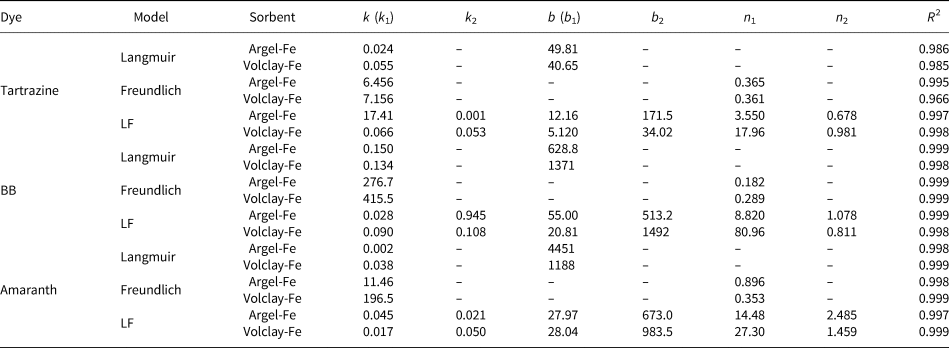
Based on the R 2 values presented in Table 1 (Tartrazine), the LF isotherm model provided the best fit to the experimental equilibrium data for both sorbents. The maximum sorption capacities of Argel-Fe and Volclay-Fe for Tartrazine dye, calculated from the LF model (b 1 + b 2), were 183.6 and 39.14 mg g–1, respectively. According to Constantino et al. (Reference Constantino, Quirino, Monteiro, Abrão, Parreira, Urbano and Santos2017), k 1 and k 2 are related to specific and non-specific sorption, respectively.
Parameters of the sorption isotherm models for dye sorption on Fe-Sm.
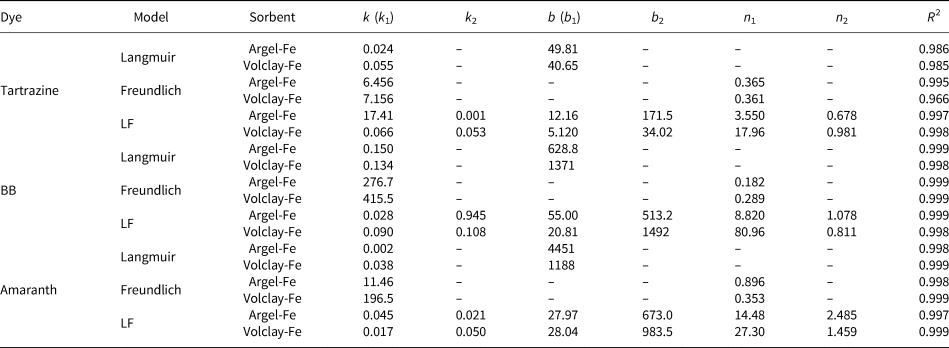
Thus, based on the values of b and k, both sorbents have a greater number of occupied lower-energy sites, which suggests that the majority of sorption occurs at lower-energy sites, with non-specific sorption prevailing. The parameter n indicates the heterogeneity of the sorbent surface. It is known that n = 1 corresponds to a homogeneous material and n < 1 indicates heterogeneous materials (Umpleby et al., Reference Umpleby, Baxter, Chen, Shah and Shimizu2001; Guilarduci et al., Reference Guilarduci, Mesquita, Martelli and Gorgulho2006). Thus, the values of n suggest that sorption of the dye on Argel-Fe occurred preferentially on a heterogeneous surface (n = 0.678), whereas for Volclay-Fe sorption occurred on an almost homogeneous surface (n = 0.981).
In the Langmuir isotherm model, the sorption or affinity energy constant KL < 1 indicates weak interaction between the dye and sorbent. From the Langmuir isotherm, the maximum sorption capacities (b L) were 49.81 and 40.65 mg g–1 for Argel-Fe and Volclay-Fe, respectively. According to Sposito (Reference Sposito1980), n F < 1, obtained from the Freundlich model, suggests a homogeneous sorbent surface. The KF values indicated low sorption potential.
Previous equilibrium studies indicated that the maximum capacities for Tartrazine sorption on chitosan and a chitosan–polyaniline composite were 1977 mg g–1 (Dotto et al., Reference Dotto, Vieira, Gonçalves and Pinto2011) and 584 mg g–1 (Sahnoun & Boutahala, Reference Sahnoun and Boutahala2018), respectively, according to the Freundlich isotherm model. The maximum capacity for Tartrazine sorption on sawdust, determined from the Langmuir isotherm model, was 4.71 mg g–1 at 318 K (Banerjee & Chattopadhyaya, Reference Banerjee and Chattopadhyaya2017), while Albroomi et al. (Reference Albroomi, Elsayed, Baraka and Abdelmaged2017) found that the maximum capacity for Tartrazine sorption on activated carbon could reach 76 mg g–1 when the initial dye concentration was 100 mg L–1. Thus, the capacity for Tartrazine sorption on Fe-Sm is less than that of other sorbents reported in the literature.
Sorption isotherm for BB
The BB dye exhibited two absorption bands in the visible region at 622 and 659 nm (Fig. 2). The band at 622 nm, with a greater relative absorbance, was used to monitor the decolourization of the solution by the sorbents. Hernández et al. (Reference Hernández-Hernández, Solache-Ríos and Díaz-Nava2013) and Mittal (Reference Mittal2006) also used UV–Vis absorption spectrophotometry to determine the concentration of BB dye remaining in solution after sorption equilibrium with monitoring at λmax = 630 nm.
For the equilibrium studies, the initial concentration of the BB dye solution ranged from 6250.0 to 12,790.7 mg L–1. Both sorbents exhibited great dye-removal capacity in aqueous media. The sorption isotherms for BB dye on modified smectite are presented in Fig. S2. A type-H isotherm was observed for sorption on Argel-Fe, indicating high affinity of the modified smectite surface for the dye, particularly at low dye concentrations. A type-L2 isotherm was observed for Volclay-Fe (Giles et al., Reference Giles, Smith and Huitson1974).
The linear correlation coefficients for all of the models used were >0.99 (Table 1). The maximum sorption capacities determined from the Langmuir and LF models adequately represented the observed sorption capacities of the sorbents, even though the experimental system had not yet reached equilibrium.
Considering the Langmuir isotherm model, the maximum sorption capacities obtained after the formation of a complete monomolecular layer were 628.80 mg g–1 for Argel-Fe and 1371.15 mg g–1 for Volclay-Fe. KL values <1 indicate little affinity between the BB dye and sorbents. From the LF isotherm model, which follows the characteristics of the Langmuir model at high adsorbate concentrations (Subramanyam & Ashutosh, Reference Subramanyam and Ashutosh2012), the q e values were equal to 568.20 mg g–1 for Argel-Fe and 1512.8 mg g–1 for Volclay-Fe. The low k values indicate that the sorbents have low-energy sorption sites, while the parameter n suggests that sorption should occur mainly on a homogeneous surface for Argel-Fe (n = 1.078) and a surface close to energetic homogeneity for Volclay-Fe (n = 0.811).
Hernández et al. (Reference Hernández-Hernández, Solache-Ríos and Díaz-Nava2013) studied the sorption of BB dye on natural bentonite modified with ferric chloride (FeCl3), where the Langmuir isotherm best fit the experimental data, indicating that the natural and modified smectites have homogeneous surfaces. According to the Langmuir model, the maximum sorption capacities of BB dye on unmodified bentonite and modified bentonite were 6.16 and 14.22 mg g–1, respectively. The Langmuir model also provided the best fit for the sorption of BB dye on chitosan, where the maximum monolayer sorption capacity was 1134 mg g–1 at 298 K (Dotto et al., Reference Dotto, Vieira, Gonçalves and Pinto2011).
Sorption isotherm for Amaranth
The Amaranth dye solution exhibited an absorption band at 482 nm (Fig. 2). Initial dye concentrations of 7293.0 and 10,071.9 mg L–1 were used for the construction of the sorption isotherms (Fig. S3). The initial shape of the curve obtained for sorption on Argel-Fe corresponds to a type-S curve, with low initial sorption. Sorption on Volclay-Fe is characterized by an L2-type curve according to the classification suggested by Giles et al. (Reference Giles, Smith and Huitson1974). Type-C and type-L isotherms have similarities and are often considered to be of the same type (Falone & Vieira, Reference Falone and Vieira2004).
High correlation coefficients (R 2 > 0.99) were obtained for all of the isothermal models used to describe the sorption of Amaranth dye on the Fe-Sm (Table 1). The LF model suggests that both sorbents had a homogeneous surface and that the sorption sites had low affinity for Amaranth dye. The maximum sorption capacities of Argel-Fe and Volclay-Fe determined from the LF model were 701.0 and 1011.5 mg g–1, respectively. The maximum sorption capacities obtained using the Langmuir model were 4451 and 1188 mg g–1 for Argel-Fe and Volclay-Fe, respectively. The magnitude of KL suggests a weak interaction between the sorbent and sorbate molecules.
Comparison of the sorption capacities of the modified smectites with those of reported sorbents shows that the sorption capacities of the former for Amaranth dye (Table 1) are superior to those of peanut shells (14.90 mg g–1; Gong et al., Reference Gong, Ding, Li, Yang, Liu and Sun2005) and magnetic Fe3O4/MgO nanoparticles (37.98 mg g–1; Salem et al., Reference Salem, Ahmed and El-Shahat2016), as determined from the Langmuir isotherm model. Nanganoa et al. (Reference Nanganoa, Ketcha and Ndi2014) reported that the maximum concentration of Amaranth adsorbed on smectite was 1.845 mg g–1, calculated using the Freundlich model, suggesting that the sorption of Amaranth dye occurred mostly on a heterogeneous surface and, to a lesser extent, on a homogeneous surface.
Mechanism of dye sorption on Fe-Sm
The fit of the experimental sorption data to the Freundlich isotherm was unsatisfactory, possibly because of the energetic homogeneity of the surfaces of the modified smectites. However, the parameters obtained from this model, together with those obtained from the other models, provide relevant information regarding the sorption process. The n F parameter of <1, obtained from the Freundlich equation, indicates a homogeneous surface of the sorbents; however, the correlation of the KF constant and the maximum sorption values found from the Langmuir and LF models was not significant, as a low KF was observed for all systems. The Langmuir or LF isotherm models best represented the sorption of dyes on Fe-Sm (Table 1).
From the results obtained by applying the LF model, it can be inferred that the sorbents must present sorption sites with various energy levels, but all of them have low energy values, resulting in an energetically homogeneous surface on which the sorption of the dyes occurs preferentially at sites with less energy. The low sorbent/sorbate affinity suggests weak interaction, characteristic of non-specific sorption involving electrostatic interactions.
Based on the results obtained from the Langmuir equation, the following deductions can be made: (1) there is a defined number of interaction sites corresponding to the equivalent amount of Fe(III) ions incorporated in the smectites; (2) the interaction sites on the surface have equivalent energy and can interact with only one dye molecule at a time, and there is no interaction between adsorbed molecules; and (3) the maximum sorption capacity corresponds to the saturation of the monolayer of dye molecules – that is, there is no stacking of dye molecules, which would form bilayers or polylayers. The low binding energy suggests that dye sorption proceeds via physical sorption through relatively weak electrostatic interactions.
The dyes used in this study have several electron acceptor groups with various pKa values. According to the pKa values of the investigated dyes (sulfonic group pKa = 2.0 and carboxylate group pKa = 5.0), at the experimental pH (6.1 ± 0.3) the dye molecules will be in their anionic form and the surfaces of the modified smectites will have positively charged sites. Thus, the mechanism of sorption of anionic dyes on smectite enriched with Fe(III) ions involves electrostatic attraction between the positive sites (Fe3+) on the surface of the modified smectites and the sulfonic groups (SO3–) in the anionic molecules of the dyes, in addition to the carboxylate group (COO–) present in the Tartrazine dye molecule. Sorption can also be attributed to strong Lewis acid–base interactions between the acidic sites of the sorbents (Fe3+) and the free electron pairs of the nitrogen atoms (amine groups or azo groups) in the dye molecules.
Decolourization efficiency for synthetic effluents
The dye-sorption capacity of modified smectites can reach up to 10 times that of the unmodified congeners (Ozcan et al., Reference Ozcan, Erdem and Ozcan2004). The efficiency of colour removal from dye mixtures through sorption on modified and unmodified smectites can be determined from absorption spectra, as shown by Rodrigues et al. (Reference Rodrigues, Villalba, Santos, Melquiades and Anaissi2020, fig. 6). Analysis of smectite sorption in the multi-component system shows that the low sorption capacity of natural smectite can be overcome by introducing Fe(III) ions into the smectite structure (Rodrigues et al., Reference Rodrigues, Villalba, Santos, Melquiades and Anaissi2020).
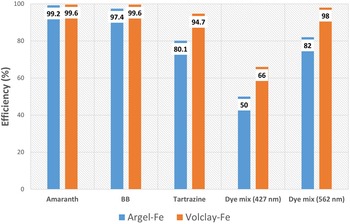
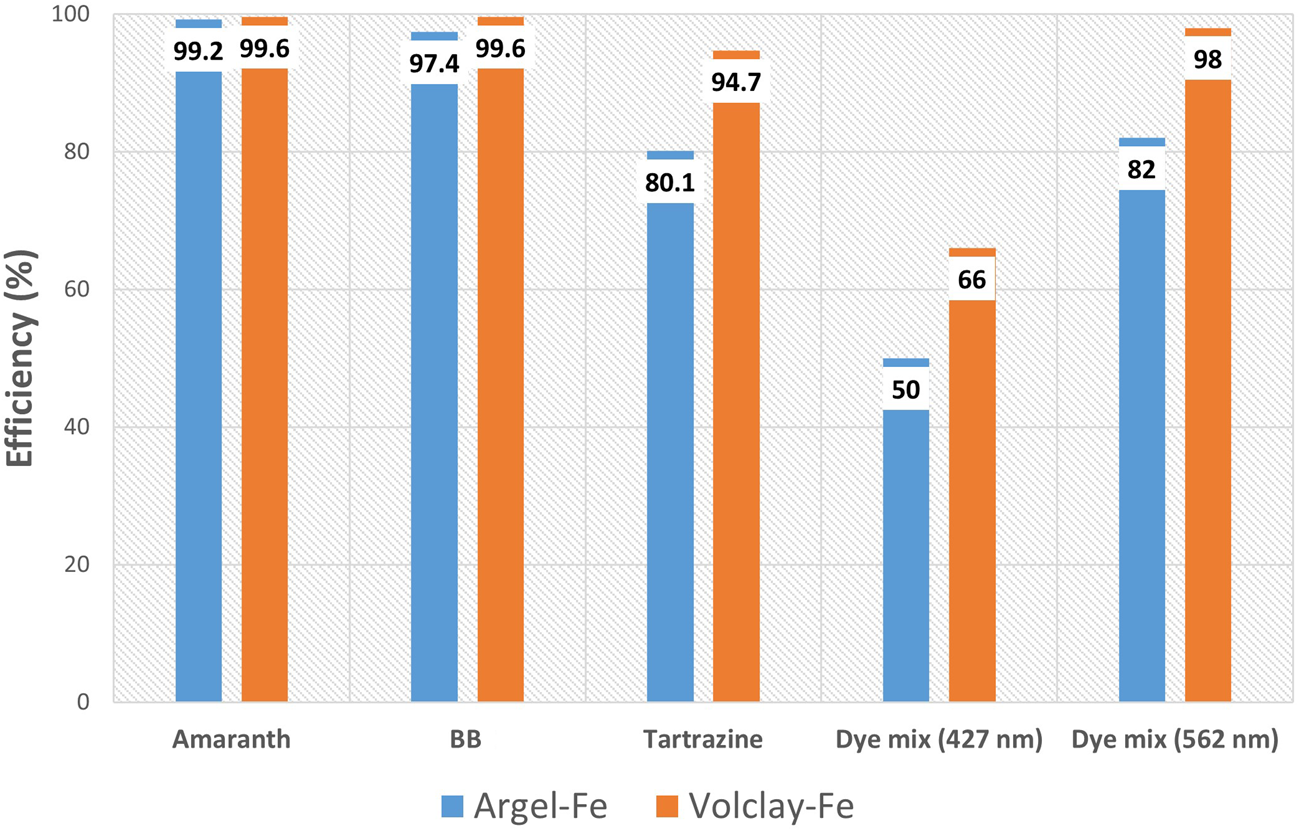
The increased capacity of the modified smectites for sorption of the anionic dyes in the mixture (Fe-Sm/dyes) may be related to the presence of adsorbed iron, which causes a change in the aggregation properties of the layers of smectites to form a solid with greater porosity and surface area (Borgnino et al., Reference Borgnino, Avena and De Pauli2009). The decolourization efficiency of the synthetic effluent was demonstrated through the decreasing intensity of the absorption bands at 427 and 562 nm, as shown by Rodrigues et al. (Reference Rodrigues, Villalba, Santos, Melquiades and Anaissi2020). Under the experimental conditions used, the decreases in the absorption band at 427 nm due to dye sorption by the Argel-Fe and Volclay-Fe smectites were 50% and 66%, respectively, whereas the intensities of the absorption band at 562 nm were reduced by 82% and 98% in the presence of Argel-Fe and Volclay-Fe, respectively.
The percentage removal of the individual dyes and the dye mixture (Fig. 3) by Argel-Fe (Argel-Fe/dyes) and Volclay-Fe (Volclay-Fe/dyes) was calculated from the decrease in the greater-intensity absorption band of each sorbate. A comparison of the rate of decolourization of the solutions indicated that Volclay-Fe had a greater affinity for the sorbates.
Graph of the efficiencies of discolouration of solutions after sorption by Fe-Sm.
Kinetics of dye sorption
For the kinetic sorption studies, the pseudo-first order model (Equation 8) and pseudo-second order model (Equation 9) were applied:


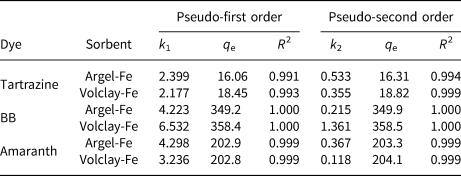
where t is time in minutes. In the kinetic analysis of Tartrazine sorption, an initial dye concentration of 265.96 mg L–1 was used. The contact time required to reach equilibrium was ~5 min for the two sorbents (Fig. S4), with removal efficiencies of 80.06% and 94.66% when Argel-Fe and Volclay-Fe were used, respectively. Table 2 shows the results obtained using the pseudo-first order and pseudo-second order models. The values of R 2 > 0.99 indicate that both models well-represent the experimental data for the two sorbents. The fit of the pseudo-first order and pseudo-second order models (Table 2) was also confirmed by the similarity of the q e values (Equation 5) determined from the kinetic models.
Kinetic parameters of dye sorption on Fe-Sm.
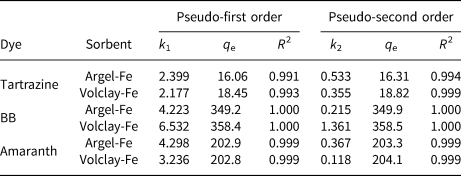
As an advantage, the equilibrium time for the sorption of Tartrazine dye on the Fe(III)-modified smectites was much shorter than those of other sorbents. Albroomi et al. (Reference Albroomi, Elsayed, Baraka and Abdelmaged2017) achieved an equilibrium time of 120 min for the sorption of Tartrazine on activated carbon, whereas Banerjee & Chattopadhyaya (Reference Banerjee and Chattopadhyaya2017) reported an equilibrium time of 70 min for the sorption of Tartrazine on sawdust. When bentonite modified with octadecyl trimethyl ammonium surfactant was used, the time to reach equilibrium was 180 min (Sahnoun et al., Reference Sahnoun, Boutahala, Tiar and Kahoul2018). The pseudo-second order kinetic model best describes the process of sorption of Tartrazine on sawdust (Banerjee & Chattopadhyaya, Reference Banerjee and Chattopadhyaya2017), on organo-bentonite (Sahnoun et al., Reference Sahnoun, Boutahala, Tiar and Kahoul2018) and on a chitosan–polyaniline composite (Sahnoun & Boutahala, Reference Sahnoun and Boutahala2018).
For the kinetic analysis of the sorption of BB dye, the initial dye concentration was 4580.15 mg L–1. The kinetic curves for both sorbents (Fig. S5) indicated that sorption was rapid and equilibrium was achieved in ~1 min in the two systems studied under the experimental conditions used. Table 2 lists the kinetic parameters for the sorption of BB dye on Fe-Sm. Based on the R 2 values, both the pseudo-first order and pseudo-second order models fit well with the experimental data. The BB dye solution decolourization efficiencies were ~97.40% for Argel-Fe and 99.57% for Volclay-Fe.
The sorption of BB dye on Fe(III)-modified bentonite was studied by Hernández et al. (Reference Hernández-Hernández, Solache-Ríos and Díaz-Nava2013), in which the pseudo-second order kinetic model best fit the experimental data. After conducting experiments at various temperatures, the researchers concluded that temperature did not influence the sorption capacity of the modified bentonite. The equilibration time and sorption capacity of unmodified bentonite were 48 h and 6.16 mg g–1, respectively, whereas for iron-modified bentonite the corresponding values were 24 h and 14.22 mg g–1, respectively. The pseudo-second order kinetic model also showed the best fit for the sorption of BB dye on activated carbon (Lee, Reference Lee2015).
The kinetics of Amaranth sorption were determined using solutions with an initial concentration of 2723.7 mg L–1. The amount absorbed as a function of time (Fig. S6) indicates that sorption of the red Amaranth dye is a rapid process and reaches equilibrium after 1 min of contact for Argel-Fe and after ~3 min of contact for Volclay-Fe. The removal efficiencies of Argel-Fe and Volclay-Fe were 99.15% and 99.60%, respectively. The pseudo-first order and pseudo-second order models fit well with the experimental data with the R 2 values >0.99 (Table 2).
Nanganoa et al. (Reference Nanganoa, Ketcha and Ndi2014) studied the sorption of Amaranth dye on smectite, reporting that the pseudo-second order kinetic model provided the fit to the experimental data, suggesting that sorption was controlled by chemisorption. The pseudo-second order model was also used to model the sorption kinetics of Amaranth dye on biosorbents such as pineapple peel and coconut shells (Ndifor-Angwafor et al., Reference Ndifor-Angwafor, Tiotsop, Tchuifon, Sadeu, Bopda, Anagho and Kamdem2017) and magnetic Fe3O4/MgO nanoparticles (Salem et al., Reference Salem, Ahmed and El-Shahat2016). A different result was found by Gong et al. (Reference Gong, Ding, Li, Yang, Liu and Sun2005), who showed that the process of biosorption of Amaranth dye on peanut shells fit the pseudo-first order kinetic model best.
The sorption equilibrium for the dye mixture was reached in ~5 min for both systems. The rapid discolouration and kinetic equilibrium achieved over such a short period of time may be related to the rapid distribution of dye molecules on the outer surface of the sorbents, which is attributed to the large surface area of the Fe(III)-modified smectites (Borgnino et al., Reference Borgnino, Avena and De Pauli2009), in addition to the low level of competition between molecules (Sahnoun et al., Reference Sahnoun, Boutahala, Tiar and Kahoul2018). According to Noroozi & Sorial (Reference Noroozi and Sorial2013), competitive interactions do not play a significant role in the sorption process at low concentrations.
Colorimetric measurements
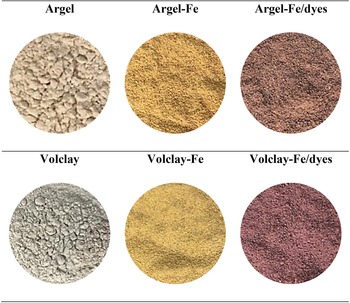
Comparative colorimetric measurements were made for natural smectites enriched with Fe(III) and after the sorption of the mixture of dyes on the surface of the particles (Fig. 4).
Digital images of the samples in the form of powders: (from left to right) natural smectites, enriched smectites and Fe-Sm after sorption of the dye mixture.

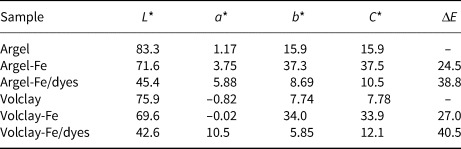
As indicated by the colorimetric parameters in Table 3, modification of the smectites and sorption of the dye mixture caused a decrease in the luminosity (L*) of the samples, making them darker. The C* values indicate that the Fe-Sm present more intense colours. Evaluation of the colour difference (ΔE) showed great variation between the colouration of the natural smectites and the smectites after modification and dye sorption, which was perceptible to the human eye. Modification of the smectites and the sorption of dyes generally increased the tendency of the samples to become red (a*). This modification also increased the yellowness (b*) of the samples, whereas sorption of the dyes decreased the yellowness.
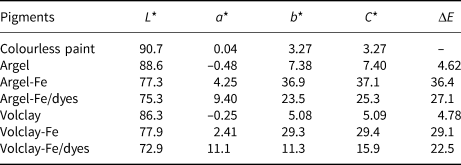
Colorimetric parameters of the CIE L*a*b* colour space for samples of unmodified smectite, modified smectites and Fe-Sm after sorption of the dye mixture.
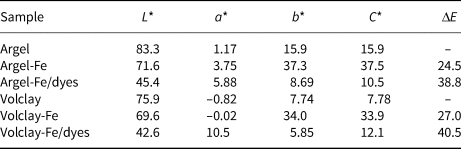
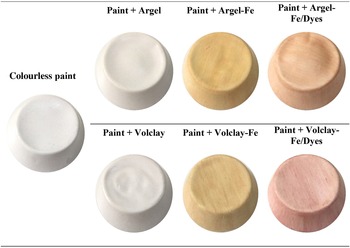
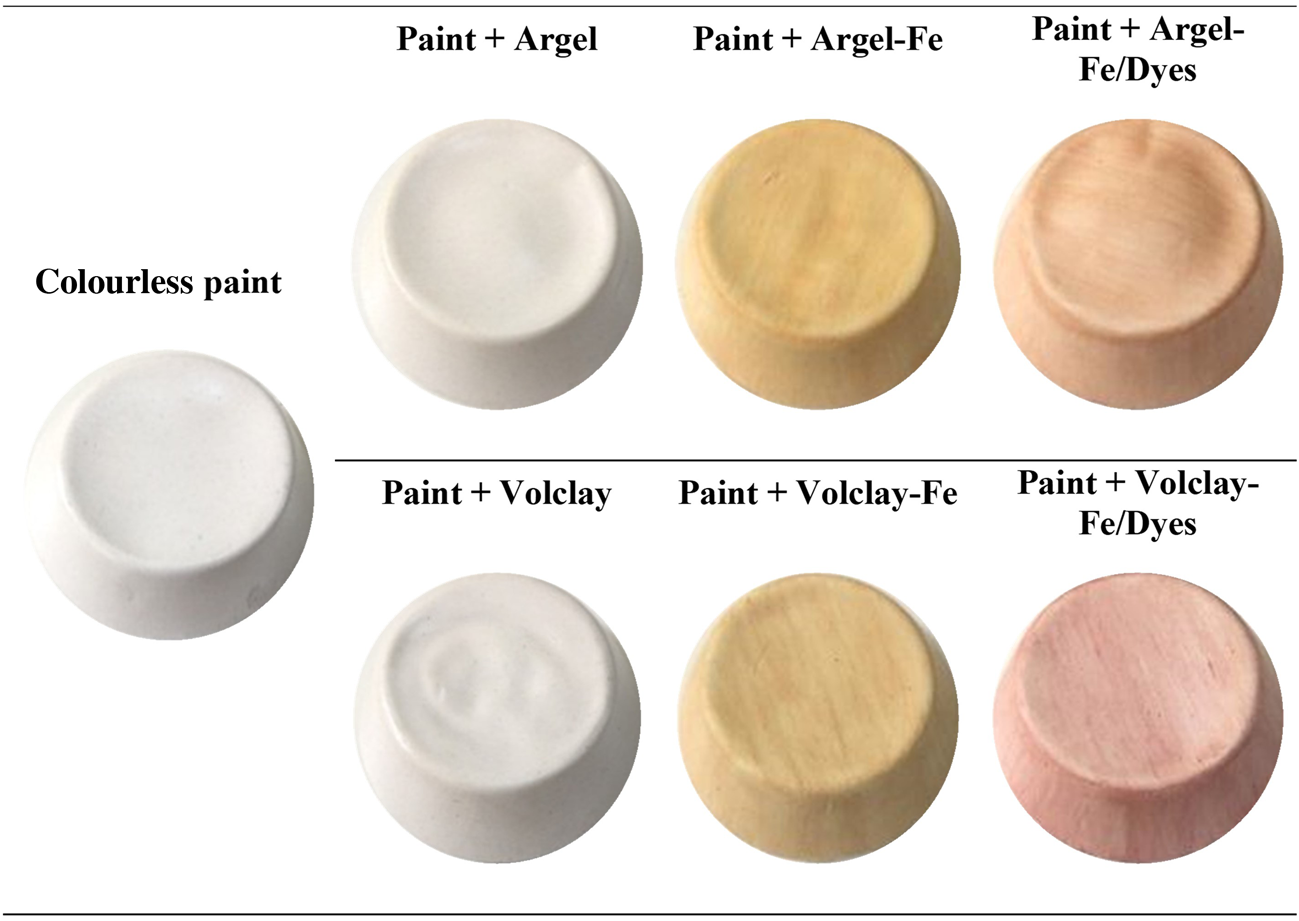
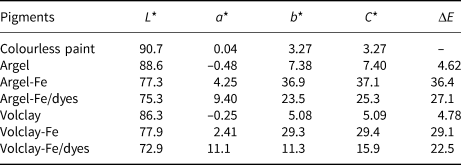
Figure 5 shows images of plaster moulds painted with colourless paint and the corresponding paint pigmented with natural smectites, Fe-Sm and Fe-Sm/dyes. Three coats were used for each sample. The colorimetric parameters for the painted plaster moulds (Table 4) show that the plaster painted with the colourless paint had high luminosity (L* = 90.7), which decreased due to the dispersion of the samples as pigments (smectites, Fe-Sm and Fe-Sm/dyes). The plaster moulds painted using the paints containing natural smectites showed a tendency towards green colouration (a* < 0). A greater tendency towards yellowness (b* > 0) was observed for the samples painted with Fe-Sm-containing paints. The paints pigmented with the Fe-Sm also showed greater colour saturation and less total colour differences than the colourless paint.
Digital images of plaster blocks after three coats with colourless paint and pigmented paint with unmodified smectite, modified smectites and Fe-Sm after sorption of the dye mixture.
Colorimetric parameters of the CIE L*a*b* colour space for plaster moulds after three coats with colourless paint and pigmented paint.
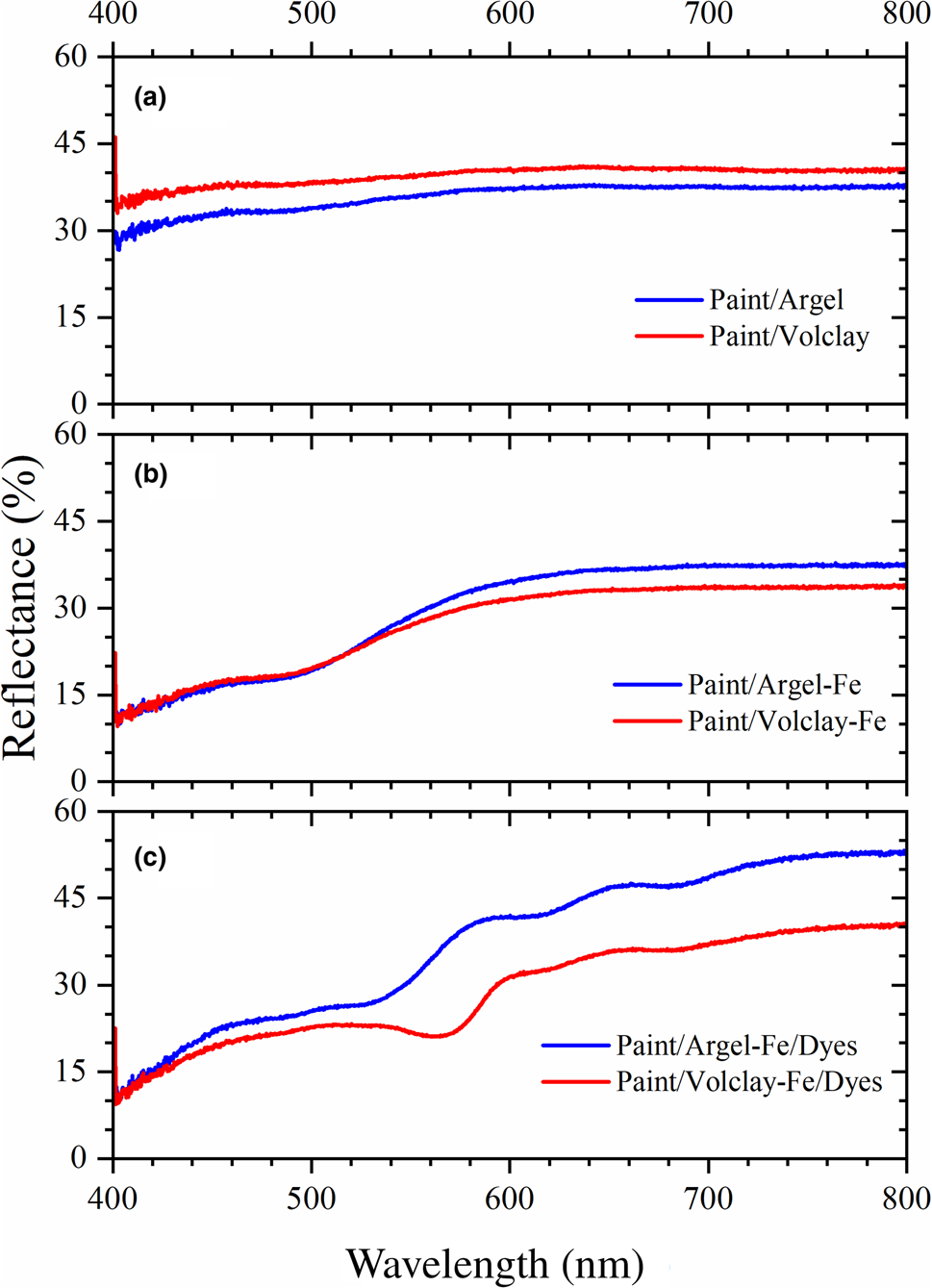
The reflectance spectra of the plaster moulds treated with paints pigmented using natural smectites (Fig. 6a) showed no specific bands in the visible region due to the white colour and high luminosity obtained after painting, thereby reflecting all of the colours of the spectrum (Dalpasquale et al., Reference Dalpasquale, Budziak-Parabocz and Anaissi2018). The plaster moulds treated with paints pigmented using the enriched smectites (Fig. 6b) showed increased reflectance in the green region, where the maximum percentage was reached at wavelengths >620 nm, corresponding to the red region. The reflectance spectra of the plaster moulds treated with paints pigmented using the Fe-Sm/dyes (Fig. 6c) showed an increase in the percentage of reflectance in the yellow region (between 577 and 597 nm) for the pigmented Argel-Fe/dyes, whereas there was a decrease in the percentage of reflectance in the same region for the pigmented Volclay-Fe/dyes due to the reduced ability of Volclay-Fe to remove the yellow dye from the dye mixture. In the region of the spectrum corresponding to red, both samples exhibited high percentages of reflectance.
Reflectance spectra for plaster blocks after three coats with colourless paint pigmented with (a) unmodified smectite, (b) modified smectites or and (c) Fe-Sm after sorption of the dye mixture.
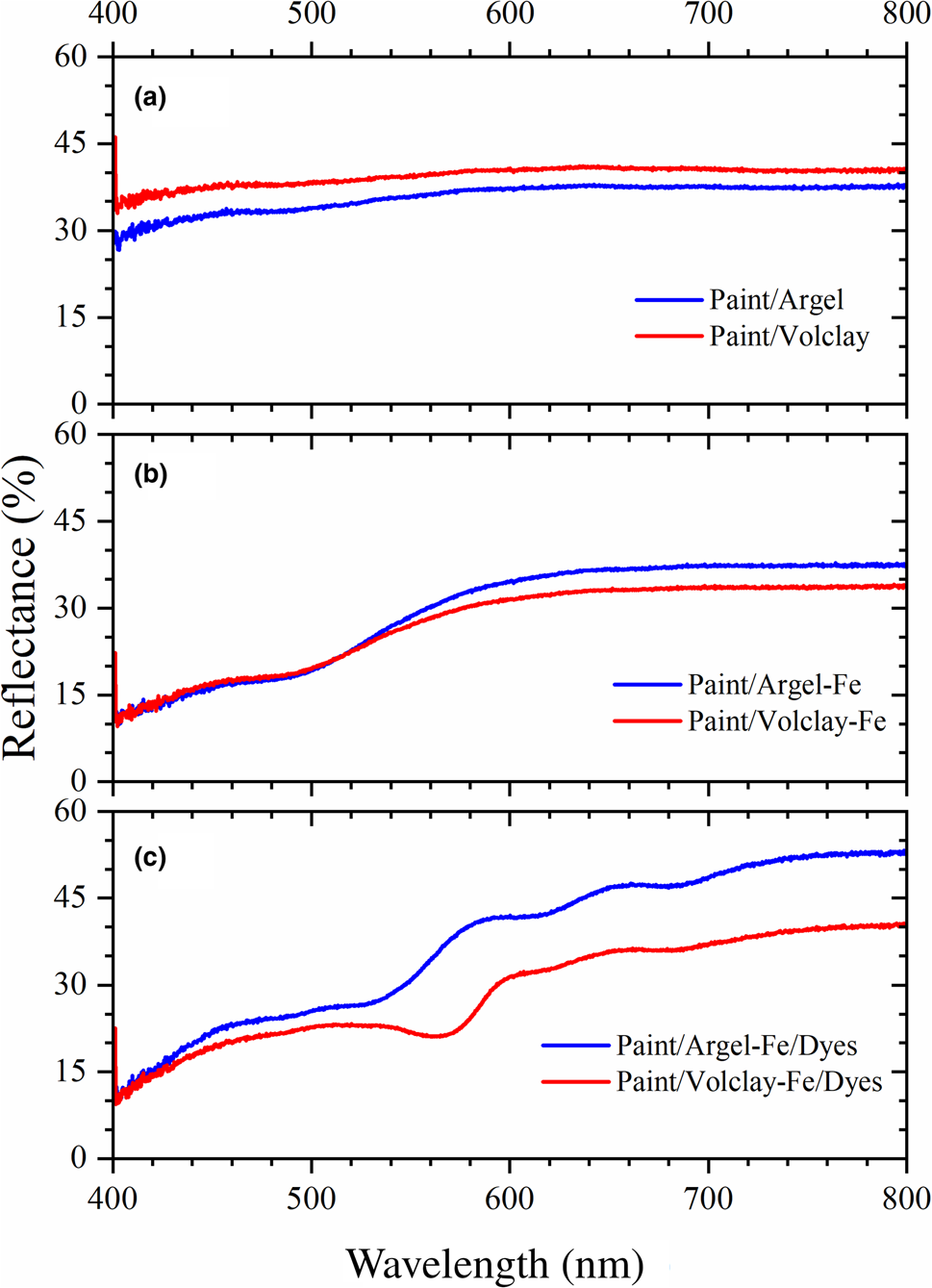
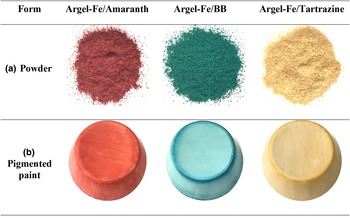
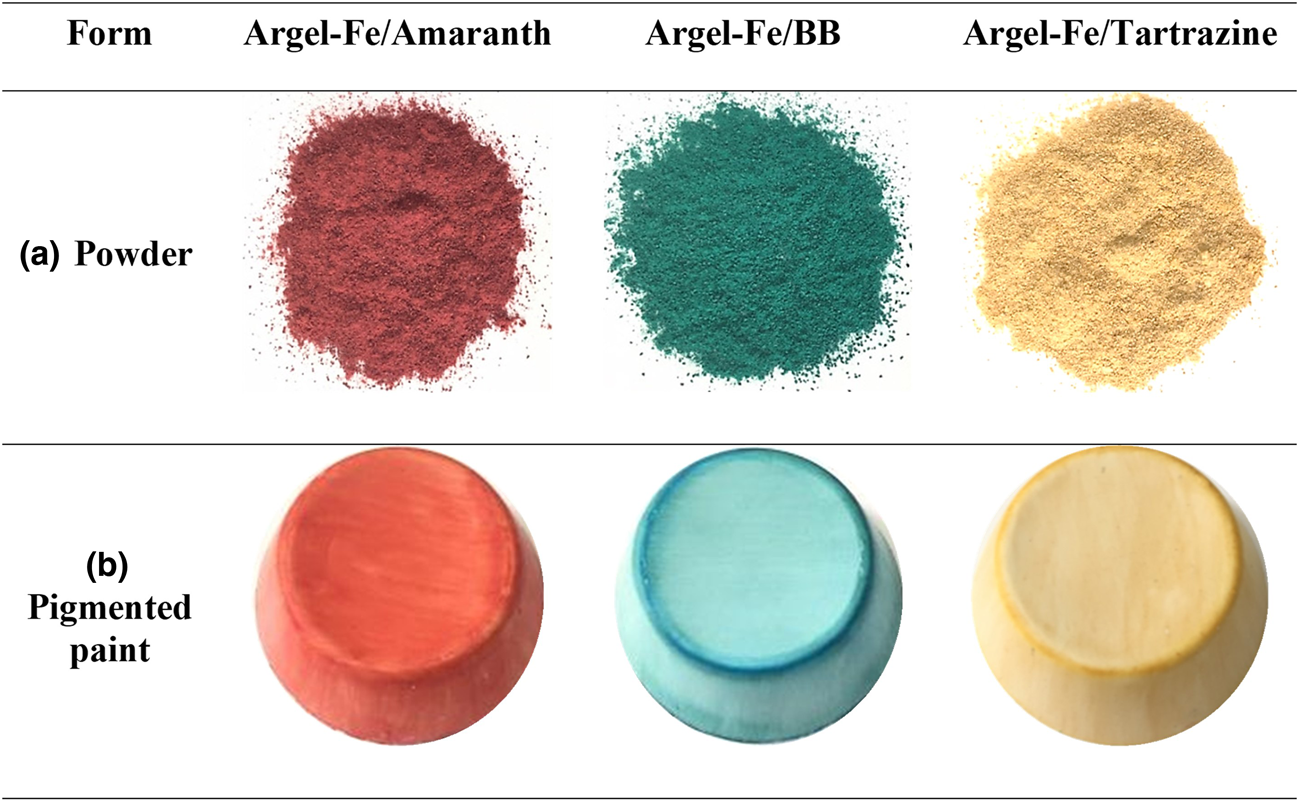
Figure 7a shows the hybrid pigments obtained after sorption of the simple dyes on the Argel-Fe matrix, and Fig. 7b shows plaster moulds treated with paints containing these pigments. The colours of the solutions of each dye differed from those of the pigments obtained after sorption on the Fe-Sm. This colour difference can be attributed to the influence of the sorbent colour and the occurrence of sorption and ionic or covalent coordinating interactions.
Digital images of the hybrid pigments prepared via the sorption of the dyes Amaranth, BB and Tartrazine on (a) Argel-Fe in powder form and (b) dispersed in colourless paint.
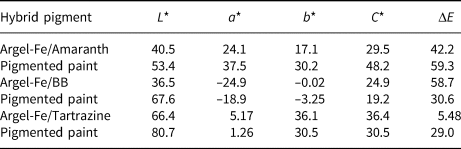
In terms of the colorimetric parameters (Table 5), coordinate a* (–24.9) has a strong influence on the colour characteristics of the Argel-Fe/BB pigment, explaining its blue-green colouration located in the third colour quadrant of the CIE L*a*b* system. The luminosity of Argel-Fe/BB (L* = 36.5) was the darkest amongst the pigments. The Argel-Fe/Amaranth pigment showed the greatest tendency towards red colour, which is defined by the high value of the coordinate a* (24.1). The greatest tendency towards yellow (b*) colouring was exhibited by the pigment Argel-Fe/Tartrazine (36.1), which also had a greater level of saturation (36.4). The total colour difference was used as a reference for the Argel-Fe matrix. According to the ΔE data, the sorption of Tartrazine dye caused the least change in the colour of the matrix, whereas the sorption of BB dye caused a significant difference in the colour of the sorbent.
Colorimetric parameters of the CIE L*a*b* colour space for the hybrid pigments prepared from the Argel-Fe matrix and for the pigmented paints with the respective pigments.
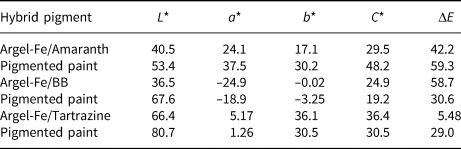
Table 5 also shows the colorimetric parameters obtained for the plasterboards treated with paints (uncoloured) that were pigmented with the hybrid pigments obtained from the sorption of individual dyes on the Argel-Fe matrix (Fig. 7b). The plasterboard treated with the paint/Argel-Fe/Tartrazine system presented the greatest luminosity (80.7) and the lowest total colour difference (29.0). The sample treated with the paint/Argel-Fe/Amaranth system showed greater saturation (48.2), as the saturation parameter is influenced by the coordinates a* and b*. With an increase in these two variables, there is an increase in saturation values. After painting with paint/Argel-Fe/BB, the tendency towards green colouration (a* = –18.9) was offset by the b* value (–3.25), and the colour displayed on the plasterboard was blue.
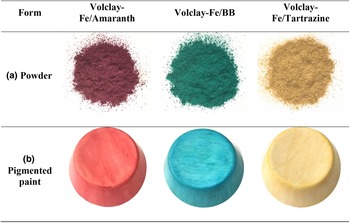
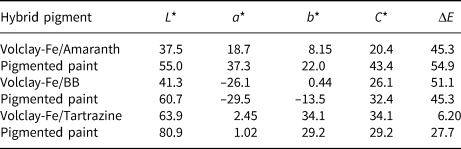
Figure 8 shows the pigments prepared by sorption of the dyes (Amaranth, BB and Tartrazine) on Volclay-Fe and used as pigments in uncoloured paints applied to the plaster moulds. The colorimetric coordinates for the pigments in powder form (Fig. 8a) obtained from the sorption of the individual dyes on Volclay-Fe are shown in Table 6. The Volclay-Fe/Tartrazine pigment had the greatest luminosity compared to the other pigments, whereas the Volclay-Fe/Amaranth pigment had the lowest C* saturation value and the greatest red value (a* = 18.7). The pigment obtained via the sorption of BB dye showed the greatest tendency towards green colouration (a* = –26.1), explaining the blue-green colour of this pigment. This pigment also showed the greatest colour difference (51.1) compared with the Volclay-Fe matrix.
Digital images of the hybrid pigments prepared via the sorption of the dyes Amaranth, BB and Tartrazine on (a) Volclay-Fe in powder form and (b) dispersed in colourless paint.

Colorimetric parameters of the CIE L*a*b* colour space for the hybrid pigments prepared from the Volclay-Fe matrix and of the pigmented paints with the respective pigments.
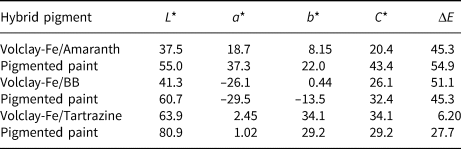
Images of the plaster moulds painted with uncoloured paints that were pigmented with the hybrid pigments obtained from the sorption of individual dyes on the Volclay-Fe matrix are shown in Fig. 8b. The colorimetric coordinates of the samples are listed in Table 6. The plaster mould treated with the paint pigmented using Volclay-Fe/Tartrazine had the greatest luminosity (L* = 80.9). The values of a* and b* for the paint/Volclay-Fe/BB system indicate that this paint had the greatest amount of green (–29.5) and blue (–13.5) pigmentation, respectively.
Conclusion
This study indicates that smectites modified with Fe(III) can be used as anionic dye sorbents, and the products obtained after the sorption process can be used as organic–inorganic hybrid pigments for uncoloured real-estate paints. The dyes have various colours that correspond to a wide spectral range. The hybrid pigments obtained in this study are compatible chemically with the medium used – in this case, colourless water-based paint. Hybrid pigments can be obtained through the combination of a smectite and a specific dye. Various colours that are not found in dyes or pigments (organic, inorganic or natural) can be achieved through this process.
Acknowledgements
IAR thanks the Instituto Federal Catarinense (IFC), Campus Fraiburgo.
Financial support
The authors thank the following funding agencies for their support: CNPq, Capes, Finep and Fundação Araucária.
Supplementary material
To view supplementary material for this article, please visit https://doi.org/10.1180/clm.2022.34.