How does legendary status evolve in the world of ballet? Are the most brilliant dance figures simply bound to be recognized by the public and discerning critics alike? Or does historical importance depend on specific strategies? Or on the serendipity of circumstance? Joan Acocella notes that genius owes much to “ego strength” as well as luck (Reference Acocella2007, xii). Perhaps the element of fame is always interlocked with market forces, even in the dance world, where artists are affected by what is written about them, whether it appears in influential places, and how much can be gained by selling an image. But how does history arrive at the consideration of a dance legend's substance and contributions? Being respected in the long run might inevitably depend on a combination of circumstances, including whether the popular imagination or the attention of academics can be captured. In the case of Russian ballerina Anna Pavlova, a legend has grown around a particular set of glorifying associations. My question here is whether or not these associations, while celebrating Pavlova as a dance “star,” have also limited consideration of her as a significant figure in dance history. Often categorized as “old-fashioned” and “conservative,” Pavlova was in fact an innovator, I suggest, in terms of the way she combined ballet and dance influences from around the world, as well as her role in revivals of neglected dance forms, and, lastly, in her rhetorical framing of ballet as a serious endeavor and an empowering pursuit for women.
Pavlova in The Dying Swan.
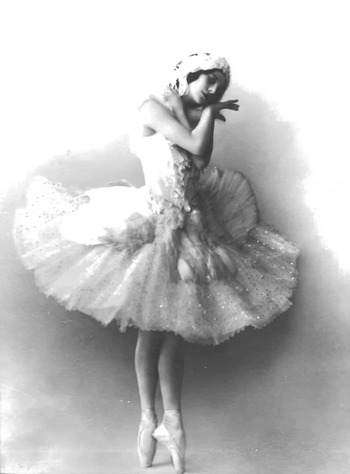
By the time of her death at age 49 in 1931, Pavlova had become one of the most recognizable people in the world, and for at least a few decades afterward, her name was virtually synonymous with the word “ballet.” She was a celebrity, known in the many countries where she toured as “the incomparable Pavlova” and “genius of the dance.” Yet, arguably, she is remembered today as more of an inspirational personality than a solid contributor to the art form. She is perhaps most associated with the brief but impactful solo called The Dying Swan, and also for her world travels as a “missionary of dance,” taking ballet to places where dance as a concert form was often unknown. Pavlova most certainly made a mark that still lingers, but I suggest that her status is diminished by its characterization in dance history. Pavlova, seen only in terms of her “star power,” appears to be a flame that glowed briefly and then burned out.
Is there any reason to remember Pavlova beyond her traveling-ballerina-swan image? Is it sufficient to emphasize her star status in dance history books? A typical text says that the name of Pavlova “is legendary as the greatest female dancer in ballet history” (Kraus, Hilsendager, and Dixon Reference Kraus, Hilsendager and Dixon1991, 147), though it is clear from the existing film footage and eye-witness accounts that her technique was surpassed even at the time, and there might be many competitors for this title since then. Another dance history text lauds her because “she made ballet an internationally popular art” (Au Reference Au1988, 117), although, interestingly, Joan Acocella has recently claimed that Ballets Russes impresario Sergey Diaghilev, working at the same time, was the one who “saved ballet from certain death” (Acocella Reference Acocella2010, 112). Sometimes, the fact that Pavlova inspired many young dancers and future choreographers becomes foremost in history text accounts (Au Reference Au1988, 117). Dance writers often characterize her success as one of overwhelming personal charisma, despite her technical limitations and questionable taste (Anderson Reference Anderson1986, 112–3). Critics who wrote lovingly about Pavlova's style and impact during her lifetime tended to see her as a decorative jewel in an imperial ballet crown, one talent among many distinguished dancers of the era. I argue here that Pavlova's history can be reframed to see beyond her relatively essentialized identity as a charismatic, peripatetic dancer, in order to recognize a figure of more dimensions and impact. I suggest that her identification as “the swan” helped her become famous and memorable, but it worked so well for historians that it became a kind of artistic “brand,” obscuring other aspects of her legacy.
“The life of a historical subject is not a curriculum vitae, but a series of paratactical moves with many beginnings, middles and ends,” Lena Hammergren points out (Reference Hammergren and Carter2004, 30). To rethink dance history, Hammergren suggests, “is not to judge ‘who is right’, but to learn to discern the emplotment strategies used by historians, and how it affects the dance history being told” (Reference Hammergren and Carter2004, 30). There are many ways, it follows, to decide on a “metaphorical mapping” of a powerful figure like Pavlova.Footnote 1 An essentializing “grand narrative” tends to persist in biographies of performers, with the future star often described as starting from nowhere, then experiencing a galvanizing moment when the journey toward fame begins, and eventually reaping the rewards of talent and hard work. Pavlova helped romanticize her own life in this way in a short memoir when she described her eight-year-old self as instantly seduced by ballet at a performance of Sleeping Beauty (Svetloff Reference Svetloff1974, 116). The rags-to-riches story continues with knowledge that she was the daughter of a laundress, chosen for elite dance training in St. Petersburg during a golden age of ballerinas at the end of the nineteenth century. Gaining world fame by eventually taking her classical training into the popular realm, she formed and traveled with her own company, which often appeared in music halls and on vaudeville programs as well as in concert halls. In many dance history writings, she is conceptualized as a conservative dancer and producer of popular ballet programs, especially in contrast with her contemporaries who joined Diaghilev's famously experimental Ballets Russes.
But what happens when consideration of Pavlova shifts, from judging her deficient in a particular kind of aesthetic invention, such as the modernist ballets of the Ballets Russes, to seeing her as a purveyor of embodied messages about agency, especially for the women and the non-Western performers she encouraged? Or seeing her as someone who presaged and made explicit ballet's debt to cultures that are so often folded into its European classical base? As a figure who from today's perspective might be called “feminist,” though Pavlova would not have articulated her personal philosophy in that way, she ran her own company and is still one of the few post-Romantic female ballet stars who attracted as much fame as male ballet superstars, such as Nijinsky, Nureyev, and Baryshnikov. Consider Pavlova's use of her fame to make arguments for dance as an art form to be taken seriously, and her assistance in inspiring the revivals of traditional dance in places such as India and Mexico. My reframing of Pavlova's contributions follows in the wake and spirit of recent studies that recast the legacies of Loïe Fuller (Albright Reference Albright2007), vaudeville's Whitman Sisters (George Reference George2000), and the Nazi-era legacies of Rudolf Laban and Mary Wigman (Karina and Kant Reference Karina and Kant2003). Without seriously reframing past historical narratives, the tendency to create and venerate artistic “brands” would continue to operate unexamined, keeping our understanding of important figures of dance history narrowly defined.
Branding and the Artistic “Product”
By associating an iconic dance figure with her most recognizable traits, which are often essentialized and inscribed in dance historical narratives, I am suggesting that these associations gain a kind of power similar to that of a “brand,” as it has been defined by the advertising industry. To develop and sell a product, it helps to have a clear image burned into the consumer's mind. In the process, a commodity is often reduced to one essential aspect; thus branding can be related to stereotyping. From the general definition of a brand as a product, person, service, or institution that is distinguished by having a recognizable identity, “branding” has come to describe the process by which advertising strategies lead to consumers' choices of one product over another. In the advertising world, products, people, and institutions are branded; there are brand communities, brand loyalties, and brand enhancement, as well as a growing industry of books and seminars that teach how to market anything by associating it with the right image, over and over again. In the world of branding, it is all about telling the right story about your product, one that will “touch a nerve” and appeal to a coveted self-image, a person's ambitions, and, especially, to emotions (O'Shaughnessy and O'Shoughnessy Reference O'Shaughnessy and O'Shaughnessy2003; Twitchell Reference Twitchell2004). Not surprisingly, branding is thought to emerge most fiercely when there is a surplus of something, and consumers have to make a choice. In other words, as one advertising formula states, “Plenitude plus consumerism equals branding” (Twitchell Reference Twitchell2004, 3). A popular text in university marketing courses states that, “Branding creates mental structures and helps consumers organize their knowledge about products and services in a way that clarifies their decision making …” (Keller Reference Keller2008, 10). Today, in a hypercompetitive marketplace, even churches, universities, museums, and ballet companies create and promote brands.
In the ballet world of the early twentieth century, when World War I and the Russian Revolution cut off Russian dancers from their homes, they began to tour in groups, competing for venues and ticket buyers. It became advantageous to have a recognizable identity that would help ticket buyers to distinguish between troupes, hence “The Original Ballet Russe,” a name for one of the companies that started to compete after the death of Diaghilev. Attracting audiences was actually a concern for Pavlova almost as soon as she left the security of her Imperial Theater career in 1910 and took on the challenge of running her own company until her death in 1931. Seen in retrospect, it was fortuitous that her identity became so inextricably linked to that of a swan, the graceful creature already identified with ballerinas in white tutus. The Dying Swan was not a solo from the evening-length nineteenth-century ballet Swan Lake, as so many viewers might have thought (and still think today), but a four-and-a-half-minute dance made for Pavlova by her colleague Michel Fokine to perform at a charity benefit in 1907.Footnote 2 Fokine later said he was inspired when he saw Pavlova calling to swans by a lake when they were driving in the Russian countryside, and that he had been practicing on his mandolin “The Swan” section from Carnival of the Animals by Saint-Saens (Fokine Reference Fokine, Fokine and Chujoy1961, 222). Other women have performed this solo, even before Pavlova's death, but almost from the start, it was inextricably linked with Pavlova. Any ballerina might be a swan at some time, but Pavlova became the swan.
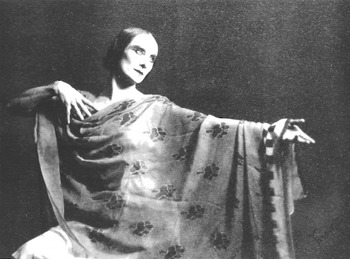
Pavlova with a favorite scarf, 1928. Photo by Nicolas Yarovoff, courtesy of Museum of London.
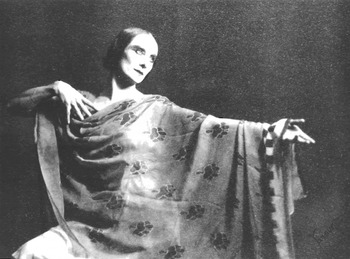
Whether she was calculating or lucky, Pavlova successfully learned to market herself in order to thrive outside the rarefied artistic world of St. Petersburg. Back at the Maryinsky, all you needed to draw a crowd was a discreetly printed announcement and word of mouth. Postcard images of favorite dancers circulated at the time and might be seen as advertising, but it was all very dignified, at least on the surface. Other ways of becoming known were perhaps at least as suspect as those in the new advertising age, in that ballerinas routinely had rich patrons who helped them swim in the political waters of the Imperial Theater. Balletomanes could also wield powerful influence behind the scenes (Wiley Reference Wiley1985, 10–17). But Pavlova was unused to the kind of garish hawking she encountered in London during her early visits there, reportedly bursting into tears when she saw her name printed in huge letters on a bus (Dandré Reference Dandré1979, 279). Nevertheless, she presumably got used to the vulgar ways of advertising, eventually appearing in print ads extolling the virtues of cold cream or mouthwash, and saying how happy she was that a brand of silk stockings was named after her (Money Reference Money1982, 328).
Pavlova's tours in America, from 1910 to 1925, occurred during a time when the modern advertising industry was just getting off the ground, developing as either a social science or a pseudo-science, depending on your point of view. Influential in the process was Edward L. Bernays, an advertising pioneer and early “spin doctor” (someone who can control the interpretation of public discourse) who learned how to market ballet when he took on publicity for an American tour of Diaghilev's Ballets Russes in 1915. Since Bernays was as ignorant of the ballet world as much of America was at the time, he quickly educated himself in order to find ways to sell classical dance. He had many conversations with people around him to determine their opinions and objections to ballet, a tactic now seen as a forerunner of the “focus group” used by advertisers to discover effective selling strategies (Tye Reference Tye1998, 11). Credited with being “the father of public relations,” Bernays was a nephew of Sigmund Freud, whose ideas about the human psyche reportedly helped in the design of publicity campaigns that appealed to people in specific ways (Tye Reference Tye1998, 9). Accordingly, Bernays suggested stories about colorful Ballets Russes costumes to newspaper “women's pages,” convincing manufacturers to make jewelry, handbags, and table linens that echoed set and costume designs. He even had Ballets Russes photographs doctored to bring short ballet costume hems down to a “respectable” length for conservative readers of the Ladies' Home Journal (Tye Reference Tye1998, 12). Bernays also created an information guide for “advance men” to use on the road, with facts and suggestions for catchy headlines, such as “Are American Men Ashamed of Being Graceful?” (Tye Reference Tye1998, 12). To feed the American thirst for colorful celebrities, Bernays focused on star dancers, a project only slightly hampered by the fact that Karsavina and Nijinsky were not immediately available on the company's 1916 American tour.Footnote 3 Undeterred, he created an instant “exotic Russian” star (which became a brand in itself) by having the unknown Flore Revalles photographed in her Schéhérazade costume with a snake from the Bronx zoo around her neck (Garafola Reference Garafola1989, 204).
While Bernays was seminal in developing branding tactics when it came to selling ballet to Americans in 1916, and conceivably influenced Pavlova in subsequent tours, she had already started her own campaign to attract ticket buyers' attention by building the ballet brand in a different way, emphasizing the seriousness of her art form. She seemed to learn the value of lending her name to print advertising and could not prevent her manager from circulating a rumor that she traveled with ten thousand pairs of ballet shoes; however, according to her husband and manager Victor Dandré, she refused to participate in the more extreme publicity stunts, like a faked robbery of her jewels. The difference between Pavlova's tactics and those of more “vulgar” stars, Dandré proposes, is that the methods Pavlova agreed to were tasteful (1979, 279–82). Certainly they were different; her contribution to the public discourse about ballet lies more in her rhetorical stance, apparent in the scores of newspaper and magazine interviews for which she made time. If Bernays can be flagged for his contribution to developing the focus group, few have recognized the way Pavlova sold tickets, by virtually campaigning for understanding dance as a serious art form. She emphasized the years of necessary training, detailing her daily schedule of class, rehearsals, travel, and performances. “The greater the artist, the more he must study,” she told a New York Times reporter in 1910, emphasizing the fact that she was “working now harder than ever before,” and “studying every day” (qtd. in Money Reference Money1982, 400). In her few spare moments, she avowed, she would read poetry, “enjoy animals,” or worship nature, activities that would enhance her onstage presence as the ethereal swan, and her offstage persona as a dedicated, focused artist (Money Reference Money1982, 400–1).
As a career woman, Pavlova provided a model for her female admirers, especially those who may not have fit into conventional expectations. In interview after interview, she explained that her career demanded single-minded devotion, that the life of a dancer was work, work, work, and that there was no time for anything frivolous—or even “normal.” Family and children, she said more than once, would take up too much time, and artists who are really devoted to their art should not think of having them (Money Reference Money1982, 401, 408). In the America of the early twentieth century, of course, she may well have felt she had to promote ballet as something that occurred outside of music halls with their skirt dancers of questionable reputations. She bolstered the image of ballet by saying how respected it was in Russia, where dancing schools were supported by the tsar and the government. Given her imperial education during an age when women often gained importance through more powerful men, Pavlova might reasonably have felt the need to ward off any suggestion (or actual rumor) that might have followed her from the St. Petersburg ballet world of ballerinas who became mistresses of the Romanoffs. She was, in fact, herself the mistress of a well-off ballet patron, whom she eventually called her husband, though there was never a marriage certificate produced. But Victor Dandré is on the record more as her manager than as a family member, someone who “watched over her like a guardian and waited upon her like a servant” (Oliveroff Reference Oliveroff1932, 37). Although he started out as a mining engineer with enough money to be a kind of protector, their roles were reversed eventually, when Pavlova's earning power increased outside Russia. She eventually stood behind him during a financial scandal back in Russia and provided him with a career as her manager (Money Reference Money1982, 140, 154).
Pavlova inevitably fought for respectability, for although dancers were prized in elite circles of Russian society, they were never full-fledged members of it. Surveying the reputation of Imperial Theater actors in the nineteenth century, Murray Frame notes that the tsar's patronage lent some prestige to the theater itself, but not to the performers (2006, 68). At least dancers were not accused of operating on “intuition” alone, as actors were, because ballet training was more extensive than that required of actors at the time (Frame Reference Frame2006, 163–65), but making a living onstage certainly did not guarantee social success. On her world tours, Pavlova would have encountered similarly suspect attitudes about the skill and reputation of performers, which undoubtedly accounts for her constant detailing of the seriousness of her profession. Because of her successful swan brand, much of her rhetoric about the merit of her art surely had a significant impact on dancers' reputations. For women in particular, she could be seen as providing a model of the respected female performing artist who had some power behind the scenes as well. If she was praised as a silent, delicate bird onstage, she found her voice in countless interviews offstage, leaving no doubt that she determined her own course.
Elements of the Swan Brand
Was Pavlova calculating in inventing and marketing her image as the swan? It seems more likely that she came by her brand in a less deliberate way, becoming so strongly identified with The Dying Swan because it matched her lyrical style and dramatic temperament. Appearing as one of many divertissements that shared mixed programs with longer story ballets, the solo offered a common image associated with ballet (because of Swan Lake) and had a universal life-and-death theme easy to understand. A mournful cello establishes the mood, with the choreography consisting mostly of bourrées and pauses, interspersed with stretching or sinking into poses, as the wounded swan struggles and finally dies. Fokine claimed it as an early example of “the new form of Russian ballet,” departing from the Petipa era, in that the solo was symbolic and poetic, as opposed to relying on technical skill or “the legs alone” (1961, 222).Footnote 4 As The Dying Swan became more and more emblematic of Pavlova's “genius,” it provided the celebrity “draw” people had come to see, the dance people wanted to know if you had seen, a touchstone to weigh in on and perhaps impress those who had not had the privilege of seeing it. Even after Pavlova's fame had been established in a location, subsequent tours required her company to feature something “new and improved” (to borrow an advertising phrase). But a few familiar dances were always in demand; next to The Dying Swan, the sensual duet called Bacchanale was perhaps most popular. Eventually, her signature Swan almost always had to be programmed. From all reports, she varied its choreography and final pose, though films and many photographs give an idea of the basic structure and recurring elements (Money Reference Money1982, 338).
According to contemporary branding experts, a product needs to project an image that is instantly recognizable—one that telegraphs a desirability that extends beyond what is seen on the surface (O'Shaughnessy and O'Shaughnessy Reference O'Shaughnessy and O'Shaughnessy2003, 179). During Pavlova's time, the ballerina was already identified with images established in nineteenth-century romantic and classical ballet, so that a dancer in a white tulle skirt represented the gliding grace and feathery ethereality of ballet itself. With The Dying Swan, Pavlova built on that image not only in her performances, but in her many appearances in popular newspapers and magazines, gradually building her brand, whether it was conscious or occurred as she went about trying to educate or appeal to her audiences. Journalists, publicists, and memoirists took advantage of the familiar swan “hook” by suggesting in their stories that Pavlova offstage was also an exotic but familiar creature who skimmed the surface of life, looking serene and unapproachable, suffering and rarefied because she was alone. “Fare Thee Well For I Must Leave Thee,” says the caption of a 1914 London newspaper item announcing a world tour, with a photo of Pavlova staring mournfully at the camera in her penultimate Dying Swan pose (Money Reference Money1982, 184). The British publication The Sketch, on November 4, 1925, featured a photograph of Pavlova as the lone swan in a Selfridges' window during her London season. As Fokine suggested in his memoir, it's easy to imagine that the dance's popularity was due to Pavlova successfully embodying a simple, universal theme, “a symbol of the perpetual longing for life by all mortals” (Reference Fokine, Fokine and Chujoy1961, 222).
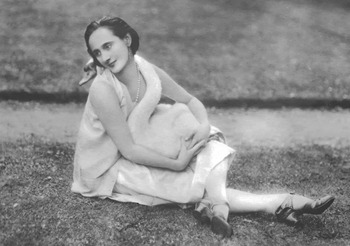
The fact that Pavlova kept swans at Ivy House, her north London home, surely enhanced her brand during her lifetime. In 1912, the press covered the momentous occasion of her first pair of swans escaping the pond in her garden and flying to Edgware before being returned and having their wings clipped (Money Reference Money1982, 170). For one American tour, a newspaper item featured her photograph in full swan costume leaning toward a swan at the edge of her pond. The topic was how Pavlova found inspiration in the “dancing of birds and butterflies” (New York Tribune, November 21, 1913). In street clothing, she was often photographed with her swans, sometimes embracing them. Newspaper writers could reasonably suggest a special communion existed between Pavlova and the aviary world, especially because real swans are not known for their polite demeanor out of the water. How else but with a swan-like spirit could she have convinced the fractious male swan called Jack to sit on her lap with his neck curving over her shoulder? A film fragment of Pavlova calling to her swans (none of which would come to her that day), did nothing to cancel out her reputation for embodying their imagined essence. The themes of striving and sacrifice, articulated so often in Pavlova's press interviews and photos taken around the world, strengthened the cluster of associations with the swan.
Pavlova with her cooperative pet swan Jack, taken at Ivy House in 1920. Lafayette Studio, London.
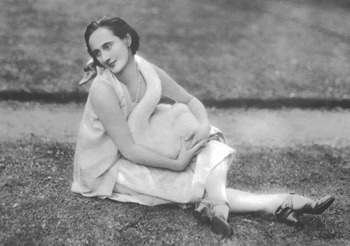
The metaphorical connections of Pavlova as the doomed swan proliferated perhaps most strongly after her death, when the label “immortal swan” became common. One New York publication obituary headline said: “Like her beloved swan, Pavlova trips from the stage of life into honored death” (New York Evening Journal, January 23, 1931). A Daily Mail writer reported that one of Pavlova's swans died “of grief” in the months after her death (May 20, 1931). The caretaker of Ivy House said that the swans had come whenever she called (despite filmed evidence to the contrary), and that “When she died it was as if they knew … wandering about the garden,” and refusing to eat (Ward Reference Ward1931). The author of an unsigned Daily Mail item a month later reported a sighting of “the solitary swan” on the Ivy House pond during a pre-auction viewing day (June 19, 1931).
Memoirs of those who danced with Pavlova also spoke of her as “the swan,” as when Andre Oliveroff titled his memoir Flight of the Swan, calling her a “rare, exotic bird,” which, the book jacket copy proclaimed, had “had its last flight.” Walford Hyden, her music director, wrote that when the swan had died onstage, “It seemed to us, each time, that it was Anna Pavlova who had died, had left us for ever, and disappeared” (Hyden 108). Publishing his memoir in the year of her death, Hyden wrote that she lived on, “a legend, a white and vaporous story all compact of wonders” (Hyden 109). Fokine, in his memoir, tells the story many have repeated about her last hours, quoting a letter from Dandré, who may well have romanticized the scene at her deathbed. After a brief bout of pneumonia in January of Reference Hyden1931, Pavlova had lapsed into a coma mere days before she was to start a tour in the Hague. When she rallied just before the end, reportedly, her thoughts were of her most famous performance: “Towards midnight she opened her eyes and lifted her hands feebly to make the sign of the cross. A few moments later … Pavlova whispered, ‘Prepare my Swan costume.’ These were her last words” (Fokine Reference Fokine, Fokine and Chujoy1961, 222–23).
Like Isadora Duncan's spectacular death by scarf strangulation in a sports car a few years earlier, and the descent of Vaslav Nijinsky into madness before his death many decades later, the way Pavlova died has served to emphasize particular elements of her character, thus strengthening an artistic brand for posterity. For Duncan, the theme was a reckless free spirit; for Nijinsky, the burden of erratic genius that breaks a gentle soul; for Pavlova, the story of her death reinforces the image of a graceful and steadfast artist devoted to her career and too fragile to live a normal life. With this most resonant stage-role/real-life association, the image of her as the dying swan is burned into the imagination.
The Missionary Brand
The idea of “the swan” flying all over the world to bring her art to people led to Pavlova's posthumous identification as a missionary for dance. Here, the connection between the swan and a religious-like fervor may have been heightened by a link in the popular imagination between Pavlova's swan and what Richard Dyer has called “the angelically glowing white woman” (Reference Dyer1997, 127). Tracing the symbolism associated with “whiteness,” Dyer shows how it has been linked to qualities such as purity, goodness, innocence, and unattainable ideals, among others (Reference Dyer1997, 127). In this way, Pavlova's missionary sub-brand dovetailed with the swan, providing a slight expansion of the exotic bird image to include tireless travel for the good of a certain vision of “civilization” (Dyer Reference Dyer1997, 78). But if Pavlova's swan was gentle and succumbed to death gracefully, Pavlova on tour was made of sterner stuff. Stories of her endless energy and undaunted spirit abound, in a day when travel by ship and train was often arduous. She performed in dire circumstances—places where cholera raged, where dressing rooms, orchestras, and floorboards were inadequate or non-existent, long before air-conditioning or binding artist contracts could help.
According to many reports, Pavlova always looked serenely fresh and never complained, with one exception: she often lost her temper when it came to issues she thought related to the quality of the company's performances—or her own reputation. Tales of her “artistic temperament” are rife, sometimes being explained in terms of her obsession with the quality of the work presented to the public (Money Reference Money1982, 232, 254–57). She often spoke about her mission, to bring happiness to the people of the world, a goal she traced to her first tour when crowds of mesmerized admirers followed her to her hotel. In her brief memoir called “Pages of My Life,” she credits a maid for pointing out her power to make audiences “forget for an hour the sadnesses of life” (Svetloff Reference Svetloff1974, 127). In this pursuit, she was demanding, tireless, dedicated, and driven, qualities easily associated with the zeal of a missionary.
It is the power of this part of her legacy that seems to have captured historians, adding to what advertising experts would say is the “condensed meaning and instant recognition” of a successful brand. “The Dying Swan,” it was recognized, “came to symbolize Pavlova's own mortality” (Anderson Reference Anderson1986, 113), while her traveling was often attributed to ego and even called “a compulsion … As if trying to satisfy some demand that gnawed at her psyche” (Anderson Reference Anderson1986, 112).
Reading the Swan
One day, while watching the Dying Swan film footage over and over in the New York Public Library Dance collection, I suddenly got a feeling of Pavlova's power in the role, not always easy to see in this age when dramatic styles tend to be more subtle and technique more exacting. Pavlova's reputation as a great dancer still circulates widely, but even the most respectful contemporary viewer of the sketchy footage might have to look hard for the reported charisma. The slower film speed of the time often makes her dancing appear jerky, while a few fragments in slow motion mercilessly show her less-than-complete turn out and some shaky landings. Her baldly dramatic appeal to the audience at one point in The Dying Swan, stretching out her arms with head tilted in agony, may seem mawkish in this age of more muted acting styles. But it was at this moment in the dance that I shifted into a mood that her gaze penetrated. It was as if my critical pendulum stopped swinging, and I surrendered to the idea that her dark eyes and the bold revelation of agony were a kind of embodied sorrow that transcended the style. As brief as the solo is, and as much as it has become a cliché today, I could suddenly understand how it embodied fears of life and death for her audiences. I could imagine how Pavlova's grace and power until the end might strike a universal chord, after which, the tension could be released in an orgy of applause celebrating the life of the performer. It might draw the reluctant ballet-goer to think about the body's fragility; it might sustain the dreams of a woman who could not vote and wanted to command respect; or it might introduce the concept of poetry to someone lost in the mundane procedures of survival.
By suggesting that meaning was drawn by audiences from various sources outside the theater as well as onstage, I operate in the realm of intertextual strategies, specifically adapted from “reader response criticism,” in which “text” and “reader”—or in this case “performance” and “viewer”—are seen in an active relationship of meaning-making.Footnote 5 Because ballet was a relatively or absolutely new art form for many of Pavlova's audiences, I suggest that the building of a recognizable brand such as the swan brand operated as a familiarizing device, providing for an “identifiable cluster of meaning” that emerged from “incrustations,” meaning all the things that became attached to her image and surely influenced the way she was received (Bennett Reference Bennett1982, 9–13). In other words, the individuals who bought tickets to see “the great Pavlova” could have reasonably been influenced in their “readings” by the photos and articles written about her, and by the rhetoric and reputation of exotic Russian dancers, and, in particular, the one who died a beautiful death as the swan.
The cluster of associations with Russian dancers, who were “all the rage” during Pavlova's time in a world capital like London, surfaces through satire in a play called The Truth About the Russian Dancers, by James M. Barrie (the author of Peter Pan). It had great success in 1920, and again in 1926, starring the imperial-age ballerina Tamara Karsavina, who had become a Ballets Russes favorite. The way the Russian ballerina as a type is satirized reveals contemporary assumptions and reactions to the rampant popularity of Russian dancers during Pavlova's time. In the play, the ballerina Karissima does not speak but dances her dialogue, according to one character, because “none of the Russian ballet can speak—with their mouths I mean … they find it so much jollier to talk with their toes” (Barrie Reference Barrie1962, 14). Criticized by reviewers for veering from whimsy to tragedy, the short play was also called “amusing and delightful,” especially at the moment when Karissima is “being taught to walk flat on her feet like ordinary mortals” (Barrie Reference Barrie1962, 39), emphasizing the idea that exotic ballerinas float, even offstage. The play's ending even presages the way Pavlova's death enhanced her legend, when Karissima dies but then rises from her bier. One character proclaims it impossible, because, “The dead do not dance,” while another says, “Dead Russian dancers do” (Barrie Reference Barrie1962, 30).
To some degree, historians may essentialize the identity of a leading dancer in their accounts, allowing certain standard formulas to apply. However, as Marion Kant has said, history is not, after all, literally the past, it is “thinking about the past” (Kant Reference Kant2004, 115). In discussing the influence of memoirs, Hammergren points out that the stories of dancers' lives often “unfold as if individuals had unified identities,” and suggests a way that a set of “narrative codes” can be “worked on” when other “intertexts” or clues are considered (Reference Kant2004, 25). For Pavlova, the essentializing narrative of being a star/missionary tells an incomplete story, relying too heavily on her successful brand. The story can be fleshed out by a few reframing strategies.
Expanding the Brand
The swan branding worked for Pavlova, in that it separated her from the rest of the Russian dancers during her lifetime. For scholars afterward, it also worked against her in terms of assessments in that the swan could be deemed a decorative image, not an especially significant one. The missionary label, though ostensibly offered as a compliment, seems to describe someone more zealous than admirable, and only recently have scholars begun to look beyond it.Footnote 6 Pavlova did, in fact, take ballet to many places in the world, traveling over 400,000 miles (Money Reference Money1982, 7), notably to India, Japan, Egypt, South America, and South Africa. She also inspired future ballet dancers and choreographers (among them Frederick Ashton, Anton Dolin, Robert Helpmann, and Agnes de Mille). But if she was a missionary making converts, she was not out to save souls for her religion, necessarily, but often to encourage people to find their own. In each country she visited, she encouraged her hosts and whoever she met to discover their own rich dance traditions, notably in pre-independence India, where dance had fallen into disrepute.Footnote 7
Pavlova's influence in India—and that of India on her—has been noted in histories of the revived classical forms, bharata natyam and kathak in particular (see for instance, Coorlawala Reference Coorlawala1992; O'Shea Reference O'Shea2007). These and other regional dance forms suffered during the early twentieth century when traditional dancing was misunderstood, reviled, and banned by colonial powers and Indian social reformers. As reported by Dandré, Pavlova asked to see local dancers when she was on an Indian tour in 1922 and was presented with a disappointing, thrown-together performance in Calcutta. According to Dandré, it looked like “a parody of Oriental dance … with an obvious admixture of contemporary European influence,” without, he pronounced, “good taste” (1979, 287). At the time, many traditional dancers existed in various parts of India, but perhaps not surprisingly, they were not in touch with promoters who arranged the program for Pavlova. However, Dandré does note that they were told about “certain temples in some of the faraway places where bayaderes were still to be found” (Dandré Reference Dandré1979, 287). He also describes what is clearly a performance of ahbinaya, an expressive interpretation of poetic lyrics, which had “some interesting moments from an artistic point of view,” by a dancer who “was certainly an artist” (Dandré Reference Dandré1979, 287).
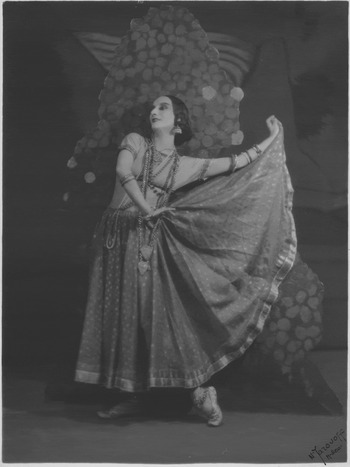
Pavlova was fascinated by her travels in India, afterward featuring in her repertoire new dances such as, Ajanta Frescoes (she was very impressed by her tour of the recently opened site) and Hindu Wedding. Eventually, an Indian-influenced section with choreography by Uday Shankar became part of the ballet Oriental Impressions. These were undoubtedly impressionistic, hybrid ballets, but seem to have had more faithful elements of the culture that influenced them than Orientalist Petipa ballets such as La Bayadère. Her travels, her input from the occasional native partner and dance master, as well as her natural curiosity and gathering of fabrics and artifacts may have brought her closer than previous choreographers to the dances she nonetheless studied as an outsider. She also had more impetus than Petipa to experiment with classical forms after she saw Isadora Duncan, and started searching, along with her close colleague Michel Fokine, for reforms that could make ballet more meaningful.
As Radha in Oriental Impressions, Pavlova wore a costume in fabric acquired on her Indian tour, inspired by Indian miniature paintings. Photo by Nicolas Yarovoff. Courtesy of National Library of Australia.
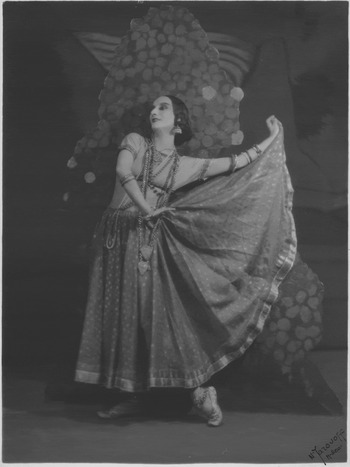
Pavlova was drawn to the explicitly spiritual aspects of dance in India, which dovetailed with the image she promoted so assiduously in her campaign to have her profession more seriously considered worldwide. She came by her talk of “the sacred” in relation to the theatrical through her imperial training, which yielded comparisons to religious fervor (Karsavina, 34, 40; Svetloff Reference Svetloff1974, 121). In her own short memoir, Pavlova referred to the moment she encountered ballet in religious terms, calling it “The First Call of the Vocation” (Svetloff Reference Svetloff1974, 116). Later, Balanchine kept these spiritual references alive when he told his dancers the theater was like church (Ashley Reference Ashley1984, 22). Ballet dancers shared this penchant for divine imagery with Pavlova's contemporary, American modern dance forerunner Ruth St. Denis, who also toured in India, featuring “aestheticized Indian dance” years before Pavlova did (Coorlawala Reference Coorlawala1992, 144). Both Western dancers made an impact on Indian dance revival and evolution with their tours in the 1920s, though Pavlova arguably did so more strongly by forming personal alliances with three major figures in the renaissance of Indian dance. Her influence and support came along at a crucial time, with Indian dance about to become intertwined with Indian independence at mid-century. Seminal in this process was Rukmini Devi, an upper-class woman who decided to become a ballet dancer after seeing Pavlova. After meeting Pavlova on a luxury liner going from Australia to London, Devi studied ballet for a while on the promise of joining the Pavlova company (early photographs show Devi in a tutu and combining ballet arabesques with Indian dance vocabulary). Perhaps because Devi was over 30 at the time, Pavlova encouraged her to explore her own country's dance forms. For Devi, a member of a high-caste that traditionally would never touch dancing as a profession, the respected figure of Pavlova clearly served as a model for success. Devi would become the founder of Kalakshetra, the prestigious bharata natyam conservatory in Chennai.
St. Denis was perhaps less desirable to connect to the newly technical bharata natyam Devi developed, because St. Denis also included elements of sensuality in her Indian-esque solos, and her “nautch” dance featured a somewhat crude characterization of a street dancer. Pavlova's Dying Swan with its “ethereal impact” was more suitable for “the spiritual image that Indian reconstructionists were claiming for their own art form” (Coolawarla Reference Coorlawala1992, 142–3). Helping to resolve the conflict between anti-dance social reformers and a venerable tradition of temple dance, Pavlova provided an inspirational image with her Dying Swan. As Janet O'Shea notes, Devi was first inspired by the noble image of Pavlova “in diaphanous white [traveling] across the stage, arms tracing soft and indirect shapes, legs taut and extended” (O'Shea Reference O'Shea2007, 97). This swan image, along with Pavlova's reframing of dance as an important art form, not just a diversion, led to the fact that “Pavlova left a lasting impact by suggesting a way for Devi to combine her devotion to dance, spirituality and nationalism” (O'Shea Reference O'Shea2007, 38).
The second figure influenced by Pavlova in India was Leela Sokhey, known as Menaka, a primary figure in a new era of kathak dance in the early twentieth century. According to eclectic Indian dancer Ram Gopal in an oral history interview, Menaka became close to Pavlova in London, and, like Devi, was told to go home and “search out forms of Indian dance” (Gopal Reference Gopal and Pinsker1976, 7). There were revered gurus of bharata natyam and kathak still teaching when Pavlova met eager upper-class women who wanted to dance, so why did the form need “reviving”? Gopal says that the “rediscovery” was necessary because dance professionals were “hidden away” during times of colonial anti-dance sentiments (Gopal Reference Gopal and Pinsker1976, 9–10). An Indian arts writer, recapping the legacy of “The Dying Swan that Conquered India” in 2008, noted that during Pavlova's time, “The intellectuals, emulating Europe, had forgotten about the wonderful traditional dances that originated in India some five thousand years ago, and they had sunk into oblivion” (Torchinsky Reference Torchinsky2008, 1). This writer quotes Gopal comparing Rukmini Devi to “the Divine Anna” after Devi's first performances in Madras: “I wondered why she wore white garments. And it instantly came to my mind that she did it in reverence for the white swan trembling in deathly agony, Anna Pavlova's Deathless Swan!” (Torchinsky Reference Torchinsky2008, 2).
Uday Shankar, a young art student when Pavlova met him in London, is the third prominent figure in twentieth-century Indian dance she influenced, this time by including him in her company as a choreographer and performer in dances such as Radha and Krishna. Again, she was credited with inspiring someone to search for traditional Indian dance, and Shankar took up the challenge. As Joan Erdman has noted, early incarnations of ballet that were combined with Indian influences should still be categorized as a hybrid dance from Europe, which Indians never confuse with their own dancing traditions. Yet, these experiments “were appreciated attempts” to incorporate Indian themes and stage effects (Erdman Reference Erdman and Morris1996, 289–90). The 1920s and 1930s, with contributions from figures like Pavlova, were a time “when internationalism propelled the popularity of the oriental dance back to India and engendered the invention of a modern tradition in Indian dance” (Erdman Reference Erdman and Morris1996, 300).
Pavlova, blazing her own trail for the seriousness of dance and proving successful in both “high” art and popular venues, provided an early “crossover” point for those outside the ballet world to start seeing themselves as part of an international arts scene. For her own art form, she continued the imperial tradition of folding popular and “outside” influences into classical ballet, which had always been inspired by many folk forms and by popular “boulevard theaters” that provided choreographers with ideas they folded into their repertoires. But by traveling and searching for what was “authentic” to the places she toured, Pavlova improved on older forms of ballet Orientalism, starting a trend toward including many more non-Western influences on ballet. Perhaps the height of this kind of intercultural influence was when Balanchine incorporated many aspects of Africanist aesthetics in his choreography, forging what we now call “American ballet” (Dixon Gottschild Reference Dixon Gottschild1996). Pavlova paved the way for a new age of intercultural influence in ballet by showing respect and being curious about dance in each country she visited. She traveled more widely than her peers had, and in each location she tried to include elements of the environment as she encountered them.
Occasionally, there would be time in a foreign city to study, such as the weeks the company spent in Japan in the fall of 1922. In his memoir, the British dancer who was called Algeranoff describes the way Pavlova was mesmerized by traditional No and Kabuki plays. She and four of her dancers embarked on the study of Japanese dance with Kabuki master teachers Kikugoro VI, Matsumoto Koshiro VII, and his wife Madame Fujima (Algeranoff Reference Algeranoff1957, 65–84). Later, aspects of what they learned (mostly selected dances from the kabuki classic Dojoji) appeared in a section of the company's Oriental Impressions. By that time, Algeranoff wrote, “For some reason, Pavlova had decided that Japanese dancing was not for her.” He expresses regret, having seen her give “a delightful performance” of kabuki dance for her teacher in Tokyo (107). Another of her company members guessed that her knees were too bruised by her studying the form (Oliveroff Reference Oliveroff1932, 192). But perhaps it was just that she understood what her strengths were; for Oriental Impressions, she designed a section to include herself as a pirouetting “Japanese butterfly” (Algeranoff, 107).
For her 1919 Mexican Dances, Pavlova also “balleticized” national dance steps, dancing around the rim of a sombrero on pointe, though she used traditional costume and set designs and music by Castro Padillo (Money Reference Money1982, 273–4). Initially, her company was a hit in Mexico City—sombreros were thrown onto the stage in hopes she would dance on them as well—but ballet proved not as popular as bullfights on that tour, and ticket sales suffered. Still, in the early twenty-first century, a prominent dance critic from Mexico City told me that Pavlova's influence was widely acknowledged there as making dance a more important art form, worthy of study.Footnote 8 Seen in that light, it's perhaps easy to see why Mexico was an early and successful adopter of the influential national dance company model started by Igor Moiseyev in Russia and adapted by Amalia Hernandez for Ballet Folklórico de Mexico. In fact, the widespread use of the term “ballet,” in companies decidedly not doing classical ballet (such as the National Ballet of Senegal, for instance), may reflect the fact that the first globally notable dance form that garnered wide respect was Russian ballet, whose first notable emissary was Anna Pavlova.
Revolution Within Bounds
In her early twentieth century world, Pavlova could only be revolutionary in limited ways, inevitably. She had, in fact, been a kind of radical in her homeland, or nearly so. In 1905, she had been part of a political group of Imperial artists who caught the fervor of a series of strikes and unrest in St. Petersburg that preceded the actual Russian Revolution. As one of the leaders of the group, Pavlova joined in demanding more autonomy and choice for dancers (Garafola Reference Garafola1989, 4–5). But, like her restless compatriots, one of whom was Fokine, Pavlova was fearless only for a few hours, then backed down and settled for a rap on the knuckles by the Imperial Theater bosses, rather than risk being fired from the most prestigious ballet company in the world. Fokine went on to rebel artistically with the Diaghilev company outside Russia, only to be somewhat eclipsed by the more daring breaks with tradition of the young Vaslav Nijinsky. Pavlova was not a Diaghilev or like Nijinsky, who displayed an overt iconoclasm that has been lauded as presaging an era of ballet modernism. But she was also not Tamara Karsavina, the talented dancer and muse of the Ballets Russes, who found herself at the mercy of Diaghilev's manipulations. Karsavina often had to defer to masculine priorities that Pavlova would have found problematic, given Pavlova's more independent nature. “His ruthlessness belonged to Art …,” Karsavina wrote about the tempestuous Diaghilev (Karsavina, 232), explaining her tendency to forgive the impresario any perceived abuse of power. This rationalization of extreme behavior could equally be applied to Pavlova when she was tempestuous and demanding, except that powerful women are often categorized as vain and egotistical, whereas male aggression is often explained in terms of higher goals. Karsavina has been praised not just as a worthy artist but for her accommodating nature, as “a warm, creative person with the spirit of a peacemaker. A faithful and affectionate friend to Diaghilev, she helped to bind the new company together” (Scheijen Reference Scheijen2010, 181).
Pavlova blazed a different trail, but it was not, as it's often characterized, a purely conservative one that accepted the status quo. She became a powerful female figure in a world where men dominated all decision-making jobs; she gave canny rhetorical support to the profession of dance in general and inspired individuals in other countries to support local dance forms whose reputations were suffering. As a woman of action who ran her own company and kept a high profile in a profession she emphasized as serious, she must also have inspired countless women who saw and read about her. Pavlova's contributions, in other words, were not to challenge choreography in ways that connect to the modern revolution that spawned a thousand Rites of Spring. But the way she incorporated influences from many dance cultures can be seen as supporting the expansion of the choreographic universe to include “intercultural” pathways to contemporary dance, such as those pioneered as well by Ruth St. Denis and Ted Shawn, and later by La Meri, for instance, and today by Mark Morris, Akram Kahn, and many others. In more subtle, as-yet-untracked ways, her image has also spoken to women who needed models of female artists seen to combine femininity and strength, community and independence, self and other.
Ballerina Resonance and Dichotomies
In the world of sophisticated branding, there is something called “the resonance model,” which proposes that advertisers cannot “plant” a message and make consumers think what they want them to think that easily, but that ads have to “strike a chord” that the mind of the consumer responds to instinctively, like a tuning fork (O'Shaughnessy and O'Shaughnessy Reference O'Shaughnessy and O'Shaughnessy2003, 199–200). Striking that chord has to do with relating to something known in the experience of the consumer, because good communication is a “coproductive activity” (O'Shaughnessy and O'Shaughnessy Reference O'Shaughnessy and O'Shaughnessy2003, 199). If Pavlova was a successful “brand,” and is still well remembered for that reason, she became one by searching for that emotional chord and fortuitously embodying an image to which others could relate. Her brand had many of the qualities of all successful brands: consistency, credibility, and singularity; and she was what branding experts call “customercentric.” In Pavlova's case, this took the form of building a repertoire that brought classical ballet to a wide audience, retaining aspects of the form that appealed to her audience, especially as the swan who is dying. Over time, Pavlova's “delicate swan/tireless missionary” legacy became a kind of fixed structure built on historical traces, fitted neatly into the standard architecture of ballet history. Could another kind of structure arise when one considers Pavlova's era and agency? If one now considers the way Pavlova researched and incorporated aspects of non-ballet forms into her performances, does she take on a different cast as an innovator? She was a singular figure as she traveled so tirelessly, respecting forms she discovered and asked after, then incorporating aspects of them into cross-cultural experiments that informed a wide public, elevated public respect for dance in general, and inspired diverse artists to join her on what would become an increasingly complex globalized stage.
Once secure in her audience, she expanded her brand; she stretched audience interests by introducing elements of dance from the many cultures she encountered. Taking an interest in every part of the world she visited, she incorporated local gifts into her dances: a fan in Japan, a scarf in India, a sombrero in Mexico. With her dancing body, in its many story ballets, or as the “creatures” in her featured solos, she demonstrated physical and emotional qualities that combined to give the impression of a forceful individual. The resonance model suggests what depth of recognition and inspiration could arise in individuals who saw and read about her. But here is where the advertising world models depart from the way an artistic brand can work. It can sell tickets and merchandise, but it also can deliver art, with artistic purpose taking precedence. Though it's true that audiences “bought” the brand by purchasing tickets and keeping the Pavlova company afloat, there was no fortune accumulated at their expense, though some products Pavlova endorsed may indeed have had a temporary boost in sales. This is not, in the end, an advertising story. Pavlova's profits went back into her company, and she lived relatively frugally. What history has perhaps so far failed to note is the expansiveness of her legacy. The fact that her brand was so successful is evidenced by her fame and the prominent dancers and choreographers she inspired, especially in places where anti-dance sentiments had discouraged indigenous dance. Less documented is the effect she might have had on the lives of the women who saw her or read about her and did not become famous, but perhaps felt more ready to challenge a patriarchal world when and where they could. Seen in this light, Pavlova's brand does not flatten her image but can expand to include seeming contradictions: the softness and vulnerability of a swan versus the dedication, curiosity, and tenacious ambition necessary to dance the swan around the world.
I return to ideas about the ballerina I have explored previously, in that she is both a delicate, glossy creature and one who suggests strength, expansion, and power (Fisher Reference Fisher2003, Reference Fisher2007). Pavlova's swan brand may have been too easily consumed by some historians, in an era in which scholars have only begun to understand the fundamental dichotomy of ballerinas, and the way power and empowerment operate for women who play swans. It's too easy to conclude that, for instance, the Ballets Russes experiments were the only way radical statements could be made. For women and others searching for enfranchisement, Pavlova was seminal in different ways. She can be seen today as a precursor of modern feminism: a dancer who ran her own dance company, a savvy entrepreneur in promoting it, an early multiculturalist, an inspiration for the revival and respect of dance native to India and Mexico, an eclectic fusion artist in the way she brought influences from these dance forms to a wider public, and a rhetorical magician in building a respect for ballet as an art form. These, then are the dimensions of Pavlova that remain under-explored in terms of contemporary analysis.