It is well known that the people today called Yorùbá include many different subgroups, each with their own dialect, spread across numerous kingdoms and polities in southwestern Nigeria, Benin, and Togo.Footnote 1 Historically, although the various groups shared many cultural and religious practices and recognized a common origin, ethnic identities were regional or local in scope. It was only in the late nineteenth century, after the forced dispersal of these peoples via the Atlantic slave trade, that the term Yorùbá – originally a Hausa name for the people of a particular kingdom, Ọ̀yọ́ – came to be accepted as an umbrella term referring to all the subgroups.Footnote 2
In the Americas, however, other collective terms for Yorùbá speakers were already in use. In the Spanish colonies, they were known as Lucumí. In the Brazilian province of Bahia – our focus here – they were referred to as Nagôs, a derivative of Ànàgó, a relatively small subgroup whose lands lie just west of the Yewa [Ẹ̀gbádò] area. Like so many other Africans whose specific identities were reconfigured into broader, more amorphous categories, termed nações by Lusophone slave traders, Yorùbá speakers in Bahia came to describe themselves as nação nagô in public and legal contexts.Footnote 3 At the same time, pre-enslavement identities persisted in private. As one man from the Ègbá region explained in 1835, “Even though we [Yorùbá speakers] are all Nagôs, we each have our own homeland.”Footnote 4
By the time the Ègbá man made his statement, Nagôs made up an overwhelming majority of the Africans arriving in the city of Salvador, the Bahian capital, a situation that continued until Brazil’s withdrawal from the Atlantic slave trade fifteen years later. The Nagôs’ rise to demographic prevalence in Bahia largely coincided with the emergence of Candomblé, a spirit possession religion whose pantheon of deities, priesthood, and liturgy were heavily influenced by Yorùbá beliefs and practices. Other African ethnic groups present in Bahia, especially Gbe and Bantu speakers (known respectively as jejes and angolas) also influenced Candomblé’s development. These heterogeneous roots led to the emergence of several ritual styles, which came to be referred to as nações, apparently an adaptation of the term’s earlier usage.Footnote 5
The first recorded use of this sense of the term nação appeared in 1937, in registration information collected by a network of Candomblé temples in Salvador. Of those claiming Yorùbá influences, the most common designation was nação ketu. For scholar Pierre Verger, whose pioneering studies comparing Afro-Brazilian religious practices to their African counterparts have held sway over scholars since the 1950s, the importance of the nação ketu in Bahia was proof that captives from the Yorùbá kingdom of Kétu had played a primary role in Candomblé’s development. Verger supported his point by citing a legendary religious community, Axé Airá Intilé. Long extinct, it is remembered in oral traditions as the parent of another temple, Ilê Axé Iyá Nassô Oká, founded in the nineteenth century and popularly known by its nickname, the Casa Branca. One of the oldest temples in Brazil and now a national historic landmark, the Casa Branca identifies as nação ketu and is often considered to be a ritual template from which Candomblé evolved. Its ethnic origins are thus entwined with the early history of a religion whose apparent tenacity in preserving its African roots has engaged scholarly attention for over a century.Footnote 6
For anthropologist Vivaldo da Costa Lima, however, the focus on Kétu overlooked the real demographics of Salvador’s Yorùbá-speaking population during the slave trade.Footnote 7 Lima pointed out that the name by which the Casa Branca’s founding priestess is remembered, Iyá Nassô (Ìyá Naso in Yorùbá), is a religious title unique to Ọ̀yọ́, referring to the king’s personal Ṣàngó priestess. Moreover, Ọ̀yọ́’s patron òrìṣà, Ṣàngó (spelled Xangô in Brazil) also reigns over the Casa Branca.Footnote 8 For Lima, this suggested that Ọ̀yọ́ was an important early influence at the temple, thus calling into question Verger’s assumption that the nação ketu was a literal signifier of ethnic origin. Over the years, a number of scholars have noted the persuasiveness of Lima’s argument.Footnote 9 Still, the trope of Kétu origins continues to pervade scholarly and popular discourse on Candomblé’s Yorùbá influences, particularly with regard to the Casa Branca.Footnote 10
In this paper, I reexamine the question of the Casa Branca’s ethnic origins, bringing in crucial new evidence from archival research about the temple’s founding figures, especially Iyá Nassô and her successor, Marcelina Obatossi, linking their enslavement to historical events in Ọ̀yọ́. The evidence shows that in addition to Ọ̀yọ́s, other early ancestral figures at the Casa Branca included Ìjèṣàs and Ègbás, an ethnic configuration that paralleled the larger demographics of the nineteenth century Yorùbá diaspora. Another important indication of Ọ̀yọ́ influence is that aside from Xangô the temple’s other main deities – Airá Intilé and Oxóssi – were also historically associated with that kingdom. These aspects of the temple’s history, together with the fact that the first references to the nação ketu come only in the twentieth century, appear to confirm that, as other scholars have suggested, the term does not denote ethnic origin in a literal sense. Although the reasons for the term’s emergence remain elusive, it may be a metaphorical allusion to the heterogeneous character of Candomblé’s ritual style.
Situating Bahia’s Iyá Nassô in Historical Context: Wars in Yorùbáland
In Brazil, the founding priestess of the Casa Branca was legally known as Francisca da Silva. Her first name was undoubtedly assigned to her at baptism, which probably occurred within a year of her arrival. The surname Silva most likely came from her master or mistress, as was the custom in Brazil. When and how she obtained her freedom remains unknown. Conclusive evidence about Francisca da Silva begins in 1824, when, already freed and residing in Salvador’s Santa Anna parish, she baptized a slave of her own, a Nagô woman who received the Christian name Marcelina. This enslaved woman corresponds to a person remembered in oral traditions as Obatossi [Ọbatósìn], a Xangô priestess who succeeded Iyá Nassô in leading the temple.Footnote 11
Francisca da Silva/Iyá Nassô had two sons born in Africa who also experienced enslavement in Bahia. Documents about one describe his nação as nagô oyo, [Yorùbá speaker from Ọ̀yọ́]. From this, we may infer that his mother was probably from the same place, which would confirm Lima’s argument about Iyá Nassô’s homeland. Lima contended that with so many Ọ̀yọ́s in Bahia, it was unlikely that someone would have used such an important title without truly having the right to do so.Footnote 12 Although some individuals apparently did make dubious claims to Ọ̀yọ́ titles – as we shall see further on – nonetheless, an examination of Francisca da Silva’s life in relation to events in Ọ̀yọ́ lends credence to the idea that she could really have held the position of Ìyá Naso.
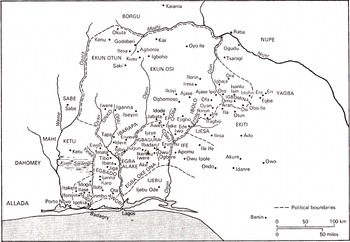
In the late 1700s, Ọ̀yọ́ was at the height of its power, holding sway over numerous vassal states, as shown in Figure 1. In this context, the cult of Ṣàngó symbolized the kingdom’s political authority. Thus, the Ìyá Naso was a key figure. The third highest female court official, she was responsible for religious activities pertaining to Ṣàngó in the palace of the aláàfin [king]. Like other high-ranking female officials, she was considered one of the aláàfin’s wives. As a member of his inner circle, she was normally obligated to follow him in death. Exceptions were apparently made, however, when a king did not die of natural causes, and during the last years of the eighteenth century four successive monarchs either were murdered or killed themselves.Footnote 13 The first was Abíodún, a popular ruler whose prosperous reign ended abruptly in 1789, when he was poisoned. Seven years later, his successor, Aólẹ, was forced into suicide – the traditional exit of Yorùbá kings who had lost the confidence of their chiefs. With his death, a powerful general, Àfọnjá, later an important player in the kingdom’s eventual fall, declared independence, with other chiefs following suit. With political anarchy setting in, the next two aláàfin ruled for only a few months each. The first either took poison himself or was given it by others in the wake of an attempted coup; the second is known to have killed himself. After that the kingdom remained without a ruler until around 1802, when Aláàfin Majotu was enthroned. He reigned for many years, until around 1831.Footnote 14
Map of the Yorùbá-speaking region, c. 1780, when the •Òyọ́ Empire was at its height. Source: Robin Law, The Oyo Empire, c. 1600-c. 1836: A West African Imperialism in the Era of the Atlantic Slave Trade (Oxford: Clarendon Press, 1977), 89. Used by permission.

The sources are silent as to what other fate awaited Ọ̀yọ́ palace officials who normally would have died with the aláàfin. During times of political strife, extreme measures were sometimes taken to disperse a deceased monarch’s supporters. There is concrete evidence from neighboring regions about royalty and their allies being sold into Atlantic slavery by rival factions.Footnote 15 As a powerful figure in the palace, the aláàfin’s personal Ṣàngó priestess could easily have been targeted for enslavement after a king’s ouster. There is no doubt that some enslaved Africans in Brazil came from noble or royal lineages, and there are suggestions that some high-ranking Ọ̀yọ́s ended up in Brazil.Footnote 16 In Salvador, some descriptions of runaway captives mention four perpendicular scars on the cheeks, typical of Ọ̀yọ́ nobility. A few even refer to marks on the limbs in addition to the face, a pattern that was limited to the royal family itself.Footnote 17
Other documents about the son mentioned above help to provide a time frame for the deportation of Bahia’s Iyá Nassô into Atlantic slavery. He apparently arrived in Bahia in the early 1820s and was baptized in November of 1824, receiving the name Thomé. His manumission letter, drafted at the beginning of 1831, describes him as a moço, a term referring to youths or men in their early twenties.Footnote 18 This places his birth around 1810 at the earliest, and his mother’s departure from Ọ̀yọ́ sometime after that, perhaps in delayed response to the change of government that instituted Majotu as aláàfin. Thomé’s enslavement coincided with an escalation of the conflicts in Ọ̀yọ́. At the same time, a war to the southeast of Ọ̀yọ́, between the Yorùbá cities of Òwu and Ifẹ̀, was devastating the Ègbá territories. Both of these conflicts produced huge numbers of captives, many of whom were sold into Atlantic slavery.Footnote 19 In Bahia, local slave traders did much of their business in the Bight of Benin region. By 1824, 41 percent of the enslaved Africans baptized in Salvador were Nagôs, a figure that increased to 75 percent by the middle of the following decade.Footnote 20
The effect of these wars on the demographics of enslaved Yorùbá speakers is quite clear. Data from Cuba for the period between 1826 and 1839 indicates that Ọ̀yọ́s were by far the most numerous group of Yorùbá speakers arriving on the island, followed by Ijẹbus, Ègbás, and Ọtàs.Footnote 21 Ṣàngó worship there dates back at least to the 1830s and continues to be important today. Historical evidence about the lives of several priests recalled as founding figures shows they arrived during the great influx of Ọ̀yọ́s in the 1820s and 1830s.Footnote 22 There are some references to Ẹ̀gbádòs and other peoples from western Yorùbá-speaking regions, but the numbers seem to have been small by comparison. In Sierra Leone – where beginning in the 1810s, many captives liberated from slave ships intercepted by the British ended up – by the late 1840s there were around 7,000 Yorùbá speakers. Ọ̀yọ́s were by far the largest group, followed by Ègbás and Ìjèṣàs. Significantly, Kétus are not mentioned in sources on either Sierra Leone or the Caribbean.Footnote 23
In Brazil, evidence on specific Yorùbá subgroups is more fragmentary, but reports from Bahia at the end of the nineteenth century identify Ọ̀yọ́s as the most numerous. As in Sierra Leone, the next largest groups were Ègbás and Ìjèṣàs. Anecdotal evidence suggests that the Ọ̀yọ́ majority in Bahia dates back to the 1820s. Apart from Iyá Nassô, there is the case of Rufino José Maria, who arrived in Bahia as a captive circa 1822. Another Ọ̀yọ́, Yacouba Antonio Pereira dos Santos, had already obtained his freedom by this point, like Iyá Nassô.Footnote 24 Insights about the demographics of the Yorùbá-speaking population in Salvador can also be obtained from documents pertaining to an 1835 Muslim-led slave uprising, known as the Malê rebellion. Most of the leaders were Nagô youths; some had been in Bahia for less than a decade. The agency of Islamicized Yorùbá speakers suggests that their enslavement occurred in the context of Ọ̀yọ́’s increasing destabilization, as preexisting internal conflicts were compounded by the encroachment of jihadists from the Sokoto Caliphate, a rising regional political and military force.Footnote 25
After the Malê uprising, hundreds of Nagôs, Muslims and non-Muslims alike, were arrested in Bahia, including Iyá Nassô’s sons. Although there is extensive documentation on the accused, it rarely mentions their specific homelands. Based on the few cases where information is available, it would appear that most were Ọ̀yọ́s and Ègbás.Footnote 26 In the rebellion’s wake, around a thousand freed Africans, mainly Nagôs, returned to the continent of their birth, fleeing persecution in Bahia. They settled mainly on the coast of the Bight of Benin. A decade later, during a visit to Ouidah, British officer Frederick Forbes commented on the presence of freed people from Brazil, citing Ọ̀yọ́s as one of the largest ethnic groups. There are still “Brazilian” enclaves in the region that date back to this period. Historical and ethnographic evidence suggest that the ancestors of many families were Ọ̀yọ́s. Freedman Antonio Yacouba Pereira dos Santos, cited above, returned to Africa in 1836, founding the Pereira family of Agoué. Other Ọ̀yọ́s who left Bahia during this period were Antonio d’Almeida (circa 1844), and José Pequeno Paraíso (1849).Footnote 27
Verger considered Kétu to have been a vassal state of Ọ̀yọ́, which may explain his assumption that large numbers of Kétus arrived in Brazil in the early nineteenth century, a period when, as we have seen, Ọ̀yọ́’s empire was crumbling. However, this idea is problematic on several counts. First, Johnson’s detailed account of regional conflicts sparked by the trouble in Ọ̀yọ́ – based on information obtained at the close of the century from oral sources in Ọ̀yọ́ itself – does not mention Kétu at all. Second, Kétu’s own oral traditions claim political autonomy from Ọ̀yọ́ and refer to the early nineteenth century as a time of peace and stability, marred only by an influx of refugees fleeing political upheaval in neighboring regions. This is not to say that no Kétus were ever sold into Atlantic slavery. In the second half of the eighteenth century, the kingdom suffered several attacks from Dahomey, most significantly in 1789, when around two thousand Kétus were taken prisoner. However, contemporary sources in Dahomey claim that most of the captives were sacrificed, with only a small fraction sold into slavery.Footnote 28 After that attack, Kétu’s traditions do not mention any other serious incursions into the kingdom until after Brazil’s withdrawal from the Atlantic slave trade (1851). The worst period came in the 1880s, when the capital was razed by Dahomey.Footnote 29
There is, however, good evidence linking the founder of a different temple in Salvador to the 1789 attack. Formally known as Ilê Axé Maro Ialaji, it is popularly referred to as “the Alaketu.” As Vivaldo da Costa Lima points out, alákétu is precisely the title used by the king of Kétu. However, in Bahian popular idiom, the /r/ phoneme is often substituted by /l/, so the name could also derive more simply from ará Kétu, “people from Kétu.” Either way, a Kétu connection is clear. Moreover, the temple’s oral traditions offer evidence of a link to one of the kingdom’s royal lineages. The founding priestess, whose name is recalled as Otampê Ojarô, is said to have been born into a royal family in Kétu and enslaved as a child. During field research in Kétu in 1963, Lima identified local oral traditions that complement those of the temple in Bahia: it is recalled that a daughter of the royal Aro lineage was taken prisoner in the Dahomean attack. When Otampê Ojarô died in Bahia in 1850, her age was estimated as “over 65,” making her a young girl in 1789.Footnote 30
Curiously, despite Verger’s thirst for evidence of Kétu heritage in Bahia, he rarely mentioned the Alaketu temple’s oral traditions, focusing his attention exclusively on the Casa Branca and its parent community. Recently, anthropologist Renato da Silveira has attempted to use the Alaketu temple’s link to Kétu to support the Casa Branca’s connection to that kingdom, suggesting that the two temples share a common origin. This seems doubtful, however, since no such link is mentioned in the oral traditions of either temple.Footnote 31 Still, the history of the Alaketu temple demonstrates that some Kétus arrived in Bahia at the end of the eighteenth century. There is anecdotal evidence that others came in subsequent periods, but the numbers appear to have been demographically insignificant.Footnote 32
Returning to the story of Iyá Nassô, when her son Thomé arrived in Bahia in the early 1820s, one of many thousands of Yorùbá speakers enslaved in the conflicts described above, she had already obtained her own freedom and was struggling to attain economic stability. With so many captives coming from the same regions, re-encounters among people from the same homeland occurred with some regularity. Sometimes, relatives who had already obtained their freedom managed to redeem newly arrived kinfolk before they were sold. Thomé, however, was not so lucky, and he ended up the slave of a white military officer. Perhaps his mother learned too late of his arrival and was unable to come up with the money in time. But when he was baptized, her common-law husband, Nagô freedman José Pedro Autran, became his godfather. This was certainly no coincidence. The godparent-godchild bond was considered a real form of kinship in Brazil, as in other parts of Latin America. Godparents were expected to act as mentors to their spiritual children, and in the case of Africans this meant helping them to adapt to the language and customs of the strange new land. As godson of his mother’s consort, Thomé would be able to stay in close contact with her.Footnote 33
José Pedro Autran was from the Yorùbá kingdom of Ìjèṣà, to the southeast of Ọ̀yọ́. Although the first detailed historical references to major wars in the kingdom come only in the second half of the nineteenth century, the Ìjèṣàs left a strong mark on religious practices in Brazil and the Caribbean, which suggests that they were strongly affected by the Atlantic slave trade.Footnote 34 Indeed, as mentioned above, among liberated Africans in Sierra Leone the Ìjèṣàs were one of the largest Yorùbá subgroups, and in late-nineteenth-century Lagos, a fair number of what the British termed “Brazilian emigrants” were Ìjèṣàs.Footnote 35 One Ìjèṣà in Lagos, João Esan da Rocha, who lived in Bahia during his enslavement, is said to have been captured as a child. He was 36 years old when he returned to Africa in 1873, which places his birth around 1837 and his enslavement in the mid-1840s.Footnote 36 Another well-known Ìjèṣà returnee, Arije Philip José Meffre, was probably enslaved a bit earlier, in the 1830s. He received his freedom in 1846, returning to Africa in 1858.Footnote 37 These case studies suggest that Ìjèṣàs were arriving in Bahia throughout the first half of the nineteenth century.
It is not known whether Meffre’s life intersected with that of José Pedro Autran, but it is likely. In Bahia, all Nagôs considered one another parentes [relatives], and being from the same kingdom meant an even closer bond. Moreover, both Meffre and Autran were actively involved in traditional religious activities. A babaláwo, Meffre worshipped several òrìṣà, including Ṣàngó.Footnote 38 It is probable that he participated in the ritual activities taking place in his countryman’s home.
In 1833, José Pedro Autran and his wife moved from Santa Anna Parish to nearby Passo Parish. By this time, they owned two real estate properties and over a dozen adult slaves, giving them a prominent position in the city’s network of freed people. Many of their captives were Nagô women and some evidently performed tasks related to the household’s orixá worship. Marcelina Obatossi, mentioned above, who eventually succeeded her mistress in leading the temple, is a case in point.Footnote 39 The household’s relocation to Passo Parish may correspond to what oral traditions recall as the moment when Iyá Nassô withdrew from Ilê Axé Intilé to form her own religious community. One oral tradition states that a certain Assiká, a babaláwo, assisted Iyá Nassô in founding her temple.Footnote 40 José Pedro Autran had a certain prestige in the African community of Salvador, with dozens of godchildren, many of whom were probably drawn into his household’s ritual activities. This, along with his close relationship to Iyá Nassô, suggests that he was the person remembered as Assiká.Footnote 41
Early in 1835, Iyá Nassô’s son Thomé was arrested, along with his brother, Domingos, in the wake of the Muslim-led slave rebellion mentioned above, after an amulet containing Arabic writing was found in their house. In denouncing the two men to the police, neighbors confused the household’s Xangô ceremonies with meetings to plan the uprising. The complaint decried repeated gatherings in the family home, attended by large numbers of men and women, with dancing and singing “in the Nagô language.” During these events, the brothers wore white clothing draped with red – Xangô’s color – and many necklaces. The court found them guilty, sentencing them to eight years of prison. Their mother appealed, asking for the sentences to be commuted to deportation to Africa and stating that she would follow them, never to return. When her request was granted, she and her husband began preparing for the journey. This included negotiating manumissions with their captives, including Marcelina, who purchased her freedom at the end of 1836. In 1837, the couple, along with Marcelina and a number of their other former slaves, received passports to West Africa.Footnote 42
Pierre Verger, who interviewed Marcelina’s great-great-granddaughter in the middle of the twentieth century, states that the group’s destination was Kétu. However, newly uncovered archival sources and ethnographic evidence from Benin reveal that, like so many other Africans who left Bahia after the uprising, Iyá Nassô and her entourage settled in the port city of Ouidah, in present-day Benin Republic, where they established shrines to Xangô and other òrìṣà. Two years later, Marcelina returned to Brazil without her mistress, an event recalled in one oral tradition of the Casa Branca, which states that Marcelina, not Iyá Nassô, founded the temple after coming back from Africa. However, the testimony against Iyá Nassô’s sons confirms that a religious community existed prior to the voyage to Africa. Rather than “founding” the community after her arrival in Bahia, Marcelina must have performed significant reorganization, bringing in new members and perhaps transferring the shrines to a new location.Footnote 43
Further Evidence of •Òyọ́ Influence: The Casa Branca’s Patron Orixás
We have seen that Bahia’s Iyá Nassô was from Ọ̀yọ́, rather than Kétu. Further indications of Ọ̀yọ́ influences in the history of the temple she founded come from the historical geography of its most important deities. The Yorùbá pantheon is vast, including hundreds of òrìṣà. Some are worshipped throughout the Yorùbá territory, but most cults are local, limited to certain kingdoms, regions, or even specific towns. Often, the same òrìṣà are known by different names in different places, with slight variations in their mythology. Throughout history, migrations, often in response to wars or empire-building, have altered the geographic reach of òrìṣà cults.Footnote 44
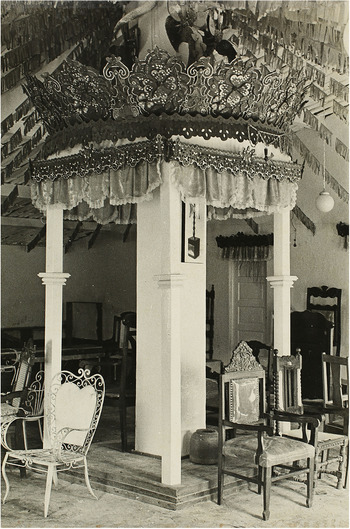
A case in point is Ṣàngó, whose cult originated in Ọ̀yọ́ and expanded to parts of Yorùbáland that came under the kingdom’s sway. Later, as Ọ̀yọ́’s empire collapsed and its people fled south, refugees brought his cult to the places where they resettled.Footnote 45 This was also true of those who were enslaved and shipped to the Americas, such as Iyá Nassô and her sons. Xangô’s historical importance at the Casa Branca is memorialized in the temple’s main hall, where an enormous “crown of Xangô” adorns a pillar at the center of the room (Figure 2). But the Casa Branca was far from the only place in nineteenth-century Bahia where the cult was established. Nina Rodrigues, writing in the 1890s, described Xangô as Bahia’s most popular orixá, citing several temples with shrines to the deity. Farther to the northeast, in the provinces of Pernambuco and Alagoas, the term xangô entered Brazilian Portuguese as a regional name for Yorùbá-based religious practices.Footnote 46 At the ritual level, in Bahia there are suggestions that terms specific to the Xangô cult became absorbed into the general lexicon of Candomblé. For example, although among the Yorùbá, the word kele refers to a type of necklace worn specifically by Ṣàngó initiates, in Candomblé it designates a tight, collar-like necklace used by all recent initiates, regardless of the orixá to which they are consecrated.Footnote 47
The “crown of Xangô” in the Casa Branca’s main hall. Source: Instituto do Patrimônio Histórico e Artístico Nacional (IPHAN), Arquivo Central, Rio de Janeiro, Terreiro da Casa Branca, Photo F105631. Used by permission.

In Brazil, as in Africa, Xangô is considered to rule over thunder and lightning, an attribute that he shares with Airá, another important deity at the Casa Branca. The name Airá derives from the Yoruba word for thunder, àrá, a term that comes up frequently in chants for Xangô/Ṣàngó on both sides of the Atlantic. In the parlance of Candomblé today, Airá is sometimes described as a qualidade [avatar] of Xangô, but Airá himself has several qualidades. The most important is Airá Intilé, remembered in oral traditions as patron deity of the community to which Iyá Nassô belonged before founding her own temple, a memory supported by its very name: Ilê Axé Airá Intilé [Religious House of Airá Intilé].Footnote 48 There are a number of ritual differences between the cults of Airá and Xangô, which suggest that they are separate deities. First, although devotees of the latter dress in shades of red and orange, recalling his association with fire, priests of the former wear only white. Usually, all the shrines for an orixá’s various qualidades are kept together, in the same room, but this is not so with Xangô and Airá. Whereas the shrines for Xangô’s other qualidades are kept together in an inner chamber adjoining the temple’s main hall, those for Airá are housed in an entirely separate structure some twenty meters away. And although all the qualidades of a given orixá generally share a single annual festival, Xangô and Airá have separate celebrations. The annual rites for Airá are held on June 29, the Catholic feast day for St. Peter, with the ceremony for Xangô occurring months later, in mid-October.Footnote 49 This sequence, with Airá’s commemorations preceding those of Xangô, appears to emphasize the former’s senior status in the temple’s history: his shrines are said to have been brought from the mother community and are older than those of Xangô.Footnote 50
As discussed above, Ṣàngó’s historical importance in Ọ̀yọ́ fueled the dissemination of his cult in other regions. As a result, to this day, Ṣàngó enjoys broad geographic popularity. The cult of Àrá, however, is specific to a few enclaves in western Yorùbáland. Indeed, although Pierre Verger’s extensive fieldwork among the Yorùbá produced voluminous material on Ṣàngó, he uncovered very little about Àrá. His only evidence comes from the cities of Kétu and Ṣabé, where he encountered Àrá Ìgbóná.Footnote 51 Some Brazilian scholars have interpreted this as confirmation of western Yorùbá influence – specifically Kétu – on the religious community from which Iyá Nassô’s temple later emerged.Footnote 52 However, although “Igboná” is recognized at the Casa Branca as one of Airá’s qualidades, only Intilé is considered patron of the parent temple.Footnote 53
In an insightful study of Àrá among the Yorùbá, anthropologist Marc Schiltz provides important insights into the history of the deity that came to be known as Airá Intilé in Bahia. Schiltz cites oral traditions about a town called Ìtílé, in southwestern Ọ̀yọ́, which was founded around 1770, after a prince of Ọ̀yọ́ left the capital in the wake of an ill-fated bid for the throne. In the new settlement, the cult of Ṣàngó, which symbolized the political might of the aláàfin, was substituted by that of Àrá, under direct control of the dissident prince, known as onítílé [master of Ìtílé], a title used by the town’s rulers to this day.Footnote 54 The strong phonetic resemblance between Intilé and Onítílé suggests that they are variants of the same word. Moreover, the careful separation between the shrines and festivals of Xangô and Airá at the Casa Branca seems to echo an ancient taboo in Ìtílé linked to the royal conflict that led to the town’s founding: a prohibition on face-to-face meetings between an onítílé and an aláàfin. Like so many other Ọ̀yọ́ towns, Ìtílé fell victim to the wars of the early nineteenth century, and many of its residents undoubtedly ended up enslaved in Brazil. This is almost certainly the context in which the cult of Ìtílé’s patron òrìṣà was taken to Bahia.Footnote 55
Although the Casa Branca’s main building is consecrated to Xangô, its grounds are under the protection of a hunter deity, Oxóssi [Ọṣọọsi]. Because of their intimate knowledge of the forest, hunters were indispensable guides in breaking paths and establishing new settlements. The weapons used in killing game were also employed in defending the kingdom from attackers. This historical role is symbolically expressed in royal processions, in which priests of hunter òrìṣà open the way.Footnote 56 The Casa Branca’s choice of a hunter – in their case, Oxóssi – as guardian of the grounds appears to be consistent with this cultural logic.
In Candomblé, Oxóssi is popularly considered the rei de Ketu [king of Kétu], an expression that has generally been interpreted as a legacy of the deity’s supposed historical importance in that kingdom. During fieldwork in Kétu in the 1950s, however, although Verger identified sites “where Ọṣọọsi used to receive offerings and sacrifices,” he was unable to locate anyone who had the “knowledge or the desire to worship him,” apart from a priest of another forest deity, Ọsanyin, who served as his “guardian.”Footnote 57 Given Ọṣọọsi’s importance in Bahia, Verger inferred that all of the cult’s priests in Kétu must have been sold into Atlantic slavery, effectively transferring the cult to the Americas.Footnote 58 His reasoning, however, is difficult to substantiate. First, as we saw above, the devastation of Kétu came after the end of the Atlantic slave trade. Moreover, there is no historical evidence that Ọṣọọsi ever played a central role in the kingdom’s pantheon. Although local oral traditions state that a hunter chose the site of the original settlement – a common theme in Yorùbá myths of foundation – his name is given as Alalumon, not Ọṣọọsi. Alalumon became an eminent religious title, belonging to a priest dedicated to the worship of the ancestral hunter’s spirit. But the most important hunter òrìṣà in Kétu appears to have been Ògún, whose cult was presided over by the kingdom’s highest religious authority, the Elegba (or Elegbara), who, as the name suggests, also led the cult of Éṣú.Footnote 59
Using nineteenth-century British missionary records, anthropologist John Peel identified both Ògún and Éṣú as part of a small number of òrìṣà found in all the places where the missionaries were active.Footnote 60 Ọṣọọsi, however, seems to have had a small following, mainly in the area historically dominated by Ọ̀yọ́. According to Johnson, Ọṣọọsi had a titled priestess in the aláàfin’s court. Missionary records indicate that his cult was also popular among the Ègbá, who historically had been subordinated to Ọ̀yọ́.Footnote 61 Mary Barber, who wrote an account of her sojourn in the Ègbá town of Òshíélè in the 1850s, considered Ọṣọọsi one of the most important òrìṣà in the local pantheon.Footnote 62 In 1950, anthropologist William Bascom encountered Ọṣọọsi worship in the eastern part of Kétu, in the town of Imeko. He does not mention when the cult was established there, but it is interesting to note that during the second half of the nineteenth century Imeko broke with Kétu and cultivated ties to Ọ̀yọ́.Footnote 63
Bascom’s reference to Ọṣọọsi is tangential, like the few others that I was able to locate about him in the ethnographic literature. Indeed, it seems that the Ọṣọọsi cult is often an accessory to those of other òrìṣà. In Ile-Ifẹ̀, legendary cradle of Yorùbá civilization, he is the guardian of Ọbàtálá, associated with the creation of the world and the city’s patron. His shrine is located just inside the entrance to the temple of Ọbàtálá, symbolizing his protective role, and the lengthy annual festivities to the city’s patron include a procession in his honor.Footnote 64 Similarly, in Kétu and Ṣabé, Schiltz documented the presence of Ọṣọọsi shrines within larger ones dedicated to Àrá Ìgbóná. Indeed, in Ṣabé, Ọṣọọsi is considered to be Àrá’s “wife.” As Schiltz notes, in this context the term “wife” is metaphorical, evoking a close relationship, as well as the deference traditionally expected of Yoruba wives toward their husbands.Footnote 65 Ọṣọọsi’s supporting role in the Àrá cult in Kétu offers a useful lens for interpreting Verger’s observation that in that city, a priest of Ọsanyin was responsible for Ọṣọọsi’s cult.Footnote 66
Verger’s data on Ọṣọọsi in Africa is extremely meager, a point that he readily admitted in his first monograph on the subject, published in French in 1957 and translated to Portuguese many years later, after his death, under the title Notas sobre o Culto aos Orixás e Voduns. Footnote 67 In his best-known work on the Yorùbá pantheon, Orixás: Deuses iorubás na África e no Novo Mundo, published in 1981, the section on Ọṣọọsi is practically identical to the one in his earlier work. In Orixás, Verger omitted the self-critical questions raised in Notas about his Ọṣọọsi data, instead making the broad assertion that the cult was “almost extinct” in Africa. A few years later, in another book Verger described the king of Kétu’s chagrin, upon being told – by Verger – that Ọṣọọsi, who was “forgotten” in his kingdom was “so popular in the New World.”Footnote 68 Verger’s report of this conversation reverberated among Candomblé initiates in Brazil, for whom the preservation of Ọṣọọsi’s cult, in the face of his supposed disappearance in Africa, has become a source of pride.
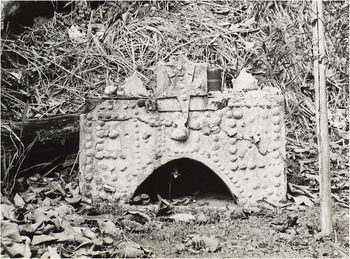
In Bahia, Oxóssi has a number of qualidades, which in Africa are separate hunter deities. Of particular importance at the Casa Branca is one known interchangeably as Inle or Ibualama, whose shrine stands by itself, just outside the house where Oxóssi’s other qualidades are kept (Figure 3).Footnote 69 Also found in other parts of the Yorùbá diaspora, such as Cuba and Trinidad, in Africa Erinlẹ (in some dialects Eyinle), is a hunter òrìṣà associated with a river by the same name, which originates in northern Ọ̀yọ́ and flows southward, eventually meeting the Ọṣun river. Erinlẹ’s following is strongest in the areas along the river but also extends to other parts of central Yorùbáland, especially the Ẹ̀gbádò region, which was once dominated by Ọ̀yọ́. In Ilobu, a town along the river, he is the patron òrìṣà. Among his praise names is Ibú Alámò.Footnote 70 Although Verger recorded abundant information about Erinlẹ, he did not mention that the cult is often considered to have originated in Ọ̀yọ́ and is cited by Johnson as part of the kingdom’s pantheon.Footnote 71
The Casa Branca’s shrine to Inle/Ibualama. Shells are an important decorative element, signaling the deity’s association with water. Source: Instituto do Patrimônio Histórico e Artístico Nacional (IPHAN), Arquivo Central, Rio de Janeiro, Terreiro da Casa Branca, Photo F096914. Used by permission.

Although Inle holds an important place at the Casa Branca, the patron of its grounds is another qualidade of Oxóssi, known as Onipapô. As in the case of Airá Intilé, Onipapô is said to have been brought from the Casa Branca’s parent community. Once again, an analysis of the etymology of the name Onipapô is helpful in attempting to unravel the deity’s historical trajectory. As mentioned above, the prefix oní means owner or master. The meaning of “Papô” is less clear, but could be an abbreviated form of Ìpàpó, an Ọ̀yọ́ town that lay just a few kilometers from the ancient capital. Like Ọ̀yọ́-Ilé, Ìpàpó-Ilé was destroyed during the nineteenth century wars and was later rebuilt farther to the south. The town’s most important òrìṣà are Ọmọsàndà, a thunder deity, followed by Erinlẹ.Footnote 72 It seems probable that at a crucial point in the Casa Branca’s early history its community included priests from Ìpàpó who were enslaved during the town’s destruction. Indeed, there are suggestions that some people from the town arrived in Bahia during the slave trade. Ọ̀yọ́ freedman Antonio Yacouba Pereira dos Santos, mentioned earlier, appears to have been from Ìpàpó.Footnote 73
Like the historical sources presented in the previous section about the temple’s founding priestess, Iyá Nassô, the ethnographic evidence examined in this section attests to the importance of Oyo influences in the Casa Branca’s formative period, despite the popular idea of Oxóssi as a Kétu deity. As we will see in the next section, Ọ̀yọ́ influences at the temple appear to have continued until the final decades of the nineteenth century, under the leadership of the Xangô priestess who succeeded Iyá Nassô, Marcelina Obatossi [Ọbatósìn].
Marcelina Obatossi and her peer group: A network of Ọ̀yọ́s and Ègbás
Numerous historical documents, most of them recently discovered, shed light on the life of Marcelina Obatossi, who adopted the surname of her spiritual mother and former mistress, da Silva. None of these sources, however, identify her specific homeland. Her passport to Africa, issued in 1837, describes her merely as Nagô. Her own will, written in 1881, a few years before her death, states even more ambiguously that she was a native of the “African Coast,” as the entire region along the Bight of Benin was known in Brazil.Footnote 74
In 1967, eight decades after Marcelina’s death, her great-great-grandson, Deoscóredes dos Santos, a Candomblé priest better known by his nickname, Mestre Didi, traveled to Kétu with Pierre Verger with the goal of paying a visit to the alákétu, “on behalf of myself and my brothers, descendants of Kétu who live in Bahia.”Footnote 75 During the royal audience, he recited a brief oríkì [praise poem] handed down from Marcelina, which he transcribed as Asipa borogun elese kan gongôô. Noting the word Aṣipa, the king replied that Didi ordered the visitors to be taken to the compound of a lineage by that name in a nearby village. There, Didi once again recited the oríkì, generating an enthusiastic reaction.Footnote 76 In the compound he was shown a shrine to Ọṣọọsi, covered with brambles, which Didi considered “identical” to those in Bahia. The meeting with this family – which, he later learned, took place a few days after the death of his mother, far away in Brazil – was a sort of epiphany for him, for during it he “heard and recognized everything that my mother and the [other] elders in Bahia used to say,” and he embraced the family as his long-lost relatives.Footnote 77
Although Didi subsequently published various versions of the encounter, he never compared the words of the oríkì handed down from Marcelina with the praise poem belonging to the family he met that day. Similarly, although Verger published prolifically on the subject of Candomblé, the closest he ever came to discussing this apparently groundbreaking discovery about the family origins of one of the Casa Branca’s most celebrated founding figures was a single sentence, in a paper published in 1970.Footnote 78 He made no mention, however, of the Ọṣọọsi shrine, and subsequent publications discussing the Kétu origins of Candomblé contain no further reference to the landmark meeting. Indeed, as mentioned above, Verger complained that the Ọṣọọsi cult was all but extinct in Kétu. Moreover, although Didi’s wife, anthropologist Juana Elbein, accompanied her husband and Verger that day, her work never mentioned that the Casa Branca’s celebrated early priestess was linked to a specific lineage in Kétu.Footnote 79 The silence of the two scholars who witnessed the historic meeting between Mestre Didi and the Aṣipa family seems to suggest a certain ambivalence about the kinship ties identified that day.
Once again, it was Vivaldo da Costa Lima who took a critical view of the supposed link to Kétu, pointing out that aṣipa is a military title used in various Yorùbá kingdoms, including Ọ̀yọ́, where it designated an Ògún priest in charge of the hunters’ guild. As mentioned earlier, in Yorùbá culture, hunters historically doubled as warriors. This is consistent with the content of the oríkì recited by Mestre Didi, which translates roughly as “Aṣipa, the cunning war chief, who walks with two legs as though he had only one.”Footnote 80 In Yorùbá, the expression “to walk on one leg” is a metaphor for having supernatural powers, especially the ability to become invisible, of obvious value in a military context.Footnote 81
There are two other praise poems in Yorùbá about Marcelina Obatossi that have been transcribed by her descendants. Longer and more detailed than the verse recited in Kétu, neither mentions Oxóssi. Ògún comes up in passing in one, but the deity referred to most often is Xangô.Footnote 82 One poem opens with the words, Ìyá o bogunde [War brought mother], which seems to refer to the events that led to her enslavement and arrival in Bahia.Footnote 83 Marcelina was baptized on 7 November 1824, which means that she probably arrived in Brazil sometime that year or the one before. However, as we saw above, in Kétu the early nineteenth century is recalled as a time of peace. In Ọ̀yọ́, on the other hand, as mentioned earlier, the early 1820s were tumultuous times. Internal strife between political factions was compounded by external attacks, triggering political disintegration and the large-scale enslavement of Ọ̀yọ́s. It was also a tumultuous period in Bahia. In September of 1822, Brazil declared independence from Portugal. The last Portuguese troops were expelled in July of 1823, during a battle that took place in the city of Salvador. The following year, just a few weeks before Marcelina’s baptism, a military rebellion erupted in the Bahian capital. Thus, the phrase “war brought mother” could refer to the African context that led to her enslavement, to the situation she found in Bahia, when she disembarked from the slave ship, or even to both.Footnote 84
Further suggestions of an Ọ̀yọ́ connection come from the phrase ọmọ Àfọnjá [child of Àfọnjá], used in both poems. One refers more specifically to kékeré ọmọ Àfọnjá [youngest child of Àfọnjá]. The expression ọmọ Àfọnjá has various possible meanings, one of which is to denote a Xangô worshipper.Footnote 85 In Brazil, Afonjá is considered to be one of several qualidades of Xangô, but oral traditions about Marcelina link her to another, known as Ogodô, not cited in the poem.Footnote 86 Among the Yorùbá, Àfọnjá can also be a personal name, one that, according to Johnson, is specific to Ọ̀yọ́ royal lineages. This raises the possibility that the Àfọnjá of the poem could refer to the powerful general by that name mentioned earlier, who was a key player in Ọ̀yọ́’s internal politics during the decades preceding Marcelina’s enslavement. A member of the royal family, Àfọnjá fell at odds with the various successors to the throne after the death of Aláàfin Abíodún. In 1817, with support from Hausa captives in Ọ̀yọ́, he rose up against Aláàfin Majotu in an unsuccessful bid to seize power. His allies, however, soon turned on him and he was assassinated c. 1823 – exactly the most probable time for Marcelina’s enslavement.Footnote 87
Indeed, a line in one of Marcelina’s praise poems, transcribed as Ará loko l’aya, closely parallels the general Àfọnjá’s praise name, Àfọnjá l’aiya l’okò [brave warrior with a spear], hinting at a connection to the rebellious general. Footnote 88 In discussing Àfọnjá, Johnson speaks of a certain Laṣipa, the general’s head slave and a person of power.Footnote 89 If the “aṣipa” cited in Marcelina’s other praise poem were a reference to this important personage, she would have been considered, as his relative, to be a member of Àfọnjá’s household herself – in a symbolic sense, his child. This could explain the repetition of the phrase ọmọ Àfọnjá [child of Àfọnjá] in the praise poems about her.
Although these verses seem to offer tantalizing clues about Marcelina’s life, full appreciation of their meaning requires careful translation, a task beyond the scope of the present paper. As Karin Barber notes, enigmatic allegories are one of the defining features of Yorùbá praise poetry. The interpretation of oríkì often hinges on background knowledge of events, places and personages known only to locals or, at times, only to members of the lineage. The task of unraveling the meaning of Yorùbá verses preserved in Brazil is rendered more difficult still by the use of Portuguese phonetics in transcription and pronunciation, thus eliminating the tonal qualities of the words, a fundamental aspect of semantic meaning in Yorùbá.Footnote 90 Still, despite these caveats, the verses about Marcelina, together with time of her enslavement, seem to point to Ọ̀yọ́ as a more probable place of origin than Kétu. If, like Iyá Nassô, Marcelina also came from Ọ̀yọ́, this could explain why some oral traditions describe the two women as blood relatives.Footnote 91
Whether or not Marcelina herself was from Ọ̀yọ́, several of the ancestral figures associated with her were Ọ̀yọ́s. Others were Ègbás involved in cults that were important in Ọ̀yọ́. A paradigmatic case is Bamboxê Obitikô [Bamgbose Owobitiko], a Xangô priest and babaláwo who left descendants in Lagos as well as Bahia. Oral traditions on both sides of the Atlantic concur that he was from Ọ̀yọ́, an affirmation substantiated by a newspaper report from 1887 describing him as “chief of the valiant Nagô tribe of Yobá [Yorùbá, i.e., Ọ̀yọ́].” Bamboxê was baptized as a slave in 1850, purchasing his freedom seven years later with help from Marcelina.Footnote 92 Although one oral tradition implies that he was involved in founding the temple, along with Iyá Nassô, the date of his arrival in Brazil indicates that his involvement came later, probably when the temple moved to its current site, circa 1860, years after she had gone back to Africa.Footnote 93
Another male figure during the time of Marcelina’s leadership, closely associated with Bamboxê, was Joaquim Vieira da Silva. His Yorùbá name, Obá Sanyá [Ọbasànyà], shows that he too was a Xangô worshiper, and oral traditions suggest a link to Ọ̀yọ́. It is unclear exactly when Joaquim was enslaved, but he obtained his freedom in 1866. Six years later, he and Bamboxê traveled to the Brazilian city of Recife, where they remained for nearly a year. Their time in Recife coincided roughly with the founding of a Yorùbá-influenced temple, known as the Sítio de Pai Adão. Joaquim ended up moving to Recife and is recalled today as an important ancestor at the temple. In 1891, a few years after Marcelina’s death, Joaquim returned to Bahia.Footnote 94
Yet another member of this close-knit circle was Marcos Teodoro Pimentel, also said to have been from Ọ̀yọ́. Baptized in 1834, he was almost certainly enslaved amid the chaos leading up to the kingdom’s fall. Marcos Teodoro purchased his freedom in 1849. A devotee of Aganju, one of the qualidades of Xangô, he also founded an egúngún temple. Like the cult of Ṣàngó, egúngún worship was historically associated with Ọ̀yọ́, and in Brazil, the two are intertwined, with Xangô considered the patron of all egúngún houses. Marcos Teodoro is not specifically recalled in the Casa Branca’s oral traditions, but his temple was just a few kilometers from where Bamboxê lived during his enslavement, making it likely that the two men met during this period. Oral tradition recalls that Marcos Teodoro traveled to Africa, a memory confirmed by archival evidence showing that he sailed for Lagos in May of 1881, returning to Bahia six months later. Bamboxê was in Lagos then and it is probable that the two men were in contact there. It is said that when Marcos returned from Lagos, he brought the shrine of Olukotun, an important egúngún in Bahia today.Footnote 95
Another egúngún priest, Eliseu do Bomfim, was certainly involved in the Casa Branca, since his youngest child was Marcelina Obatossi’s godson. Eliseu traveled frequently to Lagos, sometimes in the company of Bamboxê Obitikô. Although Juana Elbein and Mestre Didi have described Eliseu as having been from Kétu, Eliseu’s own son, Martiniano, interviewed in 1941, stated that his father was Ègbá, giving a precise location: the town of Ìká, in the Gbagura region, near the border with Ọ̀yọ́. Eliseu held an important egúngún title, Àreòjé, and oral traditions in Bahia credit him with creating shrines for an egúngún called Ilari, said to be his own ancestor. In Brazil, Eliseu had several wives, one of them a native of Ìbàràpá, an Ọ̀yọ́ province.Footnote 96
Two other Ègbás were part of the temple’s socio-religious network during this period. One was Eduardo Américo de Souza Gomes, whose Yorùbá name was Fasesi [Fásesìn], a name that suggests he was an Ifá priest. Eduardo obtained his freedom in 1860, settling in Lagos a few years later, where he later took Bamboxê’s eldest daughter as a wife.Footnote 97 Another Ègbá was Ọmọníkẹ̀ Maria Julia da Conceição. Born in the Aláké region, she was probably enslaved circa 1834. She is said to have been initiated by a priestess named Akalá, about whom little is known except that she was one of Iyá Nassô’s associates in the legendary community dedicated to Airá Intilé.Footnote 98 Ọmọníkẹ̀ Maria Julia purchased her freedom in 1840 and married a Gbe-speaker from the Mahi region of present-day Benin Republic. In the 1850s, the couple founded a temple, the Gantois, today a national historic landmark in Brazil.Footnote 99
At the same time that archival evidence helps to recover nuances of the lives of ancestral figures recalled in oral traditions, it also helps to shed light on other individuals whose memories have faded. Among these, the case of Ọ̀yọ́ freedman Bemvindo da Fonseca Galvão is of particular interest. Like Iyá Nassô’s son Thomé and Marcelina, Bemvindo was baptized as a slave in 1824, which suggests that they were all enslaved around the same time.Footnote 100 During his enslavement, Bemvindo lived a few blocks from Iyá Nassô’s home in Santa Anna Parish, and it is likely that he was acquainted with her household. Concrete evidence of his involvement in the temple’s social network comes later, after Marcelina’s return from Ouidah. In 1845, he was godfather to one of her captives and the following decade, the two of them were godparents to the children of an enslaved Nagô woman.Footnote 101
Given this close relationship to Marcelina, Bemvindo undoubtedly played a role in her temple. After his death in 1877, Yorùbá funeral rites were performed for him over a period of seventeen days, involving a variety of offerings, including the sacrifice of goats and poultry. Bemvindo’s son, Candido, published a detailed description of the ceremonies in a local newspaper, the first of many times that he would openly signal his family’s involvement in orixá worship.Footnote 102 This was an iconoclastic stance at a time when African religious beliefs were socially stigmatized and ceremonies often broken up by the police. But at his father’s deathbed, Candido had vowed to honor the family heritage. Publicly assuming their orixá worship seems to have been a way of doing that.Footnote 103
Around the same time, Candido began making a claim that earned him notoriety: that he was a grandson of Aláàfin Abíodún, via his father, who, he claimed, had been the king’s son.Footnote 104 There is no reason to doubt that Bemvindo da Fonseca Galvão was from Ọ̀yọ́. As mentioned earlier, there are documented cases of African royals who were sold into Atlantic slavery in Brazil. In Bemvindo’s case, however, the contention is contradicted by his will, which states that he was a minor when he arrived in Bahia. This places his birth after the turn of the nineteeth century, long after his supposed father’s death. Moreover, the will makes no allusion to royal descent.Footnote 105
Even though the claim that Bemvindo was Abíodún’s son appears to be unsubstantiated, it has important symbolic value, revealing that nearly a century after the monarch’s demise his memory was still alive among Bahia’s Yorùbá-speaking population. According to Candido, during Abíodún’s reign, “all were free” and “no slaves were taken to Brazil,” an idea doubtlessly culled from his father’s generation, torn from their homeland during the wars that erupted in the decades following the king’s death.Footnote 106 However, this rose-tinted view glosses over Ọ̀yọ́’s historical role in enslaving neighboring peoples, and Abíodún’s own agency in developing the town of Porto-Novo as an Ọ̀yọ́-controlled slave port.Footnote 107
With Candido’s own death in 1889, Abíodún’s memory lost a vociferous Brazilian proponent. Some decades later, however, Martiniano do Bomfim – son of Eliseu do Bomfim, discussed above – endeavored to revive it. In a newspaper article published in 1937, when he was quite old, Martiniano heaped praises on Abíodún, describing him as “a friend of his people” who had reigned over times of “great prosperity.”Footnote 108 Born in Bahia in 1859, Martiniano grew up as a member of the Casa Branca community but in the years after Marcelina’s death he shifted his allegiance to a descendant temple, Ilê Axé Opô Afonjá, also dedicated to Xangô. During his youth, Martiniano lived in Lagos for eleven years. Whatever he may have learned about Abíodún during his childhood in Bahia was certainly augmented in Lagos, where he studied in a mission school under Sierra Leonian teachers and came into contact with the work of A. L. Hethersett. Born in Ibadan, Hethersett was the son of an Ọ̀yọ́ chief. Like his better-known countrymen, Samuel Ajayi Crowther and Samuel Johnson, Hethersett’s life was marked by the wars of the nineteenth century. The three men’s body of work on Yorùbá language, history, and culture is suffused with nostalgia for the “happy days” of Abíodún, in bleak contrast to the subsequent period, when, in Johnson’s words, “the cup of iniquity was full and cruelty, usurpation and treachery were rife,” thus setting the stage for the empire’s disintegration.Footnote 109
Borrowing freely from different parts of Hethersett’s work, Martiniano’s article creatively recast the deification of Xangô, portraying it as synchronous with the collapse of Ọ̀yọ́. These events became the theological rationale for establishing a new category of Xangô priests at the recently founded temple with which he was now associated. The priests’ titles were drawn from the personal names of members of Ọ̀yọ́ royalty and the kingdom’s chieftaincies. Many scholars have commented on the significance of this ritual innovation. Noting that no such category of priests existed in Ọ̀yọ́, they class it as an invented tradition designed to boost the prestige of the temple.Footnote 110 This is undoubtedly true, and the narrative’s implausible reconfiguration of historical and mythological events certainly render it a work of creative fiction. What has been overlooked thus far, however, is the significance of Martiniano’s focus on Ọ̀yọ́. By revisiting the empire’s disintegration – a central episode of collective memory for Marcelina and her peer group – he was rekindling the awareness of events of fundamental importance in the history of Candomblé.
Final Considerations: Metamorphosing Identities in the Early Twentieth Century
In a little-known article, published late in his life, Verger admitted that that the title used by the Casa Branca’s founding priestess revealed a connection to Ọ̀yọ́ and that the notion of the nação ketu in Candomblé had a “somewhat mythical” dimension.Footnote 111 The evidence presented in this paper confirms the temple’s link to Ọ̀yọ́, showing that in addition to Iyá Nassô, other people from the kingdom were active in the temple until the final decades of the nineteenth century. In addition to Ọ̀yọ́s, Ègbás and Ìjèṣàs also evidently played important roles. If, as seems likely, Marcelina Obatossi’s link to a family in Kétu is a case of mistaken identity, no credible signs of influences from that kingdom have been uncovered, especially given the lack of ethnographic support for the idea that the hunter deity Oxóssi played a major role in Kétu. Although it must be recognized that oral traditions cite the names of some individuals whose ethnic background is unknown, the temple’s patron deities serve as powerful evidence that Ọ̀yọ́’s influence was paramount.Footnote 112
Moreover, the available evidence seems to confirm that the emergence of the Casa Branca’s “ketu” identity was unrelated to the ethnic identification of its members. In 1941, when the Casa Branca’s elderly high priestess, Maximiana Maria da Conceição, was interviewed by researchers about her family history, she stated that her father was “Oba” – probably the Ègbá town of Oba, destroyed by war circa 1826 – and that her mother was “Efon,” evidently the city by that name in the Ekiti region.Footnote 113 Yet despite her own family background and that of the temple’s earlier generations of priests and priestesses, Maximiana consistently identified the Casa Branca as nação ketu. It is interesting to note that at that point, the idea of the nação ketu was unique to Salvador. In other areas of Bahia, as well as in regions farther to the northeast, the oldest Yorùbá-influenced temples refer to themselves mainly as nagô, with a few identifying as ijexá. Although the nação ketu exists in these places today, it first appeared via priests initiated in Salvador during the twentieth century.Footnote 114 In 1942, when anthropologist Melville Herskovits visited the city of Porto Alegre, in the extreme south of Brazil, he noted that most Yorùbá-influenced temples there identified not as ketu but as oyó or ijexá. Footnote 115 If large numbers of captives from the kingdom of Kétu had indeed been taken to Brazil, it is highly improbable that Salvador would have been the only place to receive them. In this sense, Brazil’s nação ketu seems to fall under the rubric of what Benedict Anderson terms an “imagined community.”Footnote 116
Various scholars of Candomblé, agreeing with Lima’s point that the nação ketu is not a signifier of ethnic descent but of religious identity, have cited evidence that descendants of non-Yorùbá ethnic groups identified as nação ketu by virtue of initiation into Candomblé. An often-cited example is Eugenia Anna dos Santos (1869–1938), a Xangô priestess popularly known as Aninha. Her parents were Gurunsi, an ethnic group located in present-day Ghana and Burkina Faso, but she was initiated at the Casa Branca before Marcelina’s death. She later went on to found the Ilê Axé Opô Afonjá temple mentioned above, eventually becoming one of the nação ketu’s most celebrated advocates.Footnote 117 Anthropologist Luis Nicolau Parés cites cases such as Aninha’s in explaining the steady rise, throughout the twentieth century, of the number of temples claiming Kétu identity, a phenomenon he terms the “nagôization” of Candomblé.Footnote 118 While this is certainly true, the evidence presented in this paper suggests that the spiritual conversion of non-Yorùbá descendants was just one factor in the rise of the nação ketu. At the same time that descendants of Gurunsis, Mahis, Nupes, etc., came to identify as nação ketu in religious contexts, so did the children and grandchildren of Ọ̀yọ́s, Ìjèṣàs, Ègbás and other Yorùbá subgroups, a process that the history of the Casa Branca makes abundantly clear. Parallel processes occurred in other parts of the Yorùbá diaspora. In Cuba, for example, by the early twentieth century, people of various ethnic origins, including those of European descent, were identifying as lucumí, after initiation into Yorùbá-based Afro-Cuban religion.Footnote 119
In the twentieth century, as the African-born population of Bahia dwindled and the ethnic origins of Candomblé communities became temporally remote, changes in the way that African heritage was understood were perhaps inevitable. The heterogeneity of the Yorùbá population of Bahia during the time of the slave trade was doubtlessly an important factor. Yorùbá speakers from diverse regions coexisted in close contact with one another, often intermarrying, as demonstrated by the examples of Iyá Nassô, who was from Ọ̀yọ́ but married an Ìjèṣà, and Eliseu do Bomfim, an Ègbá who married a woman from provincial Ọ̀yọ́. Some married out of their language group, such as Ọmọníkẹ̀ Maria Julia, who was Ègbá, but married a Gbe-speaker from the Mahi country. In this way, over the generations ethnic identities became complex indeed.
Still, why Kétu came to be the umbrella term of choice in the city of Salvador, supplanting Nagô, a term that had been in use for so long, remains an open question. Parés has suggested that it may have been the result of nationalist sentiments in the 1890s that took inspiration from the rebuilding of the city of Kétu, following its destruction by Dahomey the decade before.Footnote 120 This is questionable since the reconstruction of Yoruba cities ravaged by war had been ongoing for decades. Perhaps a more likely scenario is that for Yorùbá speakers in Salvador, Kétu’s geographic location acquired a metaphoric importance. Situated at the western margin of central Yorùbáland, the kingdom forms a gateway to the Gbe-speaking region. Contact with its western neighbors affected Kétu’s religious landscape, bringing popularity to deities that were relatively unimportant in the central Yorùbá region, such as Òṣùmàrè and Nàná Buruku. During the slave trade, especially in the eighteenth century, many captives from the Gbe-speaking region were brought to Bahia, where they became known as jejes. Their mark on Afro-Brazilian religious practice is perceptible today even in temples that ostensibly identify as nação ketu. Footnote 121 It thus seems plausible that the concept of a “ketu nation” may have arisen as a metaphor for the heterogeneous religious milieu of the Yorùbá community in Bahia, where the deities of western Yorùbá and Gbe-speaking regions came to be worshipped alongside those from Ọ̀yọ́ and other parts of central Yorùbáland. In the same article cited at the beginning of this section, Verger speculated over this very possibility. Although he continued to describe the Casa Branca as being “of Kétu origin,” he observed that for African descendants in Bahia, Kétu had come to symbolize the “unification of the various Yorùbá ‘nations.’”Footnote 122
Whatever the reason for the emergence of the idea of the nação ketu, the fact is that it came to prominence at a time when the African-born population was limited to a few extremely elderly individuals and when ancestral ethnic affinities and differences were receding from living memory. The term’s adoption serves as a reminder that at the same time that Candomblé serves as a cultural repository of rituals and legends dating back to the time of the slave trade, in meeting the needs of an evolving historical context it has also undergone processes of innovation, among them the introduction of new lexical items and theological categories.