Introduction
Suicide attempt (SA) has a lifetime prevalence of approximately 2.7% (Nock et al., Reference Nock, Borges, Bromet, Cha, Kessler and Lee2008) and is linked to subsequent suicidal behavior as well as death by suicide (Bostwick, Pabbati, Geske, & Mckean, Reference Bostwick, Pabbati, Geske and Mckean2016; Carroll, Metcalfe, & Gunnell, Reference Carroll, Metcalfe and Gunnell2014). Rates of SA are highest during adolescence and have been found to be on the rise in some countries (Morgan et al., Reference Morgan, Webb, Carr, Kontopantelis, Green, Chew-Graham and Ashcroft2017; Morthorst, Soegaard, Nordentoft, & Erlangsen, Reference Morthorst, Soegaard, Nordentoft and Erlangsen2016). Familial aggregation of SAs has been shown (Brent et al., Reference Brent, Oquendo, Birmaher, Greenhill, Kolko, Stanley and Mann2002; Geulayov, Gunnell, Holmen, & Metcalfe, Reference Geulayov, Gunnell, Holmen and Metcalfe2012; Kuramoto, Runeson, Stuart, Lichtenstein, & Wilcox, Reference Kuramoto, Runeson, Stuart, Lichtenstein and Wilcox2013) with genetic and environmental factors contributing equally to intergenerational transmission from parents to children (Kendler et al., Reference Kendler, Ohlsson, Ph, Sundquist, Ph, Sundquist and Ph2020). Mental illness in biological parents and children themselves is a potent driving factor, and being child of a parent with both mood disorder and SA has been associated with a four-fold higher risk of SA than for controls (Brent et al., Reference Brent, Melhem, Oquendo, Burke, Birmaher, Stanley and Mann2015; Burke et al., Reference Burke, Galfalvy, Everett, Currier, Zelazny, Oquendo and Brent2010). Social learning (Bandura, Reference Bandura1977), i.e. the process of acquiring behaviors by imitating others, is suggested to have an important environmental influence on both familial and non-familial transmission of suicidal behavior (De Leo & Heller, Reference De Leo and Heller2008). Previous studies (Geulayov et al., Reference Geulayov, Gunnell, Holmen and Metcalfe2012; Geulayov, Metcalfe, Heron, Kidger, & Gunnell, Reference Geulayov, Metcalfe, Heron, Kidger and Gunnell2014; Mittendorfer-Rutz, Rasmussen, & Wasserman, Reference Mittendorfer-Rutz, Rasmussen and Wasserman2008) have not been able to determine whether maternal SA might be linked to a higher risk than paternal SA, yet, maternal mental illness has been linked to psychiatric illness in children (Thorup et al., Reference Thorup, Laursen, Munk-Olsen, Ranning, Mortensen, Plessen and Nordentoft2018). It is also uncertain whether the SA of a biological parent is associated with a greater risk than the one of a step-parent. Children bereaved by a parental suicide have been suggested to experience different risks of SA depending on at which developmental age the loss occurred (Kuramoto et al., Reference Kuramoto, Runeson, Stuart, Lichtenstein and Wilcox2013) but the same has not been examined for children exposed to parental SA. It has been suggested that environmental circumstances may play an accentuated role during specific developmental periods of life, coined as ‘sensitive’ periods. This is supported by evidence that stressors of early life may impact neurodevelopment and adverse outcomes throughout the lifespan (Holz, Tost, & Meyer-Lindenberg, Reference Holz, Tost and Meyer-Lindenberg2020). The body of evidence is limited by use of cross-sectional data from clinical samples of parents with affective disorders (Brent et al., Reference Brent, Melhem, Oquendo, Burke, Birmaher, Stanley and Mann2015; Burke et al., Reference Burke, Galfalvy, Everett, Currier, Zelazny, Oquendo and Brent2010) and mainly including adolescents and young adults (Christiansen, Goldney, Beautrai, & Agerbo, Reference Christiansen, Goldney, Beautrai and Agerbo2011). Interventions for children at risk of suicidal behavior due to familial exposure have been suggested as means to attenuate familial transmission (Brent et al., Reference Brent, Melhem, Oquendo, Burke, Birmaher, Stanley and Mann2015). Yet, evidence from population-based, longitudinal studies is needed to inform policymakers and clinicians on creating efficient intervention strategies.
Our aim was to investigate, in a nationwide sample, whether children exposed to a parental SA themselves have higher rates of SA when compared to children not exposed. Furthermore, we assessed whether rates differed with respect to relation (parent v. step-parent) and timing of the parental SA.
Methods
Data source
A prospective cohort study design was applied. National registers were linked using a unique personal identification number assigned to all citizens and new residents in Denmark since 1968. The Civil Registration System (CRS) contains information on dates of birth, death, migration, and links family members living in the same household (Pedersen, Reference Pedersen2011). The Psychiatric Central Research Register (PCRR) and National Patient Register (NPR) have since 1968 and 1977 recorded all psychiatric and somatic inpatient admissions, respectively (Andersen, Madsen, Jørgensen, Mellemkjoer, & Olsen, Reference Andersen, Madsen, Jørgensen, Mellemkjoer and Olsen1999; Lynge, Sandegaard, & Rebolj, Reference Lynge, Sandegaard and Rebolj2011; Mors, Perto, & Mortensen, Reference Mors, Perto and Mortensen2011). From 1995 onward, both registries also include data on outpatient and emergency room contacts. Socio-demographic data on parents and their children as well as information on children being placed in out-of-home and statutory child support by Social Services were retrieved from Statistics Denmark.
Study population and follow-up
Individuals aged 10 or older and recorded as living in Denmark at some point during 1980–2016 were included. Those who turned 10 years old or who immigrated into the country were included on the respective dates. The cohort consisted of 4 419 651 individuals followed up until death, emigration from Denmark, or 31 December 2016, whichever came first. The study population was restricted to children born in 1953 or later, as linkage of children and parents is evaluated to be complete and reliable from that year (Erlangsen & Fedyszyn, Reference Erlangsen and Fedyszyn2015). The ages of the study population, thus, ranged from 10 to 63 years. Adults listed as living with the child upon first registration in the CRS were considered as the parents. Any adult who was not registered as the child's parent but moved into the same household at a later stage was considered a step-parent. Yearly updated data on family members living in the same household were obtained from the CRS since 1980 (Pedersen, Reference Pedersen2011).
Exposure
The exposure of interest, parental SA, was identified as a somatic or psychiatric hospital record of an SA, either as a diagnosis according to the International Classification of Diseases 8th or 10th revision (ICD-8: E9500–E9599; ICD-10: X60–X84) or where an SA had been recorded as the reason for contact. The date of the first record of a parental SA in the NPR or PCRR was considered as date of exposure – also if this was before a child's birth. Parental SAs, which occurred during follow-up, were included on the date of the event, and as a time-dependent variable so we could determine whether a child's SA occurred before or after the exposure.
Outcome measure
Child's first SA was the studied outcome. This was defined as the date where an episode of SA had been recorded in the somatic or psychiatric hospital registers as described above.
Covariates
We adjusted for following covariates: child's gender (female, male); child's age group (10–14, 15–19, 20–24, 25–29, 30–39, 40–49, 50–53 years); calendar time (1980–1989, 1990–1999, 2000–2016); child living with both parents (y/n); parental separation (y/n); maternal and paternal age at child's birth (<24, 24–29, 30–39, ⩾40); child has siblings (y/n); parents' educational level (elementary school, high-school and/or vocational training, university degree, ongoing education) (UNESCO, 2011); parents' socio-economic status (employed, i.e. having a paid job; being self-employed; studying, out of work, including unemployed or on sick leave; and disability pension); parental psychiatric disorder (any psychiatric disorder, substance abuse, no psychiatric disorder) was defined as any F-diagnosis or substance abuse according to the ICD-10 registered in the PCRR. Parental victimization (y/n) was identified through a parent's diagnosis of assault (ICD-8: E960–E969; ICD-10: X85–Y09) as recorded in the NPR. The following factors related to the children themselves were considered as being on the causal pathway between exposure and a child's SA: out-of-home placements and statutory child support during childhood, educational level, socio-economic status, cohabitation status and being a parent. Covariates were entered in the analyses as time-dependent covariates and were updated on a yearly basis or sooner.
Statistical analyses
Incidence rate ratios (IRRs) were calculated using Poisson regression models comparing suicide rates of children exposed to parental SA with those of children not exposed. The analyses were conducted using the GENMOD procedure in SAS version 9.4. Rates of SA and 95% confidence intervals (CIs) were calculated per 100 000 person-years. We used a basic model, model 1: adjusted for age and gender of child, and calendar time, and a fully adjusted model, model 2, which in addition to model 1, was adjusted for child living with both parents, parental separation, maternal and paternal age at child's birth, sibling(s), parents' educational level, socio-economic position, psychiatric disorder, and parental victimization. We furthermore examined whether IRR differed with respect to child's relation to parent with SA (mother, father, step-mother, step-father, or >1 parent with SA), and child's age at parental SA (before birth, 0–1 years, 2–5 years, 6–12 years, 13–17 years, 18–24 years, and ⩾25 years). In addition, we conducted a stratified analysis combining different categories of age at exposure and current age group. Associations between covariates on the causal pathway between parents' SA and the outcome were also examined. In a sensitivity analysis, differences with respect to calendar periods were assessed.
Cumulative hazard curves were estimated using a Cox model to examine risk of SA in relation to exposure as well as child's age of exposure. These analyses accounted for competing risks due to death or emigration.
Results
Exposure to SA in parents
The total study sample of 4 419 651 individuals were observed over 91 391 897 person-years. Altogether, 163 056 (3.7%) children had at least one parent with a history of SA. Hereof, 84 027 (51.5%) were exposed to maternal, 72 539 (44.5%) to paternal SA, and 6490 (4.0%) to SA in more than one parent.
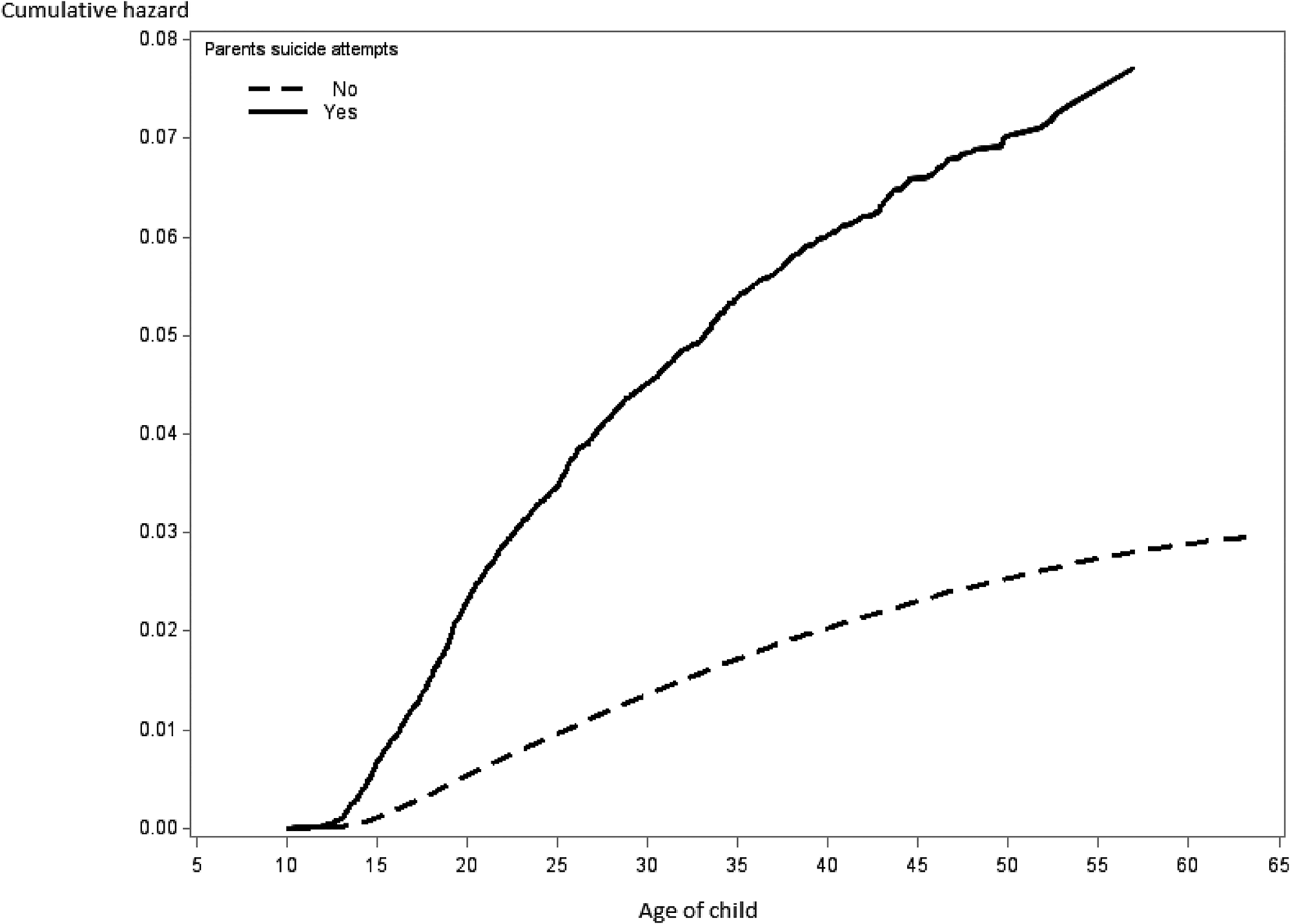
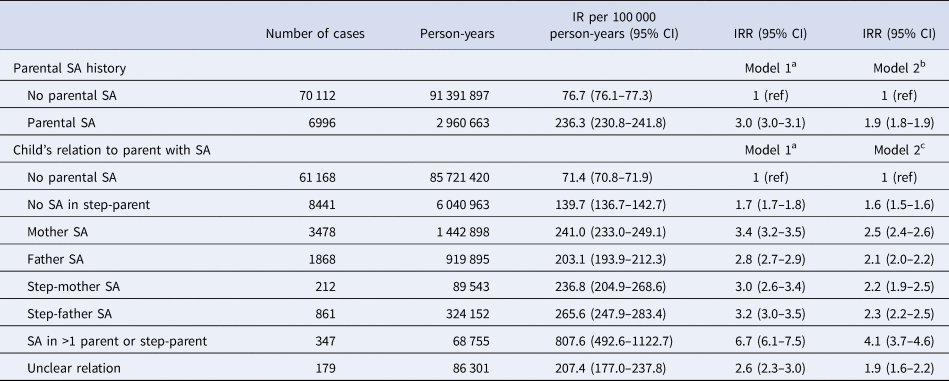
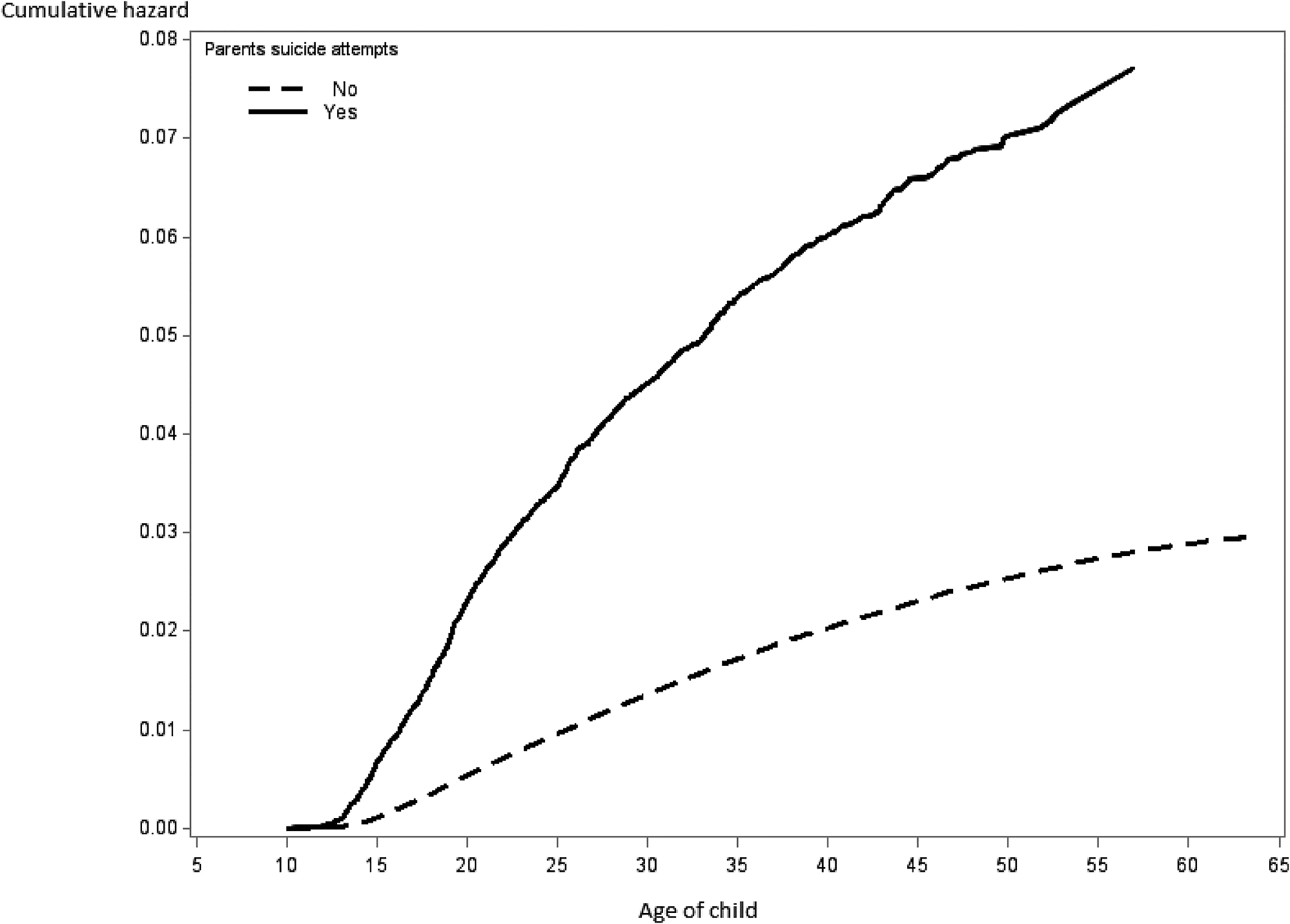
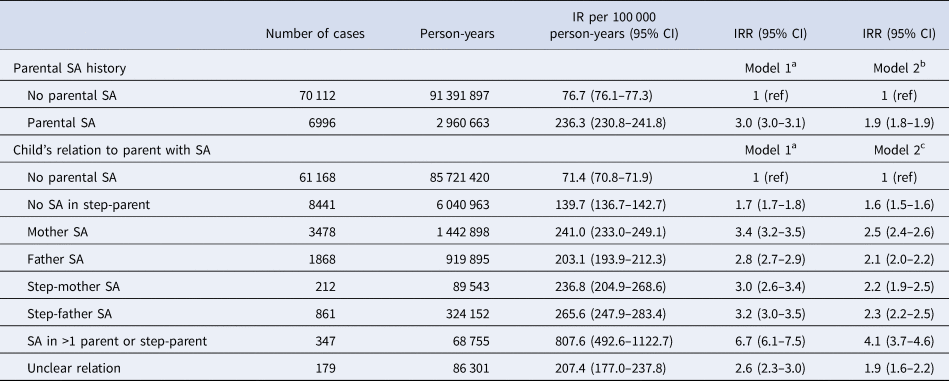
During follow-up, 6996 (4.3%) children in the exposed group and 70112 (1.6%) in the unexposed group were registered with an SA. The rate of SA in children who had experienced a parental SA was 236.3 (95% CI 230.8–241.8) compared with 76.7 (95% CI 76.1–77.3) per 100 000 person-years among children not exposed (Table 1). The IRR between children who were exposed and those who were not was 3.0 (95% CI 3.0–3.1) in the basic adjusted model and 1.9 (95% CI 1.8–1.9) in the fully adjusted model. In model 2, following categories were associated with lower SA rates: parents' higher educational level, parents being employed, the child having siblings, and parents living together, while other factors were associated with higher rates of SA: parents' psychiatric illness, parents being the victim of a violent crime, parental separation, parental age <25 years when becoming a parent as well as parental age >40 years (online Supplementary Fig. S1). The children who had been exposed to parental SA had a cumulative SA hazard of 7.5% v. 3% among those not exposed (Fig. 1).
Cumulative hazard of attempted suicide from age 10 years according to exposure to parents' SA or not.
IRRs of children's SA in relation to exposure of parental SA
SA, suicide attempt; IR, incidence rate; IRR, incidence rate ratio.
a Child's gender and age group, calendar period.
b Child's gender and age group, child living with both parents, parental separation, maternal and paternal age at child's birth, child has siblings, parents' educational level, parents' socio-economic status, parents' psychiatric disorder, parental victimization.
c Child's gender and age group, maternal and paternal age at child's birth, child has siblings, parents' educational level, parents' socio-economic status, parents' psychiatric disorder, parental victimization.
Child's relation to parent
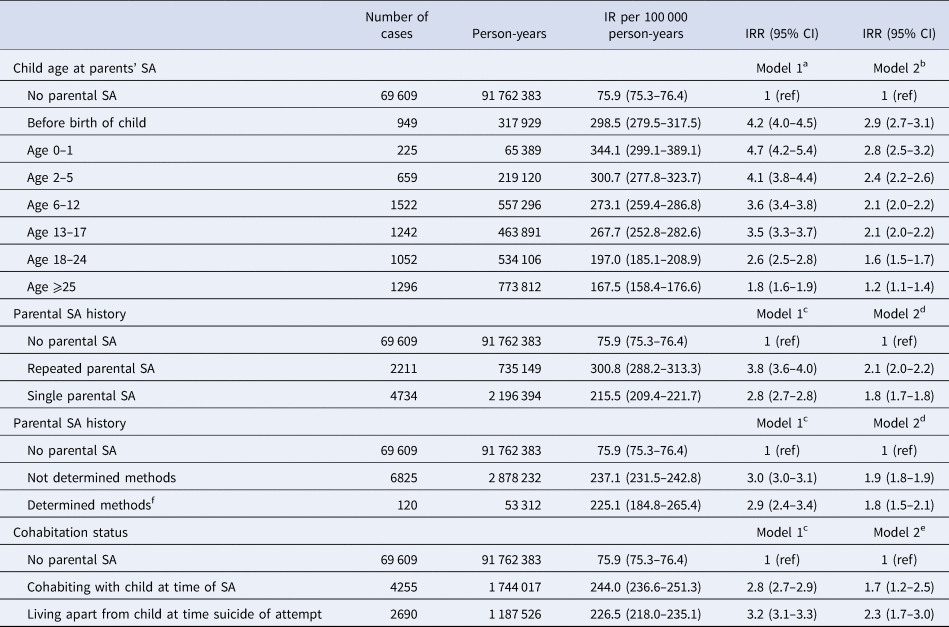
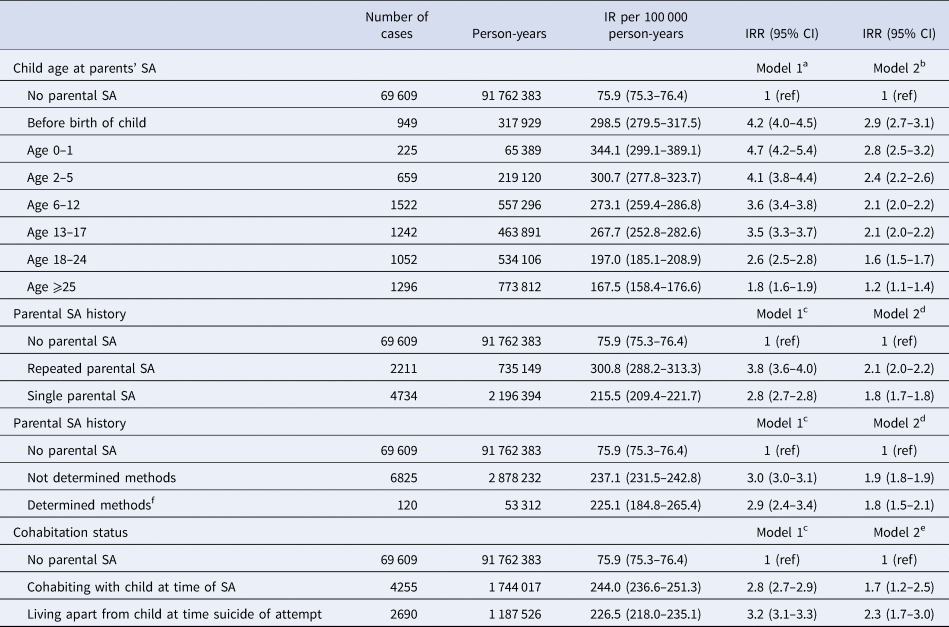
Children who experienced the SA of a mother had a higher rate of SA (IRR, 3.4; 95% CI 3.2–3.5) than those who experienced the SA of a father (IRR, 2.8; 95% CI 2.7–2.9) when compared to those not exposed (Table 1). In a separate model, a step-parent's SA was associated with increased rates of SA in step-children (step-mother: IRR, 3.0; 95% CI 2.6–3.4; step-father: IRR, 3.2; 95% CI 3.0–3.5). However, compared to non-exposed with no step-parents, also children with step-parents with no SA had increased rates of SA (IRR, 1.7; 95% CI 1.7–1.8). Having more than one parent with SA was associated with the highest rate (IRR, 6.7; 95% CI 6.1–7.5). Children who cohabitated with the parent at the time of parent's SA seemingly had lower rates (IRR, 2.8; 95% CI 2.7–2.9) than those who were exposed but did not live with the parent (IRR, 3.2; 95% CI 3.1–3.3), using non-exposed as the reference (Table 2). Exploratory analyses showed no interaction between gender of child and parent with SA. Children, who experienced multiple SAs of a parent, had higher rates of SA themselves (IRR, 3.8; 95% CI 3.6–4.0) when compared to those of parents with one SA (IRR, 2.8; 95% CI 2.7–2.8) (Table 2).
IRRs of children's SA in relation to factors of parental SA
SA, suicide attempt, IR, incidence rate, IRR, incidence rate ratio.
a Child's gender, calendar period.
b Child's gender, calendar period, maternal and paternal age at child's birth, child has siblings, parents' educational level, parents' socio-economic status, parental psychiatric disorder, parental victimization.
c Child's gender and age group, calendar period.
d Child's gender and age group, child living with both parents, parental separation, maternal and paternal age at child's birth, child has siblings, parents' educational level, parents' socio-economic status, parents' psychiatric disorder, parental victimization.
e Child's gender and age group, maternal and paternal age at child's birth, child has siblings, parents' educational level, parents' socio-economic status, parents' psychiatric disorder, parental victimization.
f Hanging, shooting, fire, jumping and moving object.
Age of child
Children who were 0–1 years of age at the time of the parent's SA had a higher IRR (IRR, 4.7; 95% CI 4.2–5.4) than those exposed between ages 6 and 12 (IRR, 3.6; 95% CI 3.4–3.8), while children exposed before their birth had an IRR of 4.2 (95% CI 3.9–4.5) (Table 2). The pattern of higher rates when exposed prior to or during early childhood was present in both the basic and fully adjusted models.
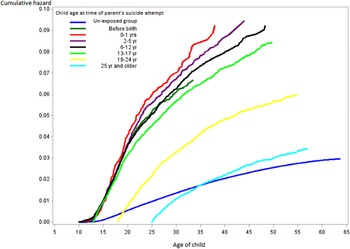
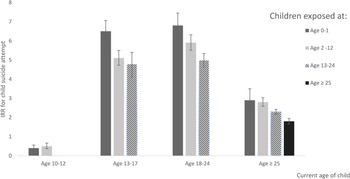
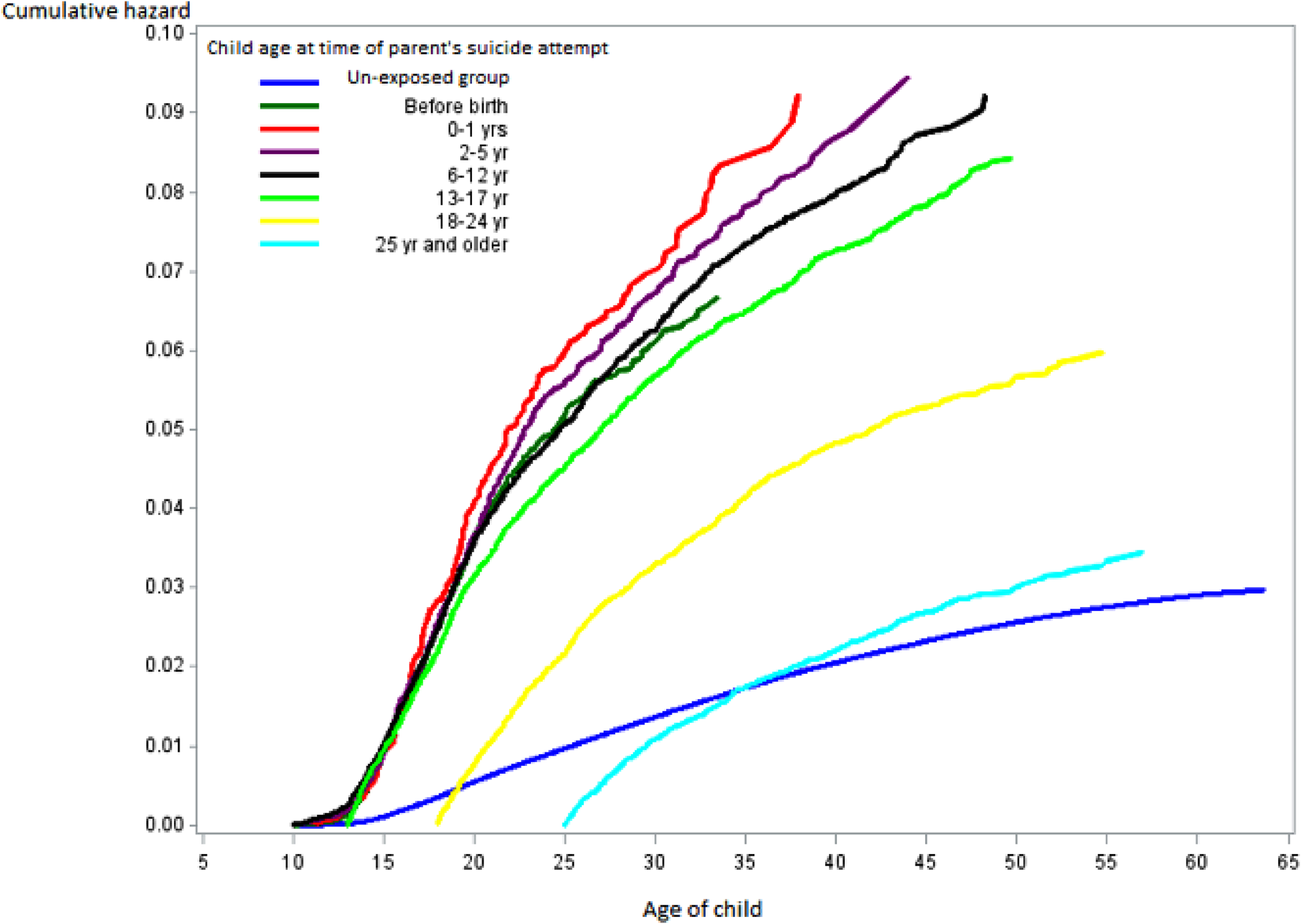
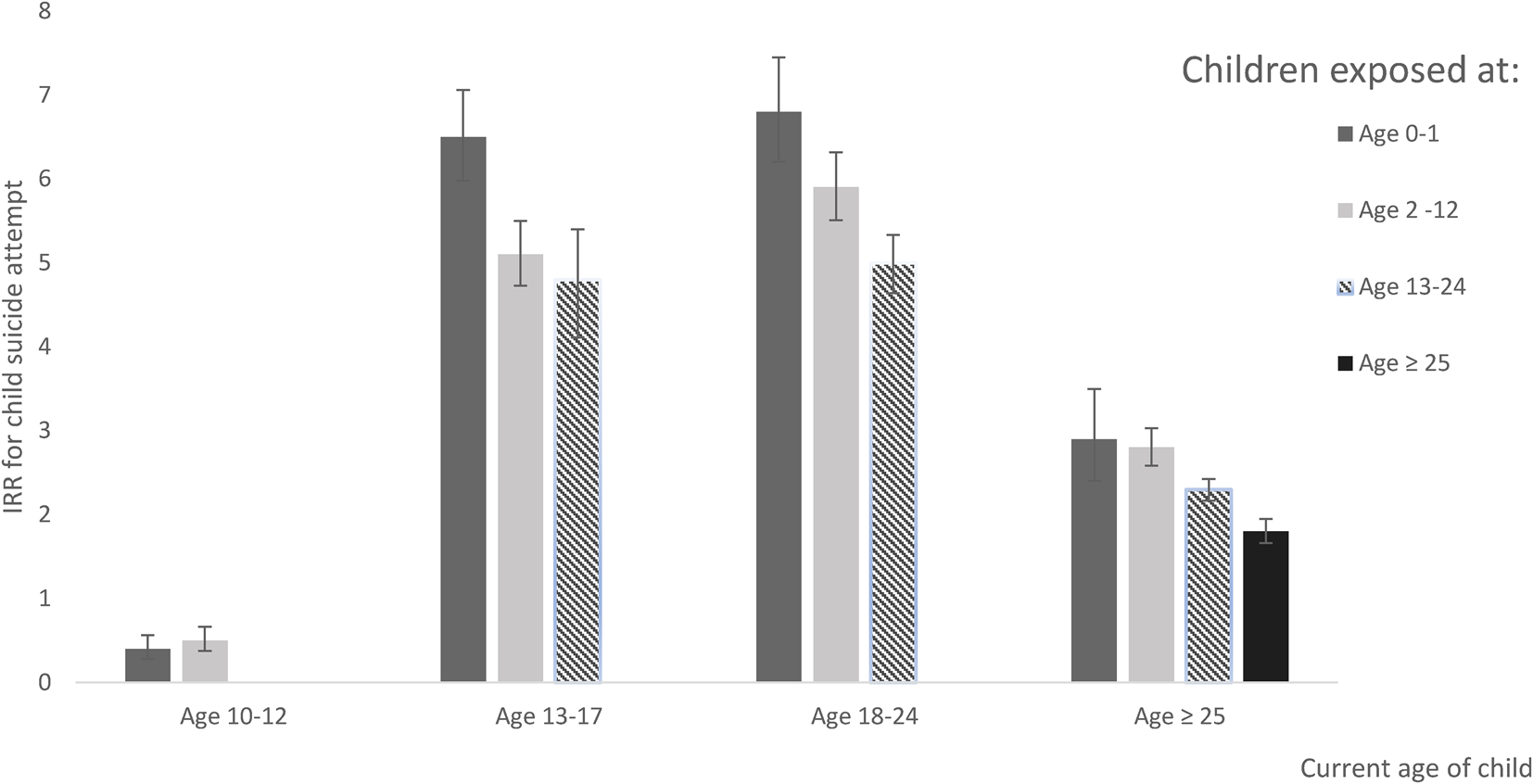
The hazard curves suggested that children who experienced parental SA during younger ages would themselves have an SA at an earlier age than those exposed later in life (Fig. 2). At age 20, the cumulative hazard of children exposed at a young age surpassed those of children exposed at older ages. The highest cumulative risk was noted for children with a parental SA at age 0–1 years as 9.5% of them had had an SA prior to age 38. A positive interaction was noted between the child's age and SA (p < 0.001); for the age group 10–15 years, where the interaction estimate was 1.3 (95% CI 1.3–1.4). The interaction effects seemingly decreased with increasing age of the children. Children who were exposed prior to age 2 had the highest rates of all sub-groups at ages 13–17 (IRR, 6.5; 95% CI 6.0–7.1) and 18–25 years (IRR, 6.8; 95% CI 6.2–7.4) (Fig. 3). Hazards for SA showed a similar pattern of variation with age (online Supplementary Fig. S2). Sensitivity analyses showed a higher IRR among those exposed to parental SA during 1980–1989 (IRR, 3.6; 95% CI 3.3–3.9) than during 1990–1999 (IRR, 3.0; 95% CI 2.8–3.1) and 2000–2016 (IRR, 3.1; 95% CI 3.0–3.1) when compared to those not exposed in each of these distinct periods.
Cumulative hazard of attempted suicide according to child's age of exposure to parental SA.
Exposure to parental SA according to child's current age group. IRR, incidence rate ratio. Adjusted for child's gender and calendar period.
Characteristics of children
Children who themselves suffered from mental illnesses had elevated rates of SA, irrespective of whether their parents had had an SA or not (exposed: IRR, 20.8; 95% CI 20.4–21.1; non-exposed: IRR, 22.7; 95% CI 21.8–23.5) (online Supplementary Table S2). Having a child oneself was associated with to lower rates of SA, in the case of a parental SA (IRR, 1.6; 95% CI 1.5–1.7) than for those with no own children (IRR, 2.0; 95% CI 2.0–2.1). Exposed children with a long education had an IRR of 1.5 (95% CI 1.3–1.7), while those who had only completed a minimum education had an IRR of 5.1 (95% CI 4.9–5.3) compared to un-exposed children with a long education.
Discussion
Main findings
In this nationwide study, children exposed to an SA of a parent or step-parent had an elevated rate of SA themselves and the association remained robust after adjustment for important confounders. Children who exposed to parental SA before or shortly after being born had higher rates than for those exposed later in life, particularly from the age of 13. Higher rates were also noted for those individuals where both parents had had an episode of SA or a parent had had repeat episodes of SA. Factors among children and parents, such as high educational level, being employed, and parents living together, were associated with lower rates of SA in children.
Possible mechanisms
Possible explanations for intergenerational transmission of SA include shared genetics (Erlangsen et al., Reference Erlangsen, Appadurai, Wang, Turecki, Mors, Werge and Agerbo2018; Mullins et al., Reference Mullins, Bigdeli, Børglum, Coleman, Demontis, Mehta and Lewis2019), social transmission (Kenneally, Szűcs, Szántó, & Dombrovski, Reference Kenneally, Szűcs, Szántó and Dombrovski2019), and exposure to stressful environmental factors during upbringing, including insecure or dysfunctional parent-child interactions (Cerel, Frey, Maple, & Kinner, Reference Cerel, Frey, Maple and Kinner2016). Children's traumatic experience of parents' life-threatening behavior in terms of SA should also be recognized. Constant worrying about the parent (McLaughlin et al., Reference McLaughlin, Green, Gruber, Sampson, Zaslavsky and Kessler2010) and being on guard to prevent a new attempt may constitute a significant burden on a young child (Magne-Ingvar & Öjehagen, Reference Magne-Ingvar and Öjehagen1999). Transmission of suicidal behavior has been demonstrated for biologically related and non-related family members (Agerbo, Reference Agerbo2005). Although twin studies suggest a heritability of suicidal behavior between 30% and 55% (Turecki & Brent, Reference Turecki and Brent2016), molecular studies indicate minimal single nucleotide polymophismsSNPs-heritability rates of 4.6% (restricted to identified SNPs) (Erlangsen et al., Reference Erlangsen, Appadurai, Wang, Turecki, Mors, Werge and Agerbo2018). In this study, we found that the association between parents' and children's SA attenuated when adjusted for family history of mental disorders, which is consistent with findings from a recent population-based genetic study by Kendler et al., that ‘two-fifth of the parent-child genetic liability of suicide attempt can be accounted for by transmission of risk for psychiatric disorders’ (Kendler et al., Reference Kendler, Ohlsson, Ph, Sundquist, Ph, Sundquist and Ph2020). Child's own mental illness was also associated with an elevated SA rate, which seemingly was independent of exposure to parental SA. However, children's and parent's history of mental illness did not fully explain the observed association. The fact that an association existed between step-parents' and step-children's SA emphasize the role of environmental factors, as well as social role modeling, in the intergenerational transmission of SA. Kendler et al. (Reference Kendler, Ohlsson, Ph, Sundquist, Ph, Sundquist and Ph2020) found that step-parents' SA but not psychiatric disorders accounted for the increased rates of SAs in step-children, thus supporting the hypothesis of social role modeling as the driving environmental factor.
Developmental stage at time of exposure
Similar patterns of high rates of SA during young ages have been shown for children exposed to parental suicide (Kuramoto et al., Reference Kuramoto, Runeson, Stuart, Lichtenstein and Wilcox2013). The elevated rates among children exposed during early childhood v. late adolescence suggest that environmental circumstances may play an accentuated role during specific developmental periods of life, referred to as ‘sensitive periods’ (Ogle, Rubin, & Siegler, Reference Ogle, Rubin and Siegler2013). Early life-stressors have been linked to poor emotional regulation and higher risks of psychopathology later in life (Bick & Nelson, Reference Bick and Nelson2016; Hambrick, Brawner, & Perry, Reference Hambrick, Brawner and Perry2019). For instance, early childhood exposure to serious somatic illness in parents has been associated with higher risk of SA than if the exposure occurred during later childhood (Niederkrotenthaler, Floderus, Alexanderson, Rasmussen, & Mittendorfer-Rutz, Reference Niederkrotenthaler, Floderus, Alexanderson, Rasmussen and Mittendorfer-Rutz2012). However, early exposure to parental SA may also imply a longer period over which adverse exposures might accumulate. Our finding that multiple v. single SA's by parents is associated with higher SA rates in children could suggest that multiple exposures to trauma impose a greater burden, which in turn might be linked to an elevated risk for suicidal behavior. The breath of exposure to childhood adversity such as parental SA has indeed shown a graded relationship to adverse health outcomes in adulthood including mental illness and suicide (Felitti et al., Reference Felitti, Anda, Nordenberg, Williamson, Spitz, Edwards and Marks1998). Different psychiatric profiles in parents may relate differently to outcomes in children in terms of environmental and genetic influence. Indeed, a higher prevalence of substance abuse and psychotic disorders were associated with early death by suicide and a higher prevalence of major depression has previously been noted in those who died at an older age, and may be attributable to individuals with SA (Conwell et al., Reference Conwell, Duberstein, Cox, Hermann, Forbes and Caine1996).
Strengths and limitations
Strengths include complete and nationwide population-based data, covering all children born in 1953 or later with no loss to follow-up. Any bias in the selection of the study population and non-differentiated attrition during follow-up is unlikely to explain our findings. We took measures to avoid potential reverse causation bias by defining parental SA as occurring prior to the event of SA in the offspring. Nevertheless, limitations should be acknowledged; SAs are under-recorded in Danish hospital registries (Helweg-Larsen, Reference Helweg-Larsen2006; Nordentoft, Reference Nordentoft2007) and a certain proportion of individuals may not seek hospital care after SA. Thus, the absolute numbers for SA in both parents and children may be considered as minimum numbers and the cumulative risks as conservative estimates. The definition of parents as adults living with the child at the time of birth and step-parents as adults moving to the same address after the child's birth may lead to misclassification. Through sensitivity analyses, we addressed the fact that parental SA were first recorded in the NPR from 1977, hence a possible over-representation of SAs recorded in the PCRR with a higher prevalence of psychopathology would be an option. Still, adjusting for calendar period and parental mental illness might have moderated this issue. A limitation of register data is the low granularity of information resulting in multiple unmeasured factors, such as the quality of home environment and psychological wellbeing of children, which could be potentially significant explanatory factors for the studied association.
Clinical implications
When treating patients after an SA, it would be advisable for clinicians to check whether the patient has minor children and help consider whether the child might need support. Selective preventive intervention is recommended for individuals at increased risk of mental disorders (Arango et al., Reference Arango, Díaz-Caneja, McGorry, Rapoport, Sommer, Vorstman and Carpenter2018), and the same strategy has been suggested to attenuate the risk of familial transmission for children of parents with SA (Brent et al., Reference Brent, Melhem, Oquendo, Burke, Birmaher, Stanley and Mann2015), and should be provided in addition to psychiatric treatment and stabilization of the parent. Yet, evidence regarding preventive interventions targeting children of parents with SAs seems to be lacking. The guiding principle in prevention is to enhance factors, which protect against mental illness and suicidality in the family environment and the children themselves, and decrease risk factors (Beardslee, Reference Beardslee2019). Efforts to improve communication between family members in an age-appropriate manner should be encouraged when parents suffer from mental illness and/or SA. Importantly, the emotional response of the child, such as worries, guilt, or feeling rejected by the parent, should be explored as well as an assessment of children's own mental health. Interventions directed toward infants and young children generally aim to support parenting capacities and family functioning and may be especially important for preventing long-term adverse outcomes, bearing in mind the sensitive period in early life. Interventions toward older children may entail approaches, which involve the child more directly, such as support groups, mental health skills training, or actual psychotherapy, depending on the presence of psychiatric symptoms or suicidal ideation (Uher et al., Reference Uher, Cumby, MacKenzie, Morash-Conway, Glover, Aylott and Alda2014). Preventive efforts should address possible suicidal ideation in children themselves, especially from age 13 where risks of SA in children increase (Hawton et al., Reference Hawton, Witt, Taylor Salisbury, Arensman, Gunnell, Townsend and Hazell2015). Given that screens demonstrate poor predictive value with respect to suicidal behavior (Carter et al., Reference Carter, Milner, McGill, Pirkis, Kapur and Spittal2017), it is important to strengthen intermediate protective factors in order to improve children's psychological wellbeing.
Conclusion
In this national, cohort study, we found that children who had been exposed to an SA of a parent had higher SA rates than children not exposed. Furthermore, children exposed during early developmental periods had higher rates of SA than those exposed later in life, and rates were particularly pronounced during ages 13–25. Our results suggest that implementation of early interventions to support families affected by parental SA as well as vigilant prevention of suicide risk of in these children during adolescence should be given priority.
Supplementary material
The supplementary material for this article can be found at https://doi.org/10.1017/S0033291720005310
Conflict of interest
None.