Introduction
C-reactive protein (CRP) is an acute-phase protein synthesized by the liver in response to physical and psychosocial stressors (Du Clos and Mold, Reference Du Clos and Mold2004), where levels peak during acute infection but subside quickly once the stimulus is removed (Pepys and Hirschfield, Reference Pepys and Hirschfield2003). Consistently high levels of CRP are regarded as indicating chronic inflammation and CRP has been found to predict risk for cardiovascular disease, the leading underlying cause of death in the United States (Mozaffarian et al., Reference Mozaffarian, Benjamin, Go, Arnett, Blaha, Cushman, Das, De Ferranti, Despres, Fullerton, Howard, Huffman, Isasi, Jimenez, Judd, Kissela, Lichtman, Lisabeth, Liu, Mackey, Magid, Mcguire, Mohler, Moy, Muntner, Mussolino, Nasir, Neumar, Nichol, Palaniappan, Pandey, Reeves, Rodriguez, Rosamond, Sorlie, Stein, Towfighi, Turan, Virani, Woo, Yeh and Turner2016). CRP is unaffected by eating and does not appear to be subject to diurnal or seasonal variation (Meier-Ewert et al., Reference Meier-Ewert, Ridker, Rifai, Price, Dinges and Mullington2001; Frohlich et al., Reference Frohlich, Sund, Thorand, Hutchinson, Pepys and Koenig2002; Pepys and Hirschfield, Reference Pepys and Hirschfield2003). Elevated CRP levels have been linked to experiences of childhood adversities, stress, and trauma (Taylor et al., Reference Taylor, Lehman, Kiefe and Seeman2006; Danese et al., Reference Danese, Pariante, Caspi, Taylor and Poulton2007; Pollitt et al., Reference Pollitt, Kaufman, Rose, Diez-Roux, Zeng and Heiss2007; Danese et al., Reference Danese, Moffitt, Pariante, Ambler, Poulton and Caspi2008; Danese et al., Reference Danese, Moffitt, Harrington, Milne, Polanczyk, Pariante, Poulton and Caspi2009; Broyles et al., Reference Broyles, Staiano, Drazba, Gupta, Sothern and Katzmarzyk2012; Coelho et al., Reference Coelho, Viola, Walss-Bass, Brietzke and Grassi-Oliveira2014; Cicchetti et al., Reference Cicchetti, Handley and Rogosch2015; Baumeister et al., Reference Baumeister, Akhtar, Ciufolini, Pariante and Mondelli2016; Baldwin et al., Reference Baldwin, Arseneault, Caspi, Fisher, Moffitt, Odgers, Pariante, Ambler, Dove, Kepa, Matthews, Menard, Sugden, Williams and Danese2018). These relationships have been demonstrated in the short-term (Heim, Reference Heim2017), throughout adolescence (Copeland et al., Reference Copeland, Wolke, Lereya, Shanahan, Worthman and Costello2014), and into adulthood (Danese et al., Reference Danese, Pariante, Caspi, Taylor and Poulton2007), although these studies have predominantly used a broad definition of childhood adversities, rather than focusing on specific stressors (Fagundes et al., Reference Fagundes, Glaser, Malarkey and Kiecolt-Glaser2013; Dowd et al., Reference Dowd, Palermo, Chyu, Adam and Mcdade2014).
However, child maltreatment and its subtypes have been shown to have distinct effects on health outcomes (Chartier et al., Reference Chartier, Walker and Naimark2010; Widom et al., Reference Widom, Czaja, Bentley and Johnson2012). In one study, individuals with a documented history of childhood physical abuse were at increased risk for higher levels of CRP than non-maltreated individuals 30 years later (Widom et al., Reference Widom, Czaja, Bentley and Johnson2012). Elevated CRP levels have been linked not only to the presence of childhood maltreatment, but to its severity (Aas et al., Reference Aas, Dieset, Hope, Hoseth, Morch, Reponen, Steen, Laskemoen, Ueland, Aukrust, Agartz, Andreassen and Melle2017). There also appears to be a stronger relationship between childhood adversity and CRP in females than males (Baldwin et al., Reference Baldwin, Arseneault, Caspi, Fisher, Moffitt, Odgers, Pariante, Ambler, Dove, Kepa, Matthews, Menard, Sugden, Williams and Danese2018), and while race differences in CRP levels have been reported (Ford et al., Reference Ford, Giles, Myers, Rifai, Ridker and Mannino2003; Ford et al., Reference Ford, Giles, Mokdad and Myers2004; Khera et al., Reference Khera, Mcguire, Murphy, Stanek, Das, Vongpatanasin, Wians, Grundy and De Lemos2005; Lande et al., Reference Lande, Pearson, Vermilion, Auinger and Fernandez2008), it is difficult to determine whether there are also race differences in the relationship between early life stress and CRP because the existing literature is based primarily on all White or majority-White samples (Danese et al., Reference Danese, Moffitt, Pariante, Ambler, Poulton and Caspi2008; Danese et al., Reference Danese, Caspi, Williams, Ambler, Sugden, Mika, Werts, Freeman, Pariante, Moffitt and Arseneault2011; van Ockenburg et al., Reference Van Ockenburg, Tak, Bakker, Gans, De Jonge and Rosmalen2015; Lin et al., Reference Lin, Neylan, Epel and O'donovan2016).
With some exceptions (Danese et al., Reference Danese, Pariante, Caspi, Taylor and Poulton2007; Danese et al., Reference Danese, Moffitt, Pariante, Ambler, Poulton and Caspi2008; Danese et al., Reference Danese, Caspi, Williams, Ambler, Sugden, Mika, Werts, Freeman, Pariante, Moffitt and Arseneault2011; Widom et al., Reference Widom, Czaja, Bentley and Johnson2012; Copeland et al., Reference Copeland, Wolke, Lereya, Shanahan, Worthman and Costello2014; Baldwin et al., Reference Baldwin, Arseneault, Caspi, Fisher, Moffitt, Odgers, Pariante, Ambler, Dove, Kepa, Matthews, Menard, Sugden, Williams and Danese2018), the existing literature is based primarily on retrospective self-reports of childhood histories, rather than documented cases or prospective data. A recent meta-analysis found poor agreement between prospective and retrospective measures of maltreatment; more than half of individuals with prospective observations of maltreatment failed to report it retrospectively, and more than half of individuals who did report maltreatment had no corresponding documentation (Baldwin et al., Reference Baldwin, Reuben, Newbury and Danese2019). This lack of concordance raises questions about potential biases (Henry et al., Reference Henry, Moffitt, Caspi, Langley and Silva1994; Offer et al., Reference Offer, Kaiz, Howard and Bennett2000) that may be due to deterioration in recall ability or to changes in individuals' understandings of maltreatment over time (Baldwin et al., Reference Baldwin, Reuben, Newbury and Danese2019; Widom, Reference Widom2019). Baldwin et al. (Reference Baldwin, Reuben, Newbury and Danese2019) provide an excellent discussion of multiple possibilities for memory biases that can result in under- and over-reporting, including forgetting, cognitive avoidance strategies, or cognitive appraisal.
The current study extends and expands on existing knowledge in two important ways: by comparing results based on official reports (prospective) and retrospective self-reports of childhood abuse and neglect and by distinguishing the consequences of childhood physical abuse, sexual abuse, and neglect. We expect that childhood maltreatment (and all three subtypes) will predict higher levels of CRP than for non-maltreated individuals. Furthermore, we expect that the relationship between retrospective self-reports of child maltreatment and inflammation will be stronger than the relationship between official reports and inflammation for two reasons. First, some research has shown that recall accuracy is influenced by current experiences (e.g. Widom et al., Reference Widom, Dutton, Czaja and Dumont2005). Thus, individuals experiencing physical and mental health problems in adulthood may be more apt to provide negative accounts of their pasts, thus artificially inflating the association between childhood maltreatment and negative outcomes later on. In addition, retrospective reports of maltreatment are more strongly linked to mental health problems than prospective measures (e.g. Reuben et al., Reference Reuben, Moffitt, Caspi, Belsky, Harrington, Schroeder, Hogan, Ramrakha, Poulton and Danese2016; Newbury et al., Reference Newbury, Arseneault, Moffitt, Caspi, Danese, Baldwin and Fisher2018). The second reason is based on the concern that reliance on official reports of child maltreatment underestimates the extent of the problem (Hardt and Rutter, Reference Hardt and Rutter2004). Finally, based on prior literature, we expect that the relationship between child maltreatment and CRP will be stronger for women than men, although we examine, but do not make predictions about, race differences.
Methods
Study sample
This research uses data from the offspring of participants in a longitudinal study focusing on the long-term consequences of childhood maltreatment, where a large group of children with documented cases of childhood abuse and neglect (n = 908) and a matched control group (n = 667) were followed into adulthood and assessed. Maltreated participants were identified via county court records from a Midwestern city during the years 1967–1971. Controls were matched on the basis of age, sex, race, and approximate family social class. A detailed description of the study design and sample selection criteria has been previously reported (Widom, Reference Widom1989; Widom et al., Reference Widom, Czaja and Dumont2015b). Initial interviews were conducted during 1989–1995, with follow-up interviews in 2000–2002, 2003–2005, and 2009–2010. Although there was attrition associated with death, refusals, and our inability to locate individuals over the various waves of the study, the composition of the sample at all time points has remained about the same. The maltreatment group represented 56–58% at each time period; White, non-Hispanics were 62–66%; and males were 48–51% of the samples. There were no significant differences across the samples on these variables or in mean age across the phases of the main study.
During 2009–2010, 649 of the original participants from both groups (abuse/neglect and controls) and 697 of their offspring were interviewed using computer-assisted personal interviewing. The current analyses use data from the offspring group only.
In all waves of the study, participants and interviewers were blind to the purpose of the study. Because of the nature of the larger study, the expectation was that the offspring would be at high risk for child maltreatment (Widom et al., Reference Widom, Czaja and Dumont2015b). Offspring were told that they were selected because someone in their family had participated in previous rounds of the study and that the purpose of the current study was to understand factors that shape how people change as they develop throughout the life course. Participants were assured that their responses would be kept confidential, unless they indicated that a minor was being harmed or in danger, in which case the appropriate authorities would be notified (per mandatory reporting laws). All procedures were approved by relevant Institutional Review Boards, depending on the wave of the study, and participants indicated their voluntary participation in the study and signed consent forms. As compensation, 12–17-year-old offspring received $50 and offspring 18 and over received $75.
The sample for the current analysis (N = 443) does not reflect the total offspring sample of 697. There were a number of reasons for the exclusion: (1) offspring under the age of 12 (n = 42) did not have blood drawn because of IRB concerns; (2) some offspring who were interviewed (n = 157) declined to have blood drawn; (3) offspring with CRP levels exceeding 10 mg/L (n = 34) were excluded, as this is considered evidence of acute inflammation, infections, or pathology (Pearson et al., Reference Pearson, Mensah, Alexander, Anderson, Cannon, Criqui, Fadl, Fortmann, Hong, Myers, Rifai, Smith, Taubert, Tracy and Vinicor2003; McDade et al., Reference Mcdade, Burhop and Dohnal2004; Fuligni et al., Reference Fuligni, Telzer, Bower, Cole, Kiang and Irwin2009); and (4) individuals who self-identified as other than Black or White (n = 38) were excluded because this group was too small for meaningful analysis. There were no significant differences between offspring with and without available CRP data in terms of age (p = 0.25), sex (p = 0.98), race (p = 0.62), parent occupational level (p = 0.32), current depression (p = 0.37), smoking (p = 0.17), drinking (p = 0.83), and whether any CPS charges had been filed (p = 0.42).
The current sample includes 443 offspring of both original groups (abuse/neglect and controls), ages 12 and older, who self-identified their race as either White or Black. The resulting sample was mean age 23.4 years (s.d. = 5.23), 48.5% female (n = 215); 40.9% (n = 181) identified as Black and 59.1% (n = 262) as White.
Measures
There is no single ‘gold standard’ to ascertain whether child abuse or neglect has occurred. Rather, each of the traditional methods used to assess child maltreatment (official records, self-reports, and observations) has limitations as well as strengths. For this reason, information was collected from multiple sources, including official reports from Child Protective Services (CPS) agency records and offspring retrospective self-reports.
Official reports of child maltreatment
Official reports of child maltreatment were based on searches of CPS records for the names of all offspring and their parents (Widom et al., Reference Widom, Czaja and Dumont2015b). These searches were conducted in 2011–2013 in the Midwestern state that was the site of the original study, where the majority of parents still resided. CPS records included information on overall and specific charges for physical abuse, sexual abuse, and neglect. Physical abuse cases included injuries such as bruises, welts, burns, abrasions, lacerations, wounds, cuts, and bone and skull fractures. Sexual abuse charges varied from felony sexual assault to fondling or touching, sodomy, incest, and rape. Neglect cases reflected a judgment that the parents' deficiencies in childcare were beyond those found acceptable by community and professional standards at the time. These cases represented extreme failure to provide adequate food, clothing, shelter, and medical attention to children. Any (overall) maltreatment was defined as the presence of at least one CPS charge. Of the sample, 76 (17.2%) offspring had an official CPS report for at least one type of child maltreatment.
Multiple commonly used and validated self-report measures were used to assess participants' maltreatment histories retrospectively. Depending on the measure, self-reports of physical abuse ranged from 17.2% to 64.8% of the sample, self-reports of sexual abuse ranged from 5.4% to 14.4%, and self-reports of neglect ranged from 28.2% to 53.7% (for a more detailed description of the measures, see Widom et al. (Reference Widom, Czaja and Dumont2015a)). Of the sample, 88.3% (n = 391) said yes to at least one of the self-report measures. Because the percent of the sample that retrospectively self-reported any childhood maltreatment was so high, we do not include the ‘any self-reported maltreatment variable’ in further analyses since there is insufficient variation in the exposure.
Self-reports of physical abuse
Self-reports of physical abuse were assessed with questions from Longitudinal Studies in Child Abuse and Neglect (LONGSCAN) (Runyan et al., Reference Runyan, Curtis, Hunter, Black, Kotch, Bangdiwala, Dubowitz, English, Everson and Landsverk1998), Adolescent Health Wave IV (ADD Health) Pretest ‘Mistreatment by Adults’ measure (Harris, Reference Harris2011), and the Lifetime Trauma and Victimization History (LTVH; Widom et al., Reference Widom, Dutton, Czaja and Dumont2005). LONGSCAN is a multisite consortium investigating the predictors and outcomes of maltreatment. Separate questions taken from the LONGSCAN protocol were asked for the time periods ‘before age 12’ and ‘from 12 up to 18’ to assess for physical and sexual abuse. There were 18 physical abuse items, including ‘hit you with something really dangerous, like a baseball bat or shovel,’ ‘hit you with something less dangerous, like a hairbrush or belt,’ and ‘kicked or punched you.’ ADD Health is a nationally representative sample of adolescents followed from youth (ages 7–12) to ages 24–32. At wave 4, youth were asked ‘How often did a parent or other adult caregiver hit you with a fist, kick you, or throw you down on the floor, into a wall, or down stairs?’ The LTVH was developed as a structured in-person interview measure to assess for seven categories of traumatic and victimization experiences. The two physical abuse LTVH questions used asked participants ‘Were you ever struck, kicked, beaten, punches, slapped around, or otherwise physically harmed as a child’ and ‘Were you ever physically abused as a child?’
Self-reports of sexual abuse
Self-reports of sexual abuse were assessed with items from LONGSCAN, ADD Health, and LTVH. Twelve items were included in the LONGSCAN sexual abuse module, including ‘made you look at something sexual, like pictures or a movie,’ ‘spied on you or tried to look at you without your clothes on when didn't want to,’ and ‘touched your private parts or bottom in some way.’ In ADD Health, for the assessment of sexual abuse, participants were asked ‘How often did a parent or other adult caregiver touch you in a sexual way, force you to touch him or her in a sexual way, or force you to have sexual relations?’ All questions refer to the period up until the respondent's 18th birthday. In the LTVH, the sexual abuse questions were ‘Were you ever forced or coerced into unwanted sexual activity,’ ‘Did someone ever attempt to force you into unwanted sexual activity,’ and ‘Did someone ever touch your private parts or make you touch theirs against your wishes?’
Self-reports of neglect
Self-reports of neglect were assessed with items from the Conflict Tactics Scale (CTS; Straus et al., Reference Straus, Hamby, Finkelhor, Moore and Runyan1998), ADD Health, and Childhood Experiences Questionnaire (CEQ; Widom et al., Reference Widom, Czaja and Dumont2015b). The CTS neglect questions asked about the period in the participant's life up to age 18. Questions included a child not getting the food s/he needed, not being taken to a doctor or hospital when s/he needed to go, and a parent getting drunk or high on drugs and being unable to take care of the child. ADD Health neglect was assessed with one question: ‘How often did a parent or other adult caregiver say things that really hurt your feelings or made you feel like you were not wanted or loved?’ Questions refer to the period up to the respondent's 18th birthday. The CEQ was designed as a self-report measure of childhood neglect and included 14 items addressing the child's physical, educational, and emotional needs. Items are generally framed in a positive direction, e.g. ‘Was there always something for you to eat when you were hungry?’
C-reactive protein
A blood spot filter paper sampling method was used to measure CRP levels (McDade et al., Reference Mcdade, Burhop and Dohnal2004). The blood spot method used here was developed to permit immunological measures of psychosocial stress in community and field samples (Worthman and Stallings, Reference Worthman and Stallings1997). Validation studies have demonstrated that high-sensitivity CRP concentrations are relatively stable within individuals across time, supporting the use of a single CRP measure to indicate chronic levels of systemic inflammation (Macy et al., Reference Macy, Hayes and Tracy1997; Ockene et al., Reference Ockene, Matthews, Rifai, Ridker and Reed2001). Requirements for sample collection, storage, and transportation are minimal. Participants' fingers were cleaned with alcohol and then pricked with sterile, disposable micro-lancets widely available for diabetic use (Microtainer, Franklin Lakes, NJ). Up to 5 drops of capillary whole blood were collected on standardized filter paper (no. 903; Schleicher and Schuell) commonly used for neonatal screening. Samples were dried overnight at room temperature and shipped to the Emory University laboratory for analysis. CRP was assayed using established blood spot sensitivity and specificity ELISA (enzyme-linked immunosorbent assay) methods (McDade et al., Reference Mcdade, Stallings, Angold, Costello, Burleson, Cacioppo, Glaser and Worthman2000, Reference Mcdade, Burhop and Dohnal2004). Dried blood sampling has been incorporated into several population-based surveys (McDade et al., Reference Mcdade, Williams and Snodgrass2007). Prior validation of assay performance indicates that the dried blood sample CRP method yields results that are comparable to gold-standard serum-based clinical methods (McDade et al., Reference Mcdade, Burhop and Dohnal2004).
Control variables
In addition to age, sex, race, parent occupational level, heavy drinking, smoking, and depression were included as control variables. The parent occupational level was included as an approximate indicator of socioeconomic status (Hollingshead, Reference Hollingshead1975). As alcohol intake has been shown to impact the CRP level (Imhof et al., Reference Imhof, Froehlich, Brenner, Boeing, Pepys and Koenig2001), heavy drinking was used as a control and coded as positive if the participant reported consuming an average of over 60 drinks per month in the past year (Nikulina and Widom, Reference Nikulina and Widom2013). Cigarette smoking, another lifestyle factor linked to higher CRP (Mendall et al., Reference Mendall, Patel, Ballam, Strachan and Northfield1996; Rohde et al., Reference Rohde, Hennekens and Ridker1999), was based on participants' responses to questions about whether they had ever been frequent smokers, i.e. daily for 30 days or more. A mean parent occupational level in the current sample was 3.5 (s.d. = 1.7) on the Hollingshead (between semi-skilled and skilled), 5.6% of the sample were heavy drinkers, and 45.6% frequent smokers. Current depression symptoms were also included as one of the control variables based on the previous literature that suggests that depression may impact the strength of the relationship between childhood maltreatment and CRP levels (Danese et al., Reference Danese, Moffitt, Harrington, Milne, Polanczyk, Pariante, Poulton and Caspi2009, Reference Danese, Caspi, Williams, Ambler, Sugden, Mika, Werts, Freeman, Pariante, Moffitt and Arseneault2011). Participants age 12–17 completed the Children's Depression Inventory, Short Version (CDI-S; Kovacs, Reference Kovacs2003), and those 18 and older completed the Center for Epidemiological Studies – Depression Scale, a 20-item scale developed for use with the general population (CES-D; Radloff, Reference Radloff1977). Scores on these measures were converted into dichotomous indicators of whether each individual reported depressive symptomatology. Although there is no standard published cutoff score for the CDI-S, a T-score of over 65 was used to indicate current depression. For the CES-D, a cutoff score of 16 has been established to define a clinically significant level of depression (Weissman et al., Reference Weissman, Sholomskas, Pottenger, Prusoff and Locke1977; Radloff, Reference Radloff1991). Almost one-fifth (19.9%) of the sample met or exceeded the cutoff for clinically significant depression.
Statistical analysis
All analyses were conducted using SPSS 24.0. The threshold for statistical significance was set at p < 0.05. Since distribution of CRP serum levels was highly skewed, these data were first log-transformed and the resulting values were used as the dependent variable for all analyses. Multivariate linear regression analyses were performed to examine the extent to which official reports of childhood maltreatment, as well as specific maltreatment subtypes (physical abuse, sexual abuse, and neglect) predicted CRP levels. Given the literature on sex and race differences, separate regression analyses were then conducted, with the sample split first by sex (male v. female) and then by race (Black v. White). Next, regression analyses were repeated to determine whether the retrospective self-report measures of childhood maltreatment predicted the CRP level.
Results
Prevalence of child maltreatment and agreement between official and self-report measures
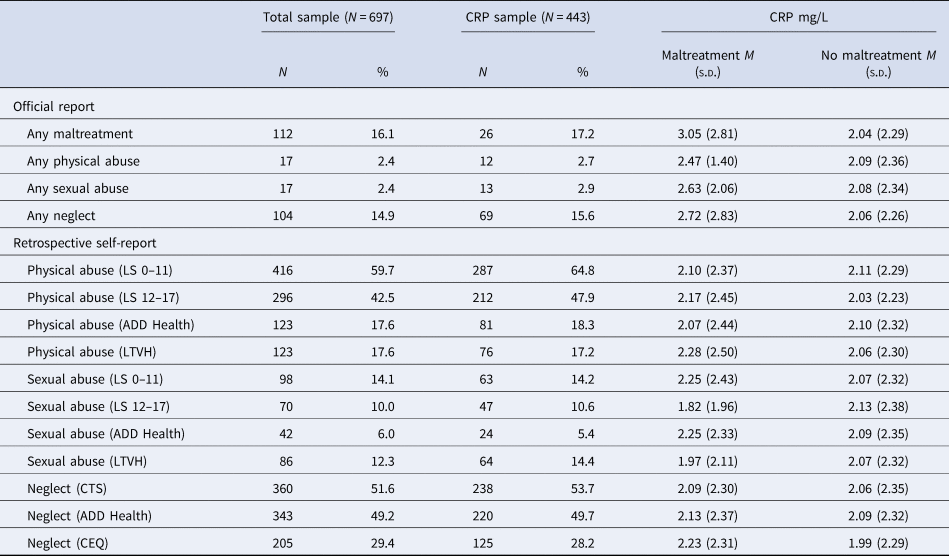
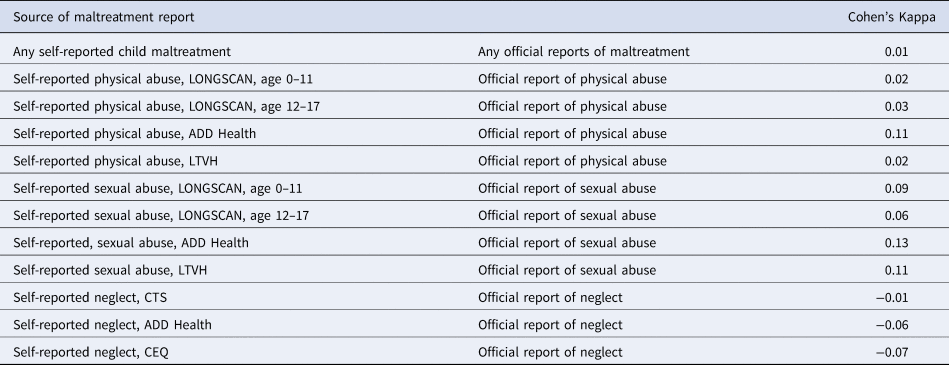
Table 1 presents descriptive statistics for the prevalence of maltreatment (official reports and self-reports) and CRP scores. Because one of the goals of this paper is to compare results using both strategies for ascertainment of childhood maltreatment, one question is the extent to which the two types of measures agree. Table 2 shows the extent of agreement (Cohen's Kappa) between the self-report measures and official reports of child maltreatment by type of maltreatment (physical abuse, sexual abuse or neglect). The Kappas are quite low, with the highest being 0.13 for the agreement between the ADD Health sexual abuse items and official report of sexual abuse. Inter-correlations among self-report measures can be found in online Supplementary Table S1.
Descriptive statistics for the prevalence of maltreatment (official reports and self-reports) and CRP scores
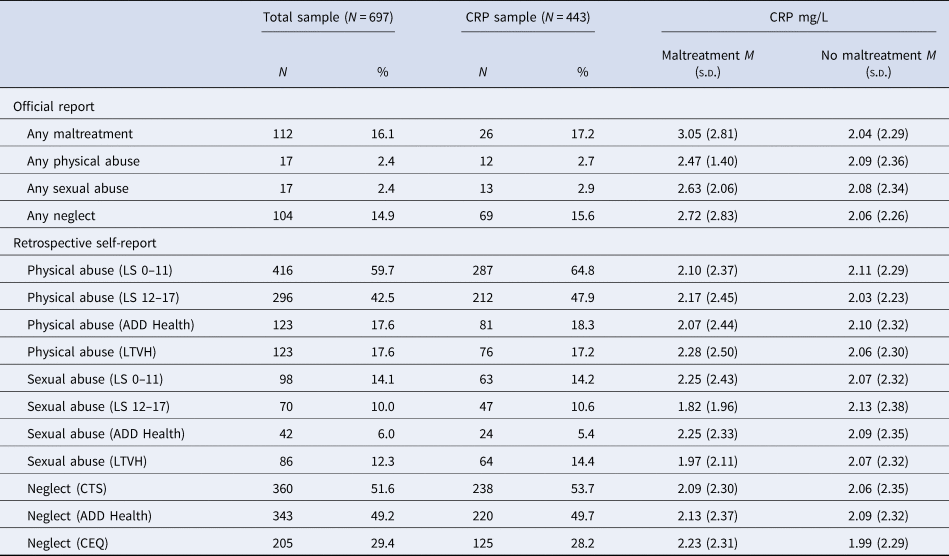
CRP, C-reactive protein; LS, LONGSCAN; 0–11, during ages 0–11; 12–17, during ages 12–17; ADD Health, National Longitudinal Study of Adolescent to Adult Health; LTVH, Lifetime Trauma and Victimization History; CTS, Conflict Tactics Scale; CEQ, Childhood Experiences Questionnaire.
Agreement between maltreatment based on retrospective self-report with official report of maltreatment
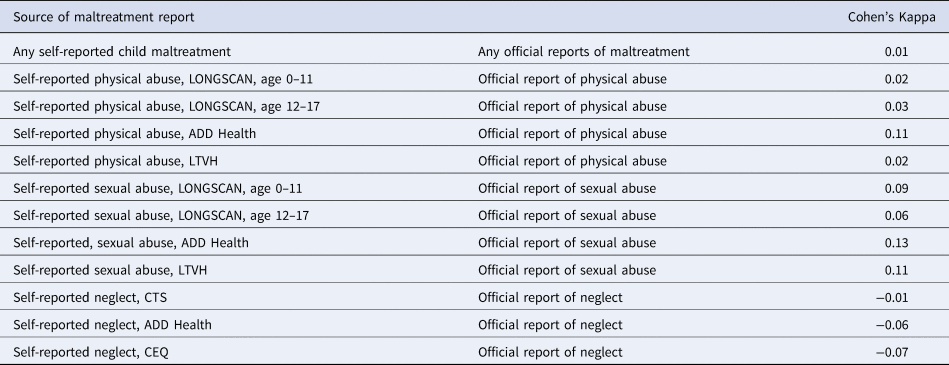
LONGSCAN, 0–11 refers to the time period from ages 0 to 11; LONGSCAN 12–17 refers to ages 12 to 17; ADD Health, National Longitudinal Study of Adolescent to Adult Health; LTVH, Lifetime Trauma and Victimization History; CTS, Conflict Tactics Scale; CEQ, Childhood Experiences Questionnaire.
Official reports of child maltreatment and CRP levels
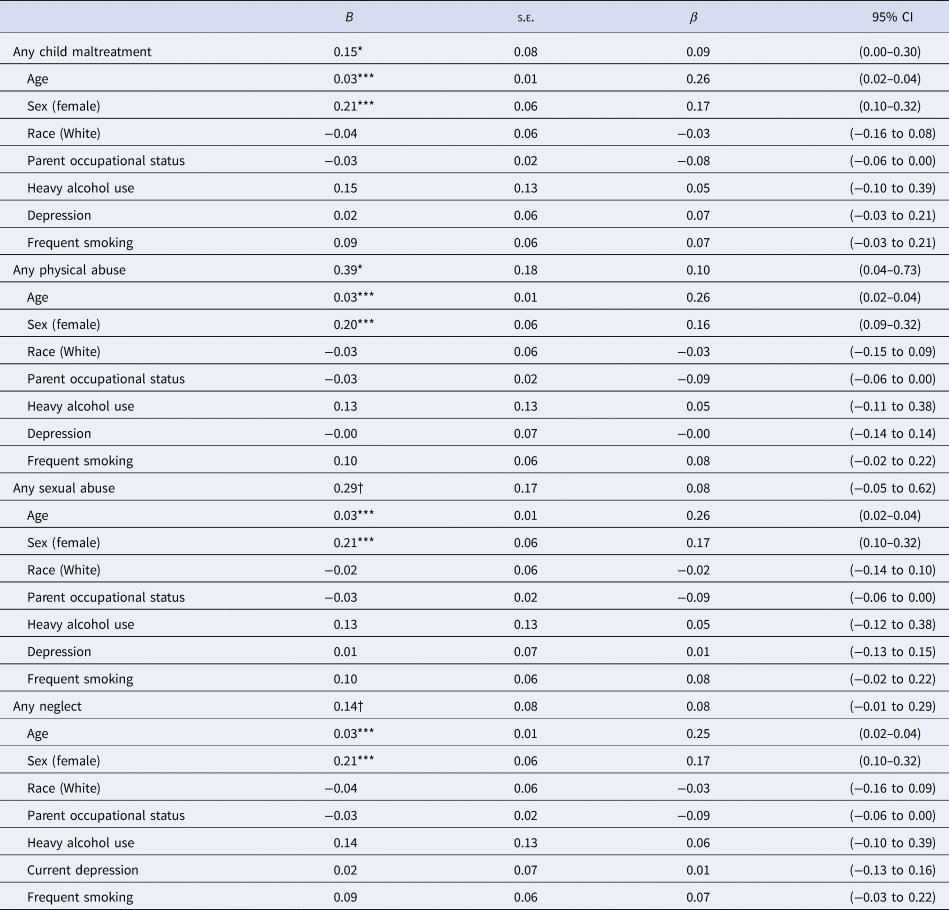
Table 3 shows that individuals in the overall sample with official reports of childhood maltreatment and physical abuse specifically had significantly higher CRP levels than individuals without those records, despite the introduction of all control variables. Results for individuals with official reports of sexual abuse and neglect did not reach conventional levels of significance. In all models, being female and older significantly predicted higher CRP levels. Race was not a significant predictor of the CRP level.
Official Child Protective Services Reports predict CRP level
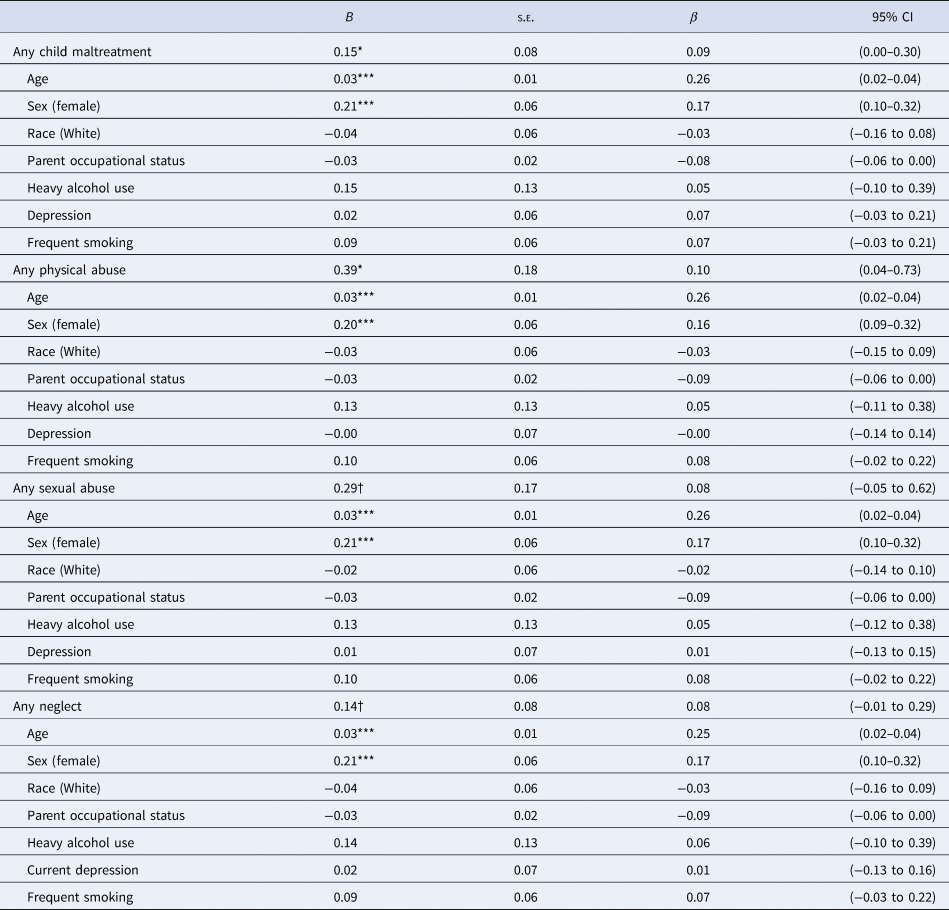
B, unstandardized coefficient; s.e., standard error of B; β = standardized coefficient; CI, confidence interval.
†p < 0.10, *p ⩽ 0.05, **p ⩽ 0.01, ***p ⩽ 0.001.
In separate sex specific regressions (online Supplementary Table S2), females with official reports of childhood maltreatment had significantly higher CRP levels compared to non-maltreated females [β = 0.15, CI (0.03–0.46)], whereas for males there was no association between child maltreatment and CRP. In regressions for Blacks and Whites separately, there were no significant associations between official reports of childhood maltreatment and CRP levels for either Blacks or Whites, although there was a non-significant trend for Whites. We did not conduct sex or race specific analyses for specific subtypes of maltreatment because of small sample sizes.
Self-reports of child maltreatment and CRP levels
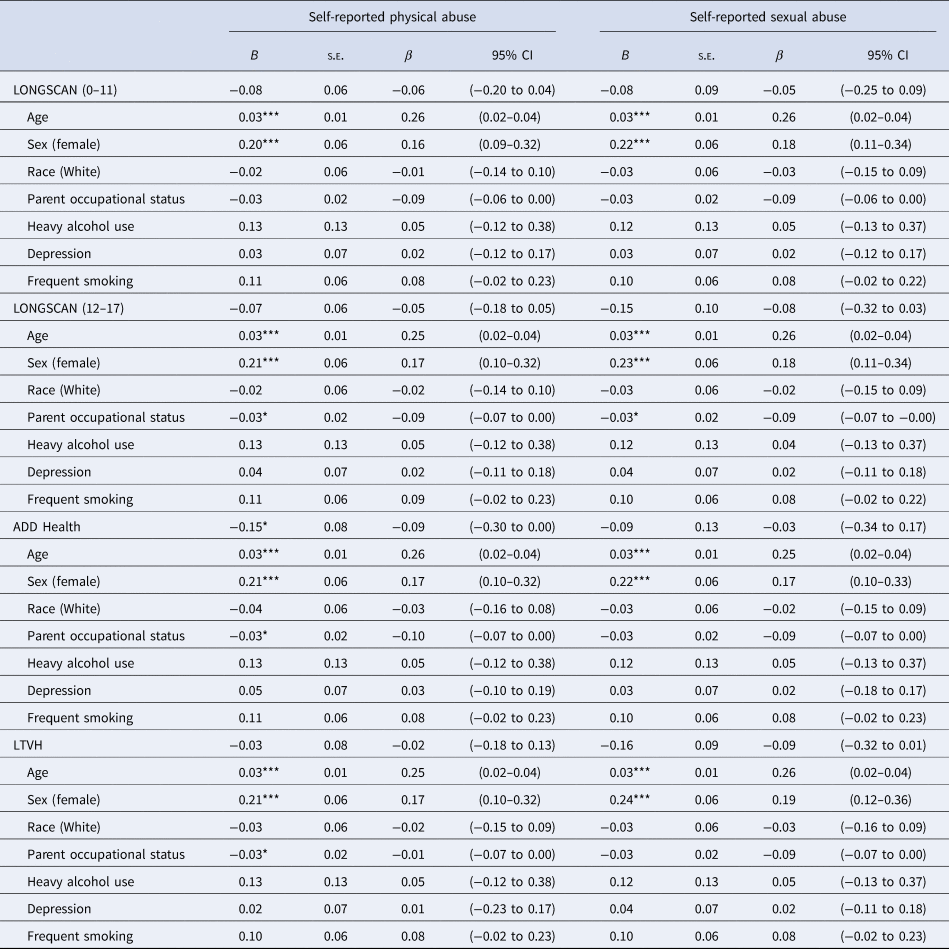
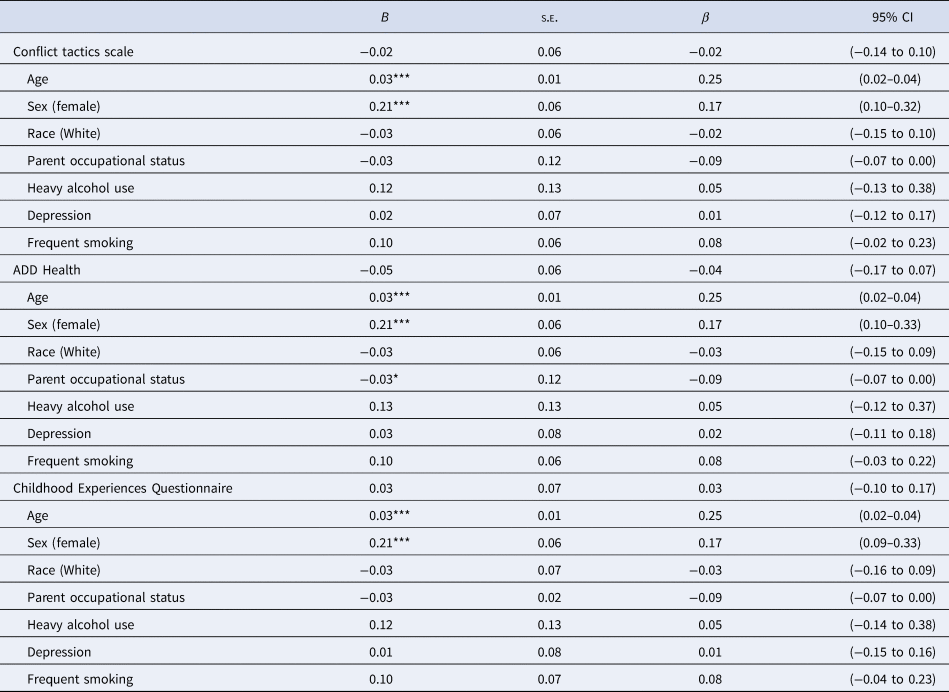
Surprisingly, none of the 11 self-report measures of childhood maltreatment predicted significantly elevated levels of CRP (see Tables 4 and 5). It is noteworthy that the only self-report measure to reach significance was the ADD Health physical abuse measure, but the coefficient (β = −0.09, p = 0.05) was negative, indicating that a self-report of physical abuse was associated with lower levels of CRP. Race was not a significant predictor of CRP level.
Retrospective self-reports of physical and sexual abuse do not predict CRP level
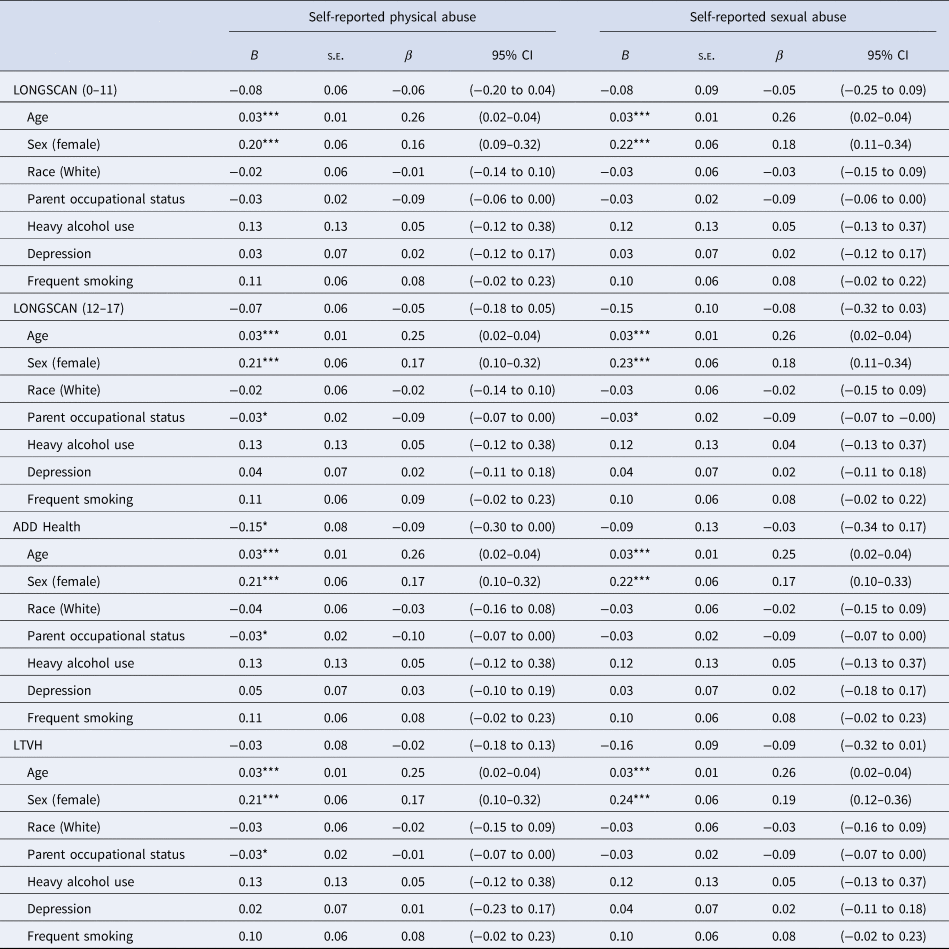
B, unstandardized coefficient; s.e., standard error of B; β, standardized coefficient; CI, confidence interval; LONGSCAN, LS 0–11 refers to the time period from ages 0 to 11; 12–17 refers to ages 12 to 17; ADD Health, National Longitudinal Study of Adolescent to Adult Health; LTVH, Lifetime Trauma and Victimization History instrument.
*p ⩽ 0.05, **p ⩽ 0.01, ***p ⩽ 0.001.
Retrospective self-reports of neglect do not predict CRP level
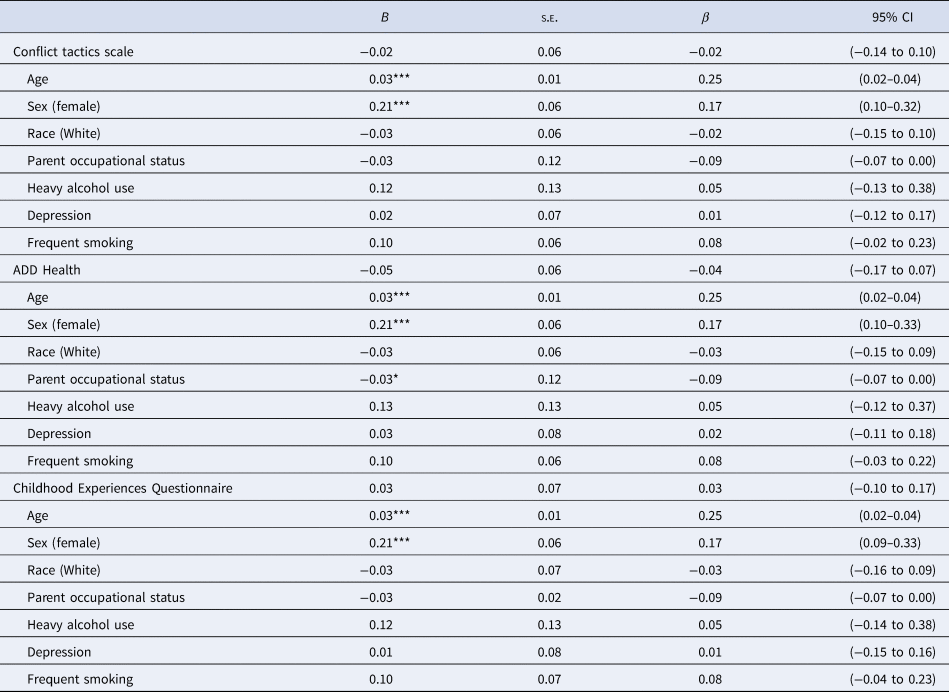
B, unstandardized coefficient; s.e., standard error of B; β, standardized coefficient; CI, confidence interval; ADD Health, National Longitudinal Study of Adolescent to Adult Health.
*p ⩽ 0.05, **p ⩽ 0.01, ***p ⩽ 0.001.
Discussion
This is the first study to examine whether childhood maltreatment predicts higher levels of CRP using two approaches to operationalizing these specific adverse childhood experiences. Individuals with official reports of childhood abuse and neglect in general and physical abuse specifically had significantly higher CRP, compared to those without these histories, although sexual abuse and neglect showed a trend in the same direction.
Surprisingly, none of the 11 retrospective self-reports of childhood maltreatment were associated with higher levels of CRP, despite our expectations that the relationship to CRP would be stronger in individuals who retrospectively report childhood maltreatment compared to individuals with documented cases of maltreatment. These results are also unexpected given that the assessments represented well-known and frequently used self-report measures of child maltreatment that have been validated and found informative in other contexts. The finding that children with official reports of maltreatment are at risk for higher levels of CRP than non-maltreated children later in life is not surprising, as the preponderance of the previous literature has shown positive associations between early life stress and the CRP level. What is surprising is that we did not find self-reports of maltreatment to be associated with higher levels of CRP, although some recent studies have also failed to find such a relationship (Carpenter et al., Reference Carpenter, Gawuga, Tyrka and Price2012; van Ockenburg et al., Reference Van Ockenburg, Tak, Bakker, Gans, De Jonge and Rosmalen2015).
However, the lack of agreement between our retrospective self-report findings and our findings based on official reports of child maltreatment is consistent with the results of the recently published review and meta-analysis by Baldwin et al., (Reference Baldwin, Reuben, Newbury and Danese2019). There are several possible explanations for these unexpected findings. One possible explanation is that the maltreatment experiences these individuals retrospectively reported may not have been as severe as those for individuals with official reports, since cases reported to CPS are likely to be more severe than cases that do not come to the attention of the authorities (Groeneveld and Giovannoni, Reference Groeneveld and Giovannoni1977). This explanation would be consistent with previous literature suggesting that both the frequency and severity of stressors plays a role in the CRP level (Danese et al., Reference Danese, Moffitt, Harrington, Milne, Polanczyk, Pariante, Poulton and Caspi2009; Fuligni et al., Reference Fuligni, Telzer, Bower, Cole, Kiang and Irwin2009; Lin et al., Reference Lin, Neylan, Epel and O'donovan2016).
A second possibility is that the process of undergoing a CPS investigation may have exacerbated stress levels in individuals with official reports, given the risk of separation from family members, placements in unfamiliar environments, and negative emotional experiences associated with disclosing maltreatment (Ghetti et al., Reference Ghetti, Alexander and Goodman2002). One study of childhood sexual abuse victims found that the number of investigatory interviews a child participated in was positively correlated with the level of trauma symptomatology (Henry, Reference Henry1997).
While previous literature indicates that chronic or severe stress increases a person's risk for higher CRP and subsequent cardiovascular disease, many maltreated individuals avoid these outcomes, indicating that negative consequences are not inevitable. For example, in the Adverse Childhood Experiences Study, although childhood adversity was linked positively with risk for ischemic heart disease (IHD), individuals with the highest levels of adversity had an IHD prevalence of 20% (Dong et al., Reference Dong, Giles, Felitti, Dube, Williams, Chapman and Anda2004).
Although our findings regarding self-reported maltreatment were surprising, other results were consistent with the existing literature showing age and sex differences in the CRP level. Being female was associated with higher CRP levels in all models (Khera et al., Reference Khera, Mcguire, Murphy, Stanek, Das, Vongpatanasin, Wians, Grundy and De Lemos2005; Lakoski et al., Reference Lakoski, Cushman, Criqui, Rundek, Blumenthal, D'agostino and Herrington2006). These findings are also consistent with a recent paper explicitly testing sex-specific effects of early life stress on inflammation (Baldwin et al., Reference Baldwin, Arseneault, Caspi, Fisher, Moffitt, Odgers, Pariante, Ambler, Dove, Kepa, Matthews, Menard, Sugden, Williams and Danese2018) where the association between childhood adversity and inflammation was driven by a significant association in females. We did not find significant race differences. Given the prior literature reporting higher CRP levels for Blacks and Hispanics in general (Ford et al., Reference Ford, Giles, Mokdad and Myers2004; Khera et al., Reference Khera, Mcguire, Murphy, Stanek, Das, Vongpatanasin, Wians, Grundy and De Lemos2005), it is possible that these findings reflect a ceiling effect.
Despite numerous strengths, certain caveats need to be noted. Because this sample is predominantly from the lower end of the socioeconomic spectrum, these findings cannot be generalized to cases of abuse and neglect that might occur in middle or upper class families. Inflammation was only measured at one time point and, thus, we are not able to determine when the changes in inflammation occurred. The current study omitted certain physical health variables that may impact CRP levels [e.g. body mass index (Aas et al., Reference Aas, Dieset, Hope, Hoseth, Morch, Reponen, Steen, Laskemoen, Ueland, Aukrust, Agartz, Andreassen and Melle2017), cardiorespiratory fitness (Isasi et al., Reference Isasi, Deckelbaum, Tracy, Starc, Berglund and Shea2003; Kasapis and Thompson, Reference Kasapis and Thompson2005), and use of oral contraceptives (Frohlich et al., Reference Frohlich, Doring, Imhof, Hutchinson, Pepys and Koenig1999; van Ockenburg et al., Reference Van Ockenburg, Tak, Bakker, Gans, De Jonge and Rosmalen2015)]. Finally, we were also not able to examine the impact of multiple types of victimization, or victimization at multiple times during childhood and adolescence (Baldwin et al., Reference Baldwin, Arseneault and Danese2016, Reference Baldwin, Arseneault, Caspi, Fisher, Moffitt, Odgers, Pariante, Ambler, Dove, Kepa, Matthews, Menard, Sugden, Williams and Danese2018; de Punder et al., Reference De Punder, Overfeld, Dorr, Dittrich, Winter, Kubiak, Karaboycheva and Heim2017).
Conclusions and implications
Young people with official reports of childhood maltreatment had higher levels of CRP and physically abused children and maltreated girls are particularly susceptible to chronic inflammation. Although these findings need replication, they have clear clinical relevance. These results strengthen inferences about the effects of childhood maltreatment on inflammation in females. Assessing inflammatory markers, such as CRP, in children may be important in preventing long-term risk for cardiovascular disease. Physicians who work with maltreated children, and especially girls, may want to consider preventive interventions targeted at lifestyle factors and encouraging positive forms of coping strategies and possibly prescribe anti-inflammatory medication.
These new findings are also relevant to the recent calls for primary care providers to screen adolescents for adverse childhood experiences (Heller et al., Reference Heller, Essex and Teigen2017). Screening for child maltreatment is a complex undertaking both scientifically and clinically. Our findings suggest that even validated self-report measures may not accurately distinguish the subset of individuals at risk for CRP elevation and cardiovascular risk. Finkelhor (Reference Finkelhor2017) has suggested that screening for these adverse childhood experiences may be premature, arguing that clinically efficient tools for such screening are currently lacking. Other scholars have noted a lack of specificity with regard to identifying individuals at greatest risk for future health problems and a lack of consensus as to which types of adversity are the most important predictors of higher CRP and cardiovascular risk (Pardee et al., Reference Pardee, Kuzma, Dahlem, Boucher and Darling-Fisher2017). While our results and those of others (Danese et al., Reference Danese, Pariante, Caspi, Taylor and Poulton2007, Reference Danese, Moffitt, Pariante, Ambler, Poulton and Caspi2008) confirm a relationship between childhood maltreatment and risk for chronic inflammation, these new findings suggest that caution is needed before screening for adverse childhood experiences with self-report inventories is implemented on a large-scale basis.
Supplementary material
The supplementary material for this article can be found at https://doi.org/10.1017/S0033291719002575.
Author contributions
Dr Widom conceptualized and designed the study and all phases of the larger project, collected the data, and contributed to all phases in the preparation and writing of the manuscript. Ms. Osborn carried out the analyses and drafted the initial manuscript. Both authors approved the final manuscript as submitted and agree to be accountable for all aspects of the work.
Financial support
All phases of this study were supported in part by grants (PI: Widom) from the National Institute of Mental Health (MH49467 and MH58386), National Institute of Justice (86-IJ-CX-0033 and 89-IJ-CX-0007), Eunice Kennedy Shriver National Institute of Child Health and Human Development (HD40774), National Institute on Drug Abuse (DA17842 and DA10060), National Institute on Alcohol Abuse and Alcoholism (AA09238 and AA11108) and the Doris Duke Charitable Foundation. Points of view are those of the authors and do not necessarily represent the position of the United States Department of Justice.
Conflict of interest
None.
Ethical standards
The authors assert that all procedures contributing to this work comply with the ethical standards of the relevant national and institutional committees on human experimentation and with the Helsinki Declaration of 1975, as revised in 2008.