


How do citizens evaluate the performance of elected officials? Political scientists have long focused on understanding how voters can render retrospective judgments of incumbents (Fiorina 1981; Kramer 1971). This focus has been underscored by a dramatic increase in reelection rates of incumbents at both the federal and state levels in the second half of the twentieth century (Ansolabehere and Snyder 2002). Empirical scholars of elections (e.g., Cox and Katz 1996) have argued that one source of this growth has been the success of officeholders at deterring qualified potential challengers with high opportunity costs from entering races.
This paper contributes to our understanding of electoral politics by analyzing the effect of strategic challenger entry on the ability of voters to evaluate candidates. Although existing theoretical examinations of elections have advanced our knowledge of these concepts, they have done so by considering them in isolation, leaving aside the consequences of their interaction. Banks and Kiewiet (1989) and Epstein and Zemsky (1995), for example, consider strategic choices by candidates contemplating entry into a race, but abstract away from how those choices affect the judgments and choices of voters (see also Goodliffe 2005). Osborne and Slivinski (1996) and Besley and Coate (1997) consider models of entry by citizen candidates, but under conditions of full information. Adverse selection and career concerns models, meanwhile, examine political uncertainty and how voters may learn about incumbents through noisy indicators of their performance in office (e.g. Ashworth 2005; Banks and Sundaram 1993). In these models, however, challengers are not strategic actors in their own right.
Our point of departure is the recognition that if entering a race is a costly action for a challenger, then the very fact that a race is competitive can convey valuable information to voters about the relative merits of challengers and incumbents. Because the relationship between the transmission of this information and candidate choices is strategically complex, we proceed by developing a formal model to facilitate our analysis. A potential challenger who faces opportunity costs from running must decide whether entering a race is worthwhile. Given challenger entry, a voter's choice of whether to retain the incumbent depends on the incumbent's observed performance in office, as well as on the voter's own decision regarding whether to become more informed about the race. Because rational challengers will only mount costly campaigns if the expected benefits outweigh the expected costs, different levels of incumbent performance systematically motivate some challengers to consider entering a race while deterring others. The presence of this deterrence effect will influence how voters choose both which candidate to support and when to become more politically informed. These choices by voters will, in turn, deter additional challengers from running.
Consonant with the intuition of “retrospective voting,” our analysis of this causal mechanism anticipates a positive association between an incumbent's performance and the probability that he or she retains office. If challenger entry is costly, however, we show that this relationship may emerge because of the deterrence effect, and not because strong performance convinces voters that an incumbent is superior to a challenger who enters the race. In fact, we demonstrate that the very presence of a challenger can counteract the positive effect of strong performance on the voter's evaluation of the incumbent's merit. Thus, although the fact that incumbents who perform well sometimes lose may seem inconsistent with retrospective voting, it may be consistent with voter evaluation of incumbents in light of the information conveyed by the decisions of challengers to enter. How voters interpret evidence of incumbent performance thus depends critically on the additional information that the presence or absence of a serious challenger conveys.
Although voters can exploit these complementary sources of information to mitigate the effects of political uncertainty, the informative value of challenger entry is contextually determined. In particular, it is diminished if multiple challengers can enter a race, or if voters believe a challenger may derive intrinsic benefits from running irrespective of the race's eventual outcome (e.g., Canon 1993). When that happens, a different deterrent effect may emerge, in which the electoral process systematically selects against highly qualified challengers.
Our analysis has implications both for theoretical and for empirical research on the incumbency advantage and retrospective voting, in particular suggesting new interpretations of previous findings in light of the causal mechanism our model articulates. It also gives rise to several novel predictions that allow us to distinguish our causal mechanism from competing accounts. Finally, it allows us to consider how varying the institutional environment may affect the extent of political competition and assess the conditions under which enhanced competition may or may not benefit voters.
MOTIVATING CONCERNS
A large body of theoretical work on elections has examined the critical role of voter uncertainty in the principal–agent relationship between citizens and public officials. In models of adverse selection and career concerns, voters are unsure about incumbent qualifications or preferences. They may revise their beliefs, however, on observing noisy indicators of incumbent performance in office (e.g., Persson and Tabellini 2000; Rogoff and Sibert 1988). In this class of models, voters choose between the current officeholder and an opponent randomly drawn from a known distribution of potential replacements.
Given the intellectual antecedents of these models in managerial economics (e.g., Hölmstrom 1999), where the market can readily provide a substitute for deficient manager–agents, the reliance on this assumption is not surprising. But compare this with the situation in competitive elections. If the incumbent runs uncontested or faces a “sacrificial lamb,” she need not fear being replaced even if her performance in office was abysmal. However, other office seekers may mount serious challenges to unseat incumbents. Their decisions are not random events; rather they involve a careful assessment of the political conditions within a district (e.g., Abramowitz 1991; Jacobson 1989).
Mounting a serious campaign often (though not always) requires sacrifice by would-be candidates and may entail significant political risk (Rohde 1979). For example, a state legislator running for Congress may have to surrender his seat and exert effort raising the funds necessary to mount an effective campaign. He will not wish to run in an election where he has little chance of winning. By contrast, experienced challengers may be drawn to races in which an incumbent is perceived as at risk (e.g., Kiewiet and Zeng 1993; Moore and Hibbing 1992).
At the same time, it is well known that voters are largely uninformed about political matters. Taking our cue from earlier incomplete information models of elections, we theorize that this translates into lingering uncertainty about the qualifications for office of both incumbents and potential challengers. Two key sources of this uncertainty are the inattentiveness of voters and the enormous complexity of the political system. Complexity limits a voter's ability to learn about the qualifications of incumbents from readily observable policy outcomes, because these outcomes are, in part, a function of forces beyond the officeholder's control. The inferences one can draw from observable outcomes are therefore “noisy.” Voters are likely to be even more ignorant of a challenger's qualifications in the absence of a similar record of performance.
Given this uncertainty about the relative qualifications of incumbents and challengers, the fact of a costly electoral challenge, even apart from the content of campaign messages, can convey important information to voters. A serious and costly challenge can suggest to voters that the candidate believes he has a good chance of winning, in part because an incumbent politician is not all she appears to be. After all, why else would the challenger have entered? Further, the voter's surprise at the presence of such a challenger in this circumstance may motivate her to acquire more information about the relative merits of the candidates—precisely what a highly qualified challenger would hope for. Indeed, what might be described as different equilibrium “electoral regimes” may emerge, in which the degree of voter ignorance is systematically paired with a corresponding default preference for one candidate or the other.1
We thank David Epstein for this observation.
In the next section, we develop a model to analyze how strategic challenger entry can support voters' abilities to make these inferences. We proceed by presenting the core model first and examining properties of its equilibrium. We subsequently extend the model by introducing voter uncertainty regarding whether a challenge is truly costly or if instead the challenger derives intrinsic benefits from entering a race apart from whether he wins or loses. We also consider the robustness of our results to the possibility that multiple challengers consider entry or voter information acquisition is decentralized. Finally, we discuss how our analysis sheds light on existing research on elections and articulate new avenues for research that emerge from the predictions of our model.
THE MODEL
Primitives and Equilibrium Concept
Our core model is a game between two players: a (potential) challenger c and a representative voter v.2
To focus attention on the implications of challenger behavior on voter learning, we treat the incumbent as a nonstrategic actor. For clarity, we use female pronouns for the voter and incumbent and male for the challenger.
and a random shock
, x=ti+ε. Challenger and incumbent types are independent draws from a common distribution with density pt(·) and associated cumulative distribution function Pt(·). Likewise, ε is a draw from pε(·), with E[ε]=0. Both pt(·) and pε(·) have continuous support over the entire real line, are log-concave, and are common knowledge to all players.3
Our main results for the core model are robust to relaxing the assumption that the support of the type distribution is the real line rather than a compact subset thereof, as well as the assumption that incumbents and challengers are drawn from the same distribution. Log-concavity encompasses a broad variety of parametric distributions, including normal, exponential, uniform, logistic, and for certain parameter values, beta, Weibull, and gamma. For a survey, see Bagnoli and Bergstrom 2005.
We assume that potential challengers, consistent with their status as political elites, are better informed than voters. We model this asymmetry by assuming the potential challenger knows the specific values of ti, tc, and ε, while the voter initially knows only their distribution. The voter can, however, become politically informed at a cost m>0. Paying this cost permits the voter to learn which candidate has the higher type. The values of b, k, and m are commonly known to all players.
The sequence of events is as follows:
- Nature chooses ti, ε, and tc.
- The potential challenger observes ti, ε, and tc; and the voter observes x=ti+ε (but neither ti nor ε separately).
- The potential challenger chooses whether to challenge (C=1) or not (C=0).4
As an interpretive matter, C=0 is consistent with a “sacrificial lamb” placed on the ballot by a party that invests no resources in his candidacy, and is discounted by voters accordingly.
- If the potential challenger enters, the voter chooses (possibly probabilistically) whether to become informed (M=1) or not (M=0); if the voter becomes informed, she observes which candidate has the higher type.
- The voter chooses (possibly probabilistically) whether to retain the incumbent (R=1) or not (R=0).
- Nature chooses ε′, and the policy outcome is realized.
The utility functions for the challenger and voter are

Our solution concept is perfect Bayesian equilibrium (PBE). Informally, PBE requires that (1) each player's choices be sequentially rational given her beliefs at the time of choice and the other player's strategy; (2) beliefs about the other player's type be consistent with prior beliefs, equilibrium strategies, and Bayes' Rule on the path of play. In addition to the equilibrium analyzed in the next section, the main model under consideration also yields a second equilibrium, in which no type of challenger ever enters and the voter, conditional on observing a challenger entering, never becomes informed and always retains the incumbent. We forego employing formal refinement criteria to select between these equilibria, focusing instead on the unique equilibrium in which entry occurs for at least some types of challengers. A formal definition of equilibrium appears in the Appendix, along with proofs of results.
Strategies
Voter's Retention Decision. The expected value of the postelection policy outcome to the voter is simply the expected value of the officeholder's type. If a challenger runs and the voter does not invest in becoming informed, then the voter will retain the incumbent if the incumbent's expected type (given the available information) is higher than that of the challenger, and will replace the incumbent if the challenger's expected type is higher. If the incumbent and challenger have the same expected type, then the voter will be indifferent among all retention actions. If a challenger runs and the voter does invest in learning, the voter will elect the candidate with the higher type.5
Because types are drawn from a continuum, the probability that the true value of ti is precisely equal to that of tc is zero, so we can ignore this state of the world in the analysis.
Voter's Decision to Become Informed. Let E[u < v(·)] denote the voter's expected utility net of preelection performance x. The voter's expected utility from becoming informed about candidate types given that a challenger has entered is

This expression (net of the cost m) captures the voter's expectations about what may be learned as a consequence of becoming informed. The voter may learn that the challenger is of lower ability than the incumbent, inducing her to vote to retain the latter; alternatively, she may learn the challenger is superior, inducing her to vote to replace the incumbent. These possibilities are weighted by the probability that each occurs.
To determine whether to become informed, the voter will compare the expected utility of becoming informed with the expected utility of remaining uninformed. If the uninformed voter would prefer voting for the incumbent, the expected payoff to remaining uninformed is simply the expected value of the incumbent's type, E[ti|x, C=1]. If the uninformed voter would prefer voting for the challenger, then the expected payoff of not becoming informed is the expected value of the challenger's type, E[tc|x, C=1]. The expected benefit of becoming informed, then, is the value of correcting an initially mistaken ranking of the candidates and the challenger, weighted by the probability that it was, in fact, mistaken. If that expected benefit exceeds the cost m, the voter will invest in acquiring additional information.
Challenger's Entry Decision. Let E[uc(·)] denote the potential challenger's expected utility net of pre-election performance x. Let μ(x) be the probability that the uninformed voter becomes informed given x and the challenger's entry, and ρ(x) be the probability that the uninformed voter retains the incumbent given x and the challenger's entry. Taking the would-be challenger's conjectures regarding μ(x) and ρ(x) as given, there are two states of the world to consider: either the challenger's type exceeds that of the incumbent, or it does not.
Suppose the challenger's type exceeds the incumbent's (tc>ti). If he enters, the challenger will win either if the uninformed voter chooses him, or if the voter decides to invest in becoming more informed. Suppressing the argument x, the probability of a challenger victory given entry is thus (1−μ)(1−ρ)+μ=1−(1−μ)ρ. If the challenger wins, he obtains an expected benefit of tc+b. If he loses, he obtains, in expectation, ti. Win or lose, the challenger must pay k to enter. The expected utility to the challenger of entering the race is therefore

The expected utility to the challenger of not entering the race is simply the incumbent's type ti. Comparing these values, the challenger will prefer to enter the race if and only if

Next, suppose the incumbent's type exceeds the challenger's (ti>tc). In this state, if the challenger enters he will win only if the voter does not becomes informed and votes for him. This occurs with probability (1−μ)(1−ρ). By the previous logic, the expected utility to the challenger of entering the race is

and the challenger will prefer to enter the race if and only if

In each state, the type of the lowest quality challenger willing to enter a race is an increasing function of the incumbent's type (because the poorest quality challengers do not want to unseat high-quality incumbents), and a decreasing function of the nonpolicy benefit of holding office b (because large perquisites make holding office attractive even to poor-quality challengers). Likewise, larger opportunity costs of running k improve the pool of expected challengers; however, the rate of change is scaled by the probability of victory. As is evident from inequalities (2) and (3), no challenger will pay the cost of running if he has no chance of winning.
Equilibrium
In equilibrium, the voter's behavior must be optimal given her beliefs and her beliefs must be consistent with the challenger's strategy. Observe that at any probability of retention if the uninformed voter believes that the incumbent is superior to a challenger who runs, then if she does not invest in additional information she will prefer to vote to retain the incumbent (ρ=1). From inequality (3), inferior challengers would never run if ρ=1, because they would have no way to win. Only challengers who are superior to the incumbent would ever enter the race, in effect gambling that the voter might become informed of this superiority. But this presents a contradiction, because in expectation the challenger would then be superior to the incumbent, so ρ≠1. The following lemma summarizes the consequences of requiring that beliefs and strategies be mutually consistent:
Lemma 1 (Expected noninferiority of challengers who run). If challenging is at all costly (k>0), then in equilibrium the expected quality of the challenger must be at least as high as that of the incumbent (E[tc|x, C=1]≥E[ti|x, C=1]).
This result highlights how the nature of a voter's inferences about an incumbent's quality relative to his opponent changes dramatically once one allows for strategic challenger entry in the presence of opportunity costs. We typically think that an incumbent's strong performance in office improves how voters evaluate her relative to a challenger. But when challenging is known to be costly, then regardless of the incumbent's performance, the uninformed voter cannot in equilibrium make the inference that the incumbent is superior to the challenger given the latter's entry into the race.
The following lemma allows us to characterize the range of challenger types who will enter the race in equilibrium given the incumbent's type and observed performance:
Lemma 2 (Weak monotonicity of challenger entry).. Given the willingness of a challenger of type tc′ to enter, all challengers superior to tc′ will also be willing to enter.
The intuition is as follows: Taking the voter's decision rule as given, suppose there exists a challenger of type tc′ who prefers to enter the race. A challenger of superior quality will pay the same cost to enter the race, and derive the same nonpolicy benefit from holding office. However, the superior type will derive, in expectation, higher policy-related utility by virtue of his greater competence. Moreover, he will have at least as high a probability of winning if he runs.
This lemma allows us to focus our equilibrium analysis on the identity of the least competent challenger willing to enter the race. We label this critical challenger type
. It also implies that given the common knowledge prior beliefs, the voter's equilibrium beliefs about
capture all relevant information about challenger types. (For a formulation of equilibrium beliefs in terms of
, see (5) in the Appendix.)
Note that from inequalities (2) and (3), the competence of the weakest challenger willing to enter increases with the incumbent's type ti. This implies that as incumbent quality improves, a progressively narrower range of potential challengers will, other things being equal, be willing to enter the race. This feature of challenger behavior has fundamental consequences for the inferences voters can draw from competitive races. The presence of a challenger suggests that, all else equal, of all the incumbents capable of generating the observed level of performance in office, this particular incumbent was not of sufficiently high quality to deter a serious challenge. The challenge will therefore induce the voter to revise her estimate of the incumbent's quality downward. By contrast, the absence of a serious challenge conveys the opposite message: this incumbent was capable not only of generating the observed level of performance but also of deterring a challenge. This will induce the voter to improve her assessment of the officeholder. This intuition is encapsulated in the following remark:
Remark 1. Irrespective of the level of incumbent performance, challenger entry induces voters to revise their estimates of incumbent quality downward; that is, E[ti|x, C=1]<E[ti|x] for all x.
The complete description of equilibrium behavior depends critically on the relative size of two values: the intrinsic nonpolicy benefit of holding office b and the cost to the challenger of mounting a campaign k. We divide the next step in our analysis into two cases implied by their comparison.
Case 1: k≥b. The cost of challenging is at least as large as the nonpolicy benefit of holding office. In this case, the challenger will only run if he obtains an expected policy benefit from holding office large enough to compensate him for the net cost of running. But by the challenger's best response correspondence as given in inequalities (2) and (3), it follows that all challengers who enter the race are of superior quality to the incumbent. The least qualified challenger willing to enter,
, is therefore given by the right side of (2). Because of the challenger's superiority, the uninformed voter will strictly prefer electing the challenger given one enters, irrespective of incumbent performance. Moreover, a voter will never invest in becoming informed because there is no possibility that her initial assessment of the challenger's superiority is mistaken. If c challenges, he is elected. If c does not challenge, the incumbent retains office. Conditional on challenger entry, incumbent retention is therefore independent of incumbent performance x. This yields the following:
Proposition 1 (Case 1 equilibrium).. Suppose the cost of challenging k is greater than or equal to the benefit of holding office b. The following strategy profile and system of beliefs constitute the equilibrium for all values of incumbent performance x: the challenger of type tc enters if and only if
; the voter never becomes informed and always elects the challenger if the challenger runs. Equilibrium beliefs are formally characterized in (5) in the Appendix.
Note that although the fact of a challenge does not fully reveal either the incumbent's or challenger's type, it does fully reveal the challenger's superiority to the incumbent. This is sufficient for the voter to make a choice without additional investment in political knowledge.
Case 2: k<b. The cost of challenging is smaller than the benefit of holding office. In this instance, the strategic environment is considerably richer. We first note an important constraint relating voter strategy and challenger response:
Remark 2 (Lower bound on inferior challengers' chances of victory).. Suppose the cost of challenging k is smaller than the benefit of holding office b. Then in equilibrium the probability that a challenger who is inferior to the incumbent and who enters a race wins, (1−μ(x))(1−ρ(x)), must exceed k/b.
To understand the presence of a lower bound on the probability an inferior challenger wins, note that the uninformed voter cannot strictly prefer to become informed, because otherwise only challengers superior to the incumbent would choose to run, in which case the voter would prefer not to become informed. For the same reason, the uninformed voter cannot strictly prefer to elect the incumbent. If the voter does not always become informed, and, conditional on remaining uninformed, does not always elect the incumbent, inferior challengers must sometimes win in equilibrium.
Remark 2 eliminates the possibility of equilibria in which the voter always elects the incumbent, or always invests in acquiring additional political information given challenger entry. Situations in which the voter, with positive probability, either becomes informed or casts her uninformed ballot for the incumbent correspond to a mixed strategy equilibrium, in which the voter is indifferent with respect to one or the other choice. In such an equilibrium, a potential challenger's conjecture about the voter's decision to become informed and how the voter will cast her uninformed ballot will be correct, and the resulting distribution of challenger types will support the voter's indifference.
The constraint given in Remark 2 implies that if k<b, some challengers inferior to the incumbent will be tempted to enter the race. By Lemma 2, the type of the least qualified challenger,
, is defined by the right side of inequality (3). From that inequality,
may be expressed as ti−y, where y>0 represents the distance between the incumbent's type ti and
. One can think of y as representing, in equilibrium, the maximum competence gap between the incumbent and challenger. Figure 1 displays this gap graphically.

Equilibrium Challenger Behavior When k <b
We next relate the gap y to the voter's incentives and available information. First, suppose the incumbent's performance “exceeds expectations” (E[ti|x]>E[tc]). If all challengers were willing to enter (i.e., if y approached infinity), the voter would strictly prefer retaining the incumbent, contra Lemma 1. By contrast, if only a narrow range of inferior challengers were willing to enter (i.e., if y were sufficiently small), the voter would then strictly prefer the challenger even given high incumbent performance. Next, suppose performance fell below expectations (E[ti|x]<E[tc]). In that case, the uninformed voter would prefer electing a challenger irrespective of the range of inferior challengers willing to enter. Second, note that as the competence gap y increases, the likelihood that a voter's initial (weak) preference for the challenger is mistaken also increases, all else equal. Accordingly, the benefit to becoming informed increases. If y is sufficiently small, however, the benefit will not outweigh the cost and the voter will prefer to remain uninformed. The following Lemma provides a more precise summary of these intuitions:
Lemma 3 (Critical values of y).. Suppose the cost of challenging k is smaller than the benefit of holding office b. Then:
- (a) If E[ti|x]>E[tc], there exists a unique (finite) value of y, labeled yρ(x), such that if b−k<yρ(x), the uninformed voter will strictly prefer electing the challenger. If E[ti|x]<E[tc], the uninformed voter will strictly prefer electing the challenger irrespective of the equilibrium value of y; and
- (b) for any level of incumbent performance x, there exists at most one value yμ(m, x) such that if b−k<yμ(m, x), the uninformed voter will strictly prefer not becoming more informed.
From Remark 2, the uninformed voter will become informed or retain the incumbent with positive probability only when she is indifferent with respect to one choice or the other. The critical values identified in Lemma 3 specify indifference contours with respect to those choices, and the uniqueness of values of y along these contours implies sharp predictions of equilibrium behavior.
As the cost of becoming informed m increases, a broader range of potentially inferior challengers will be necessary to justify learning. Accordingly, yμ(m, x) will increase. Entry by any inferior challengers will motivate the voter to become informed if doing so is costless, so yμ(0, x)=0 for all levels of performance x.6
yρ(x) is unaffected by m. Note that both yμ(m, x) and yρ(x) are independent of b and k.
Our next proposition characterizes the equilibrium when incumbent performance beats expectations. Let
denote the cost of becoming informed at which the learning and retention indifference contours intersect (
):
Proposition 2 (Case 2 equilibrium given incumbent performance above expectations).. Suppose the cost of challenging k is smaller than the benefit of holding office b, and E[ti|x]>E[tc]. The following strategy profiles and systems of beliefs constitute an equilibrium of the game: the challenger of type tc enters if and only if
as defined by inequality
. Further:
- (a) if b−k<min{yμ(m, x), yρ(x)}, the voter never becomes informed and always elects the challenger if the challenger runs;
- (b) if b−k≥yμ(m, x) and , the voter becomes informed with probability . Conditional on becoming informed, the voter elects the candidate with the higher type, and conditional on not becoming informed, elects the challenger;
- (c) if b−k≥yρ(x) and , the voter never becomes informed and elects the incumbent with probability ; and
- (d) if b−k≥yμ(m, x) and , the voter becomes informed with probability and elects the incumbent with probability , subject to the Remark 2 constraint.
Equilibrium beliefs and the values of μ*(x) and ρ*(x) in (b), (c), and (d) are formally characterized in the Appendix.
Panel I of Figure 2 displays, for a fixed level of incumbent performance x, the voter's equilibrium behavior when the incumbent beats expectations. The behavior is presented as a function of the voter's cost of becoming informed m (the horizontal axis) and the difference between the non-policy benefit to the challenger of holding office and the cost of running b−k (the vertical axis). The region in the figure labeled 1 corresponds to the equilibrium in Case 1, characterized in Proposition 1. The regions labeled 2(a), 2(b), and 2(c) correspond to voter behavior as described in Proposition 2. Equilibrium behavior in part (d) of Proposition 2 corresponds to the ray labeled 2(d). Finally, note that the shape of the function yμ(m, x) will depend on the shape of the prior densities.

Equilibrium Voter Behavior Conditional on Challenger Entry Given Model Parameters, Holding Incumbent Performance Fixed
To see the intuition underlying the Proposition, suppose first that the net non-policy benefit to the challenger from winning, b−k, is small. The likelihood that a challenger contemplating entry is inferior to the incumbent will also be small, so the uninformed voter will always vote for the challenger. Further, unless the cost of monitoring is also small, the voter will not wish to invest in additional information because doing so is unlikely to uncover a mistake in her initial ranking of the candidates. This behavior corresponds to the region labeled 2(a) in the figure.
Next, suppose b−k is large, and the cost to the voter of becoming informed is small so that yμ(m, x)<yρ(x). The substantial nonpolicy benefit will tempt a broad array of inferior challengers to contemplate entry. From Lemma 1 and Remark 2, it cannot be the case that the uninformed voter strictly prefers either to vote for the incumbent or to become informed. Because yμ(m, x)<yρ(x), if the voter were indifferent with respect to retention, she would strictly prefer becoming informed, a contradiction. The only possibility is that the uninformed voter is indifferent between becoming informed and remaining uninformed, and defaults to electing the challenger given a decision not to become informed. This situation corresponds to a mixed strategy equilibrium in which the uninformed voter becomes informed with some probability μ*(x). A range of inferior challengers who might be tempted to enter will be deterred by their expectation that the voter might learn of their inferiority. In equilibrium, this expectation is correct, and y*, the equilibrium difference between the incumbent and the weakest challenger willing to enter, will be driven down to the indifference contour yμ(m, x). This behavior corresponds to region 2(b) in the figure.
Third, suppose b−k remains large, but that the cost to the voter of becoming informed is large enough that yρ(x)<yμ(m, x). Again, a broad array of inferior challengers will be tempted to enter. Because yρ(x)<yμ(m, x), if the voter were indifferent with respect to becoming informed, she would strictly prefer retaining the incumbent, which is ruled out. The only possibility is that the voter prefers not to become informed, and is indifferent between the incumbent and the challenger. In this situation, the voter will retain the incumbent with probability ρ*(x). This will deter some low-quality challengers from entering, to the point that y*=yρ(x). Parameter values corresponding to this equilibrium behavior are depicted in region 2(c).
Finally, there is a knife's edge case when b−k is large and yρ(x)=yμ(m, x). In this situation the voter is simultaneously indifferent between electing the incumbent and the challenger, and becoming informed and remaining uninformed. This situation is depicted by the ray labeled 2(d).
The next proposition characterizes the equilibrium when incumbent behavior is below expectations. Let
represent the highest value of m for which the voter would ever wish to become informed no matter how poorly qualified the challenger, if such a value exists. Then:
Proposition 2′ (Case 2 equilibrium given incumbent performance below expectations). Suppose the cost of challenging k is smaller than the benefit of holding office b, and E[ti|x]<E[tc]. The following strategy profiles and systems of beliefs constitute an equilibrium of the game: the challenger of type tc enters if and only if
as defined by inequality (3). Further.
- (a) if b−k<yμ(m, x) or , the voter never becomes informed and always elects the challenger if the challenger runs; and
- (b) if b−k≥yμ(m, x) and either or does not exist, the voter becomes informed with probability . Conditional on becoming informed, the voter elects the candidate with the higher type, and conditional on not becoming informed, elects the challenger.
Equilibrium beliefs and the value of μ*(x) in (b) are formally characterized in the Appendix.
Panel II of Figure 2 depicts the voter's equilibrium behavior when the incumbent's performance is below average. If m is very high (
), or if b−k is small relative to m, the voter will strictly prefer not becoming informed and voting for the challenger. Otherwise, the voter will become informed with some probability μ*(x), deterring some inferior challengers and driving y* down to the indifference contour yμ(m, x).
Comparative Statics
Comparative statics for the equilibrium are summarized in Table 1, with proofs provided in the Appendix. To keep references concise we refer to the situations described in Propositions 2 and 2′ as Cases 2(a), 2(b), and 2(c). (Comparative statics on cases 2′(a) and 2′(b) are identical to those in 2(a) and 2(b), respectively.) We omit consideration of Case 2(d), a zero probability event.

There are several noteworthy relationships. First, in situations in which the voter never becomes informed and always elects the challenger (Cases 1 and 2(a)), the probability that a challenger enters the race increases with the non-policy benefit of holding office and decreases with the opportunity cost of running. Changes in either of these quantities alter the temptation for relatively weak potential challengers to run. Also in these cases, the probability a challenger enters decreases with incumbent performance x. Because performance is correlated with the incumbent's quality, high performance is associated with highly qualified incumbents who can more easily deter weak challengers from entering.
Next, we consider the mixed strategy cases (2(b) and 2(c)), focusing in particular on the situation in which the voter invests in learning with non-zero probability. That probability responds both to the cost of becoming informed m and the potential challenger's payoffs as captured by the parameters b and k. The probability the challenger enters, by contrast, is responsive to the voter's cost of becoming informed, but not to b or k.
The maintenance of the mixed strategy equilibrium requires that the voter be exactly indifferent between investing and not investing in information given challenger entry. As discussed above, this in turn requires that the distance between the incumbent's type and that of the worst challenger willing to enter is precisely yμ(m, x). Because the voter does not enjoy the intrinsic benefit of holding office or incur the cost of running, if she is indifferent toward becoming informed, she will remain so given a change in either value. Holding fixed the probability the voter becomes informed, an increase in the benefit of holding office or a decrease in opportunity costs would increase the expected benefit to the challenger of running, such that the heretofore indifferent challenger with type
would now strictly prefer to run. To restore the critical challenger's indifference (and thus maintain the equilibrium value y*=yμ(m, x)), the expected benefit to running must be reduced. For this to occur, the probability the voter becomes informed must increase.
The intuition concerning the cost of learning is similar. Absent strategic response by the challenger, an increase in the cost of becoming informed would make an indifferent voter prefer not to invest in that activity. For the voter's indifference to be restored, the expected benefit to becoming informed must increase, which in turn requires a larger range of inferior challengers to enter the race. For those previously deterred challengers to be willing to enter, the expected benefit must increase, which can occur only if the probability the voter becomes informed decreases.
We note further that in the case with probabilistic learning, the probability that a voter invests in becoming informed also increases with performance. This relationship emerges because of the nature of the stakes associated with becoming informed. Given a high level of performance, the voter will believe the incumbent's type is above average, and that most types of challengers ought to be deterred. As the voter's estimate of the incumbent's abilities increases, so too do the odds that a challenger who is tempted by entry is inferior to the incumbent. Absent any strategic adjustment, this shift would increase the net benefit of becoming informed and cause a previously indifferent voter to strictly prefer investing in political knowledge. Equilibrium requires, however, that the voter remain indifferent, and this occurs only if the probability the voter becomes informed increases, thereby narrowing the gap between the incumbent's type and that of the worst challenger willing to run. A similar logic governs the case with probabilistic retention. An increase in ρ* in that case does not imply an increase in the voter's evaluation of the incumbent relative to the challenger, however. Rather, in equilibrium, the voter remains indifferent between both candidates. We return to this point in our discussion of retrospective voting.
The final set of comparative statics pertains to the unconditional probability the incumbent retains office. In all cases, this increases with incumbent performance x. Increases in incumbent performance imply, on average, increases in the incumbent's expected quality (ti). Higher incumbent quality implies, other things being equal, deterrence of a broader range of challengers. In the mixed strategy cases, increases in incumbent performance correspond to increases in either the probability the uninformed voter retains the incumbent given a costly challenge, or the probability the uninformed voter becomes informed. The former strictly benefits the incumbent; the latter benefits the incumbent if he is superior to his challenger, and is immaterial if he is inferior.
Our results also suggest that the effects on incumbent retention of the non-policy benefit of holding office b, the cost of challenging k, and the cost of becoming informed m are contingent. For example, in Case 2(a), an increase in b or decrease in k broadens the range of challengers who will enter the race, to the detriment of the incumbent. In the mixed strategy cases, these changes will have no effect on the range of challengers. However, either change will increase the retention probability when a challenger does run, to the benefit of the incumbent. We return to the conditional relationship between challenger incentives and the incumbent's fortunes in the Discussion Section.
ENRICHING THE ELECTORAL ENVIRONMENT
Although the core model captures a number of key features of the electoral environment, it sets aside some of the contingent complexities of electoral politics: heterogeneity in candidate motivations, the potential multiplicity of challengers, and decentralized information acquisition. In this section, we consider these features against the background of the main model. This enables us to point to their specific causal roles in accounting for both challenger and voter behavior, uncover further subtleties implied by strategic challenger entry, and underscore the robustness of our main results.
Dabbling in Politics
An important characteristic of the potential candidates assumed in the analysis above is that they will not run if they cannot win. However, sometimes one observes candidates with no hope of winning who still run as an apparent investment in building name recognition for future contests. Others may have expressive goals in mind, for example, to publicize an issue of particular importance or to advertise a business. Still others may be political dilettantes, interested only in the fun or excitement of running for public office. We label these individuals “d-candidates,” or “dabblers.” Unlike the serious candidates who pay a cost k for challenging (“k-candidates”), a d-candidate will receive a net nonpolicy benefit d from running. Importantly, these individuals are not necessarily unqualified. Some might do a reasonable or even an excellent job if elected.
We consider the following variation on the core model. At the start of the game, Nature chooses whether the challenger is a k-candidate or a d-candidate from a commonly known probability distribution with parameter πk, the probability the challenger is a k-candidate. We suppose that the voter does not directly observe the candidate type. (Note that this model is distinct from the core model in which a sacrificial lamb is recognized as such by voters.)
All d-candidates superior to the incumbent have a dominant strategy of entering the race. Those who are inferior will challenge if
. Let
represent the lowest quality d-candidate willing to run; and
, the lowest willing k-candidate. If k≥b, then
is defined by inequality (2); otherwise, it is defined by (3). It is immediately apparent that
irrespective of voter strategy and parameters.
Suppose (contra Lemma 1), that the uninformed voter believes the incumbent is superior to a challenger who enters (so ρ*=1), and further, that she strictly prefers not to become informed (so μ*=0). In that case, all d-candidates will prefer to challenge, not fearing that they would beat a much more qualified incumbent.7
These candidates may perhaps be viewed as unusually self-aware to fear winning. Altering the model to allow d-candidates not to care about public policy does not upset the intuition of this extension. We maintain the stated assumption to facilitate comparison with the core model.
At low levels of incumbent performance, we should expect a different set of behaviors. Suppose that the uninformed voter believes the challenger who enters is superior to the incumbent (so ρ*=0) and that she strictly prefers not to become informed (so μ*=0). In that case, d-candidates will prefer to challenge if tc>ti−b−d, and k-candidates if tc>ti−b+k. For sufficiently low values of incumbent performance, the voter will believe that the incumbent's type ti is likely low, and that the types of the weakest d- and k-candidates willing to enter,
and
, are therefore likewise low. Lower values of
and
correspond to a greater range of both types of candidates entering, which in turn implies that the fact of a challenge will be relatively uninformative to the voter in her evaluation of the incumbent. Therefore, the voter's evaluation of the incumbent as inferior to the challenger will be based primarily on the low performance rather than, as in Lemma 1, on deterrence. These intuitions underlie the following proposition:
Proposition 3 Dabblers and voter cuing. Suppose a potential challenger is a d-candidate with positive probability. If he chooses to enter, then for sufficiently low levels of incumbent performance x, the voter will not invest in learning and will elect the challenger, for sufficiently high levels of performance, the voter will not invest in learning and will retain the incumbent.
Comparing the models with and without the possibility of d-candidates therefore permits us to identify a causal mechanism consistent with both strategic challenger entry and an uninformed voter's ability to cue off of incumbent performance to reach a clear preference for the current officeholder. Further, as the following remark shows, the possibility of d-candidates can have fundamental consequences for voter welfare:
Remark 3 (Crowding out). For sufficiently high levels of incumbent performance, the possibility of d-candidates leads k-candidates who are more qualified than the current incumbent to decline running for office.
The crowding out effect described in this remark occurs because the k-type challengers fear they will pool with d-candidates of both high and low quality. Given the presence of d-candidates and above average performance by the incumbent, a key feature of the core model is turned on its head. In the core model, the possibility that voters might acquire information keeps the least qualified challengers from entering. Here, the possibility that voters might not acquire information keeps some of the best challengers from entering. The effect in the model with d-candidates is therefore reminiscent of the causal mechanism in Akerlof's (1970) “market for lemons” model. The chief difference is that not all qualified candidates are necessarily crowded out—only those qualified candidates for whom running is costly.
Entry by Multiple Candidates
Until this point, we have set aside the possibility that multiple candidates might contemplate entering a race. This consideration is relevant in the context of our analysis, insofar as the possibility of multiple challengers may have informational implications for the voter. In this regard, there are two questions that pertain to the robustness of our core model. First, does the presence of challengers allow voters to make the same sorts of inferences about the relative merits of candidates? Second, does that informational content still matter, or is it rendered irrelevant by the possibility that strategic judgments of would-be challengers leads to the selection of only very highly competent challengers?8
As the purpose of this section is expository in nature, we will set aside a full characterization of equilibria as well as issues of equilibrium existence.
Assume that N would-be candidates contemplate entering a race, that each has a cost of running that will be commonly known if she enters, k1, k2, …, kN∈K, and that entry is simultaneous. Suppose further that in the population of potential k-candidates, the quality of the challenger is positively (but imperfectly) correlated with the opportunity cost of running: E[tc|ka]>E[tc|kb] if ka>kb for all ka, kb∈K. If all opportunity costs are positive, a modified version of Lemma 1 still applies: If one or more challengers enter the race, the voter in equilibrium must presume that a challenger randomly drawn from the set of challengers is superior in expectation to the incumbent.
Suppose two challengers enter, and the voter believes the challenger with the higher opportunity cost is superior to the one with the lower cost. The second challenger would then only want to enter if she were willing to gamble that the voter would invest in becoming more politically informed. The only low-cost challenger willing to make such a gamble would be one who is superior in quality to the high-cost challenger. But then the voter shouldn't believe the high-cost challenger is superior. The logic of this example may be straightforwardly generalized as follows:
Proposition 4 (Absence of equilibrium correlation between challenger type and cost).. There exists no equilibrium in which, conditional on entry by multiple challengers, the cost of running is informative of one challenger's type relative to others.
What is noteworthy about this result is that the absence of a relationship between type and cost among the set of eventual challengers persists even if the correlation does exist in the set of potential challengers. Given the existence of multiple challengers with different opportunity costs, this implies that we may observe one, no, or many challengers.
Proposition 4 has a significant consequence for the quality of challengers contemplating entry. Suppose the highest quality challenger also has the highest cost of running. She must then anticipate that in equilibrium the fact of high opportunity costs will afford her no advantage relative to other eventual challengers, because some poorer quality potential challengers will be willing to enter. The expected benefits of running will therefore be diluted by the reduced probability of victory, while the high opportunity costs remain undiluted. We have the following corollary:
Corollary 1.. Given positive correlation between quality and cost of running in the set of potential challengers N, the highest quality challenger(s) may not run even if a lower quality challenger does.
This result echoes the crowding-out effect in Remark 3, and points to a second causal mechanism wherein highly-qualified challengers are discouraged from running. We return to the consequences of this crowding out in the Discussion Section.
Decentralized Information Acquisition
There are two salient ways in which the informational environment of electoral competition may be more decentralized than we have described in the preceding analysis. First, the likelihood that a voter becomes informed about the relative competence of candidates may not be based on the voter's own intentional choice, but rather on the largely unpredictable vagaries of the campaign (e.g., scandals). Even if it is based on intentional choice, it may be driven by purely idiosyncratic motivations, for example because the voter enjoys following politics. Such reasons are best seen as exogenous from the perspective of the potential challenger. The predictions of the core model are robust to this possibility. If the probability the voter becomes exogenously informed is sufficiently high, or if the net non-policy benefit to the challenger from winning is low, the voter's behavior will correspond to Case 2(a) in Figure 2: if a challenger enters, the voter will vote to replace the incumbent. Otherwise, the voter's behavior will correspond to Case 2(c): if a challenger enters, the voter will retain the incumbent with positive probability. A more realistic synthesis would perhaps be one in which the probability with which the voter becomes informed is in part a function of her own choices and in part beyond her control. In that case, the conditions under which the voter might invest in becoming informed would differ, but our comparative static predictions concerning the effects of marginal changes in the model's parameters on the voter's decision to do so would not.9
These claims follow from Lemma 3 and the challenger's best response correspondence.
Second, the informational environment is also decentralized owing to the multiplicity of voters. How should this consideration affect our account of voter learning? If the interests of voters are aligned, and there is no coordinated communication among them, the strategic environment may be characterized by a free-rider problem: the probability that a single voter's decision to become informed would affect the election outcome would be minuscule, and so, therefore, would be the expected differences in voter welfare due to such learning. Under such circumstances, we would only expect to see voters learning if the cost of doing so were similarly small. To the extent that we believe that political learning is, in fact, relatively inexpensive, the model with a single voter may be viewed as a reasonable approximation of this environment.10
Martinelli (2006) shows that, given a large electorate and a sufficiently low cost of becoming informed, voters in majoritarian elections with two fixed candidates will acquire enough information to effect selection of the best alternative: while information acquired by voters decreases with the size of the electorate, it does so more slowly than the corresponding accrual of informational benefits.
Alternatively, coordinated communication may be possible in an environment where voters take cues from elites and thereby mitigate the collective learning problem. However, a voter's reliance on elites creates an agency problem: elites may misrepresent their private information given the incentives to collude with candidates or become candidates themselves. A further consideration that becomes critical given multiple voters—ideological heterogeneity—compounds these difficulties. Our core model sets this heterogeneity aside because the focus on a single, representative voter to capture the conflict of interest between her and the potential challenger made questions of ideological disagreement superfluous. Such disagreement is no longer superfluous given multiple voters. Even if all voters value the competence of the officeholder, each will weight the tradeoff between competence and policy preferences differently depending on the relative ideological distance of the candidates (cf. Groseclose 2001; Stokes 1963). In such circumstances, informative communication among voters is further undermined, because voters will find (potentially) ideologically disparate information sources untrustworthy (cf. Austen-Smith and Feddersen 2005).
In light of the preceding, extending the model to incorporate a multiplicity of voters would not alter the basic intuitions of the model. Inferior challengers will still be deterred by the threat that voters may learn of their deficiencies or choose retention rules that sometimes result in the incumbent's reelection. Owing to the problematic nature of communication in decentralized electorates noted above, the individual voter will still have to decide at the margin how much attention to pay to a race. To the extent that this decision is made in different political environments, our equilibrium analysis provides a systematic account of how that decision will vary according to the particular incentives that those environments create.
DISCUSSION
In this section, we discuss how the results of our formal analysis shed light on three issues central to the study of elections: retrospective voting, the incumbency advantage, and the consequences of electoral competition for voter welfare.
Retrospective Voting
The term retrospective voting generally refers to the positive association between easily observable measures of incumbent performance and subsequent performance at the polls. A common interpretation of this relationship locates its origins in a voter decision rule that takes the incumbent's success or failure in office as an indicator of future performance (Fiorina 1981; Key 1966; Kramer 1971—but see, e.g., Ferejohn 1986 for a mechanism based on moral hazard). As we noted previously, more recent formal work has embedded this conception in adverse selection models of elections. A result common to these efforts, which assume exogenous challenger entry, is that if performance in office surpasses a critical threshold, the voter will infer the superiority of the incumbent to the challenger.
In this paper, we have characterized an alternative mechanism to account for a positive association between retention and performance in light of strategic entry decisions by challengers and asymmetric information between them and voters. This mechanism is based on the deterrence of relatively unqualified candidates, which emerges as a consequence of the interaction between the incumbent's observed performance and the possibility of voter learning.
When incumbent performance is strong, a potential challenger is unlikely to be sufficiently qualified to justify the expense of a serious campaign. This effect typically secures the electoral prospects of the high-performance officeholder. That deterrence yields a positive correlation between incumbent performance in office and at the polls has important implications for empirical research. In particular, it suggests that evidence of such a correlation (e.g., Ebeid and Rodden 2006; Peltzman 1987) is consistent with voters making inferences about incumbent quality when they matter least: in uncontested races or in the presence of sacrificial lambs, for example.
By the same token, the fact of a serious challenge is informative to the voter. It suggests that the incumbent was insufficiently qualified to deter the candidate who has entered the race. Our analysis implies that even incumbents who perform well will often lose when confronted by a serious challenger. The systematic observation of such instances need not imply, however, that voters' retention decisions have little to do with performance in office or candidate competence. Given asymmetric information between voters and challengers, such instances are consistent with voter evaluation of incumbents in light of the information conveyed by the decisions of challengers to enter.
Conditional on entry by a serious challenger, the probability the uninformed voter becomes informed or votes to retain the incumbent may vary with the incumbent's performance. However, the source of this variation is not the voter's inference of the incumbent's superiority or inferiority. Rather, voters associate different levels of performance with different levels of incumbent competence, which in turn tempt different pools of potential challengers to contemplate entry. The voter's strategy regarding whether to become informed and for whom to vote adapts to this variation, deterring weak challengers from entering in the process.
Thus, as distinct from previous retrospective voting models, the voter's evaluation of the incumbent is inseparable from the entry decision of a serious challenger. In effect, such entry attenuates the value to the uninformed voter of relying on performance to assess an incumbent's relative merit. The extension of the core model that posits the possibility of dabbler candidates, then, permits us to document conditions under which this ability will be restored even given strategic challenger entry. The absence of “performance cuing” in favor of the incumbent in the core model and its presence in the same model with dabblers provides us with counterfactual support for the claim that, all else equal, it is the presence of dabblers that is responsible for such cuing.
Empirical scholars of elections have recognized the importance of entry by viable challengers, and have focused considerable effort on developing measures of candidate quality (e.g., Green and Krasno 1988; Jacobson and Kernell 1983). Entrance by “high-quality” candidates produces lower vote margins for incumbents. Were such measures simply proxies for high opportunity costs, these results would be consistent with our model's predictions. As a practical matter, however, existing quality measures are better thought of as indices of candidate characteristics that proxy likeability and campaign skill in addition to opportunity costs. Challengers with previous experience may rank highly on all three dimensions. By contrast, celebrities often have little to lose by running, though their name recognition earns them high scores (e.g., Krasno and Green 1988).
Our model provides novel predictions about how voters will respond given variation in the opportunity costs of challengers who do enter races. First, it predicts that entry by challengers with high opportunity costs will lead voters to revise their estimates of incumbents downward, and that the absence of entry will lead to an improvement in those estimates. One could test this prediction in an experimental setting or in panel surveys, relying either on experimental manipulations of a hypothetical candidate's entrance decision or actual entrance decisions by challengers with opportunity costs believed to be high. In a simple “horse-race” analysis, entrance by a challenger will nearly always induce the incumbent's vote share to decline from 100%. A more useful approach would compare evaluations of the incumbent before and after the challenger's entrance decision.
Second, our model predicts that variation in challenger opportunity costs will affect how voters respond to a competitive race. For example, when challenger opportunity costs are low, voters are (weakly) more likely to invest in becoming informed. One promising route to testing this prediction is to rely on the natural experiment provided by the imposition of term limits for state legislators. Those legislators not yet bound by term limits who choose to run for higher office (e.g., Congress) usually relinquish their current office voluntarily. As such, they face high opportunity costs. Those who are bound by term limits, however, have less to lose from seeking higher office. The model anticipates that voters will respond differently in each situation, despite the fact that challengers in both situations would score high on traditional measures of candidate quality.
Incumbency Advantage
Empirical research on elections has documented substantial growth in pro-incumbent bias across a number of federal and state offices (e.g., Ansolabehere and Snyder 2002). Our model sharpens our understanding of the sources of this bias by highlighting two distinct ways an incumbent may retain her seat. First, an incumbent can retain office if a serious but less attractive challenger enters the race only to be vanquished at the polls. Second, she can retain office if she runs unopposed or against a token opponent easily distinguished as implausible. Empirically, the “incumbency advantage” refers to a high unconditional probability of incumbent victory.
To the extent that the benefits of office and costs of challenging and becoming informed reflect features of the political environment, the comparative statics of our core model suggest that the sensitivity of the incumbency advantage to these features is contingent. For example, in some cases increasing the cost of challenging will augment the incumbency advantage by decreasing the likelihood that a challenger enters the race. In other cases, however, increasing the cost of challenging will affect the voter's response when a challenger does enter the race. The voter will be more likely to give the challenger the benefit of the doubt when he does run, to the clear detriment of the current officeholder.
The fact that the incumbency advantage is engendered by the choices of both challengers and voters has implications for both the theoretical and empirical literature on elections. Previous research has pointed to selection as an important factor contributing to the incumbency advantage (e.g., Ashworth and Bueno de Mesquita 2005; Zaller 1998): High-quality incumbents tend to be retained, so over time the average quality of incumbents exceeds that of the pool of potential challengers. Our model suggests an important complementarity between selection and challenger deterrence, which would emerge if the game were played repeatedly. Incumbents who retain office are more likely to be highly qualified than those who lose, and those who are more highly qualified are apt to be more successful at deterring challengers. Successfully deterring serious challengers can improve an incumbent's reputation further, which will translate into enhanced deterrence.
A related body of empirical scholarship has sought to distinguish the direct effect of incumbency status on voters' evaluation of candidates from its indirect effect on entry decisions by challengers. Evidence for the indirect effect emerges from Stone, Maisel, and Maestas's (2004) survey of individuals identified as potential challengers in House races. They find that potential candidates who evaluate the incumbent's personal qualifications highly are less likely to contemplate entry. Cox and Katz (1996) link this behavior to the overall growth of the incumbency advantage, arguing that incumbents in the U.S. House have grown increasingly capable of deterring qualified challengers and that the resulting quality gap has grown more important over time. Levitt and Wolfram (1997, 57) attribute similar results to the dramatic increase in campaign spending, which will have the greatest impact on challengers with high opportunity costs. To the extent that opportunity costs and measures of qualifications for office are correlated, these findings are broadly consistent with our theoretical account that rising opportunity costs deter serious challengers or increase the likelihood voters reward serious challengers who do enter the race.
However, if voters can distinguish prior experience or name recognition from the personal cost of running, our model suggests caution in interpreting these data. On the one hand, an increase in opportunity costs over time should translate into electoral rewards for serious challengers who enter races. On the other, rising costs for some candidates could produce an increase in the proportion of challengers traditionally coded as high quality who are in fact dabblers. If voters cannot distinguish dabblers from serious candidates, or if serious candidates are crowded out, challenger performance would decline even in ostensibly competitive races. This ambiguity points to the need to differentiate name recognition and experience from the personal opportunity costs of running, and to consider the conditions under which voters might succeed in assessing differences in the latter.
Electoral Competition and Voter Welfare
Our analysis points to several novel implications of the properties of electoral competition for voter welfare (cf. Cox 1987; Myerson 1999). It is useful to think of the costs to potential challengers of running for office as being composed of two distinct elements: one environmental or institutional and the other specific to the particular individual. The former is influenced by features of the political world such as laws governing ballot access and public financing, and the cost of running campaigns in specific media markets. The latter is affected by factors such as the candidate's personal resources and foregone employment opportunities.
Our results imply that lowering the cost to challengers of entering a campaign will either increase the probability that a challenger enters a race or have no effect. Note, however, that this more competitive electoral environment does not necessarily benefit the voter. From the voter's perspective, the ideal policy is one that makes a candidate's costs of entering exactly offset the non-policy benefit of holding office (k=b). In that case, inferior challengers would not run while all superior challengers would, and the voter could infer the superiority of a challenger without additional investment in learning. Our comparative statics analysis suggests that reducing the cost of entry below this optimal calibration will yield greater political competition, but in the form of entry by relatively unqualified challengers, to the detriment of the voter.11
Gerber (1996) arrives at a similar conclusion with respect to campaign finance: Highly qualified candidates in his model can more easily attract contributions through the sale of favors to donors, and in so doing reveal their qualifications through well-funded campaigns. Public financing eliminates the market for favors in which politicians raise funds, but can also eliminate this separation mechanism.
Apart from the cost of entering, our analysis identifies two additional features of the electoral environment with fundamental consequences for voter welfare: the possibility of entry by multiple candidates, or that a candidate might derive benefit from running even if he loses. In both circumstances, highly qualified challengers may expect to encounter difficulty distinguishing themselves from their less qualified counterparts. As a consequence, they may be crowded out of some races altogether. Reform proposals that seek to encourage candidate entry by reducing the cost of running must therefore take into account the distribution of individual opportunity costs among different potential candidates and voter uncertainty regarding them.
CONCLUSION
This paper has examined the interaction between strategic challenger entry and the ability of voters to learn about candidates in elections when candidates possess information that voters lack. We demonstrate that if mounting a challenge is costly, the fact that a race is competitive can convey valuable information to voters about the relative merits of candidates. The possibility that voters may become informed about candidates can deter a less competent potential challenger from entering a race. By the same token, the possibility that they may not become informed can deter a strong potential challenger if he cannot distinguish himself from weaker counterparts. We explore how this logic of deterrence varies across different electoral environments.
Our analysis yields four additional insights. First, correlation between incumbent performance in office and at the polls may emerge largely via deterrence, and not because voters believe that incumbents who perform well are more qualified than the candidates who run against them. In fact, costly challenger entry can neutralize the positive effect of performance on a voter's assessment of an incumbent. Second, deterrence of less qualified challengers complements the advantages more qualified incumbents have in retaining office; these factors are mutually reinforcing. Third, manipulating the electoral environment by increasing the benefits of holding office or reducing the cost of running may significantly alter an incumbent's electoral fortunes. These fortunes may be diminished when such manipulations increase the likelihood of a serious challenge. They may be enhanced, however, when holding office is so tempting that voters view challengers who do enter with skepticism. Fourth, reducing the costs of challenging can increase political competition, but this may not benefit voters: Inexpensive challenges are generically less informative to voters, and low barriers to entry may lead some qualified challengers to be crowded out of the field.
We have described several ways to proceed in testing the empirical implications of the model. A natural next step in our theoretical approach is to incorporate strategic action by incumbents. In particular, how are voters' inferences affected if incumbents can exert effort to improve performance in office? Another important step is to consider how campaign expenditures affect voter evaluations of candidates (cf. Gerber 1996). Our model provides a framework for a broader research agenda that can address these and other questions in addition to those focused on here.
APPENDIX
Definition of Equilibrium
Let θ(·) represent the probability a challenger enters the race; μ(·) the probability a voter invests in becoming informed given challenger entry; ρ(·) the probability the voter retains the incumbent given challenger entry and conditional on having not become informed, and η(·) the probability the voter retains the incumbent given challenger entry and conditional on having become informed. Let
be an indicator taking on a value of 1 if ti>tc and 0 otherwise.
A perfect Bayesian equilibrium of the game is a behavioral profile θ*(ti, tc; x), μ*(x), ρ*(x),
and a system of beliefs p(ti|x, C) and p(tc|x, C) for all
and C={0, 1} such that

Further,

Proof of Lemma 2
If the worst challenger who enters is at least as qualified as the incumbent, then by (2) if a challenger of type tc′≥ti enters, all challengers of type tc″>tc′ also enter. If the worst challenger who enters is inferior to the incumbent, then by (3) if a challenger of type tc′<ti enters, all challengers of type tc″∈(tc′, ti) also enter. Given μ and ρ, 1−(1−μ)ρ≥(1−μ)(1−ρ), so the right side of (2) is equal to or smaller than that of (3). Thus if a challenger of type tc′<ti enters, all challengers of type tc″>tc′ enter.[squf ]
Voter's Equilibrium Beliefs as a Function of
Let
. Then by Lemma 2 given C=1, (4) can be rewritten as

Proof of Remark 1
pi(ti|x) dominates pi(ti|x, C=1) in monotone likelihood ratio (MLR) order if their ratio is strictly increasing in ti. Using Bayes' Rule,

From (6) and the first line of (5), this ratio is equal to a constant times (1−Pt(ti−y))−1, which is monotone increasing in ti. MLR dominance implies E[ti|x, C=1]<E[ti|x].[squf ]
Proof of Remark 2
Suppose
. From inequalities (2) and (3),
. But then μ=ρ=0 and (1−μ)(1−ρ)=1, a contradiction.
Proof of Lemma 3
(a) The posterior density on the incumbent is given in the first line of (5). Let y2>y1>0. pi(ti|x, C=1, y2) MLR dominates pi(ti|x, C=1, y1) if their ratio is strictly increasing in ti. That ratio is equal to a constant times (1−Pt(ti−y2))/(1−Pt(ti−y1)). Differentiating with respect to ti gives

This quantity is positive if

which must be true because by log-concavity, the hazard function of pt(·) is increasing. MLR dominance implies E[ti|x, C=1] is strictly increasing in y.
The posterior density on the challenger is given in the second line of (5). pc(tc|x, C=1, y1) MLR dominates pc(tc|x, C=1, y2) if Pt(tc+y1)/Pt(tc+y2) is increasing in tc. Differentiating with respect to tc gives

which is positive if

If pt(·) is log-concave, then so is Pt(·) (Bagnoli and Bergstrom 2005, Theorem 1). By the definition of log-concavity, (ln(Pt(t)))″=(pt(t)/Pt(t))′ is negative, i.e. pt(t)/Pt(t) is strictly decreasing in t, so (7) must be true for y2>y1. MLR dominance implies E[tc|x, C=1] is decreasing in y. Because E[ti|x, C=1] is strictly increasing in y, and E[tc|x, C=1] is strictly decreasing in y, there exists at most one y for which E[ti|x, C=1]=E[tc|x, C=1].
(b)
by Lemma 1 and the law of iterated expectations. Comparing with (1), the voter will be indifferent with respect to becoming informed if and only if
Given the challenger's best response, pc(tc|x, C=1, ti) is pt(·) truncated and renormalized on (ti−y, ∞). Substituting gives

and rearranging yields

The left side of equation (9) is always positive for y>0: there is always some benefit to learning given Lemma 1 and entry by inferior challengers. As y approaches zero so does the expression. Integrating the last term in the numerator by parts and rearranging, (10) may be expressed as

where
. Differentiating the left side of (10) with respect to y gives

which is positive if y−G(ti)+G(ti−y)>0. By the mean value theorem, there exists an α∈(ti−y, ti) such that y−G(ti)+G(ti−y)=y(1−Pt(α)), which is always positive. Thus the left side of (10) is strictly increasing in y. This in turn implies the existence of at most one value of y such that the voter's indifference is satisfied.
Proof of Proposition 2
Voter beliefs are characterized in (5). If
, 0≤yμ(m, x)<yρ(x). Suppose b−k<yμ(m, x). It follows that b−k<yρ(x), so the voter strictly prefers both remaining uninformed and voting for the challenger, which is consistent with y*=b−k by Lemma 3. Suppose b−k≥yμ(m, x). If y>yμ(m, x), the uninformed voter will strictly prefer becoming informed, which Lemma 1 rules out. If y<yμ(m, x), μ(x)=0 and y*=b−k≥yμ(m, x), a contradiction. The only possibility is y*=yμ(m, x), such that the voter is indifferent with respect to becoming informed and votes for the challenger conditional on not becoming informed. The indifference condition is given in equation (8), with indifference maintained via changes in μ such that
. If
, 0<yρ(x)<yμ(m, x). By the above logic, if b−k<yρ(x), the voter strictly prefers both remaining uninformed and voting for the challenger. By Remark 2, if b−k>yρ(x), the voter cannot strictly prefer electing the incumbent and must be indifferent with respect to retention. Indifference holds if and only if

Indifference is maintained via changes in ρ such that
. If
, yμ(m, x)=yρ(x). By the above logic, b−k<yμ(m, x)=yρ(m), the voter strictly prefers both remaining uninformed and voting for the challenger. If b−k≥yμ(m, x)=yρ(x), indifference is maintained via changes in y such that
, such that (8) and (11) hold simultaneously. [squf ]
Proof of Proposition 2′
Voter beliefs are characterized in (5). If b−k≤yμ(m, x) or
, the uninformed voter will strictly prefer electing the challenger without becoming informed, and y*=b−k. Otherwise, the uninformed voter will be indifferent with respect to becoming informed such that equation (8) holds, with indifference maintained via changes in μ such that
.
Proofs for Comparative Statics
Probability Challenger Enters. Given observed performance x, this is

In cases 1 and 2a, y*=b−k, so
,
, and
. Differentiating (12) with respect to b gives
, with respect to k gives
, and with respect to m gives 0. In Case 2b, y*=yμ(m, x), which is constant with respect to b and k but increasing in m, so
is increasing in m. In Case 2c, y*=yρ(x), which is constant with respect to b, k, and m. Finally, (1−Pt(ti−y)) is decreasing in ti. Log-concavity of pε(·) and pt(·) implies p(ti|x) is increasing in MLR order in x. This in turn implies that pi(ti|x2) first order stochastically dominates pi(ti|x1) for x2>x1, so larger values of x are associated with higher values of ti. Thus (1−Pt(ti−y)) decreasing in ti implies the right side of equation (9) decreasing in x.
Probability Uninformed Voter Becomes Informed. In Cases 1, 2a, and 2c, the uninformed voter never becomes informed. In Case 2b,
. Rearranging gives
. Then
, and
(because
). From Lemma 3,
, so
. By the chain rule,
. Implicit differentiation of (10) yields

By the mean value theorem, there exists an α∈(ti−y*, ti) such that Gt(ti)−Gt(ti−y*)−y*=y*(Pt(α)−1)<0, and a β∈(ti−y*, ti) such that Pt(ti)−Pt(ti−y*)=ypt(β). The expression in (13) is strictly negative if

Note that
and Pt(·) is an increasing positive function. Therefore Gt(·) is increasing faster than Pt(·), implying α>β. The right hand side of (14) is therefore bounded from below at pt(β)/(1−Pt(β)). Because β>ti−y*, the inequality holds by the increasing hazards property of log-concave distributions. Thus
Finally, by log-concavity, p(ti|x) is increasing in MLR order in x, which is sufficient for
. Since
,
, and
,
.
Probability Uninformed Voter Retains Incumbent. In Cases 1, 2a, and 2b, the uninformed voter always elects the challenger. The proof concerning
and
in Case 2c is identical to that governing
and
in Case 2b described above. Because y*=yρ(x) does not depend on m,
.
The proof that
proceeds in two steps: First, we demonstrate that a change in x has both a direct and indirect (via anticipation of voter strategy) effect on the voter's posterior beliefs on the incumbent, but only an indirect effect on beliefs about the challenger. Second, we demonstrate by contradiction that the voter's indifference with respect to retention in Case 2c can only be maintained given a change in x if
.
Suppose x2>x1. From the first expression in (5), holding y constant, p(ti|x2, C=1) MLR dominates pi(ti|x1, C=1) if pε(x2−ti)/pε(x1−ti) is increasing in ti. Differentiating and rearranging, this is true if

i.e. pε′(x−ti)/pε(x−ti) is decreasing in x. This must be true by the definition of log-concavity: (ln(pε(x−ti)))″=(pε′(x−ti)/pε(x−ti))′<0. Holding y constant, E[ti|x, C=1] is therefore increasing in x. From Lemma 3 and its proof, E[ti|x, C=1] is increasing in y, and from Proposition 2,
(y* depends on x through ρ*(x)). Therefore, x has both a direct and an indirect (as moderated through y*) effect on E[ti|x, C=1]. By contrast, from the second expression in (5), E[tc|x, C=1] depends on x only through the indirect effect of y*, because E[tc|x, C=1] is decreasing in y.
Equilibrium in 2c requires E[ti|x, C=1]=E[tc|x, C=1]. There are three possibilities to consider. Suppose
. Then
. By Lemma 3 and the preceding, an increase in x would yield a decrease in E[tc|x, C=1] and an unambiguous increase in E[ti|x, C=1]. But then E[ti|x, C=1]≠E[tc|x, C=1], a contradiction. Suppose
. Then an increase in x would lead to an increase in E[ti|x, C=1] while leaving E[tc|x, C=1] unchanged, also a contradiction. The only possibility is
.
Unconditional probability incumbent retains office. See text.
Proof of Proposition 3
Suppose E[ti|x, C=1]>E[tc|x, C=1] and μ=0. We show these are consistent in equilibrium. If the two conditions hold, all d-candidates challenge, and no k-candidates challenge. Then
, and the voter's posterior distribution on incumbent types is

so E[ti|x, C=1] is increasing in x. By contrast, the voter's posterior distribution on challengers given entry is simply pc(tc|x, C=1)=pt(tc). Thus E[ti|x, C=1]>E[tc|x, C=1] is consistent with strategic challenger entry given μ=0 for sufficiently high x. Next, note that

and

so the voter will strictly prefer remaining uninformed if and only if

or

Integrating the first term in the square brackets by parts and rearranging, the left side of (15) simplifies to
. Note that
, implying that the benefit of becoming informed drops for high values of ti. Because pi(ti|x) is increasing in MLR order in x, the left side of (15) is therefore decreasing in x. Further,
, implying the benefit of becoming informed is decreasing to zero with x. This implies that for sufficiently high values of x, the voter will prefer not to become informed, so μ*=0.
Suppose E[ti|x, C=1]<E[tc|x, C=1] and μ=0. As x→−∞, p(tc|x, C=1, ti)→pt(tc) (so E[uv(M=0)]≈E[tc]), and
. Accordingly, pi(ti|x, C=1)→pi(ti|x) as above. Then E[ti|x, C=1]<E[tc|x, C=1] is consistent with strategic challenger entry given μ=0 for sufficiently low x. The voter will prefer to become informed if and only if

Integrating the second term in the square brackets by parts, the left hand side of (6) may be expressed as
. Because Gt(ti) increases from zero, and pi(ti|x) increases in MLR order in x, this quantity is increasing in x from zero, implying that for sufficiently low values of x the voter will strictly prefer not to become informed.
Author order is alphabetical. We thank Chris Achen, Larry Bartels, Charles Cameron, Jon Eguia, David Epstein, Robert Erikson, Justin Fox, Alan Gerber, Catherine Hafer, David Lewis, Adam Meirowitz, Rebecca Morton, Roger Myerson, Nolan McCarty, and three anonymous reviewers for their helpful comments. Earlier versions of this paper were presented at the 2005 American Political Science Association meetings, the 2006 Midwest Political Science Association meetings, the Princeton Center for the Study of Democratic Politics, the Harris School, and the Wallis Institute Conference on Political Economy, where the authors received valuable feedback. This research was supported in part by the National Science Foundation (SES Grants 0317667 and 0318033). Gordon also gratefully acknowledges the support of the Center for the Study of Democratic Politics at Princeton, where he was in residence in 2005–2006.
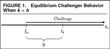
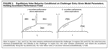
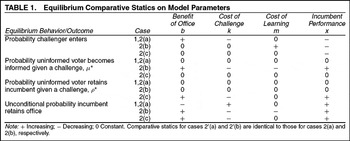



Comments
No Comments have been published for this article.