


%20--%3e%3c!DOCTYPE%20svg%20PUBLIC%20'-//W3C//DTD%20SVG%201.0//EN'%20'http://www.w3.org/TR/2001/REC-SVG-20010904/DTD/svg10.dtd'%3e%3csvg%20version='1.0'%20id='Layer_1'%20xmlns='http://www.w3.org/2000/svg'%20xmlns:xlink='http://www.w3.org/1999/xlink'%20x='0px'%20y='0px'%20width='64px'%20height='64px'%20viewBox='5.5%20-3.5%2064%2064'%20enable-background='new%205.5%20-3.5%2064%2064'%20xml:space='preserve'%3e%3cg%3e%3ccircle%20fill='%23FFFFFF'%20fill-opacity='0'%20cx='37.785'%20cy='28.501'%20r='28.836'/%3e%3cpath%20fill='%23595959'%20d='M37.441-3.5c8.951,0,16.572,3.125,22.857,9.372c3.008,3.009,5.295,6.448,6.857,10.314%20c1.561,3.867,2.344,7.971,2.344,12.314c0,4.381-0.773,8.486-2.314,12.313c-1.543,3.828-3.82,7.21-6.828,10.143%20c-3.123,3.085-6.666,5.448-10.629,7.086c-3.961,1.638-8.057,2.457-12.285,2.457s-8.276-0.808-12.143-2.429%20c-3.866-1.618-7.333-3.961-10.4-7.027c-3.067-3.066-5.4-6.524-7-10.372S5.5,32.767,5.5,28.5c0-4.229,0.809-8.295,2.428-12.2%20c1.619-3.905,3.972-7.4,7.057-10.486C21.08-0.394,28.565-3.5,37.441-3.5z%20M37.557,2.272c-7.314,0-13.467,2.553-18.458,7.657%20c-2.515,2.553-4.448,5.419-5.8,8.6c-1.354,3.181-2.029,6.505-2.029,9.972c0,3.429,0.675,6.734,2.029,9.913%20c1.353,3.183,3.285,6.021,5.8,8.516c2.514,2.496,5.351,4.399,8.515,5.715c3.161,1.314,6.476,1.971,9.943,1.971%20c3.428,0,6.75-0.665,9.973-1.999c3.219-1.335,6.121-3.257,8.713-5.771c4.99-4.876,7.484-10.99,7.484-18.344%20c0-3.543-0.648-6.895-1.943-10.057c-1.293-3.162-3.18-5.98-5.654-8.458C50.984,4.844,44.795,2.272,37.557,2.272z%20M37.156,23.187%20l-4.287,2.229c-0.458-0.951-1.019-1.619-1.685-2c-0.667-0.38-1.286-0.571-1.858-0.571c-2.856,0-4.286,1.885-4.286,5.657%20c0,1.714,0.362,3.084,1.085,4.113c0.724,1.029,1.791,1.544,3.201,1.544c1.867,0,3.181-0.915,3.944-2.743l3.942,2%20c-0.838,1.563-2,2.791-3.486,3.686c-1.484,0.896-3.123,1.343-4.914,1.343c-2.857,0-5.163-0.875-6.915-2.629%20c-1.752-1.752-2.628-4.19-2.628-7.313c0-3.048,0.886-5.466,2.657-7.257c1.771-1.79,4.009-2.686,6.715-2.686%20C32.604,18.558,35.441,20.101,37.156,23.187z%20M55.613,23.187l-4.229,2.229c-0.457-0.951-1.02-1.619-1.686-2%20c-0.668-0.38-1.307-0.571-1.914-0.571c-2.857,0-4.287,1.885-4.287,5.657c0,1.714,0.363,3.084,1.086,4.113%20c0.723,1.029,1.789,1.544,3.201,1.544c1.865,0,3.18-0.915,3.941-2.743l4,2c-0.875,1.563-2.057,2.791-3.541,3.686%20c-1.486,0.896-3.105,1.343-4.857,1.343c-2.896,0-5.209-0.875-6.941-2.629c-1.736-1.752-2.602-4.19-2.602-7.313%20c0-3.048,0.885-5.466,2.658-7.257c1.77-1.79,4.008-2.686,6.713-2.686C51.117,18.558,53.938,20.101,55.613,23.187z'/%3e%3c/g%3e%3c/svg%3e)
%20--%3e%3c!DOCTYPE%20svg%20PUBLIC%20'-//W3C//DTD%20SVG%201.0//EN'%20'http://www.w3.org/TR/2001/REC-SVG-20010904/DTD/svg10.dtd'%3e%3csvg%20version='1.0'%20id='Layer_1'%20xmlns='http://www.w3.org/2000/svg'%20xmlns:xlink='http://www.w3.org/1999/xlink'%20x='0px'%20y='0px'%20width='64px'%20height='64px'%20viewBox='5.5%20-3.5%2064%2064'%20enable-background='new%205.5%20-3.5%2064%2064'%20xml:space='preserve'%3e%3cg%3e%3ccircle%20fill='%23FFFFFF'%20fill-opacity='0'%20cx='37.637'%20cy='28.806'%20r='28.276'/%3e%3cg%3e%3cpath%20fill='%23595959'%20d='M37.443-3.5c8.988,0,16.57,3.085,22.742,9.257C66.393,11.967,69.5,19.548,69.5,28.5c0,8.991-3.049,16.476-9.145,22.456%20C53.879,57.319,46.242,60.5,37.443,60.5c-8.649,0-16.153-3.144-22.514-9.43C8.644,44.784,5.5,37.262,5.5,28.5%20c0-8.761,3.144-16.342,9.429-22.742C21.101-0.415,28.604-3.5,37.443-3.5z%20M37.557,2.272c-7.276,0-13.428,2.553-18.457,7.657%20c-5.22,5.334-7.829,11.525-7.829,18.572c0,7.086,2.59,13.22,7.77,18.398c5.181,5.182,11.352,7.771,18.514,7.771%20c7.123,0,13.334-2.607,18.629-7.828c5.029-4.838,7.543-10.952,7.543-18.343c0-7.276-2.553-13.465-7.656-18.571%20C50.967,4.824,44.795,2.272,37.557,2.272z%20M46.129,20.557v13.085h-3.656v15.542h-9.944V33.643h-3.656V20.557%20c0-0.572,0.2-1.057,0.599-1.457c0.401-0.399,0.887-0.6,1.457-0.6h13.144c0.533,0,1.01,0.2,1.428,0.6%20C45.918,19.5,46.129,19.986,46.129,20.557z%20M33.042,12.329c0-3.008,1.485-4.514,4.458-4.514s4.457,1.504,4.457,4.514%20c0,2.971-1.486,4.457-4.457,4.457S33.042,15.3,33.042,12.329z'/%3e%3c/g%3e%3c/g%3e%3c/svg%3e)
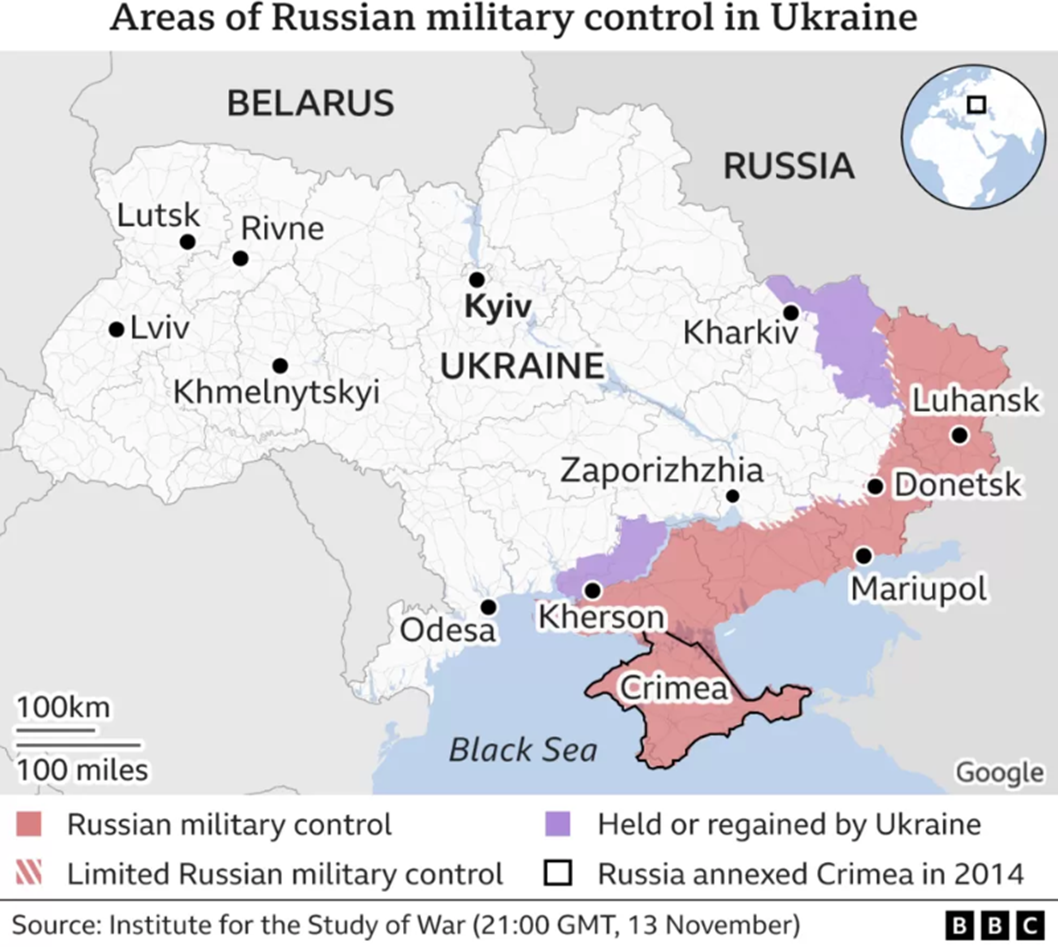
Since the annexation of Crimea in 2014, and more recently the Russian invasion in 2022, Ukraine has been besieged by an armed conflict with domestic and international repercussions. Russian forces now occupy approximately one-fifth of the country including Crimea and Russian-aligned separatists’ control of the Donetsk and Luhansk oblasts in eastern Ukraine (Figure 1).
Areas of Russian military control in Ukraine (https://www.bbc.com/news/world-europe-60506682).
The invasion of Ukraine by Russia has resulted in the largest humanitarian crisis in Europe since World War II. As fighting continues to intensify throughout Ukraine, there is an increasing concern that the Russian Federation will consider “all available means” including the use of chemical, biological, or radiological weapons against military personnel and civilians in Ukraine. Although a focus on trauma response and humanitarian care is essential for the ongoing war, recent messaging by Russian leadership indicates that nonconventional weapons could be used to defend the illegally annexed territories in Ukraine. Reference Goralnick, Chai and Erickson1 This necessitates readiness for these warfare threats which include chemical, biological, radiological, nuclear, and explosives (CBRNE) attacks. CBRNE preparedness has been variable among Ukrainian and European Union member states who may be called upon to detect and respond to potential attacks. Reference Rimpler-Schmid, Trapp and Leonard2–Reference Davidson, Magalini and Brattekås4 Russia and their allies have used CBRNE weapons in prior conflicts and awareness of these risks and mitigation strategies are necessary measures now. Reference Chai, Berlyand and Goralnick5 Based on these historical offensives, prioritizing knowledge, training, and proper equipment for front-line health-care providers and other professionals to recognize and respond to potential CBRNE threats within Ukraine is essential.
Despite prohibition of chemical weapons from the Chemical Weapons Convention, evidence has demonstrated that state actors will continue to use these agents as weapons of war, despite publicly denying their use. Russian chemicals research has recently focused on developing highly potent weaponized organophosphates, or nerve agents. During the past decade, Russian agents have used novel fourth generation (eg, Novichok) nerve agents due to their rapidly lethal onset and unconventional routes of toxicity. Reference Chai, Berlyand and Goralnick5 Russia’s connections to Syria also provide further evidence for concern. The majority of the over 50 chemical weapon attacks in Syria between 2013 and 2018 involved chlorine gas or the deadly nerve agent sarin. Reference Goralnick, Chai and Erickson1 While these events have been attributed to the Syrian government, the close relationship between Syrian officials and proxy Russian military leaders suggests that these strategies could be used in the current Ukraine conflict. Reference Goralnick, Chai and Erickson1,Reference DeLuca, Chai and Goralnick6 Other incidents such as the recent capture of the Chernobyl power plant and dangerous firefight near Zaporizhzhia (the largest nuclear power plant in Europe) highlight the potential for a significant radiological or nuclear disaster. Reference Goralnick, Chai and Erickson1,Reference Holt7 Russia’s military seizure of the Zaporizhzhia Nuclear Power Plant (ZNPP) is the first documented takeover of an active nuclear power plant and is prohibited by the Protocol 1 Amendment to the Geneva Convention. As a result, unconventional weapon attacks on opposing militaries, civilians, and governments are a realistic threat necessitating emergency care, mass casualty response, prevention, and proper equipping of frontline professionals. Reference Chai, Berlyand and Goralnick5,Reference Kivlehan, Allen and Viun8 The need for CBRNE training has never been greater.
Before the 2022 Russian invasion, the health-care system in Ukraine was among the least advanced in Eastern Europe in terms of health outcome measures. Reference Romaniuk and Semigina9 Public health capacity was already strained, facing challenges related to government funding, inadequate numbers of medical personnel, equipment shortages, and underdeveloped disaster response. These issues are likely exacerbated during the coronavirus disease 2019 (COVID-19) pandemic in the setting of war with limited health-care resources. Reference Uwishema, Sujanamulk and Abbass10,Reference Choudhary and Saied11
Comprehensive CBRNE training courses have been implemented in non-conflict settings of North America and Europe, but not previously adapted to a conflict setting within Ukraine.
Typical CBRNE courses conducted in the United States and Europe are 3-5 d in duration. This format was not practical during the war, hence, our decision to reduce this to a 2-d (16 h) intensive course.
The CBRNE course also represented an opportunity to train and equip a wide variety of first responders, including paramedics, nurses, police, engineers, and civil servants to address the significant loss of health-care professionals from the region. In this study, we report the effectiveness and acceptability of implementing a course to improve CBRNE knowledge with practical hands-on clinical skills. Our objective was to evaluate the change in knowledge and skill confidence after implementation of a CBRNE training course during the Russia-Ukraine War.
Methods
Study Design and Setting
The fifteen 2-d courses were conducted in the Ukrainian cities of Kyiv, Dnipro, Zaporizhzhia, and Odesa. The CBRNE training intervention was implemented as a 2-d (16-h), course designed to train providers to rapidly assess and treat CBRNE conditions focused on stabilization, triaging, decontamination, personal protective equipment (PPE), emergency care, and antidote therapy. The educational content was delivered with a combination of didactic sessions and skills station training. This is based on the 7 core elements comprising CBRNE science: (1) basic and clinical sciences, (2) modeling and systems management, (3) planning, (4) response and incident management, (5) recovery and resilience, (6) lessons learned, and (7) continuous improvement. Reference Coleman, Bader and Koerner12 The topics and skills covered are listed in Table 1.
CBRNE course schedule (lecture topics and practical skills stations)

Each CBRNE course was taught by a group of English-speaking instructors with real-time Ukrainian translation. Facilitators leading instruction were US-based emergency medicine and prehospital disaster specialists with expertise in CBRNE training. Each course had at least 2 instructors from Ukraine who had graduated from the CBRNE “Train-the-Trainer” program. A total of 19 instructors (15 US and 4 Ukrainian) from 19 different agencies or universities taught the courses at the various Ukrainian sites.
All written course materials and lecture slides were translated into Ukrainian. Hands-on CBRNE skills sessions and practical drills were led by Ukrainian providers who were identified by course leadership based on their prior experience and ability to teach CBRNE training content.
Study Participants and Recruitment
The training course was open to health-care providers or professionals who may be called upon to respond and treat emergency CBRNE conditions during the conflict. The study participants were randomly recruited through the Ukrainian Ministry of Health, local Ukrainian hospitals and medical centers, and academic teaching institutions. The war has caused significant loss of health-care professionals from the region, making the recruitment of same-level learners challenging. There was no course enrollment fee. The research question and outcome measures were informed by a goal to demonstrate if the training was effective in caring for victims in the context of an active war. The study design was adapted from previous implementations which were informed by expert focus groups; however, participants were not directly involved in the design of this study. Participants were not part of the recruitment or conduct of the study. The data collected from this study were given an exempt status by our institutional Human Research Office Institutional Review Board (IRB) because it did not meet the criteria for human subject research as defined by the Research Office policies and Health and Human Services regulations set forth in 45 CFR 46.
Data Collection Tools
Participants completed 30 multiple-choice question pre-test questions at the beginning of the course, along with a post-test to assess their knowledge of CBRNE content at the conclusion of the course. The post-test was the same exam as the pre-test, but the multiple-choice questions were arranged in a different order, but with the same correct response. Participants were scored on a scale of 1 to 30, receiving 1 point for each correct answer. Correct answers to each multiple-choice question featured 1 best answer for each exam question (ie, 1 possible correct tick for each question). Tests specifying an incorrect answer or choosing multiple answers when the instructions stated to select 1 only were marked as incorrect. The course exams had been appropriate to assess comprehension in previous English-speaking courses, but this is the first time it had been translated into the Ukrainian language. Ukrainian translators were on-site and in real-time for questions or clarifications regarding the exam. Participants also completed a 17-question pre-course confidence and post-course confidence self-assessment on CBRNE knowledge and skills with a self-assigned 4-point Likert scale with a score of 1 (least confident) to 4 (most confident) (Table 2). Participants were also given the opportunity to provide open-ended written anonymous feedback on the course.
CBRNE self-efficacy survey

Data Collection
The written course assessment tools were part of the CBRNE curriculum which were translated into Ukrainian. Participants were awarded a course completion certificate if all attendance requirements were met, and all pre-assessment and post-assessment materials were completed. Deidentified comments were closely reviewed by the authors with similar comments grouped together to assess for positive and constructive themes. Participants who did not complete each of the assessment components were excluded from the quantitative analysis, although their comments, if provided, were included in the feedback results. Data verification was further conducted with the translated course feedback.
Data Analysis
Our pre/post-test was a quasi-experimental study. Quasi-experiments are studies that evaluate interventions but that do not use randomization. Like randomized trials, quasi-experiments aim to demonstrate causality between an intervention and an outcome. These studies can use both preintervention and postintervention measurements. Pre-course and post-course assessment scores were compared using the Wilcoxon signed-rank test and statistical P values were reported. Results were analyzed in whole and by participant role. Using Fishers exact test (for categorical data) and linear regression (for continuous data), demographic characteristics were compared between those completing and not completing both the pre- and post-course tests. Confidential and deidentified course feedback was collected on paper from each participant in Ukrainian and translated to English for analysis. Pre/post self-efficacy surveys were based on McNemar’s test for paired data.
Results
Qualitative Research
A total of 523 participants registered and completed 1 of the 15 courses. Of these participants, 38% did not complete all training assessment components and were, therefore, excluded in the analysis. Incomplete assessment components were due to partial attendance among these participants, reportedly due to conflicting clinical or professional duties. The average course size was 43.2 participants and the average instructor to participant ratio was: 1:9. Course locations and participant professions are listed in Table 3. The most common professions of the participants were health-care workers 309 (59%); of which, 185 (35%) were physicians, followed by nursing 82 (16%) and prehospital providers 16 (3%). Non—health-care workers made up 214 (41%) of participants; the most common categories were science/technology/engineering (23%), civil service/infrastructure/security (14%), and education (9%).
Participant course locations and occupational demographics

a Dentist, pharmacist, psychologist, medical educator, dosimetrist.
b Dosimetrist, medical instructor, veterinarian.
c Teacher, education administrator, trainer.
d Civil servant, police officer, ambulance driver, security/military staff, nuclear waste management, other government employee.
e Scientist/researcher, engineer, nuclear energy/radiation staff, IT specialist.
f Administrator, volunteer, social worker, artist, lawyer, businessperson, economist, financier, driver, journalist, interpreter, occupational safety officer.
Pre/Post Test Results and Confidence Scores
Table 4 summarizes participant knowledge assessment which improved with overall pre-post test scores and confidence interval (CI) scores. Of the 523 participants, 321 (62%) completed all pre- and post-test questions. Mean pre-course test score: 57.8% (SD 20.7%); mean post-course test score: 81.4% (SD 11.3%); proportion of participants with increasing test score: 90.7%; mean difference in score (95% CI): 23.6% (21.2%-25.9%): P < 0.0001. Summary of pre-test and post-test and confidence interval (CI) scores by profession are also listed. Health-care workers (169, 59%) had mean pre-course test scores: 58.5% (SD 22.0%); Mean post-course test scores: 81.6% (11.1%); and the proportion of participants with an increasing test score was 88.2%; mean difference in score 95% CI 23.6% (21.2%-25.9%); P < 0.0001. Non—health-care workers (111, 41%) had mean pre-course test scores: 55.3% (SD 19.6%); mean post-course test scores: 80.3% (12.0%); and a proportion of participants with increasing test score 91.9%; mean difference in score 95% CI 25.0% (21.0%-29.1%): P < 0.0001. There were no significant differences in either gender (P = 0.179) or the proportion who were health-care workers (P = 0.475). However, participants completing the test were statistically significantly older (by 4.3 years; P < 0.001).
Pre/post test scores

a Based on nonparametric Wilcoxon matched-pairs signed-rank test.
Table 5 describes participants agreeing or strongly agreeing to statements regarding pre-post self-efficacy surveys that were comprised of 17 standardized questions using a 4-point Likert scale. Participants rated their responses in terms of recognizing the signs and symptoms of a CBRNE incident, and the necessary skills to manage a potential CBRNE exposure: P < 0.0001. Course evaluations are summarized in Table 6. Course evaluations were conducted with 8 standardized questions which assessed instruction quality, teaching relevance, clinical knowledge gained, and post-course skills confidence.
Pre/post self-efficacy surveys

a Based on McNemar’s test for paired data.
Course evaluations

Feedback was collected during the final day of the course. Participants were asked to describe what they liked best and what they would change about the course. The most common positive feedback themes centered around the expert and qualified teaching and useful skill sessions. Other positive comments centered around the understandability of the material, course content, and the positive team-building experience. The most common constructive feedback themes and areas for improvement included equipment quality and quantity challenges and requests for additional skill session time.
Table 7 describes the 6 Train-the-Trainer courses that were conducted with a total of 45 student participants from 32 different institutions or academic centers. All those who enrolled in the program successfully graduated and were provided the necessary educational materials for future CBRNE training courses. Our Train-the-Trainer model was a unique feature of this course (particularly amid an active war) with the goal of strengthening CBRNE preparedness throughout Ukraine.
Instructor courses (Train-the-Trainer)

Discussion
In this study, we report the effectiveness and acceptability of implementing CBRNE training courses in Ukraine to improve knowledge and enhance confidence with practical hands-on skills. There are limited studies describing the availability and evaluating the effectiveness of CBRNE training in Ukraine. Regarding other Ukrainian CBRNE training courses, in November 2019, just before the COVID-19 pandemic, health experts from Ukraine, the United States, United Kingdom, Czech Republic, and Norway convened to conduct “Emerging Technologies and Countermeasures to CBRN Agents: Advanced Training Response to Conflict and Security Challenges in East Ukraine”. This event was sponsored by the North Atlantic Treaty Organization (NATO) Science for Peace and Security Program and held at Mechnikov Hospital, in Dnipro. Reference Patel, Grace and Chellew3 In the wake of the armed 2014 Russian–Ukrainian conflict that unfolded in East Ukraine, this teaching hospital scaled-up and transformed itself into a trauma response center treating thousands of soldiers and civilian casualties and served as the setting for this advanced training course.
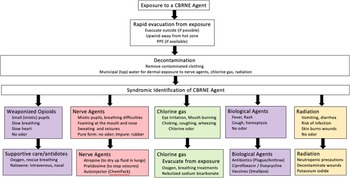
During more recent stages of the war, to develop practical hands-on skill stations and drills, we reviewed potential chemical, biological, and radiologic weapons historically produced and used by the Russian Federation (or its allies) Reference DeLuca, Chai and Goralnick6 to identify plausible risks to Ukraine military personnel and civilians. Reference Tin and Ciottone13 We also prioritized preparedness, rapid assessment, and treatment guidelines to recognize and manage these acute exposures in wartime settings. Evaluating a potential CBRNE exposure should also emphasize (1) immediate life-saving interventions and resuscitation (2), evacuation from the exposure (3), diagnosis of syndromic symptoms or toxidromes, and (4) supportive care and antidote therapy, as described in Figure 2). Reference Chai, Berlyand and Goralnick5
Syndromic identification and treatment of a potentially CBRNE agent exposure.

For agents with reversal agents, administration of antidote therapy soon after the exposure (such as in the prehospital setting or battlefield) may increase survival and decrease the use of scarce critical equipment (intravenous fluids, ventilators), medical staff (emergency or critical care specialists), or space (hospital beds) in an already fragmented health-care system. Reference Davidson, Magalini and Brattekås4,Reference Chai, Berlyand and Goralnick5 First responders at the scene of a potential CBRNE attack should don PPE if available to avoid secondary contamination. Exposures may result in characteristic physical examination findings which may guide the administration of antidotes and other life-saving treatments. Reference Ciottone14 Our practical hand-on drills emphasized vital sign stabilization and physical examination findings performed in the field, Reference Burkle15 with initiation of treatment as early as possible, in the prehospital setting. Importantly, for individuals exposed to weaponized organophosphates and radioactive particles, decontamination should occur outside the hospital to prevent secondary exposures to health-care workers and other victims, although this may be a challenge in the setting of war with artillery exchange and cold winter conditions. Rapid triage should be performed by responders also equipped with appropriate level PPE to perform life-saving measures consistent with Sort, Assess, Life-saving interventions, Treat/Transport (SALT) triage methods or similar disaster triage algorithms. 16 Once emergency care and decontamination are complete, secondary triage can be performed to match clinical needs with available resources to balance demands of mass casualties. The practical skill stations and drills conducted in our CBRNE courses prioritized these rapid response, decontamination, and treatment principles.
The CBRNE response training further focused on 3 recommended levels: organizational (policies, procedures, and preparedness); technological (decontamination, security, and treatment); and individual provider (PPE, knowledge, and practical skills). Reference Razak, Hignett and Barnes17 The first dimension of response and recovery from a CBRNE event encompasses human resources, by expanding the number of properly trained front-line emergency responders in Ukraine. The second dimension is interoperability. Coordination of CBRNE preparedness and response efforts is necessary to maximize readiness, response, and adequate equipment in an austere war-torn environment. Reference Smith and Weir18 Other studies have documented similar trauma training courses in austere prehospital settings. Reference Jayaraman, Mabweijano and Lipnick19,Reference Eisner, Delaney and Thullah20 A third dimension is developing in-country expertise with strategic thinking and innovations in low resource settings. Capacity building efforts should focus on emergency and mass casualty response but also CBRNE teaching opportunities for new experts in Ukraine to address current and future threats. Reference Patel, Grace and Chellew3,Reference Coleman, Bader and Koerner12 This key concept was the basis for our innovative Train-the-Trainer program. Other programs (Turkey 2006, Finland 2009, Uganda 2020, Slovakia and Sweden 2022) Reference Kenar and Karayilanoglu21–25 have implemented similar CBRN training models but not in the setting of an active war.
Regarding our data, knowledge assessment test scores and self-assessed confidence scores improved significantly after completion of the CBRNE course for both health-care providers and non—health-care providers. Highest confidence rate increases at the completion of the course were: necessary skills to provide care to patients after a CBRNE emergency, ability to recognize signs and symptoms of a potential CBRNE exposure, developing an organized approach that prepares for care of CBRNE-exposed patients, selecting appropriate PPE for the type of event or potential exposure, and having skills to decontaminate patients safely. Lowest confidence rate increases included: emergency management of blast injuries, emergency management of CBRNE-injured or exposed children, understanding of emergency drugs, and the ability to document forensic findings of a potential CBRNE event. The lower self-confidence in these emergency management or “clinical” skill areas may be attributed to the fact 41% of participants were non--health-care providers.
To our knowledge, this was the first CBRNE field course to be conducted in Ukraine using real-time translation since the onset of the February 2022 invasion. This implementation demonstrated the feasibility of a structured CBRNE course to train providers working in combat or civilian settings. Many of the participants reported that the knowledge and skills acquired during the CBRNE courses prepared them well in case of a real event. The ability to simultaneously train providers from diverse backgrounds was also exhibited. Participants included health-care providers (prehospital providers, nurses, physicians) and non—health-care providers (engineers, police, security, teachers, civil servants) who may need to function as first responders to CBRNE events that require timely interventions with limited resources. The benefit of the course may vary by specialty training and years of experience and further research should explore this concept as our study was underpowered to perform subgroup analyses. Feedback from participants reflected a need for more dedicated equipment and additional skills practice, yet this must be balanced with the cost of equipment and removing practicing health-care providers away from patient care and non—health-care providers from work duties for longer multi-day courses.
This CBRNE course was the first step in implementing a structured training curriculum throughout the country in several strategic locations. Nearly 10% of participants in our courses voluntarily completed an additional advanced Train-the-Trainer program with the objective of establishing dedicated regional training centers in Ukraine in each major city (eg, Kyiv, Dnipro, Odesa, Kharkiv, and Lviv). This will also allow for in-country trainers to lead additional courses in other less populated and difficult to access regions with the goal of strengthening CBRNE preparedness throughout Ukraine. Future studies assessing knowledge retention, impact, and sustainability of this Train-the-Trainer model will be implemented.
Limitations
The findings in this manuscript are subject to limitations. Although 523 participants registered for the 2-d course, 38% did not complete all training assessment components and were, therefore, excluded in the analysis. Incomplete assessment components were due to partial attendance among these participants, reportedly due to conflicting clinical or professional duties, further justifying the decision for limiting this to an abbreviated 2-d course. Although the course was free to enroll in, participants were not paid a per-diem to be away from work which may have contributed to some participants not completing the entire course.
As a result of frequent air raid sirens and active missile threats throughout the courses (particularly in Dnipro and Zaporizhzhia), participants and instructors were often rapidly ushered to on-site bomb shelters for safety concerns. In most of these circumstances, teaching sessions continued either in the shelter or after the danger had passed, but these disruptions could have impacted course attendance, trainee education, and knowledge retention. The participant subgroup profession sizes were small which may affect the ability to draw individual conclusions from them, and test performance may have been influenced by physician and health-care specialty and years in practice. Also, specific information regarding the professions of 41 (8%) of the participants was not available.
Prior CBRNE training or military experience was not collected, and this may have influenced testing results. Some language barriers were highlighted in the participant feedback and suggest the need for further interpretation of specific course materials or concepts which were “lost in translation.” Another limitation includes the wide variation in types of learners who participated in this course with different levels of medical training and field experience. The war, however, has caused significant loss of health-care professionals from the region, making the recruitment of same-level learners challenging.
Conclusions
In this study, we report the effectiveness and acceptability of implementing this course to improve CBRNE knowledge with practical hands-on clinical skills. We successfully accomplished our objective to evaluate the change in knowledge and skill confidence after implementation of a CBRNE training course during the Russia-Ukraine War.
To our knowledge, this is the first implementation of a formal CBRNE training course in Ukraine since the Russian invasion of February 2022. The results of this study suggest that the course was well received and led to significant improvement in CBRNE response knowledge for a variety of front-line responders.
In addition, this was the first course to offer a Train-the-Trainer model for Ukrainians to become future content experts and course directors as CBRNE knowledge is delivered to battle-affected regions of Ukraine. Future directions will include evaluation of our Train-the-Trainer graduates, allowing for continued expansion and eventual implementation of these acquired skills in other low-resource, austere health-care systems during conflict and war.
The ongoing war in Ukraine has resulted in one of the largest humanitarian crises in modern post-WWII history. Unlike other historic conflicts, the threat of unconventional weapons use, including chemical, biological, radiological, nuclear, and explosives, is higher than ever before. It is critical to consider strategies to best recognize and provide CBRNE response, training, and necessary equipment to frontline providers treating victims exposed to these potential weapons of mass destruction.
Data availability statement
All data relevant to the study are included in the article or uploaded as supplemental information. All data relevant to the study are included in the article.
Acknowledgments
The authors thank our expert CBRNE instructors for their expertise and teaching efforts: Paul Batmanis, Michael Falk, Erik Gaull, Caitlin Grady, Kelly Hanzlik, Ernest Heeren, Kathy Kopec, Amelia Lozano, Andrew Matthews, Brendan Milliner, Katy Morris, Joshua Rempell, Aleksandra Sawicz, William Singleton, Rick Williams, and Chuck Wright. Special thanks to the administrative guidance of Kathleen Murray, Katherine Biniki and Lea Sinno. We also acknowledge Noah Carton-Rossen for his strategic development of the CBRNE course surveys, monitoring, and evaluation. Many thanks to Roman Holivets and Bohdan Kanzeba for their logistical assistance procuring CBRNE training equipment. Special tribute to our national Ukrainian staff and highly educated translators: Tetiana Berehova, Leonid Kravchenko, Dmytro Koposov, Yurii Kozachynskyi, Olha Kushner, Sofiia Lebedinska, Oleksii Poliakh, Maksym Ryzhkov, Oleksandr Sokolov, and Oleksandr Tolochko. Without their dedicated efforts and resilience, this project would have never come into fruition.
Author contributions
T.E., D.H.: CBRNE course leads, article conceptualization, writing, interpretation of data. A.S., G.L.: Monitoring and evaluation of CBRNE course per & post-test data. A.P., O.M., K.K.: Ukrainian translation, oversite of CBRNE practical skill stations and drills. M.S.: Program lead International Medical Corps (IMC) manuscript review and edits. J.S.: Analysis of CBRNE course content, delivery, and equipment assessment. S.K.: Program lead Harvard Humanitarian Initiative (HHI), manuscript review, senior author edits.
Competing interest
T.E., D.H., A.S., M.S., J.S., S.K. report receiving grants from the Harvard Humanitarian Initiative, Mass General Brigham, and International Medical Corps and the Ukraine Trauma and CBRNE Care Response Program.
Ethics statement
Patient consent for publication. Not required.
Ethics approval
This project conformed to the principles embodied in the Declaration of Helsinki and written ethical approval was provided by the Mass General and Brigham Research Management. Participants gave informed consent to participate in the study before taking part in the training course.



 Open access

