Despite two decades having passed since the inception of the WTO, the goal of freeing world trade from trade barriers has yet to be fulfilled. While gradual tariff reforms have been made since 1995, several other trade barriers have simultaneously emerged; a major concern being AD actions. The incidence of dumping in the international trade arena is not counter-intuitive, and may occur from the classic co-existence of an imperfectly competitive home market and a highly competitive world market.Footnote 1 Alternatively, technical dumping might occur where a firm attempts to adjust prices to fight exchange rate volatility.Footnote 2 Yet keeping these theoretical possibilities in mind, dumping per se is not considered to be WTO-incompatible as per the ADA. However, dumping of products below the critical margin of two percent ad valorem is not considered mere coincidence but rather linked with predatory pricing strategies and unfair trade practices. Such circumstances offer a compelling argument in favour of interventions to be undertaken by importing countries, in order to protect the interest of their local players.
Another aspect of the AD framework which deserves particular attention is the AD mechanism's susceptibility to potential misuse for protectionist purposes such as, for example, lobbying by domestic players.Footnote 3 Given that only industry segments accounting for the majority of domestic production (i.e. more than fifty percent) can approach the government for initiating AD investigations, highly concentrated scale-intensive large industries with exposure to foreign competition generally furnish a greater degree of activism in this regard.Footnote 4 Therefore, the role of competition is immensely important, and the probability of relatively less efficient producers lobbying for contingency protections against increased inflow of cheaper imports is quite frequent. This phenomenon has been observed in both the primary and manufacturing industries; in the former sphere, the experience of Indian shrimp exporters are instructive,Footnote 5 while the US supercomputer caseFootnote 6 represents a classic example of the latter. However, exposure to tough import competition may also motivate even less-concentrated industries to seek relief through the AD mechanism.Footnote 7
The misuse of the AD provision with protectionist interest can impose yet another threat to the international trade architecture. An equivalent of the classic “beggar-thy-neighbour-policy” can emerge with time in this sphere, where the countries perceiving “undue AD activism” by select partner countries may attempt to reciprocate the same. Maur has termed this phenomenon as “echoing protection”,Footnote 8 and has reported the prevalence of such competitive AD activism in several countries (e.g. Canada, the EU, and the US). On the other hand, given the recent rising trend in AD investigations originating from developing countries,Footnote 9 it can be argued that a “learning-by-suffering” phenomenon is becoming increasingly evident. For instance, the low-cost developing countries like India, Argentina, South Africa, and Turkey were at the receiving end of AD activism during the 1990s, but have slowly emerged as major users of this provision over the last decade.Footnote 10 In particular, China and India, the traditional targets of AD activism, have initiated a significant number of AD investigations during the last decade, and imposed final measures on several occasions.Footnote 11 Moore and Zanardi have signalled that increasing AD activism in developing countries often does not facilitate the ongoing sectoral tariff reform process, thereby leading to double protectionism.Footnote 12 These developments have led to the conclusion that the “trend of active use of antidumping tools has shifted from the developed countries towards the developing countries”.Footnote 13
Irrespective of the underlying motivations, the AD cases generally lead to trade diversion for the exporting countries.Footnote 14 However, the beneficiary of the AD action generally differs. An empirical analysis by Prusa reports that the imposition of AD duties leads to considerable trade diversion from named to non-named countries (in the investigation), and the magnitude of the same is directly proportional to the estimated duty.Footnote 15 For instance, the recent US AD duties against Vietnamese catfish exports adversely affected the sector in the exporting country, leading to a substantial exit of workers.Footnote 16 Conversely, Khatibi noted that the EU AD actions benefited the EU domestic players more, vis-à-vis the non-named countries.Footnote 17
The increasing (mis)use of this provision helped it to emerge as a focus area at the Doha Ministerial, and subsequently the Doha Ministerial Declaration (paragraph 28) agreed to “negotiations aimed at clarifying and improving disciplines under the Agreements on Implementation of Article VI”.Footnote 18 However, the negotiations never achieved the desired progress, which caused the Cancun Ministerial Declaration (paragraph 7) to “instruct the Negotiating Group on Rules to accelerate its work on anti-dumping” measures.Footnote 19 The Hong Kong Ministerial Declaration took note of the concerns and the state of negotiations, and AD provisions have been mentioned separately in an annex (Annex D.I on rules). The Members have agreed to negotiate towards the clarification or improvement of the ADA rules involving various provisions including determinations of dumping, injury and causation, and the application of measures. Under the Doha Round Negotiations, the Rules Committee of the WTO tried to identify areas within the AD Agreement which deserve attention.Footnote 20 In this context, the present analysis contributes to the literature by attempting to identify these major concern areas relating to AD provisions, and thus it is arranged along the following lines. In Section 1 the ADA is analyzed, and in Section II the potential risks of misinterpretation of the agreement are discussed. Section III looks into the present scenario regarding the ADA violations, as emerging from the complaints lodged at the WTO DSB. On the basis of the findings, Section IV draws the policy conclusions.
I. CATEGORIZING THE POST-CRISIS PRACTICE OF ANTI-DUMPING
During the 1980s, the developed countries were the major users of this provision, although some Latin American countries were not far behind.Footnote 21 However, in recent years, developing countries from other regions (notably Asia)Footnote 22 have increasingly taken recourse under this provision as a protectionist measure, causing a rise in the number of intra-developing country AD disputes. Rather than being a weapon for the exclusive use of rich countries, the provision is increasingly being used against them instead.Footnote 23 This phenomenon has raised the urgent need to tackle the “globalization” of AD measures.Footnote 24
A. Emergence of a Reverse Protection
Figure 1 shows the annual movements in the AD investigations and final measures over the period 1995–2014. The rise in AD protectionism during the period 1995–2001 coincided with the decline in average tariff barrier as a part of multilateral discussions.
Anti-dumping investigations, worldwide Source: Constructed by the authors from the WTO ADA database (01/01/1995–16/02/2015).

During the period 2001–07, with the progress of the Doha Round Negotiations, the AD activism was contained to some extent. However, the recession in 2008 created a “reverse protectionism” wave across countries with a rise in tariff barriers,Footnote 25 and a simultaneous rise in the cases of AD measures was also noticed. A similar trend was noticed after the 2011 crisis as well. A significant proportion of the AD measures during 2008–10 had adverse implications for intra-developing country trade.Footnote 26 The saving grace perhaps is that the final AD measures expressed as a percentage of annual initiations have reached a plateau over the last decade, barring limited fluctuations.
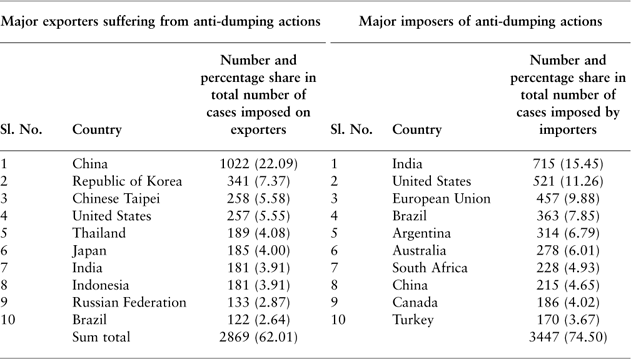
Table 1 summarizes the top ten players involved in the AD actions over the period 1995–2013. The first three columns show the major countries which suffer from cumulative use of this provision.
Major players in the anti-dumping arena
Source: Constructed by the authors from the WTO ADA database (01/01/1995–16/02/2015).
Note: The numbers in the parentheses denote the percentage figures.
It can be observed that while a number of low-cost developing country exporters (e.g. Thailand, India, and Brazil) are affected by AD investigations, China, South Korea, and the US suffer the most. The last three columns, on the other hand, show the relative incidence of the AD cases among major initiators of AD actions. As noted earlier, it is seen that cumulatively AD actions by India have bypassed the same imposed by the traditional users like the EU and the US. Brazil and Argentina are among other developing countries who have heavily taken recourse to AD actions since WTO inception. The considerable presence of several developing countries under both columns indicates the growing incidence of developing-developing country AD actions.
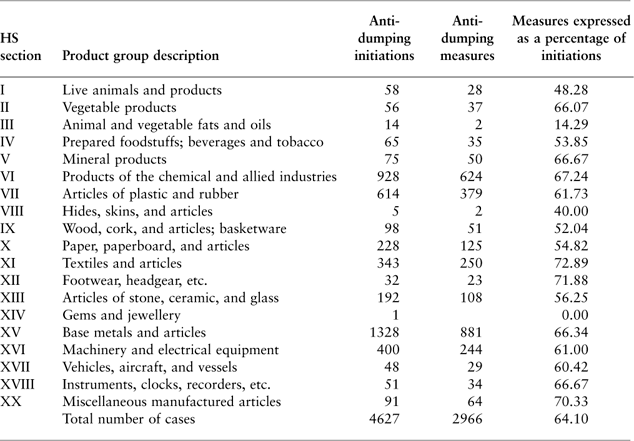
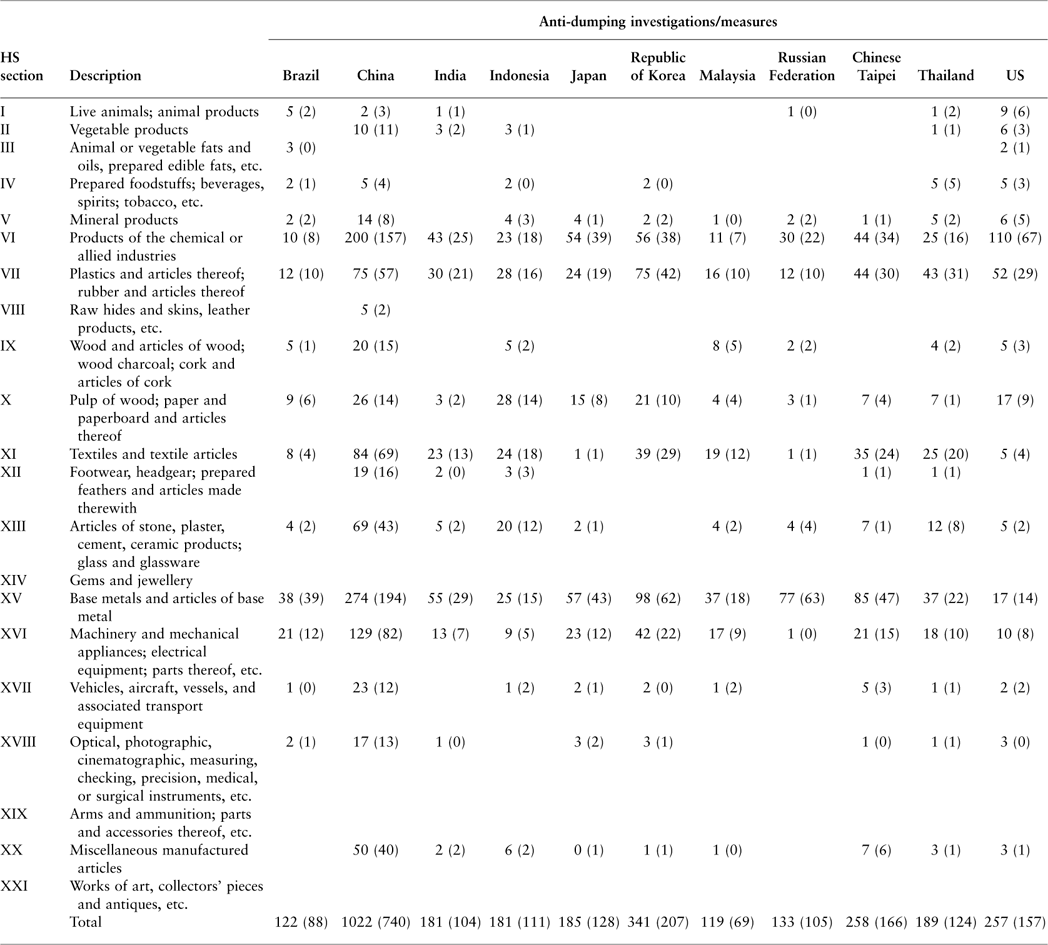
Table 2 looks into the Harmonized System (HS) section-wise AD initiations as well as final measures over the period 1995–2014.
Major products in the anti-dumping arena
Source: Constructed by the authors from the WTO ADA database (01/01/1995–16/02/2015).
Three important observations may be drawn in the light of the facts emerging from Table 2. First, the industry with the greatest number of AD initiations to date is the base metal and chemical products sector, which features in the export interests of both developed and developing countries. Interestingly, both of these sectors can be characterized by high concentration, thereby enabling a handful of players to influence governmental decisions, which may explain the higher degree of AD activism. The other major sectors attracting AD actions include plastic, rubber, machinery, equipment, and textiles, all of which appear extensively in the export basket of developing countries. Second, the rightmost column indicates that the AD initiations have most often been converted into final measures in the case of low-tech manufacturing product groups, such as textile and clothing products, footwear and headgear, miscellaneous manufactured articles, and primary commodities such as vegetable products. This observation underlines the potential threat for developing country exporters in no uncertain terms. Third, although the initiation-to-final measure ratio is lower for the primary commodities sector, developing country interventions have on numerous occasions been vindicated by WTO DSB.Footnote 27
B. Echoing Effect of Anti-Dumping Protectionism
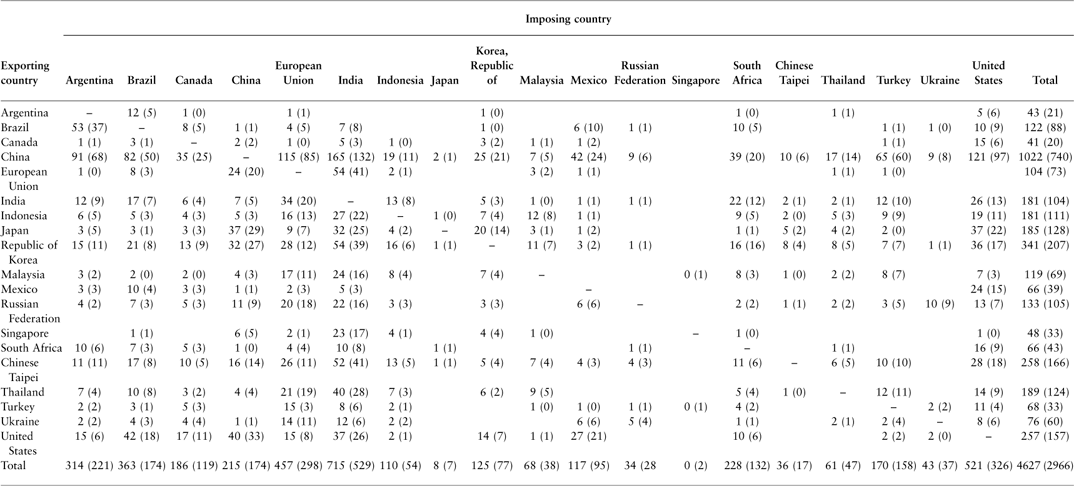
Table 3 attempts to analyze the “echoing effect” of AD protectionism, in respect of select major users of this provision. The horizontal rows of the table depict the exporting countries, while the vertical columns show the imposers of the AD investigations/measures.
Global anti-dumping usage matrix—initiations and final measures
Source: Constructed by the authors from the WTO ADA database (01/01/1995–16/02/2015).
Note: The numbers in the table represents the AD initiations of an importing member/initiations faced by a particular exporting member, while the same in the parentheses denote the final measures.
From Table 3, it can be observed that a strong regional AD “echo” pattern is emerging. For instance, within MERCOSUR (Mercado Común del Sur), Argentina and Brazil have imposed several measures on each other. This phenomenon is also observed in East Asia for South Korea-China trade pair. A similar but weaker effect is also observed within NAFTA (North American Free Trade Agreement), involving Canada, Mexico, and the US. On the other hand, a strong developed-to-developing country “echo” can be noticed too (e.g. EU-India, US-China). In that comparison, the developing-to-developing country “echo” is found to be weaker. For instance, the India-China or India-South Korea initiations are much higher when compared to the China-India or the South Korea-India initiations and measures.
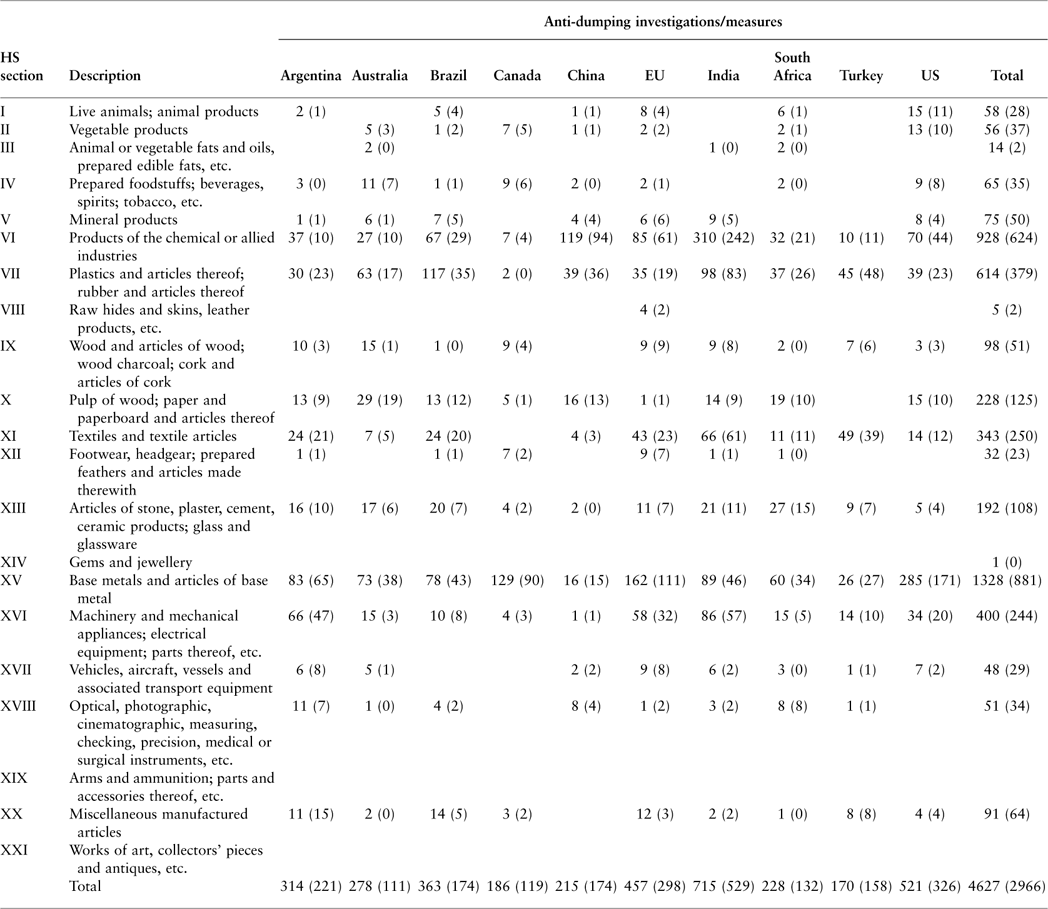
Table 4 shows the sector-wise pattern of major imposers of AD provisions, indicating that the actions of developed countries may have been influenced by domestic economic compulsions.
Major players undertaking anti-dumping actions—by sector
source: Constructed by the authors from the WTO ADA database (01/01/1995–16/02/2015).
notes: The numbers in the table represent the AD initiations of an importing Member, while the same in the parentheses denote the final measures.
It is observed that, while in general the AD actions of Australia, the EU, and the US have focused on chemical products, plastic, rubber, and base metals, individual focus areas (e.g. wood products in Australia; textiles in the EU; base metals and machinery in the EU and the US) are no less important. Canadian actions have concentrated primarily on the base metal sector. Displaying a similar trend, major developing countries like Brazil, China, and India have also intervened significantly on chemical products, plastic and rubber products, textiles, base metals, and machineries.
Table 5, which summarizes the sector-wise list of major countries affected by AD imposition, displays the other side of such contingency activism.
Major players facing anti-dumping actions—by sector
source: Constructed by the authors from the WTO ADA database (01/01/1995–16/02/2015).
notes: The numbers in the table represent the AD initiations against an exporting Member, while the same in the parentheses denote the final measures.
Though developed countries like Japan and the US also suffer from the AD initiations/measures, adverse implications are more profound for China, Thailand, India, and other low-cost producer countries. In addition, the similarity in the sectors where AD intervention is taking place across development levels (e.g. chemical products, base metals, and machineries, further underlines the importance of industrial concentration in influencing AD actions.
II. Regulating Anti-dumping Measures
AD, one of the core GATT (General Agreement on Tariffs and Trade)/WTO provisions, has recently emerged as a significant trade barrierFootnote 28 owing to its growing misuse by both developed and developing countries. The philosophy underlying AD laws is structurally uncertain. Essentially, all AD laws are intended to “protect” consumers and local producers from low prices.Footnote 29 In the WTO context, AD laws serve as safety valve for protectionist pressure (3.A). Thus, the purpose of the WTO ADA is to ensure that the provision is used only as a contingency measure judged upon merit, and not as a veiled protectionist mechanism (3.B).
A. Basic Principles
The legal framework of AD in the WTO regime consists of Article VI of the GATT 1994 and the Agreement on Implementation of Article VI of the GATT 1994 (Anti-Dumping Agreement).Footnote 30 The latter is the successor of the plurilateral Tokyo Round Code and it implements the general provision of Article VI of the GATT 1994.Footnote 31
Pursuant to Article VI, three cumulative requirements need to be met in order to establish the existence of dumping: (i) the export price of a product must be lower than the price of that product in the domestic market of the exporting country;Footnote 32 (ii) exports of such products must cause or threaten to cause material injury to a domestic industry or materially retard the establishment of a domestic industry;Footnote 33 and (iii) there must be a causal relationship between dumping and the injury or retardation.Footnote 34
In order to prevent the abuse of AD duty proceedings it is crucial that national AD authorities conduct objective and unbiased investigations, and accordingly determine the injury to a domestic industry. Therefore, the agreement sets forth detailed provisions on the proper establishment and evaluation of the facts and of evidentiary issues. In the following case, the question arose whether confidential business information can be taken into account for the determination of injury even if it is not discernible in the final determination or the disclosures pertaining to the final determination.Footnote 35
B. Anti-Dumping Litigation on the Upswing
The panel and AB of the Dispute Settlement Understanding (DSU) have considered many issues pertaining to international trade in the ADA-related disputes.Footnote 36 Article 2 dealing with the calculation of a dumping margin was invoked in almost all cases. The reason is that WTO Members generally use different methodologies for the calculation of dumping margin and the “complex pricing policies and adjustment for indirect cost factors leave a degree of arbitrariness in the calculation of dumping margins”.Footnote 37 For instance, the EU methodology has been questioned in many cases. Most recently, Indonesia has notified the WTO Secretariat of a request for consultations with the European Union concerning anti-dumping measures imposed on imports of biodiesel into the EU; in that case, the key legal issue revolved around the calculation of dumping margin.Footnote 38 It has been a rather frequent debate before the DSB. For example, the asymmetry in the calculation methodology was criticized by the panel in EC-Anti-dumping Proceedings against Audio Tapes in Cassettes from Japan, Footnote 39 which requires some further analysis to identify the recurring issues in this area.
In the EU-India Bed Linen case,Footnote 40 the AB held that the “zeroing” methodology used by the EU for calculating the dumping margin is incompatible with the ADA provisions. The EU and the US commonly take recourse to the said “zeroing” methodology, which eliminates the negative dumping margin from the calculation of the “dumping margin”. In order to obtain the dumping margin of each exporter concerned, the EU makes a calculation, whereby the export selling price and the “normal” value (or domestic selling price) are compared per category of product. Whenever this comparison results in an export price which is higher than the normal value, thereby yielding a negative value for dumping, the figure is taken to be zero rather than the lower, negative value. As a consequence, the investigation always leads to the calculation of a positive dumping margin. Therefore, this methodology automatically results in a higher margin of dumping than that which would have been established if any negative values for dumping were taken into account. If there are only positive dumping margins, this would have no impact on calculations, but the zeroing of negative dumping margins, as practised by these countries, is a problematic issue.
In the Softwood Lumber dispute brought by Canada, the DSB ruled against the US and set a clear precedent against the use of the “zeroing” methodology.Footnote 41 However, even after an adverse decision against “zeroing”, the misuse of this provision in individual cases continued for some time.Footnote 42 This is mainly due to the ambiguity in Article 2.4.2 of the ADA, which is misused more often than not.Footnote 43 The AB ruled in the Bed Linen case that zeroing prevents average-to-average comparisons, while the ADA permits individual-to-average comparisons in certain circumstances. Therefore, if dumping is otherwise calculated like average-to-individual comparisons, there is every possibility of proving the incidence of dumping in a completely ADA-consistent manner. This means, even after the adverse ruling against zeroing, that the ambiguity remains, leaving room for future disputes.
The procedure for initiation, criteria for filing, and subsequent investigation of an AD case is provided in Article 5 of the ADA. This is the provision which has often been invoked in the dispute settlement system (see Figures 2 and 3). Article 5.2 stipulates the three conditions for starting an investigation. These are (i) dumping; (ii) injury; and (iii) a causal link between injury to the domestic industry and dumping. In a number of cases, the determination of dumping was not based on actual injury to the industry, and moreover it does not necessarily have a causal link between injury and dumping. Often, only a section of the industry asks for protection and there is insufficient support from the domestic industry for the complaint prescribed under the ADA. Support manipulation is another concern area in many complaints. In the CDSOA,Footnote 44 the panel concluded that the CDSOA provides a financial incentive for domestic producers to file or support applications for the initiation of AD or countervailing duty investigations. This financial incentive for filing a complaint is against the principle of free trade in general and WTO rules in particular. However, the US is reluctant to change its domestic laws to ensure compliance with the WTO DSB ruling.
Alleged violation of WTO ADA, by Article Source: Constructed by the authors from the WTO ADA related disputes (01/01/1995–16/02/2015).
The same provision stipulates that investigating authorities must ascertain both the accuracy and adequacy of the evidence of dumping produced by the complainants. This obligation has been undermined on several occasions; investigations were initiated on the basis of political considerations.
The injury determination has frequently been debated in disputes. The steel industry is one of the most protected industries worldwide. In the United States-Anti-Dumping Measures on Certain Hot-Rolled Steel Products from Japan dispute,Footnote 45 the panel held that exclusion of “captive production”Footnote 46 from the total domestic production for the purpose of injury calculation is against the ADA. US domestic law excludes captive production from the purview of the dumping margin. The decision of the panel in favour of the US was reversed by the AB, and it was held that an examination of only certain parts of a domestic industry does not ensure a proper evaluation of the state of that domestic industry as a whole; therefore, it does not satisfy the requirements of “objectivity” in Article 3.1 of the ADA. The conflicting interpretation of the panel and the AB emphasizes the need for a clear and objective provision prohibiting selective examination of one part of the domestic industry in injury determinations.
In addition, it has been observed that Members have frequently included non-dumped imports for the calculation of injury to the domestic industry. In Argentina-Definitive Anti-dumping Duties on Poultry from Brazil,Footnote 47 the panel held that if a particular producer/exporter has been found not to be dumping, then there is no basis for including that particular producer/exporter's imports in the category of “dumped imports”. While the allegation of dumping must be proved with “positive evidence”, the “objective examination” of such “positive evidence” remains controversial. Sometimes, the investigating authorities become “subjective” by helping their domestic industries.
The “cumulative” calculation of dumping from different countries is another way to establish the occurrence of dumping. If more than one country is involved in dumping, all the imports are calculated cumulatively for the purpose of calculating the dumping margin. The production conditions and pricing are different in all exporting locations. In the European Communities-Anti-dumping Duties on Malleable Cast Iron Tube or Pipe Fittings from Brazil case,Footnote 48 the panel concluded that a country-by-country analysis of volume and prices under Article 3.2 of the ADA is not a precondition for the cumulative assessment of the effects of dumped imports under Article 3.3.Footnote 49
A number of economic factors affect the calculation of the dumping margin. In the EU-India Bed Linen dispute,Footnote 50 the panel considered whether the list of factors in Article 3.4 is illustrative or mandatory. The panel held that before imposing an AD duty, it is mandatory to consider all economic factors to see whether they are influencing pricing. Later, in the Egypt-Definitive Anti-dumping Measures on Steel Rebar from Turkey dispute,Footnote 51 the panel confirmed this position. However, Members often do not keep this point in mind while calculating the injury to the domestic industry, finding inflated injury and dumping margins as a result.
Notwithstanding this, the causation analysis remains controversial. The link between dumping and injury is missing in many cases; dumping is not necessarily the cause of problems with the domestic industry. It is not necessary for actual dumping to occur in order to impose an Anti-Dumping Duty (ADD). A threat of material injury constitutes sufficient grounds to impose an ADD. However, it is difficult to prove a threat to the domestic industry, and sometimes the threat of injury is overstated.
The use of the “facts available” provisionFootnote 52 is another weapon in the hands of investigating countries for extracting trade data from the countries facing investigation. If the respondents fail to respond, this provision can be used against them. In most cases, the data submitted is rejected on the basis that it is non-viable or not presented in accordance with the requested format. This was the case in the India Steel Plate dispute initiated by the US. India submitted all the requested data within the stipulated time. However, the United States International Trade Commission (US-ITC) rejected it on the ground that it had been submitted one day late. In most cases the data used for the calculation of the dumping margin is from the complaint itself that will ultimately lead to the finding of dumping. When countries use this particular methodology to calculate the dumping margin, the basic objective of the agreement to curb price discrimination is unfulfilled. There is no price comparison between the markets when this methodology is applied.
The non-market economy (NME)Footnote 53 clause is yet another weapon used by the developed countries against the developing countries. If the countries under investigation are considered as NMEs, the constructed method available under Article 2 is not used for the calculation of the dumping margin. Instead, “surrogate” country prices are considered for this purpose. China is a major victim of the abuse of this particular provision, as it is still considered by most of the WTO Members as an NME. For calculations relating to Chinese “dumping”, the prices from India or other countries are used. Usually, there will be no connection between the production cost or domestic price in China and that in the countries selected. Clearly, in this case, the AD provisions are misused for protectionism at the domestic level.
Another recent and disturbing trend towards non-compliance with the rulings of the panel and the AB deserves particular mention. In the US Anti-dumping Act 1916 case, the DSB held that the penal provision in the Act is against the ADA. Dumping is not considered as a criminal activity under the ADA. The DSB asked the US to bring its domestic law into conformity with the ADA, but to date the US has not complied with this ruling. Following this case, the US practice of providing incentives to those domestic industries which support the anti-dumping application was questioned in the Continued Dumping and Subsidy Offset Act (CDSOA) 2000.Footnote 54 The panel and the AB again held that the Act goes against the principles of ADA and asked the US to bring its law into line with the ADA. Due to the domestic political compulsion, however, more than eighty-six US Senators remained firm against any kind of amendment to the US law. This means that the law will not be passed in the US Congress before the next presidential election is over. The non-compliance issue is a serious concern, and will affect the credibility of the trading system. The non-compliance complaint has met with retaliatory measures from the EU. The AD cases have led to a tough time for the US, which is now actively promoting bilateral and regional trade agreements against the backdrop of the current WTO negotiations.
It can be concluded that, in its first two decades of working, the DSB has proved to be highly successful in the settlement of AD disputes in the WTO. However, the panels and AB have acted with caution and have sometimes shied away from legal analysis, without going on to examine the political implications of their findings. Yet the panels and AB are a unique forum for Members to seek redress for grievances related to international trade, and it is not their duty to look into the political implications rather than legal interpretations.
Both developed and developing countries have been major users of the AD measures over the years, and WTO Members such as India have, in recent times, used it widely against developed as well as developing trade partners. This indicates the presence of protectionist traits in developing countries as well. The AD “menace” can be reduced only when this domestic industry protectionism ends.
III. Assessing the Misuse of Anti-dumping Measures
Jacob Viner, an orthodox classical theoretician, supported the use of AD as a tool to protect local welfare. His analysis, however, focused less on the effects of dumping than on international welfare. His ultimate justification for AD was that dumping prices were “presumptive evidence of abnormal and temporary cheapness”.Footnote 55 Viner's classic work was done against a background of war and tensions. While the international trading architecture has undergone a paradigm shift, protectionism survives and thrives in certain sectors. The rationale for AD seems to have been misplaced in the first working decade of the international trading system.Footnote 56 As discussions have proven, the present investigative procedures favour domestic protectionist bias, declaring the whole regime as a non-tariff barrier (NTB). The ADA has provided numerous loopholes and leeway for manipulation at both the substantial and procedural levels.
Given the current scenario, there is a need to understand whether existing provisions in the ADA are susceptible to potential misuse and, if so, to identify the specific provisions which have already been subject to such practices. This inquiry is increasingly relevant in today's world, where lobbying attempts from a concentrated industry in a recession-hit economy can achieve considerable success in diverting cheaper imports from efficient competitors abroad. These findings are particularly important in the context of the ongoing negotiations of WTO Rules under the Doha Round. We first provide a methodology (III.A) to analyze the complaints filed before the DSB (III.B), which allows us to further refine the analysis by looking at the DSB rulings (III.C).
A. Methodology
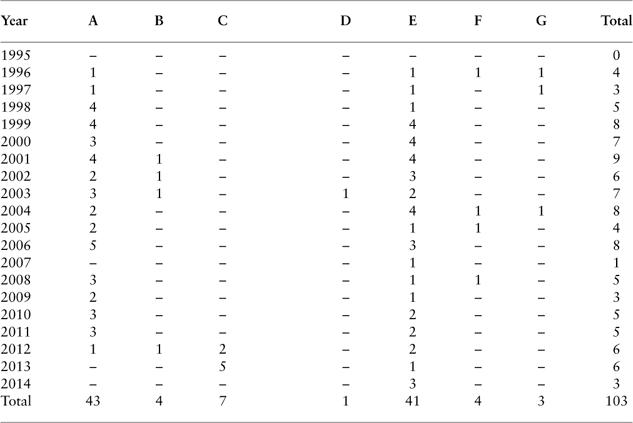
In the current framework, Table 6 has been constructed by adopting the framework developed in Chaisse and ChakrabortyFootnote 57 for analyzing the nature of the AD-related complaints lodged at the DSB.
Analysis of DSB complaints on Anti-Dumping Agreement related disputes
source: Constructed by the authors from the WTO Dispute Settlement documents (updated on 16 February 2015).
notes: A = win for complainant; B = loss for complainant; C = continuing/result expected soon/case with Appellate Body/not officially closed; D = request to suspend panel proceeding; E = panel not formed/formed but not composed; F = amicably settled; G = discontinuation of the alleged measure by the respondent.
Using this methodology and looking from a complainant's perspective, the AD complaints lodged at the DSB are classified under seven different categories. The first two columns represent “victory” and “defeat” in a particular case. “Victory” by a complainant is defined as determination of WTO-inconsistency in the respondent's alleged policy (at any stage, e.g. initiation of investigation and the process followed thereof, determination of dumping margin, and collection of duty) at the panel level, which remains unchanged even if the AB later reverses certain legal interpretations of the verdict, since the existence of a WTO-incompatible policy has been effectively established. However, the rejection of the complainant's claims, initially at panel stage and subsequently affirmed at the appellate body level, is defined as “defeat”. The cases classified under the third column encompass several possibilities—cases at consultation stage, disputes currently for consideration at the appellate body stage, cases where a panel verdict is expected within a specified time, or cases which have never been officially closed, etc. The fourth column signifies the scenario where the complainant and the respondent jointly request DSB for suspension of the proceedings after panel formation. This clearly indicates traces of flexibility in the respondent country to negotiate the alleged measures in force.
The fifth column shows the cases where no panel had yet been formed, potentially implying mutual discussion, probably leading the respondent to guarantee the desired market access for the complainant to resolve the dispute. However, two other possibilities cannot be ruled out in this case. First, a (developed country) complaint might have been raised for harassing the respondent as a trade policy instrument, and second, a (developing country) complainant might have lacked the necessary technical expertise to support their claim, and decided to opt out before the formation of the panel. The sixth column notes the cases where a mutually agreeable solution has been notified to the DSB. In the seventh column are placed the cases where the alleged measure was promptly discontinued after the initial notification at DSB. The last column on the one hand indicates the existence of WTO-incompatible measures in force, and highlights the effectiveness of the dispute settlement mechanism on the other. Clearly, while column A (victory) and B (defeat) enable one to understand the AD cases in black-and-white, the last four columns offer deeper underlying political economic insights.
Table 6 summarizes the global AD actions over the period 1995–2014. It is observed from the table that among the 103 cases lodged at the WTO on AD provision during the period under consideration, on 43 occasions (41.75 percent of the cases) the WTO-incompatibility of the alleged measure has been proved.Footnote 58 However, only on four occasions has an AD-related complaint been rejected.Footnote 59 On 41 occasions (39.81 percent of the cases), the parties did not persist in the dispute, as a result of which these cases are still not officially closed.Footnote 60 Amicable settlement between the partiesFootnote 61 and a discontinuation of the alleged measure by respondentFootnote 62 has been observed four and three times, respectively.
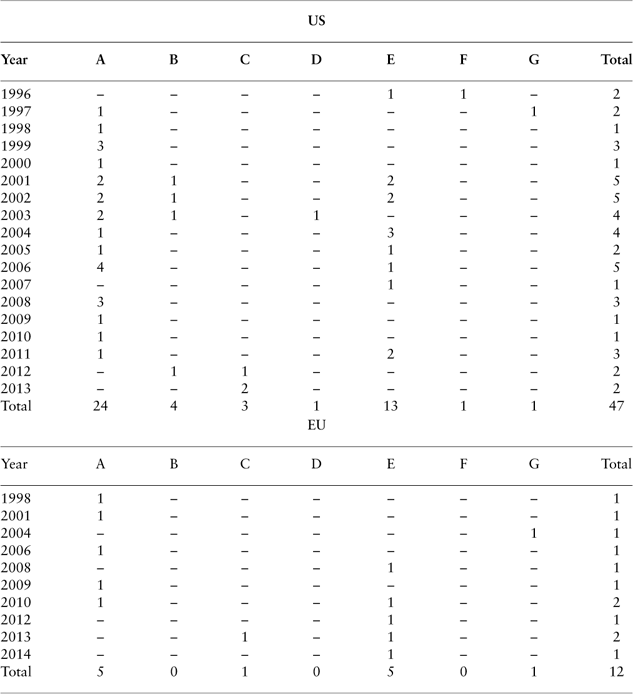
The top and the bottom panels of Table 7 represent the AD disputes involving two leading developed entities, namely the US and the EU, respectively. The US scenario deserves particular attention as it has faced a maximum number of complaints on AD grounds for violating its obligations from partner countries. Although the number of cases faced by the EU has been much smaller by comparison, they are equally important given the wider repercussions caused by the verdicts for AD administration.
Analysis of DSB complaints on Anti-Dumping Agreement related disputes involving the EC and the US as respondent
source: Constructed by the authors from the WTO Dispute Settlement documents (updated on 16 February 2015).
notes: A = win for complainant; B = loss for complainant; C = continuing/result expected soon/case with Appellate Body/not officially closed; D = request to suspend panel proceeding; E = panel not formed/formed but not composed; F = amicably settled; G = discontinuation of the alleged measure by the respondent.
It is observed from the top panel that the US has lost 24 out of the 47 cases (51.06 percent) faced as respondent, providing justification for the claims lodged by the trade partners. On the other hand, the US has been the only country which has managed to win four disputes as respondent.Footnote 63 However, no panel has been formed on 13 occasions.Footnote 64 On one occasion each, the case has been amicably settled and a request for suspending the panel proceedings has been submitted to the WTO.
The lower panel shows the involvement of the EC as a respondent at the DSB, and the bloc has lost 5 out of the 12 cases (41.67 percent). On five occasions, no panel has been formed,Footnote 65 while there is one instance of discontinuation of the alleged measure.Footnote 66 The findings underline the proven WTO-incompatibilities in AD administration in both economies.
B. Analysis of the Complaints
To understand the potential misuse of an ADA provision, each dispute in this area is studied at length. First, analyzing the alleged Article-level violations in the submissions made by the appellant in the AD cases lodged at the DSB, an attempt is made to identify the perceptions on the misuse of various provisions. This analysis reveals that nearly every important Article of the ADA has, over the past two decades, been potentially susceptible to protectionist policies. The findings are summarized in Figure 2, where the number of times violations occur in a particular ADA provision are reported in ascending order.
It is interesting to observe that the maximum number of disputes lodged at the WTO highlights violation of the investigation procedures and dumping determination process, namely, under Article 2 (determination of dumping), followed by Article 6 (concerning evidence), Article 1 (conformity of applied procedures with the ADA), Article 5 (concerning initiation procedures and subsequent investigation), and Article 3 (determination of injury to domestic industry). Each of these provisions has been quoted in the submissions of complainant countries across more than fifty cases, implying their potential vulnerability to protectionist abuse. Cases lodged with these alleged violations have collectively accounted for 53.69 percent of the total number of lodged disputes.
The other provisions where alleged misuse has been considerable include AD duty determination, notification, determination procedure, and collection-related Articles. More than thirty-one but up to fifty violations have been reported in the case of Article 18 (procedures relating to final provisions), Article 9 (imposition and collection of ADD), Article 12 (public notification of the procedures and explanation of the determinations), Annex II (determination on the basis of best information available when collecting direct evidence is a problem), and Article 11 (duration and review of ADD and price undertakings). Citations of these alleged violations have collectively accounted for 33.33 percent of the total number of lodged complaints.
AD Articles where the number of alleged violation lie between ten and thirty-one times concern procedural mismanagement; namely, in Article 7 (provisional measures) and Article 4 (definition of domestic industry). In other words, in addition to the imposition of provisional measures, as well as the duration and review of the duty, the very basis of the initiation, i.e. harm to a significant section of “industry” (Article 4), has also been subject to dispute fairly often. Cases lodged by quoting these alleged violations have collectively accounted for 7.85 percent of the total number of complaints.
The AD Articles where alleged violations have numbered less than ten times include Article 17 (Consultation and Dispute Settlement), Article 10 (Retroactivity), Annex I (procedures regarding on-the-spot investigations), Article 15 (special regard to developing countries), and Article 8 (price undertakings). Cases lodged by quoting alleged violations under these provisions have collectively accounted for 5.13 percent of the total number of complaints.
C. Analysis of the DSB Results
In this phase of the analysis, complaints where WTO-incompatibility of the alleged policies have been proved at both the dispute settlement panel and AB are studied at length. The analysis on the DSB verdicts is summarized in Figures 3 and 4. A provision will not be considered “violated” if that Article in a particular dispute is first ruled to be WTO-incompatible by the panel, but the finding is later reversed by the AB. However, violation is proved under the reverse scenario.
Actual violations of WTO ADA, by Article (DSB rulings) Source: Constructed by the authors from the WTO ADA related disputes (01/01/1995–16/02/2015).
Actual violations of WTO ADA, by specific provisions (DSB rulings) Source: Constructed by the authors from the WTO ADA related disputes (01/01/1995–16/02/2015).
Figure 3 notes the proven violations of the AD provisions, as reflected from the panel and AB verdicts, at the Article level. It is observed that the Articles which have been violated more than thirty times include Article 3 (determination of injury to domestic industry) and Article 6 (concerning evidence), the two of which collectively account for 46.24 percent of the total proved violations. The findings clearly underline the frequent WTO-incompatibility of the dumping determination process.
The Articles for which violations have been proved between ten and thirty times include Article 2 (determination of dumping), Article 5 (concerning initiation procedures and subsequent investigation), Article 18 (procedures relating to final provisions), and Annex II provisions (determination on the basis of best information available when collecting direct evidence is a problem). These proved violations collectively account for 35.26 percent of the total verdicts on the AD front.
Finally, the use of a number of AD Articles has been proved to be WTO-incompatible at times, but violations have never exceeded ten. In decreasing order of proved violations, they are: Article 12 (public notification of the procedures and explanation of the determinations), Article 9 (imposition and collection of ADD), Article 4 (definition of domestic industry), Article 1 (conformity of applied procedures with the ADA), Article 11 (duration and review of ADD and price undertakings), Article 7 (provisional measures), Article 10 (Retroactivity), Article 15 (special regard to developing countries), and Annex I (procedures regarding on-the-spot investigations). This category collectively accounts for 18.50 percent of the total number of proved violations.
In order to understand the intensity of the potential misuse of individual AD Articles, their alleged and actual violations are compared next. It is observed that in 61.29 percent of the lodged complaints, the alleged violation of Article 3 (determination of injury to domestic industry) has indeed been confirmed by the DSB. The corresponding figures for Article 6, Article 10, Annex II, Article 2, and Article 3 are 60.87, 28.57, 28.21, 27.27, and 27.27 percent, respectively. The extent of proven misuse under the provisions of determination of dumping (Article 2) and evidence collection (Article 6) and other provisions raises serious concerns over the fairness of the AD determination framework to respondent countries on several occasions.
The next part of the analysis identifies the frequency of the exact AD provisions which have proved to be susceptible to misuse. The findings from the disputes are presented in Figure 4, which summarizes the proven violations of the AD provisions at the sub-Article level.
The analysis reveals that Article 2.4 (“fair comparison” between export price and normal value) has been declared to be WTO-incompatible most often (17 times), followed by Article 6.8 (final determination on the basis of “available facts”), Article 3.1 (examination of the impact of dumped imports on prices of domestic “like products” and their producers), Article 3.2 (investigation of a significant increase in dumped imports and price undercutting), and Annex II (determination on the basis of best information available when collecting direct evidence is a problem). In addition, Article 3.4 (consideration of “all relevant economic factors” for determination of dumping) and Article 3.5 (demonstration of causal relationship between dumped import and injury) have been violated ten times each. The frequency with which determinations of the dumping margin and the investigation procedure have been declared to be WTO-incompatible underlines traces of protectionism in the entire process. In addition, a high number of violations under Annex II bears serious consequences for exports coming from low-cost developing countries like India and Thailand, and NMEs like China, Russia, and Ukraine, as noted in Table 5 earlier.
Article 6.5 (information confidentiality) has been violated seven times, while Article 6.9 (full opportunity to all interested parties to defend their interests before final determination) and Article 18.4 (adoption of “all necessary steps” to conform with the ADA) have each been declared to be WTO-incompatible six times; underlining the high frequency of violations during investigations, especially diversions from supporting evidence. Article 6.4 (timely opportunities for all interested parties to see all information), Article 12.2 (detailed notification of the findings), Article 18.1 (imposition of no specific action in disagreement with GATT 1994), and Article 6.10 (determination of individual margin of dumping) have been proved to be WTO-incompatible five times each. Violations under all these measures bear profound implications at the time of AD investigations and final duty determination. At times, simultaneous violations of these provisions along with other provisions have been proved, which compounds the problem for the exporting Members.Footnote 67
Article 2.2 (procedure for collecting cost and profit data), Article 4.1 (definition of domestic producers), Article 5.4 (application “by or on behalf of the domestic industry”), Article 5.8 (immediate termination of investigations in the absence of sufficient evidence), and Article 12.1 (public notification of sufficient evidence to reach the interested parties) have been proved to be WTO-incompatible four times each. The tendency in the importing countries to protect their domestic players is understood from these verdicts.
Article 1 (principles), Article 5.3 (examination of the accuracy and adequacy of the evidence provided), Article 6.2 (providing full opportunity to all interested parties to defend their interests throughout the investigation), Article 9.2 (AD duty collection in appropriate amounts), and Article 9.4 (AD duty applied to imports from exporters or producers not included in the examination) have each been proven to be WTO-incompatible three times. The nature of these Articles clearly underlines the violation at the duty determination and collection stage, extending undue protection to the domestic sector.
Article 3.7 (determination of threat on the basis of facts, and not merely on allegation, conjecture, or remote possibility), Article 5.1 (application “by or on behalf of the domestic industry”), Article 5.2 (evidence of dumping, injury, and their causal link in the written application), Article 5.5 (publicizing of the application for the initiation of an investigation), Article 6.1 (due opportunities for exporters or foreign producers to respond), and Article 11.3 (maximum period of five years) have been proved to be WTO-incompatible twice each. The violated Articles demonstrate the relaxation of procedures during initial investigations on the one hand, and the continuation of protectionist measures beyond due period on the other.
Finally, Article 3.3 (simultaneous AD investigations on imports of a product from more than one country), Article 3.8 (special care while evaluating threat of injury), Article 6.7 (investigations carried out in the territory of other Members), Article 7.2 (nature of provisional measures), Article 7.4 (limit on provisional measures), Article 9.3 (lesser duty rule), Article 10.2 (retroactive levying of AD duties), Article 10.4 (imposition of definitive ADD only after determination of threat), Article 11.2 (reviewing of the need for continuing the duty after the lapse of a “reasonable period of time”), Article 15 (special regard to developing countries), Article 18.5 (information on any changes in laws and regulations relevant to AD Agreement), and Annex I (procedures regarding on-the-spot investigations) have been proved to be WTO-incompatible once each. While their absolute number in isolation looks small, the fact that they have been simultaneously violated with several other frequently violated AD provisions in a number of cases reflects the compound nature of the problem.
While the frequency of violation of the ADA provisions underlines their potential misuse, a further analysis by identifying the development profile of the defeated respondents provides additional insights. Ten sub-Articles of the ADA, which have been violated a maximum number of times, are separately considered for this purpose; the summarized results are presented in Figure 5.
Developmental profile of the top ten actual violations of WTO ADA, by specific sub-Articles Source: Constructed by the authors from the WTO ADA related disputes provisions (01/01/1995–16/02/2015).
An interesting observation from the “developmental” analysis emerges here. While WTO-inconsistency has been shown most frequently against the developed countries for abusing the provisions under Article 2.4 (“fair comparison” between export price and normal value) and Article 18.4 (adoption of “all necessary steps” to conform to the ADA), the developing countries have emerged as the major violators for three other provisions, namely Article 6.8 (final determination on the basis of “available facts”), Article 3.2 (investigation of a significant increase in dumped imports and price undercutting), and Article 6.9 (full opportunity to all interested parties to defend their interests before final determination). The pattern of misuse under Article 6.5 (information confidentiality) is found to be similar for both sets of countries. In other words, the potential misuse of ADA provisions, cutting across development profiles, becomes evident.
Economic considerations suggest that dumping facilitates lower prices to consumers, greater competition in the market, and improved performance of the domestic industry. It also acts as an anti-inflationary mechanism of price control. When looking into AD calculus, each country must take into account the benefits of dumping, as well as its costs to the economy as a whole and to consumers. It is also important to understand why increased dumping is occurring. In most cases, international trade rules under domestic laws, as well as under the GATT and the WTO, have branded dumping as bad due to its ability to cause injury to the domestic industry. Therefore, relief is provided in the name of combating unfair trade. However, this results in the possibility of using AD as a state-led barrier to trade, for protecting domestic industries.
At the domestic level, governments must facilitate innovation and technological progress within their industries to make them internationally competitive. The validity of the infant industry argument in the age of globalization is debatable, given that certain forms of protection lead to demands for more and more protection through a never-ending spiral effect. However, various methodologies used for proving dumping are not standardized and they are extremely tentative in nature. The objective of AD relief and its status as an unfair trade remedy has diminished in the last decade, with a consequent rise in conflicts with the free trade principles of the WTO. Hence, it has emerged not as a question of free trade versus regulated trade; rather, it is a question of how WTO Members are using the AD law and allowing free trade in the market. Given the importance of this provision in multilateral trade architecture, nobody can argue for the abolition of the AD law as a tool for maintaining peaceful trade relations between countries. Consequently, it is high time to repeal and improve the ADA to further the economic growth of developing countries.
IV. Conclusion: The Way Ahead
The principal paradox posed by the recent increase in dumping by many developing countries, mostly Asian, is that it is simultaneously a reflection of the internal weakness of the dumping country and an external challenge to the importing country. This indicates the inefficiency of the domestic industry in always asking for protectionism. Currently, the problem of subsidy and dumping is not dealt with in a co-ordinated manner either at the domestic level or at the WTO, with the different agreements acting simultaneously on and dealing separately with the same issues.
The most frequent justification for AD measures is predatory pricing. However, many studies reveal hardly any predatory intent in dumping—the reasons are more likely to be political and economic. The analysis of the cases above reveals that there are many gaps in the WTO ADA. The most popular methodologies are not consonant with the ADA itself. The finding of a normal value and margin of dumping is unrealistically inflated. The selection of a surrogate country in the case of NMEs is not consistent with the economic realities existing in dumping and dumped-upon countries. The administrative procedures in the case of the facts-available provision are highly discretionary and subject to the bias of the authorities of the investigating countries.
To minimize the misuse of discretion, more explicit and clearer guidelines should be developed and the investigations need to be more transparent. Some scholars have prescribed competition policy as an antidote to AD misuse. However, dumping and competition policies exist in parallel and can never meet. What is presently needed is more transparency in procedures and the use of clear definitions and formulations for the determination of dumping.
The conflict between the interests behind the decisions made by the domestic authorities to protect their industries and the reviews by the panel and AB to balance the international trade interests is likely to continue. Trade barriers such as AD reveal the split between buyers and sellers. Sellers and consumers want as many choices as possible, while producers want to limit choices.Footnote 68 The present AD laws of WTO Members are not intended to serve consumer interests; on the contrary, AD measures mostly end up hurting consumer interests as well as downstream industry interests.Footnote 69 Given the growing misuse of AD investigations, there is an urgent need to look into the modification of the procedure, and the current analysis has attempted to identify potential candidates for future reform. In line with the Hong Kong Declaration, the focus of the future negotiations should be on the reform of those Articles of the ADA which leave room for various interpretations for fulfilling protectionist purposes, and on limiting the use of the very mechanism itself. The present analysis contributes to the literature, as the Articles identified as “misused” in Figure 3 may be considered as strong candidates for reform in future multilateral negotiations.