Nomenclature
Symbols
- A
-
System matrix
- A aug
-
Augmented system matrix
- b d
-
Disturbance vector
- B
-
Input matrix
- B aug
-
Augmented input matrix
- C
-
Output matrix
- d
-
Disturbance
- D
-
Feed-forward matrix
- ep
-
Steady state error
- f
-
Uncertainty function
- G
-
Reference gain
- J
-
Performance index
- L
-
Linear observer gain matrix
- Tr
-
Time response at 5%
- T2s
-
Double amplitude time
- p
-
Roll rate
- q
-
Pitch rate
- Q
-
State weighting matrix
- r
-
Yaw rate
- R
-
Input weighting matrix
- u
-
Control input/x-component of the speed
- v
-
y-component of the speed
- V
-
speed
- w
-
z-component of the speed
- Kx
-
LQR gain
- Ki
-
Proportional gain
- Kp
-
Integral gain
- Kff
-
Feed-forward gain
- Kd
-
GESO disturbance gain
- y
-
System output
- y0
-
Controllable output
- ym
-
Measurable output
Greek letters
-
 $\alpha$
-
Angle-of-attack
-
$\varepsilon$
-
Error
-
$\theta$
-
Pitch angle
-
$\psi$
-
Yaw angle
-
$\phi$
-
Roll angle
-
$\delta$
e
-
Elevator angle
-
$\delta$
a
-
Aileron angle
-
$\delta$
r
-
Rudder angle
-
$\xi$
-
Damping ratio
-
$\omega$
-
Natural frequency
-
$\tau$
-
Time constant


Abbreviation
- ANFIS
-
Adaptive Neuro-Fuzzy Inference System
- GESO
-
Generalised Extended State Observer
- LQR
-
Linear Quadratic Regulator
- LPV
-
Linear Parameter Varying
- PI-FF
-
Proportional Integral with feed-forward compensation
- PSO
-
Particles Swarm Optimisation
- UAS
-
Unmanned Aerial System
1.0 Introduction
Achieving accurate control for Unmanned Aerial Systems (UAS) is complicated. The diversity of mission platforms, nonlinear dynamics, resource constraints and unpredictable environmental conditions are some of the main problems. An efficient solution to these problems requires the utilisation of flight control systems that are highly resilient and autonomous, capable of guaranteeing constraints satisfaction, robustness and reliability in the range of model flight dynamics and operating conditions [Reference Eren, Prach, Koçer, Raković, Kayacan and Açıkmeşe1, Reference Valyou, Ceruti, Miller, Pawlowski, Marzocca and Tranchitella2]. The recent interests in making Unmanned Aerial Systems [Reference Aubeelack and Botez3]–[Reference Segui, Kuitche and Botez5] more robust, and in increasing their abilities have led researchers to address these challenging demands using modern controller synthesis approaches.
Optimal control [Reference Kammegne, Grigorie, Botez and Koreanschi6]–[Reference Frost, Taylor and Bodson9] is a commonly applied method that seeks to maximise the desired system outputs for a minimum cost. Zhen et al. [Reference Zhen, Jiang, Wang and Gao10] investigated anti-wind attitude control for the Boeing 707 in the landing phase. The longitudinal attitude control was based on the Proportional Integral Derivative (PID) and the C* inner control, whereas the lateral attitude control was performed using an optimal regulator. In [Reference Vinodh Kumar, Raaja and Jerome11], a Linear Quadratic Regulator (LQR) control strategy was applied on a two-degree-of-freedom laboratory helicopter for pitch and yaw angle controls. Their methodology used the adaptive Particle Swarm Optimisation (PSO) algorithm to improve the selection of control gains, and to guarantee an optimal attitude tracking control. Even if optimal control is considered as the universal solution for linear control problems [Reference Kálmán12], bibliographical research publications [Reference Doyle13–Reference Rosenbrock and McMorran15] pointed out that its robustness is not guaranteed.
In addition to the optimal control, robust control methods [Reference Sadeghzadeh, Chamseddine, Theilliol and Zhang16, Reference Balas and Frost17] may be applied when the aircraft dynamic uncertainties are considered. Boughari et al. [Reference Boughari, Botez, Ghazi and Theel18] proposed a robust controller that was optimised on an optimisation using the H∞ method, and the genetic algorithm for the Cessna Citation X. This controller was designed to ensure acceptable flying qualities in the presence of aircraft dynamics uncertainties dues to mass and centre of gravity variations. Liu et al. [Reference Liu, Sun and Cooper19] proposed a Model Predictive Control (MPC) based on a Linear Quadratic Gaussian (LQG) approach to compensate for the dynamic gust loads on the flexible aircraft in turbulence conditions. This association of the MPC and the LQG methods makes it possible to manage the problems of dynamics variation and disturbance rejection, and thereby to ensure a robust performance. Pavel et al. [Reference Pavel, Shanthakumaran, Stroosma, Chu, Wolfe and Cazemier20, Reference Pavel, Shanthakumaran, Chu, Stroosma, Wolfe and Cazemier21] implemented a nonlinear control scheme using the Incremental Nonlinear Dynamic Inversion (INDI) methodology on an Apache AH-64D Longbow helicopter model. Their goal was to provide improved handling qualities for hover and low-speed flights. Simplicio et al. [Reference Simplicio, Pavel, Van Kampen and Chu22] developed an acceleration measurement-based control using the INDI technique to cope the need of aerodynamics data. Both methodologies showed an increased robustness to model uncertainties. Some cases of robust control lead to high-order controllers which are difficult to implement in practical situations without reducing their order [Reference Obinata and Anderson23]. However, a reduction of a controller also affects its performance.
Another option is to use intelligent control [Reference Liu, Yuan, Zhang and Luo24–Reference Ceruti, Rossi and Saggiani26]. In [Reference Hušek and Narenathreyas27], a longitudinal dynamics controller based on a Takagi-Sugeno fuzzy model was presented. The controller was applied to the twin-engine short-range transport aircraft LET L410 to guarantee closed loop stability and pitch angle tracking. Duong et al. [Reference Duong, Grimaccia, Leva, Mussetta and Ogliari28, Reference Duong, Grimaccia, Leva, Mussetta and Le29] designed a hybrid controller based on a PI and a fuzzy control for wind turbine applications. The fuzzy control methodology improved the PI controller by smoothing the influence of parameter variation, which led further to an effective pitch angle control. Another methodology proposed by Grimaccia et al. [Reference Grimaccia, Mussetta and Zich30] used a neuro-fuzzy method to improve the energy production of photovoltaic plants. The proposed neuro-fuzzy algorithm helped to solve complex interaction and nonlinearities among input data (weather) to forecast energy production. Wu et al. [Reference Wu, Chen and Gong31] developed an adaptive neural network flight control for aircraft longitudinal motion in high angle-of-attack conditions. Their adaptive neural network was designed using a coupling of a variable separation technique with the Lyapunov–Krasovski function method. The methodology showed good performance for an uncertain non-strict feedback nonlinear system with distributed time-varying delays. However, classical neural network architecture requires a large amount of training data in order to perform an accurate interpolation. Furthermore, the neural network weights do not represent physical variables, thus neural network architectures are difficult to adjust in practical situations.
In addition, increasingly development and implementation of several disturbance estimation mechanisms has been shown in the literature, such as the Disturbance Observer (DO), Unknown Input Observer (UIO), Perturbation Observer (PO) and Extended State Observer (ESO) [Reference Fareh, Al-Shabi, Bettayeb and Ghommam32]. The ESO mechanism has been chosen for handling disturbance estimation in efficient active disturbance rejection control theory [Reference Han33], which allows to estimate and compensate the unmodelled dynamics, parametric uncertainty, and external disturbances. Nevertheless, the standard approach is designed for integral chain systems where the matching condition is satisfied. Thus, for solving the disturbance rejection problem in flight control systems, the Generalised Extended State Observer (GESO) based controller has been successfully implemented in aerial systems [Reference Li, Yang, Chen and Chen34]. Another interesting approach for solving the trajectory tracking and path following for different kinds of vehicles subjected to disturbances may be composed by improved disturbance estimators. In [Reference Fethalla, Saad, Michalska and Ghommam35], a Nonlinear Disturbance Observer (NDO) was used to provide robustness to the closed loop control scheme, in which a Back-Stepping-base control was performed for the stabilisation and tracking tasks of a quadrotor UAV. In the same way, the simulation results presented in [Reference Ghommam, Mnif and Derbel36] have shown that observers were successfully implemented with the aim to improve the robustness of a marine surface vessel, that was also subjected to environment disturbances: wave drift, currents and mean wind forces.
To capture the benefits of each of these control methodologies, a design approach is introduced in this paper. The aim of the approach is to provide a robust low-order controller able to solve a nonlinear control problem. In the case of aircraft control, the states of the aircraft vary over time due to the environment (altitude, wind, etc.) or its configuration (cg position, weight, etc.) which transform the linear problem into a nonlinear problem.
The overall controller architecture is composed by a Linear Quadratic Regulator (LQR) feedback controller to ensure aircraft stability, and a Proportional-Integral controller combined with reference Feed Forward compensation (PI-FF) to provide an accurate controllability in case of error in data. This controller can be easily implemented in practical situations because of its low order. In addition, a Generalised Extended State Observer (GESO) was added to the controller design for robustness improvement. The GESO is a very good alternative to design a robust controller since it allows the estimation and compensation of disturbances and uncertainties [Reference Shi, Wu and Chou37, Reference Pawar, Chile and Patre38]. Finally, a Linear Parameter-Varying (LPV) method was applied to provide a nonlinear capability to the controller. The proposed scheme uses a minimum amount of data to handle the nonlinear problem. The LPV method is based on an Adaptive Neuro-Fuzzy Inference System (ANFIS) which is a combination of a fuzzy theory and a neural network. The fuzzy theory provides additional data to the neural network in order to enhance its ability to produce the estimated outputs. This approach reduces the number of operating points required by use of the fuzzy logic technique to complete the unknown data.
The main contribution of this paper lies in the methodology proposed to design each part of the controller. The efficiency of the methodology is proved by the controller reliability in the presence of various disturbances. The robustness of the controller was ensured using two methodologies: The first methodology was the eigenvalues (pole and zeros) placement. This methodology was performed using a stability domain defined by the Hurwitz stability theory. The optimal controller and PID gains were selected, so that the poles and zeros lied in this domain, and thus they ensured a stable dynamic with a level 1 qualification (can handle perturbations around a trimmed position) according to the MIL-STD-1797A standard [Reference Leggett and Cord39, Reference Klyde, Schulze, Miller, Manriquez, Kotikalpudi, Mitchell, Seiler, Regan, Taylor and Olson40]. An automatic process using the Particle Swarm Optimisation (PSO) was then used to ensure that all the selected gains covered this domain. The second methodology was the implementation of a Generalised Extended State Observer (GESO) to ensure additional robustness, as it can estimate and compensate the unmodelled dynamics, parametric uncertainty, and external disturbances. In the literature, the GESO based control have been successfully implemented in several dynamic systems such as marine vessels, quadrotor aerial vehicles, magnetic levitation suspensions, missile longitudinal autopilots, charge of a super capacitors, wheeled mobile robots, among others [Reference Li, Zhang, Yang, Zhang and Zhang41–Reference Zhou, Huang, Peng, Li and Liao44]. In the present manuscript the effectiveness of GESO design for robustness of the UAS-S45 Bálaam system output is demonstrated.
The paper is organised as follows. The UAS-S45 model and its dynamic equations are presented in Section 2 (the actuator dynamics and the hinge moment of the control surfaces are considered in the introduced model), followed by the control scheme in Section 3. It consists of a LQR for stability augmentation, a PI-FF for the control augmentation, and a GESO for improving robustness capabilities. The LPV based on the ANFIS method is described in Section 4. Finally, Section 5 presents and discusses the simulation results, and is followed by Conclusions.
2.0 UAS-S45 Bàlaam dynamic equations
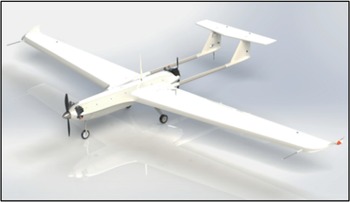
The proposed control methodology was applied to the flight dynamics model of the UAS-S45 Bálaam. The UAS-S45 is an Unmanned Aerial System designed and manufactured by Hydra Technologies to provide surveillance and security capabilities for both military and civilian purposes [Reference Villaseñor, Gallegos, Gomez-Avila, López-González, Rios and Arana-Daniel45](Fig. 1). Its general characteristics are given in Table 1.
General characteristics of the UAS-S45

The UAS-S45 Bálaam.

The UAS-S45 simulation model.

Kuitche and Botez [Reference Kuitche and Botez46] have developed a flight dynamics model of the UAS-S45 (Fig. 2). Their flight dynamics model was designed to evaluate the performance of a morphing wing technique. Its architecture was divided in four sub-models and each of these sub-models was estimated using numerical and experimental methodologies.
The authors described the flight dynamics model and presented the results of its accuracy. For convenience purpose, this paper is cited in the text for readers to present the design and accuracy of the model.
The aerodynamic sub-model was realised by a combination of the contributions of the ‘wing part’, the ‘fuselage part’, the ‘tail part’, and their interactions. Its estimation was performed using Fderivatives code [Reference Anton, Botez and Popescu47–Reference Anton, Botez and Popescu49], which is an improvement of the DATCOM procedure using new CFD analyses methodologies.
The propulsion sub-model is a piston-propeller engine model. The piston engine was designed using equations derived from the ideal Otto cycle and was optimised using the manufacturer’s data. The propeller aerodynamic performance was obtained using a CFD analysis and the Blade Element Theory (BET).
The structural sub-model determines the mass and inertia of the UAS-S45 using the Raymer equations [Reference Kuitche and Botez46] and the DATCOM procedure.
The actuator sub-model was estimated using a servomotor model and mechanical calculations.
Each sub-model was validated using experimental or real data. The results showed a very good agreement between estimated and experimental or real data.
The UAS-S45 flight dynamics model developed by Kuitche and Botez [Reference Kuitche and Botez46] was obtained for several regimes, including cruise, take-off and landing, and for various flight conditions. This model is therefore used for controller design.
The state-space representations for the longitudinal and the lateral dynamics of the UAS-S45 model are given by Equation (1) and Equation (2), respectively:
 \begin{align}\left[ {\begin{array}{*{20}{c}}{\Delta \dot u}\\ \\[-7pt]{\Delta \dot w}\\ \\[-7pt]{\Delta \dot q}\\ \\[-7pt]{\Delta \dot \theta }\end{array}} \right] &= \left[ {\begin{array}{c@{\quad}c@{\quad}c@{\quad}c}{{X_u}} &{{X_w}} &0& { - g}\\ \\[-7pt]{{Z_u}}& {{Z_w}}& {{u_0}}& 0\\ \\[-7pt]{{M_u} + {M_{\dot w}}{Z_u}} &{{M_w} + {M_{\dot w}}{Z_w}} &{{M_q} + {M_{\dot w}}{u_0}} &0\\ \\[-7pt]0& 0 &1& 0\end{array}} \right]\left[ {\begin{array}{*{20}{c}}{\Delta u}\\ \\[-7pt]{\Delta w}\\ \\[-7pt]{\Delta q}\\ \\[-7pt]{\Delta \theta }\end{array}} \right] \nonumber\\[3pt]&\quad + \left[ {\begin{array}{*{20}{c}}{{X_{{\delta _e}}}}\\ \\[-7pt]{{Z_{{\delta _e}}}}\\ \\[-7pt]{{M_{{\delta _e}}} + {M_{\dot w}}{Z_{{\delta _e}}}}\\ \\[-7pt]0\end{array}\begin{array}{*{20}{c}}{{X_{{\delta _T}}}}\\ \\[-7pt]{{Z_{{\delta _T}}}}\\ \\[-7pt]{{M_{{\delta _T}}} + {M_{\dot w}}{Z_{{\delta _T}}}}\\ \\[-7pt]0\end{array}} \right]\left[ \begin{array}{l}\Delta {\delta _e}\\ \\[-7pt]\Delta {\delta _T}\end{array} \right]\end{align}
 \begin{align}\left[ {\begin{array}{*{20}{c}}{\Delta \dot v}\\ \\[-7pt]{\Delta \dot p}\\ \\[-7pt]{\Delta \dot r}\\ \\[-7pt]{\Delta \dot \phi }\end{array}} \right] = \left[ {\begin{array}{c@{\quad}c@{\quad}c@{\quad}c}{{Y_v}} &{{Y_p}} &{ - ({u_0} - {Y_{r)}}} &{g\cos ({\theta _0})}\\ \\[-7pt]{{L_v}} &{{L_p}} &{{L_r}}& 0\\ \\[-7pt]{{N_v}} &{{N_p}} &{{N_r}} &0\\ \\[-7pt]0& 1& 0 &0\end{array}} \right]\left[ {\begin{array}{*{20}{c}}{\Delta v}\\ \\[-7pt]{\Delta p}\\ \\[-7pt]{\Delta r}\\ \\[-7pt]{\Delta \phi }\end{array}} \right] + \left[ {\begin{array}{c@{\quad}c}0 & {{Y_{{\delta _r}}}}\\ \\[-7pt]{{L_{{\delta _a}}}} & {{L_{{\delta _r}}}} \\ \\[-7pt]{{N_{{\delta _a}}}} & {{N_{{\delta _r}}}} \\ \\[-7pt]0 & 0\end{array}} \right]\left[ \begin{array}{l}\Delta {\delta _a}\\ \\[-7pt]\Delta {\delta _r}\end{array} \right]\end{align}
where u, v, and w are the velocity components around the body axes, p, q and r are the angular velocity components,
 $\theta$
and
 $\phi$
are respectively the pitch and the roll angle,
 $\delta$
e
is the elevator angle,
 $\delta$
a
is the aileron angle, δ
r
is the rudder angle, and
 $\delta$
T
is the throttle position. X
u
, X
w
, X
 $_{\delta}$
, Y
v
, Y
p
, Yr, Y
 $_{\delta}$
, Z
u
, Z
w
, Z
 $_{\delta}$
, L
v
, L
p
, L
r
, L
 $_{\delta}$
, M
u
, M
w
, M
 $_{\delta}$
, and N
v
, N
p
, N
r
, N
 $_{\delta}$
are the stability derivatives. The uncoupled dynamics was considered because the robust controller could handle the unmodelled flight dynamics around an equilibrium position.
3.0 Introduction of control schemes in the UAS-S45 flight dynamics model
3.1 The proposed controller
Figure 3 shows the control system for the UAS-S45 flight dynamics model. The controller is composed of a Stability Augmentation System, a Proportional Integral Feed Forward controller for controllability augmentation and a Generalised Extended State Observer for robustness improvement.
The associated control law is given by:
 \begin{align}\Delta u = - {K_x}\Delta \hat x - {K_i}\Delta \varepsilon + {K_p}\Delta \dot \varepsilon + {K_{ff}}r + {K_d}\kern2pt\hat{\kern-2pt d}\end{align}
where K
x
is the SAS (Stability Augmentation System) vector gain, K
i
is the integral gain, K
p
is the proportional gain,
 $K_{ff}$
is the feed-forward gain,
 $K_{d}$
is the GESO disturbance gain, u is the control input,
 $\hat x$
is the estimated state vector and
 $\Delta \dot \varepsilon $
is the error between the input reference, the measured output, u
e
is the control input at the equilibrium position and
 ${x_e}$
is the state vector at the equilibrium position. Figure 3 shows the general description of the controller that was used for the pitch and roll channels. For the pitch channel, the control input used was the elevator deflection, whereas for the roll channel, the control inputs used were given by the aileron and rudder deflections.
Since the UAS-S45 is useful for military purposes, such as intelligence gathering and surveillance, it requires specific flight qualities to guarantee a proper flight performance. The flight quality requirements provided by the “U.S. Military Specification for the Flying Qualities of Piloted Airplanes MIL-STD-1797A” [Reference Mitchell, Hoh, Aponso and Klyde50, 51] defined in terms of damping and natural frequency were therefore used for this analysis. These requirements were chosen by assuming that the UAS-45 is a light aircraft and are listed in Table 2 for each dynamic mode response (short period, phugoid, roll subsidence, spiral and Dutch roll), and in Table 3 for a tracking step response or criteria.
Stability augmentation system criteria

Tracking step criteria

The UAS-S45 Control Law.

In Table 2,
 $\xi$
and
 $\omega$
are the damping and the frequency, respectively, of the considered mode,
 $\tau$
ra is the time constant, and T
2s
is the double amplitude time given by:
 \begin{align}{T_{2s}} = \frac{{ - \ln\!(2)}}{{\xi \omega }}\end{align}
3.2 Design methodology of the controller
The main contribution of this paper lies in the methodology proposed to obtain the controller gains shown in Equation (3). For this purpose, the state-space representation of the UAS-S45 dynamics is described by Equations (1) and (2), which are given in the form of a Linear Time Invariant (LTI) system [Reference Cook52–Reference Phillips54]. Equation (5) shows the state space representation of the system used for the controller design. This equation is referred to in the design steps of the controller.
 \begin{align}\begin{array}{l}\Delta \dot{\textbf{x}} = {\bf{A}}\Delta {\bf{x}} + {\bf{B}}\Delta {\bf{u}}\\[3pt] \Delta {\bf{y}} = {\bf{C}}\Delta {\bf{x}} + {\bf{D}}\Delta {\bf{u}}\end{array}\end{align}
where A, B, C and D are the system, the input, the output and the feed-forward matrices, respectively, x is the state vector, u is the control vector, and y is the output vector.
Definition 1: Let
 $\Omega$
be an open subset of the complex plane, A is a n × n real matrix and Λ(A) are the eigenvalues of A.
A is said to be stable relative to
 $\Omega$
if Λ(A)
 $\subseteq \Omega$
.
Thus, the generalised stability set which represents the set of all matrices stable relative to
 $\Omega$
is given by:
 \begin{align}S(\Omega) = \left\{ {A\,{\in}\, {{\mathbb {R}}^{n \times n}}:{\rm{\;\Lambda }}( {\bf{A}}) \subset {\rm{\Omega }}} \right\}\end{align}
Due to the need of the LTI system to respect the flight requirements given in Tables 2 and 3, the general stability problem (Hurwitz stability) is transformed into a relative stability problem. Figure 4 shows a representation of the stability domain where
 $\theta = {\cos ^{ - 1}}\xi $
is the angle defined using the damping
 $\xi$
,
 $\omega$
is the natural frequency and α is the half plane shift.
The stability domain representation.

The proposed methods to obtain the gains K x , K i , K p , K ff and K d are performed in the next three steps:
Step 1: Design of a Linear Quadratic Regulator (LQR) using a selection technique for the weight matrices. The LQR method was used to ensure the dynamic mode (short period, phugoid, roll subsidence, spiral, Dutch roll) stability of the UAS-S45. An additional state was added to the LTI system described in Equation (5) for considering pitch angle steady-state error, therefore the following expression is obtained:
 \begin{align}\left[ {\begin{array}{*{20}{c}}{\Delta \dot x}\\ \\[-7pt]{\Delta \dot \varepsilon }\end{array}} \right] = {{\bf{A}}_{{\rm{aug}}}}\left[ {\begin{array}{*{20}{c}}{\Delta x}\\ \\[-7pt]{\Delta \varepsilon }\end{array}} \right] + {{\bf{B}}_{{\rm{aug}}}}\Delta u + \left[ {\begin{array}{*{20}{c}}{{{\bf{0}}_{i \times 1}}}\\ \\[-7pt]1\end{array}} \right]r,\,{\rm{where}}\,{{\bf{A}}_{{\rm{aug}}}} = \left[ {\begin{array}{c@{\quad}c}{\bf{A}} &{{{\bf{0}}_{i \times 1}}}\\ \\[-7pt]{ - {\bf{C}}} &0\end{array}} \right]\!,\,{\rm{and}}\,{{\bf{B}}_{{\rm{aug}}}} = \left[ {\begin{array}{*{20}{c}}{\bf{B}}\\ \\[-7pt]{{{\bf{0}}_{1 \times j}}}\end{array}} \right]\end{align}
In Equation (7) A aug and B aug are the augmented matrices, i is the row number of A, and j is the column number of B.
The LQR approach needed to obtain an optimal solution of a control problem is given in [Reference Choi and Seo55–Reference Ashraf, Mei, Gaoyuan, Anjum and Kamal57]. The LQR method is applicable if the system is controllable. The LQR methodology is based on the minimisation of the next cost function:
 \begin{align}J = \frac{1}{2}\int\limits_0^\infty {\left( {{x^T}{\bf{Q}}x + {u^T}{\bf{R}}u} \right)} dt\end{align}
where x is the state, u is the control input, and Q and R are the positive weighting matrices.
The optimal gain K is obtained using the following expression:
 \begin{align}\textbf{K} = {{\bf{R}}^{{\bf{ - 1}}}}{{\bf{B}}^{\bf{T}}}{\bf{P}} = \left[ {\begin{array}{*{20}{c}}{{\textbf{K}_{\mathop{\rm x}\nolimits} }}\quad {{\textbf{K}_{{\mathop{\rm ss}\nolimits} }}}\end{array}} \right]\end{align}
where P is the Riccati’s matrix, B is state space input matrix. K x is the feedback control gain vector, and K ss is an integral gain which was replaced by the control augmentation system.
In [Reference Vinodh Kumar, Raaja and Jerome11, Reference Stevens and Lewis53, Reference Choi and Seo55, Reference Ashraf, Mei, Gaoyuan, Anjum and Kamal57], the weighting matrices Q and R of the LQR methodology are manually selected; therefore, it is not guaranteed that the system to be controlled will meet some specific requirements. To ensure that the stabilised UAS-S45 will meet the desired flight qualities, the Q and R weighting matrices are selected in this paper using an optimisation procedure based on the metaheuristic Particle Swarm Optimisation (PSO) algorithm.
The PSO was bounded for the weighting matrices’ selection to reduce the search space, and to ensure that the matrices would be positively defined at each iteration. An objective function was proposed in Equation (10) to evaluate the convergence of the optimisation algorithms:
 \begin{align}{J_1} = \mathop {\min }\limits_{\bf{K}} \left[ {(N - {n_c}) \times {{10}^5} + \sum\limits_j {{{\left( {{{\bf{K}}_j}} \right)}^2}} } \right]\end{align}
where n
c
is the number of requirements that are met in each iteration, N is the total number of criteria, and K
j
represent the j
th
element in the vector K. The expression
 $\sum\limits_j {{{\left( {{{\bf{K}}_j}} \right)}^2}} $
is added to the objective function to reduce the size of control vector gains parameters.
The overall process that takes place to illustrate the LQR methodology and obtain the LQR control vector gain is summarised in Fig. 5.
LQR Control Process.

Step 2: The Proportional-Integral with reference Feed-Forward (PI-FF) gains were evaluated for the stabilised system. A PI-FF controller was used to address the tracking problems. It is mainly composed of a Proportional Integral (PI) controller. Due to its stable, reliable and easy-to-adjust structure, the PI controller remains one of the main controller for industrial purposes [Reference Reznik, Ghanayem and Bourmistrov58]. The PI controller is suitable for stabilising a system and for eliminating the steady state error. Moreover, in order to improve the tracking performance, a reference feed-forward compensator was added to the PI controller [Reference Saussié, Saydy and Akhrif59]. The reference feed-forward compensator can anticipate the reference modification before the PI controller and can provide an additional command.
The state space representation of the closed loop system used in this step is given by:
 \begin{align}\left[ {\begin{array}{*{20}{c}}{\Delta \dot x}\\ \\[-7pt]{\Delta \dot \varepsilon }\end{array}} \right] &= \left[ {\begin{array}{c@{\quad}c}{\textbf{A} + \left( {{\textbf{K}_{\rm{x}}} - {\textbf{K}_{\rm{p}}}} \right)\textbf{BC}} & {{\textbf{K}_i}\textbf{B}}\\ \\[-7pt]-\textbf{{C}} & 0\end{array}} \right]\left[ {\begin{array}{*{20}{c}}{\Delta x}\\ \\[-7pt]{\Delta \varepsilon }\end{array}} \right] + \left[ {\begin{array}{*{20}{c}}{\left( {{\textbf{K}_{\rm{p}}} + {\textbf{K}_{{\rm{ff}}}}} \right)\textbf{B}}\\ \\[-7pt]1\end{array}} \right]\left[ r \right]\\[3pt] y &= \left[ {\begin{array}{c@{\quad}c}\textbf{C}& 0\end{array}} \right]\left[ {\begin{array}{*{20}{c}}{\Delta x}\\ \\[-7pt]{\Delta \varepsilon }\end{array}} \right]\nonumber\end{align}
Which can be referred for simplicity to:
 \begin{align}\left[ {\begin{array}{*{20}{c}}{\Delta \dot x}\\ \\[-7pt]{\Delta \dot \varepsilon }\end{array}} \right] &= {\textbf{A}_{cl}}\left[ {\begin{array}{*{20}{c}}{\Delta x}\\ \\[-7pt]{\Delta \varepsilon }\end{array}} \right] + {\textbf{B}_{cl}}\left[ r \right]\\[3pt]y &= {\textbf{C}_{cl}}\left[ {\begin{array}{*{20}{c}}{\Delta x}\\ \\[-7pt]{\Delta \varepsilon }\end{array}} \right] \nonumber\end{align}
The gains were estimated using the same objective function J1 and the PSO algorithm. The overall process to obtain the K i , K p and K ff parameters is summarised in Fig. 6.
PI-FF gains estimation process.

It is important to note that the evaluation of the closed loop criteria also considers the verification of the closed loop stability of the overall system.
Step 3: Although the relative stability of the overall system is verified while the control gains selection in steps 1 and 2, its robustness is not guaranteed (the selected gains could be located at the boundary of the stability domain). As the final goal is to perform a gain scheduling, it is essential to ensure that the controller can resist to disturbances, and to model variation. Therefore, the Generalised Extended State Observer (GESO) was added to the control system. For the purposes of GESO design, an alternative representation of the augmented model introduced in Equation (5) is considered:
 \begin{align}\Delta {\dot{\textbf{x}}_{{\rm{aug}}}} = {{\bf{A}}_{{\rm{aug}}}}\Delta {{\bf{x}}_{{\rm{aug}}}} + {{\bf{B}}_{{\rm{aug}}}}\Delta {\bf{u}} + {\bf{G}}r\end{align}
Unmodelled dynamics, parametric uncertainties and external disturbances can then be introduced in the analysis by adding them into the UAS-S45 system model given in Equation (13) as follows:
 \begin{align}\begin{array}{l}\Delta {{\dot x}_{{\rm{aug}}}} = {{\bf{A}}_{{\rm{aug}}}}\Delta {x_{{\rm{aug}}}} + {{\bf{B}}_{{\rm{aug}}}}\Delta u + {\bf{G}}r + {\textbf{b}_d}d\\[3pt] {y_m} = {{\bf{C}}_m}\Delta {{\bf{x}}_{{\rm{aug}}}}\\[3pt] {y_o} = {{\bf{C}}_o}\Delta {{\bf{x}}_{{\rm{aug}}}}\end{array}\end{align}
where d are the disturbances or uncertainties,
b
d
is a disturbance matrix,
 ${y_m}$
is the measurable output,
 ${y_o}$
is the controllable output,
 ${{\bf{C}}_o} = \left[ {{\bf{C}}{\kern 1pt} {\kern 1pt} {\kern 1pt} {\rm{ }}1} \right]$
and
 ${{\bf{C}}_m} = \left[ {\begin{array}{*{20}{c}}0 \quad 0\quad 0 \quad1 \quad0\\0 \quad0\quad 0 \quad0\quad 1\end{array}} \right]$
. For design purposes, m represents the row number of A
aug
, and n is the column number of B
aug
.
Then, by considering the methodology described in [Reference Li, Yang, Chen and Chen60], the extended state-space system can be expressed as:
 \begin{align} \dot{\bar{x}} &= \bar{\textbf{A}}\bar x + {{\bar{\textbf{b}}}_u}\Delta u + \bar{\textbf{G}}r + {\bf{E}}h \nonumber\\[3pt] {y_m} &= {\bar{\textbf{C}}_m}\bar x \end{align}
where
 \begin{align}\bar{\textbf{A}} = \left[ {\begin{array}{c@{\quad}c}{{{\bf{A}}_{{\rm{aug}}}}} &{{{\bf{b}}_d}}\\ \\[-7pt]{{{\bf{0}}_{1 \times m}}} &0\end{array}} \right]\!,{\rm{ }}\bar x = \left[ {\begin{array}{*{20}{c}}{\Delta {x_{{\rm{aug}}}}}\\ \\[-7pt]{\Delta {x_{m + 1}}}\end{array}} \right]\!,{\rm{ with }}\Delta {x_{m + 1}} = d\end{align}
 \begin{align}{\bf{E}} = \left[ {\begin{array}{*{20}{c}}{{{\bf{0}}_{m \times 1}}}\\ \\[-7pt]1\end{array}} \right]\!,{\rm{ }}{\bar{\textbf{b}}_u} = \left[ {\begin{array}{*{20}{c}}{{{\bf{B}}_{{\rm{aug}}}}}\\ \\[-7pt]{{{\bf{0}}_{1 \times n}}}\end{array}} \right]\end{align}
and
 \begin{align}\bar{\textbf{G}} = \left[ {\begin{array}{*{20}{c}}{\bf{G}}\\ \\[-7pt]0\end{array}} \right]\!,{\rm{ }}{\bar{\textbf{C}}_m} = \left[ {{{\bf{C}}_m}{\kern 1pt} {\kern 1pt} {\kern 1pt} {\rm{ }}{{\bf{0}}_{2 \times 1}}} \right]\end{align}
If the pair
 $\left( {{{\bf{A}}_{{\rm{aug}}}},{{\bf{B}}_{{\rm{aug}}}}} \right)$
is controllable, and
 $\left( {\bar{\textbf{A}},{\bar{\textbf{C}}_m}} \right)$
is observable, the GESO of the system described in Equation (13) can be expressed as:
 \begin{align}\begin{array}{l}\dot{\hat{\bar{x}}} = \bar{\textbf{A}}\hat{\bar{x}} + {{\bar{\textbf{b}}}_u}\Delta u + \bar{\textbf{G}}r - {\bf{L}}\left( {{{y}_m} - {y_m}} \right)\\[3pt] {y_m} = {\bar{\textbf{C}}_m}\hat{\bar{x}}\end{array}\end{align}
where
 ${\bf{L}}$
is the linear observer gain matrix, and
 $\hat{\bar{x}}$
is the estimated value of
 $\bar x$
.The same feedback controller introduced in Equation (10) is used. For the disturbance rejection tasks, as stated in [Reference Li, Yang, Chen and Chen34], if the next condition is satisfied:
 \begin{align}{{\bf{C}}_o}{\left( {{{\bf{A}}_{{\rm{aug}}}} - {{\bf{B}}_{{\rm{aug}}}}{{\bf{K}}_x}} \right)^{ - 1}}{{\bf{B}}_{{\rm{aug}}}}{K_d} = - {{\bf{C}}_o}{\left( {{{\bf{A}}_{{\rm{aug}}}} - {{\bf{B}}_{{\rm{aug}}}}{{\bf{K}}_x}} \right)^{ - 1}}{{\bf{b}}_d}\end{align}
the disturbance gain can be solved from the above expression if the following rank condition is true
 \begin{align}\begin{array}{l}{\rm{rank}}\left( {{{\bf{C}}_o}{{\left( {{{\bf{A}}_{{\rm{aug}}}} - {{\bf{B}}_{{\rm{aug}}}}{{\bf{K}}_x}} \right)}^{ - 1}}{{\bf{B}}_{{\rm{aug}}}}} \right) = \\[3pt] {\rm{rank}}\left( {\left[ {{{\bf{C}}_o}{{\left( {{{\bf{A}}_{{\rm{aug}}}} - {{\bf{B}}_{{\rm{aug}}}}{{\bf{K}}_x}} \right)}^{ - 1}}{{\bf{B}}_{{\rm{aug}}}}, - {{\bf{C}}_o}{{\left( {{{\bf{A}}_{{\rm{aug}}}} - {{\bf{B}}_{{\rm{aug}}}}{{\bf{K}}_x}} \right)}^{ - 1}}{{\bf{b}}_d}} \right]} \right)\end{array}\end{align}
Then, the designed disturbance gain is given as follows,
 \begin{align}{K_d} = - {\left[ {{{\bf{C}}_o}{{\left( {{{\bf{A}}_{{\rm{aug}}}} - {{\bf{B}}_{{\rm{aug}}}}{{\bf{K}}_x}} \right)}^{ - 1}}{{\bf{B}}_{{\rm{aug}}}}} \right]^{ - 1}}{{\bf{C}}_o}{\left( {{{\bf{A}}_{{\rm{aug}}}} - {{\bf{B}}_{{\rm{aug}}}}{{\bf{K}}_x}} \right)^{ - 1}}{{\bf{b}}_d}\end{align}
where
 ${{\bf{K}}_x}$
is the gain vector obtained in Equation (9). The GESO robust scheme was implemented for both longitudinal and lateral dynamics modeling.
Notice that the controller design methodology described in Section 3 is applied for a linear state space representation locally defined around an operating point which may be subjected to disturbances. However, aircraft dynamics can change drastically from one operating flight point to another. Thus, there is a need for nonlinear control laws design that can consider the flight dynamics’ variations with the flight conditions.
4.0 Extension of the method for solving the nonlinear control problem using an adaptive neuro-fuzzy inference system (ANFIS)
Gain scheduling is an effective method to design nonlinear flight control laws using a linear control technique [Reference Rugh and Shamma61]. A specific type of gain scheduling called the Linear Parameter-Varying (LPV) system is utilised in this work. Depending on the variation of the exogenous parameters (generally for their strong variations), the gain-scheduled controller can lose its effectiveness (loss of stability and robustness).
The LPV system is thus restricted to the “slow variation” of parameters [Reference Rugh and Shamma61]. Conventionally, the “slow variation” problem is addressed by increasing the number of operating points required for the gain scheduling, which has the consequence of increasing the computational time and the amount of resources needed. The proposed LPV system is based on the Adaptive Neuro-Fuzzy Inference System (ANFIS) [Reference Jang62]. This approach reduces the number of operating points required by use of the fuzzy logic technique to complete the unknown information. The Neural Network component in the ANFIS [Reference Grigorie, Botez, Popov, Mamou and Mébarki63–Reference Grigorie and Botez65] thus increases the interpolation capacity of its fuzzy logic technique.
Flight conditions for the gain scheduling method

Flight domain with the flight conditions for the gain scheduling.

General ANFIS architecture [Reference Suparta and Alhasa66].

The procedure to obtain a gain-scheduled controller using the ANFIS is composed of four steps:
Step 1: The flight envelope domain takes into consideration several flight conditions. A number of 216 flight conditions were considered in terms of altitude, airspeed and aircraft mass. For each flight condition, a linearisation process was performed for the longitudinal and lateral dynamics modeling. Figure 7 shows the flight domain, as well as the flight conditions, which are listed in Table 4.
Step 2: For each flight condition, a local linear controller, as the one established in Equation (3), was designed following the flight qualities’ requirements described in Section 3. The gains parameters K x , K i , K p , K ff and K d were determined, and further mapped as functions of the altitude, airspeed and mass.
Step 3: The scheduling was performed to evaluate the parameters of the controller for an unknown trim condition. The ANFIS was used for this purpose. The general ANFIS architecture, presented in Fig. 8, is based on the Takagi-Sugeno fuzzy inference system [Reference Suparta and Alhasa66], defined as:
 \begin{align}\begin{array}{l}{\rm{Rule 1 = If\ }}x{\rm{\ is\ }}{A_1}{\rm{\ and\ y\ is\ }}{B_1}{\rm{,\quad Then\ }}{f_1} = {p_1}x + {q_1}y + {r_1}\\[3pt] {\rm{Rule 2 = If\ }}x{\rm{\ is\ }}{A_2}{\rm{\ and\ y\ is\ }}{B_2}{\rm{,\quad Then\ }}{f_2} = {p_2}x + {q_2}y + {r_2}\end{array}\end{align}
The ANFIS architecture has five layers, as shown in Fig. 8. In layer 1, the output of each node is the membership function μ Ai and specifies the degree to which the given input is similar to Ai. The proposed gain scheduling methodology used four generalised bell-shaped membership functions defined as follows:
 \begin{align}{\mu _{{A_i}}}\left( x \right){\rm{ = }}\frac{1}{{1 + {{\left| {\frac{{x - {c_i}}}{{{a_i}}}} \right|}^{2{b_j}}}}}{\rm{ }}\end{align}
where µ Ai is the membership function of A i ; and a i , b i and c i are the parameters of the membership function.
The outputs of layer 2’s nodes are the products of all incoming signals. In layer 3, the ratio of each output of layer 2 to the sum of all the outputs of layer 2 is calculated. The output data of layer 3 are called normalised firing strengths.
In layer 4, the output data are defined as:
 \begin{align}{O_{4i}} = {\bar w_i}{f_i}\end{align}
where
 ${\bar w_i}$
is the normalised firing strengths from layer 3 and f
i
is the consequent parameter from the Tagaki-Sugeno system given in Equation (23).
The nodes in layer 5 calculate the sum of the incoming signals from layer 4. This layer also computes the overall output of the ANFIS algorithm.
The objective of gain scheduling is to determine the control gains K x , K i , K p , K ff and K d as function of the altitude, airspeed and mass (three-dimensional interpolation). To simplify the learning process in the ANN, the ANFIS was only used for a three-dimensional interpolation (for airspeed and altitude). A linear interpolation was then used to estimate the control gains as function of mass.
Step 4: A performance analysis of the gain-scheduled controller is made. The local stability and robustness of the controller was investigated for unknown operating points and the nonlinear performance on the overall UAS-S45 model was tested as explained in the next Section 5.
5.0 Simulation results and discussion
In order to calculate the effectiveness of the proposed control schemes, several numerical simulations were performed for each flight condition. The random flight case considered in this section is defined by the airspeed V = 39.76m/s, altitude =6097m and mass =53.11kg. The values of the state, control and output matrices calculated for this flight case are given in Equations (1) and (2), as follows:
Longitudinal dynamics model matrices are:
 \begin{align}{\bf{A}} &= \left[ {\begin{array}{c@{\quad}c@{\quad}c@{\quad}c}{{\rm{ - 0}}{\rm{.0468}}} &{0.2359} &{ - 1.8284} &{ - 9.7513}\\ \\[-7pt]{{\rm{ - 0}}{\rm{.3413}}} &{ - 3.3721} &{41.1194} &{ - 0.4463}\\ \\[-7pt]{{\rm{ - 0}}{\rm{.1150}}} &{ - 1.1861} &{0.3745} &{ - 0.0213}\\ \\[-7pt]0 &0& 1& 0\end{array}} \right] \nonumber\\[3pt]{\bf{B}} &= \left[ {\begin{array}{*{20}{c}}{ - 0.0085}\\ \\[-7pt]{0.0424}\\ \\[-7pt]{ - 0.1413}\\ \\[-7pt]0\end{array}} \right]\!,{\bf{C}} = \left[ {\begin{array}{*{20}{c}}0\quad 0\quad 0\quad 1\end{array}} \right]\end{align}
Lateral dynamics model matrices are:
 \begin{align}{\bf{A}} & = \left[ {\begin{array}{c@{\quad}c@{\quad}c@{\quad}c}{ - 0.2423} &{0.2954}& { - 50.3286} &{9.7613}\\ \\[-7pt]{ - 0.0619} &{ - 12.8788} &{0.8274} &0\\ \\[-7pt]{0.0870} &{ - 0.2368} &{ - 0.1602} &0\\ \\[-7pt]0& 1 &{0.0060} &0\end{array}} \right] \nonumber\\[3pt]{\bf{B}} &= \left[ {\begin{array}{c@{\quad}c}0& {0.0386}\\ \\[-7pt]{0.6512} &{0.0074}\\ \\[-7pt]{ - 0.0078} &{ - 0.1628}\\ \\[-7pt]0 &0\end{array}} \right]\!,{\bf{C}} = \left[ {\begin{array}{c@{\quad}c@{\quad}c@{\quad}c}0 &0 &0 &1\end{array}} \right] \end{align}
Moreover, consider the next matrix for longitudinal GESO design,
 \begin{align}{{\bf{b}}_d} = \left[ {\begin{array}{*{20}{c}}{{{\bf{0}}_{3 \times 1}}}\\ \\[-7pt]1\\ \\[-7pt]0\end{array}} \right]\!,i = 4,{\rm{\ }}j = 1,{\rm{\ }}m = 5{\rm{\ and\ }}n = 1\end{align}
and for lateral GESO design,
 \begin{align}{{\bf{b}}_d} = \left[ {\begin{array}{*{20}{c}}0\\ \\[-7pt]1\\ \\[-7pt]{{{\bf{0}}_{3 \times 1}}}\end{array}} \right]\!,\,i = 4,{\rm{\ }}j = 2,{\rm{\ }}m = 5{\rm{\ and\ }}n = 2\end{align}
The following reference profile was assigned to the longitudinal dynamics model:
 \begin{align}{r_\theta }(t) = \left\{ {\begin{array}{l@{\quad}c}{0.2{\rm{\ rad}},}& {0 \le t \le 50{\kern 1pt} {\kern 1pt} {\rm{ sec}}}\\ \\[-7pt]{0.1{\rm{\ rad}},}& {30 \lt t \le 100{\kern 1pt} {\rm{ }}{\kern 1pt} {\rm{sec}}}\\ \\[-7pt]{0.3{\rm{\ rad}},}& {t \gt 150{\rm{ }}{\kern 1pt} {\rm{sec}}}\end{array}} \right.\end{align}
where step functions were established as references in order to assess the control scheme capabilities. Figures 9a and 9b show the trajectory tracking and the computed control inputs, respectively; a proper trajectory tracking was achieved under the action of the control input computed by the proposed control approach for an unperturbed motion. In addition to the accurate tracking, the criteria defined in Table 3 were also met. Figure 10 shows a step response of the UAS-S45. From this figure, the step response parameters are: (time response) T r = 5.33s, (steady state error), e p = 10−3 and (overshoot), D = 0 which all satisfy the needed criteria.
Unperturbed pitch motion for the (a) trajectory tracking and (b) computed control input.

Step response of the UAS-S45.

Pitch trajectory tracking.

The UAS was, thus, commanded to track the reference profile given in Equation (30) while it was subjected to the effects of disturbances. The disturbances affecting the pitch and roll motion are given by d q and d r , respectively; which are assumed to be unknown but bounded parameters. The Dryden wind turbulence model was used to generate both disturbances. The MIL-F-8785C provides the model for the pitch disturbance as shown in the next equation:
 \begin{align}{d_q}(\omega) = \frac{{{{\left( {\frac{\omega }{V}} \right)}^2}}}{{1 + {{\left( {\frac{{4b\omega }}{{\pi V}}} \right)}^2}}}.{\Phi _w}(\omega)\end{align}
 \begin{align}{\Phi _w}(\omega) = \frac{{\sigma _w^2{L_w}}}{{\pi V}}.\frac{{1 + 3{{\left( {{L_w}\frac{\omega }{V}} \right)}^2}}}{{{{\left[ {1 + {{\left( {{L_w}\frac{\omega }{V}} \right)}^2}} \right]}^2}}}\end{align}
In Equations (31) and (32), σ
w is the turbulence intensity, L
w is the scale length, b is the span of the aircraft
 $\omega$
is the circular frequency and V is the airspeed.
The closed-loop dynamic responses for pitch motion are portrayed in Fig. 11. Overall, the results show that the control scheme offers a very good performance, but this scheme is not adequate when disturbances are included in the simulation without the GESO. On the other hand, when the GESO controller is used, an acceptable level of disturbance attenuation is achieved while reachable control inputs are computed. It must be noted that the control inputs effort does not saturate the actuators capabilities, since the maximum and minimum elevator deflections are −40° and 40°, respectively. The Dryden disturbance model used in this test was applied with a very high frequency to show the ability of the controller. It results in an increase of the actuator workload. The main goal of the test was to show the ability of the controller to cope the disturbances and that the actuator is not saturated.
The real longitudinal disturbances and the disturbances estimated by the GESO are portrayed in Fig. 12 in solid and dashed lines, respectively. The ability of the estimated disturbance to track the real disturbance shows that the observer gain expressed in Equation (22) was selected properly.
Disturbances affecting the longitudinal motion, real (solid line) and GESO-estimated (dashed line). (a) disturbance over the simulation time, (b) zoom of the disturbance between 0 to 10s.

Unperturbed roll motion.

Numbers and percentages of interpolation and validation data points

Roll trajectory tracking.

The proposed control scheme allows the system to deal with the trajectory tracking problem even in the presence of external disturbances, thanks to the action of the disturbance rejection mechanism provided by the GESO.
The control law for the lateral motion of the UAS-S45 was also defined. The scheme allows the aileron and rudder deflections to be used as control inputs for the roll motion (multiple inputs - single output). Two equivalent control laws, as the ones shown in Equation (3), are needed to deal with the trajectory tracking problem and disturbance rejection. The reference profile defined in Equation (33) is the ‘planned reference’ in which both the
 ${\delta _a}$
and
 ${\delta _r}$
control inputs are used to regulate the roll motion.
 \begin{align}{r_\phi }(t) = \left\{ {\begin{array}{l@{\quad}c}{0.2{\rm{\ rad}},}& {0 \le t \le 50{\kern 1pt} {\kern 1pt} {\rm{ sec}}}\\ \\[-7pt] {0.1{\rm{\ rad}},}& {30 \lt t \le 100{\kern 1pt} {\rm{ }}{\kern 1pt} {\rm{sec}}}\\ \\[-7pt] {0.3{\rm{\ rad}},}& {t \gt 150{\rm{ }}{\kern 1pt} {\rm{sec}}}\end{array}} \right.\end{align}
The tracking of the roll reference, in which a properly closed-loop system performance was achieved, is portrayed in Fig. 13. In the same way, the control inputs vary softly, which avoids actuator saturation. Nevertheless, disturbances were not included in this simulation.
For the longitudinal dynamics, the MIL-F-8785C specification of the Dryden wind turbulence model was used for the lateral disturbance modeling, as follows:
 \begin{align}{d_r} = \frac{{{{\left( {\frac{\omega }{V}} \right)}^2}}}{{1 + {{\left( {\frac{{3b\omega }}{{\pi V}}} \right)}^2}}}.{\Phi _v}(\omega)\end{align}
 \begin{align}{\Phi _v}(\omega) = \frac{{\sigma _v^2{L_v}}}{{\pi V}}.\frac{{1 + 3{{\left( {{L_v}\frac{\omega }{V}} \right)}^2}}}{{{{\left[ {1 + {{\left( {{L_v}\frac{\omega }{V}} \right)}^2}} \right]}^2}}}\\ \nonumber\end{align}
The system’s dynamic response is shown in Fig. 14, where the uncompensated (Fig. 14a) and compensated (Fig. 14b) responses are portrayed. The system governed by the GESO approach guarantees a stable performance and attains a proper trajectory tracking.
Interpolation and validation data points.

Pitch and roll trajectories tracking using the nonlinear controller.

Figure 14a, 14c and 14e shows respectively the perturbed system, the aileron control input and the rudder control input without compensation, and Fig. 14b, 14d and 14f shows respectively the perturbed system, the aileron control input and the rudder control input with compensation. The obtained roll angle still agrees with the desired angle even in the presence of disturbance. Despite an increase in the magnitude of the computed aileron and rudder control inputs, the actuators are not saturated (Fig. 14d and 14f). This fact means that the proposed robust control strategy is capable of performing the trajectory tracking task in the presence of significant external wind disturbances affecting the UAS-S45’s motion.
To analyse the accuracy of the nonlinear controller, a cross validation was performed for the gain scheduling methodology. A set of 50 data points, selected randomly, was used for this validation as illustrated in Fig. 15. The interpolation data points shown in Fig. 15 represent the data used to train the ANFIS gain-scheduling model. For each validation point (which is a flight condition), the linearised model was obtained, and the controller gains were estimated using the ANFIS model. The data points were considered successful if the controlled system verified all flight qualities requirements described in Section 3.1. Table 5 shows the number and percentages of validated data points for the longitudinal and lateral dynamics models. The results indicate high success rates of 84% for the longitudinal dynamics, and 92% for the lateral dynamics models.
Figures 16a and 16b show the pitch trajectory tracking and the control input for a successful validation point. The disturbances calculated in Equation (31) and in Equation (32) were injected in the longitudinal dynamic model to evaluate its disturbance rejection capability. The results show that the tracking capability as well as the robustness of the nonlinear controller are still highly efficient. Figure 16b shows that the control input can reject the sinusoidal disturbance while remaining inside the range of the elevator deflection [−40°, 40°].
Figure 16c and 16d show the roll trajectory tracking and the control input for a successful validation point. The disturbance described in Equation (34) and in Equation (35) was injected in the system to evaluate its robustness. The results also show a very good tracking performance with an efficient disturbance rejection.
Conclusion
A design methodology to obtain a low-order robust controller was described in this paper. The poor robustness of the optimal controller, the high order of the robust controller, and the lack of data of the neural network controller were the main challenges which needed to be solved in this work. The methodology was developed in three steps. The first step concerned the design of a Linear Quadratic Regulator (LQR) that used a selection technique for the weight matrices. In the second step, a Proportional-Integral with reference Feed-Forward (PI-FF) was added to the controller, in order to provide very good tracking capability, and slow dynamics variations robustness. In the third step, a Generalised Extended State Observer (GESO) was designed for both disturbances gain calculation and estimation. The obtained linear controller was thus extended to obtain a nonlinear controller using a Gain Scheduling based on the ANFIS method. Several numerical simulations were performed to highlight the feasibility and efficiency of the proposed methodology. The results obtained showed a very good tracking and stability performance even under disturbances. The nonlinear controller also showed efficient results, but there is a need to increase the number of interpolation points close to the boundary of the flight envelope in order to improve the results. The obtained results, thus, proved that the proposed methodology is very good for the design of a UAS-S45 flight controller.
Acknowledgements
Special thanks are dues to the Natural Sciences and Engineering Research Council of Canada (NSERC) for the Canada Research Chair Tier 1 in Aircraft Modelling and Simulation Technologies funding. We would also like to thank Mrs. Odette Lacasse and Mr. Oscar Carranza for their support at the ETS, as well as to Hydra Technologies’ team members Mr. Carlos Ruiz, Mr. Eduardo Yakin, and Mr. Alvaro Gutierrez Prado in Mexico.