Where is intelligence in the brain? A matter of methods
The neurobiology of human intelligence remains in part elusive. Indeed, while recent neuroimaging and electrophysiological studies of increasing complexity have proposed compelling arguments for the anatomical and functional correlates of intelligence –both in its more comprehensive form termed g factor and for its experience-independent component called fluid intelligence, Gf—, intelligence research is still missing a clear-cut evidence able to reunite scientists of different backgrounds under the same umbrella. While neuroimaging data based on cerebral blood flow or metabolism measurements –obtained through functional magnetic resonance imaging (fMRI) and positron emission tomography (PET)— somehow succeeded in defining networks and assemblies of brain regions whose activity might explain variability in intelligence (Jung and Haier, Reference Jung and Haier2007), cognitive neuroscientists are questioning the validity of such findings in the name of a need for more severe and controlled behavioral assessment of individual cognitive performance. The field of psychometrics is constantly searching for new approaches to define the “perfect intelligence task”, while everlasting theoretical discussions are open in the name of the biggest questions of them all: is intelligence, before everything, a measurable trait at the neurobiological level? Does the g factor represent a reliable proxy/property of human cognition or is it an “artifact” induced by the current approaches to cognitive testing? Most importantly, is intelligence the main result or a byproduct of human brain development?
These, among others, are all fundamental questions that require answers in order to move the field forward. Here we propose that one of the greatest missing variables in the equation resides in the possibility to consider intelligence as an inherent property of individual’s brains instead of a second-level feature extrapolated by means of pen & paper or computerized tests. Intelligence, as expression of the complexity of the human brain and as a trait reinforced through evolution, is supposed to be tightly linked with basic system properties related to fundamental traits such as information processing (i.e., pure, rough capacity to transfer information in an efficient way)(Achard & Bullmore, Reference Achard and Bullmore2007), resilience (i.e., the ability to cope with loss of efficiency and/or loss of physical elements in the network)(Albert et al., Reference Albert, Jeong and Barabasi2000a) and the capacity to adapt (i.e., being able to rearrange its dynamics in the most efficient way to respond to environmental demands) (Pascual-Leone et al., Reference Pascual-Leone, Amedi, Fregni and Merabet2005). All these features, even though being part of different theoretical and physical models, share a basic substrate without which our brain abilities would never leave the “starting blocks”: system-level brain plasticity.
Here, we introduce a set of approaches to investigate relationships between brain plasticity and intelligence that might allow to go beyond correlational neuroimaging and neurophysiological observations, posing the basis for an original view towards a more causal relationship between intelligence and its underlying brain dynamics.
Limitations in the quest for the neurobiology of intelligence
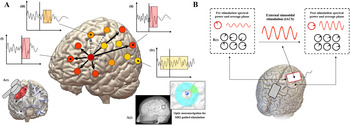
The theoretical definition of intelligence and the explanation of its neurobiological basis is one of the most intriguing and controversial issues in modern psychology and neuroscience (Colom et al., Reference Colom, Karama, Jung and Haier2010; Deary et al., Reference Deary, Penke and Johnson2010; Neubauer & Fink, Reference Neubauer and Fink2009). Several studies have shown that various cerebral features, such as brain volume (Jung & Haier, Reference Jung and Haier2007; Rushton & Ankney, Reference Rushton and Ankney2009), its structural wiring(Chiang et al., Reference Chiang, Barysheva, Shattuck, Lee, Madsen, Avedissian and Thompson2009), the magnitude of local coherence (Wang et al., Reference Wang, Song, Jiang, Zhang and Yu2011) and system efficiency (Neubauer & Fink, Reference Neubauer and Fink2009; Santarnecchi et al., Reference Santarnecchi, Galli, Polizzotto, Rossi and Rossi2014; van den Heuvel et al., Reference van den Heuvel, Stam, Kahn and Hulshoff2009) may explain a consistent portion of individual variability in intellectual performance, as well as genetic-molecular factors behind its heritability (Friedman et al., Reference Friedman, Miyake, Young, Defries, Corley and Hewitt2008; Payton, Reference Payton2009). Such a complex scenario does suggest a multifactorial structure behind human intelligence, possibly involving structural and functional properties of the brain. In the hera of “brain connectivity”, multiple evidence suggests the possibility of intelligence being either related to global feature at the system level (Deary, Reference Deary2008), or linked to the activity and/or connectivity profile of specific brain regions, making the quest for the identification of its neurobiological underpinnings even more challenging. For instance, van den Heuvel and colleagues (van den Heuvel et al., Reference van den Heuvel, Stam, Kahn and Hulshoff2009) originally demonstrated that intellectual performance, expressed in terms of Intelligence Quotient (IQ), i.e., a weighted sum of crystallized (the experience-dependent component of intelligence-Gc) and Gf (reflecting the efficiency of brain functioning at the cognitive level regardless of education and experience), correlates with overall brain global efficiency, as measured by the average length of functional connections in the brain. On the contrary, Cole and colleagues (Cole et al., Reference Cole, Yarkoni, Repovs, Anticevic and Braver2012) have recently provided evidence of a correlation between left dorso-lateral prefrontal cortex (DLPFC) “connectedness” (i.e., its weighted degree) and individual Gf level. In a recent investigation, we also demonstrated a correlation between brain’s global efficiency and intelligence, however showing how neither a single region nor all the existing functional connections in the brain are entirely responsible for such link, whereas a fundamental role is played by a specific subset composed by very weak connections linking different networks and brain regions in both hemispheres (Santarnecchi et al., Reference Santarnecchi, Galli, Polizzotto, Rossi and Rossi2014). Even though surprising, this organization mimics the dynamic of other complex networks in nature (e.g., social networks, metabolic networks, protein-protein networks), and suggests less specificity in terms of the anatomical correlates of g, while stressing the importance of efficiency and flexibility in network topology. These three contributions suggest that brain functioning as a whole correlates with both Gc and Gf and, at the same time, that the connectivity profile of a specific region within or outside the prefrontal lobe may explain a reasonable amount of variance in intelligence level, at least for what concerns its “fluid” component. Moreover, when electrophysiology is taken into account, the variability in findings even increases, with studies suggesting correlations between IQ/Gf and specific properties of brain oscillatory behavior, such as the individual alpha frequency and its relative spectral power (Grandy et al., Reference Grandy, Werkle-Bergner, Chicherio, Lovden, Schmiedek and Lindenberger2013; Posthuma et al., Reference Posthuma, Neale, Boomsma and de Geus2001) or power and coherence of brain activity in the theta band (Jausovec & Jausovec, Reference Jausovec and Jausovec2000). While these antithetic views might not be mutually exclusive, it is clear that a fundamental issue in the way we attempt to capture and summarize the brain correlates of intelligence exists, making our assumptions methodologically and possibly theoretically limited, if not flawed. The complexity of our brain suggests the need to gather information from different fields beyond cognitive neuroscience, neuroimaging and electrophysiology, and start looking at the relationship between brain’s complexity and cognition in a slightly different way. We here suggest the need for investigations addressing the relationship between brain response to external perturbation and individual intelligence-related performance, starting from evidence showing the possible role played by intelligence into promoting brain resilience to systematic network insults (Santarnecchi et al., Reference Santarnecchi, Rossi and Rossi2015b). Then, we will briefly present how non-invasive brain stimulation (NiBS) methods such as transcranial magnetic stimulation (TMS) (Rossi & Rossini, Reference Rossi and Rossini2004; Rossini et al., Reference Rossini, Burke, Chen, Cohen, Daskalakis, Di lorio and Ziemann2015a) and transcranial current stimulation (tCS) (Nitsche & Paulus, Reference Nitsche and Paulus2011; Santarnecchi et al., Reference Santarnecchi, Brem, Levenbaum, Thompson, Kadosh and Pascual-Leone2015a) might be used to perturb brain activity, using indices derived from EEG to characterize individual response. In this context, the modulation of spectral power, coherence, connectivity, graph-theoretical indexes (Barabasi & Albert, Reference Barabasi and Albert1999; Barabasi & Bonabeau, Reference Barabasi and Bonabeau2003) and cross-frequency coupling in different EEG frequency bands, both at the stimulation site and at distance, might unveil patterns of individual response to NiBS correlated with individual cognitive profile (Figure 1). Such metrics could be explored in terms of their time-course, focusing on brain resilience to perturbation (e.g., the stimulation time/intensity required to induce an effect) (Albert et al., Reference Albert, Jeong and Barabasi2000b) and plasticity (e.g., time needed to restore physiological EEG oscillatory patterns) (Freitas et al., Reference Freitas, Farzan and Pascual-Leone2013). In light of the recently documented links between individual cognitive profile and resilience to perturbation (Santarnecchi et al., Reference Santarnecchi, Brem, Levenbaum, Thompson, Kadosh and Pascual-Leone2015), analysis taking into account chronological age might also be aimed at investigating the neurophysiological underpinnings of Cognitive Reserve (CR) (Stern, Reference Stern2012).
Example of TMS-EEG and tACS-EEG investigations. Panel A and B respectively show schematic of a TMS and tACS-based EEG experiment, aimed at measuring brain’s response to external perturbation. In the case of TMS, a focal magnetic pulse is delivered to a specific brain region using a neuronavigation system (based on individual’s MRI) which allows for precise anatomical targeting of cortical areas at 1-millimeter resolution (A-2). The activity elicited by the pulse is mostly local (A-1), with distant effects usually observed for regions structurally or functionally connected to the stimulation site (i.e., orange dots). Both local reactivity and short-long range connectivity can be evaluated, either in terms of TEPs or time-frequency analysis. Indirect connections via third regions are also possible (blue arrows in A-2 and grey dashed arrows in A), creating a complex topography. Individual response to TMS may differ in terms of number of regions reacting to the TMS pulse, as well as for the timing of the response: strongly connected regions might show bigger and earlier responses to TMS (i, ii), while distant or out-of-network regions might show delayed (iii) or even no responses (iv). While TMS provide higher spatial resolution, tACS allows for frequency-specific modulation of brain electrical activity by supposedly tuning neuronal populations (B-1) towards an externally induced oscillatory pattern. The response to tACS can be expressed in terms of spectral power changes during and/or after stimulation, as well as phase-coherence and other connectivity metrics, with the effects being measurable both at the stimulated area as well as other distant, resonant regions.

Going beyond correlation: Perturbation-based intelligence research
As shown in a recent investigation, specific topological properties of the human brain seem responsible for brain’s resilience to external perturbation (Joyce et al., Reference Joyce, Hayasaka and Laurienti2013), with such capacity for coping with stressors and physical loss of network’s nodes being tightly linked with individual intelligence level (Santarnecchi et al., Reference Santarnecchi, Brem, Levenbaum, Thompson, Kadosh and Pascual-Leone2015). Apparently, higher IQ levels correspond to preserved system’s efficiency even when one or multiple lesions (i.e., removal of one or multiple nodes from the network) are present, making the brain of “smarter” individuals able to cope with approximately 20% more lesions respect to lower IQ ones, while preserving the same level of network efficiency. Interestingly, when looking at the modulation played by chronological age, individual with higher IQ scores also showed higher levels of resilience at later stages in life, somehow providing a quantitative support to the Cognitive Reserve concept (Stern, Reference Stern2009). The ability to cope with external perturbation is a pivotal feature of complex systems, and might represent a fundamental feature in an evolutionary context as well (Kitano, Reference Kitano2004). All together, these evidence suggests that Intelligence, as well as other system-level properties of the brain such as resilience (Kitano, Reference Kitano2004), modularity (Achard & Bullmore, Reference Achard and Bullmore2007) and small-worldness (Achard et al., Reference Achard, Salvador, Whitcher, Suckling and Bullmore2006), represent a self-emergent feature of the human brain instead of a by-product of its activity, thus necessarily linked to the ability to adapt (see plasticity) and eventually evolve.
As a fundamental element of the proposed idea of perturbation-related response, the notion of brain spontaneous oscillatory activity and its investigation must be briefly introduced. The fundamental property of neurons is their ability to oscillate within a wide range of frequencies, from 0.05 to 500–600 Hz (Buzsaki & Draguhn, Reference Buzsaki and Draguhn2004). Such oscillatory brain activity is detectable via electroencephalographic recording (EEG): these rhythmic, loco-regionally organized oscillations vary accordingly to the state of the brain, such as sleep (e.g., dominance of low frequencies) or resting wakefulness (e.g., stronger activity in higher frequency bands). More complex regional oscillatory patterns have been described according to the behavioural tasks on which the brain is currently engaged, thereby conveying relevant contents (Thut & Miniussi, Reference Thut and Miniussi2009). Cognitive processes like memory, perception, or even dreaming and consciousness, could result from the combination of regional or diffuse synchronization of neural assemblies in a temporally specific manner (Engel et al., Reference Engel, Fries and Singer2001; Llinas & Ribary, Reference Llinas and Ribary1993). However, conventional EEG analysis is limited to passive recording of brain activity, making the inferences about brain function and connectivity purely correlational. Furthermore, potentially critical brain properties such as plasticity cannot be easily assessed. In contrast, TMS utilizes a spatially restricted magnetic flux to noninvasively modulate brain function by inducing an electric field in a target cortical area (see Figure1A). The effects of the “traditional” application of TMS on the motor cortex can be easily measured looking at the size of motor evoked potentials (MEPs) (Rossi et al., Reference Rossi, Hallett, Rossini and Pascual-Leone2009), but obviously constrain the investigation to the motor system. On the other hand, simultaneous TMS and EEG monitoring (TMS-EEG) provides an opportunity to directly measure the cerebral response to TMS, and can be used to assess cerebral reactivity and connectivity directly from the stimulation site as well as from different cortical and subcortical regions. TMS during EEG recording produces reproducible and reliable waves of activity (Casali et al., Reference Casali, Casarotto, Rosanova, Mariotti and Massimini2010; Lioumis et al., Reference Lioumis, Kicic, Savolainen, Mäkelä and Kähkönen2009), which reverberate throughout the cortex (Komssi et al., Reference Komssi, Kähkönen and Ilmoniemi2004; Massimini et al., Reference Massimini, Boly, Casali, Rosanova and Tononi2009). As such, TMS-evoked potentials (TEPs) and TMS-evoked oscillations can be used to assess cortical network properties in the healthy brain and disease (Bruckmann et al., Reference Bruckmann, Hauk, Roessner, Resch, Freitag, Kammer and Bender2012; Casali et al., Reference Casali, Casarotto, Rosanova, Mariotti and Massimini2010; Casarotto et al., Reference Casarotto, Määttä, Herukka, Pigorini, Napolitani, Gosseries and Massimini2011; Rogasch & Fitzgerald, Reference Rogasch and Fitzgerald2013; Rosanova et al., Reference Rosanova, Gosseries, Casarotto, Boly, Casali, Bruno and Massimini2012). In this framework, TMS-EEG protocols can be also used to investigate the brain response to specific TMS interventions aimed at modulating synaptic plasticity (e.g., Theta-Burst TMS - TBS) (Huang et al., Reference Huang, Edwards, Rounis, Bhatia and Rothwell2005) and producing changes in cortical reactivity (as measured via MEPs and TEPs) that outlast the duration of stimulation (Vlachos et al., Reference Vlachos, Muller-Dahlhaus, Rosskopp, Lenz, Ziemann and Deller2012). For instance, TBS protocols have documented abnormal cerebral plasticity in pathological conditions such as Autism Spectrum Disorder (Oberman et al., Reference Oberman, Eldaief, Fecteau, Ifert-Miller, Tormos and Pascual-Leone2012) and Alzheimer’s Disease (Koch et al., Reference Koch, Di Lourenzo, Bonni, Ponzo, Caltagirone and Martorana2012). TMS-EEG has been also able to identify abnormalities in cerebral reactivity even when scalp EEG features appear normal ( Shafi et al., 2015 ), suggesting that even subtle individual variability in brain electrophysiology –yet missed by more conventional EEG analyses— might be uncovered by means of combined TMS-EEG recording.
Moreover, TMS-EEG investigations have shown the possibility to identify region-specific oscillatory responses, the so-called natural frequency (Rosanova et al., Reference Rosanova, Casali, Bellina, Resta, Mariotti and Massimini2009). By looking at the EEG epochs recorded immediately following a TMS pulse (which activates cortical pyramidal neurons trans-synaptically Rossini et al., Reference Rossini, Burke, Chen, Cohen, Daskalakis, Di lorio and Ziemann2015b), the response of healthy awake subjects not engaged in any cognitive task show how each stimulated cortical area is normally tuned to oscillate at a preferred rate: Rosanova and colleagues documented how TMS pulses activate different connected oscillators when stimulation was delivered to prefrontal, parietal and occipital regions, generating a complex EEG response composed of strong –local—fluctuations at the natural frequency of the stimulated area (i.e., high beta/gamma activity for the prefrontal cortex, beta activity for the parietal cortex and alpha activity for the occipital cortex) as well as weaker –distant— fluctuations at, respectively, the natural frequency of functionally connected regions. Such brain response is likely to reflect the activation of different corticothalamic brain modules, therefore representing the characteristic response of the area/network being perturbed. This approach, that already successfully identified typical TMS-induced oscillatory phenotypes for some psychiatric conditions (Canali et al., Reference Canali, Sarasso, Rosanova, Casarotto, Sferrazza-Papa, Gosseries and Benedetti2015), could be also used to verify whether there is a relationship between the magnitude/distribution of EEG-response to TMS and the individual cognitive profile of healthy subjects, with particular attention to intelligence performance. Preliminary data on healthy subjects are indicating a stronger link between individual cognitive performance and EEG power changes induced by TMS pulses delivered over the left and right DLPFC when compared to canonical correlation coefficients between resting-state EEG and cognitive performance (Santarnecchi et al., Reference Santarnecchi, Di Lorenzo, Giovannelli, Tatti, Frugarello, Pascual-Leone and Rossi2016a). Specifically, strongest correlations seem to be present for three Principal Component Analysis (PCA)-based cognitive factors, related to verbal working memory, Gf and filtering abilities, and were observed for EEG responses at distant level and mostly contralaterally, in homologous regions to the stimulation site. This suggest that individual variability in cognitive profiles could be better captured by looking at the loco-regional EEG natural frequency response, and that –due to the detected interhemispheric reactivity—higher cognitive profiles are probably consequence of an increased integration (rather than segregation) in brain dynamics.
As for tCS, an alternative approach to perturb brain oscillations is represented by transcranial alternating current stimulation (tACS). For instance, the role of gamma band activity in prefrontal networks has been recently discussed in the context of two experimental studies showing the modulation of Gf-related performance via prefrontal tACS tuned at 40Hz. Based on experimental evidence that tACS induces a strengthening of ongoing brain oscillations by means of “entrainment” (Frohlich & McCormick, Reference Frohlich and McCormick2010; Reato et al., Reference Reato, Rahman, Bikson and Parra2010) or “resonance” of large-scale networks (Ali et al., Reference Ali, Sellers and Frohlich2013) in absence of any perception or discomfort (due to the low stimulation intensity, < 2mA), these investigations have shown how individual Gf abilities may be modulated via external perturbation while participants are solving an abstract reasoning task (Santarnecchi et al., Reference Santarnecchi, Polizzotto, Godone, Giovannelli, Feurra, Matzen and Rossi2013). Notably, besides being frequency-specific as already demonstrated for the corticospinal system (Feurra et al., Reference Feurra, Bianco, Santarnecchi, Del Testa, Rossi and Rossi2011; Reference Feurra, Pasqualetti, Bianco, Santarnecchi, Rossi and Rossi2013), tACS effects on Gf abilities were largely dependent on subjects’ basal performance, with poorer performers getting a greater benefit by the neuromodulatory intervention (Santarnecchi et al., Reference Santarnecchi, Muller, Rossi, Sarkar, Polizzotto, Rossi and Kadosh2016b). The differences in the response to tACS might suggest an interesting scenario: participants with higher Gf scores before stimulation might have shown some sort of “ceiling effect” during tACS-40Hz, making them less responsive to external oscillatory stimulation. These would suggest their cognitive system(s) as being already optimized for the task at hand and therefore “shielded” against perturbation. On the other side, the increased “room for improvement” shown by participants with lower Gf levels at baseline might offer an insight into a more general feature of their brain, such as increased responsiveness to perturbation as an expression of increased “adaptability”.
Taken together, these emerging TMS-EEG and tACS findings have intriguing implications for the understanding of brain responsiveness to external perturbations, as well as for its consequences on the study of g-related abilities. It could be hypothesized that the magnitude of perturbation-induced “instantaneous system-level plasticity” achieved by reorganizing brain dynamics after, or during, external stimulation could depend on the responsiveness of the system itself, which could be regarded as a “system capacity” index (Freitas et al., Reference Freitas, Farzan and Pascual-Leone2013; Krause & Cohen, Reference Krause and Cohen2014). From the perspective of understanding the brain physiology of intelligence, findings suggest the existence of a somewhat general limit “imposed” to the interaction between NiBS and individual cognitive ability. This suggests such individual capacity to assimilate and respond to perturbation as a crucial feature of the human brain, human cognition and, more specifically Gf (see also Bestmann et al., Reference Bestmann, de Berker and Bonaiuto2015), promoting its investigation as a way to go beyond noise-susceptible correlational measurements. NiBS techniques have opened new spots of knowledge in many fields of cognitive neuroscience, mainly because of their capability to unveil causal relationships between brain and function. Although in its infancy, the perturbation-based approach to intelligence study represents, in our view, a promising avenue to disclose the link between intelligence and general brain properties such as plasticity and resilience. Therefore: is the instantaneous brain response to a sudden perturbation a marker of individual intellectual abilities?