I. INTRODUCTION
Copper foil is one of the core raw materials in the electronic information industry. Surface treatment is an indispensable key working procedure before copper foil application, which is contributing pivotal status in the preparation of copper foil. Surface treatment is always seen as a focus of research and application of copper foil. Currently, researchers mainly adopts electroplating technology for surface treatment of copper foil, and electroplating solution composition and process parameters are the main affecting factors on quality of copper foil surface coatings.
Bonding strength between surface-treated copper foil and resin substrate plays an important role in preparing high quality flexible printed circuit board. The adhesion between smooth copper foil and polymeric adhesives is not sufficient to join them firmly because there is no primary adhesion mainly due to mechanical interlocking or anchoring. Numerous methods have been developed to improve the adhesion between Cu and polyimide, such as surface modification and surface roughening. Reference Menezes, Robertson and Birnbaum1–Reference Uehara and Sakurai5 Therefore, surface treatments have been applied on magnifying the surface roughness of copper foil to improve the bond strength between copper and the adhesive. Reference Coombs2 Sun and O'Keefe Reference Sun and O'Keefe3 reported that large specific surface area of copper foil and increased bonding strength between copper foil and resin substrate can be obtained through strict control of process parameters and electroplating solution composition. For a certain scope to improve current density and extend electroplating time, the surface roughness of copper foil coating would be increased. The study showed that morphology and structural stability of sediment layer were conductive to get a higher bonding strength between micro dendritic copper deposits and resin substrate. The morphology of micro dendritic copper deposits can be improved by using electrolytes containing additives such as thiourea, chloride ion, and their combinations. However, using a low current density, additive cannot help obtain micro dendritic copper deposits and improve roughness of copper deposits coatings. Compared with peel strength of an untreated copper surface, the values for micro dendritic copper deposits on copper foil could be improved almost 20 times.
Lee et al. Reference Lee, Lee, Choi, Lee, Kim, Jung and Moon4 found that rolled copper foil underwent nodule treatment via electroplating in a solution containing dissolved CuSO4 and NiSO4, and the electroplating product composition and morphology varied with increasing current density and plating time. The copper oxide was coated ahead at a low current density and sphere type nickel compounds were formed on the copper oxide with the increase of electroplating current and plating time. The roughness of untreated copper foil was about 90 nm, while coatings' roughness increased to 200 nm sharply, but not exceeding 240 nm at the condition of 1–1.5 A/dm2 and 30–60 s. Uehara and Sakurai Reference Uehara and Sakurai5 reported that the rough surface may broaden the interface between the adhesive and metal surface, and interface bonding strength was enhanced by the increased surface roughness. Tezcan et al. Reference Şekercı́oǧlua, Rendeb, Gülsöza and Meran6 also revealed that bonding strength between coatings and resin substrate is closely related to surface roughness of coatings.
Proliferation barrier layer of rolled copper foil surface treatment is usually galvanized Zn–Ni alloy layer. Reference Hino, Yamanishi and Sakaguchi7 In the process of etching lines, corrosion resistance of galvanized Zn–Ni alloy layer determines the performance of printed circuit board. Thickness and corrosion resistance of galvanized Zn–Ni alloy layer is closely related to electroplating solution composition and process. Jiang et al. Reference Jiang, Liu, Zhai, Zhu and Ding8 observed that the thickness of Zn–Ni layers increased almost linearly along with the increase of both deposition time and electric current density, but the thickness of Zn–Ni layers decreased along with the increase of electric current frequency. Reference Müller, Sarret and Benballa9 Byk et al. Reference Byk, Gaevskaya and Tsybulskaya10 researched that content of nickel in the alloys exhibited a drastic increase with the decrease of Zn/Ni mass ratio in the baths, while the deposition rate and current efficiency exhibited low. Content of nickel in the alloys exerted first sharp decrease, then gradual increase, with raise of current density. Yang et al. Reference Yang, Guo, Chen, Wang, Wu, Ding and Birbilis11 studied that increase content of Ni in the Zn–Ni alloys resulted in decrease of corrosion current density and positive shift of corrosion potential, which improved corrosion resistance.
Electroplating is one of the most mature and commonly used techniques in the copper foil surface treatment. The researchers also carried thorough research and revealed on electroplating solution composition and parameters on the quality of copper foil surface coatings. However, some problems (especially in electroplating surface treatment technology) such as complexity of surface treatment processes of copper foil, low productive efficiency, sophisticated devices, excessive energy consumption, dismal environmental protection, and high costs, make it is difficult to meet the high performance requirement of rolled copper foil. Reference Yamaguchi12 Therefore, it is urgent and important to develop advanced copper foil surface treatment processes. Compared with conventional electroplating, brush plating can be used to obtain a unification, denseness, and high bonding capacity coating, which has the advantages of portable equipment, pollution-free plating bath, and efficient plating velocity. Reference Wu, Xu, Zhang, Jing and Liu13–Reference Yang, Cai and Chen15 Dealloying has the advantages of easy controlling operating conditions, simple preparation process, and low cost, which can be applied to prepare porous metal materials with a large specific surface area and superior properties. Reference Huang, Wei, Ke, Fan, Li and Sun16,Reference Erlebacher, Aziz, Karma, Dimitrov and Sieradaki17 In addition, the bonding strength of surface-treated rolled copper foil and resin board can be improved by the increasing superficial area. Reference Sun and O'Keefe3,Reference Liu, Zhang, Li, Zheng, An and Xing18 Consequently, authors Reference Wang, Liu and Xie19,Reference Liu, Wang and Xie20 have proposed the idea of combining brush plating and dealloying technologies on surface treatment of rolled copper foil. The new developed processes of double-coating and porous treatment, which replaced the conventional processes of roughening and curing treatment, could simplify the technological processes, reduce cost, and improve efficiency and properties of production. But influence of brush plating solution composition and process parameters on the quality of copper foil surface coatings are still not clear. To promote the rapid development and wide used of the technology, it is necessary to carry out in-depth research, find out the laws and main influencing factors.
In this study, brush plating and dealloying technologies were applied for rolled copper foil surface treatment. The influences of brush plating solution, brush plating and dealloying technological parameters on thickness, corrosion resistance, and surface roughness, etc. of coatings were investigated. The principal factors and laws were revealed. The results are expected to lay the foundation for preparation of reasonable brush plating solutions, optimization of technological parameters, probe of relevant mechanisms, and development of high-performance surface-treated rolled copper foil.
II. EXPERIMENTAL PROCEDURE
A. Materials
Dimensions of rolled copper foils were 0.150 × 20 × 250 mm3 and surface roughness of that was 0.07–0.2 μm. Solutions were prepared by reagent grade chemicals, which includes ZnSO4·7H2O, NiSO4·6H2O, C6H8O7·H2O, CH3COONa, Na2SO4, SnCl2·2H2O, C4O6H4KNa, NH4Cl, and 98% concentration sulfuric acid.
B. Orthogonal experimental
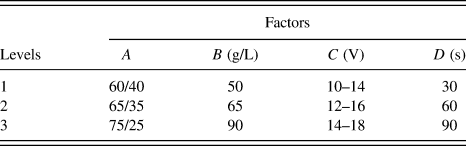
The influences of main composition (Zn/Ni mass ratio A, citric acid concentration B) of plating solutions and brush plating process parameters (brush plating voltage C, brush time D) on the quality of Zn–Ni alloy coatings were investigated. The evaluation indicators consisted of thickness (E), corrosion potential (F), and corrosion current density (G). The orthogonal experiment was conducted as L9 (34), given in Table I.
Levels and factors of brush plating Zn–Ni alloy coatings.

A, Zn/Ni mass ratio; B, citric acid concentration; C, brush plating voltage; D, brush time.
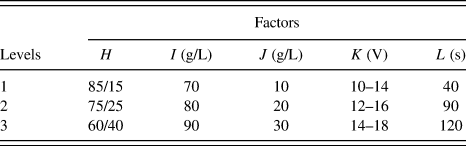
The laws of main composition (Sn/Zn mass ratio H, citric acid concentration I, sodium potassium tartrate concentration J) of plating solutions and brush plating process parameters (brush plating voltage K, brush time L) on the quality of Sn–Zn alloy coatings were studied. The evaluation indicators were surface roughness of Sn–Zn alloy coatings (R). The orthogonal experiment was conducted as L18 (37), given in Table II.
Levels and factors of brush plating Sn–Zn alloy coatings.
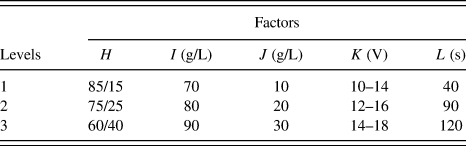
H, Sn/Zn mass ratio; I, citric acid concentration; J, sodium potassium tartrate concentration; K, brush plating voltage; L, brush time.
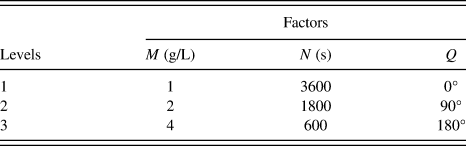
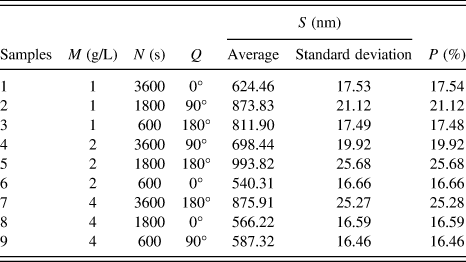
The influences of corrosion solutions concentration M and dealloying process parameters (dealloying time N, dealloying position Q) on the quality of dealloyed Sn–Zn alloy coatings were researched. The evaluation indicators were surface roughness (S) and porosity (P) of dealloyed Sn–Zn alloy coatings. The orthogonal experiment was conducted as L9 (34), given in Table III.
Levels and factors of dealloying Sn–Zn alloy coatings.
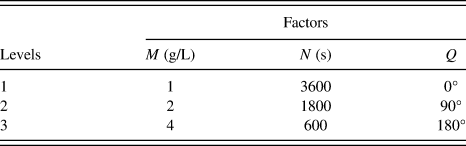
M, corrosion solutions concentration; N, dealloying time; Q, dealloying position.
C. Preparation
The surface treatment processes comprise of four steps, pretreatment (including ultrasonic cleaning, electrolytic cleaning, and activation), nonproliferation coating, anti-oxidation coating, and porous (coarsening) treatments. GSD100A-20V inverter type power and stainless steel plating pen were applied to perform brush plating. Brush plating direction was vertical to the rolling direction.
Surface pretreatment: acetone and ethanol were used to clean surface of rolled copper foil. Brush plating lasted about 10 s with a relative velocity of 0.4 m/s between anode and cathode in the process of electrolytic cleaning and activation, respectively. Rolled copper foil jointed with the negative pole and electrolytic cleaning solution was used in the electrolytic cleaning procedure. Rolled copper foil performed as the positive pole and activation solution was used in the activation procedure.
Double-coating treatment: The nonproliferation coating (Zn–Ni alloy coating) processing was prepared on the surface after pretreatment. The anti-oxidation passivation coating (Sn–Zn alloy coating) was prepared on the surface of Zn–Ni alloy coating. The processing parameters are shown in Tables I and II.
Porous (coarsening) treatment: 98% concentration sulfuric acid was adopted to confect dilute sulfuric acid solution. The double-layered alloy coating was immersed in the dilute sulfuric acid solution in accordance with the processing parameters in Table III.
All solutions were prepared by reagent grade chemicals and distilled water, and experiments were carried out at ambient temperature (298–303 K).
D. Characterization methods
Metallographic microscope was applied to observe the cross-section of coatings, and coating thickness was enlarged to be measured accurately. The image analysis software was used to measure the average coatings thickness.
Zeiss Auriga field emission scanning electron microscope (SEM) equipped with energy dispersive spectrometer (EDS) was used to examine surface morphology and elements concentration in the coatings.
CHI630D electrochemical device was used to assess corrosion resistance of coatings. The reference electrode was saturated calomel electrode and the counter electrode was Pt foil (2 × 2 cm2). Working electrode used brush plating Zn–Ni samples (1 × 1 cm2 exposed area). Polarization curves were measured in potential range of −1.0–1.75 V and scan rate of 2.5 mV/s.
Dektak XT stylus profilometer (Bruker, Chicago, Illinois) was applied to test surface roughness of coatings, and measurement length was 1000 μm for 30 s.
Image analysis software was adopted to analyze the surface porosity of pre- and post-dealloying Sn–Zn alloy coatings.
III. RESULTS AND DISCUSSION
A. Influences of main composition of plating solutions and brush plating process parameters on the quality of Zn–Ni alloy coatings
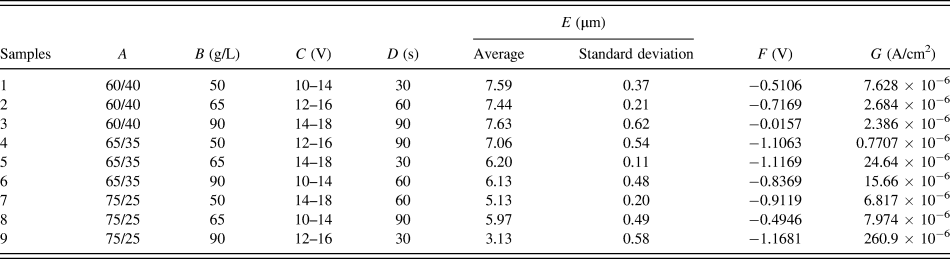
The orthogonal parameters and results of Zn–Ni alloy coatings are given in Table IV.
Orthogonal experimental results for brush plating Zn–Ni alloy coating.
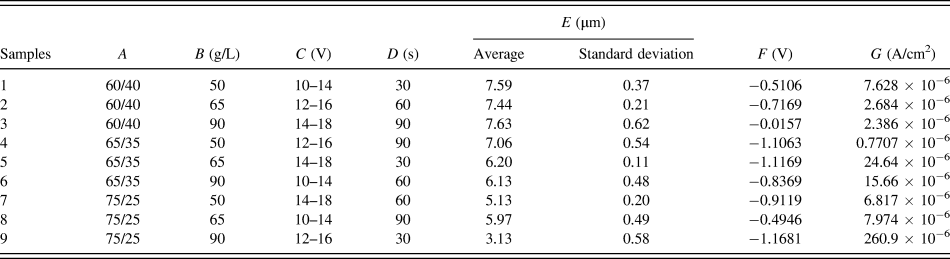
A, Zn/Ni mass ratio; B, citric acid concentration; C, brush plating voltage; D, brush time; E, thickness; F, corrosion potential; G, corrosion current density.
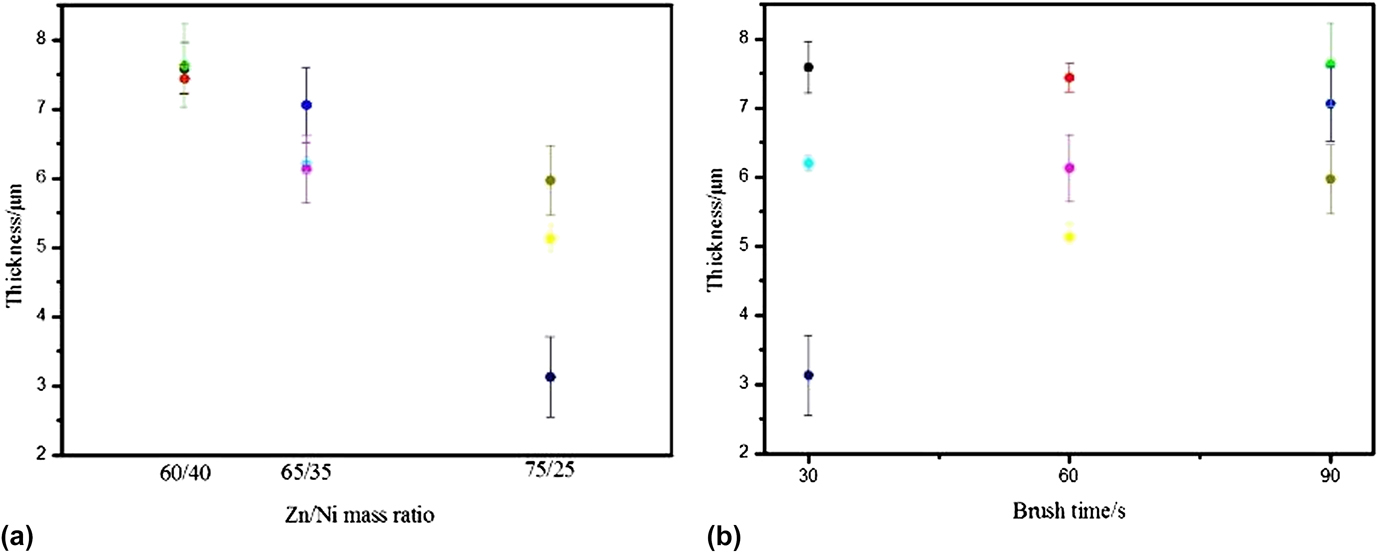
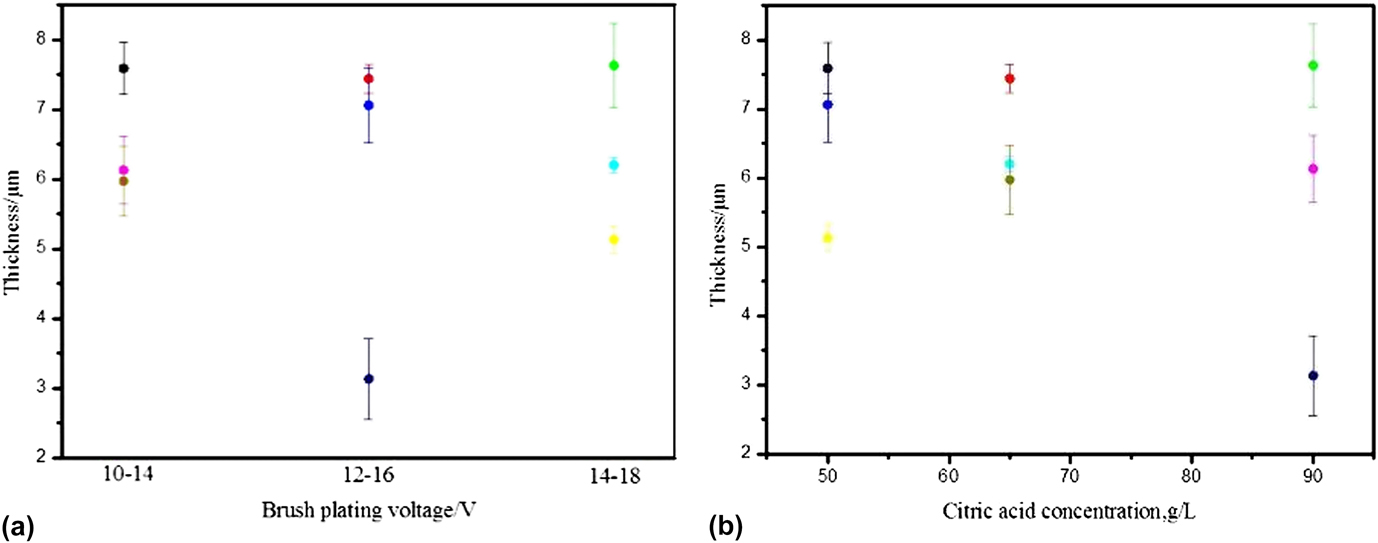
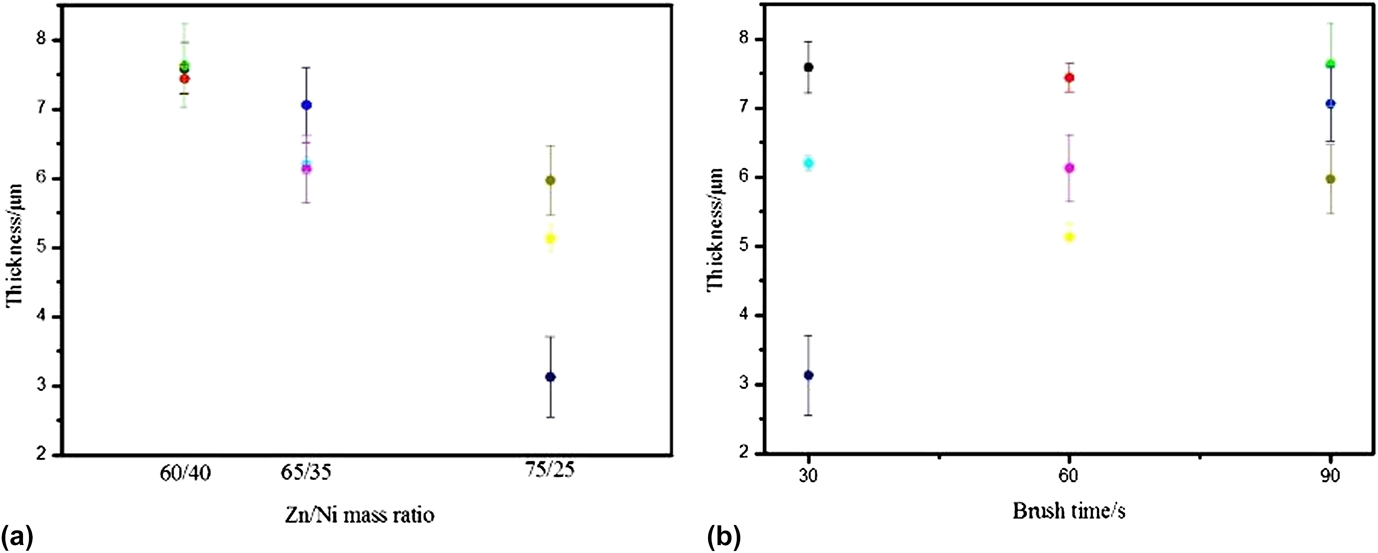
The range analysis results show that, A has the biggest impact on thickness of Zn–Ni alloy coatings, followed by D, B, and C. The biggest thickness is obtained with the Zn/Ni mass ratio of 60/40. With the increase of Zn/Ni mass ratio, the thickness has a lowered tendency. The second factor is brush time, as shown in Fig. 1. The thickness of Zn–Ni alloy coatings increases with the prolonged brush time. The citric acid concentration and brush plating voltage have little influence on Zn–Ni coating thickness, as is shown in Fig. 2.
Diagrams of Zn–Ni alloy coatings thickness with mass ratio (a) and brush plating time (b).
Diagrams of Zn–Ni alloy coatings thickness with brush plating voltage (a) and citric acid concentration (b).
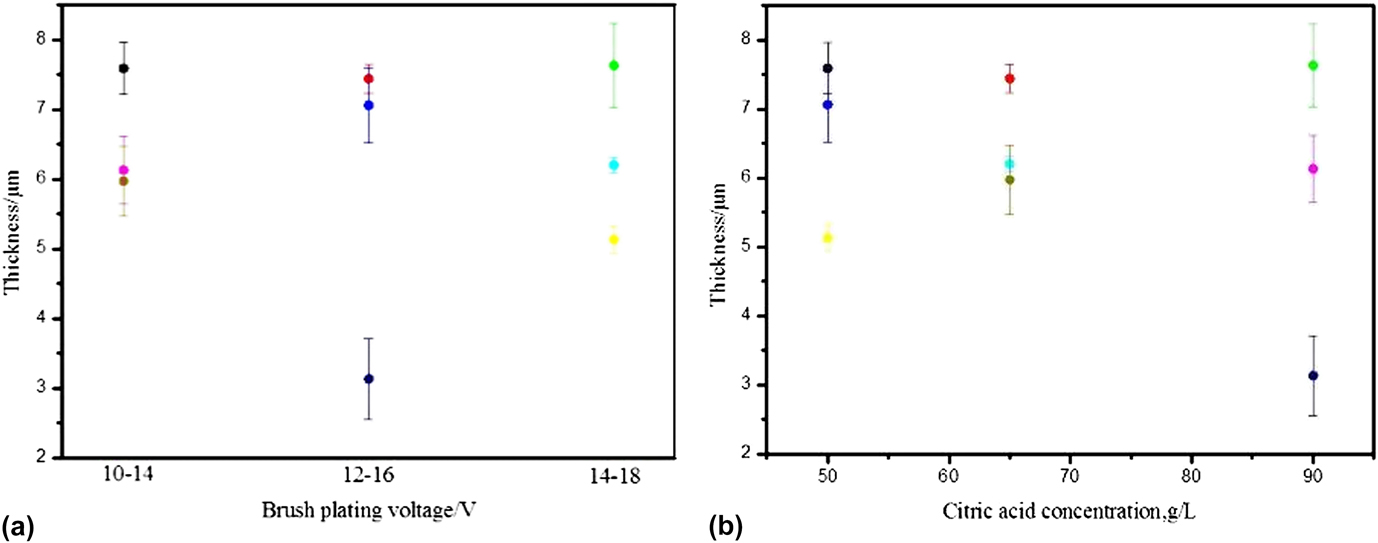
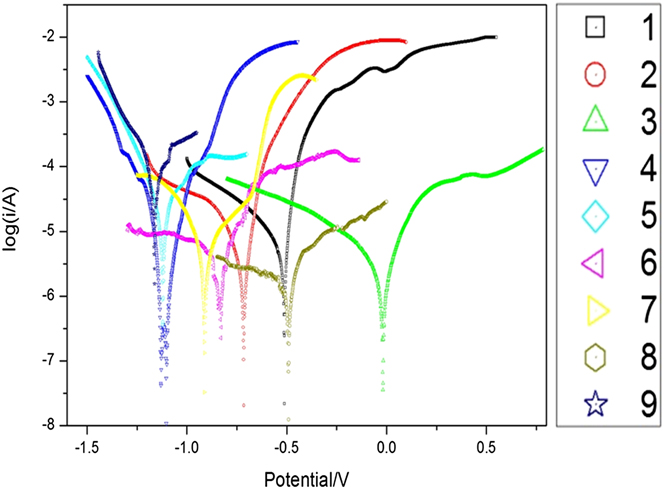
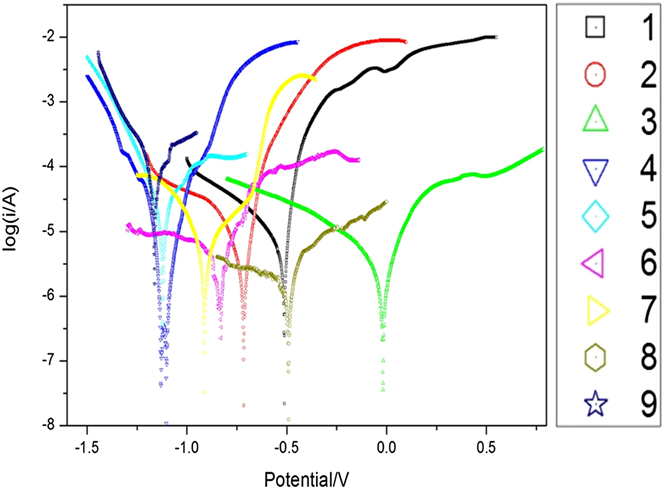
Figure 3 shows the polarization curves of Zn–Ni alloy coatings measured in 0.9 wt% NaCl solution. It can be seen that sample 3 has the most positive corrosion potential −0.0157 V. The range analysis results show that, A has the biggest impact on corrosion potential of Zn–Ni alloy coatings, followed by D, B, and C. The most positive corrosion potential is generated with the Zn/Ni mass ratio of 60/40, under which the coating is hard to be corroded. The second factor is brush time. With the brush time duration, the corrosion resistance of Zn–Ni alloy coatings is strengthened, which is probable due to the enhanced protecting inner layer. The citric acid concentration and brush plating voltage have little influence on the thickness of brush plating Zn–Ni alloy coating. The range analysis results show that, A has the biggest impact on corrosion current density of Zn–Ni alloy coatings, followed by D, B, and C. According to the range analysis results, composition of plating solutions and brush plating process parameters has the consistent influence law on thickness and corrosion resistance of Zn–Ni alloy coatings.
Polarization curves of Zn–Ni alloy coatings measured in 0.9 wt% NaCl solution.
B. Influences of main composition of plating solutions and brush plating process parameters on the quality of Sn–Zn alloy coatings
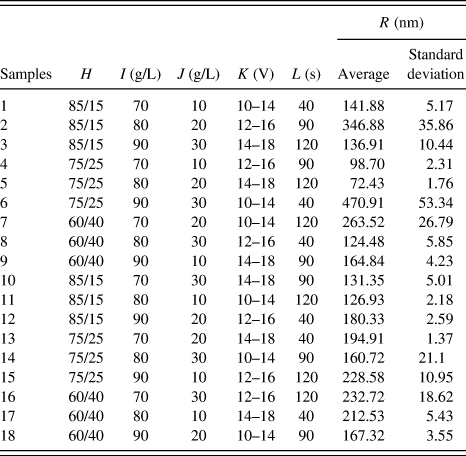
The orthogonal parameters and results of Sn–Zn alloy coatings are given in Table V.
Orthogonal experimental results for brush plating Sn–Zn alloy coatings.
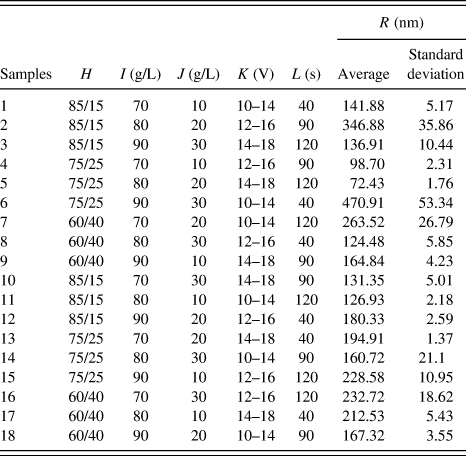
H, Sn/Zn mass ratio; I, citric acid concentration; J, sodium potassium tartrate concentration; K, brush plating voltage; L, brush time; R, surface roughness of Sn–Zn alloy coatings.
The range analysis results show that, K has the biggest impact on roughness of Sn–Zn alloy coatings, followed by L, I, H, and J.
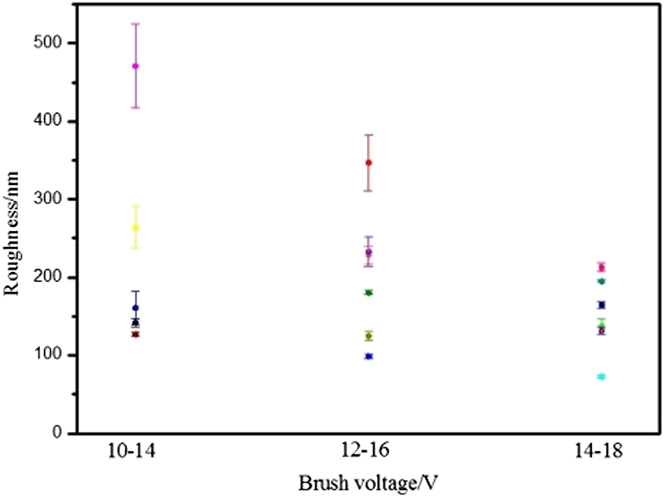
Figure 4 shows the relationship between brush plating voltage and roughness of Sn–Zn alloy coatings. It can be seen that roughness of Sn–Zn alloy coatings has a downward trend with the increased brush plating voltage. The higher the brush plating voltage raised, the smaller the numerical wave of coatings surface roughness changed. Brush plating voltage has a significant influence on surface micromorphology, while surface roughness is affected by the surface micromorphology. The Sn–Zn alloy bulk particulates were formed at lower brush plating voltage, which result in a larger surface roughness. Nucleation is accelerated with the rising brush plating voltage. Because of the characterization of brush plating intermittent crystallization, the Sn–Zn alloy particulates are hard to grow up and be covered. The surface roughness declines due to the fine particulates of Sn–Zn alloy coatings surface.
Diagram of Sn–Zn alloy coatings roughness and brush plating voltage.
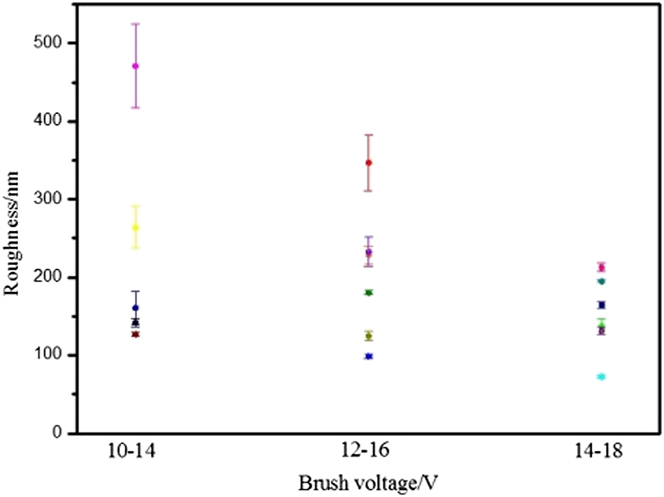
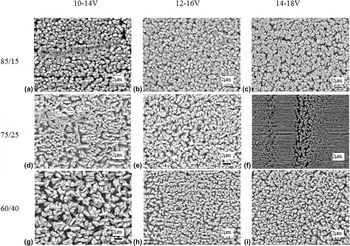
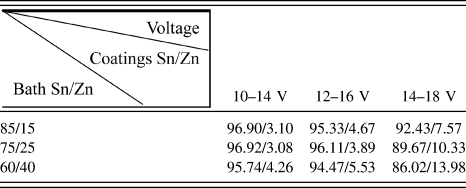
Figure 5 shows surface micromorphology of Sn–Zn alloy coatings. It is clear that the generated surface particulates were refined gradually and arranged tightly. With the decrease of tin content in plating solution, surface particulates of the coatings transformed from round to square gradually, and edges and corners become apparent. EDS results of Sn–Zn alloy coatings are illustrated in Table VI and shown in Fig. 5. It can be seen that Zn content of Sn–Zn alloy coatings increases with the rise of brush plating voltage. In addition, the elevated brush plating voltage helps increase Zn content of coatings if Sn/Zn mass ratio in the solution reduces. The standard electrode potential of Zn (ii) reduction is −0.7618 V. As the brush plating voltage and potential difference increased, the reducing capacity of Zn ions was enhanced, that resulted in substantial increase of Zn atoms. Chang et al. Reference Chang, Hsu, Sun and Tsai21 also found that metal ion reduction efficiency can be affected obviously by increasing potential difference in alloy deposition process.
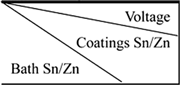
Surface micromorphologies of Sn–Zn alloy coatings. Sn–Zn alloy coatings were prepared at Sn/Zn mass ratio 85/15 in plating solution and (a) brush voltage 10-14 V, (b) brush voltage 12-16 V, (c) brush voltage 14-18 V; Sn/Zn mass ratio 75/25 in plating solution and (d) brush voltage 10-14 V, (e) brush voltage 12-16 V, (f) brush voltage 14-18 V; Sn/Zn mass ratio 60/40 in plating solution and (g) brush voltage 10-14 V, (h) brush voltage 12-16 V, (i) brush voltage 14-18 V.

EDS analysis results of the Sn–Zn alloy coatings.
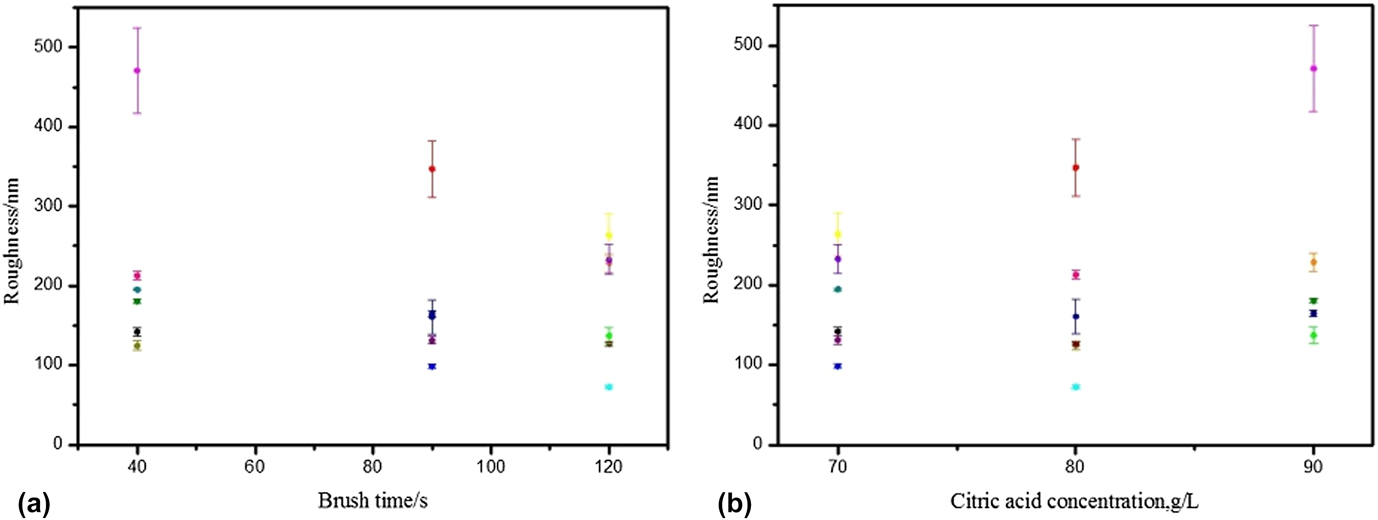
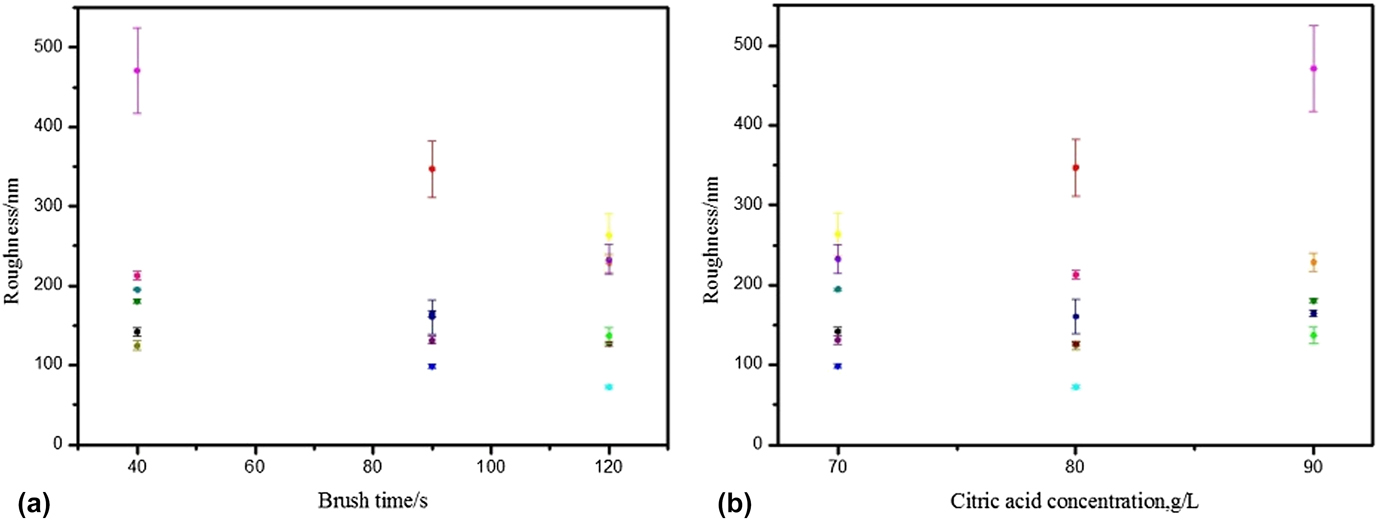
In the case of short brush plating time, relatively larger surface roughness of Sn–Zn alloy coatings can be obtained, which is relevant to thinner coatings and substrate micromorphology. The rolled traces on the copper substrate still remained after plating due to the thin Zn–Ni alloy coating. Compared with particulates of Zn–Ni alloy coatings, those of Sn–Zn alloy coatings have a larger size. Due to short plating time, thin Sn–Zn alloy coating and asymmetrical surface coverage exacerbate the undulating surface morphology. Sn–Zn alloy particulates with similar size completely cover and distribute in accordance with certain rules on coatings, thus the surface roughness has a descending tendency as brush plating procedure. Figure 6(a) shows the relationship between brush time and surface roughness of Sn–Zn alloy coating. It can be seen that the surface roughness decreases with brush plating time. Variation of citric acid concentration and roughness of Sn–Zn alloy coatings are shown in Fig. 6(b). It is indicated that, with the increase of citric acid concentration, the surface roughness of Sn–Zn alloy coating first increased, and then becomes gentle, difference reduced gradually.
Diagrams of Sn–Zn alloy coatings roughness with brush plating time (a) and citric acid concentration (b).
C. Influences of dealloying process parameters on the surface roughness and micromorphology of Sn–Zn alloy coatings
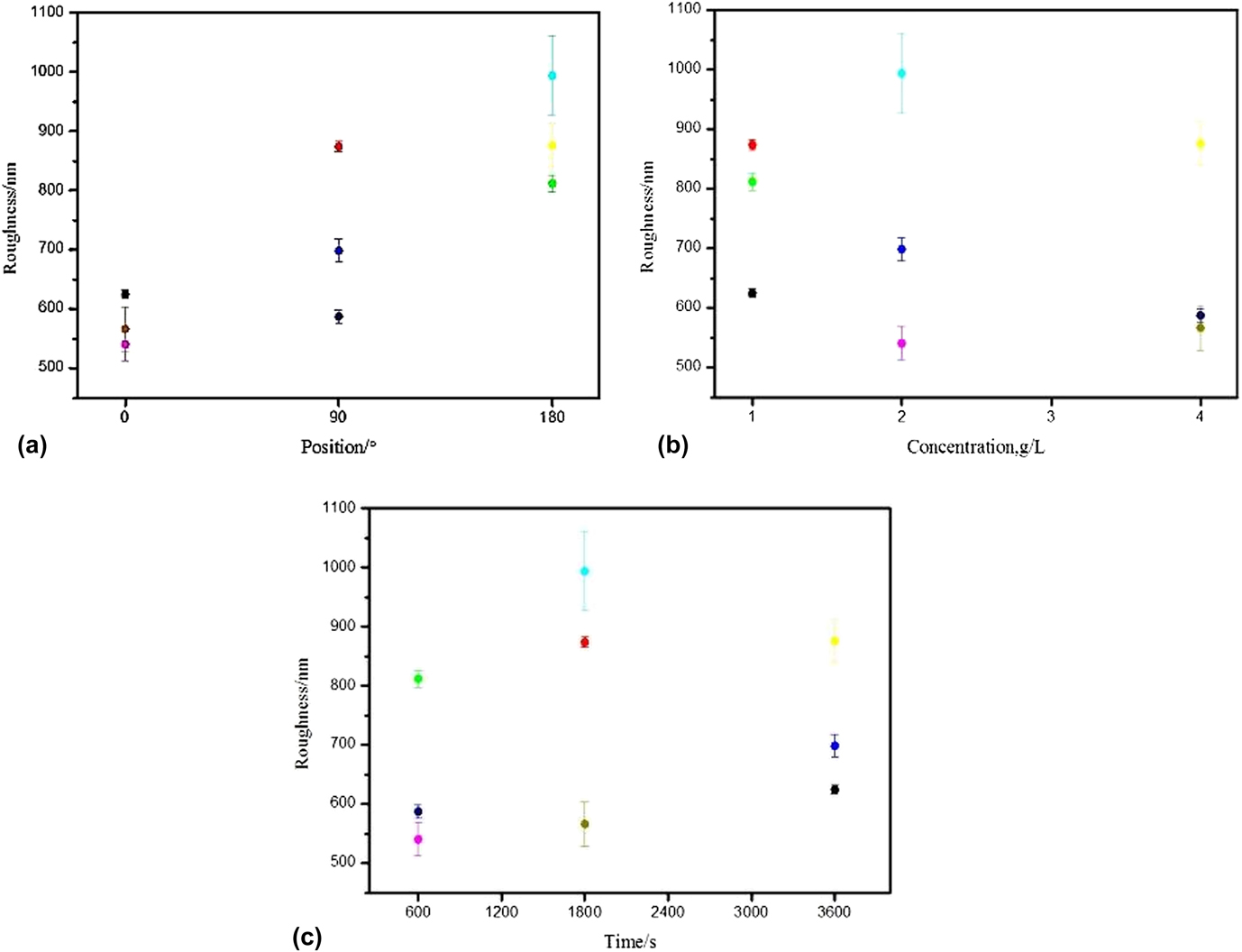
The orthogonal parameters and results of dealloying Sn–Zn alloy coatings are listed in Table VII. It is observed that the surface roughness difference of dealloying Sn–Zn alloy coatings is varying from 500 nm to 1000 nm. Compared with surface roughness pre-dealloying (200 nm), that of post-dealloying Sn–Zn alloy coatings increased significantly. Surface porosity ranging from 17–26% of dealloying coatings is larger than that 12% of pre-dealloying. The range analysis results show that, Q has the biggest impact on roughness of dealloying Sn–Zn alloy coatings, followed by N and M, and the best combination is Q 3 N 2 M 1. Coatings displacement of dealloying processing is the primary influence factors of surface roughness, and it is likely to get much rougher surface when the displacement is 180°. Therefore, the gravity is an important influence factor on surface roughness of dealloying coatings. The range analysis results of surface porosity and roughness are consistent. The dealloying time has a larger impact on surface porosity and roughness than that of corrosion solution concentration. It is easy to get a larger surface roughness under a condition of long time and low corrosion solution concentration. On the contrary, the coating surface roughness declines as corrosion solution concentration increases. The reason is that, as prolongation of dealloying time, surface corrosion area extended to the whole and deepened gradually. In addition, massive active points and undulation on coating surface also increased the surface roughness of dealloying Sn–Zn alloy coatings. However, surface corrosion rate would be accelerated if the corrosion solution concentration increased, and the intense reaction of initial active point occurs, causing aggravated surface reaction. Based on above all, the surface roughness reduces instead.
Orthogonal experimental results for dealloying Sn–Zn alloy coatings.
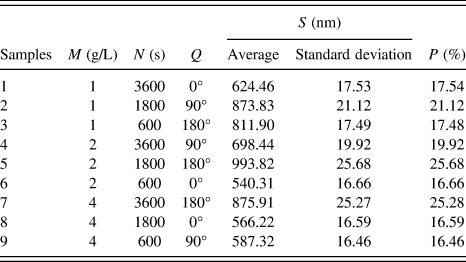
M, corrosion solutions concentration; N, dealloying time; Q, dealloying position; S, surface roughness of dealloyed Sn–Zn alloy coatings; P, porosity of dealloyed Sn–Zn alloy coatings.
Figure 7 shows the influences of dealloying position, time and corrosion solution concentration on the surface roughness of dealloying Sn–Zn alloy coatings, respectively. From the diagram, it is evident that the coating surface roughness increases significantly with the angle between coatings and corrosion solutions surface, which coincide with the effects of gravity. Longer dealloying time and higher corrosion solution concentration are not necessary for larger roughness. On the contrary, at dealloying time of 1800 s and corrosion solution concentration of 2 g/L, the surface roughness of Sn–Zn alloy coatings is the largest than others. Therefore, with increased corrosion solution concentration and long dealloying time, surface roughness of Sn–Zn alloy coatings decreases.
Diagrams of dealloying Sn–Zn alloy coatings roughness with dealloying position (a), sulfuric acid concentration (b) and dealloying time (c).
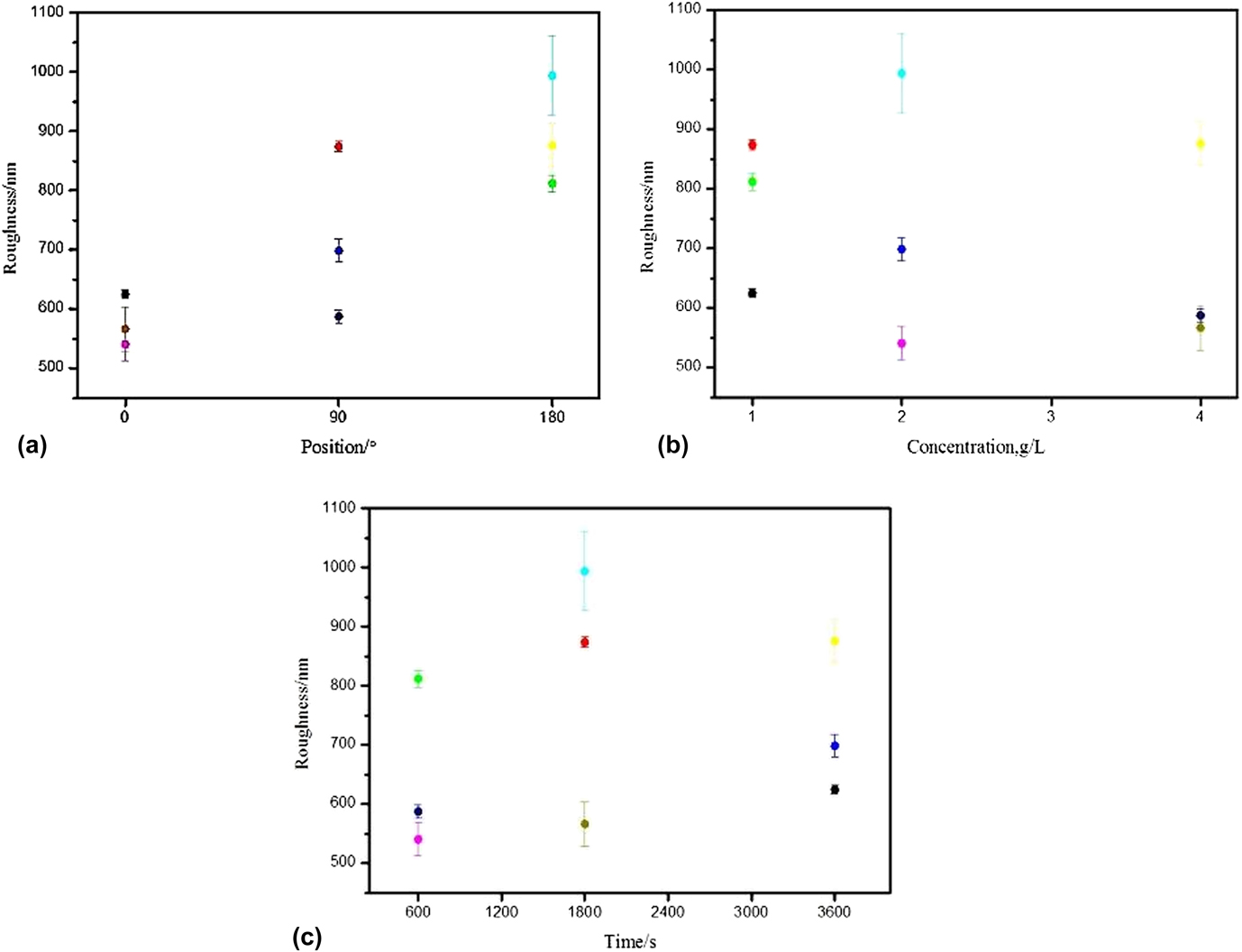
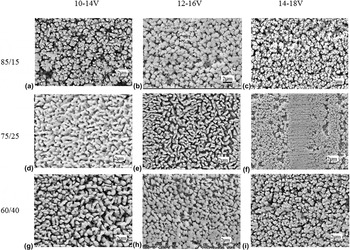
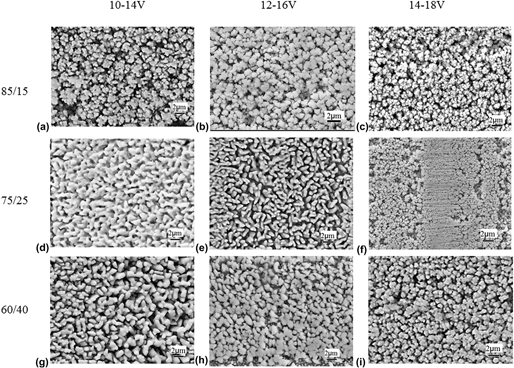
Figure 8 shows surface micromorphology of post-dealloying Sn–Zn alloy coatings. It can be seen that the surface porosity of dealloying Sn–Zn alloy coatings are increased obviously. Porous structure is obtained by the extension of dealloying time, which increases the surface roughness. The diagrams are consistent with the range analysis results of porosity. It is easier to obtain high porosity at a short time. However, with the extension of time, the porosity reduces instead.
Surface micromorphologies of dealloying Sn–Zn alloy coatings. Dealloying Sn–Zn alloy coatings were prepared at Sn/Zn mass ratio 85/15 in plating solution and (a) brush voltage 10-14 V, (b) brush voltage 12-16 V, (c) brush voltage 14-18 V; Sn/Zn mass ratio 75/25 in plating solution and (d) brush voltage 10-14 V, (e) brush voltage 12-16 V, (f) brush voltage 14-18 V; Sn/Zn mass ratio 60/40 in plating solution and (g) brush voltage 10-14 V, (h) brush voltage 12-16 V, (i) brush voltage 14-18 V.

IV. CONCLUSIONS
-
(1) The mass ratio of main elements and brush time would have a major influence on the thickness and corrosion resistance of Zn–Ni alloy coating. With decrease of mass ratio of main elements or increase of brush time, the thickness and corrosion resistance of brush plating Zn–Ni alloy coating increase.
-
(2) With the increase of brush plating voltage or time, the surface roughness of Sn–Zn alloy coating decreases. Turning up brush plating voltage could raise the deposition rate of sub-tin and zinc ions and refine the surface grains of coating.
-
(3) The dealloying position has the significant effect on the roughness of dealloyed Sn–Zn alloy coating. With the increase of dealloying angle, the surface roughness of dealloyed Sn–Zn alloy coating increases. The contribution of dealloying time to the surface roughness of treated coating is obviously larger than that of corrosion solution concentration. A high surface roughness can be obtained easily under the condition of longer treatment time and lower corrosion solution concentration.
-
(4) Influences of brush plating solutions composition and technological parameters on the quality of rolled copper foil surface coatings were studied in this paper. The mechanisms of brush plating on surface micromorphology and phase and dealloying on porous structure are needed to be further research.
ACKNOWLEDGMENTS
Financial support from National Key Technology Support Program (No. 2011BAE23B02) and Fundamental Research Funds for the Central Universities (No. FRF-TP-10-002B) is gratefully acknowledged.