Introduction
Ethiopia is believed to be the centre of origin and domestication for sorghum (Vavilov, Reference Vavilov1951; Doggett, Reference Doggett and Hutchinson1965, Reference Doggett1988) and Ethiopian sorghums have been used both in national and international sorghum improvement programmes as a source of different traits (Hawkes and Worede, Reference Hawkes, Worede, Engels, Hawkes and Worede1991; Kebede, Reference Kebede, Engels, Hawkes and Worede1991). In north-eastern Ethiopia, marginally exceeded by tef in area sown, sorghum ranks first in production (CSA, 2003). The crop is produced mainly by subsistence farmers, where the grain is used for food and local beverages and the stalk is used for animal feed, fuel wood and construction.
The threat of loss of crop genetic diversity at an alarming rate has long been recognized in Ethiopia (Worede, Reference Worede, Engels, Hawkes and Worede1991, Reference Worede, Maxted, Ford-Lloyd and Hawkes1997; Worede et al., Reference Worede, Tesemma, Feyissa, Fowler, Hawtin and Hodgkin2000). Consequently, various exploration and rescue collections have been made to conserve landraces and wild relatives, and these are commonly maintained under ex situ conditions (Worede, Reference Worede, Cooper, Vellve and Hobbelink1992). The Ethiopian Sorghum Improvement Program (ESIP) has been involved in documenting and collecting sorghum landraces in Ethiopia for both conservation and breeding purposes (ESIP, 1977, 1978). Among others, a major collection of sorghum landraces from north-eastern Ethiopia was made by Gebrekidan and Ejeta of ESIP in 1973, and is now conserved both at the Institute of Biodiversity Conservation (IBC), Ethiopia and ICRISAT, India. This collection represents important landraces grown by farmers in the early 1970s.
While attention has focused on collecting and conserving sorghum landraces of north-eastern Ethiopia, little effort has been made to date to survey the variability of landraces in farmers' fields over time. Characterization of diversity present in both gene pools and gene banks is important to understand the genetic variability available and to identify the major factors likely to affect the genetic structure of plant populations. This information also helps to devise appropriate sampling procedures for germplasm collection and conservation purposes, including establishment of a core collection (Brown, Reference Brown, Hodgkin, Brown, van Hintum and Morales1995; Hayward and Sackville-Hamilton, Reference Hayward, Sackville-Hamilton, Callow, Ford-Lloyd and Newbury1997; Karp et al., Reference Karp, Kresovich, Bhat, Ayad and Hodgkin1997, Ramanatha Rao and Hodgkin, Reference Ramanatha Rao and Hodgkin2002).
The present study was performed with the objective of assessing the trend of sorghum genetic variability in north-eastern Ethiopia where sorghum is the most important staple, and to investigate factors that have contributed to shaping the diversity of landraces in farmers' fields over the past three decades.
Materials and methods
Description of the study area
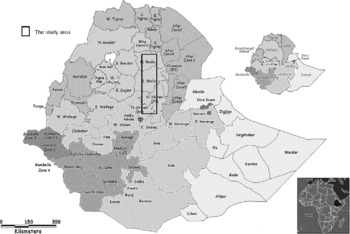
The study area covered a roughly rectangular area 380 km long by 80 km wide, starting from North Shewa (Asfachew, near Shewarobit) to North Welo (Waja, 10 km north of Kobo) in the intermediate- and low-altitude areas of north-eastern Ethiopia. This is one of Ethiopia's major sorghum-growing belts. In the context of this paper, north-eastern Ethiopia refers to North Welo, South Welo, Oromiya, and North Shewa administrative zones of Amhara Region, an area effectively bounded by the escarpment of the Great Rift Valley to the east (Fig. 1). A total of ten districts, namely Kobo, Gubalafto and Habru from North Welo; Wuchale, Haik, Dessie Zuria and Kalu from South Welo; Bati and Artuma Jille from Oromiya and Shewa Robit from North Shewa were covered in the study.
Map of Ethiopia and the study area (source http://www.ethemb.se/PICTURES/Ethiopia(Full).gif).

The area is characterized by rugged topography with undulating hills and valley bottoms. Black soil is the dominant soil type and grey soil is of secondary importance. The area has two periods of rainfall, a short (Belg) one from February to April/May and the main (Kiremt) one from June to September.
The study consisted of two major activities: a field survey of farmers and their fields, which included a collection in 2003, and field evaluation of sorghum landraces collected in the region in 1973 and 2003.
Field survey
The field survey was carried out in sites where the 1973 sorghum collection was originally performed. This involved interviews with a local farmer and/or groups of farmers at each site. Visits were made at the end of the two main crop (meher) seasons, 17–21 November 2003 and 20–27 November 2004. Sorghum landraces were collected from farmers' fields during the 2003 survey. Focus was placed on sampling different types from a given farm irrespective of their representation in the mix. Landraces known by the same name were collected from all zones to monitor within-zone diversity, and also to check whether their local name agrees with field and subsequent molecular evaluation. Physical data, including soil type, altitude and longitude, were also collected.
Field evaluation of sorghum landraces
The field evaluation was performed during the 2004 cropping season. Sorghum landraces collected in 2003 were tested with sorghum landraces collected in 1973 from the area. Overall, 608 landraces (439 from 2003 and 169 from the 1973 collections) were tested at Sirinka (1850 m above sea level). The late-maturing landraces were planted in a single-row plot, 3 m long with 0.75 m between rows, and plant to plant spacing was 0.3 m within the row. For early maturing types, rows were 2 m long with 0.75 m between rows and plant to plant spacing was 0.2 m within the row. Each group had two replicates in a randomized complete block design.
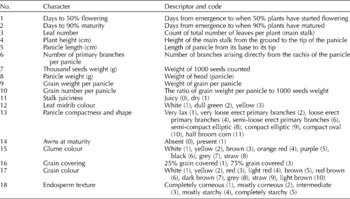
Data were recorded for ten quantitative and eight qualitative characters using Sorghum Descriptors (IBPGR/ICRISAT, 1993) as described in Table 1. For every entry in a plot, five individual plants were tagged for recording the quantitative data, except for days to 50% flowering and days to 90% maturity, which were recorded on a plot basis. The data recorded were subjected to statistical analyses. The descriptive statistics procedure of SPSS version 11.5 (SPSS Inc., Chicago, Illinois, USA) was used to calculate mean, range of mean, minimum and maximum values of quantitative traits and standard error of the mean. Analysis of variance was performed for each quantitative trait to identify the variability within landraces for the entire data and between collection zones and between/within collection years. Mean separation was achieved for collection zones using Duncan multiple range tests. The Shannon–Weaver diversity index was calculated for qualitative traits as described in Eticha et al. (Reference Eticha, Bekele, Belay and Börner2005).
Character, descriptor and codes used for evaluation of sorghum landraces

Results
Seed selection and maintenance of diverse landraces
Landraces dominate sorghum production in north-eastern Ethiopia. Of the 60 fields visited for collecting landraces, 59 were completely planted with landraces, with the general observation that landraces grown in mixture cover most of the area. Mixed planting is practised to avert risk against harvest loss due to biotic and abiotic stress. Usually, one or two, but no more than three, landraces dominate the mixture, while others are poorly represented. Morphologically similar landraces with different local names were observed in different areas during the survey (e.g. Jigurte and Humera). The number of landraces collected per field ranged from 1 to 23 landraces (mean 8.7 ± 0.65). The 2003 and 2004 crop seasons were viewed by farmers as relatively good for sorghum, and sorghum covered a wide area relative to recent years. The national figures for the country showed increases in area sown of 9.5% and 10.6% in 2003 and 2004, respectively, over that of 2002 (FAOSTAT, 2006).
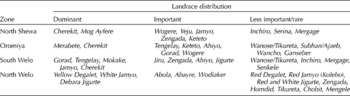
The types of landraces grown varied from area to area depending on altitude, soil type, rainfall situation and other related factors. For example, landraces such as Mog Ayfere and Wogere were found mainly in North Shewa; Keteto and Merabete in Oromiya zone; Mokake in South Welo; and Jigurte in North Welo. Although their relative importance varied from area to area, landraces such as Tengelay, Gorad, Zengada and Jamyo were found across the study area. The number of landraces adapted to higher altitude areas was low compared to those found in lowland and intermediate areas. Zengada, which has a low level of morphological variability, was the main landrace found in higher altitude areas. Table 2 shows the distribution of the predominant landraces in the study area. Some fields in Kobo (North Welo) and a few small plots in the Bete area (Oromiya) were planted with improved inbred varieties.
Distribution of locally predominant landraces observed during the farm survey

Field evaluation of collections
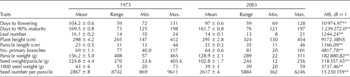
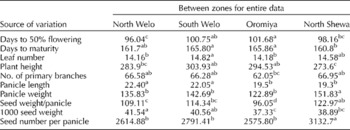
Comparison of the two collections indicated that both the mean and range were greater for the 1973 collection than the 2003 collection for most of the quantitative traits recorded (Table 3). Analysis of variance showed highly significant differences between the two collections for all quantitative traits except plant height. The difference between landraces as a whole, between zones and within collection years was also highly significant for all the traits considered, indicating high variability among landraces (Tables 3 and 4). Mean sum of squares for the ten quantitative traits and proportion of trait classes for eight qualitative traits are available online only at http://journals.cambridge.org.
Variability of the 608 sorghum landraces for quantitative traits described with mean, range of mean, standard deviation, maximum and minimum values at Sirinka, 2004

MS, Mean sum of squares for two collections; df = degrees of freedom.
**Significant at 0.01 probability level; NS, not significant.
Zonal differences for quantitative traits combined for the 1973 and 2003 collection

Means of each character followed by the same letter were not significantly different at P ≤ 0.05 using Duncan's multiple range test.
Overall, the 1973 collection was characterized by later flowering and maturity, higher number of primary branches, higher panicle weight, higher grain yield per panicle, higher 100 seed weight, and higher seed number per panicle. In general terms, the mean days to flower was 1 week later in the 1973 collection. There was a major difference in panicle size, with the panicle weight, on average, 21% higher in the 1973 collection. This was observed both in terms of larger grain weight per panicle (10% higher) and greater grain number per panicle (9.5% higher) compared to the 2003 collection. Although the values observed for quantitative traits were significantly lower, the 2003 collection showed wide variability for most of the quantitative traits recorded.
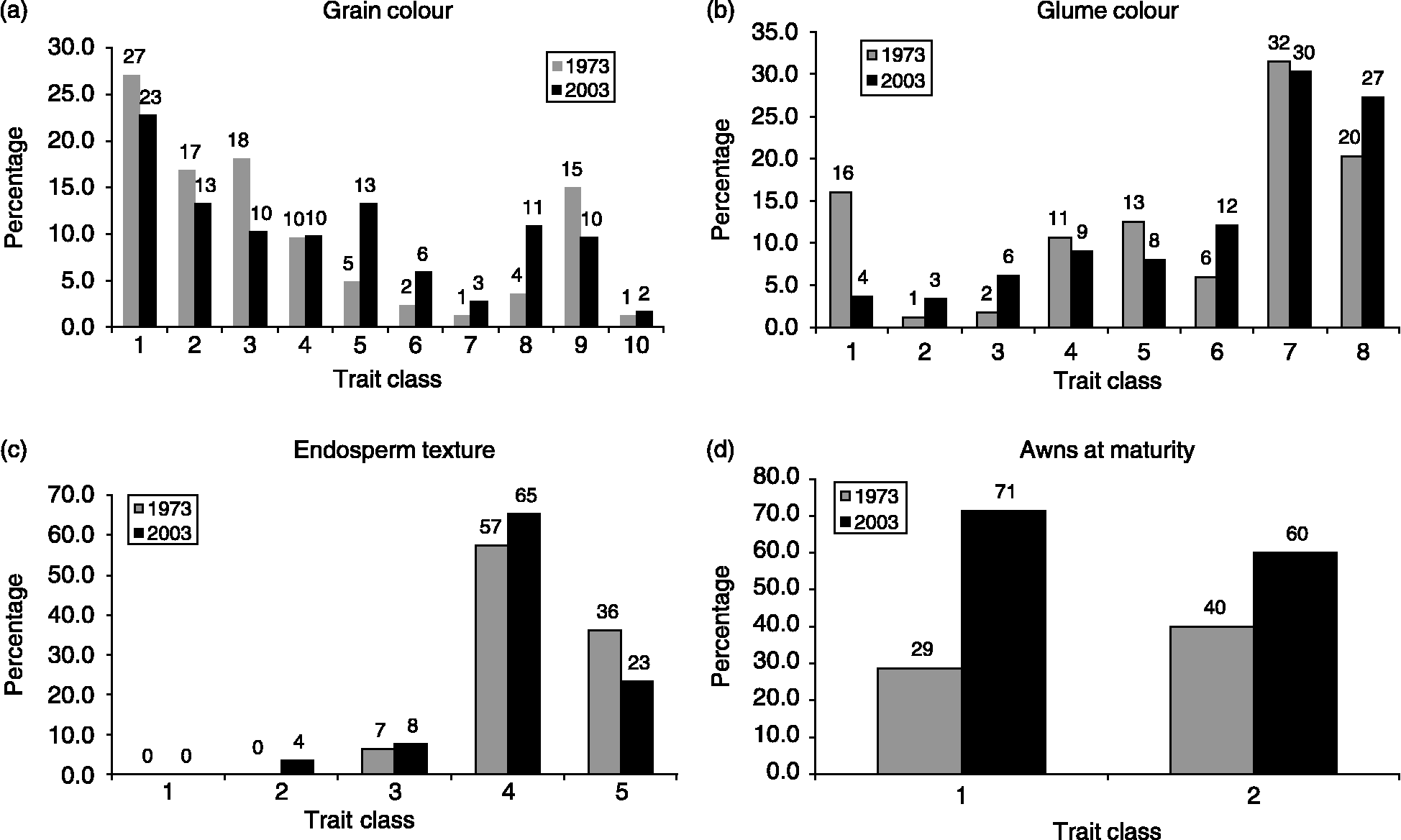
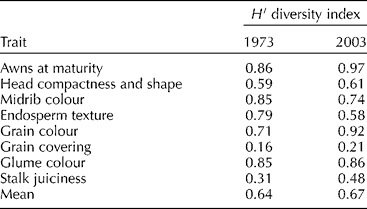
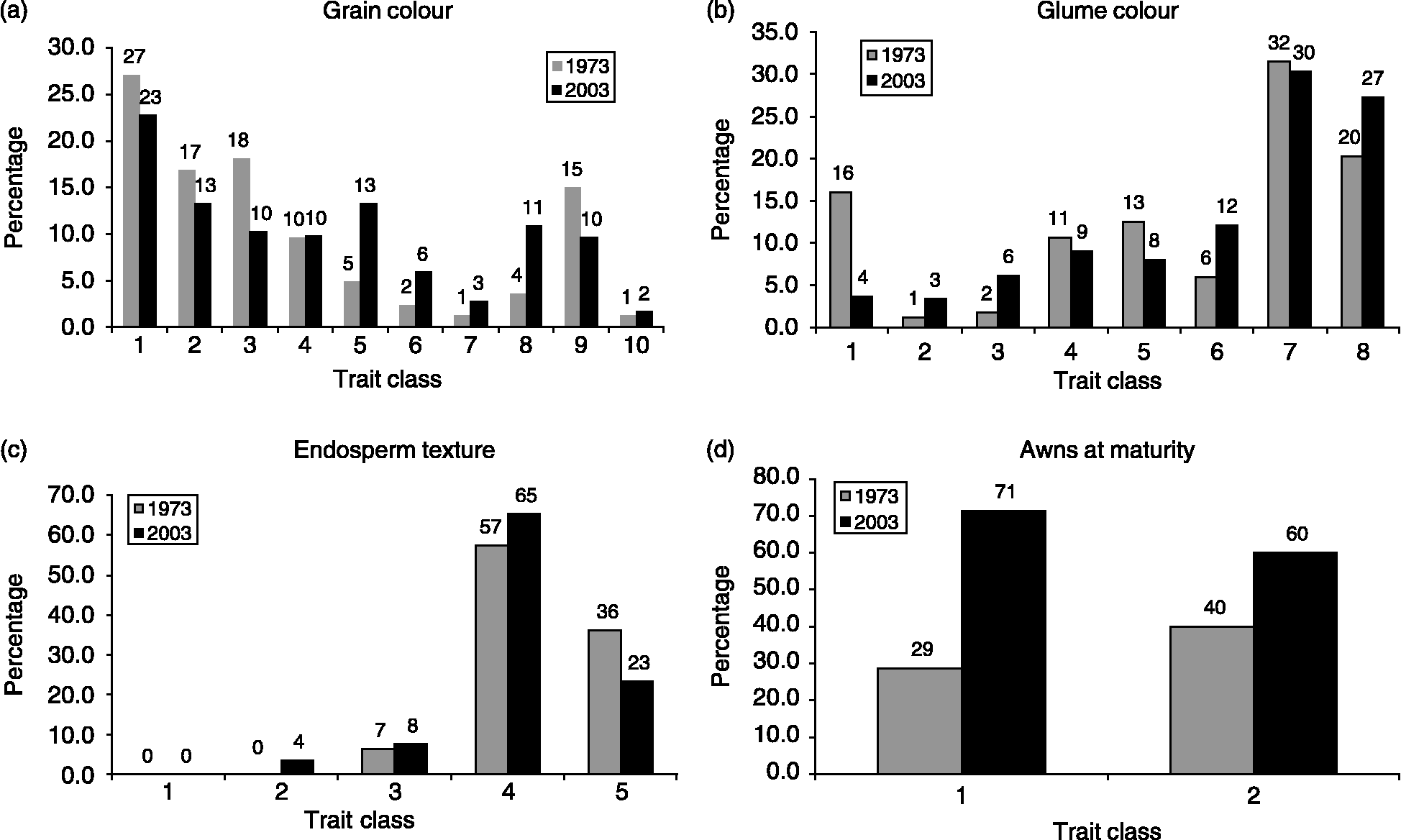
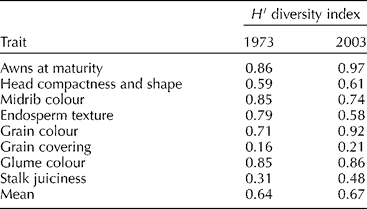
The distribution for most of the qualitative traits displayed a similar trend in both the 1973 and 2003 collections, where white midrib colour, non-juicy types, semi-compact to compact head types, presence of awns at maturity, grey and straw glume colour, seed colours of white, yellow, brown, red and light red, and 25% grain covered characterize the majority of landraces. Observable differences between the two collections for seed colour, glume colour, presence of awns and endosperm texture were recorded (Fig. 2). White, yellow, red and straw seed colours were common in the 1973 collection while brown, red brown and grey seed colours were more prevalent in the 2003 collection. The proportion of completely starchy endosperm types and awned types was also higher in the 1973 collection. The Shannon–Weaver diversity index (H ′ ) ranged from 0.16 to 0.86 (mean = 0.64) for grain covering and awns at maturity, respectively, in the 1973 collections, and from 0.21 to 0.97 (mean = 0.67), again for grain covering and awns at maturity, respectively, in the 2003 collections (Table 5), indicating high diversity for the qualitative traits examined.
The proportion of trait classes for (a) grain colour; (b) glume colour; (c) endosperm texture; and (d) awns at maturity, in the 1973 and 2003 collections.
Shannon–Weaver diversity index (H ′) for qualitative traits recorded
Shifts in genetic variability
According to farmers, long-cycle (late flowering) landraces, particularly goose-headed types, which were once dominant in many parts of the region, are becoming marginalized. For example, landraces like Abola/Milte (Degalet) in North Welo; Gorad, Wogere and Tengelay in Oromiya and South Welo and Wogere and Yeju in North Shewa are being pushed out of the system. In some areas, farmers are no longer able to grow these landraces. In contrast, landraces with less preferable quantitative attributes and end uses, and new introductions, have become more widespread.
Farmers list a number of factors contributing to the loss of landraces and shifts in the sorghum variability across the area. These include moisture stress (rainfall shortage or poor rainfall distribution through the season), stalk borer, poor soil fertility, striga, land shortage, bird damage, pachnoda and other interrelated factors. In general, moisture stress, stalk borer and poor soil fertility were the major limitations stressed by farmers. Indeed, farmers acknowledge the clear effect of land shortage in marginalizing landraces for specific purposes like porridge (genfo) and roasted grain (eshet), which are often of local rather than national importance.
Discussion
Genetic variability and genetic erosion
Morphological evaluation of the two groups of materials showed significant variability for most of the quantitative traits recorded, although the mean values for 2003 collections were relatively low. The Shannon–Weaver diversity index (H ′) for qualitative traits also showed very little difference in the 1973 and 2003 collections. However, the important question is whether this variability reflects the traits of importance. The fact is that preferred landraces have been either totally lost from the system or become marginalized in most areas surveyed. The actual observation in the field is a surprising shift in the type of landraces grown. Of the 60 farms sampled, compact goose-headed landraces (collectively known as Degalet) were dominant in only 12 fields (20%) and as a mixture of two or three important landraces in six fields. These landraces were either under-represented or were not grown in the other fields visited. The collection and evaluation of these under-represented landraces definitely contributed to a high diversity index value in the 2003 collection. According to farmers, major shifts in the landraces that were cultivated have occurred over the past 15–20 years. The merits of the long-cycle (late type) landraces are being lost, together with the traditional knowledge for maintaining them. This finding is not consistent with conclusions reached by Tunstall et al. (Reference Tunstall, Teshome and Torrance2001), who reported that preferred landraces (major landraces) were not at risk in the mid-1990s. This may be attributed to the time gap between the two studies, and also the difference in the sampling of the study sites, where major sorghum-growing districts of the area were covered in the present study.
Late-maturity landraces, particularly compact goose-headed ones that belong to the Durra race (Doggett, Reference Doggett1988), are traditionally the preferred landraces by farmers of the area, for a number of quantitative and qualitative attributes. These landraces are high yielding under optimum condition, large and bold seeded, suitable for the main traditional staple (i.e. Injera) and beverages (Tella and Areke), have tall and thick stalks, good market value, and good storability. Less preferred landraces and new introductions have recently become important, at the expense of these late types. Jigurte in North Welo; Cherekit in South Welo and North Shewa; and Cherekit and Merabete in Oromiya have become dominant. None of these landraces were important in the past. Although some of these landraces were represented in the 1973 collection, they were believed to be new introductions in many locations in the past 15–20 years. These landraces do not have desired end-use qualities, but will at least have stable yield under the current circumstances.
Local landrace disappearances were observed, resulting in both losses of common landraces from particular areas and sometimes complete loss of locally adapted landraces. A vast area of approximately 60 km from Sirinka (Habru-North Welo) to Golbo (Ambasel-South Welo), for instance, was totally covered with Jigurte in both years. Jigurte is an early maturing landrace thought to have been introduced from Humera in western Ethiopia or Sudan. In the past, this was an important area for late-maturing sorghums. We found that landraces collected in 1973 from these areas, such as Chibte, Bukase, Jamyo, Dalecho, Temyn and Wanose, were no longer found.
Interestingly, most farmers were able to list a number of landraces they knew, but at the time of survey grew only some of them. For example, a particular high-lysine sorghum type, called Marchuke, was mentioned by all farmers in North Welo, South Welo and Oromiya zones, but we were unable to find a single head in the field to collect. Marchuke was commonly found grown in mixtures with normal sorghum types when the 1973 collection was conducted (Ejeta, Reference Ejeta1976). Farmers in the lowland say it is grown in the intermediate area, and farmers in the intermediate areas believe it is maintained in the lowland. It is a landrace that appears to have been lost unnoticed.
Despite the worrying losses, some localities, such as Kalu in South Welo, were found to retain relatively good reserves of variability. Up to 23 different landraces were collected from a single farm of less than 0.5 ha, in areas that have had a better distribution of rainfall. Degalet-type landraces were observed widely grown in the district. Aware of this potential, the IBC has been attempting to maintain diversity through in situ conservation since 1997 (Mulat and Yohannes, Reference Mulat, Yohannes, Tanto and Demissie2001).
Factors influencing patterns of landrace cultivation
A number of factors have had widespread or local influence on the patterns of landrace cultivation, including:
● land use changes;
● rapid population growth;
● biotic and abiotic stresses;
● adoption of modern varieties;
● changes in food habit;
● availability of markets; and
● intensification and technological change such as the use of fertilizer and irrigation.
These have all been known to cause genetic erosion or loss of genetic diversity in crop plants (Brush et al., Reference Brush, Taylor and Bellon1992; Tripp and van der Heide, Reference Tripp and van der Heide1996; Smale et al., Reference Smale, Bellon, Jarvis and Sthapit2004; Alvarez et al., Reference Alvarez, Garine, Khasah, Dounias, Hossaert-McKey and McKey2005). In the present farm survey, it was generally observed that moisture stress, stalk borer and declining soil fertility are the most important factors in shaping the diversity of sorghum landraces in the area. It is worth mentioning here that farmers did not notice any landrace loss due to the 1974 and 1985 droughts that caused famine in that particular region. It is the continuing and worsening situation of the combined factors mentioned above that have marginalized the preferred landraces, rather than a one-time drought event.
Moisture stress
North-eastern Ethiopia is a major cropping area subject to frequent moisture stress (Segele and Lamb, Reference Segele and Lamb2005). The mean annual rainfall for most of the study area ranges from 750 to 1250 mm (NMSA, 2001) and falls in a bimodal pattern called small (Belg) and main (Kiremt) rainy seasons. The rainfall is characterized by irregular or unpredictable distribution and/or is insufficient for proper crop establishment. Recent climate change data indicate that the Kiremt is starting later, and the cessation of the rain is earlier (Segele and Lamb, Reference Segele and Lamb2005) with longer dry spells in between (Seleshi and Camberlin, Reference Seleshi and Camberlin2006).
Late-maturing sorghum types are established in April–May using the Belg rainfall, and survive over the short dry season until the main (Kiremt) rainy season, which starts in July. Farmers are not in a position to plant late-type sorghums if April or May rainfall is inadequate for establishment. The lower-risk options are to plant early maturing sorghum or tef in July. The trend over years shows a decrease in the amount of rainfall in general (NMSA, 2001), and during April and May in particular.
Stalk borer
Busseola fusca and Chilo partellus are the two most important stalk borer species in Ethiopia, and damage due to stalk borers has been reported to cause up to 100% crop loss in maize and sorghum in Ethiopia (Gebreamlak et al., Reference Gebreamlak, Singuald and Petterson1989; Kassahun, Reference Kassahun1993). In north-eastern Ethiopia, even if farmers receive rain in April/May to plant sorghum, the young plants will be damaged by the first generation of stalk borers, and the second generation will be ready in August/September to feed on sorghum at the booting/heading stage, resulting in dead hearts and chaffy heads for significant yield loss. Dejen and Belete (Reference Dejen and Belete2001) reported that the two species, B. fusca and C. partellus, caused 22–47% and 21–50% losses on sorghum at Sirinka (North Welo) and Chefa (Oromiya), respectively. Degalet types are particularly susceptible, and consequently, farmers are increasingly turning to shorter-duration types, with later sowing dates, to avoid stalk borers.
Low soil fertility
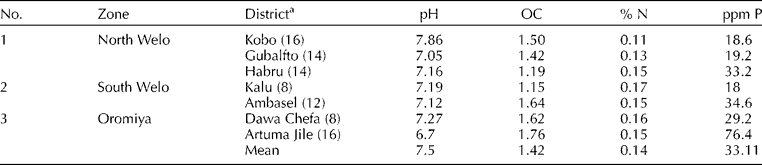
North-eastern Ethiopia is probably the worst case of natural resource degradation of the country. This is attributed to the rugged topographic nature of the area, deforestation, the torrential nature of rainfall combined with age-old exploitative farming (Hurni, Reference Hurni1988; Tekle, Reference Tekle1999; Taddese, Reference Taddese2001). The fertility of the soil is poor, and studies suggest the need for improved fertility management technologies (Alemu and Bayu, Reference Alemu and Bayu2005). Recent soil fertility investigation showed a very low nitrogen and organic carbon content for optimum sorghum growth, while the phosphorus content is in the medium to high range (Table 6). The phosphorus content may not necessarily be in a form available to plants (Wallihan, Reference Wallihan1948).
pH, organic carbon (OC), nitrogen and phosphorus content of soil in some sorghum growing areas of north-eastern Ethiopia (source: Sirinka, unpublished data)
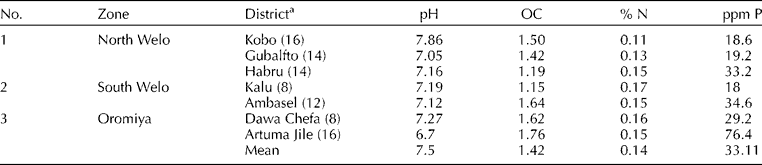
a Numbers in parenthesis indicate the number of sample sites; % N high (>0.5), medium (0.2–0.5) and low ( < 0.2); % OC high (>10), medium (4–10) and low ( < 4); ppm P (Bray II) high (>50), medium (50–15) and low ( < 15).
The preferred late-type landraces do well on relatively fertile soil; however, they perform poorly on low-fertility soils. Farmers usually allot relatively fertile soils for planting late types, particularly compact and goose-head landraces. However, this option has become difficult in recent periods for many locations, forcing farmers to revert to other landraces that do better under low-fertility conditions. Efforts by extension workers from the Bureau of Agriculture (BoA) to popularize commercial fertilizers for crop production including sorghum have not been particularly successful in the area, mainly due to moisture stress. None of the farmers interviewed used fertilizer for sorghum during the survey years. The need for effective and wise use of commercial fertilizers or other fertility management options is worth mentioning, not only from a conservation viewpoint but also from the aspect of crop productivity improvement.
Effect of introductions
Introductions do not appear to be a threat to landrace diversity in the area at present. However, introductions are nevertheless serving as options for sorghum production, and can be seen to increase the level of genetic diversity among the sorghum genotypes grown. A number of new introductions, both improved varieties and landraces, are known to the area, including Jigurte, Hagos Areaya, Koden, Merabete, Wodiaker, Subhan/Ajaeb, Serina, Amarica (White and Red), and some improved varieties (76T 1# 23, Yeju, Birhan, Teshale, Meko, Abshir, Abuare, Gobiye). The introductions/improved varieties are early maturing and are usually planted in July, unlike the local landraces which require planting in April/May. A few of these introductions occupy significant area coverage in the farming system (e.g. Jigurte, Hagos Areaya and Merabete). The introductions and improved varieties do not compare well in terms of yield potential, stalk yield or quality attributes and end-use, yet they provide more stable yield over variable seasons.
Implications for conservation
The situation in north-eastern Ethiopia generally shows that some landraces have been lost or are on the verge of disappearing. Farmers, clearly aware of the situation, are deeply concerned with the trend of loss of their old landraces. At this stage, farmers in the affected areas may be able to find some of their landraces from neighbouring localities if environmental conditions improve. With the situation of contributing factors likely to worsen, however, the rate of loss of traditional landraces looks likely to continue in the years to come.
The environmental and biological factors that have contributed to the changes in sorghum diversity pose serious challenges and require both technical and policy interventions to reach a solution. Climate change, which appears already to have had an impact on Ethiopia, is a major challenge to current biodiversity. The country's land tenure system requires policy reinforcement for proper natural resource conservation and management. Developing new stalk borer control measures, as well as aggressive extension and use of available control options, will be helpful in reducing the effect of stalk borer.
Given the alarming trend of loss of traditional landraces, the IBC needs to work more in strengthening its in situ and ex situ conservation efforts. Collection of landraces from areas not covered so far, and establishment of effective regeneration and seed storage conditions, are areas that need to be addressed in ex situ conservation. With regards to in situ conservation, a sustainable system that benefits participating farmers to guarantee the continuity of the system and provides viable conservation outcomes is required. Staffing at site level, which at the moment is covered by extension agents from BoA, also needs consideration. Furthermore, strengthened cooperation and networking efforts with other research and agricultural development institutions would be beneficial in discharging the responsibility of IBC.
Further work is in progress to assess the level of genotypic variation in the current collection at the DNA level. This will enable more accurate characterization of the diversity currently being grown in farmers' fields in north-eastern Ethiopia, and also demonstrate whether particular alleles have been lost or gained since the collection was first made in this area in 1973.
Acknowledgements
We acknowledge Sida-Amhara Rural Development Program (SARDP) for the financial support, and Sirinka Agricultural Research Center management and staff for the material and technical support during the farm survey and morphological evaluation of the landraces. Thanks to our colleague Bradley Campbell for critical discussions in preparation of the manuscript.