INTRODUCTION
During the last decade, global warming has become a major concern. Official data from the meteorological department in Thailand indicate that the environmental temperature increased during 1996 to 2005 and has tended to continue to increase. It is predicted that the average temperature around the world will increase by 1·5–4·5°C by the year 2100 (IPCC Reference Solomon, Qin, Manning, Chen, Marquis, Averyt, Tignor and Miller2007). The increase of the environmental temperature also has a potentially large impact on the pig industry, especially for pigs that are housed in a conventional open-housing system, which is the most common type of housing of commercial pig herds in Thailand. It is well-established that high ambient temperature and high humidity as well as a tropical climate negatively influence the reproductive performance of female pigs (Omtvedt et al. Reference Omtvedt, Nelson, Edwards, Stephens and Turman1971; Love et al. Reference Love, Klupiec, Thornton and Evans1995; Tantasuparuk et al. Reference Tantasuparuk, Lundeheim, Dalin, Kunavongkrit and Einarsson2000; Tummaruk et al. Reference Tummaruk, Tantasuparuk, Techakumphu and Kunavongkrit2004; Suriyasomboon et al. Reference Suriyasomboon, Lundeheim, Kunavongkrit and Einarsson2006). Common features of the seasonal influence on gilt and sow reproductive performance include prolonged weaning-to-first-service interval, decreased conception and farrowing rates, a higher rate of unsuccessful service and increased embryonic loss (Omtvedt et al. Reference Omtvedt, Nelson, Edwards, Stephens and Turman1971; Wildt et al. Reference Wildt, Riegle and Dukelow1975; Hurtgen & Leman Reference Hurtgen and Leman1981; Britt et al. Reference Britt, Szarek and Levis1983; Wettemann & Bazer Reference Wettemann and Bazer1985; Love et al. Reference Love, Klupiec, Thornton and Evans1995; Peltoniemi et al. Reference Peltoniemi, Love, Heinonen, Tuovinen and Saloniemi1999; Tantasuparuk et al. Reference Tantasuparuk, Lundeheim, Dalin, Kunavongkrit and Einarsson2000; Tummaruk et al. Reference Tummaruk, Lundeheim, Einarsson and Dalin2000, Reference Tummaruk, Tantasuparuk, Techakumphu and Kunavongkrit2004).
Assessing pig litter size at birth comprises a variety of measurements including the total number of piglets born per litter (TB), the number of piglets born alive per litter (BA), stillborn piglets (SB) and mummified fetuses (MF) per litter. A number of earlier studies have revealed that litter size is influenced by season and/or high ambient temperature during either early or late stages of gestation (Omtvedt et al. Reference Omtvedt, Nelson, Edwards, Stephens and Turman1971; Love et al. Reference Love, Klupiec, Thornton and Evans1995; Rydhmer Reference Rydhmer2000; Tantasuparuk et al. Reference Tantasuparuk, Lundeheim, Dalin, Kunavongkrit and Einarsson2000; Tummaruk et al. Reference Tummaruk, Tantasuparuk, Techakumphu and Kunavongkrit2004). However, under field conditions, the seasonal influences on litter size at birth are not consistent. The influence of season on litter size at birth differs among regions of the world (Love et al. Reference Love, Evans and Klupiec1993; Peltoniemi et al. Reference Peltoniemi, Love, Heinonen, Tuovinen and Saloniemi1999; Tantasuparuk et al. Reference Tantasuparuk, Lundeheim, Dalin, Kunavongkrit and Einarsson2000; Tummaruk et al. Reference Tummaruk, Lundeheim, Einarsson and Dalin2000, Reference Tummaruk, Tantasuparuk, Techakumphu and Kunavongkrit2004). A numbers of factors may contribute to the severity of the seasonal effects on the litter size. For instance, in Sweden, season does not influence either TB or BA (Tummaruk et al. Reference Tummaruk, Lundeheim, Einarsson and Dalin2000). On the other hand, in herds that keep pregnant sows in a conventional open-house system in a tropical climate, TB and BA significantly decrease in sows farrowed during August to October (Tantasuparuk et al. Reference Tantasuparuk, Lundeheim, Dalin, Kunavongkrit and Einarsson2000; Tummaruk et al. Reference Tummaruk, Tantasuparuk, Techakumphu and Kunavongkrit2004; Suriyasomboon et al. Reference Suriyasomboon, Lundeheim, Kunavongkrit and Einarsson2006). Determination of factors that influence litter size at birth is important for maximizing pig fertility in a tropical climate. Previous findings demonstrated that season does influence litter size at birth in purebred Landrace (L) and Yorkshire (Y) sows (Tantasuparuk et al. Reference Tantasuparuk, Lundeheim, Dalin, Kunavongkrit and Einarsson2000; Tummaruk et al. Reference Tummaruk, Tantasuparuk, Techakumphu and Kunavongkrit2004) and the severity of the effect differed between parities and years (Tummaruk et al. Reference Tummaruk, Tantasuparuk, Techakumphu and Kunavongkrit2004). Furthermore, there was evidence that the high ambient temperature and high humidity during early gestation influenced the litter size at birth of gilt rather than sow litters (Tummaruk et al. Reference Tummaruk, Tantasuparuk, Techakumphu and Kunavongkrit2004). However, components of litter size at birth (for example MF and SB, as well as the severity of the seasonal influences on the crossbred Landrace×Yorkshire (LY) population) have not been evaluated. The current study hypothesized that gilts are less tolerant of the seasonal influence than sows. Additionally, in commercial pig herds in Thailand, certain equipments (e.g. water sprinklers and fans) are commonly used to control indoor temperatures in the gestation house. The efficacy of these housing facilities to reduce the seasonal influence on the reproductive performance of pregnant gilts and sows has not been evaluated. The aim of the present study was to use data from herds to demonstrate the severity of the seasonal influence on the litter size at birth of gilts compared to sows over parities 2, 3–5 and ⩾6 in a conventional, open-housing system for commercial pig herds in the northeastern part of Thailand.
MATERIALS AND METHODS
Data
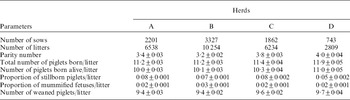
Data were obtained from four commercial pig herds (A, B, C and D) in the northeastern part of Thailand. The data included sows that farrowed during the period from July 2005 to June 2008. The herd data were obtained from the computer recording system of the herds from January 2005 to December 2008. The data included the sow identities, farrowing date, parity number, BA, SB, MF, litter birth weight, piglet birth weight and number of piglets at weaning. The TB was calculated by summing BA, SB and MF totals. The proportion of SB was calculated using the number of SB divided by TB. The proportion of MF was calculated using the number of MF divided by TB. The robustness of the input data was assessed and some data were omitted, for example zero TB (n=3). The analysed data set included observations on 25 835 litters from 8133 sows (Table 1).
Descriptive statistics (means±s.e.m.)

General management of the herds
The four herds in the present study were located in the northeastern part of Thailand between latitude 14–17°N and longitude 102–103°E. The housing facilities in herds (herd size) A, B, C and D were available for 1200, 1500, 1000 and 500 sow inventories, respectively. The number of sows and number of litters included in the analyses are presented in Table 1. The breeds of the sows were predominantly crossbred LY, and were mainly bred with Duroc or hybrid boars (PIC® Siam Ltd, Thailand). Conventional artificial insemination (AI) was used for all gilts and sows. In most cases, semen from at least two boars was used for AI. In all herds, gilts and sows were housed in a conventional open-housing system with a water sprinkler and fan; the boars were kept in an environment with an evaporative cooling system. The gilts and sows were kept in individual stalls during gestation and in individual farrowing pens during lactation. Herds A and C produced replacement gilts within the herd using their own grandparent (GP) stock (L and Y) and provided replacement gilts to herds B and D, respectively. In general, the gilts were mated at ⩾32 weeks of age with a body weight (BW) of ⩾135 kg at the second or later observed oestrus. The health of the herds was monitored by the herd veterinarians, who advised on vaccinating the gilts/sows against foot-and-mouth disease (FMD), swine fever (SF), Aujeszky's Disease (AD), porcine parvo virus (PPV) and arthrophic rhinitis (AR), at between 22 and 30 weeks of age in replacement gilts, and during late gestation (FMD and AR) and during lactation (PPV and SF) in sows. Mass vaccination for AD was conducted every 4 months. All herds were porcine reproductive and respiratory syndrome (PRRS) sero-positive herds, but no clinical outbreak was observed during the period of study. In general, the planned removal was performed after the sows had reached parity six. Therefore, the number of sows after parity six remaining in the herds was relatively low. In the analyses, the sows after parity six were pooled. Across the herds, on average, farrowing rate (FR) was 81·9%, adjusted FR (excluded sows that were culled after mating) was 85·3%, proportion of sows re-serviced after first mating was 0·94 and abortion rate was 1·7%. The gilts and sows received water up to ad libitum via water nipples. The feed was provided twice a day (about 1·5–3·5 kg/day during gestation and 5·0–7·0 kg/day during lactation). The feed was based on rice–maize–soybean–fish base containing 150–180 g crude protein, 12·13–13·39 MJ metabolizable energy and 8–10 g lysine/kg. All of the herds were visited monthly by the first author of the study to monitor routine management and health.
Meteorological data
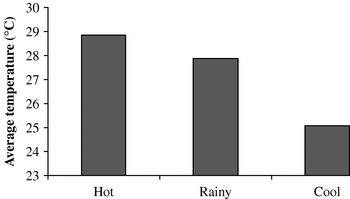
Outdoor temperature and humidity data were obtained from July 2005 to June 2008 from an official meteorological station within 100 km from the herds. Daily 24 h average temperatures during this period are presented in Fig. 1. The average minimum–maximum daily temperatures were 21·1–33·3, 24·4–31·6 and 17·9–29·9°C in the hot, rainy and cool seasons, respectively. The 24 h average humidity was 68·3, 81·7 and 64·2% in the hot, rainy and cool seasons, respectively. Temperature-humidity index (THI) was calculated using the following formula (Kelly & Bond Reference Kelly, Bond, Yeck, McDowell, Bond, Dougherty, Hazen, Johnson, Johnston, Kelly, Pace, Smith, Ulberg and Wilson1971):

where DB is the average daily temperature and RH is the average daily humidity.
Average daily temperature in a meteorological station close to the herds.

On average, THI was 79·2±3·46, 79·7±1·66 and 73·5±4·19 in hot, rainy and cool seasons, respectively.
Statistical analyses
The statistical analyses were carried out using SAS (SAS 2002). Descriptive statistics, including number of non-missing values, general means and standard error of the means (s.e.m.) were conducted for all parameters (Table 1). TB, BA, MF and SB were analysed by multiple analyses of variance (ANOVA) using the general linear mixed model procedure (PROC MIXED) of SAS. The mixed models were formulated by including both fixed and random effects and used restricted maximum likelihood (REML) as an estimation method. The fixed effects included herds (A, B, C and D), farrowing years (1, 2 and 3), farrowing seasons (hot, 16 February–15 June; rainy, 16 June–15 October; cool, 16 October–15 February), parity (1, 2, 3–5 and 6–12), interaction between year and season, parity and season and herd and season. The random effect was sow identity employed in the mixed model as a random effect because, on average, the sows included in the analyses produced 3·2±0·02 litters/sow (range 1–8 litters/sow) during the study period. To evaluate the seasonal influence in each parity group, multiple ANOVA models were also applied to TB and BA by parity groups (1, 2, 3–5 and 6–12) using the general linear model procedure (PROC GLM). The models included herd, farrowing year, farrowing season, interaction between year and season, and herd and season as independent variables. Additionally, the influence of temperature, relative humidity and THI on TB, BA, MF and SB were analysed by means of multiple ANOVA models using either the general linear mixed models or GLM by parity groups. The meteorological data were merged with the reproductive data by farrowing date (farrowing year–month–day). The means of temperature, relative humidity and THI during 115 days before farrowing were calculated and were used in the statistical models. The mixed models included herds (A, B, C and D), parity groups (1, 2, 3–5 and 6–12), years (1, 2 and 3), temperature classes (<25·0, 25–25·9, 26–26·9, 27–27·9, 28–28·9 and ⩾29·0°C) and two-way interactions between parity and temperature and between herd and temperature as fixed effect and included sow ID as a random effect. As temperature, humidity and THI were closely related, the effects of temperature, relative humidity or THI were included in the statistical models one at a time. The mean relative humidity during gestation period were classified as <50·0, 50·0–59·9, 60·0–69·9, 70·0–79·9 and ⩾80·0%. The mean THIs during gestation period were classified as 71–72, 73–78, 79–80 and ⩾81, based on information from earlier studies (Bényei et al. Reference Bényei, Gáspárdy and Cseh2003) and the frequency of the THI data. The least-squares means were obtained from each class of the factors and were compared using a least-significant-difference test with the Tukey–Kramer adjustment. In addition, multiple ANOVA was used to evaluate the effect of temperature or humidity during gestation (regression) on the litter size of gilts and sows. The models were performed by parity groups (1, 2, 3–5 and 6–12) and included herds and year as independent variables. The average temperature or humidity during gestation period was included in the models as a co-variance variable. Regression coefficient (slope), s.e. and P-value of each model were calculated. P<0·05 was regarded as statistically significant.
RESULTS
Descriptive statistics
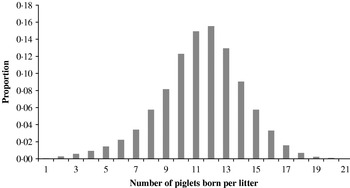
On average, the gilts and sows kept in the open-house system had 11·3±0·02 TB, 10·2±0·02 BA, 0·022 MF, 0·073 SB and 9·5±0·01 piglets at weaning. Figure 2 displays the frequency distribution of TB. Of these, 0·25 of the sows farrowed ⩾13 TB, while 0·10 of the sows farrowed ⩽8 TB. On average, the gilts had 10·7±0·04 TB, and sows of parities 2, 3–5 and ⩾6 had 11·3±0·04, 11·7±0·03 and 11·1±0·04 TB, respectively. The number of sows, number of litters, average parity at farrowing, TB, BA, SB, MF and number of piglets weaned per litter in each herd are presented in Table 1. Due to missing values for some independent variables included in the statistical models, data from 33 sows (0·004 of the total) were excluded. The analyses were based on data from 8100 sows.
Frequency distribution of the total number of piglets born per litter (n=25 835 litters).

Total number of piglets born and number of piglets born alive per litter
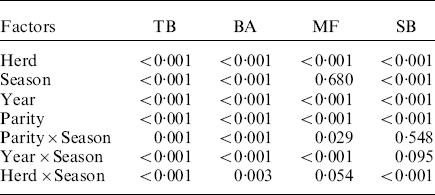
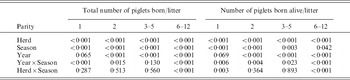
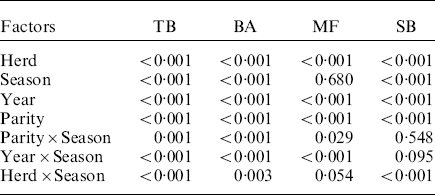
Factors influencing TB and BA are shown in Tables 2 and 3. Herd, year, season and parity significantly influenced both TB and BA (Table 2). On average, TB (least-squared means) were 10·8, 11·4, 11·8 and 11·1 piglets/litter in sows parity 1, 2, 3–5 and 6–12, respectively (P<0·001). TB varied from 11·0 to 11·8, and BA varied from 9·8 to 10·9 piglets/litter among herds (P<0·05). Herds C and D had a higher TB and BA than herds A and B (P<0·05). On average, first parity sows had a smaller BA compared to sows of parity 2 and 3–5 (P<0·001) but did not differ significantly compared to sows of parity ⩾6 (P=0·999). First parity sows had a smaller TB than sows of parity 2, 3–5 and ⩾6 (P<0·001). On average, sows of parity 3–5 had 1·0 TB and 1·0 BA higher than first parity sows (P<0·001).
Factors influencing number of total piglets born/litter (TB), number of piglets born alive per litter (BA), proportion of stillborn piglets/litter (SB) and proportion of mummified fetuses/litter (MF)
Factors influencing total number of piglets born/litter (TB), number of piglets born alive per litter (BA) by parity

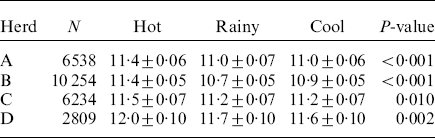
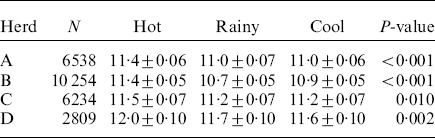
On average, sows that farrowed in the hot season had a larger TB and BA than sows that farrowed in the rainy (P<0·001) and cool seasons (P<0·001). The effects of season on TB by parity are demonstrated in Table 4. The differences in TB among seasons were more pronounced in gilt than sow litters (Table 4). On average, first parity sows that farrowed in the hot season had 0·7 and 0·5 TB more than gilts that farrowed in the rainy and cool seasons, respectively (P<0·001). By contrast, sows of parities 3–5 that farrowed in the hot season had 0·3 and 0·2 piglets more than those that farrowed in the rainy and cool seasons, respectively (P<0·05) (Table 4). The seasonal influence on TB and BA was observed in all herds. However, the severity of the seasonal effects differed among herds; the differences of TB between the hot and cool seasons in herd C was 0·3 piglets/litter, while this variation was 0·7 piglets/litter in herd B (Table 5).
Total number of piglets born per litter (least-square means±s.e.m.) in sow parities 1, 2, 3–5 and 6–12 by farrowing season

Total number of piglets born per litter (least-square means±s.e.m.) in herds A, B, C and D by farrowing season
Factors influencing TB and BA in each parity group are shown in Table 3. The results reveal that factors that influence TB and BA in gilt litters include herd, season and interaction between year and season (P<0·001). For gilt litters, the interaction between herd and season significantly influence BA (P=0·003) but not TB (P=0·28). TB of first parity sows was highest in the hot season and lowest in the rainy season for all herds. TB of first parity sows varied from 10·7 to 11·6 piglets/litter in the hot season and varied from 9·8 to 10·8 piglets/litter in the rainy season. The BA of first parity sows was highest in the hot season for all herds, but lowest in the rainy season in three herds and lowest in the cool season in one herd. BA of first parity sows varied from 9·7 to 10·7 piglets/litter in the hot season and varied from 8·8 to 9·6 piglets/litter in the rainy season.
Proportion of mummified fetuses and stillborn piglets per litter
Factors influencing the proportion of MF and SB are displayed in Table 2. Proportion of MF varied from 0·016 to 0·027 per litter and proportion of SB varied from 0·051 to 0·082 per litter among the herds (P<0·001). Among years, proportion of MF varied from 0·020 to 0·026 per litter and proportion of SB varied from 0·068 to 0·075 per litter (P<0·001).
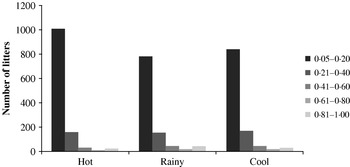
On average, first parity sows had a higher MF than sows parities 2, 3–5 and ⩾6 (0·031 v. 0·017, 0·018 and 0·024, respectively; P<0·001). The frequency distribution of MF (for the litters that had at least one mummified fetus) is shown in Fig. 3. For all parities of the females, the proportion of litters that had between 0·91 and 1·00 MF was 0·023. For gilts, the proportion was 0·05. The proportion of the litters that had MF below 0·20 was higher in the hot season (0·38) than in the rainy (0·30, P<0·001) and cool (0·32, P=0·002) seasons (Fig. 3).
Frequency distribution of the proportion mummified fetuses per litter by season.

The seasonal influence on MF is displayed in Table 6. Interaction between season and herd (P=0·054), season and year (P<0·001) and season and parity (P=0·029) significantly influenced MF (Table 2). This indicates that the effect of season on MF varied depending on herd, year and parity. For instance, first parity sows that farrowed in the rainy and cool seasons had a higher MF than sow parity 2 and 3–5 (P<0·05), while no variation of MF among parities in sows that farrowed in the hot season (P>0·05) was observed.
The proportion of mummified fetuses per litter (least-square means±s.e.m.) in sows parities 1, 2, 3–5 and 6–12 by farrowing seasons

On average, sow parities ⩾6 had a higher proportion of SB than sow parities 1, 2 and 3–5 (0·095 v. 0·071, 0·053 and 0·068, respectively; P<0·001). The seasonal influence on SB is shown in Table 7. On average, the proportion of SB was 0·075, 0·071 and 0·067 in sows that farrowed in the hot, rainy and cool seasons, respectively. Sows farrowed in the hot season had a higher SB than sows that farrowed in the cool season (P<0·001). However, the interaction between season and herd influenced SB (P<0·001), i.e. the seasonal influence on SB differed among herds. On average, the proportion of SB was 0·078, 0·075, 0·082 and 0·052 in herds A, B, C and D, respectively. The differences of SB between cool and hot seasons were only significant for herd C (0·018, P<0·001). The seasonal influence on SB was similar in all parity groups (P=0·540). For all parities, farrowing in the hot season resulted in the highest SB, while farrowing in the cool season resulted in the lowest SB. The differences in SB between cool and hot seasons were only significant for parities 6–12 (P=0·042). The seasonal effect on SB was similar between years, i.e. SB was highest in the hot and lowest in the cool season in every year. For the 3-year period, no significant variation was found in the proportion of SB in the females that farrowed in the cool season (0·067–0·068, P=0·632), while a significant variation on the proportion of SB was found in the females that farrowed in the hot (0·071–0·081, P=0·016) and the rainy seasons (0·066–0·076, P=0·008).
The proportion stillborn piglet per litter (least-square means±s.e.m.) in sows parities 1, 2, 3–5 and 6–12 by farrowing seasons

Effects of temperature, relative humidity and THI
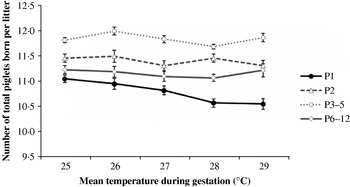
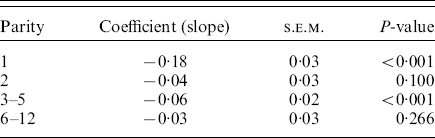
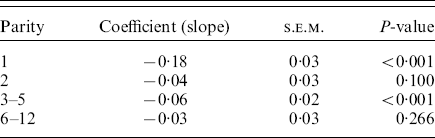
The mean temperature during gestation periods influenced TB (P=0·001), BA (P<0·001) and MF (P=0·036) but not SB (P=0·421). Interaction between temperature and parity significantly influenced TB (P=0·022), BA (P=0·009) and MF (P=0·027) and the interaction between temperature and herd significantly influenced TB (P<0·001), BA (P<0·001), MF (P<0·01) and SB (P<0·001). Across parities, a reduction of 0·2 TB (P=0·003) and 0·2 BA (P=0·002) were found when average temperature during gestation period increased from 25 to 28°C. The influence of temperature on TB, BA and MF differed among herds and parity groups. In first parity sows, an increase in the proportion of MF from 0·022 to 0·042 was found when average temperature during gestation period increased from 26 to 29°C (P<0·001), while temperature during gestation period did not significantly influence MF in the later parities (P>0·1). In herd B, TB decrease from 11·3 piglets/litters to 10·4 piglets/litter when average temperature during gestation period increased from 25 to 29°C (P<0·001), while the temperature did not significantly influence TB in herds C and D. The influence of the average temperature during gestation period on TB by parity groups is demonstrated in Table 8 and Fig. 4. As can be seen from Fig. 4, the influence of the means temperature during gestation period was most pronounced in the first parity. The regression coefficient (i.e. the slope of the regression line) of the effect of the mean temperature during gestation on TB revealed that every 1°C increase in the mean temperature during gestation was associated with a decrease of 0·18, 0·04, 0·06 and 0·03 TB in sow parities 1, 2, 3–5 and 6–12, respectively (Table 8).
Effect of average temperature during gestation period on total number of piglets born per litter (least-square means±s.e.m.) by parity (P1=parity 1, P2=parity 2, P3–5=parities 3 to 5, P6–12=parities 6 to 12).

Regression coefficient, standard error of means (s.e.m.) and P-value of the effects of means temperature during gestation period on the total number of piglets born per litter (TB) using multiple analyses of co-variance models in sows parities 1, 2, 3–5 and 6–12
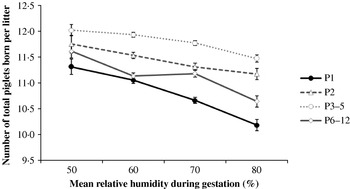
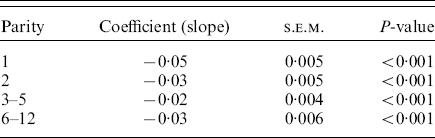
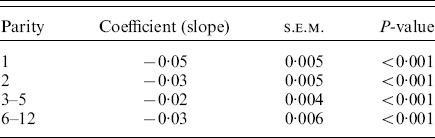
The mean relative humidity during gestation influenced TB (P<0·001), BA (P<0·001) and SB (P<0·001), but not MF (P=0·3). Interaction between the relative humidity and parity influenced TB (P=0·003), BA (P=0·005) and MF (P=0·012) and interaction between the relative humidity and herd significantly influenced TB (P<0·001), BA (P<0·001) and SB (P=0·036). On average, a reduction of 0·8 TB and 0·7 BA were found when the average relative humidity during gestation increased from 50 to 80% (P<0·001). The influence of relative humidity on TB, BA and MF differed among herds and/or parity groups. Mummified fetuses in the first parity was increased from 0·022 to 0·038 when the relative humidity increased from 60 to 70% (P=0·002), while this effect was not found in other parities (P>0·05). Among the herds, when the relative humidity during gestation increased from 50 to 80%, a significant decrease of 0·5 (P=0·043), 1·6 (P<0·001), 0·8 and (P<0·001) TB was observed in herds A, B and C, respectively. The influence of the relative humidity during gestation period on TB by parity groups are demonstrated in Table 9 and Fig. 5. As can be seen from Fig. 5, the influence of the relative humidity was more pronounced in the first parity than parity 2, 3–5 and 6–12. The regression analysis on the effect of mean relative humidity on TB revealed that the humidity during gestation significantly influenced TB in all parity groups and the regression coefficient was highest in the first parity sows (Table 9). The slope of the regression line indicated that 10% increase in the means relative humidity during gestation resulted in a decrease in 0·5, 0·3,0·2 and 0·3 TB in sows parities 1, 2, 3–5 and 6–12, respectively (Table 9).
Effect of average relative humidity during gestation period on total number of piglets born per litter (least-square means±s.e.m.) by parity (P1=parity 1, P2=parity 2, P3–5=parities 3 to 5, P6–12=parities 6 to 12).

Regression coefficient, standard error of means (s.e.m.) and P-value of the effects of means relative humidity during gestation period on the total number of piglets born per litter (TB) using multiple analyses of co-variance models in sows parities 1, 2, 3–5 and 6–12
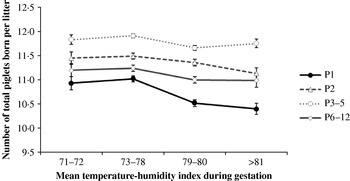
The means THI during gestation influenced TB (P<0·001), BA (P<0·001) and MF (P=0·061) but not SB (P=0·197). Interaction between THI and parity influenced TB (P=0·051) and BA (P=0·020) and the interaction between THI and herd significantly influenced TB (P<0·001), BA (P<0·001) and SB (P<0·001). Across parities, a reduction of 0·3 TB (P=0·002) was found when the average THI during gestation period increased from 71/72 to ⩾81. The influence of THI on TB, BA and SB differed among herds and/or parity groups. Among the herds, when THI during gestation period increased from 71/72 to ⩾81, a decrease of 0·4 (P<0·001) TB was observed in herd A and a decrease of 0·9 TB (P<0·001) in herd B, but no significant influence of THI on TB was found in herds C and D (P>0·05). The influence of the THI during gestation on TB by parity groups are demonstrated in Fig. 6. The influence of the THI was more pronounced in the first parity than parity 2, 3–5 and 6–12.
Effect of average THI during gestation period on total number of piglets born per litter (least-square means±s.e.m.) by parity (P1=parity 1, P2=parity 2, P3–5=parities 3 to 5, P6–12=parities 6 to 12).

DISCUSSION
The results presented in the current study demonstrate that an inferior litter size at birth (TB and BA) of gilts and sows kept in a conventional open-house system in Thailand was observed during some periods of the year. This finding is in agreement with previous research in a purebred population (Tantasuparuk et al. Reference Tantasuparuk, Lundeheim, Dalin, Kunavongkrit and Einarsson2000; Tummaruk et al. Reference Tummaruk, Tantasuparuk, Techakumphu and Kunavongkrit2004). However, the litter size of gilts and sows in the present study (11·3 TB and 10·2 BA) was higher than those reported earlier in the purebred L and Y population in Thailand (9·4 TB and 8·7 BA; Tantasuparuk et al. Reference Tantasuparuk, Lundeheim, Dalin, Kunavongkrit and Einarsson2000; 9·9 TB and 9·0 BA; Tummaruk et al. Reference Tummaruk, Tantasuparuk, Techakumphu and Kunavongkrit2004). This difference might be due to the effects of crossbreeding since most of the gilts and sows in the present study were crossbred LY. Furthermore, the results may be influenced by the genetic improvement of litter size of pigs in Thailand (Imboonta et al. Reference Imboonta, Rydhmer and Tumwasorn2007).
In the present study, the highest TB and BA were observed in gilts/sows that farrowed in the hot season, i.e. gilts/sows mated and pregnant during the cool season. Since the day length in Thailand is almost equal throughout the year (12±1 h), the seasonal influence on litter size at birth in Thailand is mainly caused by temperature and/or humidity (Tantasuparuk et al. Reference Tantasuparuk, Lundeheim, Dalin, Kunavongkrit and Einarsson2000; Suriyasomboon et al. Reference Suriyasomboon, Lundeheim, Kunavongkrit and Einarsson2006). It has been demonstrated earlier that heat stress during early pregnancy could alter the reproductive endocrine system, especially the control of luteal function, and in this way could reduce the amount of embryonic tissue present at day 16 of pregnancy, thus reducing in litter size (Wettemann & Bazer Reference Wettemann and Bazer1985). In cows, heat stress affects not only the antral follicles but also the ovarian pool of small follicles, resulting in carry-over effects on follicular function (Roth Reference Roth2008). Additionally, studies have demonstrated that oocytes harvested from cows during the summer had a reduced ability to develop to blastocyst stage after in vitro fertilization (Rocha et al. Reference Rocha, Randel, Broussard, Lim, Blair, Roussel, Godke and Hansel1998; Al-Katanani et al. Reference Al-Katanani, Paula-Lopes and Hansen2002; Bényei et al. Reference Bényei, Gáspárdy and Cseh2003). Tummaruk et al. (Reference Tummaruk, Tantasuparuk, Techakumphu and Kunavongkrit2004) found that the effect of temperature on litter size in pigs also depends on the period of gestation; the most critical period seems to be the early stage (1–5 weeks of gestation). In addition, Tantasuparuk et al. (Reference Tantasuparuk, Lundeheim, Dalin, Kunavongkrit and Einarsson2000) have demonstrated that an increase of 1°C of the maximum daily temperature during the first 4 weeks of gestation resulted in a decrease of about 0·07 piglets/litter. In the present study, the average temperature in the cool season was 3·5°C and 3·1°C lower than in the hot and rainy seasons, respectively (Fig. 1). The present study demonstrated that, as the average environmental temperature, relative humidity or THI increased, TB and BA of the sows were significantly decreased. However, the severity of these factors differed among parity groups and herds. In the present study, the influence of temperature, humidity or THI was most pronounced in the first parity and in herds A and B. In the present study, an increase of 1°C of the mean temperature during gestation caused a decrease of 0·18 piglet/litter in the first parity sows, while this caused a decrease of only 0·03 to 0·06 piglet/litter in the older sows.
Low litter size at birth of sows in Thailand has been observed for over 10 years in sows that farrow during the rainy season (Tantasuparuk et al. Reference Tantasuparuk, Lundeheim, Dalin, Kunavongkrit and Einarsson2000). In the present study, the low litter size at birth was found not only in sows that farrowed in the rainy season but also in those that farrowed in the cool season. The decreased litter size at birth of pigs in both seasons might be due to either the year or herd effects. Different herds have different routine management to control ambient temperature and humidity. In addition, the difference might be due to the slight increase of environmental temperature during the last decade, resulting in a higher severity of the seasonal influences on the litter size at birth of pigs in Thailand. In Sweden, where ambient temperature is much lower than the tropics, the seasonal influence on the litter size at birth of pigs does not exist (Tummaruk et al. Reference Tummaruk, Lundeheim, Einarsson and Dalin2000). All these findings indicate that high ambient temperature and/or high humidity, not the photoperiod, might play an important role on the inferior litter size at birth of gilts and sows in Thailand. Poor litter size at birth was observed in gilts and sows that farrowed in both the rainy and cool seasons. The mechanism for the reduction of the litter size at birth of pigs might be due to both embryonic and fetal loss. In the present study, the fetal loss was demonstrated by the frequency distribution of the MF in each season. It was found that the proportion of the litters having below 0·20 MF was highest in the farrowing that occurs in the hot season. Furthermore, no parity effect on MF was found in the hot season, but it was found in the rainy and the cool seasons. Embryonic loss could not be demonstrated in the present study. However other studies, using laparoscopic examination in gestating gilts in Thailand, found that the ovulation rate in L and Y gilts was 13·8 and 15·3 ova, respectively (Tantasuparuk et al. Reference Tantasuparuk, Techakumphu and Dornin2005), and in crossbred LY sows was between 15·3 and 17·7 ova (Tummaruk & Tienthai Reference Tummaruk and Tienthai2008). Furthermore, it has been demonstrated that the overall prenatal loss of gestating gilts in Thailand was 0·310 and 0·375 in L and Y gilts, respectively (Tantasuparuk et al. Reference Tantasuparuk, Techakumphu and Dornin2005). In the present study, the average TB was 11·3, indicating that the prenatal loss of 2·5–6·4 piglets per litter could occur. In beef cattle, it has been shown that increasing environmental temperature and relative humidity from 21°C and 35% to 33–37°C and 27 or 38% during days 8 to 16 of gestation reduced the size and weight of the conceptus (Biggers et al. Reference Biggers, Geisert, Wettemann and Buchanan1987). Bényei et al. (Reference Bényei, Gáspárdy and Cseh2003) demonstrated that the average number of corpus luteum of superovulation cows decreased from 9·8 to 5·2 when THI increase from 70·7 during cool season to 79·7 during the El-Nino phenomenon in Brazil. In addition, high temperature also significantly reduced in vitro embryo quality (Bényei et al. Reference Bényei, Gáspárdy and Cseh2003). These studies implied that the high ambient temperature not only influenced early embryonic and/or fetal loss but also influenced the follicular development and hence decreased the number of ovulation, the oocyte quality and/or fertilization rate.
In the present study, the seasonal effect on TB and BA was more pronounced in gilt than sow litters. This is in agreement with previous findings in purebred L and Y populations in Thailand (Tummaruk et al. Reference Tummaruk, Tantasuparuk, Techakumphu and Kunavongkrit2004). In the present study, gilts that were mated and conceived during the cool season (and subsequently farrowed in the hot season) had 0·5–0·7 TB more than in other seasons. If the gilts farrowed twice a year, the seasonal effect on the litter size at birth would decrease by 1·0–1·4 piglets/female/year for the gilt population. On the other hand, in sow parities 3–5, the seasonal effects on the litter size at birth would decrease by only 0·2–0·3 TB or 0·4–0·6 piglets/female/year. These data indicate that gilts are less tolerant to heat stress than sows. In the present study, the influence of temperature, relative humidity and THI on litter size in pig was most pronounced in the first parity sows. For instance, when the relative humidity increased from 50 to 80%, a decrease of 1·1 TB was observed in first parity sows, while a decrease of 0·6, 0·6 and 1·0 TB was observed in sow parities 2, 3–5 and 6–12, respectively. The decrease of TB in gilt litters might be due to both early embryonic loss and fetal loss. The fetal loss is indicated by the finding that MF in gilts that farrowed in the hot season is not significantly different from multiparous sows, and tended to be lower compared to other seasons. In addition, the present study also found that both the high temperature and the high THI during gestation significantly increased MF in the first parity sows but not in the higher parities. These findings imply that crossbred sows are not more resistant than purebred sows against the effect of heat stress. Earlier studies usually demonstrated the effect of heat stress on early embryonic loss in either gilts (Omtvedt et al. Reference Omtvedt, Nelson, Edwards, Stephens and Turman1971) or sows (Armstrong et al. Reference Armstrong, Britt and Cox1986). No studies have apparently compared the difference in heat tolerance between gilts and sows. For instance, it has been demonstrated that heat stress during the first 2 weeks of gestation in gilts reduced conception rate and litter size, while heat stress during the last 2 weeks of gestation increased the number of stillborn piglets/litter (Omtvedt et al. Reference Omtvedt, Nelson, Edwards, Stephens and Turman1971). However, for a retrospective study, the interaction between seasons and parity of sows has been found for other reproductive traits. For instance, Tummaruk et al. (Reference Tummaruk, Lundeheim, Einarsson and Dalin2000) found that the seasonal effect of weaning-to-first-service interval was more pronounced in primiparous sows than multiparous sows. The reason for this might be that the gilts utilize the nutrient supply for both growing and reproductive function. Therefore, heat stress might reduce the ability of gilts to maintain their reproductive function. On the other hand, most of the sows have reached their mature BW, and their ability to maintain normal function of the reproductive system may be better than gilts.
In the present study, the significant interaction between year and season on litter size implies that the severity of the seasonal effect differs between years. The year effect not only indicates the climatic variation among years but also represents the difference in the quality of feed and feeding, parity distribution, health status and stock persons. Improvement in some management strategies against seasonal stress by year might reduce the negative effect of season on the fertility in pigs (Love et al. Reference Love, Klupiec, Thornton and Evans1995; Tummaruk et al. Reference Tummaruk, Tantasuparuk, Techakumphu and Kunavongkrit2004). In addition, in the present study, the seasonal influences on TB and BA also differed among herds. The differences of TB among seasons were most pronounced in herd A, while less pronounced in herd C.
In Thailand, high humidity during the rainy season is common (mean relative humidity 81·7%). The high humidity recorded is obviously due to the fact that the rain occurs almost every day during the rainy season in Thailand. It has been demonstrated that high humidity (>40%) both during lactation and post-mating negatively influences litter size at birth in pigs (Suriyasomboon et al. Reference Suriyasomboon, Lundeheim, Kunavongkrit and Einarsson2006). The present study demonstrated that high relative humidity during gestation period reduced TB in almost all parities of sows, especially in the first parity and in sows parities 6–12. An earlier study demonstrated that the combination of high temperature and high humidity also negatively affected litter size but, surprisingly, this combination did not affect other reproductive traits, for example weaning-to-service interval and re-mating rate (Suriyasomboon et al. Reference Suriyasomboon, Lundeheim, Kunavongkrit and Einarsson2006). In the present study, inferior litter size at birth was observed in gilts/sows that farrowed during the cool season. These animals are supposed to be bred and pregnant during the rainy season. High humidity might play an important role on the litter size at birth in pigs. In other studies that were conducted in temperate areas (low humidity regions), the seasonal variation on the litter size at birth in pigs was not significant (Love et al. Reference Love, Klupiec, Thornton and Evans1995; Peltoniemi et al. Reference Peltoniemi, Love, Heinonen, Tuovinen and Saloniemi1999; Tummaruk et al. Reference Tummaruk, Lundeheim, Einarsson and Dalin2000). Therefore, these findings suggest that the housing designs for pregnant gilts and sows under tropical climates should emphasize minimizing high humidity, particularly during the rainy season.
In the present study, the average THI was 79·2±3·5, 79·7±1·7 and 73·5±4·2 in hot, rainy and cool seasons, respectively. The average THI observed during hot and rainy seasons in Thailand are almost equal to the THI that observed during the period of El-Nino phenomenon in Brazil (79·7±4·0) (Bényei et al. Reference Bényei, Gáspárdy and Cseh2003). It has also been demonstrated that this level of THI significantly reduced the number of ovulation and the oocyte quality in superovulation cows (Bényei et al. Reference Bényei, Gáspárdy and Cseh2003).
In conclusion, inferior litter size at birth occurred in sows that farrowed in either the rainy or cool seasons. High temperature, high relative humidity and/or high THI during gestation significantly reduced the number of total piglets born per litter. The influence of season, temperature, relative humidity and/or THI on litter size at birth was more evident in the gilts than the sows. These data indicate that various strategies to reduce temperature and relative humidity in the open-housing system for pregnant gilts and sows in Thailand are not adequate and that housing design for pregnant gilts should be improved.
Funds for this study were provided by the National Research Council of Thailand (NRC) 2008–2009 and partly by the CHE-TRF Senior Research Fund (RTA5080010). Language editing of the manuscript has been coordinated by Chula Unisearch, Chulalongkorn University.