Introduction
Although rates of cannabis/marijuana and other illicit psychoactive drug use are lower in older than younger adults, the baby boom generation has used marijuana and/or other illicit drugs at significantly higher rates than preceding generations in the USA (Black and Joseph, Reference Black and Joseph2014). Now that all the boomers have passed age 50 years, the number of marijuana and/or other illicit drug users in the 50+ years age group is expected to substantially increase. Data from the NSDUH show that past-month illicit drug use among the 50–64 years age group increased from 2.7% in 2002 to 6.0% in 2013 (Substance Abuse and Mental Health Services Administration [SAMHSA], 2014). As in younger age groups, marijuana is the most commonly used illicit drug in the 50+ years age group. For example, according to the 2005–2006 NSDUH data, the past-year marijuana use rate was 2.6% among adults aged 50+ years (3.9% in the 50–64 years age group and 0.7% in the 65+ years age group), compared to 0.4% for cocaine, 0.1% each for inhalants, hallucinogens, and methamphetamine, and 0.05% for heroin (Blazer and Wu, Reference Blazer and Wu2009). Although these substance use rates are small, the data also revealed that close to 12% of these past-year drug users had a drug use disorder (Blazer and Wu, Reference Blazer and Wu2009).
The relatively small proportion of older-adult illicit drug users may explain relatively few studies that examined problems that tend to be associated with illicit drug use, using a representative sample of older adults (Wu and Blazer, Reference Wu and Blazer2014). The few existing studies do suggest that illicit drug use in late life is associated with serious MH problems. Using data from the 2008 NSDUH, DiNitto and Choi (Reference DiNitto and Choi2011) found that past-year marijuana users aged 50+ years reported a significantly higher level of psychological distress than non-users. Carter and Reymann (Reference Carter and Reymann2014) found that nearly half of all emergency department visits by adults 65+ years who attempted suicide involved substance use. A study of individuals aged 54+ years who participated in the Health and Retirement Study also found that those with elevated depressive symptoms tended to engage more frequently in cigarette- and drug-use coping, which in turn increased the odds of poor (vs. excellent) self-rated health (Mauro et al., Reference Mauro, Canham, Martins and Spira2015).
Given scant research on older adults’ marijuana and/or other illicit drug use and its relationship to MH status, the present study, based on US epidemiologic data, examined whether past-year marijuana use, alone or in combination with other illicit drugs, and other drug use only were associated with lifetime MDE, past-year MDE, and past-year serious suicidal thoughts in the 50+ years age group. Because marijuana is the most commonly used illicit drug, we also examined whether marijuana use frequency was associated with these MH problems.
Marijuana and other illicit drug effects
The impact of age-related changes in brain structure and function on the rewarding and other effects of illicit drug use/misuse is not well known (Dowling et al., Reference Dowling, Weiss and Condon2008). However, aging- and disease-related physiological changes (e.g. smaller body mass and lower total body water content) are known to affect pharmacokinetics and lead to higher- and longer-lasting drug serum levels and increased potential for adverse drug reactions in older than younger adults (Dowling et al., Reference Dowling, Weiss and Condon2008). For older adults with chronic medical conditions, illicit drug use/misuse is likely to have severe consequences as psychomotor stimulant (e.g. amphetamine, cocaine, and crack) abuse often lead to cardiovascular complications, kidney function reductions, and diabetes in younger adults (Johnson et al., Reference Johnson, Bazargan and Cherpitel2001; Frishman et al., Reference Frishman, Del Vecchio, Sanal and Ismail2003a, Reference Frishman, Del Vecchio, Sanal and Ismail2003b; Vupputuri et al., Reference Vupputuri2004).
Marijuana is a complex substance that contains multitudes of chemicals, including delta-9-tetrahydrocannabinol (THC; the psychoactive component), cannabidiol (CBD, a non-psychoactive constituent), and other phytocannabinoids and cannabis terpenoids. Marijuana's potential benefits and risks for physical, mental, and cognitive health come from these chemicals, THC's often biphasic effects (lower doses causing effects opposite to those seen at high doses), and different users’ susceptibilities to the drug's effects (Russo, Reference Russo2011; Mechoulam and Parker, Reference Mechoulam and Parker2013). CBD and/or other chemicals may modulate psychoactive effects of THC and can serve valuable medicinal purposes; however, most marijuana sold illegally in the USA contains no or very low amounts of CBD, and THC potency has steadily increased in all confiscated cannabis preparations, ranging from 3%–29% (Mehmedic et al., Reference Mehmedic2010; Mechoulam, Reference Mechoulam2012).
Since marijuana is also often used in combination with other drugs, establishing its causal effects or underlying mechanisms is difficult (Volkow et al., Reference Volkow, Baler, Compton and Weiss2014). However, to date, more risks than benefits of recreational marijuana use have been reported. Initiating marijuana use early in life and chronic marijuana use are widely reported to be associated with adverse physical and MH consequences (Hall and Degenhardt, Reference Hall and Degenhardt2009). Short-term marijuana use has been linked to impaired short-term memory, judgment, motor coordination, and driving skills; increased injury risk; anxiety; and paranoia and psychosis in a dose-response effect in all age groups (Mechoulam and Parker, Reference Mechoulam and Parker2013; Brady and Li, Reference Brady and Li2014; Hall and Degenhardt, Reference Hall and Degenhardt2014; Volkow et al., Reference Volkow, Baler, Compton and Weiss2014). Marijuana inhalation has been implicated in cardiovascular, cerebrovascular, and peripheral vascular events (Thomas et al., Reference Thomas, Kloner and Rezkalla2014), and habitual marijuana smoking is associated with multiple respiratory symptoms, including chronic bronchitis (Lutchmansingh et al., Reference Lutchmansingh, Pawar and Savici2014).
Chronic use and heavy doses of THC can also create disturbances in endocannabinoid signaling in the brain contributing to dysphoric reactions and development of depressive illnesses, while its biphasic effects show that THC under certain conditions and at certain (low) doses and depending on the user's personality can exert anti-depressive and anxiolytic effects including euphoria, relaxation, excitation, heightened perception, and increased motor activity (Pacher et al., Reference Pacher, Bátkai and Kunos2006; Mechoulam and Parker, Reference Mechoulam and Parker2013). CBD also possesses anxiolytic, antipsychotic, and anticonvulsant properties, but research on THC and CBD's medicinal benefits for humans is still in its incipient stage (Mechoulam and Parker, Reference Mechoulam and Parker2013). Increased THC potency may have particularly adverse effects on older adults, precipitating or worsening cognitive decline, fall risks, and various medical conditions, and interacting with commonly used medications such as warfarin, an anti-coagulant (Ge et al., Reference Ge, Zhang and Zuo2014). Evidence of medical cannabinoids’ efficacy and safety for older adults is lacking (van den Elsen et al., Reference van den Elsen2014).
Cross-sectional studies have shown that both early-onset and adult-onset marijuana smokers had modest excess odds of a depression spell compared to never smokers, and those with MDE, compared to those without MDE, had a significantly higher risk for having ever used marijuana, using it in past year, using it frequently, and having a marijuana use disorder (Fairman and Anthony, Reference Fairman and Anthony2012; Shi, Reference Shi2014). A meta-analysis of longitudinal studies also shows that marijuana use, especially heavy (i.e. at least weekly) use, may be associated with a modest increased risk for developing depressive disorders over time (Lev-Ran et al., Reference Lev-Ran, Roerecke, Le Foll, George, McKenzie and Rehm2014). However, a study based on two waves of the National Epidemiologic Survey of Alcohol and Related Conditions found bi-directional relationships: (1) baseline marijuana use disorder and alcohol use disorder were strongly positively associated with incident MDE, and (2) while baseline major depression was associated with comparatively fewer cases of incident marijuana use disorder and alcohol use disorder, the strongest association was for new onset co-occurring alcohol and marijuana dependence (Pacek et al., Reference Pacek, Martins and Crum2013). Some studies suggest that comorbidity between marijuana dependence and major depression in younger age cohorts is likely due to shared genetic and/or environmental vulnerabilities pre-disposing them to both outcomes (Bobadilla et al., Reference Bobadilla, Vaske and Asberg2013; Otten and Engels, Reference Otten and Engels2013). Longitudinal epidemiologic studies in Norway and New Zealand also found that frequent marijuana use in earlier life may be a significant risk factor for suicidal thoughts and behaviors in younger age groups, particularly among males (Pedersen, Reference Pedersen2008; van Ours et al., Reference van Ours, Williams, Fergusson and Horwood2013). However, a 35-year follow-up study in Sweden found no significant associations between frequent marijuana use in earlier life and completed suicide after adjusting for the confounding effects of early-life psychological and behavioral problems (Price et al., Reference Price, Hemmingsson, Lewis, Zammit and Allebeck2009).
Hypotheses
Relationships between marijuana/other illicit drug use and depression/suicidal thoughts among older adults have rarely been examined. Our literature search found no previous studies of the effects of poly-illicit drug use (e.g. marijuana and psychomotor stimulants) on older adults’ depressive symptoms or suicidal thoughts. However, older adults’ vulnerability to more adverse cognitive, physical, and/or functional effects from marijuana and other illicit drug use may also extend to negative MH effects, and mixed marijuana and other illicit drug use may be associated with even worse outcomes. Focusing on those aged 50+ years, our study hypotheses were: (H1) those who use marijuana and/or other illicit drugs will be at significantly greater risk than those who do not use any illicit drug for (H1a) lifetime and past-year MDE and (H1b) past-year serious suicidal thoughts; (H2) compared to those who use illicit drugs other than marijuana, marijuana only users will be at lower risk but those who use marijuana and other illicit drug users will be at higher risk for (H2a) past-year MDE and (H2b) serious suicidal thoughts; among marijuana only users, (H3) those who use marijuana more frequently will be at higher risk for past-year MDE, and (H4) the interaction between marijuana use frequency and past-year MDE will be significantly associated with serious suicidal ideation. Covariates included in the analyses were socio-demographic characteristics, health status, alcohol and/or illicit drug abuse/dependence, and tobacco product use.
Methods
Data and sample
Data are from the public use files of the 2008 to 2012 NSDUH. The annual NSDUH series measures the prevalence of substance use among the civilian, non-institutionalized, US population aged 12+ years (Inter-university Consortium for Political and Social Research [ICPSR], 2012). Respondents aged 18+ years were also asked questions about mental disorders, suicide, and MH and substance abuse treatment. Respondents were interviewed in private at their place of residence using audio computer-assisted self-interview, computer-assisted personal-interview, and computer-assisted self-interview to provide respondents with highly private and confidential means of responding to questions and to increase the level of honest reporting of illicit drug use and other sensitive behaviors (ICPSR, 2012).
To increase the study's power to detect low-frequency events (e.g. marijuana use, other illicit drug use, serious suicidal thoughts), we combined five years of data. The survey sampling and data collection methods for the variables examined in this study were the same for all five survey years. The total number of respondents completing the survey was 55,739 in 2008, 55,772 in 2009, 57,873 in 2010, 58,397 in 2011, and 55,268 in 2012. The present study focused on the 29,634 respondents aged 50+ years from 2008 to 2012; 18,443 were 50–64 years of age and 11,191 were 65+ years of age. (The NSDUH public use data files do not provide chronological age to protect respondents’ anonymity.) NSDUH's multi-stage area probability sampling design made any duplication of survey respondents in the pooled five years of survey data unlikely.
Measures
Past-year MDE was assessed using Diagnostic and Statistical Manual of Mental Disorders, 4th edition (DSM-IV) criteria during the worst/most severe period of time, lasting two weeks or longer, in the past 12 months (yes = 1, no = 0). Lifetime MDE (including past-year episode) was also determined using DSM-IV criteria.
Past-year serious suicidal thoughts were assessed with the following question: “At any time in the past 12 months . . . including today, did you seriously think about trying to kill yourself?” (yes = 1, no = 0). (The question did not elaborate on the meaning of “seriously.”) Although the NSDUH also collected data on past-year suicide plans and attempts among reporters of serious suicidal thoughts, the sample sizes for these variables were too small for multivariate analysis.
Marijuana/hashish use was measured with questions about lifetime use (“have you ever, even once, used”), age of first use, time since last use (within the past 30 days; more than 30 days ago but within the past 12 months; more than 12 months ago); and frequency of use (total number of days used in the past 12 months, days per month in the past 12 months, days per week in the past 12 months, days used in past 30 days).
Past-year other illicit drug use was measured based on questions about cocaine, crack cocaine, heroin, hallucinogen, inhalant, tranquilizer, pain reliever, stimulant, and sedative use (yes = 1, no = 0).
Socio-demographic characteristics included age group (50–64 years and 65+ years), gender, race/ethnicity, marital status, educational level, employment status, and income.
Health status was measured with self-ratings of health (1 = excellent, 2 = very good, 3 = good, 4 = fair, 5 = poor).
Alcohol and any illicit drug (including marijuana) abuse or dependence were determined using DSM-IV criteria. In the NSDUH, alcohol and marijuana abuse and dependence were assessed only if respondents reported use of the respective substance on more than five days in the preceding year, while all other illicit drug abuse and dependence were determined if any use was reported in the preceding year.
Past-year tobacco product use included cigarettes, pipe tobacco, chewing tobacco, snuff, or cigars (yes = 1, no = 0).
Past-year treatment for substance use disorder (SUD) and MH problems and perceived treatment need (yes = 1, no = 0 for each) are presented for sample description purposes only. SUD treatment refers to detoxification and any other treatment for medical problems associated with alcohol or drug use, not counting cigarettes, from hospitals, other inpatient/residential settings, emergency departments, prisons/jails, outpatient MH centers/facilities, doctors’/private therapists’ offices, partial day hospitals or day treatment programs, and other places (e.g. informal sources, self-help groups such as Alcoholics Anonymous or Narcotics Anonymous [AA/NA], methadone clinics, halfway house/group homes, workplaces, social services, spiritual or religious advisors, and telephone hotlines). Professional MH treatment refers to any inpatient/outpatient treatment or counseling for “any problem with emotions, nerves, or mental health (not including treatment for alcohol or drug use).” Alternative MH treatment referred to “treatment, counseling, or support” from acupuncturists or acupressurists, chiropractors, herbalists, in-person support group or self-help group, Internet support group or chat room, spiritual or religious advisors (e.g. a pastor, priest, rabbi), telephone hotlines, and massage therapists. Perceived SUD and MH treatment need refers to not receiving treatment even though the respondent thought he or she needed treatment at some time during the past year.
Analysis
All analyses were conducted with Stata/MP 13's svy function to account for NSDUH's multi-stage, stratified sampling design. Stata's subpop command was used for all subsample analyses to ensure that variance estimates incorporate the full sampling design. For this study, adjusted person-level analysis weights were created by dividing the final person-level analysis weights by the number of years of pooled data (five in the current study) following NSDUH guidelines for combining sampling weights across multiple survey years. All estimates presented in this study are weighted except sample sizes. χ 2 tests, ANOVA, and t tests were used first to compare the four study groups: (1) those who did not use illicit drugs, and those who used (2) marijuana only, (3) marijuana and other illicit drugs, and (4) other illicit drugs only (i.e. no marijuana use), and then to compare the latter three groups (drug users).
Multivariate binary logistic regression analyses were used to test all hypotheses with past-year MDE and suicidal thoughts as dependent variables. Given the large sample size for testing H1a and H1b, we followed Chen, Cohen, and Chen's (Reference Chen, Cohen and Chen2010) cut-offs for odds ratios (OR): OR < 0.60 or OR = 1.68 as equivalent to a small effect size (Cohen's d = 0.2) and OR = 3.47 and OR = 6.71 as equivalent to medium (d = 0.5) and large (d = 0.8) effect sizes, respectively. For logistic regression analyses that examined suicidal thoughts among any past year illicit drug users or marijuana only users (H2b and H4), the number of covariates exceeded the recommended guidelines for the number of respondents exhibiting the less-frequent outcome (i.e. had serious suicidal thoughts; n = 145 for marijuana-only users) to degrees of freedom ratio (10:1) (Harrell et al., Reference Harrell, Lee and Mark1996). This can potentially result in model overfitting but can be ameliorated by purposefully reducing the number of covariates (Hosmer et al., Reference Hosmer, Lemeshow and Sturdivant2013). Since the full model showed that all minorities had lower rates of suicidal thoughts than non-Hispanic Whites, we collapsed the race/ethnicity variable into two categories (all racial/ethnic minorities vs. non-Hispanic White). We also tested potential quadratic effects of marijuana use frequency on MDE and suicidal thoughts and found only linear effects.
Results
Sample characteristics
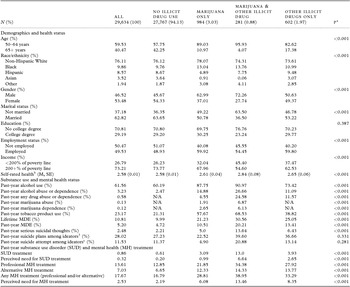
Table 1 shows that of all respondents aged 50+ years, 5.9% (8.7% of the 50–64 years age group and 1.8% of the 65+ years age group) used some type of illicit drug in the past year (compared to 19.0% of the 12–17 years age group, 35.4% of the 18–25 years age group, 22.0% of the 26–34 years age group, and 13.2% of the 35–49 years age group). Past-year marijuana use was reported by 3.9% (6.0% of the 50–64 years age group and 0.9% of the 65+ years age group; compared to 13.7% of the 12–17 years age group, 30.2% of the 18–25 years age group, 16.7% of the 26–34 years age group, and 8.9% of the 35–49 years age group). Of those who used any illicit drug, 51.5% used marijuana only, 15.0% used marijuana and other drugs, and 33.5% used drugs other than marijuana. Further analysis found that 48.8% of the 50–64 years age group and 12.4% of the 65+ years age group reported lifetime marijuana use (compared to 17.1% of the 12–17 years age group, 51.8% of the 18–25 years age group, 53.5% of the 26–34 years age group, and 51.6% of the 35–49 years age group); and 2.5% of the 50+ years age group reported past-month marijuana use (3.7% and 0.6% of the 50–64 years and 65+ years groups, respectively; compared to 7.3% of the 12–17 years age group, 18.3% of the 18–25 years age group, 10.0% of the 26–34 years age group, and 5.3% of the 35–49 years age group).
Characteristics by marijuana and/or other drug use among the 50+ years age group

a p-values denote differences among the four groups (no illicit drug use group and three illicit drug use groups). For certain variables, comparisons are applicable only to the three illicit drug use groups or the two marijuana use groups.
bHigher scores represent worse self-perceived health.
cStatistics are based on only those who had serious suicidal thoughts: N = 804 for all respondents.
Table 1 also shows that those aged 50+ years who used any illicit drug in the past year did not differ from non-users in education; however, significant differences in other socio-demographic, health, and MH characteristics were found among the four study groups. Overall, the three user groups were less likely than non-users to be married and more likely to be 50–64 years old, men, Black, or of other races, employed, and to have income below 200% of the poverty line. All three groups of illicit drug users also reported worse health; were more likely to use alcohol and tobacco; had significantly higher rates of lifetime MDE, past-year MDE, and serious suicidal thoughts; and were more likely to have received SUD and professional and/or alternative MH treatment, and to have perceived treatment need. However, among those who had suicidal thoughts, there was no difference in suicide plans and attempts by drug use group.
Further analyses using χ 2 tests found that the three groups of illicit drug users did not differ in education and employment status; however, those who used marijuana and other drugs had the lowest proportion of married persons and the highest proportions of 50–64 years old, men, Blacks, those with income below 200% of the poverty line, tobacco users, and those with alcohol and drug use disorders (e.g. 6.9% and 6.1% had marijuana abuse and dependence, respectively, compared to 1.9% and 2.7% of marijuana only users, both at p < 0.001). Of the three groups, users of marijuana and other illicit drugs also had the highest lifetime MDE rate (30.6%, compared to 21.2% of marijuana only users and 25.1% of other illicit drug only users); past-year MDE rate (20.2%, compared to 10.5% of marijuana only users and 13.4% of other illicit drug only users); and suicidal ideation (13.6%, compared to 5.0% of marijuana only users and 6.4% of other illicit drug only users) (all at p < 0.001). Users of marijuana and other illicit drugs also had the highest rates of SUD treatment and professional MH treatment (p < 0.001 and p = 0.006, respectively) and perceived need for SUD treatment and MH treatment (p < 0.001 and p = 0.012, respectively).
Marijuana use frequency and risk perception
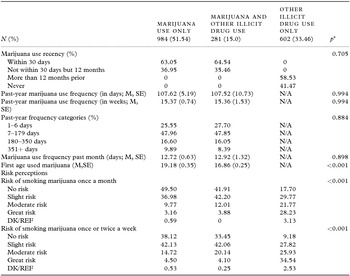
Table 2 shows that those who used marijuana only and those who used marijuana and other illicit drugs had similar marijuana use patterns. Approximately, 60% of each group had used marijuana in the past 30 days. Each group used marijuana on an average of 108 days; about a quarter of each group used it on less than 7 days, about 16% on 180–350 days, and about 10% of marijuana only users and 8% of marijuana and other illicit drug users used it on 360 to 365 days. Thus, approximately one quarter used marijuana about every other day or every day. First age of marijuana use was significantly younger among marijuana and other illicit drug users (16.9 years) than among marijuana only users (19.2 years). More than three-quarters of each group saw slight or no risk in smoking marijuana once a month or once or twice a week. Less than 5% of each group perceived great risk.
Marijuana use frequency, first age of use, and risk perception (N = 1,867)

a p-values for these variables denote differences between marijuana only users and marijuana and other illicit
drug users.
Association of marijuana use with MDE and serious suicidal thoughts among adults aged 50+ years
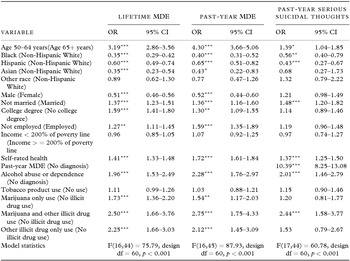
Table 3 shows that controlling for socio-demographic characteristics, health status, alcohol use disorders, and tobacco product use, past-year marijuana, and/or other drug use was associated with increased odds of both lifetime and past-year MDE, thus supporting H1a. The odds of lifetime and past-year MDE among marijuana only users were 1.73 (95% CI = 1.36–2.20) and 1.54 (95% CI = 1.17–2.03), respectively, representing a small effect. The odds of lifetime and past-year MDE among those who used marijuana and other illicit drugs were somewhat higher at 2.50 (95% CI = 1.66–3.76) and 2.75 (95% CI = 1.75–4.33), respectively. The odds of lifetime and past-year MDE among those who used other illicit drugs only were 2.25 (95% CI = 1.66–3.03) and 2.12 (95% CI = 1.45–3.09), respectively. Table 3 also shows that only the marijuana and other illicit drug use group had increased odds of suicidal thoughts (OR = 2.44, 95% CI = 1.58–3.77), thus partially supporting H1b. Of the covariates, having a college degree and being non-employed increased the odds of lifetime and past-year MDE, while being male decreased the odds; however, these variables were not associated with suicidal thoughts. Being Black and Hispanic decreased the odds of both lifetime/past-year MDE and suicidal thoughts, while younger age (50–64 years), being non-married, worse self-ratings of health, and alcohol use disorder were associated with increased odds of both. As expected, past-year MDE was the most significant risk factor for past-year suicidal thoughts (OR = 10.39, 95% CI = 8.25–13.08). Income and tobacco use were not associated with lifetime/past-year MDE or suicidal thoughts.
Associations of marijuana use with MDE and serious suicidal thoughts among the 50+ years age group (N = 29,623): odds ratios (OR) and 95% confidence interval (CI)

(): Reference category
*p < 0.05.
**p < 0.01.
***p < 0.001.
Association of marijuana use with past-year MDE and suicidal thoughts among any illicit drug users
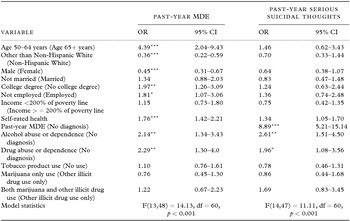
Table 4 shows that compared to other illicit drug only users, marijuana only users and marijuana and other illicit drug users did not differ significantly in their risk of MDE or suicidal thoughts. Thus, neither H2a nor H2b were supported. However, alcohol use disorder and drug use disorder were associated with increased odds of both MDE and suicidal thoughts. Younger age (50–64 years), college education, and worse self-ratings of health increased MDE odds; racial/ethnic minority status and being male decreased the odds. MDE was the only risk factor beside alcohol and drug use disorders for suicidal thoughts.
Associations of marijuana use with past-year MDE and serious suicidal thoughts among past-year illicit drug users (N = 1,867): odds ratios (OR) and 95% confidence interval (CI)

(): Reference category.
*p < 0.05.
**p < 0.01.
***p < 0.001.
Association of marijuana use frequency with MDE and suicidal thoughts among marijuana users
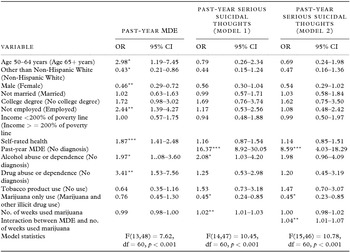
Table 5 shows that marijuana only users did not differ from marijuana and other illicit drug users in their risk of MDE, nor was marijuana use frequency associated with the likelihood of MDE. Younger age, non-employed status, worse self-ratings of health, and alcohol and drug use disorders were associated with increased MDE odds, while racial/ethnic minority status and being male decreased the odds.
Associations of marijuana use frequency with past-year MDE and serious suicidal thoughts among marijuana users (N = 1,265): odds ratios (OR) and 95% confidence interval (CI)

(): Reference category.
*p < 0.05.
**p < 0.01.
***p < 0.001.
Marijuana only use, as opposed to marijuana and other illicit drug use, was associated with decreased odds of suicidal thoughts, while marijuana use frequency (in number of weeks), alcohol use disorder, and MDE increased the odds (see Model 1). However, when the interaction term between MDE and marijuana use frequency was introduced in the model (Model 2), use frequency and alcohol use disorder were no longer significant while the interaction term was significant, suggesting that frequency of use was a significant factor for suicidal thoughts only among those with MDE. These results do not support H3 but support H4.
Discussion
Given the growing numbers of older-adult who use illicit substances, this study examined relationships between marijuana and/or illicit drug use and depression and suicidal ideation in a nationally representative sample of adults aged 50+ years. The 5.9% rate of past-year marijuana and/or other illicit drug use among the 50+ years age group is lower than that of younger age groups, but it is a concern as we know relatively little about these substances’ effects on physical and MH in late life. As in Black and Joseph's (Reference Black and Joseph2014) study, the vast majority (80%) of marijuana users aged 50+ years perceived no or only slight risk in smoking marijuana, suggesting that most older-adult users consider marijuana use pleasurable or therapeutic rather than harmful. This may also explain the high frequency of marijuana use among a sizable proportion of users (e.g. more than a quarter used it on 180+ days of the year). However, there was no significant difference in average marijuana use frequency between marijuana only users and users of marijuana and other illicit drugs even though the latter had significantly higher rates of marijuana (and other substance) use disorders.
Our findings show that compared to those who do not use illicit drugs, marijuana, and/or other illicit drug users had significantly higher odds of both lifetime and past-year MDE. Moreover, controlling for alcohol use disorders and MDE, those who used marijuana and other illicit drugs had significantly higher odds of suicidal thoughts. The findings also show that among users of any illicit drug, having an alcohol or drug use disorder, but not the type of drug use (i.e. marijuana, other illicit drugs, or both), was associated with increased odds of MDE and suicidal thoughts, suggesting that misuse of any substance may be problematic.
The marijuana only users and marijuana and other drug users differed from each other. Those who use marijuana and other drugs had higher rates of SUD, MDE, and suicidal thoughts, indicating that they are in greatest need of substance use and MH treatment. A higher proportion of the latter group had indeed received treatment and/or perceived treatment need. These polydrug users tended to initiate marijuana use earlier than marijuana only users.
Another important finding of the current study is the significant interaction effects of marijuana use frequency and MDE on suicidal thoughts. Among marijuana users with MDE, higher frequency of marijuana use was linearly associated with increased odds of suicidal ideation. Because only association, not causality, can be deduced from cross-sectional research, it is impossible to know the time order between marijuana use and MDE or suicidal ideation. Moreover, as summarized earlier, previous longitudinal research provides ambiguous findings on the time order between marijuana use and MDE and suicidal ideation. However, the current study suggests that more frequent marijuana use may have contributed to a higher likelihood of MDE and suicidal thoughts in these older adults with MDE. It also suggests that those with MDE and suicidal thoughts may use marijuana as a coping mechanism or for symptom relief (Black and Joseph, Reference Black and Joseph2014).
In addition to the use of cross-sectional data, the study's limitations include reliance on self-reported substance use, use frequency, and suicidal thoughts that may have been subject to social desirability and recall biases. Even with five years of data, the number of those who reported serious suicidal thoughts was too small for gender-stratified analysis. The small number of other illicit drug users also prohibited analysis of interaction effects between marijuana and use of each other illicit drug type (cocaine, heroin, sedative, etc.).
Despite its limitations, the study suggests important clinical implications. First, health and MH providers should be concerned about the significant proportion of older-adult marijuana users who use this substance frequently. Clinicians should also be aware of the high rates of alcohol and drug use disorders among older-adult marijuana and/or other illicit drug users and their need for treatment. Given the increasing numbers of older-adult marijuana users, future research is also needed to examine both beneficial and harmful effects of marijuana use, with and without other illicit drug use, on their physical and MH and treatment of physical and MH problems.
Second, health and MH providers should be attentive to the potential adverse effects of alcohol, marijuana, and other drug use among late middle-aged and older adults, especially those with depressive symptoms or MDE. In addition to SUD, mixed use of marijuana and other illicit drugs may signal higher probabilities of MDE and suicidal thoughts. Conversely, those suffering from MDE and/or harboring suicidal thoughts should be screened for substance use/misuse, and the potentially negative effects of substance use/misuse on MH and MH treatment should be evaluated. High-frequency marijuana use may be an especially important risk factor for suicidal thoughts among those with MDE.
Third, providing effective treatment in ways that are acceptable to older adults is especially important. Despite the treatment available for substance use and/or mental disorders, older adults may need help or encouragement to access it. Integrating routine MH and substance use screening and brief treatment in primary care settings and referral to specialty treatment for older adults may increase their use of these services (Wu and Blazer, Reference Wu and Blazer2014). A systematic review also found that effective treatment of mental disorders may result in reduced cannabis use and that longer or more intensive rather than brief treatments may be required, particularly for heavier cannabis users and those with more chronic mental disorders (Baker et al., Reference Baker, Hides and Lubman2010). Combined psychotherapy and pharmacotherapy may also be a promising approach for treating depression among substance users. For example, Bricker et al. (Reference Bricker2007) compared combined cognitive-behavioral therapy and pharmacotherapy (psychiatric medications recommended by a consulting psychiatrist and managed by the patient's primary care physician [PCP]) with treatment as usual (TAU) (typically PCP prescribed pharmacotherapy without psychiatric consultation) for adults with panic disorder. At 12-months, marijuana users in the combined treatment group had significant depressive symptom reduction regardless of whether they used monthly or less frequently at baseline, while TAU patients who used marijuana monthly at baseline had significantly more depressive symptoms than those who used less frequently.
Conflict of interest
None.
Description of authors’ roles
N. Choi and D. DiNitto conceptualized the study. N. Choi and B. Choi conducted the literature review. N. Choi, D. DiNitto, and B. Choi jointly wrote the paper. N Choi did the statistical analyses. C. N. Marti provided consulting for and review of statistical analyses.