Introduction
The occurrence or persistence of palpitations in some patients after supraventricular tachycardia ablation is a commonly encountered scenario by clinicians despite high procedural success rates. Establishing a correlation between symptoms and tachycardia burden in young adults who struggle to perceive and describe palpitations is significant for individuals, their families, and healthcare providers catering to this patient group. A wide array of monitoring devices, ranging from 12-lead electrocardiogram to implantable loop recorder, is available; however, as most rhythm abnormalities are infrequent in nature, the answer to the question of “which tool has the best diagnostic yield in providing symptom-arrhythmia correlation in the post ablation period?” is an area open to investigation, especially for paediatric population. Event recorders are widely utilised as one of the ambulatory monitoring options in the paediatric age group, especially in cases with intermittent and relatively rare complaints. The aim of this study was to define the significance and efficacy of external event recorders in detecting symptom-arrhythmia correlation for palpitations after successful supraventricular tachycardia ablation in children.
Material and methods
Patient selection
Among 1682 patients who underwent successful supraventricular tachycardia ablation at our centre between 2013 and 2023, the following cases were included in the study: patients 1) with atrioventricular nodal reentrant tachycardia, concealed accessory pathway, and focal atrial tachycardia (after excluding those substrates identifiable on surface electrocardiogram such as Wolff-Parkinson-White and Mahaim type preexcitation), 2) without CHD, 3) older than 10 years of age (lower limit of 10 years was based on considering it as an age by which an individual could reliably describe symptoms), and 4) presenting with palpitation post-ablation, without supraventricular tachycardia detected on electrocardiogram or 24-hour Holter monitoring. Patient data were processed retrospectively through the records. Successful ablation criteria for all tachycardia substrates were commonly the inability to induce tachycardia with post-procedure programmed stimulation, both at baseline and during isoproterenol infusion.
All patients received guidance for follow-up visits at 3 to 6 months and annually after ablation. Patients were also advised to contact our electrophysiology team through a telephone survey system if they experienced recurrent symptoms. The indication for monitoring was determined at the discretion of the attending clinician, based on the frequency of palpitations.
Device details
Non-looping external event recorder devices (Beam®, I.E.M. GmbH, Stolberg, Germany) were employed for symptom recording. Device was given for 2 weeks unless patient documents palpitation before. In this system, patients initiate recording by placing the device on the chest when experiencing palpitation. Recording parameters were configured to capture 1 min of data after the event for recordings initiated by the patients themselves. Data were then transferred to the computer system for further interpretation, which was processed by the pending physician. Patients who obtained at least one accurate recording during palpitation episode were included in the study and considered eligible for symptom-arrhythmia correlation to be constructed.
Statistical analysis
Demographic attributes were outlined using mean and standard deviation or median and interquartile range, as suitable and calculated by utilising SPSS 22 software. An initial unadjusted logistic regression model was utilised to examine the correlations between demographic characteristics, procedural details, and post-ablation palpitations. Statistical significance was defined as a p value of less than 0.05. The study complied with the Declaration of Helsinki and the research protocol was approved by the Institutional Ethics Committee.
Results
Among 1682 patients who underwent successful supraventricular tachycardia ablation at our centre between predefined study period, a total of 706 patients (487 atrioventricular nodal reentrant tachycardia, 171 concealed accessory pathway, 48 focal atrial tachycardia) with a mean follow up of 5.6 years (range: 1 month–13 years) were evaluated for eligibity for the study.
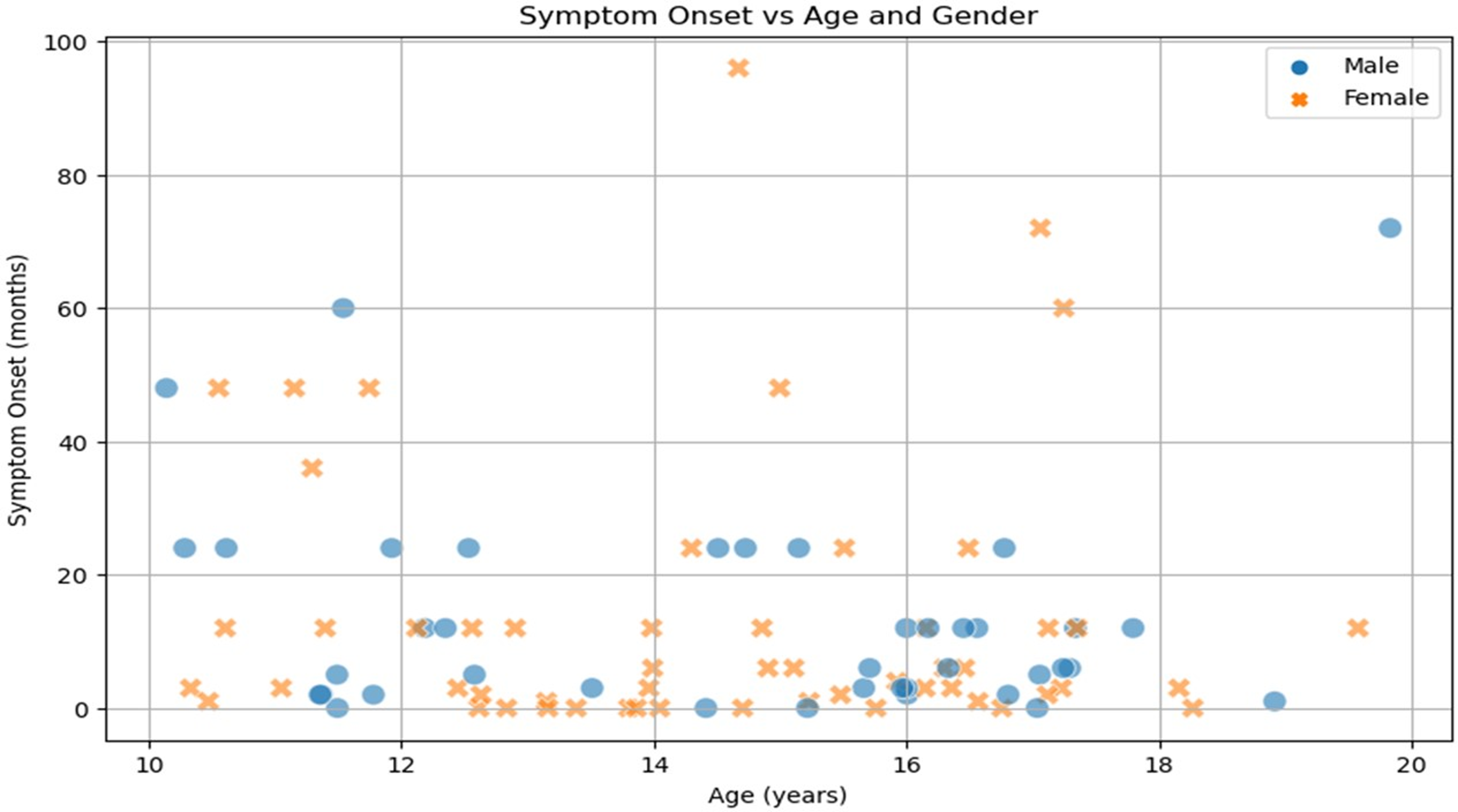
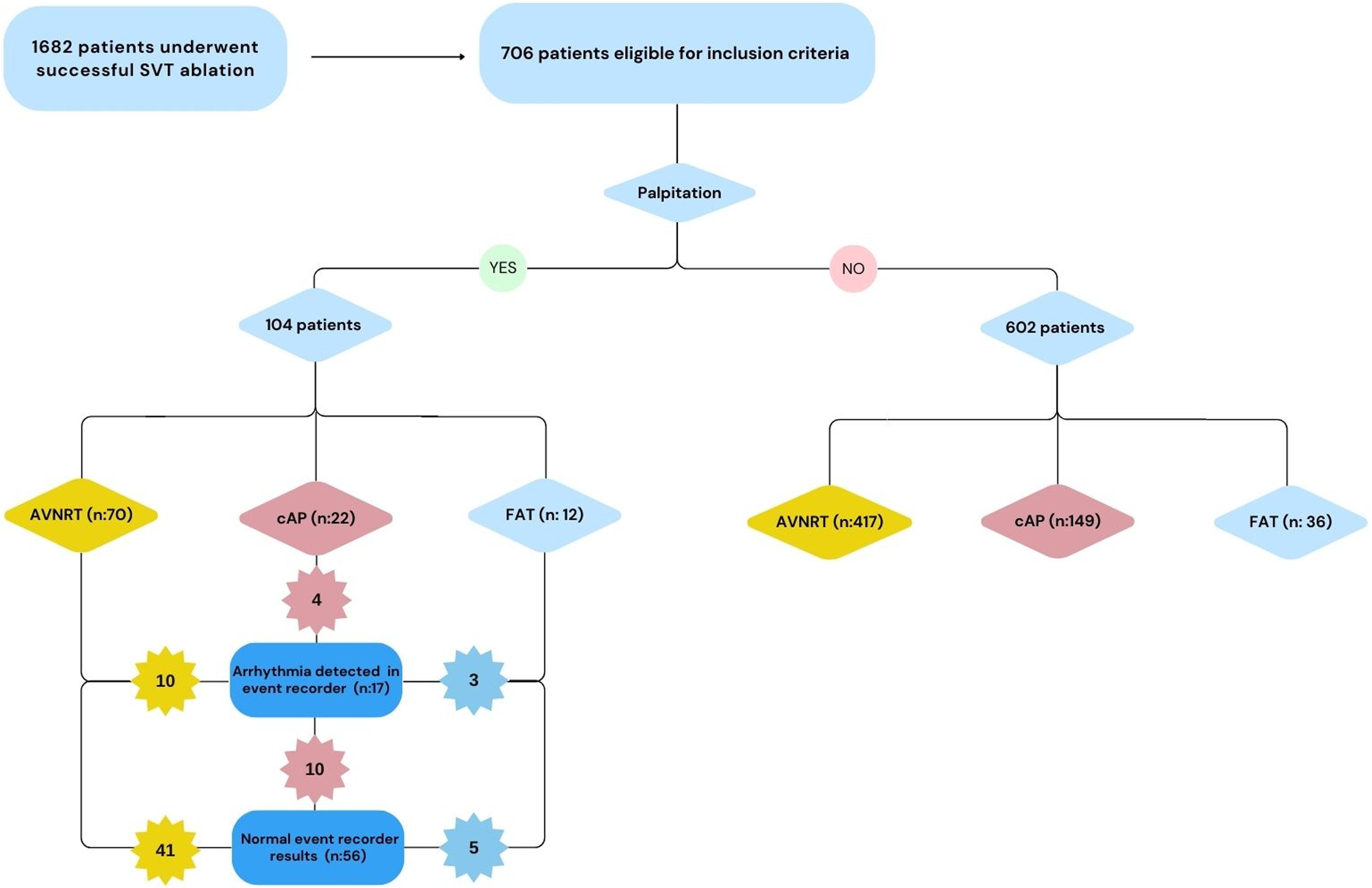
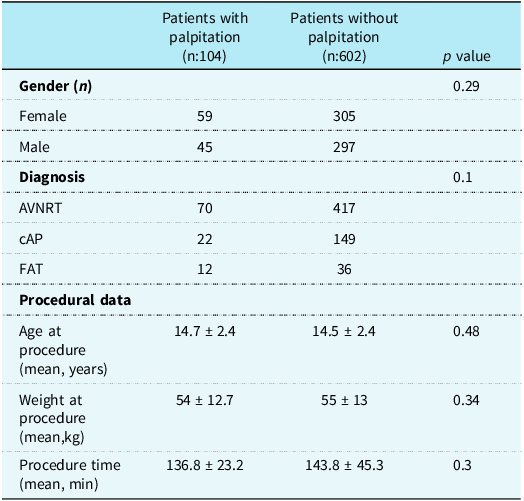
Of the 104 patients (15%) enrolled in the study, female gender was more prevalent (59/45, 57%), indication for ablation was atrioventricular nodal reentrant tachycardia in 70 patients (67%), concealed accessory pathway in 22 patients (21%), focal atrial tachycardia in 12 patients (12%), and the mean age at procedure was 14.7 ± 2.4 years. Comparison of characteristics in patients with and without palpitation after ablation was depicted in Table 1. No statistical significance was achieved within symptomatic group or comparison of symptomatic and asymptomatic patients in terms of initial diagnosis, gender, age/weight at procedure, and procedure time. The median time to onset of symptoms after ablation was 12 months (range 1–96, IQR 25-75: 3–24), and 16 patients presented with palpitation within 1 month post procedure (12 atrioventricular nodal reentrant tachycardia, 2 concealed accessory pathway, and 2 focal atrial tachycardia) (Figure 1). Among a total of 104 patients reporting palpitations, event recording data of 73 patients, all of whom provided at least one appropriate recording during palpitation episode, were available, and supraventricular tachycardia was documented in 8 cases, whereas sinus tachycardia was detected in 9 patients (Figure 2). Among the 9 patients with sinus tachycardia, 5 of the 6 atrioventricular nodal reentrant tachycardia cases were treated with cryoablation, while 1 was treated with radiofrequency ablation. The remaining 3 patients, diagnosed with a left posterolateral concealed accessory pathway, were all treated with radiofrequency ablation. Event recorder results related to diagnostic subgroup were demonstrated in Table 2. Symptom-arrhythmia correlation was achieved in 23% of patients, with nearly half of them (11%) depicting supraventricular tachycardia recurrence.
Distribution of symptom onset time after ablation by age and gender.

Schematic presentation of the study group based on symptoms, diagnosis, and event recording results.

Comparison of patient characteristics

AVNRT = atrioventricular nodal reentrant tachycardia; cAP = concealed accessory pathway; FAT = focal atrial tachycardia.
Event recorder results and symptom-arrhythmia correlation related to diagnostic subgroups

AVNRT = atrioventricular nodal reentrant tachycardia; cAP = concealed accessory pathway; FAT = focal atrial tachycardia; SVT = supraventricular tachycardia; ST = sinus tachycardia.
Recurrence
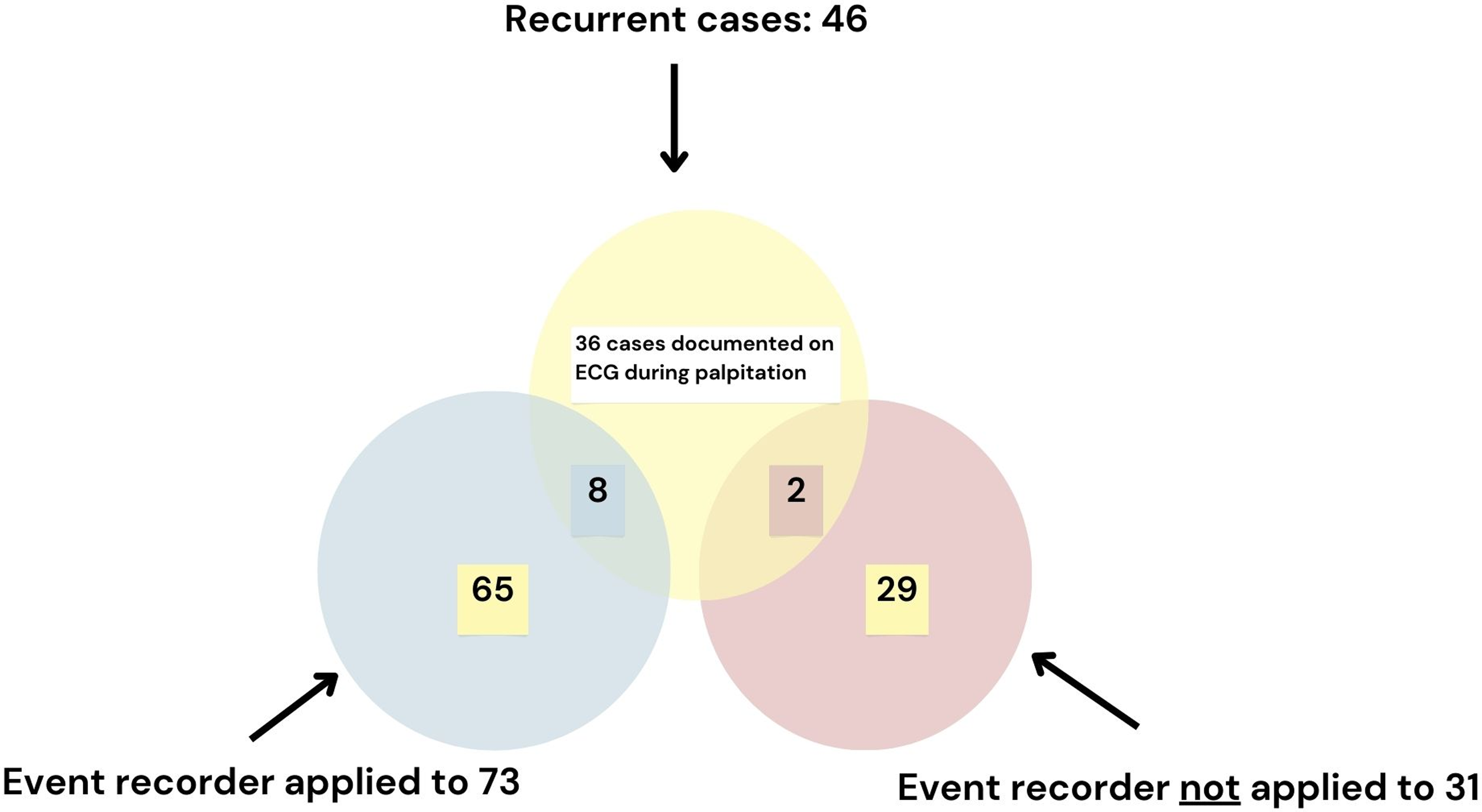
Forty-six patients had recurrence of supraventricular tachycardia burden during follow up (46/706, 6.5%), 36 of whom were documented on electrocardiogram during palpitation episode. Among 24 cases of recurrence with atrioventricular nodal reentrant tachycardia, one was found to have an additional focal atrial tachycardia substrate originating from the coronary sinus ostium during the second ablation, while 4 patients demonstrated slow pathway with leftward inferior extension. In 16 cases of recurrence involving concealed accessory pathways, 8 were found to be of right-sided origin, while one of the left-sided accessory pathways exhibited an epicardial extension. Among 6 cases of recurrent focal atrial tachycardia, two were found to originate from the pulmonary veins, and in one patient, an additional tachycardia substrate was identified during the procedure, leading to the ablation of a junctional ectopic tachycardia.
In the group of patients presenting with palpitations, 2 patients who were not initially deemed to require an event recorder based on their clinical history were later found to have an episode of supraventricular tachycardia during follow-up. Among the patients with palpitations who were monitored with an event recorder and had negative results, none were found to have supraventricular tachycardia during the study period. Thirty-six of the patients in recurrence group were not in the “palpitation positive” cohort of this study and apparently were detected in the first episode of palpitation (Figure 3). Analysis based on subgroups, event recorder confirmed supraventricular tachycardia burden was 0.8% in the atrioventricular nodal reentrant tachycardia group (4/487), 0.6% in the concealed accessory pathway group (1/171), and 6% in the focal atrial tachycardia group (3/48). Upon examining the tachycardia subgroups separately, the recurrence rate was found to be the highest in the focal atrial tachycardia group, both within all groups and among symptomatic patients. In the overall study group of 104 patients, the general symptom-recurrence rate was 22%, as only 10 of the 46 recurrent cases were within the group reporting palpitations (Table 3).
Data for event recording results correlated with recurrent cases.

Data of recurrence relevant to the subgroups and their symptomatic status

AVNRT = atrioventricular nodal reentrant tachycardia; cAP = concealed accessory pathway; FAT = focal atrial tachycardia.
Discussion
Root of the study and selection of the patient group
The starting point of this study was the reality that paediatric patients may continue to experience palpitations even after a supraventricular tachycardia ablation, which was reported to have success rate of up to 98%, and there is a gap in the literature to define the best diagnostic tool to distinguish between true recurrent cases and clinically insignificant complaints, especially for paediatric population, who describe and perceive palpitations in a manner that is more ambiguous compared to adults. Reference Kafalı, Özgür and Şahin1–Reference Van Hare, Carmelli and Smith3 Since there is rarely a correlation between the severity of symptoms and the diagnosis of arrhythmias in children, ambulatory cardiac monitoring holds significant diagnostic importance. Furthermore, we specifically selected our patient population from those over the age of 10, as this age group can better recognise symptoms, and we excluded patients with Wolff-Parkinson-White and Mahaim pathways, whose recurrences can be detected on surface electrocardiogram. Additionally, to avoid confounding factors from other arrhythmias such as atrial and ventricular premature contractions that might mimic supraventricular tachycardia recurrences, we excluded patients with CHD from the study.
Speculations for possible mechanism of palpitation after supraventricular tachycardia ablation
The reason for persistent palpitations despite the absence of recurrence is still seeking for an answer. One possible explanation is that patients with arrhythmias have an increased awareness of their heart rhythms. Consequently, benign irregularities like premature atrial and ventricular contractions, or paroxysmal sinus tachycardia, may be felt as palpitations. Li and colleagues conducted a study comparing patients under 19 years who underwent tachyarrhythmia ablation and later presented with palpitations to a control group. They found that 56% of the patients experienced palpitations after the first month post-ablation, with a recurrence rate of 7.2% in this group. Although there was no difference in the frequency of palpitations between the groups, the need for medical attention was four times higher in the post-ablation group. Reference Li, Kallas and LePoidevin4 Carbery and colleagues also found that 35% of children and young adults with structurally normal hearts who underwent atrioventricular nodal reentrant tachycardia ablation experienced palpitations post-procedure. Reference Carberry, Balmert and Stanley5 Mann et al. investigated the relationship between post-procedure palpitations and recurrence in patients over the age of 10, with a mean age of 37, who underwent supraventricular tachycardia ablation for accessory pathway and/or atrioventricular nodal reentrant tachycardia. They reported that 58% of 77 patients continued to experience palpitations despite successful ablation. Additionally, 70% of the patients underwent repeated electrophysiology study, and a recurrence rate of 10% was found in the patient group. The study postulated that assessing the return of pathway conduction based on symptoms can be misleading. Reference Mann, Kelly and Adler6
Inappropriate sinus tachycardia has also been reported after catheter modification of atrioventricular nodal conduction, potentially due to the ablation damaging cardiac autonomic nerves, which might contribute to presence of symptoms in some patients. Reference Ehlert, Goldberger and Brooks7,Reference Ptaszynski, Kaczmarek and Ruta8 Effect of radiofrequency ablation of accessory pathways on autonomic tone in children was investigated by Sehra and colleagues in their study, which depicted exemplary data with a prospective design in paediatric population. They conducted non-invasive testing, tilt testing, and 24-hour Holter monitoring less than 72 hours before the electrophysiological study and again within 24 hours after the ablation procedure, comparing these results with those of a normal control group. The findings demonstrated that acute changes occurred in both non-invasive and invasive measures, consistent with increased sympathetic tone or decreased parasympathetic tone. Similarly, in an adult population, Ehlert et al. published persistent inappropriate sinus tachycardia in 3 out of 8 patients following radiofrequency catheter ablation of the atrioventricular node’s fast pathway. They attributed this increase in heart rate to vagal withdrawal, potentially due to the destruction or damage of autonomic fibres in the atrioventricular junction. Additionally, the rise in sinus rate was correlated with the number of energy applications. Reference Ehlert, Goldberger and Brooks7 Considering that 9 (53%) of the arrhythmias in 17 out of 73 event recordings from patients in our study group were identified as sinus tachycardia, especially in patients with atrioventricular nodal reentrant tachycardia, it should be noted that, even though the statistical difference among diagnostic subgroups post-ablation has not been demonstrated, the aforementioned phenomenon might particularly influence patients who underwent atrioventricular nodal reentrant tachycardia ablation, which involves the area around the atrioventricular node. The number of patients with inappropriate sinus tachycardia after atrioventricular nodal reentrant tachycardia ablation was limited in our study, and in fact, cryoablation had been applied to all except one patient. Therefore, the impact of lesions being delivered to the parasympathetic ganglia around the atrioventricular node during procedure may pose a larger role in the probable mechanism of inappropriate sinus tachycardia rather than solely the type of ablation. Similarly, cases of postural orthostatic tachycardia syndrome have also been reported for awareness, particularly when orthostatic symptoms non-existent before the procedure become pronounced following ablation. Atrioventricular nodal disturbance and/or neuropathy were possibly addressed, though the mechanism is not being fully elucidated. Reference Kanjwal9 Along with the potential changes in the autonomic system, it is beneficial to remind clinicians of the other differential diagnoses, such as hypoxia, anaemia, hypovolemia, shock, myocardial ischaemia, pulmonary oedema, hyperthyroidism, medication, hypocalcaemia, and illicit drug use, which could substantially improve the patient’s quality of life when properly identified.
Another contributor to the perception of palpitation may claimed to be age and age-related dynamic changes in diagnoses. In a study of Brembilla-Perrot and colleagues, investigating symptom recurrences following atrioventricular nodal reentrant tachycardia ablation in adults with 6% of recurrence rate and 16% of post-ablation palpitation rates, which is in alignment with our results, it was noted that there was a higher frequency of inappropriate sinus tachycardia, especially among young and female patients, particularly during the initial 6-month period until reinnervation expected to be established. Reference Brembilla-Perrot, Sellal and Olivier10 We did not identify any associations between age, gender, diagnostic subset, or weight and odds of post-ablation palpitations. Neither demographics nor procedural details influenced the risk of post-ablation palpitations. Although age was not found to have a significant impact on palpitations, given the relative homogeneity of our patient cohort in terms of age, we cannot entirely exclude the possibility that in a broader population, younger individuals may exhibit a lower correlation between palpitations and arrhythmias.
Why external event recorders?
Among the available monitoring systems, we aimed to investigate the usability of external event recorders, as these devices provide much longer recording durations compared to electrocardiogram and 24-hour Holter monitoring, thereby covering a broader symptom interval. Despite the existence of various loop recorders, including implantable ones, the literature supports the higher effectiveness of implantable loop recorders in conditions such as syncope and presyncope, where patient cooperation is limited during the event, compared to palpitation as the presenting symptom. Consequently, we believe that external event recorders can be less invasive alternatives for children experiencing palpitations, thereby avoiding the requirement of surgical implantation and subsequent device removal. Even though activating the device at the moment of the event may be accepted as a factor disrupting symptom-arrhythmia correlation in the young patient group, based on the results of highly specific patient group of ours, all patients were able to record at least one episode demonstrating that children over the age of 10 can effectively cooperate with the use of event recorders.
Numerous studies have demonstrated the superiority of event recorders over 24-hour Holter monitoring in capturing intermittent and short-duration palpitations. Reference Scalvini, Zanelli and Martinelli11–Reference Hoch, Rockx and Krahn14 External loop recorders are reported to increase the successful diagnosis rate up to 87% from 20% compared with the usual diagnostic strategies, providing another aspect with shorter duration of definitive diagnosis and cost effectiveness of reduction up to 70%. Reference Francisco-Pascual, Santos-Ortega and Roca-Luque15 Available technologies for external event recording can be subgrouped as follows: External event recorders without a loop provide non-continuous ambulatory recordings. When activated by the patient, an electrocardiogram is recorded and transmitted to a receiving centrer. Event recorders with looping memory continuously record a single-lead electrocardiogram, but the rhythm strip is only saved when the patient activates the device. Most devices can be programmed to save both before and after activation. These devices come in various designs, including chest-attached electrodes, wrist-worn devices, and handheld credit card-sized devices. Auto-triggered event monitors with looping memory automatically detect pre-specified high or low heart rates. Patients can also manually trigger recordings if they experience symptoms, with both functions operating simultaneously.
Decision on the ideal monitoring length in paediatric patients, especially since symptom frequency can vary widely, is challenging, yet the difficulty in documenting electrocardiograms during symptoms in our 36 patients with recurrent episodes indicates that capturing such events is challenging for patients with infrequent symptoms. Once patient compliance with the device and recording is established, obtaining recordings for at least 2 weeks in patients who report frequent palpitations can facilitate the detection of symptomatic arrhythmias.
How this study helps?
In our study, palpitations following supraventricular tachycardia ablation in the paediatric age group were observed in approximately 15% of cases, indicating that this could be a significant concern during patient follow-up. Given the frequency of patient complaints, we recommend using external event recorder monitoring for at least two weeks approach, especially when the major complaint is palpitation, is a non-invasive and, as demonstrated in our study, achieved a symptom-arrhythmia detection rate of 23%, making it a reliable tool for the adolescent age group.
In the data previously published by our institution in 2016, arrhythmia was detected in 131 out of 336 external event recordings obtained from 460 symptomatic paediatric patients (73% of whom presented with palpitations). The symptom-rhythm correlation was reported to be 39%. Reference Saygi, Ergul and Ozyilmaz16 Coherently, Akca and colleagues reported a symptom-rhythm correlation of 30.2% for their “palpitation” subgroup with the results of external event recordings from 172 symptomatic patients under the age of 18, among which 56.9% of the requested recordings were indicated for the complaint of palpitations. Reference Akca, Uysal and Bostan17 It is noteworthy that in those studies which are notable for being conducted in large paediatric groups with various symptoms, sinus tachycardia was reported in 25% and 47.1% of the external event recordings, respectively. In our study (super specific population with specific complaint), of the 73 event recordings, 17 were arrhythmia-positive, and nine of these were identified as inappropriate sinus tachycardia, which indicates its significance as a cause of palpitations in paediatric age group. Another aspect we noticed is that although statistically insignificant, the positivity rate among those experiencing palpitations (3 out of 8 event recordings were supraventricular tachycardia positive, 37%) and the frequency of palpitations in those with recurrences were observed more frequently in the focal atrial tachycardia subgroup compared to atrioventricular nodal reentrant tachycardia and concealed accessory pathway, at rates of 33% vs. 21% and 19%, respectively. These results can be interpreted as palpitations in patients with focal atrial tachycardia may be more accurately indicative of recurrences.
As a matter of fact, we believe this study is important due to the specific patient group involved and the scarcity of publications investigating validation of palpitations in children who have undergone supraventricular tachycardia ablation. Based on current knowledge, though the underlying mechanism is not fully understood, it is important to inform families that they should be aware of such possible persistency of post-ablation palpitations and are not necessarily indicative of recurrence.
We postulate that selecting appropriate ambulatory monitoring can help clinicians avoid unnecessary electrophysiological studies and accurately identify true recurrent cases. At this point, external event recorders can be reliably used to validate recurrences in the adolescents, considering the frequency of palpitations in patients who have undergone supraventricular tachycardia ablation.
Conclusion
Even after successful ablation, palpitations remain a significant concern. To accurately elucidate the correlation between symptoms & rhythm and determine the true recurrence rates, we believe that, compared with electrocardiogram and 24-hour Holter monitoring, external event recorders can be used safely and effectively in paediatric patients, especially in those with infrequent symptoms.
Limitations
This was a single-center study with a retrospective design. Responses from patients may have been influenced by recall bias, particularly among those with a longer interval between the procedure and study entry, as they might have experienced difficulty recalling their symptoms compared to participants who underwent the procedure more recently.
In our study, since we used post-event recording devices, we were unable to investigate the impact of other external event recorder techniques (such as auto-triggered and looping recorders) on symptom-arrhythmia correlation in this specific patient group. Another concern, which is the duration of event recorder monitoring, can be a detail that may affect this correlation. The lack of consensus in the literature regarding the duration of patient adherence necessitates providing a minimum of a 2-week recording period tailored to the frequency of patient complaints, which has yielded successful results in our patient cohort. As another aspect, even though the literature supports a correlation between inappropriate sinus tachycardia and atrioventricular nodal reentrant tachycardia ablation, the higher number of atrioventricular nodal reentrant tachycardia patients within inappropriate sinus tachycardia cases in our cohort may be related to the dominance of those patients in numbers compared to the other groups.
Acknowledgements
None.
Financial support
This research received no specific grant from any funding agency, commercial, or not-for-profit sectors.
Competing interests
None.