




No CrossRef data available.
Article contents
Family interaction and the development of borderline personality disorder: A transactional model
Published online by Cambridge University Press: 12 December 2005
Abstract
Although no prospective epidemiological studies have evaluated the relationship between family interactions and the development of borderline personality disorder (BPD), there is considerable evidence for the central role of family interactions in the development of BPD. This paper describes the role of family interactions or processes, especially those that might be regarded as invalidating or conflictual, negative or critical, and the absence of more validating, positive, supportive, empathic interactions, in the development of BPD. Perhaps more importantly, the proposed model considers how these parental and family behaviors transact with the child's own behaviors and emotional vulnerabilities, resulting in a developmental model of BPD that is neither blaming of the family member with BPD nor of her or his parents and caregivers, and has important and specific implications for both prevention and intervention.
Information
- Type
- Research Article
- Information
- Copyright
- © 2005 Cambridge University Press
Borderline personality disorder (BPD) is one of the most complex and difficult disorders to understand and to treat. With high lifetime rates of suicide, hospitalization, and other treatment utilization, BPD presents an enormous public mental health problem in addition to the considerable suffering that those with BPD, and their loved ones, endure. The development of empirically validated etiological models would be invaluable in developing early prevention or intervention programs for BPD. However, like many psychological disorders, its relatively low prevalence in the general population (as low as 0.3–0.7%; Lenzenweger, Loranger, Korfine, & Neff, 1997) make prospective epidemiological studies that evaluate its etiology from multiple perspectives prohibitive due to costs. Nevertheless, it is important to develop comprehensive models consistent with available data. In this paper, we will discuss a variety of issues pertaining to the development of BPD, including classification problems, types of models, biological and genetic factors, the role of parental and caregiver responses to a child's developing emotional experience, and several parent and family interaction factors, resulting in the description of a comprehensive, transactional model of the development of BPD.
Problems With Current Conceptualizations of BPD
The Diagnostic and Statistical Manual of Mental Disorders—4th Edition (DSM-IV; American Psychiatric Association, 1994, p. 650) defines BPD as “a pervasive pattern of instability of interpersonal relationships, self-image, and affects, and marked impulsivity that begins by early adulthood and is present in a variety of contexts.” The DSM-IV delineates nine formal characteristics of BPD. To receive a diagnosis of BPD using the DSM-IV, an individual must meet a clinical threshold in any of five or more of these nine criteria. Thus, the focus of the diagnosis of BPD is on the presence of any five of these nine criteria and that these problem criteria are associated with significant impairment in the person's daily functioning.
Many difficulties with a formal classification system such as the DSM-IV have been elaborated. For example, researchers and theorists have criticized the diagnostic system and pointed out the lack of empirical support for arbitrary diagnostic thresholds (Morey, 1988), the unreliability of many diagnoses due to clinical heterogeneity within diagnostic categories (Widiger & Sanderson, 1995), and its lack of theoretical principles to guide its structure (Follette & Houts, 1996). In addition, it has been estimated that at least two-thirds of people diagnosed with BPD also meet criteria for one or more Axis I diagnoses (Fabrega, Ulrich, Pilkonis, & Mezzich, 1992). Other noted problems with diagnostic classification systems in general, and with the DSM in particular, include a lack of a clear distinction between normal and abnormal personality disorders (Livesley, Schroeder, Jackson, & Jang, 1994), a high percentage of comorbidity between diagnostic categories (Oldham et al., 1992), and its failure to consider context (especially relationships or ongoing transactions) in determining diagnostic threshold (Fruzzetti, 1996). Diagnostic problems due to heterogeneity are abundant in BPD specifically: because there are nine diagnostic criteria for this disorder, with only five criteria required for diagnosis, it is possible for there to be hundreds of different iterations or variations of the BPD diagnosis. Thus, the classification system allows for any two individuals diagnosed with BPD to have as few as one diagnostic criterion in common. Useful research on subtypes of BPD is ongoing, but the many differing constellations of problems that all meet BPD criteria pose a problem for researchers and clinicians alike. These kinds of problems raise questions about the validity of this diagnostic paradigm for BPD and other disorders.
The issue of diagnostic validity is even more problematic when a diagnosis of BPD is assessed with children and adolescents. The DSM states that personality disorders typically have an onset in adolescence or early adulthood and are stable over time, yet studies examining the predictive validity of the diagnosis of BPD in adolescence suggest that the diagnosis is not stable over time (Garnet, Levy, Mattanah, Edell, & McGlashan, 1994; Levy et al., 1999). These problems are likely the result of a flawed classification system, poor understanding of the etiology of BPD, or both. For these reasons, many researchers and theorists are now looking to dimensional, rather than categorical, conceptualizations of BPD.
Dimensional models of BPD based on statistical techniques such as factor analysis and hierarchical modeling have begun to identify aspects of BPD that are predictive of the component behaviors that are used to define and diagnosis the disorder (e.g., suicide attempts, parasuicide, impulsivity). This approach avoids the nosological problems noted earlier, and increases the predictive validity of the dimensions assessed, which in turn better informs treatment. In a review of the literature on BPD, Skodol et al. (2002) characterized BPD in two broad dimensions: impulsive aggression and emotion dysregulation (e.g., affective instability). Impulsive–aggression and emotion dysregulation have recently received the most attention from scientists representing a wide variety of theoretical positions (Critchfield, Sanford, Levy, & Clarkin, 2004; Depue & Lenzenweger, 2001; deVegvar, Siever, & Trestman, 1994; Keenan, 2000; Linehan, 1993; Links, Heslegrave, & van Reekum, 1999; Soloff et al., 2003), although the validity of these dimensions to detect reliably and predict a diagnosis of BPD has not been established. Current evidence supports impulsive–aggression and emotion dysregulation as key mediators and precursors of future suicidal behavior; evaluating these variables further may be useful in understanding the development of BPD.
Factors Affecting the Development of BPD
Many distal factors have been identified in the etiology of BPD. Genetic and biological factors, histories of sexual and physical trauma in childhood, and familial characteristics such as problematic interactions between parents and children have been shown to be relevant. Although an extensive review of this literature is beyond the scope of this paper, we will briefly consider the literature on several factors that are relevant to building a model of the development of BPD.
Genetic and biological factors
Researchers have studied both the genetic influence on meeting diagnostic threshold for BPD and the degree of inheritance for phenotypic traits associated with BPD. In a study of personality disorders using a sample of 221 Norwegian twins, Torgersen et al. (2000) found a 35% concordance rate between monozygotic twins and diagnostic threshold for BPD. This rate dropped to 7% for dizygotic twins and the diagnosis of BPD, suggesting a genetic role in BPD development. With regard to phenotypic expressions of BPD, heritability rates for emotion dysregulation and impulsivity have been reported to be 41 and 30%, respectively, for monozygotic twins, and with rates of 12 and 23%, respectively, for dizygotic twins (Livesley, Jang, & Vernon, 1998). These studies suggest that for any one person diagnosed with BPD there is a small to moderate chance that their children will exhibit these particular traits, whether the children meet full criteria for the disorder or not. Although these studies do appear to support a genetic association between BPD and the specific behaviors associated with BPD, critics maintain that the familiality of BPD per se has not been definitively established (e.g., Dahl, 1993; White, Gunderson, & Zanarini, 2003). Regardless of the transmission of BPD per se, these studies do seem to indicate that genetics are a modest contributing factor to certain traits (e.g., impulsive–aggression and emotion dysregulation) that are relevant to the development of BPD.
Impulsive–aggression and emotion dysregulation have received a significant amount of attention from biological researchers as well. Impulsive aggression has been implicated as a significant predictor of future suicide attempts in both adults (Brodsky, Malone, Ellis, Dulit, & Mann, 1997) and adolescents (Stein, Apter, Gidon, Har–Even, & Avidan, 1998). One biological explanation for the expression of impulsive–aggressive behaviors maintains that reduced serotonergic activity, specifically in the 5-hydroxytryptophan (5-HT) system, inhibits a person's ability to modulate or control destructive urges (Atre–Vaidya & Hussain, 1999; Figueroa & Silk, 1997; Paris et al., 2004; Rinne, Westenberg, den Boer, & van den Brink, 2000; Skodol et al., 2002). These results have been replicated with group differences found among BPD populations and nonclinical controls. Blunting of serotonergic activity in this same system may also contribute to difficulties with emotion regulation (Depue & Lenzenweger, 2001; Krakowski, 2003). Thus, there appear to be differences in serotonergic functioning between those diagnosed with BPD and control subjects.
A considerable amount of biological research on emotion regulation and dysregulation has focused on hormonal and physiological correlates following acute environmental stressors. For instance, the hypothalamus–pituitary–adrenal (HPA) axis is one system that is often studied to note differences in emotion regulation as they pertain to varying levels of cortisol. It is generally understood that exposure to environmental stress initially increases levels of cortisol in the HPA system, which contributes to the excitation of behavioral responses to stress (e.g., fight or flight) that have a regulatory function on emotion (Diamond & Aspinwall, 2003; Figueroa & Silk, 1997). Frequent increases in cortisol over the course of time may affect the 5-HT system by blunting serotonergic activity, thereby linking prolonged exposure to environmental stress to symptoms of BPD through biological mediators (e.g., HPA, 5-HT systems). Data of this kind support models that integrate biological systems and describe the elicitation of psychopathology as a result of dysfunction across these systems (Depue & Lenzenweger, 2001).
Vagal tone is another physiological correlate of an individual's response to stress that is currently a focus among BPD and emotion regulation researchers. Research on emotion regulation in children suggests that children with a high vagal tone are more adept at regulating their emotions and physiological responses to an environmental stressor when compared to children who have a low vagal tone (Calkins, Smith, Gill, & Johnson, 1998; Gottman & Katz, 2002; Katz & Gottman, 1995; Porges, Doussard–Roosevelt, & Maita, 1994).
Although researchers have found consistent differences in serotonergic functioning for BPD patients, specific causal pathways for the phenotypic elicitation of problems associated with BPD are still not clear. Furthermore, the specificity of reduced serotonin to impulsive or aggressive behaviors is a major problem for this model as well. For example, many people with major depressive disorder also have reduced serotonergic activity (Golden & Gilmore, 1990) yet do not demonstrate impulsive or aggressive behaviors comparable to those with BPD (e.g., parasuicide, and other impulsive behaviors). In turn, pharmacological agents that target serotonergic functioning appear to have limited efficacy when treating BPD (Soloff, 2005), especially when compared to the treatment of depression, although the proposed mechanisms responsible for each disorder are similar. Research has also shown that it is difficult to correlate biological measures of serotonin with clinical measures of impulsivity and aggression (Stein et al., 1996), although this later point may be more methodological than ontological (Critchfield et al., 2004). Finally, it appears that significant and chronic environmental stressors, such as physical abuse, sexual abuse, and neglect common to BPD populations, at times plays a significant role in moderating (eliciting or exacerbating) the pathological functioning of the biological correlates associated with BPD.
What seems clear from biological research on the development of BPD is that it is essential not to assume that an individual's biological make-up develops in isolation from social and developmental factors. Indeed, biological differences in children, adolescents, or adults may represent considerably more than linear differential biological development. Biological differences may also result from social and family responses to individuals over time that shape individuals' biology, or from more complicated transactions between individual temperamental factors and social and family processes (see below).
Trauma
Another factor receiving significant attention in models of BPD is exposure to childhood sexual abuse (CSA). CSA history in BPD populations has been reported to be as high as 75% in both inpatient and outpatient samples (Battle et al., 2004; Silk, Lee, Hill, & Lohr, 1995), and there is evidence that CSA prevalence is higher in BPD than in other disorders. For example, a history of CSA has been shown to discriminate between BPD populations and depressed, non-BPD populations for both adolescents and adults (Horesh, Sever, & Apter, 2003; Ogata, Silk, & Goodrich, 1990). Because of high rates of CSA among those diagnosed with BPD, many researchers have suggested that CSA is etiologically linked to the onset of BPD (Guzder, Paris, Zelkowitz, & Feldman, 1999; Links & Munroe Blum, 1990; Norden, Klein, Donaldson, Pepper, & Klein, 1995; Ogata, Silk, Goodrich, et al., 1990; Trull, 2001; Wagner & Linehan, 1997; Zanarini, 1997). Closer examination, however, suggests a more complicated relationship between CSA and the development of BPD.
CSA itself does not appear to be the mechanism through which BPD develops. In a prospective study examining the factors that predict future suicidal behaviors, Yen et al. (2004) found that CSA was significantly associated with future suicidal behavior. However, the mediating variable of “affective stability” (similar to what we are calling emotion dysregulation) was most predictive of future suicidal behaviors (excluding previous parasuicidal behavior). In addition, these researchers found that major depression was not predictive of suicidal behaviors. In a similar study, Brodsky et al. (1997) found that CSA was significantly related to lifetime number of suicide attempts. However, they found impulsivity to be the mediator between CSA and prediction of future suicidality. Mediational effects of emotion dysregulation have been found with adolescent populations as well. In a sample of adolescents exposed to physical, sexual, and/or emotional abuse, Shields and Cicchetti (1998) found that trauma was significantly associated with behavioral problems in adolescents. However, when emotional lability or dysregulation was added to the regression equation, maltreatment status per se no longer predicted child behavior problems. That is, in sophisticated regression analyses, emotion dysregulation was more predictive of child problems than maltreatment per se. Thus, although CSA may be a significant risk factor for the development of BPD, the constellation of difficulties associated with BPD appears to be mediated by the development of emotion dysregulation, and perhaps other difficulties. In addition, the simple fact remains that more than 90% of victims of CSA do not develop BPD, so CSA or other early traumas can perhaps best be understood as more distal risk factors in the development of BPD.
Further complicating, and potentially confounding, the relationship between CSA and BPD is the fact that physical abuse and emotional abuse and neglect co-occur at high rates with CSA. Although researchers employ varying definitions of sexual, physical, and emotional abuse (and emotion neglect), all of these factors are associated with the development of BPD (e.g., Trull, 2001). Moreover, some evidence suggests that sexual and physical abuse per se are not the most important factors in determining negative consequences of these events; rather, parental and caregiver response to the disclosure of the abuse (validating or invalidating of the report) may mediate the effects of the abuse (Horwitz, Widom, McLaughlin, & White, 2001).
As mentioned above, research has also examined the impact that various types of trauma have on biological functioning and on the development of psychopathology in both infants and adolescents. For example, abnormalities in cortisol functioning frequently have been observed in samples with prior exposure to trauma. When an individual is exposed to stress or trauma, cortisol is secreted by the adrenal glands. For example, researchers found that maltreated adolescents had higher levels of cortisol than nonmaltreated children throughout daily functioning, which in turn, were associated with more internalizing behavior problems (Cicchetti & Rogosch, 2001). Similarly, Ramsay and Lewis (1994) found that infants from low-trauma environments naturally habituated to stressors by learning regulation skills, which then reduced the production of cortisol in their bloodstreams. Infants from high-trauma environments do not seem to learn these self-regulatory skills, which likely contributes to the higher average levels of cortisol in the bloodstream. This suggests that early and frequent exposure to traumatic events in childhood may have a significant influence on biological processes that affect the ability to regulate emotional arousal and distress (Keenan, 2000). Thus, although a person may or may not have a genetic predisposition to the development of BPD (or to traits associated with BPD), the biological functioning of a person at risk for BPD can be shaped and developed through traumatic events (Figueroa & Silk, 1997), and likely also through the successful development of self-regulation skills. Thus, for example, the occurrence of chronic abuse may lead to higher baseline emotional arousal, which could make the development of problematic means of coping (e.g., parasuicide, substance use) more likely. That is, the combination of chronically high emotional arousal, poor impulse control, and problems regulating emotion (i.e., not learning ordinary self-regulatory emotion skills; cf. Fruzzetti, Shenk, Mosco, & Lowry, 2003), may provide a situation in which dysfunctional coping patterns and other problematic behaviors are easily and frequently reinforced.
A prospective study by Johnson, Cohen, Brown, Smailes, and Bernstein (1999) reported that children who experienced childhood abuse or neglect were four times more likely to be diagnosed with a personality disorder during young adulthood than children who were not abused. Data such as this suggests a strong relationship between trauma and personality dysfunction, although the causal pathways remain unclear. Most children who have been abused will not develop any personality disorder (Binder, McNiel, & Goldstone, 1996) or even experience long-term psychological difficulties of any kind when the sample is examined prospectively (Horwitz et al., 2001). In fact, less than 10% of children with a CSA history go on to meet criteria for BPD as adolescents or adults. Kendall–Tackett, Williams, and Finkelhor (1993), in a review of the literature on abuse during childhood, noted a number of variables that minimized the longer term effects of trauma on these children. These factors included absence of force, shorter duration of abuse, having a nonrelative abuser, absence of pretrauma family problems, the child being able to externalize blame to appropriate others, and maternal support.
This raises the important question of what social and family processes, associated with abuse or not, may influence development toward BPD and problems with impulse control and emotion dysregulation versus toward more normative functioning.
Family interactions
Physical, sexual, and emotional abuse and their sequellae, of course, occur in a family context even when not perpetrated by a family member. As noted, children who receive parental support (e.g., believing the child's report of abuse, protecting the child without becoming overprotective, not expressing high levels of anger) recover more quickly from abuse than children who do not receive these types of parental support after an abuse incident (Everson, Hunter, Runyon, Edelsohn, & Coulter, 1989, 1991). Thus, parental and other caregiver responses (family interactions) play an important role in mitigating against the effects of abuse. In contrast, the lack of emotional involvement, support, and validation may actually potentiate the effects of abuse and be related more generally to the development of BPD or related problems.
Specifically, neglect, emotional underinvolvement, and invalidation by caretakers appear to contribute to the development of BPD. Prospective studies (Johnson, Cohen, Gould, Kasen, Brown, et al., 2002) have shown that parental emotional underinvolvement toward children impairs their ability to socialize effectively, which then increases their chances of engaging in suicidal behaviors. In this same study, this type of parenting was associated with risk for suicide attempts after parental psychopathology was statistically controlled, thereby illustrating the importance of the parenting relationship in the etiology of BPD. Other studies also suggest that low parental involvement is a significant risk factor for various dimensions of personality dysfunction (Zweig–Frank & Paris, 1991), whereas these same parenting styles may not be predictive of depression (Carter, Joyce, Mulder, & Luty, 2001).
In addition to high rates of childhood abuse, Zanarini et al. (1997) reported that 92% of the borderline patients surveyed reported (retrospectively) having experienced biparental neglect and emotional denial before the age of 18, with emotional denial being a significant predictor of the diagnosis of BPD. Conversely, other studies have shown that the diagnosis of BPD actually statistically predicts the presence of parental neglect in this sample (Battle et al., 2004). Researchers in this area conclude that abuse alone (like other factors) is neither necessary nor sufficient for the development of BPD, and that contextual features such as specific parent–child relationships and interactions (along with other factors such as the parents' relationship) are also key components in the development of BPD. In other words, the specific etiology of BPD appears to be complex and not linear: abuse or trauma, biological predispositions, environmental events, and ongoing parent–child and other social interactions are not regarded as independent causal factors in the development of BPD, but rather are a set of factors of strong influence (e.g., Meehl, 1977) that interplay in complex ways.
The effects of neglectful or uninvolved parenting on their children are familiar to developmental and clinical psychologists. Stemming from Baumrind's (1967, 1991) conceptualization of parenting styles, data have suggested consistently that children and adolescents exposed to this type of parenting more likely develop significant behavioral and psychological difficulties (Lamborn, Mounts, Steinberg, & Dornbusch, 1991; Steinberg, Lamborn, Darling, Mounts, & Dornbusch, 1994). Researchers have also begun to recognize the detrimental effects of parental uninvolvement specific to BPD populations. For example, Hooley and Hoffman (1999) found that relatively high levels of emotional involvement by family members were significantly associated with better clinical outcomes at a 1-year follow-up for patients diagnosed with BPD.
Thus, although it is important to consider temperament and biological, trauma, and familial variables in the development of BPD, viewing any one of these variables in isolation does not provide an adequate account of the development of BPD. We must consider the interplay among all of these factors to understand the development of BPD, and to identify relevant mechanisms of change that are important for successful intervention. Next, we will discuss a transactional approach to conceptualizing BPD that incorporates all of these factors into a model of the development of BPD.
Transactional and Other Types of Models
Transactional models have long been apart of developmental psychology. For example, Bronfenbrenner's (1979) ecological model has been useful in identifying the contextual influences exerted on a developing child or adolescent beyond traditional models that only look at the immediate family context. Ecological models such as this have influenced the way developmental theorists approach the issue of the development of psychopathology. For example, leading theorists and researchers in adolescence are embracing contextual/transactional models of pathology (Steinberg & Avenevoli, 2000) that incorporate the reciprocal interplay between environmental and biological development. Transactional analyses of individuals and their environment have been influential in the field of developmental psychopathology as well, where a trend toward ecological–transactional models of pathology is also apparent (Cicchetti & Rogosch, 2002; Lynch & Cicchetti, 1998).
When discussing the development of psychopathology, it is important to make a distinction between a biological or behavioral predisposition and a present disposition, to a subsequent event or process. A predisposition is an early causal factor that is independent of other factors and not essentially changed over time. Present disposition describes a current state biologically, or current tendency to act in a particular way. A disposition may be a proximal “cause” that was influenced by other factors and is in an ongoing transaction with other factors. To make the distinction further, it may be useful to compare several different types of models of behavior, and distinguish them from the transactional model that we propose.
Individual difference models
Individual difference models in developmental psychopathology generally focus on biological or genetic explanations of problem behaviors. In such models, conditions sufficient for the manifestation of the disorder reside within the individual, regardless of learning history or developmental processes. In such a model, the behaviors of BPD would be manifested irrespective of family or social environment, according to factors solely within the person. As noted earlier, to date there is little evidence that the problems of BPD are solely (or even largely) the result of genetic or individual biological factors irrespective of social environmental factors.
Temperament is often a key component of individual difference models. It has been widely studied for many years, especially as a factor in the development of psychopathology in children and adolescents (Frick, 2004). Descriptors of problematic temperament in the clinical literature include “moody,” “difficult,” and “ill-mannered,” which has made the measurement of temperament challenging (Lahey, 2004). Despite widely varying conceptualizations of temperament, a clear link between individual components of temperament and psychopathology has been established. However, the specificity with which temperament contributes to psychopathology has yet to be elucidated.
Temperament is often regarded as a biological or genetic component that can predispose someone to experience psychopathology, which is contingent upon environmental factors throughout the life span. This concept has been described as “goodness of fit” (Seifer, 2000), whereby the relation of temperament to psychopathology is mediated through the familial experiences of the child. For example, Calkins, Dedmon, Gill, Lomax, and Johnson (2002) demonstrated that children who were more easily frustrated (a common measurement of temperament) during a particular task had more intense physiological reactions and less ability to regulate their emotions compared to children who were not as easily frustrated. Data such as this suggest that temperament is a key component of emotional reactivity and physiological arousal related to emotion. These data also suggest that children living in an environment in which parents soothe and instruct their children how to manage their emotional responses are more likely to be effective at managing emotion without resorting to aggressive or other dysfunctional behaviors.
As mentioned above, models focusing on biological or genetic factors as sufficient causes of individual psychopathology in general, and BPD in particular, appear limited. Although individual temperament and biology appear to play important roles in to the development of various psychological problems, their roles likely are in more complex interaction or transaction with multiple other variables in the development of BPD.
Environmental models
These models typically maintain that some kinds of stressful or traumatic events or processes are sufficient to explain a particular disorder. For example, a sufficient amount of anoxia will result in brain damage, the nature of the damage depending on age and development. No matter how healthy an individual infant, child, or adult may be, neurological impairment will result from oxygen deprivation of a particular duration. Childhood physical and sexual abuse may also be considered examples of trauma, of course. But, as noted above, although high rates of childhood physical and sexual abuse have consistently been reported (e.g., Zanarini, Gunderson, & Marino, 1989), only a small minority of people who have been victims of childhood abuse have the pervasive difficulties found in BPD. Moreover, a significant percent of those with BPD did not have childhood physical or sexual abuse experiences. Thus, the available evidence does not support these factors (or other environmental factors in this type of model) as sufficient to explain the development of BPD.
Interactional models
With interactional models, a necessary level on one factor, in combination with a particular event (or other factor) interact to result in a particular condition. The factors are static and essentially unrelated. Such models are often referred to as diathesis stress models, and are common models for diseases. An important dimension here is that the presence of the first factor (also called a risk factor, condition, or diathesis) is not typically considered normative. Consider, for example, being genetically predisposed to certain allergic reactions (e.g., ragweed). If a person never comes in contact with ragweed, he or she will never become congested, sneeze, and so forth from ragweed, regardless of this predisposition. If the predisposition is present and the person is exposed (it may take several exposures) the individual becomes symptomatic. In this case, neither the genetic/biological predisposition (existing even prior to exposure to ragweed) nor the environmental event itself (presence of ragweed) are sufficient to cause the allergic reaction. Rather, both factors, in combination, cause the sneezing. Moreover, the predisposition and the stressor are static: avoiding ragweed would not diminish the predisposition, and the level of predisposition has no impact on the amount of ragweed present. As such, the predisposing factor and the stress factor are orthogonal. Currently, interactional models are a popular means of understanding, at least retrospectively, available data that show high rates of family distress and emotion vulnerability in adults with BPD, but these models may be quite limited theoretically.
Transactional models
An alternative to an interactional model, of course, is a transactional model, wherein two (or more) factors transact, or influence each other reciprocally, resulting in a particular condition (for an individual) or relationship style (for a parent–child or spouse dyad). Transactional models are common ways of understanding the development of all kinds of behavioral repertoires in social interactional situations (Fruzzetti, 1996, 2002; Fruzzetti & Iverson, in press), including severe problems such as BPD. Unlike interactional models, in transactional models a person exhibits a particular behavior (normative or not) that has some impact on the person social or family environment (which may itself be normative or not). The person may be predisposed to this behavior, or it may simply reflect his or her current disposition. People in the social and family environment respond, shaping the individual, who responds, again affecting others in the social and family environment, and so forth. Thus, a transactional process ensues, with each part influencing the other (reciprocal influence between the individual and her or his social environment). Of course, relevant aspects of genetics, biological strengths and limitations, and previous learning and socialization, are all instantiated during the transaction.
For example, in a transaction between a parent and a child in a grocery store, the child might be (normatively) tired and hungry one day, and ask for a candy bar in the candy aisle in a whiny kind of way. The parent, also normatively tired, might respond brusquely, and the child might get upset and noisier. The parent, perhaps feeling embarrassed, might give the child the candy bar even though she or he has never done this before; the child becomes quiet, even content, having received the candy; and subsequently the parent feels some relief (an example of Patterson's “coercive family process;” e.g., Patterson, 2002). The next time they are in the grocery store, the child may get whiny and ask for a candy bar even if she or he is not as tired or hungry. In addition, the parent may give the child a candy bar in those circumstances even if he or she is not tired either. It is likely that each person has influenced (in this case, reinforced) the other's behavior in similar situations in the future. Notice that if this kind of transaction were to continue it could result in the child being “disposed” to tantrums (i.e., having an abnormally low threshold for tantrums), at least in certain situations. The child may also develop heightened sensitivity to others and may not develop skills to tolerate distress in general. Of course, this pattern also could result in the parent being “disposed” to high reactivity regarding the child (i.e., having a low threshold for trying to placate the child, getting very upset when the child does tend toward a tantrum, putting a lot of effort into trying to keep the child from becoming unhappy or throwing a tantrum).
Thus, it is important to distinguish between predispositions (current action tendencies that are the direct result of genetic or temperament factors in the individual) and current dispositions (current propensities to act in a particular way, the reasons or causes not implied nor known definitively). Unless we have clear evidence of predispositions (abnormal factors present entirely in the person, essentially irrespective of learning or life experiences), it may be more accurate to refer to current dispositions.
The distinction between dispositions and predispositions is important in understanding the development of BPD, and may account in part for the variety of etiological pathways that have been proposed. As adults, people with BPD show dispositions to affective dysregulation, interpersonal chaos, cognitive dysregulation, impulsivity, and so forth. Importantly, evidence suggests that many of these behaviors can be moderated in both adolescents and adults (e.g., Miller, Wyman, & Huppert, 2000; Robins & Chapman, 2004). Currently, there is insufficient evidence to support BPD as a function solely of either individual differences or environmental factors, and interactional models may similarly be problematic. Alternatively, a transactional model may hold some promise.
Emotion Regulation and BPD
Linehan and colleagues have developed a transactional model of the development of BPD, also called a biosocial theory, which provides the theoretical basis for dialectical behavior therapy (Linehan, 1993). This biosocial theory is, in essence, a modern contextual behavioral theory, or transactional model, that is completely compatible with a developmental psychopathology perspective. The model emphasizes (a) the role of temperament in the child, including the possible roles of genetics and early biological development; (b) the role of parenting and other family or caregiver responses to the child, as well as the overall quality of the family environment; (c) the person–environment transaction over time; (d) the resulting continuum of individual dispositions and range of behaviors from health to disorder; and (e) a modern contextual behavioral analysis, including operant and classical conditioning, of key behaviors (including cognition, biology, emotion, temperament, and attachment styles, along with overt behavior) to explain the development and maintenance of BPD. What follows is an elaboration and extension of this model.
In this model (Fruzzetti & Iverson, in press; Linehan, 1993), chronic and pervasive emotion dysregulation is considered the core feature and core difficulty in BPD (and related disorders; Fruzzetti, 2002) rather than a “symptom” of the disorder. Emotion dysregulation is a state of negative or aversive emotional arousal that is sufficiently high to disrupt cognitive and behavioral self-management: the individual may lose track of important long-term goals, experience diminished abilities to solve problems or engage in complex cognitive tasks, and engage in behaviors increasingly designed only to reduce negative arousal, irrespective of long-term consequences. Thus, emotion dysregulation is hypothesized to provide a framework from which the other behaviors of BPD may be understood. The characteristic behaviors and patterns of BPD are understood either to be problematic attempts to regulate dysregulated emotion, problematic attempts to prevent or truncate dysregulated emotions, or natural consequences of dysregulated emotion.
For example, impulsive behaviors such as parasuicide (self-injury) or substance abuse in BPD most often function to facilitate an escape from high levels of aversive arousal (or to prevent escalating arousal from becoming highly aversive). Chaotic relationships and fears of abandonment, in contrast, result naturally when an individual is chronically dysregulated: such a person would naturally, when dysregulated, put significant demands on others, often making relationships difficult. Frequently this results in others minimizing, avoiding, or ending a relationship, causing subsequent fears of (real) abandonment. Of course, abandonment may further contribute to the individual's low threshold for reacting (emotionally and socially) and therefore increase subsequent dysregulation tendencies in relationships. Thus, if we are able to understand the factors that contribute to the development of chronic and pervasive emotion dysregulation, we will understand the development of BPD.
The development of emotion regulation, of course, is a normative developmental process, and includes many component behaviors. For example, Gross (1998, p. 275) suggests that normative emotion regulation includes “processes by which individuals influence which emotions they have, when they have them, and how they experience and express these emotions.” Thompson (1994) notes that emotion regulation processes are in the service of the individual's long-term goals and not necessarily in the service of short-term goals (such as relief from negative arousal). Emotion dysregulation often includes such a high level of experienced aversive emotional arousal that the individual may engage in problematic behaviors simply to escape from these short-term unpleasant private experiences (e.g., substance use, angry outbursts, verbal aggression, extreme social withdrawal or isolation).
Thus, emotion dysregulation in general is predicated on the following factors (Fruzzetti & Iverson, in press): (a) vulnerability to negative emotion, specifically high sensitivity, high reactivity, and slow return to baseline, which influence emotional arousal at any given moment (cf. Linehan, 1993); (b) deficient emotion-relevant skills or competencies that allow a person to choose situations in which he or she can act effectively; manage social interactions effectively; be aware of relevant stimuli; discriminate more relevant from less relevant stimuli; identify, label, tolerate, and express private experiences accurately; and manage arousal in ways that are consistent with long-term goals and values; and (c) problematic responses of others (especially partners and parents) to expressions of emotion, wants, thoughts, and goals; these responses of others are an integral part of emotion dysregulation because demands of others can initiate arousal and responses of others can reduce or exacerbate arousal, and social situations are the most common in which demands are placed on individuals with BPD to which they respond with dysregulated emotion.
According to Linehan (1993), people with BPD have extreme difficulties with emotion regulation, as evidenced by (a) extreme difficulties compared to norms in changing or modulating the physiological arousal associated with emotion (emotional lability), (b) extreme difficulties orienting or reorienting attention or cognitive processing (cognitive dysregulation), (c) extreme difficulties compared to the norm inhibiting mood-dependent actions (impulsivity), (d) abnormally high likelihood of escalating or blunting emotions (escape or avoidance), and (e) dispositions to organize behavior in the service of internal or mood-dependent goals (escape behaviors, interpersonal insensitivity) rather than longer term goals.
Emotion dysregulation (for which BPD may be considered the prototype) is hypothesized to develop as a result of transactions between a person with emotion vulnerabilities and parents, partners, or others that respond in “invalidating” ways. Figure 1 displays the core features of this model. We will discuss the model in some detail, considering both emotion vulnerabilities and invalidating family responses, and finally describe the transaction between these two reciprocal factors in the development of BPD.

The transactional model: emotion dysregulation [harr ] invalidating response cycle; *includes out of control behavior.
Emotion vulnerability
What we refer to as emotion vulnerability is defined and determined by three factors: emotion sensitivity, emotion reactivity, and slow return to baseline arousal (cf. Linehan, 1993).
Emotion sensitivity
Emotionally vulnerable individuals are more likely to have high sensitivity to (low threshold for discriminating) the emotionally relevant things in their world. Because they discriminate or notice (with or without cognitive awareness) emotionally relevant stimuli in their world more readily, they have a lower threshold for reacting in a variety of situations, compared to norms. In contrast, people with lower sensitivity may be viewed as even tempered, or possibly disinterested or disengaged; if a person does not notice emotionally relevant stimuli, he or she cannot react to them.
Emotion reactivity
People high in emotion reactivity demonstrate more intense emotional responses to emotionally relevant stimuli when these stimuli are noticed. Emotionally vulnerable individuals will respond more quickly and/or with greater intensity across a variety of situations, again compared to norms. Of course, high reactivity can include reacting with a wide variety of emotional responses (e.g., sadness, shame, anger, fear).
Return to arousal baseline
For some people it takes a longer period of time to return to baseline after becoming emotionally aroused. People who return to baseline quickly are less vulnerable to the next emotionally relevant event in their life (that they discriminate, at least); in contrast, those who return very slowly are likely to remain at least partially emotionally aroused when the next emotionally relevant event occurs, which may make subsequent reactions more likely to be problematic.
In this model, only the combination of all three of these factors (high sensitivity, high reactivity, and slow return to baseline) makes a person vulnerable to chronic emotion dysregulation or BPD. Only the combination of factors is likely to keep a person's arousal high regularly and interfere with the development of normative regulatory behaviors. However, the development of BPD requires that the emotionally vulnerable person also lack sufficient skills to manage these vulnerabilities successfully, and transact with and in an invalidating environment: emotion vulnerabilities are not the disorder per se.
What is uncertain is when individuals who have problems with emotion regulation and meet criteria for BPD as adolescents or adults first begin to demonstrate emotion vulnerability that is not normative. For example, some adolescents and adults with BPD may have had normative emotion functioning, or temperament, as infants or young children. For these individuals, chronic, pervasive, aversive, and/or invalidating responses (including neglect) when they were infants and children may have transacted with their emotional system (incipient vulnerabilities) to result in increased emotion vulnerability (sensitivity, reactivity, slow return to baseline) and affect dysregulation over time. Alternatively, some adolescents and adults with BPD may have been, as infants and children, extremely sensitive and reactive, with a slow return to baseline arousal (highly vulnerable), such that even normatively healthy parenting could have maintained or even exacerbated their emotional vulnerability and increased their disposition to dysregulation. Notice that in either case the individual was vulnerable to the actual family environment in which she or he lived: we may not be able to identify (post hoc) whether there was initial temperamental/biological vulnerability, normatively problematic parenting, or both, during the developmental transactional process. Thus, many combinations of emotional vulnerability in infancy and childhood and invalidating parenting environments could lead to BPD, or other disorders. In principle, even very high emotion vulnerability in a child living in a validating family environment could lead to normative emotional functioning, or even high resilience, as adults. This hypothesis is consistent with some models within behavior genetics as well (cf. Scarr & McCartney, 1983) that address the transactions between what an individual brings to her or his environment, what the environment brings, and what behaviors are selected in those contexts. Much longitudinal research is needed to understand and test these processes to create a more comprehensive, and empirically validated, model.
Invalidating family environments
Although the word invalidating is often employed in psychology, in this model it is used to describe a particular set of responses, in context, by parents or others in the social and family environment, to an individual's behavior (including verbal or other expressions of emotion, want, pain, etc.). Thus, invalidating is not consonant with “bad” but more a description of the inaccuracy and/or judgmental quality (rejection of something valid) demonstrated in response to the person. Describing a response as invalidating depends less on the topography of the response in isolation than its relevance and function regarding the person's experience or behavior to which it responds. For example, if a child sees a sweet dessert and says “I'm hungry” and the parent replies, “No, you're not hungry” or “you don't want that,” we would consider the parent to be invalidating the child's hunger and experience of wanting the sweets. A whole range of topographies would be invalidating: “You're always wanting something, you ungrateful little snot” (in a nasty tone) might be more obviously negative, whereas “oh, my love, you don't want that big dessert now, do you?” (in a loving voice) may be nicer, but is still invalidating. Similarly, misperceiving the child's emotional experience (whether due to parental preoccupation with other stimuli or inaccurate expression by the child) may lead to mislabeling of the child's emotion, and “mismatched” responding that invalidates her or his actual emotional experience. This type of invalidating response is similar to what some clinicians may call “empathic failure.”
Whereas validating responses legitimize the child's (or adult's) valid experiences, including emotions, desires, sensations, thoughts, and so forth, invalidating responses delegitimize valid experiences (directly maintain the experience is wrong or invalid, or that the child should not have that experience or behavior) or simply fail to acknowledge their existence and/or legitimacy (indirectly maintaining the experience is wrong or invalid). Validating responses are not necessarily warm or positive, and do not necessarily convey agreement, compliance, or approval; they do convey legitimacy and acceptance of the other's experience or behavior, at least minimally. Thus, validating responses acknowledge or legitimize only valid behaviors; criticizing or pointing out problems with faulty behaviors is quite different (e.g., “no, you can't wear your sandals to school today because it is cold and snowing outside” is invalidating a problematic or essentially invalid request; telling the child she is stupid for wanting to wear sandals would be, of course, invalidating).
Thus, invalidation and criticality or negative expression overlap, but are not necessarily the same. For example, in a recent study of couple interactions (Fruzzetti, 2005), traditionally defined “negativity” (rated by blind observers) was entered first in a regression model to predict relationship satisfaction. Then validating and invalidating behaviors were entered as a set, which significantly improved the model. Similarly, the relationship between behaviors rated (by observers) as invalidating and reported by subjects as negative or conflictual is modest (r = .29; Fruzzetti, Shenk, Lowry, & Mosco, 2005). Moreover, validating responses are not necessarily present just because invalidating responses are absent, and vice versa: the correlation between validating and invalidating behaviors (observer ratings) in one recent study was about −.34 (Fruzzetti et al., 2005). Yet, invalidation may be a core part of the transaction in the development of emotional and behavioral difficulties. For example, in a recent study of adolescents and their parents, Shenk and Fruzzetti (2005) found that observed parental invalidation was highly related to adolescent reports of family distress, adolescent distress and psychopathology, and adolescents' inability to identify and label emotions, and related to parent reports of child behavior problems. Similarly, Schneider and Shipman (2005) found that lower levels of observed maternal validation and higher levels of observed maternal invalidation for their children's expression of sadness were associated with depression in those children. Thus, validating and invalidating behaviors, although they may at times overlap with more common constructs (e.g., support or positivity for validating and conflict, criticism, or negativity for invalidating behavior), seem to represent a more distinct conceptualization of this part of family interactions (Fruzzetti, 2005; Fruzzetti & Fruzzetti, 2003; Fruzzetti & Iverson, 2004, in press), one that may be important in understanding the development of chronic emotion dysregulation and BPD.
Understanding Invalidating Responses
Let us consider more specifically some invalidating processes and the effects of chronic and pervasive invalidation developmentally.
Types of invalidating responses and likely developmental consequences for children
Invalidation of emotions, thoughts, wants, and other internal or private behaviors
In an invalidating family environment the child's communication of her or his valid (actual) internal or private experiences (thoughts, feelings, wants, etc.) are met often by erratic, inappropriate, or extreme responses. This can include (but is not limited to) (a) not accepting or refuting the accuracy or veracity of the person's self-description; (b) treating the person's valid responses (emotions, thoughts, wants, etc.) to events or situations as invalid, inappropriate, flawed, and so forth; (c) dismissing or trivializing opinions, thoughts, feelings, wants, and so forth; (d) criticizing and/or punishing these descriptions; (e) pathologizing normative responses; (f) normalizing problematic or pathological or abnormal responses; and/or (g) attributing the person's normative and “legitimate” feelings, thoughts, wants, and so forth, to socially unacceptable characteristics (e.g., a “disorder” such as BPD, paranoia, intent to manipulate, lack of motivation, immaturity).
An interesting phenomenon relevant to the effects of invalidation on emotional development is described in experimental research investigating thought and emotion suppression that can result from being told not to think or feel certain things (cf. Cioffi & Holloway, 1993; Wegner & Gold, 1995). A “rebound” effect has been described in which trying not to think about a particular thing or trying not to feel a particular emotion leads, paradoxically, to focusing more attention on the unwanted thought or feeling and increasing the intensity of the experience rather than decreasing it. For example, telling a small child not to spill her or his full glass of milk may lead the child to focus more on not spilling (rather than simply drinking successfully), perhaps increasing the likelihood of spilling. Thus, in some invalidating environments being told, “Don't be angry” or “you should not be sad” (or other invalidating responses) may lead the child to pay more attention to the undesired private experience, which increases its intensity and increases the probability of the child engaging in associated problematic behavior. If a parent or caregiver responds in an invalidating way to behavior X, saying something like, “don't do X” and the child does more of X, it is likely that the parent would respond with increasingly aversive behaviors (including increased invalidation), contributing to further emotion vulnerability and, ultimately, to emotion dysregulation.
Invalidation of overt or public behavior
In addition to invalidating private experiences such as emotional experiences, wants, and thoughts, parents or others can also respond with invalidation to many public behaviors in a manner that likely disrupts normative development. Invalidating behavior in its essence punishes behavior that has some validity or legitimacy, so not all forms of criticism, negative feedback, and so forth, are considered invalidating. For example, telling a child that he was wrong to hit a friend or sibling, perhaps even scolding the child for it, is critical and may be negative and unpleasant, but would not be invalidating if the focus remained on the specifics of hitting, its consequences, and so forth. However, extremely critical or aversive family environments are likely also to be highly invalidating, and have a number of deleterious consequences (Biglan, Lewin, & Hops, 1990) on both internal experiences and public behavior. Avoiding aversives can become a main motivation for a child's behavior, and she or he may not be able to do so via effective means. The child may instead develop dysfunctional escape or avoidance behaviors (“numbing” out, self-injury, depression, substance use, aggression, bingeing or purging, dangerous, sensation-seeking, or other problem behaviors). High levels of aversive responding thus may have the generalized effect of producing erratic behavior, a common problem in BPD.
Moreover, complex developmental repertoires, such as intense and sustained engagement in problem solving, which involve both cognitive attention and behavioral control, may not be learned in invalidating environments because such complex behaviors often require consistent feedback that validates small improvements over time (shaping) rather than consistently calling attention to shortcomings (invalidating progress, effort, desire, frustration, etc.). Without the ability to solve complex problems, children (and later, teens and adults) must rely on others to solve them, leading to what is socially often considered passivity, neediness (e.g., fears of abandonment, “enmeshment”), and social manipulation. Finally, high levels of invalidation, aversive criticism, and punishment for engaging in ordinary, developmentally appropriate, activities provide the opportunity for a wide range of withdrawal, escape, and avoidance behaviors to be negatively reinforced. That is, by creating regular situations of high negative emotional arousal, especially in the absence of good problem solving and coping skills, these kinds of dysfunctional escape responses (e.g., substance use, self-injury, eating disordered behaviors, dissociation) may be the only “skills” a child or adolescent may have in response to chronic high negative emotion.
Minimizing difficulties
Expectations for mature (appropriate to age) behavior, when coupled with support (both instrumental and emotional) is a common recipe for effective parenting. However, when a parent minimizes the difficulties that a developmentally appropriate task or situation present to a child, the parent is unlikely to provide either the instrumental help or the emotional support to help the child master the task. This may occur more frequently if a child is quite different in temperament and “natural” abilities from the parent: the parent may not easily comprehend how something so “simple” (perhaps the parent easily mastered this type of task as a child) could be difficult for the child, and may subsequently invalidate the child on many levels (e.g., “you're not trying hard,” or “you are just doing this to be contrary to me,” or “look, it's very easy; what's the matter with you?”). This poses a particularly vexing problem for some parents because there may be a thin line between validating the child's potential (e.g., “you can do it,” said in an encouraging way, without suggesting that failure in task will result in judgment of the child) and invalidating the child's experience (e.g., “you can do it,” said in an insistent way, suggesting that acceptance and support is contingent on success). Again, the pervasiveness of invalidating responses is what defines the parents as invalidating, not normative miscues and occasional invalidating responses.
Invalidation of a sense of self and self-initiated behavior
The concept of “self” is utilized across a wide range of theoretical perspectives. For our purposes here, a person's self includes the private context of her or his emotions, thoughts, wants, and overt public behaviors. This includes the individual's perspective, knowing what one feels, thinks, wants, and so forth (e.g., Koerner, Kohlenberg, & Parker, 1996), unfettered by environmental constraints.
This view of the development of the self has important implications for invalidating environments. If a whole class of private experiences are systematically invalidated (wants, feelings, etc.) in childhood, the developing person might have enormous difficulty identifying or trusting (knowing) what he or she wants. For example, the very experience of “I” may be largely related to normal validation during language development. Kohlenberg and Tsai (1991) suggest that validation of a whole class of private behaviors (e.g., “I want ice cream,” “I see the dog,” “I am hot”) help the child to know both what she or he feels in language that is consistent with the verbal community, and to know the difference between “I want/feel/am” and “he/she wants/feels/is” that is a separate person. This is consistent with considerable research on emotion socialization, but more clearly highlights the role of invalidation per se, when the developmental process is problematic. Thus, in extremely invalidating environments, parents or caregivers do not teach children to discriminate effectively between what they feel and what the caregivers feel, what the child wants and what the caregiver wants (or wants the child to want), what the child thinks and what the caregiver thinks. The probability of an invalidating response may depend on whether the parent is paying attention to the child and his or her developmental needs versus the parent's own emotion, or other distracting stimuli, and children show greater abilities in emotion regulation and the development of self when the parent attends to the child and responds in a validating way (Fruzzetti & Fruzzetti, 2005).
The lack of consistent validating responses, along with at least intermittent invalidating responses, does not provide appropriate (normative) discrimination training or socialization of emotion and other private experiences. Such a maladaptive process naturally leads to several of the problems described by individuals with BPD, such as a sense of emptiness (not “knowing” one's private experiences at all), boredom (not knowing what one wants or feels, or what to do to experience nonaversive stimulation), or fears of abandonment (a valid fear if one must rely on others to interpret the world).
It is important to note again that such invalidation may not be malevolent, and the form of the parent's behavior per se may vary considerably: the form may be harsh and aversive or may be pleasant and/or normative. For example, a child sensitive to warm temperatures may say “the bath water is too hot” or have an extreme pain response even if the water is only just above room temperature. Invalidation occurs when the parent or caregiver responds to the child by forcing the child into the tub, saying, “no, the temperature is fine, honey” or when the caregiver spanks and yells at the child for being “difficult.” What makes the response invalidating is that it does not acknowledge the child's experience as (possibly) valid, the caregiver does not respond as though it is valid (e.g., the caregiver could say, “OK, let's add some more cold water” even if the temperature seems fine to her or him), nor does the caregiver support or help the child to tolerate or adjust to the water. Of course, if the bath water initially is hot enough to burn the child and damage the child's skin, in the future the child, ironically, may be more painfully sensitive even to lukewarm water. Thus, invalidation may increase the child's sensitivity, which makes invalidation more likely in the future (see Figure 1).
In another sense, however, an important developmental process regarding intrinsically motivated behavior also may be disrupted by chronic invalidation. Intrinsic or “self-initiated” behavior comes out of the “context” of the individual (including her or his learning history) and is not under aversive control in the present or historically (the person does not engage in the behavior because of its rewards from others, nor to avoid aversive responses from others). Thus, in a sense, these intrinsic or “self behaviors” come out of a context that is largely the person (healthy self) at that moment (observing one's own thoughts, feelings, desires, etc.). A successful individual engages in a considerable amount of intrinsic or self-initiated behavior, which allows one to transact with the social environment well (fostering high rates of activity and involvement in the world in general, allowing others to shape appropriate responses, encouraging adaptive behaviors specifically that provide a sense of autonomy and mastery, etc.). Invalidating environments, by reinforcing escape and withdrawal behaviors, and meting out aversive responses at high rates, no doubt punish many intrinsic or self-initiated behaviors as well. This may lead to tendencies toward depression and anxiety, social isolation, emotion lability, self-invalidation, ostensibly “self-sabotaging” behaviors, or pervasive hopeless thinking, and so forth, all common behaviors among individuals with BPD.
Consequences of pervasive invalidating responses
The consequences for an emotionally vulnerable child living in invalidating environments are many, including wide-ranging negative effects on emotional and social development and functioning. Below we will highlight some of the major effects of chronic, pervasive invalidation for vulnerable individuals.
Heightened emotional arousal
One immediate effect of invalidation is heightened emotional arousal (Swann & Schroeder, 1995). In situations of chronic invalidation, over time the individual's baseline level of arousal may increase (thereby increasing emotion sensitivity), and the person may become activated to avoid situations that commonly result in further negative arousal. However, if important attachment figures are also the source of invalidation, this may result in more ambivalent, approach–avoid relationships common in BPD.
Cognitive and attentional dysregulation
High levels of emotional and psychophysiological arousal interfere with cognitive processing in general. An invalidating environment may be sufficiently chaotic to affect normative attentional control development in general. In particular, a person's ability to self-focus, become aware of private (thoughts and feelings) and public events may not be reinforced by an invalidating, chaotic, family environment.
Emotion skill deficits
Because of a lack of validation or a surfeit of invalidation a person's verbal labels for her or his emotions may not develop in a way that is consistent with others in the verbal community. Moreover, consistent and accurate verbal labeling and good emotion socialization is essential in our language-based culture for others to respond to our experience and situation effectively. From a developmental perspective, a person requires outside focus and labeling from others that is consistent and accurate (corresponding with norms within the culture) to discriminate and label new phenomena. Nowhere is this more evident than in discriminating and labeling private phenomena that are not directly observable to others.
For example, a child learns to label her or his experiences as hot or cold when others consistently notice the environmental conditions corresponding to the child's behavior (shivering, sweating) and apply an accurate label (e.g., accurate empathy). If the child is shivering and the ambient temperature is 80°F, an attentive caregiver will assess the child's health (perhaps she or he also has a fever, aches, etc.) and likely will label this phenomenon as “sick” instead of simply “cold.” This way, the child learns to scan the environment for certain cues (outside temperature) that, together with her or his private experience (feeling cold, etc.), inform the label and the explanation for the phenomenon. Analogous processes occur with emotions. If a child were hit by an older sibling and cried, looked down quietly with eyes closed, a normative label would likely be “sad.” Alternatively, in the same circumstances, the child might instead glare at the offending sibling and clench her or his fists. In this situation, a normative label would probably be “angry,” not sad. In an invalidating environment, the more accurate label would less likely be applied, and the person teaching the labeling would base the label on cues outside the child (perhaps only on environmental cues, or only on how the caregiver feels). Consequently, the child transacting with others in an invalidating environment will less likely integrate both environmental events and private experiences into the label (and explanation) for the emotion. Of course, this problematic labeling could be somewhat circumscribed (e.g., only certain feelings might be invalidated) or highly generalized (many negative feelings, along with wants and desires, and other self-initiated behaviors, could be ignored and/or invalidated in a more pervasive manner). The inaccuracy of the labels for private experiences automatically reduces the likelihood that good coping responses will be learned to manage or regulate emotions because emotions must be discriminated and labeled accurately for appropriate coping strategies to be learned.
Secondary emotions
In addition to problems with mislabeling emotions, maladaptive emotional responding to cues may also be learned. Regular invalidation of primary emotions (those that are normative, justified, and healthy; Greenberg & Safran, 1989) can lead children to learn to respond with secondary emotions (problematic emotions that are not justified or normative in the situation). For example, routine invalidation of primary emotions such as sadness or disappointment may lead children to feel angry or ashamed (common secondary emotions) in situations in which sadness or disappointment might be more primary. This further contributes to emotion skill deficits (above) and may elicit further invalidation, resulting in higher rates of emotion dysregulation.
Emotion dysregulation
Emotion regulation is, of course, at the heart of this model of BPD, as noted earlier. Not only are basic skills in discriminating and labeling emotion not learned or are compromised (above) in the presence of pervasive invalidation, but also an individual's ability to regulate or manage strong emotions may never be learned. This may be understood in part as it relates to poor identification or labeling of emotion: if a particular feeling or desire is not discerned at all, or discerned but mislabeled, the most effective coping skills to manage that feeling will not be trained or learned. Even if the feeling (or other private experience) is accurately identified and labeled, the caregiver(s) may still not provide effective strategies or skills for coping (e.g., the parent may still minimize the difficulties associated with coping and hence not provide instruction and support).
Thus, in an invalidating family environment, emotion management skills are simply not taught, shaped, encouraged, modeled, and so forth, to the extent necessary for successful emotional development. Instead, the child learns ineffective repertoires to manage distress by necessity. Unfortunately, some of the most destructive behaviors that borderline clients demonstrate likely were learned because more skillful ways of managing emotion were not available. That is, rather than learning effective coping skills for tolerating distress, borderline individuals more likely learned problematic means of managing strong emotions, either by escalating and demanding that others manage the situation (and hence, externally regulate the individual's emotions), by escaping these experiences through impulsive acts (e.g., high sensory behaviors like cutting, sexual activity) that could override high negative emotional arousal, or by numbing or reducing high arousal with alcohol or other substance use.
In addition, not having the skills to identify, label, and manage strong emotions may result in oscillation between emotional inhibition and extreme emotional experiencing and expression. Borderline clients may not have had experience successfully managing or regulating their emotions, so naturally would be intermittently reinforced for ignoring rising negative emotion (or not discriminating it initially) because sometimes they would reregulate, either by chance, or someone would facilitate it externally. This would reinforce emotional inhibition. Alternatively, on those occasions in which inhibition did not result in diminished arousal, they might become aware of it, or express these strong feelings, but do so only past the point at which they could no longer inhibit, a point too high for the person to regulate them independently. This would lead to what might seem to others to be wildly changeable, unpredictable displays: the expression of moderate emotion would be unlikely (it would be inhibited, looking much like satisfaction or a lack of arousal), and would mean that untended moderate arousal could often escalate into higher, more unpleasant, arousal that could no longer be inhibited. These kinds of “unpredictable” behaviors could easily become a context for further invalidation, with others viewing the borderline individual's behavior as crazy, manipulative, out of control, unpredictable, lazy, and so forth.
Passivity in problem solving
Invalidation may also include minimizing the difficulty of solving problems (“just do it”) by failing to appreciate and validate either the inherent difficulty in a task or its difficulty under a heightened state of emotional arousal (anxious apprehension, shame, etc.). If a child does not learn how to solve small (developmentally appropriate) problems, and does not develop self-efficacy in approaching problems to be solved, the child will increasingly turn to others to solve those problems. Over time, the child may not develop entire repertoires and instead rely on others in many instrumental situations. If the child or adolescent (or adult) also inhibits emotion associated with these situations (i.e., suppresses rather than expresses the emotion accurately), he or she may seem, and indeed be called, manipulative, lazy, and so forth, which of course, would further invalidate the person's actual (valid) emotion and motivation.
Self-invalidation
Of course, another consequence of invalidation is that individuals might not learn to trust their emotional responses as valid when parents and caregivers regularly invalidate them. That is, if one's private experiences are pervasively invalidated, one's own experience does not predict or seem to correspond with the responses of others, and thus we may learn not trust our own experience (we refer to this phenomenon as “gaslighting” in reference to the 1940 and 1944 films; Fruzzetti, 1995). Furthermore, self-invalidation may also be reinforced because it may lead to diminished criticism, aggression, and invalidation by others (Hops, Biglan, & Sherman, 1987). A vicious cycle often ensues: a person is pervasively invalidated, he or she does not learn emotion skills very well, and mislabels, inaccurately expresses, and/or self-invalidates frequently; others (even potentially validating ones) see the person as chaotic and unpredictable, perhaps emotionally extreme, and further invalidate the person; this leads to more self-invalidation. Self-invalidation, of course, is highly associated with various forms of individual psychopathology (e.g., depression) in addition to BPD, although in various models other labels may be employed. For example, Swann and colleagues (e.g., Giesler, Josephs, & Swann, 1996; Swann, 1997) have demonstrated that when a person's negative “self-construct” is invalidated with a positive evaluation from another, the individual may try to demonstrate or “prove” that his or her construct is correct (i.e., paradoxically exhibit more of the behavior being invalidated). Thus, a person who sees herself as unreliable may proceed to do something in fact unreliable, if another person comments on her consistency. This may not be to sabotage the relationship, but rather (according to Swann) to bring evaluations from others in line with her self-construct. It is clear how pervasive invalidation from others can result in chronic self-invalidation and the creation of enduring negative self-constructs, and how the self-verification process in turn can maintain negative self-views and self-invalidation even in reasonably compensatory relationships. This is one factor that may make interventions with individuals with BPD particularly difficult, and make validation a particularly important feature of treatment.
Social and interpersonal dysregulation
Finally, as suggested above, it may be difficult to validate a person who is self-invalidating. Emotionally dysregulated individuals may use escape behaviors such as anger and aggression or shame and withdrawal to titrate their arousal (intentionally or not), making stable, reciprocal relationships difficult. Furthermore, individuals who have difficulties (a) identifying their desires and preferences, (b) self-validating what they want, (c) asserting what they want, and (d) managing negative feelings such as disappointment, fears of abandonment, and so forth, may appear unpredictable in relationships. Consequently, they may develop extreme interpersonal styles, oscillating between nurturing and giving to others and feeling that they are being exploited. BPD individuals may indeed have problems trusting others. Similarly, an acquaintance being “nice” to someone with much self-loathing (negative self-construct) may result in a very quixotic, negative, response, at which point the person likely withdraws or becomes critical, reinforcing the negative self-view and keeping relationship patterns chaotic. Thus, following immersion in an invalidating environment, borderline individuals may later contribute toward “selecting” further invalidating environments as a result of a combination of multiple skill deficits and familiarity, reinforcing the cycle of invalidation from others, self-invalidation, and dysfunctional coping.
Factors that make invalidation more likely
Experience or behavior is unexpected
Even among biological relatives there are significant differences in temperament. When a child's private experiences are very different from those of a parent or caregiver, the parent may not even imagine that the child's emotion, sensations, or wants are what they are. This may be exacerbated if one or more siblings are similar in temperament to the parent; this might make it even more likely that ordinary (albeit significant) differences would be missed and misunderstood (invalidated). Furthermore, invalidation would be even more likely if one child displays extreme emotion vulnerability and siblings are both normative and similar to parent(s).
Behavior puts unwanted demands on another
Invalidation may be considerably more likely when recognition of a child's vulnerability or valid needs would put significant demands on parents or on the care giving system. One model of this systemically is the increased prescription of stimulants as active (but not pathological) children enter the school system. Alternatively, many parents have strong implicit rules, for example, that all children should receive the same amount of attention. However, if one child genuinely needs more than the others do to foster healthy development, parents may opt to minimize the need (invalidate the child) rather than break the rule. In addition, parents may struggle with their own psychological difficulties such as depression, anxiety, substance abuse, or other problems, highly prevalent in the families of those with BPD (e.g., Trull, 2001). These parents may have few emotional resources left to give to needy children, having enormous needs themselves. This sets up a situation in which the children's needs can easily be invalidated, which of course (paradoxically), increases their needs for nurturance, support, and validation.
Other person has insufficient ability to help or understand
This situation is similar to the one above, except that perhaps no parent or caregiver may have the ability to give a certain child what is “needed.” Colic in children provides an example: for many children with colic, no amount or type of parental soothing really makes a difference. Fortunately, colic is typically time-limited, and is readily diagnosed, so it is less likely that parents “blame” children for it. However, “emotional colic” may be a useful metaphor for some extremely vulnerable children, for whom no available remedies for their suffering are found, even among caring, stable parents who may even seek help and guidance from experts. Over time, such caregivers can “burn out,” have fewer resources to give, and even they may begin to invalidate the child for her or his own suffering by minimizing the child's distress or blaming her or him for the distress.
Transactions and Reciprocity Between Emotion Vulnerability and Invalidating Responses
The problems of BPD are chronic and severe. Although it may be possible for someone to be born with clear precursors to BPD, there is very limited evidence to support this. Similarly, although very harsh and problematic family environments clearly result in myriad problems for the children who grow up in them (both as children and later as adolescents and adults), evidence suggests that such family environments do not specifically lead to BPD. Therefore, in this model, the combination of emotion vulnerability and an invalidating family environment provide the requisite precursors, and as these factors transact over time, each leads to a worsening in the other. Much research is needed to clarify and support this model.
For example, a child born with an extreme (e.g., very sensitive, reactive) temperament is likely to be different (statistically) in important ways from her or his parents or caregivers. Moreover, such a child is likely to be more emotionally vulnerable and needier than an average child, and therefore puts very high demands on caregivers. If the child's environment is less than optimal, and the caregivers struggle with their own difficulties (depression, substance abuse, problems in living), they may already engage in high rates of invalidating behavior (perhaps neglectful, inattentive, harsh, demanding, critical, etc., as well as poor attention to and frequent misunderstanding of the child's experiences), along with low rates of validating behavior. The increased burdens and demands of a needy child may stress parents or caregivers a great deal more, exacerbating their own distress and their invalidating tendencies, which in turn further destabilize the child and facilitate the child going down a problematic developmental pathway: the vulnerable child becomes more vulnerable over time, and the invalidating family environment becomes more invalidating over time. Without some significant change in this system, chronic and serious problems are likely.
However, the form of invalidation may be subtle, which makes research difficult, requiring intensive observation and longitudinal follow-up. Similarly, a child's vulnerabilities toward negative emotion may not start out as extreme, and even if they are they may not be public in many situations, further complicating measurement and research. The possibility that extreme differences in both children's and parent's behaviors can still lead to problems with emotion dysregulation and BPD is consistent with available (typically retrospective) data, and is therefore a strength of this model. However, considerably more study is needed to validate both the essential transactional nature of the model and the specific component parts of the model.
This model does have significant heuristic value in developing early interventions with troubled families and/or children with extreme emotional vulnerabilities. For example, parents in troubled parent–child dyads can learn the importance of trying to understand and validate problematic child behaviors (especially private ones), in addition to helping children change them and learn to regulate their emotion. For example, parent training programs could be expanded to included greater emphasis on emotion socialization and validation. Parents with deficits in identifying and describing their children's emotions and wants could be targeted for help in these domains, and their children could receive additional coaching and support from other caregivers to try to compensate for parental deficits or overall problematic transactions. Similarly, interventions with distressed parents could focus on reducing their distress, especially in situations in which they are likely to invalidate, or fail to validate, their child.
Finally, another advantage of this model is that there is no inherent blame placed either on the child (or later adolescent or adult) or on the parents or caregivers. There are many pathways that may lead to the problems associated with BPD, and it may be impossible (and irrelevant) to determine which part came first, the child's emotional vulnerability or the parent's invalidation. At the point of discovery of the emotion regulation problems or borderline personality traits it may be sufficient to implement relevant interventions to alter the transaction, which would likely result in improved well being for those on both sides of the transaction.
References
REFERENCES
American Psychiatric Association.
(1994).
Diagnostic and statistical manual of mental disorders
(4th ed.).
Washington, DC:
Author.
Atre–Vaidya, N., &
Hussain, S. M.
(1999).
Borderline personality disorder and bipolar mood disorder: Two
distinct disorders or a continuum?
Journal of Nervous and Mental Disease
187,
313–315.Google Scholar
Battle, C. L.,
Shea, M. T.,
Johnson, D. M.,
Yen, S.,
Zlotnick, C.,
Zanarini, M. C.,
et al.
(2004).
Childhood maltreatment associated with adult personality disorders:
Findings from the collaborative longitudinal personality disorders
study.
Journal of Personality Disorders
18,
193–211.Google Scholar
Baumrind, D.
(1967).
Child care practices anteceding three patterns of preschool
behavior.
Genetic Psychology Monograph
75,
43–88.Google Scholar
Baumrind, D.
(1991).
Effective parenting during the early adolescent transition.
In
P. A. Cowan &
E. M. Hetherington (Eds.),
Family transitions (pp.
111–163).
Hillsdale, NJ:
Erlbaum.
Biglan, A.,
Lewin, L., &
Hops, H.
(1990).
A contextual approach to the problem of aversive practices in
families. In
G. R. Patterson (Ed.),
Depression and aggression in family interaction (pp.
103–129).
Hillsdale, NJ:
Erlbaum.
Binder, R. L.,
McNiel, D. E., &
Goldstone, R. L.
(1996).
Is adaptive coping possible for adult survivors of childhood sexual
abuse?
Psychiatric Services
47,
186–188.Google Scholar
Brodsky, B. S.,
Malone, K. M.,
Ellis, S. P.,
Dulit, R. A., &
Mann, J. J.
(1997).
Characteristics of borderline personality disorder associated with
suicidal behavior.
American Journal of Psychiatry
154,
1715–1719.Google Scholar
Bronfenbrenner, U.
(1979).
The ecology of human development: Experiments by nature and
design.
Cambridge, MA:
Harvard University Press.
Calkins, S. D.,
Dedmon, S. E.,
Gill, K. L.,
Lomax, L. E., &
Johnson, L. M.
(2002).
Frustration in infancy: Implications for emotion regulation,
physiological processes, and temperament.
Infancy
3,
175–197.Google Scholar
Calkins, S. D.,
Smith, C. L.,
Gill, K. L., &
Johnson, M. C.
(1998).
Maternal interactive style across contexts: Relations to emotional,
behavioral, and physiological regulation during toddlerhood.
Social Development
7,
350–369.Google Scholar
Carter, J. D.,
Joyce, P. R.,
Mulder, R. T., &
Luty, S. E.
(2001).
The contribution of temperament, childhood neglect, and abuse to the
development of personality dysfunction: A comparison of three
models.
Journal of Personality Disorders
15,
123–135.Google Scholar
Cicchetti, D., &
Rogosch, F. A.
(2001).
The impact of child maltreatment and psychopathology on
neuroendocrine functioning.
Development and Psychopathology
13,
783–804.Google Scholar
Cicchetti, D., &
Rogosch, F. A.
(2002).
A developmental psychopathology perspective on adolescence.
Journal of Consulting and Clinical Psychology
70,
6–20.Google Scholar
Cioffi, D., &
Holloway, J.
(1993).
Delayed costs of suppressed pain.
Journal of Personality & Social Psychology
64,
274–282.Google Scholar
Critchfield, K. L.,
Sanford, J. I.,
Levy, K. N., &
Clarkin, J. F.
(2004).
The relationship between impulsivity, aggression, and
impulsive–aggression in borderline personality disorder: An
empirical analysis of self-report measures.
Journal of Personality Disorders
18,
555–570.Google Scholar
Dahl, A. A.
(1993).
The personality disorders: A critical review of family, twin, and
adoption studies.
Journal of Personality Disorders,
7(Suppl. 1),
86–99.Google Scholar
Depue, R. A., &
Lenzenweger, M. F.
(2001).
A neurobehavioral dimensional model. In
W. J. Livesley (Ed.),
Handbook of personality disorders: Theory, research, and
treatment (pp.
136–176).
New York:
Guilford Press.
deVegvar, M.-L.,
Siever, L. J., &
Trestman, R. L.
(1994).
Impulsivity and serotonin in borderline personality disorder.
Progress in Psychiatry
45,
23–40.Google Scholar
Diamond, L. M., &
Aspinwall, L. G.
(2003).
Emotion regulation across the life span: An integrative perspective
emphasizing self-regulation, positive affect, and dyadic processes.
Motivation and Emotion
27,
125–156.Google Scholar
Everson, M. D.,
Hunter, W. M.,
Runyon, D. K.,
Edelsohn, G. A., &
Coulter, M. L.
(1991).
Maternal support following disclosure of incest. In
S. Chess &
M. E. Hertzig (Eds.),
Annual progress in child psychiatry and child development,
1990 (pp.
292–306).
Philadelphia, PA:
Brunner/Mazel.
Everson, M. D.,
Hunter, W. M.,
Runyon, D. K.,
Edelsohn, G. A., &
Coulter, M. L.
(1989).
Maternal support following disclosure of incest.
American Journal of Orthopsychiatry
59,
197–207.Google Scholar
Fabrega, H.,
Ulrich, R.,
Pilkonis, P., &
Mezzich, J. E.
(1992).
Pure personality disorders in an intake psychiatric setting.
Journal of Personality Disorders
6,
153–161.Google Scholar
Figueroa, E., &
Silk, K. R.
(1997).
Biological implications of childhood sexual abuse in borderline
personality disorder.
Journal of Personality Disorders
11,
71–92.Google Scholar
Follette, W. C., &
Houts, A. C.
(1996).
Models of scientific progress and the role of theory in taxonomy
development: A case study of the DSM.
Journal of Consulting and Clinical Psychology
64,
1120–1132.Google Scholar
Frick, P. J.
(2004).
Special selection: Temperament and childhood psychopathology
integrating research on temperament and childhood psychopathology: Its
pitfalls and promise.
Journal of Clinical Child and Adolescent Psychology
33,
2–7.Google Scholar
Fruzzetti, A. E.
(1995).
The Closeness–Distance Family Interaction Coding System: A
functional approach to coding couple and family interactions.
Unpublished manuscript,
University of Nevada, Reno.
Fruzzetti, A. E.
(1996).
Causes and consequences: Individual distress in the context of
couple interactions.
Journal of Consulting and Clinical Psychology
64,
1192–1201.Google Scholar
Fruzzetti, A. E.
(2002).
Dialectical behavior therapy for borderline personality and related
disorders. In
T. Patterson (Ed.),
Comprehensive handbook of psychotherapy: Vol. 2.
Cognitive–behavioral approaches (pp.
215–240).
New York:
Wiley.
Fruzzetti, A. E.
(2005).
Beyond support and criticism: The role of validating and
invalidating responses in couple and family interaction.
Unpublished manuscript.
Fruzzetti, A. E., &
Fruzzetti, A. R.
(2003).
Borderline personality disorder. In
D. Snyder &
M. A. Whisman (Eds.),
Treating difficult couples: Helping clients with coexisting mental
and relationship disorders (pp.
235–260).
New York:
Guilford Press.
Fruzzetti, A. E., &
Iverson, K. M.
(2004).
Mindfulness, acceptance, validation and “individual”
psychopathology in couples. In
S. C. Hayes,
V. M. Follette, &
M. M. Linehan (Eds.),
Mindfulness and acceptance: Expanding the cognitive–behavioral
tradition (pp.
168–191).
New York:
Guilford Press.
Fruzzetti, A. E., &
Iverson, K. M.
(in press).
Intervening with couples and families to treat emotion
dysregulation and psychopathology. In
D. K. Snyder,
J. Simpson, &
J. Hughes (Eds.),
Emotion regulation in families.
Washington, DC:
American Psychological Association.
Fruzzetti, A. E.,
Shenk, C.,
Lowry, K., &
Mosco, E.
(2005).
Defining and measuring validating and invalidating behaviors:
Reliability and validity of the Validating and Invalidating Behaviors
Coding Scale.
Unpublished manuscript,
University of Nevada, Reno.
Fruzzetti, A. E.,
Shenk, C.,
Mosco, E., &
Lowry, K.
(2003).
Emotion regulation. In
W. T. O'Donohue,
J. E. Fisher, &
S. C. Hayes (Eds.),
Cognitive behavior therapy: Applying empirically supported
techniques in your practice (pp.
152–159).
New York:
Wiley.
Fruzzetti, A. R., &
Fruzzetti, A. E.
(2005).
Child-contingent parenting: Effects on children's emotion
regulation and self-development.
Unpublished manuscript.
Garnet, K. E.,
Levy, K. N.,
Mattanah, J. J. F.,
Edell, W. S., &
McGlashan, T. H.
(1994).
Borderline personality disorder in adolescents: Ubiquitous or
specific?
American Journal of Psychiatry
151,
1380–1382.Google Scholar
Giesler, R. B.,
Josephs, R. A., &
Swann, W. B.
(1996).
Self-verification in clinical depression: The desire for negative
evaluation.
Journal of Abnormal Psychology
105,
358–368.Google Scholar
Golden, R. N., &
Gilmore, J. H.
(1990).
Serotonin and mood disorders.
Psychiatric Annals
20,
580–586.Google Scholar
Gottman, J. M., &
Katz, L. F.
(2002).
Children's emotional reactions to stressful parent–child
interactions: The link between emotion regulation and vagal tone.
Marriage and Family Review
34,
265–283.Google Scholar
Greenberg, L. S., &
Safran, J. D.
(1989).
Emotion in psychotherapy.
American Psychologist
44,
19–29.Google Scholar
Gross, J. J.
(1998).
The emerging field of emotion regulation: An integrative
review.
Review of General Psychology
2,
271–299.Google Scholar
Guzder, J.,
Paris, J.,
Zelkowitz, P., &
Feldman, R.
(1999).
Psychological risk factors for borderline pathology in school-age
children.
Journal of the American Academy of Child and Adolescent
Psychiatry
38,
206–212.Google Scholar
Hooley, J. M., &
Hoffman, P. D.
(1999).
Expressed emotion and clinical outcome in borderline personality
disorder.
American Journal of Psychiatry
156,
1557–1562.Google Scholar
Hops, H.,
Biglan, A., &
Sherman, L.
(1987).
Home observations of family interactions of depressed women.
Journal of Consulting & Clinical Psychology
55,
341–346.Google Scholar
Horesh, N.,
Sever, J., &
Apter, A.
(2003).
A comparison of life events between suicidal adolescents with major
depression and borderline personality disorder.
Comprehensive Psychiatry
44,
277–283.Google Scholar
Horwitz, A. V.,
Widom, C.,
McLaughlin, J., &
White, H. R.
(2001).
The impact of childhood abuse and neglect on adult mental health: A
prospective study.
Journal of Health and Social Behavior
42,
184–201.Google Scholar
Johnson, J. G.,
Cohen, P.,
Brown, J.,
Smailes, E., &
Bernstein, D. P.
(1999).
Childhood maltreatment increases risk for personality disorders
during early adulthood.
Archives of General Psychiatry
56,
600–606.Google Scholar
Johnson, J. G.,
Cohen, P.,
Gould, M. S.,
Kasen, S.,
Brown, J., &
Brook, J. S.
(2002).
Childhood adversities, interpersonal difficulties, and risk for
suicide attempts during late adolescence and early adulthood.
Archives of General Psychiatry
59,
741–749.Google Scholar
Katz, L. F., &
Gottman, J. M.
(1995).
Vagal tone protects children from marital conflict.
Development and Psychopathology
7,
83–92.Google Scholar
Keenan, K.
(2000).
Emotion dysregulation as a risk factor for child
psychopathology.
Clinical Psychology: Science and Practice
7,
418–434.Google Scholar
Kendall–Tackett, K. A.,
Williams, L. M., &
Finkelhor, D.
(1993).
Impact of sexual abuse on children: A review and synthesis of recent
empirical studies.
Psychological Bulletin
113,
164–180.Google Scholar
Koerner, K.,
Kohlenberg, R. J., &
Parker, C. R.
(1996).
Diagnosis of personality disorder: A radical behavioral
alternative.
Journal of Consulting and Clinical Psychology
64,
1169–1176.Google Scholar
Kohlenberg, R. J., &
Tsai, M.
(1991).
Functional analytic psychotherapy: Creating intense and curative
therapeutic relationships.
New York:
Plenum Press.
Krakowski, M.
(2003).
Violence and serotonin: influence of impulse control, affect
regulation, and social functioning.
Journal of Neuropsychiatry and Clinical Neurosciences
15,
294–305.Google Scholar
Lahey, B.
(2004).
Commentary: Role of temperament in developmental models of
psychopathology.
Journal of Clinical Child and Adolescent Psychology
33,
88–93.Google Scholar
Lamborn, S. D.,
Mounts, N. S.,
Steinberg, L., &
Dornbusch, S. M.
(1991).
Patterns of competence and adjustment among adolescents from
authoritative, authoritarian, indulgent, and neglectful families.
Child Development
62,
1049–1065.Google Scholar
Lenzenweger, M. F.,
Loranger, A. W.,
Korfine, L., &
Neff, C.
(1997).
Detecting personality disorders in a nonclinical population:
Application of a 2-stage for case identification.
Archives of General Psychiatry
54,
345–351.Google Scholar
Levy, K. N.,
Becker, D.,
Grilo, C. M.,
Mattanah, J. J. F.,
Garnet, K. E.,
Quinlan, D. M.,
et al.
(1999).
Concurrent and predictive validity of the personality disorder
diagnosis in adolescent inpatients.
The American Journal of Psychiatry
156,
1522–1528.Google Scholar
Linehan, M. M.
(1993).
Cognitive–behavioral treatment of borderline personality
disorder.
New York:
Guilford Press.
Links, P. S.,
Heslegrave, R., &
van Reekum, R.
(1999).
Impulsivity: Core aspect of borderline personality disorder.
Journal of Personality Disorders
13,
1–9.Google Scholar
Links, P. S., &
Munroe Blum, H.
(1990).
Family environment and borderline personality disorder: Development
of etiologic models. In
P. S. Links (Ed.),
Family environment and borderline personality disorder. Progress in
psychiatry series (pp.
3–24).
Washington, DC:
American Psychiatric Association.
Livesley, W. J.,
Jang, K. L., &
Vernon, P. A.
(1998).
Phenotypic and genetic structure of traits delineating personality
disorder.
Archives of General Psychiatry
55,
941–948.Google Scholar
Livesley, W. J.,
Schroeder, M. L.,
Jackson, D. N., &
Jang, K. L.
(1994).
Categorical distinctions in the study of personality disorder:
Implications for classification.
Journal of Abnormal Psychology
103,
6–17.Google Scholar
Lynch, M., &
Cicchetti, D.
(1998).
An ecological-transactional analysis of children and contexts: The
longitudinal interplay among child maltreatment, community violence, and
children's symptomatology.
Development and Psychopathology
10,
235–257.Google Scholar
Meehl, P. E.
(1977).
Specific etiology and other forms of strong inference: Some
quantitative meanings.
The Journal of Medicine and Philosophy
2,
33–53.Google Scholar
Miller, A. L.,
Wyman, S. E., &
Huppert, J. D.
(2000).
Analysis of behavioral skills utilized by adolescents receiving
dialectical behavior therapy.
Cognitive and Behavioral Practice
7,
183–187.Google Scholar
Morey, L. C.
(1988).
Personality disorders under DSM-III and DSM-III-R:
An examination of convergence, coverage, and internal consistency.
American Journal of Psychiatry
145,
573–577.Google Scholar
Norden, K. A.,
Klein, D. N.,
Donaldson, S. K.,
Pepper, C. M., &
Klein, L. M.
(1995).
Reports of the early home environment in DSM-III-R
personality disorders.
Journal of Personality Disorders
9,
213–223.Google Scholar
Ogata, S. N.,
Silk, K. R., &
Goodrich, S.
(1990).
The childhood experience of the borderline patient. In
P. S. Links (Ed.),
Family environment and borderline personality disorder (pp.
85–103).
Washington, DC:
American Psychiatric Association.
Ogata, S. N.,
Silk, K. R.,
Goodrich, S.,
Lohr, N. E.,
Westen, D., &
Hill, E.
(1990).
Childhood sexual and physical abuse in adult patients with
borderline personality disorder.
American Journal of Psychiatry
147,
1008–1013.Google Scholar
Oldham, J. M.,
Skodol, A. E.,
Kellman, H. D.,
Hyler, S. E.,
Rosnick, L., &
Davies, M.
(1992).
Diagnosis of DSM-III-R personality disorders by two
structured interviews: Patterns of comorbidity.
American Journal of Psychiatry
149,
213–220.Google Scholar
Paris, J.,
Zweig–Frank, H.,
Ng Ying Kin, N. M. K.,
Schwartz, G.,
Steiger, H., &
Nair, N. P. V.
(2004).
Neurobiological correlates of diagnosis and underlying traits in
patients with borderline personality disorder compared with normal
controls.
Psychiatry Research
121,
239–252.Google Scholar
Patterson, G. R.
(2002).
The early development of coercive family process. In
J. B. Reid &
G. R. Patterson (Eds.),
Antisocial behavior in children and adolescents: A developmental
analysis and model for intervention (pp.
25–44).
Washington, DC:
American Psychological Association.
Porges, S. W.,
Doussard–Roosevelt, J. A., &
Maita, A. K.
(1994).
Vagal tone and the physiological regulation of emotion.
Monographs of the Society for Research in Child Development,
59,
167–186, 250–283.Google Scholar
Ramsay, D. S., &
Lewis, M.
(1994).
Developmental change in infant cortisol and behavioral response to
inoculation.
Child Development
65,
1491–1502.Google Scholar
Rinne, T.,
Westenberg, H. G. M.,
den Boer, J. A., &
van den Brink, W.
(2000).
Serotonergic blunting to meta-chlorophenylpiperazine
(m-CPP) highly correlates with sustained childhood abuse in
impulsive and autoaggressive female borderline patients.
Biological Psychiatry
47,
548–556.Google Scholar
Robins, C. J., &
Chapman, A. L.
(2004).
Dialectical behavior therapy: Current status, recent developments,
and future directions.
Journal of Personality Disorders
18,
73–89.Google Scholar
Scarr, S., &
McCartney, K.
(1983).
How people make their own environments: A theory of
genotype–environment effects.
Child Development
54,
424–435.Google Scholar
Schneider, R. A., &
Shipman, K. L.
(2005).
Maternal emotion socialization and risk for child depression.
Unpublished manuscript.
Seifer, R.
(2000).
Temperament and goodness of fit: Implications for developmental
psychopathology. In
A. J. Sameroff,
M. Lewis, &
et al. (Eds.),
Handbook of developmental psychopathology
(2nd ed., pp.
257–276).
Dordrecht:
Kluwer Academic.
Shenk, C., &
Fruzzetti, A. E.
(2005).
The impact of parental validating and invalidating responses on
adolescent emotion regulation: A comparison of clinic and non-clinic
samples.
Unpublished manuscript.
Shields, A., &
Cicchetti, D.
(1998).
Reactive aggression among maltreated children: The contributions of
attention and emotion dysregulation.
Journal of Clinical Child Psychology
27,
381–395.Google Scholar
Silk, K. R.,
Lee, S.,
Hill, E. M., &
Lohr, N. E.
(1995).
Borderline symptoms and severity of sexual abuse.
American Journal of Psychiatry
152,
1059–1064.Google Scholar
Skodol, A. E.,
Siever, L. J.,
Livesley, W. J.,
Gunderson, J. G.,
Pfohl, B., &
Widiger, T. A.
(2002).
The borderline diagnosis II: Biology, genetics, and clinical
course.
Biological Psychiatry
51,
951–963.Google Scholar
Soloff, P. H.
(2005).
Pharmacotherapy in borderline personality disorder. In
J. G. Gunderson (Ed.),
Understanding and treating borderline personality disorder: A guide
for professionals and families (pp.
65–82).
Washington, DC:
American Psychiatric Association.
Soloff, P. H.,
Meltzer, C. C.,
Becker, C.,
Greer, P. J.,
Kelly, T. M., &
Constantine, D.
(2003).
Impulsivity and prefrontal hypometabolism in borderline personality
disorder.
Psychiatry Research: Neuroimaging
123,
153–163.Google Scholar
Stein, D.,
Apter, A.,
Gidon, R.,
Har–Even, D., &
Avidan, G.
(1998).
Association between multiple suicide attempts and negative affects
in adolescents.
Journal of the American Academy of Child & Adolescent
Psychiatry
37,
488–494.Google Scholar
Stein, D. J.,
Hollander, E.,
DeCaria, C. M.,
Simeon, D.,
Cohen, L., &
Aronowitz, B.
(1996).
m-Chlorophenylpiperazine challenge in borderline
personality disorder: Relationship of neuroendocrine response, behavioral
response and clinical measures.
Biological Psychiatry
40,
508–513.Google Scholar
Steinberg, L., &
Avenevoli, S.
(2000).
The role of context in the development of psychopathology: A
conceptual framework and some speculative propositions.
Child Development
71,
66–74.Google Scholar
Steinberg, L.,
Lamborn, S. D.,
Darling, N.,
Mounts, N. S., &
Dornbusch, S. M.
(1994).
Over-time changes in adjustment and competence among adolescents
from authoritative, authoritarian, indulgent, and neglectful
families.
Child Development
65,
754–770.Google Scholar
Swann, W. B., &
Schroeder, D. G.
(1995).
The search for beauty and truth: A framework for understanding
reactions to evaluations.
Personality & Social Psychology Bulletin
21,
1307–1318.Google Scholar
Thompson, R. A.
(1994).
Emotion regulation: A theme in search of definition.
Monographs of the Society for Research in Child Development
59,
24–52.Google Scholar
Torgersen, S.,
Lygren, S.,
Oien, P. A.,
Skre, I.,
Onstad, S.,
Edvardsen, J.,
et al.
(2000).
A twin study of personality disorders.
Comprehensive Psychiatry
41,
416–425.Google Scholar
Trull, T. J.
(2001).
Structural relations between borderline personality disorder
features and putative etiological correlates.
Journal of Abnormal Psychology
110,
471–481.Google Scholar
Wagner, A. W., &
Linehan, M. M.
(1997).
Biosocial perspective on the relationship of childhood sexual abuse,
suicidal behavior, and borderline personality disorder.
Progress in Psychiatry
49,
203–223.Google Scholar
Wegner, D. M., &
Gold, D. B.
(1995).
Fanning old flames: Emotional and cognitive effects of suppressing
thoughts of a past relationship.
Journal of Personality & Social Psychology
68,
782–792.Google Scholar
White, C. N.,
Gunderson, J. G., &
Zanarini, M. C.
(2003).
Family studies of borderline personality disorder: A review.
Harvard Review of Psychiatry
11,
8–19.Google Scholar
Widiger, T. A., &
Sanderson, C. J.
(1995).
Towards a dimensional model of personality disorders in
DSM-IV and DSM-V. In
T. A. Widiger (Ed.),
The DSM-IV personality disorders (pp.
433–458).
New York:
Guilford Press.
Yen, S.,
Shea, M. T.,
Sanislow, C. A.,
Grilo, C. M.,
Skodol, A. E.,
Gunderson, J. G.,
et al.
(2004).
Borderline personality disorder criteria associated with
prospectively observed suicidal behavior.
American Journal of Psychiatry
161,
1296–1298.Google Scholar
Zanarini, M. C. (Ed.).
(1997).
Role of sexual abuse in the etiology of borderline personality
disorder
(Vol. 49).
Washington, DC:
American Psychiatric Association.
Zanarini, M. C.,
Gunderson, J. G., &
Marino, M. F.
(1989).
Childhood experiences of borderline patients.
Comprehensive Psychiatry
30,
18–25.Google Scholar
Zanarini, M. C.,
Williams, A. A.,
Lewis, R. E.,
Reich, R. B.,
Vera, S. C.,
Marino, M. F.,
et al.
(1997).
Reported pathological childhood experiences associated with the
development of borderline personality disorder.
American Journal of Psychiatry
154,
1101–1106.Google Scholar
Zweig–Frank, H., &
Paris, J.
(1991).
Parents' emotional neglect and overprotection according to the
recollections of patients with borderline personality disorder.
American Journal of Psychiatry
148,
648–651.Google Scholar
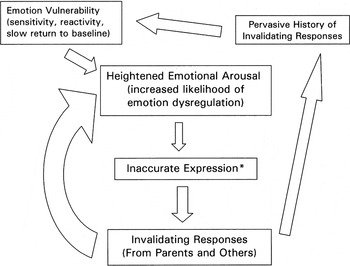
The transactional model: emotion dysregulation [harr ] invalidating response cycle; *includes out of control behavior.
 You have
Access
- 229
- Cited by