

Published online by Cambridge University Press: 15 April 2003
Encouraging the development of a meaningful citizen identity during adolescence has always been a challenge, but it has been especially perplexing in the last decade because of changes in political, economic, societal, and media institutions, in the expectations that adults have for young people, and in the expectations youth have for themselves. Much of the existing research on the development of political attitudes and behavior was conducted from 1950 to 1975 (and what follows is a very brief overview). Jennings and Niemi's work following secondary school students into adulthood was pivotal for political scientists (1974, 1981). Other research from this period suggested that schools contribute little to the civic education process (Langton and Jennings 1974) and that each young adult generation recreates itself in response to the political climate (Barnes and Kaase 1979). As more compelling issues and theoretical models took a central place on the research agenda, Cook (1985) commented that a “bull market” in political socialization research had become a “bear market.”
A few psychologists and educators continued to study politically relevant attitudes building on earlier studies using interviews (Connell 1971) and surveys (Hess and Torney 1967). In the early 1970s, a Civic Education Study organized by IEA (the International Association for the Evaluation of Educational Achievement) tested 32,000 students in nine countries. That study concluded that an open climate for classroom discussion of controversial issues was especially likely to foster greater civic knowledge and less authoritarianism. A reanalysis of the 1971 IEA data from three countries, including the United States, showed that older students gave less positive ratings of both local and national government than younger students, were more comfortable with conflict in the political system, and showed more interest in political discussion (Torney, Oppenheim, and Farnen 1975; Torney-Purta 1984). Some psychologists suggested that the adolescent develops concepts in the political and economic domain through processes similar to those operating in other domains (Berti and Bombi 1988) and that background knowledge influences whether a socialization agent's message is understood or internalized. However, there was a gap of 15 years in research on the developmental perspective in political socialization. A “bear market” for psychological studies of political socialization appeared without an earlier “bull market.”
Since the early 1990s there has been new attention to research relating to the citizenship and political education of adolescents. Special issues of journals focusing on political socialization and engagement appeared (Haste and Torney-Purta 1992; Niemi and Hepburn 1995; Sherrod, Flanagan, and Youniss 2002). Qualitative studies identified the “hidden curriculum” and its political dimensions in informal and formal educational settings (Bhavnani 1991; Gordon, Holland, and Lahelma 2000). Conover and Searing's (2000) study contrasted four communities in the United States. Niemi and Junn (1998) analyzed 1988 NAEP data from high school seniors and found that taking civic-related classes in school made a difference for high school seniors' civic knowledge. Studies by Hahn (1998) and by Flanagan and her colleagues (1999) took a cross-national perspective, although no database for adolescents available in the mid-1990s approached the scope of the World Values Survey of adults (Inglehart 1997). It was in this context that the IEA Civic Education Study began.
The IEA, a consortium of educational research institutes in nearly 60 countries, focused its large-scale data collections on literacy, mathematics, and science during the 1980s. In the early 1990s, spurred by recent massive changes in political and social structures, some member countries asked IEA to organize a study of civic education that would have a strong knowledge measure as well as measures of young people's attitudes and behaviors.
The first phase of the IEA Civic Education Study (1994–1998) consisted of the collection of structured national case studies used as the basis for a consensus process to develop content specifications for a test of civic knowledge (with right and wrong answers) and also a survey of political attitudes and civic behavioral report items. These data also provided contextual information for interpreting the more quantitative data collected in 1999–2000. For analysis within and across countries of the data collected during Phase 1 see Torney-Purta, Schwille, and Amadeo (1999) and Steiner-Khamsi, Torney-Purta, and Schwille (2002).
The second phase of the IEA Civic Education Study began in 1997. An International Steering Committee, together with National Research Coordinators, constructed items, pre-piloted, and then piloted an instrument (test and survey) that would be suitable for early and late adolescents and would take about two class periods to complete. The attitude survey included a number of scales drawn from political scientists' surveys of adults and was substantially the same for the two age groups. The test of civic knowledge administered to the older students, however, contained some more difficult items as well as items about economics, political efficacy, and international relations not administered to the 14-year-olds. A series of scales based on Item Response Theory (IRT) were developed for the knowledge items and also for 10 sets of attitude items (with means set to 100 for knowledge and 10 for attitudes). IRT scaling allows estimation of missing and don't know responses, and the inclusion of anchor items at both age levels makes it possible to compare older and younger respondents on the same metric. Nationally representative samples of students in the modal grade for 14-year-olds (a total of about 90,000 students from 28 countries) were tested in 1999; students ranging in age from 16 to 19 (a total of about 50,000 students from 16 countries) were tested in 2000. See Torney-Purta, Lehmann, Oswald and Schulz (2001) and Amadeo, Torney-Purta, Lehmann, Husfeldt, and Nikolova (2002) for a description of scaling and analysis of the 28 and 16 countries, respectively, for early and late adolescents.2
Twenty-eight countries tested 14-year-olds. Those 28 countries are: Australia, Belgium (French speaking), Bulgaria, Chile, Colombia, Cyprus, Czech Republic, Denmark, England, Estonia, Finland, Germany, Greece, Hong Kong (SAR), Hungary, Italy, Latvia, Lithuania, Norway, Poland, Portugal, Romania, Russian Federation, Slovak Republic, Slovenia, Sweden, Switzerland, and the United States. Sixteen countries tested upper secondary students. Those 16 countries are Chile, Colombia, Cyprus, Czech Republic, Denmark, Estonia, Hong Kong (SAR), Israel, Latvia, Norway, Poland, Portugal, Russian Federation, Slovenia, Sweden and Switzerland (German speaking). These countries are very diverse in their histories of democratic governance. They do not represent a random sample of countries in the world, and readers should bear this in mind when interpreting the figures and tables that compare individual countries to an international mean (based, for example, on 28 countries for 14-year-olds).
Individual countries must cover the expenses of drawing their nationally representative sample of schools and a class within each school, translating all instruments and revising them after translation verification, as well as collecting data and its initial processing. Fifteen countries tested both early and late adolescents; the United States, for example, tested only 14-year olds (the early adolescents). Further, one country tested students with a mean age of 16.6 years among late adolescents, while another tested a sample whose mean age was 19.4 years, a much larger age variation than for the early adolescents (14.3 to 15.3 years). Also the dropout rate among students from less advantaged home backgrounds after the age of 14 is very substantial in some countries. For this article, therefore, a subset of six countries was chosen that meets the following conditions: the late adolescents had a mean age between 17.5 and 18.9 and the percentage of the relevant age cohort still in school (available to be sampled) was 65% or greater at this upper secondary level. The following six countries are included here in the analysis of age differences: Chile, Czech Republic, Norway, Poland, Portugal, and Sweden.3
Cyprus and Slovenia also met these criteria, but in the interest of clarity in the figures as the two smallest countries they are not included.
The range in number of students tested in these seven countries at age 14 is from 2,811 (in 124 schools) in the United States to 5,688 (in 180 schools) in Chile. The range at 17–18 in the six countries is from 2,099 in 124 schools, in Norway to 5,777 (in 180 schools) in Chile. Some countries chose to over-sample certain categories of schools for national analyses. Before cross-national analysis all samples were weighted to correspond to the sampling frame approved by IEA.
The overall purpose of the analysis presented here is twofold. First, we examine patterns of civic and political involvement developed during the process of political socialization. Second, we look at changes in civic knowledge and attitudes associated with age. These two types of analysis are presented in four sections. The first section briefly reviews cross-national differences for the 14-year-old sample in seven countries (the six countries testing 17–18 year olds which had at least moderate school coverage plus the United States). The second section focuses particularly on the United States, examining different patterns of predictors for different types of participation (for details see Torney-Purta and Richardson, forthcoming). The third section reviews cross-national differences in two attitudes of special interest to political scientists: trust in governmentrelated institutions and the extent to which the government is expected to intervene in the economy or to provide for social welfare (for details see Torney-Purta et al. 2001). The fourth section presents differences between early and late adolescents in the six countries (for details see Amadeo et al., 2002).
In countries participating in the IEA study (including the United States) the current generation of adolescents believes in voting as a hallmark of the good adult citizen. However, socialmovement-related activities, including community action or environmental protection, are nearly as important as voting (Baldi et al. 2001; Torney-Purta et al. 2001). Activities that have conventionally been associated with good citizenship for adults, such as engaging in political discussion or joining a political party, are, according to these adolescents, relatively unimportant for adult citizens.
There are also cross-national differences in these adolescents' conceptions of citizenship, as Figure 1 (columns 1 and 2) shows for seven countries. Only in Chile, Poland, Portugal, and the United States is there a high or moderate level of support for both conventional and social movement citizenship (“high” meaning above the international mean of the 28 countries, “moderate” meaning not significantly different from the international mean). There is relatively little support (below the international mean) for either conventional or social movement citizenship in the Czech Republic and Sweden. Norwegian students rank relatively high in their belief in the importance of social movement citizenship, but not in conventional citizenship. The pattern in these seven countries is the same as that found from examining all 28 countries that tested 14-year-olds. Some of the post-Communist countries are above the international mean on belief in conventional dimensions of citizenship (resembling Poland), while others are below it (resembling the Czech Republic). All the countries in southern Europe and in North and South America rate relatively high, while all the countries in the northern part of Western Europe rate relatively low in adolescents' belief in the importance of conventional citizenship (Torney-Purta et al. 2001; Torney-Purta 2002).

A similar picture emerges when one asks young people how they personally expect to be involved when they become adults. Expected participation in conventional political activities is above the international mean in the same countries as those where students said these activities are important norms for the good citizen (Figure 1, column 3). To give further detail, the proportion of 14-year-old students who say they definitely expect to vote in national elections is highest in Poland (53%) and lowest in the Czech Republic (20%) (Table 1).5
In previous reports of the IEA Study “definitely” and “likely” to engage in political activities were added together. Here we have chosen to report in the table those who say they “definitely” plan to engage in the given activity.

A somewhat different picture emerges from answers to questions about the confidence students have acquired from active participation in their schools or by getting together with others to solve problems in their schools (including participating in school councils) (Figure 1, column 4). Of these seven countries, the Czech Republic is the only country where students are below the 28-country mean in this sense of efficacy at school. In Sweden, students express a strong sense of themselves as active participants in the school environment but are neither convinced about the importance of social movement or conventional political activity for adults nor likely to say that they will participate in conventional political activities.
To ascertain whether different types of civic and political participation are fostered by different experiences in early adolescence, a regression analysis was conducted of predictors of the types of anticipated participation discussed in the previous section. There were differences in patterns of predictors for the different types of participation or involvement. To take the United States as an example, three out of four of the strongest predictors of voting are associated with what happens at school; these are the student's level of civic knowledge, the confidence they have gained in the efficacy of participating at school, and the extent to which they report learning about elections and voting in their classes. Discussion with parents is also important (Torney-Purta and Richardson, forthcoming).
In contrast, civic knowledge is not a predictor of the likelihood of future volunteering in the United States and is a negative predictor in some countries. The strongest predictor of future volunteering is current membership in a voluntary organization benefiting the community, followed by learning about community problems in school classes, positive experiences that build confidence in school participation, and discussion with parents. In the United States, political interest is not associated with volunteering in the community. Further, current volunteering is not associated with the likelihood of future voting, suggesting that volunteering is not a political activity from the viewpoint of American youth. This distinction between what is required to foster more conventional political activity (voting) and to foster community-based activity (volunteering) is important for program design. Finally, one could interpret this evidence as supporting the value of service-learning because of the importance of learning about community problems in school. Moving to a third type of participation, the likelihood of joining a political party is influenced neither by these school-related predictors nor by community activities but instead by the student's interest in politics and to a lesser extent by the degree to which parents discuss politics.
Civic education programs with active participation as an aim should consider which type of future involvement they hope to promote and then design curricula and activities to explicitly address these behaviors, rather than expecting that fostering either knowledge or volunteer activities will promote all types of future involvement.
Two attitude scales in the IEA instrument were taken directly from adult-surveys: trust in government-related institutions and perception that the government should assume responsibilities for social welfare and other economic matters.6
There was an IRT scale for each of these based on six and five items, respectively.
Note the similarity between this pattern based on the IEA data collected from adolescents in 1999 (reported here and in Torney-Purta, et al., 2001) and the adult data collected earlier (and using somewhat different methods) by the World Values Survey (reported in Inglehart, 1997).
In the last column on Figure 1, country differences are shown in the extent to which young people believe that the government should undertake economic responsibilities. Most notable, early adolescents in the United States are the least likely of those in any of the 28 countries to believe that the government should intervene in the economy (Torney-Purta et al. 2001, Figure 4.4). In summary, the differences by country in these attitudes confirm that by the age of 14 many young people have already become members of the political culture they share with adults, evidenced by their levels of trust in government and the extent to which they see an economic role for government.
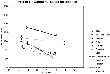
Figure 2 shows that in each of the six countries examined older adolescents had substantially higher scores on the civic knowledge test than younger adolescents. The slopes are remarkably similar, with the exception of Poland, where a significant but smaller difference between age groups was observed.

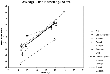
In contrast, Figure 3 shows substantially less trust in government-related institutions among 17–18 year olds than among 14-year-olds in five of the six countries. Sweden and Norway stand out at both age levels as having high levels of trust in government. In Sweden, that level of trust is similar for the two age groups, while in Norway it is lower for the older adolescents. A similar age-related difference is found in the extent of positive or patriotic feeling about their nation (significant in every country except Sweden; see Amadeo et al. 2002).

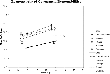
The older students are also more likely than the younger ones to believe that the government should undertake responsibilities for the economy and for social welfare for the unemployed in Chile, Norway, Poland, and Portugal (Figure 4). As they come closer to joining the productive economy and/or benefiting from social welfare programs, adolescents wish to see more rather than less economic government intervention. There is no significant age difference in Sweden (where both early and late adolescents expect their government to engage in economic intervention) or in the Czech Republic (where neither early nor late adolescents hold these expectations).

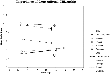
A slightly different picture emerges from those scales and items related to involvement or participation. Figure 5 shows that there is considerable stability across age in acceptance of the norms about what is important for a good adult citizen in the realm of conventional citizenship. The differences between early and late adolescents in accepting norms of social movement citizenship are even smaller.

Returning to Table 1 to compare the figures on expected participation for the early and late adolescents, there is a significant increase in all six countries in the percentage of students saying that they expect “definitely” to vote. A larger proportion of late adolescents (than of early adolescents) in Chile and Portugal expect to participate in non-violent protests. In contrast, the same or a smaller proportion of those aged 17–18 plan to volunteer or join a political party when compared to students of age 14.8
See similar results on an IRT scale for expected participation in conventional activities in Amadeo et al. 2002.
In summary, late adolescent students are more knowledgeable and more likely to believe that they will vote than early adolescents. When compared to the younger group, late adolescent students are less trusting of government and less positive about their nations, more likely to want the government to intervene in the economy, and less likely to think of themselves participating in activities other than voting.9
For gender differences, see Amadeo et al. (2002).
First, these international data give some perspective to the current alarm being voiced about young people in the United States. Their acceptance of norms of participation and their statements that they will “definitely vote” are not as high as considered healthy for democracy. However, when compared with other countries, adolescents in the United States rate moderate to high in their belief that adult citizens should vote and engage in other forms of conventional participation and in their stated expectations of their own behavior.
Second, in this period of renewed interest in civic education programs, the IEA analyses lead to several conclusions. Most important, the school can make a difference in fostering civic and political participation. However, neither attempts to inculcate factual knowledge nor requirements to spend designated numbers of hours doing volunteer work in the community is likely by itself to result in citizens who are both knowledgeable and participative in relation to conventional political activities and community betterment. A school culture that encourages participation has an important role to play in this process. Likewise, other aspects of active engagement with issues and explicit teaching make a difference (see Torney-Purta and Richardson, forthcoming).
Third, the between-country differences that already exist at age 14 (replicating many of those found in adults) and the differences between 14 and 17–18 year olds suggest that middle childhood and adolescence are important age periods for research and for civic education programs.
Many research questions that framed the IEA Civic Education Study have yet to be fully explored. The analyses presented here were chosen to illustrate both the strengths of the study (e.g., its sample and breadth of coverage of its instrument) and some gaps (e.g., lack of data from several countries for the older adolescents and problems in making comparisons at this level). The majority of the instrument is available for use in other research, and the release of the international data and documentation will allow secondary analysis in addition to that already undertaken by international and national researchers associated with the study (see www.wam.umd.edu/∼iea/for information).
It may be too strong to call the current period a “new bull market” for political socialization research. But the IEA Civic Education Study nevertheless has the potential to serve as a starting point for further observational and intervention studies in the United States and other countries to provide information to political scientists who are interested in ways of fostering political engagement.


Students' Reports on Expected Political Activities as an Adult


