In July 1932, the life of the Brazilian aviator Alberto Santos-Dumont came to a tragic end. Lauded as a national hero, Santos-Dumont was one of the great pioneers of modern aviation and was most famous for his awe-inspiring dirigible flight around the Eiffel Tower in October 1901, and for his Demoiselle design airplanes. Although his days of flying were cut short in 1910 after being diagnosed with multiple sclerosis, Santos-Dumont became a figurehead for a range of Pan-American aviation initiatives over the course of the following decade, and he committed himself to fostering inter-American cooperation and unity through the promotion of flight. The First World War had a pernicious impact upon him, and he became severely depressed after aircraft were widely deployed as weapons of destruction. For Santos-Dumont, the development of aircraft should have heralded international cooperation and peace, yet World War I saw the nations of the world transform airplanes into machines of war. After struggling through the 1920s with deteriorating physical and mental health, Santos-Dumont was forced to witness Brazilians killing one another with aircraft during the Constitutionalist Revolution of 1932. The once-famous aviator felt personally responsible for inadvertently pioneering a deadly weapon, and he hanged himself in Guarujá, São Paulo on July 23, 1932.Footnote 1
Santos-Dumont's fascinating yet sad life story personifies the history of aviation in inter-American relations. Although the invention of the airplane presented the people of the American continents with exciting peaceful opportunities at the turn of the twentieth century, aviation soon began to influence the history of the Western Hemisphere in a more ominous manner. In particular, the role of aviation in the history of U.S.–Latin American relations evokes notions of conflict, domination, and imperialism rather than peace and cooperation. Historians such as Jenifer Van Vleck and Ricardo Salvatore have established a scholarly consensus which posits that the United States utilized aviation as an “imperial mechanic” in its Latin American policy to maintain an “empire of the air” throughout the American continents.Footnote 2 These scholars have convincingly demonstrated that U.S. hegemony in the Western Hemisphere has been supported by the soft and hard power that aircraft exert, and that the development of aviation provided the United States with an additional medium through which to draw Latin America into its sphere of influence whilst eschewing direct colonial control. By dominating the airways of the Americas and maintaining a potent air force, the United States gained greater access to Latin American markets and facilitated the spread and predominance of its political culture, contributing to a broader policy of informal imperialism. In the words of Gilbert Joseph, aviation has served as a “close encounter” of empire—a manifestation of an “informal regional relationship” that worked in tandem with traditional political and diplomatic machinations.Footnote 3
By focusing on flight as a tool of domination, historians have provided valuable insights into the ways in which the United States has exerted power and control in the Western Hemisphere. However, themes of inter-American cooperation and Pan-Americanism have been overlooked.Footnote 4 This article seeks to address this oversight by highlighting the significance of Pan-Americanism to the evolution of U.S. aviation during the early twentieth century. It reexamines the formative years of flight in the United States and argues that inter-American aviation initiatives were a fundamental guiding aspect of the development of early aeronautics that ought to be reconciled with the subsequent imperial nature of U.S. aviation.
It is not surprising that Pan-American aviation initiatives have been overlooked. Historians tend to perceive U.S.–Latin American relations as a story of “conflict and exploitation” and view U.S.-led policies of inter-American cooperation with skepticism.Footnote 5 At best, Pan-American initiatives are considered to have been ideologically flawed; at worst, they are assumed to have disguised imperial designs.Footnote 6 Yet new research demonstrates that fresh observations can be made by studying Pan-Americanism on its own merits, rather than focusing solely on its connection to U.S. imperialism. Richard Cándida Smith's work on Pan-American cultural exchange programs is an excellent example of this methodology in practice: rather than exploring the imperial facets of these initiatives, Smith analyzes both the ways in which Latin Americans utilized inter-American connections for their own interests, and the impact of said connections upon the ways in which U.S. citizens perceived their nation's place in the world.Footnote 7 Eric Rutkow's study of the Pan-American Highway and its railroad predecessor provides similar insights while demonstrating the importance of transportation networks in inter-American relations.Footnote 8 Accordingly, this article does not seek to undermine the significance of aviation as a tool of U.S. imperialism; it intends to demonstrate that Pan-Americanism was integral to the development of U.S. aviation during the first two decades of the twentieth century.
Citizens of the United States witnessed the dawn of modern aviation in 1903 after the Wright brothers successfully piloted one of the first heavier-than-air aircraft at Kitty Hawk, North Carolina. Dreams of flight rapidly captivated the nation, and both aviators and the public alike predicted a global revolution in the transportation of mail, people, and goods as aviators began to focus on designing and creating airplanes rather than dirigibles.Footnote 9 Throughout the Gilded Age, Americans had become enamored with technological advancement, and this romance with cultures of invention and technology generated widespread faith in their transformative power, manifesting in the extreme as technological utopianism.Footnote 10 Progress in the realms of transportation and communication in particular reached significant heights by the 1910s, and Americans began to consider their nation's international interactions with greater interest.Footnote 11 For U.S. Pan-Americanists operating in an increasingly interconnected world, aviation promised to provide solutions to the sociological and practical problems that hindered the development of international unity among the American republics.
The modern Pan-American movement had languished since its inception in the late 1880s, and U.S. Pan-Americanists struggled to convince political decision makers that the United States ought to engage in political and economic cooperation with the nations of Latin America. Latin American stability has consistently stood as a national security issue for U.S. policy makers, and Pan-Americanists believed that policies of inter-American cooperation would secure the nation's strategic interests in the region more effectively than policies of imperialism.Footnote 12 Unfortunately, at the turn of the twentieth century, most citizens of the United States generally felt more connected, both culturally and physically, with Europeans than with any of their fellow Americans, and negative racial stereotypes of Latin Americans pervaded.Footnote 13 The First International Conference of American States (1889–90) had sought to foster economic and political unity among the American nations, yet the United States’ imperial expansion after the Spanish-American War only created resentment south of the Rio Grande. Statesmen such as Secretary of State Elihu Root (1905–09) attempted to strike a finely tuned yet contradictory balance between policies of imperialism and cooperation, yet the course of U.S.–Latin American relations was far from cordial, ultimately obstructing any meaningful development of Pan-American unity.Footnote 14 The rapid development of aviation during the 1910s seemed to offer a solution to the problem of U.S.–Latin American relations: aircraft held the potential to increase the rate at which the peoples of the Western Hemisphere encountered one another by bringing the Americas physically closer together, thereby generating more opportunities for inter-American cooperation. By physically transporting individuals, products, and cultural media rapidly across the hemisphere via the sky, aircraft had the potential to unite the Americas and promote cooperation over conflict.
The Pan American Union (PAU) served as the primary body through which U.S. Pan-Americanists pursued their endeavors. Established in 1889, the PAU was an intergovernmental organization based in Washington, DC, that was founded to connect the American republics economically and politically. Despite its inter-American remit, the PAU acted as an extension of the U.S. State Department until its transformation into the Organization of American States in 1948. However, between 1907 and 1920, the PAU acted under the whims of its director general, John Barrett. Dubbed “Mister Pan America” by President Theodore Roosevelt, Barrett was a former U.S. diplomat who embodied the genuine spirit of Pan-Americanism and its less amicable facets in equal measure. He was tireless in his efforts to improve inter-American relations for the good of all the American republics (often irritating the State Department and presidents in the process), yet he maintained a commitment to supporting U.S. economic expansion in Latin America.Footnote 15 Under his leadership, the PAU gained far greater notoriety, transforming into a repository of information and data about the Americas that maintained professional links with the various Pan-American societies that began to emerge in the 1910s. Eager to solidify any inter-American connections, the PAU readily served as a preexisting Pan-American framework for aviation initiatives.
To see the Pan-American potential of aircraft fulfilled, U.S. Pan-Americanists cooperated with private U.S. aviators to expound the value of flight and generate interest in aviation across the Western Hemisphere. These so-called “bird-men” held a significant interest in the prospect of inter-American aviation.Footnote 16 As genuine enthusiasts, they desired to facilitate the development of aviation across the American continents to bolster the continued evolution of flight. With pioneers such as Santos-Dumont hailing from the region, Latin America appeared to offer significant potential for the development of aeronautics. However, in a less altruistic vein, they additionally sought to transform Latin America into a future market for the steadily growing U.S. aviation industry. Together, these two interest groups sought to influence the development of U.S. aviation along Pan-American lines, and held a relatively free hand in their operations due to the U.S. government's lack of interest in early aviation. It was not until the early 1920s that the government took an active role in the development of aviation, and as Emily Rosenberg notes, even the outbreak of the First World War “did little to change the government's indifference to aviation.” Indeed, when the United States became a belligerent in 1917, it had to rely on French and British models due to a lack of available aircraft.Footnote 17 As such, these Pan-American aviation initiatives developed almost entirely without government oversight. For the first two decades of its existence, modern aviation offered an informal and nongovernmental medium through which to influence the United States’ relations with its fellow American republics. With minimal governmental interference, Pan-Americanists and aviators could utilize aviation initiatives to pursue their genuine goals and subtly foster a wider climate of inter-American cooperation.
A plethora of research demonstrates that throughout the twentieth century, the United States has adeptly utilized new technology to assert its power and dominance across the globe: airplanes were merely one of many inventions used to support U.S. imperialism.Footnote 18 However, it is important to recognize that nongovernmental actors have also utilized new technology for their own interests. In their study of communication technology and empire, Dwayne Winseck and Robert Pike argue that the development of new communication technology between the 1860s and 1910s was informed less by imperial policy than private economic interest. Although imperialism was central to the process, it “was not synonymous with either the broader processes of globalization or international communication.”Footnote 19 The case of U.S. aviation is similar: because private aviators and the PAU directed early aviation initiatives rather than the government, they were guided by their own private interests. Accordingly, the narrative of U.S. aviation can similarly be disentangled from empire.
By applying a Pan-American discourse to aviation [1st], founding inter-American aviation Committees [2nd], promoting Latin America as a sound market for aeronautical products [3rd], and organizing conferences, expositions, and competitions [4th], U.S. aviators and Pan-Americanists heralded aircraft as machines of inter-American cooperation and unity. As several South American nations, including Argentina, Brazil, Chile, and Peru, began to establish their own national aviation initiatives, Pan-Americanists believed that the development of the airplane would not only unify the Americas, but serve as a common Pan-American cause that all the American republics could contribute to.Footnote 20 U.S. citizens with an interest in the miracle of flight during the early twentieth century were therefore confronted with a discourse of inter-American cooperation that drew their attention to the United States’ role in the Western Hemisphere.
However, realizing the Pan-American potential of aviation proved to be a turbulent experience. By the 1920s, very little had been achieved in terms of tenable results. Despite the discourse, the Pan-American potential of flight could not be translated into a reality. Aircraft were still limited in their transportive capabilities, and aviation infrastructure remained underdeveloped in both Latin America and the United States. U.S. Pan-Americanists and aviators failed to transcend the utopian visions of inter-American aviation that they espoused and achieve practical progress. The onset of the First World War hindered momentum further by diverting national attention toward military aviation. Crucially, after the war, the U.S. government became increasingly involved in U.S. aviation and adopted a distinctly unilateral policy at the expense of inter-American cooperation. Wesley Newton notes that early Pan-American initiatives “expired in chauvinism and apathy” in the mid-1920s when the United States became embroiled in a “commercial scramble” with several European nations seeking to expand their aviation activities in Latin America.Footnote 21 The United States may have directed several goodwill tours of the region during the 1920s, including Charles Lindbergh's famous sojourn, but the nation's main goal after the war was to control the emerging commercial aviation routes in Latin America and thereby ensure the security of the Panama Canal. The search for markets and securing regional hegemony now trumped any Pan-American dreams.
Although Newton's analysis is valid, his brief obituary for early inter-American aviation initiatives overlooks their significance. Despite the imperial turn in the development of U.S. aviation, inter-American cooperation was heralded as a viable approach to the advancement of aeronautics at a time when aviation was in its infancy. By conducting a focused analysis of the relationship between U.S. aviation and Pan-Americanism during the early twentieth century, this article demonstrates that inter-American cooperation was a central facet in the development of early U.S. aviation that ought to be reconciled with its imperial future. To paraphrase Felipe Fernández-Armesto, U.S. hegemony was not an inevitable development, and the story of U.S. aviation during the early twentieth century demonstrates that Pan-American alternatives were a possibility.Footnote 22
Together We Fly! The Pan-American Potential of Aviation
The formal organization of U.S. aviators during the first decade of the twentieth century rapidly transformed flying into a serious endeavor. The formation of the Aero Club of America (ACA) in 1905 was fundamental in this process, granting aviators a respected body through which to promote aeronautics. Prior to its founding, flying machines were primarily perceived as a means of entertainment in the United States, with stunt flying serving as a popular spectator sport.Footnote 23 The founding members of the ACA believed that the danger and spectacle of stunt flying delegitimized aviation and sought to regulate flying activities. The ACA began to bureaucratize flying by licensing pilots, gathering statistics, lobbying Congress on various aeronautical issues, and organizing official competitions.Footnote 24 Although Dominick Pisano notes that this process of institutionalization ensured that aviation grew into an almost entirely upper-class endeavor, the ACA remained committed to engaging the wider public in aviation.Footnote 25 Indeed, Alan Johnson argues that the ACA was able to readily encourage “the scientific study of aerodynamics, meteorology, and aeronautical engineering” while maintaining a “significant role in popularizing aviation.”Footnote 26 The club soon began to establish regional branches across the nation, and various other aviation organizations materialized, including at universities such as Yale.Footnote 27 By 1909, the president of the ACA, Charles Bishop, was able to confidently inform Orville Wright that public interest in aviation was “fast increasing.”Footnote 28 Unlike the development of sea power, aviation benefitted from the “chronological coincidence” of emerging at the same time as the modern media. As such, U.S. citizens were comparatively more informed and interested in aviation than naval endeavors.Footnote 29 It was clear that the promise of aviation rapidly outweighed its novelty, a sentiment perfectly captured by aviator Augustus Post in 1910: “Something beside his wings sustains the flying man; it is his confidence backed by the confidence of the people. Crowds used to gather to see him fall; now they come to see him fly.”Footnote 30
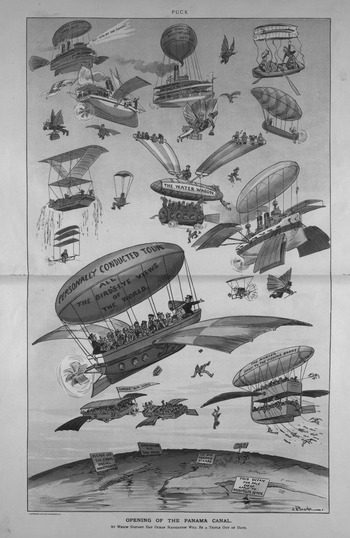
These aviation organizations published a plethora of magazines and bulletins to serve the interests of the industry, and they regularly contained articles and commentaries on Latin American aviation. When Aeronautics reported on the New York Aeronautical Supply Company's latest range of aircraft supplies in 1911, the editor discerned that Latin America was a “verdant field” for aviation, noting that the company was now “printing a catalogue in Spanish.”Footnote 31 In the same year, Alfred Lawson, the editor of Aircraft, called upon U.S. manufacturers to begin selling aviation supplies directly to South American governments. The use of airplanes for combat purposes during the Italo-Turkish War of 1911–12 had turned heads, and Lawson warned businesses to capture the potential market before Latin Americans “decide to buy their machines from Europeans.”Footnote 32 What primarily attracted U.S. aviators to Latin America was its geography. Articles and bulletins produced by the ACA continuously argued that the southern American republics required aircraft to “solve their problems of transportation.”Footnote 33 Aviation was perceived as the only way to overcome some of the hitherto “impassable” regions of Latin America, such as the mighty Andes. Road and rail were considered too impractical for mountainous and jungle terrain, whereas aviation held the potential to connect isolated towns and cities with ease.Footnote 34 Aviators read reports of remote “coffee and cocoa men of Latin America” inquiring about aerial transportation and predicted that airplanes could be used to survey remote and inaccessible terrain where their “speed readily outclasses the laborious chainmen.”Footnote 35 As early as 1906, the humorist magazine Puck published a cartoon that depicted the skies of the Western Hemisphere brimming with strange aircraft, dirigibles, and winged individuals. These flying machines soared effortlessly above the Panama Canal Zone, suggesting that the long-awaited isthmian canal would not necessarily match the potential of flight. Signs advertising the sale of the ocean and reduced rates for using the canal indicated that the sky might offer the most promising transportation solutions for Latin America, rather than the seas. In the words of Nebraskan rancher-turned-author Edgar Beecher Bronson, the “pathless wastes that separate some of [South America's] most important trade centres will soon be echoing the roar of engines and the whirr [sic] of aerial propellers.”Footnote 36
Cartoon by John S. Pughe, “Opening of the Panama Canal,” Puck, Jan. 31, 1906. Courtesy of the Library of Congress, Washington, DC.

It is worth emphasizing that these claims were almost entirely discussed in terms of future potential rather than the present capability of aircraft. Aviators may have boasted about the rapidity with which aircraft technology was evolving, yet the advancements that were made in aeronautical engineering during the 1910s were still not up to the demands of cross-continental flight, nor the transportation of passengers. It was not until the end of the decade that heavier-than-air machines were advanced enough to pass over the highest and most dangerous peaks of the Andes, and several famous aviators, including the Argentinian Jorge Newbery, tragically lost their lives in the attempt.Footnote 37 A sheer lack of aerodromes in both the North and South prohibited any immediate developments, and it would not be until the mid-1920s that the United States and its European rivals would be able to even start constructing air routes in Latin America.Footnote 38 However, technical hindrances did not dampen the vision of inter-American aviation nor ground dreams of flight. For the time being, potential was sufficient. Songs such as the 1912 ditty Eagle Aeroplane presented a world in which flights “from Alaska down to Panama” were just around the corner:
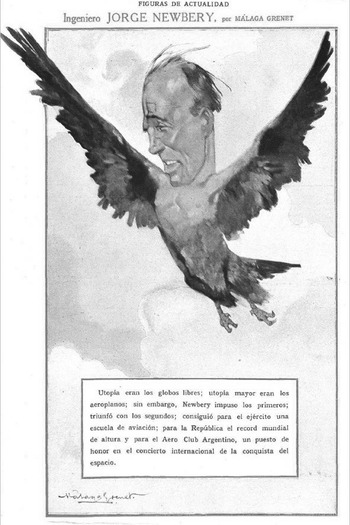
Aviation was considered to be a very American and Western Hemispheric activity. Even though advancements in aeronautics were taking place just as steadily in Europe, the legacy of the Wright brothers was deemed to be a powerful signifier of the American nature of flight. Several historians argue that aviation served as a powerful cultural phenomenon that was easily adapted to nationalistic rhetoric anywhere in the world.Footnote 40 Vleck keenly demonstrates that in the United States, aviation was aligned to the notion of global ascendency and attributed to national myths such as Manifest Destiny.Footnote 41 For North Andean nations such as Peru, aviation offered a means to reconcile technological advancement with notions of modernity. Willie Hiatt explains that Peruvian elites actively promoted aviation during the 1910s “as a civic and patriotic pursuit” that “varied between hero worship and technological fetishization” to bolster the modernization of the nation.Footnote 42 After Peruvian Jorge Chávez undertook a successful yet ultimately fatal flight over the Alps in 1910, Latin Americans were driven to conquer their own mountain ranges now that they had proven their ability in Europe.Footnote 43 Indeed, an editorial in Scientific American described Chávez as a martyr of aviation who was not only revered as a hero in Peru, but one who had impressed himself “upon the imagination of Latin-America.”Footnote 44 Successes in aviation offered a means to acquire status on the international stage, and for nations such as Argentina, national pride was at stake in flight. In 1914, the popular magazine Caras y Caretas published a caricature of Newbery in the form of a bird-man and praised his efforts for granting Argentina “a place of honor in the concert nations.” Similarly, after military aviator Luis Candelaria crossed the Andes in 1918 via airplane, Debates (a newspaper published in San Juan) claimed that it was no accident that Argentina had produced so many pioneers of aviation—they were to serve as examples for others to follow.Footnote 45
In its certificate of incorporation, the ACA positioned itself and the activity of flight within the entire Western Hemisphere, rather than solely the United States. From the very outset, the ACA envisioned that its operations would be carried out over the “Continents of North and South America and the islands adjacent thereto.”Footnote 46 Brigadier General William Mitchell described the Americas as “a sort of meeting place” of future global air routes and claimed that it was perfectly positioned geographically to benefit the most from development in aeronautics.Footnote 47 Republican values were often invoked to distinguish between flight in the New and Old Worlds. For example, in April 1909, Pan American Magazine smugly informed its readers that “the first flying machine was an object of open contempt, and yet the Wright brothers are envied of kings today.”Footnote 48 Through supporting the achievements of their fellow American aeronauts, U.S. aviators appealed to a shared, international allegiance to aviation that was easily adopted to a supranational, Pan-American identity that transcended individual nationalisms. Latin Americans were described as having a “rare adaptability in their profession” that had allowed a long list of pilots to accomplish “remarkable feats.”Footnote 49 After attending the first event organized by the Aero Club of Cuba in Havana during March 1911, Henry Wise Wood gleefully explained that “the island possesses an ideal winter climate for the enjoyment of the sport, and the writer is convinced that it is destined to become an important cold-weather flying resort for the people of the Eastern and Middle States.” Wood praised the Cuban aviators’ “keen sports-loving character” and their desire to take “aviation under their especial patronage … not only to provide the best facilities for the practice of the sport itself, but also for the development of the scientific side of flying as well.”Footnote 50 Similarly, when Silvio Pettirossi performed a private demonstration for the ACA in June 1915, the Paraguayan pulled off a string of risky manoeuvres such as the “dead leaf drop” that “sent thrills even into the hearts of the aero veterans present,” prompting Aerial Age to excitedly advise its readers to follow Pettirossi's career.Footnote 51
Málaga Grenet, “Ingeniero Jorge Newbery,” Caras y Caretas, Feb. 28, 1914, 59. Courtesy of the National Library of Spain, Madrid.

As Latin American nations began to form their own aero clubs, the PAU began to report on aviation affairs in its Bulletin with increased interest. Barrett considered flight as one of a wide variety of mediums through which to facilitate closer ties between the United States and its sister republics. Alongside political and diplomatic initiatives, aviation would serve as what Mark Petersen describes as “second dimension” Pan-Americanism—an apolitical issue of “internal development and practical and technical matters of common concern among the American republics.”Footnote 52 In 1909, Barrett acquired a seat on the management board of the Aero Club of Washington to familiarize himself with the growing industry.Footnote 53 Around the same time, the ACA began to make direct progress toward Pan-American initiatives. In 1913, the club's publicity committee commented on the satisfying trajectory of inter-American aviation. The ACA's official mouthpiece, Flying, was now regularly sent to all the nations of Latin America, and aviators from the region were regularly seeking advice and correspondence with the organization. The committee proposed the formation of a new special committee on Latin American aviation, claiming that the time was opportune to establish inter-American cooperation in all aeronautical endeavors.Footnote 54 By 1915, this had developed into the Pan-American Aeronautic Committee, and Santos-Dumont accepted the invitation to head the group. In publicizing its goals, the committee drew upon the pioneering efforts of American aviators and described the development of aeronautics in the New World as a gift to the Old in return for the discovery of the Americas by Columbus.Footnote 55
With their goals seemingly aligned, direct cooperation between the ACA and the PAU soon followed. On Christmas Eve 1915, the new president of the ACA, Alan Hawley, contacted Barrett and explained that he was eager to speak with him on the potential relationship between aeronautics and Pan-Americanism, and to discuss “how aerial transportation will bring the twenty-one American republics into closer relationship with each other.” Hawley believed that the opening of aerial connections between the nations of the Western Hemisphere would be of great value for the Pan-American cause, boldly proclaiming that aviation would “solve sociological and economic problems that heretofore have defied solution.”Footnote 56 Barrett took little convincing. Upon becoming director general of the PAU in 1907, Barrett adopted a strategy of cooperating with any individuals or organizations within the United States that might help facilitate Pan-Americanism, particularly focusing on business leaders and academics.Footnote 57 As such, in January 1916, Barrett attended the annual banquet of the ACA and solidified the link between the two organizations.Footnote 58
The timing of this cooperation deliberately coincided with the Second Pan American Scientific Congress, which took place in Washington, DC, between Dec. 27, 1915 and Jan. 8, 1916.Footnote 59 The ACA and the American Society of Aeronautic Engineers were invited by the PAU to send delegates to the conference, which included Santos-Dumont and other aeronautical figures such as Henry Wise Wood, Emerson McMillin, and Henry Woodhouse. Aerial Age reported that it was of “especial significance” that the two organizations had been invited, because the conference “synchronize[d] in admirable fashion with the excellent work that the Aero Club of America ha[d] been doing to develop aeronautics in the South and Central American Republics.”Footnote 60 During the ninth section of the congress, entitled “Transportation, Commerce, Finance, and Taxation,” Santos-Dumont gave his first English-language speech, symbolically described as a maiden flight. Like his fellow U.S. aviators, he explained that Latin America contained “cities so high no railroads can reach them.” It was to these cities that “the aeroplane would bring civilization and progress.” He likened the American republics to
members of a family, who live in different houses, in a state of estrangement. The peace, strength, and wellbeing of a family depend upon close association, understanding, sympathy, interchange of views, cooperation, and cordial and friendly goodwill. For the greater development and strength of the countries of this hemisphere a closer association, a closer interchange of views and better facilities for communication and trading relations are vitally necessary.Footnote 61
To Santos-Dumont, the airplane would provide the solution to this quandary. He believed that the airplane would “knit the various states of the continent into an integrally united, cooperating, and friendly combination, allied for their own wellbeing in trade and commerce as well as for strength in times of possible war.” Close association was necessary for the American republics to come to a better understanding with one another, and having “attained a speed of five to ten times that of the fastest steamboat,” Santos-Dumont told the group, “the aeroplane, as soon as motors are improved, will undoubtedly bring the two continents closer and thus effect an indissoluble alliance.” Santos-Dumont drew upon the context of the First World War that was raging on outside of the Western Hemisphere and claimed that the airplane could unite the Americas in times of conflict:
Here in the new world we should all be friends. We should be able, in case of trouble, to intimidate any European power contemplating war against any one of us, not by guns, of which we have so few, but by the strength of our union. … Only a fleet of great aeroplanes, flying 200 kilometers an hour, could patrol these long coasts.Footnote 62
U.S. aviators were thrilled with Santos-Dumont's address, which attracted significant press coverage.Footnote 63 The Brazilian's bold and exciting claims stood as a testament to the aims of Pan-American aviation initiatives, and aircraft manufacturers such as the Dubuque Aircraft Company began to proudly quote his pithy phrases in their advertisements.Footnote 64
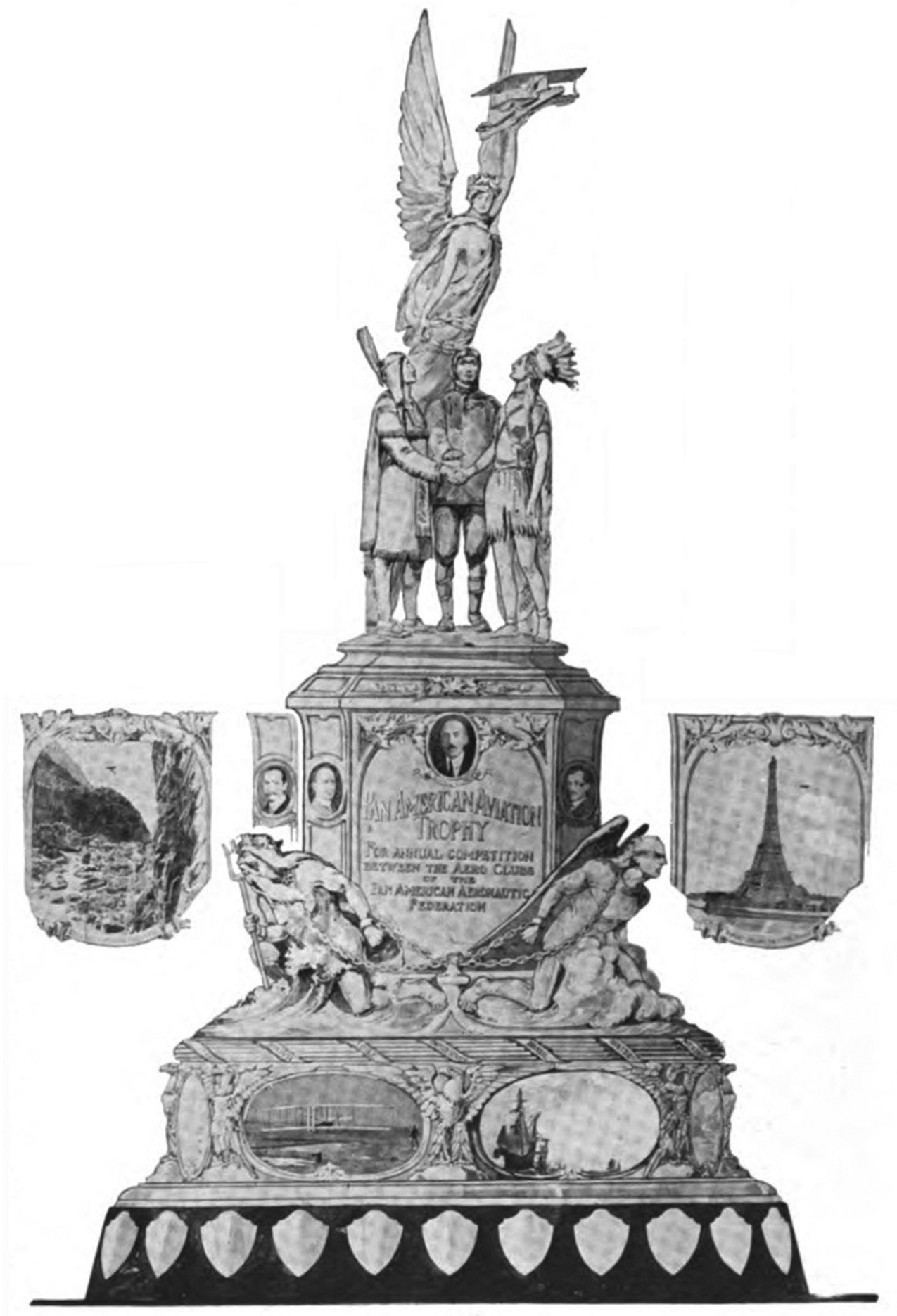
A letter from Hawley was read out to the congress after Santos-Dumont's speech, in which he proclaimed that the airplane would “solve most difficult problems of transportation, and that if applied for this purpose as well as for sport in and between the nations of the Western Hemisphere, they will become one of the most effective factors in bringing these nations into closer and most friendly alliance.” He additionally announced the offer of “a $5,000 Pan-American Aviation Trophy, to be competed for annually by the representatives of the nations of the Western Hemisphere.”Footnote 65 The ACA later described this competition as “the first steps taken to have the countries of the Western Hemisphere meet in joint sporting competition,” granting the development of aviation in the Americas “a wonderful ethical background.”Footnote 66 The design of the trophy was suitably Pan-American: atop the Western Hemisphere, an aviator united North and South America, represented by Native American figures to emphasize a shared heritage, under the winged figure of Victory.
Proposed design of the Pan-American Aviation Trophy. Henry Woodhouse, The Aero Blue Book and Directory of Aeronautic Organizations (New York: The Century Co., 1919). Courtesy of HathiTrust Digital Library, Ann Arbor, MI.

A string of subsequent high-profile events continued to emphasize the developing relationship between aviation and Pan-Americanism. Held under the auspices of the Aero Club de Chile, the First Pan American Aviation Conference met in March 1916 in Santiago, and delegates from Argentina, Bolivia, Brazil, Chile, Ecuador, Paraguay, Peru, the United States, and Uruguay attended.Footnote 67 A month before the conference, the ACA issued a bulletin outlining that its delegates would aim to form an inter-American aviation organization during the proceedings: “Such an organization will have work of tremendous importance to do, and if formed … it will become an organization of international importance.” The bulletin additionally contained notes from both Hawley and Barrett. Hawley stated that by sending military delegates to the conference, the participating nations would facilitate the evolution of “perfect cooperation and coordination of aeronautical resources which will be of utmost value for the maintenance of the Monroe Doctrine and the protection of the American continents from without.” Barrett issued a similar statement, noting that the airplane “may yet become the most powerful physical influence to bind the American nations together and make the Monroe Doctrine a Pan-American influence.”Footnote 68
These references to the relationship between the Monroe Doctrine and aviation are worth dwelling upon. During the early twentieth century, the meaning and application of the revered foreign policy tradition were subjected to an unprecedented amount of debate. After Theodore Roosevelt enunciated his corollary to the doctrine in 1904 to justify U.S. intervention in the Central American and Caribbean regions, Latin American elites and U.S. Pan-Americanists began to propose the multilateralization of the doctrine, arguing that all the American republics ought to maintain its tenets together. These individuals interpreted the doctrine as a facilitator of inter-American cooperation and a policy that bound the Americas together for the benefit of mutual security. Rather than using the Monroe Doctrine to justify the United States’ imperial grip on the hemisphere, Pan-Americanists argued that it ought to be renegotiated as a Pan-American doctrine that emphasized cooperative and multilateral security initiatives.Footnote 69 Barrett was one of the most ardent supporters of Pan-Americanizing the doctrine, and his invocation of an aerial Monroe Doctrine thus had a distinct Pan-American emphasis.Footnote 70
During the conference at Santiago, the delegates elected to form the Pan American Aeronautic Federation (PAAF). Once again, Santos-Dumont was elected as president, and Cortlandt Bishop of the ACA was chosen as vice president. Based in New York City with access to the ACA club house, the PAAF would function as “a union of the clubs and societies that control aeronautics in their respective countries in all the nations of the American continent” that would seek “the regulation of aeronautics on the American continent.”Footnote 71 As one of his first acts as president, Santos-Dumont travelled to Buenos Aires from the conference to meet with the Aero Club Argentino to generate support for the new federation, perfectly timing his visit to witness Argentinian Eduardo Bradley crossing the Uspallata Pass via balloon.Footnote 72 One of the PAAF's major initiatives was to add to the evolving cannon of aviation law, stating that airspace would be state property and that the navigation of the airspace above the American continents would be free to all Americans and all domiciled aliens.Footnote 73 The federation additionally created specialized posts for respected members relating to science, sport, law, warfare, and industry, attracting individuals such as Orville Wright and former Rear Admiral Robert Peary. The PAAF claimed to consider “all developments from the standpoint of Pan-Americanism … by uniting the various elements that work for the same cause on the American continent.” Its practical aims involved spreading knowledge, establishing training schools, facilitating research, mapmaking, and establishing aerodromes.Footnote 74 A month later, in his newly appointed position as military delegate of the PAAF, Peary claimed in front of the American Academy of Political and Social Science that aviation would be the central facet of maintaining an inter-American federation.Footnote 75
The PAAF spared no time in pursuing its aims, organizing the First Pan American Aeronautic Exposition, held at the Grand Central Palace in New York from Feb. 8–15, 1917. The ACA announced that the exposition would offer “tremendous possibilities for the development of aeronautics in the Western Hemisphere” by bringing together the best aircraft that the Americas could produce.Footnote 76 The PAU Bulletin claimed that the “Pan American character of the exposition is emphasized by the program arranged for the opening day” that included addresses from the Brazilian Ambassador to the United States Domício Da Gama, Alberto Santos-Dumont, John Barrett, and Henry White, president of the Pan American Society of the United States.Footnote 77 The organizers sought to attract the attention of younger generations, offering prizes to students of American universities who wrote the best essays on military aeronautics, the mechanics of airplanes, or the possible utilitarian applications of aircraft.Footnote 78 ACA member Henry Woodhouse informed inventor Thomas Edison that the exposition would bring the best aviation products to the attention of the people of the two American continents and showcase the latest in aviation technology, including motors, armaments, aerial navigation, and mail carrying. It was set to be “an epochal event.”Footnote 79
President Woodrow Wilson opened the exposition via wireless with similar enthusiasm, noting that the event “evidences an epoch-making advance in the triumph of the men of our day over the forces of nature.”Footnote 80 New York Governor Charles Whitman followed, proclaiming that “the Pan-Americanism that gives this gathering a name stand[s] for an alliance that will face the world as one, neither North America, nor South America, nor Central America, but AMERICA.” Barrett continued the Pan-American fervor by proclaiming that the development of aeronautics was certain to become “one of the most powerful and practical influences for developing real Pan-Americanism; that is, the actual, achieving, progressive, sympathetic cooperation of all America for the good of each and every land.” Pledging the assistance of the PAU, he explained that “we must welcome the new era of the air carrier for passengers, for mails, and possibly for express and freight, which will solve the difficulties of distance, of mountains, of jungles, of climate, which now confront the advocates of the cause of Pan-Americanism.”Footnote 81
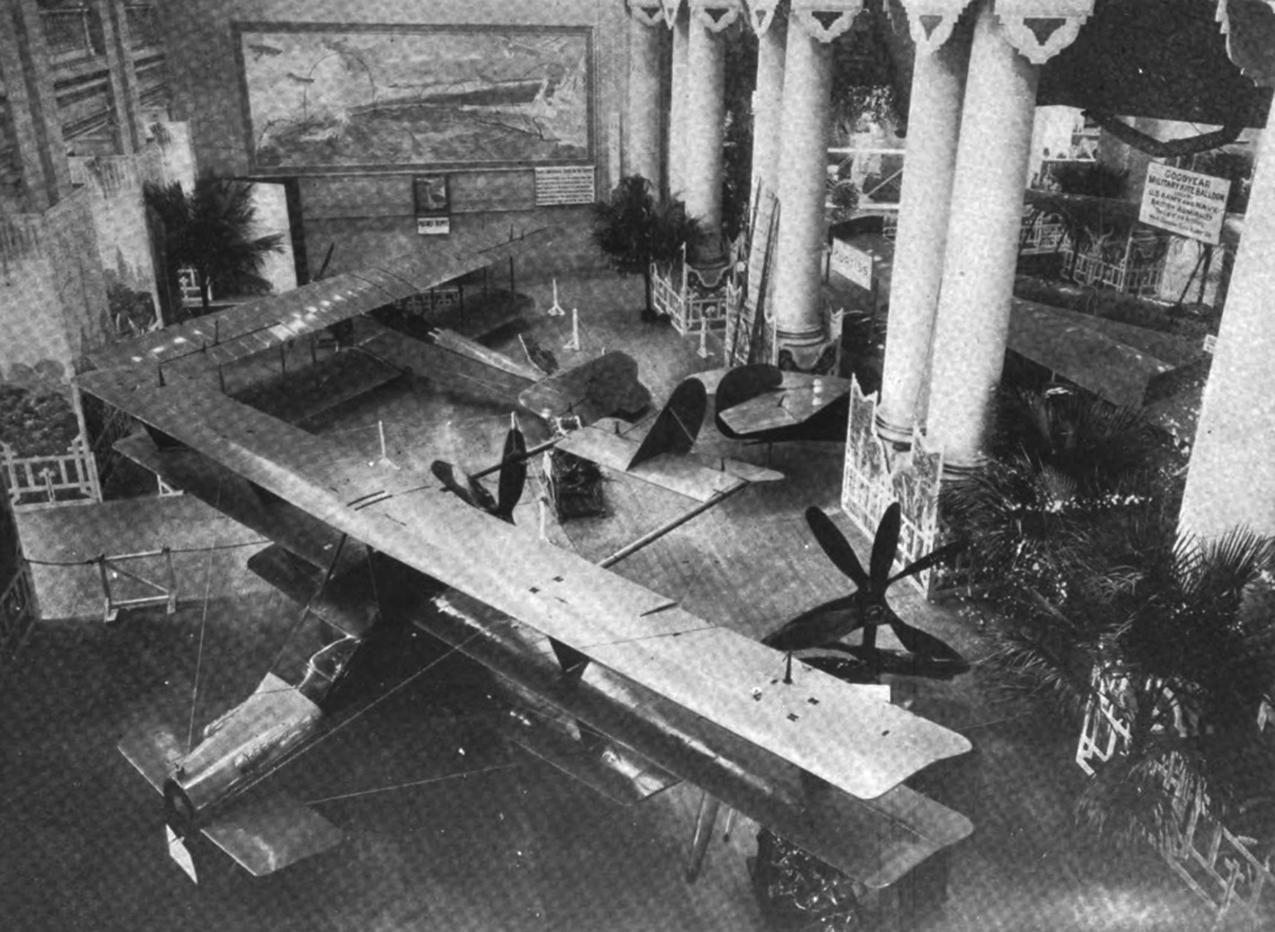
Demonstrations and addresses were held on each day of the week-long exposition, and U.S. aviation companies were offered an ideal opportunity to display their aircraft to the public, with the Wright-Martin Aircraft Corporation and the Curtiss Aeroplane and Motor Company attracting the most attention. More than one hundred exhibitors set up shop and alongside aircraft manufacturers; rubber manufacturers such as Goodyear and United States Rubber promoted their tires and balloons; engines were on display by the likes of the General Vehicle Company; the General Ordinance Company showed off its new Davis Gun; and Abercrombie & Fitch advertised its line of aviator clothing.Footnote 82 The aviation exhibits occupied the first floor of the Grand Central Palace, whereas organizations such as the PAU and the National Security League set up exhibits on the mezzanine floor alongside government departments such as the Army, Navy, Postal Service, and Weather Bureau.Footnote 83 Latin American aviators, diplomats, and business representatives were specifically invited to the exposition, and the organizers emphasized that it was not merely an opportunity to promote aviation products, but that it would serve as a forum for discussion and the exchange of ideas. The exposition was well-attended, attracting more than 100,000 visitors, and Motor Travel magazine praised the organizers for generating widespread interest in aviation where the government had failed to do so.Footnote 84 Although the American Society of Mechanical Engineers claimed that the exposition presented “no revolutionary inventions” nor any “machines that could be used for heavy military work or long-range flying,” it was clear that aviation was in a “healthy state of development.”Footnote 85
A selection of the aircraft on display at the First Pan American Aeronautical Exposition. Aviation and Aeronautical Engineering, Feb. 15, 1917. Courtesy of HathiTrust Digital Library, Ann Arbor, MI.

There was, however, a palpable degree of irony surrounding the exposition that went entirely unacknowledged by aviators and Pan-Americanists alike. Just days before the exposition opened, the United States’ “Punitive Expedition” in Mexico officially came to an end. What was significant about this military operation in Mexican territory was that it was the first time that the United States utilized aircraft for military purposes. In response to the growing border security concerns spawned by the Mexican Revolution, the U.S. Army established the nation's first military aviation unit, the 1st Aero Squadron, in 1913. After Francisco “Pancho” Villa's raid on Columbus, New Mexico in March 1916, the infant squadron, consisting of merely eight unarmed aircraft, accompanied General John Pershing as a reconnaissance unit in his hunt for the revolutionary.Footnote 86 At a moment in which U.S. aviators were lauding the promise of Pan-American aviation, they did not question the potential damage the expedition would cause to inter-American unity, and instead focused on the Army's lack of aviation capabilities and unpreparedness.Footnote 87 The 1st Aero Squadron encountered a host of difficulties in the field and was eventually retired from action. The squadron's aircraft were “low-powered planes that had already been in use beyond the ordinary period of serviceability,” and their poor performance served to bolster the ACA's growing demand for a national air force.Footnote 88 At the close of 1916, ACA member Woodhouse clearly signified the ignorance of U.S. aviators in his yearly review of aviation developments by drawing attention to the efforts of the PAAF and the use of aircraft in the Mexican expedition on the same page without a hint of irony.Footnote 89 Indeed, even U.S. Pan-Americanists did not comment upon the contradictory nature of striving for inter-American aviation whilst advocating the use of aircraft in an expedition that disregarded Mexican sovereignty. The general mood within the United States held that the expedition was not an invasion and was entirely justified as a response to loss of life and property. For someone who had previously advocated inter-American mediation as the solution to Mexico's strife, PAU director general Barrett chose to remain surprisingly coy on the issue and did not decry the expedition.Footnote 90 Dark clouds were forming on the horizon for the Pan-American aviation movement, yet aviators and Pan-Americanists remained blissfully unaware.
Navigating the Storm—War, Belligerency, and the Limits of Pan-Americanism
The development of Pan-American aviation became increasingly complicated during the First World War. The outbreak of the conflict and the subsequent belligerency of the United States and several Latin American nations presented both opportunities and setbacks for the cause of Pan-American aviation. In general, the war increased interest in aviation and bolstered Pan-Americanism within the United States, drawing attention to the cause. Yet at the same time, the war prevented various inter-American aviation events from taking place and shifted public attention toward the destructive capabilities of aircraft rather than their value in peacetime. Unfortunately, the result was to detrimental Pan-American aviation.
When the conflict broke out in the summer of 1914, many Americans considered the war as a typical European scuffle, albeit on a much larger scale. U.S. author Ellery Sedgwick informed the former British Ambassador to the United States, Viscount James Bryce, that the war was entirely composed of the “complexities of European politics, which it is not our business to unravel.”Footnote 91 The follies of the Old World stood in stark contrast to the republican virtues of the New, and the New Republic argued that the war had “increased the desire and the necessity for a cooperative international policy in the two Americas.”Footnote 92 Barrett and other Pan-Americanists, such as former Ambassador to Argentina Charles Sherrill, historian William Shepherd, and political scientist Leo Stanton Rowe, emphasized that the “silver lining” of the mass destruction and slaughter in Europe for the Americas was that “the cause of Pan-Americanism is now at flood tide.” With essential trade links to Europe disrupted by the conflict, it was a practical necessity as well as ideologically favorable for the American republics to come together and cooperate.Footnote 93 This sentiment was only bolstered after the United States and several Latin American nations entered the war in 1917. For example, Bernard Baruch of the Council of National Defense informed Barrett that mutual American belligerency would unite the New World to face a common enemy.Footnote 94
Yet the war posed logistical challenges to Pan-American aviation initiatives. The highly anticipated first competition for the Pan-American Aviation Trophy, set to take place in Rio de Janeiro in 1917, had to be cancelled in the climate of a global war.Footnote 95 The trophy was never produced, doomed to remain a design on paper, and the inter-American sporting event never took place. Other events, such as the ACA's conference on aeronautical mapping of the Americas, had to be postponed. Woodhouse saw this as a crucial setback. In comparison to Europe, the Americas had fewer aerodromes and landing stations, meaning that mapping was essential to ensure the continued development of American aviation. For Woodhouse, there was “no phase of aeronautical development that appeals to the geographer more keenly than the prospective use of the airplane in the exploration and mapping of the still unknown or little-known regions of the earth.”Footnote 96 Barrett and Santos-Dumont's predictions of an inter-American fleet organized to defend the Monroe Doctrine did not come to pass during the war either, simply because the American republics had not yet devoted significant attention to building combat aircraft. Alongside the United States, only Brazil sent aviators to the Western Front, and although the Cuban air service was prepared to contribute fighters to the war effort, the armistice was signed before this came to pass.Footnote 97
Given their use during the conflict, the war did wonders for the popularity of the airplane. Indeed, in its coverage of the First Pan American Aeronautic Exposition, the Washington Post explained that it had been the prospect of war that had generated most of the interest in the exposition.Footnote 98 The presence of aircraft became normalized across the Americas as images and photographs of flying machines littered magazines and newspapers. As Stefan Rinke notes, the war was a stimulating subject that was quickly exploited in both the United States and Latin America to sell products, especially during the period of neutrality. Advertising campaigns in newspapers and magazines contained frequent allusions to war imagery, and when aircraft began to be deployed by the belligerent nations, they transformed into a symbol of modern warfare. For example, an advert for Bols gin that appeared in a 1914 issue of Caras y Caretas featured an airplane flying over Buenos Aires and dropping alcohol bottles from the sky as if they were bombs.Footnote 99 Tire and rubber manufacturers adopted this strategy with ease, and the Ohio-based Goodrich Company boasted that if its tires were good enough to be used by “war-planes,” then civilian buyers need not fret about the quality of their civilian products.Footnote 100 The pages of the Brazilian illustrated newspaper O Espelho were bursting with illustrations and photographs of airplanes in its coverage of the war. By publishing detailed diagrams of aerial combat maneuvers, the belligerent role of aviation was continuously reinforced.Footnote 101
Yet the association between the airplane and the war generated a more militaristic tint to aviation that began to cast a shadow over inter-American relations. As the war had demonstrated, airplanes were able to serve functions in conflicts, yet there was no sense of their tenable commercial value yet. As journalist Waldemar Kaempffert noted, “[n]either European nor American builders of flying machines could hope to prosper long by collecting money from the promotors of races and county fairs.”Footnote 102 Just as the preparedness movement clamored for naval expansion, it also emphasized the United States’ lack of military aircraft. Members of the National Security League spoke frequently about the need for military aircraft in the United States, and the ACA received a staggering number of letters to mark its tenth annual banquet in 1916 that called for aeronautical preparedness.Footnote 103 Although the ACA was keen to develop Pan-American initiatives, the war siphoned significant attention. The ACA was fervent in lobbying the government to construct more military aircraft, and during the New York Liberty Loan parade of October 1917, it contributed a float that displayed the image of an eagle with a squadron of airplanes behind it, emblazoned with the motto, “On to Berlin.”Footnote 104 The ACA's Hawley had written to President Wilson in May 1916 to express his concern about the government's lack of interest in aviation, pointing out that the United States’ overseas possessions had no aerial defenses to speak of. Hawley seemed more concerned about defending U.S. colonial possessions in the Western Hemisphere than uniting with the other American republics, focusing on the fact that the “Panama Canal, Guantanamo, Porto Rico, and Guam have no aerial protection.”Footnote 105 A year earlier, Woodhouse pleaded before the Senate to develop military aviation, arguing that “the Panama Canal, the Philippine Islands, and Hawaii have no aerial protection.” How was the army supposed to defend the canal against an attack with one flying boat in service for coastal defense?Footnote 106 Newspapers continuously ran reports during the war on the vulnerability of the Panama Canal to aerial bombardment, and paranoid reports of unidentified aircraft being spotted flying over the canal caused bursts of minor panic.Footnote 107 Indeed, in September 1916, Aviation reported that steps were being taken toward organizing an Aero Club for Hawaii for the purpose of defending U.S. territory.Footnote 108
Accordingly, domineering interpretations of the Monroe Doctrine resurfaced during the war that challenged Pan-American interpretations.Footnote 109 The act of aligning the doctrine to aircraft in this manner mirrored the argument made by advocates of naval expansion that a large navy was also required to uphold the revered policy tradition.Footnote 110 These invocations effectively drew upon the notion of the “German Peril” that had occupied the minds of U.S. policy makers since the turn of the century. As Nancy Mitchell explains, policy makers had become paranoid about German designs in Latin America since the turn of the century, especially in Brazil, despite how farfetched they were.Footnote 111 In 1913, the ACA's Flying contained a fictional account of a future war with Germany in which the United States sought in vain to uphold the Monroe Doctrine after Germans invaded Brazil. The story focused on airpower and claimed that if the United States did not amass a large fleet of aircraft, it would be unable to protect the helpless nations of Latin America and ultimately itself from an air-based German attack.Footnote 112 Even after the First World War had ended, Hawley feared that Germany would use air power to dominate the markets of South America, claiming that the “moment peace comes, there will be absolutely nothing to keep such airships out of South America, and I personally am sure that the Germans are figuring on going for that market in exactly that way. They had laid their plans long before they started the great war.”Footnote 113
The PAU realized that the war might detract from inter-American aviation initiatives and published a bitter editorial in its Bulletin in 1916. Naturally, Europe was to blame for transforming the airplane into “an agent of destruction,” and the editorial sadly admitted that the “first extensive practical use … of one of man's greatest achievements—the conquest of the air—has been to destroy human life.” Yet hope remained, and the editorial concluded that fortunately
there is still quite a large portion of the world where men of brains, of courage, and initiative, are directing their attention to the pursuits of peace and to the advancement and conservation of the human race instead of toward its destruction. The Western Hemisphere has still retained its sanity, and today its peoples are carrying on the work of fostering the agencies of peace and of perfecting the various instruments whereby humanity may be made better and happier.Footnote 114
As such, aviators and Pan-Americanists returned to their initiatives in the wake of the war. A significant portion of the Second Pan American Commercial Conference, held in June 1919, addressed the importance of inter-American aviation. The PAAF issued a special circular letter to the delegates emphasizing the necessity for cooperation in the development of aeronautics, suggesting that “capital be encouraged to assist in spreading of aeronautical information in South and Central America” and to “extend credit to various firms in South and Central America, who desire to purchase aircraft for transporting their foremen and perishable goods to and from the plantations.”Footnote 115 Augustus Post discussed the developments that were being made to construct aircraft that could carry passengers, noting that they would be ideal for “flying over the pampas and plains as well as in the mountainous district along the Pacific coast, where the aeroplane will perform the functions of an incline railway or elevator, being able to rise from the seacoast to the cities located at high elevations on the mountain side.” He claimed that “within ten years aircraft will be the most powerful single factor in developing the Latin American Republics economically, socially, and commercially.”Footnote 116 Members of the U.S. Air Service addressed the state of aviation, including Chas Glidden, who asked delegates whether they realized that “while the fastest trains are running from Chicago to New York, you can fly from Peru, Ecuador, Bolivia, and all points north of the Amazon to points in the United States.” Such speed demonstrated the value of aircraft in inter-American commerce.Footnote 117
Perhaps one of the more curious initiatives was born out of postwar demilitarization. The end of the war left hundreds of trained aviators out of a job, and many looked to Latin America to put their skills to use. Adverts began to appear in magazines such as Air Service Journal in which former army pilots sought work in Latin America.Footnote 118 Former ace Donald Hudson left for Bolivia after the war to organize the nation's flying corps, successfully crossing the Andes for the first time in 1920. According to his assistant, Hudson was motivated by the aviation opportunities Bolivia offered.Footnote 119 Yet as Wesley Newton argued, these individual endeavors tended to crash and burn (both figuratively and literally), and most U.S. aviators quickly returned home.Footnote 120
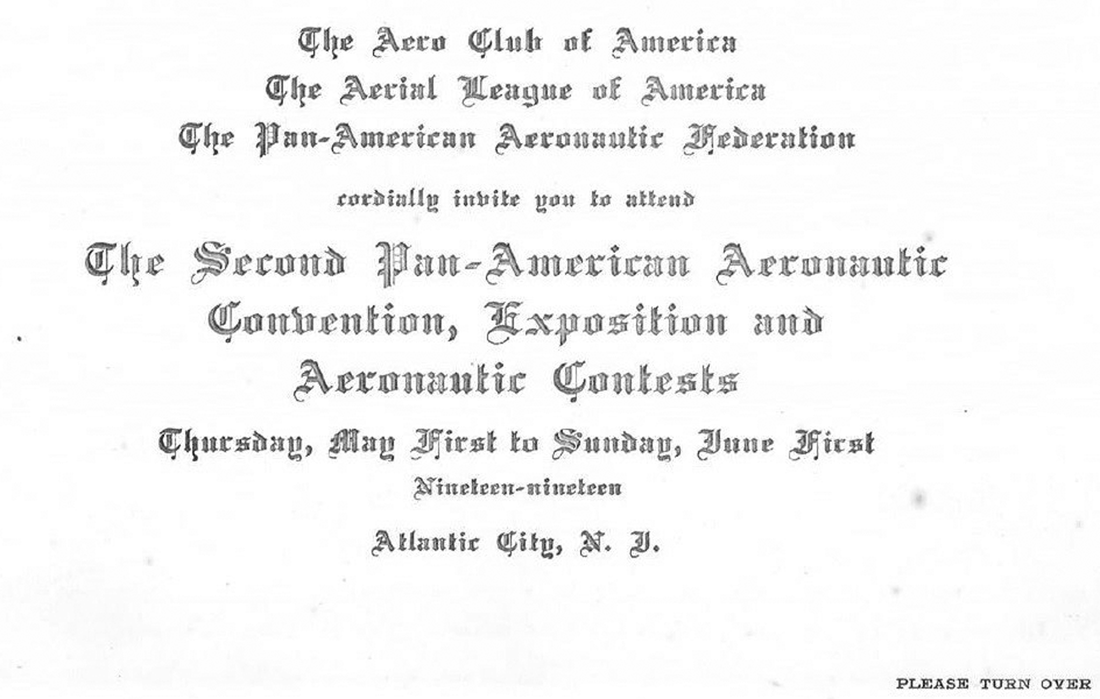
The PAAF rallied with various other organizations to organize the Second Pan American Aeronautic Exposition in May 1919. However, it was telling that the exposition was opened by U.S. Secretary of War Newton Baker.Footnote 121 Hawley explained that airmail was to be one of the primary foci of the exposition, stating that civilization was “developing to a point where rapid aerial transportation and intercommunication are making the world smaller and smaller, and political questions in remote corners of the world that never touched our lives are now entering our very doors.”Footnote 122 As during the first exposition, Latin American delegates served as special representatives for their respective governments, and the Aero Club de Chile cabled a message of congratulations and support.Footnote 123 Unlike the inaugural exposition, however, public interest in aviation suddenly declined. Now that the war was over, the wider public seemed less concerned about aeronautical developments. A report read before the U.S. House of Representatives stated that attendance had been so poor that at the opening luncheon, there had only been “32 persons present, 11 of whom were women.”Footnote 124 Although specific Pan-American issues were addressed during the exposition, there was a distinct and unwarranted emphasis on Anglo-American relations.Footnote 125 Indeed, Winston Churchill sent a message to the organizers wishing them success and hoping that “this new art and science prove[s] a bond of kinship between the English-speaking people. The oceans have divided us. Let the air unite us. Let the air unite us in the comradeship of daring and the painstaking study of the means of mutual protection.”Footnote 126 This was reflective of the U.S. government's aims now that it adopted a more assertive role in aviation. A few months later in July, the American Aviation Mission reported the findings of its investigation into the postwar state of aviation developments outside the United States to the U.S. government, which tellingly emphasized linkages with European allies and did not concern itself with Latin America at all.Footnote 127
Lieutenant John Hickmott's Invitation to the Second Pan-American Aeronautic Exposition. Courtesy of the John Hickmott Collection, Zhang Legacy Collections Center, Western Michigan University, Kalamazoo, MI.

Other aeronautical expositions highlighted Pan-American aviation's declining favor. The Manufacturers Aircraft Association (MAA), a patent pool organization formed in 1917 to put an end to patent disputes between the Wright and Curtiss companies, began hosting aviation expositions at the close of the war. Its 1919 New York show established a concept of hosting themed days throughout the duration of their shows, including topics such as Navy Day, Scientific Day, and Boys Scouts Day.Footnote 128 The following year, the MAA decided to hold an All-America Day and contacted the PAU for its assistance. Franklin Adams, the chief clerk of the PAU, managed the MAA's request and was keen to see inter-American aviation promoted during the exposition. He explained that the “Latin American colony in New York is now quite a large one,” and if Latin American flags and music were provided for the show, the MAA would likely “arouse considerable enthusiasm.”Footnote 129 Francisco Yanes, the assistant director general of the PAU, represented the organization during the proceedings, speaking in both English and Spanish to the attendees.Footnote 130 He presented a letter from Barrett, who was unable to attend, in which he proclaimed that
when the average North American realizes that he can go to Latin America and reach any section of it in a short time by airplane, he will make every effort to go there, become acquainted with the countries and peoples, and with their resources and opportunities, while, in turn, the Central and South Americans will find it easier to leave their homes and come to the United States and get better acquainted with the people of this country and its possibilities for Pan-American relationship.
Yanes’ attendance at the exposition was largely ignored by the press, and the New York Sun and Herald tellingly decided to dedicate its report to the contents of Barrett's letter rather than the words of the Venezuelan.Footnote 131 The lacklustre appeal of the All-America Day was symbolic of the way in which Pan-American aviation was coming to be considered in the immediate postwar years: it was merely one minor facet of U.S. aviation, rather than an overarching approach.
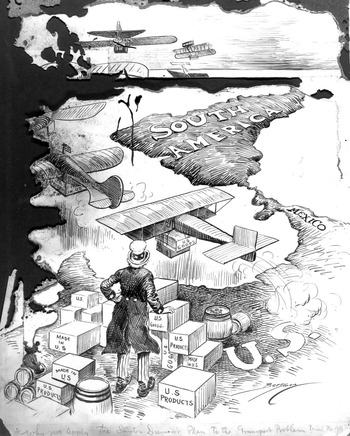
Cartoon by Clifford Berryman, “Why Not Apply the Santos-Dumont Plan to the Transport Problem Until We Get Ships?” Washington Evening Star, Jan. 9, 1916. Courtesy of the Clifford K. Berryman Political Cartoon Collection, U.S. National Archives, College Park, MD.

Although efforts were still being made to encourage inter-American aviation, commercial connections became the focus now that the government was taking a greater interest in the industry. Postmaster General Albert Burleson announced that plans were being made to extend airmail routes to Latin America, although he admitted that “these oversea routes will require the most powerful aeroplanes with wireless installation and special construction to make them safe over the seas.”Footnote 132 In its 1919 report, the National Advisory Committee for Aeronautics recommended that diplomatic missions ought to be sent to South American nations “to create markets for American aircraft.”Footnote 133 Indeed, aircraft manufacturers began to conduct trips to the region to drum up business. For example, in 1920, the Curtiss Aeroplane and Motor Company reportedly established “permanent bases” in Argentina, Brazil, and Peru.Footnote 134 The commercial scramble for Latin American markets was beginning. Cartoonist Clifford Berryman had predicted this turn in aviation when Santos-Dumont issued his famous address back in 1916. Rather than emphasizing the unity of the Americas, his cartoon praising the aviator's plan focused on the one-sided economic benefit of western hemispheric flight: Latin America would merely serve as a market for the United States.
While the PAU was determined to see the United States “encourage and aid the development of this new science [aviation] in our sister Republics in Latin America,” the U.S. government began to divert attention away from inter-American aviation initiatives during the early 1920s and started to utilize aircraft as tools of informal imperialism as Vleck, Newton, and various other scholars describe.Footnote 135 For U.S. aviators, Pan-Americanism transformed into a euphemism for securing Latin American markets, and the government realized that dominating Latin American skyways would serve its hemispheric security interests. Accepting its fate, the PAAF quietly disbanded. Although other Pan-American initiatives made some progress in the immediate postwar years, such as the Pan-American women's movement and inter-American sanitation initiatives, the U.S. public's general disillusionment with the peacemaking process weakened national desires for international cooperation.Footnote 136 The outcome of the Fifth Pan American Conference in 1923, during which the proposal of an American league of nations was struck down by the U.S. delegation, typified the prominence of unilateralism over cooperation in U.S. foreign relations.Footnote 137 Presidents Warren Harding and Calvin Coolidge continued their predecessors’ policy of military intervention in Central America and the Caribbean, weakening U.S.–Latin American relations further still.Footnote 138 Ultimately, the First World War generated too many obstacles for inter-American aviation initiatives to overcome, and the potential economic benefits of unilateral aviation initiatives began to dwarf any advantages of Pan-American unity.
Although the PAAF disbanded within a decade of its establishment, the efforts of its members and allies were a significant factor in the evolution of U.S. aviation. The likes of John Barrett and Alberto Santos-Dumont presented an inter-American aviation policy for the United States to adopt at the dawn of modern aviation that, although unfulfilled, demonstrated the Pan-American potential of flight in the early twentieth century. Because of its ability to effortlessly transcend borders, the airplane was an invention that inherently forced Americans to consider international relations. Spurred on by Pan-Americanists, U.S. aviators immediately looked to Latin America and consistently viewed inter-American aviation as a worthwhile cause for the betterment of aviation as a field of human progress. The first century of U.S. aviation was undeniably one of imperialism, yet it is clear from an analysis of the early twentieth century that this narrative is not monolithic. The broader history of U.S.–Latin American relations is an intricate combination of domination and cooperation, and the history of U.S. aviation is no different.
Acknowledgments
I would like to thank the delegates of the 2018 Historians of the Twentieth Century United States (HOTCUS) work-in-progress session for their comments on a draft of this article; Tom Bishop, Lorenzo Costaguta, Bevan Sewell, Maria Ryan, Rose Pearce, Steven Parfitt, Steve Gallo, and Mark Eastwood for reading and listening to my thoughts on early aviation and Pan-Americanism; Elizabeth Borja, Kelly Dwyer, and Lynn Houghton for remote archival assistance; and the anonymous reviewers for their valuable constructive criticism.