




No CrossRef data available.
Extract
Eric Beerbohm, graduate student, department of politics, PrincetonUniversity, has been awarded The University Center for Human Values Graduate PrizeFellowship for the 2004–2005 academic year.
Information
- Type
- Departments
- Information
- Copyright
- © 2005 by the American Political Science Association
Activities
Eric Beerbohm, graduate student, department of politics, Princeton University, has been awarded The University Center for Human Values Graduate Prize Fellowship for the 2004–2005 academic year.
Arden Bement, director, National Institute of Standards and Tech nol o gy, is the newly appointed director of the National Science Foundation.
Michael Brintnall, executive director, APSA, has been named to the Advisory Board for the International Exchange of Scholars (CIES). Brintnall has also recently been elected as the chair of the Executive Committee of the Consortium of Social Science Associations (COSSA).
Walter D. Broadnax, president, Clark Atlanta University, is a member of the NASA Return to Flight Task Group assembled in response to the Columbia space shuttle accident.
Rodolfo O. de la Garza, professor, Columbia University, was selected for the 2004 Hispanic Business Directory of the 100 most influential Hispanics.
Amy Kneedler Donahue, assistant professor, University of Connecticut, is a member of the NASA Return to Flight Task Group assembled in response to the Columbia space shuttle accident.
Linda Greenhouse, reporter, New York Times, has been named a Phi Beta Kappa Visiting Scholar for 2004–2005.
Gary C. Jacobson, professor, University of California, San Diego, has been named a Phi Beta Kappa Visiting Scholar for 2004–2005.
Administrative Appointments
Paul F. Diehl, president, Peace Science Society, University of Illinois, Urbana-Champaign.
Robert H. Dorff, executive director, Institute of Political Leadership.
Howard Gillman, chair, department of political science, University of Southern California.
Dennis Goldford, director, program in law, politics, and society, Drake University.
Beth Honadle, director, Institute for Policy Research, University of Cincinnati.
Sebastian Royo, director, Madrid Campus, Suffolk University.
Nikki Van Hightower, interim director, women's studies program, Texas A&M University.
New Appointments
Daktari Alexander, professor, school of public affairs, American University.
Daniel Brinks, assistant professor, department of government, University of Texas, Austin.
Jason Brownlee, assistant professor, department of government, University of Texas, Austin.
Seung-Whan Choi, assistant professor, department of political science, University of Illinois, Chicago.
Jason Frank, assistant professor, department of government, Cornell University.
George Gavrilis, assistant professor, department of government, University of Texas, Austin.
John Martin Gillroy, professor, department of international relations, Lehigh University.
Terri Givens, assistant professor, department of government, University of Texas, Austin.
Elizabeth Shakman Hurd, assistant professor, department of political science, Northwestern University.
Alison Jacknowitz, assistant professor, school of public affairs, American University.
Theresa L. Johnson, assistant professor, department of political science and public and environmental affairs, University of Wisconsin, Green Bay.
Andrew Karch, assistant professor, department of government, University of Texas, Austin.
Hyeok Yong Kwon, assistant professor, department of political science, Texas A&M University.
Corinne McConnaughy, assistant professor, department of government, University of Texas, Austin.
Eric McDaniel, assistant professor, department of government, University of Texas, Austin.
Brian D. McKenzie, assistant professor, department of political science, Texas A&M University.
Patrick MacDonald, assistant professor, department of government, University of Texas, Austin.
Jason Malloy, assistant professor, department of political science, Oklahoma State University.
David Neal, professor, department of political science, Oklahoma State University.
Thomas Pangle, professor, department of government, University of Texas, Austin.
Brenda Phillips, professor, department of political science, Oklahoma State University.
Tasha Philpot, assistant professor, department of government, University of Texas, Austin.
Brian Schaffner, assistant professor, school of public affairs, American University.
John Sides, assistant professor, department of government, University of Texas, Austin.
Ismail White, assistant professor, department of government, Uni versity of Texas, Austin.
Thomas G. White, lecturer, department of political science, Texas A&M University.
Richard Wilson, professor, department of political science, Rutgers University.
Promotions
Barbara Bardes, professor, department of political science, University of Cincinnati.
Michael Desch, Robert M. Gates Chair in Intelligence and National Security Decision-Making, George Bush School of Government and Public Service, Texas A&M University.
Gary M. Halter, professor, department of political science, Texas A&M University.
Beth Honadle, professor, department of political science, University of Cincinnati.
Gary Jacobsohn, H. Malcolm MacDonald Chair and professor, University of Texas, Austin.
Laura D. Jenkins, associate professor, department of political science, University of Cincinnati.
David C. Kimball, associate professor, department of political science, University of Missouri, St. Louis.
Lisa Nelson, professor, department of political science, California State Polytechnic University, Pomona.
Thomas Pangle, Joe E. Long Chair in Democratic Studies, University of Texas, Austin.
Bernard Rowan, professor, department of history, philosophy, and political science, Chicago State University.
Kurt Weyland, professor, department of political science, University of Texas, Austin.
Visiting and Temporary Positions
Pamela Blackmon, visiting as sis tant professor, department of political science, Oklahoma State University.
Richard Francis, visiting assistant professor, department of government, Suffolk University.
Min Hyun, distinguished visiting professor, department of political science, Oklahoma State University.
P. See Lim, visiting assistant professor, department of political science, Texas A&M University.
Michael Sanchez, visiting assistant professor, department of government, Suffolk University.
Awards
J. Theodore Anagnoson, professor, department of political science, California State University, Los Angeles, was selected for the 2004–2005 President's Distinguished Professor Award.
Daniele Caramani, professor, Mannheim Centre for European Social Research, University of Mannheim, won the Stein Rokkan Prize for Comparative Social Science Research.
George C. Edwards, III, professor, Texas A&M University, received the Distinguished Achievement Award for Research.
David M. Rankin, professor, State University of New York, Fredonia, received the SUNY Chancellor's Award for Excellence in Teaching, 2004.
Denise Scheberle, professor, University of Wisconsin, Green Bay, re ceived the 2004 University of Wis con sin Regents Teaching Excellence Award.
Bernie Tamas, professor, department of politics and government, Illinois State University, received the Outstanding Teacher Award presented by the university chapter of Pi Sigma Alpha.
Joel Toppen, assistant professor, department of political science, Hope College, was given the H.O.P.E. (Hope Outstanding Professor) award for the 2003–2004 academic year.
Julie Webber, professor, department of politics and government, Illinois State University, received the Outstanding Teacher Award presented by the university chapter of Pi Sigma Alpha.
FOR THE RECORD
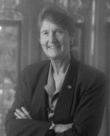
Nannerl Overholser Keohane, past president of Duke University and Wellesley College, will join the Harvard Corporation, Harvard's executive governing board, July 1, 2005.

Keohane earned her B.A. from Wellesley College, a B.A.-M.A. in philosophy, politics and economics at Oxford as a Marshall Scholar, and her Ph.D. in political science from Yale. Her early career saw her on the faculty of Swarthmore College (1967–1973), the University of Pennsylvania (1970–1972), and Stanford University (1973–1981). In 1981, Keohane became president of Wellesley College where she concurrently served as professor of political science. In 1993, Keohane was appointed president of Duke University, where she served until June 2004. While at Duke, she was integral in launching an array of programs in areas ranging from ethics to genome sciences to interdisciplinary studies in the humanities.
Keohane's research has focused on questions of political philosophy, feminism, education, and myriad topics in higher education. She is the author of Philosophy and the State in France: The Renaissance to the Enlightenment (1980) and coeditor of Feminist Theory: A Critique of Ideology (1982).
Keohane is a past vice president of the APSA, a fellow of the American Academy of Arts and Sciences and the American Philosophical Society, and a member of the Council on Foreign Relations. In 1995, she was inducted into the National Women's Hall of Fame and in 2003 was one of the first recipients of the Marshall Medal.
Wayne A. Cornelius, University of California, San Diego, was awarded the University's Alumni Association Distinguished Teaching Award for the 2003–2004 academic year. The award is presented to the faculty member who has made the most outstanding contribution to undergraduate education, based on nominations by the University's alumni. Cornelius was cited for exceptional skill in dealing with sensitive issues of race and ethnicity in large lecture courses.

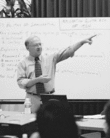
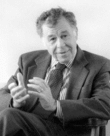
Bruce Stinebrickner, Frank L. Hall Professor of Political Science and chair, department of political science, DePauw University, has been named to a four-year term as University Professor, beginning in academic year 2004–2005. University professorships are awarded on the basis of teaching, scholarship, and service. (Photo: Marilyn E. Culler)

Rosemary O'Leary, Distinguished Professor of Public Administration and Political Science, Maxwell School, Syracuse University, is a member of the NASA Return to Flight Task Group assembled in response to the Columbia space shuttle accident. O'Leary is also a member of the NASA Aerospace Safety Advisory Panel where she advises the agency on matters concerning the organization culture and management.

Amitai Etzioni, director, Institute for Communitarian Policy Studies, George Washington University, served with former French President Valery Giscard d'Estaing and Latvian President Vaira Vike-Freiberga as the keynote speakers at the “Europe: A Beautiful Idea” conference held at the Hague September 7, 2004. Etzioni focused on the ideas included in his new book, From Empire to Community: A New Approach to International Relations.

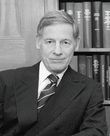
Harvey Mansfield, William R. Kenan, Jr., Professor of Government, Harvard University, was awarded the National Humanities Medal by President George W. Bush “for a lifetime of scholarship on political theory and contributions to higher education.” The National Humanities Medal honors individuals and organizations whose work has deepened the nation's understanding of the humanities, broadened citizens' engagement with the humanities, or helped preserve and expand access to important humanities resources. (Photo: Jon Chase/Harvard News Office)

In the News…
James Fearon, Stanford University, KPIX CBS5 San Francisco, on the potential for civil war in Iraq if the coalition forces pull out or diminish.


Bill Richardson, University of South Dakota, NPR's “Morning Edition,” detailing the U.S. Senate race between Tom Daschle and Jim Thune.
Diana Schaub, Loyola College, Washington Post, on the moral issues involved in new methods of stem cell research.
Arend Lijphart, University of California, San Diego, Coastal Post, advocating a move in the California legislature toward proportional representation instead of a winner-take-all system.
Tom Langston, Tulane University, Times-Picayune, on the realignment of Louisiana as a Republican stronghold following the 2004 election.
Douglas Muzzio, Baruch College, Bloomberg, on the advantages that New York State Attorney General Eliot Spitzer has in his 2006 run for governor of New York.
Michael Dawson, Harvard University, Fort Wayne Journal Gazette, on the change over past years' voting of two groups of African Americans in the 2004 presidential election: young voters, who sided more with the Democrats and the evangelical Christians, who sided with the Republicans.
Sarah Binder, George Washington University, Associated Press, on the history of the Senate filibuster and on its future in the next Congress.
Fernando Guerra, Loyola Marymount University, Newsday, on the political ramifications President Bush's appointment of Kellogg Chief Executive Carlos Gutierrez as Commerce Secretary will have on the hispanic voting bloc.
Gregory Domin, Mercer University, WGXA-TV Fox News 24 Macon, GA, on the outcome of the 2004 elections at the national, state, and municipal levels.
Todd Donovan, Western Washington University, KOMO 4 News Seattle, on the possibility that lame-duck Washington Governor Gary Locke might have to serve past his term if the ballot dispute between successor candidates is not resolved by Inauguration.
Theda Skocpol, Harvard University, The Nation, on what the next four years holds for the Democratic Party following its defeat in the 2004 elections.
Silvia Borzutzky, Carnegie Mellon University, Christian Science Monitor, on the potential pitfalls for seniors inherent in President Bush's plan to allow private accounts within Social Security.
Dario Moreno, Florida International University, Sun-Sentinel, on the fight for power between Miami-Dade Mayor Carlos Alvarez and the county's commissioners.
Norman Ruff, University of Victoria, Canadian Press, on the choices that face British Columbia's voters in the upcoming provincial elections and on his forecast for a reduced New Democrat majority.
Christian Grose, Lawrence University, Christian Science Monitor, on the voting errors in Cartaret County, North Carolina in which a voting machine “lost” 4,500 votes in specific, and on the myriad voting problems in the 2004 election in general.
Scot Tanner, RAND Corporation, Voice of America, on China's failed attempt to exert economic influence over the Taiwanese presidential election and the few remaining options, including the use of force, now left to bring Taipei back under Chinese control.
Neal Milner, University of Hawai'i, Honolulu Advertiser, on Rep. Ed Case's (D-HI) stated plans to run for U.S. Senate.
Ken DeBow, California State University, Sacramento, Associated Press, on liberal Sen. Barbara Boxer (D-CA) gaining the third most votes, after President Bush and Senator Kerry, respectively, in the 2004 elections.
Amy Caiazza, Institute for Women's Policy Research, MSNBC, on a report that women continue to lack parity with men in terms of earnings, political representation, health, and social status.
Ken Hoover, Western Washington University, Associated Press, on why Washington's gubernatorial race between Dino Rossi (R) and Christine Gregoire (D) was so close.
Richard Baker, East-West Center, Voice of America, on the global implications of the apparent downgrading of North Korean leader Kin Jong Il's public image as evinced in the removal of his portraits throughout the country and a switch in the state media to a less reverential mode of address.
Dan Palazzolo, University of Richmond, Knight Ridder, on the closing of ranks within the Republican Party to change the Party's laws to protect Leader of the House Tom DeLay (R-TX) politically if he is indicted and to allow Sen. Arlen Specter (R-PA) to assume the chairmanship of the Judiciary Committee despite recent comments that riled conservatives.
Roger E. Hartley, University of Arizona, C-SPAN's “America and the Courts,” on the effect of budget politics on judicial independence.
Timothy Hill, Doane College, Washington Post, on the significant influence that TV shows such as The West Wing, Third Watch, and Everwood have on viewers' political beliefs.


 You have Access