Introduction
Apoptosis is an important function of survival under environmental stress and survival pressure (Mosser et al., Reference Mosser, Caron, Bourget, Denis-Larose and Massie1997; Hebert et al., Reference Hebert, Valdes and Bentley2009). The mechanisms of apoptosis network are highly complex, including two main apoptotic pathways: the extrinsic or death receptor pathway and the intrinsic or mitochondrial pathway (Elmore, Reference Elmore2007). p53, a crucial regulator in apoptosis, is involved in the response to a range of stress types by regulating apoptosis, DNA repair, genetic stability, cell cycle arrest, and senescence (Laptenko and Prives, Reference Laptenko and Prives2006). Many studies have shown that apoptosis is positively correlated with heat stress (Verheij et al., Reference Verheij, Bose, Lin, Yao, Jarvis, Grant, Birrer, Szabo, Zon and Kyriakis1996; Haimovitz-Friedman et al., Reference Haimovitz-Friedman, Kolesnick and Fuks1997) and plays a key role in normal development (Clem, Reference Clem2001). In response to pressure signals, cytoplasmic p53 translocated rapidly to mitochondria, where it interacted with multidomain members of the pro- and anti-apoptotic bcl-2 family members to either inhibit or activate them (Vaseva and Moll, Reference Vaseva and Moll2009).
p53 and DNA damage regulated gene (PDRG) are the genes which are associated with apoptosis and cell cycle regulation (Luo et al., Reference Luo, Huang and Sheikh2003; Jiang et al., Reference Jiang, Luo, Shi, Sun, Sun, Sheikh and Huang2011; Wang et al., Reference Wang, Wang, Yan, Liu, Wang, Li, Wang, Liu, Peng and Li2014; Zhao et al., Reference Zhao, Dai and Qiu2017). It is known that PDRG appears as a specific marker in DNA damage and be selectively regulated by agents that induced genotoxic stress in vertebrates (Luo et al., Reference Luo, Huang and Sheikh2003; Jiang et al., Reference Jiang, Luo, Shi, Sun, Sun, Sheikh and Huang2011). PDRG is differently regulated by crucial regulator p53 and genotoxic stress ultraviolet radiation (UV) (Luo et al., Reference Luo, Huang and Sheikh2004), and always strongly over-expresses in malignant tumor (Jiang et al., Reference Jiang, Qiu, Zhou, Huang, Guo and Yang2009; Wang et al., Reference Wang, Zhang, Wang, Yang, Dong, Wang, Du and Wang2015). Exhaustion of PDRG in colon cancer can induce a decrease in cell multiplying (Paolo et al., Reference Paolo, Savas, Susan, Nabil, Iii and Logan2013). Treatment at 25°C results in aestivation, digestive tract atrophy, and degeneration and upregulates the expression of PDRG in sea cucumber Apostichopus japonicus (Wang and Yang, Reference Wang and Yang2013).
Apoptosis-stimulating p53 protein 2 (ASPP2) is a member of tumor suppressor family ASPP (ASPPs) (Sullivan and Lu, Reference Sullivan and Lu2007), being involved in the interaction between the ARD and the SH3 domain and the P53 (Cao et al., Reference Cao, Hamada, Matsui, Date and Iwabuchi2004). Initially, ASPPs have been identified as the modulators of p53 transcriptional activity on pro-apoptotic DNA promoters. The proapoptotic members ASPP1 and ASPP2 stimulate p53-dependent apoptosis through induction of proapoptotic target genes, but the iASPP has the opposite function, and it can suppress the pro-apoptotic function of p53 (Samuels et al., Reference Samuels-Lev, O'Connor, Bergamaschi, Trigiante, Hsieh, Zhong, Campargue, Naumovski, Crook and Lu2001; Bergamaschi et al., Reference Bergamaschi, Samuels, O'Neil, Trigiante, Crook, Hsieh, O'Connor, Zhong, Campargue and Tomlison2003). ASPP2 is one of the most characteristic members of ASPP family which can promote apoptosis (Sullivan and Lu, Reference Sullivan and Lu2007) and has central significance in cell growth and regulation of apoptosis (Vives et al., Reference Vives, Su, Zhong, Ratnayaka, Slee, Goldin and Lu2006). ASPP2-mediated apoptosis could be inhibited by bcl-2 family proteins (a regulator in the mitochondrial apoptosis pathway) (Yang et al., Reference Yang, Hori, Takahashi, Kawabe, Kato and Okamoto1999). ASPP2 if found in the mitochondria, suggesting that ASPP2 may play a role in promoting apoptosis via the mitochondrial apoptosis pathway (Takahashi et al., Reference Takahashi, Kobayashi, Kajino, Imai, Tomoda, Shimizu and Okamoto2005).
The diamondback moth (DBM), Plutella xylostella (L.) (Lepidoptera: Plutellidae) is a worldwide cruciferous pest and has developed high insecticide resistance (Wu, Reference Wu2002; Whalon et al., Reference Whalon, Motasanchez, Hollingworth and Duynslager2016). It is known that fitness cost from insecticide resistance has been determined in many insect species (Gassmann et al., Reference Gassmann, Carriere and Tabashnik2009). However, the majority of studies in this field were conducted at the temperature which is conducive to the survival and reproduction of insects. Our previous results confirmed that high temperature could lead to significant fitness cost in chlorpyrifos-resistant (Rc) DBM. As compared to chlorpyrifos-susceptible (Sm) DBM, RcDBM showed significant fitness cost, including significantly decreased population growth trend index and fertility lower thermo-tolerance and fecundity (Zhang et al., Reference Zhang, Jing, Li, Li, Bourguet and Wu2015a, Reference Zhang, Wu, Wang, Liu, Zhuang and Wu2015b, Reference Zhang, Chen, Yang, Kong, Bourguet and Wu2017), higher hind-wing venation damages (Zhang et al., Reference Zhang, Jing, Li, Li, Bourguet and Wu2015a, Reference Zhang, Wu, Wang, Liu, Zhuang and Wu2015b) and higher reproductive cell apoptosis and oxidative stress (Zhang et al., Reference Zhang, Chen, Yang, Kong, Bourguet and Wu2017). The higher expression level of apoptosis-related genes in mitochondria apoptosis pathway was thought to be involved in the caused significant fitness cost by insecticide resistance in Rc-DBM (Zhuang et al., Reference Zhuang, Wang, Miyata, Wu, Wu and Xie2011, Reference Zhang, Huang, Chen, Yu, Wu and Wu2014, Reference Zhang, Wu, Wang, Liu, Zhuang and Wu2015b, Reference Zhang, Chen, Yang, Kong, Bourguet and Wu2017). However, the potential role of p53mediated apoptosis pathway is still unknown in DBM. In addition to mitochondria apoptosis pathway, p53 is thought to be the crucial regulator in apoptosis (Laptenko and Prives, Reference Laptenko and Prives2006). p53-mediated apoptosis pathway is involved in the response to a range of stress types by regulating apoptosis, and PDRG and ASPP2 were verified to play an important role in p53-mediated apoptosis pathway in the vertebrate. The p53-mediated apoptosis pathway had been extensively investigated in Homo sapiens and Drosophila melanogaster (Susan et al., Reference Susan, Michael, Zehavit and Ygal2003; Brodsky et al., Reference Brodsky, Weinert, Tsang, Rong, Mcginnis, Golic, Rio and Rubin2004; Laptenko and Prives, Reference Laptenko and Prives2006; Titen and Golic, Reference Titen and Golic2008). The important role of PDRG and ASPP2 in the p53-mediated apoptosis pathway had also been verified in vertebrata (Luo et al., Reference Luo, Huang and Sheikh2003; Susan et al., Reference Susan, Michael, Zehavit and Ygal2003; Brodsky et al., Reference Brodsky, Weinert, Tsang, Rong, Mcginnis, Golic, Rio and Rubin2004; Titen and Golic, Reference Titen and Golic2008). Because apoptosis gene expression in mitochondria apoptosis pathway was involved in the fitness cost of Rc DBM by treating the pupae and adults of Rc or Sm DBM in different thermal stress groups (Zhang et al., Reference Zhang, Wu, Wang, Liu, Zhuang and Wu2015b, Reference Zhang, Chen, Yang, Kong, Bourguet and Wu2017), we speculate that p53-mediated apoptosis pathway might be involved in the fitness cost by insecticide resistance in Rc DBM. However, it could not be found that the p53-mediated apoptosis pathway was involved in the fitness cost caused by insecticide resistance. It was speculated that PDRG and ASPP2, an important role in p53-mediated apoptosis pathway in vertebrate, might be involved the apoptosis and fitness cost of Rc DBM because of different apoptosis profiles in Rc and Sm DBM. In this way, the expression profiles of PDRG and ASPP2 in Rc and Sm should be studied. Although cDNA sequences of PDRG and ASPP2 had been identified in some other insects in NCBI, the function and expression profiles of PDRG and ASPP2 in insects remain elusive. In the present study, the pupae and adults from the same insect strains (i.e., Rc and Sm DBM) were treated with the same way of thermal stress as described by Zhang et al. (Reference Zhang, Wu, Wang, Liu, Zhuang and Wu2015b), and then identified of PDRG and ASPP2 genes and their mRNA expression under heat stress were explored to determine if the two genes in Rc and Sm DBM were related to the higher fitness cost in Rc DBM under heat stress.
Material and methods
Experimental insects
Resistant and sensitive strains of DBM were long-term reared in our laboratory. The Sm-strain is highly sensitive to chlorpyrifos whereas Rc-strain is highly resistant to this insecticide. Rc-strain showed 80 times resistance ratios to chlorpyrifos as high as Sm-strain. These strains were established from the population collected from Shangjie (34°480N, 113°180E) (Fuzhou, Fujian, China) and these two strains are maintained as Zhang et al. (Reference Zhang, Jing, Li, Li, Bourguet and Wu2015a). No specific permissions were required for our collection of P. xylostella, because the scientists were welcome to collect the insect sample from the farmer's crucifer fields in order to control the pest insects. The field studies did not influence any endangered or protected species.
Cloning and nucleotide sequencing of Px-pdrg and Px-aspp2
Amplification of the initial fragments
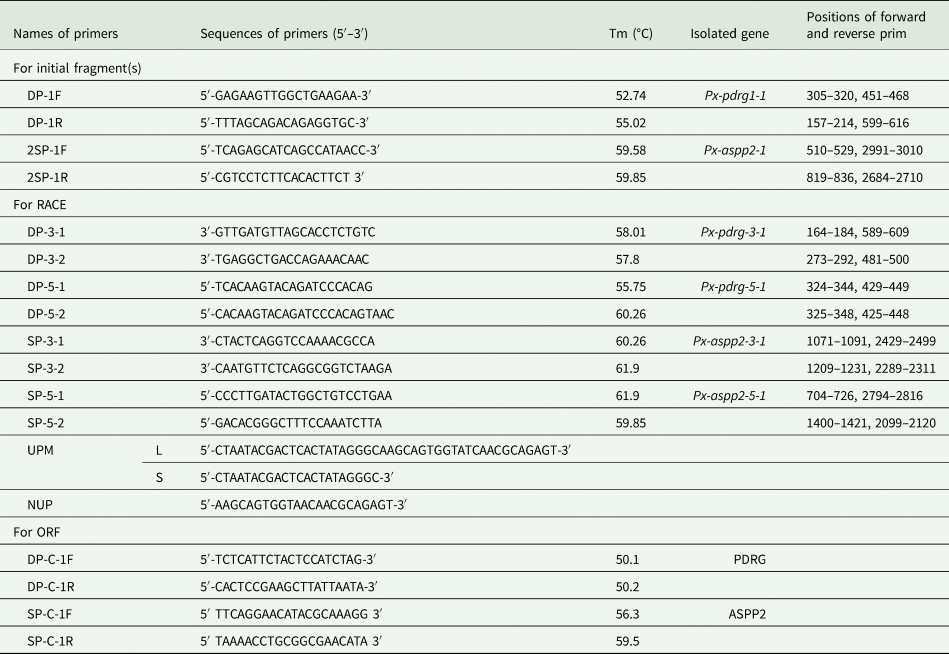
Total RNAs were extracted from DBM adults or pupae using miniBEST universal RNA Extraction Kit (TaKaRa Bio Inc, Otsu, Japan). The first-strand cDNA was synthesized from total RNA with 500 ng by using PrimeScript™ RT reagent Kit (TaKaRa Bio Inc). The initial fragments of PDRG and ASPP2 (named as Px-pdrg1-1and Px-aspp2-1 in DBM, respectively) were amplified by RT-PCR with the specific primers (table 1). These Primers were designed on the genetic information provided by the DBM Genome Database using Primer 5.0. PCR and the thermal cycling conditions were employed as follows: 94°C denaturation for 3 min, followed by 35 cycles of 94°C for 1 min, an annealing step at 56°C (56°C for PDRG; 54°C for ASPP2) for 30 s, and extension at 72°C for 2 min, finally followed by an extension step at 72°C for 7 min. In this step, two internal fragments of Px-pdrg and Px-aspp2 with the length of 294 and 2174 bp were obtained.
Sequences of primers used for cloning Px-pdrg and Px-aspp2 cDNAs of DBM

Rapid amplification of cDNA ends (RACE) of PDRG and ASPP2
For 5′-and 3′-RACE, the first-strand cDNAs for the rapid amplification of cDNA ends (RACE) were synthesized with 1 µg total RNA according to the SMARTer® RACE 5′/3′ Kit User Manual (Takara Bio USA, Inc). The amplification and re-amplification nested specific primers for 3′- and 5′-RACE of PDRG and ASPP2 were used in our experiments (table 1), PCR reactions were run under the following conditions: 94°C for 3 min, followed by 30 cycles of 94°C for 30 s, 60°C for 30 min, and 72°C for 2 min 30 s, finally 72°C for 7 min. The three fragments (the initial fragments, the 5′-and 3′-RACE fragments) and the open reading frame (ORF) of Px-pdrg and Px-aspp2 were cloned and sequenced by Shanghai Biosune Biotechnology Co, Ltd, Shanghai, China. Finally, these fragments were assembled to get the full cDNA sequence of the two genes.
Real-time quantitative PCR (qPCR)
Temperature shock
The pupae and adults of Rc or Sm DBM were pretreated in different thermal stress groups. During the hottest day of the period, the daily temperature in Fuzhou can reach 38–40°C for 6–8 h, 40–42°C for 2–3 h, and 42°C for 1–2 h in the fields. The treatment time and temperature were designed according to the temperature fluctuations during summer. Therefore, to imitate the real temperature fluctuations in the hottest season (July 10–August 10) in Fuzhou (Zhang et al., Reference Zhang, Jing, Li, Li, Bourguet and Wu2015a), these six groups were designed as follows: 38°C for 48 h, 40°C for 8 and 16 h, 42°C for 4 and 8 h, and 44°C −1 h. These treatments were set for. After the exposure of heat stress, the pupae and adults of Rc or Sm DBM were recovered at 25°C for 1 h before they were used in the following experiments.
Determination of mRNA expression
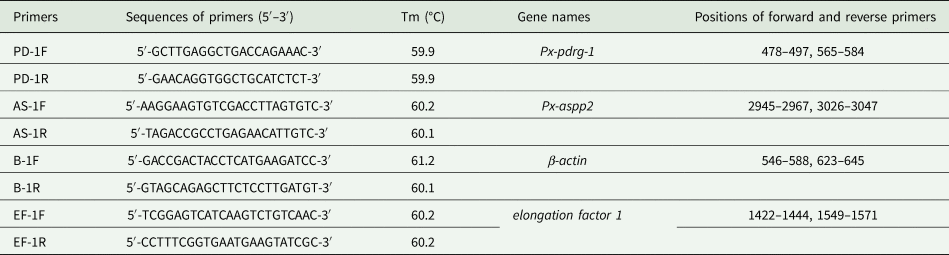
Total RNAs were extracted by TaKaRa miniBEST universal RNA Extraction Kit (TaKaRa Bio Inc) and cDNAs were synthesized with PrimeScript™ RT reagent Kit (Perfect Real Time) (TaKaRa Bio Inc). The expression level of our target genes was detected by real-time quantitative polymerase chain reaction (qPCR) using an Applied Biosystems 7500 Real-Time PCR System (AB, Life Technologies), and RT-qPCR were performed with TB Green™ Premix Ex Taq™ (Tli RNaseH Plus), Bulk (TaKaRa Bio Inc). The specific primers for qPCR analysis were listed in table 2. β-actin and elongation factor 1(EF-1) genes served as the internal reference genes. qPCR conditions were set as follows: 95°C for 30 s, 35 cycles of 95°C for 5 s, 60°C for 34 s, an additional step for measure the SYBR Green fluorescence at annealing temperature for 15 s. According to the threshold cycle (Ct) and equation of the standard curve, the expression level of Px-pdrg and Px-aspp2 in different groups was normalized to the reference genes (EF-1 and β-actin) (Schmittgen and Livak, Reference Schmittgen and Livak2008; Zhang et al., Reference Zhang, Wang, Jing, Zhuang and Wu2015c).
Sequences of primers used for qPCR of Px-pdrg and Px-aspp2 of DBM

Statistical analysis
The significance in the expression level of our target genes across different groups was determined by probit analysis using a DPS data processing system (Tang and Feng, Reference Tang, Feng, Tang and Feng1997).
Results
Cloning and sequence analysis of Px-pdrg and Px-aspp2
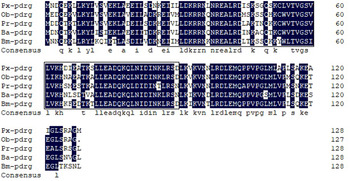
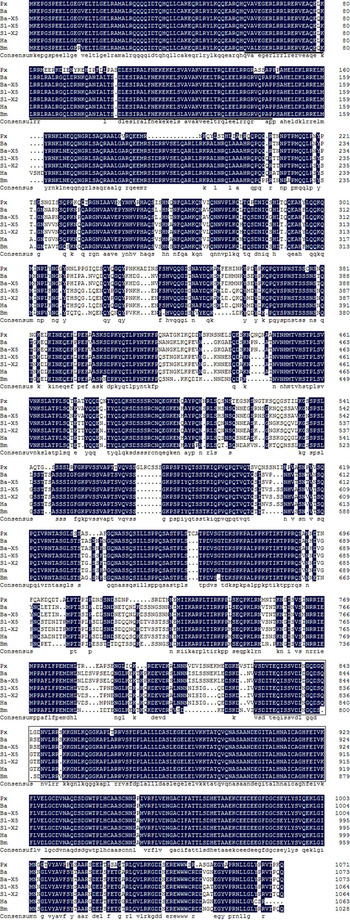
The full-length cDNA sequence of Px-pdrg (MH727581) and Px-aspp2 (MH727582) is composed of 721 and 4201 bp nucleotides, respectively. The length of Px-pdrg (260–653 bp) and Px-aspp2 (491–3710 bp) ORF sequence was 393 and 3209 bp, respectively. The polypeptide, being encoded by Px-pdrg and Px-aspp2, was consisted of 130 and 1072 amino acids. Their calculated molecular weight is 14.58 and 118.91 kDa, the theoretical pI (isoelectric point) for them is 8.69 and 7.33, respectively. The SMART (http://smart.embl-heidelberg.de/) analysis show that the ORF of Px-pdrg contains a BRLZ (basic region leucine zipper) domain (position 26–93 aa) (fig. 1 and fig. S1). Px-aspp2 has the typical conservative characteristics of the ASPP family, possessing a ARD (ankyrin repeat domain) domain with four ANK structural domains (position 830–976 aa), a SH3 domain (position 1007–1065 aa) and a coiled coli region (position 57–145 aa) (fig. 2 and fig. S2).
Multiple alignments of the deduced amino acid sequence of Px-pdrg with other known PDRG aligned by DNAMAN V6. Identical and 100% similar amino acids are labeled below, the dark areas also represent the same amino acids respectively. Black rectangles represent the phylogenetically BRLZ conserved domain. The species names and GenBank accession numbers are as follows: Px-pdrg: Plutella xylostella (MH727581); Ob-pdrg: Operophtera brumata (KOB77734.1); Pr-pdrg: Pieris rapae (XP_022128154.1); Ba-pdrg: Bicyclus anynana (XP_ 023934411.1); Bm-pdrg: Bombyx mori (XP_004928502.1).

Multiple alignments of Px-aspp2 amino acid sequence in DBM with other ASPP2 in different species aligned by DNAMAN V6. The same amino acid area is covered in dark,100% of similar sites are indicated with amino acids at below, respectively. The underline marks coiled coli region(position57–145). Black rectangles represent ARD (ankyrinrepeat domain). The overline represent SH3 (Src-homolog y3 domain), the species names and GenBank accession numbers are as follows: Px: Plutella xylostella (MH727582); Ba: Bicyclus anynana (XP_023941372.1); Ba-X5: Bicyclus anynana (XP_02394 1371.1); Sl-X5: Spodoptera litura (XP_022827177.1); Sl-X2: Spodoptera litura (XP_022827174.1); Ha: Helicoverpa armigera (XP_021193 800.1); Bm: Bombyx mori (XP_012547617.1).

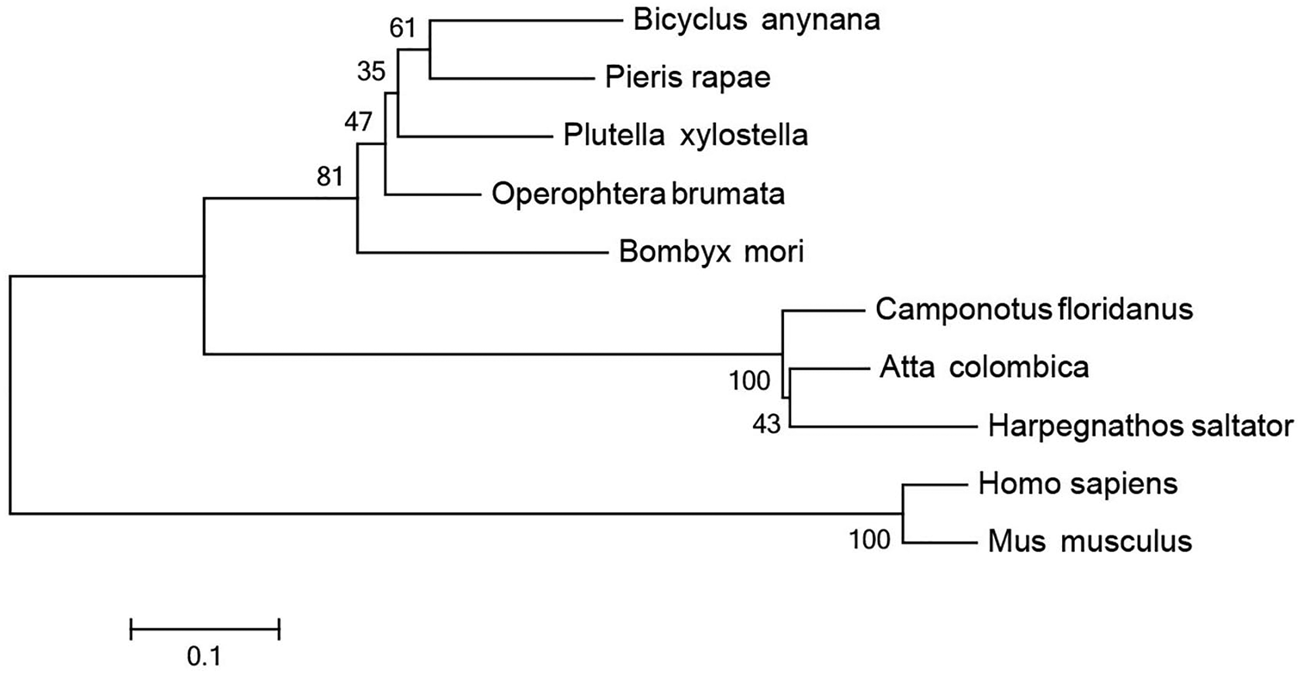
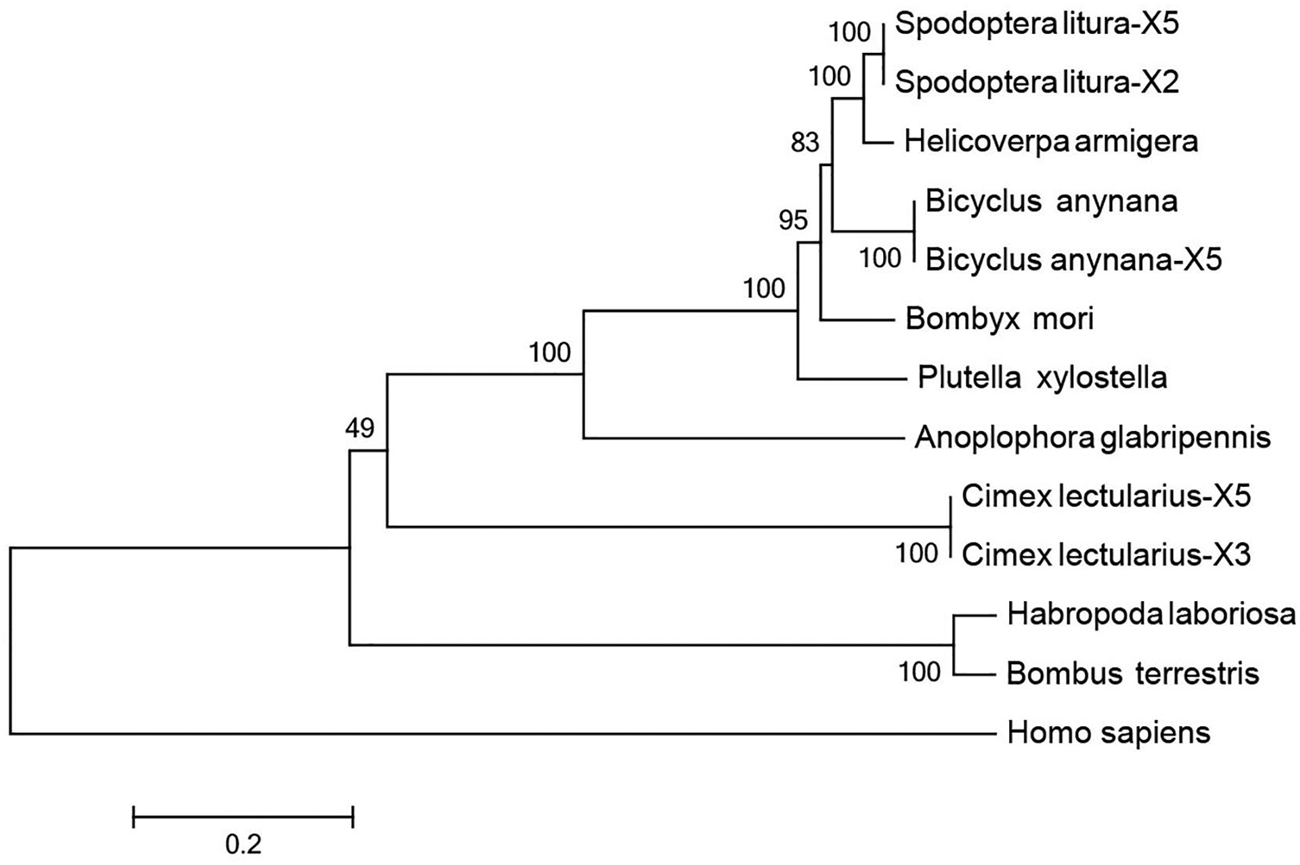
Px-pdrga and Px-aspp2 have a higher identity with the reported orthologs from Lepidoptera. For instance, Px-pdrg has 82, 76, 73, and 71% identity with Operophtera brumata (KOB77734.1), Pieris rapae (XP_022128154.1), Ba-pdrg, Bicyclus anynana (XP_ 023934411.1) (fig. 3). When compared to those proteins from hymenoptera, the amino acid sequence of Px-pdrg exhibits 55, 54, and 54% identity with Camponotus floridanus (XP_011262329.1), Harpegnathos saltator (XP_011140755.1), and Atta colombica (KYM88266.1). As compared to those of vertebrate, Px-pdrg only has 38.76 and 43% identity with Homo sapiens (NP_110442.1) and Mus musculus (EDL06 006.1) (fig. 3). Px-aspp2 has depicted 76, 77, 76, and 73% identity with Bicyclus anynana (XP_023941372.1), Spodoptera litura (XP_022827177.1), Helicoverpa armigera (XP_021193 800.1), and Bombyx mori (XP_012547617.1) (fig. 4). In contrast to Hymenopteran, Px-aspp2 has 67 and 65% identity with Habropoda laboriosa (KOC70575.1) and Bombus terrestris (XP_012167971.1). For Coleopteran, Px-aspp2 shows 40 and 49% identity with Cimex lectularius-X5 (XP_ 0142425 20.1) and Anoplophora glabripennis (XP_018576232.1). Px-aspp2 only has 56.3% identity with Homo sapiens (AK294432.1) (fig. 4). The phylogenetic analysis showed that Px-pdrg and Px-aspp2 belonged to PDRG and ASPP family, respectively (figs 1–4).
Based on amino acid sequence encoded by Px-pdrg, NJ phylogenetic tree was constructed by MEGA 6. 0 software. The bootstrap values numbers above the branches (1000 replicates). Px-pdrg-1 protein family members used in phylogenetic analysis were as follows: Bicyclus anynana (XP_023934411.1); Pieris rapae (XP_022128154.1); Plutella xylostella (MH727581); Operophtera brumata (KOB77734.1); Bombyx mori (XP_004928502.1); Camponotus floridanus (XP_011262329.1); Atta colombica (KYM88266.1); Harpegnathos saltator (XP_011140755.1); Homo sapiens (NP_110442.1); Mus musculus (EDL06006. 1).

NJ phylogenetic tree based on amino acid sequence encoded by Px-aspp2 and made by MEGA 6.0. The number above the branch is the bootstrap values at (1000 replicates),The following ASPP2 proteins family members were used in the phylogenetic analysis: Spodoptera litura-X5 (XP_022827177.1); Spodoptera litura-X2 (XP_022827174.1); Helicoverpa armigera (XP_021193800.1); Bicyclus anynana (XP_023941372.1); Bicyclus anynana-X5 (XP_023941371.1); Bombyx mori (XP_01254 7617.1); Plutella xylostella (MH727582); Anoplophora glabripennis (XP_018576232.1); Cimex lectularius-X5 (XP_ 0142425 20.1); Cimex lectularius-X3 (XP_014242517.1); Helicoverpa armigera (XP_021193800.1); Bombus terrestris (XP_012167971.1); Homo sapiens (AK294432.1).

Heat stress-induced expression of Px-pdrg and Px-aspp2
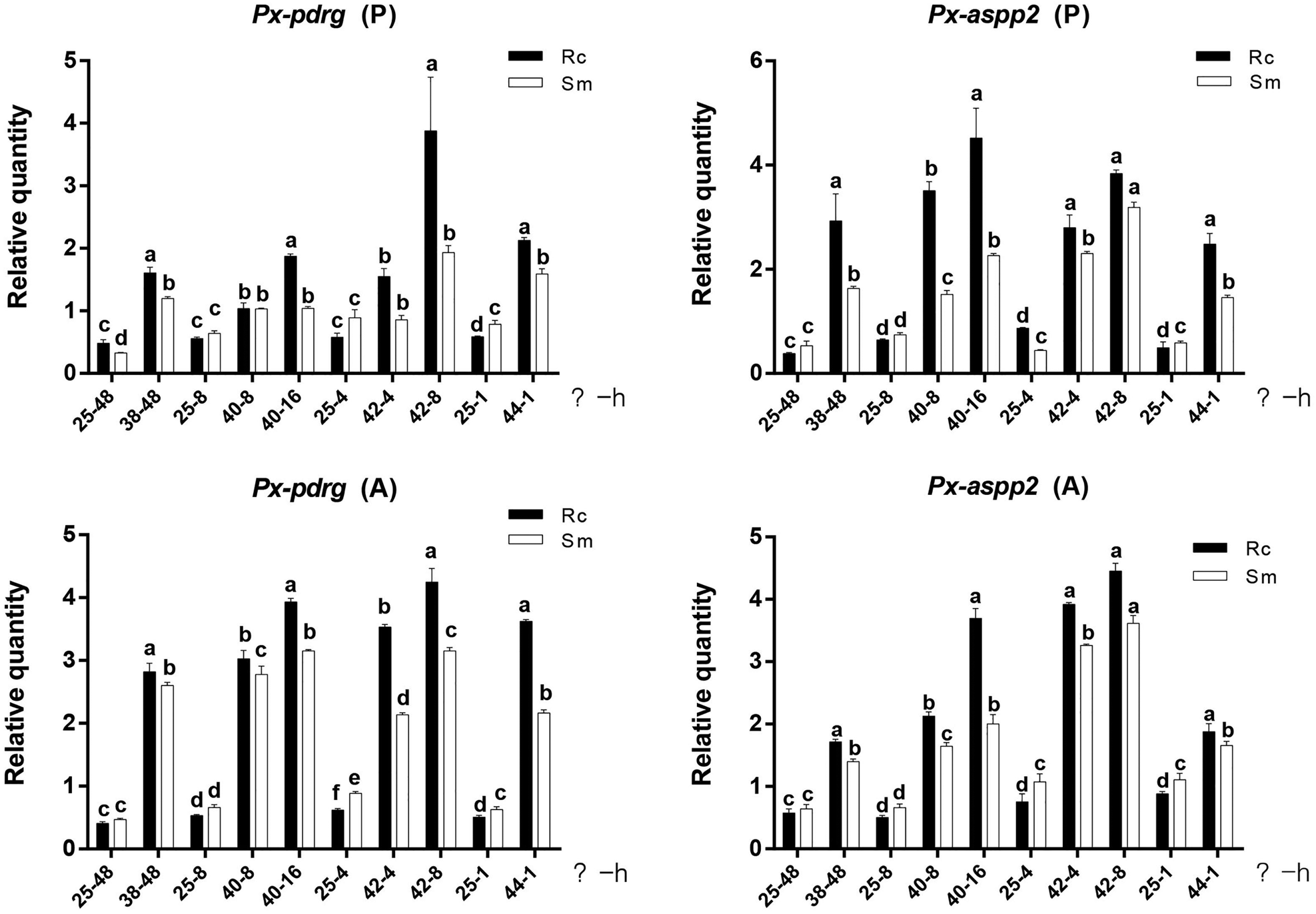
As shown in fig. 5, the basic expression level of Px-pdrg and Px-aspp2 in pupae or adults was relatively lower in Rc or Sm DBM at 25°C. Their expression level in adult was significantly higher than those in pupae under the exposure of heat shock (at 42 and 44°C), and the greatest transcript abundance of Px-pdrg was found in pupae and adults at 42°C-8 h. The highest expression level of Px-aspp2 was detected in pupae at 40°C-16 h, or in adult at 42°C-8 h. The highest thermal excitation effect of Px-pdrg was found in pupae at 42°C-8 h and that of Px-aspp2 in pupae and adults. The two genes were drastically induced to express in Rc and Sm DBM adults or pupae after being exposed to heat stress, and the expression level of Px-pdrg in adult was higher than that in pupae. Although the expression level of the two genes was up-regulated, the up-regulation expression magnitude of the two genes in DBM Rc pupae and adults was higher than that of Sm ones.
The relative expression levels of Px-pdrg and Px-aspp2 in RC (black) and SC (white) under heat stress. Px-pdrg (P) and Px-aspp2 (P) = pupae, Px-pdrg (A) and Px-aspp2 (A) = adults. Temperature treatment included 38°C-48 h; 40°C-8,16 h; 42°C-4,8 h; and 44°C-1 h, respectively. Each bar represents the average of three independent experiments. The lower-case letters indicate a significant difference between Rc and Sm DBM (Duncan's-test, P ≤ 0.05).

Discussion
The full cDNA sequence of Px-pdrg and Px-aspp2 were identified from P. xylostella. Although the deduced amino acid sequence has some differentiations as compared to those of vertebrates, two proteins, being encoded by the two genes, showed highly conserved relationships with these orthologs.
In human, PDRG gene locates at the long arm of chromosome 20 and encodes 133 amino acids protein (Luo et al., Reference Luo, Huang and Sheikh2003; Jiang et al., Reference Jiang, Luo, Shi, Sun, Sun, Sheikh and Huang2011). In this study, Px-pdrg spans 721 bp, contained 395 bp of the ORF, which produced a putative protein comprising 130 amino acids, have a conversed domain BRLZ and shows higher identity with the ortholog of other insect species. The ASPPs protein family consists of three members, ASPP1, ASPP2 and ASPP (iASPP) (Samuels-Lev et al., Reference Samuels-Lev, O'Connor, Bergamaschi, Trigiante, Hsieh, Zhong, Campargue, Naumovski, Crook and Lu2001; Trigiante and Lu, Reference Trigiante and Lu2006). ASPP2 shares highly conserved C-terminus domains: an ankyrin repeat domain (ARD) and an Src-homology 3 (SH3) domain (Slee and Lu, Reference Slee and Lu2003). In this study, Px-aspp2 contains an ARD (ankyrin repeat domain) domain with four ANK structural domains and an SH3 domain (figs 1 and 2). The sequences of the two genes in several insect species have been registered in NCBI. According to the Blast results, Px-pdrg exhibits 71–82% similarity with those of other Lepidopteran insects (such as Operophtera brumata, Pieris rapae, Bicyclus anynana, and Bombyx mori), 54–55% to Hymenoptera insects (such as Camponotus floridanus, Harpegnathos saltator, and Atta colombica), and 42.3% similarity to Mus musculus. The amino acid sequence of Px-aspp2 possesses 73–76% similarity as compared to other Lepidopteran insects (such as Bicyclus anynana, Spodoptera litura, Helicoverpa armigera, and Bombyx mori), and 65–67% to Hymenoptera insects (such as Habropoda laboriosa and Bombus terrestris), and 40 and 49% to Coleopteran (such as Cimex lectularius and Anoplophora glabripennis), 56.3% to H. sapiens. The phylogenetic analysis showed that Px-pdrg and Px-aspp2 have the highest identity to those of Lepidopteran (figs 3 and 4). Moreover, Px-pdrg and Px-aspp2 have highly conserved functional domains that have been reported in other species. Therefore, these results indicate that Px-pdrg and Px-aspp2 are the member of the PDRG and ASPPs family, respectively.
PDRG and ASPP2 are p53-related genes that play the important role in apoptosis (Jiang et al., Reference Jiang, Luo, Shi, Sun, Sun, Sheikh and Huang2011), Moreover, PDRG can be upregulated to promote apoptosis under the stress of genotoxic such as ultraviolet radiation (Luo et al., Reference Luo, Huang and Sheikh2003). ASPP2 expression levels are generally increased in tumor cells and cells with unstable replication. High temperature is a common environmental stress which can promote apoptosis in a variety of organisms (Juan et al., Reference Juan, He-Shuang, Guo, Zhong-Hao and Cai2006). In DBM, the study of thermal stress had been studied (Shirai, Reference Shirai2000). As compared to those in Sm DBM, the life history parameters (Zhang et al., Reference Zhang, Jing, Li, Li, Bourguet and Wu2015a) and physiological protection (Zhang et al., Reference Zhang, Jing, Li, Li, Bourguet and Wu2015a, Reference Zhang, Wu, Wang, Liu, Zhuang and Wu2015b, Reference Zhang, Wang, Jing, Zhuang and Wu2015c) are inhibited significantly, while the expression levels of apoptosis and the damages of reproduction cell associated genes are increased significantly under heat stress in Rc DBM.
The present study aimed at revealing the effects of high temperature on the mRNA expression of the apoptosis related genes (Px-pdrg and Px-aspp2) in insecticide-resistant and -susceptible DBM. We found the expression levels of Px-pdrg and Px-aspp2 genes in both Rc and Sm DBM were low at normal temperature (25°C), but heat stress upregulated their expression levels significantly. It has been reported that the apoptosis is closely related to the up-regulation of PDRG and ASPP2 genes (Luo et al., Reference Luo, Huang and Sheikh2004). The similar phenomenon was also observed in the present study. For instance, the highest thermal excitation effect of Px-pdrg was found in pupae under the exposure of 42°C-8 h and that of Px-aspp2 in pupae and adults. In general, higher up-regulation expression levels of the two genes were found in Rc DBM. The fitness cost in life-history, behavior, and physiological traits in resistant insect species is a general tendency which has been determined in many insect species. However, these experiments were carried out under a suitable temperature (Gassmann et al., Reference Gassmann, Carriere and Tabashnik2009; Zhang et al., Reference Zhang, Jing, Li, Li, Bourguet and Wu2015a). The higher expression level of caspase-7 in mitochondria apoptosis pathway was found in insecticide-resistant DBM under heat stress (Zhuang et al., Reference Zhuang, Wang, Miyata, Wu, Wu and Xie2011, Reference Zhang, Huang, Chen, Yu, Wu and Wu2014, Reference Zhang, Wu, Wang, Liu, Zhuang and Wu2015b, Reference Zhang, Chen, Yang, Kong, Bourguet and Wu2017). The significantly higher expression level of Px-pdrg and Px-aspp2 in p53-mediated apoptosis pathway was firstly found in DBM after being exposed to heat stress, indicating the higher fitness cost in insecticide-resistant insects. In insects, energy and resource are often allocated among different physiological activities to obtain optimal fitness. Physiological and genetic mechanisms to deal with toxic pesticides, sometimes these processes lead to the excessive expression of detoxifying enzymes in tissues or inducing mutations in target sites (Kliot and Ghanim, Reference Kliot and Ghanim2012). The fitness costs in insecticide-resistant insects are often from shutting down some normal cell functions during the stress-induced responses. It is suggested that the expression level of genes in each species and populations was the trade-off between benefits and costs (Kristensen et al., Reference Kristensen, Hoffmann, Overgaard, Sørensen, Hallas and Loeschcke2008; Zhang et al., Reference Zhang, Wu, Wang, Liu, Zhuang and Wu2015b). Significant fitness cost, including lower thermotolerance (Zhang et al., Reference Zhang, Jing, Li, Li, Bourguet and Wu2015a) and higher damage in development of wing veins (Zhang et al., Reference Zhang, Wu, Wang, Liu, Zhuang and Wu2015b) under heat stress in Rc DBM under heat stress, i.e., might be associated with their significantly higher expressions of apoptosis gene, such as caspase-7, Apaf-1, and cytochrome c gene (Zhuang et al., Reference Zhuang, Wang, Miyata, Wu, Wu and Xie2011, Reference Zhang, Huang, Chen, Yu, Wu and Wu2014, Reference Zhang, Wu, Wang, Liu, Zhuang and Wu2015b, Reference Zhang, Chen, Yang, Kong, Bourguet and Wu2017), lower hsps gene expression (Zhang et al., Reference Zhang, Wang, Jing, Zhuang and Wu2015c), and significantly higher transcript abundance of Px-pdrg and Px-aspp2 in this study. The stimulation of effector caspases in the mitochondrial pathway (Zhuang et al., Reference Zhuang, Wang, Miyata, Wu, Wu and Xie2011; Zhang et al., Reference Zhang, Huang, Chen, Yu, Wu and Wu2014, Reference Zhang, Wu, Wang, Liu, Zhuang and Wu2015b, Reference Zhang, Chen, Yang, Kong, Bourguet and Wu2017) is closely related to the apoptosis network. Meanwhile, PDRG and ASPP2 are also important genes to promote apoptosis (Luo et al., Reference Luo, Huang and Sheikh2003; Susan et al., Reference Susan, Michael, Zehavit and Ygal2003; Brodsky et al., Reference Brodsky, Weinert, Tsang, Rong, Mcginnis, Golic, Rio and Rubin2004; Titen and Golic, Reference Titen and Golic2008). The detailed function of Px-pdrg and Px-aspp2 in the apoptosis signaling of DBM individuals under heat stress needs further extensive investigations.
The RC DBM insects commonly established in the field, and its required resistance is not only evolved by insecticide screening, but also by high temperature stress which can induce the apoptosis. Our findings indicate the RC DBM insects have higher transcript abundance of apoptosis-related genes and greater fitness costs. Consequently, fluctuations in temperature can change the development of insecticide resistance in DBM. That is, the population trend of resistant DBM at different temperatures will alter correspondingly due to the different degree of apoptosis. It is important that fitness cost caused by insecticide resistance should be considered to maximize the effect of insecticides and minimize costs and residues of controlling insects when the insect management program is designed.
Supplementary material
The supplementary material for this article can be found at https://doi.org/10.1017/S0007485319000543.
Acknowledgements
This study was financially supported by the National Natural Science Foundation of China (NNSFC) (31272049) and Key foundation of technology project of Fujian Province (2014N0003).
Author contributions
Conceived the experiments, analyzed the data, generated the tables, produced the figures, and wrote the manuscript: GW. Performed the experiments: YW, JNW, XZC, QXH, QQL, GW.
Conflict of interests
None.