Introduction
The social and economic reforms of Oman in 1970 have resulted in the development of various industries within the country, thus increasing the possibility of industrial accidents in the country. Reference Al-Wahaibi1 Industrial chlorine gas exposure incidence has never before been reported from Oman. This study shows the clinical presentations and outcomes of patients after acute industrial chlorine gas exposure in Oman. Relevant details of the event are also discussed in the study. Chlorine is a yellow-green gas with a diatomic molecule. Reference Vajner and Lung2 Although Carl Wilhelm Scheele described chlorine as a new oxide in 1774, it was Sir Humphry Davy who confirmed in 1810 that the gas is a pure element and he named it after the Greek word “khloros,” meaning “pale-green.” Reference Davy3 The most common compound of chlorine is Sodium Chloride (common salt). It is water soluble to some extent and a strong oxidizing agent that is two-times heavier than air. Release of chlorine vapors from swimming pools, industrial accidents, educational institutions, chemistry lab accidents, and chemical transportation accidents are the main causes of its release. Reference Winder4,Reference Nemery, Hoet and Nowak5 Symptoms resulting from chlorine exposure vary from mild throat and eye irritation to severe bronchoalveolar inflammation resulting in death. 6
Materials and Methods
Type of Study
This is a retrospective observational study of 15 patients exposed to chlorine gas after an accidental leak in a metal melting factory in Oman.
Objective
The main objective is to study the different clinical presentations and outcomes of patients after acute industrial chlorine gas exposure in Oman with evaluation of overall incident management to help develop a chemical exposure incident protocol.
Inclusion/Exclusion Criteria
Inclusion criteria consists of all patients exposed to chlorine gas brought by Emergency Medical and Ambulance Services (EMS) during the incidence.
After Medical Research and Ethical Committee (MREC) approval no. 1208, data of all 15 patients involved in a chlorine gas accident were retrieved for clinical signs and symptoms from the hospital information system (HIS): InterSystems TrackCare 2015.1 (Health Share Foundations 2014.1.5 Build 851; InterSystems Corporation; Cambridge, Massachusetts USA). The toxicologist, nursing, allied specialist’s notes, and related hospital charts were studied for overall handling of the incidence.
Incidence
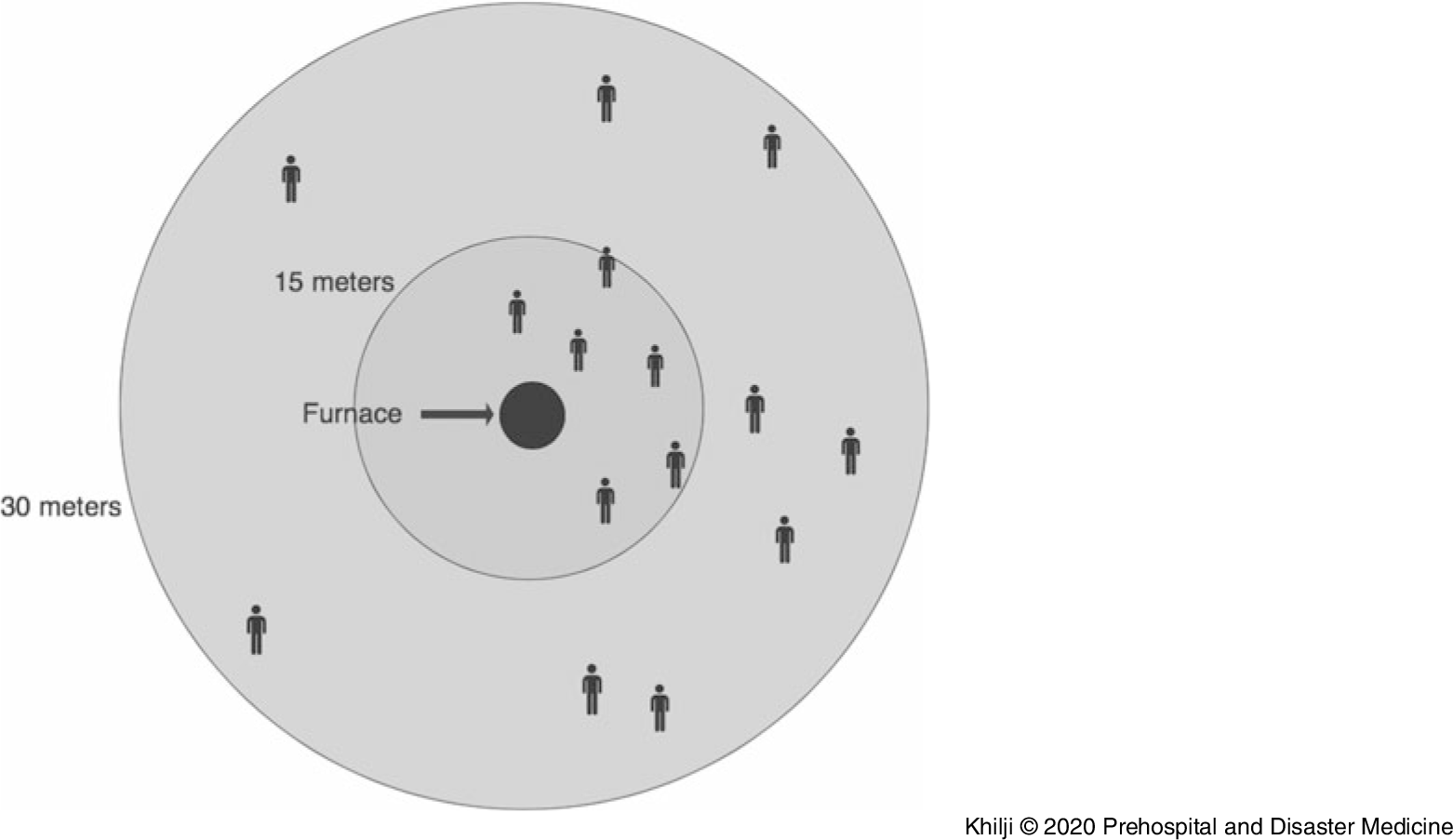
On October 15, 2015, an incident of chlorine gas leakage occurred at a metal melting factory in Rusayl Industrial Estate, approximately 18 kilometers south east of Muscat. The accident happened when the valves of one of the cylinders were removed before putting it into the furnace for melting. When the valves were removed, a yellowish gas with intense odor was leaked from the cylinder, which stopped after a couple of minutes, as per one of the victims handling that cylinder. Immediately after leaking into the gas, the victim handling the cylinder felt eye and throat irritation and developed cough with some shortness of breath. His other nearby colleagues also started having similar complaints. One of them then generated an emergency call at 9999 (Oman’s universal emergency number). Police, EMS, and a HAZMAT team arrived on the scene within five minutes. They cordoned off the area and evacuated a total of 15 persons in and around the area. Six victims were inside the factory, within an area of 15 meters. They also picked up an additional nine persons in the outer area of the factory, within the range of 30 meters (Figure 1). All victims were male within the age group of 25 to 44 years with a mean age of 29.5 years.
Diagrammatic Presentation of the Incidence Site with Probable Location of 15 Victims.
Note: Six were present inside the factory within the radius of 15 meters and required admission; the remaining nine were outside the factory and were discharged after symptomatic treatment.

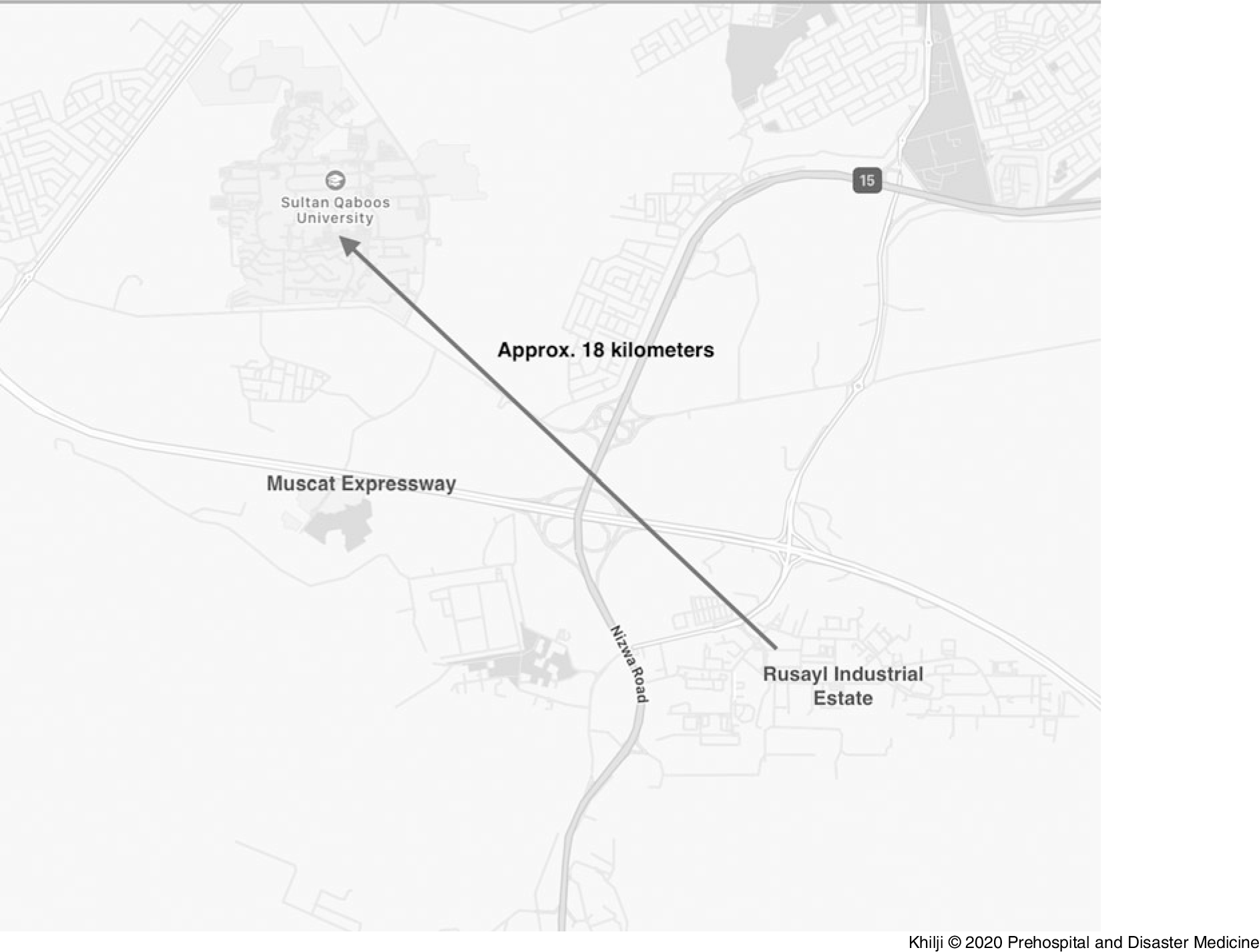
Other factories in and around the area were closed, as it was nighttime. The EMS control center alerted Sultan Qaboos University Hospital (SQUH; Seeb, Oman) emergency department (ED) once teams reached the site of the accident at around 10:30pm. Upon receiving the gas exposure call alert from the EMS control center, the medical, nursing, and administrative teams were assigned to specific areas of the SQUH ED. A room was allocated at SQUH triage for the triage of those affected, with nurses having full personal protective equipment (PPE) and decontamination facilities checked. The SQUH ED received the first patient at approximately 15 minutes after the emergency was alerted by the EMS control center (Figure 2).
Map Showing Distance Between Rusayl Industrial Estate and Sultan Qaboos University Hospital.
Note: Adopted from Google Maps 2018 (Google Inc.; Mountain View, California USA).

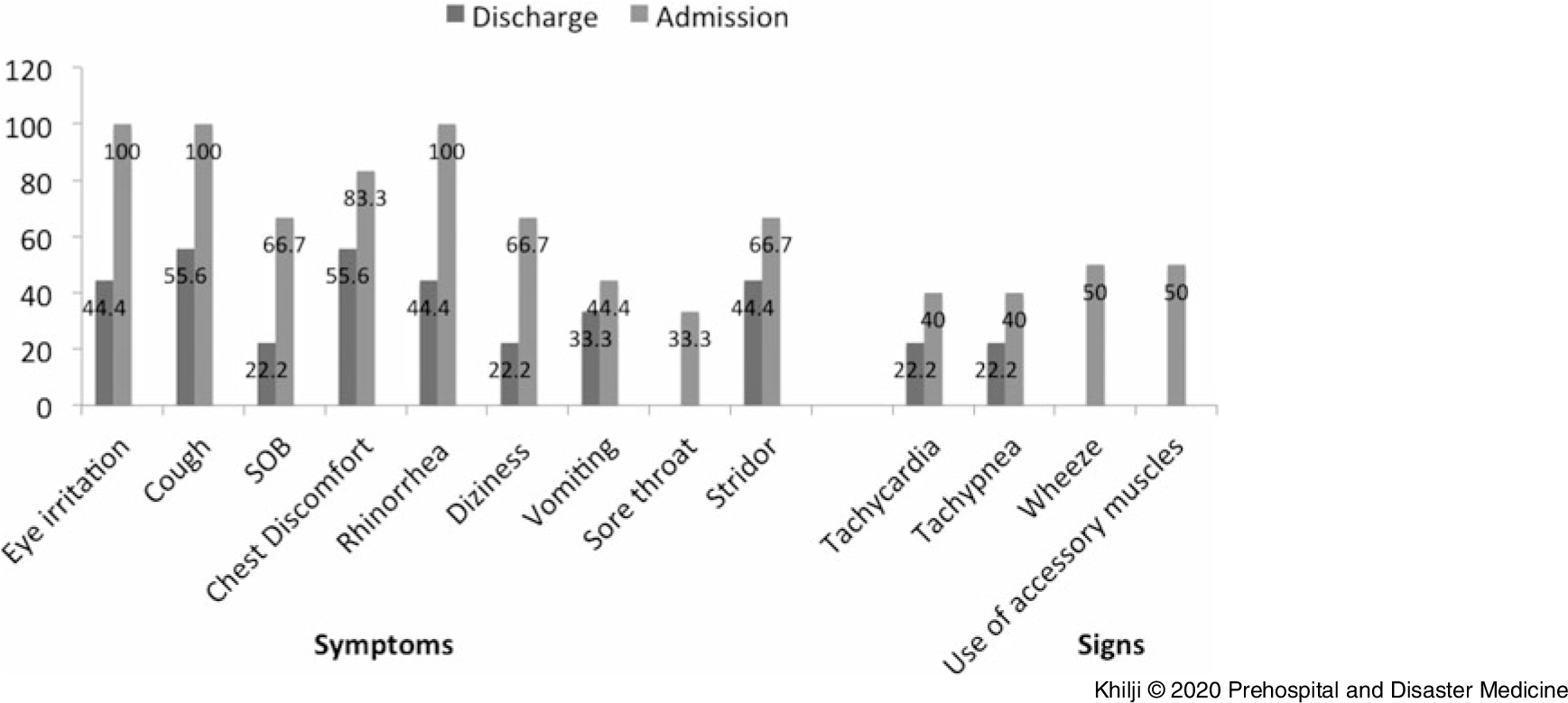
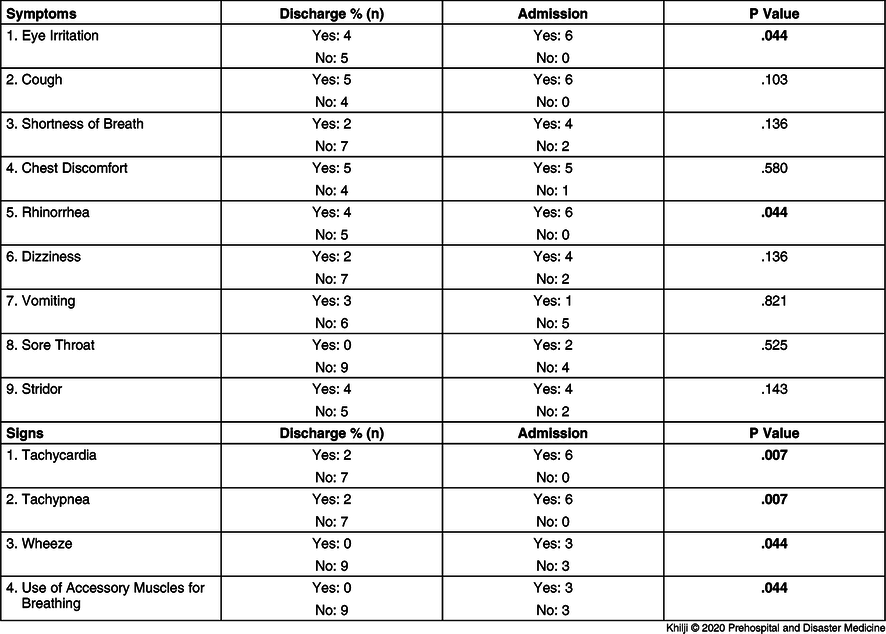
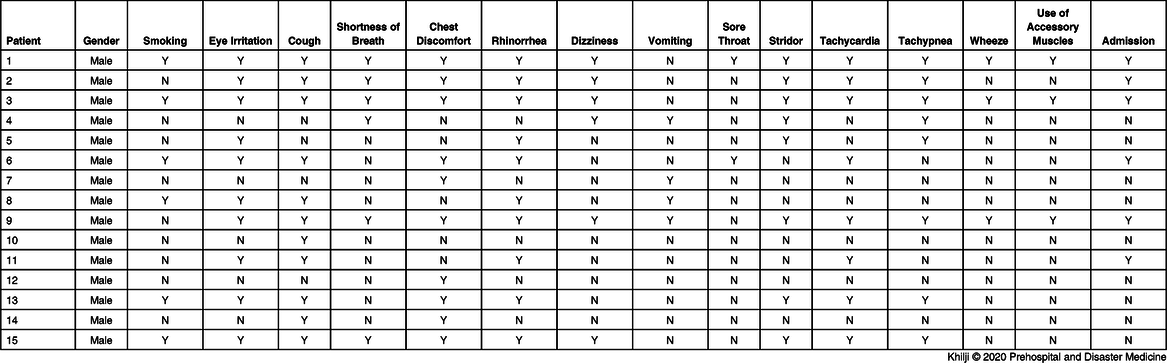
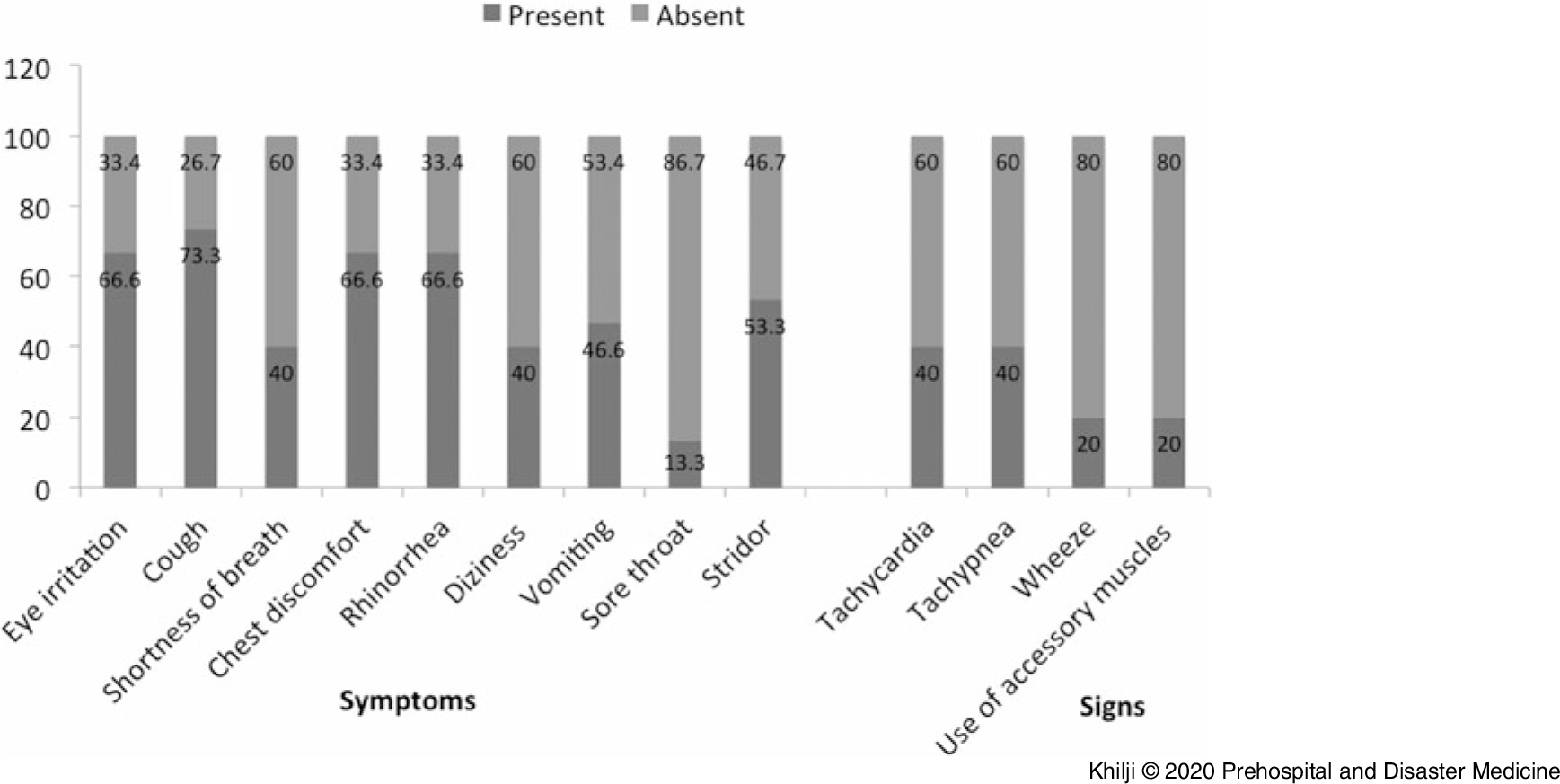
The decontamination of all affected individuals was done at a dedicated area near the emergency entrance. They were given a body-cleaning facility with a water shower and change of clothes after taking a shower. After decontamination measures, patients entered into ED triage where triage was done according to Canadian Triage and Acuity Scale (CTAS). Reference Beveridge, Clarke, Janes, Savage, Thompson and Dodd7 Vitals including oxygen saturation with pulse oximeter and peak expiratory flow with peak flow meter were checked at triage for all patients. They were specifically asked about smoking and history of any lung disease like asthma or chronic obstructive pulmonary disease (COPD). Six patients with oxygen saturation of less than 97% were taken into the emergency resuscitation area and admitted later, whereas nine patients were discharged from the ED after initial management with humidified oxygen, beta2 agonist nebulization, and six hours of observation. The six patients taken from the resuscitation area were treated with humidified oxygen, beta2 agonist nebulization, and intravenous steroids. In addition to assigned ED physicians, all patients were attendant by an on-call toxicologist and plans were made according to toxicologist advice. Chest x-ray, electrocardiogram, arterial blood gas, full blood count, and electrolytes were also done in these patients, and they were later admitted into the medical ward (isolation area). Admitted patients were monitored for oxygen saturation, heart rate, blood pressure, and peak expiratory flow measurements. All of them were discharged within three days of an uneventful hospital stay. The symptoms of eye irritation, cough, shortness of breath, chest discomfort, rhinorrhea, dizziness, vomiting, sore throat, stridor, and signs of tachycardia, tachypnea, wheeze, and use of accessory muscles for breathing were selected from the HIS for analysis, as they were mentioned in notes of all patients seen by different physicians during the incidence. Any sign or symptom which was not mentioned in every patient’s note was excluded from the study (Figure 3). Analysis of selected signs and symptoms compared to outcome (admission) was done in IBM SPSS software version 22.0 (2013: IBM Corp.; Armonk, New York USA) using fisher exact test. Fisher exact test was applied due to the small sample size. Admission was taken as a significant outcome. P value of <.05 was taken as significant for any sign or symptom correlation with outcome. Eye irritation, rhinorrhea, tachycardia, tachypnea, wheeze, and use of accessory muscles to breathe have shown significant correlation with outcome (admission) having P value of <.05 (Table 1).
Signs and Symptoms Present or Absent Shown as Percentage.
Abbreviation: SOB, shortness of breath.

Relationship of Signs and Symptoms with the Outcome (Admission)

Note: Fischer exact test applied for P values.
Results
All 15 patients brought from the scene were analyzed for selected signs and symptoms (Table 2). Six (40%) patients with oxygen saturation of less than 97% were taken into the emergency resuscitation area and nine (40%) patients were discharged from the ED after initial management with humidified oxygen, beta2 agonist nebulization, and six hours of observation. The important post-chlorine gas exposure clinical symptoms were eye irritation (66.6%), cough (73.3%), shortness of breath (40.0%), chest discomfort (66.6%), rhinorrhea (66.6%), dizziness (40.0%), vomiting (46.6%), sore throat (13.3%), and stridor (53.3%). Important signs included tachycardia (40.0%), tachypnea (40.0%), wheeze (20.0%), and use of accessory muscles (20.0%; Table 2 and Figure 3). The presence or absence of clinical features in admitted and discharged patients is shown in Figure 4.
Distribution of Signs and Symptoms among the Victims

Note: Tachycardia = heart rate >100/min; Tachypnea = respiratory rate >16/min.
Percentage of Signs and Symptoms in Discharge and Admitted Patients.

Only two symptoms, eye irritation and rhinorrhea, showed positive relation with the outcome of admission, whereas all signs of tachycardia, tachypnea, wheeze, and use of accessory muscles showed positive relation with the outcome of admission. Admission was taken as a significant outcome with P value of <.05 for any sign or symptom correlating with the outcome (Table 1).
Discussion
Chlorine gas is an irritant to the lungs, eyes, and throat causing burning sensation and watering from eyes, cough, and shortness of breath. It is a toxic inhalant and the victims showed a latency period from the time of exposure to the development of symptoms. Reference Cone, MacMillan and Parwani8,Reference Neal9 Clinical signs and symptoms of chlorine gas reported in previous studies include eye irritation, shortness of breath, chest discomfort, sore throat, and dizziness. This study shows symptoms of cough and dyspnea, followed by sore throat and wheezing, as did the studies of Cevik, et al and Bosse, et al. Reference Cevik, Onay, Akmaz and Sezigen10,Reference Bosse11 The important chlorine gas exposure scenarios include exposure to home cleaning products, chlorination reactions in swimming pool, chlorine, transportation accidents, industry-related accidents, and exposure to chemical warfare. Reference Vajner and Lung2 Household cleaners including toilet cleaners, drain openers, and window cleaners contain chlorine and can be the source for accidental or intentional exposure. Reference Vajner and Lung2 Chlorination of swimming pools is another source of chlorine gas exposure and several incidents were reported in the literature. Reference Evans12-Reference Mohan, Kumar, Rao, Bollineni and Manohar14 Chlorine gas was first used as chemical warfare in World War I against allied forces in Ypres, Belgium. Reference Szinicz15 Chlorine is used in a variety of industries, including pesticides, pharmaceutical, plastic, paper, rubber, cosmetic, disinfectant, and battery industry, hence producing the possibility of industrial chlorine exposure. Reference Martinez and Long16-Reference Winder19 Transport-related accidents were also reported. Reference Jones, Wills and Kang20,Reference Van Sickle, Wenck and Belflower21 In this study, the patients were exposed to chlorine gas in a metal melting factory. The total number of patients in this study was 15, and the majority of patients had cough (73.3%); while in another study by Joo-An Kim, et al, cough was found in only 29.6% of patients; and finally in another study by Mohan, et al, cough was found in 97.0% of patients. Reference Mohan, Kumar, Rao, Bollineni and Manohar14,Reference Kim, Yoon and Cho22 The symptom of eye irritation is 66.6% in this study, whereas the Mohan, et al study showed eye irritation in 88.0% of victims. Reference Mohan, Kumar, Rao, Bollineni and Manohar14 The rate of admission (40%) is higher in this study as compared to the study done by Mohan, et al (18.7%) and is almost similar to the study done by Lehavi, et al (50%). Reference Mohan, Kumar, Rao, Bollineni and Manohar14,Reference Lhavi, Leiba and Dahan23 Scene safety is essential in cases of chlorine gas incidents. Level A or B PPE is advised in large-scale industrial or warfare incidents. Reference Martinez and Long16 In swimming pool and residential exposure incidents, PPE is not required as gas dissipates in the air very quickly. Reference Martinez and Long16 In most of the incidents except warfare, large transportation, or large industrial accidents, removal of patients from the site of accident with removal of clothes is enough scene decontamination measures. The main pathophysiology of chlorine toxic effects is due to its reaction with water contained in cells of the conjunctiva epithelium, oral, pharyngeal, nasal, and alveolar mucosa, resulting in cell edema and cell lysis. Reference Barrow, Alarie, Warrick and Stock24-Reference Schraufstaetter, Browne and Harris26 Cough and dyspnea followed by sore throat and wheezing are the most common symptoms, as shown in this study. Reference Cevik, Onay, Akmaz and Sezigen10,Reference Bosse11 Physical examination findings include tachycardia, tachypnea, rhonchi, wheeze, and use of accessory muscles for breathing. The Guloglu, et al study showed wheeze as the main pulmonary finding on physical examination. Reference Güloğlu, Kara and Erten27 Restrictive, obstructive, or both features may be present in the pulmonary function tests. Reference Barret and Faure28,Reference Moulick, Banavali and Abhyankar29 The Van Sickle, et al study showed that hydrogen ion derangement and hypoxia on arrival are associated with a prolonged length of hospital stay. Reference Van Sickle, Wenck and Belflower21 Usually, oxygen saturation and clinical judgment are used to triage chlorine-affected patients. Reference Kirk and Deaton30-Reference Eldridge, Richardson and Michels32 The Culley, et al study of the Graniteville (South Carolina USA) chlorine spill (2005) showed that oxygen saturation has a predictive value in determining the severity of lung injury in chlorine gas exposure patients. Reference Culley, Svendsen, Craig and Tavakoli33 Different triage systems studied previously have not shown any efficacy helping prioritize chlorine-affected patients. Reference Culley, Svendsen, Craig and Tavakoli33 Chlorine is one of the agents, along with ammonia and sulphur dioxide, producing Irritant Gas Syndrome Agent (IGSA); Reference Kirk and Deaton30,34 IGSA clusters have at least one of the respiratory, chest, or ear, nose, throat (ENT) symptoms. The respiratory symptoms include shortness of breath, wheeze, cough, or choking. The ENT symptoms include irritation of the throat, pain, or burning sensation, whereas chest symptoms include chest tightness, chest pain, or burning sensation of chest. Reference Culley, Richter, Donevant, Tavakoli, Craig and DiNardi35 The usual triage system tends to miss the diagnosis of IGSA, along with missing latent signs of chemical agent induced respiratory distress. Reference Culley, Richter, Donevant, Tavakoli, Craig and DiNardi35 The different types of triage systems include: Simple Triage and Rapid Treatment (START), JumpSTART, Sort Assess Life-saving intervention Treatment/Transport (SALT), Chemical Biological Radiological Nuclear (CBRN) mass-casualty triage system, and Emergency Severity Index (ESI). Reference Cone, MacMillan and Parwani8,36-Reference Gilboy, Tanabe and Travers39 The chlorine gas inhalation management mainly depends on the oxygen saturation and clinical presentation of the exposed patients, which includes decontamination measures followed by supportive treatment with humidified supplemental oxygen, beta 2 agonist nebulization, with or without nebulized or parenteral steroids. Reference White and Martin40 Pulse oximetry, peak flow monitoring is also required. Chest x-ray, electrocardiogram, arterial blood gas, full blood count, and electrolytes are required in more sick patients who need admission. Reference Hoffman, Nelson, Howland, Lewin, Goldfrank and Flomenbaum41 Nebulized sodium bicarbonate was used in chlorine gas exposure victims, but its efficacy is not yet confirmed. Reference Güloğlu, Kara and Erten27,Reference Done42 Decline in lung function due to chronic pulmonary inflammation and fibrosis is the usual long-term sequel of chlorine gas exposure. Reference Brooks, Weiss and Bernstein43,Reference Gautrin, Boulet and Boutet44 The main fundamentals of dealing with mass-toxicological events include involved staff protection, proper decontamination of victims, use of water for decontamination at the assigned areas near the emergency, proper triage, patients care at one location, and review by the toxicologist. Reference Lhavi, Leiba and Dahan23 The toxicologist, nursing, allied specialist’s notes, and related hospital charts studied for overall handling of the incidence showed that this study met all above-mentioned fundamentals for dealing with toxicological events; however, there were some gaps found during the evaluation of the incidence handling. The main gaps are the contaminated fluid runoff facility is not available. All staff are prepared to handle a general disaster, but they are not fully prepared to handle a chemical disaster or incidence. There is a need to develop a chemical disaster or incident protocol with regular drills.
Shortcomings Found with Incidence
As stated, all staff is prepared to handle a disaster, but they found themselves less prepared to handle chemical disaster or incidence, as they never had a chemical disaster drill. Contaminated fluid runoff facility is not available.
Limitations
Under- or over-reporting of signs and symptoms by the attending physician and small sample size are the main limitations. Another limitation is the lack of follow-up of affected patients to observe for any long-term complications.
Conclusion
In the presented acute chlorine gas exposure incidence, 15 exposed persons were brought to the ED, out of which six were admitted and nine were discharged after symptomatic treatment. Signs and symptoms of eye irritation, rhinorrhea, tachycardia, tachypnea, wheeze, and use of accessory muscles of breathing show significant relation with the outcome of admission.
Acknowledgment
The author thanks Dr. Suad Al Abri, a consultant toxicologist of the Sultan Qaboos University Hospital, for taking ethical approval for this study.
Conflicts of interest/disclaimer
Presented as a poster presentation at MENATOX Conference, Muscat (Oman) 2017. No conflicts of interest to declare.