Introduction
Lack of insight is a prominent and enduring core feature of schizophrenia (Amador et al. Reference Amador, Flaum, Andreasen, Strauss, Yale, Clark and Gorman1994; Bora et al. Reference Bora, Schitoglu, Asiler, Atabay and Veznedaroglu2007). Insight in psychiatric research has been regarded as a multidimensional construct that refers to the awareness of illness-related issues, which include symptoms of the illness, the need for treatment, and consequences of the illness (Amador et al. Reference Amador, Flaum, Andreasen, Strauss, Yale, Clark and Gorman1994). Furthermore, researchers have identified that a lack of insight is of clinical concern because it is a significant contributor to disastrous consequences among patients with schizophrenia (Lysaker et al. Reference Lysaker, Bryson and Bell2002, Reference Lysaker, Buck, Salvatore, Popolo and Dimaggio2009; Mintz et al. Reference Mintz, Dobson and Romney2003; Mohamed et al. Reference Mohamed, Rosenheck, He and Yuping2014). Consequently, improving insight is a major goal in the treatment of schizophrenia.
Paradoxically, studies have linked higher insight with depression (Cavelti et al. Reference Cavelti, Rüsch and Vauth2014; Belvederi Murri et al. Reference Belvederi Murri, Respino, Innamorati, Cervetti, Calcagno, Pompili, Lamis, Ghio and Amore2015), feelings of hopelessness (Lysaker et al. Reference Lysaker, Roe and Yanos2007; Hasson-Ohayon et al. Reference Hasson-Ohayon, Kravetz, Meir and Rozencwaig2009), reduced self-esteem (Lysaker et al. Reference Lysaker, Roe and Yanos2007; Staring et al. Reference Staring, Van der Gaag, Van den Berge, Duivenvoorden and Mulder2009) and low quality of life (QoL) (Staring et al. Reference Staring, Van der Gaag, Van den Berge, Duivenvoorden and Mulder2009; Margariti et al. Reference Margariti, Ploumpidis, Economou, Christodoulou and Papadimitriou2015). The conflicting results regarding the correlates and consequences of insight in schizophrenia were described as the insight paradox (Lysaker et al. Reference Lysaker, Roe and Yanos2007). Much research has been devoted to identifying the factors that contribute to the aetiology and maintenance of the insight paradox in schizophrenia. First, as Lysaker et al. (Reference Lysaker, Roe and Yanos2007) noted, the role of self-stigma has received considerable attention, offering support for the relationship between high insight and poor psychosocial outcomes. Specifically, they reported that self-stigma moderated the associations of insight with social functioning, hope, and self-esteem among people with schizophrenia spectrum disorders. The hypothesised moderating role of self-stigma has received further support by subsequent findings reported by Staring et al. (Reference Staring, Van der Gaag, Van den Berge, Duivenvoorden and Mulder2009) and Cavelti et al. (Reference Cavelti, Kvrgic, Beck, Rüsch and Vauth2012a ); the detrimental effects of improved insight were more pronounced in patients with higher levels of self-stigma than those with lower self-stigma. Nevertheless, the results reinforced the notion that higher insight might be a vulnerability factor for negative psychosocial outcomes, but not an invariant one.
A theoretically divergent proposition presented in the literature is that increased self-stigma is an effect of good insight and results in poor psychosocial outcomes. The mediation hypothesis has received further support from studies suggesting that self-stigma is an intermediate variable on the association between insight and psychological distress (Hasson-Ohayon et al. Reference Hasson-Ohayon, Levy, Kravetz, Vollanski-Narkis and Roe2011, Reference Hasson-Ohayon, Tuval-Mashiach, Morag-Yaffe, Gaziel, Schapir, Zalsman and Shoval2014). Similarly, using a structural equation modelling (SEM) approach, Cavelti et al. (Reference Cavelti, Kvrgic, Beck, Rüsch and Vauth2012a , Reference Cavelti, Kvrgic, Beck, Kossowsky and Vauth b ) have also discovered that the effect of insight and depressive symptoms was mediated by self-stigma among people with schizophrenia spectrum disorders. This finding may indicate that reducing self-stigma in individuals with high insight may consequently diminish demoralisation.
Researchers have suggested that further exploring the mediator and moderator variables may provide valuable information regarding early interventions in psychiatric illnesses, because these variables would address the fundamental questions of how a specific intervention produces clinical benefits (i.e. what variable(s) mediate(s) the effect of the intervention) and when and for whom a specific intervention is most effective (i.e. what variable(s) moderate the effect of the intervention) (Hopwood, Reference Hopwood2007; Breitborde et al. Reference Breitborde, Srihari, Pollard, Addington and Woods2010). Based on the mediator and moderator criteria proposed by Baron & Kenny (Reference Baron and Kenny1986), clarifying the role of self-stigma in the relationship between insight into illness and psychosocial outcomes is of practical and theoretical importance. This knowledge can facilitate developing a strategy aimed at improving the psychosocial outcomes of individuals with schizophrenia.
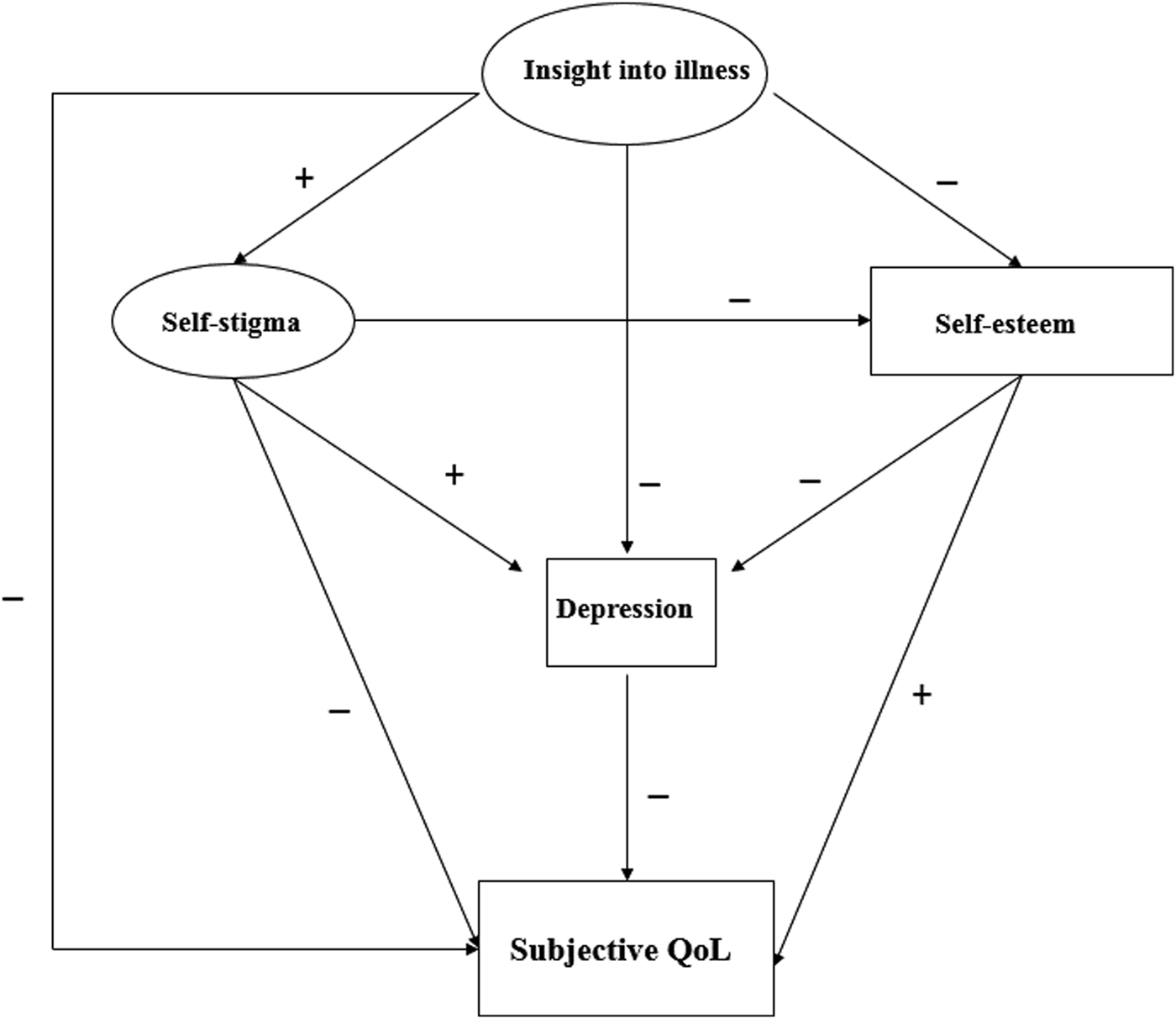
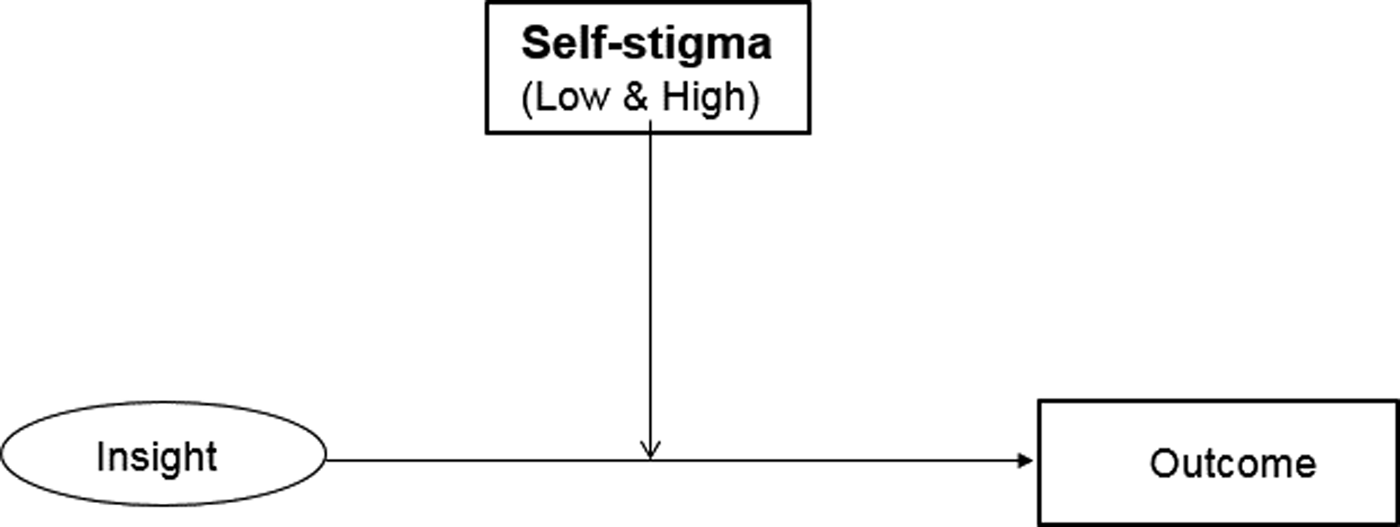
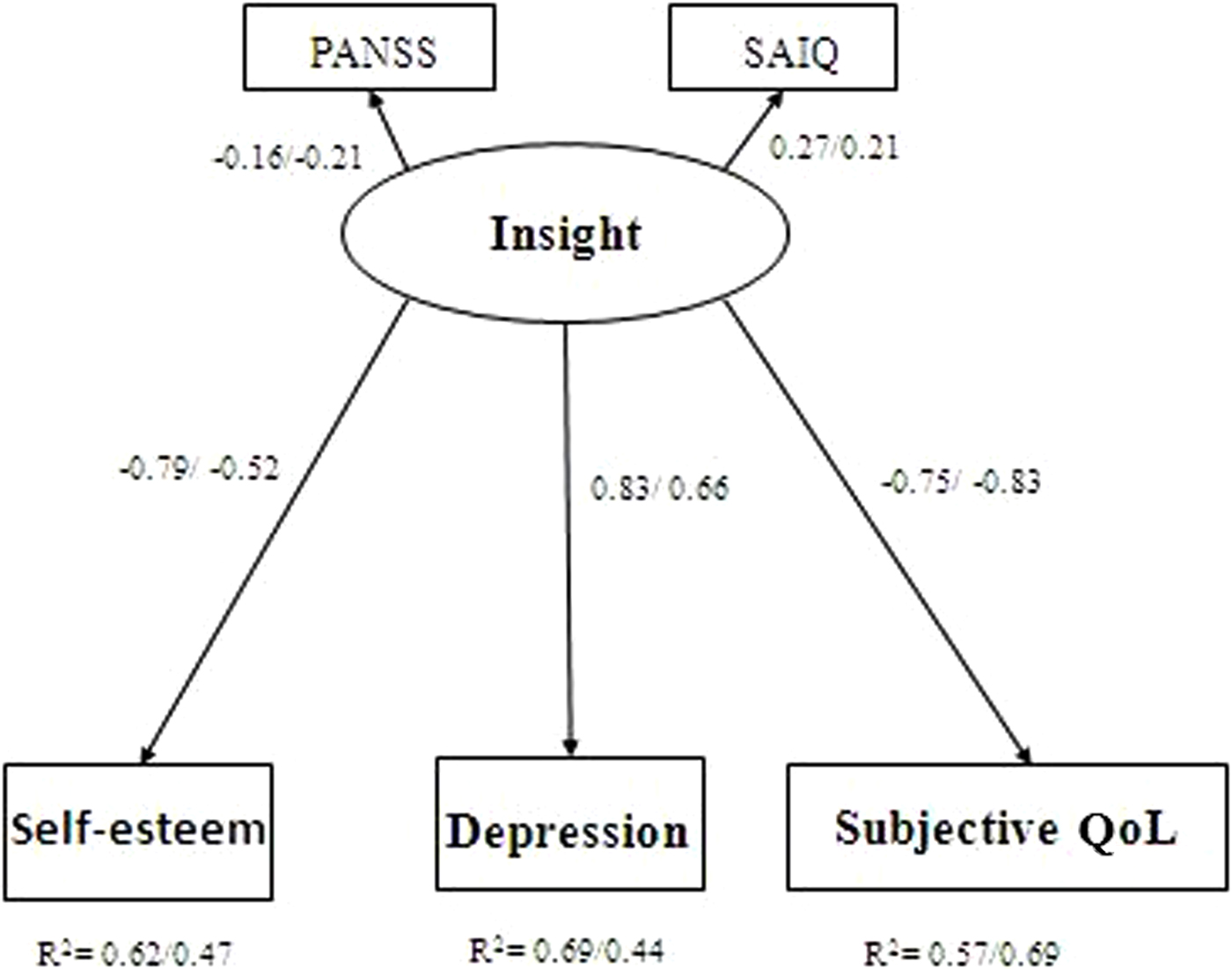
Furthermore, previous studies have suggested that clinical presentations and evaluations of insight (Xiang et al. Reference Xiang, Wang, Wang, Chiu, Chen, Chan, Lai, Lee and Ungvari2012; Mohamed et al. Reference Mohamed, Rosenheck, He and Yuping2014) and mental-illness stigma (Livingston & Boyd, Reference Livingston and Boyd2010; Yang et al. Reference Yang, Purdie-Vaughns, Kotabe, Link, Saw, Wong and Phelan2013; Boyd et al. Reference Boyd, Adler, Otilingam and Peters2014) are not independent of the sociocultural environment; therefore, the results of studies conducted in Western countries may be invalid in Eastern countries. Thus, in contrast to previous studies, the present study explored whether self-stigma serves as a mediator, moderator, or both, in the relationship between insight and psychosocial outcomes among Chinese patients with schizophrenia by using a larger homogeneous sample and more rigorous statistical analyses such as SEM. We hypothesised that higher insight into illness affects people's self-stigma and impedes their self-esteem and QoL. Self-stigma and low self-esteem then directly decrease their QoL. Moreover, self-stigma and low self-esteem cause depression, further contributing to low QoL (Fig. 1). We assumed that insight has both direct and indirect (through the mediating effect of self-stigma) effects on psychosocial outcomes. We also hypothesised that the relationship between insight and psychosocial outcomes would vary according to the level of self-stigma (Fig. 2). Specifically, the associations between insight and each psychosocial outcome (i.e. self-esteem, depression, and subjective QoL) at high levels of self-stigma would be stronger than those at low levels of self-stigma.
Hypothesised mediation model of insight and psychosocial outcomes (i.e. self-esteem, depression and subjective QoL) via self-stigma. QoL, Quality of Life.

Moderation model of insight and psychosocial outcomes (i.e. self-esteem, depression and subjective QoL) via self-stigma. QoL, Quality of Life.

Methods
Participants
A total of 190 patients with diagnosed schizophrenia or schizoaffective disorder, according to the Structured Clinical Interview for Diagnostic and Statistical Manual of Mental Disorders, fourth edition, text revision (DSM-IV-TR) (American Psychiatric Association, 2000), were recruited consecutively in 2013 and 2014 from outpatient psychiatric clinics at two hospitals. All participants were receiving ongoing outpatient treatment and were in relatively stable clinical conditions, as defined by the absence of hospitalisation or changes in medication within 6 months of the study. Participants were excluded if they: (1) were younger than 18 or older than 65, (2) had a history of brain trauma or neurological disease, (3) displayed symptoms of alcohol or substance abuse or dependence within 12 months of participating, or (4) were unable to follow instructions. Of the 190 individuals initially approached for this study, ten declined to participate and another ten were unable to complete the cognitive tests, yielding a final sample of 170 subjects (89% of the initial sample). Ethical approval was obtained from the Institutional Review Board at the Tri-Service General Hospital National Defense Medical Center, Taiwan (ID: SS100-05). Following a comprehensive explanation of the study, participants were asked to provide written informed consent. Participation in the present study was strictly voluntary and anonymous.
Of the 170 participants, 93 (55%) were males and 147 (86%) were unmarried or single. Additionally, most participants were unemployed (n = 125, 73.5%). The mean age of the patients was 44.4 years (s.d. = 10.1; range: 19–65), and the mean duration of formal education was 12.3 years (s.d. = 2.69; range: 6–18). The mean age at illness onset was 26.4 years (s.d. = 7.26 years; range: 14–50), the mean illness duration was 17.9 years (s.d. = 10.0 years; range: 2–45), and the average number of previous hospitalisations among the patients was 5.2 (s.d. = 3.93; range: 0–20).
Study measures
Insight into illness was assessed using both an observer-rated instrument and a self-report scale. We administrated the insight and judgement item (G12) of the Positive and Negative Syndrome Scale (PANSS; Kay et al. Reference Kay, Fiszbein and Opler1987), which provides a rating of 1 to 7 based on the global awareness of illness symptoms, need for treatment and consequences of illness. Insight was also assessed using the Chinese version (Kao & Liu, Reference Kao and Liu2010) of the Self-Appraisal of illness Questionnaire (Marks et al. Reference Marks, Fastenau, Lysaker and Bond2000), a self-report 17-item insight scale. This scale contains three subscales: the worry, need for treatment and presence/outcome of illness. Based on the suggestions of Marks et al. (Reference Marks, Fastenau, Lysaker and Bond2000), the need for treatment and presence/outcome of illness subscales were combined into a brief screening instrument for patients possibly at risk for poor insight. Essentially, the higher the score was, the higher the level of insight. In the present study, the internal consistency of this shortened insight scale was 0.88.
Self-stigma was assessed using the Chinese version (Lien et al. Reference Lien, Kao, Liu, Chang, Tzeng, Lu and Loh2015) of the Internalised Stigma of Mental Illness (ISMI) scale (Ritsher et al. Reference Ritsher, Otilingam and Grajales2003), which contains five subscales: alienation, stereotype endorsement, discrimination experience, social withdrawal and stigma resistance. The stigma resistance subscale was excluded because it reportedly lacks internal consistency and correlates poorly with the other ISMI subscales (Brohan et al. Reference Brohan, Elgie, Sartorius and Thornicroft2010; Lien et al. Reference Lien, Kao, Liu, Chang, Tzeng, Lu and Loh2015). The aggregate score of the ISMI scale was modified according to the remaining 24 items to form a general index of self-stigma (Lysaker et al. Reference Lysaker, Roe and Yanos2007). Previous studies on self-stigma (Ritsher et al. Reference Ritsher, Otilingam and Grajales2003; Lysaker et al. Reference Lysaker, Roe and Yanos2007; Brohan et al. Reference Brohan, Elgie, Sartorius and Thornicroft2010) have considered scores of ≥2.5 as indicators of high self-stigma. In the present study, the Cronbach's alpha of self-stigma was 0.87.
To measure each variable of psychosocial outcomes, we employed several self-rating instruments (i.e. self-esteem, depression and subjective QoL) for all participants. First, the unidimensional self-report Rosenberg Self-Esteem Scale (RSES; Rosenberg, Reference Rosenberg1979) consists of ten items that are coded using a four-point Likert scale, identical to that used in the ISMI scale. Higher scores on the RSES indicate higher self-esteem levels. In a previous study, the Chinese version of the RSES exhibited high internal consistency, high test–retest reliability and adequate convergent validity (Cheng & Hamid, Reference Cheng and Hamid1995). The scale also exhibited high internal consistency in the present study (Cronbach's alpha = 0.92). Second, the Beck Depression Inventory Revised (BDI-II) is a 21-item, self-report scale (Beck et al. Reference Beck, Steer, Ball and Ranieri1996). The items comprise four statements that are scored on a scale of 0–3; high scores indicated high symptomatic severity. Respondents are instructed to describe their feelings during the previous 2 weeks. The results are scored by summing the responses to each of the items to obtain a total depression score ranging from 0 to 63. The psychometric properties of the Chinese version of the BDI-II were reviewed by Lu et al. (Reference Lu, Che, Chang and Shen2002). For the present study, the Cronbach's alpha for reliability was 0.87. Finally, subjective QoL was assessed using the Chinese version of the Schizophrenia Quality of Life Scale Revision Four (Kuo et al. Reference Kuo, Chen-Sea, Lu, Chung, Kuo and Huang2007), which is a self-administered questionnaire of 33 items in two domains: psychosocial and vitality. All but four items are coded on a scale of 0–4 according to the frequency of occurrence during the previous 7 days (0 = always, 4 = never; the four exceptions are coded 0 = never, 4 = always). A higher score indicates higher health-related QoL. In the present study, the Cronbach's alpha for subjective QoL was 0.85.
The PANSS (Kay et al. Reference Kay, Fiszbein and Opler1987) is a 30-item semi-structured interview scale that was developed for comprehensively assessing the symptoms of schizophrenia. In this study, only two of the three analytically derived components were used: positive and negative symptoms (Cheng et al. Reference Cheng, Ho, Chang and Lan1996). The components contain seven items each; overall scores range from 7 to 49.
Statistical analysis
Descriptive statistics and correlational analyses were performed using SPSS version 15.0 (SPSS Inc., Chicago, IL, USA). Independent t tests were used to assess between-groups differences in self-stigma. To examine the hypothesised relationships between among insight, self-stigma and the psychological outcomes, we performed a path analysis by using SEM with AMOS 21 (IBM Corp). Our model was based on two latent variables, namely insight into illness and self-stigma. SEM is a general and powerful multivariate analysis technique with a confirmatory (i.e. hypothesis-testing) approach for analysing a structural theory bearing on a given phenomenon (Berkout et al. Reference Berkout, Gross and Young2014). ISEM focuses on theoretical constructs, which are presented by the latent variables. The relationships between the theoretical constructs are represented by their regression or path coefficients (Kline, Reference Kline2011). Because the multivariate normal distribution assumption of our data was not violated, full-information, maximum-likelihood estimation was conducted using raw data as the input (Mardia & Foster, Reference Mardia and Foster1983). Path analysis within SEM was used to test the proposed mediation model (Fig. 1). The direct relationship of insight to psychosocial outcomes, moderated by self-stigma, was examined using multigroup SEM to determine whether this direct effect was invariant across the two groups (low v. high levels of self-stigma). This method is critical when measuring invariance and within-groups comparisons (Deng & Yuan, Reference Deng and Yuan2015). In this study, we tested the invariance (e.g. factor loadings and path coefficients) of the proposed models across both low- and high-self-stigma groups (Fig. 2). The relative chi-square (χ 2/df) test, comparative fit index (CFI), Tucker–Lewis fit index (TLI) and root-mean-square error of approximation (RMSEA) were used to test the goodness-of-fit of the proposed model. An adequate fit between models and data is generally indicated by four fit indices (CFI > 0.95, TLI > 0.95, RMSEA < 0.08 and χ 2/df < 2) (Bentler & Bonett, Reference Bentler and Bonett1980; Kline, Reference Kline2011).
Results
Hypothesis testing
Descriptive analysis was performed and self-stigma differences were tested. To estimate the prevalence of high self-stigma, we chose to categorise groups as ‘high self-stigma’ if the mean score was >2.5. The results revealed significant between-groups differences in the scores of the psychosocial outcome variables (self-esteem: t = −6.96, p < 0.001; self-stigma: t = −6.64, p < 0.001; subjective QoL: t = 8.66, p < 0.001). Mean depression scores were significantly higher, whereas mean self-esteem and subjective QoL scores were significantly lower in the participants with high self-stigma (n = 67) compared with those of low self-stigma (n = 103).
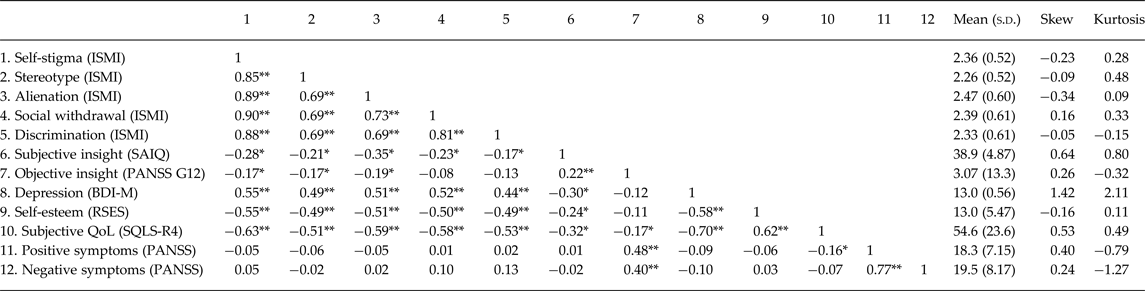
Table 1 displays the bivariate zero-order correlations, means, standard deviations (s.d.), skewness and kurtosis of the indicator variables used to test the hypothesis. We identified a negative correlation between subjective insight and all psychosocial outcomes and a positive relationship between subjective insight and self-stigma. The direction of the associations of objective insight with self-stigma and the psychosocial outcome variables were the same as those with subjective insight, but not as strongly. Higher self-stigma was associated with less self-esteem and subjective QoL, but was associated with lower depression (all p < 0.01). All the sociodemographic variables (i.e. sex, age, education and marital status) and clinical variables (i.e. illness onset, illness duration and number of previous hospitalisations) were non-significantly related to the dependent and independent variables in the SEM. Neither positive nor negative symptoms showed any significant correlations with our model variables. Thus, none of these variables were included in the SEM as control variables.
Intercorrelations and descriptive statistics of all indices related to stigma, insight and psychosocial outcomes (n = 170)

ISMI, the Internalised Stigma of Mental Illness Scale; SAIQ, the Self-Appraisal of illness Questionnaire; PANSS, the Positive and Negative Symptom Scale; BDI–II, the Beck Depression Inventory Revised; RSES, the Rosenberg Self-esteem Scale; SQLS-R4, the Schizophrenia Quality of Life Scale Revision Four.
*p < 0.05; **p < 0.01.
Mediation analyses
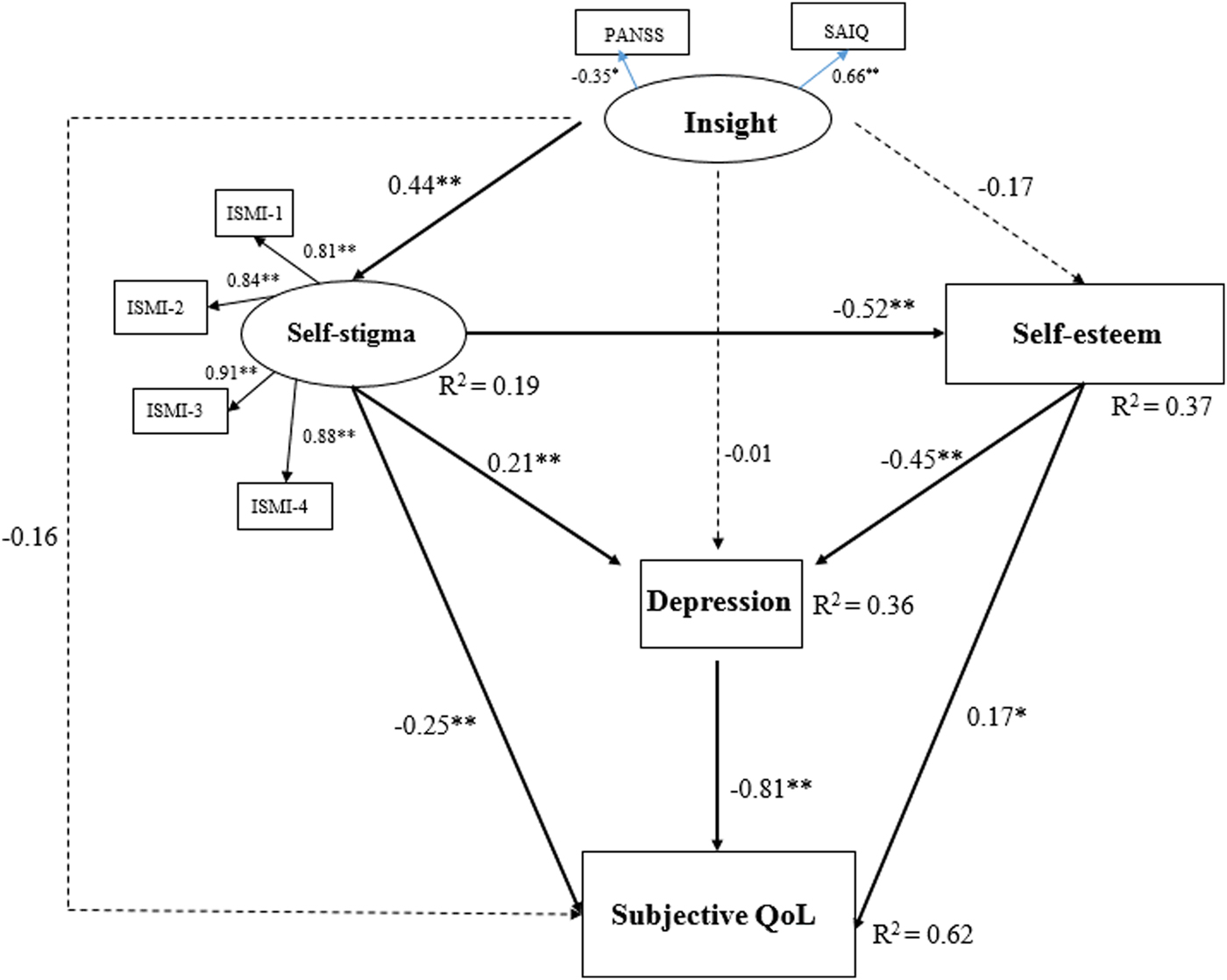
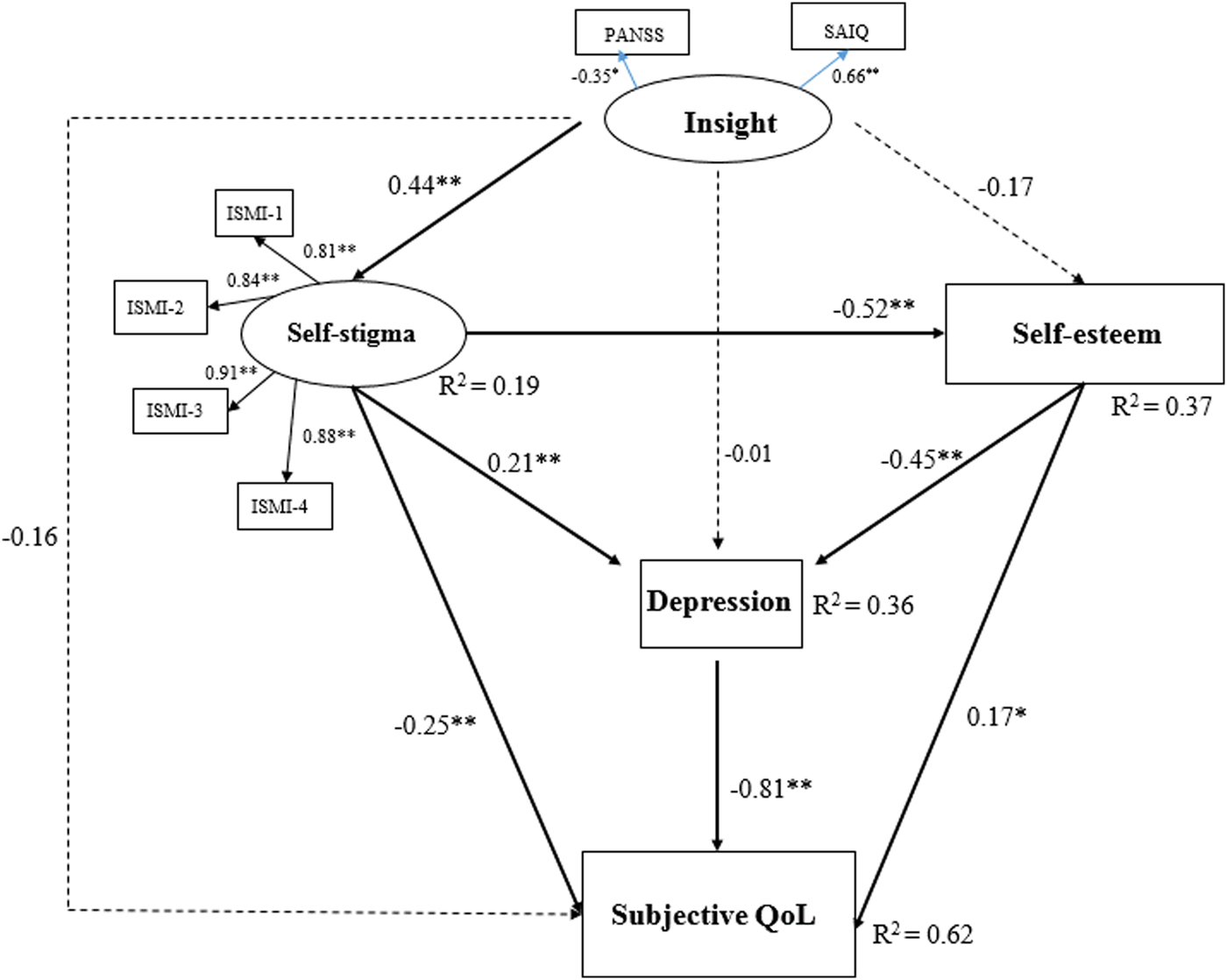
The results of the SEM for testing our hypothesised mediation model are presented in Fig. 3. The model-fit indices suggested that this model fitted the data well (χ 2 = 33.3; df = 20; p = 0.03; χ 2/df = 1.67; CFI = 0.98; TLI = 0.97; RMSEA = 0.06). Figure 3 depicts the model, with significant paths denoted by solid lines and non-significant paths denoted by dotted lines. Three pathways were non-significant: (1) insight → self-esteem (β = −0.17, p = 0.21), (2) insight → depression (β = −0.004, p = 0.97) and (3) insight → subjective QoL (β = −0.16, p = 0.17). Moreover, the previously significant correlation between insight and each psychosocial outcomes became non-significant. In summary, our findings indicated that self-stigma might fully mediate the association of insight with the psychosocial outcomes. Insight had only an indirect, negative effect on the psychosocial outcomes.
The mediation effects of self-stigma within the relationship of insight and psychosocial outcome variables. Notes: Structural equation model: rectangles represent indicator or manifest variables; ovals, unobserved latent variables. Solid lines indicated significant paths; dashed lines, paths that did not reach the level of statistical significance. Numbers by single-headed arrows reflect standardised regression weights. R 2 represented the explained variance of the endogen variables. *p < 0.05; **p < 0.01. PANSS, G12 item of the Positive and Negative Symptom Scale; SAIQ, the Self-Appraisal of illness Questionnaire; ISMI-1, Stereotype endorsement subscale of the Internalised Stigma of Mental Illness scale; ISMI-2, Alienation subscale of the Internalised Stigma of Mental Illness scale; ISMI-3, Social withdrawal subscale of the Internalised Stigma of Mental Illness scale; ISMI-4, Discrimination experience of the Internalised Stigma of Mental Illness scale; QoL, Quality of Life.
Moderation analysis
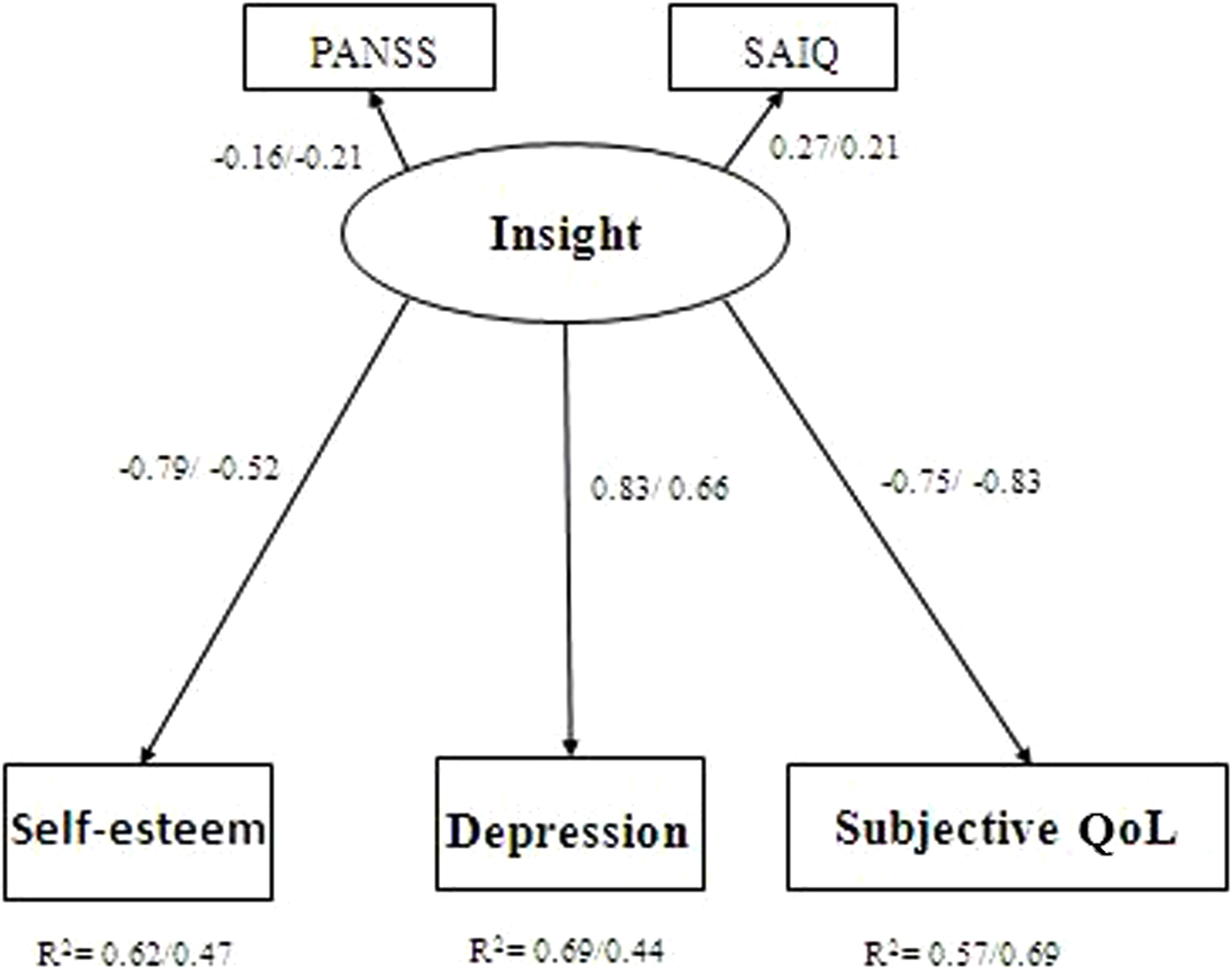
Because the differences in self-esteem, depression and subjective QoL between the high- and the low-self-stigma groups were well established, a multigroup analysis was conducted. To assess the invariance of the proposed model, two models were fitted to the data. Model 1 (M1) assumed that the factor loadings for the latent variables of insight and self-stigma were invariant, and Model 2 (M2) assumed that both the factor loadings and structural path coefficients were invariant across the two groups. According to the results, the corresponding critical values of the relative goodness-of-fit indices were met for both M1 (χ 2 = 24.23; df = 14; χ 2/df = 1.73; p = 0.04; CFI = 0.93; TLI = 0.90; RMSEA = 0.07) and M2 (χ 2 = 26.87; df = 15; χ 2/df = 1.79, p = 0.03; CFI = 0.92; TLI = 0.90; RMSEA = 0.07). Because the degree of fitness did not decrease significantly (Satorra–Bentler scaled χ 2 difference test score = 2.65, Δdf = 1, p > 0.05) when all path coefficients were determined as equal in both groups (Fig. 4), the invariance of the proposed model was supported. This result indicated that the detrimental effect of insight on psychosocial outcomes is invariant across stigmas.
The moderation models and standardised path coefficients. Results of multiple-group analyses with invariant factor loadings and path coefficients (M2) across both self-stigma groups (high/low), and the explained variances of the endogen variables (R 2). PANSS, G12 item of the Positive and Negative Symptom Scale; SAIQ, the Self-Appraisal of Illness Questionnaire; QoL, Quality of Life.
Discussion
Detrimental effects of good insight and self-stigma in schizophrenia
The current study is among the first to examine the mediator and moderator effects of self-stigma on the relationship between clinical insight and psychosocial outcomes in Chinese adults with schizophrenia spectrum disorders. The results of the current study are consistent with those of previous studies, indicating that patients with higher self- and expert-rated insight into illness report significantly poorer psychosocial outcomes (Cavelti et al. Reference Cavelti, Kvrgic, Beck, Rüsch and Vauth2012a ; Belvederi Murri et al. Reference Belvederi Murri, Respino, Innamorati, Cervetti, Calcagno, Pompili, Lamis, Ghio and Amore2015; Margariti et al. Reference Margariti, Ploumpidis, Economou, Christodoulou and Papadimitriou2015). These findings suggest that insight might be a ‘double-edged sword’ for people with schizophrenia and might complicate their understanding of the impacts on clinical outcomes. Moreover, these findings confirm the evidence concerning the relationship between self-stigma and poor psychosocial outcomes (Yanos et al. Reference Yanos, Roe, Markus and Lysaker2008; Livingston & Boyd, Reference Livingston and Boyd2010). The results from this study provide further corroborating evidence that self-stigma, which is prevalent and problematic among individuals with schizophrenia, has a substantial and direct impact on psychosocial outcomes among people with schizophrenia. By contrast, our findings do not signify that insight is not a critical variable. Insight has long been considered essential for engagement in treatment, psychotherapeutic progress and a more accurate prognosis and has therefore been identified as a critical clinical outcome measure in schizophrenia (Amador et al. Reference Amador, Flaum, Andreasen, Strauss, Yale, Clark and Gorman1994; Lysaker et al. Reference Lysaker, Bryson and Bell2002). However, relevant studies are characterised by conflicting results (Mintz et al. Reference Mintz, Dobson and Romney2003; Karow et al. Reference Karow, Pajonk, Reimer, Hirdes, Osterwald, Naber and Moritz2008; Lysaker et al. Reference Lysaker, Buck, Salvatore, Popolo and Dimaggio2009).
Mediating role of self-stigma
The path analysis in this study supports the mediating role of self-stigma on the relationship between insight and psychosocial outcomes among people with schizophrenia. Our findings indicate that high insight into illness indirectly influences psychosocial outcomes through self-stigma (i.e. none of the direct effects of high insight on psychosocial outcomes are due to a relationship between insight and self-stigma), and self-stigma influences the direct effect of insight on psychosocial outcomes in people with schizophrenia. The results also confirm that mental-illness stigma is a major source of stress in addition to its effects on patients' clinical outcomes. Hence, reducing self-stigma would help to ameliorate some of the deleterious effects of high insight on psychosocial outcomes among people with schizophrenia, and reducing self-stigma alone appears to be sufficient to achieve this. Improved insight not only allows individuals to acknowledge the symptoms and consequences of their mental illness as well as the need to receive treatment, but also enables them to adopt the stigmatising views (e.g. self as dangerous, self as incompetent) of society toward individuals with mental illnesses (Mak & Wu, Reference Mak and Wu2006; Lysaker et al. Reference Lysaker, Vohs, Hillis, Kukla, Popolo, Salvatore and Dimaggio2013a ). Such individuals frequently suffer additional enhanced insight into their mental illness may be more inclined to experience a greater level of self-stigma, whereas those with poor insight may be more likely to avoid stigma-related stress and harm because they are unaware that they are being stigmatised.
However, the confirmation of the mediation model in the present study does not support the paradoxical nature of insight into mental illness (Lysaker et al. Reference Lysaker, Roe and Yanos2007), which refers to a series of conflicting empirical findings in which insight can cause both positive and negative outcomes. Therefore, high insight is related to worsening outcomes only in the presence of moderate to high self-stigma. Some cross-sectional studies have indicated that the relationships among insight, self-stigma and negative outcomes may be more effectively explained by using a moderator model (Lysaker et al. Reference Lysaker, Roe and Yanos2007; Staring et al. Reference Staring, Van der Gaag, Van den Berge, Duivenvoorden and Mulder2009) than by using a mediation model (Hasson-Ohayon et al. Reference Hasson-Ohayon, Levy, Kravetz, Vollanski-Narkis and Roe2011, Reference Hasson-Ohayon, Tuval-Mashiach, Morag-Yaffe, Gaziel, Schapir, Zalsman and Shoval2014; Cavelti et al. Reference Cavelti, Kvrgic, Beck, Rüsch and Vauth2012a , Reference Cavelti, Kvrgic, Beck, Kossowsky and Vauth b ), although other cross-sectional (Yanos et al. Reference Yanos, Roe, Markus and Lysaker2008; Schrank et al. Reference Schrank, Amering, Hay, Weber and Sibitz2014) and prospective (Cavelti et al. Reference Cavelti, Rüsch and Vauth2014) studies have failed to confirm the moderation effect of self-stigma. This discrepancy in findings may be due to the high level of self-stigma in our sample as well as the differing sociocultural contexts of the samples. In this study, we found that our participants reported higher mean scores of self-stigma than those reported in other studies in Western (Lysaker et al. Reference Lysaker, Roe and Yanos2007; Sibitz et al. Reference Sibitz, Unger, Woppmann, Zidek and Amering2011a , Reference Sibitz, Amering, Unger, Seyringer, Bachmann, Schrank, Benesch, Schulze and Woppmann b ) and Chinese (Lv et al. Reference Lv, Wolf and Wang2013) societies. With the cut-off score of 2.5, our study demonstrated high levels of self-stigma (45%), a percentage twice as high as that in Lv's et al. (Reference Lv, Wolf and Wang2013) study (20%) in Hong Kong and which was also higher than that previously reported (Boyd et al. Reference Boyd, Adler, Otilingam and Peters2014).
Moderating role of self-stigma
From another perspective, the model illustrating the associations between insight and psychosocial outcomes was invariant across stigma groups, which is in contrast to the study of Staring et al. (Reference Staring, Van der Gaag, Van den Berge, Duivenvoorden and Mulder2009), who discovered that patients with high insight accompanied by stigmatising beliefs had the highest risk of low QoL, negative self-esteem and depression. In comparison with the mediation model, which outlined a linear process, the moderation model was employed to determine under which situations insight caused positive and negative outcomes. Studies on patients with mental illnesses have revealed that high insight in those with low self-stigma engendered a positive outcome. However, high insight in individuals with high self-stigma produced a negative outcome (Lysaker et al. Reference Lysaker, Roe and Yanos2007; Staring et al. Reference Staring, Van der Gaag, Van den Berge, Duivenvoorden and Mulder2009). Thus, the moderation model illustrates the possibility of improving insight without deteriorating psychosocial outcomes such as mood, self-esteem and QoL, whereas the mediation model does not elaborate such possibility (Hasson-Ohayon et al. Reference Hasson-Ohayon, Tuval-Mashiach, Morag-Yaffe, Gaziel, Schapir, Zalsman and Shoval2014). Based on this result, the circumstances under which insight might result in positive outcomes remain unclear. Other variables such as social support and coping strategies might moderate the relation between insight and psychosocial outcomes, thus necessitating further research aimed at comparing the role of these variables relative to the present findings.
Limitations and perspectives
First, this study was cross-sectional and should be replicated using longitudinal methods (Maxwell & Cole, Reference Maxwell and Cole2007). Second, we used only a single PANSS item to measure insight objectively and did not consider the dimensions distinctive of clinical insight. Third, self-stigma was the only potential mediator examined in the present study, although other mediators are likely to have important roles in the association between insight and psychosocial outcomes; other variables such as social cognition or metacognition could be examined (Lysaker et al. Reference Lysaker, Vohs, Hasson-Ohayon, Kukla, Wierwille and Dimaggio2013b ). Finally, we used the BDI–II to measure depression in individuals with schizophrenia. However, the claim that the BDI is a valid instrument for assessing depressive symptoms in chronic schizophrenia requires qualification because of the overlap of negative and extrapyramidal symptoms of schizophrenia and depression (Kim et al. Reference Kim, Kim, Yoon, Kim, Shin, Hwang and Yoon2006; Chemerinski et al. Reference Chemerinski, Bowie, Anderson and Harvey2008).
Conclusions
Early recognition and psychoeducational programmes for patients at risk of poor insight are particularly crucial, given the findings from previous research highlighting the potential benefits of such treatments (Xia et al. Reference Xia, Merinder and Belgamwar2011; Lysaker et al. Reference Lysaker, Vohs, Hillis, Kukla, Popolo, Salvatore and Dimaggio2013a ; Chien & Thompson, Reference Chien and Thompson2014). However, it appears that interventions aimed at improving insight may be insufficient for overcoming the deleterious effects of improved insight because these interventions fail to address emotional, interpersonal and stigma-related problems (Valiente et al. Reference Valiente, Provencio, Espinosa, Chaves and Fuentenebro2011). Thus, additional interventions such as cognitive behavioural therapy (Corrigan & Calabrese, Reference Corrigan, Calabrese and Corrigan2005; Yanos et al. Reference Yanos, Roe, Markus and Lysaker2008, Reference Yanos, Roe and Lysaker2010, Reference Yanos, Roe and Lysaker2011) are required to facilitate positive responses to stigma, shame and social exclusion in people with schizophrenia. Enhancing personal empowerment or self-esteem might also reduce self-stigma (Brohan et al. Reference Brohan, Elgie, Sartorius and Thornicroft2010; Mittal et al. Reference Mittal, Sullivan, Chekuri, Allee and Corrigan2012).
Acknowledgements
The authors would like to express their sincere thanks to Professor Ritsher, the original ISMI scale designers, for their permission to administer the ISMI scale in our study. We also thank all participants who kindly volunteered to take part in this study.
Financial Support
This study was supported by grants from the Ministry of Science and Technology, Taiwan (grant numbers NSC 101-2314-B-003-002 and 102-2410-H-003-016). This article was subsidised by the National Taiwan Normal University (NTNU), Taiwan.
Conflict of Interest
On behalf of all authors, the corresponding author states that there is no conflict of interest.
Availability of data and materials
Due to ethical restrictions, data are only available upon request. Although our data are anonymised (medical record number), schizophrenia is an infrequent and highly stigmatising mental disorder, which is why we are concerned about placing the data into an online repository. These concerns are shared by the lead IRB of this project, in particular as the informed consent form that all patients signed does not include the possibility of an online repository of individual patient data. Interested researchers may submit requests for minimised anonymous datasets to the corresponding author.