Introduction
Estuaries are known for their high environmental stress due to the large fluctuations in environmental conditions. The high dynamics of these ecosystems directly influences the level of recruitment, representing a structuring factor for estuarine fish communities (Suzuki et al., Reference Suzuki, Kanematsu, Nakayama and Tanara2013). This high variability of physical and chemical conditions creates the environmental gradients, which act as filters, allowing the persistence of species that tolerate harsh conditions (Vasconcelos et al., Reference Vasconcelos, Henriques, França, Pasquaud, Cardoso, Laborde and Cabral2015; Teichert et al., Reference Teichert, Lapage, Chevillot and Lobry2017; Lima et al., Reference Lima, Badu and Pessanha2020). Therefore, species composition tends to change along these environmental gradients and each species is distributed according to its genetic, physiological and life cycle characteristics in combination with how it interacts with the physical and chemical factors of the environment (Riesch et al., Reference Riesch, Plath and Bierbach2018).
The fluctuation of abiotic characteristics actively affects the distribution patterns and abundance of ichthyoplankton, since variability in recruitment occurs as a result of seasonal movements influenced by physical, chemical and biological conditions, generating a variety of fish larvae assemblages (Barletta et al., Reference Barletta, Barletta-Bergan, Saint-Paul and Hubold2003; Maci & Basset, Reference Maci and Basset2009; Cattani et al., Reference Cattani, Jorge, Ribeiro, Wedekin, Lopes, Rupil and Spach2016). Several authors have suggesting that local variables are important predictors that influence the distribution patterns of estuarine ichthyoplankton (Harris et al., Reference Harris, Cyrus and Beckley2001; Kimmerer, Reference Kimmerer2002; Lima et al., Reference Lima, Barletta and Costa2015; Machado et al., Reference Machado, Calliari, Denicola and Rodríguez-Grãna2017; Zhang et al., Reference Zhang, Xian and Liu2019). In particular, salinity is one of the most important factors that influence egg survival and larval distribution because it affects metabolism through osmoregulation and oxygen demands (Rosa et al., Reference Rosa, Alberto, Ribas, Neves and Fernandes2016).
In tropical areas, levels and ranges of environmental variables can be largely determined by the seasonal rainfall patterns (Blaber, Reference Blaber2002). Ichthyoplankton density patterns may consequently respond to the hydrologic regime (Pringle, Reference Pringle2003). Thus precipitation is the key factor that determines the characteristics of the estuaries and causes changes in salinity, transparency and dissolved oxygen, thus influencing spawning and recruitment processes of fish species (Henriques et al., Reference Henriques, Cardoso, Cardoso, Laborde, Cabral and Vasconcelos2017). One example comes from the estuary of the Caeté River (northern Brazil), where it was observed that precipitation was the most important factor for the distribution of eggs and larvae along the estuary (Barletta et al., Reference Barletta, Saint-Paul, Barletta-Bergan, Ekau and Schories2002). Many studies emphasize the importance of freshwater entry regimes which mediate changes in habitat conditions, which in turn drive patterns in the distribution and recruitment of biota (Agostinho et al., Reference Agostinho, Gomes, Veríssimo and Okada2004; Santos et al., Reference Santos, Ramos and Bonecker2017).
The north-eastern semi-arid region of Brazil is characterized by intermittent flow in most of its rivers, with the flow interrupted during most of the year and only becoming perennial in areas where the rivers reach wetter regions, that is, near the river mouth on the Atlantic Ocean (Oliveira-Silva et al., Reference Oliveira-Silva, Ramos, Carvalho-Rocha, Viana, Avelar and Ramos2018). Therefore, the functioning of tropical estuaries in the semi-arid region is strongly influenced by the magnitude and timing of freshwater runoff reaching the estuary, and the freshwater runoff largely determines the salinity distribution in this ecosystem. Moreover, the marked seasonal rainfall pattern also leads to a seasonal pattern of fish recruitment (Figueiredo & Pessanha, Reference Figueiredo and Pessanha2015; Lima et al., Reference Lima, Badu and Pessanha2020). Thus, under semi-arid climate, analysing estuary use at spatial and temporal scales constitutes an essential step towards understanding and predicting the effects of environmental changes on fish recruitment in tropical estuaries. Our primary goal was to evaluate the influence of environmental parameters on ichthyoplankton spatiotemporal dynamics. Results from this study provide knowledge in the face of a prolonged drought experienced in this region, providing valuable tools for estimating future effects of climate change and drought.
Materials and methods
Study area
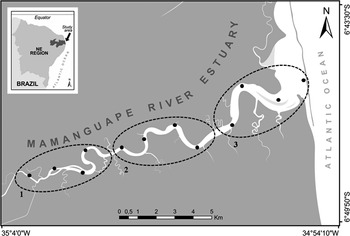
The study was carried out in the Mamanguape River estuary on the north-eastern coast of Brazil, which is part of the Environmental Protection Area of Barra de Mamanguape (6°43′02″S 35°67′46″W). The estuary area is 25 km long. The channels are bordered by sandy/muddy tidal flats covered by continuous mangroves, mainly Rhizophora and Avicennnia spp., in the lower and middle zones of the estuary. Other habitats are also present in this estuary, including mud and sand flats, sandy beaches (close to the entrance) and seagrass beds (Halophila decipiens, H. baillonis and Halodule wrightii). The estuary is protected from the ocean by sandstone reefs running along the coastline, which form a barrier adjacent to the river mouth (Nobrega & Nishida, Reference Nobrega and Nishida2003) (Figure 1).
Mamanguape River estuary, with indication of the ichthyoplankton sampling areas: (1) Upper, (2) Middle, (3) Lower and (•) sampling point.

The region has a hot and humid climate (Köppen climate classification: with a dry summer) with a mean air temperature between 24 and 26°C and a mean annual rainfall between 700 and 1500 mm (Alvares et al., Reference Alvares, Stape, Sentelhas, Gonçalves and Sparovek2013). The precipitation patterns of the region have a rainy season (April–July) and a dry season (August–March) (Macedo et al., Reference Macedo, Guedes, Souza and Dantas2010).
Sampling
The sampling programme was conducted on four excursions carried out during two rainy season months (May and June 2016) and two dry season months (October and November 2016). The estuary was divided into three estuarine zones according to the salinity gradient: upper (0.5–21.5), middle (28.2–48) and lower (50.7–53.2). Four sites were sampled in each zone of the estuary (upper, middle and lower) with three replicates per month at each site in daylight under high tide conditions (3 zones × 4 sites × 3 replicates × 4 months = 144 samples).
Ichthyoplankton samples were collected using a conical-cylindrical plankton net (total length 1.50 m; 60 cm of mouth opening and a mesh net size of 200 μm). A mechanical flow meter (General Oceanic) attached to the centre of the net was used to determine the volume of filtered water. This value was used to calculate the larval density (number × 100 m−3) (Lima et al., Reference Lima, Barletta and Costa2015). At each sampling station, horizontal plankton hauls were performed during the day in the middle of the main channel at spring high tides. All hauls were standardized to a 5 min hauling time, with a boat speed of 1.5 knots, to avoid individual escape as much as possible. All samples of plankton were stored and immediately preserved in 4% formaldehyde/seawater (Barletta et al., Reference Barletta, Barletta-Bergan, Saint-Paul and Hubold2003).
Salinity, water temperature (°C), pH, dissolved oxygen (mg l−1), and turbidity (NTU) were measured in situ before each sampling event using a multiparameter sensor (HORIBA Series U-50). Primary production was also estimated by analysing chlorophyll a content in the water following the methodology proposed by Wetzel & Likens (Reference Wetzel and Likens1991). Precipitation data were compiled from the Executive Agency for Water Management of the State of Paraiba (AESA 2016 website: www.aesa.pb.gov.br).
In the laboratory, the ichthyoplankton was identified, counted and total length (mm) measured. The identification was at least to the family level using morphological approaches following Figueiredo & Menezes (Reference Figueiredo and Menezes1978), Fahay (Reference Fahay1983) and Richards (Reference Richards2006), the total length (LT) was measured with help from the program Image J 6.0 and the larval stages (yolk sac, pre-flexion, flexion and post-flexion) were assessed according to the methodology described by Kendall et al. (Reference Kendall, Ahlstrom and Moser1984).
Statistical analysis
A permutational multivariate analysis of variance (PERMANOVA) (with 9999 permutations) was used to examine spatial and temporal variations of the environmental parameters and ichthyoplankton density, and applied for two factors: zone (three fixed levels: upper, middle and lower) and season (two fixed levels: rainy and dry). A univariate permutational analysis of variance (PERMANOVA) was used to investigate significant differences among the zones and seasons, and a posteriori pairwise comparisons were used to determine significant differences. All univariate tests were based on Euclidean distance matrices (Anderson et al., Reference Anderson, Gorley and Clarke2008).
A principal components analysis (PCA) was applied to verify the spatial and temporal distribution of the environmental data (Anderson et al., Reference Anderson, Gorley and Clarke2008). Logarithmic transformations Log (x + 1) of environmental data were performed, and the data were subsequently standardized using a ‘normalize routine’ to reduce the effect of the measurement units on the PCA analysis. Prior to analysis, the full set of available variables was tested for collinearity (draftsman plot and Spearman correlation matrix), and redundant variables with correlations (r) >0.7 were omitted.
For the multivariate analysis, the ichthyoplankton densities were both log-transformed by square root, and the results were used to generate a Bray–Curtis similarity matrix. To identify correlations between the environmental gradients and the variations in the fish data, a distance-based linear model (DistLM) was used (Legendre & Anderson, Reference Legendre and Anderson1999; McArdle & Anderson, Reference McArdle and Anderson2001). To choose the final model, the ‘Best’ selection procedure used the Akaike information criteria (AIC) to identify the most parsimonious explanatory models. A distance-based redundancy analysis (dbRDA) was performed (McArdle & Anderson, Reference McArdle and Anderson2001). In total, four environmental explanatory variables were identified by the exploratory DistLM and used in further analyses. The dbRDA plot enabled us to visualize the relative contributions of each of the predictor variables to the ichthyoplankton community structure. The families that contributed significantly to variations in the groups that composed each zone were identified using SIMPER.
All multivariate analyses were performed with the PRIMER software package version 6.0 (Clarke, Reference Clarke1993). To investigate the seasonal variations in families, a correspondence analysis (CA) was performed with the ‘ade4’ package in R software (Thioulouse et al., Reference Thioulouse, Chessel, Doleâdec and Olivier1997; The R Development Core Team, 2009).
Results
Environmental parameters
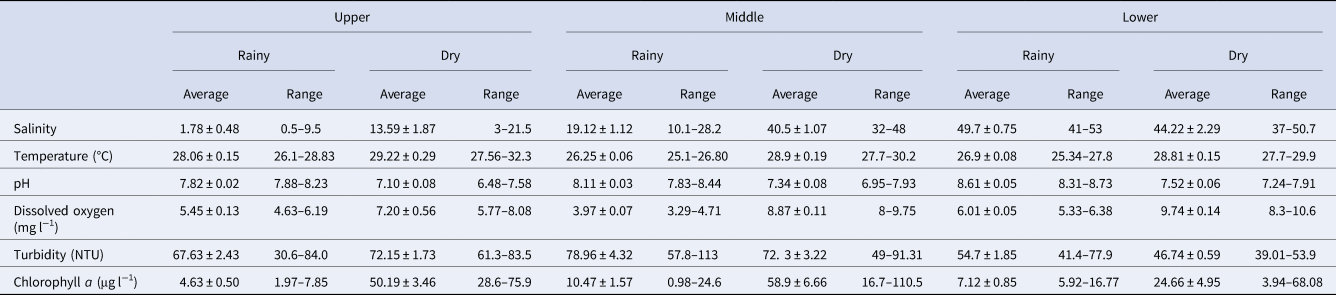
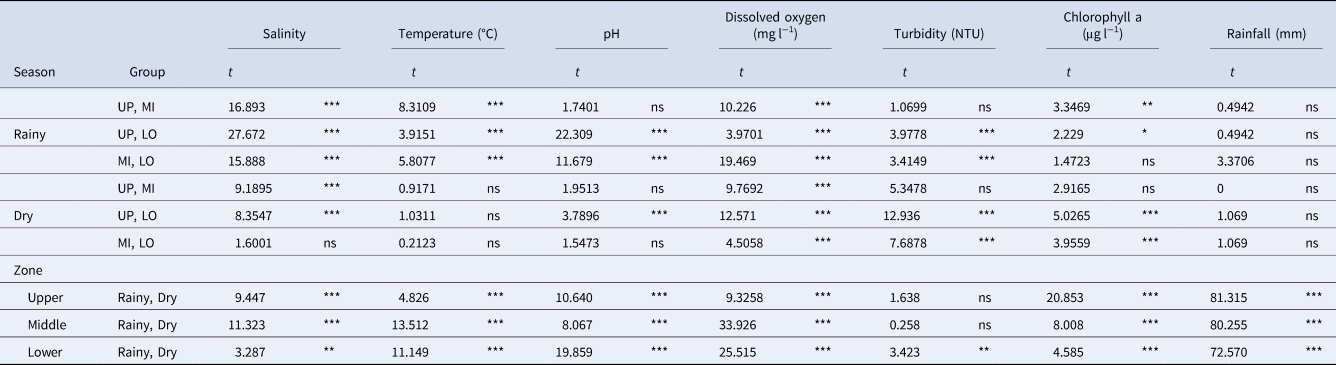
Details of the environmental parameters collected at Mamanguape estuary are listed in Table 1. The permutational multivariate analysis of variance (PERMANOVA) showed that environmental data differed among zones (Pseudo-F 2.143 = 44.152; P = 0.0001) and between seasons (Pseudo-F 1.143 = 209.11; P = 0.0001). The results from univariate analysis showed that salinity, water temperature, pH, dissolved oxygen and chlorophyll a differed significantly between zones and seasons (Table 2). During the rainy season, the lowest values of salinity and chlorophyll a were recorded in the upper zone; temperature and dissolved oxygen showed lower values in middle zone and the highest pH values in the lower zone (Tables 1 and 2). However, in the dry season the highest salinity levels were registered in the lower zone; dissolved oxygen and chlorophyll a in the intermediate zone and temperature and pH recorded in the upper zone (Tables 1 & 2). Turbidity varied significantly between zones (Table 2), with higher values in the middle zone and lower values in the lower zone, and rainfall varied between seasons with higher rainfall in the rainy season (Tables 1 and 2).
Mean (±SE) and amplitude of the environmental factors in the Upper, Middle and Lower zones of the Mamanguape River estuary, semi-arid Brazil between rainy and dry seasons of 2016

Pairwise PERMANOVA comparisons for zones and seasons of the Mamanguape River estuary

*P < 0.05, **P < 0.001, ***P < 0.0001. Zones: Upper (UP), Middle (MI) and Lower (LO), ns, not significant.
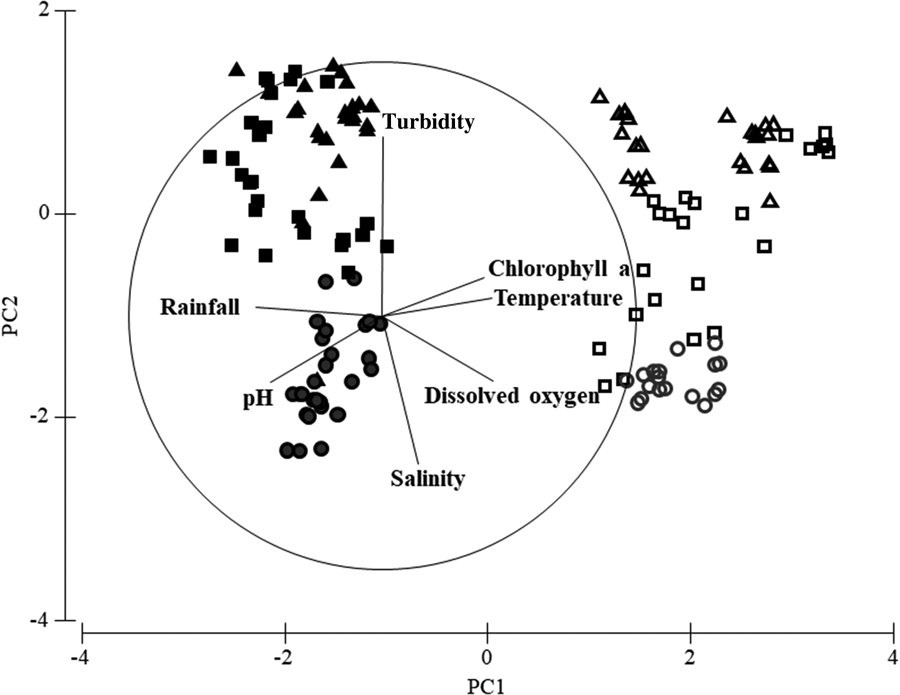
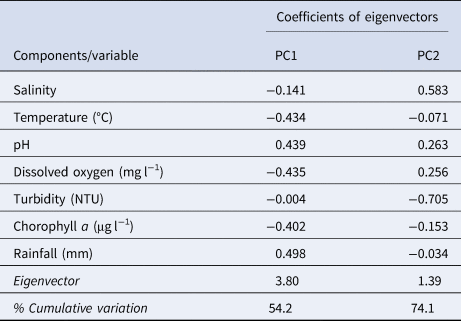
In addition, the PCA plot revealed that the values of the environmental parameters in the dry season were clearly different from those in the rainy season (Figure 2). Among the environmental variables, rainfall, temperature, dissolved oxygen and pH were strongly correlated with PC1, whereas turbidity and salinity were correlated with PC2 (Table 3; Figure 2).
Ordination Diagram for principal components (PCA) on environmental parameters in the Mamanguape River estuary, Brazilian semi-arid, coded for the zones and hydrological periods: Rainy season: Upper (▴), Middle (■) and Lower (•). Dry season: Upper (▵), Middle (□) and Lower (○).

Coefficients of eigenvector of the main components (PC1 and PC2) of the environmental parameters in the Mamanguape River estuary, semi-arid Brazilian between the rainy and dry seasons of 2016

Composition and distribution of ichthyoplankton
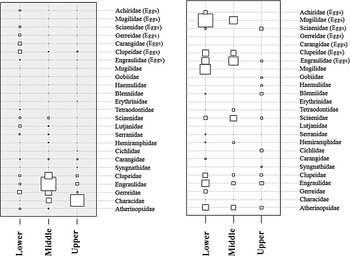
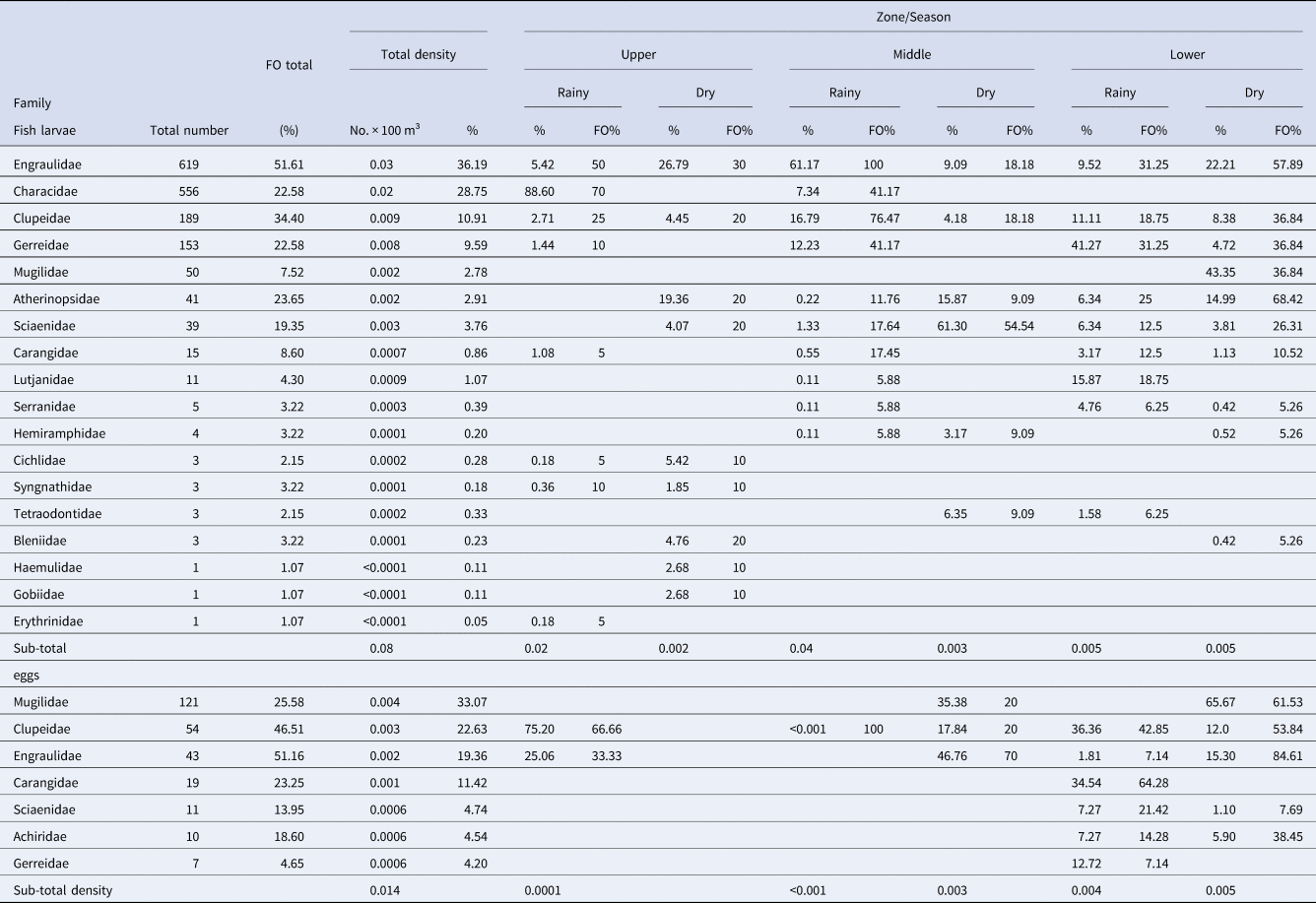
A total of 1.672 fish larvae of 18 families were counted; 486 fish eggs represented eight taxa that were captured along the channel (Table 4), with density total of larvae 0.08 ind. × 100 m−3, and the total egg density 0.014 ind. × 100 m−3. Only three freshwater fish families were collected at the estuary: Characidae, Cichlidae and Erythrinidae (Table 4). The PERMANOVA results showed that there was a significant difference between the zones (Pseudo-F 2.81 = 4.0716; P = 0.0001) and the seasons (Pseudo-F 1.81 = 5.6259; P = 0.0001). The highest densities of larvae were recorded in the middle zone during the rainy season, with higher values for Engraulidae (61.71%) and Clupeidae (16.79%). In the dry season, the highest larval densities were recorded in the lower zone, with the highest densities recorded for Mugilidae (43.35%) and Engraulidae (22.21%). For eggs, the highest densities were recorded in the lower zone in both seasons, with the highest values for Clupeidae (36.36%) in the rainy season and Mugilidae (65.67%) in the dry season (Table 4; Figure 3).
Spatial and temporal distribution of densities of eggs and larvae of fish caught in ichthyoplankton trawls in the Mamanguape estuary, semi-arid Brazilian. Upper, Middle, Lower, rainy season (■) and dry season (□). The wider the square represents the density of ichthyoplankton.

Total number and subtotal density (num. ind. 100 m−3), Percentage of density (%) and Frequency of occurrence (FO%) of eggs and fish larvae (family level) caught in Mamanguape River estuary during rainy and dry seasons

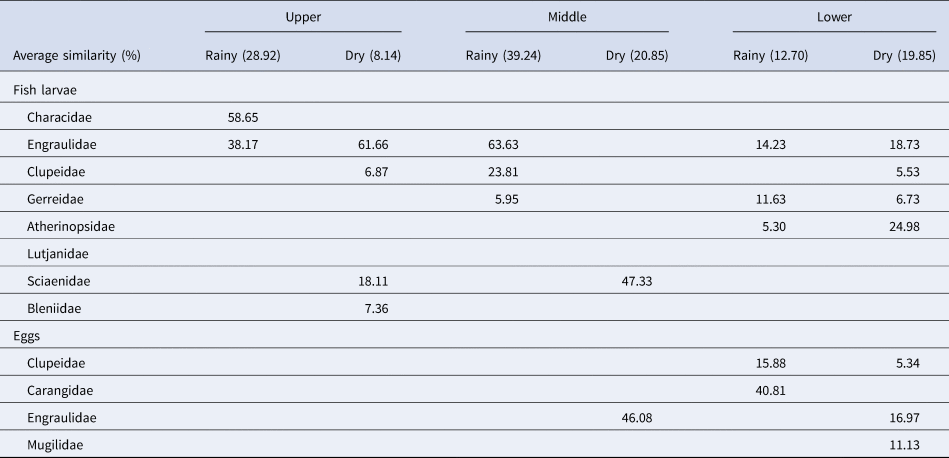
Based on SIMPER analysis, ~78.77% dissimilarity was found among the estuarine zones. During the rainy season, the highest contributors to the dissimilarities were Characidae and Engraulidae larvae in the upper zone; Engraulidae, Clupeidae and Gerreidae larvae in the middle zone; and Engraulidae, Gerreidae and Atherinopsidae larvae and Clupeidae and Carangidae eggs in the lower zone. During the dry season, Engraulidae, Sciaenidae, Bleniidae and Clupeidae larvae had greater contributions in the upper zone; Sciaenidae larvae and Engraulidae eggs were associated with the middle zone; and Atherinopsidae, Clupeidae and Gerreidae larvae and Engraulidae and Clupeidae eggs had higher contributions in the lower zone (Table 5).
Summary of SIMPER analysis results on density of estuarine ichthyoplankton (> 90%), between zones and seasons in Mamanguape River estuary

Influence of environmental filters on ichthyoplankton
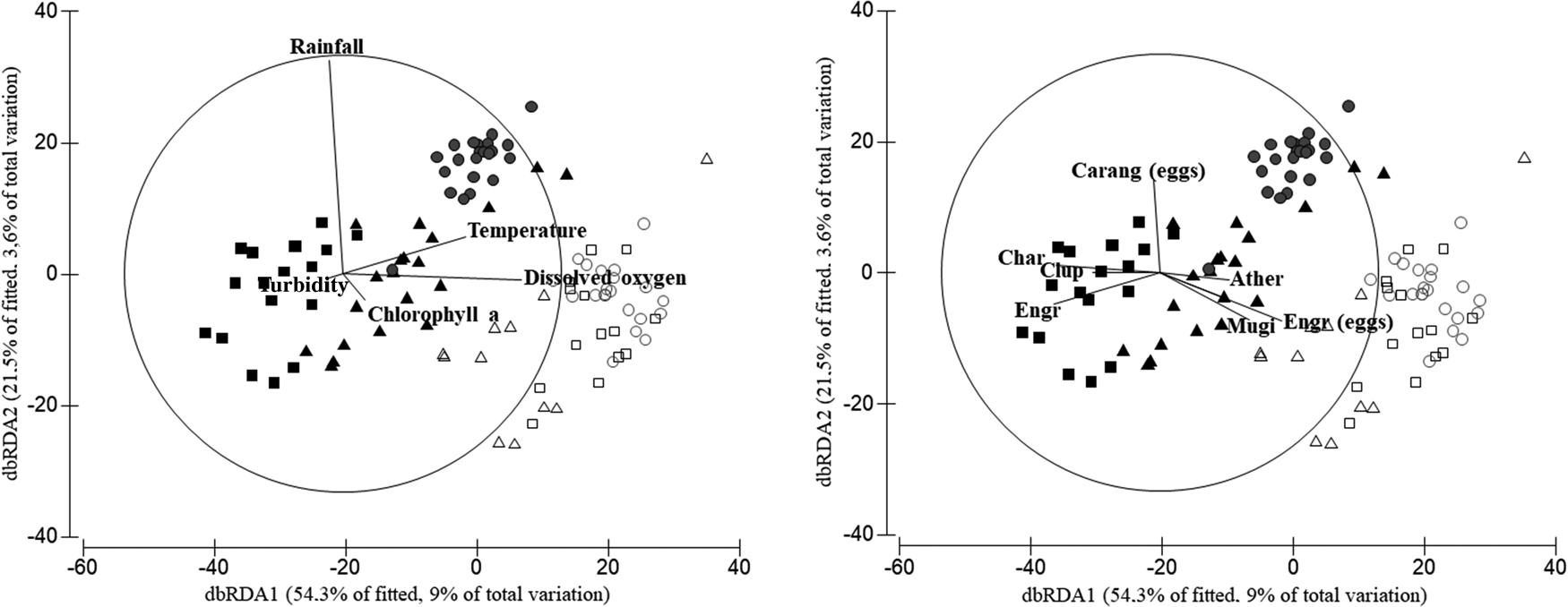
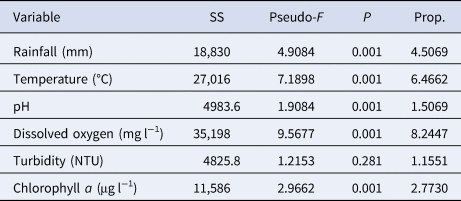
The most important environmental variables that contributed to the variation in estuarine ichthyoplankton communities were identified by DistLM (Table 6). The Best procedure selected four predictor variables as the strongest parameters determining ichthyoplankton composition in relation to zones and seasons: rainfall, turbidity, dissolved oxygen, temperature and chlorophyll a (Figure 4). Together, these variables accounted for 14.2% of the variation in the estuarine ichthyoplankton data. Marginal tests identified dissolved oxygen as the variable that was most strongly correlated with ichthyoplankton density (explained 8.42% of variation), followed by temperature (6.46%) and rainfall (4.40%) (Table 6).
Results of the redundance analysis based in distance (DbRDA) demonstrating the environmental variables that influence the structure of the families in the ichthyoplankton trawls in the Mamanguape estuary, Brazilian semi-arid, coded for the seasons. Rainy: Upper (▵), Middle (□) and Lower (○ ). Dry season: Upper (▴), Middle (■) and Lower (•). And the families represented by the vectors: Erythrinidae (Erythr), Characidae (Char), Clupeidae (Clup), Engraulidae (Engr), Gerreidae (Gerrei), Mugilidae (Mugi), Atherinopsidae (Ather), Achiridae (Achir), Lutjanidae (Lutj) and Carangidae (Carang).

DistLM marginal test showing the influence of environmental variables on the estuarine ichthyoplankton (Mamanguape estuary, Brazilian semi-arid)

Prop, Proportion (%); SS, sum of squares.
The first axis of the dbRDA represented the evident temporal separation of the samples, with the left quadrant characterized by samples from the rainy season and the right quadrant characterized by samples from the dry season. The second axis split the samples along a spatial gradient, with the upper and middle samples plotted in the upper quadrant and the lower zone samples plotted in the lower quadrant (Figure 4).
The dbRDA plot showed that the first axis explained 54.3% of the fitted variation (r 2 adjusted = 0.12507). The Atherinopsidae larvae and the Engraulidae and Mugilidae eggs were positively correlated with dissolved oxygen and temperature, whereas the Carangidae eggs followed by the Characidae, Clupeidae and Engraulidae larvae were negatively correlated with turbidity and chlorophyll a (Figure 4). The second axis explained 21.5% of the variation. This axis was mainly influenced by Engraulidae and Mugilidae larvae as well as Engraulidae eggs, which were negatively correlated with turbidity and chlorophyll a; Carangidae larvae were positively correlated with rainfall. These species therefore only respond to the proximity of the freshwater river input in the upper zone (Figure 4).
Size-specific larval distribution
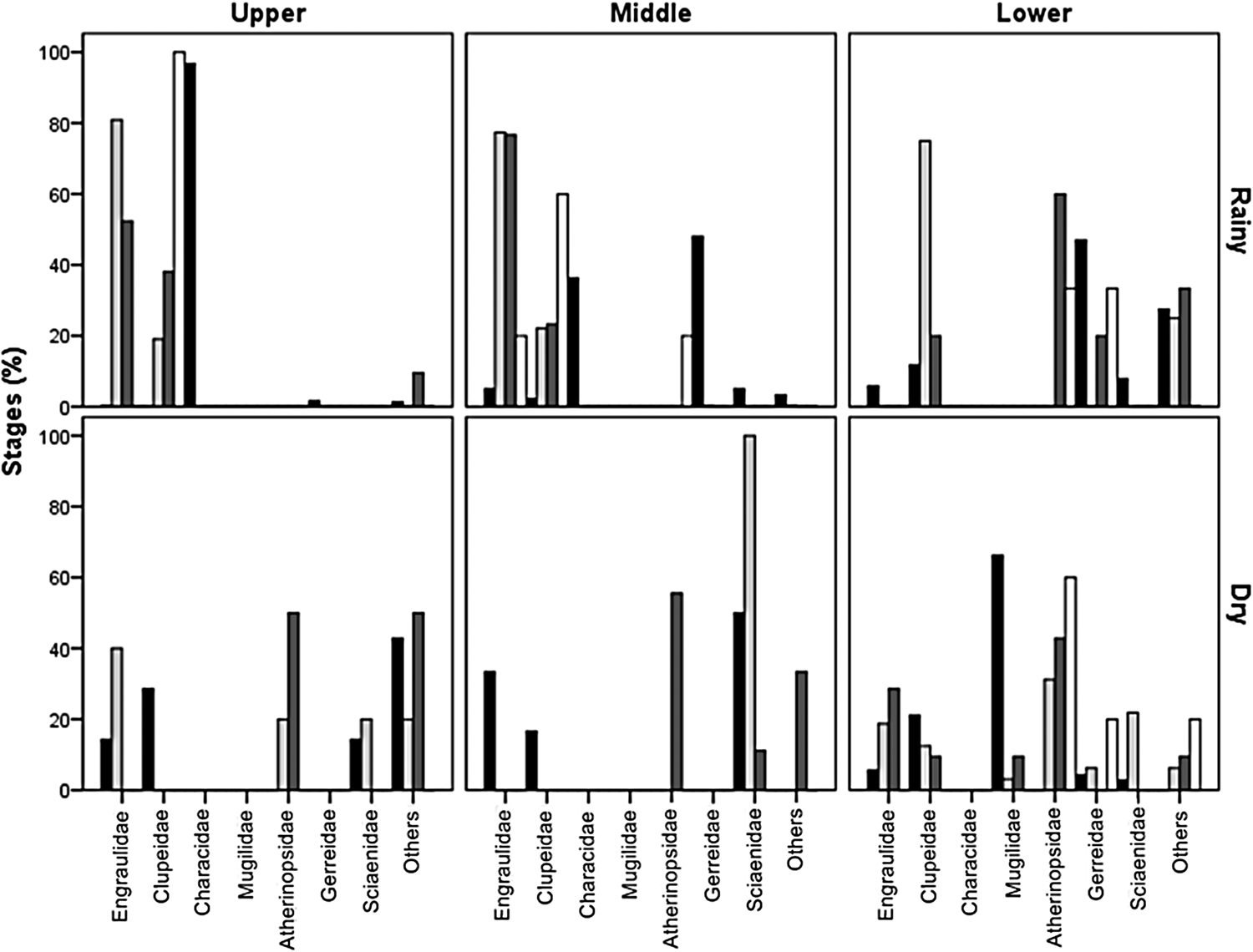
Larvae were present at all stages of their development in all zones and seasons. During the rainy season, the lowest sizes of individuals were registered in the upper and lower zones. In the upper and lower zones, the majority of larvae found were yolk sac larvae of the Characidae and Gerreidae, respectively. In the intermediate zone, the larvae were mostly in the pre-flexion stage, and there was a greater representation of Engraulidae (Figure 5).
Percentage contribution of families to each developmental stage in Mamanguape River estuary (Lower, Middle, Upper) during rainy and dry seasons. Stages: Black bars = vitelline larval; light grey = pre-flexion; dark grey = flexion; and white = post-flexion.

During the dry season, in the upper zone, there was a greater density of larvae at the flexion stage in the Atherinopsidae family and the ‘Others’ category (namely, Lutjanidae, Serranidae and Carangidae). In the middle zone, there was a higher representation of Gerreidae and Sciaenidae larvae in the yolk sac stage and Atherinopsidae and ‘Others’ larvae in the flexion stage. The lower zone was dominated by yolk sac larvae in the Mugilidae family (Figure 5).
Discussion
In the estuary of the Mamanguape River, the ichthyoplankton community exhibited strong spatial trends influenced by the seasonal fluctuation of environmental variables, such as precipitation, turbidity, dissolved oxygen, temperature and chlorophyll a, leading to the formation of distinct assemblages in terms of density and species richness along the estuarine gradient. These variables operated as environmental filters in the composition of the ichthyoplankton, where freshwater species were more abundant in the upper zone and their occurrence decreased along the direction of ocean while the density and occurrence of marine species generally showed the opposite spatial pattern. Thus, these trends reveal the importance of local processes in determining community species richness (Gotelli et al., Reference Gotelli, Gravesb and Rahbek2010), supporting the theory that abiotic environments influence the assembly of the community, restricting which species can be established in a given location (Houseman & Gross, Reference Houseman and Gross2006).
The salinity gradient varies in time and space in response to the flow of the estuary, which seems to be one of the main forces in determining the structure of the ichthyoplankton community within the Mamanguape estuary. An example comes from a subtropical estuary (Mississippi Sound, northern Gulf of Mexico), where the larval distribution showed a positive correlation with temperature and changes in salinity, due to high freshwater input from springs (Rakocinski et al., Reference Rakocinski, Lyczkowski-Shultz and Richardson2019). It has also been shown that salinity was the primary environmental driver affecting ichthyoplankton in tropical estuaries (Bonecker et al., Reference Bonecker, Castro, Namiki, Bonecker and Barros2007; Lima et al., Reference Lima, Barletta and Costa2015). In our study, the greater inflow of fresh water led to a sudden reduction in salinity in part of the estuarine zone allowing the occurrence of the freshwater families Characidae and Erythrinidae. Consequently, most families of marine origin were recorded at higher densities in the lower zone due to the greater stability of the salinity near the entrance of the estuary and were absent from the upper estuary. Thus, salinity acted as a barrier affecting larval distribution, preventing marine species from reaching less saline areas in the upper part of the estuary, since some species are estenohalines (Barletta et al., Reference Barletta, Barletta-Bergan, Saint-Paul and Hubold2005; Kraft et al., Reference Kraft, Adler, Godoy, James, Fuller and Levine2015; Henriques et al., Reference Henriques, Cardoso, Cardoso, Laborde, Cabral and Vasconcelos2017).
The decline in rainfall resulted in increased saline intrusion into the upstream part of the estuary, associated with a reduced inflow of fresh water, allowing the occurrence of marine species such as those of the families Sciaenidae, Carangidae and Bleniidae in these regions. This result was also observed by Lima et al. (Reference Lima, Barletta and Costa2015) in a tropical estuary (Goiania River, Brazilian semi-arid), which verified that the increase in marine larvae during the dry season in the upper zone was caused by the greater influence of coastal waters. The presence of these larvae in this part of the estuary can be attributed to the tidal stream transport theory, which suggests that the larvae move vertically within the water column during the flood tide and are transported by convection through the salt wedge to the upper reaches of the estuary (West et al., Reference West, Oduyemi and Shiono1991). Fishes transported by this mechanism can tolerate high amplitudes of salinity (euryhalines), allowing them to inhabit habitats that were originally influenced by fresh water (Camargo & Isaac, Reference Camargo and Isaac2001; Bonecker et al., Reference Bonecker, Castro, Namiki, Bonecker and Barros2007). In addition, the reduction in the volume of water due to a drought on the coast resulted in a reduction in the area of available estuarine habitat, with major consequences for the recruitment of transient and resident species in the estuaries (Cavalcante et al., Reference Cavalcante, Araújo and Becker2018).
The larval density decreased from the rainy season to the dry season. The highest captures were recorded for larval vitelline and pre-flexion stages, represented by Lutjanidae, Gerreidae and Carangidae. Despite the lower larval density during the dry season, there was also a greater representation of the larvae in larval vitelline and pre-flexion stages, and eggs of Engraulidae, Clupeidae and Mugilidae in the downstream zones, indicating that the spawning occurred throughout the study period and reached the peak of reproduction during the rainy season with the greatest discharges of fresh water and decreased salinity in the system. This result still suggests that seasonal variations in rainfall and salinity seem to play a larger role in reproduction and recruitment than temperature variations in tropical estuaries (Barletta et al., Reference Barletta, Saint-Paul, Barletta-Bergan, Ekau and Schories2002). Temperature seems to play an important role for distribution of larval fish assemblages in temperate estuaries such as the Lima estuary (north-west Portugal) (Ramos et al., Reference Ramos, Cowen and Borda2006).
In addition, the high nutrient discharge that occurs during the rainy season influences the dynamics of the larvae through an increase in resource availability due to higher primary productivity (Hsieh et al., Reference Hsieh, Lo, Liu and Su2010). Consequently, there was a higher concentration of chlorophyll a recorded in the middle zone of the estuary, which coincided with the area of maximum estuarine turbidity (Oliveira-Silva et al., Reference Oliveira-Silva, Ramos, Carvalho-Rocha, Viana, Avelar and Ramos2018). Many larvae and juveniles benefit from this area because of the high concentration of prey due to the high productivity as well as the turbid waters that provide shelter from predators. These factors explain the higher larval densities in this zone (Islam et al., Reference Islam, Hibino and Tanaka2006; Machado et al., Reference Machado, Calliari, Denicola and Rodríguez-Grãna2017). The high density of pre-flexion larvae of the Engraulidae and Clupeidae families in the middle zone of the Mamanguape estuary is associated with a higher concentration of zooplanktonic organisms, which are considered the main food source for juveniles (Figueiredo & Pessanha, Reference Figueiredo and Pessanha2015). Moura et al. (Reference Moura, Barbosa, Patrício, Neryd and Gonçalves2016) studied the distribution of copepods in the estuary of the Mamanguape River and noted the upper areas as sites of higher concentration of zooplanktonic organisms. Additionally, these results are associated with the ideal free distribution theory, since the resources (food) are usually distributed at irregular ‘spots’ in nature, and the organisms of a population adjust their distribution among these different resource locations to maximize their fitness (Shepherd & Litvak, Reference Shepherd and Litvak2004).
The results suggest that the influence of rainfall on salinity and its effects on other environmental variables were important in regulating the composition and distribution of the ichthyoplankton community in the studied tropical estuary. The results also emphasized the importance of seasonal changes in freshwater discharge for ichthyoplankton, with rainfall and salinity acting as the main environmental filter. Primary productivity, estimated by algal biomass through the concentration of chlorophyll a, also was important in determining larval density through food availability in the middle and upper reaches of the estuary, emphasizing the importance of these habitats as nursery areas for the initial development of the numerous fish species in tropical estuaries. More studies are necessary to understand the dispersion, reproduction and recruitment mechanisms of fish species that use this important coastal ecosystem.
Acknowledgements
We also wish to greatly thank E. Amorim, A.B. Sousa and G. Felipe and all the people who helped in field collection, sorting and identification. We are very grateful to R.E.C.C. Oliveira for the production of Figure 1. We thank the Coordination for the Improvement of Higher Education Personnel – Brazil (CAPES) for the scholarship awarded.
Author contributions
André Luiz Machado Pessanha – Writing, statistical analysis and making figures and tables; Lidiane Gomes de Lima – Sampling, diet analysis, writing of the manuscript and statistical analysis; Gitá Juan Soterorudá Brito – Sampling, writing of the manuscript, statistical analysis and elaboration of the map.
Financial support
Coordination for the Improvement of Higher Education Personnel – Brazil (CAPES) for the scholarship awarded.