Introduction
The 1960s was a prosperous time in the Canadian-U.S. border city of Sarnia, Ontario. Its location on the Great Lakes Waterway, at the intersection of Lake Huron and the St. Clair River, made it a site of importance for the regional industrial powerhouse, as well as a place of considerable natural aesthetic appeal. It was home to North America’s largest petrochemical complex on its southern tip, famously known as Chemical Valley. With the city’s industrial underpinning established, its leaders sought to beautify its downtown and attract tourism through numerous initiatives. Most notably, in 1965, the city purchased the large eighty-acre waterfront site of a recently closed salt producer and converted it to Centennial Park (for Canada’s 100th anniversary), a large public works project aimed at creating an iconic attraction.Footnote 1 Civic boosters expected the population to nearly double within twenty years, but in early May 1966, Sarnia’s leaders had a very bad week.
It began when Dr. John Woodger, a Sarnia family physician with three small children, announced that he would leave the city due to its air pollution problem. He had tried to be discrete about his plans, but the information became public when a patient with whom the doctor confided reported it to the media. Dr. Woodger claimed that he “treated more patients for respiratory illness during three months in Sarnia than a year elsewhere,” and that all three of his children had developed severe breathing problems.Footnote 2 He stated his rationale for leaving Sarnia starkly: “It will probably be 10 or 15 years before anything is done about it and by that time my children will be grown up or dead.”Footnote 3 Dr. Woodger’s decision directed considerable media scrutiny to Sarnia’s air quality problem. The Toronto Daily Star reported that the “front-page publicity” of Dr. Woodger’s actions “gave the Chamber of Commerce palpitations” and claimed that “his move started a wave of soul-searching and investigation into what can be done to eliminate the smog in Canada’s ‘Chemical Valley.’”Footnote 4
The week got worse for Sarnia’s leadership when Ontario’s liberal party leader, Andrew Thompson, called government inaction on the city’s air pollution “a crime against the citizens of the city of Sarnia” when speaking before the legislative assembly.Footnote 5 He specifically focused on the health effects: “I am told that there are times that the sulphur content over that city rises to levels that may be considered dangerous—and that comes from a prominent doctor who has lived in the city for 30 years.”Footnote 6 He noted that the Ontario government conducts no research on Sarnia, and that instead, all knowledge of the problem is produced by the polluting firms.
Capping off the week, on May 7, 1966, the Toronto Daily Star published a lengthy article by feature writer Ron Lowman highlighting Sarnia’s air pollution problem and criticizing its industries and politicians for failing to address it. Provocatively titled “When You Walk in Sarnia, Smog Gets in your Eyes,” the article offered an unfavorable assessment of the city’s problem and response to it. It covered Dr. Woodger’s departure, Port Huron’s angst and resignation from having a foreign neighboring city that produced so much pollution, yet which did not respond to requests to study the problem, and statements about the problem from union leaders who were portrayed as speaking with “the obvious fear of biting the hand that pays so well in this prosperous area.” It described the pollution as destroying automobile exteriors and aluminum fences and dirtying the interiors of homes. Mayor Henry T. Ross was described as “seething politely with righteous civic wrath” at the suggestion that Sarnia had a problem. Although the Chemical Valley representatives were given the opportunity to defend their firms, they were depicted as defensive.
The context in which to make sense of Sarnia’s leaders’ hypersensitivity to bad press, and their response to it, has been amply provided by existing historical studies of the chemical industry in the United States. In their study of the chemical industry’s pre-1970s chemical waste practices, Craig E. Colton and Peter N. Skinner show that chemical firms went to great lengths to integrate into the local community and maintain a favorable public image.Footnote 7 The objective was to lessen the probability of backlash from chemical pollution and forestall regulations. Colton and Skinner argue that the industrial engineers who ascended to the ranks of corporate executives and industry leaders claimed that regulations were bad for business and threatened to force the disclosure of trade secrets. To establish the case that regulations were unnecessary and maintain exclusive control over production processes, the chemical industry developed waste management policies and formed multifirm committees to disseminate information about best practices in waste management. This enabled the chemical firms to set the standards on which they would be judged. Central to the process was the Manufacturers Chemists’ Association (MCA), the industry’s main trade association, which promoted interfirm information exchange and encouraged firms to take responsible waste disposal seriously.
Gerald Markowitz and David Rosner characterize the activities of the American petrochemical industry prior to the regulatory era as “a history of deceit.”Footnote 8 Maintaining exclusive control of manufacturing knowledge and processes, and embedding themselves in the local social fabric, were important at the best of times—when chemical pollution was not a salient political issue. However, when popular concern about pollution appeared to call for a policy response and threaten the industry’s control over the issue, it resorted to a casuistical public relations strategy. Representatives of firms would acknowledge the evident problem, portray it as the cost of prosperity, claim to spend substantially on reducing it, and depict the problem as a mere nuisance instead of a health threat.Footnote 9 Although this was implemented industry wide, the MCA advised that the “handing of minor problems at the ‘grass roots’ could significantly reduce the hazard of a major conflagration.”Footnote 10
All of these behaviors by the chemical industry, observed pre-1970 in the United States, were exhibited by Sarnia’s Chemical Valley firms. Local industry executives had leadership roles throughout Sarnia in numerous community organizations. When, during the 1950s, the city council considered passing an air pollution bylaw and commissioned a study, the firms quickly organized into a regional industrial association (with a research branch) to self-govern and publicize their efforts in preventing pollution. This arrangement gave Chemical Valley exclusive access to all data about pollution levels in the city. Air pollution in Sarnia was not considered much of a problem by city council, the chamber of commerce, the local health unit, or the city’s industrial firms. To the extent that it was mentioned in public discourse, it was an acknowledged “nuisance” that inevitably accompanies industrial economic prosperity. The city’s air pollution was not a public health problem, and thus not a salient political issue that the government need address with a municipal bylaw or provincial regulation. It was convenient for policy makers to accept Chemical Valley’s claim that whatever problem existed was under control.
When Sarnia’s leaders experienced their bad week in May 1966, it challenged this state of affairs, but it could not have come as a complete surprise. Their hypersensitivity about bad press was another trait that Chemical Valley shared with the American chemical industry. In the wake of the 1962 publication of Rachel Carson’s Silent Spring, the MCA’s Public Relations Committee expressed great concern that the negative publicity would damage public trust in the chemical industry and encourage the government to regulate. By 1966, industry executives viewed Carson’s book and Ralph Nader’s Unsafe at Any Speed as the type of disaster that must not happen to the chemical industry again.
The industry saw public relations as the appropriate response to the crisis in public confidence. So too did Chemical Valley in 1966 when it suddenly found itself in the limelight. However, the story of Sarnia also contains a politically sinister dimension that is inadequately explored by historical research on the chemical industry. In The Un-Politics of Air Pollution, Matthew Crenson draws attention to the political control and suppression of dissent that has occurred in industrially dominated cities with air pollution problems. He shows that a mutual understanding among local business elites and political leaders to disallow some issues to enter into political contestation may occur. This has a chilling effect on activism by constraining its scope:
In some matters, local political activists may behave as though … they were all responding to the directives of an elite. The effect of this behavior is to restrict the range of community political concerns, to fix local political horizons, and to relegate some political issues to political oblivion.Footnote 11
In Sarnia, Chemical Valley’s status as the source of local prosperity and deep integration into the community enabled it to forestall or snuff out activism about the city’s airborne chemical pollution problem. A local activist who sought to challenge this power monopoly (in particular, the young allergist discussed below) risked silencing and professional damage. The city’s bad week in May 1966 had consequences for anyone who represented the “minor problems at the ‘grass roots.’”Footnote 12
In this article I provide an account of how Sarnia’s business elites and public officials managed the city’s serious air pollution problem and, in particular, how they prevented its politicization and responded to efforts by others to make an issue out of it. In pursuance of this, I include an overview of the political background of Sarnia, describing the main actors participating in the air pollution policy process. Afterward, I discuss the attempts by a local allergist, Dr. William van Hoogenhuize, to raise the issue of the city’s toxic air. I use the rare moments when the city’s pollution problem got raised (or almost raised) on the political agenda to explicate the political system’s dynamics. How Sarnia’s city council and industries responded when the city’s air pollution received media attention, or when someone spoke up seeking to contribute to a solution, says much about the actors who tried to prevent it from becoming a policy issue, and about the controlling and suppressive political system in which they participated. I begin with a brief overview of Sarnia’s industry-based economy and pollution problem.
Sarnia, Chemical Valley, and Air Pollution
Sarnia is located on St. Clair River and the southern tip of Lake Huron, across from the town of Port Huron, Michigan, south of Point Edward, Ontario. It was a picturesque site during the 1960s. Most of the city’s professional buildings were located on two streets (Christina and Front) within two blocks of the shore. Its fifty-four thousand residents reaped a substantial economic benefit from its industry.Footnote 13 Sarnia’s median income was $101 per week in 1961, the highest in Ontario. By comparison, Sudbury, an industrial city in Northern Ontario, had a median income of $91; for Toronto, the country’s largest urban area, it was $81. By 1967, Sarnia’s weekly wage had risen further, to $139 per week—the highest in Canada.
This wealthy population was sandwiched between two heavy polluters. Located at the southern end of Sarnia, Chemical Valley was one of a kind. There was no other petrochemical complex of its size and concentration in North America—a fact frequently repeated by industry representatives arguing that no other place could be used to benchmark Sarnia’s pollution.Footnote 14 It consisted of ten firms at the beginning of the decade, twelve by the end, employing around seven thousand workers.Footnote 15 They included a Canadian crown corporation (Polymer Corp.), multinational corporations (e.g., Dow Chemical, Shell) and privately held domestic firms. They experimented with and produced a variety of petrochemical products: solvents, ammonia, polyurethane, plastics (and its many antecedents, such as styrene), glycol, rubber, latex, chlorine, fiberglass, and others.Footnote 16 It was clear to all that they also produced a lot of air pollution, but nobody fully knew what was released into the atmosphere. Dow released chlorine gas, for example, and might have released ammonia and chemicals involved in the manufacture of plastics (such as benzol and ethylene), but no statistics were released on this.Footnote 17 Moreover, the great amount of energy needed to power these industrial facilities meant that coal-fired industrial boilers used by the firms produced a lot of sulfur dioxide and dark smoke.Footnote 18
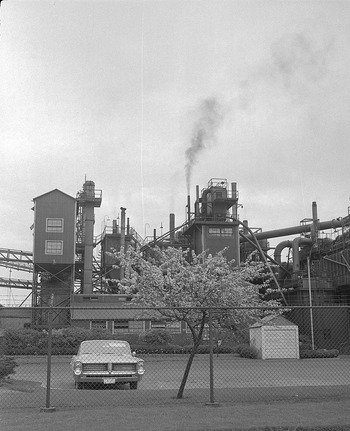
At the other end of the city, fewer than two miles north of Chemical Valley, was Holmes Foundry (Figure 1). This maker of engine casting blocks and brake linings was a family-owned enterprise that had been at its location for nearly fifty years. It was also one of Sarnia’s heaviest polluters, releasing airborne smoke and soot derived from its manufacturing processes. Technically, because Holmes Foundry was on the northwest corner of Christina Street and Exmouth Street, it was located in Point Edward. This detail is mostly irrelevant, though. Holmes Foundry employed seven hundred people and was financially troubled. It had been struggling to survive since going into receivership during summer 1966, so neither town was going to burden the owners by requiring the plant to install expensive abatement equipment.Footnote 19
A view of Holmes Foundry, 1966.

Between these two sites of pollution, Sarnia sprawled east. To the west, across the river and international border, was Port Huron. Residents in Port Huron frequently complained to their mayor about the problem, but for many years his entreaties to Sarnia’s city hall and Chemical Valley fell on deaf ears.Footnote 20 Data collected by the International Joint Commission (IJC) in 1967 revealed a very polluted region. Levels of particulate matter and sulfur dioxide in Sarnia were well in excess of Ontario’s ambient standards, and levels of hydrogen sulfides were much higher than the perceptible threshold of 2 parts per billion (ppb).Footnote 21 At least one two-hour period in Sarnia reached 100 ppb, and one daily average was 9 ppb. Port Huron’s problem was also severe, although less so. Living in Sarnia meant suffering with constant soot and the frequent smell of turnips and rotten eggs, not to mention the chemicals the IJC study did not examine.
Sarnia’s air pollution problem did not suddenly begin in the 1960s. This is when the “first wave” of environmental concern unexpectedly occurred in Canada, causing industry and political leaders to temporarily lose control of the issue’s portrayal in the popular press.Footnote 22 Fifteen years earlier, as Chemical Valley and Sarnia’s population were rapidly expanding, city council drafted, and considered passing, an air pollution bylaw. The specific target of the bylaw was not the Chemical Valley firms (although it included them). The many new schoolhouses and commercial buildings with coal-fired boilers were also contributing substantially to the city’s growing problem. However, in October 1952, city council hesitated in passing it and instead commissioned a study on the problem from the Cincinnati-based Coal Producers Committee for Smoke Abatement (CPCFSA), a research organization financed by firms in the coal industry.Footnote 23
The survey was conducted during a single day in April 1953, resulting in a lengthy report released in July. It covered several types of polluters, including the schoolhouses and other buildings with coal-fired boilers, small manufacturing firms, Holmes Foundry, and four Chemical Valley facilities (namely, Dow Chemical, Polymer Corporation, Dominion Tar and Chemical, and Imperial Oil). Each underwent an inspection and was the subject of an individual report within the full report. The CPCFSA called the chemical facilities “the major sources of air pollutants in the city because of their relative size and generally upwind location” and noted the complexity of measuring their airborne pollutants and devising a bylaw designed to address the problem:
Each plant has a separate type of operation and production from the others but the products of one or more are utilized by others for their own operations or manufacture of finished products. Each plant therefore has quite different characteristics and potential or actual sources of air pollutants.Footnote 24
The individual reports were fairly extensive given the briefness of the onsite survey. On Dow Chemical, for example, it reported the risk of airborne emissions of chlorinated hydrocarbons (like carbon tetrachloride and trichloroethlene), chlorine gas, ammonia, benzol, and ethylene, and made recommendations as to how to prevent them. From Polymer, the investigators observed the substantial release of dark smoke and offered specific recommendations for equipment that would mitigate the problem. However, overall, the CPCFSA claimed that the pollution problem in Sarnia was too complex for specific recommendations or the development of a municipal bylaw. It said that, because “few individuals other than those connected with the respective industries involved have sufficient experience or knowledge to apply the proper air pollution control measures,” they should be permitted to research solutions to their airborne emissions.Footnote 25 Instead of a bylaw, it recommended that Sarnia engage with the diverse polluters through the creation of a “technical advisory committee” comprised of government officials and business representatives. This committee would maintain a working relationship with the IJC and would “organize and direct the activities of a voluntary air pollution abatement program with which industry and the public will cooperate for the good of the city.”Footnote 26
The Chemical Valley firms, seemingly threatened with losing a degree of control over their production processes, quickly conducted a rival study (discussed below). By the time the CPCFSA’s findings were released, Chemical Valley’s newly created research arm, the St. Clair River Research Committee (SCRRC), had sufficiently filled whatever void in governance the CPCFSA (or city council) could claim ostensibly existed. With both the research and control programs now under the exclusive direction of Chemical Valley, the industry could decide what problems were studied, and which results were reported.
Political Background: “Official Sarnia”
The political system enforcing inaction on air pollution in Sarnia was distributed across a network of local actors with complimentary functions who engaged in mutually supporting actions. Globe and Mail reporter Terrance Wills called it “Official Sarnia” in 1967, describing it as “the powerful managerial group whose memberships on Council, the Chamber of Commerce, and the service clubs overlap.”Footnote 27 It also consisted of the Lambton County Medical Society, the Lambton Health Unit (in particular its chief administrator, Dr. Gordon L. Anderson) and, of course, representatives of the polluting industries. Chemical Valley executives permeated Sarnia’s community organizations. They rotated through the leadership of the Sarnia Chamber of Commerce, including leadership positions in its numerous themed committees. Other local organizations they headed in the 1960s included the humane society, the YM-YWCA, the local branch of the Rheumatism Society, and the hospital commission. Dow Chemical executive B. A. Howard was a member of the library board, had been president of the Canadian Club, and had led the planning of the local music festival.Footnote 28 Another, Ewart Leonard (Len) Weldon, was a solicitor for Dow Chemical, director of the board of the Ontario Chamber of Commerce (beginning in 1965), president of the Sarnia Chamber of Commerce in 1966, and a Sarnia alderman (1967–1970).Footnote 29 In December 1966, while speaking before the Sarnia Chamber of Commerce, he asserted that “pronouncements about air pollution often are made by people who know nothing about it and the lunatic fringe of the population.”Footnote 30
Not all of these organizations and individuals were actively involved in preventing the politicization of air pollution. They shared an interest in the continued growth and prosperity of the local economy and made decisions aimed to facilitate this. Typical for local growth coalitions, they wanted Sarnia to have a good reputation, even as the reasons for wanting this varied across individuals and organizations. Air pollution was an unwelcome outcome of Sarnia’s prosperity about which little was known, yet which potentially threatened the city’s good name and the legitimacy of the businesses that brought the prosperity.Footnote 31 Among the local organizations particularly interested in the maintenance of Sarnia’s (and Chemical Valley’s) image were the SCRRC (later renamed the Lambton Industrial Society); Sarnia’s city council; its urban newspaper, the Sarnia Observer (Observer); Lambton County’s medical establishment; and the Sarnia Chamber of Commerce.
The SCRRC was created in 1952 by three Chemical Valley firms: Imperial Oil, Polymer Corporation, and Dow Chemical of Canada. It was “charged with the responsibility of applying a cooperative approach to the prevention and solution of industrial pollution problems in the Sarnia area.”Footnote 32 The SCRRC’s first major study took place in late May 1953, five weeks after the Cincinnati-based CPCFSA’s survey was conducted, and less than two months before the release of its report.Footnote 33 The three original SCRRC firms were joined by two others (Cabot Carbon and Canadian Oil Refineries Ltd.) and the Ontario Research Council (a government research funding agency) in financing this research. Afterward, the SCRRC paid for all of its research activities.
By 1964 it counted eleven members—all of the Chemical Valley firms, plus Holmes Foundry. Footnote 34 Each of these eleven firms represented one voting member on the SCRRC; the Ontario Department of Health (DOH) was the twelfth voting member and was privy to the SCRRC’s proprietary data on the city’s ambient pollution levels.Footnote 35 The SCRRC’s task was to study air and water pollution from the Chemical Valley companies and “recommend to company management corrective action where warranted,” and to “publicize all committee activities and thereby maintain good public relations for the benefit of the participating industries.”Footnote 36 Thus, as Lorne Robb, SCRRC chairman and an executive at the Ethyl Corporation of Canada, explained in August 1965 to the Sarnia city council: “[The SCRRC’s] terms of reference are to study and not to police member industries. This is being done on a voluntary basis. The industries take it upon themselves to correct their mistakes and they finance their efforts.”Footnote 37
In practice, however, the SCRRC did not monitor air and water quality in Sarnia. It contracted this work to the Ontario Research Foundation (ORF), a private research firm unrelated to the Ontario Research Council.Footnote 38 The ORF maintained several pollution monitors throughout Sarnia and Chemical Valley, measuring ambient levels of sulfur dioxide, hydrogen sulfide, particulate matter, and oxidants (e.g., nitrogen oxides, ground-level ozone, and chlorine). It did not measure emissions from any of the Chemical Valley facilities. This enabled the SCRRC to claim in a 1966 report, without the inconvenience of contrary evidence, that the concentrations of oxidants measured in Sarnia were not emitted from Chemical Valley facilities.Footnote 39 All data gathered by the ORF in Sarnia was paid for by the SCRRC and, although it was reported to the DOH on a monthly basis, it was the SCRRC’s intellectual property.Footnote 40 Thus, the DOH knew the air quality measurements in Sarnia but could not share this information with the public, which received only the information disseminated by the SCRRC from the measurements ordered by the SCRRC. Dr. E. Rodney Morton, a chemist at DuPont Canada who took over as the SCRRC chairman in 1966, explained that the industries’ reason for their secretiveness was that the information is “too prone to misinterpretation by the unsophisticated.”Footnote 41 In the 1966 report he authored for the SCRRC, he used the data to argue that pollution in Sarnia was “essentially under control,” well within provincial guidelines, and compared favorably to other industrialized parts of North America.Footnote 42 This assessment contrasted starkly with the conclusions of the IJC investigation that commenced the following year.
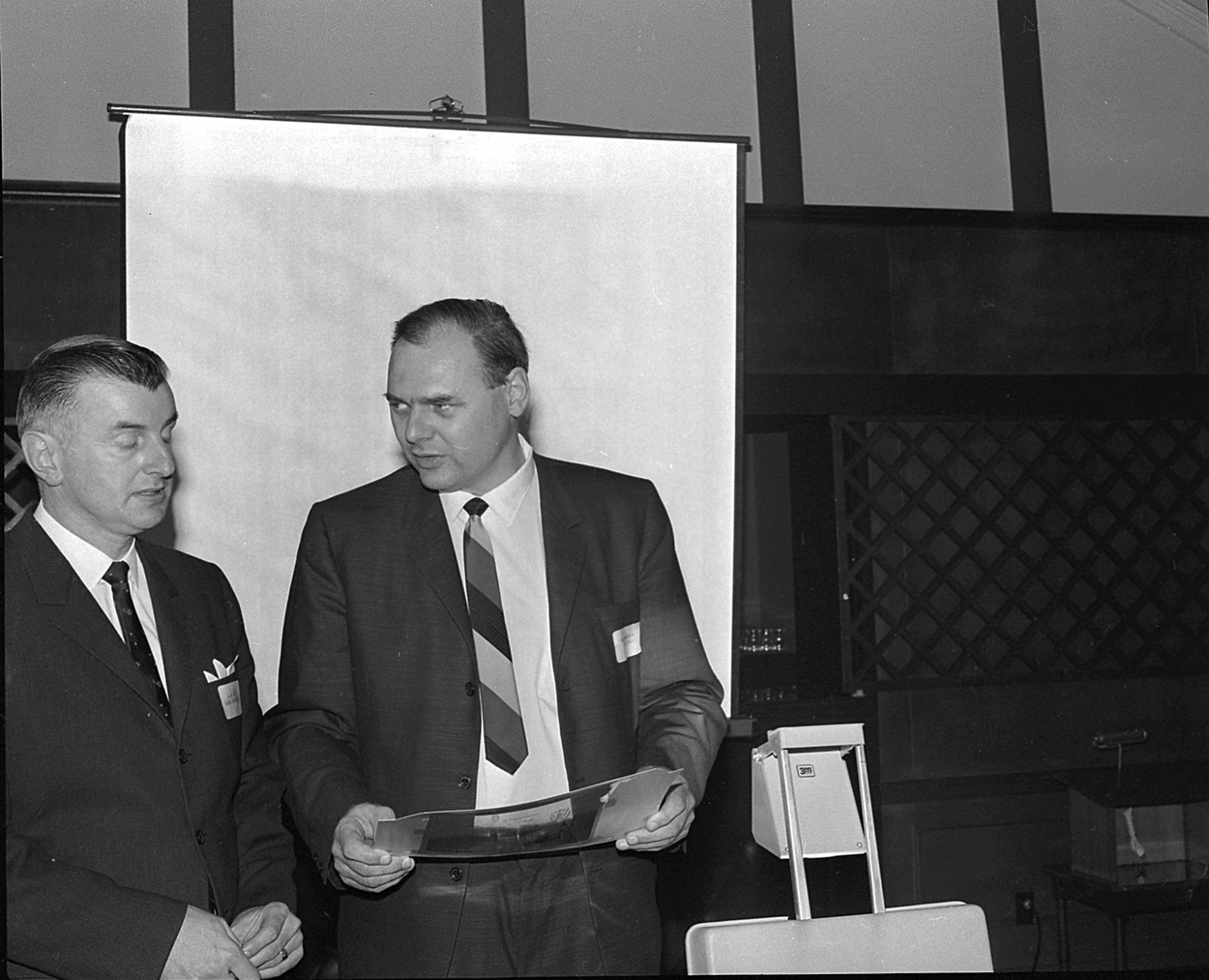
In March 1967, Chemical Valley reorganized its administrative apparatus, creating the Lambton Industrial Society (LIS). Broader in scope (it also functioned as an interest group), it subsumed the SCRRC, which became the LIS’s technical subcommittee and continued to be chaired by Morton. Like the pre-reorganization SCRRC, the LIS contained a board of directors with one member from each Chemical Valley firm. It also included, at its helm, officers (including LIS President L. M. Tod, Dow Chemical of Canada), who comprised the organization’s executive committee (Figure 2).Footnote 43 At its founding, the LIS’s stated objectives were “to promote joint and individual effort by member industries in fields of education and research to achieve control of industrial pollution of air, soil and water consistent with government regulations and good corporate citizenship.”Footnote 44 Throughout the 1960s, the SCRRC and LIS contended that, although air pollution was a problem in Sarnia, it was not a threat to public health.Footnote 45 It maintained a close relationship with members of city council, the Sarnia Chamber of Commerce, and the Observer newspaper. It occasionally issued reports and press releases in response to public attention on air pollution, underscoring Chemical Valley’s extensive efforts to address the problem while serving as the city’s engine of economic growth.
Lambton Industrial Society president L. M. Tod (left) and technical subcommittee chairman E. Rodney Morton (right), 1967.

The Sarnia and District Chamber of Commerce was Sarnia’s and Point Edward’s local growth coalition.Footnote 46 Its more than seven hundred members consisted mainly of Chemical Valley executives and representatives from Sarnia’s hotel and retail shopping businesses, and it was led by an executive council composed of members rotating on an annual basis.Footnote 47 Its main concerns were the promotion of Sarnia as a place for tourism, conventions, and the location of industries. In this vein, President Justin Mallon said in his January 1964 address to city council, “Governments are competing with each other and the various municipalities are competing in respect to conventions and industries. Conventions are big business … and our City must do its best to keep Sarnia as a logical place for these to be held.”Footnote 48
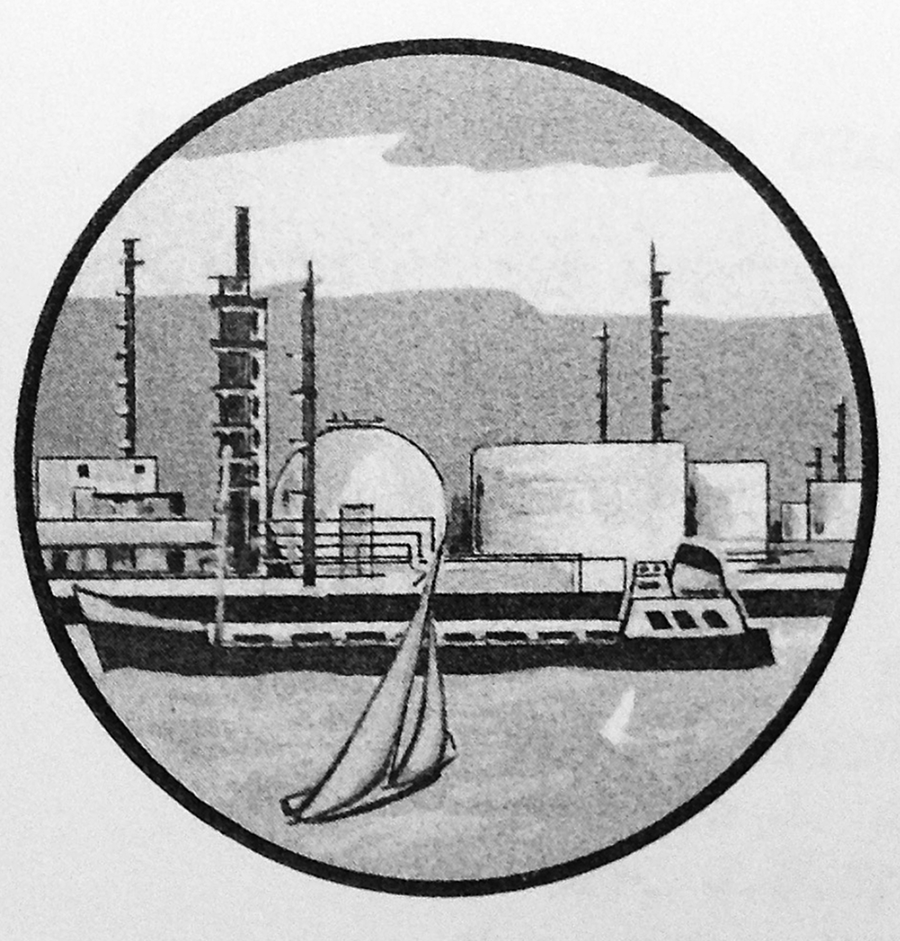
To manage the city’s growth, the chamber of commerce maintained numerous themed committees, including a tourism committee, a convention committee, a waterfront committee, a beautification committee, and an industrial development committee (concerned, specifically, with attracting firms to the Chemical Valley complex). Its priorities were audaciously expressed in its logo, revised for 1966. It shows the river with refineries and a freighter in the middle, and a sailboat and bird in the foreground. Its circular form and blue sky portray waterfront recreation and the petrochemical complexes in harmony (Figure 3).
Sarnia and District Chamber of Commerce logo, 1966.

The growth of Chemical Valley, at the southern end of town, and the fact that Sarnians did much of their shopping over the border or in Toronto, resulted in an unattractive downtown area. This represented an obvious area in need of improvement to Sarnia’s business elites. Thus, prominent and recurring activities of the chamber of commerce included city cleanup campaigns, Christmas decorations, tourism booklets, and the administration of an annual Chemical Valley festival and parade. Throughout the mid to late 1960s, the chamber of commerce conducted an urban renewal campaign, forming a committee on the topic and planning the downtown’s transformation.Footnote 49 The minutes of the chamber of commerce’s meetings (including committee meetings) from 1965 to 1969 report nearly no discussion of Sarnia’s growing air pollution problem. The organization’s relevance to the issue is its communication, to city council, of Sarnia’s economic priorities. The chamber of commerce’s explicit concern and expenditure of resources—for the promotion of Sarnia as a beautiful city to visit and a prosperous one for commerce—contributed to city council’s sensitivity to bad press about industrial pollution.
Also promoting local growth, and well positioned to frame the local discourse over air pollution and the privileged place of the petrochemical industry in Sarnia, was the local newspaper, the Observer. With the size of its market determined by the city’s growth, the Observer was an unabashed ally and defender of Chemical Valley. For example, in 1967, during Canada’s centennial year, the Observer used the tenuous coincidence that two of Chemical Valley’s firms were similarly celebrating an anniversary—twenty-five years in Chemical Valley—as an occasion for the promotion of the city’s heavy industry and attractiveness for tourism. A March 1967 special edition, “SCOPE 1967,” with “facts and figures … supplied directly by Sarnia and District Chamber of Commerce,” sought to highlight “one of Ontario’s greatest success stories—the rise of Chemical Valley into national and international importance as a centre of industrial research and technical know-how.”Footnote 50 The “SCOPE 1967” title page continued, “The Observer feels it is privileged to help bring this exciting story to the attention of readers at home, across Canada and overseas.” The photos contained a caption welcoming tourists to Lambton County, a place that “abounds with wonders,” and trumpeting the region’s attractions, including its parks and resorts, the new parkway project promising “a panoramic view of Lake Huron and the St. Clair River,” and, of course, the Chemical Valley complex.Footnote 51
The Observer’s approach to air pollution was to defend Chemical Valley against criticism and promote its efforts, through the SCRRC and LIS, to address any problems. It did this by publishing articles in response to public appearances by SCRRC and LIS members, and reports released by the organization, presenting its success in keeping Sarnia’s air clean.Footnote 52 The Observer’s editorial board was particularly responsive to bad press from other news outlets. Its city editor, Stewart Little, said the occasional unfavorable portrayals of Sarnia’s handling of air pollution were from “a few people sounding off who don’t know what they are talking about.”Footnote 53 One representative example of the Observer supporting Chemical Valley occurred in August 1965. After the SCRRC published a report highlighting its efforts, in response to negative publicity about air pollution (discussed below), the editorial board contributed its support:
What must be remembered in the matter of air and water pollution is that local industries are well aware of the potential problem and generally are doing all in their power to make whatever adjustments are necessary because they are all good corporate citizens for which Sarnia is fortunate. They have expended many tens of millions of dollars and they employ most of our people. They have taken as much corrective action as engineering sciences have devised. The housekeeping in virtually all plants is such that industrial accident rates here are low because employees cooperate with management’s desire to remove hazards. Let us, therefore, proclaim our astonishingly good record for clean air despite the nature of our industries. The committee’s report should make most Sarnians proud.Footnote 54
The Sarnia area medical establishment was another important part of the “Official Sarnia” political system that contributed to the depoliticization of the city’s air pollution. It consisted of two organizations, the Lambton County Medical Society and the Lambton Health Unit. The former was a regional nongovernmental association of physicians and a subunit of the Ontario Health Society. Although it was not an official agency with regulatory authority, it had the capacity to discipline physicians by publicly censuring them. The latter was the regional government public health agency. Its director during the entire decades of the 1960s and 1970s was Dr. Anderson. He regularly stated that air pollution in Sarnia was a nuisance—on one occasion, joking that it forced him to paint his house every year—but resolutely denied that it represented a public health problem and that any evidence existed about the deleterious effects of air pollution on health.Footnote 55
Finally, Sarnia’s mayor and city council sought to appease the Chemical Valley firms representing the foundation of the city’s prosperity, while concurrently managing the demands of its citizens and of the chamber of commerce. Sarnia needed a growing industry and a reputation as a beautiful place for tourism. City council was, for the most part, powerless to deal with air pollution. This is likely why, as evidenced below, it was hypersensitive about bad press related to the problem; it did not want politicized what it did not feel it could take measures to address. It was supported by both the Observer and Dr. Anderson, and regularly used Dr. Anderson’s professional opinion to justify the status quo.
The Allergist
“Official Sarnia” tried to prevent the issue’s politicization by addressing small problems when they arose, silencing critics, controlling information, and defining air pollution as a nuisance rather than a public health problem. Although several air pollution issue-raising controversies occurred during the mid to late 1960s eliciting the response of Sarnia’s elected officials and business leaders, Dr. William van Hoogenhuize’s experience is particularly instructive of their tendencies when confronted with the problem. He unwittingly raised the issue at a time when the provincial and national media was critically examining Sarnia’s air quality problem, and the consequences for his career highlight why others would have reasonably avoided speaking up.
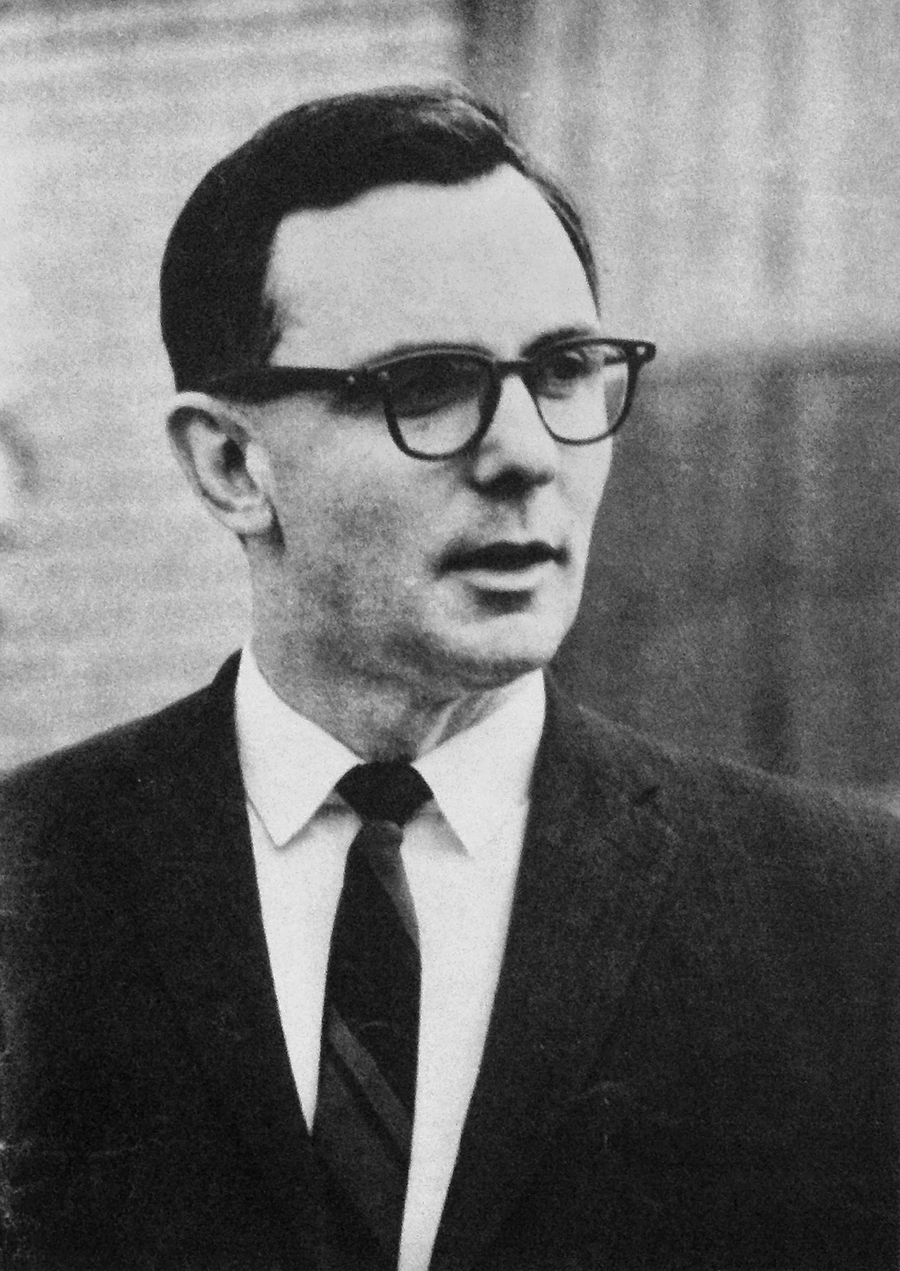
Dr. van Hoogenhuize was a native Sarnian, a young professional (in his midthirties) with a young family (Figure 4). He had obtained his medical education and training in allergy and immunology while in the United States and returned to his hometown to set up a practice and raise his family. In a June 1967 letter sent to the IJC for its investigation of air pollution in the transboundary Port Huron-Sarnia area, Dr. van Hoogenhuize explained the events that led him to be concerned about the city’s air quality:
Shortly after I commenced practice of allergy in Sarnia in the fall of 1963, it became obvious that there was something in the air that was affecting the health of the citizens in this general area. Patients of all ages would report that on coming into the city they would develop various symptoms such as nasal obstruction, sneezing, shortness of breath, wheezing, nausea, and headache.… We found that the smoke of burning leaves was particularly irritating to these individuals.Footnote 56
William van Hoogenhuize, 1968, photographed by Harold Barkley.

Dr. van Hoogenhuize’s observation about the morbidities associated with smoke from leaves in Sarnia was the topic of his first contact with Sarnia’s city council. In October 1964, during leaf collection season, he sent a letter explaining the health costs of leaf burning and suggested the city council pass a bylaw banning it. He noted that other cities had passed this type of ban and added that “if you do not see fit to act on this suggestion at the present time, I would suggest that you might investigate the matter further and possibly publicize it to some extent.”Footnote 57
The city council forwarded Dr. van Hoogenhuize’s letter to Dr. Anderson and requested a response.Footnote 58 Dr. Anderson expressed skepticism about Dr. van Hoogenhuize’s claims and said, “I do not believe that the public health problem alleged in the copy of a physician’s letter transmitted to me for comment, is of sufficient magnitude to warrant any action by City Council.”Footnote 59 No new bylaw would be forthcoming.Footnote 60 Dr. van Hoogenhuize shot back: “Dr. Anderson’s opinion is in direct contrast to that of every expert in allergy, pulmonary disease, and air pollution and shortly I will be presenting a massive evidence in favor of my contention to the city council.”Footnote 61 He kept this promise the following summer.
During fall 1964 to summer 1965, Chemical Valley and city council responded to an increasing number of complaints about air pollution. Holmes Foundry’s capacity expanded in late 1964, resulting in “blue smog” pollution and, at city council’s request, an investigation by Dr. Anderson and the provincial Department of Health. In a report later circulated to all complainants, Dr. Anderson termed Holmes Foundry’s emissions a “nuisance” but indicated that no scientific basis existed for considering it a health threat. He also said that removing the nuisance would require the foundry’s relocation, which Dr. Anderson claimed “in view of its nearly forty year history and its economic importance is not likely to be recommended at this time by any responsible body.”Footnote 62 Dr. Anderson and the Department of Health deferred concrete action on Holmes Foundry’s emissions, accompanied by the nonspecific promise of a response at some later date. With the complaints quelled, business as usual prevailed.
However, another local firm, Family Laundry, was the subject of a “smoke menace” complaint in July 1965 by a Sarnia resident. Florence Patterson, owner of an apartment complex, wrote a detailed letter describing the menace, claiming the smoke was “creating what seems to me to be pollution to the point of being a health hazard.” She expressed “the hope that some way, somehow, something drastic can be done by the City of Sarnia to eliminate a situation which has been going on for many years, apparently without anything constructive being done, after the many complaints which are constantly being made.”Footnote 63 In response, city council passed a resolution ordering the city manager to conduct an investigation with other city administrative leaders, send a letter to Family Laundry requesting that it control the problem, and correspond with Ontario cities with air pollution bylaws, asking for copies and for their experiences implementing them.Footnote 64 (The letters were sent to twelve municipalities in September 1965; few responses were received.)Footnote 65
Moreover, the mayor of Port Huron, Donald Wismer, in August 1965, publicly called for a joint committee to investigate the problem of air pollution from Sarnia.Footnote 66 The negative attention was sufficient that the SCRRC released a lengthy press statement asserting that “industrial air pollution is not a cause for alarm in the Sarnia area,” providing evidence and quotes from Dr. Anderson backing this up, and explaining the organization’s role in monitoring pollution. It claimed the press release was necessary due to “recent allegations that air pollution from industry in the Sarnia area is serious and poses a health hazard.”Footnote 67
This was the context in which Dr. van Hoogenhuize testified to the Sarnia city council on August 30, 1965, about the city’s air pollution problem. The minutes of the city council’s meeting offer a detailed account:
Dr. Wm. H. van Hoogenhuize addressed the Council … saying that there had been a fair amount of discussion on the matter of air pollution and he felt his position in this matter should be understood. He quoted various effects the population might suffer as a result of air pollution, [and] … noted several cases where severe illness had resulted, both from smogs and a high concentration of pollutants in the air.Footnote 68
He specifically identified the problem of air quality in Sarnia:
The St. Clair Committee has stated that the pollutants are within normal limits, but many people complain that they are bothered when the wind is in a certain direction.… Port Huron has claimed that there has been a combination of chlorine and styrene coming from Sarnia. This was said to be as a result of poor planning on the part of certain industries. C.H.O.K. [a local radio station] had done a survey of pollution here and a large percentage of those talked to were bothered by it. At times, Mercy Hospital in Port Huron has had to refuse admittance to patients suffering respiratory diseases. The area in the neighbourhood is becoming a slum because of periodic air pollution.Footnote 69
City council members responded skeptically. Alderman J. N. Matheson asked Dr. van Hoogenhuize “if he, as a specialist, could not cure hay fever, how could he set himself up as an expert on air pollution[?]” Reflecting the perceived threat to the city’s economic underpinning represented by Dr. van Hoogenhuize’s concerns, Alderman Harry B. Turnbull added, “Most of the citizens of Sarnia depend on these same industries for a livelihood and it would not be sensible to have them move elsewhere.” Another, Alderman J. E. Bullbrook, cited Dr. Anderson’s claims that the air in Sarnia is fine. He further observed that “this City is dependent on its industries for its livelihood and if we lost them, we lose all. It would seem to be a dilemma which cannot be solved, so we will just have to live with it.” The meeting minutes further reported, about Alderman Bullbrook’s comments, that “the Council, he felt sure, did not feel that there is any health hazard involved and that [the SCRRC] would be glad to study any infractions.”Footnote 70
Immediately after responding to Dr. van Hoogenhuize, the city council heard a rebuttal from Lorne Robb, chairman of the SCRRC. Robb provided an overview of the SCRRC’s role and activities, reiterating several points in the August 1965 SCRRC report about the relative cleanliness of Sarnia’s air (e.g., “over the past 13 years, at peak values, the measured pollutants have never exceeded accepted levels”) and the expenses incurred by SCRRC members for air pollution control equipment. He added that Dr. Anderson had “at no time submitted any complaints” to the SCRRC about air pollution problems, and that “dust fall in Sarnia has been cut in half at great expense to industries.”Footnote 71
The outcome of these testimonies was that the SCRRC agreed to cooperate with Port Huron on its proposed investigation of regional air pollution, while asserting that no evidence of a health threat existed. Sarnia Mayor H. T. Ross wrote to Mayor Wismer the following day reporting this and expressing Sarnia’s lack of interest in direct participation. He also offered a description and assessment of Dr. van Hoogenhuize’s and Robb’s testimonies, underscoring the scientific uncertainty of the former’s claims:
Almost all of [Dr. van Hoogenhuize’s] comments had to do with respiratory diseases in general and the ill effects of smog.… Very little of what he had to say had to do with this particular area except his remarks about the Mercy Hospital in Pt. Huron.… He acknowledged that he could not definitively say that the air pollution in this area was having any serious effects in the general population. He said that it might have ill effects and he would like to have a study made. Frankly, his speech failed to impress us.Footnote 72
Robb, conversely, was reported by Mayor Ross to have given “a very clear account of what was being done by local indsutry [sic] to reduce air pollution.”
Dr. van Hoogenhuize’s main argument until this point had been that more studies were needed to determine the causes of the problems he witnessed in his patients and determine what link, if any, existed with the city’s air pollution. Dr. Anderson appeared willfully ignorant of the unproven health effects of Chemical Valley’s airborne effluents, which is why a call for research seemed warranted. Dr. van Hoogenhuize probably did not realize how seditious his ostensibly reasonable request was. It threatened the SCRRC’s (and, thus, industry’s) monopoly over the information generated and distributed about Sarnia’s air pollution problem. Nevertheless, shortly after his city council testimony, Dr. van Hoogenhuize succeeded in convincing the hundred-member Lambton County Medical Society to form a committee for the specific purpose of studying the region’s air pollution problem.Footnote 73
With Dr. van Hoogenhuize appointed chairman, the committee had merely begun to organize when, in May 1966, Sarnia’s leaders had their very bad week of negative publicity. Dr. Woodger’s departure, liberal party leader Thompson’s inflammatory rhetoric, and the Toronto Daily Star feature article exposed Sarnia’s air pollution problem to more public attention than it had yet received. Dr. Woodger avoided the media after the surprising burst of attention, and Dr. van Hoogenhuize was the available alternative. In an exposé published by the Star Weekly Magazine three years after the events, investigative journalist Walter Stewart recalled that “Woodger’s exit created a local furor, which van Hoogenhuize fanned by granting interviews to invading journalists on pollution problems.”Footnote 74
Although Thompson singled out the SCRRC’s monopoly of knowledge on Sarnia’s air pollution problem for criticism, his intended target, in his role as opposition party leader, was the progressive conservative government. It was vulnerable on an issue (the environment) that was gaining salience. He brought up the Ontario Legislature’s 1957 Select Committee report calling for provincial control over air pollution regulation and sought to highlight the regulatory gaps that occurred subsequent to when the 1958 Air Pollution Control Act handed regulatory authority instead to the province’s municipalities.Footnote 75 Sarnia, heavily polluted, lacking an air pollution bylaw, and with an elected MPP from the party in power, got caught in the crossfire. Dr. van Hoogenhuize was unavoidably implicated. The Observer reported that “Dr. William van Hoogenhuize … who has been vocal in charges of air pollution, said he had been contacted Monday by Mr. Thompson.”Footnote 76 As chairman of the medical society’s air pollution committee and a Sarnia native, Dr. van Hoogenhuize was apparently Thompson’s “prominent doctor who has lived in the city for 30 years.” When contacted by the press about this, Dr. van Hoogenhuize said that, although sulfur dioxide was a commonly discussed pollutant, he was “more concerned about complex organic chemicals in the air which are not being measured.… Among these is benzpyrene, a cancer inducing chemical.”Footnote 77 He also said that he recommended to Thompson that Sarnia pass a smoke abatement bylaw.
The Toronto Daily Star article expressed similar skepticism of the envious deference granted to Chemical Valley by the provincial government. The purpose of the SCRRC was portrayed as “to counteract the charges that Sarnia air was polluted by the sulphur dioxide, hydrogen sulphide, oxydents [sic], hydrocarbons, aerosols and just plain dust heaved into the atmosphere.” Dr. van Hoogenhuize was also interviewed for it. He highlighted the health problems associated with Sarnia’s pollution: “Since I’m an allergist, I constantly see patients who tell me they are bothered by the smoke, fumes and fallout. I accept this and I’ve told city council about it.” In his role as the chairman of the air pollution committee, he called for a study “even if it costs $1,000,000. With new plants being built, the situation isn’t going to get better.”Footnote 78
The eruption of negative publicity from this confluence of events revealed Sarnia’s leaders’ sensitivity to criticism that might make the city seem an undesirable place to live, harm the reputation of its economic base, and potentially invite the scrutiny of regulators. MPP Knox tried to defend Chemical Valley by pointing out its efforts to the Observer: “I am not denying that there is air pollution, but I would like to stress the fact that industry is making a great deal of progress in its endeavors to bring under control any pollution that might emanate from their plants.”Footnote 79 In a May 11, 1966, letter to Sarnia Alderman G. W. Parker, Mayor Ross lamented the content of the Toronto Daily Star article: “This adds to the very bad publicity Sarnia has been receiving. There does not appear to be much we can do to counteract it at this present time.”Footnote 80 The minutes of the May 16, 1966, Sarnia city council meeting report a discussion about the unwanted attention from air pollution. While acknowledging the problem of air pollution from Holmes Foundry, Alderman Bullbrook said “that the remarks made in the Ontario Legislature on this item verged on the irresponsible. The City of Sarnia is unique in its type of industries and some spill out is to be expected. He felt that our industries within the City are doing everything possible to relieve the citizens from any such situations.” Mayor Ross echoed Bullbrook: “There is nothing occurring justifying any such statements as were made.”Footnote 81
Remarkably, at this same meeting, fewer than two weeks after Dr. Woodger’s departure, and roughly eight months after Dr. van Hoogenhuize testified to city council, Mayor Ross denied the evident:
You could not get any doctor to say that there is any known injury to health here due to the impurities in the air here.… There is no evidence that there is anything detrimental in the air we breathe even if it is sometimes hard on the eyes. Dr. Anderson says that the situation has to be watched and this they are doing. They have very good controls in monitoring. This is being done by the Ont. Research Council through our local industries.Footnote 82
The Observer quickly came to the city’s defense, publishing a May 10, 1966, editorial described by Mayor Ross as a “very good” piece “which covers the situation well.”Footnote 83 Titled “Explaining Pollution,” the editorial called the recent media attention “more … than is probably justified,” blamed the “ordinary individual” for creating the majority of air pollution through the use of automobiles, pointed out that other cities have worse problems, highlighted the expenses borne by Chemical Valley, and praised the Ontario Research Foundation’s work “constantly monitoring our air and water, and industry’s paying heed to its findings.”Footnote 84 The same day, the Observer published a lengthier article by business writer Marcella Brown, titled “Where There’s Smoke, There’s Air Pollution, It’s as Simple as That.”Footnote 85 Its tenor was similar to the editorial, highlighting worse pollution in other cities and blaming Sarnia’s pollution on sources other than Chemical Valley—such as, for example, the coal-burning lake freighters plying the St. Clair River. The editorial concluded by characterizing Sarnia’s air pollution problem as not very serious and stating clearly who ought to be trusted to determine if and when it is: “The people of Sarnia and district are not dying off like poisoned rats. The research foundation, the department of health and our own Lambton Health Unit should be the people to consult before sounding alarms.”Footnote 86
For Dr. van Hoogenhuize, one of the people not deemed worthy of consultation by Sarnia’s business and public leaders, the repercussions for implication in the rash of negative publicity were quick and severe. The Lambton Medical Society disbanded the air pollution committee he chaired and, at the medical society’s request, the Ontario Medical Association’s ethics committee cited him for making unauthorized public statements.Footnote 87 Sarnia’s general practitioners immediately ceased referring patients to him. With no new patients, Dr. van Hoogenhuize resorted to practicing medicine in Windsor, Ontario, while maintaining his home in Sarnia and deliberating about his next career move. He curtailed his public advocacy considerably. Morton wrote, in a September 1967 letter to an official at the IJC, “Dr. van Hoogenhuize unfortunately will not speak to us.”Footnote 88 Walter Stewart noted Dr. van Hoogenhuize’s chastened approach:
Since [the ethics committee sanction], Dr. van Hoogenhuize will not talk to reporters about air pollution, and when he was persuaded to make a small speech on the subject by the local NDP organization, he read the speech first to a delegation from the medical society, so it could be checked for heresy. The Chamber of Commerce sent an observer to hear the rehearsal, to stand guard over the city’s good name, and Dr. van Hoogenhuize began his mild oration with the advice that his views did not represent those of the Lambton County Medical Society.Footnote 89
Nevertheless, Dr. van Hoogenhuize utilized one additional opportunity to potentially influence air pollution policy in Sarnia. After the late 1966 announcement of an IJC investigation into transboundary air pollution in the Detroit-Windsor and Port Huron-Sarnia areas, in May 1967, he submitted a letter to the commission expressing his intent to submit a report:
I had not intended to present any data [to the IJC], but several parties have urged me to do so including Dr. Waldbott of Detroit, chairman of the Michigan Allergy Society Committee on Air Pollution. Having completed this social obligation I intend to retire from the field and leave it to the local industrialists, politicians + physicians.Footnote 90
The report, submitted to the IJC the following month, contained two parts. The second part consisted of 102 case reports of Dr. van Hoogenhuize’s patients in Sarnia suffering respiratory problems from air pollution. The first part provided an overview of Dr. van Hoogenhuize’s experience working with allergy patients in Sarnia, a timeline of his interactions with city council, and information on scientific studies indicating the health consequences associated with the types of air pollution in the area. He revealed that he had responded to Dr. Anderson’s and city council’s rebuff on the leaf burning issue three years earlier by writing to experts around the country and soliciting their views on the health effects. Included were quotes from them attesting to the negative health consequences of smoke from burning leaves. Dr. van Hoogenhuize also recounted the resistance by local leaders to knowledge of Sarnia’s air pollution problem and the resistance faced by those who spoke publicly about it:
Since 1964 when we first started talking about this problem not one single soul or any member of any professional or political group in this area has ever asked me why I think there is a problem or so much as picked up a telephone to inquire. On the other hand members of newspapers and other communications media [outside Sarnia] who have come to this area, not on my invitation or suggestion, have found no difficulty in being convinced of the existence of a serious problem here and also they have been convinced that a serious moral problem also exists. Various groups in the city have been quick to criticize these agencies for stating that there is an air pollution problem here. Yet these same groups at no time have made any attempt to investigate the truth of these matters.Footnote 91
A list of sixteen numbered suggestions to the IJC concluded the report. These included recommendations about which types of sources and chemicals should be tested, which local or regional organizations (e.g., the Lambton County Tuberculosis Association, Ontario Cancer Society) could participate, and ways in which public outreach efforts could be undertaken. Presciently, he suggested, about Sarnia, that “studies be made by sociologists and psychologists as to the reasons for attitudes displayed by various members of the establishment locally with regard to this air pollution problem.”Footnote 92
Although Dr. van Hoogenhuize’s report was circulated among IJC investigators and Chemical Valley firms, he did not hear back. Nearly four years after sending it, Dr. van Hoogenhuize wrote an exasperated follow-up letter reminding the IJC secretariat of his report, noting their silence, and recounting the fallout to his career from speaking up.
At the time several years ago when I was trying to get something done about air pollution, the newspapers locally were writing editorials condemning me for my action, the local Medical Society had me before the Ethics Committee of the Ontario Medical Association who found me guilty of misconduct for saying that there was air pollution when there was supposed to be no evidence whatsoever that air pollution existed. I was boycotted by the local physicians there and they stopped referring patients because I had the temerity to speak out on this issue. It was necessary to move and I am now practicing allergy in Oshawa, Ontario.
Everyone keeps saying that there is no evidence that air pollution affects the health, yet in this one report where dozens of cases were documented, no physician or governmental agency ever had the least bit of interest in following up these leads, or making any enquiries which, I think, speaks volumes.Footnote 93
Conclusion
William A. Bullard, the IJC’s U.S. Section secretary, received Dr. van Hoogenhuize’s final letter in February 1971. He responded the next day, assuring Dr. van Hoogenhuize that his 1967 report had not been ignored, and noting that the IJC would soon produce its own report. The carbon copy of Bullard’s letter was sent to D. G. Chance, the Canadian Section secretary, and eventually deposited in the IJC’s archival collection in Ottawa. At the bottom is the following handwritten note, dated March 2, 1971: “Dr. Winthrop, Canadian member of [the IJC’s St. Clair-Detroit Air Pollution] Board, glanced at document briefly and said effects of air pollution on health is no longer open to dispute.”Footnote 94 Indeed, in 1969 the MCA had acknowledged for the first time that air pollution can be harmful to human health.Footnote 95 Chemical Valley’s bad week in May 1966 was part of the larger environmental awakening culminating in what David Stradling calls the “environmental moment” of 1968–1972, and what Ryan O’Connor refers to as the “first green wave” of environmental concern in Canada.Footnote 96 It led to events that further exposed Sarnia’s problem to public scrutiny and, ultimately, ended the system of nonregulatory self-governance in Chemical Valley.
Complaints by Port Huron mayor Donald Wismer convinced leaders of both countries to allow the IJC to include the Port Huron-Sarnia region in the next phase of its ongoing investigation into Detroit-Windsor area air pollution. The resulting investigation, from 1968–1971, and the 1972 final report, spotlighted the problem in Sarnia and ended Chemical Valley’s exclusive control of information. For the first time, authoritative data existed on the sources and extent of Sarnia’s air pollution. Chemical Valley quickly took measures to modernize equipment and reduce pollution (while lobbying for federal assistance).Footnote 97 Ontario and Michigan created a binational committee to exchange information and develop shared policy objectives and signed a memorandum of understanding to meet the IJC report’s emissions targets by 1978. The IJC organized a board of air pollution control officials from both countries to report annually on the binational committee’s progress. Partly as a result of Chemical Valley’s modernizations, the total amount of suspended particulates in the Port Huron-Sarnia transboundary area declined by more than 50 percent from 1971 to 1975. The emissions reductions flattened after 1975, and the binational committee failed to meet the IJC report’s targets. However, the region suffered mightily in the early 1980s recession, experienced reduced airborne emissions of sulfur dioxide and particulates as a result, and never regained its previous level of energy-intensive industrial activity. Noting the sharp recession-induced decline in emissions, the IJC declared the transboundary problem resolved in January 1984 and concluded its work.
The case of the chemical industry in Sarnia shares much in common with accounts of the U.S. chemical industry during the same period.Footnote 98 It sought to avoid regulation and govern its own waste disposal processes. It portrayed itself as a good citizen seeking to mitigate the nuisances necessarily accompanying the prosperity it offered the community. It denied that it represented a health threat. It was hypersensitive to the kind of bad publicity the American industry experienced with Carson’s Silent Spring, for fear that it would invite the scrutiny of regulators and damage the city’s reputation. It also suppressed dissent to maintain control and prevent pollution from rising on the political agenda.
It is noteworthy that the role of business in Sarnia’s air pollution problem is seemingly at odds with the findings in other recent studies. Research on business, economic elites, and clean air policy has yielded a considerable understanding of how local firms and growth coalitions advocate for pollution abatement, but it occasionally leaves the impression—however unintentional—that these local business elites were enlightened progressives. Ted Moore argues that, in advocating for pollution relief during the interwar period, the Salt Lake Women’s Chamber of Commerce was “democratizing the air.” My research on 1950s Toronto distinguished between the businesses bound to the local economy seeking pollution relief and the city’s heavy industry, which instead preferred to maintain low production costs and was more concerned with the national market for its products. George Gonzalez showed that these local business elites preferred economical technology-based solutions so that clean air policy did not hinder local consumption and expansion. Stradling’s monumental book on early American urban air pollution politics is titled Smokestacks and Progressives. Footnote 99
Even histories of failed air pollution activism depict local growth coalitions as progressive. In his case study of Chicago during the late nineteenth and early twentieth centuries, Gonzalez shows that local boosters and business leaders sought to lessen pollution through the electrification of the city’s railroads and abatement technologies in its factories. However, in all cases the technology was too unreliable or expensive, leading the proponents of clean air policy to back down. Don Munton and I provide an account of the Sudbury Board of Trade’s efforts to balance the needs of local farmers (and the businesses that relied on them) with the air pollution caused by the city’s large smelter. Sudbury’s local business elites sued the smelter, and won some court cases, but eventually acquiesced due to the local economic dominance of the polluting firm.Footnote 100
The disjuncture between these observations of local business elites seeking pollution abatement, and Sarnia’s history, highlights what Christine Meisner Rosen recently called “the challenge of constructing a new interpretive frame” for studying the role of business.Footnote 101 In addition to underscoring the similarities between Chemical Valley and the American chemical industry, this article has drawn on Crenson’s research on “the un-politics of air pollution” to illustrate a sinister characteristic to business’s role. Sarnia’s local politicians and business leaders did not want the air pollution problem raised. They knew there were no easy solutions. Seeking to avoid publicity that would give the city a bad reputation and challenge the polluting industry that underpinned the economy, they forestalled and snuffed out activism. The fact that so much research has been published on business elites and air pollution since Crenson’s book enables us to reevaluate the phenomenon he identified and recent findings in light of it. In prosperous heavy industry dominated cities, lacking diversified economies, local growth coalitions and elites were not necessarily among the progressives—at least, not on the air pollution issue.