Upon announcing the establishment of the President’s Citation Program for Private Sector Initiatives in 1984, President Ronald Reagan shared an anecdote intended to illustrate both the efficacy of the business sector and the inefficacy of the federal government on the issue of child safety. Jim Kerrigan, a representative from Trailways, contacted Reagan to ascertain how the transportation company could help address the missing children problem. Soon thereafter Trailways began its Operation Home Free program, which allowed runaway youths to return home on its buses free of charge. Footnote 1 “Perhaps you’re wondering how much time passed between Jim’s phone call and the first child’s ride on a Trailways bus,” Reagan told an audience gathered at the White House. “It was 10 days. You know, I can’t help thinking how long it would have taken and how many millions of taxpayers’ dollars would have been spent if the program had been put together by a Federal agency.” The crowd laughed approvingly. Footnote 2
Child safety became an enterprise in the late twentieth century. Several highly publicized cases of abducted, murdered, or otherwise missing young Americans pushed the issue of “missing children” onto the political agenda in the early 1980s. Though child kidnappings and disappearances had long transfixed the American public, the consolidation of different kinds of vulnerable young people—including runaways, the sexually exploited, and victims of parental abductions—under the amorphous heading of “missing children” brought new attention to the issue. Skewed statistics, sensationalized reporting, and a tense political climate contributed to the problem’s visibility and salience. Through congressional hearings and news media accounts, activists claimed that as many as 1.5 million children each year “disappear, run away, are kidnaped or get kicked out of their homes” and that fifty thousand youths were taken by “strangers” annually. Footnote 3 In reality, only a few hundred young Americans at most were abducted by strangers in any given year. Footnote 4 Still, these distorted figures and emotional accounts of families torn apart by lost children resonated with Americans, especially those who situated the child safety scare within a larger crisis confronting the family, the child, and the nation.
The private sector first addressed the issue of missing children in the late 1970s and early 1980s. Nonprofit organizations—some, like Child Find, Inc., founded by parents of lost, abducted, or murdered youths and funded through public contributions—led the charge to raise awareness about child kidnapping and to petition the government for assistance. The Reagan administration responded in kind, passing the Missing Children and Missing Children’s Assistance Acts (MCA and MCAA) in 1982 and 1984, respectively. Largely symbolic, these measures and the rhetoric marshaled behind them celebrated not just the efforts of private nonprofits and the bereaved parents who often spearheaded them, but also the activities of for-profit companies. In this context, the veneration of the private sector served at once to promote voluntarism, a central tenet of the Reagan presidency, and to criticize government ineptitude—while championing the administration’s achievements in the realms of child safety and familial stability. Within this arrangement, the state functioned not as an autonomous system through which to protect children from harm, but rather as a tool through which to shore up both the nuclear family and the private sector.
This intersection of the family, for-profit businesses, and private nonprofits—forged by notions of voluntarism, heteronormative “family values,” “law and order,” and governmental incompetence—laid the foundation for a child safety apparatus that looked to shield children from particular dangers. (The “enterprise” itself refers to private sector, and specifically for-profit, action on matters related to child protection; the “apparatus” describes a larger system preoccupied with sheltering young people, in all spaces, from certain types of exploitation.) In other words, the late twentieth and early twenty-first centuries witnessed the rise of new safeguards—authored by businesses, nonprofits, and the government—against the kidnapping and corruption of young Americans by strangers. Footnote 5 This article excavates the enterprise of child safety, its reification of American anxieties about certain dangers facing young people, and its role in the development of a child safety apparatus in the 1980s, 1990s, and into the twenty-first century.
This study engages three strands of late twentieth century U.S. historiography: the histories of capitalism, the family, and childhood. Though scholars have begun to recover the ways in which the American state configured family and “free enterprise” as constitutive elements of late twentieth century neoliberalism, they have not adequately explored the vital position of children in this arrangement. Bethany Moreton, Darren Grem, and others have illuminated how Christian free enterprise, with state support, increasingly appealed to both “family value” and “family values” in the final decades of the twentieth century. Companies like Wal-Mart and Chick-fil-A blended the virtues of postwar evangelicalism and capitalism, namely “patriarchy, family, and measured charity,” to elevate their businesses to the status of a calling. Footnote 6 Conservative entrepreneurs helped motor “an organized, corporate-funded grassroots movement for Christian free enterprise” that served to sanctify both Wal-Mart and Chick-fil-A in the American consciousness as good, Christian, family-oriented companies. These two businesses, among others, bespeak some of the defining features of late twentieth century political culture, specifically the sacrosanct status of consumption; the demonization and erosion of social safety mechanisms; the Sunbelt’s demographic, economic, political, and metaphorical rise; and the enmeshment of the market, family, church, and state. Footnote 7
Still other scholars spotlight the family as the site of the signal shift in late twentieth century U.S. social policy. Historian Robert O. Self examines the transition from “breadwinner liberalism” to “breadwinner conservatism.” The former hinged on financial state support for the white, patriarchal, heterosexual American family, while the latter relied upon a disavowal of the New Deal order and a governmental emphasis, instead, on protecting families from “moral threats.” Footnote 8 Others have observed how notions of endangered childhood and the endangered family propelled the conservative ascendancy. Footnote 9 But scholars have not considered the ways in which child safety became a crucial political concern in the eighties—one that shaped and fed off of the broader historical context. Such issues helped usher in a new politics of child protection that stressed the moral threats confronting American youths while downplaying material threats such as hunger, poverty, and educational inequity. Footnote 10 This transformation in conceptions of, and policy toward, young Americans paralleled a larger shift away from provision and toward protection.
For-profit companies figured prominently in this transition. But the fragmented and decentralized character of American social policy, compounded by the lack of a monolithic business “community” or set of interests, make it difficult to craft a coherent narrative regarding the business response to welfare. The final decades of the twentieth century did witness the decline of New Deal liberalism and the concomitant rise “of a business-oriented, neoliberal political culture”—a shift triggered by free enterprise conservatives. As domestic and foreign policy failings eroded public confidence in the federal government, the public relations and lobbying work of organizations like the U.S. Chamber of Commerce, the National Association of Manufacturers, and the Business Roundtable imbued “business” with connotations of efficiency and soundness—and legitimated a “market-based” approach, not just to economic and social policy but also to political discourse and decision-making. Nevertheless, business leaders staked out a wide range of positions on Aid to Families with Dependent Children, food stamps, and other systems of child provision. These positions had less to do with ideology than with managing labor, and they therefore varied significantly across sector, space, and time. Even so, industry leaders did not take leading roles in movements supporting or opposing child welfare programs in the New Deal or Great Society eras. Of course, American social policy has long operated as a patchwork, a mix of public and private programs designed to spread risk and insulate vulnerable populations from the vagaries of the labor market. But businesses, in the main, did not champion “child provision” in the ways they did “child safety” in the late twentieth century. Footnote 11
“Big business” seemed much more willing to intervene in the late twentieth century missing children scare. The principles of voluntarism and antistatism bound together the state, family, and private sector on matters of child protection. Private for-profits like American Airlines and NBC offered “awareness” programs and in-kind services to affected families and the general public. They did not undertake similar efforts during the Great Society to address, say, child hunger or poverty. Child safety availed new, and inexpensive, public relations opportunities for businesses and served as a site of voluntarism-in-action. Indeed, the Reagan administration trumpeted its own ability to “protect” American children while also venerating private for-profit and nonprofit entities and portraying “big government” as bloated and ineffectual. Reagan conservatives utilized the concept of voluntarism to fundamentally renegotiate the responsibilities assigned to the public and private sectors. Public–private activity on child safety thus marked a departure from state-centered social programs, which strove to address structural problems that the private sector could or would not. Footnote 12
This article begins with a discussion of the responses by nonprofit and for-profit entities, with the support of local government officials, to the Atlanta youth murders. Some of the initiatives developed in the wake of these killings strove to create “safe” environments for young African Americans and to restore Atlanta’s image as the “city too busy to hate.” Yet after public attention shifted away from the Atlanta kidnappings and slayings, such programs dissipated. Developments in Atlanta provide a point of departure for analysis of similar nonprofit, for-profit, and governmental action conducted on the national level. Unlike responses to the Atlanta killings, nationwide concerns about youth safety sustained the interest of the private and public sectors from the early eighties into the twenty-first century. Footnote 13 As in Atlanta, though, these national programs did not tackle structural problems, but rather made (largely) symbolic overtures to American families on matters of child protection.
Such initiatives reflected the emergence of new understandings of “child protection.” They also led to the expansion of the child safety marketplace and thrust the image of endangered childhood—ostensibly under attack by kidnappers, molesters, and murderers—into public spaces. The promotion by the Reagan administration of these private sector undertakings added an important dimension to the budding child safety apparatus: For-profit and nonprofit entities opened up new avenues through which Americans could learn about, and engage in, the project of child protection. The issue of child safety, then, permeated spaces of consumption, spaces of governance, spaces of community, and spaces of family, while issues of children’s subsistence receded from view.
Race Relations, Public Relations: Atlanta’s Crises, 1979–81
From 1979 to 1981, twenty-nine young, poor African Americans were kidnapped and slain in Atlanta. Footnote 14 The city’s biracial power structure, comprised of black public officials and white business elites, sought to align with the poor African Americans besieged by these abductions and killings. But the initiatives these leaders proposed and instituted, rather than actual ameliorative measures, constituted public relations moves devised to generate the appearance of citywide unity. Local bureaucrats and business leaders worried that the murders would undermine Atlanta’s reputation as the “city too busy to hate.” With the assistance of the city government, companies with local ties unveiled programs to demonstrate their commitment to Atlanta’s communities of color. While some of these projects targeted the material circumstances within such communities, they did little to improve the living conditions of black Atlantans. For one, the Safe Summer ’81 recreational plan targeted Atlanta’s “at risk”—that is, black and poor—youths. Footnote 15 But Safe Summer ’81, which essentially amounted to a daycare service for working parents and guardians, did not prefigure similar programs on the national stage. Rather, the federal government supported familial, private sector, and local and state government mechanisms to protect young people from abduction, exploitation, abuse, or murder. Instead of funding stronger afterschool recreational activities, for instance, or offering more generous social assistance benefits for families with dependent children, the Reagan administration mostly deferred to the private sector and to local and state governments. However, the “awareness” and public relations efforts underwritten by Atlanta’s business and local government leaders presaged, and perhaps inspired, comparable projects that gained nationwide recognition by the mid-eighties. The attention lavished upon Atlanta’s vulnerable communities in the early eighties by businesses and the local, state, and federal governments faded once the cameras stopped rolling. Moreover, unlike the Johnny Gosch and Eugene Martin cases in Iowa—which spurred public and private sector action focused on the corruption of the boys’ individual “innocence”—business, civic, and governmental responses to the Atlanta saga concentrated (rightly, perhaps) on issues endemic to the city’s poor black community. In Des Moines, businesses, nonprofits, and elected officials attempted to eradicate the national or cultural problem of child victimization that had supposedly permeated the “safe-and-sane heartland.” Footnote 16 In Atlanta, the problem grew out of the systemic inequities buffeting the city’s black population.
On that score, city officials and business leaders in Atlanta collaborated to create safe recreational spaces for “high risk” youngsters; secure the areas around these spaces; and find private and public sector employment for older youths aged sixteen to eighteen. The city government and local businesses thereby looked to address the lack of economic opportunities and recreational activities that arguably contributed to the youth killings. Approximately 69,000 school-aged youths resided in Atlanta during the 1981 summer recess. Local government leaders hoped to give structure to these students’ summer vacations and thus combat any “idle[ness]” that could expose them to predation. “Many of these youth,” one police memorandum read, “fall into the high risk category in that they share many characteristics with the 28 youth who have been murdered over the past 22 months.” Footnote 17 Safe Summer ‘81 spanned across 125 recreational sites throughout the greater Atlanta area and consisted of “a highly supervised, enriching curriculum of activities including swimming, athletics, drama and music, arts and crafts, self-awareness, field trips, safety seminars and other special events.” Atlanta mayor Maynard Jackson assured adults that “all activities … will be monitored” through “beefed-up security” measures “coordinated in conjunction with our local police.” Footnote 18
Local law enforcement intended not only to oversee youth activities within the confines of recreational sites, but also to regulate the movements of young people who did not partake in the organized events. “We know,” one deputy chief wrote to Atlanta police chief George Napper, “that we can realistically expect that a significant percentage of the youth population will not elect to participate in the structured programs. Therefore, the activities in this [patrol] plan are designed to [assist] this group of youth also.” These “directed patrol tactics” included conducting stops on selected “[v]ehicles with a youth occupant” or “which stop to talk to and/or pick up a youth”; transporting young people “observed beyond the perimeter” of a designated recreational site “to the custody of a parent or guardian or to the appropriate recreational site”; and conducting stops on “[a]ll suspicious persons afoot or in vehicles.” Footnote 19
Safe Summer organizers took aim at what they called “geographic disparities” in the placement of Atlanta area recreational centers. A map included with Safe Summer materials, and circulated within the city government, highlighted the “recreation deficiencies” that plagued historically black neighborhoods in southeastern, “intown,” and northwestern Atlanta. “There is a need,” the memorandum concluded, “for additional recreation facilities for children in neighborhoods presently unserved or underserved by a facility.” Footnote 20 Again, city officials set out to mitigate what they perceived to be the root causes of the Atlanta crisis.
Businesses helped execute both the recreational and employment prongs of the Safe Summer program. Private entities oversaw and operated some fifty-five recreational sites, which together could accommodate approximately 14,000 children per day. The city, on the other hand, ran forty-seven recreational centers “with [the] capacity to serve” about 28,000 children each day. Footnote 21 For its part, Georgia Power—an electric utility company owned by investors and headquartered in Atlanta—administered “a wealth of constructive summertime activities” for some 3,000 Atlanta children and teenagers. In a letter to Mayor Jackson, a Georgia Power representative hailed Safe Summer ’81 as “an outstanding example of how cities and the business sector can work together.” Footnote 22 The French vacation company Club Med hosted some 160 Atlanta children at its resort in Guadeloupe, in the French West Indies. Through raffle drawings at Safe Summer day camps, eight groups of twenty youths each won trips to the island resort, with all expenses paid by Club Med. Footnote 23 That public and private institutions coordinated to create recreational opportunities for Atlantans aged six to fifteen reveals a formal, institutional concern with ordering young Atlantans’ everyday lives.
Local business leaders and city officials also collaborated to develop “[a] plan for securing jobs from the private sector as well as the participating governments” of DeKalb and Fulton counties and the city of Atlanta. Footnote 24 Focusing on the 13,000 Atlantans between the ages of sixteen and eighteen who were “out of school searching for summer employment” in 1981, Safe Summer’s second track looked to place area youths in low-level jobs. Footnote 25 These positions, the logic went, would help structure teenagers’ summer breaks and protect them from the compromising situations that might come with unemployment. Some of the younger Atlanta victims went missing while running errands, on their neighbors’ behalf, in exchange for a few bucks. The jobs plan fused together the public and private sectors in securing employment for young Atlantans and, organizers hoped, insulating them from particular threats.
Yet most of the public–private efforts in and beyond Atlanta focused less on structural matters and more on public relations. Groups like the Atlanta Blue Print Company, the Atlanta Bar Association, and the Atlanta Business Coalition worked with the locally based Committee to Stop Children’s Murders (STOP) to distribute literature on child safety. The Atlanta Falcons professional football team, in conjunction with Coca-Cola, produced 250,000 Falcons trading cards featuring child safety tips on their flipsides; local police officers disseminated the cards to children. The Metropolitan Atlanta Rapid Transit Authority donated property to serve as an investigative task force headquarters, for which telecommunications company Southern Bell also contributed twenty telephone lines. Convenience store 7-Eleven furnished a second printing of 50,000 coloring books produced in response to the Atlanta disappearances and slayings; the company distributed complimentary copies of these books in its thirty-eight metropolitan area stores. Officials from General Foods, CBS Records, Cadillac, and other corporations helmed the “Concerned Executive” fund drive to generate “big bucks” for the police investigative fund. A “Chevron Cares” project headed by the transnational oil corporation allotted $58,000 for trash bins adorned with the phrase “Save Our Children.” Footnote 26
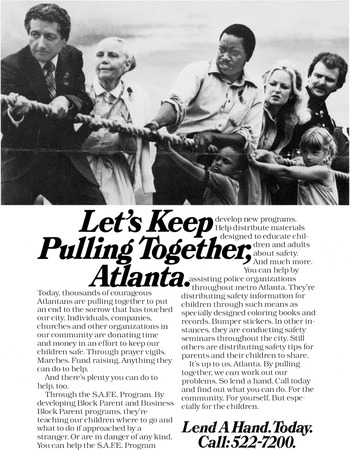
Launched in 1981, the “Let’s Keep Pulling Together, Atlanta” campaign sought to fortify Atlanta exceptionalism by illustrating the city’s diversity and supposed tenacity and unity under duress. Source: “Let’s Keep Pulling Together, Atlanta” poster, Jaci Mays Vickers to Lee P. Brown, July 23, 1981, box 177, series I: office files (1960–2004), MS 509, Lee P. Brown Papers, Woodson Research Center, Fondren Library, Rice University, Houston. Courtesy of the Woodson Research Center, Rice University.

Perhaps the most naked public relations pursuit was the “Let’s Keep Pulling Together, Atlanta” campaign, underwritten by the city’s chamber of commerce, its government, and Coca-Cola’s advertising firm. Footnote 27 True to its name, the drive promoted unity amongst Atlanta residents with a specific concentration on protecting the city’s children. A poster publicizing the campaign depicted black and white Atlantans of all ages yanking on one end of a rope in a tug-of-war contest, presumably against forces that wished to sink the city they called home. The text underneath the photograph applauded the “thousands of courageous Atlantans … pulling together to put an end to the sorrow that has touched our city.” The blurb went on to praise the “[i]ndividuals, companies, churches and other organizations in our community … donating time and money in an effort to keep our children safe.” Footnote 28 These efforts brought visibility to the Atlanta saga—and to the companies trying to patch up the city’s image. But such projects largely faded after 1981 and 1982, when twenty-three year old Wayne Williams was arrested, tried, and convicted in connection with two of the killings. (He was implicated in virtually all of the others.) The city had sponsored similar recreation programs in earlier years, and it continued to do so in subsequent summers. But none of these initiatives approached the size or scope of the 1981 program, which was the only such plan that fell under the “Safe Summer” banner. Indeed, Safe Summer ’81 offered a clear and cogent public–private response to the tragedies of 1979 through 1981. Footnote 29 The summer program also typified the tenuous ties of observers, commentators, and policymakers to the Atlanta communities buffeted by the slayings and did little to ameliorate the deeply rooted causes of black Atlantan dispossession. It would be callous to suggest that economic interests alone motivated such public–private projects in Atlanta. But considering the shellacking the city endured in the news media during the late seventies and early eighties, those with business interests there could ill afford to appear indifferent about the youth murders or to the local black community. These organizations therefore strove to rehabilitate Atlanta’s image and, in turn, to improve their own.
Developments in Atlanta converged with those nationwide, both in terms of child safety and, more broadly, within political contestations over region, culture, and enterprise. Recent studies have documented the late twentieth century emergence of robust public–private power structures in Sunbelt metropolises like Atlanta, Houston, and Phoenix. Footnote 30 Comprising chambers of commerce, local political elites, and for-profit entities both large and small, these coalitions proved central to the mutually constitutive development of neoliberalism, globalization, suburbanization, deregulation, corporatism, and devolution. In Atlanta, specifically, Coca-Cola, Chevron, and other private companies headquartered within and beyond the Sunbelt South collaborated with local political leaders to uphold the city’s “New South” and “too busy to hate” reputations. Cutting against the myth of southern exceptionalism—or the notion that the Deep South still housed distinctively potent strands of antiblack racism and “reactionary populism”—their efforts resembled others by economic and political elites in cities across the Sunbelt to mitigate the struggles of the “post-civil rights” era. For Lisa McGirr, Matthew Lassiter, Kevin Kruse, Joseph Crespino, Michelle Nickerson, and others, Sunbelt politics in the late twentieth century marked a “convergence” of northern and southern conservatisms. Synthesizing the flood of “new political histories” on the American Right in the early twenty-first century, Jacquelyn Dowd Hall explains, “the strength of the Republican party in the South is linked to the economic boom in the South.” The rightward political turn, Hall maintains, “is much more a regional convergence story as opposed to the South influencing the rest of the country.” Footnote 31 Though inflected by disparate conceptions of place, the matter of child safety resonated nationally in the 1980s. For instance, the Atlanta killings obviously differed from the Iowa paperboy disappearances, as fears about a resurgent Jim Crow structured reactions to the former, and anxieties about crime and disorder seeping into the white Midwestern suburbs gave shape to the latter. These highly visible incidents, and those involving other missing or murdered youths in Florida, New York City, San Francisco, and elsewhere, congealed in a nationwide discourse about “law and order,” familial decline, sociocultural decay, and endangered childhood. Such cultural themes underlay the neoliberal shift in late twentieth century U.S. politics. Footnote 32
“The Battle for Child Safety”: Publicizing and Privatizing Protection
The responses of Atlanta’s public and private sectors to the tragedies there—though insufficient, tardy, and ultimately shortsighted—prefigured similar public relations efforts undertaken on the national level by the federal government, for-profit companies, and nonprofit entities. But, for some anguished parents, federal officials did not act quickly enough on the issue of child safety. As some of the first groups to organize on missing children and youth safety, nonprofits like Child Find, Inc., VCA, and the Adam Walsh Outreach Center demanded greater federal involvement. The Reagan administration responded with symbolic legislation—and by encouraging the private sector, namely for-profit entities, to address public concerns about a specific brand of child protection. This outpouring of private sector—both for-profit and nonprofit—and public sector activity sanctified voluntarism, underscored the severity of threats confronting American children, and created new mechanisms by which to publicize and ameliorate the plight of missing and exploited youths.
Child Find, Inc. and the VCA were both founded in 1980 by mothers with missing daughters, and they became the first organizations dedicated specifically to the issue of missing children in the U.S. Footnote 33 Others followed soon thereafter. STOP focused initially on the abductions and slayings in Atlanta, but it later propelled Camille Bell—its cofounder and the mother of one of the young victims—into a leading, though short lived, role in the national missing children campaign. Footnote 34 Following their six-year-old son’s murder in 1981, John and Revé Walsh established the Adam Walsh Outreach Center for Missing Children “and proceeded to tell the story of missing children to a nation … obviously unaware that this problem exists.” Footnote 35 After their son’s disappearance in 1982, Iowans John and Noreen Gosch launched Help Find Johnny Gosch, Inc. and an affiliated program titled “In Defense of Children,” through which they delivered speeches, hosted seminars, and raised awareness about the missing children problem. Footnote 36 Further, Child Find, Inc. and other nonprofit organizations lent their names to dozens of state and local agencies devoted to the cause of child safety.
These private sector crusaders often portrayed their activism as a response to governmental ineptitude, indifference, and inaction. The news media seemed to buttress this view. Nightly news broadcasts shared the grievances of anguished parents—some of whom “complain[ed] that there is no national network for information on missing children” while others, frustrated by “police dawdling,” opened “private storefront operations” to find lost youths. One story on ABC’s World News Tonight in 1981 publicized the work of the Clinkscales family in Georgia. A student at Auburn University, the Clinkscales’s son Kyle disappeared in 1976. The World News Tonight report indicated that, by 1981, the family had invested $15,000 in “their personal search to find Kyle” and formed “an organization called ‘Find Me,’ one of a growing number of groups of missing person’s families.” However, ABC journalist Al Dale observed, “in a day of high crime and with the Reagan administration pushing hard for budget cuts and less, not more, federal involvement in our lives, help for the parents” of missing children “may not come soon,” despite their pleas for government assistance. Footnote 37
When the U.S. Congress convened hearings on the proposed Missing Children Act in the fall of 1981, the Walshes offered a searing statement denouncing the state’s putative disinterest in their campaign. Accompanied by a cover page from their Adam Walsh Outreach Center for Missing Children, on which appeared a photograph of their late son holding a baseball bat, the statement explained that “prior to this incident with Adam,” John and Revé Walsh “were great believers in the United States of America,” but their “beliefs in this system have been shaken to the core.” The statement continued:
It is certainly evident the priorities of this great country are in some disorder. A country that can launch a space shuttle that can return to the earth and take off again, a country that can allocate millions of dollars to save a small fish, the snail darter in the Tennessee Valley river, threatened with extinction, but does not have a centralized reporting system or a nationwide search system for missing children, certainly need [sic] to reaffirm the very principles that this country was founded on, namely, personal freedoms. Footnote 38
The Walshes and others situated the government’s “disorder[ed]” priorities within the context of Reagan-era austerity and applauded the private sector for picking up the slack. The couple noted Reagan’s “call for budget cuts in every area,” as well as the troubles these cuts posed for a possible “centralized reporting system for missing children.” However, the Walshes implored, “We have to approach this [problem] from a business standpoint.” The creation of a national database dedicated exclusively to storing the names and identification data of missing children, John and Revé Walsh contended, would prove cost-effective. Adam’s disappearance and slaying “devastated us financially,” they argued. “It cost every bit of savings we had as well as whatever money we could borrow. … The amount of time lost at work, the need for emotional counseling, the lost tax dollars, and the emotional wrecks of surviving parents that are cast on the welfare system of our society [are] enormous.” John and Revé Walsh framed their cause as financially sensible and consistent with neoliberal strategies for undercutting social democracy. They also emphasized the massive individual, familial, and national damage wrought by the missing children issue and the seemingly cruel or indifferent orientation of the Reagan government. “It is almost inconceivable,” the couple decried, “in this great country with its resources, that this problem exists and continues to exist.” Footnote 39
Americans who had not lost children echoed the Walshes’ claims. Mitch McConnell, then a Jefferson County, Kentucky, judge, acknowledged the harmful effects of federal cutbacks. He declared in the same congressional hearing: “The national reduction of resources for social services and local assistance at this particular time complicates the follow up” in cases of missing and exploited children, meaning “[g]overnment must increasingly enlist private sector assistance and involvement.” He further lamented “that a chief cause of child tragedies is the inability of government to recognize a problem and to respond.” Footnote 40 Kristin Cole Brown, the information director for Child Find, Inc., chastised the government for dragging its feet. She commended other institutions, like hers, for effectively addressing the missing children problem. “I think that most Americans have a healthy respect, and an even healthier skepticism, for our government,” Brown affirmed. But, she went on, “There is no national Missing Persons’ Bureau … no publicly funded clearinghouse assigned exclusively to missing children’s names … [and] no publicly funded national program which helps searching parents find their missing children.” Thankfully, she reassured, “Child Find was created to help fill in this gap,” and more generally, “the private sector has stepped into the void left by the government” on the question of child safety. Footnote 41 Around the time that Congress held its initial hearings on missing children, Oklahomans mailed impassioned letters to Republican congressman Mickey Edwards, urging the federal government to act on the problem. “It is a terrible thing,” one mother wrote, “to have the resources at our disposal to locate missing or dead children and not have it put [to] use.” Footnote 42 Others repeated the talking points used by John and Revé Walsh in their congressional statements and in public appearances, most notably on a 1981 episode of Phil Donahue’s daytime talk show. “I saw a recent Donahue show that featured 4 sets of parents of missing and murdered children,” one man explained in his note to Rep. Edwards. “I can’t believe you would save the snail [d]arter and turn your back on over 150,000 missing children annually. (This number does not include run-a-ways [sic]. That figure is over 1 million.)” Footnote 43 Another woman asked, “Where are our [national] priorities leading us? Please show us you care about our children, our nation’s most important asset.” Footnote 44 Another bemoaned the “ghastly” and “unfair bureaucratic procedures” and “red-tape” that “accompany the reports of … missing children.” Footnote 45
Like the Walshes, John and Noreen Gosch, whose son Johnny vanished in 1982 while on his paper route in suburban Des Moines, appealed to public sympathies as they detailed their personal struggles, without government help, to find their son. The Help Find Johnny Gosch foundation and “In Defense of Children” program endeavored to raise awareness about child safety through newsletters, correspondence to state and federal officials, and public speaking engagements—all of which derided governmental inaction on missing children. A Des Moines television news program broadcast a story in 1983 about the Gosches selling candy bars, buttons, and raffle tickets to raise funds for their son’s investigation. On air, Johnny’s mother Noreen Gosch relayed an anecdote about a woman who asked her if she was “embarrassed” about hawking candy bars to find her boy. “I said, ‘I’m appalled that in this country, where we have Save the Seals, Save the Whales, and Save the Battleship funds, that we don’t have something for missing children,’” Gosch chided. “But I said, ‘We’ll do whatever’s necessary to find our boy, so embarrassed? No. Appalled? Yes.’” Footnote 46 When another Iowa paperboy disappeared in late summer 1984, and President Ronald Reagan phoned the editor of the newspaper for which both children had worked, Noreen Gosch exclaimed, “Thank God we’ve reached the Ivory Tower. Thank God they [government officials] recognize that our kids are in danger.” Footnote 47 Her conflation of the federal government and academia served to demonize the ostensibly disconnected “elites” who failed to take seriously the demands of child protection advocates. Present here and elsewhere, the themes of federal incompetence, liberationism gone awry, and national declension animated child safety rhetoric and prompted the passage of the MCA and MCAA.
In both rhetoric and action, the Reagan administration harnessed the power of the child safety campaign; painted the federal government as caring and well intentioned yet flawed; and pressed for more private sector involvement on matters of child protection. While Reagan had gestured to the missing children issue before mid-1984, he only explicitly began to address it with the June 1984 establishment of the National Center for Missing and Exploited Children (NCMEC). Footnote 48 At this juncture the Reagan administration also assembled a public–private coalition on child safety, one that framed for-profit entities as altruistic partners in the campaign to safeguard young Americans. At a ceremony marking the NCMEC’s opening, Reagan announced the launch of a “public–private partnership” that would “take advantage of every opportunity available … to protect our children and keep them safe.” The president mentioned his recent appeals to the private sector. “And America is responding,” he beamed. Reagan noted the development by the Trailways transportation company, in coordination with the International Association of Chiefs of Police, of the aforementioned Operation Home Free program and recognized television stations for their dissemination of missing children’s photographs. Footnote 49
As the president took a more vocal stance on the missing children issue, he continued his push for private sector involvement and his adulation of the “traditional” American family. In a radio address delivered during the week of the NCMEC’s opening, the president hailed the collaboration of the family, the state, and the market in the service of child protection. Reagan discussed his administration’s efforts to assist the American family, as well as the ways in which his approach diverged from that of “big government” and “Big Brother” liberals. He implored, “we can and should preserve family values—values of faith, honesty, responsibility, tolerance, kindness, and love.” Unlike the New Deal statists who “urged huge government subsidies, paying parents for expenses they used to handle themselves … pushing parents aside, [and] interfering with one parental responsibility after another,” Reagan proposed new ways through which to shore up the American family. “We came to Washington with a better idea,” he asserted, to “help working parents to better provide for themselves and their children by enabling them to keep more of their earnings and help them by making government do its job so the terrifying specter of runaway price increases never returns.” Footnote 50 But Reagan looked beyond favorable tax policies to assist families. “We’re trying hard to help fathers and mothers in other ways, too,” he told listeners. “Many innocent children are exploited by those who traffic in the gutter of drugs, child pornography and prostitution … [a]nd this past week, we opened a National Center for Missing and Exploited Children to help educate parents and authorities on how to protect their loved ones.” The missing children and child safety campaigns, and the wider family values agenda in which they fit, signaled a larger late twentieth century shift in policy toward children and families. Not only did tax cuts figure prominently in this policy orientation; so too did the conviction that the state—with the assistance of the private sector—would protect the American home from “moral threats” such as “drugs, child pornography[,] and prostitution.” Footnote 51
This federal endorsement of private sector child safety efforts comported with the Reagan-era project of promoting voluntarism. From his establishment of the White House Office of Private Sector Initiatives in 1981 and the President’s Advisory Council on Private Sector Initiatives in 1983, to the institution in 1984 of the President’s Citation Program for Private Sector Initiatives, Reagan made voluntary, individual, and private sector action a central tenet of his presidency. Nowhere was the import of voluntarism more evident than in the sphere of child protection. For-profit and nonprofit private sector entities regularly boasted of their community service accomplishments in all realms. But with formidable rhetorical support from the White House, programs centering on the safety of young Americans appeared to receive the most attention. This emphasis can be explained by the public’s significant interest, drummed up by news media coverage, in missing children and child safety; the seemingly pervasive notion that the government had failed to adequately protect American youths from stranger danger; and the nation’s larger fears of familial decline and dissolution. Footnote 52
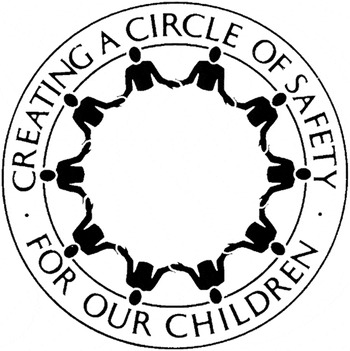
Out of this terrain grew an extensive collection of for-profit and nonprofit private sector programs intended to address the missing children problem. The Reagan White House continued to tout such projects and their benefit to the American family throughout the mid-eighties. The 1984 MCAA formed the Attorney General’s Advisory Board on Missing Children, which supplied proposals for public and private sector action on child safety concerns. In April 1985, the president issued Executive Order 12511 establishing the President’s Child Safety Partnership (PCSP). Charged with “examin[ing] issues and mak[ing] recommendations to the President on preventing the victimization and promoting the safety of children,” the PCSP would also “encourage the development of public/private sector initiatives to prevent and respond to the victimization of children.” Footnote 53 One Department of Justice memo implored: “The government needs to be a ‘guiding light’” for such programs, “but the impetus must come from the private sector. There is a need for more corporate involvement, and the corporations that do get involved need recognition from such high level officials as the President and the Attorney General periodically.” This last sentence was circled in pencil. Accordingly, the PCSP envisaged the private sector, and especially for-profit entities, as vital pieces in the “Circle of Safety for Our Children,” which also comprised families and the government. “To be credible,” another Justice Department memorandum read, the PCSP “must include private (corporate and private non-profit) sector representatives who have made contributions in this area [of child safety], as well as representatives of state and local government.” The partnership asked businesses to “provide support for child safety programs” and to “increase child safety awareness among the public and the business community,” assuring companies that “[k]eeping children safe is good business.” Footnote 54
The President’s Child Safety Partnership (PCSP), which sought to foster cooperation between the public and private sectors on matters of child abduction and exploitation, employed this graphic in its 1987 report to the president. “By joining hands,” the report read, “we will encircle one child, then another and another, until together we have created a circle of safety to surround and protect every child in America.” The PCSP identified the business sector as a vital player in this “circle of safety.” Source: President’s Child Safety Partnership and the Office for Victims of Crime, A Report to the President, 11, in Richard B. Abell to Edwin Meese III, Sept. 25, 1987, box 269, Edwin Meese files, subject files of the Attorney General (1975–93), RG 60, NARA II. Courtesy of the National Archives and Records Administration, College Park, Md.

Moreover, the PCSP lauded news and popular media efforts to publicize “the battle for child safety” but urged these outlets to expand their involvement. These private sector recommendations echoed the activities of Atlanta’s city government and its businesses during the crisis there. The PCSP championed programs such as Mobil’s one-year “public awareness and education campaign focused on missing children” that gave the appearance of improving young people’s lives but actually amounted to little more than public relations moves. Footnote 55 Still, without presenting any evidence, the PCSP affirmed that child safety programs underwritten by businesses “help reduce crime” and “are critical investments for safeguarding America’s future workforce and maintaining healthier communities.” According to the PCSP, these initiatives “offer an opportunity for business to demonstrate its concern for customers and employees’ children, which readily translates into enhanced business image and improved employee morale.” Indeed, the report observed, “some companies visibly involved in child safety efforts have experienced welcome but unexpected increases in business.” Footnote 56 Not only did these private sector endeavors serve to supplement government efforts; they also intended to protect the family, bolster the community, and capture market share for “responsible,” family oriented, child friendly businesses.
The sheer breadth of these private sector efforts reified public concern regarding child abduction and exploitation and helped build the child safety apparatus, which relied upon populating public spaces with the image of endangered childhood. In his remarks upon signing the PCSP executive order, President Reagan noted that during the previous year he had “challenged the private sector to assist us [the federal government] in combating the problem of missing children.” The president, speaking before a display spotlighting child safety ventures by American businesses, cited a slew of programs conceived and executed by well-known companies like Woolworth, K-Mart, Mobil, Ringling Brothers and Barnum and Bailey circus, and Safeway. “Now,” Reagan reminded listeners, “all of these companies are just part of a larger effort” of “organizations coming up with creative programs using their resources.” Almost as an afterthought, he added, “It’s important to note here that the Federal Government, too, is involved.” Footnote 57
This “larger effort” of private sector activity flourished in 1984 and 1985 and took three principal forms: in-kind benefits and services; consumer products as “consciousness raising” tools; and consumer products as preventative tools. The extent of these private sector measures, specifically those authored by for-profit companies, suggests that businesses adequately met Reagan’s “challenge.” The range of participating institutions also reveals the many spaces inhabited by the problems of missing and exploited children. By surrounding Americans with evidence of “stranger danger,” these initiatives justified their very existence. Furthermore, by promoting the companies that engineered them and the families that ostensibly benefited from them, such efforts advanced some of the Reagan administration’s core thematic objectives vis-à-vis social and economic policy: lauding families and businesses, restoring “law and order” and moral “commonsense,” and undermining the efficacy and significance of the federal government, especially in the arena of social provision.
For-profit companies provided in-kind benefits and services for missing youths, their families, and the organizations that sought to publicize and rectify matters of child exploitation. As the opening vignette detailed, Trailways furnished complimentary bus rides to runaway youths through its Operation Home Free program. In collaboration with Trailways, Jack Rabbit Lines—another bus line serving the “Mountain Plains states”—offered a similar service. Jack Rabbit ferried runaway children and adolescents to homes within its service area or to a location where a changeover could be made onto a Trailways bus. American Airlines, through the NCMEC, transported parents and guardians, free of charge, to recover missing, abducted, and runaway children. Each Quality Inn hotel served as a “‘safe harbor’ for any child in danger of abduction or exploitation,” and the chain also housed parents traveling to recover lost, kidnapped, or otherwise missing youths. Footnote 58 Moreover, each Quality Inn hotel lobby provided “a direct access line to the National Center for Missing and Exploited Children.” Footnote 59
Media involvement in the child safety problem occupied a liminal space between in-kind benefits and the use of consumer products to deliver the message of endangered childhood—while also serving as a vehicle through which elected officials communicated ideas about child safety. Although the television news industry played a vital role in the construction and development of the stranger danger panic throughout the eighties, often without government recognition, by the mid-1980s the federal government deftly harnessed visual media to bring “family values” tropes, like endangered childhood, into American living rooms. A made-for-TV movie about the 1981 Adam Walsh abduction and its aftermath became a national sensation. Originally airing in 1983, NBC rebroadcast Adam in 1984 and 1985, and President Reagan made an appearance on national television following the film’s third showing. The president read the names of over sixty missing children as their photographs flashed onscreen, and he enjoined Americans to look closely for a familiar face. “Please watch carefully,” Reagan urged. “Maybe your eyes can bring them home. Federal legislation is only the beginning of what must be done. The rest is up to you.” Footnote 60 Reagan used television, mediated through the conglomerate NBC, to reinforce the severity of the child safety problem. He at once described the perils confronting the nation’s children and families; the need for private sector mobilization and voluntary action by individual citizens; and the federal government’s interest in ameliorating the crisis.
At a White House meeting of the National Newspaper Association, Reagan called on members of the print media to join the child protection campaign. In a wide-ranging speech that touched on various facets of his second term agenda, the president decried “national edicts and mandates that are issued from Washington” and celebrated “the toil and creativity of [American] people working at the local level through their own private institutions and associations” as “the real source of America’s economic and social progress.” He impressed upon the audience the importance of limiting federal expenditures and summoning the “great power for public service that [newspapers] possess.” Reminding those gathered that “a President can only do so much,” Reagan identified “the problem of missing children” as “one especially tragic area where your newspapers can do a great deal of good.” Following the lead of NBC in its production and dissemination of Adam, Reagan suggested, local papers “could publish, as a regular feature, pictures and descriptions of children missing in or near your circulation areas.” Footnote 61
Other elected officials absorbed the power of the national media to disseminate statements about child protection, voluntarism, and private sector involvement. On several occasions in 1984 and 1985, Oklahoma congressman Mickey Edwards directed televised events in which congresspeople called attention to missing children from their districts. Through speeches on the House floor that were broadcast via C-SPAN, representatives “provide[d] information about children who have been abducted by strangers in their congressional districts.” Edwards conceded that “publicity about specific cases has been helpful,” but “there is no current effort to focus television coverage on specific individuals, with the exception of occasional local, regional, or national news stories.” The initiative therefore channeled the power of the relatively new (and publicly owned) C-SPAN network, and the ascendant medium of cable television more generally, to raise awareness about missing children. Footnote 62
Edwards also reached out to for-profit television outlets to secure their assistance in the child safety crusade. He proposed a joint resolution in May 1985 to “express the sense of the Congress that the television broadcasting stations of the Nation should provide television coverage concerning missing children.” Footnote 63 Later that year, the Oklahoma Republican wrote to Terri Rabel, the government relations manager at the National Association of Broadcasters, and requested information about “public affairs [TV] programming” related to missing children. In her response, Rabel compiled relevant newspaper clippings that exhibited the impressive extent of media industry involvement. From the Federal Bureau of Investigation enlisting Bill Cosby to star in short public service announcements about missing youths to the NBC television special Missing … Have You Seen This Person?, media outlets, according to one news story, “join[ed] the ranks of corporations and other organizations helping in the campaign to find missing children.” Footnote 64
Other companies delivered the message of endangered childhood in the mid-1980s. Safeway, Winn-Dixie, and other supermarket chains placed missing children’s photographs on their grocery bags. Footnote 65 Nestle Food, Inc. distributed to over 5,500 stores displays featuring pictures of missing youths. K-Mart included in “customers’ photo finishing envelopes” some 135 million images of missing children annually. Footnote 66 The rental car company Avis placed missing children’s photographs in the rental agreement folders of at least eight million customers each year. Footnote 67 NASCAR partnered with the National Crime Prevention Council, progenitors of McGruff the Crime Dog, to circulate child safety materials to a quarter of a million people. In conjunction with Mobil, the Acacia Life Insurance Group spearheaded “a year-long public awareness and educational campaign in [Washington] D.C.,” during which “libraries, schools, and Mobil stations in the D.C. metropolitan area” showcased images of missing children while local news affiliates aired “[h]undreds of 30-second spots giving safety tips.” Footnote 68
Through its use of a common household product, the 1980s milk carton campaign remains the most enduring example of business engagement on child safety. The disappearances of Johnny Gosch and another Iowa paperboy, Eugene Wade Martin, motivated two local dairies to print the children’s faces on the sides of their milk cartons in the fall of 1984. The practice soon caught on throughout the Midwest and, later, across the nation—with over seven hundred of the nation’s 1,800 dairies eventually participating. All told, American dairies distributed billions of milk cartons with missing children’s photographs on their side panels. Even though dairies discontinued the practice after experts warned that it frightened children, as a trope the missing child on the milk carton still populates American popular culture. Footnote 69
In 1985, ADVO, Inc. introduced its “Have You Seen Me?”—or “America’s Looking for its Missing Children”—program in coordination with the NCMEC and the U.S. Postal Service. The campaign distributed direct mail leaflets featuring missing children’s photographs and descriptive information, as well as coupons and advertisements for Domino’s Pizza and other retail and service chains. The “Have You Seen Me?” campaign remains active in 2015, reaching over one hundred million households nationwide. Footnote 70 Literary scholar Marilyn Ivy posits that these direct mail leaflets targeted the American consumer and operated on pervasive anxieties about the purity of the child. Ivy also identifies the use of images as a defining feature of ADVO’s consumer strategy, insisting that the mailers place a “generalized residential addressee (RESIDENT) … in a mutually reinforcing position of guilt and consumer desire.” Footnote 71 In other words, the “Have You Seen This Child?” campaign, especially within the context of the 1980s, implicitly proffered a solution to the presumed crisis in child safety: Buy.
If ADVO and similar companies utilized consumer products to raise awareness about child protection, other entities vowed that Americans could prevent youth abduction and exploitation with their checkbooks. Reverend Jerry Falwell, through his Christian conservative organization the Moral Majority, founded the Child Protection Task Force (CPTF) in 1985. The CPTF’s promotional materials, awash in sensationalist rhetoric, deemed missing children “the slaves of perverted molesters.” Falwell’s words and image appeared in some task force advertisements, while others featured a photograph of President Reagan, accompanied by his remarks on American children as “our most precious resource … the bond that binds our past with the future.” (It is unclear whether Reagan consented to the Moral Majority’s use of his image.) In these announcements, the task force solicited donations from the public to cover the costs of supplying “Child Protection Safety Kits.” Law enforcement officials and other experts questioned the usefulness of such “do it yourself” kits, warning that only professionals should record and archive children’s fingerprints and that Americans could assemble such supplies free of charge, with the assistance of local authorities. A Moral Majority letter to potential donors stated that the task force needed “to raise $200,000 just in the next three weeks” in order to fulfill requests for the safety kits, which contained identification cards and other educational materials. Despite the fact that such kits lacked value, the CPTF brought in about $100,000 in donations before it folded. Footnote 72
While established, generally reputable corporations such as Mobil and K-Mart heeded Reagan’s call for private sector intervention in the problem of child safety, so too did more dubious startups. Insurance programs appeared; for $288 a year, parents could secure a private investigator, counseling services, up to $50,000 in reward money, and up to $10,000 in travel funds should their child fall prey to a kidnapper. The “missing children” plan from Continental Insurance could be purchased independently or within a broader “family crime protection” package designed to meet “the needs of a changing world.” Footnote 73 Safety guides and manuals filled bookstore shelves, attending to public concerns about youth abduction and abuse. Footnote 74 Companies marketed new products devised to restrain and monitor children, in the hopes of keeping them out of harm’s way. Retailing for $129.95, an electronic device called Kiddie Alert sounded an alarm if a child wandered too far from his or her parent. “You would certainly pay $129.95 to help protect your child’s life,” read an advertisement for the gadget. The packaging for Kiddie Alert trumpeted the device as “A Breakthrough in CHILD SAFETY.” In a television spot, an older spokesman introduced Kiddie Alert as a “new electronic monitoring system that can keep your child out of the headlines.” Footnote 75 Another item, dubbed Kid-Kuffs, used nylon straps to connect a child’s wrist to their parent’s waist. The president of Zelex, Inc., the manufacturer of Kid-Kuffs, explained the utility of his company’s product: “Where the adult goes, the child goes. He doesn’t get stolen, run over or in trouble. And when the children are grown, you can use [Kid-Kuffs] as a dog leash.” Footnote 76 Companies began producing leashes made especially for children, as well. Goldbug, Inc. officially entered the child safety industry in 1979 when it patented the first infant head support device. The company started selling safety harnesses soon thereafter. Footnote 77 Established in 1984, another startup called Safety 1st pioneered the “Baby on Board” logo and slogan, which it used to market child leashes and other products. Footnote 78 Finally, Mommy’s Helper opened its doors in 1986 and began manufacturing the Kid Keeper, a harness that fastened to a child’s torso. Footnote 79 Such products stemmed from the Reagan administration’s endorsement of private sector responses to the child safety scare.
The Child Safety Apparatus
By the late 1980s, the child safety problem had lost some of its visibility and urgency. Published in 1988, a report from the U.S. Attorney General’s Advisory Board on Missing Children (ABMC) lamented, but also overstated, this drop in public interest. The issue, the board members averred, “is at a crossroad”: no longer “accompanied by television movies, cover stories in major national magazines or other signs of a newly discovered issue that captures public attention and demands an effective response.” Footnote 80 What had actually dissipated was the sheer panic and confusion that stamped the rise of the missing children problem in the early to mid-1980s. More readily, academics and reporters began to problematize the stranger danger myth upon which worries about child safety rested. The Denver Post won a Pulitzer Prize for public service in journalism after debunking the “exaggerated statistics” that buoyed the missing children campaign. Footnote 81 Law enforcement officials and legal scholars similarly cast doubt upon the inflated figures deployed in congressional hearings by politicians and child advocates. Footnote 82
But stranger danger remained a pervasive concern in the late eighties and into the final decade of the twentieth century. News of eleven-year-old Jacob Wetterling’s 1989 abduction in St. Joseph, Minnesota, reached the pages of the Chicago Tribune and the New York Times. Footnote 83 Federal legislators soon thereafter attached his name to the 1994 Jacob Wetterling Crimes against Children and Sexually Violent Offender Registration Act, which “formed the basis of federal sex offender laws.” Footnote 84 Television’s wildly successful America’s Most Wanted, hosted by John Walsh—father of kidnapped and slain six-year-old Adam Walsh—debuted in 1988. Footnote 85 The 1989 “Walk-to-School” program, sponsored by officials in Fairfax County, Virginia, stressed “stranger safety” more than it had in 1987 and 1988. Footnote 86 The 1990 federal Crime Control Act contained the National Child Search Assistance Act, which required local, state, and federal law enforcement agencies to report missing child cases to the Justice Department’s National Crime Information Center and also forbade such agencies from observing waiting periods “before accepting a missing child or unidentified person report.” Footnote 87
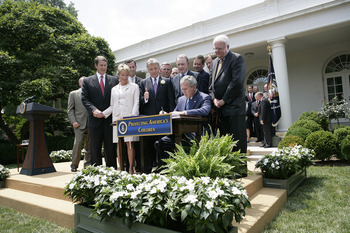
With John and Revé Walsh and U.S. Senators Bill Frist (R, Tenn.), Rick Santorum (R, Pa.), and Arlen Specter (R, Pa.) looking on, President George W. Bush signed H.R. 4472, the Adam Walsh Child Protection and Safety Act, on July 27, 2006, in the Rose Garden. The Adam Walsh Act—named for the Walshes’ slain six-year-old son—intensified federal penalties for sex offenders’ failure to comply with registration requirements; enabled the federal prosecution of state sex offenders for failure to register pursuant to interjurisdictional or foreign travel; widened the range of offenses for which adults could be forced to register to include possession of child pornography; and standardized the information to be obtained from offenders for publication and dissemination in online sex offender registries. Source: The George W. Bush Presidential Library and Museum, Southern Methodist University, Dallas, Texas.

Just as President Reagan had issued a “challenge” to the private sector in 1984, the ABMC proclaimed in 1988, “the challenge continues.” In a general sense, the “challenge” referred to the problem of missing and exploited youths, but in a narrower way, it dealt with private sector efforts to solve that problem. “Today,” the report affirmed, “the challenge of continuing to enlist the energies of the private sector is straightforward: to convey to the American public that while progress has been made, the tragedy of missing and exploited children is not some trendy issue whose time in the spotlight has passed, but rather a serious and disturbing social problem that requires—and deserves—a sustained commitment by America’s business community and not-for-profit organizations.” Footnote 88 Despite the concerns expressed in the ABMC publication, private sector efforts persisted into the 1990s and 2000s, during which such initiatives intersected with emergent legal mechanisms to construct an omnipresent child safety apparatus. Today an American commuter might pass a highway billboard, donated by Lamar advertising, CBS Outdoor, or Clear Channel Communications, flashing an AMBER Alert with information regarding a missing child. She might receive the same emergency notice on her smart phone and on the evening news upon returning home. The next day, while at the post office or a Wal-Mart store, she might walk past a bulletin board filled with missing children’s photographs. Her local police department and sheriff’s office might devote portions of their websites to child safety tips or missing child notices. While listening to NPR or conservative talk radio during her morning commute, she might hear conversations about “free range kids” and civil commitment protocols. And through the U.S. Justice Department’s Dru Sjodin National Sex Offender Public Website, she can determine if any registered sex criminals live in her neighborhood.
This elaborate child safety network, stitched by businesses, families, and the state, originated in the late twentieth century. Private for-profits answered the Reagan administration’s call for deeper engagement in matters of child protection. At a historical moment when policymakers cut social welfare mechanisms, the outpouring of child safety “awareness” programs and in-kind services by businesses marked a departure from earlier models of childhood policy. In the heyday of “breadwinner liberalism,” for-profits generally maintained ambivalent positions toward state intervention on issues of child hunger, poverty, and education. In the 1980s, conversely, companies enthusiastically contributed to the project of child safety, which articulated the “commonsense” conservative themes of “family values,” “law and order,” and antistatism. This turn demonstrates how “child protection” in the late twentieth century supplanted “child provision” as the dominant epistemological and policy framework for American children. As part and parcel of a broader transformation in American political economy, the transition from provision to protection casts light on conservatism and neoliberalism—and reveals the centrality of symbolic American childhood to both. Footnote 89