Introduction
It is estimated that there are 850,000 people living with dementia in the UK, and the number of people affected is expected to increase to over one million by 2025 (Prince et al., Reference Prince, Wimo, Guerchet, Ali, Wu and Prina2015). Obtaining a diagnosis of dementia early in the illness means that psychological and pharmacological treatment can start earlier. This has the potential to improve cognitive function and carers’ mental health at an earlier stage. In the UK, minority ethnic people account for 15% of the English population and 39% of the London population (Office for National Statistics, 2007) and around 7% of the population is of South Asian origin, meaning they have links with countries in Southern Asia such as India, Pakistan, and Bangladesh.
People from minority ethnic groups with dementia are less likely to receive a timely diagnosis and more likely to be diagnosed when presenting in a crisis compared to the White British population (Mukadam et al., Reference Mukadam, Cooper and Livingston2011b). They also have lower scores on cognitive testing at initial memory services presentation indicating help-seeking at a later stage of dementia (Tuerk and Sauer, Reference Tuerk and Sauer2015).
We have previously reported on the development of a trilingual digital versatile disc (DVD) and bilingual leaflet intervention emphasizing that dementia is a physical illness and the benefits of early help-seeking for memory problems in South Asians (Mukadam et al., Reference Mukadam, Cooper, Basit and Livingston2011a; Reference Mukadam, Waugh, Cooper and Livingston2015), alongside development and validation of the Attitudes of People from Ethnic Minorities to help-seeking for Dementia (APEND) questionnaire (Hailstone et al., Reference Hailstone, Mukadam, Owen, Cooper and Livingston2016). The APEND questionnaire is composed of 19-items scored on a Likert scale and measures intention to carry out a behavior (behavioral intention) as well as influences, such as societal norms that impact on behavioral intention. Behavioral intention is scored out of nine, with a higher score indicating a greater intention to seek help for memory problems.
Using these tools, we aimed to
1. Test the feasibility of a full trial of our intervention. Feasibility was pre-specified as
a. ≥70% of participants who expressed an interest in participating would consent.
b. ≥80% of participants who enrolled initially would participate in follow-up.
2. Test acceptability of the intervention.
We also explored the intervention's impact on participants’ attitudes to help-seeking for memory problems (behavioral intention on the APEND questionnaire), hypothesizing that the intervention would result in increased intention to seek help for memory problems in those who received it.
Methods
We obtained approval from the National Research Ethics Service (NRES) committee Fulham and registered the trial on the ISRCTN registry with study ID ISRCTN67269658. We recruited Greater London primary care (general practice [GP]) practices and randomized in clusters (at level of GP practice) to prevent intra-practice contamination. A researcher independent from the study randomized blocks of two or four practices using a random number generator. South Asian patients over the age of 50 years without a recorded dementia diagnosis, living at home were eligible for participation. This age group was chosen based on feedback from participants in an earlier study (Mukadam et al., Reference Mukadam, Waugh, Cooper and Livingston2015) who suggested this age group would be likely to know people with cognitive problems and dementia. All eligible patients in participating practices were initially sent a letter in English asking them to contact a researcher (N.M.) if they were interested in participating in a research project, and offering a voucher for their time. This letter did not specify that the research project was about memory problems or dementia.
The intervention (leaflet and DVD) was sent to consenting participants registered to GP practices in the intervention arm with a letter on headed paper from the practice. We chose this method of dissemination for the intervention as the previous literature suggests that people pay attention to letters received from their primary care physicians and that this increases engagement in studies (Hewitson et al., Reference Hewitson, Ward, Heneghan, Halloran and Mant2011). Participants from control GP practices received treatment as usual.
NM (who was not blind to randomization status) assessed participants in person after receipt of the intervention (T1) and then participants completed a follow-up questionnaire three months after the initial visit (T2), either face-to-face or via email/post depending on personal preference. The questionnaires were written in English but translated as needed for individuals. At T1, participants filled in a consent form and self-completed a questionnaire consisting of demographic information, information about experiences of dementia (family caring and professional), and the APEND questionnaire. They rated intervention acceptability on a 5-point Likert scale, from completely unacceptable to completely acceptable.
Analysis
We calculated percentages of people who consented to take part, who completed follow-ups and who rated the intervention as either “somewhat” or “completely acceptable” on the scale.
We used linear mixed models analysis (Laird and Ware, Reference Laird and Ware1982) with intention to seek help, as measured on the APEND questionnaire, as the main outcome, including data from both time points in analyses. Intention to carry out a behavior strongly predicts actual behavior (Ajzen, Reference Ajzen1991). Linear mixed models are relatively robust to violations of assumptions about data, particularly where the number of participants is greater than 50 (Jacqmin-Gadda et al., Reference Jacqmin-Gadda, Sibillot, Proust, Moline and Thiebaut2007).
Results
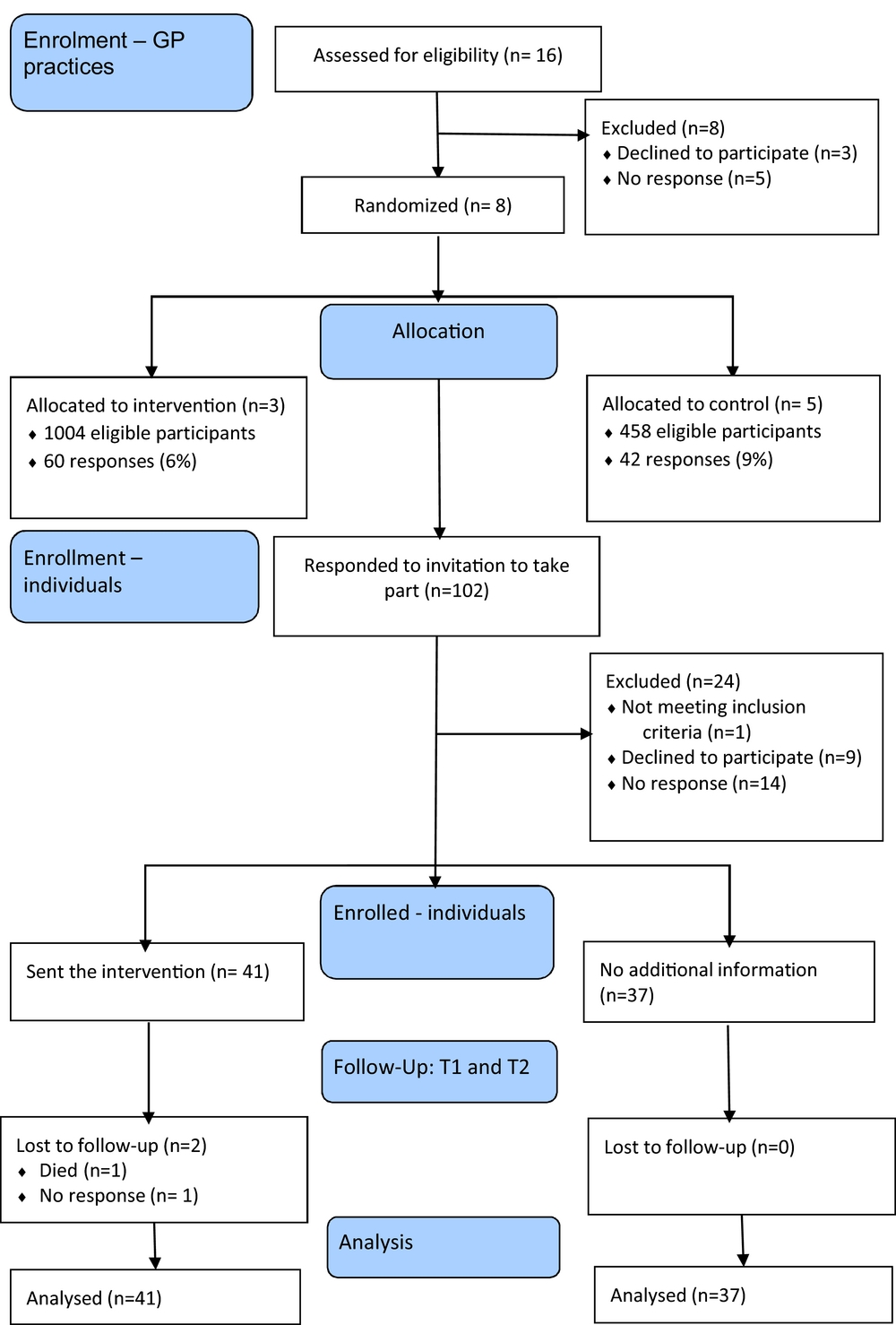
Figure 1 shows the CONSORT flow diagram of recruitment.
CONSORT flow diagram.

Participants in the intervention and control groups were similar in age (64.5 vs. 63.6 years) but the intervention group had a greater proportion of male participants (56% vs. 43%), had on average three years less of education and more frequently needed an interpreter (34% vs. 11%). Most of the control group participants were registered to GPs in inner London (n = 30, 81%), whereas most of the intervention groups were from greater London (n = 38, 93%). Participants in the intervention and control groups had similar experiences of caring for or working with people who had dementia or memory problems.
1. Feasibility of recruitment.
Seventy-eight out of one hundred and two (76%, 95% Confidence Interval 67% to 84%) people who expressed an interest in the study, consented to take part in the study and completed an initial questionnaire. Forty-one were allocated to the intervention and thirty-seven to the control arm.
2. Acceptability of receiving study materials.
Thirty-seven out of forty-one (90%, 95% Confidence Interval 77% to 96%) participants in the intervention group rated acceptability of the items they received as either “somewhat acceptable” (6/37) or “completely acceptable” (31/37; 83.8%), one rated the items as “neither acceptable nor unacceptable” and three other participants did not answer this question. There were no complaints or expressions of distress at receiving any of the study materials.
3. Rates of follow-up.
Seventy-six out of seventy-eight (97%, 95% Confidence Interval 91% to 99%) completed the follow-up questionnaires.
Seventeen out of forty-one people (41%) said they had accessed the intervention. Ten looked only at the leaflet, three only looked at the DVD, and four people looked at both leaflet and DVD. Twenty-three had not and one did not answer.
Linear mixed models with a fixed effect for time and the intervention and a random effect for subject, adjusted for sex, age, and education showed that behavioral intention scores did not differ significantly between intervention and control groups over time (Parameter estimate −0.5, 95% CI −2.2 to 1.2, p = 0.56). None of the other subscales differed significantly between groups.
As an intervention cannot have an effect unless it is engaged with in some way, we compared in a post-hoc analysis, scores on behavioral intention between control group and intervention group participants who reported that they had viewed the intervention. We used the Mann-Whitney U test as the subscale scores were not normally distributed. In this sub-group, the mean difference on the intention subscale was significantly higher (intervention group 1.5 points higher; U = 212.5, Z = −2.1, p = 0.037).
In order to explore whether this finding could be due to demographic confounders, we compared those who said they viewed the intervention with the control group and found no significant differences between the two groups on age, gender, years of education, occupational classification, and number of years in the UK or experience of dementia.
Discussion
This study is the first to design and test an intervention to encourage help-seeking for dementia earlier in the South Asian population and as such is likely to represent the best level of evidence in this under-researched and hard to access population. All pre-stated criteria for feasibility, acceptability of intervention, and follow-up rates were met. The study was not powered for efficacy, as we had no information on numbers needed. We did not find any differences in intention to seek help for memory problems on the APEND questionnaire subscales. The data suggested that people from the control group were more likely to view help-seeking more favorably and we judge that this was likely explained by higher levels of education in the control group. However, there was an increase in score on the intention subscale of the APEND in those who viewed the intervention compared to the control group. These results have to be viewed with caution as those were unplanned analyses and the chances of a spurious result increase with the number of statistical analyses. However, the findings were not explained by measured confounders and make logical sense as we cannot expect to influence attitudes with any intervention unless people engage with the intervention in some way. As less than 50% of participants viewed the intervention, our method of posting the intervention was not adequate and it may be that engagement with the intervention could be improved, for example, by marking posted materials with the National Health Service symbol or sending postal reminders to participants. The intervention may also be better disseminated through, for example, community centers or placement in primary care practices.
Limitations of the study include that although we chose practices with high South Asian populations and contacted 1,459 people, initial contact letters were only written in English and we recruited only 78 people and 41% of these randomized read the intervention; therefore, there is a possible selection bias. However, the difficulty of recruiting in this way from primary care is also an important addition to the literature in this difficult to reach group. As this was a feasibility study, researchers were not blinded to allocation status so there was the risk of observer bias. Participants filled out the questionnaires in a face-to-face interview at T1, which could have led to social acceptability bias.
Given the acceptability of the intervention, the lack of harm and its simplicity and that it may improve attitudes to earlier help-seeking for dementia, it would be proportionate to disseminate it without a full-scale RCT, as the latter is likely to be expensive and impractical.
Conflict of interest
None.
Description of authors’ roles
All authors designed the study, planned statistical analyses and wrote the paper. N. Mukadam collected data and carried out statistical analyses.
Acknowledgments
NM is funded by the NIHR, Grant number DRF-2012-05-141. The views expressed in this paper do not necessarily reflect those of the NIHR, the Department of Health or the NHS.