It is well known that health care workers (HWCs) who were directly involved in disasters, humanitarian emergencies, Ebola outbreaks, and pandemic emergencies showed significantly higher depressive, anxious, and posttraumatic stress disorder (PTSD) symptoms. Reference Galli, Pozzi and Ruggiero1 In the last 2 years, thousands of HCWs around the world have been exposed to multiple additional stressors in responding to the coronavirus disease (COVID-19) pandemic. Reference Chirico, Crescenzo and Sacco2–Reference Chirico, Nucera and Szarpak4 In the first phase, the lack of information, the shortage of personal protective equipment (PPE), the risk of contracting the infection and of potentially transmitting the virus to loved ones, the sudden overload of working demand, the need of reorganization of the hospital system, the emotional exposure to patients that suffer and die in isolation, the perceived lack of control, and unprecedented ethical concerns were reported as major stressors. Reference Magnavita, Chirico and Garbarino5,Reference Magnavita, Soave and Antonelli6 In the second phase, once the previous issues had been resolved, the workforce had increased and reorganization was achieved, new safety procedures had been assimilated and the therapeutic protocols had been consolidated, the psychosocial problems related to the ongoing epidemic became evident, and public opinion toward HCWs changed. Reference Magnavita, Chirico and Garbarino5,Reference Magnavita, Soave and Antonelli6 The burden of bureaucracy, the long-lasting of the excessive and prolonged stressors, and the restriction of activities that could improve psychological resilience were described as ongoing determinants of fatigue and burnout. Reference Magnavita, Chirico and Garbarino5–Reference Ranieri, Guerra and Perilli7
In the first months of 2021, the availability of vaccines made it possible to vaccinate all HCWs, who consequently perceived the chance of controlling the pandemic and probably felt able to resume social activities. The relaxation of restrictions, in the following months, could also have contributed to improvement in anxiety and depressive symptoms, Reference Di Monte, Monaco, Mariani and Di Trani8,Reference Lasalvia, Bodini and Amaddeo9 while the effect of burnout, dissatisfaction, and the intention to quit their job Reference Lasalvia, Bodini and Amaddeo9 started to appear after 6 months from a traumatic event. Reference Ciuluvica Neagu, Gualdi and Dal Canton10,Reference Chigwedere, Sadath, Kabir and Arensman11
In the very extensive mental health literature that described the negative stressors and negative symptoms after the first COVID-19 wave, Reference Cai, Lin, Hu and Wong12–Reference Gambaro, Gramaglia and Marangon16 many studies are cross-sectional or retrospective, Reference Magnavita, Soave and Antonelli6,Reference Lasalvia, Bodini and Amaddeo9,Reference Stocchetti, Segre and Zanier15–Reference Fiabane, Gabanelli and La Rovere17 lacking a pre-post effect Reference Stocchetti, Segre and Zanier15–Reference Gualano, Sinigaglia and Lo Moro18 or a control group. Reference Stocchetti, Segre and Zanier15–Reference Carmassi, Pedrinelli and Dell’Oste20 Moreover, the majority of the studies describe a monocentric cohort, limited both geographically and for the professional roles (eg, limited to intensivists Reference Stocchetti, Segre and Zanier15,Reference Gambaro, Gramaglia and Marangon16 and to nurses). Reference Stocchetti, Segre and Zanier15,Reference Gambaro, Gramaglia and Marangon16,Reference Gualano, Sinigaglia and Lo Moro18–Reference Carmassi, Pedrinelli and Dell’Oste20 Many studies used questionnaires, Reference Lasalvia, Bodini and Amaddeo9–Reference Gambaro, Gramaglia and Marangon16,Reference Farì, de Sire and Giorgio19,Reference Carmassi, Pedrinelli and Dell’Oste20 many evaluated burnout alone, Reference Fiabane, Gabanelli and La Rovere17,Reference Gualano, Sinigaglia and Lo Moro18 a few evaluated with validated tools depression, anxiety, and insomnia, Reference Lasalvia, Bodini and Amaddeo9,Reference Stocchetti, Segre and Zanier15–Reference Fiabane, Gabanelli and La Rovere17 thus limiting the comprehensive assessment of complexity and the systematic description of the psychological response. Regional differences were observed, mainly related to a different burden of COVID-19 cases Reference Chirico, Sacco and Nucera3,Reference Chirico, Nucera and Szarpak4,Reference Gualano, Sinigaglia and Lo Moro18–Reference Manfredi21 or cultural differences Reference Chigwedere, Sadath, Kabir and Arensman11,Reference Xiong, Lipsitz and Nasri14,Reference Manfredi21,Reference Eggleton, Bui and Goodyear-Smith22 or organizational issues. Reference Lasalvia, Bodini and Amaddeo9,Reference Ciuluvica Neagu, Gualdi and Dal Canton10,Reference Stocchetti, Segre and Zanier15–Reference Carmassi, Pedrinelli and Dell’Oste20 A worse psychological burden was observed in younger HCWs, in females and the nurse category, irrespective of ethnic and cultural differences Reference Lasalvia, Bodini and Amaddeo9–Reference Carmassi, Pedrinelli and Dell’Oste20 ; nevertheless, the role of other possible personal and organizational modifiers is still controversial. Reference Lasalvia, Bodini and Amaddeo9–Reference Carmassi, Pedrinelli and Dell’Oste20
The biggest studies published so far have been conducted online and anonymously, merely comparing prevalence and mean values, without the possibility of tracking respondents and assessing changes in individual stress exposure and appearance of mental disorders. Reference Galli, Pozzi and Ruggiero1–Reference Magnavita, Soave and Antonelli6,Reference Chigwedere, Sadath, Kabir and Arensman11–Reference Sriharan, Ratnapalan and Tricco13 Moreover, only a few studies evaluated HCWs’ distress after the first year of the pandemic and beyond. Reference Magnavita, Soave and Antonelli6,Reference Lasalvia, Bodini and Amaddeo9,Reference Ciuluvica Neagu, Gualdi and Dal Canton10,Reference Stocchetti, Segre and Zanier15,Reference Eggleton, Bui and Goodyear-Smith22,Reference Rossi, Socci and Jannini23
This prospective longitudinal study aimed to evaluate with validated tools the prevalence of anxiety, depression, stress, burnout, and resilience in HCWs of a University Hospital in the Piedmont region, 1 year after the beginning of the pandemic and 6 months later. Secondarily, we evaluated the role of personal and environmental coping factors and potential additional stressors on the psychological outcomes.
Methods
This prospective longitudinal study follows STROBE guidelines for reporting observational studies. Reference Cuschieri24
Population
All the workers in the AOU San Luigi Gonzaga were emailed and invited to participate in our survey (nurses, doctors, health care assistants, radiology technicians, administrative and security workers). Their answers were collected anonymously on the SurveyMonkey online platform. Participation was completely voluntary and not economically incentivized. Participants were enrolled in March 2021, and a second assessment took place in August 2021. Individual answers at baseline and after 6 months were matched by a unique code. A reminder mail was sent 15 days after the first and second assessments.
Mental Health Assessment Tools
To assess anxiety, depression, PTSD, insomnia, burnout, and resilience, we used internationally validated scales previously used by other authors Reference Lasalvia, Bodini and Amaddeo9,Reference Ciuluvica Neagu, Gualdi and Dal Canton10,Reference Stocchetti, Segre and Zanier15,Reference Gambaro, Gramaglia and Marangon16,Reference Carmassi, Pedrinelli and Dell’Oste20,Reference Eggleton, Bui and Goodyear-Smith22 and already validated in the Italian translation.
The 2006 GAD-7 by Spitzer et al. Reference Spitzer, Kroenke, Williams and Löwe25 was used for anxiety evaluation. It consists of 7 questions which are answered through a 4-item Likert scale (not at all, several days, more than half the days, nearly every day). Values above 8 are associated with pathological anxiety levels. GAD-7 is a self-administered patient questionnaire used as a screening tool and severity measure for generalized anxiety disorder (GAD), with a sensitivity of 89% and a specificity of 82%. It is moderately good at screening 2 other common anxiety disorders: panic disorder (sensitivity 74%, specificity 81%) and social anxiety disorder (sensitivity 72%, specificity 80%). Reference Kroenke, Spitzer and Williams26
PCL-C was chosen to assess posttraumatic stress. It is the civilian version of PCL-M by Weathers et al. from 1994, a reduced form of PCL-5. Reference Weathers, Huska and Keane27 Through 17 questions, which are answered with a 5-point Likert scale, a high probability of the presence of PTSD is outlined in those who reach scores over 29. The measure provides a total score as well as symptom cluster scores for items related to intrusions, avoidance, negative alterations in cognitions and mood, and alterations in arousal and reactivity. The PCL-C has demonstrated strong psychometric properties, with good-to-excellent internal consistency across subscales, good test–retest reliability, convergent validity, and sensitivity to detect clinically significant levels of PTSD symptoms. Reference Blevins, Weathers and Davis28
Patient Health Questionnaire-9 (PHQ-9) was chosen to study depressive symptoms. PHQ-9 was found to be an effective method for screening the prevalence and severity of depression. Scores over 10, after having answered the 9 questions using a 4-point Likert scale, identify a moderate-to-severe depressive condition. A 10th question frames the global functional impairment. Reference Levis, Benedetti and Thombs29 PHQ-9 scores > 10 had a sensitivity of 88% and a specificity of 88% for major depressive disorder.
The ISI score, Insomnia Severity Index, was used to assess the perceived quality of sleep. It consists of 7 questions that outline the degree of insomnia and how much this affects the subject’s quality of life. Values over 14 configure insomnia of at least moderate entity. Reference Morin, Belleville, Bélanger and Ivers30 A cutoff score of 14 (suggesting moderate to severe insomnia) was associated with specificity indices of 98.3% and 100% in the community and clinical samples, respectively, and with sensitivity indices of 47.7% and 78.1% for the 2 samples. Reference Morin, Belleville, Bélanger and Ivers30
The Maslach Burnout Inventory (MBI), as the Italian translation of the MBI-HSS (human service survey), was used to quantify the degree of burnout. Reference Castronovo, Galbiati and Marelli31–Reference Chirico, Nucera and Leiter34 This score investigates 3 areas through 22 items that are answered through a 6-point Likert scale: emotional exhaustion (EX), cynicism or detachment from work (DE), and fulfillment or professional efficacy (EF). A score is obtained for each subsection.
The cutoffs are above 8 for DE, above 23 for EX, and below 30 for inadequate personal and professional EF. Burnout is diagnosed when high EX, high DP, and low professional EF are present. Reference Castronovo, Galbiati and Marelli31,Reference Lin, Alimoradi, Griffiths and Pakpour32,Reference Chirico, Nucera and Leiter34 MBI-HSS showed a 92.2% sensitivity and 92.1% specificity in screening the existence of burnout.
CD-RISC, the Connor Davidson Resilience Scale, Reference Connor and Davidson35 was used to assess individual resilience. This score evaluates the coping skills of stress: higher scores correspond to greater resilience skills.
Personal Modifiers, Exposure to Stressors, and Resilience Cofactors
We collected demographic data, work role and seniority, level of education, marital status, and usual baseline physical and psychological condition, recording also previous psychiatric diagnosis. We investigated the presence of stressful elements: increased workload, increased emotional burden, mandatory ward change or transfer to ICU, working in COVID-19 units, equipment’s shortage, social stigma, and contagion risk. We assessed the composition of the family unit, housing situation, cohabitation with minors or frail people, family support needs, and the presence of other non-work stressors during the lockdown period that may have influenced the psychological state.
Participants were also asked to describe whether they had nutrition disorders or alcohol and drugs abuse during the study period, whether they received a new psychiatric diagnosis, and whether they needed psychological support. We also asked whether they were affected by COVID-19 or exposed to infection of relatives or colleagues.
The respondents gave their informed consent to complete the questionnaire, whose answers were collected anonymously by creating a personalized identification code to associate the first phase answers with those of the second one.
The study was approved by the Ethics Committee of our hospital (num 45/2021; Registro di Protocollo Generale AOU San Luigi Gonzaga n°2876 del 22/02/2021).
Statistics
In consideration of the prevailing non-normal distribution of the variables under examination, the continuous variables have been described with median and interquartile range, categorical variables as absolute frequencies and percentage of the total. We compared the results of the questionnaires collected in March and after 6 months for each patient, using the Wilcoxon test for paired data. Individuals were grouped by sex, age group, and job role. Univariate comparisons between the different groups of individuals through tests of Wilcoxon (for comparison between 2 groups) and Kruskal-Wallis (for comparison between more than 2 groups) were performed. Furthermore, the variables of exposure to contagion, personal, family, and home situation were considered as possible modifiers of the response. The chi-square test was used to compare categorical variables across multiple groups when applicable. Psychological distress was expressed both as the result of the score and as having symptoms under and over pathologic thresholds as defined above. Finally, a multivariate analysis was carried out using logistic regression to evaluate the weight of the diverse factors, which showed differences in the univariate analysis, on psychological outcomes. These results were expressed as an odds ratio (OR) with the relative confidence interval of 95%.
The P values were considered significant if < 0.05. All analyses were bidirectional. The R version 4.0 software was used. 36
Results
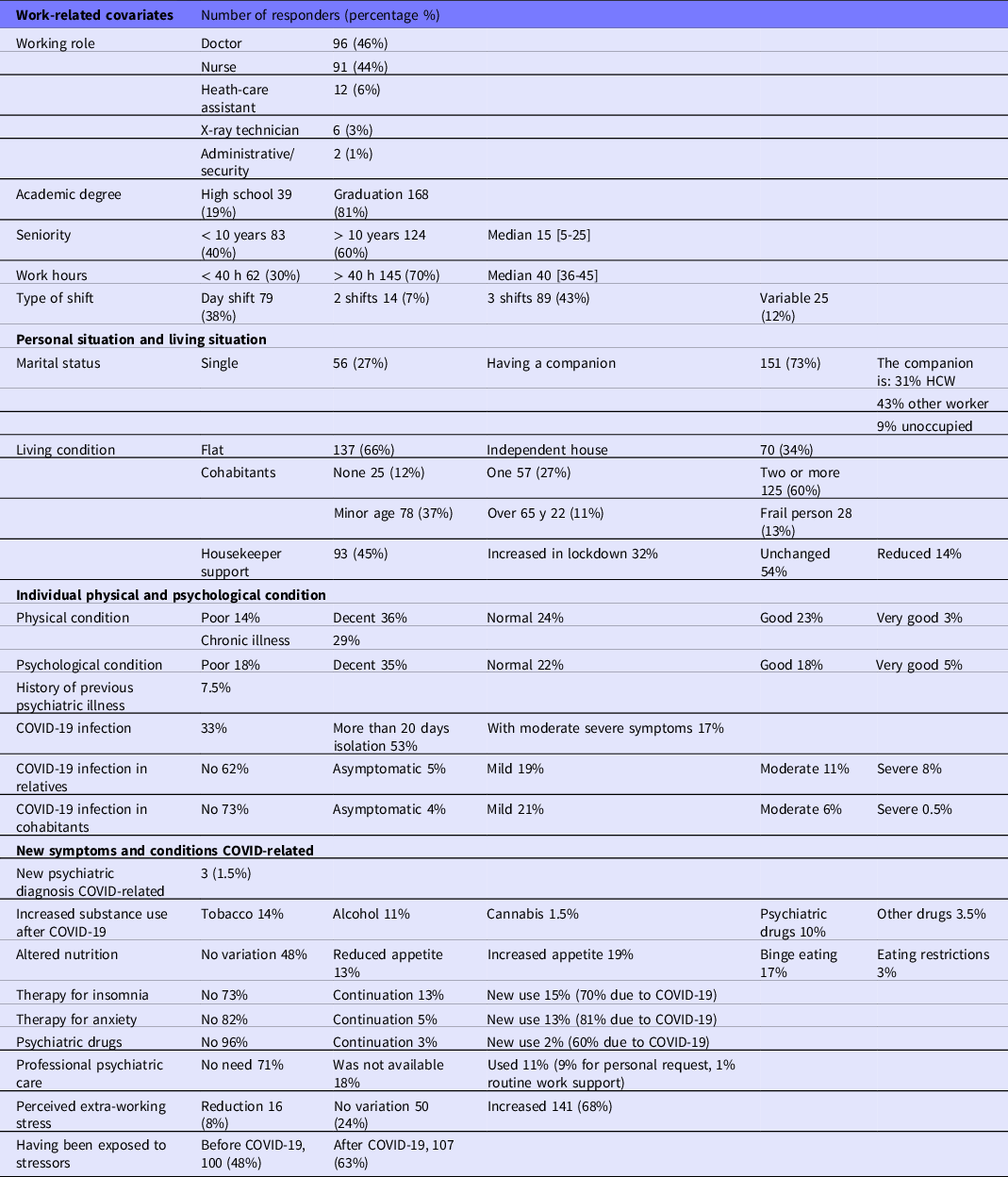
We obtained 207 complete answers from the first questionnaire. Participants were equally distributed by age (21% under 30 years (y) of age, 25% 30-40 y, 26% 40-50 y, 24% 50-60 y), mostly female (74.4%) workers. Of those taking part, 45.7% were physicians and 43.7% were nurses. Demographic characteristics, working roles and seniority, personal condition, and living situation are described in Table 1. Only 7.5% of participants had a history of psychiatric disease or were on psychiatric treatment.
Responders’ characteristics described as (1) work related: working roles, education, seniority, workload; (2) personal situation and living situation; (3) individual physical and psychological condition; and (4) new symptoms, conditions, and changes in drug use related to COVID-19

Most participants (65.6%) had been working in COVID-19 wards and 36.4% changed their usual work (9.7% voluntarily and 26.7% forcedly); 61.8% worked in an increased level of care environment; 32.8% had contracted COVID-19. Most of the workers (21%) who had contracted the infection had mild symptoms that did not require treatment or were completely asymptomatic (3.6%); 27% had to cohabit with a relative affected by COVID-19; 38.2% had a relative affected and 7.8% a relative with critical illness; 96.9% had affected colleagues; 44% had symptoms; and 7% had symptoms with critical illness (see Table 1).
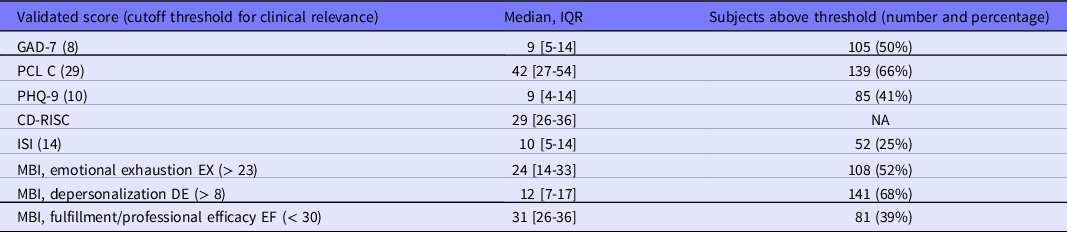
The median value of GAD-7 scale was 9 (5–14), identifying the presence of clinically relevant anxiety disorder in 50% of the respondents. The median PCL C score was 42 (27–54) with a stress disorder of at least moderate severity in 66% of cases.
The median PHQ-9 was 9 (4–14) in our population, with only 41% of the participants with a clinically relevant depressive disorder. CD-RISC identified good resilience skills (median 29 [26–36]), whereas MBI highlighted significant values of DE (median 12 [7–17]), EX (median 24 [14–33]); EF was only slightly over-threshold (median 31 [26–36]). Our survey found increased use of sleep inducers in 13–15% of responders but no pathological insomnia (ISI median 10 [5–14]) (see Table 1; Table 2).
Results to validated tools for evaluation of psychological distress

NA = not applicable. Median scores and interquartile range (IQR) are described, together with number of subjects over threshold for clinical relevance.
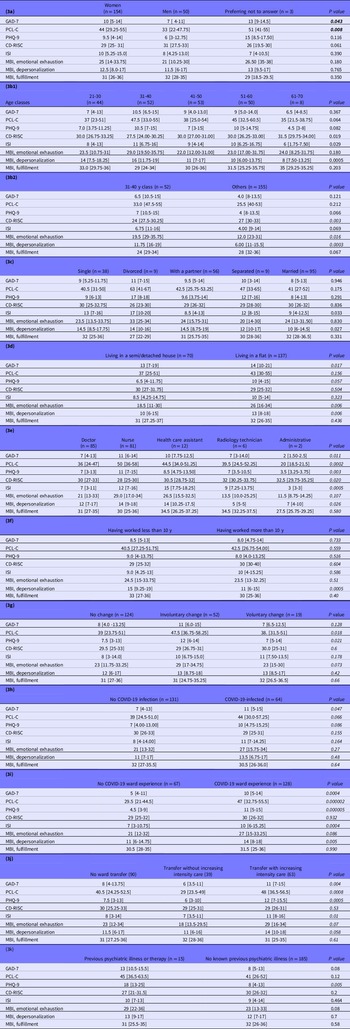
Risk factors associated with significantly worse scores were female gender (GAD-7, PCL C) (Table 3a); ages 31-40 y (ISI, CD-RISC, DE) (Table 3b); no stable partner (ISI, DE) (Table 3c); living in a flat (GAD-7, PHQ-9, EE, DE) (Table 3d); being a nurse or health care assistant (GAD-7, PCL C, PHQ-9, CD-RISC, ISI, DE) (Table 3e); length of service < 10 years (DE) (Table 3f); enduring mandatory job change (PCL C, PHQ-9) (Table 3g); having suffered a COVID-19 infection (GAD-7) (Table 3h); working in a COVID-19 department (GAD-7, ISI, PCL C, PHQ-9, DE) (Table 3i); and working in a different environment with increased intensity of care (GAD-7, PCL C, PHQ-9, ISI, DE) (Table 3j). In responders with a previous history of psychiatric disease, a higher level of depression was observed (Table 3k).
Comparison of median [IQR] scores results in different groups

Table 3, comparison among responders grouped by sex; 3b, comparison among responders grouped by age (b1) and comparison of the group of patients ages 30 to 40 years versus the other age groups (b2); 3c, comparison among responders grouped by marital status; 3d, comparison among responders grouped by living condition; 3e, comparison among responders grouped by working role; 3f, comparison among responders grouped by working seniority; 3g, comparison among responders grouped by change in work; 3h, comparison among responders grouped by having contracted COVID-19 infection; 3i, comparison among responders grouped by having worked in a COVID-19 ward; 3j, comparison among responders grouped by having changed their work (voluntary or involuntary); and 3k, comparison among responders grouped by having a previous psychiatric diagnosis.
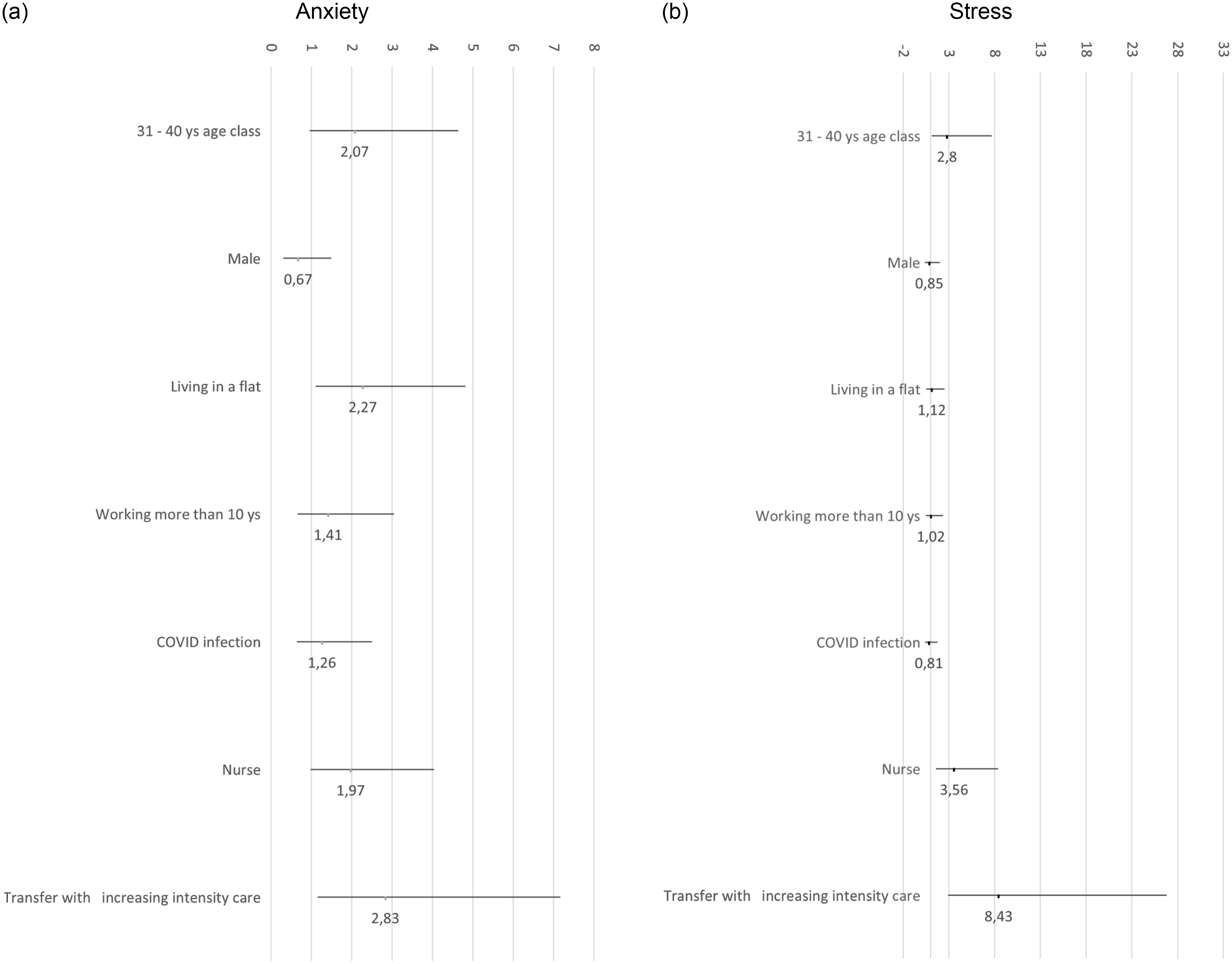
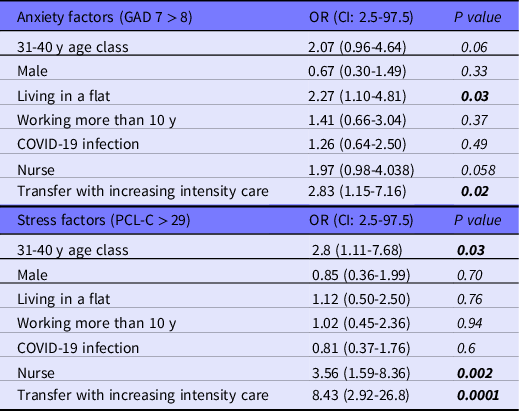
Using logistic regression, we found out that living in a flat (OR 2.27 [1.10-4.81]) and having to work in a high-intensity-of-care ward (2.83 [1.15-7.16]) were predictors of increased risk of anxiety (GAD-7) (Figure 1a); ages between 31-40 y (OR 2.8 [1.11-7.68]), being a nurse (OR 3.56 [1.59-8.36]) and having to work in a high-intensity-of-care ward (OR 8.43 [2.92-26.8]) were the strongest predictors of pathological stress (PCL-C) (Table 4; Figure 1b).
Logistic regression of factors associated with clinically relevant disease (score over threshold) for anxiety and stress. Odds ratio (OR) and 95% confidence intervals (CI). (a) Anxiety; (b) Stress.

Logistic regression of factors associated with clinically relevant disease (score over threshold) for anxiety and stress. Odds ratio (OR) and 95% confidence intervals (CI)

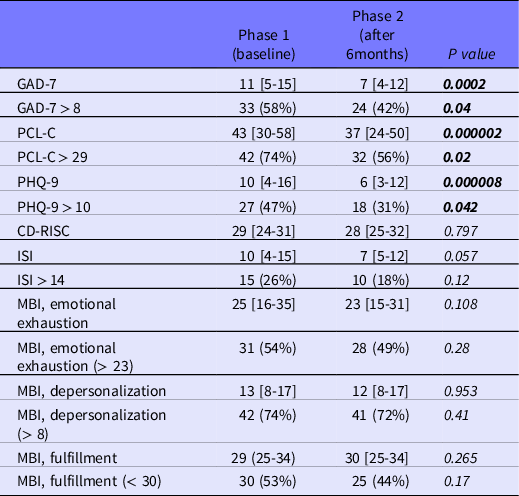
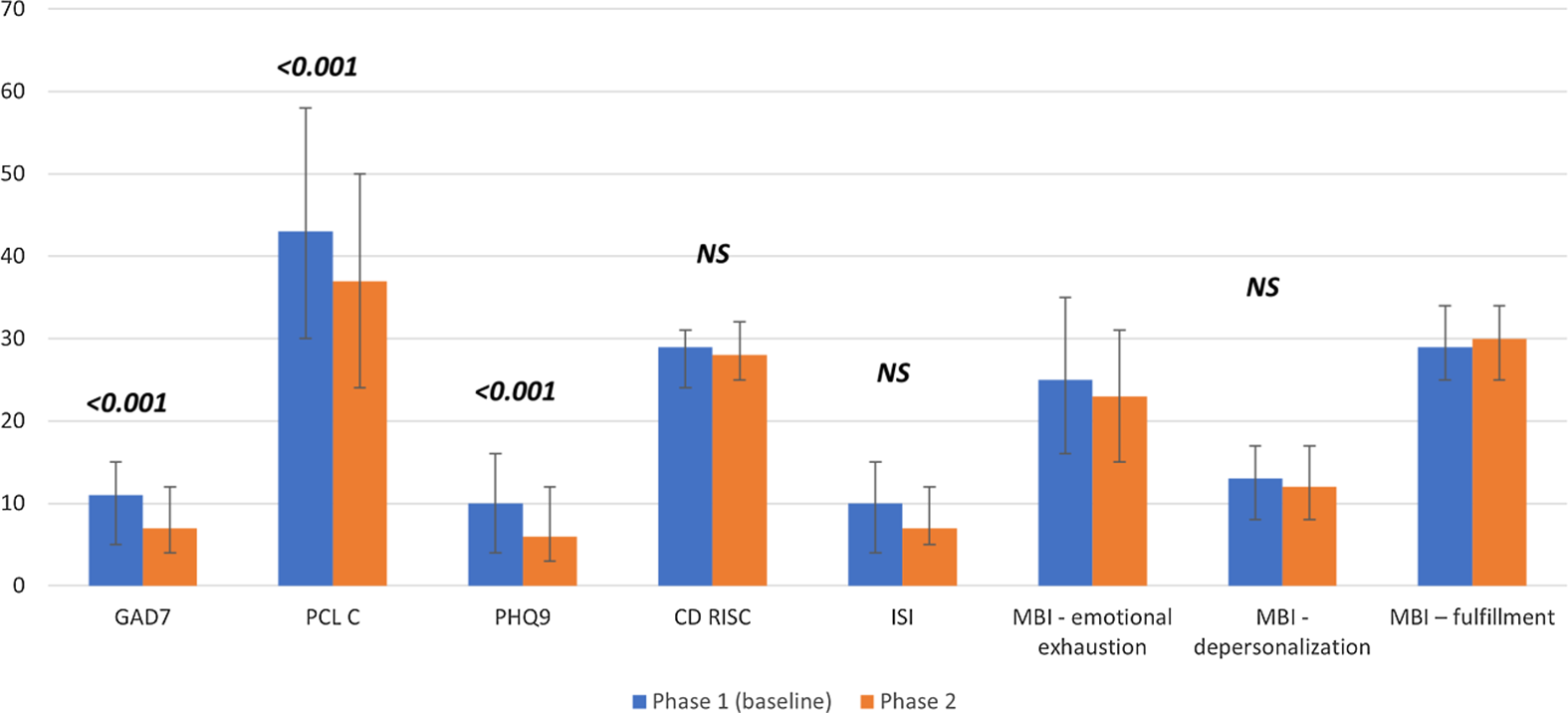
Eighty-seven professionals answered the phase 2 questionnaire; 120 (58%) questionnaires were lost at follow-up. For 30 more responders, we found incomplete answers or mistakes in reporting the matching identification code, thus we excluded these cases from the analysis. Comparing phase 1 and 2 questionnaires, we assessed 57 matches (28% response). Median scores on the psychological scales were uniformly improved, and we found a reduction in the percentage of responders scoring over the threshold, especially for anxiety, stress, and depression (Table 5; Figure 2).
Comparison of individual median scores [IQR] and percentage of patients with clinically relevant symptoms (score over threshold) in responders at baseline (March 2021) and after 6 months (August 2021)

Wilcoxon test was used for paired data on 57 responders who completed the follow-up questionnaire.
Comparison of individual median scores (IQR) in responders at baseline (March 2021 to phase1) and after 6 months (August 2021 to phase 2). Wilcoxon test for paired data on 57 responders who completed a follow-up questionnaire.

Discussion
In our study, nearly half of HCWs showed psychological distress (anxiety, 50%; depression, 41%; posttraumatic stress, 66%; and insomnia, 30%). Nurses, women, and the youngest were more affected, together with the workers who were forced to change their jobs to increase the intensity of care or to work in COVID-19 departments; on the contrary, having a partner and living in a detached house were protective. Fortunately, 6 months later, all the psychological domains showed individual improvement.
Since February 2020, Italy has been strongly hit by the COVID-19 pandemic, which required a profound and rapid reorganization of the hospital system and the adoption of extraordinary restrictive rules to limit interaction and movement of the whole population. Reference Chirico, Sacco and Nucera3,Reference Chirico, Nucera and Szarpak4 HCWs experienced a high psychological burden in their professional and personal life, resulting in increased levels of anxiety, depression, insomnia, and distress. Reference Magnavita, Chirico and Garbarino5,Reference Magnavita, Soave and Antonelli6 The acute stress described by many authors at the end of the first COVID-19 wave, Reference Gambaro, Gramaglia and Marangon16,Reference Gualano, Sinigaglia and Lo Moro18 resulting in burnout in 49-58% of HCWs, has probably changed to a chronic stress response still causing burnout in 38% of HCWs, Reference Lasalvia, Bodini and Amaddeo9,Reference Chirico, Afolabi and Ilesanmi37,Reference Chirico, Afolabi and Ilesanmi38 but also causing anxiety and depressive symptoms of a diverse entity. In our sample, psychological distress in any of the dimensions assessed was present in 40 to 66% of responders. Our results are in line with those of other Italian authors Reference Lasalvia, Bodini and Amaddeo9,Reference Ciuluvica Neagu, Gualdi and Dal Canton10,Reference Stocchetti, Segre and Zanier15,Reference Manfredi21 and confirm the persistence of long-lasting occupational stressors Reference Magnavita, Soave and Antonelli6,Reference Lasalvia, Bodini and Amaddeo9,Reference Stocchetti, Segre and Zanier15,Reference Manfredi21 and of the COVID-19 impact on many psychological different dimensions. Interestingly, we observed higher levels of anxiety and depressive symptoms compared with other Italian authors, Reference Ciuluvica Neagu, Gualdi and Dal Canton10,Reference Manfredi21 possibly showing a regional effect or merely due to differences in population selection and cutoffs.
We confirmed the importance of individual factors, like age and gender, in psychological distress and stress response. Female HCWs showed a higher level of anxiety and posttraumatic stress Reference Lasalvia, Bodini and Amaddeo9,Reference Ciuluvica Neagu, Gualdi and Dal Canton10,Reference Manfredi21 probably because women are usually more affected by depression and anxiety in response to stressors, Reference Lasalvia, Bodini and Amaddeo9,Reference Ciuluvica Neagu, Gualdi and Dal Canton10 and depression is strictly related to PTSD. Reference Lasalvia, Bodini and Amaddeo9,Reference Fiabane, Gabanelli and La Rovere17,Reference Gualano, Sinigaglia and Lo Moro18,Reference Carmassi, Pedrinelli and Dell’Oste20 Women may have suffered more than their male colleagues with the pressure of working in the COVID-19 emergency, because of the Italian cultural traditional-bound double role of women in family care and house care; nevertheless, this trend was described also in different cultural settings. Reference Gualano, Sinigaglia and Lo Moro18,Reference Bekele and Hajure39 Likewise, younger workers reported reduced resilience and more insomnia and depersonalization compared to their older colleagues with a great effect for the 30-40 age range. Other authors showed similar patterns for HCWs under age 40, Reference Ciuluvica Neagu, Gualdi and Dal Canton10,Reference Manfredi21 whereas others showed higher degrees of PTSD in older HCWs Reference Lasalvia, Bodini and Amaddeo9 or, on the contrary, a resilient pattern related to work seniority. Reference Lasalvia, Bodini and Amaddeo9,Reference Ciuluvica Neagu, Gualdi and Dal Canton10,Reference Vitale, Galatola and Mea40 This last feature was observed also in our sample. We hypothesize the effect of additional extra-working stressors: Others had described the negative effect of life restrictions (lack of cultural, educational, recreational possibilities) that could have had a greater impact on the age group 30-40 that is the most active in achieving personal life goals (work career, starting a family, and raising children, etc). Reference Lasalvia, Bodini and Amaddeo9,Reference Ciuluvica Neagu, Gualdi and Dal Canton10,Reference Manfredi21 We confirmed the worse psychological burden on nurses as was previously observed after the first wave and proved in different cultural settings. Reference Magnavita, Soave and Antonelli6,Reference Lasalvia, Bodini and Amaddeo9,Reference Ciuluvica Neagu, Gualdi and Dal Canton10,Reference Gualano, Sinigaglia and Lo Moro18,Reference Carmassi, Pedrinelli and Dell’Oste20,Reference Vitale, Galatola and Mea40 Interestingly, the same trend is shown also for health care assistants, who share similar exposure to stressors notwithstanding the differences in roles/responsibilities and whose psychological patterns are very similar, although rarely separately described in detail. Reference Manfredi21,Reference Vitale, Galatola and Mea40
In contrast with Collantoni et al., Reference Collantoni, Saieva and Meregalli41 who showed a protective coping effect of teamwork in HCWs employed in COVID-19 units, Reference Collantoni, Saieva and Meregalli41 we highlighted that HCWs working in COVID-19 wards showed higher anxiety, depression, posttraumatic stress, insomnia, and depersonalization compared with those who worked in a regular ward. This feature was also described by other authors. Reference Magnavita, Soave and Antonelli6,Reference Lasalvia, Bodini and Amaddeo9,Reference Manfredi21,Reference Eggleton, Bui and Goodyear-Smith22 The fear of contagion, the lack of PPE and resources, and the emotional burden of assisting severely ill patients in isolation could have probably played a role in the first phase, Reference Chirico, Nucera and Szarpak4,Reference Gambaro, Gramaglia and Marangon16–Reference Gualano, Sinigaglia and Lo Moro18 whereas, in the second phase fatigue treating COVID-19 patients and persistent need of working with full PPE, Reference Fiabane, Gabanelli and La Rovere17–Reference Farì, de Sire and Giorgio19 despite a safer condition (HCW immunization) and more effective treatments, could have been determinants. Like other authors, Reference Lasalvia, Bodini and Amaddeo9,Reference Stocchetti, Segre and Zanier15,Reference Manfredi21,Reference Eggleton, Bui and Goodyear-Smith22 we observed that the ongoing need for involuntary displacement, associated with an increase in the level of care, had a role in causing anxiety, depression, insomnia, and, finally, burnout. Compared to what was observed in the first wave, Reference Gambaro, Gramaglia and Marangon16,Reference Gualano, Sinigaglia and Lo Moro18 the fear of contagion seems to reduce over time, with only a higher level of anxiety persisting for those HCWs infected by COVID-19.
Interestingly, as previously observed by Ciulvica et al., Reference Ciuluvica Neagu, Gualdi and Dal Canton10 living alone affects psychological well-being. Reference Ciuluvica Neagu, Gualdi and Dal Canton10 The relevance of loneliness as a contributor to mental health impairment was confirmed by previous studies showing its predictive role in the development and maintenance of depressive and anxiety symptoms, Reference Wang, Mann and Lloyd-Evans42,Reference McQuaid, Cox, Ogunlana and Jaworska43 but it was rarely evaluated. Reference Ciuluvica Neagu, Gualdi and Dal Canton10 Loneliness perception was possibly magnified by the change in the public opinion about the “heroes” of the first wave. Reference Chirico, Afolabi and Ilesanmi38 Moreover, personal living conditions are potent modifiers of personal coping capacity: in our population, anxiety and burnout were higher in HCWs living in a flat. This pattern could have been more evident in our sample because of the peripheral situation of our hospital, whose workers live in a suburban and countryside environment. Interestingly, similar findings were observed by Eggleton et al. Reference Eggleton, Bui and Goodyear-Smith22 in a rural environment compared to an urban one; this feature was related to the different burden of cases. Reference Eggleton, Bui and Goodyear-Smith22 The effect observed in our population is more probably suggestive of a resilience mechanism considering our high prevalence setting. It could be interesting to see whether these findings could be replicated in other suburban or countryside environments.
To our knowledge, this is one of the few longitudinal studies that followed the overtime changes in psychological distress, repeating HCW assessment after 6 months Reference Magnavita, Soave and Antonelli6,Reference Rossi, Socci and Jannini23 to evaluate individual psychological changes and not only trends from repeated cross-sectional studies. Reference Magnavita, Soave and Antonelli6,Reference Lasalvia, Bodini and Amaddeo9
Unfortunately, the rate of response to follow up was nearly 30%; this proportion, even lower than those observed by Rossi et al., Reference Rossi, Socci and Jannini23 suffers from the length of the questionnaire and from the distance from the beginning of the pandemic period. Indeed, we observed a very great number of studies on the mental health impact of COVID-19 in the immediate aftermath of the first wave, whereas only a few authors performed repeated studies at the beginning of 2021. Responders could have been already bored by the diffusion of many assessments via social media and professional associations. The first questionnaire was administered during the third Piedmont wave (the diffusion of the delta variant in our region), whereas the follow-up was administered 6 months later, after a quieter period during the summer season.
If the first evaluation was useful to highlight the persistence of long-term stressors and chronic effects 1 year after the beginning of the pandemic, the follow-up shows a general trend toward a reduction of the scores in nearly all dimensions, which is significant for anxiety, depression, and posttraumatic stress. These results are in line with Rossi et al.’s Reference Rossi, Socci and Jannini23 study and probably could be explained by the improvement in the epidemiological situation, with a reduction of cases, return to prevalent care of non-COVID-19 patients, Reference Gualano, Sinigaglia and Lo Moro18 and by the parallel lifting of life restrictions, with the beneficial effect of the holiday season.
The main strength of this study lies in its prospective design, which enables us to record how the perception of stress and the mental health of workers has evolved in relation to the following pandemic waves. The analysis of stress and mental health at various times of the pandemic and after its conclusion will help disentangle the effect of the epidemic from that of other common stressors in health care activities. This study, similarly to others, Reference Magnavita, Soave and Antonelli6,Reference Lasalvia, Bodini and Amaddeo9,Reference Ciuluvica Neagu, Gualdi and Dal Canton10,Reference Stocchetti, Segre and Zanier15 documents the HCWs’ mental health status, when the second wave had its effects and the fatigue of the first year of lockdown restrictions and of organizational emergency changes was more evident. Reference Chirico, Afolabi and Ilesanmi38 However, this study follows changes in HCWs’ mental health after the end of the third wave, when the hope of extended immunization associated with the seasonal benefit lifted the psychological burden on HCWs.
Another strength is the choice to involve different HCWs, with various roles, not restricting the sample to intensivists, to doctors or nurses, or to frontline workers; in this way, our study can evaluate the effect of the contagion fear, of the rise in COVID-19 cases, other occupational stressors, and stressors that are common to the entire Piedmont population. Reference Ciuluvica Neagu, Gualdi and Dal Canton10 The comprehensive evaluation with many validated tools was another strength, although it was also a limitation because the length of the questionnaire reduced the participation rate and the follow-up rate.
Other limitations of this study are its observational nature, that methodology prevents cause-effect evaluation, the possible bias in reporting because of the self-administration of the questionnaire, and the low number of responders that was just above the estimated value for the minimum sample size and further reduced by the matching of cases in the second phase.
Due to the chronic and recurrent exposure to stressors in HCW population during emergencies and over time, prospective longitudinal studies are needed for a better understanding of HCW well-being. Further research should focus on screening tools that are useful to identify a subject at risk and evaluating effective interventions.
The extensive evidence of the different negative effects of the COVID-19 pandemic on the occupational well-being of HCWs should strengthen institutional and public awareness of the many potential challenges for these workers, not often surveyed with regard to mental health. The collected information could suggest how to monitor levels of exposure to stress factors with effective tools and should trigger organizational interventions at institutional and national levels to reduce psychosocial risk factors and to support their copying capacity. Reference Chirico, Sacco and Ferrari44–Reference Schreiber, Cates, Formanski and King47
Conclusions
Psychological distress in HCWs has reached worrying levels and affects the quality of life and work activity. Nurses and health care assistants, women, and the youngest showed worse effects, in line with other published studies. Mandatory job change, increasing intensity of care when changing wards, COVID-19 department working experience, and being infected by COVID-19 were the most stressful factors. The presence of a partner and living in a detached house resulted to be protective. An improvement in all the psychological domains evaluated was observed 6 months after.
Acknowledgments
We acknowledge Leticia Bertuzzi for sharing her valuable experience in the field of the mental health assessment of health care workers and for her support during the conception of the questionnaire.
Author contributions
VC, VG, GDS, AB, and GM conceived the study; VG and VC collected the data, managed the data, including quality control, and analyzed the data; VC drafted the manuscript; and all authors contributed substantially to its revision.
Funding statement
No funding was received for this research.
Conflict(s) of interest
Authors declared they had no conflicts of interest.