Introduction
Elevated symptoms of anxiety, depression, and burden in dementia carers are very common and are associated with poor quality of life (QoL) (Cuijpers, Reference Cuijpers2005; Cooper et al., Reference Cooper, Balamurali and Livingston2007; Abdollahpour et al., Reference Abdollahpour, Nedjat, Salimi, Noroozian and Majdzadeh2015). Not surprisingly, dementia carers are considered to be a high-risk group for death by suicide, and this risk does not appear to be diminished by the death or institutionalization of the care recipient (O'Dwyer et al., Reference O'Dwyer, Moyle, Zimmer-Gembeck and De Leo2016; Joling et al., Reference Joling, O'Dwyer, Hertogh and van Hout2017). As such, establishing effective interventions that can help caregivers maintain their emotional wellbeing (i.e. anxiety, depression, and burden) across the care trajectory is critically important.
There are several existing meta-analyses focused on assessing the efficacy of carer interventions on emotional well-being. However, most of these reviews target one specific approach such as Cognitive Behavior Therapy (CBT) (Vernooij-Dassen et al., Reference Vernooij-Dassen, Draskovic, McCleery and Downs2011), educational interventions (Jensen et al., Reference Jensen, Agbata, Canavan and McCarthy2015), support groups (Chien et al., Reference Chien2011), technology-based CBT (Scott et al., Reference Scott2016), and telephone counseling (Lins et al., Reference Lins2014). The conclusion about differential efficacy of treatments using separate meta-analyses is problematic as it is unclear how valid these comparisons are given differences in methodology and levels of heterogeneity.
An earlier comprehensive review by Pinquart and Sörensen (Reference Pinquart and Sörensen2006) has compared the efficacy of different types of carer interventions on emotional well-being with non-active control conditions within their single meta-analysis. This meta-analysis integrated the results of 127 carer intervention studies published between 1982 and 2005 and demonstrated that interventions had, on average, significant but small immediate effects on carer outcomes, such as burden, depression, and QoL. The main limitation of this study was the inclusion of both randomized and non-randomized trials and the authors have concluded that non-randomized studies may have overestimated the efficacy of interventions.
Gallagher-Thompson and Coon (Reference Gallagher-Thompson and Coon2007) have also conducted a comprehensive review of carer intervention studies published between 1980 and 2005. Unlike the previous review (Pinquart and Sörensen, Reference Pinquart and Sörensen2006), this study only included Randomized Controlled Trials (RCTs). They identified three categories of psychologically derived interventions: psychoeducational programs (N = 14 studies), psychotherapy (CBT) (N = 3), and multicomponent interventions (family counseling with support group) (N = 2). The main limitation of this study was the relatively small number of studies identified, partly due to studies only being included if they showed beneficial treatment effects in target problems, a criterion proposed by Yon and Scogin (Reference Yon and Scogin2007). The largest effect size was found in the psychotherapy category (CBT). An overall effect size of CBT for psychological distress was 1.20. However, there may have been a reporting bias due to the aforementioned criterion as a recent review on CBT-based interventions for carers demonstrated only a small effect on anxiety (0.21) and a medium effect on depression (0.66) (Vernooij-Dassen et al., Reference Vernooij-Dassen, Draskovic, McCleery and Downs2011).
Recently, Elvish et al. (Reference Elvish, Lever, Johnstone, Cawley and Keady2013) has conducted a comprehensive review to update the literature on carer interventions published between 2005 and 2011. This study also only included RCTs. However, the authors included studies that used both active and non-active control conditions and both quantitative and qualitative methodologies. Thus, effect sizes were not reported in the review. Similar to the previous review (Gallagher-Thompson and Coon, Reference Gallagher-Thompson and Coon2007), this study identified four categories of psychologically derived interventions: psychoeducational programs, psychotherapy (no quantitative study was identified for this category), multi-component interventions, and technology-based interventions.
The main limitation of this review (Elvish et al., Reference Elvish, Lever, Johnstone, Cawley and Keady2013) was not only a large heterogeneity in the study designs, but also the categories of interventions used. For example, multicomponent interventions included two distinct types of interventions (i.e. family counseling with support group, pharmacological therapy for people with dementia combined with psychosocial intervention). Technology-based interventions included both technology-based psychoeducational programs and CBT. The categorization of interventions needs to be theory-driven rather than driven by the mode of delivery. Gallagher-Thompson and Coon (Reference Gallagher-Thompson and Coon2007) particularly highlighted the importance of distinguishing studies grounded in CBT theories from psychoeducational programs in that the former place emphasis on the development of therapeutic relationship as part of the treatment process.
Reaching a valid conclusion based on a more appropriate comparison metric will help direct focus on the important clinical task of understanding the efficacy of different types of carer interventions. Therefore, the aim of the current study is to conduct an up-to-date systematic review and evaluate the efficacy of carer interventions on emotional well-being (i.e. depression, anxiety, and burden). The current review particularly focuses on psychoeducational programs and CBT-based psychotherapeutic interventions as previous comprehensive reviews (Gallagher-Thompson and Coon, Reference Gallagher-Thompson and Coon2007; Elvish et al., Reference Elvish, Lever, Johnstone, Cawley and Keady2013) suggested that these approaches can better impact on emotional well-being of dementia carers among other approaches.
One might argue that some techniques used in these two approaches overlap. CBT is an active, directive, time-limited, structured approach based on the cognitive model: the way that individuals perceive a situation is more closely connected to their reaction than the situation itself (Beck, Reference Beck1967; Reference Beck1979). Various cognitive and behavioral strategies are used in CBT. However, CBT is not defined by its use of these strategies but by whether the specific therapeutic techniques employed are utilized within the framework of the cognitive model (Beck, Reference Beck1979). To be categorized as CBT-based psychotherapeutic interventions in the current review, the intervention needed to be delivered by CBT therapists or trainers who received CBT training or there needed to be a clear reference to the cognitive model in the intervention protocol.
The recent comprehensive review (Elvish et al., Reference Elvish, Lever, Johnstone, Cawley and Keady2013) treated technology driven interventions as an independent intervention category regardless of the underlying theoretical framework. This review does not omit a spectrum of delivery modes, but rather it will be treated as a covariate in each intervention category. In addition, a strict approach to sorting studies based on control conditions is essential in systematic reviews and researchers should avoid categorizing active and non-active controls into a generic control group as separating these different control conditions is paramount to achieve meaningful estimates of treatment efficacy (Karlsson and Bergmark, Reference Karlsson and Bergmark2015). Therefore, in order to reduce the heterogeneity of included studies and to obtain an empirically derived index of interventions for dementia carers, the current study only includes RCTs that used a treatment condition that solely focused on carers and utilized non-active control conditions (e.g. waiting list) as comparators.
Methods
Inclusion and exclusion criteria
Studies were included if they (a) recruited dementia family carers; (b) randomized participants to either a treatment condition or a non-active control condition; (c) reported the efficacy of an intervention on either depression, anxiety, or burden as a primary outcome; (d) were published in peer-reviewed journals; (e) were written in English; and (f) were published after 2006. When means, standard deviations, and sample size for one of the targeted outcomes were not reported, we contacted the first author of the study for further details. Studies were excluded if further information was not available.
Studies were excluded if they (a) provided an intervention to both carers and care recipients; or (b) reported data that overlapped with data from other included studies (e.g. secondary analysis of existing data). Non-active control conditions were defined as a control condition that did not receive any treatment (e.g. waiting list, treatment as usual) or a control condition that provided a brief information based support (e.g. a brief educational leaflet, a brief information session). The latter conditions were included as these types of support are often provided as routine care in the community. However, in order to be eligible, these control conditions had to be intended solely to provide general information about dementia (e.g. clinical and pharmacological information about dementia, symptoms). Control groups could not receive any skill building or therapeutic techniques even if fewer sessions than the intervention group.
Search strategies
The following electronic databases were searched: MEDLINE (all text), PsycINFO (all text), Scopus (title, abstracts, keywords), and Cochrane Central Register of Controlled Trials (title, abstracts, keywords) on 10 November 2016. We used terms for dementia (dementia, Alzheimer*), family carers (caregiver*, caregiving, carer*, famil*, relative*), intervention studies (intervention*, support, training, program*, control trials (RCT, random*, control* trial*), and psychological outcomes (depression, anxiety, burden, distress, stress).
Coding procedure
Information was extracted independently by two authors (NK and LH) using a purposely designed electronic data extraction sheet for the current review. Agreement between the two coders was 85.9%. Disagreements were resolved through discussion, and consensus was obtained.
For each included study, information was recorded on (a) the country where research was conducted; (b) participants’ age range and mean age; (c) care recipients' diagnosis; (d) proportion of spouse carers; (e) proportion of female carers; (f) format of treatment (e.g. individual face-to-face, group face-to-face, online); (g) number of sessions; (h) length of each session; (i) professional background of interventionists (e.g. nurse, clinical psychologist); (j) outcome measure of depression, anxiety, or burden used (measure of QoL was also recorded as a secondary outcome where available); and (j) means, standard deviations, and sample size for the outcome measures in treatment and control conditions at pre-test and post-test. Means and standard deviations were extracted from intention-to-treat samples when available.
To compare methods used for data analysis and treatment assignment and investigate adherence and acceptance of the treatment, the following information was also extracted: (a) type of data analyses (i.e. intention-to-treat, completers only); (b) randomization method; (c) method of treatment adherence reporting, (d) whether treatment was manualized; (e) provision of training and supervision for trainers; and (f) attrition rate.
Intervention categories
The use of the following approaches in the treatment conditions for each study was recorded: (a) case management; (b) provision of information on dementia and care-related issues; (c) communication training; (d) CBT techniques for managing carers' emotional difficulties; (e) non-CBT techniques for managing difficulties related to caregiving (e.g. coping skill training with no reference to the cognitive model); and (f) behavior modification training for managing behavioral and psychological symptoms of dementia. This was completed independently by authors NK and LH. Agreement was 87.5% and disagreements were resolved through discussion, and consensus was obtained. Subsequently, studies were divided up into two categories. The studies not falling into either category were further excluded due to irrelevance to the review question.
Psychoeducation-skill building interventions
This category included studies that focused on increasing carers’ knowledge of dementia and teaching them specific coping skills for managing common emotional distress and/or behavioral changes associated with dementia.
CBT based psychotherapeutic interventions
To be included in this category it was necessary for an intervention to employ cognitive and behavioral strategies that are utilized within the framework of the cognitive model. Some examples of such strategies included standard cognitive and behavioral techniques aimed at testing the individual's specific misconception and maladaptive assumptions (Beck, Reference Beck1979) or more modern cognitive and behavioral techniques aimed at accepting distressing thoughts and emotions (Hayes et al., Reference Hayes, Strosahl and Wilson1999).
Statistical methods
All data were analyzed using the Open Meta-Analyst (Wallace et al., Reference Wallace, Dahabreh, Trikalinos, Lau, Trow and Schmid2012). The effect size for the difference between treatment and control conditions were calculated for each included study using the Hedge's g. A fixed-effect model was used to provide a pooled estimated effect for each intervention category, and a test for heterogeneity was performed using the Q-statistic and the I 2 statistic. Where there was evidence of heterogeneity of the treatment effect a random-effects model was used. If data were clearly heterogeneous, a leave-one-out sensitivity analysis was conducted to test whether any individual study had a significant influence on the overall estimate of the rest of the studies. A subgroup analysis was also performed to test whether the mode of delivery (i.e. face-to-face and technology) had a significant impact on the overall estimated effect. The overall effect size was reported only if there were data available for three or more studies for the outcome of interest (i.e. depression, anxiety, burden, or QoL).
Results
Study selection
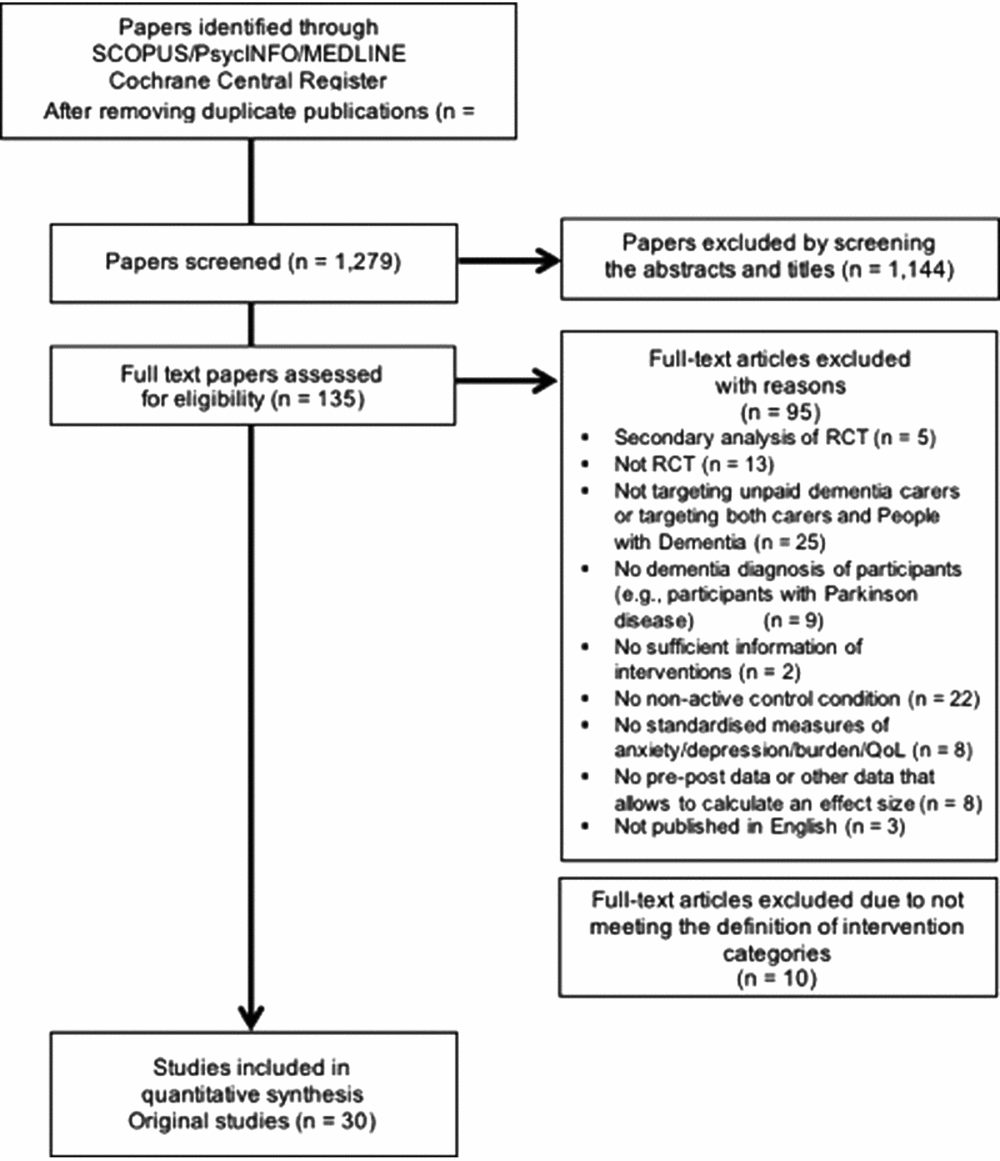
Figure 1 presents a flow diagram illustrating the study selection process. Our search yielded 1,279 titles and abstracts. Two authors (NK and CD) excluded 1,144 articles based on the abstracts as they were clearly irrelevant to the present research question. The same authors reviewed the remaining 135 full articles independently. Applying the inclusion and exclusion criteria resulted in the identification of 40 original studies.
Flow chart of the selection of studies of dementia carer interventions. QoL = Quality of Life.

Finally, a further ten studies were excluded due to the intervention not meeting any of the intervention categories. These ten studies used the following interventions: case management (Xiao et al., Reference Xiao, De Bellis, Kyriazopoulos, Draper and Ullah2016), support group (Winter and Gitlin, Reference Winter and Gitlin2006; Chu et al., Reference Chu2011), information provision (Kurz et al., Reference Kurz, Wagenpfeil, Hallauer, Schneider-Schelte and Jansen2010), meditation (Danucalov et al., Reference Danucalov2013; Leach et al., Reference Leach, Francis and Ziaian2015), resourcefulness training (Gonzalez et al., Reference Gonzalez, Polansky, Lippa, Gitlin and Zauszniewski2014), physical exercise (Connell and Janevic, Reference Connell and Janevic2009; Hirano et al., Reference Hirano, Suzuki, Kuzuya, Onishi, Ban and Umegaki2011), and self-help decision aids (Stirling et al., Reference Stirling2012). The details of these excluded studies are provided in Table S1, available as supplementary material attached to the electronic version of this paper at www.journals.cambridge.org/jid_IPG. Of the 30 identified studies, one had two CBT conditions (Losada et al., Reference Losada2015) resulting in a total of 31 eligible studies.
Study characteristics
Psychoeducation-skill building interventions (n = 16)
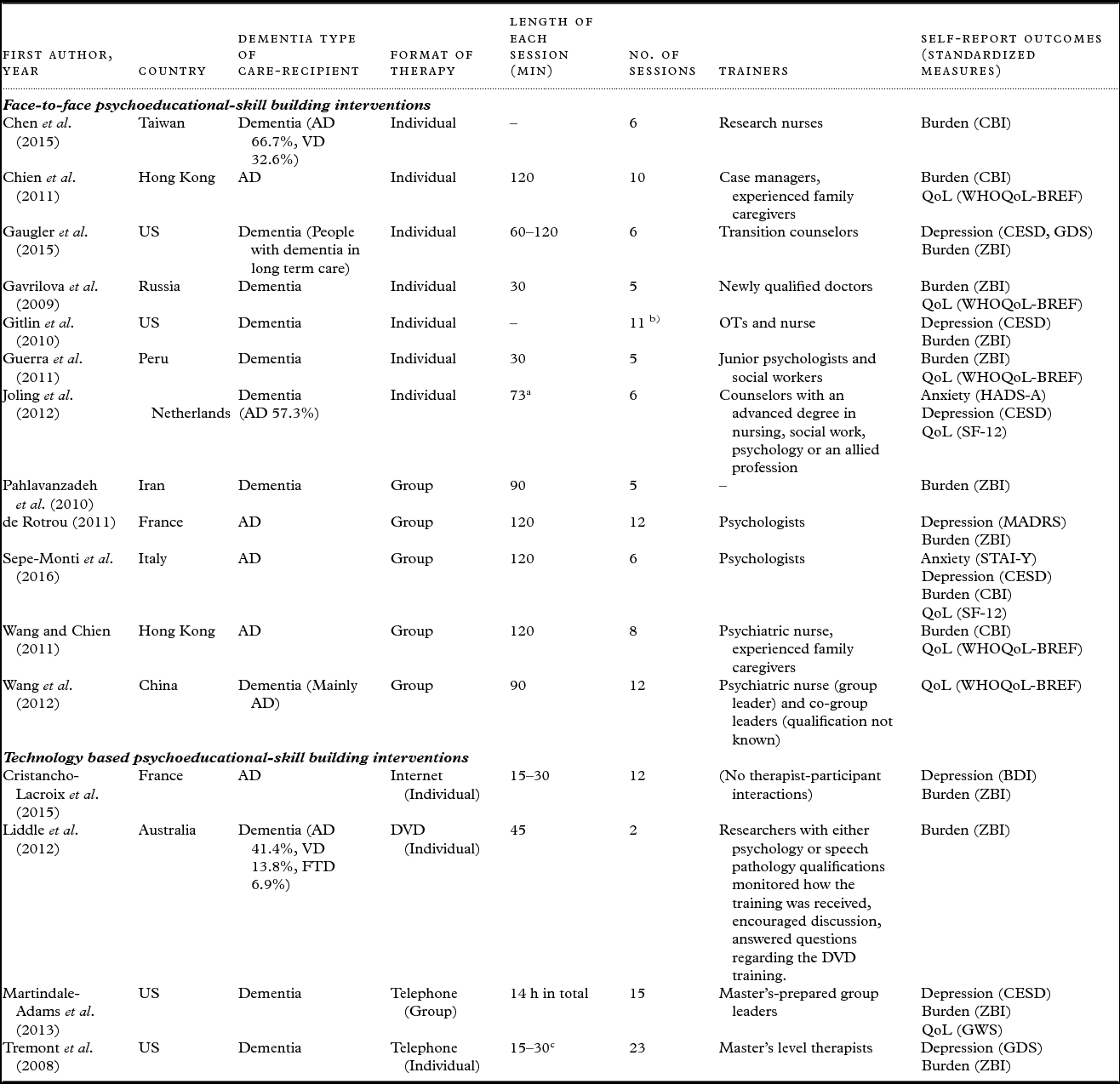
Table 1 contains descriptions of the 16 studies in this category. The majority of the studies were conducted in either Asia (n = 5), Europe (n = 5), or the United States (n = 4). Other studies were conducted in Australia (n = 1) and Peru (n =1). Of the 16 studies, six studies recruited carers of people with Alzheimer's disease. Most studies involved carers of people with various diagnoses of dementia grouped as a whole.
Psychoeducational-skill building interventions

Note. AD = Alzheimer's disease, VD = Vascular dementia, OT = occupational therapist, QoL = quality of life, Y = Yes. Measures: BDI = Beck Depression Inventory II, CBI = Caregiver Burden Inventory, CESD = The Center for Epidemiologic Studies-Depression scale, GDS = Geriatric Depression Scale, GWS = General Well-Being Scale, HADS-A = Hospital Anxiety and Depression Scale-Anxiety subscale, MADRS = Montgomery and Asberg Depression Rating Scale, SF-12 = The 12-Item Short Form Health Survey, STAI-Y = The State-Trait Anxiety Inventory Self-Evaluation Questionnaire, Form Y, WHOQoL-BREF = The World Health Organization Quality of Life Scale-BREF, ZBI = Zarit Burden Interview.
a The length of each session was 74 min on average (range 47–105 min).
b The treatment consisted of nine OT session, two nursing sessions (one delivered at home and one over the phone), and three brief OT telephone contacts during the maintenance phase.
c In total, 12 h of contact (Initial contacts lasted approximately 60 min and follow-up contacts lasted about 15–30 min).
The details of Interventions are summarized in Table S2. Studies in this category used a structured program that provided information about dementia and services, and lectures on how to effectively respond to symptoms of the disease and/or better take care of themselves. Twelve studies used a face-to-face mode of delivery. Four studies used technology as a significant vehicle for delivery of the intervention (i.e. telephone, internet, and DVD).
The number of face-to-face treatment sessions ranged from 5 to 12, with more than half of the studies (58.3%) providing six or less sessions. The trainers had various backgrounds including nurses, doctors, occupational therapists, social workers, counselors, and psychologists. Seven studies (58.3%) used a treatment manual to deliver the intervention. Three studies (25%) provided supervision to trainers during the trial and audio recorded treatment sessions for checking treatment adherence. The attrition rate during the treatment period ranged from 0% to 25%, with an average rate of 8.7% (see Table S3 for additional study characteristics).
The number of technology driven treatment sessions ranged from 2 to 23. One study used a completely self-help approach with no trainer contact (i.e. a fully automated website to be used in an individual fashion at home). Of the three studies that involved trainer contact, two studies used a treatment manual and one study provided supervision during the trial and audio recorded treatment sessions for checking treatment adherence. The attrition rate during the treatment period ranged from 18% to 45%, with an average rate of 23%.
Eleven of the 16 studies (87.5%) used an intention-to-treat analysis. The main outcome measure for studies in this category was burden. Fourteen studies reported the efficacy of interventions on burden. The majority of studies used the Zarit Burden Interview (ZBI) (Zarit et al., Reference Zarit, Reever and Bach-Peterson1980). Data were available to calculate the effect size for six of the eight studies that included depression as one of the outcome measures. The most commonly used measure was the Centre for Epidemiologic Studies Depression Scale (CESD) (Radloff, Reference Radloff1977). Although eight studies reported the efficacy on QoL, there was wide variance in QoL indices used. Some studies reported the total scores while other studies reported the scores of each individual subscale of the measure (e.g. social relationship, physical pain). The effect size was calculated using four studies that reported the total scores. The majority of studies used the WHOQoL-BREF (Skevington et al., Reference Skevington, Lotfy, O'Connell and Group2004). Only two studies reported the efficacy on anxiety, and thus the effect size was not calculated.
CBT-based psychotherapeutic interventions (n = 15)
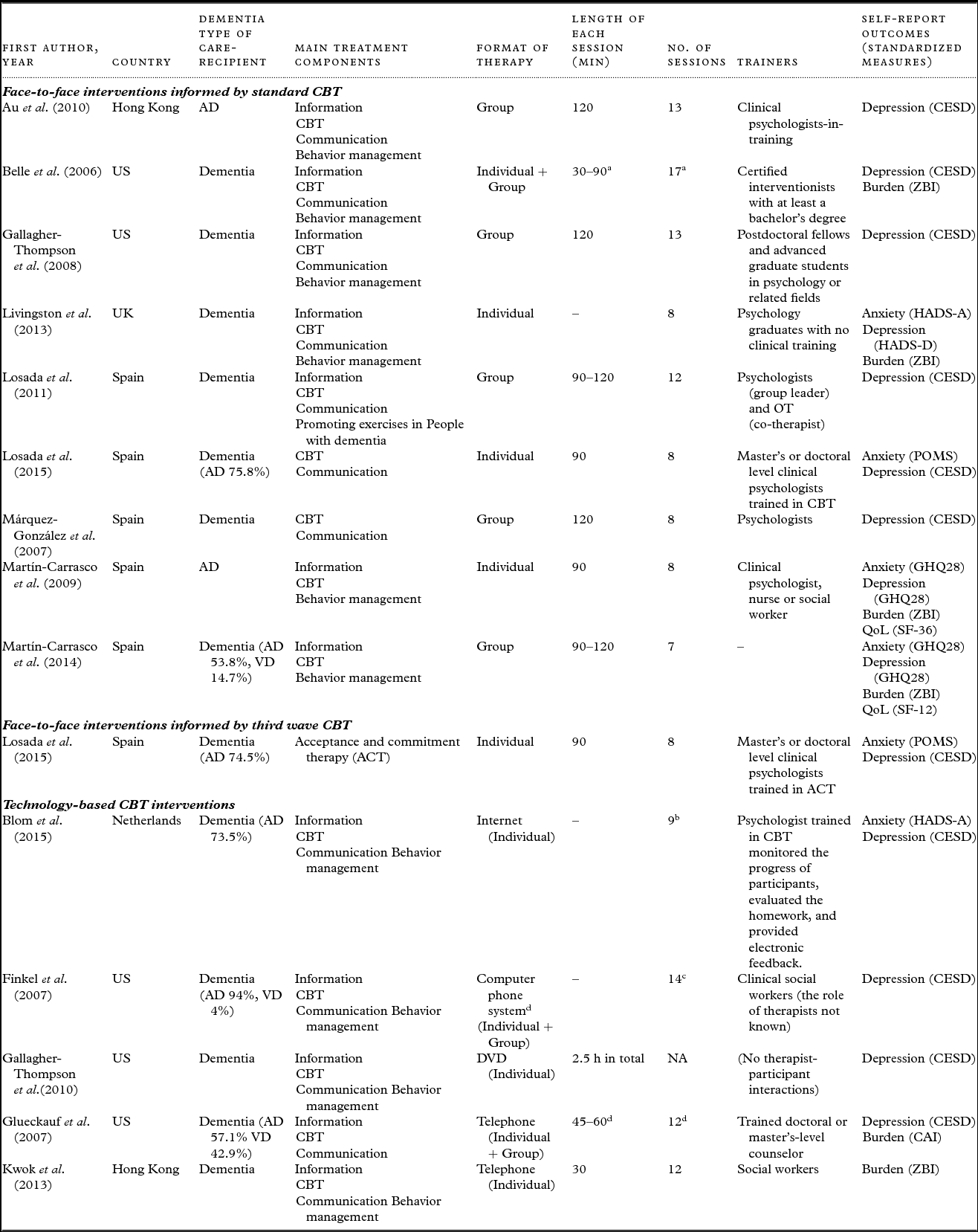
Table 2 contains descriptions of the 15 studies in this category. Most studies were conducted in Spain (n = 6) or the United States (n = 5). Other studies were conducted in the United Kingdom (n = 1), Netherlands (n = 1), and Hong Kong (n = 2). Six studies recruited mostly carers of people with Alzheimer's disease. The remaining ten studies involved carers of people with various diagnoses of dementia grouped as a whole.
CBT-based psychotherapeutic interventions

Note. AD = Alzheimer's disease, VD = Vascular dementia, Information = Interventions aimed at increasing carers’ knowledge, CBT = Interventions based on cognitive and behavioral principles aimed at reducing caregiver psychological difficulties, Communication = Interventions aimed at teaching carers to improve their communication skills (e.g. learning to ask for help from others), Behaviour management = Interventions aimed at teaching carers to manage behavioral changes of the care recipient, OT = occupational therapist, QoL = quality of life, Y = Yes. Measures: CAI = Caregiver Appraisal Inventory, CESD = The Center for Epidemiologic Studies-Depression scale, GHQ28=General Health Questionnaire-2, HADS-A = Hospital Anxiety and Depression Scale-Anxiety subscale, HADS-D = Hospital Anxiety and Depression Scale-Depression subscale, POMS = The Tension-Anxiety subscale from the Profile of Mood States, SF-12 = The 12-Item Short Form Health Survey SF-36 = The 36-Item Short Form Health Survey, ZBI = Zarit Burden Interview.
a The treatment consisted of nine 90-min in home sessions, three 30-min telephone individual sessions, and five telephone group sessions (the length of groups were not specified).
b The treatment consisted of eight sessions and one booster session.
c The treatment consisted of 2 in-home sessions and 12 sessions over the computer-telephone system.
d 7 x 45 min group session, 5 x 1 h individual sessions.
All studies included an interventional component based on cognitive and behavioral principles, which aim to reduce carers’ psychological difficulties. Other approaches included were (a) education on dementia; (b) communication skill training (e.g. learning to ask for help from other family members); and (c) training on managing the behaviors of the care recipient, or promoting exercises in the care recipient. The combined use of these approaches varied across studies. More than half of the studies (56.3%) combined a standard CBT component with all three additional components. One study used a modern CBT approach, Acceptance and Commitment Therapy (ACT). Ten studies used a face-to-face mode of delivery. Five studies used technology as a significant vehicle for delivery of the intervention (i.e. telephone, internet, and DVD).
The majority of the studies that utilized the face-to-face approach provided eight or more treatment sessions (90%) and recruited trainers with a psychology background (80%). All studies, except for one, used a treatment manual to deliver the intervention (90%). Five studies (50%) provided supervision to trainers during the trial and two studies (20%) audio recorded treatment sessions for checking treatment adherence. The attrition rate during the treatment period ranged from 9% to 32%, with an average rate of 21.1% (Table S3)
All studies that used technology provided nine or more sessions except for one study that used a completely self-help approach with no trainer contact (i.e. the DVD vignettes illustrating coping strategies with the accompanying workbook). Four studies that involved trainer contact did not provide any information on the use of a treatment manual or supervision during the trial. The attrition rate during the treatment period ranged from 8% to 43%, with an average rate of 22.6%.
Six of the 15 studies (40%) used an intention-to-treat analysis. The main outcome measure for studies in this category was depression. Data were available to calculate the effect size for 13 of the 14 studies that included depression as one of the outcome measures. The most commonly used measure was the CESD (Radloff, Reference Radloff1977). Six studies reported the efficacy of interventions on anxiety and burden. There was wide variance in anxiety indices used (See Table 2). The majority of studies used the ZBI (Zarit et al., Reference Zarit, Reever and Bach-Peterson1980). Only two studies reported the efficacy on QoL, and thus the effect size was not calculated.
Effects of interventions
Psychoeducation-skill building interventions
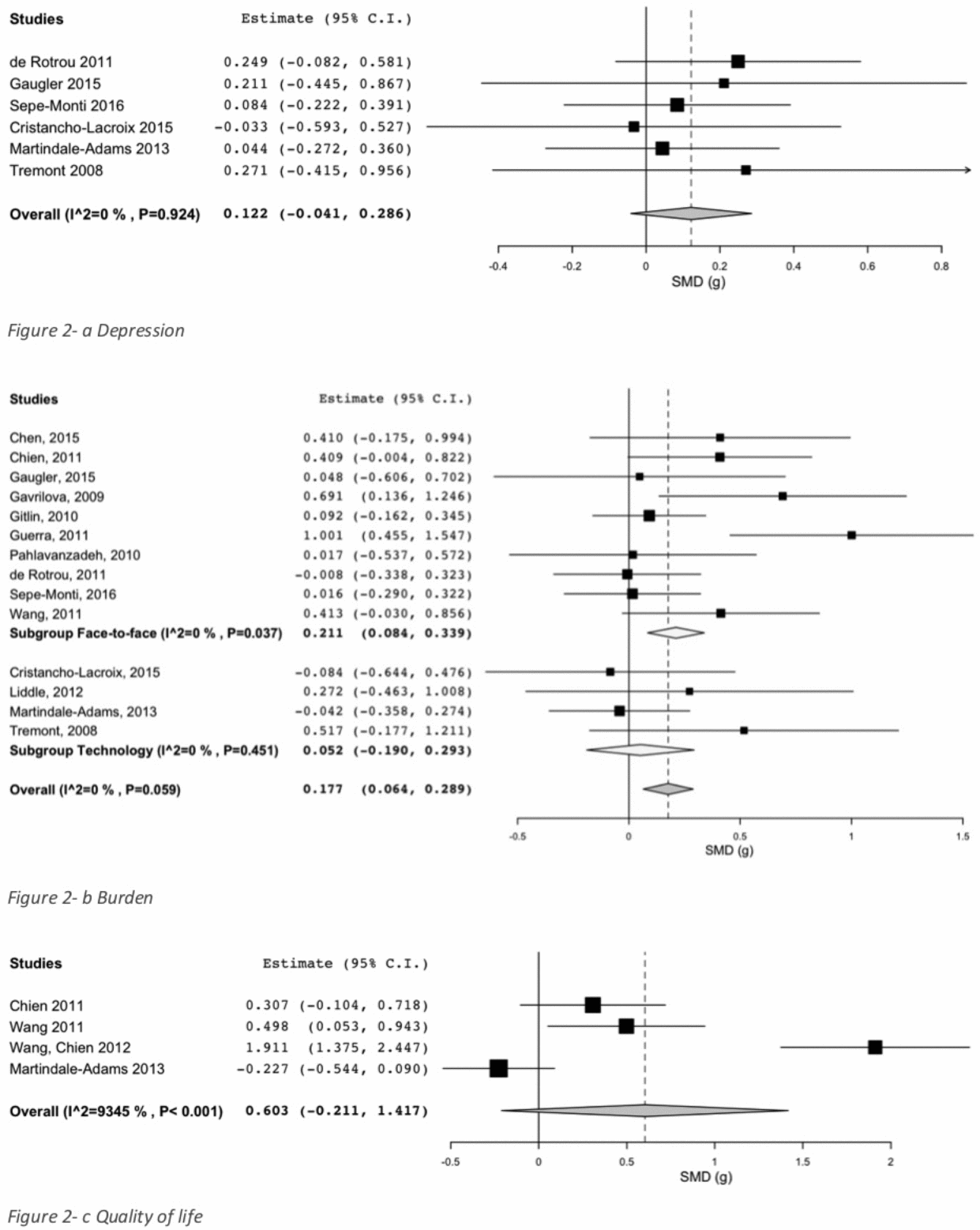
A fixed model was used to evaluate the efficacy of interventions on depression and burden as heterogeneity was not significant. The pooled data revealed no significant effect on depression (g = 0.12, p = 0.14; 95% CI = −0.04 to 0.29 (Figure 2(a)). An overall effect size on burden was small (g = 0.18, p < 0.01; 95% CI = 0.06–0.29 (Figure 2(b)). A random effect model was used for QoL as there was statistically significant high heterogeneity between study effect sizes (Q (3) = 45.81, p < 0.01; I2 = 93.45). The pooled data revealed no significant effect on QoL (g = 0.60, p = 0.15; 95% CI = −0.21 to 1.42 (Figure 2(c)).
Effect sizes (Hedge's g) derived from studies examining the efficacy of psychoeducational skill building interventions. (a) Depression. (b) Burden. (c) Quality of life.

CBT-based psychotherapeutic interventions
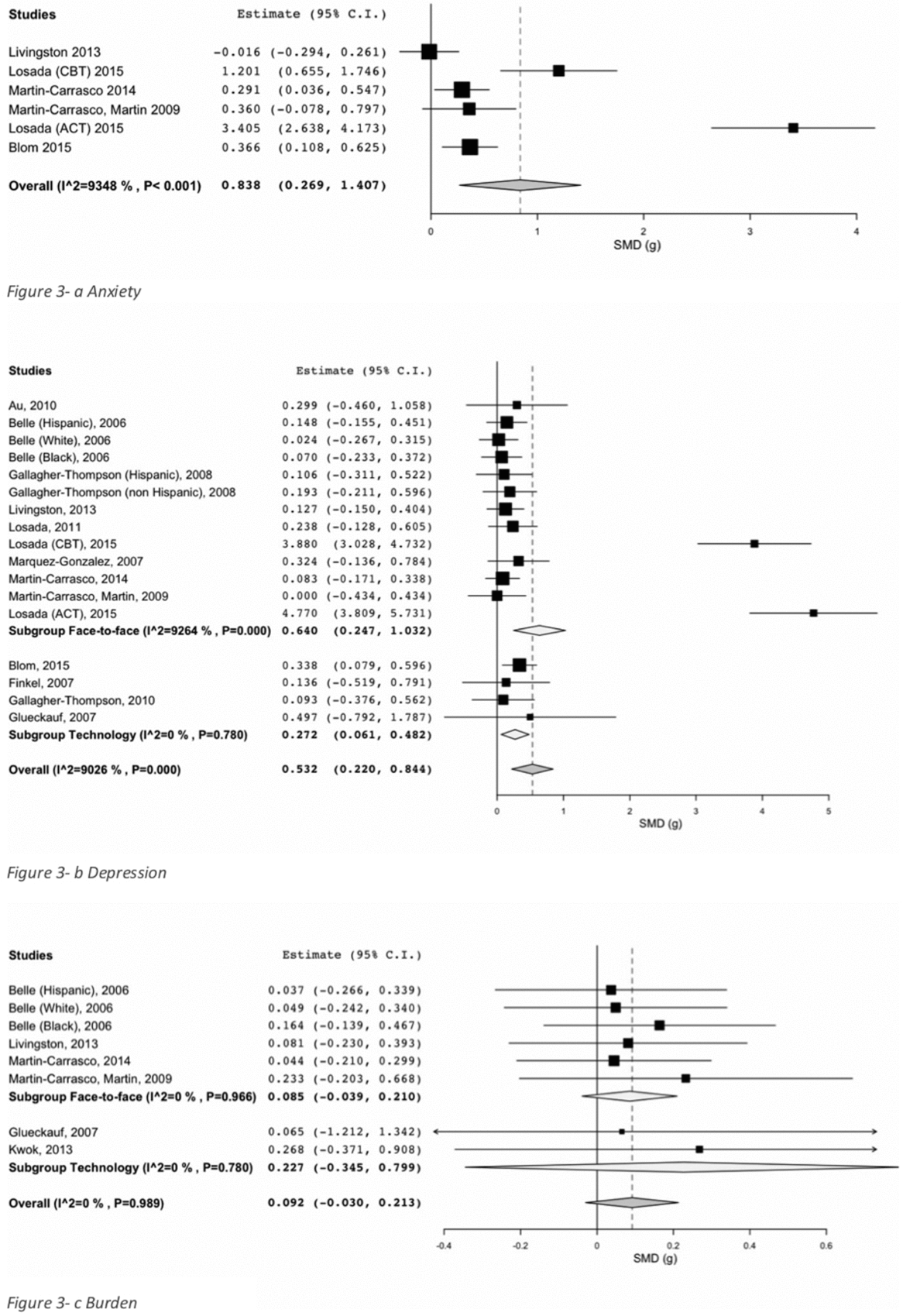
A random effect model was used for anxiety and depression as there was statistically significant high heterogeneity between study effect sizes. An overall effect size for anxiety was large (g = 0.84, p < 0.01; 95% CI = 0.27–1.41 (Figure 3(a)). There was high heterogeneity between study effect sizes (Q (5) = 76.72, p < 0.01; I2 = 93.48). The results of a leave-one-out meta-analysis showed that the study that used ACT (Losada et al., Reference Losada2015) had a large impact on the overall effect size. If this study was excluded, the effect size for anxiety would decrease from 0.84 to 0.38. An overall effect size for depression was moderate (g = 0.53, p < 0.01; 95% CI = 0.22–0.84 (Figure 3(b)). High heterogeneity was observed among the studies (Q (16) = 164.213, p < 0.01; I2 = 90.26). The results of a leave-one-out meta-analysis showed that CBT and ACT studies extracted from a single trial (Losada et al., Reference Losada2015) had a large impact on the overall effect size. If these two studies were excluded, the effect size for depression would decrease from 0.53 to 0.15. A fixed model was used to evaluate the efficacy of interventions on burden as heterogeneity was not significant. The pooled data revealed no significant effect on burden (g = 0.09; 95% CI = −0.03–0.21, p = 0.14 (Figure 3(c)).
Effect sizes (Hedge's g) derived from studies examining the efficacy of CBT. (a) Anxiety. (b) Depression. (c) Burden.

Discussion
The current review found psychoeducation-skill building interventions to be an effective treatment for burden among dementia carers (g = 0.18). There was no significant heterogeneity among the studies suggesting that the observed effect sizes are likely to be robust. Results demonstrated no significant effect on depression and QoL which contradict the findings from the previous review (Pinquart and Sörensen, Reference Pinquart and Sörensen2006). This may be due to the limited number of studies that reported targeted outcomes, and thus the results need to be interpreted with caution.
The largest effect sizes were found for CBT psychotherapeutic interventions (anxiety g = 0.84; depression g = 0.53). However, greater heterogeneity was evident in the included studies indicating that these effect sizes may not be robust. The overall effect size for anxiety was larger than the effect size demonstrated in the recent review (Vernooij-Dassen et al., Reference Vernooij-Dassen, Draskovic, McCleery and Downs2011). A major difference between the data reported here is the inclusion of a modern CBT approach (ACT). Unlike the previous review that evaluated the efficacy of standard CBT approaches, the current review included both standard and modern CBT approaches. The current review showed that the effect size for anxiety would decrease from 0.84 to 0.38 if the study that utilized ACT (Losada et al., Reference Losada2015) was excluded from the sample. A recent review conducted by Collins and Kishita (Reference Collins and Kishita2018) has also demonstrated that mindfulness- and acceptance-based interventions are acceptable and beneficial for informal carers of people with dementia. These suggest that ACT may be a useful alternative for dementia carers experiencing high levels of anxiety. However, the results of the current review need to be interpreted with caution as there was only one RCT which utilized ACT. Similar to the previous review (Vernooij-Dassen et al., Reference Vernooij-Dassen, Draskovic, McCleery and Downs2011), the effect size for burden was not significant.
The current study highlighted areas that have improved in the last ten years and areas that still need improvement. First, the existing research on dementia carers is still largely focused on treating depression and burden and this trend has not changed substantially since earlier systematic reviews (Pinquart and Sörensen, Reference Pinquart and Sörensen2006; Gallagher-Thompson and Coon, Reference Gallagher-Thompson and Coon2007). Considering that anxiety disorders and anxiety symptoms may be the most common mental health problems among dementia family carers (Mahoney et al., Reference Mahoney, Regan, Katona and Livingston2005; Ostojic et al., Reference Ostojic, Vidovic, Bacekovic, Brecic and Jukic2014), current research may not reflect the needs of this group.
Second, QoL measures have been used more frequently in psychoeducation-skill building interventions compared to the early review (Pinquart and Sörensen, Reference Pinquart and Sörensen2006). In the current review, although the measure of burden was the most common outcome in this category, more than half of psychoeducational studies included a QoL measure. However, these studies used either the 12-Item Short Form Health Survey (Ware et al., Reference Ware, Kosinski and Keller1996) or the WHOQOL-BREF (Skevington et al., Reference Skevington, Lotfy, O'Connell and Group2004) to assess QoL of carers. In the area of care provision, such “health-related” or “generic” QoL measures (e.g. the assessment of mobility problems) may not be the most suitable to detect key areas of need for carers (Reed et al., Reference Reed2017). Instead, more recently developed specific measures of carer QoL such as the Carer Experience Scale (Al-Janabi et al., Reference Al-Janabi, Coast and Flynn2008) and the Care Related Quality of Life (CarerQol) (Brouwer et al., Reference Brouwer, van Exel, van Gorp and Redekop2006) (e.g. the assessment of activities outside caring, carer-recipient relationship) may be more appropriate as it can detect the broader impact of caring on a carers’ life (Jones et al., Reference Jones, Edwards and Hounsome2012).
Recently, increased attention has been given to outcome measures that can assess positive experiences in dementia caregiving such as self-efficacy, resilience, and rewards in carer intervention studies. It is recommended that future prospective studies in any of the intervention categories to investigate the efficacy of interventions on anxiety and carer-specific QoL as well as positive experience outcomes. However, although there are some robust positive measures in existence for dementia carers, the quality of many scales may not be ideal due to lack of reporting of their psychometric properties (Stansfeld et al., Reference Stansfeld, Stoner, Wenborn, Vernooij-Dassen, Moniz-Cook and Orrell2017). There is still work to be done to develop more high quality positive outcome measures for this population.
Third, the largest effect sizes were found for CBT based psychotherapeutic interventions, supporting previous findings (Pinquart and Sörensen, Reference Pinquart and Sörensen2006; Elvish et al., Reference Elvish, Lever, Johnstone, Cawley and Keady2013). In this category, the quality of treatment delivery was high across studies, all but one study used a treatment manual to train trainers and deliver the face-to-face intervention (90%), and clinical supervision was provided throughout the trial for 50% of studies that utilized the face-to-face approach (only 25% did so in the psychoeducation-skill building category). These factors may have contributed to the positive results.
The large effect size observed for anxiety was strongly influenced by one study that used ACT (Losada et al., Reference Losada2015). Over the last 25 years, mindfulness- and acceptance-based behavioral interventions have emerged as an evolution of the CBT tradition (Hayes et al., Reference Hayes, Follette and Linehan2004). Rather than addressing a specific symptom or disorder with an outcome-focused goal of symptom reduction, ACT aims to foster greater psychological flexibility in the face of challenges while optimizing active engagement in one's own life (i.e. the end result is greater life satisfaction in the face of a wide variety of realistic challenges) (Dindo et al., Reference Dindo, Liew and Arch2017). Future studies should examine the efficacy of modern CBT approaches such as ACT with dementia carers.
Interestingly, both CBT and ACT studies extracted from a single trial (Losada et al., Reference Losada2015) had a large impact on the overall effect size for depression. One possible contributing factor is that the protocol used in these two studies included the least number of intervention components (i.e. CBT and communication training only or ACT only) while the majority of included studies used the combination of three or more components. More research is needed to explore whether simpler focused interventions with fewer components are more effective when using CBT with dementia carers.
Fourth, the majority of identified studies were conducted in Western and Southern Europe or the United States. Although there were a few studies that directly addressed the effects of ethnic background on the efficacy of interventions (Belle et al., Reference Belle2006; Gallagher-Thompson et al., Reference Gallagher-Thompson, Gray, Dupart, Jimenez and Thompson2008), studies from Asian, African, and South American countries were scarce. Therefore, it is unclear how findings are generalizable across various culture as cultural beliefs play an important role, potentially, affecting the impact of interventions (Losada et al., Reference Losada2006; Montoro-Rodriguez and Gallagher-Thompson, Reference Montoro-Rodriguez and Gallagher-Thompson2009). This may be partly due to the fact that we limited our search to studies published in English. Therefore, the conclusion has to be drawn with greater caution.
On a related note, the majority of studies recruited carers of people with Alzheimer's disease or dementia in general. It has been found that frontotemporal dementia can lead to greater carer burden and depression than Alzheimer's disease (Mioshi et al., Reference Mioshi, Bristow, Cook and Hodges2009; Nunnemann et al., Reference Nunnemann, Kurz, Leucht and Diehl-Schmid2012), and lack of support is more concerning for these carers especially when behavioral symptoms are severe (Gorno-Tempini et al., Reference Gorno-Tempini2011; Rascovsky et al., Reference Rascovsky2011). The question remains whether observed positive effects can be generalized to carers of people with other types of dementias. These gaps in literature have not changed significantly over the last ten years.
Finally, the current review included both face-to-face and technology driven interventions. To accommodate the expected increased needs for the future, developing and maximizing the use of technology enabled care seems critically important. In the current review, the mode of delivery did not seem to affect the efficacy of interventions on emotional well-being. However, the average attrition rate of psychoeducation-skill building interventions was higher for the technology driven programs (23%) compared to the face-to-face programs (8.7%). This indicates that psychoeducation-skill building interventions may be more acceptable when delivered face-to-face over the short period (i.e. six or fewer sessions). Unlike psychoeducation-skill building interventions, the average attrition rate of CBT based interventions was relatively similar between two delivery modes (face-to-face 21.1%, technology 22.6%).
The current study has some methodological limitations. We did not contact the research team for missing information except for the data needed to calculate effect sizes. The main characteristics of studies were fully reported in the majority of studies as summarized in Tables 1 and 2. Some or all study characteristics related to adherence to treatment (e.g. assessment of treatment integrity, and supervision during the trial) were not reported in 77% of the studies. This raises questions regarding the quality of treatment used in identified studies. A literature search was conducted using four major electronic databases and no hand search was performed, which could have resulted in missing some relevant papers. Study quality was not assessed using a standardized tool, and only key potential moderator variables (e.g. randomization methods, type of data analysis, treatment adherence, and attrition rate) were evaluated.
Conclusion
Despite some methodological limitations, the updated evidence suggests that psychoeducation-skill building interventions delivered face-to-face can better impact on burden. Psychotherapeutic interventions underpinned by CBT models seem to demonstrate strong empirical support for treating anxiety and depression, and these effects seem not to be affected by the mode of delivery. A modern CBT approach (ACT) may be particularly beneficial for carers experiencing high levels of anxiety. Future research needs to explore (i) the efficacy of interventions on multiple clinical outcomes including anxiety, carer-specific QoL, and positive experiences, (ii) which combination of intervention components would have the most significant effects when using CBT, (iii) the efficacy of a modern CBT approach (ACT), and (iv) the generalization of treatment effects in different countries and carers of different types of dementia.
Conflict of interest declaration
None.
Description of authors’ roles
N. Kishita was principal investigator for the study. N. Kishita designed the study and developed the search protocol. N. Kishita, L. Hammond, and C. Dietrich carried out screening, selection, and data extraction. N. Kishita wrote the first draft of the paper, and L. Hammond and E. Mioshi contributed to the interpretation of results and refining of the paper. All authors have seen and approved the final draft.
Acknowledgments
NK was supported by funding from Norwich Consolidated Charities (NCC). EM was supported by funding from NCC and the Alzheimer's Society (AS-241). The authors are also thankful to Norfolk and Suffolk NHS Foundation Trust Research and Development Office for their support on the project through LH's time.
Supplementary material
To view supplementary material for this article, please visit https://doi.org/10.1017/S1041610218000947