Introduction
Antidepressants, while commonly used in the management of depression, are also used in the management of anxiety disorders, social phobias, obsessive-compulsive disorders, neuropathic pain, and urinary incontinence (Gardarsdottir et al., Reference Gardarsdottir, Heerdink, van Dijk and Egberts2007). Antidepressant use is common in Australia with around 24 million antidepressant prescriptions dispensed annually to an estimated 2 million individuals (Australian Government Department of Health, 2016). While antidepressants can be used for a range of indications, most commonly they are used in the management of depression with less than one-third of antidepressants used for indications other than depression (Gardarsdottir et al., Reference Gardarsdottir, Heerdink, van Dijk and Egberts2007). In the management of depression, antidepressants are recommended for a period of 9–12 months (World Health Organization, 2012) with continuation for at least 6 months after resolution of symptoms (Psychotropic Expert Group, 2013). There is good evidence regarding the efficacy of antidepressants for the management of major depression in adults and use of antidepressants for the management of depression has been associated with a significant reduction of disability and psychosocial impairment worldwide (Girardi et al., Reference Girardi2009). The effectiveness of antidepressants differs from person to person. Around 50% of individuals initiated on an antidepressant experience little or no response to initial treatment and for this group of individuals one option may be to switch to a different antidepressant agent (Thomas et al., Reference Thomas2013). Studies in general adult populations suggest that between 4% and 9% of antidepressant users switch medications at some point throughout their treatment (Claxton et al., Reference Claxton, Li and McKendrick2000; Alpert and Nierenberg, Reference Alpert and Nierenberg2002; Mullins et al., Reference Mullins, Shaya, Meng, Wang and Harrison2005; Mars et al., Reference Mars, Heron, Gunnell, Martin, Thomas and Kessler2017). The extent to which antidepressant switching occurs among older populations is unknown.
Switching between antidepressants is complex and depends on the pharmacological and pharmacokinetic profile of the antidepressant in use, as well as that of the antidepressant with which it will be replaced. With cessation of any antidepressant, there is a concern regarding antidepressant withdrawal. Antidepressant discontinuation syndrome (ADS) is estimated to affect 20% of individuals following abrupt cessation of antidepressant therapy. The signs and symptoms of antidepressant withdrawal syndrome include light-headedness, dizziness, headache, gastrointestinal disturbances, sensory disturbance, diaphoresis, lethargy, vivid dreams, and flu-like symptoms (Antai-Otong, Reference Antai-Otong2003; Warner et al., Reference Warner, Bobo, Warner, Reid and Rachal2006). The exact mechanism underlying ADS is unknown; however, it is hypothesized that a temporary serotonin deficiency, impacting other neurotransmitters, may be involved (Warner et al., Reference Warner, Bobo, Warner, Reid and Rachal2006). The duration of treatment and choice of individual antidepressant agent increase the risk of ADS. In older populations, the risk is further increased with age-related physiological changes, such as changes in distribution of body fat, declines and renal and hepatic function and increased sensitivity due to changes in neurotransmission, affecting the pharmacodynamics and pharmacokinetics of antidepressants (Sultana et al., Reference Sultana, Spina and Trifirò2015).
Switching antidepressants may also increase the risk of serotonin syndrome (Keks et al., Reference Keks, Hope and Keogh2016). Serotonin syndrome is a group of dose-related adverse effects due to increased serotonin concentrations in the central nervous system associated with the use of serotonergic medications (Buckley et al., Reference Buckley, Dawson and Isbister2014). Severe potentially fatal episodes of serotonin syndrome has been linked to stimulation of 5-hydroxytryptamine 2 (5-HT2) receptors where a number of antidepressant medications have actions (Buckley et al., Reference Buckley, Dawson and Isbister2014). Monoamine oxidase inhibitors, selective serotonin reuptake inhibitors (SSRIs), serotonin reuptake inhibitors, serotonin-noradrenaline reuptake inhibitors (SNRIs) and the tricyclic antidepressants (TCA) clomipramine, and imipramine have all been associated with moderate to severe serotonin toxicity (Buckley et al., Reference Buckley, Dawson and Isbister2014; Abadie et al., Reference Abadie, Rousseau, Logerot, Cottin, Montastruc and Montastruc2015). Analysis of serotonin syndrome cases from the French Pharmacovigilance database reported that 12.8% (n = 16/125) of reported verified cases of serotonin syndrome were associated with the use of concomitant antidepressants (Abadie et al., Reference Abadie, Rousseau, Logerot, Cottin, Montastruc and Montastruc2015).
In order to minimize the risks of ADS and serotonin syndrome, consideration should be given to the types of antidepressant being ceased and commenced in the switching process. The process of switching between antidepressants differs depending upon the therapeutic class to which they belong and may require a wash-out interval between use, tapering of one antidepressant before starting the second, cross-tapering where the dose of the existing antidepressant is gradually reduced and the dose of the new antidepressant gradually increased, or a direct switch where the existing antidepressant can be immediately stopped and the new antidepressant started. National and International guidance exists regarding switching of antidepressants (2017; Connolly and Thase, Reference Connolly and Thase2011; Best Practice Advocacy Centre NZ, 2012; BC Guidelines, 2013; Wiechers and Maust, Reference Wiechers and Maust2014; Taylor et al., Reference Taylor, Paton and Kapur2015; Keks et al., Reference Keks, Hope and Keogh2016) with consensus around recommendations regarding the switching process, however, it is not known how often this is followed in practice in older individuals. The aim of this study was to examine patterns of switching in a cohort of Australian aged care residents and to consider the extent to which switching is in accordance with national and international best practice.
Methods
Data source
A cohort study using pharmacy packaging records data of a unit dose supply system was conducted to examine antidepressant switching among residential aged care residents for the period 1 January 2008 to 30 September 2013. De-identified data from 6011 residents across 60 facilities relating to all medicines supplied weekly in dose administration aids were used. All medicines including those not physically packed in the dose administration aid were recorded in the dataset, thus the dataset provides a complete medication record for each resident which is updated weekly. The dataset records every time a medicine or dosage is changed and dosages and frequency records appear for each day enabling intended daily medication use to be assessed.
The data includes a unique resident identifier, gender, date of birth, date of death, medication brand and generic name, the duration of use of the medicine dispensed, strength, dose, dosage instructions, and pro re nata (prn) use.
Antidepressant medications
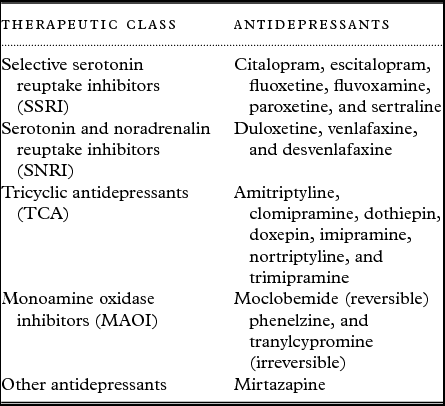
Twenty antidepressants, belonging to five different therapeutic classes were available in Australia at the time of the study (2017) and included in the analysis (Table 1).
Antidepressants medications and therapeutic class included in the study

Antidepressant switching
Incident antidepressant use was defined as the initial (index) dispensing for any antidepressant between 1 January 2009 and 30 September 2012 with no prior antidepressant use in the previous 12 months. Patients who received their index antidepressant within 30 days of admission to the RACF were excluded from the cohort, as prior antidepressant use could not be established.
Incident users were followed for 12 months and their patterns of antidepressant use considered as one of the following categories: the proportion who continued therapy with their initial antidepressant medicine, ceased therapy for 60 days or more, continued their initial antidepressant until death or switched to a different antidepressant.
Switch types were identified from the National and International guidelines and the percentage of switchers in each category for each therapeutic class assessed. The following switch types were considered:
(1) Direct switch: the current antidepressant (used at high dose) was stopped and a different one was started on the next day.
(2) Taper, immediate switch: the dose of the current antidepressant was tapered down and then the new antidepressant was started immediately after discontinuation of the first one. We included here cases when the first antidepressant was used at the lowest dose (i.e. dose reduction was not possible) and the new one was started immediately after its discontinuation.
(3) Taper, wash-out, switch: the dose of the first antidepressant was tapered down, followed by a wash-out interval (a gap without any antidepressant use) before the new one was started. We included here cases when the first antidepressant was used at the lowest dose (i.e. dose reduction was not possible) and the new one was started after a wash-out interval.
(4) Cross-taper: the dose of the first antidepressant was tapered down, and the dose of the new medication was simultaneously slowly increased (i.e. both medications were administered concurrently during the transition time).
Analysis
The type of switching from and to different antidepressant classes was also determined according to National and International recommendations for antidepressant switching. (Best Practice Advocacy Centre NZ, 2012; BC Guidelines, 2013; Taylor et al., Reference Taylor, Paton and Kapur2015; Keks et al., Reference Keks, Hope and Keogh2016).
Descriptive statistics including frequencies, means, and proportions are reported. Time to switching was determined using Kaplan–Meier survival analysis. All analyses were undertaken using SAS 9.4.
Results
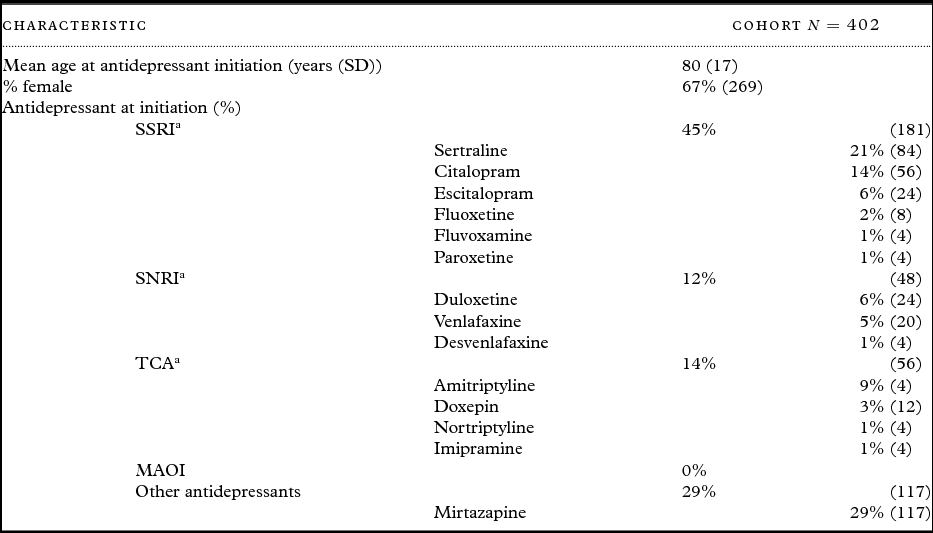
There were 402 patients who initiated an antidepressant medication between 1 January 2009 and 30 September 2012. The mean age at initiation was 80 years and two-thirds of those initiating antidepressants were women (Table 2).
Cohort characteristics and prevalence of antidepressant use. Data are presented as percentage (number) unless otherwise indicated
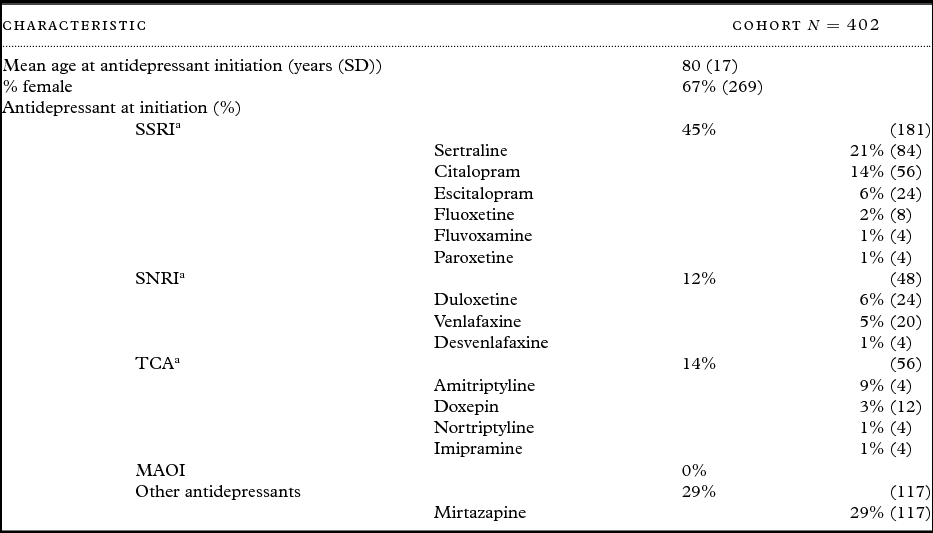
aSelective serotonin reuptake inhibitor (SSRI); Serotonin noradrenaline reuptake inhibitor (SNRI); Tricyclic antidepressant (TCA); Monoamine oxidase inhibitors (MAOI).
Antidepressant initiation
The most common therapeutic class initiated among residents was the SSRIs, followed by mirtazapine and TCAs (Table 2). Mirtazapine was the antidepressant most commonly used for initiation, followed by sertraline and citalopram. Almost one in ten residents commenced a tricyclic antidepressant. No residents in the cohort were using MAOIs during the study period.
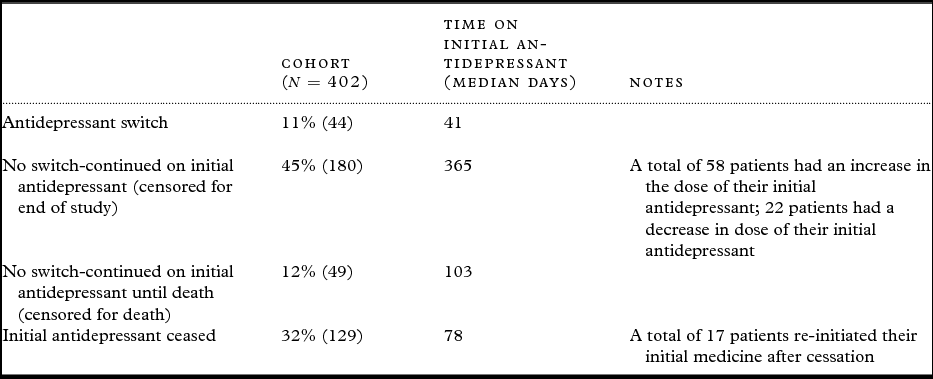
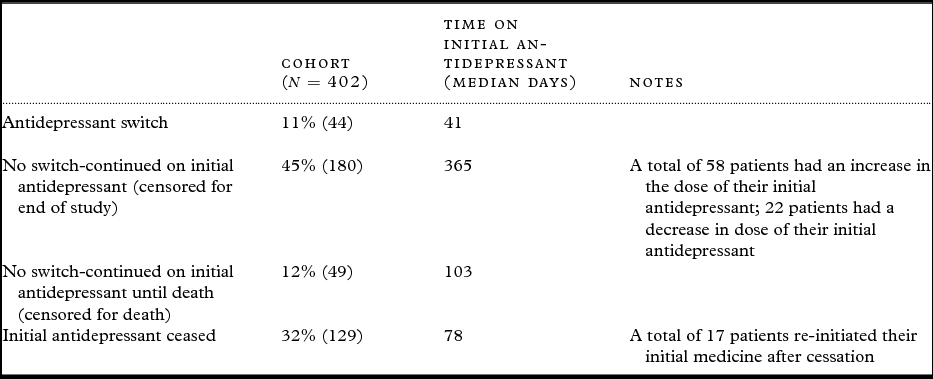
The majority of the cohort (45%) continued therapy with the index antidepressant for 12 months, with almost half requiring dose adjustment; 32% had a dose increase and another 12% had a dose decrease. Approximately one-third (32%) of the patients ceased their initial therapy in around six weeks and 12% of patients died while on the index therapy (Table 3).
Patterns of antidepressant use during the study period. Data are presented as percentage (number) unless otherwise indicated
Antidepressant switching
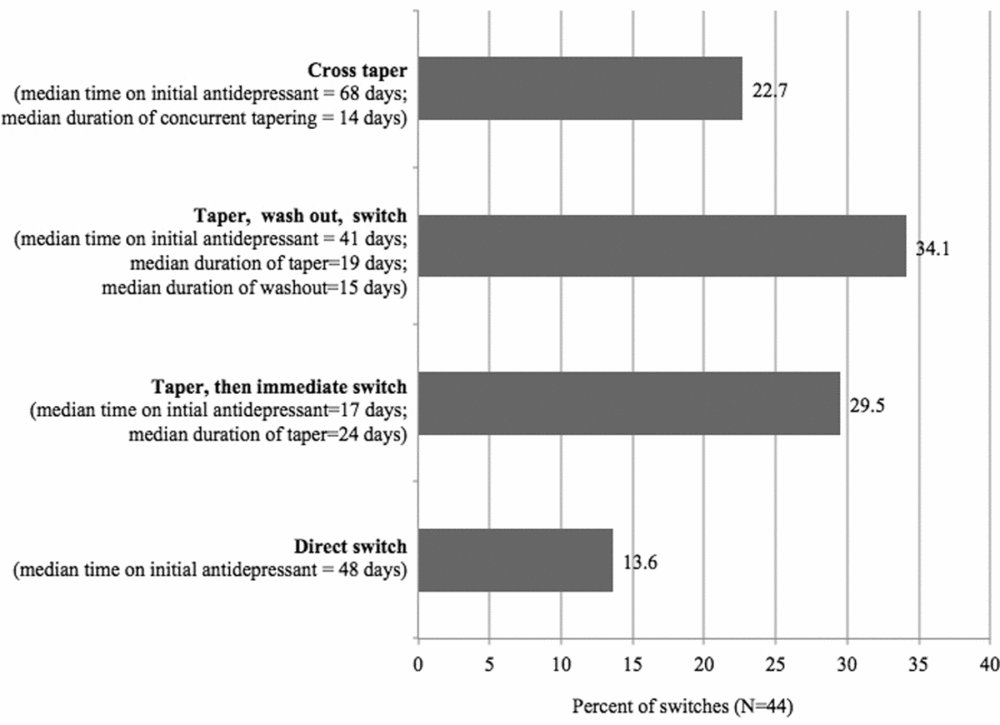
There were 44 switches, comprising 11% of all residents who initiated an antidepressant during the study period. Taper with wash out was the most common approach to switching (34%), followed by taper and immediate switch (30%) (Figure 1).
Switch type and time to switching (N = 44).

The median wash-out period was 15 days. The median tapering period was higher for those who tapered and then had an immediate switch prior to a wash-out period (24 days) than for those who tapered prior to a wash-out period (19 days) or those who switched via cross-taper (14 days).
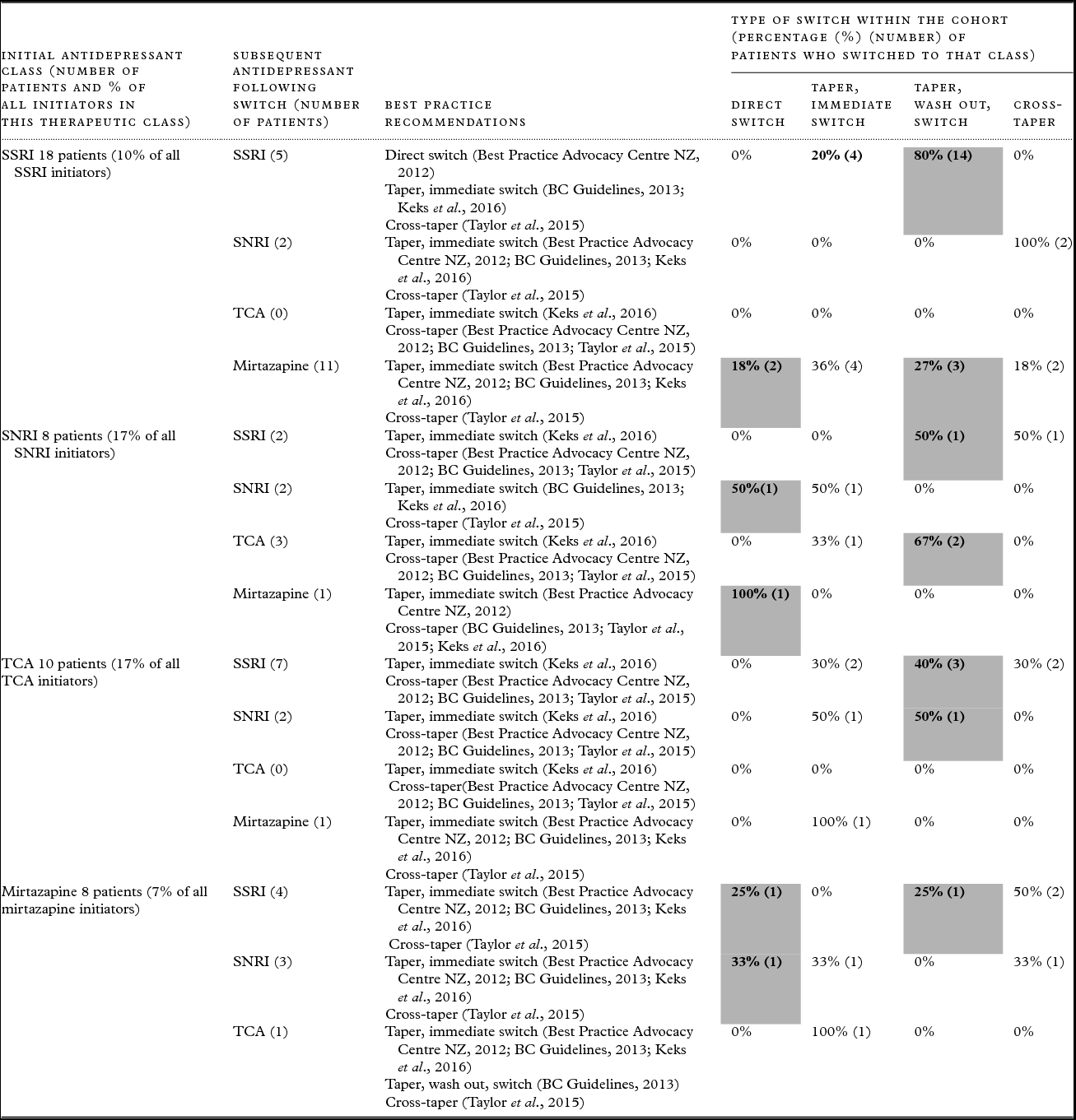
SNRI and TCA initiators were most likely to switch antidepressants (17%) and those initiated on mirtazapine were least likely to switch (Table 3). The frequency of switches by class of antidepressant is presented in Table 4. In our cohort, no residents were switched to or from fluoxetine.
Switch type and guideline recommendations by antidepressant therapeutic class. Data are presented as percentage (number) unless otherwise indicated

Note: Grey cells with bold text denote switches not in accordance with best practice recommendations.
Across all therapeutic groups, the most common switching strategy was taper with wash-out interval (n = 15, 34%). Taper of the initial antidepressant and then immediate switch to the second agent accounted for 30%, cross-tapering accounted for 23%, and direct switching accounted for 13% of all switches.
Almost half of the switches (n = 21, 48% of all switches) were not implemented according to guideline recommendations (Table 3). Direct switch and taper followed by wash out and switch, accounted for all of the inappropriate switching (29% and 71%, respectfully), with half occurring to mirtazapine (N = 7) or from mirtazapine (N = 3).
Discussion
We found that antidepressant switching was relatively uncommon in a cohort of older individuals in residential aged care, with 11% of residents who were initiated on antidepressant switched to an alternative antidepressant to their initial antidepressant within 12 months of commencing treatment. Switching between antidepressants was generally conducted using one of four switching strategies, direct switch, taper then immediate switch, taper, wash out then switch, or cross-taper depending on the pharmacological characteristics of the individuals antidepressants involved in the switch. Despite best practice recommendations to guide switching strategy, one in two older individuals in our study who switched antidepressants was switched in a manner inconsistent with best practice recommendations potentially increasing the risk of withdrawal or serotonin syndrome.
Our overall switch rate (11%) is comparable to that reported in other studies, despite our population being older long-term care residents. A US study analyzing data from a large administrative dataset between 2001 and 2006 reported that 8.6% of patients switched antidepressants during the first 90 days of treatment (Marcus et al., Reference Marcus, Hassan and Olfson2009). A recent UK study using the clinical practice research datalink of antidepressant switching among 262,844 primary care patients initiated on an antidepressant found that 9.3% of individuals switched to a different antidepressant and the most switches occurred within eight weeks of commencement of the initial agent (Abadie et al., Reference Abadie, Rousseau, Logerot, Cottin, Montastruc and Montastruc2015; Mars et al., Reference Mars, Heron, Gunnell, Martin, Thomas and Kessler2017). In our study, switching, while relatively low, was the highest for those residents initiated on a SNRI (17%) and TCA (17%) and the lowest for those initiated on mirtazapine (7%). Our switch rate of 10% for individuals initiated on an SSRI was considerably higher than that observed in both the USA (3.3% switch rate) (Mullins et al., Reference Mullins, Shaya, Meng, Wang and Harrison2005) and the United Kingdom (3.8% switch rate) (Claxton et al., Reference Claxton, Li and McKendrick2000); however, those studies included general primary care patients and thus may have included younger healthier individuals than those included in our aged care cohort. Given that previous work estimates that up to 50% of individuals initiated on an antidepressant experience little or no response to initial treatment (Thomas et al., Reference Thomas2013) the low rate of switching observed across multiple studies, highlights the need to better understand management of depression among those older populations who do not respond to initial treatment. (Zarate, Reference Zarate2017).
One in two individuals, who switched antidepressants in our study, switched in a manner inconsistent with current best practice recommendations. Approximately one-third of the non-recommended switches directly switched agents, rather than using the taper and switch or cross-taper strategies and two-thirds were tapered, then had a wash-out period to the new antidepressant being initiated. The dose response nature of serotonin syndrome may indicate that direct switch of antidepressants may potentially increase the risk of serotonin syndrome, especially if the initial agent has a long duration of action. A direct switch with immediate cessation of the initial agent in place of strategies where the initial agent is tapered prior to commencement of the alternative antidepressant, may also increase the risk of ADS, depending on the two antidepressants involved (Wilson and Lader, Reference Wilson and Lader2015). Other factors increasing the risk of ADS include the duration of treatment of the initial agent as well as the half-life of the initial agent (Wilson and Lader, Reference Wilson and Lader2015). Taper and wash out prior to commencing an alternative antidepressant is generally recommended when the first antidepressant should be eliminated from the body before the new one is started due to safety reasons such as an increased risk of serotonin syndrome (Western Australia Drug and Therapeutics Committee, 2013; Keks et al., Reference Keks, Hope and Keogh2016). This strategy also reduces the risks of ADS while a wash-out period of an adequate length allows the initial serum levels of the initial agent to reduce or the initial agent to be completely removed prior to commencement of the new antidepressant (Connolly and Thase, Reference Connolly and Thase2011). However, it will increase the time before a therapeutic response it observed, which may be clinically significant for many patients with depression.
Two-thirds of those with a non-recommended switching strategy were switching using taper and wash out prior to commencing an alternative antidepressant. This represents a conservative approach with the potential delayed onset of action of the alternative agent being the primary concern Taper and wash out prior to switching was the most common strategy used when changing from an initial SSRI. Concerns around the risk of serotonin syndrome, as a consequence of markedly increased serotonin levels, may be one factor underlying this practice (Keks et al., Reference Keks, Hope and Keogh2016). The number of reported cases of serotonin syndrome has increased due to the widespread use of serotonergic drugs and can be life-threatening (Hall and Buckley, Reference Hall and Buckley2003; Volpi-Abadie et al., Reference Volpi-Abadie, Kaye and Kaye2013; Keks et al., Reference Keks, Hope and Keogh2016). In the French Pharmacovigilance database study, 16 out of 125 reports of life-threatening or fatal serotonin syndrome associated with use of multiple antidepressants involved an SSRI (Abadie et al., Reference Abadie, Rousseau, Logerot, Cottin, Montastruc and Montastruc2015). Despite wash-out periods being recommended to avoid risk of serotonin toxicity when switching between serotonergic agents (Hall and Buckley, Reference Hall and Buckley2003; Isbister et al., Reference Isbister, Bowe, Dawson and Whyte2004), wash-out periods were not recommended when switching from an SSRI in any of the antidepressant guidance documents included in our study (Best Practice Advocacy Centre NZ, 2012; BC Guidelines, 2013; Taylor et al., Reference Taylor, Paton and Kapur2015; Keks et al., Reference Keks, Hope and Keogh2016).
One quarter of all switches identified in our cohort involved cross-tapering, mainly when switching between mirtazapine and an SSRI or SNRI. Cross-tapering has the advantage that the patient has no break in therapy; however, the simultaneous use of two antidepressants may lead to drug interactions and increased adverse effects, including serotonin syndrome from combined medications (Hall and Buckley, Reference Hall and Buckley2003; Western Australia Drug and Therapeutics Committee, 2013). Antidepressant switches involving mirtazapine, SSRIs, and SNRIs have been associated with serotonin toxicity (Connolly and Thase, Reference Connolly and Thase2011; Keks et al., Reference Keks, Hope and Keogh2016) and caution may be needed.
A strength of this study was that it used medication packing supply data for a unit dose supply system for residents living in 60 residential aged care facilities in NSW, Australia. Medicines were supplied weekly to the facilities and every change in medication use results in the creation of a new packaging record, thus the data are responsive to changes such as antidepressant switching. The extent to which medicines were not consumed once delivered was not known; however, the medicine record provides sufficient detail to determine tapering and wash-out periods for as little as one to two days. While there are a number of advantages such as the size and completeness of the records used, one limitation of this study is that the indication for which the antidepressant was being used was unknown. Antidepressants may be used for a variety of indications. Internationally, while the majority of antidepressants are used for the management of depression they may also be used to manage pain, anxiety, sleep disorders, and the doses and agents used vary considerably across indications (Noordam et al., Reference Noordam2015; Australian Medicines Handbook, 2017). However, while the indication for use within this study was unknown, the requirement for safe switching strategies is unchanged. While the initial dataset was large including medication profiles for over 6,000 nursing home residents, antidepressant switching had a relatively low occurrence, and as a result, we only had 44 switchers included in our population. It is not known to what extent these results can be extrapolated to the general community dwelling older population.
Conclusion
This study found that 11% of RACF residents who were initiated on an antidepressant medication switched to another antidepressant within six weeks. The highest rates of switching were for those initiated on SNRIs (17%) and TCA (17%), followed by SSRIs (10%). One-third of all switches employed taper followed by immediate switch, another third employed taper with a wash-out interval, and one-fifth employed a cross-tapering strategy. Almost half of the switches were not in accord with National or International recommendations regarding antidepressant switching with some switch strategies increasing the risk of harm among older antidepressant users.
Conflict of interest
Professor Elizabeth Roughhead is supported by a NHMRC Senior Principle Research Fellowship. Dr Lisa Pont is supported by a NHRMC Translating Research into Practice Fellowship.
Description of authors’ roles
E. Roughead and S. Gadzhanova designed the study. S. Gadhanova was responsible for the statistical design of the study and for carrying out the statistical analysis. E. Roughead, S. Gadzhanova, and L. Pont interpreted the results. L. Pont and S. Gadhanova drafted the manuscript. All authors critically reviewed and approved the final manuscript.
Acknowledgment
We acknowledge the contribution of Mr Gerard Stevens OA, Managing Director of Webstercare for his contribution in terms of data collection and provision.