Introduction
Poultry genetics has entered a new era with the completion of a century of investigative studies in chicken genetics, sequencing of the chicken genome and application of molecular genetic information in commercial breeding programmes. Chicken was the first animal species in which Mendelian inheritance was demonstrated. A century later, the chicken was the first among farm animals to have its genome sequenced. The last several decades have seen a dramatic transition in poultry genetics, both in commercial breeding and research focus. Industrial production has facilitated replacement of the dual-purpose chicken by stocks bred specifically for meat or eggs. Today's broiler industry has its origin in the seasonal rearing of cockerels of egg type or dual-purpose breeds for meat. With increasing demand for young chickens, breeds have been selected for rapid weight gain, efficient feed conversion and high yield of valuable carcass parts (Eitan and Soller, Reference EITAN and SOLLER2002).
A number of broiler breeding companies have been in existence since the late 1940s and have contributed immensely to genetic improvements in broilers over the years. These companies are mostly located in USA (North America) and Europe (England). The three major broiler breeding companies in the world are Aviagen (with Ross, Arbor Acres and Indian River), Tyson (with Cobb-Vantress and Avian) and Hubbard-ISA (with Hubbard and Shaver) (Flock and Preisinger, Reference FLOCK and PREISINGER2002). The structure of all breeder companies is quite standard, with the pure line elite stock in relatively small populations located at the apex and large numbers of broilers at the base. The mainline pedigree populations, categorised into male and female lines, undergo genetic selection to obtain incremental improvements in the major economic traits. The major traits are improved by intensive selection (high intensity), which is regenerated from the best families. Minor traits such as fertility, hatchability and liveability are improved by eliminating the few worst families (low intensity) (Pollock, Reference POLLOCK1999).
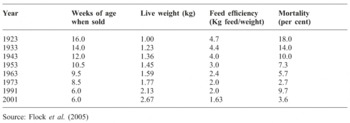
Geneticists employed by the breeding companies have greatly increased growth rate and have reduced feed conversion and age to slaughter in commercial broilers. Performance comparisons in the United States of America from 1923 to 2001 (Gordon, Reference GORDON1974; Havenstein et al., Reference HAVENSTEIN, FERKET, SCHEIDELER and LARSON1994a; Havenstein et al., Reference HAVENSTEIN, FERKET and QURESHI2003a) is given in Table 1. The modern broilers reached almost twice the live weight on 50% less feed when compared to their performance in 1953. The greater part of these changes have resulted from genetic improvement; 85.3% for growth rate, 91.3% for carcass yield and 62.5% for feed conversion with remainder being due to diet (Havenstein et al., Reference HAVENSTEIN, FERKET, SCHEIDELER and LARSON1994a, b). The decrease in mortality over the years (1923 to 2001) is mainly due to better control of diseases and improved husbandry. Family selection for liveability and eradication of egg transmitted diseases at the pedigree level may have contributed to the reduction of mortality in the past, but the main contributing factors were probably better general hygiene, vaccination against common field infections, experience of successful farmers and reduced disease risk during a shorter life (Flock et al., Reference FLOCK, LAUGHLIN and BENTLEY2005).
Performance of the broilers from 1923 to 2001.

Source: Flock et al. (Reference FLOCK, LAUGHLIN and BENTLEY2005)
The companies have utilised different breeding and selection technologies at different period of time for the genetic improvement of poultry. Improved broiler growth (body weight) has consistently been the prime selection trait over the decades, because of its ease of selection, high heritability and large impact on total meat production cost. There has been increasing emphasis on yields of white (breast) meat, because consumers increasingly favoured this portion. There was also a growing emphasis on efficiency factors, most notably feed conversion efficiency of broiler growth (Arthur and Albers, Reference ARTHUR and ALBERS2003). Reviews on broiler breeding strategies have been published by various authors (Decuypere et al., Reference DECUYPERE, BUYSE and BUYS2000; Bradshaw et al., Reference BRADSHAW, KIRKDEN and BROOM2002; Le Bihan-Duval, Reference LE BIHAN-DUVAL2004; Hocking, Reference HOCKING2005). However, this review aims to give an overall view of the various strategies followed for improving the traits related to broiler production along with details on the use of molecular genetics.
Selection strategies for growth and carcass traits
body weight and growth
Establishing a proper breeding objective is only the first step in developing a viable breeding programme. The primary breeding industry typically follows one of the three basic approaches in selecting for growth rate.
i. Selection at a commercial age: This is the most common approach, where pure lines are selected at an age that corresponds with market age under this system.
ii. Selection at commercial weight: In this approach the pure lines are selected at a weight that matches market weight and the age at selection becomes progressively earlier as growth potential increases. It is the most common strategy employed in industrial broiler breeding.
iii. Multi-stage selection: It represents a practical compromise between selection at a commercial age and selection at a commercial weight (Emmerson, Reference EMMERSON2003).
breast muscle weight and meat quality
Breast muscle growth
The poultry industry has traditionally evaluated broiler performance based on feed conversion and body weight gain. However, strong consumer demand for breast meat has increased its value to the industry and led poultry producers to look for ways to optimise breast muscle growth. For many producers, breast yield is considered as important as growth rate and feed conversion. The breast meat of chicken commands a high price relative to other cuts because of its low fat content and tenderness. The genetic approach has been hampered in the past because of lack of an accurate, non-destructive measure of breast meat yield in live animals. The most direct method of selection is to utilise yield data from pedigree siblings to identify the birds with superior yield potential (Pym et al., Reference PYM, POPOVIC and BODERO1998; Emmerson, Reference EMMERSON2003).
Schmidt et al. (Reference SCHMIDT, FIGUEIREDO, LEDUR, DE AVILA and SCHEUERMANN2006) studied the effect of selection for breast size in broilers. Breast muscle measurements (length, maximum and minimum width) were taken in live birds, using a pachymeter, at 42 days of age, together with body weight. Selection for higher breast area resulted in a genetic gain of 277% per generation, whilst keeping the body weight in the range of 2400 to 2450 g and feed conversion and fertility in the actual levels.
More accurate, non-destructive measurements have now been identified and used as selection tools. Initially, thickness of the breast muscle was measured using needle catheters, but more recently ultrasonic apparatus has been employed. Expensive but very accurate methods to assess the body composition of live birds include the Computed Tomography scan (CT scan), Magnetic Resonance Imaging (MRI) and Echography (Grashorn, Reference GRASHORN1996; Glasbey and Robinson, Reference GLASBEY and ROBINSON2002). Ultrasound technology represents one potential strategy for the improvement of breast meat yield. Komender and Grashorn (Reference KOMENDER and GRASHORN1990) reported on the use of real-time ultrasound scanning as a means of measuring breast muscle depth and obtained a correlation of 0.72 between breast muscle depth and breast muscle weight. Pym et al. (Reference PYM, POPOVIC and BODERO1998) stated that selection based on prediction equations incorporating live weight and ultrasound measures of breast muscle viz. depth, width and length might be effective in assessing breast meat yield in poultry. The accuracy of the various indirect carcass methods is variable, with MRI being more accurate method (Scollan et al., Reference SCOLLAN, L.J., LIU, ZUBAIR, LEESON and MCBRIDE1998) in comparison with ultrasound. Zerehdaran et al. (Reference ZEREHDARAN, VEREIJKEN, VAN ARENDONK, BOVENHUIS and VAN DER WAAIJ2005) studied the possibility of using indirect carcass measurement (breast muscle thickness) within a broiler breeding programme. When indirect carcass measurements were applied to male selection, the response for breast meat yield increased by 28.4%. Using a combination of direct and indirect carcass measurements resulted in increase of breast meat yield of 39.1%. Application of indirect carcass measurements in both male and female selection increased response for breast meat percentage by 66.2%.
When using direct measurements, birds are selected based on information obtained from full-siblings or half-siblings (referred to as ‘sibs’ in breeding parlance). The major drawback of the sib selection is that it increases the rate of inbreeding. Conversely, indirect carcass measurements provide performance information for selection of candidates, which increases the accuracy of selection and consequently improves the genetic gain. It also reduces the rate of inbreeding per generation, which is desirable for long-term selection and robustness of the strain.
Meat quality
The increasing importance of technological quality of the meat (performance in storage or during further processing) has highlighted the need for research work on the genetic control of meat characteristics, which has been seldom studied in poultry. In common with other species, variations in the rate and extent of rigor mortis markedly affect the technological quality of poultry meat. Muscle pH has been associated with other meat quality attributes such as colour, water holding capacity, tenderness, juiciness or shelf life. High final pH produces dark, firm and dry meat (DFD) with poor storage quality. Low final pH produces meat with improved shelf-life but produces pale, soft and exudative (PSE) meat. The fat influences the technological quality of the meat and also consumer preferred meat with less fat.
Le Bihan-Duval et al. (Reference LE BIHAN-DUVAL, MIGNON-GRASTEAU, MILLET and BEAUMONT1998) reported the heritability of breast meat yield and abdominal fat yield as 0.63 and 0.65, respectively. The genetic correlation between the breast yield and abdominal fat yield was –0.15 and between body weight and abdominal fat yield was –0.12. This indicated that the selection for breast yield does not drastically reduce the abdominal fat yield. Le Bihan-Duval et al. (Reference LE BIHAN-DUVAL, MILLET and REMIGNON1999) reported heritability estimates of 0.49 for ultimate pH, 0.75 for lightness, 0.81 for redness and 0.64 for yellowness. A significant negative genetic correlation (-0.65) was found between the ultimate pH and light reflection. In another study, Le Bihan-Duval et al. (Reference LE BIHAN-DUVAL, BERRI, BAEZA E, MILLET and BEAUMONT2001) reported that the heritability estimates for pH15 min, pH U, light reflection, redness and yellowness were 0.49 ± 0.01, 0.35 ± 0.03, 0.50 ± 0.03, 0.57 ± 0.02 and 0.55 ± 0.04, respectively. They also reported that the ultimate pH (pH U) of the meat was genetically very strongly related to its colour (-0.91± 0.02) and water-holding capacity (-0.83 ± 0.04) and suggested that selection for ultimate pH could be exploited to prevent increased incidence of pale and exudative meat.
Body weight and breast yield were poorly related with the degree of pH drop at slaughter, while moderate negative genetic correlations were observed with the redness and yellowness of the meat. This suggested that selection for growth and muscle development would not alter meat pH but could slowly modify the colour by decreasing redness and yellowness indicators. This was confirmed by Berri et al. (Reference BERRI, WACRENIER, MILLET and LE BIHAN-DUVAL2001) who reported that the loss in colour intensity was likely to be due to decrease in the muscle haeminic pigment content in selected birds. They reported that birds from the experimental selected line (for body weight and breast yield) exhibited similar body weight but higher breast yield (+21%) and lower abdominal fat percentage (-25%) than the experimental control line (Table 2).
Breast weight and abdominal fat weight of birds in experimental control and selected line.

Source: Berri et al. (Reference BERRI, WACRENIER, MILLET and LE BIHAN-DUVAL2001)
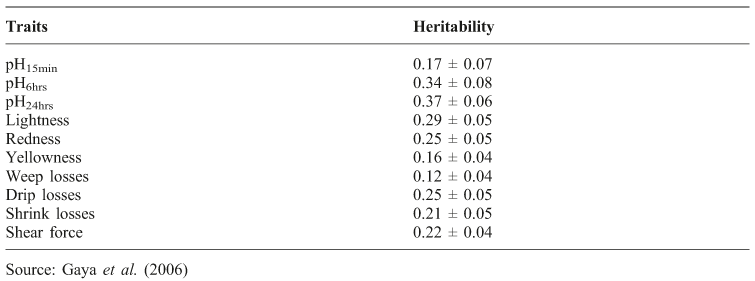
Gaya et al. (Reference GAYA, FERRAZ, BALIEIRO, MATTOS, COSTA, MICHELAN FILHO, FELÍCIO, ROSA, MOURÃO, ELER, SILVA, QUEIRÓZ, AFÁZ, LONGO, GARAVAZO and NAKASHIMA2006) reported heritability estimates for different traits associated with technological quality of the meat (Table 3). The heritability estimates indicated genetic factors in the expression of the majority of the traits involved in broiler meat quality, namely for pH6hrs, pH24hrs and colour intensity. As direct selection would be effective in improving these traits, they could be used as selection criteria in the broiler breeding programme for the improvement of technological quality of the meat.
Heritability estimates for traits related to technological quality of meat.
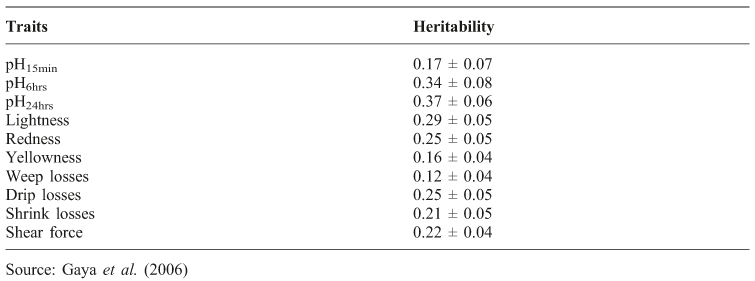
According to the parameters obtained currently, the genetic route could efficiently improve the technological quality of meat. Indeed, heritability of quality characteristics obtained in the chicken under experimental conditions is high. At the same time, the estimated correlations do not show any genetic antagonism between the birds’ performance and the quality of their meat. The ultimate pH could be a relevant criterion of selection because of its strong relationship to the colour, water-holding capacity or the texture of the meat (Le Bihan-Duval, Reference LE BIHAN-DUVAL2004).
Genetic strategies to alleviate metabolic and physiological disorders in broilers
Increasing productive performance by selection has been linked to the increase in metabolic and physiological disorders observed in commercial flocks.
ascites and selection strategies
Ascites (water belly) is a growth-related disorder of broilers. This functional hypoxia is caused by the high oxygen requirement for rapid growth and the inability of the heart and lungs to deliver sufficient oxygen to tissue and occurs more often in fast growing birds at low temperature and at high altitude. This syndrome has been a source of concern to the poultry industry for the last decades. It has been estimated that ascites accounts for losses of about US$1 billion annually around the world and for over 25% of broiler losses (Maxwell and Robertson, Reference MAXWELL and ROBERTSON1997; Navarro et al., Reference NAVARRO, KOERHUIS, CHATZIPLIS, VISSCHER and HALEY2002).
Factors responsible for ascites in birds
i. The relative heart and lung sizes have decreased with genetic selection for growth rate.
ii. Oxygen requirement is influenced by feed conversion. Improved feed efficiency results in decreased maintenance of metabolic rate, which may not be able to provide adequate oxygen delivery (Decuypere et al., Reference DECUYPERE, BUYSE and BUYS2000). Broilers selected for low oxygen consumption exhibit superior feed conversion efficiency (Steward et al., Reference STEWARD, MUIR, BEGIN and JOHNSON1980) and low thyroid activity (Buys et al., Reference BUYS, SCHEELE, KWAKERNAK and DECUYPERE1999).
iii. Because the thyroid regulates metabolic rate, early selection for FCR results in low thyroid activity, low oxygen consumption and decreased thermeogenesis, leading to anoxia, heart failure and ascites (Yin and Dingle, Reference YIN and DINGLE2000; Decuypere et al., Reference DECUYPERE, BUYSE and BUYS2000; Luger et al., Reference LUGER, SHINDER, RZEPAKOVSKY, RUSAL and YADAV2001).
Traits related to ascites
These include an invasive index, which requires birds to be euthanized for evaluation. The different invasive indices are as follows:
• Hypertrophy of the smooth muscles of the pulmonary arterioles.
• Right ventricle to total ventricular ratio (RV: TV): An increase in ratio is due to right ventricular hypertrophy as a result of workload.
• Lung capacity.
• Lung length and width (Julian, Reference JULIAN1989; Lubritz et al., Reference LUBRITZ, SMITH and MCPHESON1995; Owen et al., Reference OWEN, WIDERMAN, LEACH, COWEN, DUNN and FORD1995; Wideman et al., Reference WIDEMAN, KIRBY, TAVKETT, MARSON and MCNEW1996).
Minimally invasive indices, measured in live animals, include:
• Electrocardiography.
• Pulmonary arterial pressure.
• Pulse oximetry: Measures saturation of haemoglobin thereby hypoxaemia can be detected.
• Haematocrit measurements.
• Packed cell volume (Wideman and Kirby, 1996; Wideman et al., Reference WIDEMAN, KIRBY, TAVKETT, MARSON and MCNEW1996; Olkowski et al., Reference OLKOWSKI, CLASSEN, RIDDELL and BENNETT1997).
Several studies made on the above traits reported moderate to high heritability estimates and recommended that these traits might be used as selection criteria to reduce the incidence of ascites in modern broilers.
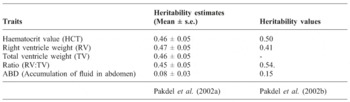
The heritability estimates reported by Pakdel et al. (2002a, b) are presented in Table 4. Ascites is defined as accumulation of fluid in the abdominal cavity and therefore is best described by the trait ABD. ABD (i.e., accumulation of fluid in abdominal cavity) was a low heritable trait. The genetic correlation between ABD and mortality was highly positive (+0.96). The genetic correlations between ABD and HCT, RV, TV and the ratio (RV: TV) were 0.66 ± 0.12, 0.74 ± 0.09, 0.22 ± 0.16 and 0.82 ± 0.07, respectively. They concluded that the ratio is a good indicator of ascites. It is similar to the earlier report of Lubritz et al. (Reference LUBRITZ, SMITH and MCPHESON1995), who also reported that the genetic correlation between ABD and ratio (RV: TV) ranged between 0.46 and 0.78.
Heritability estimates for traits related to ascites.

In another study, Ledur et al. (Reference LEDUR, MELO, NONES, ZANELLA, NINOV, BONASSI, JAENISCH, MOURA, COUTINHO and SCHMIDT2006) reported that the heritability estimates for body weight, eviscerated carcass weight, heart weight, liver weight, gizzard weight, lungs weight and haemotocrit values at 42 days of age were 0.24, 0.21, 0.11, 0.27, 0.56, 0.10 and 0.11, respectively. Genetic correlations at 42 days of age were positive between body, carcass and organ weight and ranged from 0.27 (between heart and gizzard) and 0.98 (between body weight and eviscerated carcass weight). Correlation between body weight and lung weight was high (0.95), but moderate (0.49) between body weight and heart weight. This indicated that selection for improving the body weight can lead to a disproportional development of some organs, with heart growing much less than lungs. Incidence of metabolic disorders might be partly attributed to an unbalance at the cardio-respiratory system due to disproportional development of heart and lungs.
Per cent blood oxygen saturation (%SaO2), which measures oxygen binding to haemoglobin, is negatively correlated with ascites susceptibility. The genetic correlation between %SaO2 and weight at 35 days of age was –0.33, which can be easily measured non-invasively using an oximeter. Navarro et al. (Reference NAVARRO, KOERHUIS, CHATZIPLIS, VISSCHER and HALEY2002) reported heritability value of 0.13 for this trait.
Scheele et al. (Reference SCHEELE, VAN DER KLIS, KWAKERNAAK, BUYS and DECUYPERE2003) studied the effect of partial venous carbon dioxide (pvCO2) tension to juvenile chickens for predicting susceptibility to ascites. The carbon dioxide tension was measured at weekly intervals from two to five weeks of age. High pvCO2tension in venous blood measured on day 11 proved to be a reliable indicator for ascites at five weeks of age. They suggested that the ascites problem could be eliminated by selection for low pvCO2 tension in venous blood on day 11. This was further confirmed by Scheele et al. (Reference SCHEELE, VAN DER KLIS, KWAKERNAAK, DEKKER, VAN MIDDLEKOOP, BUYSE and DECUYPERE E.2005) and reported that attention has to be paid to constant low pvCO2 values during the whole growth period accompanied by a selection of maximal growth rate.
Druyan et al. (Reference DRUYAN, HADAD and CAHANER2008) concluded that the difference in ascites incidence between the divergent lines (93.9 vs. 9.5%) was not explained by the 5% difference in their growth rate, thus indicating a lack of genetic correlation. In the broilers, ascites incidence was 31% and 47% in 2002 and 2006, respectively, and 32% in the 1986 slow-growing line. Most broilers that remained healthy under high-challenge ascites-induced conditions exhibited the same early growth rate and body weight as those that later developed ascites. These results, and the relatively high incidence of ascites in the slow-growing line, indicate that there is very little, if any, direct genetic association between ascites and genetic differences in potential growth rate. This suggests that ascites resistant broilers can be selected for higher growth rate which will remain healthy even under ascites induced condition.
As a result of selection for ascites resistance, incidence of the disorder has been reduced from 43.6% to 6.4% in males and 12.3% to zero in females after two generations of selection. The selection for ascites resistance does not affect weight gain (Wideman and French, Reference WIDEMAN and FRENCH2000; Anthony et al., Reference ANTHONY, BALOG, HUGHES, STAMPS, COOPER, KIDD, LIU, HUFF, HUFF and RATH2001; Balog et al., Reference BALOG, ANTHONY, KIDD, LIU, COOPER, HUFF, HUFF, WIDERMAN and RATH2001; Balog, Reference BALOG2003). Pakdel et al. (Reference PAKDEL, VAN ARENDONK, A.L.J. and BOVENHUIS2005a) reported that inclusion of information on ascites-related traits (HCT and RV: TV) under normal and cold conditions in selection programme made it possible to achieve relatively high gain of body weight (111.4 g) while keeping the ascites level constant.
Recent research on ascites has focused on identifying reliable, minimally invasive traits that can aid in a selection programme. With the advent of molecular genetic research on the study of ascites, there is potential for the identification of genetic markers that can be used to eliminate ascites from modern commercial broilers. In order to attain an ascites-free broiler, an acceptable and effective selection programme need to be developed for implementation by the poultry breeding companies.
heat stress and selection strategy
Chickens, like all homoeothermic animals, maintain a constant body temperature over a wide range of ambient temperatures. However, when the physiological and behavioural responses to high ambient temperature are inadequate, an elevation in body temperature occurs, causing a decrease in appetite, growth rate and productivity. With the rapid development of the poultry industry worldwide, and especially in developing countries, importation of temperate-zone high performance stocks to the less developed, hot regions has increased. The use of improper genotypes in these regions results in large economic losses due to decreased growth rate, reduced protein gain and high mortality (Mathur and Horst, Reference MATHUR and HORST1989). As commercial broilers are selected for high growth rate, they generate more heat. At high ambient temperatures, they experience difficulty in dissipating heat through feather coverage.
Genotype-environment interactions in broilers under heat stress have been investigated in a series of experiments by different authors (Deeb and Cahaner, Reference DEEB and CAHANER1999; Yunis and Cahaner, Reference YUNIS and CAHANER1999; Deeb and Cahaner, Reference DEEB and CAHANER2001; Chen et al., Reference CHEN, BORDAS and TIXIER-BOICHARD2002; Deeb and Cahaner, Reference DEEB and CAHANER2002). Significant genotype-environment interactions may be caused not only by specifically differentiated genotypes, such as breeds or lines, but also by single major gene effects (Mathur, Reference MATHUR2003). Three major genes associated with heat tolerance were identified in poultry and they were naked-neck gene (Na) (reduce the feather coverage), frizzle gene (F) (modify the shape of the feather) and dwarf gene (dw) (reduces body size). Among these three genes, most notable is the gene for naked neck (Na), which influences heat tolerance by reduced feather coverage, thereby increasing the rate of heat dissipation.
Cahaner et al. (Reference CAHANER, DEEB and GUTMAN1993) found that fast-growing naked neck broilers are advantageous over their normally-feathered sibs at a constant ambient temperature of 24°C and more so at constant ambient temperature of 32°C. In hot climates, Na/na broilers exhibited greater weight gain from 4 to 7 weeks of age than their na/na counterparts. The broilers with homozygous (Na/Na) and heterozygous (Na/na) genotypes had 20% and 40% less feather mass than na/na birds (Merat, Reference MERAT1990; Singh et al., Reference SINGH, CHOUDHURI, CHANDRA, MALIK and SINGH1998; Deeb and Cahaner, Reference DEEB and CAHANER1999; Reference DEEB and CAHANER2001). Singh et al. (Reference SINGH, CHOUDHURI, CHANDRA, MALIK and SINGH1998) compared the performance of naked neck (Na/na) and normal (na/na) broilers in winter and summer seasons in India. The naked neck broilers were superior to normal broilers in terms of growth rate, feed efficiency, dressing percentage and liveability in both seasons, and the difference between the two genotypes was higher in summer than in winter.
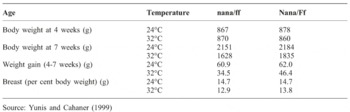
Deeb and Cahaner (Reference DEEB and CAHANER1999) studied the performance of feathered (na/na) and naked neck (Na/Na and Na/na) broilers reared under altering ambient temperatures (24 and 32°C). The average daily weight gain from 35-49 days was 58.1, 60.7 and 62.8 g for na/na, Na/na and Na/Na birds, respectively. Naked neck birds exhibited higher breast muscle weight and percentage when compared with their fully feathered sibs. The breast meat yield of na/na, Na/na and Na/Na birds were 264, 281 and 281 g, respectively. The advantage of naked neck broilers at moderate and high ambient temperatures is due to their superior ability to dissipate heat. They suggested that measuring body temperatures of broilers could be used as an indicator of the level of stress imposed on them by high ambient temperatures. Yunis and Cahaner (Reference YUNIS and CAHANER1999) studied the effect of naked-neck (Na) and frizzle (F) gene on growth and meat yield of broilers. The frizzle gene curls the feathers and reduces their size, thus increasing the heat conductivity of the feather coverage (Table 5). The authors showed that the reduction in weight gains was 43 and 25% for normally feathered and double heterozygous broilers. The effect of the F allele on broilers at a high ambient temperature was lower than that of a Na allele but both were additive in the double heterozygous condition. In addition, the F allele had no effect on breast percentage but Na allele exhibited higher breast meat yield, due to higher rate of protein deposition or lower subcutaneous fat deposition or increased blood flow in the breast area.
Body weight of birds with different genotypes at altering temperatures.

Source: Yunis and Cahaner (Reference YUNIS and CAHANER1999)
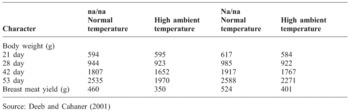
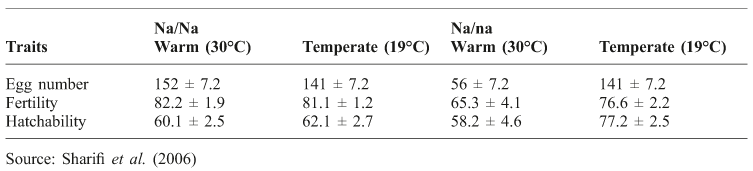
Deeb and Cahaner (Reference DEEB and CAHANER2001) studied the effects of normal (25°C) and high (30°C) ambient temperatures on performance of broiler progeny carrying naked neck and normal (fully feathered) broilers. They reported that the broiler performance in the final weeks could be improved by introducing the Na gene into commercial flocks. The advantage of the Na/na genotype was more pronounced at high ambient temperatures in broilers with genetically higher growth rate and breast meat yield (Table 6). The birds with naked-neck gene performed better at high ambient temperature than normally feathered (na/na) birds (Table 7). Hence, the naked-neck gene might be utilised for better reproductive ability in broiler breeder dams maintained at high ambient temperature (Sharifi et al., Reference SHARIFI, HORST and SIMIANER2006).
Body weight and breast meat yield of normally feathered (na/na) and heterozygous naked neck (Na/na) birds at different age groups.

Source: Deeb and Cahaner (Reference DEEB and CAHANER2001)
Reproductive performance of broiler breeder lines with different genotypes at varying environment.
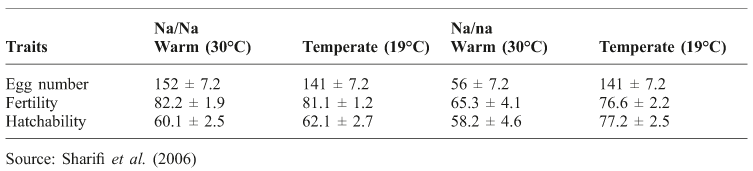
Source: Sharifi et al. (Reference SHARIFI, HORST and SIMIANER2006)
El-Gendy et al. (Reference EL-GENDY, NASSAR and MOSTAGEER2007) assessed the variation in growth patterns of the warm region breeds in response to the intermittent prolonged heat stress conditions. Three warm region breeds (Fayoumi, Sinai Bedouin and White Baladi) and a commercial broiler strain were brooded for eight weeks in high and optimum temperature conditions. Fayoumi and White Baladi chicks were not mostly influenced by heat all over the experimental period. The variance estimates in growth rate of heated Sinai Bedouin and Fayoumi males and females were significantly larger than those of the non-heated correspondents, evincing the existence of a genetic background for heat tolerance. These results indicate the feasibility of exploiting the genetic potential of the warm regions oriented breeds in appropriate breeding programs.
Broiler progeny from dwarf and normal broiler breeder hens mated to normal naked neck males (Dw/Dw Na/na) were compared for growth performance and carcass quality. Broiler progeny from dwarf hens had lower body weight and gain compared to those from normal ones. The depression in body weight gain caused by the dwarfing gene (maternal effect) decreased with age (from 10.73% at hatch to 3.68% at 7 weeks). However, feed conversion of broiler progeny from dwarf hens was better than those from normal ones. The heterozygous naked neck broilers gained about 2-5% more weight than normally feathered siblings during autumn and summer seasons, and had improved feed conversion. Introducing the Na gene to commercial broilers through dwarf hens resulted in lower rectal temperature than na/na broiler progeny from normal hens and Na/na chicks as well. Based on these findings it was suggested that dwarf (mother line) and naked neck (father line) genes may be used in breeder flocks to produce naked neck commercial broilers for tropical and sub-tropical countries (Younis, Reference YOUNIS2007).
Cahaner et al. (Reference CAHANER, AJUH, SIEGMUND-SCHULTZE, AZOULAY, DRUYAN and ZÁRATE2008) found that reduced feather coverage (naked-neck), and even without any feathers (featherless), the birds at 35°C were able to minimise any elevation in body temperature. The featherless birds exhibited similar growth and body weight under both temperatures (25°C and 35°C). Naked-neck birds at 35°C showed only a marginal advantage over their fully feathered counterparts, indicating that reduced feather coverage gave limited tolerance to the heat stress. Breast meat yield of the featherless birds was much greater (3.5% of body weight, approximately 25% advantage) than that of their partly feathered and fully feathered counterparts and the commercial birds under hot conditions. The high breast meat yield (at both 25 and 35°C) of the featherless broilers suggests that the saved feather-building nutrients and greater oxygen-carrying capacity contribute to their greater breast meat yield. Based on these results, further research on genetically heat-tolerant broilers should focus on the featherless phenotype.
skeletal problems in broilers
Leg disorders in broilers are a major economic and welfare problem. The aetiology of many disorders is complex and involves genetics, nutrition, growth rate, feed conversion efficiency, body conformation, exercise and stocking density (Bradshaw et al., Reference BRADSHAW, KIRKDEN and BROOM2002). Higher and faster growth rate predisposes many skeletal defects in meat–type chickens (Riddell, Reference RIDDELL1992; Lilburn, Reference LILBURN1994; Velleman, Reference VELLEMAN2000). Male broilers show about twice the incidence of skeletal disorders. Rapid growth may be the main factor in defects occurring up to about 4 weeks of age, after which weight produces more stress on the bones, tendons and ligaments. The different growth related defects are tibial dyschondroplasia, epiphyseal ischaemic necrosis, epiphyseal separation, skeletal fracture, Valgus-Varus deformity, spondylolisthesis (Kinky-back) and gastrocnemius tendon rupture (Riddell, Reference RIDDELL1992; Julian, Reference JULIAN1998; Bradshaw et al., Reference BRADSHAW, KIRKDEN and BROOM2002).
Tibial dyschondroplasia (TD)
This growth-related abnormality occurs when transitional chondrocytes accumulate, forming a mass of avascular cartilage underlying the layer of proliferative chondrocytes, most frequently in the proximal tibia. It is a genetic defect in broilers (Leach and Nesheim, Reference LEACH and NESHEIM1965; Burton et al., Reference BURTON, SHERIDAN and HOWLETT1981; Wong-Valle et al., Reference WONG-VALLE, MCDANIEL, KUHLERS and BARTELS1993), and heritability estimates range between 0.22 and 0.42 (Sheridan et al., Reference SHERIDAN, HOWLETT and BURTON1978; Burton et al., Reference BURTON, SHERIDAN and HOWLETT1981; Ducro and Sorensen, 1992; Kuhlers and Mcdaniel, Reference KUHLERS and MCDANIEL1996). Havenstein et al. (Reference HAVENSTEIN, FERKET, SCHEIDELER and RIVES1994b) reported that the incidence of tibial dyschondroplasia in 1991 and 1957 strains was 47.5 and 1.2% respectively. Wong-Valle et al. (Reference WONG-VALLE, MCDANIEL, KUHLERS and BARTELS1993) and Zhang et al. (Reference ZHANG, MCDANIEL, ROLAND and KUHLERS1998) carried out divergent selection experiment for ten generations, with TD at 7 weeks of age being the main criteria. The mean TD incidence increased by 7.6% in males and 9.1% in females per generation in the high TD line but did not change significantly in the low TD line.
Twisted leg
This is a composite term combining several leg abnormalities that may be further differentiated as Valgus-Varus or rotational defects. Twisted leg has been the subject of selection experiment by different authors, and heritability estimates ranged from 0.2 to 0.5 (Hartmann and Flock, Reference HARTMANN and FLOCK1979; Mercer and Hill, Reference MERCER and HILL1984). Le Bihan-Duval et al. (Reference LE BIHAN-DUVAL, BEAUMONT and COLLEAU1996) reported the heritability of 0.22 and 0.23 for Valgus and Varus deformities respectively with the incidence of Valgus being more (48%) than Varus (9.8%).
Genetic relationships between leg disorders and growth rate
The genetic correlation between body weight and incidence of leg disorders remains strongly positive (+0.25), with correlations for body weight and incidence of crooked toe, bow-leggedness and Valgus deformity estimated to be +0.22, +0.26 and +0.10 respectively (Mercer and Hill, Reference MERCER and HILL1984). Le Bihan-Duval et al. (Reference LE BIHAN-DUVAL, BEAUMONT and COLLEAU1997) found minimal genetic correlation between body weight at three or six weeks of age and with either Varus or Valgus angulation. There are some contradictory results relating to TD and body weight. Sheridan et al. (Reference SHERIDAN, HOWLETT and BURTON1978) obtained positive genetic correlation of 0.29 between TD and body weight. But, Zhang et al. (Reference ZHANG, MCDANIEL, YALCIN and KUHLERS1995) found a substantial negative genetic correlation. Subsequently, Kuhlers and McDaniel (Reference KUHLERS and MCDANIEL1996) on the same selection experiments found a low genetic correlation (0 to +0.10).
Inferences on genetic correlations between a continuous trait such as body weight and incidence of TD often presented as binary data may be open to doubt. The categorical nature of binary data makes it sometimes difficult to get unbiased estimates of the genetic correlation with both least-squares and REML methods of analysis. Using Bayesian method, applying Gibbs sampler gave an estimate of +0.17, whereas, REML procedure gave a genetic correlation of –0.02. A genetic correlation of 0.80 has been found between body weight and overall walking ability (Sorensen and Su, Reference SORENSEN and SU2001).
Genetic studies on leg disorders revealed large differences among commercial line crosses (Barbour et al., Reference BARBOUR, HAMADEH and HILAN1996; Hocking et al., Reference HOCKING, THORP, BERNARD and DICK1996; Kenstin et al., Reference KENSTIN, SU and SORENSEN1999) and the traits were classified as ‘medium’ heritable. Selection experiments produced favourable results (Rauw et al., Reference RAUW, KANIS, NOORDHUIZEN-STASSEN and GROMMERS1998). In recent times, leg disorders have been eliminated at the pedigree level by ad libitum feeding, so that weakness can be detected and incorporated within family selection. Leg disorders in United Kingdom have been reduced over a period of 6 years (1994-2000) from 3% to 1.87%. Havenstein et al. (Reference HAVENSTEIN, FERKET and QURESHI2003b) reported that the mortality of 2001 and 1957 strain was 3.57 and 1.78% respectively at six weeks of age. They reported that far fewer leg problems were present in the 2001 strain than in the 1991 strain, which may be due to genetic changes brought about by either within or between strain selection and/or due to some of the dietary changes e.g., addition of 1,25 dihydroxy D3 supplementation reduced the incidence of TD.
An antagonistic genetic correlation exists between growth rate and incidence of skeletal disorders. Although there may be variation among populations and in degree of correlation with specific disorders, this antagonistic relationship accounts for the increased susceptibility of broilers to leg disorders over many generations of selection for body weight. Nevertheless, the genetic correlation between body weight and incidence of disorders is generally quite low, so this raises the prospect that appropriate multi-trait selection should permit a genetic improvement in leg health along with a continued, though more modest improvement in growth rate. Genetic selection appears to be the most effective means of preventing non-infectious skeletal disorders and in recent years has had a major impact on decreasing the incidence of disorders such as TD.
Reproduction performance
Reproductive performance of broiler stocks has declined due to the continuous increase in growth rate, because the genetic merits of the two traits are negatively correlated. Egg production responds very moderately to within-line selection due to low heritability, sex-limited and late-in-life expression, but it is affected to some extent by heterosis. Selection for increased body weight altered appetite control centres and overconsumption of feed by meat-type chickens has contributed to obesity and reduced fecundity. Obesity in growing chickens has been addressed by incorporation of selection for improved feed efficiency and by indirect methods of selection to reduce abdominal fat, a trait with high heritability (Siegel, Reference SIEGEL1959). A negative correlation of about 0.20 has been reported between egg production and fatness. The hatchability of eggs produced by lean broiler breeders is higher than that by fat birds (Cahaner et al., Reference CAHANER, NITZAN and NIR1986). Genetic correlations between body weight and sperm cell motility are negative, and males selected for rapid growth have poorer libido and lower mating frequencies (Schmidt et al., Reference SCHMIDT, FIGUEIREDO, LEDUR and FAIRFULL1994). In another study, Schmidt et al. (Reference SCHMIDT, FIGUEIREDO, LEDUR and MUNARI1998) reported that selection for increased body weight has depressive effects in fertility and hatchability, which could not be eliminated through management practices. Progressive decline in fertility of about 0.5 percentage units per generation was noticed despite all reasonable management strategic changes.
Tona et al. (Reference TONA, ONAGBESAN, JEGO, KAMERS, DECUYPERE and BRUGGEMAN2004) studied day-old chick weight, chick quality and broiler growth to 41 day of age in heavy line and experimental line having sex-linked dwarfing gene. Chick weight at day-old did not differ between lines but the broiler weight at 7 and 41 days were different among lines. The body weight of normal broiler and birds with dwarf gene at 41 days of age was 2.26 kg and 2.13 kg respectively. The introgression of dw gene in heavy line resulted in delay of offspring to reach market weight (2 to 3 days) and possibly lower breast meat yield. However, dwarf breeders always have the advantage of lower maintenance requirements, which may favour efficient egg production in egg-laying type strains of broiler breeder hens. The dwarfing gene might represent a viable alternative to feed restriction in the short-term (Decuypere et al., Reference DECUYPERE, HOCKING, TONA, ONAGBESAN, BRUGGEMAN, JONES, CASSY, RIDEAU, METAYER, JEGO, PUTTERFLAM, TESSERAUD, COLLIN, DUCLOS, TREVIDY and WILLIAMS2006).
Genetic links have been found between male comb size and the egg mass of their female relatives. A positive correlation was observed between male comb size at 29 weeks of age and all egg-laying traits except age at first egg (negatively correlated). The selection for male comb size resulted in a correlated response on the egg laying traits. Male comb size has a higher influence on egg-laying performance than the females own comb size (Tufvesson et al., Reference TUFVESSON, TUFVESSON, LILLPERS, JOHANSSON and WILHELMSON1998). McGary et al. (Reference MCGARY, ESTEVEZ, BAKST and POLLOCK2002) studied the effect of comb area on the male fertility. Comb was evaluated by image analysis at 40 and 50 weeks and relative testicular weight was measured at 50 weeks. In this study, comb area correlated with sample fertility, flock fertility and relative testicular weight. They suggested that comb area might be a reliable indicator of male fertility.
The fertilising ability of roosters from commercial broiler breeders decreases continuously with each generation (Pollock, Reference POLLOCK1999). Therefore, further breeding should consider not only how to increase production efficiency, but also how to alleviate correlated side effects on reproduction by extending or changing selection goals (Decuypere et al., Reference DECUYPERE, BRUGGEMAN, BARBATO and BUYSE2003). The most effective long-term strategy for improving the welfare of fast growing standard broiler breeders is genetic selection to decrease the propensity for multiple ovulation that would make it possible to consume more feed without compromising productivity and the sustainability. Genetic selection on the basis of DNA markers (QTL loci) would make this possible commercially (Decuypere et al., Reference DECUYPERE, HOCKING, TONA, ONAGBESAN, BRUGGEMAN, JONES, CASSY, RIDEAU, METAYER, JEGO, PUTTERFLAM, TESSERAUD, COLLIN, DUCLOS, TREVIDY and WILLIAMS2006).
Molecular genetic studies
Poultry breeding prior to this decade was based mainly on what could be observed or measured at the phenotypic level, such as egg number, body weight and egg weight. Unfortunately these traits are influenced by random environmental factors such as feed quality, pecking order, temperature and disease. Clearly random environmental factors are a hindrance to breeding superior genetic stock. However, even greater problems are seen for traits which can only be measured in one sex, such as egg production, and traits which cannot be measured on either sex, such as disease resistance and meat quality. In these cases the breeder must rely entirely on information from relatives to make selection decisions. The desire of poultry breeders has always been to get directly at the underlying genetic worth of the bird, free from environmental effects, and regardless of sex or ability to measure the phenotype. Now biochemical techniques allow scientists direct access to the genetic code. These advances would seem to provide the answer for selecting superior animals without complications of environmental efforts.
The chicken genome has 39 pairs of chromosomes and is about one-third the size of the human genome. There are five macro-chromosomes that make up 55% of the genome, five mid-sized chromosomes that make up the next 20% and the last 25% of the genome is located in 28 micro-chromosomes (Etches, Reference ETCHES2001). The consensus linkage map first published in 2000 (Groenen et al., Reference GROENEN, CHENG, BUMSTEAD, BENKEL, ELWOOD BRILES, BURKE, BURT, CRITTENDEN, DODGSON, HILLEL, LAMONT, DE LEON, SOLLER, TAKAHASHI and VIGNAL2000) plays a central role in the alignment of different types of maps developed for chicken. Since that time, the map has seen a modest increase in number of markers from 1889 loci in 51 linkage groups spanning 3800 cM, to its current size of 4200 cM with 2,261 loci on 53 linkage groups (Schmid et al., Reference SCHMID, NANDA, HOEHN, SCHARTL, HAAF, BUERSTEDDE, ARAKAWA, CALDWELL, WEIGEND, BURT, SMITH, GRIFFIN, MASABANDA, GROENEN, CROOIJMANS, VIGNAL, FILLON, MORISSON, PITEL, VIGNOLES, GARRIGUES, GELLIN, RODIONOV, GALKINA, LUKINA, BEN-ARI, BLUM, HILLEL, TWITO, LAVI, DAVID, FELDMAN, DELANY, CONLEY, FOWLER, HEDGES, GODBOUT, KATYAL, SMITH, HUDSON, SINCLAIR and MIZUNO2005). So far, 31 of the linkage groups have been assigned to particular chromosomes (Masabanda et al., Reference MASABANDA, BURT, O'BRIEN, VIGNAL, FILON, WALSH, COX, TEMPEST, SMITH, HABERMANN, SCHMID, MATSUDA, FERGUSON-SMITH, CROOIJMANS, GROENEN and GRIFFIN2004). The linkage map remains the essential tool for the mapping of quantitative trait loci (QTL). The chicken genome map has been derived mainly from three reference populations. They are a) East Lansing (United State of America), b) Compton (United Kingdom) and c) Wageningen (The Netherlands). International Chicken Genome Sequencing Consortium published the first draft of the entire genome sequence in December 2004 (ICGSC, 2004). Recently much effort has been spent on understanding QTL in chicken. QTL are segment(s) of chromosomes that affect trait(s), and could be useful for marker assisted breeding as well as for improving the understanding of biological backgrounds (i.e., which genes are involved and their effects on traits).
Several studies have identified QTL regions in the poultry genome affecting growth, carcass traits and disease resistance. There was no apparent pattern in the distribution of the QTL for different traits and QTL appear to be located at random across the genome. The experimental designs for identifying QTL for various production traits were typically an F2 cross between two breeds with 250 to 700 birds. To detect QTL for disease resistance, selection lines and backcrosses rather than F2 crosses have been largely used. In addition, several recent reports described half sib experiments (Hocking, Reference HOCKING2005). Subsequently, Abasht et al. (Reference ABASHT, DEKKERS and LAMONT2006) reported that the population designs used by different authors are F1, F2, F3 and backcross. Among this, F2 design is most frequently used, however, resolution of QTL obtained using this design is generally low. High resolution mapping of QTL location can be obtained using a backcross strategy. Despite the differences in experimental conditions and populations used for QTL mapping, independent studies found that QTL for similar traits in identical locations in several instances. Some QTL were reported only in one study and were not detected in other studies that analysed the same trait in different populations.
quantitative trait loci for different traits
Growth and feed efficiency
Van Kaam et al. (Reference VAN KAAM, VAN ARENDONK, GROENEN, BOVENHUIS, VEREIJKEN, CROOIJMANS, VAN DER POEL and VEENENDAAL1998) found four QTL affecting growth and feed efficiency. They are
QTL 1 (located on chromosome 1 showed most significant effect. This QTL have suggestive linkage with feed intake, growth from 23rd day to 48th day and body weight at 48th day), QTL 2 (located on linkage group (Wageningen Agricultural University- WAU) WAU26 at 16 cM showed suggestive linkage for feed intake between 23rd and 48th day), QTL 3 (located on chromosome 4 at 147 cM had an effect on feed intake between 23rd and 48th day) and QTL 4 (Located on chromosome 2 at 41 cM had an effect on feed intake adjusted for body weight).
McElory et al. (2002) found three significant QTL for different traits at substantially different positions, indicating presence of multiple QTL. A QTL affecting breast meat yield was found at 125 cM on chromosome 2. Sewalem et al. (Reference SEWALEM, MORRICE, LAW, WINDSOR, HALEY, IKEOBI, BURT and HOCKING2002) reported significant QTL (affecting body weight at 3, 6 and 9 weeks of age) were located on six macro chromosomes (1, 2, 4, 7, 8 and Z) and two micro chromosomes (13 and 27). The effects of these QTL were generally additive and the largest single additive effect was on chromosome 4, and the effect of substituting one copy of the gene was an increase in weight of 249 g. Subsequently, Carlborg et al. (2003) identified 22 significant loci contributing to the body weight in chickens on chromosomes 1, 2, 3, 4, 5, 6, 7, 8, 9, 11, 12, 13, 14, 15, 18 and 27. They reported that epistasis was more pronounced prior to 46 days of age, whereas, additive genetic effects explained major portion of the genetic variance later in life. Several of the loci affected either early or late growth but not both. Very few loci affected the entire growth process, which indicates that early and late growth have different genetic regulation. Rowe et al. (Reference ROWE, WINDSOR, HALEY, BURT, HOCKING, GRIFFIN, VINCENT and DE KONING2006) reported that the chicken chromosome 4 showed nominal significance for QTL affecting body weight and conformation and linkage was confirmed for both traits on chromosome 5.
Moura et al. (Reference MOURA, BOSCHIERO, CAMPOS, AMBO, NONES, LEDUR, ROSARIO, MELO, BURT and COUTINHO2006) identified a suggestive QTL affecting five growth-related traits i.e., body weight at 35 days, body weight at 42 days, weight gain from birth to 35 days, weight gain from birth to 42 days and feed intake from 35 to 41 days on chromosome 7 at 116 cM. Pinto et al. (Reference PINTO, PACKER, LEDUR, CAMPOS, NONES, RUY and COUTINHO2006) studied multi-trait analysis for QTL mapping in chicken. They reported that the body weight at 35 days old and body weight at 41 days old were strongly correlated traits. This was confirmed with multi-trait analysis, in which only one QTL was found at 76 cM on chromosome 1 associated to body weight at 35 and 41 days. In addition, new pleiotrophic QTLs were found with joint analysis of weight gain and body weight at 41 days at position 76 and 340 cM on chromosome 1.
Ascites
Marker Assisted Selection (MAS) is useful for traits that have low heritability and are difficult to measure. Both of these characteristics apply to ascites, therefore it is expected that MAS can make an important contribution. Three QTL affecting ascites related traits were detected (Rabie et al., Reference RABIE, CROOIJMANS, BOVENHUIS, VEREIJKEN, VEENENDAAL, J.J., VAN ARENDONK, PAKDEL and GROENEN2005; Pakdel et al., Reference PAKDEL, BIJMA, DUCRO and BOVENHUIS2005b). Using information on QTL in selection programs resulted in an increase of 122 g in weight without increasing ascites incidence. They concluded that MAS could be used effectively in breeding for ascites resistance. Rabie et al. (Reference RABIE, CROOIJMANS, BOVENHUIS, VEREIJKEN, VEENENDAAL, J.J., VAN ARENDONK, PAKDEL and GROENEN2005) identified QTL linked with ascites related traits. Suggested QTL were located on five macro-chromosomes (GGA2, 4, 5, 6 and 8) and three micro-chromosomes (GGA10, 27 and 28). Three QTL found on chromosome 2 (335-421 M) had an effect on %RV and % TV also.
Carcass traits
Van Kaam et al. (1999a,b) reported two QTL with suggestive linkage for carcass traits. The most significant QTL was located on chromosome 1 at 466 cM and showed an effect on carcass percentage. The other QTL was detected on chromosome 2 (345 and 369 cM), which affected meat colour. Ikeobi et al. (Reference IKEOBI, WOOLLIAMS, MORRICE, LAW, WINDSOR, BURT and HOCKING2002) identified QTL for abdominal fat weight on chromosomes 3, 7, 15 and 28 and they contributed to 3.0 to 5.2% of residual phenotypic variation. The largest additive QTL on chromosome 7 accounted for more than 20% of the mean weight of abdominal fat. Nones et al. (Reference NONES, LEDUR, RUY, BARON, MELO, A.S.A.M., NANELLA, BURT and COUTINHO2005) identified QTL for weight of gizzard, liver, lungs, heart and feet as well as of intestine on chromosome 1. Most QTL mapped were of an additive nature with positive effects. Schreiweis et al. (Reference SCHREIWEIS, HESTER, SETTAR and MOODY2005) reported that two QTL regions located on chromosomes 2 and 4 influenced eggshell colour. The QTLs on chromosome 4 have significant effects on multiple traits i.e., egg and albumen weights, egg production and body weight. This indicates that chromosome 4 harbours multiple genes that contribute to the extreme phenotypic divergence observed among layer, broiler and ancestral chicken populations. Atzmon et al. (Reference ATZMON, RONIN, KOROL, YONASH, CHENG and HILLET2006) reported that a marker on chromosome 2 (274 cM) was significantly associated with growth traits as well as abdominal fat weight. A total of 26 markers were identified on chromosome 1, 2, 3, 4, 5, 7, 9, 10, 12, 13 and Z and were associated with growth, carcass traits and abdominal fat weight. Le Bihan-Duval et al. (Reference LE BIHAN-DUVAL, NADAF, BERRI, ARNOULD, PITEL, DUCLOS, BEAUMONT, VIGNAL, PORTER, AGGREY, SIMON and COGBURN2006) identified two highly significant QTLs affecting breast meat redness and yellowness on chromosome 11 at a similar position. Substitution of these QTLs accounted for 19 to 28% of the phenotypic standard deviation for redness and yellowness respectively.
Hui et al. (Reference HUI, SHOUZHI, HUI, XIJIANG, NING, QIN, XIAOFENG, QIGUI, XIAOXIANG, YUXIANG and ZHIQUAN. T.2008) carried out study to identify the markers linked to QTL responsible for fatness traits in broilers. A total of 596 individuals from the divergent tails from the 6th to the 10th generations were genotyped with 23 microsatellite markers on chromosome 1. Statistical analysis showed that polymorphisms of the eight markers viz. LEI0209, LEI0146, ROS0025, MCW0115, MCW0010, MCW0036, MCW283 and ADL328 were significantly (p<0.0011) or suggestively (p<0.05) associated with abdominal fat content across generations.
Uemoto et al. (Reference UEMOTO, SATO, ODAWARA, NOKATA, OYAMADA, TAGUCHI, YANAI, SASAKI, TAKAHASHI, NIRASAWA and KOBAYASHI2009) detected a total of 14 QTLs affecting growth and carcass traits and reported that for growth traits, significant and suggestive QTLs affecting body weight (measured at 6 and 9 wk) and average daily gain were identified on similar regions of chromosomes 1 and 3. For carcass traits, the QTL effects on carcass weight were detected on chromosomes 1 and 3, with the greatest F-ratio of 15.0 being obtained for carcass weight on chromosome 3.
Campos et al. (Reference CAMPOS, NONES, LEDUR, MOURA, PINTO, AMBO, BOSCHIERO, RUY, BARON, NINOV, ALTENHOFEN, SILVA, ROSÁRIO, BURT and COUTINHO2009) reported that the QTL mapped between markers LEI0029 and ADL0371 on GGA3 for abdominal fat percentage and abdominal fat weight and a suggestive QTL on GGA12 for abdominal fat percentage showed significant parent-of-origin effects. Some QTL mapped in the study matched QTL regions mapped in previous studies using different populations.
The locations of QTLs for various growth, body composition, egg production and disease resistance traits have been reviewed by Hocking et al. (2005). Subsequently, Abasht et al. (Reference ABASHT, DEKKERS and LAMONT2006) reviewed QTLs identified in chicken and classified phenotypic traits into five major trait categories: growth (body weight, body composition and feed intake), egg (egg production, egg quality and skeleton), disease resistance (traits associated with disease resistance), metabolic for traits related to metabolic parameters and behaviour for traits related to behaviour. Across the five major trait categories, there were more on growth than the other traits. There have been two major outcomes from QTL research in chickens. These include concern among classical quantitative geneticists that QTL of statistically detectable large effects were unlikely to exist for quantitative traits because the usual genetic model assumed large numbers of genes of small effect. This concern was clearly misplaced and QTL of surprisingly large effects have been reported in domestic species. Another concern is that QTL identified in experimental crosses might also be segregating in commercial flocks which was thought to be unlikely. Initial studies showed that this concern was also unfounded (Hocking, Reference HOCKING2005).
candidate gene studies
Recent studies have focussed on identifying the target gene (candidate gene) responsible for variation in economic traits rather than identifying the QTL loci. Several genes with definite relationship with the production and reproduction traits have been identified.
Body weight and carcass traits
Restricted Fragment Length Polymorphism located at the intron preceding exon 4 of the chicken growth hormone (GHR) gene is associated with increased juvenile body weight and abdominal fat deposition in chicken (Feng et al., Reference FENG, KUHNLEIN, FAIRFULL, AGGREY, YAO and ZADWORNY1998).
Zhao et al. (Reference ZHAO, MENG, GU, WANG and LI2002) reported that Uncoupling Protein gene (UCP), which decreases the metabolic efficiency of the organism, plays an important role on fat traits. They further reported that BB genotype might be used as a molecular genetic marker for selecting the chicken for low abdominal fat since there was no negative effect between body weight and other carcass traits. Choi et al. (Reference CHOI, CHO, JEON and LEE2006) reported a significant association between uncoupling protein gene and mean body weight in Korean native chicken. Subsequently, Liu et al. (Reference LIU, WANG, LI and LI2007) investigated the association of UCP gene with chicken growth and body composition traits. The ninth generation of the broiler lines divergently selected for abdominal fat was used as a research population. A single-nucleotide polymorphism, in the exon 3 (T1316C) of UCP gene was detected by the polymerase chain reaction and restriction fragment polymorphism (PCR-RFLP) method. The UCP polymorphism was associated with muscle and fatness traits, such as pectoralis minor weight and abdominal fat weight. They concluded that the UCP gene could be a candidate locus or linked to a major gene, which affects muscle and fatness traits in chicken. Sharma et al. (Reference SHARMA, BOTTJE and OKIMOTO2008) reported an association of the UCP gene with growth traits viz. high feed efficiency, weight gain and body weight in commercial chickens.
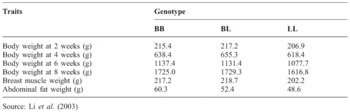
Transforming Growth Factor β (TGF- β) belongs to a large family of multifunctional growth factors that regulate a broad spectrum of biological activities involved in morphogenesis, development and differentiation. The TGF- β3 polymorphism between broilers and Leghorns was associated with traits of growth and body composition. The effect of different genotypes is set out in Table 8. Among the three genotypes, BL has better growth rate and lower abdominal fat. Therefore, TGF- β gene is a potential marker for use in molecular marker assisted selection programmes (Li et al., Reference LI, DEEB, ZHOU, MITCHELL, ASHWELL and LAMONT2003). However, Bennett et al. (Reference BENNETT, HESTER and SPURLOCK2007) reported no significant association between TGF- β2 gene with bone and production traits.
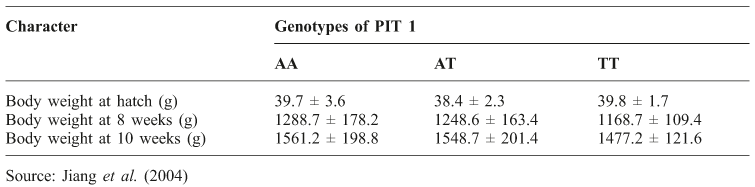
Pituitary Specific Transcription Factor (POU1F1) is a protein, which binds to and transactivates promoters of Growth Hormone (GH), Prolactin (PR) and Thyroid Stimulating Hormone Chain (TSB)-Encoding Genes. A new SNP polymorphism has been found in exon 6 of the Pituitary-Specific Transcription Factor Gene (PIT1) that was associated with early growth rate in chicken (Table 9). The positive relationship between genotype AA and body weights at 8 weeks of age indicates that PIT1 SNP is a potential molecular marker for early growth rate in chickens (Jiang et al., Reference JIANG, LI, QU, LI and YANG2004). Nie et al. (Reference NIE, FANG, XIE, ZHOU, LIANG, LUO, WANG, BI, LIANG, ZHANG and ZHANG2008) also reported significant association of PIT1 gene polymorphisms with chicken growth traits viz. shank diameters at 56 days, hatch weight and body weight at 28 days.
Performance of different genotypes of Transforming Growth Factor β.

Source: Li et al. (Reference LI, DEEB, ZHOU, MITCHELL, ASHWELL and LAMONT2003)
Least-squares means of body weight for the different genotypes of PIT 1.

Source: Jiang et al. (Reference JIANG, LI, QU, LI and YANG2004)
Leptin receptors play an important role in deposition of adipose tissue and the body weight. Wang et al. (Reference WANG, LI, GU, ZHAO, WANG and WANG2004) studied the effect of this gene and found that birds with BB genotype had significantly higher abdominal fat weight and percentage of abdominal fat than AA and AB genotypes.
Amills et al. (Reference AMILLS, JIMENEZ, VILLALBA, TOR, MOLINA, CUBILO, MARCOS, FRANCESCH, SANCHEZ and ESTANY2003) found a potential association between IGF1 (insulin-like growth factor 1)-SNP1 and average daily gain at 107 days of age and feed efficiency at 44, 73 and 107 days of age. Similarly, Zhou et al. (Reference ZHOU, MITCHELL, MCMURTRY, ASHWELL and LAMONT2005) reported that birds inheriting IGF1-SNP1 broiler allele had heavier body weights at all ages to market weight. They also reported that, in addition to average daily gain, a strong association was noticed with other traits viz. breast muscle weight, shank weight, shank length, tibia length, spleen weight, liver weight and heart weight. Lei et al. (Reference LEI, NIE, PENG, ZHANG and ZHANG2005) reported that single nucleotide polymorphism in IGFBP2 gene was associated with body weight at hatch, 21, 28, 42, 49, 56 and 90 days of age as well as carcass traits. The diplotype H1H5 was the most advantageous and H4H10 was the negative diplotype for growth and carcass traits. In addition, Bian et al. (Reference BIAN, WANG, WANG, ZHANG, WANG and LI2008) detected three SNPs in IGF1 gene. The association analysis showed that haplotypes based on three cIGF1 polymorphisms (366A>C, 528G>A and 1024C>T) were associated with body weight traits, suggesting that cIGF1 or a tightly linked gene had effects on body weight in the chicken. Recently, HlaHla et al. (Reference HLAHLA, SHIMOGIRI, KAWABE, NISHIBORI, OKAMOTO, HASHIGUCHI and MAEDA2009) also studied the association of SNP polymorphism in insulin-like growth factor 1 gene (IGF1) in Asian native chicken populations, layer and broiler populations using PCR-RFLP analysis. Body weight, average daily gain, growth rate and IGF1 gene expression level were compared among three SNP genotypes obtained by AC x AC crossing. The rankings of each genotype with respect to body weight, average daily weight gain and growth rate were AA > AC > CC, and statistical significance (P<0.05) was found within AA and CC in body weight and average daily weight gain. Leng et al. (Reference LENG, WANG, LI, WANG and LI2009) reported that the insulin-like growth factor binding protein 2 (IGFBP2) polymorphism (1196C > A SNP) was significantly associated with abdominal fat weight and percentage of abdominal fat in different broiler lines.
Fatty acid-binding proteins (FABP) belong to a super family of lipid binding proteins that exhibit a high affinity for long chain fatty acids and appear to function in metabolism and intracellular transportation of lipids. Wang et al. (Reference WANG, LI, LI, LENG, WANG and TANG2006) investigated the effects of the adipocyte (A)-FABP gene on chicken growth and body composition traits and reported that an A-FABP gene polymorphism was associated with abdominal fat weight and percentage of abdominal fat.
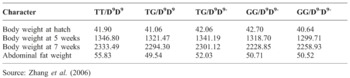
Apolipoprotein B (apoB) synthesized in the mammalian small intestine and liver plays an important role in fat absorption. Two novel polymorphisms, a mutation T-G at 123 of 26th exon (T123G) and a 9 bp deletion at 500 bp (D9500D9-) of the apoB gene were linked with body growth and fatness traits (Table 10). The GG genotype (T123G) and D9-D9- genotype showed lower abdominal fat yield when considered separately and in combination of TG D9D9 (Zhang et al., Reference ZHANG, LI and SHI2006). Recently, Seyedabadia et al. (Reference SEYEDABADIA, AMIRINIAB, AMIRMOZAFARIC, TORSHIZID, CHAMANIA and ALIABADB2010) confirmed the association of apoB gene with body growth and fatness traits in Iranian commercial broiler lines. They reported that the polymorphisms in apoB gene and haplotypes were significantly (P<0.1) associated with body growth and fatness traits.
Body weight (g) and abdominal fat weight (g) for different genotypes.

Source: Zhang et al. (Reference ZHANG, LI and SHI2006)
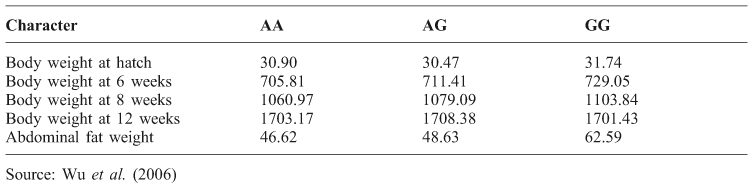
The Peroxisome Proliferators-Activated Receptor-γ Coactivator-1α (PGC-1 α) was investigated as a candidate gene for growth and fatness traits in chicken because of its prominent role in muscle fibre specialisation and adipogenesis. A SNP polymorphism from G to A at position 646 of the chicken PGC-1 α gene causing an ASP216ASN amino acid substitution was identified. The study revealed an association between SNP and abdominal fat weight (Table 11). This indicated that this SNP polymorphism of PGC-1 α gene could be used as a novel potential molecular marker for selection against abdominal fatness without interfering in regular breeding for growth rate of chickens (Wu et al., Reference WU, DENG, LI, LI and YANG2006).
Body weight (g) and abdominal fat weight (g) for different genotypes.

Source: Wu et al. (Reference WU, DENG, LI, LI and YANG2006)
In mammals, thyroid hormone responsive Spot14 (THRSP) is a small acidic protein that responds to thyroid hormone stimulation and may play a role in growth. The investigation (Cao et al., Reference CAO, WANG, WANG, WANG and LI2007) of the associations of Spot14α gene polymorphisms on chicken growth and body composition traits revealed that the A213C and 9 bp insertion-deletion of the Spot14α gene in the F2 population was found to be associated with body weight, which implied that Spot14α gene or a tightly linked gene had an important effect on growth in the chicken. d'André Hirwa et al. (Reference D'ANDRÉ HIRWA, YAN, WALLACE, NIE, LUO, LI, SHEN, SUN, TANG, LI, ZHU, YANG and ZHANG2010) studied association of thyroid hormone responsive spot 14α (THRSPα) gene on chicken growth and carcass traits and concluded that SNP variation (A197835978G) in the 5′ flanking region of the chicken THRSPα gene was significantly associated with the growth of chicken, whereas, another SNP variation (G197836086A) in the 5′ flanking region and the indel in exon 1 of the chicken THRSPα gene was associated with fat deposition.
Myostatin is a negative regulator of skeletal muscle growth. Ye et al. (Reference YE, BROWN, NONES, COUTINHO, DEKKERS and LAMONT2007) evaluated effects of myostatin polymorphisms in three elite commercial broiler chicken lines on mortality, growth, feed conversion efficiency, ultrasound breast depth, breast percentage, eviscerated carcass weight, leg defects, blood oxygen level, and hen antibody titre to infectious bursal disease virus vaccine. Using the allele substitution effect model, the myostatin SNPs were found to have significant (P<0.031) associations with growth, mortality, blood oxygen and hen antibody titre to infectious bursal disease virus vaccine, although the associations were not often consistent across lines. They concluded that the myostatin gene has pleiotropic effects on broiler performance.
Wang et al. (Reference WANG, ZHU, LIU and DU2008) made a study on the link between PRKAB2 (Protein kinase, AMP-activated, beta 2 non-catalytic subunit) gene and carcass traits. They identified a T to C point mutation at base position 406 located among the first exon. The wild-type allele A had significant positive effects on live-weight, carcass-weight, leg-muscle-weight and abdomen-fat-weight (P<0.05), and had positive effects on meat tenderness.
Skeletal traits
Thyroid hormones have been found to play an essential role in stimulating chondrocyte differentiation and the terminal differentiation that is required for bone formation. The local availability of 3, 3’,5-Triiodo-L-tyronine (T3) is regulated by three iodothyrothyronine deiodinases, types 1, 2, and 3 (Dio1, Dio2 and Dio3, respectively). Inadequate expression of Dio2 in the growth plates contributes to tibial dyschondroplasia. Commercial broilers that were not intensively selected for resistance to TD showed lower expression level of Dio2 (Shen et al., Reference SHEN, BERRY, JAQUES, PILLAI and ZHU2004). Significant associations were found between vitamin D receptor (VDR) and bone mineral content of the humerus at 35 weeks of age; between IGF1 and Osteopontin (SPP1) with 5-week body weight and insulin (INS) and 55-week body weight (Bennett et al., Reference BENNETT, HESTER and SPURLOCK2006).
Reproduction traits
Dunn et al. (Reference DUNN, MIAO, MORIS, ROMANOV, WILSON and WADDINGTON2004) studied the effect of three physiological candidate genes viz., Growth Hormone, Gonadotrophic Releasing Hormone Receptor and Neuropeptide Y on the total egg production, age at first egg and number of double yolked egg in broiler breeder females. They concluded that Neuropeptide Y had a dominant effect on age at first egg and Gonadotrophin Releasing Hormone Receptor had additive effect on the number of double-yolked eggs. Recently, Zhang et al. (Reference ZHANG, TANG, KANG, MA, CAO, LU, HOU and JIANG2008) carried out SNP analysis on the BMPR-IB gene in broiler lines and found it was associated with ovulation rate. They reported that the SNP polymorphism i.e., A287G, was not associated with egg production at 33 wks or from 33 wks to 42 wks (P>0.1), whereas the SNP A287G was associated with egg production from 47 to 56 wks (P<0.05). The dominant genetic effects on this latter trait and on egg production from 33 to 42 wks were significant (P<0.05). Li et al. (Reference LI, ZHU, CHEN, WU, TANG, GAO, SONG, W.J. and XU2009) studied the association of insulin-like growth factor-I (IGF-I) and neuropeptide Y (NPY) genes with reproduction traits in chicken. The study revealed significant associations (P < 0.05) between NPY and total egg production (300 d) and between IGF-I polymorphism and total egg production (at 300 days), total egg production (at 400 days) and for average days of continual egg-laying. Ou et al. (Reference OU, TANG, SUN and ZHANG. Y.2009) reported that the SNP polymorphisms in chicken insulin-like growth factor binding protein 1 and 3 and signal transducers and activators of transcription 5B (STAT5B) significantly associated with early growth and sexual maturation in chickens and may be a potential molecular markers for marker assisted selection.
The above findings revealed that the molecular genetics has advanced greatly in recent years with the identification of QTL and candidate genes for different traits related to performance of broilers. The scope of its application in poultry production is potentially very wide and with increased understanding of the genetics of other avian species, will continue to provide a useful tool for improving performance, health and welfare in the future.
Conclusions
Growth rate of modern broilers has roughly quadrupled since commercial breeding commenced in the 20th century. However, apart from a favourable increase in production traits, birds that have been selected for high production efficiency seem to be more sensitive to sub-optimal conditions and also affected by metabolic and physiological disorders. Although commercial breeding programmes have been successful in reducing the incidence of ascites and leg disorders, there is no doubt that commercial broilers today are showing higher mortality and higher susceptibility than that have been selected less extremely for body weight, feed conversion efficiency and meat yield. In future, more constraints will arise for issues such as leg strength, female and male reproduction and several aspects of carcass and meat quality. Therefore, further breeding should consider not only how to increase production and productive efficiency but also how to alleviate correlated side effects by extending or changing selection goals. Breeding companies will need to achieve a better understanding of the biological backgrounds and mechanism of what they are selecting for as well as the biological obstacles on the road for increasing overall bird performance. Hence, research is needed for better understanding of the biological basis of the consequences of the lack of balance in modern broilers compared with its wild ancestor. Understanding this biological basis should direct researchers and breeders to design selection approaches aimed at preventing this imbalance from progressing further. With the rapid development of the poultry industry worldwide, and especially in developing countries, importation of temperate-zone high performance stocks to the less developed, hot regions is increasing. The use of improper genotypes in these regions has resulted in large economic losses due to decreased growth rate, reduced protein gain and high mortality. The phenomenon of genotype-environment interactions requires additional efforts in the choice of breeding stock with a general adaptability to more than one environmental condition. Recent molecular studies have resulted in complete genome sequencing, identification of several quantitative trait loci affecting production and reproduction traits and identification of the genes responsible for different phenotypic variation. In future, genomics could well play an important role in unravelling the biological mechanism and supporting breeders in selection programmes. Modern chicken breeding programs have the potential to successfully produce chickens with high production efficiency and optimal welfare, resulting from resistance to stress and diseases.