


Violence against women is a global problem. Research from North America, Europe, Africa, Latin America, the Middle East, and Asia has found astonishingly high rates of sexual assault, stalking, trafficking, violence in intimate relationships, and other violations of women's bodies and psyches. These assaults violate human rights, undermine democratic transitions, harm children, and are tremendously costly.Footnote 1 Today, violence against women (VAW) is widely seen as a question of fundamental human rights. Many national governments and international organizations have adopted a wide variety of measures to address VAW, including legal reform, public education campaigns, and support for shelters and rape crisis centers. Despite the growing and deepening consensus about the nature and costs of violence against women, there are puzzling differences in national policy. Why do some governments have more comprehensive policy regimes than others? Why are some governments quick to adopt policies to address violence, whereas others are slow?
In this article, we present a global comparative analysis of policies on VAW over four decades. We show that the autonomous mobilization of feminists in domestic and transnational contexts—not leftist parties, women in government, or national wealth—is the critical factor accounting for policy change. Further, our analysis reveals that the impact of global norms on domestic policy making is conditional on the presence of feminist movements in domestic contexts, pointing to the importance of ongoing activism and a vibrant civil society.
Public policy scholars have long identified the importance of social movements in softening up the political environment, changing the national mood, and putting new issues on the agenda (e.g., Baumgartner and Mahoney Reference Baumgartner, Christine, David, Valerie and Helen2005; Kingdon Reference Kingdon1984; McAdam and Su Reference McAdam and Su2002; Weldon Reference Weldon2002a; Reference Weldon.2011). Democratic theorists argue that social movements are critical for advancing inclusion and democracy (Costain Reference Costain, Wolbrecht and Hero2005; Dryzek Reference Dryzek1990; Dryzek et al. Reference Dryzek, Downes and Hunold2003; Young Reference Young1990; Reference Young2000). Yet our standard cross-national datasets for the study of social policy include few indicators of this type of political phenomenon. Much of the large-n literature is state-centric, focusing on the structure of state institutions, such as veto points, or on formal political actors, such as political parties and women in legislatures (e.g., Brady Reference Brady2003; Daubler Reference Daubler2008; Esping-Anderson Reference Esping-Andersen1990; Huber and Stephens Reference Huber and Stephens2001; Kittilson Reference Kittilson2008; Rudra Reference Rudra2002; Schwindt-Bayer and Mishler Reference Schwindt-Bayer and Mishler2005; Swank Reference Swank2001).Footnote 2 Other cross-national studies focus on economic factors, such as globalization, women's labor force participation, or national wealth (Brady, Beckfield, and Seeleib-Kaiser Reference Brady, Beckfield and Seeleib-Kaiser2005; Huber and Stephens Reference Huber and Stephens2001; Rudra Reference Rudra2002). Existing measures of civil-society-related phenomena are underdeveloped compared to those pertaining to economic or political factors.
More qualitative historical studies of social policy do take greater account of civil society, exploring women's activism, labor movements, and the ways that civil society and state intertwine (e.g. Banaszak, Beckwith, and Rucht Reference Banaszak, Karen and Dieter2003; Mazur Reference Mazur2002; Meyer Reference Meyer, Meyer, Jenness and Ingram2005; Piven and Cloward [1971] Reference Piven and Cloward1993; Skocpol Reference Skocpol1992; Reference Skocpol2003). However, their nuanced theoretical arguments tend to get lost in larger scale, cross-national, and cross-regional studies. As a result, large-n analyses of social policy tend to neglect the broader context of normative political contestation outside the state (Amenta, Bonastia, and Caren Reference Amenta, Chris and Neal2001; Amenta et al. Reference Amenta, Neal, Elizabeth and Yang2010).
Most previous work on VAW has focused on advanced democracies, single regions, or a small subset of countries. Few combine cross-regional analysis with an examination of change over time, and even fewer use statistical analysis to do so (for an exception, see Simmons Reference Simmons2009). A global, comparative study encompasses greater variation in the characteristics and contexts of both movements and policy processes than studies with a more limited scope. This study brings national and global civil society into large-n analyses of social policy, providing a theoretical and empirical account of the role of social movements and global civil society in the development of policies on VAW. Our original dataset tracking VAW policies and women's mobilization in 70 countries from 1975 to 2005 is an empirical base of unprecedented scope.
This article conceptualizes government action on VAW as a progressive social policy. Like other social policies, VAW policy establishes and reproduces a particular normative and social order. As a progressive social policy, it aims to improve the status and opportunities of a historically disadvantaged group (in this case, women). We argue that autonomous social movements are critical to understanding the origins of progressive social policies that explicitly challenge the established social order by reshaping relations among groups. Autonomous social movements develop oppositional consciousness, imagine new forms of social organization, and mobilize broad societal action to generate understanding and support (Mansbridge and Morris Reference Mansbridge and Morris2001; Weldon Reference Weldon.2011). They are essential to catalyzing the process of progressive social policy change and for its continuation.
DEFINING GOVERNMENT RESPONSIVENESS TO VIOLENCE AGAINST WOMEN
No region of the world is immune to violence against women. Although differing definitions and methodologies mean that data about prevalence are not strictly comparable across countries, there is sufficient evidence to show that these problems are serious in all of our study countries and regions. In Europe, violence against women is far more dangerous to the female population than terrorism or cancer (Elman Reference Elman2007, 85). As many as 45% of European women have been victims of physical and/or sexual violence (Martinez and Schröttle Reference Martinez and Schröttle2006; see also Council of Europe 2006; Elman and Eduards Reference Elman and Eduards1991). Rates are similarly high in North America, Australia, and New Zealand,Footnote 3 and studies in Asia, Latin America, and Africa show that violence against women is ubiquitous.Footnote 4
To identify which policies address violence against women, it is necessary to understand the causes of violence. A growing body of research, mainly in the disciplines of public health, criminology, anthropology, and psychology, shows that the causes of violence against women in general (and rape and domestic violence in particular) are complex, operating at multiple levels (e.g., Chalk and King 1994; Crowell and Burgess Reference Crowell and Burgess1996; Heise 1994; Heise, Ellsberg, and Gottemoeller Reference Heise, Ellsberg and Gottemoeller1999; World Health Organization 2010). In addition, this research shows that an important class of factors at both an individual and societal level are attitudes about gender (Crowell and Burgess Reference Crowell and Burgess1996; Davies Reference Davies1994; Graham-Kevan and Archer Reference Graham-Kevan and Archer2003; Johnson Reference Johnson, Valverde, MacLeod and Johnson1995). Cross-cultural studies have found that cultural norms endorsing male dominance; female economic dependency; patterns of conflict resolution emphasizing violence, toughness, and honor; and male authority in the family predict high societal levels of domestic violence and rape (Heise Reference Heise, Raikes, Watts and Zwi1994; Heise et al. Reference Heise, Raikes, Watts and Zwi1994; Levinson Reference Levinson1989; Sanday Reference Sanday1981). Social and legal norms may make women vulnerable to violence and others more likely to abuse them with the expectation of impunity (Carrillo et al. 2003; World Health Organization 2010). At the level of individual relationships, the causes of intimate violence and rape include sexist attitudes or “gender schemas,” although poor relationship skills and the victim's vulnerability (e.g., economic, social, and legal dependence) also contribute (Brush Reference Brush2011; Raphael Reference Raphael1996; Crowell and Burgess Reference Crowell and Burgess1996; World Health Organization 2010). Thus violence against women is not primarily the result of “single factor” causes or solely attributable to individual-level risk factors such as alcohol use or mental illness (Crowell and Burgess Reference Crowell and Burgess1996; Heise Reference Heise, Raikes, Watts and Zwi1994; Heise, Ellsberg, and Gottemoeller Reference Heise, Ellsberg and Gottemoeller1999; World Health Organization 2010).
There is also an emerging international political consensus about the causes of violence and about which policy actions would be most likely to prevent it and provide appropriate services to victims. In adopting the Vienna Declaration (1993), governments agreed that “[v]iolence against women is a manifestation of historically unequal power relations between men and women . . . it is one of the crucial social mechanisms by which women are forced into a subordinate position.” The Beijing Platform for Action, agreed to by 189 governments and supported by NGOs from 180 countries in 1995, outlines a series of measures to address violence against women in a wide variety of policy areas.
The research on responses to VAW also supports this multipronged approach. It suggests that responding to violence against women requires action on the many dimensions and types of abuse that occur in contemporary societies. Legal reforms need to specify that violence against women is a crime, even where one might think that general laws against assault and murder should apply to women (Carrillo et al. 2003; Chalk and King 1994; Crowell and Burgess Reference Crowell and Burgess1996; Davies Reference Davies1994; Martinez and Schröttle Reference Martinez and Schröttle2006). Counseling, shelters, and other housing and legal assistance help women leave abusive relationships (Carrillo et al. 2003; Chalk and King 1994; Martinez and Schröttle Reference Martinez and Schröttle2006). Training and dedicated units for police, social workers, judges, and other professionals improve victims’ experiences with these agencies (Carrillo et al. 2003; Chalk and King 1994; Martinez and Schröttle Reference Martinez and Schröttle2006). Specific efforts to address the concerns of particularly vulnerable populations of women, such as immigrant or racialized minority women, are also important (Carrillo et al. 2003; Crenshaw Reference Crenshaw and Weisberg1993; Richie and Kanuha Reference Richie, Kanuha and Minas2000). In addition to responding to victims, governments can seek to reduce violence through preventive measures such as public education and social marketing (Carrillo et al. 2003; Chalk and King 1994). Given this array of measures, coordinating efforts are important to ensure that agencies are working together to redress violence instead of working at cross-purposes (Chalk and King 1994; Weldon Reference Weldon2002a).
We examined each of these dimensions of government response to violence against women for all countries in our study. Our index assigns higher values to those policy regimes that address more types of violence and whose actions span the categories of services, legal reform, policy coordination, and prevention of violence. This measure adapts the approach employed by Weldon (Reference Weldon2002a; Reference Weldon.2006a) for a global study of VAW by taking account of the different types of violence that might be salient in different contexts. Assessing this range of policies produces a score out of a total of 10 points:
i) Three points for services to victims (1 for each of the following):
- Government funds domestic violence shelters.
- Government funds rape crisis centers.
- Government provides crisis services for other forms of violence (stalking, female genital mutilation [FGM], etc.).
ii) Three points for legal reform (1 for each of the following):
- Government has adopted specialized legislation pertaining to domestic violence.
- Government has adopted specialized legislation pertaining to sexual assault/rape.
- Government has adopted specialized legalization pertaining to other forms of violence (such as trafficking, sexual harassment, FGM, etc.).
iii) One point for policies or programs targeted to vulnerable populations of women (one point for any of the following programs/policies):
- Government provides specialized services to women of marginalized groups (defined by ethnicity, race, etc.). Examples include bilingual hotlines, specialized crisis centers, and specially trained police.
- Government recognizes violence against women as a basis for refugee status.
- Government protects immigrant women in abusive relations from deportation.
iv) One point for training professionals who respond to victims:
- Government provides training for police, social workers, nurses, etc.Footnote 5
v) One point for prevention programs:
- Government funds public education programs or takes other preventive measures.
vi) One point for administrative reforms:
- Government maintains specialized agency to provide leadership, coordination, and support for VAW policies across different sectors and levels.
These elements are simply summed so that more points imply more types of government response. The most responsive governments that adopt the most comprehensive policies score a 10 and those that do nothing score a zero. Like the index developed by Weldon (Reference Weldon2002a; Reference Weldon2002b; Reference Weldon.2006a, Reference Weldon.2011), this measure of policy scope encompasses a variety of different types of policies as way of getting at the many different dimensions of the problem. Responsiveness means addressing as many of these dimensions as possible—both responding to current victims and preventing future violence.Footnote 6 A team of more than a dozen researchers gathered data over four years through an intensive review of primary documents (such as the laws themselves), interviews with legal experts, and consultation of secondary materials such as law review articles, articles in peer-reviewed journals and scholarly books, policy briefs, and materials from NGOs and international organizations. Two or three researchers coded policy in each country, and there was a high degree of inter-rater agreement. The principal investigators thoroughly reviewed the codes as well. Researching and coding these policies and the relevant independent variables to prepare them for analysis took approximately five years, which is why the most recent year covered is 2005. Codes and code rules are provided in the supplemental Online Appendix (available at http://www.journals.cambridge.org/psr2012009).
This index does not seek to capture variation in the implementation of policies against violence.Footnote 7 In some places, legal reforms take effect immediately, and policy measures are well funded and executed. In others, reforms remain mainly “on the books” for a host of reasons. Nor does this study examine effectiveness (which is conceptually distinct from both implementation and adoption). Effectiveness depends on sound policy design, state capacity, political will, and myriad other factors (Franceschet Reference Franceschet2010; Weldon Reference Weldon2002a). Even well-intentioned administrations sometimes adopt ineffective policies (and in fact, some have argued that effectiveness conflicts with responsiveness; e.g., Rodrik and Zeckhauser Reference Rodrik and Zeckhauser1988). Data for a cross-national study of effectiveness are currently unavailable. Even national-level data suitable for a comprehensive study of policy implementation have been difficult, if not impossible to come by, except for narrow studies of policy evaluation in particular locales. Such studies do not get at the broad character or context of policy responsiveness to violence against women.
For several reasons a study of policies on the books is critically important for political scientists, feminists, and others concerned with human rights and democratic policy making. First, policies themselves violate women's human rights when they discriminate, disadvantage, and silence women and treat them as less than fully human. More broadly, government action sends a signal about national priorities and the meaning of citizenship; it also furnishes incentives for the mobilization of social movements. Second, policies cannot be implemented if they are never adopted. Although translating law into action often takes time and effort, the law can be a powerful force for social change. Third, and perhaps most importantly, knowledge about the best policy design to protect the human rights of women and/or other groups is not useful for those who wish to promote human rights if it is irrelevant to what governments are likely to do. What determines whether governments will take action to protect human rights in the first place? Scholars, activists, and others interested in the question of how to create the political will to act on violence need to start with studying policy adoption. Under what conditions do governments stop discriminating against women and start combating violence? Understanding policy adoption is the key to answering this question.
MOVEMENTS, GLOBAL NORMS, AND PROGRESSIVE POLICY CHANGE: THEORY AND HYPOTHESES
In this section we develop a theory of government action on VAW as social policy and define a particular class of social policies—progressive social policies—as a type of change for which social movements are particularly important. In the case of VAW, autonomous feminist movements are the primary drivers of change because they articulate social group perspectives, disseminate new ideas and frames to the broader public, and demand institutional changes that recognize these meanings. We explain how movements work within and across national borders and how they demand the creation of new institutions to encode their ideas and to advance feminist interests. We argue that the impact of movements includes but goes well beyond agenda-setting.
VAW Policy as Progressive Social Policy
Although there has been a dramatic increase in scholarly attention to government action on VAW over the last decade, scholars of comparative social policy and gender and politics too rarely examine this important dimension of women's citizenship and status. Social policy refers to an aspect, rather than a specific area, of policy. Social policies shape the normative and social order, define social groups, and set their relative status in social, political, and economic spheres (Marshall Reference Marshall1965; Orloff Reference Orloff1993; Skocpol and Amenta Reference Skocpol and Amenta1986).Footnote 8 Typically, scholars of social policy study income maintenance or social insurance policies (“welfare”). Yet when properly conceptualized, social policy refers to a much broader array of issues than these stereotypical welfare policies and includes tax expenditures, veterans benefits, health care, immigration, and education (Amenta, Bonastia, and Caren Reference Amenta, Chris and Neal2001). Indeed, scholars of U.S. policy have made the point that tax policy and military spending are key avenues of social policy (e.g., Howard Reference Howard1997; Skocpol Reference Skocpol1992). Because policies on VAW encompass many different types of social provision, define the rights of citizenship, and shape the social order between men and women, the study of social policy should include these efforts to combat VAW.
VAW is a particular category of social policy: a progressive social policy. Whereas social policies shape the normative and social order and the relative position of groups, progressive policies explicitly aim to transform and improve society to advance peace, justice, or equality. Progressive social policies are distinguished by the specific intention of empowering or improving the status of groups that have been historically marginalized, excluded, and/or stigmatized. They include affirmative action in hiring and education, the extension of marriage rights to same-sex couples, and the adoption of quotas and reserved seats for political minorities. Policies are only ever progressive in relation to their social context, and not all policies will be progressive in every context. Debates over these policies involve conflicting normative frames, not technical considerations. Extending marriage rights to gay and lesbian couples is controversial not because of concerns about how to design marriage licenses but because of the challenge that same-sex marriage poses to the historical, institutionalized definition of the family as heterosexual coupling. By contrast, the questions of whether the Federal Reserve should raise or lower interest rates or by how much are more technical matters that do not go to the core of the way our society is organized (c.f. Hall Reference Hall1993). Controversy on this score usually centers on whether such measures are appropriate given broader economic conditions and trends (although the question of whether we should have a Federal Reserve Board at all does touch on fundamental principles of social organization). Policies on violence against women are progressive social policies because, despite the successes outlined later, they challenge social norms establishing male dominance in sexuality, the family, and the broader society.
Feminist Movements
Most people today think violence against women ought to be a crime and see it as a violation of human rights. This was not always the case. As late as 1999, the Eurobarometer survey found that as many as one in three Europeans thought violence against women should probably not be considered a crime (Eurobarometer 2010). And although it may seem obvious now that rape, trafficking, domestic violence, honor crimes, FGM, and other forms of abuse of women are violations of women's human rights, it is important to recognize that such violence has not always been seen as central to human rights activism or even to women's rights. The Universal Declaration of Human Rights fails to mention VAW, although it does touch on other gender issues such as family law. When the United Nations Convention on the Elimination of All Forms of Discrimination Against Women (CEDAW) was presented to the intergovernmental meeting at Copenhagen in 1980, there was no mention of violence against women as a priority for action except for minor provisions dealing with traffic in women, prostitution and “crimes of honor.” It did not recognize violence against women as a priority in its own right nor acknowledge the links between various forms of violence against women and male domination. “Family violence,” FGM, and other violations of women's human rights were treated as distinct issues (Keck and Sikkink Reference Keck and Sikkink1998; Weldon Reference Weldon2006b).
Violence against women is rarely raised as an issue, much less as a priority, without pressure from feminists (Weldon Reference Weldon2002a). This is true even among progressive social justice organizations and human rights groups (Friedman Reference Friedman, Peters and Wolper1995). Indeed, in her study of interest groups in the United States, Dara Strolovitch (Reference Strolovitch2006) finds that organizations that are not focused on women (economic justice organizations, organizations focusing on particular ethnic or racial groups) fail to address VAW, even though women are clearly part of the group they are representing. This is because they fail to see it as important for the group more broadly. Similarly, most human rights groups did not recognize rape and intimate violence as violations of women's rights until they were pressed to do so by feminist activists in the 1990s.
Indeed, some women themselves did not (and some still do not) see forced penetration as rape, as indicated by the title of the classic feminist text, I Never Called it Rape (Warshaw [1988]1994; see also Estrich Reference Estrich1987). Of course, women knew they had been assaulted, but they considered it a fact of life, unalterable like earthquakes, or something that happened only to them. These attitudes persist to some degree today even in countries with strong feminist movements such as the United States. For example, a large number of college students in the United States do not recognize themselves as victims of rape even though the behavior they report meets the legal definitions of the crime (Fisher, Cullen, and Turner Reference Fisher, Cullen and Turner2000). Today, in places with less active feminist movements (such as Kuwait), as many women as men support “rape myths,” that is, commonly believed falsehoods about sexual assault (Nayak et al. Reference Nayak, Byrne, Martin and Abraham2003). Despite women's universal exposure to the threat of violence and the fact that political leadership on this issue is predominantly female, one cannot assume that women are aware of, active on, and prioritize this issue just because they are women. Women outside of women-focused organizations have rarely articulated and championed issues of rape prevention and intimate violence in formal public settings, such as legislatures.
Women organizing to advance women's status have defined the very concept of VAW, raised awareness, and put the issue on national and global policy agendas. Feminist movements—as opposed to movements of women organized for other purposes—were the critical actors. Looking at 36 stable democracies from 1974–94, Weldon (Reference Weldon2002a) found that in each of these instances strong, autonomous women's movements were the first to articulate the issue of violence against women and were the key catalysts for government action. Government action on violence is usually adopted in response to domestic or transnational activists demanding action from the outside. Although individual women, sometimes female legislators, have become spokespersons on the issue, they generally owed their awareness and motivation to their participation in or connection to women's autonomous organizing (Joachim Reference Joachim, Meyer and Prügl1999; Weldon Reference Weldon.2011).
There are three reasons why women's autonomous organizing has played such a critical role. First, women organizing as women generate social knowledge about women's position as a group in society. When social groups self-organize, they develop an oppositional consciousness as well as a set of priorities that reflect their distinctive experiences and concerns as a group. This social perspective cannot be developed in more generally focused organizations or in settings where group concerns must be subordinated to other sorts of imperatives (Mansbridge Reference Mansbridge, Marx Ferree and Yancey Martin1995; Mansbridge and Morris Reference Mansbridge and Morris2001; Weldon Reference Weldon.2011; Young Reference Young2000). When women come together to discuss their priorities as women, the problem of violence comes to the fore (Keck and Sikkink Reference Keck and Sikkink1998; Sternbach et al. Reference Sternbach, Navarro-Aranguren, Chuchryk and Alvarez1992; Weldon Reference Weldon2002a; Reference Weldon2002b; Reference Weldon.2006a; Reference Weldon2006b; Reference Weldon.2011). This is why the issue of VAW was first articulated by and diffused from women's autonomous organizing.
Second, the issue of VAW is one that challenges, rather than reinforces or works within, established gender roles in most places (Gelb and Palley Reference Gelb and Lief Palley1996; Htun and Weldon Reference Htun, Jones, Craske and Molyneux2010; Weldon Reference Weldon.2011). In contrast with more “maternalist” issues such as maternity leave or child care, for which women can advocate without deviating too far from traditional gender scripts, addressing VAW requires challenging male privilege in sexual matters and social norms of male domination more generally (Brush Reference Brush2003; Elman Reference Elman1996; MacKinnon Reference MacKinnon1989). In criticizing such violence, women refuse to be silent victims. Women are more likely to speak up in spaces that are secure from bureaucratic reprisals from superiors and/or social censure. For example, activists attempting to raise the issue of violence in Sweden were characterized as shrill and divisive, and prominent feminist bureaucrats lost their jobs when they were unwilling to attribute male violence against women to individual pathologies such as alcoholism (Elman Reference Elman1996). It is difficult for legislative insiders (members of legislatures and bureaucrats) to take on social change issues without the political support of broader mobilization.
The third reason why autonomous self-organization is so powerful concerns the way social privilege shapes organizational agenda-setting. Agenda-setting means identifying and ordering priorities (Bachrach and Baratz Reference Bachrach and Morton1962). When women's movements are organized within broader political institutions such as political parties or are entirely contained in the state, they must argue for the relevance of their concerns to these established, often already defined priorities. In these contexts, women's concerns are often seen as tangential to established priorities or as secondary, less important issues. Organizational imperatives seem to sideline “women's” issues such as VAW or equal pay because such issues are perceived as being of importance “only” to women. This perception results in the subordination of women's issues to other, seemingly more important, established or universal goals such as environmental protection, better wages and working conditions, or free elections. Women's issues fall through the cracks of organizational entities aimed at purposes other than sex equality, because sex equality is not their explicit mission (Strolovitch Reference Strolovitch2006; Weldon Reference Weldon2002a). In contrast, women need not struggle to get sex equality and women's empowerment recognized as priorities in autonomous feminist organizations. They need not highlight their connection to more general issues or stress their importance to men and children, which means these issues can be articulated as being important in their own right.
Autonomy as defined here, then, implies independence not only from the state but also from all institutions with a more general focus. An autonomous feminist movement is a form of women's mobilization that is devoted to promoting women's status and well-being independently of political parties and other associations that do not have the status of women as their main concern.Footnote 9 For example, if the only women's organizations are women's wings or caucuses within existing political parties, the women's movement is not autonomous. “Autonomous organizations. . .are characterized by independent actions, where women organize on the basis of self-activity, set their own goals, and decide their own forms of organization and struggle” (Molyneux Reference Molyneux, Jackson and Pearson1998, 226; see also Bashevkin Reference Bashevkin1998). These organizations must not be subject to the governance of other political agencies:Autonomous feminist organizations are not subsidiaries, auxiliaries, or wings of larger, mixed-sex organizations.
In addition to being autonomous, the women's movements must also be strong. Extant research suggests that a high level of mobilization is required for a movement to be influential (Amenta et al. Reference Amenta, Neal, Elizabeth and Yang2010). Strong women's movements can command public support and attention, whereas weaker movements have trouble convincing the media and others that their positions and opinions are important for public discussion. Note that strong movements do not always influence policy outcomes (McAdam and Su Reference McAdam and Su2002; Weldon Reference Weldon2002).
How exactly do these autonomous, strong movements exert their effects? Like other social movements, autonomous feminist organizations influence policy through a variety of mechanisms. It is well established that social movements shape public and government agendas and create the political will to address particular issues. They also demand institutional reforms that have broad consequences (Rochon and Mazmanian Reference Rochon and Mazmanian1993). They engage in lobbying (Gelb and Palley Reference Gelb and Lief Palley1996), change cultures so that people see issues differently (Rochon Reference Rochon1998), and bring lawsuits and submit briefs to international meetings. They protest and create public disruptions (McAdam and Su Reference McAdam and Su2002), although in the case of women's feminist movements, some of the most important actions have been “unobtrusive” disruptions poorly captured by the 1960s stereotype of petitions and protests (Katzenstein Reference Katzenstein1998). In addition, they organize networking and other activities that bring autonomous activists in contact with government officials, businesswomen, and the like (Weldon Reference Weldon2004). More distinctively for feminist movements, and perhaps new social movements in general, they adopt particular ways of living, sometimes called “everyday politics,” that model new forms of social organization, such as nonsexist language; equal sharing of parenting; and organizing of cooperative farms, bookstores, grocery stores, and shelters (Katzenstein Reference Katzenstein, Ferree and Yancey Martin1995; Reference Katzenstein1998; Mansbridge Reference Mansbridge, Marx Ferree and Yancey Martin1995). They produce women's newspapers and magazines and organize cultural events (Weldon Reference Weldon2004). They organize conferences and symposia, such as the “color of violence” conference that sought to understand and highlight the specific forms and dimensions of violence against women of color (Incite! 2007). These activities soften up the public mood and disseminate new ideas (Amenta et al. Reference Amenta, Neal, Elizabeth and Yang2010; Kingdon Reference Kingdon1984). This broader process conditions the sometimes seemingly more influential or direct activities of lobbyists and other more state-oriented actors (Costain Reference Costain, Costain and McFarland1998).
H1: Strong, autonomous feminist movements will be significant influences on policies on violence against women at all points in time.
Cross-national, quantitative studies rarely examine women's movement activity, much less the autonomous or feminist nature of such activity (partly because it is so hard to measure). When they do, the usual measures are numbers of groups in a given country based on national directories or registrants at international conferences.Footnote 10 Organizational counts do not get at a movement's autonomy from political parties and the state. Yet the literature identifies autonomy as the critical factor in a movement's ability to promote the adoption of feminist policy, detailing the ways that these movements precede and spark government action (Alvarez Reference Alvarez1990; Gelb and Palley Reference Gelb and Lief Palley1996; Molyneux Reference Molyneux, Jackson and Pearson1998; Randall and Waylen Reference Randall and Waylen1998). Nonautonomous movements champion some women's rights, but not VAW (Elman Reference Elman1996; Weldon Reference Weldon2002a; Reference Weldon2002b). Social movements are defined as sustained, organized, voluntary challenges to an established authority,Footnote 11 whereas women's movements are defined as social movements in which a preponderance of participants and leaders are women (Beckwith Reference Beckwith2000; McBride and Mazur Reference McBride and Mazur2010).
Most cross-national studies of women's movements use data on formally existing organizations. For this analysis, we use an original dataset on the strength and autonomy of the feminist movement. Feminist movements are distinguished by their stated efforts to improve the status of women (or some subgroup of women), promote sex equality, or end patriarchy. Feminists identify the status quo as being disadvantageous to women.Footnote 12 Determining autonomy requires us to ask about movement activities: Do they originate outside of nonfeminist political parties and bureaucracies? (Autonomous.) Or do all the ideas and initiatives come from the women's wing of the social democratic party or state women's commission? (Not autonomous.) Are there any activists located outside government? (Autonomous.) Are all activists members of the government commission on women, or of the ruling party, or the family of the ruling party? (Not autonomous.) We gathered data on activities and organizations (including magazines, writers’ collectives, etc.) from a wide variety of primary and secondary sources, including journal articles and books, activist websites, media reports, and encyclopedias of women's organizations (e.g., Barrett, Reference Barrett, Jacqueline1993). We coded movements judged to be autonomous as “1,” and those that are not were coded as “0.”
We assessed strength through an integrated examination of organizations, protests, and public opinion. A large number of organizations compared to the population, or a few well-supported and highly visible organizations, generally indicate feminist movement strength.Footnote 13 A wide diversity of institutional forms (for example, feminist newspapers and magazines, feminist arts festivals, and peak bodies) can also indicate strength. Reports of large protests and evidence of a media presence, which can also indicate strength, were found in print newspapers, newswires, websites and other media (for example, through searches using Lexis-Nexis), as well as in reviews of secondary scholarly literature. Measures of popular support for women's movements are available in survey data for many cases, such as the World Values Survey. Narrative, scholarly accounts of women's movements often explicitly assess the strength of feminist movements over time and relative to other countries. We gave most weight to region- and country-specific expertise. We scored movements that are moderately strong as “1” and movements that are very strong as “2.” This scoring was especially useful for capturing instances where strength dramatically increased or decreased.
These data were collected following a similar process as that used for gathering data on the dependent variable: A team of researchers gathered qualitative and quantitative data about women's movement activities and organizations over four decades from primary and secondary sources. We prepared a datasheet summarizing the contents of these materials for each country, including a narrative of the women's movement (and the extent to which it was a feminist movement) over four decades. These datasheets were then coded and discussed at periodic meetings to ensure the clarity and replicability of the code rules. A summary of codes for strength and autonomy of feminist movements, as well as other details of coding rules and definitions, is provided in the Online Appendix.
Women's Policy Machineries or State Feminism
Scholars have found that women's policy agencies (also called “machineries”) have promoted policies on violence against women in both established and emerging democracies (Avdeyeva Reference Avdeyeva2007; Franceschet Reference Franceschet2010; Haas Reference Haas2010; Johnson Reference Johnson2007; Nelson Reference Nelson1996; Weldon Reference Weldon2002a). These agencies tend to add to, rather than replace, the work of autonomous women's movements. Indeed, in many places, women's policy machineries are formed in response to women's movement demands, although they are also adopted as a way to comply with international agreements such as CEDAW. This institutional momentum furthers feminist policy making.
Policy agencies can help feminist movements put the issue of VAW on the public agenda by providing research and other institutional supports that assist movements in their efforts to influence government. Even weaker movements can profit from these resources. Agencies are more likely to be effective if they are cross-sectoral, high-level agencies with significant resources. However, even these well-designed and resourced policy agencies are neither necessary nor sufficient for reform on their own. Any impact on policy depends on reforms that create real agencies that are more than mere publicity engines, more than just a desk in a back office (Mazur Reference Mazur2002; McBride and Mazur Reference McBride and Mazur2010; Stetson and Mazur Reference Stetson and Mazur1995; True and Mintrom Reference True and Mintrom2001; Weldon Reference Weldon2002a).
H2: The presence of an effective women's policy machinery will make the adoption of more comprehensive policies on VAW more likely.
We employ True and Mintrom's (Reference True and Mintrom2001) measure of women's policy machinery effectiveness, supplemented by additional data sources for missing countries and years (Avdeyeva Reference Avdeyeva2009; UN 2006).
Transnational Feminism
Feminist activism has shaped policies on violence not only through domestically focused activism but also through transnational advocacy. Through such advocacy, activists have pushed for the inclusion of VAW in international agreements on human rights. Autonomous feminist organizing across borders began independently of government processes (indeed, it was initially sharply critical of the UN process) in the mid-1970s and gathered strength in the late 1980s after a common agenda was forged at Nairobi (Keck and Sikkink Reference Keck and Sikkink1998; Sternbach et al. Reference Sternbach, Navarro-Aranguren, Chuchryk and Alvarez1992; Weldon Reference Weldon2006b). Commencement of the “social cycle” of UN conferences in the 1990s, in combination with the end of the Cold War, dramatically increased the political opportunities for transnational organizing (Friedman Reference Friedman2003; Joachim Reference Joachim, Meyer and Prügl1999). Transnational advocacy networks working to promote women's rights disseminated ideas about violence against women and pressed for government action (Avdeyeva Reference Avdeyeva2009; Finnemore and Sikkink Reference Finnemore and Sikkink1998; Moghadam Reference Moghadam2005). These networks helped spark and support local women's organizing, thereby indirectly affecting policy processes on VAW (Amirthalingam Reference Amirthalingam2005; Fabian 2010; Friedman Reference Friedman2009; Tripp et al. Reference Tripp, Casimiro, Kwesiga and Mungwa2009). As a result of this activism, declarations, treaties, and agreements proliferated over the four decades of our study, especially after 1995.
Although many national women's groups attend international conferences, there is a weak correlation between strong, autonomous women's movements and the number of transnational women's rights organizations (measured as the number of women's organizations attending UN conferences (.27, p = .02)). Because data on the number of transnational women's rights organizations are spotty and somewhat unreliable for early years, analysis could be misleading. Moreover, such organizational counts, we have argued, are poor measures for getting at the impact of mobilization.Footnote 14 For these reasons, we have not included the numbers of transnational women's organizations in the models in this article.Footnote 15 There is no doubt that transnational feminism is important for domestic policy making on VAW, but we expect most of the impact of transnational feminist networks (TFNs) to be observable through the norms they help create. We examine these phenomena next.
International Norms and Global Civil Society
A growing body of scholarly literature focuses on the consolidation of international law and norms on human rights. Scholars have also examined how international norms affect women's rights in particular, and some of this work focuses specifically on violence against women.Footnote 16 International norms, or “standards of appropriate behavior shared by a critical mass of states,” affect domestic policy making along a variety of causal pathways (Khagram, Riker, and Sikkink Reference Khagram, Riker and Sikkink2002, 15; see Simmons Reference Simmons2009). These pathways include creating standards in global civil society, creating shared expectations in regional communities of nations, and mobilizing domestic civil society (Clark, Friedman, and Hochstetler 1998; Friedman Reference Friedman2009; Simmons Reference Simmons2009). The dynamics of each of these pathways, all of which focus on civil society at some level, are slightly different and warrant separate theoretical discussion. In this section we discuss three mechanisms by which the norms of international society might affect national policy making: (1) the influence of global treaties and documents, such as CEDAW, on women's rights; (2) the influence of regional agreements on VAW (particularly after certain tipping points are reached); and (3) regional demonstration effects or pressures for conformity, captured as diffusion within regions. Through these mechanisms, we also capture the effect of transnational feminist activism. As we see, feminists created even greater institutional pressure by pushing for international institutional measures as well.
Global Norms
The first major document recognizing violence against women as a violation of women's human rights was the United Nations Declaration on the Elimination of Violence Against Women, a product of the World Conference on Human Rights held in Vienna in 1993 (Brown Thompson Reference Brown Thompson, Khagram, Riker and Sikkink2002; Elman Reference Elman2007; Weldon Reference Weldon2006b). The global women's movement worked to transform the Vienna conference from a general conference on human rights to a conference on women's rights. Before Vienna, mainstream human rights organizations such as Amnesty International and Human Rights Watch did not treat rape and domestic violence as core issues of human rights. (These organizations now have women's rights projects.) The Vienna Declaration was adopted by consensus of 171 states, though some characterized it as a mere exhortation with no “teeth” (Joachim Reference Joachim, Meyer and Prügl1999; Meyer Reference Meyer, Meyer and Prügl1999).
The global movement gathered steam and resulted in stronger language and clearer recognition of the issue at the 1995 Fourth World Conference on Women in Beijing. More than 180 governments affirmed the 1995 Beijing Declaration, which named VAW a critical area of concern. The Beijing and Vienna meetings signaled the development of new international norms that have since been widely cited by activists and governments proposing legislation or other action to redress violence (Brown Thompson Reference Brown Thompson, Khagram, Riker and Sikkink2002; Fabian 2010; Weldon Reference Weldon2006b). These influences, however, were mainly felt after the Beijing meeting when the issue of violence was incorporated more fully into the CEDAW process. As noted earlier, the original (1979) text of CEDAW did not explicitly mention VAW.
Scholars of international norms do not expect norms to have uniform effects across governments. International treaties like CEDAW are unlikely to have many visible effects in those countries that already comply with the directives (Simmons Reference Simmons2009). Countries that already have policies that conform to treaty requirements are most likely to ratify the treaties. At the other end of the spectrum, countries that seek wider international legitimacy, but that expect difficulties in complying with aspects of these international treaties, will ratify with reservations. Their aim is to communicate a commitment to women's rights to a wide (global) audience. Yet the mere fact of signing these treaties raises expectations and mobilizes citizens. Governments are held to account in public forums such as the CEDAW Committee for failing to honor their commitments adequately. Removing reservations to a treaty like CEDAW reflects a degree of acceptance of a norm recognizing the legitimacy of women's rights. State socialization to global norms on women's rights should lead to more progressive policies on VAW.
H3: We expect that those states that withdraw reservations to CEDAW will be most likely to adopt policies on VAW, especially after the CEDAW process began to include VAW as an issue (after 1987). We expect the withdrawal of reservations to be a stronger predictor of changing policy than mere ratification.
Following standard practice in the literature (e.g., Simmons Reference Simmons2009) we took data on ratification and reservations from the UN Treaty database (United Nations Treaty Collection 2012). We coded CEDAW Ratify as “1” if the country ratified the Convention; Withdraw Reservations is coded as “1” if the country withdrew a reservation to CEDAW in the preceding decade.
Regional Norms
The Vienna and Beijing meetings were part of (and likely accelerated) a proliferation of regional and other international agreements on VAW. Yet as noted, many countries and regions had active discussions of VAW well before Vienna and Beijing. In the Americas, activists and organizations were developing strong regional treaties to address VAW long before these issues were accepted more generally as core areas of human rights (Friedman Reference Friedman2009; Htun Reference Htun1998; Sternbach et al. Reference Sternbach, Navarro-Aranguren, Chuchryk and Alvarez1992). In fact, the Vienna Declaration may have taken language that had been proposed for the Organization of American States (OAS) declaration but that had not yet been formally announced (Meyer Reference Meyer, Meyer and Prügl1999; Weldon Reference Weldon2006b). The OAS began formulating the convention before the Vienna meeting and adopted the Inter-American Convention on Violence Against Women in 1994, immediately after Vienna. Feminists particularly lauded this Latin American convention because of its enforcement provisions. Some saw it as more important than the Vienna Declaration.
Europe also adopted regional measures, though weaker and later than the Inter-American Convention. Montoya (Reference Montoya2009, 333) notes that the EU's initiatives aimed at combating violence against women occurred after the mid-1990s. This was partly because it was not until the late 1990s that the European Union began to expand its jurisdiction beyond economic matters to social issues, especially human rights (see also Elman Reference Elman2007). The 1997 resolution calling for a zero tolerance campaign specifically cites UN instruments (such as CEDAW and the Vienna Declaration) and the Council of Europe as motivations. It was followed by a 2000 resolution on trafficking, a 2003 resolution on domestic violence, and a 2004 resolution on honor crimes. The Council of Europe also produced a series of initiatives. For example, it promulgated a 2002 recommendation on the protection of women against violence as well as a monitoring framework.Footnote 17
UN processes also triggered regional organizing and agreements in Africa. Following the Third World Conference on Women, held in Nairobi in 1985, there was an explosion of Africa-wide as well as subregional organizing, including the 1993 Kampala Prep Com and the 1994 Africa-wide UN women's conference (Tripp et al. Reference Tripp, Casimiro, Kwesiga and Mungwa2009). The Southern African Women's Charter identified VAW as an important issue. By 2005 (the last year of our study), Africa and Latin America had adopted regional conventions on VAW but Europe, Asia, and the Middle East had not.Footnote 18
International norms on VAW have produced the most important effects when codified in regional treaties and agreements, such as those developed in Latin America and Africa. Regional agreements strengthen international norms by emphasizing the important way that these norms apply to the specific states in question, to their identity or reference group (Omelicheva Reference Omelicheva2011). In addition, conventions in these two regions that included specific provisions on violence against women were important in fostering and strengthening the activities of domestic women's groups working on the issue.Footnote 19 We expect that the existence of a specific regional treaty or agreement on VAW will be positively correlated with national policy action, particularly after these norms pass a threshold of support or tipping point (see H4).
Tipping Points for Global and Regional Norms
Human rights scholars argue that there is a tipping point after which international norms begin to cascade (Finnemore and Sikkink Reference Finnemore and Sikkink1998). Tipping points reflect the moment at which a given behavior or commitment is seen as “the norm” by the group in question. When only a few countries are adopting a specific norm, it can hardly be seen as the majority practice, but there is a point at which it becomes “the thing to do” for certain countries or groups. The extant literature suggests that this tipping point occurs around the time that the norm is adopted by about one-third of states in the system. By 1985, more than 30% of the countries in the system had ratified CEDAW, but the Convention itself contained little direct mention of violence. CEDAW, which did not even exist in 1975 and which did not make violence a priority in 1985, would be unlikely to have a direct effect on policy making in that era. By 2005, however, international norms on violence in general, and CEDAW, in particular, were well established in global civil society and were often invoked in discussions of domestic politics. Scholars of international law on violence against women agree that the main period of discussion of violence and the promulgation of resolutions and other measures was in the 1990s, even though CEDAW still did not include specific language on VAW in the early 1990s. By 2005, however, CEDAW incorporated new language on violence, and the adoption of the optional protocol indicated even deeper support. Many accounts of national legal change, particularly in Eastern and Western Europe where changes mostly took place after 1995, point to the CEDAW and UN process as responsible for prompting action on VAW (e.g., see chapters in Fabian 2010; Kantola Reference Kantola2006; Montoya Reference Montoya and Fábián2010). To illustrate the different effects of CEDAW before and after this tipping point and to recognize the importance of CEDAW's incorporation of a focus on violence against women, we expect the following:
H4: Any direct effects of CEDAW on violence against women policy would not be visible in 1975 or 1985 and would occur most likely in 2005.
Regional conventions in Africa and Latin America would have reached their tipping points at different times. By 1995, of the 35 possible parties to the Convention of Belem do Pará, 24 (71%) had signed and 15 (43%) had ratified. By 2005 nearly all these countries (32/34) had ratified. The protocol to the African Charter did not exist in 1995, but by 2005, 41 of 53 states (77%) had signed and 17 (32%) had ratified the protocol. These regional agreements reached their tipping points in 1995 (Latin America) and 2005 (Africa). In no other region did a critical mass of states sign a convention that specifically outlined action on VAW. In such a context, it is hardly surprising that so many national governments changed their laws between 1995 and 2005.
H5: After these tipping points, international and especially regional measures of the presence of an international norm will make governments more likely to adopt or expand their policies redressing violence against women.
We measure the presence of a regional treaty using a dummy variable (Regional Agreement) that codes whether the country belongs to a region with a convention on VAW that has passed the threshold of 30% support.
Regional Diffusion
International norms are also spread through regional diffusion, as nations seek to emulate and learn from those countries they view as being similarly situated in some way. Policy diffusion tends to occur among states in the same region, especially (but not exclusively) among those with similar characteristics (such as language) and that have regular contacts in intergovernmental political and economic organizations. This diffusion occurs both through processes of elite learning and emulation of other nations and through connections in civil society. Through these connections, elites learn lessons from other countries and activists, and NGOs take ideas from proximate jurisdictions and press for government action (Berry and Berry Reference Berry, William and Sabatier1999; Boushey Reference Boushey2010; Shipan and Volden Reference Shipan and Volden2008; Weyland Reference Weyland2005). Movements in one country tend to emulate successful movements in neighboring countries (with varying degrees of success), even when there are important differences in the history and character of regimes in the region, as the events of the Arab Spring demonstrate. Such neighborhood effects in the international system are likely to be closely related to the impact of regional agreements (Boushey Reference Boushey2010).
H6: A country is more likely to adopt progressive policies on VAW when other countries in the same region have done so.
Building on the approach developed by Mainwaring and Pérez-Liñán (n.d.), we measure this effect by examining the relationship between the average score for the region (Regional Diffusion) and the score for the specific country in the region. The region to which a country belongs is determined using Teorell and Hadenius's (Reference Teorell and Hadenius2005) database. They describe their 10-fold politico-geographic classification of world regions as “based on a mixture of two considerations: geographical proximity . . . and demarcation by area specialists.” This categorization roughly captures the combination of geographic proximity and political connectedness that we suggest underlies these processes of regional diffusion (See Teorell et al. Reference Teorell, Charron, Samanni, Holmberg and Rothstein2011). Religious influences are captured in a separate measure.
Why Feminist Activism Magnifies Norms’ Effects
Domestic and transnational activists magnify the effects of these treaties by highlighting the gap between ratification and compliance. In the CEDAW process, for example, governments must produce an official report for a UN committee and submit to questioning by committee members, most of whom have also read the critical “shadow” reports written by civil society organizations. Even governments that have little intention to comply are held to account for their behavior in a public international forum (Avdeyeva Reference Avdeyeva2009; Simmons Reference Simmons2009). In this process, domestic activists work with international groups and organizations to increase pressure on their national governments, a pattern called the “boomerang effect” (Keck and Sikkink Reference Keck and Sikkink1998).
Treaties thus offer normative leverage to national civil society organizations. At the same time, local activist organizations bring home the value of international and regional treaties. They raise awareness of the rights recognized by the treaties; they use them to train judges, police, and other officials; and treaties help activists lobby legislatures to change discriminatory laws. International treaties can alter the expectations of domestic actors and strengthen and even spark domestic mobilization (Simmons Reference Simmons2009).
H7: There is an interactive effect of international norms and autonomous feminist mobilization, as each of these variables magnifies the effect of the other. This effect will be most visible in later periods.
The Changing Relative Importance of Movements and Institutions
Over these four decades, feminists institutionalized many of the principles they sought to advance in domestic and international institutions such as women's policy machineries and international institutions. This diminished the movement's need for extensive resources. Autonomous women's movements should still have an effect on policy, but their relative importance lessens as institutions addressing VAW are strengthened.
H8: We expect the relative importance of institutional factors (international and domestic) to flip over the four decades of our study as autonomous women's movements play a smaller role in policy making and institutional drivers of policy change are more developed.
Controls
We control for the effects of variables hypothesized to be important in much of the literature. These include perspectives emphasizing the importance of women in the legislature, particularly for policy changes related to women's rights, and the protagonistic role of left-oriented or labor parties on gender equality issues.Footnote 20 Using measures of parties found in the Database of Political Institutions (DPI), we also test for the effects of religious parties because researchers have identified religious organizations as obstacles to liberalizing change on some gender-related issues, particularly family law and reproductive rights (e.g., Htun Reference Htun2003). In addition, we test for the idea that wealthier, more industrialized countries of Western Europe and North America would be pioneers in VAW policy, as predicted by variants of modernization theory (Inglehart and Norris Reference Inglehart and Norris2003; Wilensky Reference Wilensky1975), as well as the notion that greater democracy—as measured by a country's POLITY score—is associated with more progressive measures. Finally, we control for path dependency to determine the enduring effects of an earlier policy process initiated by autonomous movements.
We do not control for varying rates of violence against women across countries because such data are unavailable and unreliable. Official crime data tend to reflect the effectiveness of government response rather than the rate of violence itself. Even in North America and Europe, the vast majority of incidents are never reported to the police or other authorities, and variation in the numbers of reported rapes and domestic assaults tends to reflect victims’ perceptions that authorities will be sympathetic and/or effective, rather than the seriousness of the assault. For these reasons, our models do not include any measures of level of VAW as controls (Weldon Reference Weldon2002a; Reference Weldon.2006a).
STATISTICAL ANALYSIS: METHODS AND RESULTS
The dependent variable of this study is our original Index of Government Response to Violence Against Women described earlier.Footnote 21 The analysis explores the relationship between the dependent variable (responsiveness to violence against women) and the independent variables for all 70 countries over four decades using a regression analysis technique that takes into account both the cross-sectional and over-time nature of the dataset. The dataset includes single-year snapshots of all countries in 1975, 1985, 1995 and 2005. This type of data is sometimes called “panel data” because it is analogous to studying the same people in different waves of a survey, or panel, over time. The version of ordinary least squares (OLS) that we use (STATA's xtpcse) combines the over-time and cross-sectional data into a single dataset and then corrects the standard errors of coefficients to account for the fact that, when we observe the same cases (e.g., countries) over time, those observations are not independent (otherwise violating an assumption of OLS).Footnote 22 This larger, over-time dataset provides more explanatory leverage than standard cross-sectional studies, because it incorporates repeated measurements of the same countries at different times.
The 70 countries were selected to ensure variation in our independent variables. They include every region of the world, varying degrees of democracy, rich and poor countries, a variety of world religions, signatories and nonsignatories to relevant international conventions, and countries with high and low levels of feminist mobilization; they encompass some 85% of the world's population.Footnote 23 Although our set of countries was not selected randomly, there is no compelling reason to think that the findings discussed here would not apply to most national settings. From what we know of the set of all countries in the world, our dataset is reasonably representative. For example, 55% of our cases are democracies, compared to 59% of countries in the world. Still, we might be less confident about the applicability of our findings to those national settings that represent the greatest extremes of wealth (e.g., Qatar) or poverty and despotism (e.g., North Korea). Even setting this relatively small class of countries aside, it is clear that our findings are relevant to the lives of a vast majority of the world's population.Footnote 24
Some readers might be concerned that because the data present snapshots of years, we might not capture relationships between, for example, the numbers of women in office or leftist parties and the dependent variable that would otherwise be evident. For example, large numbers of women might have been in government when a measure was adopted, but then there could be a smaller number of women in office later, when we take our measurement. This really is not a threat to our analysis, because large changes that occur between panels and are reversed or eliminated by the time the next panel occurs are rare to nonexistent. In addition, if countries with more women or leftist parties in government are more likely to adopt policies to address VAW, this should show up in our study even if there are one or two instances where there are big changes during the decade between panels or snapshots that are reversed (and there really are not). Examining the cases in more detail (which we have done elsewhere) only confirms the statistical arguments offered here (Htun and Weldon Reference Htun, Jones, Craske and Molyneux2010). These arguments are consistent with prior studies that have not found leftist parties and the number of women in government to be important (Elman Reference Elman1996; Weldon Reference Weldon2002a; Reference Weldon2002b).
Results
Table 1 presents the results of analysis of the pooled data across all cross-sections. Table 2 presents analyses of the individual cross-sections in particular years.
Coefficients (SE), Linear Cross-sectional Time-series (PCSE) DV = VAW Index, 1975–2005

*significant at .05 level, **significant at .01 level, ***significant at .001 level
OLS Regression Analyses, Single-year Cross-sections, with Robust Errors

*significant at .05 level, **significant at .01 level, ***significant at .001 level
Strong Autonomous Feminist Movement
As expected in Hypothesis 1, analysis of the panel data presented in Tables 1 and 2 shows that a strong, autonomous feminist movement is both substantively and statistically significant as a predictor of government action to redress violence against women across all models (in Model 8 it is significant as part of an interaction term). The strongest movements (value = 2) are associated with at least one additional area of action in every case while controlling for a wide variety of variables. This independent variable does not have the largest effect on the dependent variable, but it is consistent in size, substantively important, and has the most consistently significant effect. This pattern confirms prior quantitative and qualitative evidence on violence against women showing that movements are critical catalysts for policy development in all years, although their efforts are supplemented by policy machineries, international norms, and other factors outlined later.
Although correlational findings such as these do not establish that autonomous feminist movements precede government response, we know from case evidence and previous research that such movements usually predate government response by a long period of time and are broadly focused: They also demand quotas, legal reforms, and other feminist policy measures (Weldon Reference Weldon2002a; Reference Weldon2002b). Perhaps most definitively, analysis of a lagged variable found that strong, autonomous feminist movements remained a strongly significant predictor of our index.Footnote 25
More intriguing is the shift in the relative importance of feminist movements over time revealed in the single-panel analyses for 1985 and 2005 (Table 2) (H8). In 1985, the strong, autonomous feminist movement variable and the impact of previous policy development (lagged dependent variable) are the two significant determinants of policy (Models 12, 14, and 18 in Table 2). In these models, the ratification of CEDAW (CEDAW ratify) does not matter (as predicted by H3), there are no regional agreements in existence (so they are not included), and only one country of the 70 (France) has removed a reservation to CEDAW (not included in the 1985 models). Regional diffusion has little effect. By 2005, however, the coefficients for the strong, autonomous feminist movement variable are smaller (compare coefficients in Models 11 and 12, 13 and 14), and variables measuring the effects of regional and global norms have become significant. These findings confirm our predictions about changes in the relative importance of these variables over time (H8).
Women's Policy Machineries
The coefficient for effective women's policy machinery was positive and significant in 8 of the 10 panel data analyses we ran (Table 1) and in most of the cross-sectional models (Table 2), suggesting that these agencies facilitate a more comprehensive approach to VAW as expected (H2).
Global and Regional Norms
Our variables capturing the diffusion of international norms (withdraw reservations, regional agreement, and regional diffusion) suggest strong, substantively important effects that are statistically significant in nearly all models. As expected (H3), the withdrawal of reservations to CEDAW has a stronger relationship to policies on violence than does mere ratification, for which the coefficient is smaller and more weakly significant (Model 7). However, the ratification of CEDAW does appear to take on more significance in the models in which an interactive variable is included, especially the later models, thereby capturing the conditional effects of ratification on domestic mobilization (we say more about this later) (H4). The withdrawal of reservations to CEDAW is positively and significantly related to more expansive policies on VAW in all eight of the models in which it is included in Table 1. Although the size and significance of this effect are diminished when the regional diffusion and lagged dependent variables are included in the model, the withdrawal of reservations is significant even when both these phenomena are included (Models 9 and 10). The withdraw reservations variable is positively and significantly related to policies on violence in all but one of the single-year cross-sections we modeled, where the threshold of significance would be harder to meet because of the smaller number of cases (H3).
Also consistent with our expectations (H5), the presence of a regional agreement, measured as taking effect after particular tipping points, is related even more strongly to government responsiveness than the CEDAW variables, with strong, positive, and significant coefficients in 9 of 10 models and near significance—p = .08—in the 10th (Model 7, Table 1). The effects of regional agreements were particularly evident in 1995 (see Model 20, Table 2), but may be swamped by regional diffusion and CEDAW (as the latter came to incorporate stronger language on VAW) in the later models (the 2005 cross-sections). However, the results shown in Model 20 suggest that the effects of such agreements may be temporally and causally prior to the regional cascade of policy change. These regional norm variables were far more important than dummy variables in capturing the effects of regions themselves (not shown).
Regional diffusion is significant and positive in all the panel data analyses in which it is included (Table 1) (H6). Regional variables (regional diffusion and regional agreements) together account for between one and two additional areas of policy action, even controlling for the ratification of CEDAW and the withdrawal of reservations to CEDAW (Models 3 and 8), so regional influences are clearly substantively important.
We included a multiplicative interaction term to test the hypothesis that global norms have a greater impact where there is strong, autonomous feminist organizing on the domestic scene and to capture the way these two variables mutually reinforce each other (H7). The interaction of the ratification of CEDAW with the strong, autonomous feminist movement variable is strongly significant, with a positive coefficient in a regression including both elements of the interaction as constitutive terms in the model (Model 8). Considering the effects of this interaction at the various levels of the interacting variables provides more insight into the dynamics observed (Brambor, Clark, and Golder Reference Brambor, Clark and Golder2006). When a strong, autonomous feminist movement is absent (value = 0), CEDAW ratification (CEDAW Ratify) seems to have a barely significant (p = .05), negative effect (−.43). When an autonomous feminist movement is present and moderately strong (value = 1), the ratification of CEDAW has a small, positive but statistically insignificant effect (.30 with standard error .34). Yet when the autonomous feminist movement is at its strongest (value = 2), ratifying CEDAW produces about one additional area of government action on VAW (1.03+/ − .4) and is statistically significant (p = .01).
Why is the coefficient of the constitutive term CEDAW ratify negative, though substantively small (and on the threshold of significance at the .05 level), when there is no strong, autonomous feminist movement? Unless pressured by local activists, governments may ratify CEDAW merely to look good internationally and even to substitute for serious domestic policy action. This suggests that autonomous feminist movements are not merely helpful but necessary to implement international treaties and that without them global norms create perverse incentives for governments, although this effect may be less likely in later years.
Our hypothesis was that these variables mutually conditioned each other, so marginal effects can be calculated to illustrate the way CEDAW conditions the impact of a strengthened women's movement. When CEDAW is ratified, a strong autonomous feminist movement produces an additional one to two areas of policy on VAW (1.50 +/−.30), a strongly significant finding. There are 31 such cases in the dataset.Footnote 26 When CEDAW has not been ratified (when the variable is equal to zero), the impact of a strong autonomous women's movement is statistically insignificant, although this finding likely reflects the small number of countries with strong, autonomous feminist movements that have failed to ratify CEDAW. By 2005, there were only two such countries (one of which is the United States), most likely because such movements demand ratification of CEDAW and are usually successful.
Cross-sectional analyses of the “snapshot” years of data for 1985 and 2005 show that the interaction term is significant only in the 2005 cross-sections. We do not have space here to explore the marginal effects for each year, but this finding clearly supports our hypothesis of a shift over time (H8). The changing effect of CEDAW over time may be due either to growing support for CEDAW (as it passes a tipping point), or the fact that CEDAW came to include language specifically about VAW, or both. We have argued it is both, and this evidence is supportive, but cannot show conclusively that both developments matter.
Control Variables
The effect of the proportion of women in national legislatures (women in legislature) is insignificant in all but one (Model 2) of the six models in which it is included, and the effect is small in all models. At its largest and most significant, the women in legislature (%) variable has a coefficient of .05 +/−.01 (Model 2). Even in this model, this variable may be most relevant for explaining cross-national rather than over-time variation, because the variation across all countries and time periods (standard deviation = 10%) is much bigger than the changes over the decade in a single country (SD = 7%). A 10-point change would be associated with an additional one-half of an area of policy action (.5). However, for our study countries, the average change in the percentage of seats in the national legislature held by women over a decade (3 points) would result in a negligible increase in responsiveness (.15 of a policy area), and a change of one whole standard deviation (7%) is associated with only one-third of an additional area of policy. Even this small effect drops out, however, when we control for path dependency (policies already in existence). Women in legislature (%) is statistically insignificant in both the 1985 and 2005 cross-sections (Models 13, 14, 15, and 18, Table 2).
A measure of national wealth (logged GDP per capita) is significant in 4 of 16 models in which it was included (1, 2, 4, and 9), but this effect mostly drops out when we control for regional diffusion, becoming much smaller and insignificant (see Model 3, for example). The regional diffusion and logged GDP per capita variables are collinear to some degree, making it difficult to disentangle these effects. Still, these findings are consistent with our theoretical expectations. National wealth has little bearing on whether women organize against violence within or across borders, once we control for democracy (as discussed later) and “neighborhood” (regional diffusion) effects.
As we expected, the coefficient for religious parties (religious party) is small (−.25), negative, and insignificant (Model 9). The coefficient for left party is even smaller (.09) and less significant (Model 10). This conforms to our expectations that the characteristics of political parties, although sometimes thought to be important for advancing women's rights, are less relevant for this issue (cf. Elman Reference Elman1993; Weldon Reference Weldon2002; Reference Weldon.2011).
Democracy level (polity) appears to have a much less robust, but small and positive and (in some models) statistically significant impact on responsiveness (see Models 4–10). It also appears more important in later (2005) cross-sections (Models 9, 11, 13, 14) than in the 1985 cross-sections.Footnote 27 Using other measures of democracy (Cheibub, Gandhi, and Vreeland Reference Cheibub, Gandhi and Vreeland2009; Freedom House 2011) does not produce stronger effects of democracy (not shown). Moving through the full 20-point range of the variable (from −10 to +10) would have some noticeable effect (about half an additional area of government action) but few countries make such transitions (the standard deviation is 7.5). A positive effect of democracy, although one that is less important than women's movements and international variables more generally, is consistent with our theoretical argument (though it does not depend on such an effect). We might expect that women are more likely to organize and be free to persuade others of feminist aims in democracies than in authoritarian regimes. Last, the lagged dependent variable also showed signs and significance in the direction expected.
Overall, our approach performs well in capturing the over-time, cross-national variation exhibited in these data. Especially given the ambitious nature of this modeling exercise (capturing the dynamics of policy change in 70 countries from all world regions across four decades), the reduction of errors of prediction accomplished by these models is impressive: R-squared ranges from .60 to .83 across the 20 models. Our approach provides greater explanatory leverage than those relying on national legislative insiders, such as percentages of seats held by women, left parties, or religious parties, and holds when controlling for democracy and national wealth. The framework we offer, centered on the relationship between civil society and institutional change, performs far more powerfully than these conventional explanations. Social movements have political consequences, including policy change. This research helps sort out the circumstances under which they have these effects.
CONCLUSION
By employing new measures of civil society phenomena such as social movements, we may uncover a broader set of societal causes of major political change not just on issues of concern to women but also on issues contested by social movements more generally, such as environmental protection, democracy, and human rights. Conventionally, civil society is not measured or studied as much as institutional design, economic development, and other factors, but it is likely very important, especially when it comes to thinking about mechanisms for large-scale social and political change. This analysis shows the fruitfulness of developing a more refined set of concepts and measures for this class of explanations.
Women's autonomous organizing in civil society affects political change. For the category of issues we have defined as progressive social policies, autonomous social mobilization is particularly important. Autonomous movements articulate the social perspectives of marginalized groups, transform social practice, and change public opinion. They drive sweeping policy change as voters, civic leaders, and activists pressure policy makers to respond to their demands and as policy makers themselves become sympathetic to the movement's goals. These effects of autonomous organizing are more important in our analysis than women's descriptive representation inside the legislature or the impact of political parties. Nor do economic factors such as national wealth trump the societal causes of policy making. Although these intra-legislative and economic factors have received a great deal of attention in the study of comparative social policy and women and politics (e.g., Huber and Stephens Reference Huber and Stephens2001; Kittilson Reference Kittilson2008; Schwindt-Bayer and Mishler Reference Schwindt-Bayer and Mishler2005), they are inadequate to explain the significant changes in policies on violence against women. Civil society holds the key here.
Although social movements are critical for catalyzing processes of policy change, the role they play changes over time as the ideas promoted by autonomous movements become encoded in new institutions such as international agreements and declarations. New institutions begin to have independent effects, and movements come to account for a smaller part of policy change, so the relative importance of institutions and movements is altered. Yet even in these later periods, we find that the power of autonomous movements is important to ensure that institutional reforms (such as women's policy machineries and international treaties) live up to the potential imagined by the activists who demand them (Chappell Reference Chappell, Krook and Mackay2010; Weldon Reference Weldon2002a). Autonomous organizing ensures that words become deeds.
In civil society, people take up the normative meanings offered by new laws and global norms and make them their own, applying them to their own contexts, giving them flesh and blood. Civic contestation and mobilization further the vernacularization of international law (Benhabib Reference Benhabib2009; Merry Reference Merry2006). Universal provisions are made concrete in local contexts, contributing to their legitimacy and amplifying their effectiveness (Johnson and Zaynulla Reference Johnson, Zaynullina and Fábián2010). Those who criticize the universalist claims of human rights as neocolonial, a form of domination, or a violation of democratic sovereignty fail to account for these processes of appropriation and transformation.
The dynamics we describe here are likely to be directly relevant to a large class of social policy issues. Consider two other progressive social policy issues on the political agenda at the turn of the twenty-first century: quotas for women and gay marriage. Policy change on both issues originated with social movement mobilization and involved the influence of international norms. Although women in political parties were more important in pushing for quotas than they have been for policies on VAW, autonomous feminist activists were the ones who originally raised the question of women's exclusion from political decision making and worked to create international norms reflected in intergovernmental agreements such as the Platform for Action developed in Beijing in 1995. In coalition with women politicians, feminist activists authored bills to present in legislatures, lobbied male politicians, and raised public awareness of women's exclusion (Baldez Reference Baldez2004; Dahlerup Reference Dahlerup and Dahlerup2006; Dahlerup and Freidenvall Reference Dahlerup and Freidenvall2005; Htun and Jones Reference Htun, Jones, Craske and Molyneux2002; Krook Reference Krook2009). Once the example was set in certain countries, quota laws spread to others in the same region with astonishing speed as activists learned from the successful strategies of their colleagues elsewhere (Crocker Reference Crocker2005; Krook and O'Brien Reference Krook and O'Brien2010).
The political struggle around gay marriage is another case in which autonomous social movements drive policy change, although international norms on this issue have not yet emerged. Like the movements on VAW, campaigns for gay marriage tend to be autonomous from parties and the state, engage in a high degree of transnational networking, and leverage the experiences and resources of other countries (Corrales and Pecheny Reference Corrales and Pecheny2010; Friedman n.d.). Although gay marriage has inspired a wide array of opponents, in a significant number of places, activists have convinced the broader public that the issue is fundamentally about equality and that gay marriage advances—rather than contradicts—family values and human rights.Footnote 28 By 2011, at least 10 countries permitted gay marriage, and dozens allow civil unions (with more permitting both in certain jurisdictions) (Bruni Reference Bruni2011; Corrales and Pecheny Reference Corrales and Pecheny2010).
Social movement activism does not determine policy change across the board. Rather, the relative influence of civil society tends to vary according to the type of issue. Party ideology and legislator identity can be important for some issues. Some types of issues invoke support or opposition from organized economic interests and/or particular religious groups. For example, maternity leave policies have sometimes received the support of unions, leftist parties, and some religious organizations and women in government, whereas abortion rights have often provoked vehement opposition from religious authorities (Blofeld and Haas Reference Blofield and Haas2005; Htun Reference Htun2003; Mazur Reference Mazur2002; Weldon Reference Weldon.2011).Footnote 29 Similarly, Elman (Reference Elman2007) argues that the reason we see little progress on issues such as prostitution and pornography in the European Union, in spite of growing attention to domestic violence and rape, is that the pornography and prostitution industries are supported by major business interests which politicians are anxious to avoid antagonizing. When organized groups defend their perceived vested interests, the chance for change depends on the balance of forces contending for government action and the political context that empowers them or impedes their struggles (Htun and Weldon Reference Htun, Jones, Craske and Molyneux2010; Skocpol Reference Skocpol1992).
This article has described one path to policy change on women's rights, drawing lessons for other policies that overtly aim to transform group status.Footnote 30 However, there may be other ways to improve group well-being, for example, through measures less overtly aimed at improving group status.Footnote 31 Some women's rights issues (including access to contraception, expanded parental leave, and the modernization of family law) are championed by nonfeminist groups for nonfeminist ends. Elites promote these policies to advance technical goals or state imperatives such as national security, economic growth, or population control. Similarly, some religious groups have supported expanded access to health care and parental leave to promote traditional values. Sometimes they work in concert with feminist actors, who push a feminist framing of the issue, but sometimes they do not. When autonomous social movement actors are excluded from policy processes advancing women's rights, the transformative potential of these policy changes will be muted and the vernacularization of global norms less likely. When it comes to progressive social policy, the roots of change lie in civil society.
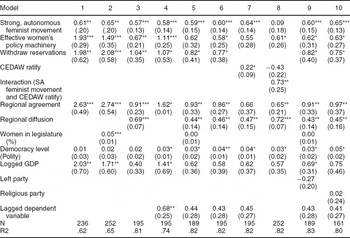
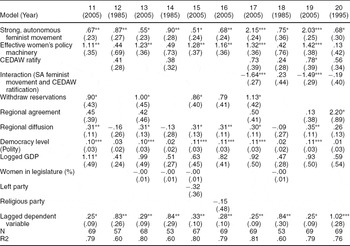




Comments
No Comments have been published for this article.