Introduction
Global broiler production has increased by 18% over the past 10 years and it is estimated that broiler production will account for more than half of the world's total meat output over the next decade (OECD/FAO, 2015). This growth will be supported by increased meat consumption globally as diets shift toward greater protein intake due to rising incomes, especially in the developing countries. Over the last decade, per capita consumption of broiler meat has increased from 26 to 29 kg globally(OECD/FAO, #196;OECD/FAO, #196;OECD/FAO, #196) and from 35 to 44.8 kg in Australia specifically (ABARES, 2015). This steady increase in demand for broiler meat requires more production in the future.
Broiler farms are often located near to urban and rural residential areas and expansion in their capacity may increase the risk of odour nuisance. Impacts of odours on nearby residences, communities and the environment have been recognised by the chicken meat industry and regulatory authorities as a cause of concern. Some odorants such as hydrogen sulphide (H2S), dimethyl sulphide, dimethyl disulphide, dimethyl trisulphide and methyl mercaptan released from broiler farms have been reported to produce an adverse effect on the health of humans and birds (Wadud, Reference WADUD2011). These concerns may prevent the establishment of new broiler farms or limit the expansion of existing ones, thus restricting development of the industry. Abatement of odour emissions has become important to the chicken meat industry.
In an effort to address odour issues from broiler farms, there have been attempts to develop mitigation strategies including litter treatments, biofilters, neutralising agents, air scrubbers, ozone treatment, windbreak walls and short stacks but these techniques are generally costly or impractical due to the required high ventilation rates in broiler farms (Dunlop and Gallagher, Reference DUNLOP and GALLAGHER2011). The requirement for ‘dry and friable litter condition’ by the RSPCA (2013) in broiler farms may partly address odour issues as lower litter moisture has been shown to reduce the emissions of odorants such as methyl mercaptan, H2S, dimethyl sulphide, ammonia (NH3), trimethyl amine, phenol, indole, and 3-methyl-indole (Sharma et al., Reference SHARMA, CHOCT, DUNLOP, WU, CASTADA and SWICK2016a). However, drying litter by increasing the ventilation rate is a costly process. Feed and gastrointestinal problems can exacerbate water excretion and contribute to wet litter condition. The principle of dietary manipulation is to carefully select ingredients, additives and enzymes to meet the nutrient requirements and rearing conditions of birds to reduce excess nutrients and increase digestibility of ingredients in the diet. It is suggested that lower levels of excreted nutrients will reduce the precursors for odour production. In this context, it may be easier and more practical to use dietary means to improve litter quality and odour emissions. This review will focus on the role of diet on odour emissions from broilers.
Odorants from broiler production
Odour is formed by the combination of hundreds of odorants, which may be classified as volatile organic compounds (VOC) or gases such as NH3 or H2S (O'Neill and Phillips, Reference O'NEILL and PHILLIPS1992; Schiffman et al., Reference SCHIFFMAN, BENNETT and RAYMER2001; Hobbs et al., Reference HOBBS, WEBB, MOTTRAM, GRANT and MISSELBROOK2004; Lacey et al., Reference LACEY, MUKHTAR, CAREY and ULLMAN2004). Odours are produced in broiler operations primarily from microbial decomposition of waste products such as excreta, feathers, dust and bedding (Dunlop et al., Reference DUNLOP, GALLAGHER and SOHN2010). Microbial decomposition in litter occurs under both aerobic (dry) and anaerobic (wet and caked) conditions (Jiang and Sands, Reference JIANG and SANDS2000). Aerobic degradation of organic matter produces nitrogen containing odorants such as NH3, amines, indole and skatole whereas anaerobic degradation predominantly produces sulphurous compounds such as H2S, mercaptans (thiols), dimethyl disulphide and dimethyl trisulphide (Jiang and Sands, Reference JIANG and SANDS2000). In addition, odours may be emitted from the birds themselves (Lacey et al., Reference LACEY, MUKHTAR, CAREY and ULLMAN2004).
An early review paper of O'Neill and Phillips (Reference O'NEILL and PHILLIPS1992) listed 168 compounds associated with livestock wastes of which 30 had very low odour detection thresholds of ≤ 0.001mg per m3. They found that six of the ten compounds with the lowest odour detection thresholds contained sulphur. This may be the reason that foul odours have often been described as a sulphurous or like ‘rotten eggs’. Banwart and Bremmer (Reference BANWART and BREMMER1975) reported that production of methyl mercaptan exceeded that of H2S in broiler excreta.
Over the past 20 years there have been numerous investigations to identify key odorants specific to broiler farms. Jiang and Sands (Reference JIANG and SANDS2000) reported low threshold (≤1.3 ppb) and high threshold odorous compounds from broiler farms. Low threshold odorants included methyl mercaptan, ethyl mercaptan, propyl mercaptan, dimethyl sulphide, dimethyl disulphide, dimethyl trisulphide, butyric acid, indole and skatole. High threshold odorants included acetic acid, acetone, acetaldehyde, carbon disulphide and methanol. Their study suggested that dimethyl disulphide was dominant in broiler farms. Trabue et al. (Reference TRABUE, SCOGGIN, MITLOEHNER, LI, BURNS and XIN2008a) demonstrated that methyl mercaptan was the principal sulphur-containing odorant in broiler litter and because it had the lowest odour threshold level among other odorants, it could highly contribute to foul smells even at very low concentrations. Later, Trabue et al. (Reference TRABUE, SCOGGIN, LI, BURNS and XIN2008b) showed that butanoic acid, 3-methylbutanoic acid and 4-methylphenol were constituents of broiler litter odour. More recently, Dunlop and Gallagher (Reference DUNLOP and GALLAGHER2011) identified 13 odorous compounds out of several non-methane volatile organic compounds (NMVOC) and volatile organic sulphur compounds (VOSC) frequently occurring from broiler farms. These included acetone, 2,3-butanedione, 3-hydroxy-2-butanone, dimethyl disulphide, 1-butanol, 3-methyl-butanal, heptanal, octanal, benzene, toluene, dimethyl trisulphide, α-pinene and β-pinene. Furthermore, Pillai (Reference PILLAI2011) identified 2-butanone, phenol, cresols, propionic acid and butanoic acid in the litter as emission gases having nauseating odour characters.
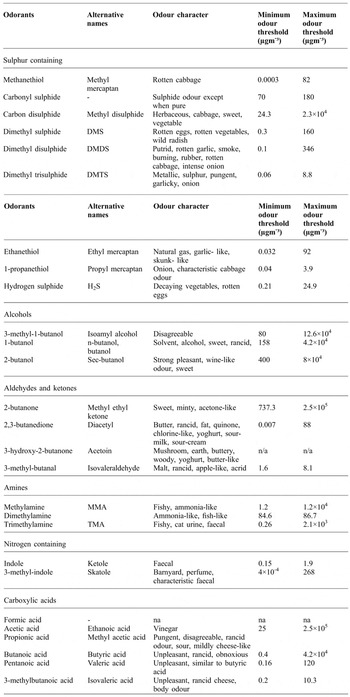
Research suggests that odorants may well be correlated with overall odour intensity and offensiveness. A report by Dunlop and Gallagher (Reference DUNLOP and GALLAGHER2011) highlighted a significant positive correlation between odorant concentration and intensity with only nine specific compounds in piggery wastes (r² = 0.87). In a more recent study, Murphy et al. (Reference MURPHY, PARCSI and STUETZ2014) reported eight VOC from tunnel-ventilated broiler farms that were considered important predictors of odour. These were dimethyl sulphide, dimethyl trisulphide, 2,3-butanedione, 3-methyl-butanal, 1-butanol, 3-methyl-1-butanol, 3-hydroxy-2-butanone, and 2-butanone. Based on these findings, a list of selected odorants associated with broiler farms, along with their odour characters and threshold levels, have been compiled ( Table 1 ). These odorants contribute to noxious odour from broiler farms and thus may be targeted by dietary means or litter treatments in odour abatement studies.
List of selected odorants with their odour characteristics and threshold levels (adapted from Dunlop et al., Reference DUNLOP, BLACKALL and STUETZ2016a).

Collection and measurement of VOC
The concentration of odorous compounds emitted from broiler litter is often very low. Therefore, it is important to use proper techniques to collect, identify and quantify the odorants accurately in odour abatement studies. The concentration of odorants can be measured analytically using different instruments. In this review, we have focused only on analytical measurements with instruments that are more sensitive to odorants both qualitatively and quantitatively and thus not all instruments are covered.
Solid-phase micro-extraction (SPME) with gas chromatography-mass spectrometry (GC-MS) has been used to collect and measure odorants from laying hen excreta (Cai et al., Reference CAI, KOZIEL, LIANG, NGUYEN and XIN2007), headspace air of swine, dairy manure (Koziel et al., Reference KOZIEL, LO, CAI and WRIGHT2010; Laor et al., Reference LAOR, KOZIEL, CAI and RAVID2008; Lo et al., Reference LO, KOZIEL, CAI, HOFF, JENKS and XIN2008), and from beef cattle operations (Wright et al., Reference WRIGHT, EATON, NIELSEN, KUHRT, KOZIEL, SPINHIRNE and PARKER2005). During sample collection and measurements, the SPME fibre is exposed to the headspace air above the sample for a suitable period of time and then odorous compounds are thermally desorbed in the heated injection port of a GC-MS (Matich and Pawliszyn, Reference MATICH and PAWLISZYN1999). Sometimes the SPME-GC-MS technique may not detect all the volatile compounds, especially the ones which have very low concentrations such as mercaptans and sulphur compounds (Sharma et al., Reference SHARMA, CHOCT, WU, SMILLIE, MORGAN, OMAR, SHARMA and SWICK2016b) and thus it is important to select appropriate SPME fibres, columns and detectors in GC-MS to measure all the compounds of interest. The multidimensional GC-MS used by Wright et al. (Reference WRIGHT, EATON, NIELSEN, KUHRT, KOZIEL, SPINHIRNE and PARKER2005), Cai et al. (Reference CAI, KOZIEL, LIANG, NGUYEN and XIN2007), Lo et al. (Reference LO, KOZIEL, CAI, HOFF, JENKS and XIN2008) and Koziel et al. (Reference KOZIEL, LO, CAI and WRIGHT2010) that used multiple columns (both polar and non-polar columns) in a GC-MS with olfactometry system may be more effective in identifying and quantifying complex odorants within broiler farms.
Another method to collect and measure odorants emitted from broiler farms or the litter surface is thermal desorption gas chromatography mass spectrometry (TD-GC-MS)(Dunlop et al., Reference DUNLOP, RISTOVSKI, GALLAGHER, PARCSI, MODINI, AGRANOVSKI and STUETZ2013; Parcsi et al., Reference PARCSI, SIVRET, WANG and STUETZ2012; Pillai et al., Reference PILLAI, PARCSI, WANG and STUETZ2012; Reference PILLAI, PARCSI, WANG, GALLAGHER, DUNLOP and STUETZ2010). During sample collection, thermal desorption tubes (sorbent tubes) pre-concentrate the sample air through a sorbent bed such as activated carbon, graphitised carbon blacks, carbon molecular sieves or carbon based porous polymers or a multi-sorbent bed. The captured analytes are then thermally liberated in the heated injection port of a GC-MS. Odorous air samples may also be collected by means of gas bags (polyvinyl fluoride-Tedlar®; polytetrafluoroethylene-Teflon®; polyethylene tetraphthalate; aluminium foil) or a gas sampling canister. Instead of pre-concentrating the sample (as with SPME or sorbent tubes), the entire sample is collected and kept within the bag or canister (Parcsi, Reference PARCSI2010). Problems that may occur with the use of thermal desorption tubes, gas bags or canisters include greater possibility of sample loss during collection, transportation and storage before the samples are analysed using GC-MS. The odorants such as mercaptans, which are not stable, may dimerise to form disulphides (Parcsi et al., Reference PARCSI, SIVRET, WANG and STUETZ2010) and may not be quantified accurately whereas the concentrations of disulphides may be overestimated.
Fourier transform infrared (FTIR) spectroscopy is another instrument that has been used to measure odorant concentrations from commercial swine (Van Kempen et al., Reference VAN KEMPEN, POWERS and SUTTON2002), turkey farms (Witkowska, Reference WITKOWSKA2013) and broilers reared in experimental settings (Sharma et al., Reference SHARMA, CHOCT, WU, SMILLIE and SWICK2015). The FTIR typically operates in the mid-infrared range and all organic compounds interact with infrared radiation yielding compound specific absorption characteristics whose intensity follows Beer's law. Because the strength of the absorption at certain wavelengths is proportional to the gas concentration, FTIR spectrum can be used for calculating gas concentrations. Using FTIR, it is possible to identify and quantify the volatile compounds in air, presuming that their concentration is above the detection limit of the instrument and spectral features of different compounds can be adequately separated (Van Kempen et al., Reference VAN KEMPEN, POWERS and SUTTON2002).
Selected ion flow tube mass spectrometry (SIFT-MS) is an emerging technology capable of measuring certain VOC at parts per trillion (ppt) air concentrations in real time (Prince et al., Reference PRINCE, MILLIGAN and MCEWAN2010). It allows for rapid, economical and convenient quantification of VOC and certain inorganic gases such as NH3 and H2S, based on full mass scans in the m/z range of 15 to 250 using three different precursor ions (H3O+, NO+ and O2 +). These ions are mass selected and react with trace VOC in very well controlled ion-molecule reactions but do not react with the major components of air, allowing SIFT-MS to analyse whole air for trace VOC to ppt levels (Atzeni et al., Reference ATZENI, LANGFORD, PRINCE and MAYOR2016). SIFT-MS may be operated in two modes: (1) full scan mode (FSM), which allows identification and quantification of non-targeted compounds and (2) selected ion mode which targets specific compounds for highly sensitive quantitative analysis, providing significantly lower limits of quantification and better precision than FSM (Annett et al., Reference ANNETT, VISTE, CHIRINO-TREJO, CLASSEN, MIDDLETON and SIMKO2002). SIFT-MS has been previously used to measure odorants from broiler and pig farms and was found to provide repeatable quantification of VOC and organosulphur compounds (Van Huffel et al., Reference VAN HUFFEL, HEYNDERICKX, DEWULF and VAN2012; Atzeni et al., Reference ATZENI, LANGFORD, PRINCE and MAYOR2016; Sharma et al., Reference SHARMA, CHOCT, DUNLOP, WU, CASTADA and SWICK2016a; Reference SHARMA, CHOCT, KEERQIN, MORGAN, WU and SWICK2016c). The advantage of SIFT-MS over GC-MS is that with SIFT-MS the odorant concentrations in the sample can be measured in real-time without the need for sample pre-concentration. This reduces the risk of sample loss and the concentration of odorants can be quantified accurately. Similar to SIFT-MS, proton-transfer-reaction mass spectrometry (PTR-MS) can be used for online measurement of odorants. PTR-MS has been used to measure odorants from pig rearing facilities (Feilberg et al., Reference FEILBERG, LIU, ADAMSEN, HANSEN and JONASSEN2010; Hansen et al., Reference SEN, INGALE, KIM, KIM, KIM, LOHAKARE, KIM, KIM, RYU and KWON2012) and cattle production (Ngwabie et al., Reference NGWABIE, SCHADE, CUSTER, LINKE and HINZ2008). It has not been used to measure odorants from broiler farms yet.
Thus, there are many different ways to measure odorants analytically. The choice of the method depends on availability of the instruments and the nature of the compounds to be measured. A challenge is that compounds with high volatility and reactivity can be difficult to measure accurately. Thus, instruments such as SIFT-MS and PTR-MS may be useful to measure odorants more accurately in abatement studies.
Origin of odorous compounds
In broiler farms, odour is emitted mainly from the litter and the major source is the excreta, which in the case of broilers, is the mixture of faeces and uric acid that accumulates in litter over time (Jiang and Sands, Reference JIANG and SANDS2000). The faecal portion may contain undigested dietary components (carbohydrates, proteins, fats, vitamins, minerals, etc.), endogenous secretions (mucins, enzymes, sloughed mucosa, etc.), microflora in the gastrointestinal tract and their metabolites. The range of nutrients in broiler excreta collected over eight different feeding trials, as reported by Van der Hoeven Hangoor et al. (2013), contained crude protein (CP) (194 g/kg), crude fat (78 g/kg), ash (57 g/kg) and crude fibre (30 g/kg). In their study, concentrations of Ca (8.3 g/kg), K (8.2 g/kg) and P (6.6 g/kg) in excreta were higher compared to other minerals. The breakdown of protein in excreta produces peptones, peptides, amino acids and finally NH3 and odorous metabolites, including those containing sulphur. The carbohydrate portion of excreta includes low molecular weight carbohydrates such as mono-, di- and oligosaccharides; starch, and non-starch polysaccharides (NSP). These carbohydrates can be broken down in the litter by microbial action and further fragmented into alcohols, aldehydes, ketones and organic acids. Bacteria hydrolyses fat into fatty acids and alcohols. Some of the metabolic end products of these nutrients are volatile and odorous. Fresh droppings are less odorous but, as they accumulate in the litter, the odour intensity gradually increases. The generation and emission of odour from litter are regulated by numerous factors such as microbial activity, excreta properties, litter moisture content, temperature and pH of litter, bird number, exhalations, flatulence and faeces, diet, bird age, ventilation rate, climate, dust levels, and others (Dunlop and Gallagher, Reference DUNLOP and GALLAGHER2011). Microbial diversity in litter plays a major role in odour production along with environmental factors (Wadud, Reference WADUD2011) and therefore the conditions that favour microbial activity in the litter are likely to increase odour emissions. Diet regulates the amount of substrates that are deposited in the litter and thus affects the litter quality (moisture, pH) and microbial activity in the litter. There is a wide range of microbes in broiler litter that metabolise the undigested component in the diets to odorous metabolites. The most abundant bacterial genus includes Lactobacillus, Staphylococcus, Brevibacterium, Brachybacterium, Jeotgalicoccus, Facklamia and Atopostipes (Wadud, Reference WADUD2011). The biochemical basis of microbial odorant production has been reviewed by Le et al. (Reference LE, AARNINK, OGINK, BECKER and VERSTEGEN2005), Hobbs et al. (Reference HOBBS, WEBB, MOTTRAM, GRANT and MISSELBROOK2004), Mackie et al. (Reference MACKIE, STROOT and VAREL1998) and Spoelstra (Reference SPOELSTRA1980). By understanding the origin of odorous metabolites in the gut and in the litter, it may be easier to develop odour mitigation strategies at the source.
sulphur containing odorants
The major sulphur containing odorants emitted from broiler farms are methyl mercaptan, ethyl mercaptan, propyl mercaptan, dimethyl sulphide, dimethyl disulphide, dimethyl trisulphide, carbonyl sulphide, carbon disulphide and H2S (Jiang and Sands, Reference JIANG and SANDS2000). The production of these sulphur compounds has been reported to occur by either metabolism of sulphur containing amino acids (methionine, cystine and cysteine) or by sulphate reduction. When excreta is stored anaerobically, sulphur containing amino acids in the excreta are broken down by micro-organisms into sulphides and mercaptans (Mackie et al., Reference MACKIE, STROOT and VAREL1998). Dimethyl disulphide is the oxidation product of methyl mercaptan and dimethyl trisulphide is produced by the oxidation of H2S and methyl mercaptan (Chavez et al., Reference CHAVEZ, COUFAL, CAREY, LACEY, BEIER and ZAHN2004). Microbes can utilise cysteine to form carbonyl sulphide (Banwart and Bremmer, Reference BANWART and BREMMER1975). Recently, Wadud (Reference WADUD2011) reported a strong positive correlation of Lactobacillus spp. with the production of methyl mercaptan and dimethyl disulphide in the litter which is thought to occur by the catabolism of methionine (Seefeldt and Weimer, Reference SEEFELDT and WEIMER2000). Similarly, Proteus mirabilis and Staphylococcus cohnii were found to produce dimethyl disulphide. In an in-vitro study, Sharma et al. (Reference SHARMA, CHOCT, KEERQIN, WU and SWICK2016d) showed that Clostridium perfringens may produce sulphur compounds such as methyl mercaptan, ethyl mercaptan 1-propyl mercaptan dimethyl sulphide, carbonyl sulphide and H2S.
Sulphates are usually supplied as additives in broiler diets (e.g. the use of copper sulphate as a growth promoter, calcium sulphate as an acidifying agent or lysine sulphate as a source of synthetic amino acid) or by depolymerisation and desulphation of endogenously produced sulphated glycoproteins such as mucins. Glucosinolates in canola meal and other non-sulphate compounds with sulphur may also supply sulphur in broiler diets. During sulphate reduction, H2S is produced by either an assimilatory or a dissimilatory pathway. In the assimilatory process, bacteria produce enough reduced sulphur for the biosynthesis of cysteine and methionine whereas, in the dissimilatory process, sulphate is used as an electron acceptor to produce sulphides (Mackie et al., Reference MACKIE, STROOT and VAREL1998). The bacteria that are sulphate reducers belong to the genera Desulphovibrio, Desulphotomaculum, Desulphobacter, Desulphococcus, Desulphonema, Veillonella, Megasphaera, and Enterobacteria (E.coli and Salmonella spp.) (Mackie et al., Reference MACKIE, STROOT and VAREL1998). According to Spoelstra (Reference SPOELSTRA1980), sulphate-reducing bacteria also produce trace amounts of carbonyl sulphide, carbon disulphide, and methyl, ethyl and propyl mercaptans.
indoles and phenols
Phenol, p-cresol, 3-methyl phenol (m-cresol), and 4-ethylphenol are important representatives of phenolic compounds, whereas indole and skatole (3-methyl-indole) are indolic compounds. The fermentation of tyrosine, which is a non-essential amino acid, gives rise to phenol, p-cresol, 4-ethyl phenol. Similarly, fermentation of phenylalanine produces phenyl acetate and phenyl propionate whereas indole and 3-methyl-indole are the principal end products of tryptophan metabolism (Macfarlane and Macfarlane, Reference MACFARLANE and MACFARLANE1995). Various intestinal microbes are involved in the metabolism of these aromatic amino acids which includes the members of the genera Bacteroides, Lactobacillus, Clostridium, and Bifidobacterium. Wadud (Reference WADUD2011) showed that Atopostipes spp. are positively correlated with the production of phenol in wet litter conditions.
volatile amines and ammonia
The volatile amines emitted from broiler farms include methyl amine, dimethyl amine and trimethyl amine. Deamination and decarboxylation of amino acids give rise to amines and NH3. In the absence of a carbohydrate source in the caecum of broilers, sources of protein material are fermented and metabolised to salvage energy but the fermentation of protein/amino acids also produce odorous metabolites (Mackie et al., Reference MACKIE, STROOT and VAREL1998). In the gastrointestinal tract and in excreta at a pH of 6-7, deamination of amino acids may occur by the bacteria belonging to the genera Bacteroides, Prevotella, Selenomonas, Butyrivibrio, Lachnospira, Eubacterium, Fusobacterium, Clostridium, Peptostreptococcus, and Acidaminococcus (Mackie et al., Reference MACKIE, STROOT and VAREL1998). Decarboxylation of amino acids occurs at a pH of 5-6 by the bacteria belonging to the genera Bacteroides, Bifidobacterium, Selenomonas, Streptococcus, and Enterobacteria. Ammonia can be odorous near the litter surface or inside the farm but it is highly volatile and easily gets diluted in the atmosphere once it is emitted out of the farm. Thus, ammonia is not generally considered as a significant component of odour downwind from a broiler farm.
volatile fatty acids, alcohols, aldehydes and ketones
The odorous volatile fatty acids produced in the caeca and in the litter of broilers include acetic acid, propionic acid, butyric acid, isobutyric acid and isovaleric acid. In a review by Svihus et al. (Reference SVIHUS, CHOCT and CLASSEN2013), the function and nutritional roles of the avian caeca has been described. The undigested nutrients in the small intestine such as starch, protein and fibre, when in a suitable form, may pass into the caeca and get fermented by the bacteria to produce volatile fatty acids. These undigested nutrients may further get excreted and fermented to produce volatile fatty acids from the litter.
The odorants belonging to the group of alcohols include 1-butanol, 2-butanol, 3-methyl-1-butanol and those belonging to the group of aldehydes and ketones include 2-butanone, 2,3-butanedione, 3-hydroxy-2-butanone and 3-methyl-butanal. Most of these metabolites including acetic acid, propionic and butyric acids are carbohydrate fermentation products produced in the litter by Lactobacillus spp. (Wadud, Reference WADUD2011). The production of butyric acid with Clostridium spp. as a major end product of sugar fermentation has also been reported (Zhu, Reference ZHU2000). Butyric acid and 3-hydroxy-2-butanone have also been reported to be produced by Clostridium spp. in the litter (Wadud, Reference WADUD2011). Among Clostridial spp., Clostridium perfringens has been reported to produce 2,3-butanedione, acetoin, acetic acid, propionic acid, butyric acid and iso-butyric acid in vitro (Sharma et al., Reference SHARMA, CHOCT, KEERQIN, WU and SWICK2016d). Among Bacillus spp., Bacillus hackensackii has been reported to produce 2,3-butanedione and 3-hydroxy-2-butanone during 2,3-butanediol fermentation; Bacillus subtilis to 2-butanone, acetic acid and butyric acid; and Bacillus amyloliquefaciens to 2,3-butanedione, 3-hydroxy-2-butanone and butyric acid. Similarly, Proteus mirabilis was found to produce 2,3-butanedione, 3-hydroxy-2-butanone and 3-methyl-1-butanol (Wadud, Reference WADUD2011). Taken together, there is a diverse microbial community in broiler litter and these microbes metabolise the undigested nutrients and non-nutrient chemical compounds in litter to volatile organic and inorganic compounds some of which are odorous.
Nutritional manipulation of odour emissions
Odour emissions are a normal part of broiler production but they potentially threaten the sustainable development of the broiler industry. There are currently no effective methods to reduce odour emissions that are practical or affordable for use in commercial farms. Diets can be formulated to more closely meet the bird's nutritional requirements to avoid overfeeding and to reduce excretion of undigested components. This will decrease the amount of substrates that the microbes metabolise to odorous compounds (Mackie et al., Reference MACKIE, STROOT and VAREL1998). Thus, diet can play a significant role in controlling odour issues from broiler farms (McGahan et al., Reference MCGAHAN, KOLOMINSKAS, BAWDEN and ORMEROD2002) by reducing the production of odorous metabolites in the gut and in the litter. Diet can affect gut microflora (Yang et al., Reference YANG, IJI and CHOCT2009), faecal microflora (Jung et al., Reference JUNG, HOUDE, BAURHOO, ZHAO and LEE2008), litter moisture content (Francesch and Brufau, Reference FRANCESCH and BRUFAU2004), litter pH (Ferguson et al., Reference FERGUSON, GATES, TARABA, CANTOR, PESCATORE, FORD and BURNHAM1998) and litter water activity (Van der Hoeven-Hangoor et al., Reference VAN DER HOEVEN-HANGOOR, RADEMAKER, PATON, VERSTEGEN and HENDRIKS2014) all of which may affect the emission of odorants from litter (Sharma et al., Reference SHARMA, CHOCT, DUNLOP, WU, CASTADA and SWICK2016a; Jiang and Sands, Reference JIANG and SANDS2000).
supplemental methionine source, dietary sulphur content and odour
Methionine is an essential sulphur-containing amino acid and is the first limiting amino acid in broiler diets. All commercial diets have an added synthetic methionine to satisfy the methionine (or methionine+cysteine) need of birds, and such amino acids are the major source of sulphur in the diet. As summarised in Table 1 , most of the sulphur compounds have a low odour detection threshold and it is logical to assume that any changes in methionine source, level or sulphur content in diets will affect the emissions of sulphur-containing odorants and overall smell intensity. Chavez et al. (Reference CHAVEZ, COUFAL, CAREY, LACEY, BEIER and ZAHN2004) reported the role of supplemental dietary methionine sources on odour emissions from broiler excreta using GC-MS. They compared a total of five treatment diets, one with no supplemental methionine and the others with supplemental DL-methionine or dry methionine hydroxy analogue (MHA) or liquid MHA or sodium methioninate aqueous solution (NaMet). They found that the supplemental methionine sources significantly influenced sulphur containing odorants in the excreta. The concentrations of H2S, carbonyl sulphide and dimethyl disulphide emissions were higher in the birds fed NaMet as compared to those fed DL-methionine or dry methionine hydroxy analogue (MHA) or liquid MHA. Liquid MHA produced lower emissions of methyl mercaptan and dimethyl disulphide compared to other supplementary methionine sources. These results suggest that NaMet may not be desirable and that liquid MHA may reduce the risk of odour impacts in broilers. It may be speculated that the diets which contained NaMet had higher Na level that increased the dietary electrolyte balance resulting in higher litter moisture and emission of sulphur compounds. Unfortunately, the Na level in the diets were not measured in their study but there was no difference in excreta moisture content between the treatments. It may be possible that undigested MHA oligomers were not readily metabolised by microbes. However, additional studies on methionine sources may be necessary to investigate other possible odorants including the sulphur compounds. In an experiment with growing pigs, Le et al. (Reference LE, AARNINK, JONGBLOED, VAN DER PEET-SCHWERING, OGINK and VERSTEGEN2007a) found that supplementing sulphur containing amino acids (methionine and cysteine) in surplus of the requirement increased odour emissions, odour intensity and reduced hedonic tone (more unpleasant) from the air above the manure pits. High odour emissions due to increased level of sulphur amino acids were thought to be due to the availability of precusors for the formation of H2S, methyl mercaptan, dimethyl sulphide, dimethyl disulphide and dimethyl trisulphide in manure and in the air. In this context, it would be of interest to investigate the effect of replacing some portions of dietary methionine and choline with alternative methyl donors, such as betaine, on odour emissions.
Shurson et al. (Reference SHURSON, WHITNEY and NICOLAI1999) studied the effect of using low and high sulphur diets for pigs and found that low sulphur diets reduced the emission of H2S by 30% without affecting the performance. Similarly, Whitney et al. (Reference WHITNEY, NICOLAI and SHURSON1999) reported the tendency of a low sulphur piglet diet to reduce H2S emissions from the stored manure. These findings are in line with the finding of Wu-Haan et al. (Reference WU-HAAN, POWERS, ANGEL, HALE and APPLEGATE2007) who observed increased production of H2S from laying hen excreta which was thought to be due to the use of calcium sulphate as an acidifying agent in the diet. These experiments suggest that both methionine source and sulphur content in the diets may have an impact on odour emissions. However, different results were obtained by Wu-Haan et al. (Reference WU-HAAN, POWERS, ANGEL and APPLEGATE2010) in an experiment with distillers dried grains with solubles (DDGS) as a feed ingredient for laying hens. In this study, laying hens were fed 0, 100, and 200 g/kg DDGS diets that contained 2.2, 2.7, and 4.2 g/kg sulphur respectively. The results showed that feeding the diet containing 200 g/kg DDGS to laying hens at 21 to 26 weeks of age reduced daily NH3 emissions (mg/g of N intake) by 24% and H2S emissions (mg/g of S intake) by 58% compared with emissions from hens fed diets containing 0 to 100 g/kg DDGS, although total sulphur content in excreta was higher in the hens fed the 200 g/kg DDGS diet. This suggests that a high sulphur diet (200 g/kg DDGS diet) fed to laying hens for a short period of time (five weeks) decreases NH3 and H2S emissions. However, the effect of feeding higher DDGS to laying hens on long term emissions from stored excreta remains to be determined. In broilers and laying hens, the requirements of dietary sulphur have not been established. It is thus important to produce a reliable database of sulphur content in feed ingredients and run experiments with graded levels of dietary sulphur to investigate its effect on performance, litter quality and odour. The use of low sulphur feed ingredients, monitoring of sulphate content in drinking water, replacement of supplemental lysine sulphate by lysine hydrochloride, copper sulphate by copper chloride and calcium sulphate by other acidifying agents may be ways to reduce odour emissions. Thus, there may be an opportunity to reduce sulphur and sulphate content in diets and drinking water to minimise the emissions of sulphurous compounds from broiler excreta.
ingredient source and odour
It may be argued that change in protein source in broiler diets can affect odour emissions partly because of the difference in the digestibility of protein meals that can affect the post excretion decomposition pattern. In a study with growing-finishing pigs, Van Heugten and Van Kempen (Reference VAN HEUGTEN and VAN KEMPEN2002) reported a high excreta odour concentration with the addition of feather meal up to 120 g/kg in a diet that contained fish meal. This may be related to reduced digestibility and higher sulphur content of feather meal that contributed to higher dietary total sulphur content. Soybean meal (SBM), canola meal (CM) and meat and bone meal (MBM) are three commonly used protein sources in broiler diets worldwide. Soybean and CM contain antinutritional factors, such as indigestible oligosaccharides, phytate and glucosinolate, that impede the digestion of nutrients. Similarly, MBM is an animal by-product that varies widely in nutritional composition, contains a lower level of digestible protein and amino acids than SBM and has an unpleasant smell that could contribute to odour. Thus, it is of interest to study and compare litter odorants associated with diets varying in protein sources. Sharma et al. (Reference SHARMA, CHOCT, WU, SMILLIE and SWICK2015) compared odorant emissions from broilers reared in closed metabolic chambers using fourier transform infrared (FTIR) spectroscopy. The birds were fed diets with different protein sources, whereby test diets contained high levels of SBM (227-291 g/kg), CM (174-190 g/kg) and MBM (74-110 g/kg) and were formulated to be isocaloric, isonitrogenous and with similar digestible amino acid contents. On d 24, the diet that contained a high level of SBM produced a higher concentration of methyl mercaptan, a sulphur containing odorant compared to those that contained high levels of CM or MBM. In the same study, the diets that contained high levels of SBM and CM produced high concentrations of total elemental sulphur at the grower stage compared to the diet that contained a high level of MBM. These authors speculated that high sulphur emissions would be due to the higher litter moisture and lower pH in SBM and CM fed groups.
There are reports that show increased litter moisture with diets based exclusively on vegetable protein sources (Eichner et al., Reference EICHNER, VIEIRA, TORRES, CONEGLIAN, FREITAS and OYARZABAL2007; Hossain et al., Reference HOSSAIN, ISLAM and IJI2013; Sharma et al., Reference SHARMA, CHOCT, WU, SMILLIE and SWICK2015). This may be partly due to a high K content in SBM and sulphur in CM that may have changed the dietary cation-anion balance and increased the water to feed intake ratio (Sharma et al., Reference SHARMA, CHOCT, WU, SMILLIE and SWICK2015). It is known that CM contains high levels of sulphur compared to SBM and MBM and the high inclusion of CM in the diet can increase total dietary sulphur and may partially contribute to odours as described above. These results suggest that both SBM and CM may increase sulphurous odours if they are included in the diets at higher levels and thus it may be desirable to replace some portions of these protein meals with MBM in the diet. This speculation coincides with the general observation being made in commercial broiler farms where wet litter problems were significantly reduced after some portion of SBM was replaced with MBM in the diet (Walker, personal communication). Drying the litter is likely to reduce the emission of sulphurous compounds as described in previous studies (Sharma et al., Reference SHARMA, CHOCT, DUNLOP, WU, CASTADA and SWICK2016a; Dunlop et al., Reference DUNLOP, BLACKALL and STUETZ2016a).
DeCamp et al. (Reference DECAMP, HILL, HANKINS, BUNDY and POWERS2001) reported a 32% reduction in H2S and an 11% reduction in odour concentration when soybean hulls were added to pig diets. Gralapp et al. (Reference GRALAPP, POWERS, FAUST and BUNDY2002) reported no difference in odour concentration when finishing pigs were fed diets added with 100 g/kg DDGS compared to those that were fed diets with either 0 or 50 g/kg DDGS. Pigs offered oat-based diets exhibited 56% reductions in manure odour emissions compared to pigs offered barley based diets (O'Shea et al., Reference O'SHEA, SWEENEY, LYNCH, GAHAN, CALLAN and O'DOHERTY2010). It has been suggested that increasing saccharolytic bacterial species such as Bifidobacterium and Lactobacillus spp. in the caecum and colon of pigs may suppress the formation of odorous metabolites of protein degradation (O'Shea et al., Reference O'SHEA, SWEENEY, LYNCH, GAHAN, CALLAN and O'DOHERTY2010). These findings may have implications in broiler nutrition as the protein content in broiler diets are higher than pigs, and thus the inclusion of some forms of additives in broiler diets to promote Bifidobacterium and Lactobacillus spp. may reduce odour emissions. Thus, it is plausible that ingredient selection while formulating diets may promote or prevent the formation of specific odorants in excreta. In the future, alternative protein sources such as canola, cottonseed and sunflower meals may be used to replace SBM. These alternative ingredients have lower digestibility compared to SBM and thus they may exacerbate wet litter and odour issues if they are included in the diets at higher levels, so considerations should be given to using more protein and fibre degrading enzymes such as protease and carbohydrase in such diets. The potential of such enzymes on odour emissions has been described in the next section.
low protein diets and odour
There has been some renewed interest in feeding low CP diets to broilers. This is mainly because of the availability of synthetic amino acids that are limiting in low protein diets such as arginine, isoleucine, valine and tryptophan at competitive prices. In addition, feeding low CP diets decreases nitrogen excretion and NH3 emissions, reduces litter moisture and decreases litter pH (Ferguson et al., Reference FERGUSON, GATES, TARABA, CANTOR, PESCATORE, FORD and BURNHAM1998; Gates Reference GATES2000; Bregendahl et al., Reference BREGENDAHL, SELL and ZIMMERMAN2002; Sharma et al., Reference SHARMA, CHOCT, DUNLOP, WU, CASTADA and SWICK2016a). These conditions reduce footpad dermatitis (Nagaraj et al., Reference NAGARAJ, WILSON, HESS and BILGILI2007), nasal and eye lesions and improve bird welfare. Studies have indicated that dietary CP levels could be reduced by 20 g/kg in starter, grower and finisher phases without affecting the performance of birds when crystalline essential amino acids are used (Aftab et al., Reference AFTAB, ASHRAF and JIANG2006). But price and availability of crystalline amino acids (arginine, isoleucine and valine) were major factors that affected commercial acceptance of low CP diets. The CP levels in the diet may further be reduced beyond 20 g/kg without affecting broiler performance with the addition of the specific non-essential amino acid glycine, as reported by Dean et al. (Reference DEAN, BIDNER and SOUTHERN2006) and Fatufe and Rodehutscord (Reference FATUFE and RODEHUTSCORD2005). All these benefits may add to the future commercial potential of feeding low CP diets to broilers.
Low CP diet studies in broilers are mainly focused on ammonia, which, as previously described, is not a significant contributor to odour. It is well understood that a low CP diet fed to broilers reduces the concentration of putrefactive metabolites in the caeca such as ammonia, amines, phenols, indoles, skatole, cresol and branched chain fatty acids (Qaisrani et al., Reference QAISRANI, VAN KRIMPEN, KWAKKEL, VERSTEGEN and HENDRIKS2015). A low CP diet formulated to provide all the required amino acids without excesses may reduce putrefaction of animal waste and hence the production of toxic and odorous metabolites in the litter. Sharma et al. (Reference SHARMA, CHOCT, DUNLOP, WU, CASTADA and SWICK2016a) studied the effect of feeding a low or a high CP diet to broilers on odorant emissions. The diets were formulated to contain the same ratio of soybean, canola and meat meals and similar levels of metabolisable energy and digestible amino acid contents. The ratios between the protein meals were similar in both the diets to minimise the effect of protein source on odour but the protein levels differed by 45-50 g/kg. Low CP diet was supplemented with L-valine, L-isoleucine, L-arginine, L-lysine, D,L-methionine and L-threonine. The odorants were collected from litter headspace using a modified U.S. EPA type flux hood (Kienbusch, Reference KIENBUSCH1986) and measured using SIFT-MS by the method described by Sharma et al. (Reference SHARMA, CHOCT, DUNLOP, WU, CASTADA and SWICK2016a). The results showed that the birds fed the low CP diet produced a lower flux of dimethyl amine, trimethyl amine, H2S, ammonia and phenol in litter compared to those fed the high CP diet. The birds fed the low CP diet also tended to produce a lower flux of methyl mercaptan compared to those fed the high CP diet. Studies in pigs have shown reduced methyl sulphide, carbon disulphide, ethanethiol, phenol, 4-ethyl phenol, indole and 3-methyl-indole concentrations in manure by lowering CP in the diet (Le et al., Reference LE, AARNINK, JONGBLOED, VAN DER PEET SCHWERING, OGINK and VERSTEGEN2007b). Similarly, Hobbs et al. (Reference HOBBS, PAIN, KAY and LEE1996) observed that five out of ten odorous compounds in the manure of growing pigs and nine out of ten odorous compounds in the manure of finishing pigs declined when pigs were fed reduced CP diet with supplemented AA, compared with pigs fed a standard commercial diet. Cho et al. (Reference CHO, HWANG and PARK2015) found decreased levels of phenols, indoles, short chain fatty acids (SCFAs) (acetic acid, propionic acid, butyric acid) and branched chain fatty acids (isobutyric acid and isovaleric acid) in manure of the pigs fed 150 g/kg CP diet compared to those fed 200 g/kg CP diet. However, the response of malodour with a change in dietary CP level has been variable in pigs. Otto et al. (Reference OTTO, YOKOYAMA, HENGEMUEHLE, VON BERMUTH, VAN KEMPEN and TROTTIER2003) reported no reduction in manure odour but ammonia concentration was reduced by feeding a low CP diet to pigs. An argument can be made that when low CP diets are formulated with highly digestible protein meals (e.g. SBM) odour emissions are reduced but when low CP diets are formulated with less digestible ingredients (e.g. distillers dried grain with solubles, cottonseed meal, sunflower meal, copra meal, palm kernel cake, canola meal, etc.), odour emissions may increase. Thus, ingredient effects may be more pronounced than CP levels on odour emissions.
This was further speculated by Jha and Berrocoso (Reference JHA and BERROCOSO2016) who mentioned that factors other than dietary CP levels such as protein and starch fermentation and dietary fibre source might modify the production of odorants from swine manure. Thus, when low CP diets are formulated with less digestible ingredients, it may be desirable to use a suitable combination of enzymes that can degrade fibre and protein fractions to a greater extent. It is also important to apply appropriate nutrient matrix values for those enzymes to provide desired nutrients to the birds without excesses. The nutrient matrix values of exogenous feed enzymes largely depend on the nutrient composition of the diets. Unfortunately, there is no reliable database for nutrient matrix values when a combination of two or more enzymes are used in feed formulations. For example when xylanase, phytase and protease are used in combination, it is often difficult to assign nutrient matrix values for these enzymes.
In conclusion, ammonia emissions can be reduced by feeding broilers with a low CP diet supplemented with crystalline amino acids (Ferguson et al., Reference FERGUSON, GATES, TARABA, CANTOR, PESCATORE, FORD and BURNHAM1998; Gates, Reference GATES2000). Although lower emissions of ammonia may not necessarily correlate with the reduced odour emission rates (Le et al., Reference LE, AARNINK and JONGBLOED2009; McGahan et al., Reference MCGAHAN, KOLOMINSKAS, BAWDEN and ORMEROD2002), the simultaneous reduction of phenol, nitrogen and sulphur containing odorants along with ammonia by feeding a low CP diet as observed in the study of Sharma et al. (Reference SHARMA, CHOCT, DUNLOP, WU, CASTADA and SWICK2016a) may reduce the overall intensity and offensiveness of broiler litter odour. Consideration should be given to using highly digestible ingredients or low digestible ingredients with proper enzymes to formulate low CP diets. In addition, the nitrogen contributed by supplemental amino acids has to be taken into account to formulate low protein diets.
dietary minerals, enteric disease, wet litter and odour
Diet composition affects water intake, litter moisture, litter water activity (Aw), litter pH and odour emissions (Francesch and Brufau, Reference FRANCESCH and BRUFAU2004; Sharma et al., Reference SHARMA, CHOCT, WU, SMILLIE and SWICK2015; Reference SHARMA, CHOCT, DUNLOP, WU, CASTADA and SWICK2016a; Reference SHARMA, CHOCT, WU, SMILLIE, MORGAN, OMAR, SHARMA and SWICK2016b; Reference SHARMA, CHOCT, KEERQIN, MORGAN, WU and SWICK2016c; Van der Hoeven-Hangoor et al., Reference VAN DER HOEVEN-HANGOOR, RADEMAKER, PATON, VERSTEGEN and HENDRIKS2014). When the litter is wet or birds are infected with enteric disease or both, there are more complaints on odour from commercial farms (Poernama, personal communication). This observation is in line with previous findings which showed that litter moisture content affected odour from broiler farms (Carey et al., Reference CAREY, LACEY and MUKHTAR2004; Jiang and Sands, Reference JIANG and SANDS2000; McGahan et al., Reference MCGAHAN, KOLOMINSKAS, BAWDEN and ORMEROD2002). Moisture content is expected to affect odour generation because water acts as a catalyst in the process of odour generation, transfer and transport (Jiang and Sands, Reference JIANG and SANDS2000); will increase microbial activity (Carey et al., Reference CAREY, LACEY and MUKHTAR2004); and high levels of moisture content will tend to increase anaerobic bacterial activity (McGahan et al., Reference MCGAHAN, KOLOMINSKAS, BAWDEN and ORMEROD2002). It is therefore plausible that litter with low moisture content will suppress anaerobic bacterial activity and reduce the formation of odorous gases.
The common enteric diseases in broilers are Clostridium perfringens induced necrotic enteritis (NE), E. coli, coccidiosis and other forms of dysbacteriosis. Dietary factors such as energy source (cereal type), protein source and protein levels may predispose birds to NE (Annett et al., Reference ANNETT, VISTE, CHIRINO-TREJO, CLASSEN, MIDDLETON and SIMKO2002; Drew et al., Reference DREW, SYED, GOLDADE, LAARVELD and VAN KESSEL2004). Sub-clinical forms of NE can lead to sticky droppings and dark and moist litter (Kaldhusdal and Hofshagen, Reference KALDHUSDAL and HOFSHAGEN1992). Acute forms of NE may lead to diarrhoea (Helmboldt and Bryant, Reference HELMBOLDT and BRYANT1971) and if NE affected birds produce sticky droppings, diarrhoea and wet litter, then NE may exacerbate odour emissions.
A study was conducted by Sharma et al. (Reference SHARMA, CHOCT, KEERQIN, MORGAN, WU and SWICK2016c) to investigate the effect of sub-clinical NE and high dietary Na level producing wet litter on odour emissions. The birds were fed normal (1.6 g/kg) and high Na (4.0 g/kg) diets by adding salt in presence or absence of NE challenge. On d 20, odorants were collected from litter headspace using a flux hood and measured using SIFT-MS as per the method described by Sharma et al. (Reference SHARMA, CHOCT, DUNLOP, WU, CASTADA and SWICK2016a). Necrotic enteritis challenge increased litter moisture and litter headspace concentrations of dimethyl sulphide, propyl mercaptan, total butanols, acetoin, skatole, butyric acid, methyl amine and tended to increase concentrations of ethyl mercaptan, carbon disulphide, indole and formic acid compared to the unchallenged group. The birds fed a high Na diet produced higher litter moisture content and greater litter headspace concentrations of sulphur compounds and phenol compared to those fed the normal Na diet. In the birds fed a high Na diet and challenged with NE, there was increase in the litter flux of some additional odorants which included 2,3-butanedione, acetic acid, propionic acid, isobutyric acid, isovaleric acid, pentanoic acid, 2-butanone and 3-methyl-1-butanol. These findings suggested that both high Na diet and sub-clinical NE increased the potential for odour emissions from broiler farms. In addition, sub-clinical NE affected broilers may further increase odour emissions if the disease coincides with wet litter conditions. It was speculated that high salt diets caused wet litter that created an anaerobic environment in the litter facilitating rapid biodegradation of litter and reduction in litter pH to increase the emission of sulphurous metabolites. When litter is wet, Clostridium spp. may grow rapidly, resulting in more odorous metabolites produced at a high concentration. In the review by Dunlop et al. (Reference DUNLOP, BLACKALL and STUETZ2016a), it has been reported that the microbiological properties of broiler litter are directly related to Aw, and that maintaining litter below a critical Aw value corresponds with reduced growth of pathogens including Clostridium spp. Salmonella spp. and E. coli as well as other microbiota. Clostridium spp. have been reported to grow well at high litter Aw of 0.90-0.97, which occurs when the moisture content of litter is higher than 18-24% (Dunlop et al., Reference DUNLOP, MCAULEY, BLACKALL and STUETZ2016b). Therefore, control of litter conditions by lowering its moisture content and Aw, and prevention of enteric diseases such as NE in broilers, can reduce the potential for odour problems around the broiler farms (Sharma et al., Reference SHARMA, CHOCT, KEERQIN, MORGAN, WU and SWICK2016c). This is in line with concluding remarks of Jiang and Sands (Reference JIANG and SANDS2000) whereby reducing the moisture content within farms and maintaining litter pH above 7.5 could effectively reduce odour emission from broiler farms by inhibiting anaerobic bacterial activity.
correlation between litter moisture content, Aw, litter pH and odorant emissions
It is evident from above discussion that litter with high moisture content increases odour emissions from broilers. But it is not clear how litter moisture content affects the emission of individual compounds that contribute to odour. Understanding the correlation between litter moisture content and odorants provides an opportunity for nutritionists to target a reduction of specific odorants by using feed or litter additives in abatement studies. Correlations between litter moisture content, Aw, litter pH and odorant emissions have been explained based on the results of two experiments (Sharma et al., Reference SHARMA, CHOCT, DUNLOP, WU, CASTADA and SWICK2016a; Reference SHARMA, CHOCT, KEERQIN, MORGAN, WU and SWICK2016c). Over 30 litter samples from a broiler research farm were analysed during the finisher period (d 29 to 35). The results showed that methyl mercaptan, H2S, dimethyl sulphide, trimethyl amine, phenol, indole and skatole had significant positive correlations with litter moisture. Dimethyl disulphide tended to be positively correlated with litter moisture whereas methyl amine, propionic acid and butanoic acid tended to be negatively correlated with litter moisture. There was no correlation between litter moisture and odorants belonging to the group of alcohols, aldehydes and ketones. There was an exponential relationship between litter moisture and Aw values on d 29. Aw increased until it reached a value of 1.0 at a litter moisture of approximately 50%. This was similar to the findings by Himathongkham et al. (Reference HIMATHONGKHAM, NUANUALSUWAN and RIEMANN1999) and Dunlop et al. (Reference DUNLOP, MCAULEY, BLACKALL and STUETZ2016b). Increased Aw enhances the growth of micro-organisms (Payne et al., Reference PAYNE, OSBORNE, JENKINS and SHELDON2007), resulting in increased anaerobic degradation of litter. There was a negative linear relationship between litter moisture and litter pH. In conclusion, high litter moisture increased Aw and favoured the emissions of sulphur containing odorants, trimethylamine, phenol, indole and skatole over others. As litter moisture increased, litter pH decreased and vice-versa which implied that a low litter pH associated with high litter moisture may favour the emissions of sulphur containing odorants.
In a recent study, it was reported that Aw is greatest with fresh bedding material but gradually decreases during the growout with the addition of excreta (Dunlop et al., Reference DUNLOP, MCAULEY, BLACKALL and STUETZ2016b). If this is the case, broilers reared on a fresh litter (e.g. during the starter period) may be more prone to pathogenic infections caused by Clostridium perfringens, Salmonella spp. and other pathogens than those reared on re-used litter but this argument requires further investigation. Taken together, all these findings suggest that the standard set by RSPCA (2013) ‘to maintain litter in a dry and friable condition’ in broiler farms may reduce odour emissions in addition to addressing animal welfare issues. Thus, diets should be formulated to decrease litter moisture content and litter Aw to reduce odour emissions. One of the several ways to improve litter quality is by using suitable enzymes and feed additives in the feed.
enzymes and odour
Enzymes are used in commercial feed to enhance the digestion of nutrients, improve utilisation of phytate P and lower the excretion of nutrients in the environment. The benefits of adding pentosanase (xylanase) to broiler diets based on viscous grains, such as wheat, barley and rye, to improve their nutritive values are well known (Choct, Reference CHOCT2006). Non-starch polysaccharides (NSP) in wheat, particularly the arabinoxylan component, depress the digestion of starch, protein and fat (Choct and Annison, Reference CHOCT and ANNISON1992) and reduce the nutritive value of these diets. The enzymes cleave the large molecules of NSP into smaller polymers within the gut, thereby reducing the thickness of gut contents and increasing the nutritive value of the feed (Bedford et al., Reference BEDFORD, CLASSEN and CAMPBELL1991; Choct and Annison, Reference CHOCT and ANNISON1992). Some forms of xylanase can lower the excreta moisture content (Choct et al., Reference CHOCT, KOCHER, WATERS, PETTERSSON and ROSS2004). Owing to these properties of xylanase, it can be argued that the addition of xylanase in the diets rich in NSP reduces nutrient excretion and odour emissions. In agreement with this hypothesis, McAlpine et al. (Reference McALPINE, O'SHEA, VARLEY, SOLAN, CURRAN and O'DOHERTY2012) reported that pigs offered wheat based diets containing xylanase had a reduced total volatile fatty acids concentration, acetic:propionic acid ratio and manure odour emissions decreased by 54% compared to those fed diets without xylanase. In another study, the combined effect of xylanase and β-glucanase supplementation in diets for growing-finishing pigs was investigated by Garry et al. (Reference GARRY, FOGARTY, CURRAN and O'DOHERTY2007). In their study, the addition of enzyme increased odour emissions but had no effect on NH3 emissions in the barley-based diet but the enzyme combination had no effect on odour but decreased NH3 emissions in the wheat based diet. Taken together, the studies on the effect of xylanase enzyme on odour emissions have only been conducted in pigs and the results so far are inconsistent. A recent study has shown that a combination of xylanase, amylase and protease enzymes reduced greenhouse gas emissions by 5-9% from broiler production (Bundgaard et al., Reference BUNDGAARD, DALGAARD, GILBERT and THRANE2014). Future research is warranted to investigate the effect of xylanase on odour emissions in broilers.
It is a common practice to use phytase enzymes in broiler diets to improve nutrient utilisation. Phytase is commonly used to degrade the phytate content, thus reducing its anti-nutritional effects, which include reduced nutrient digestion, increased endogenous losses of nutrients and decreased performance (Woyengo and Nyachoti, Reference WOYENGO and NYACHOTI2013). Phytase at higher than usual levels produces extra-phosphoric effects in broilers, such as improved energy, amino acid and P digestibility (Amerah et al., Reference AMERAH, PLUMSTEAD, BARNARD and KUMAR2014, Cowieson et al., Reference COWIESON, WILCOCK and BEDFORD2011) as well as enhanced growth and feed efficiency (Walk et al., Reference WALK, SANTOS and BEDFORD2014). However, phytase has sometimes been associated with increased litter moisture and reduced litter quality. According to Debicki-Garnier and Hruby (Reference DEBICKI-GARNIER and HRUBY2003), fungal phytase at 1000 FTU/kg increased litter moisture at seven days and 21 days post-hatch. The evidence of wet litter with the use of phytase is thought to be due to inappropriate dietary formulations (Dunlop et al., Reference DUNLOP, MOSS, GROVES, WILKINSON, STUETZ and SELLE2016c) that do not use matrix values for Ca, P and Na for phytase that represent nutrient release from raw materials. This will result in a concentration of these minerals in the gut lumen in excess of requirements, making the intestinal contents more hypertonic to blood. This, in turn, reduces water absorption and leads to wet litter (van der Klis and Lensing, Reference VAN DER KLIS and LENSING2007). It has been reported that litter quality can be improved by lowering Ca, available P and Na in diets when phytase enzyme is added with nutrient matrix values (Bedford and Walk, Reference BEDFORD and WALK2015; Sharma et al., Reference SHARMA, CHOCT, WU, SMILLIE, MORGAN, OMAR, SHARMA and SWICK2016b). Thus, it is important to add phytase in diets in a proper way so as to improve performance and litter quality. Sharma et al. (Reference SHARMA, CHOCT, WU, SMILLIE, MORGAN, OMAR, SHARMA and SWICK2016b) used the SPME-GC-MS method to study odour emissions from broilers fed diets with or without phytase, but could not detect differences in the concentration of odorants. The authors speculated that SPME-GC-MS may not be as sensitive as SIFT-MS for collecting and measuring odorants on broiler farms. Recent findings (Sharma et al., unpublished), suggested that phytase may decrease the concentration of branched chain fatty acids (valeric and isovaleric acid) in the caecal contents, which is an indication of increased protein/AA digestibility. Thus, further work is warranted to study the effect of phytase enzymes on odour emissions using instrumentation designed to detect sulphurous compounds more highly associated with odour from broiler farms.
Proteases are used singly or in combination with other enzymes in commercial broiler diets. The use of proteases in broiler diets has been reported to increase the apparent ileal digestibility of energy, fat, CP and AA (Dosković et al., Reference DOSKOVIĆ, BOGOSAVLJEVIĆ-BOSKOVIĆ, PAVLOVSKI, MILOŠEVIĆ, ŠKRBIĆ, RAKONJAC and PETRIČEVIĆ2013), thus resulting in less excretion of intact nutrients. Proteases may affect the efficacy of other enzymes present in the diet and vice-versa. It has been reported that pigs offered diets containing protease had increased molar proportions of isobutyric acid, isovaleric acid, and branched-chain fatty acids and NH3 emissions from excreta compared to those without protease supplementation. However, when protease and xylanase were added together in the diet, there was no effect on NH3 emission (McAlpine et al., Reference McALPINE, O'SHEA, VARLEY, SOLAN, CURRAN and O'DOHERTY2012). It is, therefore, important to conduct research using both single enzymes and their combinations to study odour production. Enzymes indeed improve digestion of feedstuffs and thus may reduce the excretion of nutrients allowing fewer substrates to be available for microbes to convert them to odorous metabolites. More research is needed to understand the role of enzymes on odour emissions from broilers.
feed additives and odour
Feed additives such as in-feed antibiotics, probiotics, prebiotics, synbiotics, saponins, essential oils and organic acids are commonly used in broiler diets as replacement for antibiotics. The use of in-feed antibiotics in animal production has a long history of about 50 years (Dibner and Richards, Reference DIBNER and RICHARDS2005). As the poultry industry moves towards antibiotic free poultry production and decreases the reliance of animal origin feedstuffs, there will be increased enteric disease, decreased performance, increased mortality, increased nutrient excretion, welfare issues and likely increased odour problems. One way to address these challenges is to use such feed additives.
probiotics, prebiotics and odour
Bacillus-based probiotics have been shown to improve performance, decrease pathogen load in the gut and reduce the headspace air concentration of NH3 and H2S in excreta (Jeong and Kim, Reference JEONG and KIM2014; Zhang et al., Reference ZHANG, CHO and KIM2013). An experiment was conducted by Sharma et al. (Reference SHARMA, CHOCT, DUNLOP, WU, CASTADA and SWICK2016a) to investigate odour emissions from birds fed a high protein diet with and without supplementation of a probiotic made up of a blend of three Bacillus subtilis strains. The results showed that the birds fed diets high in CP with a probiotic produced less H2S in litter than those fed the high CP diet alone. These results agreed with the findings of Zhang et al. (Reference ZHANG, CHO and KIM2013) showing lower concentrations of NH3 and H2S in excreta from broilers fed diets supplemented with B. subtilits. Addition of B. subtilis also showed improved nutrient retention, decreased caecal Clostridium and coliform counts (Sen et al., Reference SEN, INGALE, KIM, KIM, KIM, LOHAKARE, KIM, KIM, RYU and KWON2012), reduced ileal, caecal and excreta Salmonella populations, increased Lactobacillus count in the ileum, caecum and excreta and reduced E. coli counts in the excreta of broilers (Jeong and Kim, Reference JEONG and KIM2014; Park and Kim, Reference PARK and KIM2014). Thus, improved nutrient utilisation and reduced counts of H2S producing bacterial species such as Salmonella spp. and E. coli in the gastrointestinal tract and excreta may have resulted in lower emissions of H2S from litter in the probiotic fed group. In contrast, Hossain et al. (2015) observed no difference in H2S and volatile fatty acids emissions from excreta when broilers were fed diets supplemented with tri-strain probiotics consisting of Bacillus subtilis, Clostridium butyricum, and Lactobacillus acidophilus. Similarly, Upadhaya et al. (Reference UPADHAYA, KIM, VALIENTES and KIM2015) observed no difference in faecal concentration of H2S, total mercaptan and volatile fatty acids in growing-finishing pigs when diets were supplemented with a Bacillus based feed ingredient. However, NH3 emissions were reduced in all these studies by the addition of probiotics. The difference in odour emissions other than NH3 observed in these studies may be due to the difference in strains of bacteria used as probiotics and techniques used to measure odour. In broilers, it may concluded with confidence that Bacillus subtilis based probiotics can reduce NH3 and H2S emissions. Chang and Chen (Reference CHANG and CHEN2003) reported the benefits of adding lactobacillus containing probiotics to lower broiler farm malodours. They reported reduced emission of 2-butanone, 1-butanol, dimethyl disulphide and dimethyl trisulphide in diets supplemented with probiotics based on Lactobacillus spp. as measured by GC-MS. Li et al. (Reference LI, QIANG and XU2008) used synbiotics (combination of fructo-oligosaccharides and Bacillus subtilis) in a corn-soybean diet and found that diarrhoea in broilers was reduced by 58%. Thus, these in-feed additives have the potential to reduce odour emissions.
saponins and odour
Saponins are natural detergents or surfactants found in a wide variety of plants. The commercial saponin-containing products are those derived from Yucca schidigera and Quillaja saponaria (Cheeke, Reference CHEEKE2009). A blend of Yucca and Quillaja saponin improved growth and feed efficiency in broilers (Cheeke, Reference CHEEKE2000) and reduced NH3 emissions in laying hens (Chepete et al., Reference CHEPETE, XIN, MENDES, LI and BAILEY2012). Sharma et al. (Reference SHARMA, CHOCT, DUNLOP, WU, CASTADA and SWICK2016a) showed that the group fed the high CP diet with saponin blends produced lower concentrations of trimethyl amine and phenol in litter compared to those fed the high CP diet alone. It has been reported that Yucca extract reduced faecal odours in dogs and cats and altered the chemical array of faecal volatiles (Lowe and Kershaw, Reference LOWE and KERSHAW1997; Lowe et al., Reference LOWE, KERSHAW, TAYLOR and LINFORTH1997). The researchers mentioned that some components of Yucca extracts may directly bind odorants. They noted that the addition of Yucca extracts to dilute aqueous solutions of dimethyl sulphide, dimethyl disulphide, indole and skatole reduced the degree of offensiveness of the odour. Cheeke (Reference CHEEKE2009) reported that the polyphenol component of Yucca was capable of directly binding ammonia and H2S, thus reducing their emissions in animal production facilities. Saponin has also been reported to inhibit microbial fermentation of protein (Cheeke, Reference CHEEKE2000). All these properties of saponin may have resulted in a decreased concentration of odorants in published studies. Thus, probiotic and saponin combinations may be ideal alternatives to in-feed antibiotics in reducing odour from broiler production facilities.
phytogenic feed additives, fermented products and disinfectants on odour
Other additives have been investigated as alternatives to in-feed antibiotics for their growth promoting effect and odour reduction potential. Li et al. (Reference LI, ZHAO, LEI, HOSSAIN and KIM2015) investigated the effect of dietary phytonsine, a phytogenic feed additive extracted from Korean pine, as an alternative to tylosin on growth performance and excreta gas emissions in broilers. The gaseous emissions were measured using a gas sampling pump (Model GV-100, GASTEC Corp. Japan). The results showed that phytonsine improved broiler performance and decreased the concentration of excreta NH3, total mercaptans, acetic acid and H2S linearly with increasing levels. Based on these findings, the authors suggested that phytonsine could be used as an alternative to tylosin to improve performance and decrease excreta gas emission in broilers.
Williams et al. (Reference WILLIAMS, COUFAL, CARAWAY, CARPENTER and LEE2013) reported that the addition of rice-soy fermentate products (BioWISH odour and BioWISH aqua, BioWISH technologies, Naperville, IL, 60563) at 900g/ton of broiler diets resulted in lower emissions of 4-ethyl phenol, para-cresol, indole, skatole, valeric acid, and hexanoic acid as compared to the diet that did not contain rice-soy fermentate products.
Chlorine dioxide (ClO2) is a disinfectant that has been reported to be effective against bacterial contamination of broiler carcasses (Berrang et al., Reference BERRANG, MEINERSMANN, COX and FEDORKA-CRAY2011). The bactericidal action of ClO2 is related to its ability to alter or disrupt cell membrane permeability and penetrate into the cell to disrupt the protein synthesis (Noszticzius et al., Reference NOSZTICZIUS, WITTMANN, KALY-KULLAI, BEREGVARI, KISS, ROSIVALL and SZEGEDI2013). Recently, Ahmed et al. (Reference AHMED, KIM, ISLAM, MUN, BOSTAMI and YANG2015) reported that the supplementation of 1 g/kg ClO2 in broiler diets resulted in reduced excreta pH and lower emissions of H2S, sulphur dioxide and mercaptans. The reduction in emissions of these sulphurous odorants was thought to be due to the reduction in the number of sulphate-reducing bacteria such as E. coli and Salmonella spp. in the excreta. In their study, there was no effect of ClO2 on body weight gain of birds but feed intake decreased resulting into better feed conversion ratio.
Conclusions
Odour emission from broiler production is inevitable, but the concentration of odorants that are emitted from litter may be reduced by dietary means. It is important to measure the concentration of odorants accurately in abatement studies as there are chances of sample loss during collection and storage. Analytical instruments such as SIFT-MS and PTR-MS can measure odorants in real time and at low concentrations and may be useful for studies in future. Diet may affect odour emissions directly by changing the amount of undigested substrates and microorganisms in the gut and excreta and, indirectly, by changing litter moisture content, water activity and pH. Diets can be formulated to more closely meet the bird's nutritional requirements to avoid overfeeding and to reduce the excretion of undigested components. This will decrease the amount of substrates that the microbes metabolise to odorous compounds. Nutritional strategies such as partial replacement of soybean meal with meat meal in the diet, use of low sulphur or low protein diets, Bacillus subtilis based probiotics and saponin supplementation may lower odour emission from broiler production. Additionally, drying the litter results in lower emission of odorants including the ones that contain sulphur, and prevention of necrotic enteritis and wet litter condition may reduce odour emission from broiler production.