Introduction
The transition from hunting and gathering to food-producing economies in Arabia took the form of a shift to mobile pastoralism. Domestic livestock appears to have been introduced in the seventh millennium BC (Drechsler Reference Drechsler2007), when Northern Arabia experienced environmental amelioration during the Holocene Humid Period (Engel et al. Reference Engel, Brückner, Pint, Wellbrock, Ginau, Voss, Grottker, Klasen and Frenzel2012; Dinies et al. Reference Dinies, Plessen, Neef and Kürschner2015)—also known as the Holocene Wet Phase or Holocene Pluvial Phase. Crop cultivation and other features traditionally used to define the Neolithic, however, do not seem to have been practised until the Bronze Age (c. 3000–1200 BC in Northern Arabia) (Preston et al. Reference Preston, Parker, Walkington, Leng and Hodson2012; Magee Reference Magee2014). This situation contrasts strongly with that in the Fertile Crescent, where increasingly sedentary groups initiated a Neolithisation process culminating in the control and domestication of both plants and animals (Bar-Yosef Reference Bar-Yosef2001). The architectural remains of sedentary communities—dwellings, storage facilities and communal property—are highly visible in the archaeological record and are iconic for the Levantine Neolithic. In the ecologically more marginal areas of the Jordanian Badia, Neolithic communities adopted other economic strategies. Here, settlements were occupied seasonally, and subsistence was based on caprine herding, supplemented by hunting and agriculture. Nevertheless, architectural remains in these marginal areas also attest to the construction and use of substantial dwellings throughout the Neolithic (Henry et al. Reference Henry, Cordova, White, Dean, Beaver, Ekstrom, Kadowaki, McCorriston, Nowell and Scott-Cummings2003; Martin & Edwards Reference Martin and Edwards2013; Rollefson et al. Reference Rollefson, Rowan and Wasse2014, Reference Rollefson, Rowan, Wasse, Hill, Kersel, Lorentzen, Al-Bashaireh and Ramsay2016).
The Arabian Neolithic remains poorly understood, although the character of regional Neolithisation has been the subject of considerable recent discussion (e.g. Crassard & Drechsler Reference Crassard and Drechsler2013). Excavated sites are almost exclusively confined to the Gulf coast, Oman and Yemen (see Magee Reference Magee2014), although Neolithic evidence is also widespread, if not well studied, in interior Arabia (Groucutt & Petraglia Reference Groucutt and Petraglia2012; Scerri Reference Scerri2012). Neolithisation models have therefore had to infer demographic and behavioural dynamics across vast distances. These suggest a spread of Levantine herders during the Holocene Humid Period—between c. 8000 and 4000 BC, but varying in timing across Arabia (Drechsler Reference Drechsler2007, Reference Drechsler2009). The site of Al-Rabyah in the Jubbah Oasis of northern Saudi Arabia has yielded a lithic assemblage similar to Epipalaeolithic assemblages in the Levant (Hilbert et al. Reference Hilbert, White, Parton, Clark-Balzan, Crassard, Groucutt, Jennings, Breeze, Parker, Shipton, Al-Omari, Alsharekh and Petraglia2014). Similarly, the assemblage from the Jubbah Oasis site of Jebel Qattar-101 contains el-Khiam and Helwan lithic points. These parallel points from Pre-Pottery Neolithic assemblages in the Levant, but were produced using a different manufacturing method (Crassard et al. Reference Crassard, Petraglia, Parker, Parton, Roberts, Jacobs, Alsharekh, Al-Omari, Breeze, Drake, Groucutt, Jennings, Régagnon and Shipton2013a). The archaeological record therefore provides tentative evidence for population interactions between Arabia and the Levant, although it remains unclear whether this resulted from population movements or cultural diffusion.
Northern Arabia is also rich in rock art. In Shuwaymis, just south of the Nefud Desert, for example, Neolithic imagery indicates that indigenous hunters adopted cattle herding (Guagnin et al. Reference Guagnin, Jennings, Clark-Balzan, Groucutt, Parton and Petraglia2015). Conversely, the rock art in the Jubbah Oasis, while seeming to belong to the same engraving tradition, shows clear differences in content—particularly in the much lower frequency of cattle depictions. Indeed, the rock art here is suggestive of a dynamic Neolithisation process in which local groups changed their subsistence patterns at different rates. Depictions of domestic goats potentially provide links to the caprine pastoralism typical for the Jordanian Badia (Guagnin et al. Reference Guagnin, Shipton, Al-Rashid, Moussa, El-Dossary, Bin Sleima, Alsharekh and Petraglia2017a).
Recent fieldwork at Jebel Oraf in the Jubbah Oasis has led to the first discovery of a Neolithic site with faunal remains in Northern Arabia, where 170 hearths were found clustered along the edge of a palaeolake (Guagnin et al. Reference Guagnin, Shipton, Martin and Petraglia2017b). Two of the hearths have been radiocarbon dated to approximately 7.2 ka, and one of these also yielded tooth fragments from an adult Bos sp.—probably domestic cattle. Both dated hearths appear to be the result of a single, small fire, and the site may have been formed through the repeated construction and use of small hearths by seasonal pastoralists (Guagnin et al. Reference Guagnin, Shipton, Martin and Petraglia2017b). The complete absence of structural remains at this site is striking. This is in contrast to Neolithic sites in the Levant, which all have structural remains, with the single exception of the Pre-Pottery Neolithic B site of Azraq 31 in Jordan (Betts Reference Betts1989).
Here we report the discovery of the site of Alshabah (field code WNEF16_6), comprising a large concentration of hearths located in an interdunal depression in the western Nefud Desert. At Alshabah, the presence of numerous hearths, faunal remains and a substantial lithic assemblage—combined with an absence of structural remains—allows for a detailed investigation of Neolithic desert-mobility patterns in Northern Arabia. The discovery of this site further enables an assessment of the role played by the Nefud Desert in facilitating the connections—implied by the material culture and faunal remains—between Arabian and Levantine Neolithic populations (Crassard et al. Reference Crassard, Petraglia, Parker, Parton, Roberts, Jacobs, Alsharekh, Al-Omari, Breeze, Drake, Groucutt, Jennings, Régagnon and Shipton2013a; Hilbert et al. Reference Hilbert, White, Parton, Clark-Balzan, Crassard, Groucutt, Jennings, Breeze, Parker, Shipton, Al-Omari, Alsharekh and Petraglia2014; Guagnin et al. Reference Guagnin, Shipton, Al-Rashid, Moussa, El-Dossary, Bin Sleima, Alsharekh and Petraglia2017a).
Site description
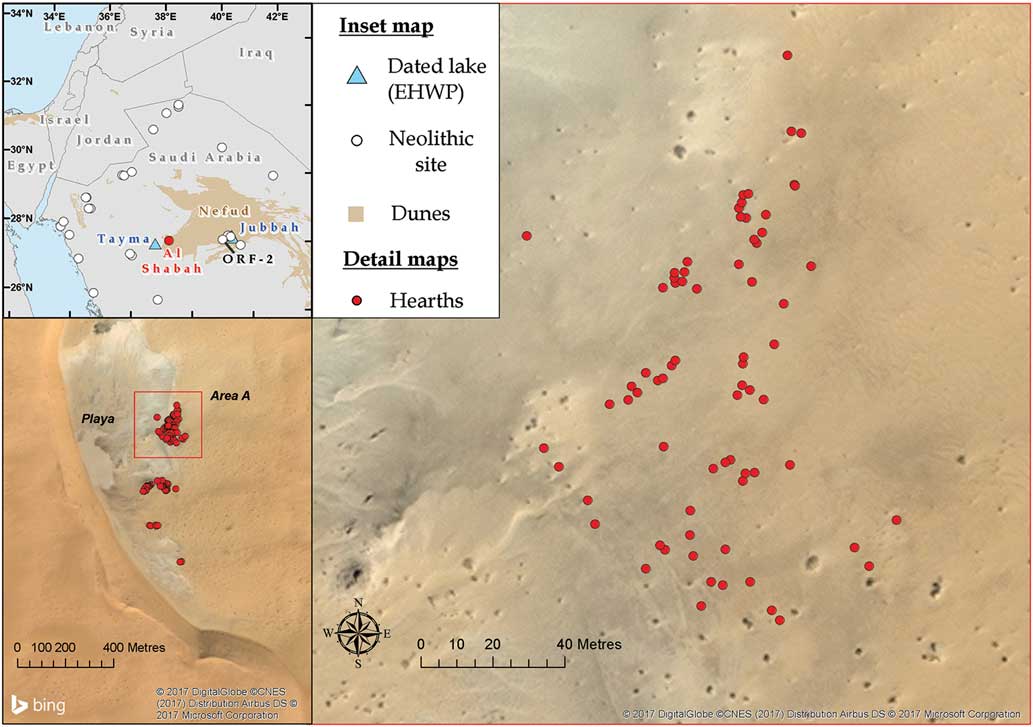
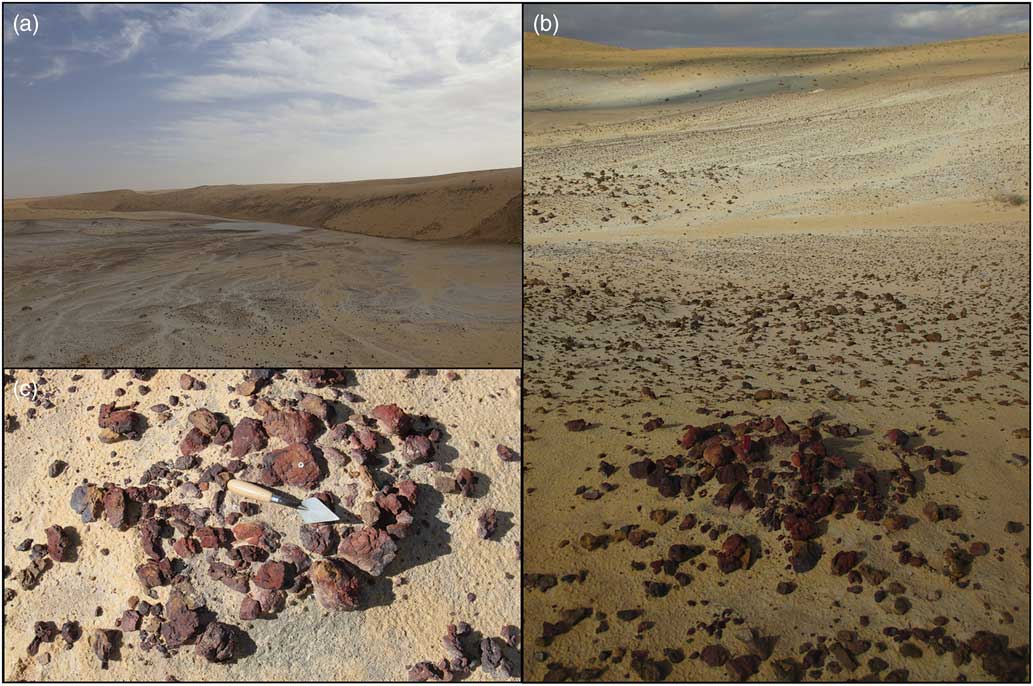
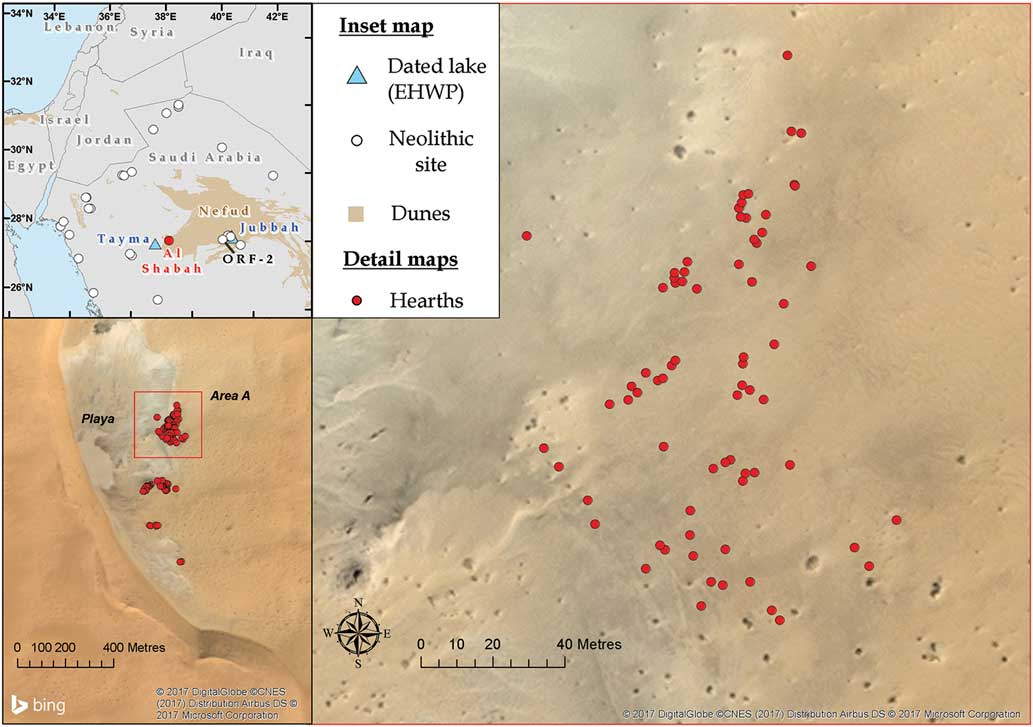
Located in a depression between two dunes, Alshabah sits on the flank of a dune that slopes gently downwards towards a nearby ephemeral lake (or playa) thought to be of Early Holocene date (Breeze et al. Reference Breeze, Groucutt, Drake, Louys, Scerri, Armitage, Zalmout, Memesh, Haptari, Soubhi, Matari, Zahir, Al-Omari, Alsharekh and Petraglia2017) (Figures 1 & 2a). The basin contains eroded remnants of older palaeolake sediments, which, by reference to nearby palaeolakes (Rosenberg et al. Reference Rosenberg, Preusser, Risenberg, Plikk, Kadi, Matter and Fleitmann2013) and scattered handaxes and large flakes, probably date to the Middle Pleistocene. Fresh quartz and chert lithic artefacts were found in low densities along the eastern margins of the playa and on the slope above it. Deflated material from the eroding palaeolake outcrops, including ferruginous sediment clasts and lacustrine chert, are scattered across the basin floor. This material was used to construct the hearths, which were found in three major groups (Figures 1 (bottom left) & 2b–c).
Map of Alshabah. Top left: site location within Arabia, and other Neolithic sites in Northern Arabia. Bottom left: site location in relation to the playa and modern dunes, with hearths marked in red. Right: detailed map of area A.
Views of Alshabah: a) playa beneath the site; b) a hearth and the surrounding landscape on a pavement-like surface of deflated material; c) example of a hearth.

Here, we focus on the northernmost, and densest, concentration of hearths, labelled Alshabah area A (Figure 1). In this area, 125 hearths were recorded using a DGPS system over an area of approximately 150m (north–south) by 80m (east–west) (Figure 1). The hearths are simple, oval-shaped surface features—typically 0.5m in diameter—consisting of rocks collected from the immediate landscape. Many are highly eroded, and it is probable that additional hearths once existed at the site, but are now completely eroded, with their clasts dispersed downslope. Wind erosion of the unprotected soft sediment between hearths has led to the localised spreading of hearth stones. Nonetheless, the recovery of refitting lithics and a dense concentration of ostrich eggshell fragments (in one case probably representing a single egg) demonstrate the integrity of the recorded deposits and features, and the lack of long-distance movement of material within the main hearth cluster.
We conducted test excavations on three of the hearths in area A, together with a systematic collection of artefacts, ostrich eggshell and bone fragments. The excavations indicated a relatively shallow stratigraphy in the hearths, ranging from 0.3–0.5m, and featuring charcoal and ash lenses. At the shallow end of this range, a single burning horizon was observed. The hearths were surrounded by lithics, grindstones and fragments of bone. Two of the hearths were also surrounded by fragments of ostrich eggshell. Burned hearth stones were retrieved for optically stimulated luminescence (OSL) dating. Radiocarbon samples of charcoal from the hearths and associated bone were also collected. Dating of the hearths and analyses of the lithics and fauna assemblages from Alshabah offer the chance to illuminate the Neolithic of Northern Arabia.
Lithic technology
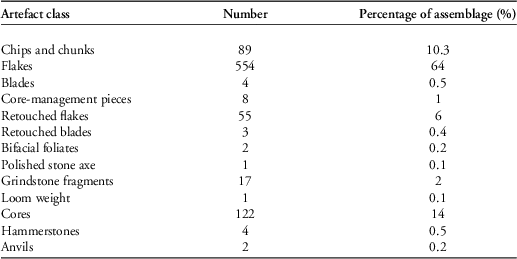
A total of 862 lithic artefacts (exceeding 10mm in length) and grindstone fragments were recovered during the systematic surface collection in area A (Table 1). The lithics were found at a moderate to high density (sometimes >5 per m2), in close association with the hearths. This contrasts with the surrounding landscape, where lithics are found only occasionally.
Collected artefact classes with total numbers and percentages, following methods outlined by Scerri et al. (Reference Scerri, Drake, Groucutt and Jennings2014, Reference Scerri, Blinkhorn, Gravina and Delagnes2016).

The lithic artefacts are made from an array of raw materials, including different types of quartz, quartzite, chert and sandstone. The majority of the raw materials are pebbles procured from fluvial sediments or a conglomerate setting. An exceptional raw material was an extremely fine-grained tabular chert derived from a flat seam. Quartz types range from clear crystal through coarse-grained to pink-veined forms, while quartzites range from very fine- to coarse-grained types. Cherts range from extremely high quality (in knapping terms) to poor quality, locally derived lacustrine chert. Mineralogically, grain size and colour, and raw material variation within clasts is high. Some of these raw materials are rare at the site, and are represented by single blocks or artefacts, while others are more abundant. Quartz and low-quality lacustrine chert occur locally throughout the area, while quartzite of unknown origin is relatively frequent. The higher-quality cherts are from unknown sources and may have been procured quite far from the site, as the local environs are characterised by sandstone bedrock underlying the dunes. Variation in the size of pebbles and cobbles of raw material was also high (0.9–864g), although all appear to be small clasts.
Technologically, the lithic assemblage is homogeneous and not mixed with Palaeolithic artefacts. Flakes and cores are both typically small (mean
 $\overline{{\left[ x \right]}} $
=6g, standard deviation [σ]=13 for flakes,
 $\overline{x} $
=35g, σ=103 for cores), and often feature some cortex, reflecting the frequent use of small pebbles.
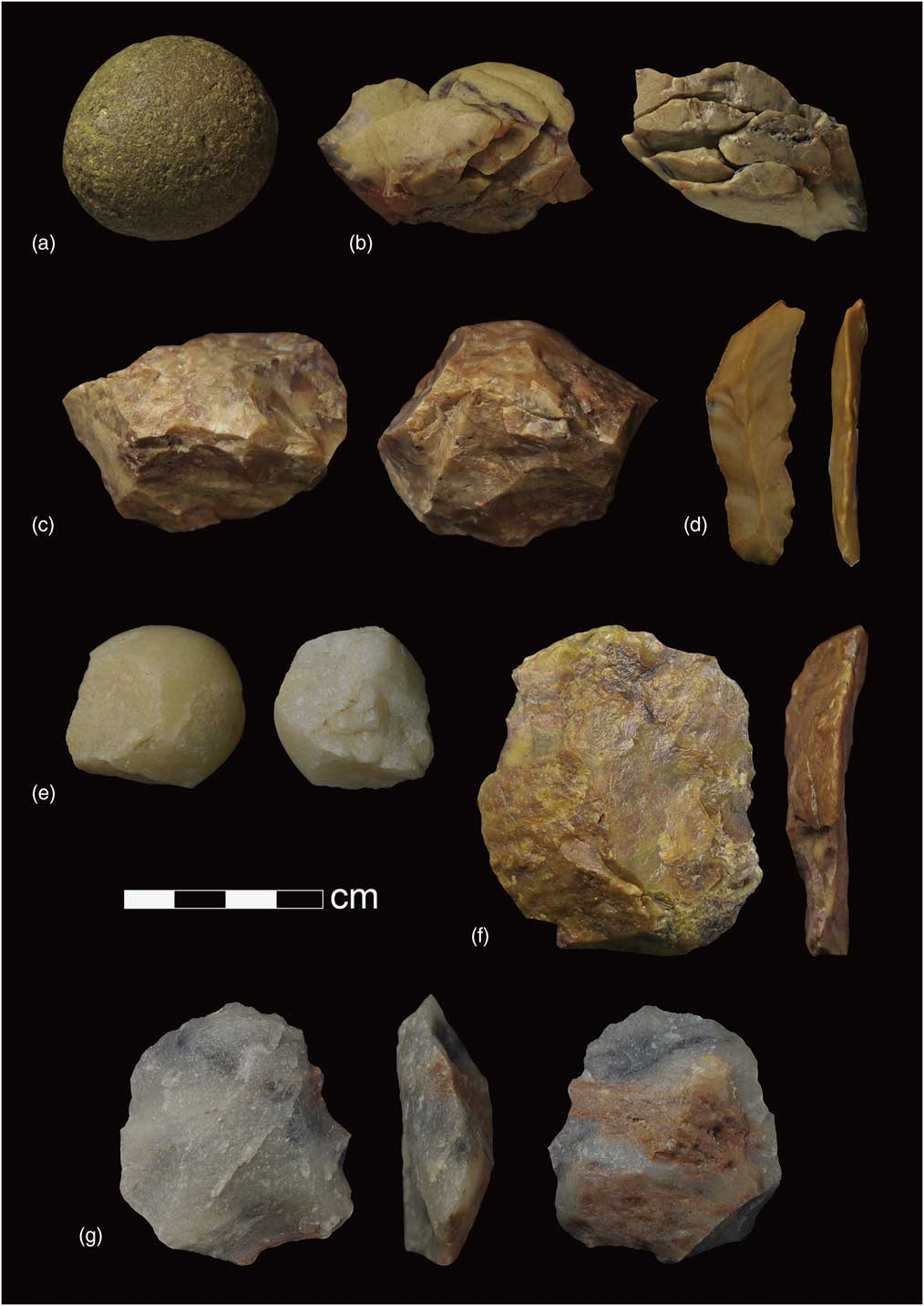
The presence of knapping waste and refitting flakes and cores (Figure 3) indicates that knapping was conducted on site. Reduction intensity and recycling at the site was also high, but not extreme, as indicated by the weight differential between flake products (
 $\overline{x} $
=10g), core-management flakes (
 $\overline{x} $
=8g) and cores (
 $\overline{x} $
=35g).
Cores, flakes and refitted sequences from Alshabah: a) hammerstone; b) refitted quartzite core; c) quartzite radial core; d) chert blade; e) split quartz radial core; f) large quartzite flake; g) distal- and laterally shaped quartz core.
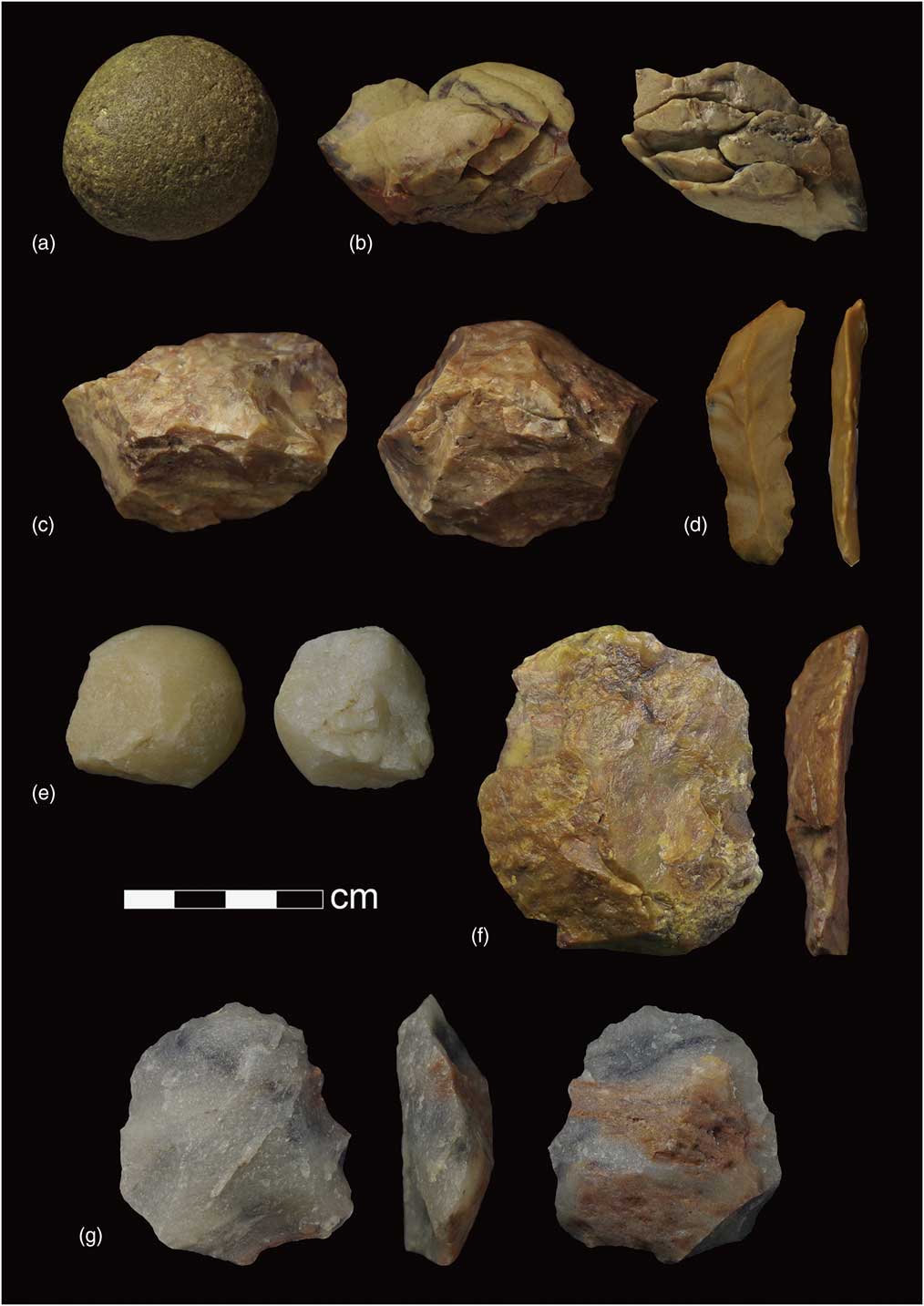
Analysis of the cores and flakes allows for a reconstruction of the technological character of the assemblage. Primarily globular and multiplatform in type, the cores demonstrate a rather ad hoc character to lithic reduction. With respect to the earlier stages of manufacture, there are some indications of more structured, often radial, flaking (Figure 3c & e). Radially flaked quartz cores are flaked on one surface from a cortical platform surface. In contrast, multiplatform cores are more reduced, with more flake scars than the radial cores, and are flaked across all surfaces. Two cores also feature a degree of distal and lateral preparation prior to flaking (Figure 3g).
Analysis of the debitage indicates the presence of single platform/microblade (sensu lato) production. While two artefacts can be described as microblades, this laminar component is modest (Figure 3d), as indications of blade production are also limited from the analyses of cores and flake dorsal scar patterns. Therefore, while there is a certain consistency to lithic reduction at the site, such as the general lack of platform preparation, there is also some variation in the knapping methods employed. The single platform/microblade production is somewhat concealed by cores being subsequently worked down and the products often removed from the site. It is also possible, however, that the laminar component was introduced to the site at a different temporal phase of (albeit brief) occupation. Regardless, the dominant character of the assemblage is clearly the production of flakes, rather than the production of blades/microblades. The use of the bipolar technique is evidenced by the presence of six splintered pieces and a possible anvil (Figure 4a). Cores and flakes bearing traces of bipolar flaking are all very small (
 $\overline{x} $
=2.5g), suggesting that the technique was used to maximise the flaking of the small pebble cores. As with other features of the assemblage, this is consistent with the important influence of small raw material package sizes.
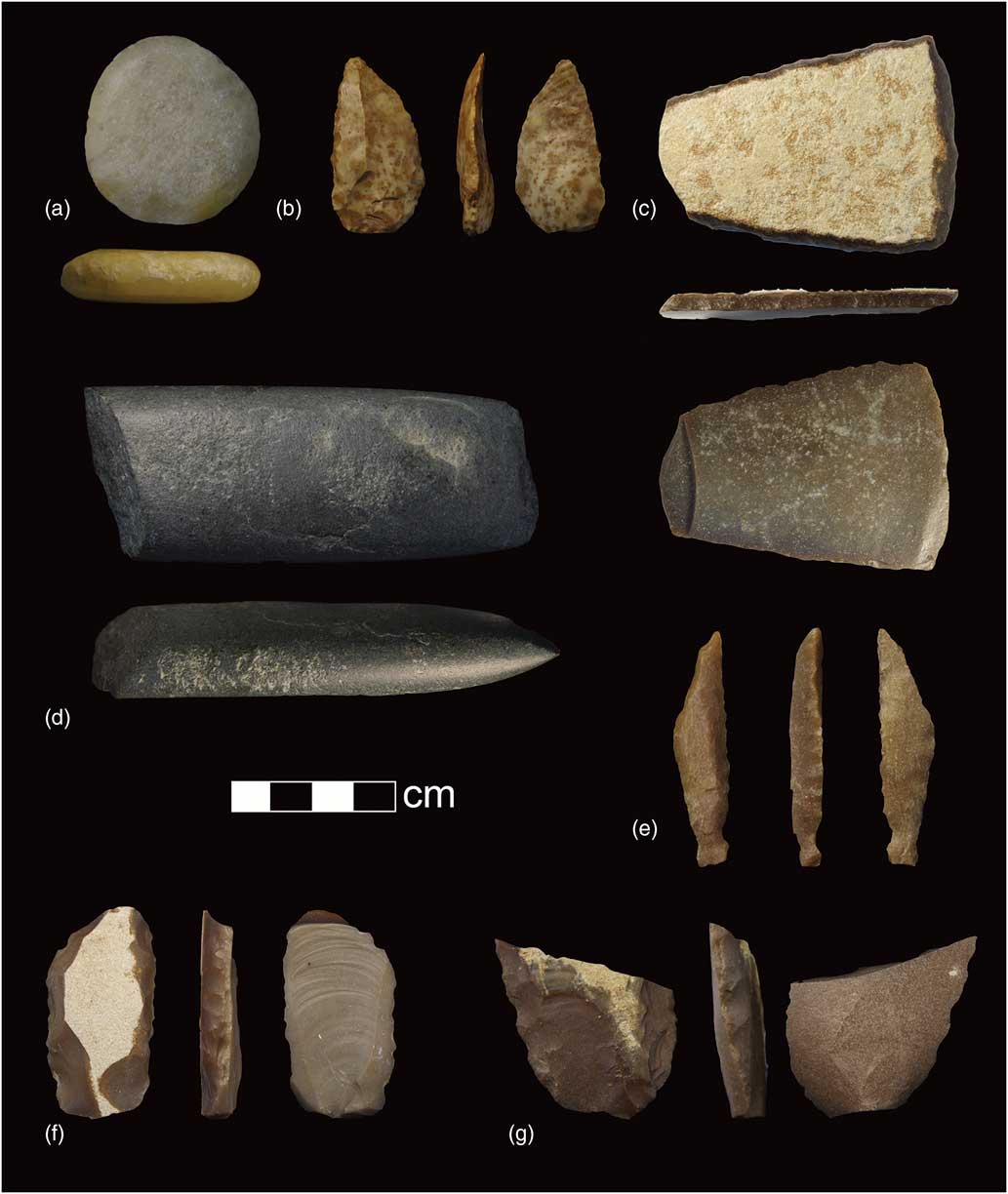
Retouched pieces and anvils from Alshabah: a) possible quartz anvil; b) chert retouched point; c) chert tabular scraper (broken); d) broken polished axe reused as an anvil; e) shouldered retouched pointed chert flake; f) chert artefact with ‘flute-like’ removal on one surface and steep retouch-like removals on the other; g) broken double-sided chert scraper.
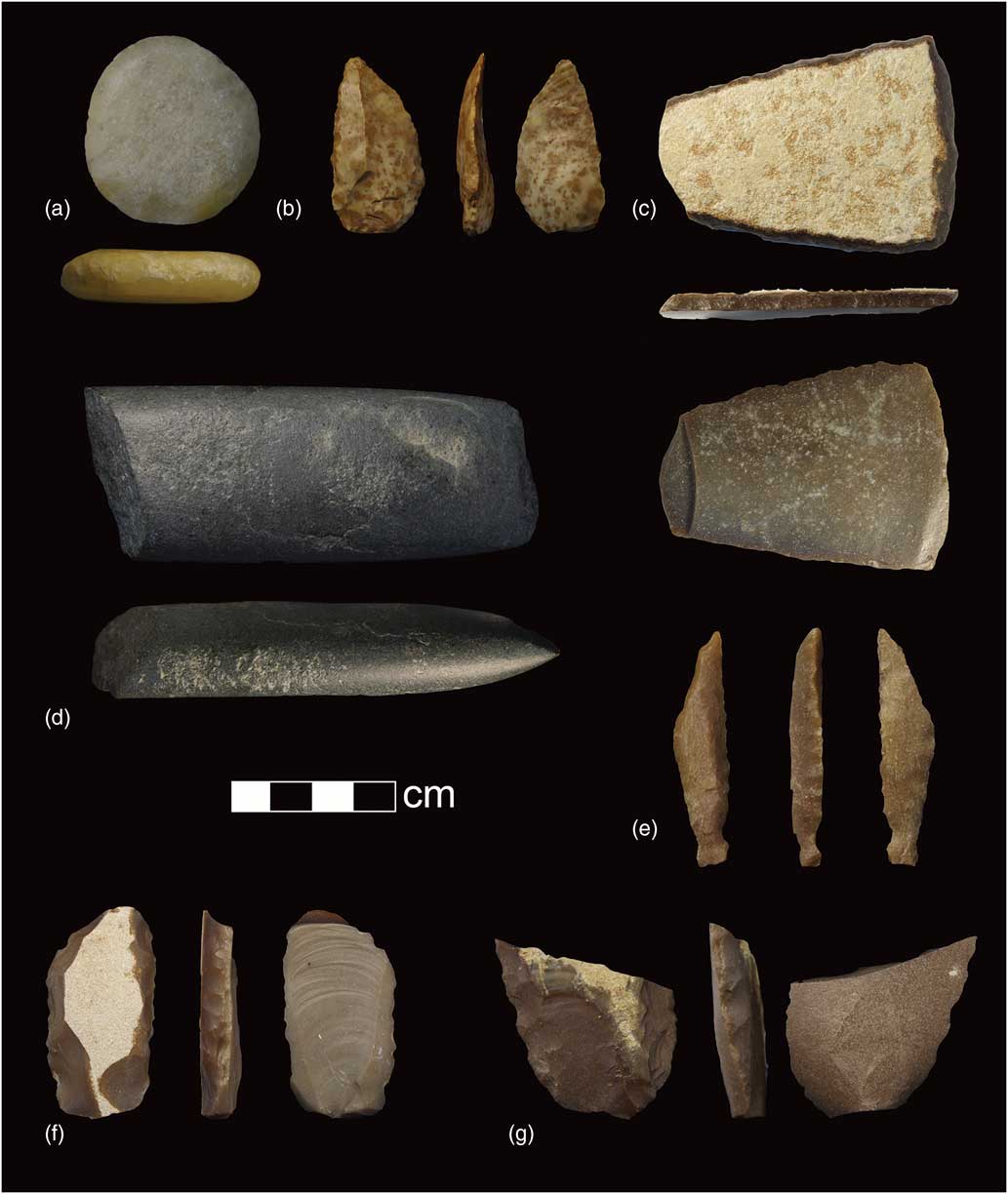
A total of 6.7 per cent of the assemblage is retouched. Most of the retouched pieces are broken or seemingly reused. The most common retouched artefacts are thick flakes retouched continuously along a lateral or distal edge (i.e. ‘scrapers’, see Figure 4g). The laterally retouched pieces are often somewhat crudely retouched compared to the end-retouched flakes. Other retouched artefacts include six large points (Figure 4b) and slugs (limaces), which may be classified as exhausted scrapers. A single, broken polished grindstone axe was also recovered from the site. Battering damage suggests that it was reused as an anvil (Figures 4d & S1).
What is, perhaps, the most striking group of retouched artefacts found at Alshabah consists of pieces that can be described as tabular scrapers (Figures 4c & S2), all of which were made from the fine-grained chert originating from a thin, bedded seam. These tabular scrapers are thin, with a completely flat, wholly cortical and unmodified dorsal surface, indicating a single removal to produce a blank. The flake blank was then steeply retouched using pressure flaking at the margins (Figure 4c). In one case, the scraper was cortical on both faces, attesting to the very narrow character of the seam. Removal of these scraper flake blanks has parallels in a fluted-like piece (Figures 4f & S3)—possibly a core—which is made of the same raw material. The fluting-like removal attests to the knappers’ high level of skill and their ability to produce very thin flakes. These tabular scrapers have parallels across the Levant and other regions of Arabia (e.g. Quintero et al. Reference Quintero, Wilke and Rollefson2002; Gebel Reference Gebel2013). They are most commonly associated with the Chalcolithic and Early Bronze Age, but also occur in Late Neolithic contexts (Rosen Reference Rosen1983, Reference Rosen1984). They appear to be related to pastoralism in function, and were possibly used to shear animals, such as goats (e.g. Henry et al. Reference Henry, Cordova, Portillo, Albert, DeWitt and Emery-Barbier2017).
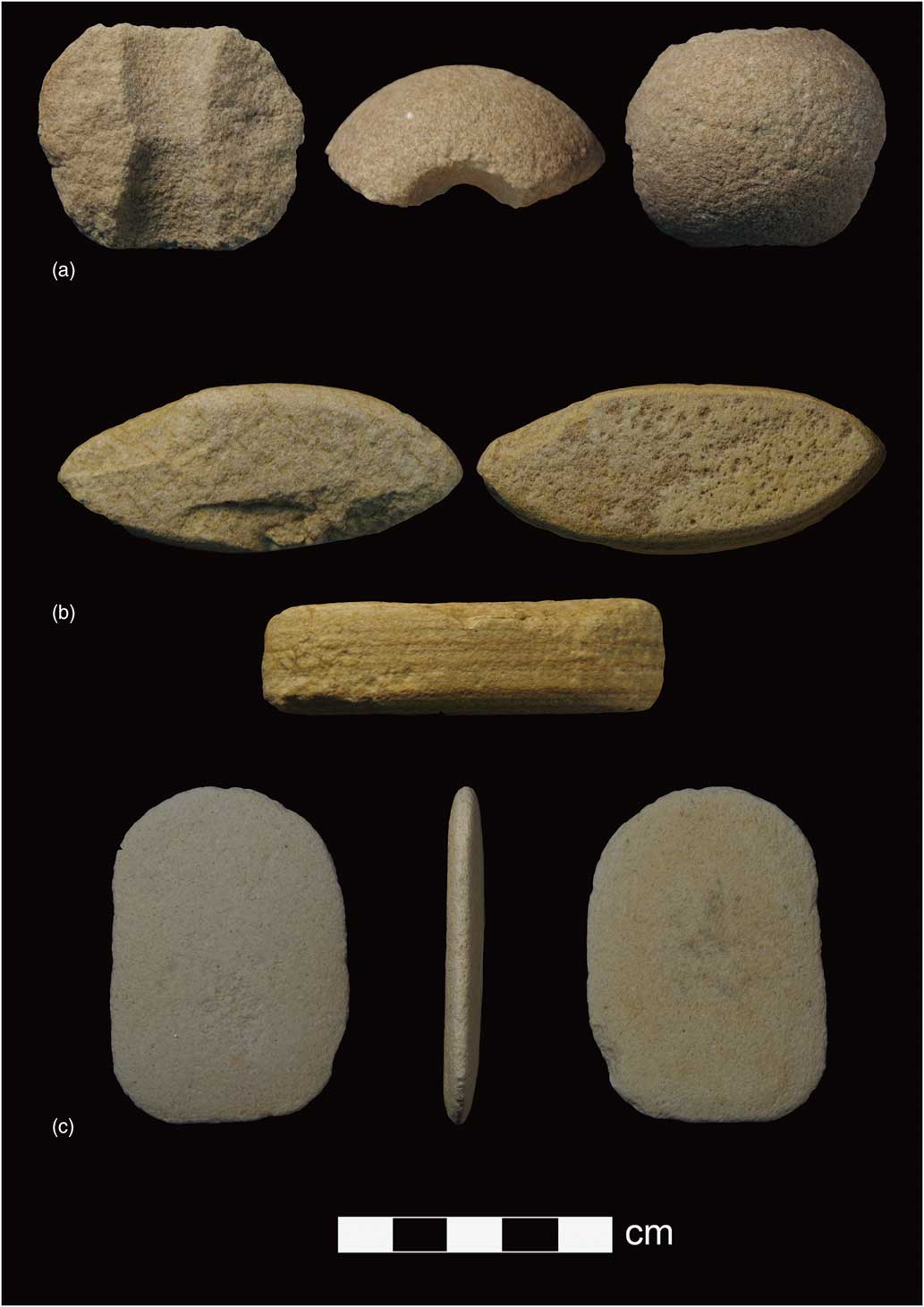
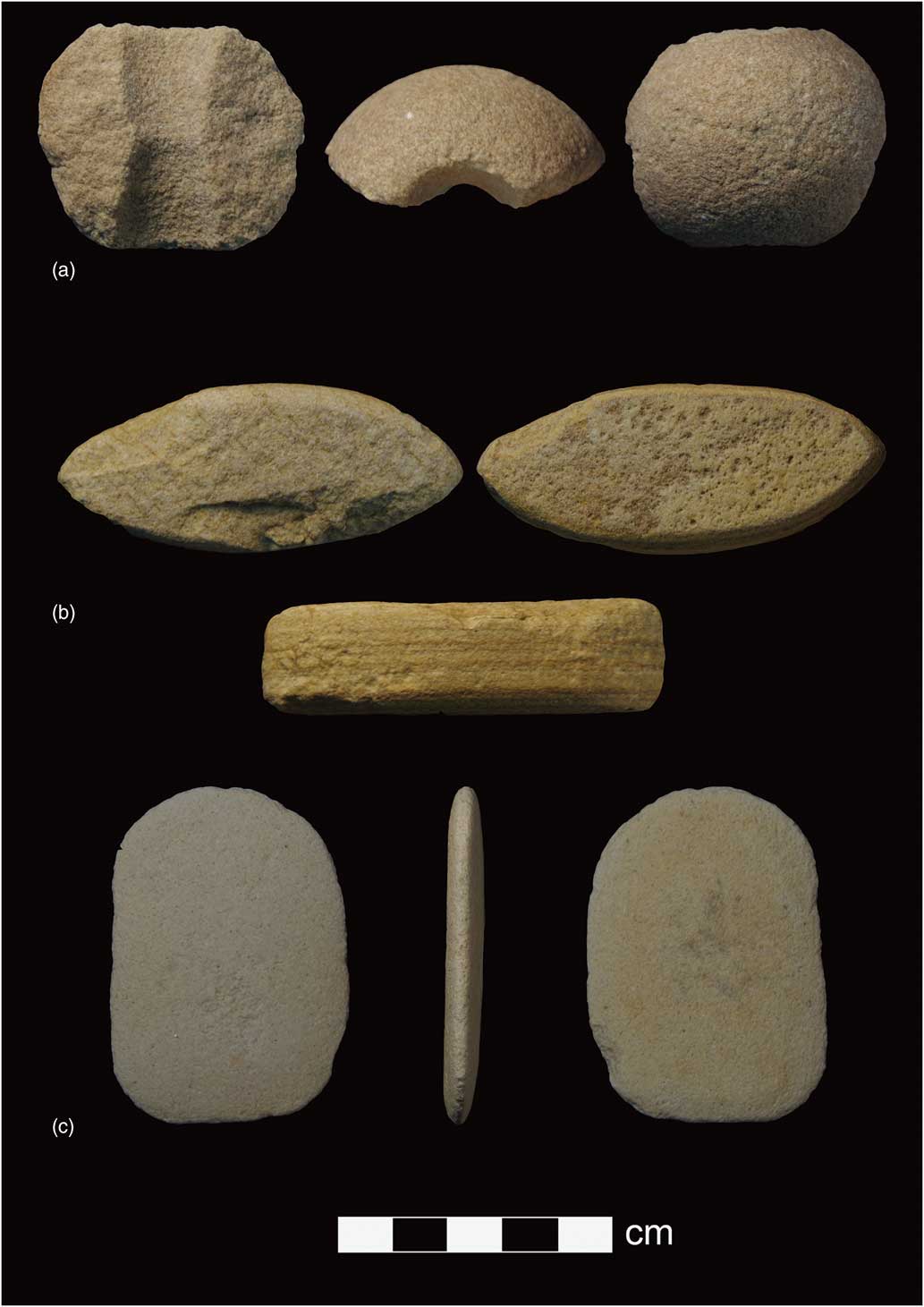
A striking feature is that no arrowheads have been found anywhere across the entire basin, and none of the small points from area A are consistent with such a function. Rather, the lithic assemblage from Alshabah seems focused on ‘domestic’ tasks—a hypothesis supported by the presence of numerous grindstone fragments of various sizes (Table 1). Some of these fragments were very large blocks (with volumes of ~36–54 000cm3), suggesting that the grindstones they represent would not have been transported off site. All the grindstones were made of pale yellow sandstone, visually similar to a sandstone outcropping immediately adjacent to the site. Smaller grindstone-related artefacts include a possible grinder—a lozenge-shaped object that may have functioned by being rocked from side to side (Figure 5b). The edges of this object are smooth on the presumed grinding surface, while the top and bottom remain rough. Other sandstone objects include a possible loom weight fragment and a flat paddle-shaped piece (Figure 5a & c, respectively).
Sandstone ground artefacts from Alshabah: a) possible loom weight fragment; b) grinder; c) flat paddle-shaped piece, possibly used as a small grinding surface or as an anvil for bipolar flaking.
Faunal remains
Several animal bone fragments were found on the surface and eroding from the hearths. The faunal remains were typically highly weathered and fragmented, and the majority could not be identified beyond probable medium- to large-bodied mammals. The only exception was a single ulna fragment. Given its poor preservation and the difficulties in distinguishing between goat and sheep from this element (e.g. Prummel & Frisch Reference Prummel and Frisch1986), we attribute the ulna to Caprinae of indeterminate genus and species.
Chronology
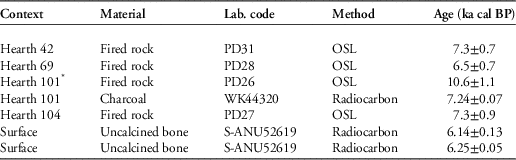
The chronology for Alshabah area A was established using radiocarbon and OSL dating. The timing of hearth-firing was determined via OSL dating of four heated rocks taken from separate hearths, following the method of Armitage and King (Reference Armitage and King2013). In addition, a single charcoal sample from immediately beneath a hearth was radiocarbon dated, as were two uncalcined bones collected from the surface of area A. Summary sample data and ages are presented in Table 2 (see also the OSM and Figure S4).
Age estimates for samples from Alshabah area A. Full sample preparation and measurement descriptions are provided in the online supplementary material (OSM A) (OSL dating) and OSM B (radiocarbon dating). OSL ages are calendar years before measurement date (2016), and radiocarbon ages are cal BP. Uncalibrated radiocarbon ages are presented in OSM B. Discarded date is marked with an asterisk.

Of the four OSL samples extracted from hearths, and which directly date hearth use, three are consistent with the age of the charcoal samples from hearth 101 (7.24±0.07 ka cal BP). The remaining OSL sample (PD26 from hearth 101) is inconsistent with the other three OSL samples and the radiocarbon sample for hearth 101, although it displays no anomalous luminescence characteristics. Consequently, the age for sample PD26 is regarded as incorrect and is excluded from our analysis. The two uncalcined bones yielded radiocarbon ages somewhat younger than the other ages from this site. These samples were not fired to a high temperature in antiquity and, hence, are age determinations based on bone apatite (the samples had no surviving collagen). Some offset between them and the charcoal and OSL sample ages, therefore, is not unexpected (Zazzo & Saliège Reference Zazzo and Saliège2011; Zazzo et al. Reference Zazzo, Saliège, Lebon and Lepetz2012). Overall, the chronological analyses conducted firmly place human activity at the site to between 6.5±0.7ka and 7.3±0.9ka. This age range indicates that the site was occupied towards the end of the Holocene Humid Period, when the Alshabah basin probably held a small—possibly seasonal—lake.
Discussion
The above analyses produce several key insights into the Alshabah site that suggest its use by Neolithic pastoralists. First, the site appears to have been occupied between 6.5±0.7ka and 7.3±0.9ka, towards the end of the Holocene Humid Period. Pollen records from Tayma, approximately 50km west of Alshabah, indicate that this activity occurred after the peak of the Holocene Humid Period (Engel et al. Reference Engel, Brückner, Pint, Wellbrock, Ginau, Voss, Grottker, Klasen and Frenzel2012; Dinies et al. Reference Dinies, Plessen, Neef and Kürschner2015). Furthermore, a marl bed at Al-Rabyah in Jubbah, dating to 6.4±0.4ka (Clark-Balzan et al. Reference Clark-Balzan, Parton, Breeze, Groucutt and Petraglia2017), indicates the continued availability of water in basins in the region. The overall trend towards aridification led to significant changes in vegetation—particularly a reduction in grasslands (Dinies et al. Reference Dinies, Plessen, Neef and Kürschner2015). This would have emphasised the importance of interdunal basins, such as Alshabah, in the mobility strategies of pastoralist groups. Such basins would also have provided both grazing and access to fresh water for at least part of the year. In this context, the presence of caprines at Alshabah is significant. The herding of caprines at Southern Levantine sites such as Ayn Abu Nukhayla, Beidha and Wadi Faynan in southern Jordan is well attested after c. 10ka (see Martin & Edwards Reference Martin and Edwards2013). It is therefore probable that caprine remains found at Alshabah—some 400km south-east of these well-known sites—were also probably from domesticated livestock. The presence of tabular scrapers at Alshabah, which have elsewhere been linked to sheep shearing through use-wear analyses, may support this argument (Barket & Bell Reference Barket and Bell2011).
Arrowheads are absent in the lithic assemblage, indicating that hunting practices did not form a prominent part of the site activities. This is unusual, given that arrowheads were found at contemporaneous pastoralist hearth sites in the Jubbah Oasis (Guagnin et al. Reference Guagnin, Shipton, Martin and Petraglia2017b). The lithic assemblage recorded at Alshabah may therefore indicate a more complex regional settlement pattern, with multi-purpose camps at oases and seasonal herding camps in interdune depressions, where resource availability was more sporadic. Although grinding stones are common at Alshabah, direct evidence for grains was not observed during excavations and insufficient phytolith quantities were recovered for analysis. Moreover, blades are infrequent at the site and none of the lithic tools showed the silica sheen indicative of the sickle reaping of plants. Thus, there is no current evidence for the growing or harvesting of cereals at Alshabah. The weight of evidence therefore indicates that subsistence at Alshabah was probably based on caprine herding and foraging. It remains unclear whether the grinding stones were used for the manufacture of ground stone tools, or for the processing of pigment or vegetable matter.
The discovery of a possible loom weight suggests that activities at Alshabah may have extended beyond herding and knapping. Together with the presence of grinding stones, the possible loom weight may indicate some form of longer-term occupation, possibly extending to weeks and months rather than days. As no structural remains have been found at any currently known Arabian hearth sites, any form of shelter must have been extremely lightweight and ephemeral. Furthermore, the apparently random distribution of hearths may support repeated short-term occupation by small communities or family groups, relating to access to pasture and/or water. Similar seasonal movements driven by regional rainfall patterns and pasture availability have also been described for the Late Neolithic in eastern Jordan (Meister et al. in Reference Meister, Knitter, Krause, Müller-Neuhoff and Schütt.press).
Whether these were seasonal camps that acted as satellites to more substantial base camps (which have yet to be discovered), or whether they represent typical pastoral camps, remains to be determined. Regardless, it seems clear that these communities were well adapted to their surroundings. The lithic assemblage shows a generally consistent approach to reduction that was well adapted to the use of small clasts of raw material. The lack of arrowheads, the absence of distinctive Southern Arabian forms such as trihedral points, the paucity of bifacial shaping, and differences from Levantine assemblages (which emphasised blade and microblade production) also indicate that the manufacturers of the Alshabah lithic assemblage had formed their own traditions within their particular environmental context. The diverse lithic raw materials are consistent with highly mobile communities accessing different geological exposures—perhaps aided by the periodic exchange of particular materials, such as the high-quality chert used to produce tabular scrapers.
In broader geographic terms, Alshabah may reflect Neolithic subsistence strategies that are typical of the deserts of the Arabian Peninsula. A similar hearth site was recently excavated in the Jubbah Oasis (Guagnin et al. Reference Guagnin, Shipton, Martin and Petraglia2017b), and 11 additional sites are reported in the western Nefud (Breeze et al. Reference Breeze, Groucutt, Drake, Louys, Scerri, Armitage, Zalmout, Memesh, Haptari, Soubhi, Matari, Zahir, Al-Omari, Alsharekh and Petraglia2017). Similar sites with hearths and Neolithic stone technology have also been reported from central Saudi Arabia and from the Empty Quarter, but await further investigation (Crassard et al. Reference Crassard, Petraglia, Drake, Gratuze, Alsharekh, Arbach, Groucutt, Khalidi, Michelsen, Robin and Schiettecatte2013b; Reeler & Al Shaikh Reference Reeler and Al Shaikh2015). Hearth sites therefore appear to have formed an element of the Arabian Neolithic specific to marginal environments during the Holocene Humid Period, and possibly represent part of a wider economic strategy that maximised exploitation of these areas.
The presence in the Jubbah Oasis of caprines and lithics with affinities to Levantine industries (Crassard et al. Reference Crassard, Petraglia, Parker, Parton, Roberts, Jacobs, Alsharekh, Al-Omari, Breeze, Drake, Groucutt, Jennings, Régagnon and Shipton2013a; Guagnin et al. Reference Guagnin, Shipton, Martin and Petraglia2017b) is broadly suggestive of sustained connections between Arabian and Levantine populations during the Neolithic. Given their ability to exploit interdune corridors, it is possible that contact was maintained across the Nefud Desert—potentially along similar routes that were still used by caravans in the nineteenth century AD, and which provided a vital connection between the Levant and the Nejd (Euting Reference Euting1896). Despite similarities in lithic technology and subsistence, however, the Neolithic of Alshabah shows an adaptation to local resources and environmental constraints that is unique to pastoralists of the Nefud Desert. Future research in the Nefud should seek to understand further the mobility strategies and socio-economic organisation of these marginal pastoralists, especially as they may have played a key role in the Neolithisation of the region.
Acknowledgements
We thank His Royal Highness Prince Sultan bin Salman (President of the Saudi Commission for Tourism and National Heritage), and Ali Ghabban (Vice President for Antiquities and Museums) for permission to carry out fieldwork in Saudi Arabia. The fieldwork was funded by the Saudi Commission for Tourism and National Heritage, the European Research Council (295719, to M.D.P.), and the Max Planck Society. E.M.L.S. and H.S.G. thank the British Academy for funding. S.J.A.’s contribution to this work was partly supported by the Research Council of Norway through its Centres of Excellence funding scheme: SFF Centre for Early Sapiens Behaviour (SapienCE; project 262618).
Supplementary material
To view supplementary material for this article, please visit https://doi.org/10.15184/aqy.2018.108