




No CrossRef data available.
Article contents
Are palliative cancer patients willing and able to participate in a physical exercise program?
Published online by Cambridge University Press: 13 April 2006
Abstract
Objective: The primary aim of the present article was to identify palliative care patient populations who are willing to participate in and able to complete a group exercise/physical training program designed specifically for the individual patient.
Method: We conducted a prospective phase II intervention study examining the willingness and ability of palliative care cancer patients to participate in a group exercise physical training program. Patients who were diagnosed with incurable cancer and had a life expectancy of less than 1 year at two outpatient clinics were invited to participate in an exercise program in the hospitals. The groups met twice a week over a 6-week period.
Results: One hundred one consecutive patients were asked for inclusion. Sixty-three patients agreed to participate. Sixteen (25%) of the 63 patients dropped out after consent was given, but before the program started due to medical problems, social reasons, or death. Thus, 47 patients started the exercise program. Thirteen patients withdrew during the program due to sudden death, medical problems, or social reasons. The most frequent reasons for withdrawal were increased pain or other symptoms. Thirty-four patients completed the exercise program.
Significance of results: A high proportion of incurable cancer patients were willing to participate (63%) in a structured exercise program. The attrition rate was high, but despite being severely ill, 54% of the patients completed the exercise period. This shows that a physical exercise program tailored to the individual patient is feasible in this population.
Information
- Type
- ORIGINAL ARTICLES
- Information
- Copyright
- © 2005 Cambridge University Press
INTRODUCTION
Physical exercise has become common in oncology rehabilitation and has also been proposed for use in palliative care during the past years. However, empirical foundation for such a proposal is limited, and recent reviews ask for more research within physical rehabilitation of palliative care patients (Cheville, 2001; DeLisa, 2001; Santiago-Palma & Payne, 2001).
In general, the recruitment of patients into exercise interventions is a complex process and is influenced by several factors such as health status, earlier physical exercise habits, education, gender, age, and relatives (significant others). Participation in physical exercise presupposes personal commitment related to motivation, ability, and will. In healthy populations, approximately 50% of those who start an exercise program drop out during the first 6 months (Dishman, 1990).
The challenges of recruitment and retention of patients in palliative research are well documented (Rinck et al., 1997; Jordhoy et al., 1999). One reason for these difficulties may be that the health professionals caring for the patients see themselves as “gatekeepers.” They want to protect the patients from unnecessary and exhausting strains. “Gatekeeping” therefore represents a challenge for researchers seeking to obtain a representative study sample and may introduce a selection bias. Other factors that are related to limited recruitment are unwillingness from the patients or relatives to attend and patients being too frail. However, a recent study of factors influencing participation in palliative care research in a major cancer center found that the majority of patients agreed to enter trials, but that the attrition rate was high (Ling et al., 2000).
It is therefore a special challenge to implement a physical exercise program in a palliative care population. Patient withdrawal during the intervention is a general problem in experimental research per se, and of special relevance to both palliative care patients and physical exercise interventions. The external validity of any study depends on size and representativity of the sample, as these factors determine if any effect can be reliably demonstrated and whether the findings generalized. Hence, low recruitment and a large drop-out rate may reduce the sample's representativeness, the strength of the findings, and thereby the ability to generalize from the results.
Palliative cancer patients with short life expectancy experience multiple symptoms, and the clinical presentation is often complex. In theory, the patients would profit from attending a physical exercise intervention to maintain physical functions important for everyday functioning and independence. However, little is known about the patients' interest and ability in attending such a program. Physical exercise studies among palliative cancer patients are few, and description of the recruitment process is not clearly described (Porock et al., 2000; Yoshioka, 1994). Thorsen et al. (2005) found that shortly after completing curative chemotherapy, 63% of the approached patients agreed to participate in a home-based flexible exercise program. In two other studies among cancer patients undergoing treatment, about 30% of the approached patients agreed to participate in a resistance exercise program and a cycle ergometer training program, respectively (Courneya et al., 2003; Segal et al., 2003). In preparation for a larger randomized study we therefore completed a phase II study where we wanted to study the recruitment process and the adherence rate to an individualized physical exercise program among palliative cancer patients with short life expectancy.
The research question in the present descriptive report was twofold. The primary aim was to study how many of the palliative cancer patients with short life expectancy (≤12 months) were willing and able to participate in and complete a 6-week group exercise program tailored to the individual patient. Secondary aims were to evaluate the patients' subjective experiences and opinions in attending the program.
PATIENTS AND METHODS
The patients were recruited from the outpatient departments at the palliative and the oncological unit at St. Olavs Hospital in Trondheim and Hospice Lovisenberg day care center in Oslo, Norway. Both curative and palliative patients are treated at the outpatient clinic at the oncological unit. Patients with incurable disease, short life expectancy, and multiple symptoms that require close medical and psychosocial follow-up are referred to the Palliative Unit. Patients at the hospice day care center are palliative patients referred from oncological wards or general practitioners or the patients themselves initiate the contact. In two consecutive periods of 5 months, the outpatient lists at the palliative and oncological units were searched for patients receiving palliative cancer treatment with any cancer diagnoses and place of residence less than 30 min by car from the hospital. In the same period, a physiotherapist searched for patients at the hospice day care center. The patient's medical consultant was contacted and sent a written request as to whether the patient met the following inclusion criteria; palliative cancer patients with a life expectancy between 3 and 12 months, Karnofsky performance status (KPS) ≥ 60, who had adequate pain relief (score less than 3 on a 0–10 numerical rating scale), place of residence less than 30 min from the hospital, ability to walk and travel by themselves to and from the hospital by taxi, bus, or private car. The patients were asked if they consented to written information about the study being sent to them. Information about the exercise study and an informed consent form were sent, and the patients were asked to fill in information about cancer type, age, and gender. If they did not want to attend, they were also asked to specify why. A stamped addressed envelope was enclosed. A total of 101 patients from both hospitals met the criteria and were contacted and given brief information about the study.
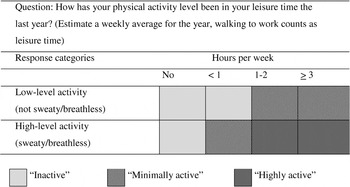
The patients who returned the informed consent form and agreed to participate were contacted, included in the study, and went through a physical examination and answered a questionnaire described elsewhere (Oldervoll et al., 2005). The same physical examination and questionnaire were completed immediately after completion of the exercise program. Information about usual physical activity habits the last year (Thorsen et al., 2003) and motivation for attending an exercise program was also filled in by the patients on a numerical rating scale (0–10) before they started in the intervention group. Level of physical activity (LPA) was assessed by the following question: “How has your physical activity level been in your leisure time over the past year?” and had two sublevels of physical activity. The first described a low level of activity, such as walking, the other a high level of activity that leads to sweating and breathlessness. The participants were divided into three groups, depending on their level of physical activity. Group 1 was described as “inactive”: low-level activity < 1 h per week and no high level activity. Group 2 was described as “low active”: low-level activity ≥ 1 h per week and either no high level activity or < 1 h per week. Group 3 was described as “highly active”: independent of the level of low-level activity, high level activity ≥ 1 h per week (Fig. 1).

Level of physical activity (LPA).
The intervention program consisted of exercises in groups (3–8 patients in each group) in the gymnasium at the hospital or in the living room at the palliative care day center. The patients participated twice a week, 50 min per session for a 6-week period. The program consisted of a warm-up session (10 min), circuit training with six stations (30 min), and a relaxation/stretching session (10 min). Details of the exercise program are described elsewhere (Oldervoll et al., 2005).
Self-Reported Evaluation Questionnaire
After completing the intervention, the individual patient's experience of the exercise program was registered by seven questions that were designed specifically for this study. The questionnaire included the following seven questions: (1) “How satisfied were you with attending the group?” Response alternatives were from 1 to 7, where 1 was extremely satisfied and 7 was not satisfied. (2) “Where would you prefer to do the exercise program?” Response alternatives were: (a) at home, (b) at the hospital or hospice, (c) combination of hospital, hospice, and at home, and (d) outpatient clinic, rehabilitation clinic, somewhere else. (3) “Would you recommend group exercise to others who are in a similar situation to yourself?” (4) “Would you prefer individual follow-up instead of in a group?” (5) “Would you consider continuing with a similar type of physical exercise?” Questions (3), (4), and (5) had response alternatives “yes” or “no.” In addition the following two open-ended questions were included: (6) Is there anything you manage now that you didn't manage before you started in the group? (7) Comments.
Ethics
The study was conducted according to the guidelines of the Helsinki Declaration. The Regional Committee for Medical Research Ethics, Health Region IV approved the study. Appropriate informed consent was obtained from all patients.
Statistical Analysis
All statistical analysis was performed using the SPSS statistical software version 12.0 (SPSS Inc., Chicago, IL). Comparisons between groups were performed by Fisher's exact test for nominal variables and chi square test for trend (linear-by-linear test) for ordinal variables, and t tests for scale variables. The 0.05 criteria were used to define statistically significant effects.
RESULTS
Recruitment
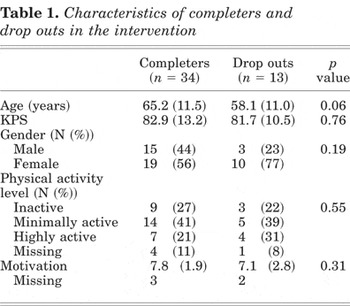
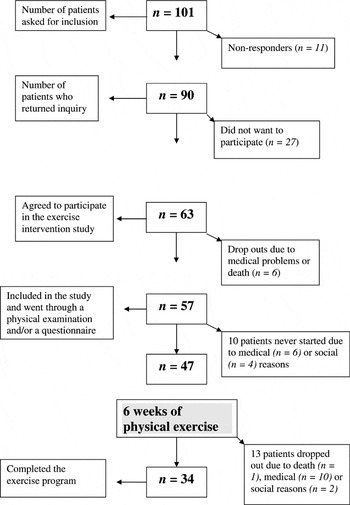
One hundred one patients were invited to attend the study (Fig. 2). The sample consisted of 42 men and 59 women with mean age 66 (SD = 11.1) and KPS 81 (SD = 11.5). Thirty-eight patients either did not respond (n = 11) to the letter being sent to them or did not want to participate (n = 27). These 38 patients were significantly older than those who agreed to participate (64 vs. 70 years, p = 0.007). No significant differences were found according to gender or KPS. Seventeen of the 27 patients provided a reason for their refusal. The reasons were too burdensome to get to the hospital (n = 5), social reason (n = 1), were already engaged in an exercise program (n = 3), lack of energy and mobility (n = 4), and 4 of the patients could not come to the hospice more than once a week. Sixteen of the 63 patients (12 men/4 women, mean age 65 and KPS 82) dropped out after consent was given but before the program started due to medical problems, social reasons, or death. Thus 47 patients started in the exercise intervention. Thirteen patients (28%) dropped out during the exercise period due to due sudden death (n = 1), medical problems (n = 10), or social reasons (n = 2). The most frequent reasons for withdrawal were due to considerable disease progression (n = 5) and pain (n = 5). Thirty-four patients (19 women and 15 men) completed the exercise program with mean age 65 and KPS 83. No significant differences were found according to KPS, gender, motivation, and earlier physical activity habits among those who withdrew and the patients who completed the program (Table 1). However, those who dropped out tended to be younger than those who completed (58 vs. 65 years, p = 0.06).
Characteristics of completers and drop outs in the intervention


Flow chart of patient recruitment, attrition, and compliance.
Patient Evaluation
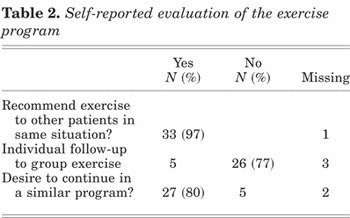
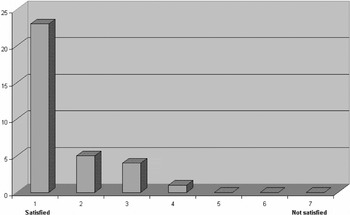
Thirty-three of the patients (97%) who completed the exercise program filled in the evaluation questionnaire. Twenty-three patients (73%) reported they were extremely satisfied with the exercise program (results presented in Fig. 3). All participants would recommend the exercise program to other patients in the same situation. Twenty-six patients (77%) reported that they preferred doing the exercises in groups, whereas 5 patients preferred individual training. Twenty-seven patients (80%) reported a desire to continue in a similar program (Table 2). Only 1 patient preferred to do the exercises at home, and 12 patients (36%) preferred to do the exercises in combination at home and at the hospital. Sixteen of the patients (47%) preferred to do the program at the hospital, whereas 3 patients would prefer to exercise at a physiotherapy institute. Eighteen of the 33 patients (55%) reported having increased energy, physical endurance, and increased muscle strength, were able to do more house work, and relied more on their own physical abilities.
Self-reported evaluation of the exercise program


Self-reported patient satisfaction after attending the exercise program.
DISCUSSION
This study is unique, as no other trials have studied the recruitment process into and retention in a physical exercise program among incurable cancer patients with life expectancy below 12 months. A high proportion of incurable cancer patients (63%) were willing to participate in the structured exercise program. Despite being severely ill, the patients expressed a desire to engage in activities that increased their functional well-being.
In comparison to other intervention studies with physical exercise among cancer patients earlier in the disease trajectory, a similar proportion of the palliative patients were willing to attend (Segal et al., 2003; Pinto et al., 2005). As in other intervention studies, limited information exists about those who did not want to participate except for age, KPS, and gender. No difference in performance status and gender was found between the patients who agreed to participate and those who did not. However, the participants were significantly younger. Among those who gave a reason for not attending, the majority claimed lack of energy and mobility and that it was too burdensome to get to the hospital as major causes. This might indicate a need for specially tailored interventions for the older patient, for example, in the form of home-based exercises adjusted for the individual patient.
The lack of information about the patients' earlier physical activity habits might be viewed as a limitation of this report. Our clinical impression is that those patients who are accustomed to exercise are more likely to participate in an exercise program even when they are seriously ill. However, we experienced that as long as the patients managed to get to the hospital without too much trouble, they were willing to attend. Furthermore, we did not find any difference in exercise habits the last year when comparing those who completed and those who dropped out. Future studies should try to map earlier physical exercise habits (not only the last year) among participants and nonparticipants to see if this has significance for whether palliative patients want to participate in an exercise intervention.
We do not have information about the number of potentially eligible patients that were in the three different departments during the recruitment period. Therefore, we cannot rule out the possibility of a selection bias such as gatekeeping. However, we believe that the patients asked for inclusion are representative of the palliative population. The completers were a heterogeneous group with respect to age, performance status, and cancer diagnosis. The youngest patient was 40 years old, the oldest being 80, 19 of the 34 patients had a KPS ≤ 80 and patients with 10 different diagnoses were represented. Prior to the present study, we included 4 patients in a prestudy to test the feasibility of the exercise intervention. Here we experienced problems to recruit patients into the study from the outpatient clinic at the cancer department. Although the doctors and nurses were well informed about the study, the high-tempo, busy routine made recruitment by doctors and nurses difficult. Hence, making plans for the present study, it was important to generate a suitable recruitment process to find the eligible patients, keeping the problems with gatekeepers in mind.
In palliative care, the attrition rate is high in any study lasting more than a few weeks (Ling et al., 2000). According to earlier studies, attrition rates of 50% over an 8-week period are not uncommon (Dahele & Fearon, 2004). In our study, 54% of the patients who agreed to participate in the exercise study completed the program. As expected, a slightly higher attrition/withdrawal rate was found in our study (46%) compared to other physical exercise studies among cancer patients earlier in the disease trajectory. The drop-out rates across different studies in physical exercise studies among curative cancer patients range from 0% to 34% (Oldervoll et al., 2004). However, no higher withdrawal was registered in our exercise intervention when compared to a randomized trial with aromatherapy massage (aromatherapy and usual care) attending a specialist palliative care day center (Wilcock et al., 2004). During a 4-week period, 11 of 23 patients (48%) in the aromatherapy group withdrew, compared to 5 of the 23 patients in the usual care group (22%). In spite of aromatherapy being less demanding than physical exercise, the dropouts were at a similar level.
The compliers reported that they regarded the exercise program to be useful and that it gave them improved coping skills and increased their well-being. Furthermore, the patients felt that their general health was improved. One of the patients expressed that attending the exercise sessions brought out the healthy side of her, although she was close to death. One patient expressed: “I discovered that it is much better to get out and do something physical even if you're in a situation where you're feeling in bad shape and fatigued. Just to get out and do something else, you nearly forget that things are so bad.” The majority of the patients voiced a preference for group exercise as opposed to individual follow up. They felt the group as a commitment and one patient expressed that “it was good to get forced into doing something, it was an appointment you had to attend. It's a problem to get started by yourself, it's really getting more and more of an effort.”
In conclusion, although the recruitment process was challenging, a high proportion of the incurable cancer patients were interested in attending structured exercise. The attrition rate was high and it is important to keep this in mind when making power calculations for future randomized studies with physical exercise in palliative populations. Due to a high attrition rate, multicenter studies are advisable to ensure enough patients are recruited within a reasonable period of time.
ACKNOWLEDGMENTS
We thank all the patients who participated in the trial, willingly filled in questionnaires, and participated in the exercise intervention. We also thank our study nurse Torunn Farnes and secretary Unni Solheim Iversen for invaluable assistance searching in the journals for eligible patients. The study was supported by grants from the Norwegian Foundation for Health and Rehabilitation and The Norwegian Cancer Society.
References
REFERENCES
Cheville, A.
(2001).
Rehabilitation of patients with advanced cancer.
Cancer,
92(Suppl.),
1039–1048.Google Scholar
Courneya, K.S.,
Mackey, J.R.,
Bell, G.J.,
et al.
(2003).
Randomized controlled trial of exercise training in postmenopausal
breast cancer survivors: Cardiopulmonary and quality of life
outcomes.
Journal of Clinical Oncology,
21,
1660–1668.Google Scholar
Dahele, M. &
Fearon, K.C.
(2004).
Research methodology: Cancer cachexia syndrome.
Palliative Medicine,
18,
409–417.Google Scholar
Dishman, D.K.
(1990).
Determinants of participation in physical activity. In
Exercise, fitness and health: A consensus of currents
knowledge,
Bouchard, C,
Shepard, R.J.,
Stephens, T,
Sutton, J.R. &
McPherson, B.D. (eds.), pp.
75–101.
Champaign, IL:
Human Kinetics.
Jordhoy, M.S.,
Kaasa, S.,
Fayers, P.,
et al.
(1999).
Challenges in palliative care research; recruitment, attrition and
compliance: Experience from a randomized controlled trial.
Palliative Medicine,
13,
299–310.Google Scholar
Ling, J.,
Rees, E., &
Hardy, J.
(2000).
What influences participation in clinical trials in palliative care
in a cancer centre?
European Journal of Cancer,
36,
621–626.Google Scholar
Oldervoll, L.M.,
Kaasa, S.,
Hjermstad, M.J.,
et al.
(2004).
Physical exercise results in the improved subjective well-being of a
few or is effective rehabilitation for all cancer patients?
European Journal of Cancer,
40,
951–962.Google Scholar
Oldervoll, L.,
Loge, J.H.,
Paltiel, H.,
et al.
(2005).
The effect of a physical exercise program in palliative care; a
phase II study.
Journal of Pain and Symptom Management.Google Scholar
Pinto, B.M.,
Frierson, G.M.,
Rabin, C.,
et al.
(2005).
Home-based physical activity intervention for breast cancer
patients.
Journal Clinical Oncology,
23,
3577–3587.Google Scholar
Porock, D.,
Kristjanson, L.J.,
Tinnelly, K.,
et al.
(2000).
An exercise intervention for advanced cancer patients experiencing
fatigue: A pilot study.
Journal of Palliative Care,
16,
30–36.Google Scholar
Rinck, G.C.,
van den Bos, G.A.,
Kleijnen, J.,
et al.
(1997).
Methodologic issues in effectiveness research on palliative cancer
care: A systematic review.
Journal of Clinical Oncology,
15,
1697–1707.Google Scholar
Santiago-Palma, J. &
Payne, R.
(2001).
Palliative care and rehabilitation
Cancer,
92(Suppl.),
1049–1052.Google Scholar
Segal, R.J.,
Reid, R.D.,
Courneya, K.S.,
et al.
(2003).
Resistance exercise in men receiving androgen deprivation therapy
for prostate cancer.
Journal of Clinical Oncology,
21,
1653–1659.Google Scholar
Thorsen, L.,
Nystad, W., &
Dahl, O.
(2003).
The level of physical activity in long-term survivors of testicular
cancer.
European Journal Cancer,
39,
1216–1221.Google Scholar
Thorsen, L.,
Skovlund, E.,
Stromme, S.B.,
et al.
(2005).
Effectiveness of physical activity on cardiorespiratory fitness and
health-related quality of life in young and middle-aged cancer patients
shortly after chemotherapy.
Journal of Clinical Oncology,
23,
2378–2388.Google Scholar
Wilcock, A.,
Manderson, C.,
Weller, R.,
et al.
(2004).
Does aromatherapy massage benefit patients with cancer attending a
specialist palliative care day centre?
Palliative Medicine,
18,
287–290.Google Scholar
Yoshioka, H.
(1994).
Rehabilitation for the terminal cancer patient.
American Journal of Physical Medicine and Rehabilitation,
73,
199–206.Google Scholar
Level of physical activity (LPA).
Characteristics of completers and drop outs in the intervention
Flow chart of patient recruitment, attrition, and compliance.
Self-reported evaluation of the exercise program
Self-reported patient satisfaction after attending the exercise program.
 You have
Access
- 58
- Cited by