INTRODUCTION
During its life-cycle, Trypanosoma cruzi, the aetiological agent of Chagas disease, alternates between a triatomine insect vector and a mammalian host while it undergoes functional and morphological drastic changes (De Souza, 1995). Metacyclogenesis is the complex differentiation process from T. cruzi epimastigotes (E), proliferative and non-infectious forms, to metacyclic trypomastigotes (MT), non- proliferative and infective forms. This transformation involves proteolytic enzymes, and goes through alterations in protein N-glycosylation as well as changes of cell surface sugar (Engel and Parodi, 1985; De Andrade et al. 1991; Bourguignon et al. 1998) and lipid composition (Esteves et al. 1989) upon differentiation. In addition, the development of the differential expression method has led to the cloning of Trypanosoma cruzi stage-specific genes (Avila et al. 2003). All these findings support the hypothesis that biochemical composition and gene expression changes go with morphological transformations of T. cruzi during the differentiation process.
The possible role of cysteine proteinases (CPs) and also metalloproteinases (MPs) in metacyclogenesis was first proposed by Bonaldo et al. (1991), indicating that 3 major proteinase activities were expressed during T. cruzi differentiation and some of them were developmentally regulated. The participation of cruzipain (Cz), the major T. cruzi CP in this process agrees with the finding that this enzyme is located in reservosomes and disappears during the differentiation simultaneously with the well known 3- or 4-fold decrease in the protein content that accompanies metacyclogenesis (Franke de Cazzulo, 1994; Soares, 1999). Also, the overexpression of Cz, associated with enhanced metacyclogenesis, suggested an important role for proteinases during the parasite life-cycle (Tomas, Miles and Kelly, 1997). In addition, irreversible inhibitors of CPs (CPI) are able to block the parasite's life-cycle at the differentiation steps and to protect mice from lethal infection with T. cruzi, suggesting an essential role for CPs in parasite survival and a predominant role for the major CP of T. cruzi, which has been proposed as a target for chemotherapy against Chagas disease (McKerrow, Grath and Engel, 1995; Cazzulo, Stoker and Turk, 2001). On the other hand, shedding assays indicated that trypomastigotes were able to secrete predominantly high molecular weight CPs, most probably Cz among them (Yokoyama-Yasunaka et al. 1994). CPs were also detected in the surface of amastigote-trypomastigote transitional stages in addition to vesicles of the endosomal-lysosomal system (Souto-Padrón et al. 1990). Membrane-bound CPs were also found in the different developmental stages of the parasite (Parussini, Duschak and Cazzulo, 1998).
Stimulation of T. cruzi E with Triatoma infestans hindgut homogenate (TIHH) leads to differentiation to MT (Isola, Lammel and González Cappa, 1986). A partial explanation for this effect was the presence in the TIHH of peptides derived from haemoglobin breakdown, that stimulate trypanosomal adenylate cyclase (Fraidenraich et al. 1993; García et al. 1995) as well as free fatty acids, mainly oleic acid, which arise as a result of blood lipid digestion and induce metacyclogenesis through a pathway involving the de novo diacylglycerol biosynthesis and protein kinase C activation in the parasite (Wainszelbaun et al. 2003). In the present work, the CPs expressed during metacyclogenesis, either in this system or by spontaneous differentiation of E in axenic medium were investigated. Herein, we report for the first time, the presence of a new CP, TcCPmet, during E to MT differentiation. The proteinase activity inhibitory pattern, Western blotting and binding capacity to cystatin and ConA affinity columns were performed in order to characterize the new CP. Moreover, the glycoprotein nature of this novel CP and its differences with Cz, are discussed.
MATERIALS AND METHODS
Parasites and cultures
Epimastigotes (E) of T. cruzi CL Brener clone were grown in axenic medium and harvested as previously described (Cazzulo et al. 1985). E of T cruzi RA lethal strain (González Cappa et al. 1981), maintained by weekly passages in biphasic medium, were harvested after 48 h of culture (Isola et al. 1981) and comprised less than 1% metacyclic forms.
Preparation of T. infestans hindgut homogenate (TIHH)
A method described previously (Isola et al. 1986) was used. Briefly, hindguts from adult triatomines were removed 48 h after feeding and homogenized in Grace medium when used as a culture supplement, or in PBS, pH 7·2 for protein determination. After centrifugation for 30 min at 12000 g and filtration of the supernatants through 0·2 μm, homogenates were stored at −70 °C until use.
Supernatant preparation from spontaneously differentiated parasites
Metacyclic trypomastigotes (MT) from T. cruzi CL Brener clone were obtained by spontaneous differentiation of E at 28 °C, followed by purification by DEAE-cellulose chromatography (De Souza, 1983). The resultant supernatants (SS) were employed for some of the experiments.
Supernatant preparation from parasites stimulated with TIHH
E of T. cruzi RA strain (5×10⁶/ml) were stimulated in Grace medium supplemented with TIHH (protein concentration 2 mg/ml), during 15 min at 28 °C and then were transferred to modified Grace medium and incubated at 28 °C as described by Isola et al. (1986). Control parasites were incubated in modified Grace medium, without TIHH treatment.
On days 3, 5, 7, 10 and 12, samples of 5 ml each were taken off from treated as well as control epimastigote cultures. Growth and differentiation curves were obtained by counting the parasites in a Neubauer chamber and metacyclogenesis was evaluated by parasite motility and shape in live samples and by shape and relative kinetoplast-nucleous position in wet-fixed-stained (May Grünwald Giemsa) preparations every 24 h. The samples were then centrifuged and the resultant treated (TS) or control supernatants (CS), as well as remaining pellets were stored at −70 °C for biochemical and immunological studies.
Purification of MT from T. cruzi RA strain was performed according to Isola et al. (1987) and the pellets stored at −70 °C to be used as control.
Parasite lysate preparation
For activity gels, remaining pellets of transforming parasites from E to MT corresponding to days 3, 5, 7, 10 and 12, E and MT from T. cruzi RA strain used as controls were submitted to 3 cycles of freezing and thawing, resuspended in PBS and the respective lysates were directly applied onto the gel.
Control of metacyclogenesis and parasite integrity
In order to confirm that the parasite differentiation to MT observed by microscopy analysis is valid, and to confirm the absence of parasite lysis, Western blot assays of TS were performed as a marker of the MT stage, shed acute-phase antigen (SAPA), and as a cytosolic marker, the GDH-NADP dependent enzyme. With this purpose, TS were run in SDS-PAGE, electrotransferred to nitrocellulose membranes and incubated with the corresponding antisera.
Purifications of GDH-NADP dependent and TS-SAPA containing variable number of tandem repeats used as controls were performed according to methods described by Barderi et al. (1998) and Buscaglia et al. (1999), respectively.
Affinity chromatography on cystatin or ConA-Sepharose
Stimulated supernatants obtained from different sources, as described above, were pooled, dialysed against 0·1 M acetate/acetic acid buffer, pH 5·5, containing 0·3 M NaCl and affinity chromatography to cystatin-Sepharose was performed as previously described (Duschak, Barboza and Couto, 2003). Briefly, binding overnight at 4 °C followed by intensive washing, elution with 20% n-propanol, dialysis against 10 mM Tris-HCl, pH 7·6, and concentration with PEG 6000 was performed.
For lectin columns, the samples (days 10–12) were dialysed and applied to a column of ConA-Sepharose. A sequential elution protocol was performed: 2 vols of 50 mM Tris-HCl, pH 7·6, 150 mM NaCl, 3 mM CaCl2, 3 mM MnCl2, 3 mM MgCl2 containing 15 mM glucoside (elution buffer 1) were applied to the column and the flow was stopped for 30 min at 37 °C and proteins were then eluted with 10 vols of elution buffer 1 at the same temperature. After column washing with the same buffer, it was equilibrated for 30 min at 37 °C, with 2 vols of 50 mM Tris-HCl, pH 7·6, 150 mM NaCl, 3 mM CaCl2, 3 mM MnCl2, 3 mM MgCl2 containing 0·2 mM alpha-methyl-D-mannoside at 37 °C (buffer elution 2). The remaining bound proteins were eluted with 10 vols of elution buffer 2 at the same temperature and washed in the same buffer. The last elution step was performed in elution buffer 2 containing 0·5 M alpha-methyl-D-mannoside. Protein profiles were followed by absorbance at 280 nm and activity fractions were pooled by gelatin containing-gel analysis.
Cz employed as control was purified from epimastigotes of T. cruzi RA strain as previously described (Duschak et al. 2001a).
Polyacrylamide gel electrophoresis (SDS-PAGE) in the presence of sodium dodecyl sulfate, with or without gelatin
SDS-PAGE was performed according to the method of Laemmli (1970), and gels were stained with silver nitrate (Oakley, Kirsch and Morris, 1980). For activity gels, 0·15% gelatin was included as substrate in the separating gel and samples were loaded without reducing or boiling. Running and incubation steps were developed as previously described (Duschak et al. 2001b). The inhibition activity assays carried out on gelatin-containing gels included the presence of different inhibitors during the gel washing and incubation steps. Controls in the absence of inhibitors were performed. The inhibitors employed were 100 μM Pepstatin-A, 1 mM 1, 10-phenantroline, 2 mM phenyl methyl sulfonyl fluoride (PMSF), 0·5 mM tosyl lysyl chloromethyl ketone (TLCK) and 100 μM trans-epoxy-succinyl-L-leucyl-amido-4-guanidine butane (E-64).
Western blotting
For immunoblotting, the samples were run in 10% SDS-PAGE, electroblotted onto nitrocellulose membranes at 300 mA during 2 h, blocked for 30 min in the presence of 3% non-fat milk powder-Tris buffer saline solution, incubated for 90 min in the presence of different specific polyclonal antibodies, and developed with an anti-rabbit IgG antibody coupled to alkaline phosphatase (Mc Gadey, 1970). The 3 polyclonal antibodies assayed were developed in rabbits with the following T. cruzi purified enzymes as previously described: Cz, glutamate dehydrogenase (GDH)-NADP dependent and the expressed recombinant surface acute-phase antigen (SAPA) (Campetella, Martinez and Cazzulo, 1990; Parodi et al. 1992; Barderi et al. 1998, respectively).
Determination of enzymatic activity
The enzymatic activity of TS was assayed with the synthetic chromogenic substrate benzoyl-prolyl-phenylalanyl-arginylpara-nitroanilide (Bz-PFR-pNA), at pH 8 (Torruela et al. 1981). In the experiments with E-64, treated supernatant samples were pre-incubated with 0·1 M Tris-HCl buffer, pH 8, and the inhibitor for 1 h at 0 °C. The reaction was started by addition of the substrate and was followed spectrophotometrically, at 410 nm.
The enzymatic activity of pools eluted from ConA-Sepharose columns either with 0·15 mM glucoside (Pool I) or 0·2 M mannoside (Pool II), tested on chromogenic peptidyl p-nitroanilides (0·15 mM) was assayed at pH 8 and measured spectrophotometrically at 410 nm (Torruela et al. 1981). For inhibition assays, samples were pre-incubated for 1 h in the cold in the presence of 1 mM 1,10-phenanthroline or 100 μM E-64.
Protein determination
Protein concentration was determined by Bradford's method (1976), using BSA as standard.
RESULTS
Determination of proteolytic activity during the differentiation process. Controls of metacyclogenesis and parasite integrity
As expected, stimulated E showed a significant increase of metacyclic forms, reaching the highest differentiation to MT (72%) after 12 days stimulation (Fig. 1). Proteinase activity was determined in samples of TS corresponding to days 3, 5, 7, 10 and 12 as differentiation progressed, either in the presence or absence of the CP class inhibitor E-64, with the chromogenic substrate Bz-PFR-pNA. The enzymatic activity increased in TS following a similar pattern to the differentiation curve (Fig. 1). Meanwhile, the inhibitory effect in the presence of 100 μM E-64 confirmed the release of CPs in comparison with control supernatants (CS) (Fig. 1). Moreover, in the presence of different types of proteinase inhibitors, qualitative and quantitative changes were observed in the inhibitory pattern, suggesting variability of CPs and MPs as differentiation occurs (data not shown).

Fig. 1. Growth and differentiation curves of E from Trypanosoma cruzi RA strain cultures with or without treatment with TIHH and proteolytic activity in the corresponding supernatants. E were stimulated with TIHH and transferred to modified Grace medium at 28 °C. Proteolytic activity was determined in the corresponding supernatants. The figure shows the exponential growth curve of E (○)/([bull ]) (expressed as log parasites /ml), the percentage of MT ([utri ])/([utrif ]), control supernatants (CS) or treated supernatants (TS) respectively, and the determination of proteolytic activity with the synthetic chromogenic substrate Bz-PFR-pNA (U/min/ml) as a function of culture days in E treated with TIHH (TS) in the presence (\raster="fx1") or absence of 100 μM E-64 ([squf ]) as well as in controls without treatment (CS) (□). Data from each plot represent the mean of 3 experiments, and the standard deviation was within 10% of the mean.
Supernatants corresponding to culture days mentioned above, with or without treatment with TIHH, were confronted with specific polyclonal anti-SAPA serum verifying an increasing expression of SAPA antigen (trans-sialidase C-terminal domain) in the TS as culture grows up (Fig. 2B and A, lanes 3–12). Considering that this antigen is only expressed in the T. cruzi MT forms (Fig. 2A and 2B, lane MT) the result confirmed a genuine differentiation from E to MT. Fig. 2A and B, lane E, showed the absence of SAPA in E lysates of T. cruzi RA strain.

Fig. 2. Controls of metacyclogenesis and parasite integrity. Western blots of control supernatants from Trypanosoma cruzi RA strain without treatment (CS) (A and C) or stimulated with TIHH (TS) (B and D) corresponding to culture days 3, 5, 7, 10 and 12. The samples were separated by SDS-PAGE, electrotransferred to nitrocellulose sheets and revealed with polyclonal specific anti-SAPA (A and B) or anti-GDH (C and D) sera, respectively. MT (20×106/lane) and E (3×10⁶/lane) lysates from T. cruzi RA strain were loaded as controls in A, B, C, and D. 2 μg of purified cytosolic GDH-NADP dependent from E of T. cruzi Tul 2 strain was loaded as control in C and D.
When the Western blots corresponding to the same samples with or without stimulation treatment (Fig. 2D and 2C, lanes 3–12) were revealed with a polyclonal specific anti-glutamate dehydrogenase-NADP dependent serum (anti-GDH) as cytosolic marker, no reactivity was observed neither in the TS (Fig. 2D) nor in the untreated CS (Fig. 2C). This result confirmed that the release of this cytosolic enzyme was negligible when compared with the enzyme recognition either in lysates of MT, or E or in purified cytosolic enzyme (Fig. 2C and 2D, lanes MT, E and Cz, respectively) indicating that parasites remained intact during the whole experiment.
Detection of a novel CP (TcCPmet) by zymography and absence of immuno-cross-reactivity with polyclonal specific anti-cruzipain serum
Interestingly, in gelatin-containing gels, an important gelatinolytic activity, TcCPmet, with an apparent molecular weight range between 97 and 116 kDa (Fig. 3B, lanes 3–12) was revealed at acidic pH, increasing, particularly on days 10–12 of the differentiation process, in accordance with the percentage increase of MT forms. The latter was not present neither in CS (Fig. 3A, lanes 3–12) nor in lysates of MT or E of RA strain (Fig. 3B, lanes MT and E respectively). Additionally, this activity was present neither in the remaining pellets obtained during the differentiation process nor in the TIHH loaded alone or plus Grace medium, in both cases concentrated 2 and 5 times (data not shown).

Fig. 3. Detection of a novel CP (TcCPmet) by zymography and absence of immuno-cross-reactivity with polyclonal specific anti-cruzipain serum. Analysis by 10% activity gel containing 0·15% gelatin (A, B and C) incubated overnight in buffer MES at pH 6 or by Western blot revealed with polyclonal specific anti-Cz serum (D and E) of Trypanosoma cruzi CS as control (A and D) or TS (B and E), corresponding to culture days 3, 5, 7, 10 and 12. In B and E, lysates of MT (20×106/lane) and E (3×10⁶/lane) from T. cruzi RA strain were loaded as controls; gelatinolytic activity of TS culture belonging to day 12, control lysates of MT and E from T. cruzi RA strain in the presence of 100 μM E-64 (C). In (E), 5 μg of purified Cz from E of T. cruzi RA strain was loaded as control.
In addition, TS showed the presence of a gelatinolytic activity that increased from culture day 7 up to culture day 12, located between 55 and 66 kDa (Fig. 3B). It was coincident with the upper of the 3 activity bands present in control MT lysates (Fig. 3B, lane MT) and of lower mobility than the only one present in E lysates (Fig. 3B, lane E). The activities present in TS (Fig. 3B, lane 12) were completely abolished by 100 μM E-64 (Fig. 3C, lane 12) confirming their thiol-proteinase character in a similar way to the inhibition of gelatinolytic activity of control Cz present in lysates of MT or E (Fig. 3B, lanes MT and E, respectively) (Cazzulo et al. 1990). The same experiment was developed in parallel using Grace medium plus TIHH, without parasites to rule out the release of CP from sources other than MT of RA strain. Control transforming parasite remaining pellets obtained during differentiation as well as crude extracts obtained from these pellets, only showed the presence of cruzipain (data not shown). Western blot analysis, with polyclonal specific anti-Cz serum only showed the increasing presence of Cz in the TS (Fig. 3E, lanes 3–12) in comparison with untreated CS (Fig. 3D, lanes 3–12) dismissing cross-reactivity between Cz and TcCPmet. Cz was recognized from day 7, particularly between culture days 10 and 12, with a considerable significant increase on day 10 (Fig. 3E).
Interestingly, the enzyme recognition in TS was a little higher than 55 kDa, similar to MT lysates used as controls (Fig. 3E, lane MT).
Characterization of TcCPmet
Binding of CPs present in TS to cystatin-Sepharose
Supernatants of stimulated cultures corresponding to days 10 and 12 were pooled and purification of CPs was carried out by affinity chromatography on cystatin-Sepharose columns. The purification steps were electrophoretically checked by gelatinolytic activity in gelatin-containing gels (Fig. 4A), by silver staining of SDS-PAGE gels (Fig. 4B), and by Western blot analysis with anti-Cz serum, carried out under similar conditions to the activity gels (samples without reducing agent nor boiling) (Fig. 4C).

Fig. 4. Binding capacity of CPs present in treated supernatants (TS) to cystatin-Sepharose affinity columns. Electrophoretic analysis of the different purification steps was performed. Pre-column material (lane a), percolate (lane b), and peaks I and II, eluted with 20% n-propanol (lane c and d respectively). (A) 10% activity gel as described in the Materials and Methods section, (B) SDS-PAGE, loading 3 μg protein/lane, stained with silver nitrate and (C) Western blot revealed with polyclonal specific anti-Cz serum of samples loaded without reducing nor boiling, corresponding to eluted pool I and II (lanes c and d, respectively) in comparison with 3 μg purified Cz from E of RA strain, loaded as control without reducing nor boiling (lane Cz).
The elution profile showed 2 peaks, I and II, both with gelatinolytic activity. A lower gelatinolytic activity, corresponding in apparent molecular weight to Cz, was present in eluted pools I and II (Fig. 4A, lanes c and d). However, TcCPmet was only observed in the first elution pool I (Fig. 4A, lane c). In addition, a minor activity of higher apparent molecular weight was also observed in pool II (Fig. 4A, lane d). The elution pattern in silver-stained gels showed the presence of bands of apparent molecular weight between 97–116 and 55–66 kDa in pool I (Fig. 4B, lane c), the second elution pool was enriched in a band of 55–66 kDa, and showed a minor band of apparent molecular weight higher than 120 kDa (Fig. 4B, lane d).
Western blot analysis under the conditions of activity gels, confirmed that TcCPmet was not recognized by polyclonal anti-Cz serum in any of the eluted peaks (Fig. 4C, b and c). Up to this point, these results confirmed that TcCPmet is not Cz, nor a related protein.
Binding capacity of TcCPmet to ConA-Sepharose affinity column and differential elution profile analysis
Supernatants of stimulated cultures were pooled and subjected to ConA-Sepharose affinity chromatography. Three major protein peaks were obtained by sequential elution of the lectin column. Peak I, eluted with 15 mM glucoside (Fig. 5A, fractions 1–10); peak II (Fig. 5A, fractions 11–19) and peak III (fractions 21–27) eluted with 0·2 M and 0·5 M alpha-methyl-D-mannoside, respectively. Samples of each peak were monitored by SDS-PAGE in gelatin-containing gels (Fig. 5B). Pools I, II, and III were tested by Western blot with specific polyclonal anti-Cz serum (Fig. 5C). Figure 5B, lane a, showed 2 major gelatinolytic activities of apparent molecular weight between 45–66 kDa and 97–116 kDa corresponding to TS prior to entering the column. These bands were poorly recovered in percolate and washing (Fig. 5B, lanes b and c, respectively), and were differentially recovered in the consecutive fractions of the elution pattern. The gelatinolytic activity analysis of fractions 1, 3 and 5 eluted with low concentration of glucoside (Fig. 5A; Peak I) showed predominantly the major activity band corresponding to TcCPmet (Fig. 5B, lanes d, e and f). Fractions 12, 13 and 15 obtained after elution with 0·2 M mannoside (Fig. 5A; Peak II) showed a more complex gelatinolytic activity pattern with 2 major bands corresponding to TcCPmet and Cz and 3 additional minor activity bands (Fig. 5B, lanes g, h and i). When elution with 0·5 M mannoside was performed (Fig. 5A, peak III), only remnant major activities were observed (Fig. 5B, lanes j, k and l). Fractions eluted with glucoside were found to be exclusively enriched in TcCPmet, while those eluted with mannoside showed a simultaneous decrease of the latter and the beginning of the detachment of Cz. When the immunoreactivity of the 3 pools towards specific polyclonal anti-Cz antibody was tested (using neither reduced nor boiling conditions), TcCPmet was not recognized in any of them (Fig. 5C lanes I, II and III) whereas the protein band of 45–66 kDa was recognized by anti-Cz serum only in the fractions eluted by mannoside at 0·2 or 0·5 M (Fig. 5C, lanes II and III) and in control Cz (Fig. 5C, lane Cz). These facts confirmed the absence of Cz in the fractions eluted with 15 mM glucoside (Fig. 5A, peak I; Fig. 5C, lane I) and ruled out the possibility that TcCPmet was due to aggregation of Cz molecules. When a supernatant of the T. cruzi CL Brener clone, with 82% spontaneous differentiation in axenic medium (SS) was submitted to ConA-Sepharose affinity chromatography similar results were obtained (data not shown).

Fig. 5. Binding capacity of TcCPmet to ConA-Sepharose affinity column and differential elution by sequential steps. (A) Sequential elution protein profile of TS applied onto a ConA-Sepharose affinity column. Protein determination was followed by A 280 nm. The arrows indicate the 3 elution steps with 15 mM glucoside, 0·2 and 0·5 M mannoside, respectively. Fractions were pooled according to sequential steps in pools I (Fractions from 1 to 10), II (11 to 19) and III (21 to 27). (B) Gelatinolytic activity pattern of the sequential purification steps in 10% SDS-gelatin containing gels. Material pre-loaded onto the column (lane a); percolate (lane b); first washing fraction (lane c); fractions eluted with 15 mM glucoside, number 1, 3 and 5 (lanes d, e and f, respectively), with 0·2 M mannoside, number 12, 13 and 14 (lanes g, h, and i respectively), or with 0·5 M mannoside number 22, 23 and 24 (lanes j, k and l, respectively) were monitored by activity gels. Inset 5C corresponds to Western blotting analysis of sequential eluted pools I, II and III. The samples were separated in SDS-PAGE gels after loading in the condition of the activity gels, electrotransferred to nitrocellulose sheets and incubated with a rabbit specific polyclonal anti-Cz serum. Purified Cz was used as control.
Taken together, these results indicated that TcCPmet is able to bind to ConA, indicating that it is a glycoprotein and elutes at low concentrations of glucoside, in contrast to Cz that elutes with mannoside. Unfortunately, the low amount of the novel CP available after cystatin or ConA-Sepharose purification precluded to date, a peptide sequence analysis.
Biochemical characterization
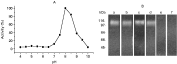
In order to further investigate the enzyme specificity for peptidic bond hydrolysis, its effectiveness on several blocked synthetic chromogenic peptides was tested. Among p-nitroanilides, Tosyl-Gly-Pro-Arg-pNA (Tos-GPA-pNA) was the best substrate for the novel CP, in contrast to Cz that did not show activity on it (24) (Table 1). In addition, TcCPmet hydrolysed the same p-nitroanilide substrates as Cz, NACrI (Non-Adsorbed Cruzipain Isoforms) and other trypanosomatid CPs but its order of preference was considerably different (Duschak et al. 2003). TcCPmet hydrolysed Bz-PFA-pNA less effectively (46·5%) than Cz, showing that this new CP exhibits a lower preference than Cz for hydrophobic residues in the P2 position. The activity on peptidyl substrates with the Phe-Val-Arg moiety was almost zero, similar to Cz and at variance with NACrI (Duschak et al. 2003). The replacement of Arg by Leu, Ala or Phe as terminal amino acid abolished their activity (Table 1) as previously reported for CPs of other trypanosomatids. TcCPmet seems also to prefer a basic (Arg) or hydrophobic (Phe, Val) amino acid at the P2 position. However, similar to NACrI and in contrast to Cz, this CP prefers Pro at P2 (Tos-GPA-pNA, 100%) instead of Phe (Bz-PFA-pNA 100% for cruzipain). Interestingly, the presence of Pro at the P2 position did not abolish the activity as it was reported for Cz. In addition, the presence of Gly in the P2 position did not decrease or abolish the enzyme activity (Bz-VGA-pNA 31% or Boc-VLGA-pNA, 13%) (Table 1). It is noteworthy that this low activity remained when samples were pre-incubated with o-phenanthroline but disappeared when pre-incubation was performed in the presence of E-64 (data not shown). The activity on tosyl-GPA-pNA was tested at different pH values, showing an optimal pH at 8·0 on synthetic peptides (Fig. 6A).

Fig. 6. pH and inhibitor profiles of TcCPmet. (A) pH profile for TcCPmet with Tosyl-GPA-pNA. The pH values given were directly determined in simulated reaction mixtures containing the buffer in which the enzymes were dissolved. 100% activity value was 0. 030+0·002 μmol/min/ml. (B) Determination of gelatinolytic activity from TcCPmet in the presence or absence of proteinase inhibitors in 10% SDS-PAGE with 0·15% gelatin as substrate in pool I (eluted with 0·15 mM glucoside) in the absence of proteinase inhibitors (a), in the presence of 100 μM pepstatin-A (b); 1 mM 1, 10-phenanthroline (c); 2 mM PMSF (d); 100 μM E-64 (e) or 0·5 mM TLCK (f). The gels were incubated in 0·1 M MES buffer, pH 6, during 16 h in the presence or absence of the proteinase inhibitors mentioned above.
Table 1. Utilization of peptidyl p-nitroanilide substrates by TcCPmet, after elution with 0·15 mM α-methyl glucoside from ConA-Sepharose affinity column (The 0·15 mM α-methyl glucoside eluted fraction activity was determined in the presence of 0·25 M p-nitroanilides at pH 8·0. Activity was zero with Leu-pNA, Gly-pNA and Pro-pNA.)

The gelatinolytic activity of the novel CP, eluted with 0·15 mM glucoside from ConA-Sepharose column (Pool I, Fig. 5A), was completely abolished by the presence of E-64 or TLCK during incubation of the gels after electrophoresis (Fig. 6B, lanes e and f, respectively). On the other hand, pepstatin (lane b), as well as 1,10 phenanthroline (lane c), or PMSF (lane d) did not affect the enzyme activity, which was identical to that of the control (lane a).
DISCUSSION
The presence of TcCPmet, a novel cysteine proteinase from metacyclic trypomastigotes, was demonstrated during metacyclogenesis in Trypanosoma cruzi. The fact that this enzyme is detected in the supernatants of T. cruzi RA strain cultures stimulated with T. infestans intestinal homogenate as well as in supernatants of spontaneous differentiation of the CL Brener clone, suggests that its presence is a general phenomenon during metacyclogenesis irrespective of the method employed for obtaining the MT and the parasite strain considered. The appearance of this new cysteine proteinase activity seems to be a feature of MT and makes this finding more attractive by suggesting that it is developmentally regulated and reinforcing a possible important role for cysteine proteinases in metacyclogenesis. It is known that the epimastigote protein content is higher than in metacyclic forms, though this enzyme could be involved, among others, in the protein degradation processes necessary for this stage-specific transformation.
TcCPmet showed (i) endopeptidase activity on gelatin as substrate at acidic pH at an apparent molecular weight range between 97 and 116 kDa and (ii) sensitivity to E-64 and TLCK but no inhibition with either PMSF, o-phenanthroline, or pepstatin-A. This cysteine proteinase was capable of hydrolysing a number of synthetic peptides at alkaline pH values; this hydrolysis is certainly due to a cysteine proteinase, since the activity on all the substrates tested was equally inhibited by pre-incubation of the enzymatic sample with E-64. In addition, no immuno-cross-reactivity with polyclonal specific anti-cruzipain serum either under SDS-PAGE conditions or under the conditions used for activity gels (without reduction or boiling) was observed, confirming that TcCPmet is not Cz, nor a related protein. Moreover, its thiol-proteinase character was confirmed by affinity for cystatin-Sepharose and its glycoprotein nature, containing N-linked oligosaccharides, as demonstrated by its affinity for ConA-Sepharose.
Parasite integrity was assessed, verifying the absence of a cytosolic marker in the supernatants, indicating that the release of TcCPmet to culture medium was not due to lysis of parasites during metacyclogenesis. The absence of TcCPmet activity in transforming parasite crude extracts (data not shown) as well as its absence in metacyclic trypomastigotes lysate control suggests that all the CP should be released into the media. Besides, the possibility that accumulation of an inactive TcCPmet form occurs inside the parasite during the transformation process cannot be discarded because we have measured gelatinolytic activity. The fact that the high molecular weight band could be an aggregate of cruzipain molecules was ruled out by Western blot under the same conditions as activity gels, considering that the samples used for activity gels were not boiled or treated with dithiothreitol before electrophoresis.
In agreement with previous results (Lowndes et al. 1996), preliminary inhibition assays, performed on TS with Bz-PFA-pNA as chromogenic substrate, showed that T. cruzi metacyclogenesis is blocked by inhibitors of MPs and CPs (data not shown). However, MPs did not show gelatinolytic activity in the strain and conditions tested. As described by Lowndes et al. (1996) these enzymes require an incubation time of 4 days at 37 °C and pH 8·5, then, the absence of visualization of MPs in gelatin-containing gels may be attributed not only to the lower pH, but also to the short incubation time used. On the other hand, it must be considered that the gelatin SDS-PAGE gel assay does not detect proteolytic enzymes with more restricted substrate requirements. In this sense, Ashall (1990) described in T. cruzi a CP with molecular weight greater than 200 kDa, which specifically cleaves peptidic bonds on the carboxyl side of arginine and lysine residues, but does not digest whole proteins such as gelatin.
It is a known fact that ConA lectin can bind with different affinity to complex biantennary, hybrid or high mannose-type N-linked oligosaccharides. Thus, by differential elution with alpha methyl-D-glucoside and mannoside, glycoproteins differing in the carbohydrate chain structure can be separated. It has been reported that Cz molecules, contain 3 potential asparagine glycosylation sites, 2 in the catalytic domain and 1 in the C-T domain (Campetella et al. 1992); the latter containing both high mannose and complex-type oligosaccharides, whereas the catalytic domain only shows compounds of the former type. Complex-type compounds, hybrid/monoantennary and biantennary structures, some of them sialylated, were reported in cruzipain (Parodi et al. 1995; Barboza et al. 2003). In addition, a minor group of Cz isoforms with different oligosaccharide pattern and atypical behaviour in lectin columns was also described (Duschak et al. 2003). Cz requires high mannoside concentrations (0·2–0·5 M) to elute from ConA-Sepharose. By contrast, TcCPmet shows an earlier elution with low concentration of glucoside from the affinity column. The differential behaviour in lectin columns between Cz and TcCPmet, suggests differences in the oligosaccharide chains.
Non-amino-blocked substrates were not hydrolysed by TcCPmet, showing that this enzyme lacks aminopeptidase activity, similarly to NACrI and Cz isoforms (Duschak et al. 2003). By contrast, the activity on peptidyl substrates revealed that TcCPmet is able to hydrolyse the same p-nitroanilide substrates as Cz, NACrI (Non-Adsorbed Cruzipain Isoforms) and other trypanosomatid CPs at optimal alkaline pH values although with a considerable different order of effectiveness (Duschak et al. 2003). In summary, the requirement for small peptide hydrolysis by TcCPmet includes the presence of the basic amino acid Arg in the P1 position and at least 1 or more amino acids between P1 and the amino-blocking group. However, similar to NACrI, and in contrast to Cz, this novel CP presents a lower preference for hydrophobic residues in P2 position than Cz. Interestingly, the presence of Pro at the P2 position did not abolish the activity as was reported for Cz.
In addition, a peer scan through the T. cruzi genome dataset (http/www.genedb.org/genedb/tcruzi/index.jsp) showed that there are many Cz genes (clan CA, family C1 enzymes that are cathepsin L-like). There appear to be more than 60 papain family cysteine proteinase genes in the T. cruzi genome (products of which should be inhibited by E-64) and it will be very important to relate biochemical data to specific gene products. However, the low yield of highly purified protein recovered by cystatin-Sepharose affinity chromatography, in addition to the presence of other proteins co-eluting with TcCPmet by the lectin column procedure, precluded to date the characterization of this CP at the molecular level by MALDI-TOF analysis. Even though the amino acids or DNA/RNA sequence is not yet available, we looked in the T. cruzi genome dataset attempting to identify a putative cysteine proteinase with similar molecular mass. A conserved hypothetical cysteine protease (PS00130) with cysteine peptidase active site (INTERPRO000169) of mass 101·3 kDa, 915 amino acids and pI.8.1 was found. In addition, another 2 proteins with a eukaryotic cysteine peptidase active site were found, one of them of 103·5 kDa with putative phosphatase activity and the other with a leucine-rich repeat of 116·1 kDa.
In T. cruzi infections, several proteinases that could play a pathogenic role have been described (Burleigh et al. 1997; Cazzulo et al. 1997; Del Nery et al. 1997; Santana et al. 1997). Among them, cruzipain might be an important virulence factor by releasing pro-inflammatory kinins from their low and high molecular weight kininogen precursors (Del Nery et al. 1997). In addition, the participation of several secreted Cz isoforms in mammalian cell invasion, -linked to a mechanism involving this kinin-releasing activity, has been firmly established (Scharfstein et al. 2000). Moreover, evidence related to activation of a pathway that requires Cz-mediated processing of a trypomastigote molecule associated with parasite-shed membranes was reported (Aparicio, Scharfstein and Lima, 2004). On the other hand, evidence indicating a role for the collagenase Tc80 in the invasion of non-phagocytic cells by degrading extracellular matrix components was described (Greiller et al. 2001). The presence of a new CP activity, during metacyclogenesis, suggests that it could be involved in parasite survival and/or in cell invasion.
Taking into account the considerable decrease in parasitaemia of infected mice treated with some cysteine proteinase inhibitors (McKerrow, McGrath and Engel, 1995) and the importance of this trypanocidal effect on Chagas disease (Engel, Doyle and McKerrow, 1999), the presence of the new CP reported here, suggest that it might constitute a highly promising chemotherapeutic target. Further studies must be performed to elucidate if the differential expression of proteinases during the life-cycle of the parasite could be an adaptative answer or a metabolic requirement in the different developmental stages.
V.D. and A.C. are CONICET Researchers. We are indebted to B. M. Franke de Cazzulo for providing supernatants from MT of T. cruzi CL Brener clone and to Dr J. J. Cazzulo for the helpful discussion and orientation at the begining of this work. This work was supported by CONICET and UBA.