Introduction
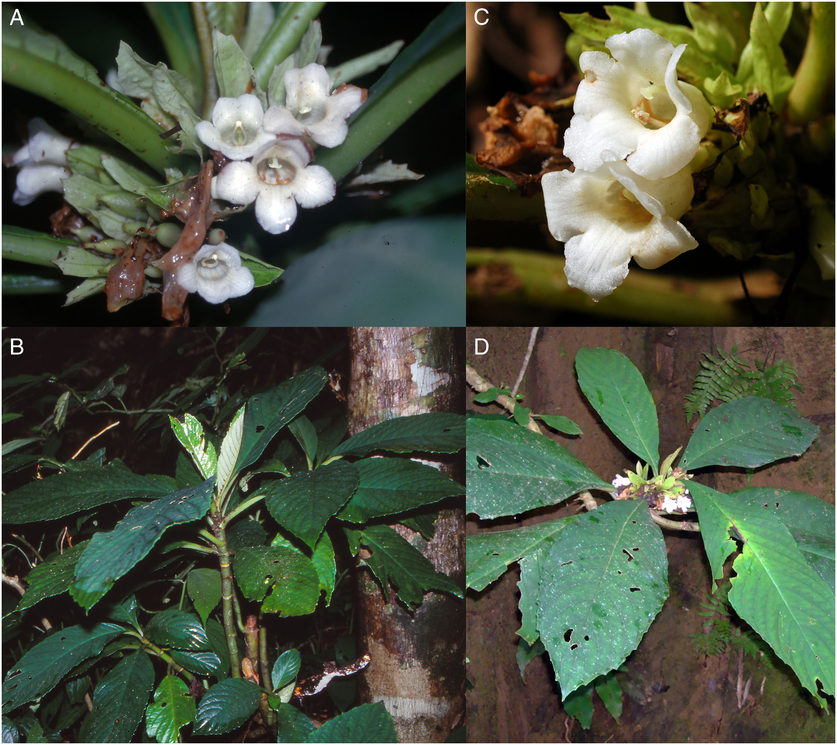
Cyrtandra J.R.Forst. & G.Forst. is the largest genus in the Gesneriaceae, with more than 800 species (Atkins et al., Reference Atkins, Bramley and Clark2013). Its distribution extends from the Nicobar Islands in the west, across the islands of Malesia to New Guinea, and across the Pacific to Hawaii. In continental Asia, the genus is distributed as far north as Phetchaburi in Thailand and reaches its most northern limit in Asia in Taiwan (Lanyu Island) and the Ryukyu Archipelago (hereafter the Ryukyus) of Japan, where it is represented by two species; in Taiwan by Cyrtandra umbellifera Merr. (Li & Kao, Reference Li, Kao and Huang1998), and in Japan by the widespread C. cumingii C.B.Clarke (Yamazaki, Reference Yamazaki, Iwatsuki, Yamazaki, Boufford and Ohba1993) (Fig. 1).
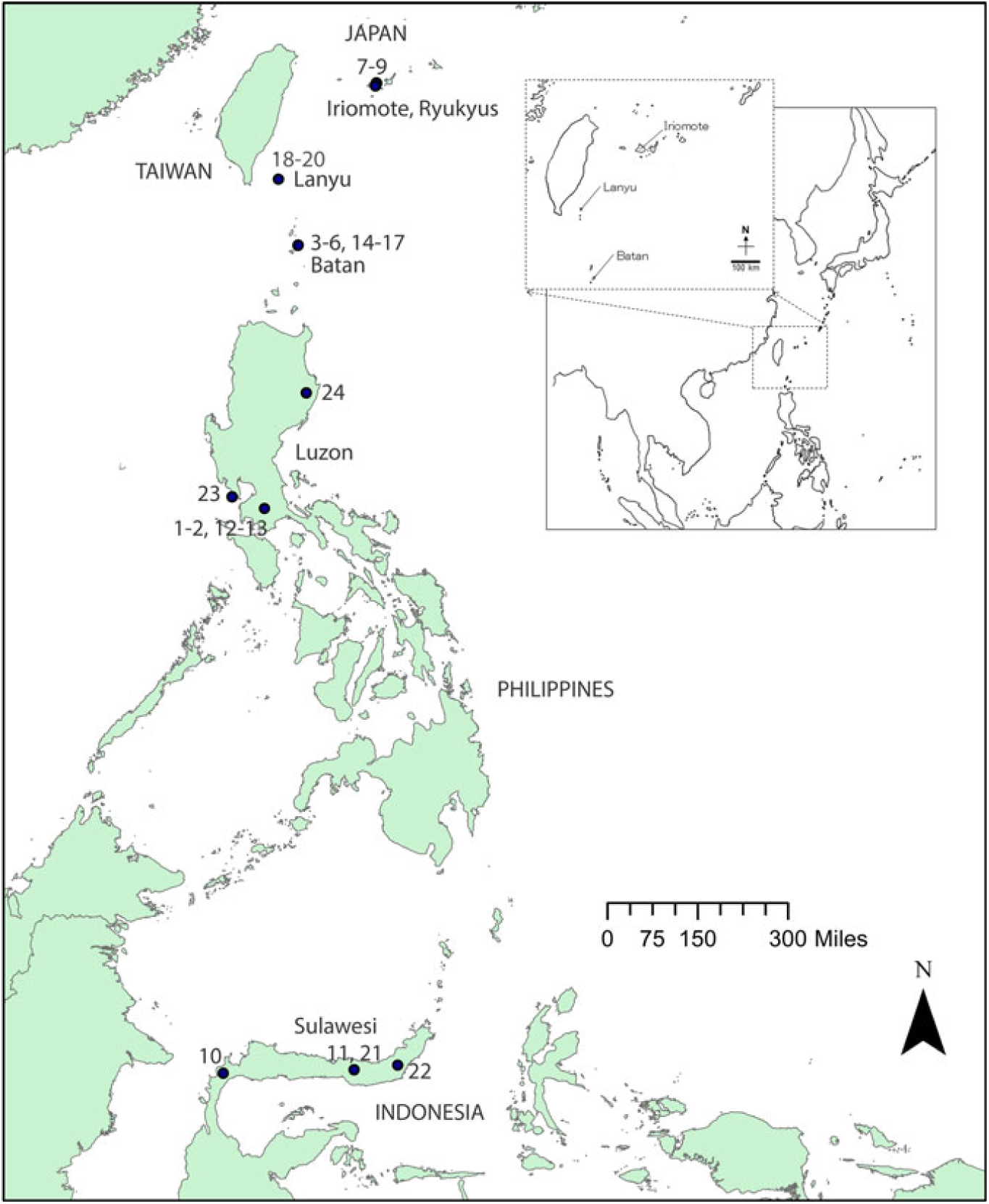
Map of localities of all samples included in the analysis. Numbers relate to the sample list in Table 1.
Taxonomic History of Cyrtandra in Japan and Taiwan
Taiwan
Cyrtandra umbellifera was first described by Merrill in 1908 from near the summit of Mount Iraya in Batan Island, Philippines (Merrill, Reference Merrill1908). In 1935, Hosokawa described Cyrtandra kotoensis Hosok. from Mount Hontou-shan (formerly Mount Koto-yama) on Lanyu Island in Taiwan and referred to it as being distinct from C. umbellifera by having leaves with oblique bases and much shorter subulate calyx lobes (Hosokawa, Reference Hosokawa1935). This was considered to be a synonym of Cyrtandra umbellifera (Kao & DeVol, Reference Kao and DeVol1972), and this was maintained in the most recent Flora of Taiwan (Li & Kao, Reference Li, Kao and Huang1998).
Japan
Cyrtandra cumingii is a large-leaved species with distinctive white bracts that was first described by Clarke in 1883 (Clarke, Reference Clarke, Candolle and Candolle1883) from two collections from Luzon in the Philippines. This species was later mentioned in a number of accounts of the Philippine flora by the American botanists Elmer and Merrill, in which it was described as being “widely distributed in the Philippines” (Merrill, Reference Merrill1907) and its distribution expanded to include Batan (Merrill, Reference Merrill1908), Luzon, Mindanao and Negros (Elmer, Reference Elmer1908); it was mentioned as being “especially common on Mt Banahao, the type locality” (Merrill, Reference Merrill1923).
In May 1937, a very similar-looking species was described from Iriomote Island, the southern Japanese island of the Ryukyus, and given the name Cyrtandra yaeyamae Ohwi and listed as being endemic to this island (Ohwi, Reference Ohwi1937). No reference was made by Ohwi to the widespread Philippine species Cyrtandra cumingii. Just one month later, Masamune described another very similar-looking species from Iriomote in the Ryukyus and named it Cyrtandra iriomotensis Masam. (Masamune, Reference Masamune1937) and remarked that this was the first record of this widespread genus in Japan. This has subsequently always been treated as a synonym of Cyrtandra yaeyamae (Hatusima, Reference Hatusima1956; Walker, Reference Walker1976). In 1956, Hatusima listed Cyrtandra yaeyamae as a synonym of C. cumingii, but in 1971 he resurrected it as a variety of C. cumingii (Hatusima, Reference Hatusima1956, Reference Hatusima1971). Not long after, in 1973, Gillett, in his treatment of the Cyrtandra of the Caroline Islands and Ryukyus (Gillett, Reference Gillett1973), treated C. yaeyamae as a distinct species known only from Iriomote Island. Similarly, in 1976, in the Flora of Okinawa and the Southern Ryukyu Islands, Walker (Reference Walker1976) used the name Cyrtandra yaeyamae and stated that the Japanese species could be distinguished from the similar Philippine one by “having much smaller, narrower inflorescence-bracts and smaller indumentum-hairs, appearing less pubescent” and listed it as a Japanese endemic. Most recently, in the Flora of Japan (Yamazaki, Reference Yamazaki, Iwatsuki, Yamazaki, Boufford and Ohba1993), Cyrtandra yaeyamae was sunk back into C. cumingii and listed as a widespread species from the Southern Ryukyus and the Philippines.
In this study, a stable phylogeny of the genus across Japan, Taiwan and the Philippines was generated, including the samples recently collected as Cyrtandra cumingii from the Ryukyus (Japan), Batan Island and Luzon (both from the Philippines) and C. umbellifera from Lanyu Island (Taiwan) and Batan Island (the Philippines), and we were able to test the relationships of these two species with their closest congeners to clarify their taxonomic status.
Materials and Methods
Taxon sampling
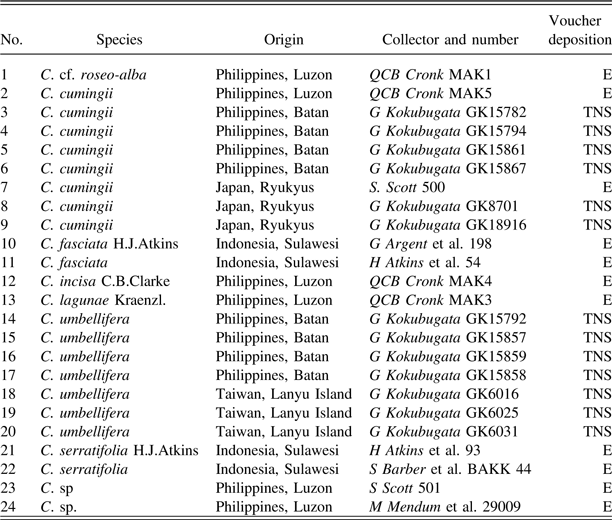
We sampled 13 recent collections of the focus taxa Cyrtandra cumingii and C. umbellifera, which had been made by one of the authors (G.K.), and one by S. Scott (Royal Botanic Garden Edinburgh), from the key localities of Batan Island in the Philippines, Iriomote Island in Japan, and Lanyu Island in Taiwan, and an earlier collection of C. cumingii from near the type locality in Luzon, the Philippines. These were added to a matrix containing a further five samples of closely related taxa from the Philippines selected from a large phylogeny of the genus across Southeast Asia (Atkins et al., unpublished data). Four additional samples of Cyrtandra from Sulawesi in Indonesia were included as outgroup taxa based on unpublished results of work by Atkins and colleagues, giving a total of 24 accessions (Table 1; see Fig. 1).
Taxon list for samples of Cyrtandra included in the present analysis

DNA extraction
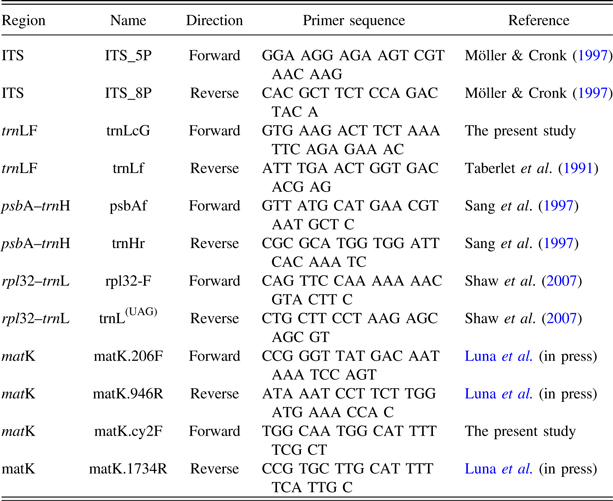
Total genomic DNA was extracted from fresh leaf material or silica-dried material using a modified CTAB procedure (Doyle & Doyle, Reference Doyle and Doyle1987) or using the QIAxtractor (Qiagen, Hilden, Germany). The primers used in this study are listed in Table 2. PCR was carried out with Biotaq DNA polymerase (Bioline, London) and with CES PCR enhancer (Ralser et al., Reference Ralser, Querfurth, Warnatz, Lehrach, Yaspo and Krobitsch2006) with the following chemical concentrations: 10× buffer, 1 µL; 20 mM dNTP, 1 µL; 50 mM MgCl2, 0.3 µL; forward and reverse primers, 0.4 µL each; CES, 2 µL; Biotaq, 0.2 µL; DNA, 1–2 µL; with distilled H2O added to make up 10 µL. PCR amplifications of internal transcribed spacer (ITS) and matK were carried out with 94°C for 4 min, 35 cycles of 94°C for 1 min, 55°C for 1 min and 72°C for 1.5 min, followed by 72°C for 10 min; for trnL–F with 94°C for 4 min, 35 cycles of 94°C for 30 s, 57°C for 30 s and 72°C for 1 min, followed by 72°C for 10 min; for psbA–trnH and rpl32–trnL with 94°C for 4 min, 35 cycles of 94°C for 1 min, 52°C for 1 min and 72°C for 1.5 min, followed by 72°C for 10 min.
Primers used for PCR and sequencing
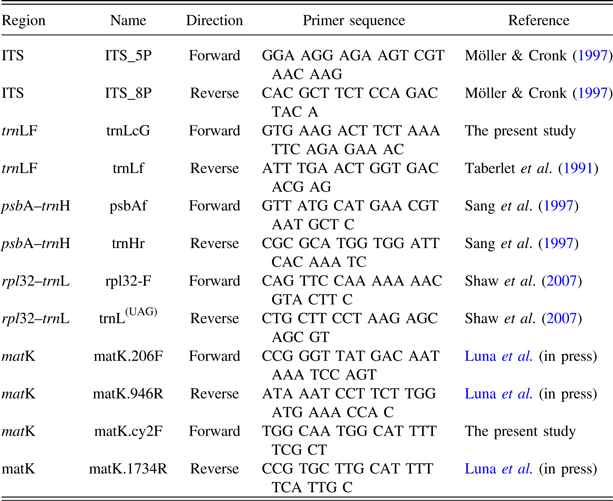
ITS, internal transcribed spacer.
All PCR amplifications were carried out on a Bio-Rad Tetrad DNA Engine (Bio-Rad, Hercules, California). The PCR products were visualised under ultraviolet light after electrophoretic separation on a 1% agarose gel stained with SYBR Safe gel stain (Invitrogen, Carlsbad, California). PCR products were subsequently purified using ExoSAP-IT (Thermo Fisher Scientific, Waltham, Massachusetts) following the manufacturer’s protocol. Sequencing PCRs were carried out with BigDye Terminator version 3.1 Cycle Sequencing Kit (Applied Biosystems, Foster City, California) following the manufacturer’s protocol, and the same primers used for PCR amplification. Sequencing was carried out by Edinburgh Genomics at the University of Edinburgh. The resulting electropherograms were combined and edited in Sequencher version 5.1 (Gene Codes Corporation, Ann Arbor, Michigan) and a matrix assembled, aligned and manually adjusted in Bioedit version 7.1.11 (Hall, Reference Hall1999).
Phylogenetic analyses
Maximum parsimony (MP) analyses were initially conducted on individual regions to visually assess congruence, with areas of conflict determined by examining the placement of individual taxa on each gene tree. Relationships were considered incongruent if the placement of taxa varied among the individual gene trees and exhibited MP-BS values > 80%. No significant incongruence was present, so all further phylogenetic analyses were carried out on the combined data set.
Maximum parsimony analyses were carried out using PAUP version 4.0a163 (Swofford, Reference Swofford2002) on unweighted and unordered characters. Alignment gaps were treated as missing data. A full heuristic search was carried out using stepwise random addition of 10,000 replicates, with TBR and Multrees on. Statistical branch support was obtained from 10,000 heuristic bootstrap replicates each starting with a random addition tree, optimised with TBR on and Multrees off. Bayesian inference (BI) phylogenetic analyses were carried out using Mr Bayes version 3.2.6 (Ronquist et al., Reference Ronquist, Teslenko, van der Mark, Ayres, Darling, Höhna, Larget, Liu, Suchard and Huelsenback2012). The data were divided into seven partitions (ITS spacers, 5.8S gene, psbA–trnH, rpl32–trnL, trnL–F, matK coding region, matK intron region), analysed under the best-fit model of nucleotide evolution for each genic region selected using the AIC criterion as implemented in MrModeltest version 2.4 (Nylander, Reference Nylander2004). These were GTR+G for the ITS spacers, trnL–F, psbA–trnH and the matK intron region, GTR+I+G for rpl32–trnL and the matK coding region, and SYM+I for the ITS 5.8S gene.
Two runs with four chains each were run for 1,000,000 generations with a tree sampled every 1000th generation, and convergence between the runs was checked in Tracer version 1.7 (Rambaut et al., Reference Rambaut, Drummond, Xie, Baele and Suchard2018). The first 10% of sampled trees were discarded as burn-in and the remainder summarised as a maximum clade credibility tree and posterior probabilities (PP) extracted. Maximum likelihood (ML) analyses were conducted with RAxML version 8 (Stamatakis, Reference Stamatakis2014) via the CIPRES Gateway (Miller et al., Reference Miller, Pfeiffer, Schwartz, Miller, Pfeiffer and Schwartz2010). The search for the optimal ML tree was performed using GTR+I+G and a rapid bootstrap analysis of 1000 replicates. For the ML and Bayesian analyses, tree topology and node support were examined in FigTree version 1.4.3 (Rambaut, Reference Rambaut2007).
Results
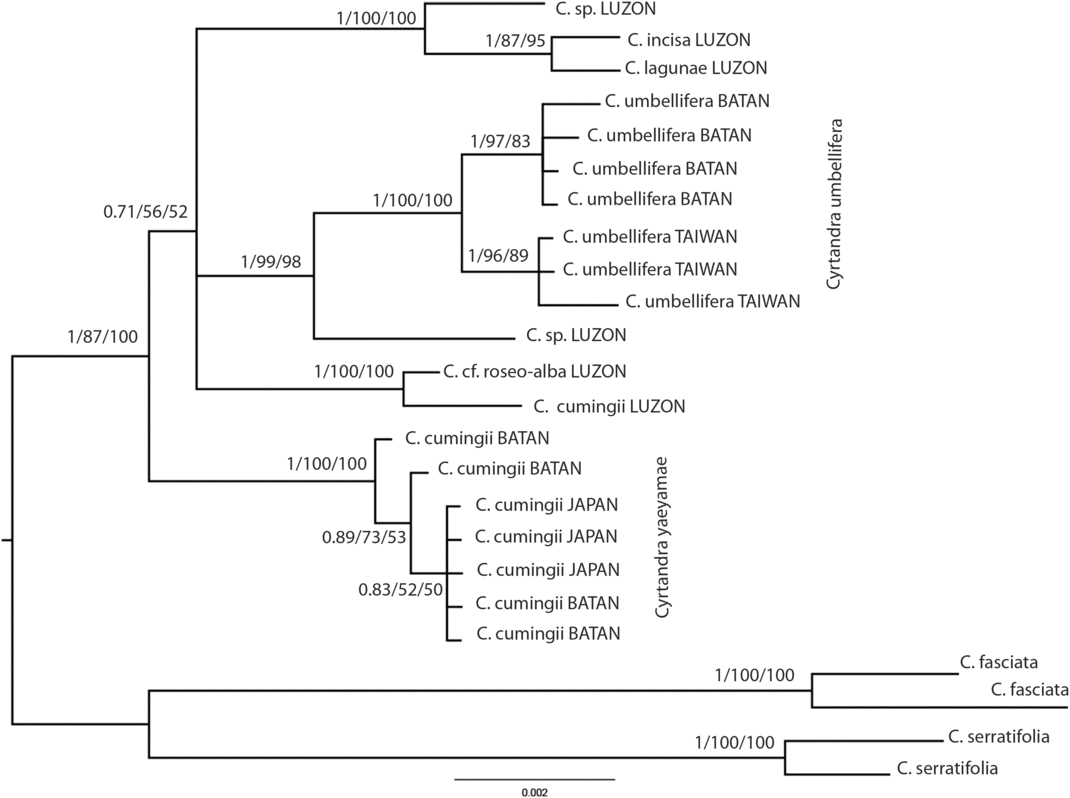
Our results (Fig. 2) show that the three Cyrtandra umbellifera collections from Taiwan form a strongly supported clade (BI-PP = 1, ML-BS = 96%, MP-BS = 89%), in a maximally supported sister relationship to a clade of four samples of the same species from Batan Island in the Philippines (BI-PP = 1, ML-BS = 97%, MP-BS = 83%). These together were sister to an unidentified sample from Luzon with strong support (BI-PP = 1, ML-BS = 99%, MP-BS = 98%). The collections of Cyrtandra cumingii from Batan Island and Japan were mixed together in a clade that received maximum branch support (BI-PP = 1, ML-BS = 100%, MP-BS = 100%).
Bayesian inference tree based on combined sequences of ITS, psbA–trnH, rpl32–trnL, trnL–F and matK. Node support is indicated as Bayesian posterior probabilities (BI-PP), maximum likelihood bootstrap support (ML-BS) and maximum parsimony bootstrap support (MP-BS).

The single sample of Cyrtandra cumingii from Luzon was, however, in a well-supported sister relationship with C. cf. roseo-alba, also from Luzon, with maximum branch support (BI-PP = 1, ML-BS = 100%, MP-BS = 100%), that was weakly associated (BI-PP = 0.71, ML-BS = 56%, MP-BS = 52%) with another clade.
Discussion
Cyrtandra umbellifera
The results for Cyrtandra umbellifera suggest that the species on Taiwan could be either separated as a distinct species from the Philippine collections or kept together as a species with a distribution that includes both the Philippines and Taiwan. Our observations of the morphology suggest that it is not possible to separate these two, and that the morphological differences suggested by Hosokawa (Reference Hosokawa1935) to differentiate Cyrtandra kotoensis (i.e. leaves with oblique bases and much shorter subulate calyx lobes) are not consistent.
Cyrtandra cumingii
Our phylogenetic results show that the collections from Japan are not Cyrtandra cumingii. This had been suggested previously by a number of authors (Ohwi, Reference Ohwi1937; Gillett, Reference Gillett1973; Walker, Reference Walker1976), although they had also stated that the species present on Iriomote Island of the Ryukyus was endemic. What these results show is that the species present in Iriomote Island of the Ryukyus is also present in the northern Philippines. This had not been suggested by earlier authors. On inspection of the specimens from the northern Philippines and Japan, there do appear to be good, consistent differences between these and the type of Cyrtandra cumingii from southern Luzon. These include differences in the number of lateral veins (15–18 in Cyrtandra yaeyamae and 12 in C. cumingii), calyx length (12–15 mm in C. cumingii and 5–6 mm in C. yaeyamae), and also leaf bases (often distinctly decurrent in C. yaeyamae, not in C. cumingii). There may be additional floral differences once a detailed revision of Cyrtandra cumingii in the Philippines can be carried out, because no corolla was seen or described by Clarke (Reference Clarke, Candolle and Candolle1883). The specimen from Batan Island cited as being Cyrtandra cumingii (Fenix 3787, US 00081311) (Merrill, Reference Merrill1908) and the justification for the expansion of its distribution to this island is, in fact, a close match for the other specimens included in this analysis from Batan Island and not a good match for the type collection of C. cumingii from Luzon.
In future studies, more intensive sampling across the rest of the Philippines would be useful, as well as a detailed study of morphology to determine the extent of the distribution of Cyrtandra yaeyamae and C. cumingii in the Philippines.
Taxonomic Implications
Cyrtandra cumingii C.B.Clarke in A.DC. & C.DC., Monogr. Phan. 5(1): 263 (1883). – Type: Philippines, Luzon, 1841, Cuming 757 (lecto K [K000831609]; isolecto K [K000831610], P [P03884307], BM [BM000798277] hic. desig.).
Distribution. Philippines (Luzon, Mindanao, Mindoro, Panay).
This appears to be a fairly common and widespread species in Luzon, with a few records also from Mindanao, Panay and Mindoro. More intensive sampling and taxonomic work are required in the Philippines to determine the exact distribution and limits of this species. The name Cyrtandra cumingii has not been lectotypified, so we do that here, selecting the most complete specimen at Kew (K000831609) as the lectotype.
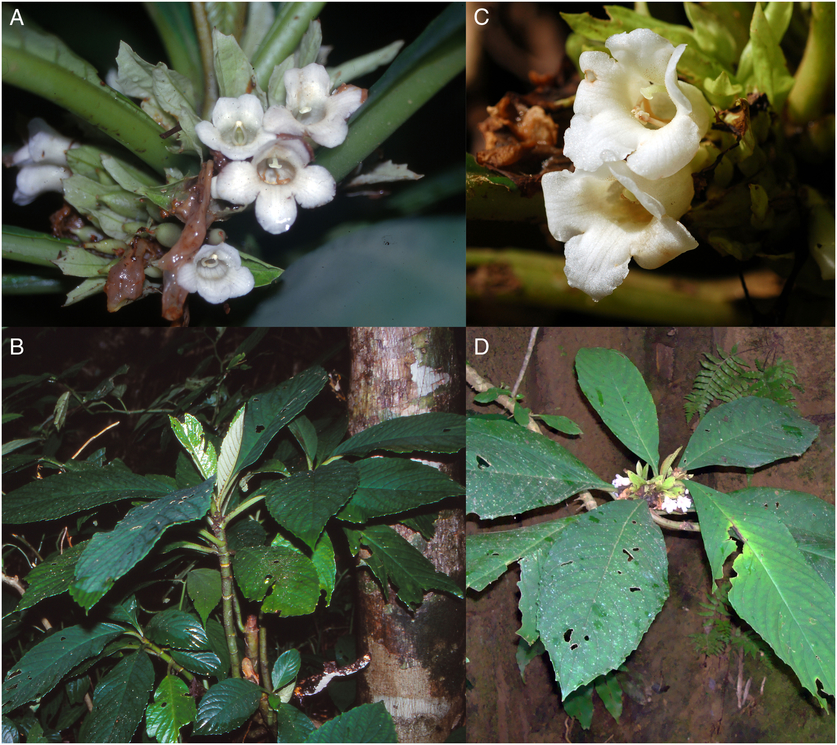
Cyrtandra umbellifera Merr. in Philipp. J. Sci. 3: 435 (1909 [“1908”]). – Type: Batan Island, Philippines, 8 vi 1907, Fenix 3785 (lecto P [P03899661], isolecto US [US00126364] hic. desig.). Fig. 3.
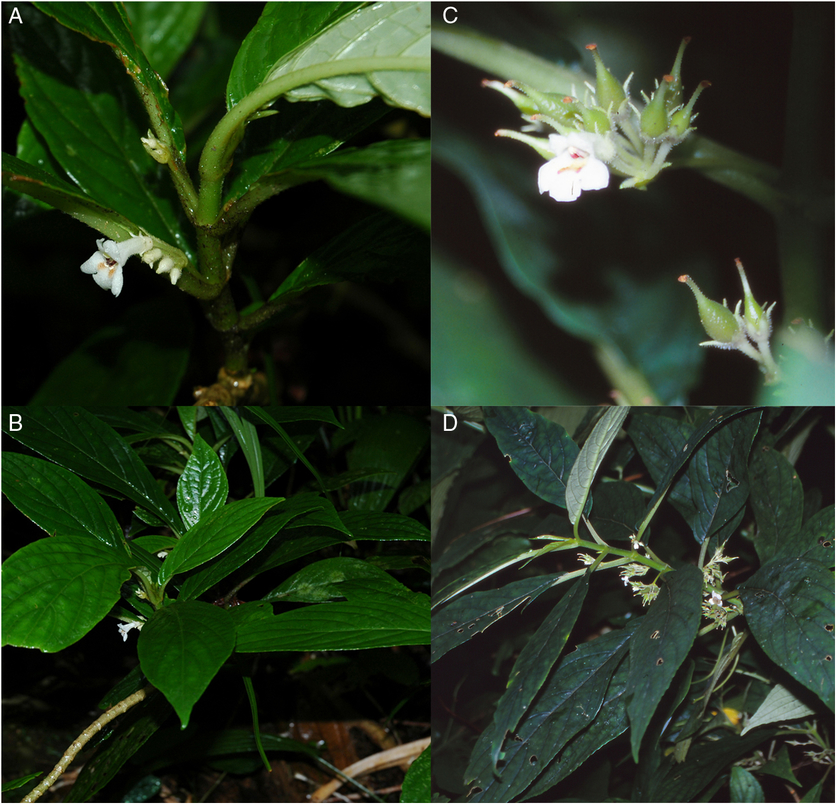
Cyrtandra umbellifera Merr. A, Flower; B, habit; C, flower and fruits; D, habit. (Photographs: Goro Kokubugata; A and B, Lanyu, Taiwan; C and D, Batan Island, Philippines.)
Cyrtandra kotoensis Hosokawa in Trans. Nat. Hist. Soc. Formosa 25: 412 (1935). – Type: Taiwan, Island of Botel Tobago, Mt Koto, 7 xii 1935, Hosokawa 8129 (holo TAI).
Distribution. Taiwan and Batan Island, Philippines.
This distinctive species is characterised by its umbellate inflorescence and appears morphologically to be close to a number of species in the Philippines and Sulawesi that include Cyrtandra longirostris De Vriese, C. callicarpifolia Elmer and C. bruteliana Koord. from C.B.Clarke’s section Cuneatae.
Merrill did not specify a herbarium when designating Fenix 3785 as the type for this species (Merrill, Reference Merrill1908), and it has not been possible to find any subsequent lectotypification. The collection from Paris (P03899661) is selected here as the lectotype.
Cyrtandra yaeyamae Ohwi in J. Jap. Bot. 13: 339 (1937). – “Cyrtandra cumingii var. yaeyamae” (Ohwi) Hatusima Fl. Ryukyus 557 (1971) (‘yaeyamana’) (not validly published; basionym cited only as “C. yaeyamana Ohwi (May 1937)”, cf. Art. 41.5). – Type: Japan, Iriomote Island, Nakara-gawa, x 1936, Sonohara s.n. (holo KYO [KYO00069674]). Fig. 4.
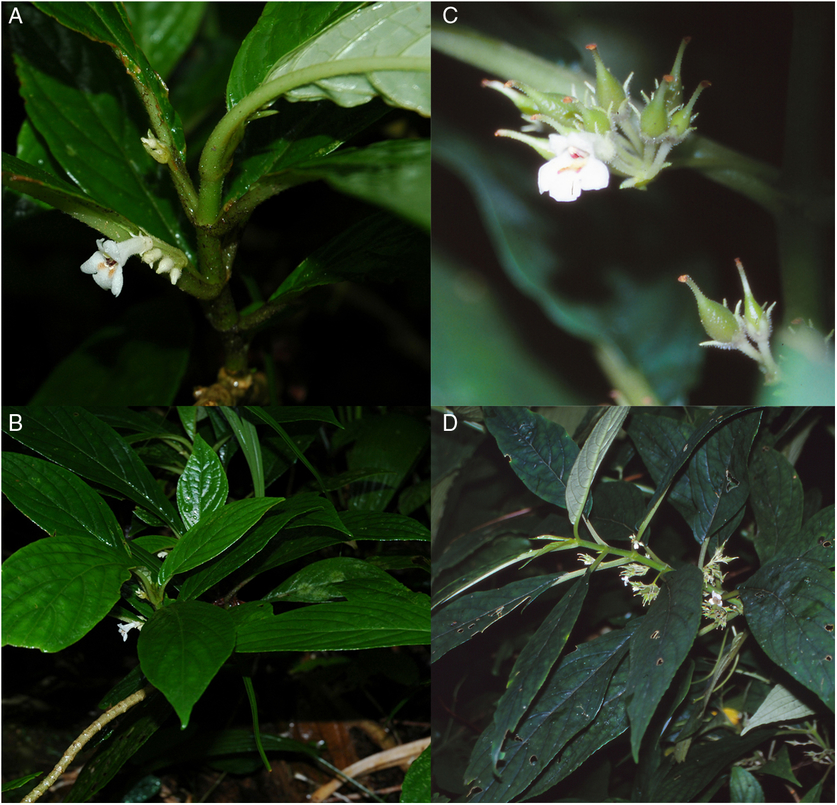
Cyrtandra yaeyamae Ohwi. A, Inflorescence; B, habit; C, inflorescence; D, habit. (Photographs: Goro Kokubugata; A and B, Batan Island, Philippines; C and D, Iriomote, Japan.)
Cyrtandra iriomotensis Masam., Not. Syst. 6: 38 (1937). – Type: Japan, Iriomote Island, Masamune s.n. (holo TAI [Herbar. Taihoku Imp. University] n.v.).
Cyrtandra cumingii auct. non C.B.Clarke; Hatusima (Reference Hatusima1956); Yamazaki (Reference Yamazaki, Iwatsuki, Yamazaki, Boufford and Ohba1993).
Distribution. Iriomote Island of the Ryukyus, Japan and Batan Island, Philippines.
Chromosome number. 2n = 34 (Kokubugata & Madulid, Reference Kokubugata and Madulid2000).
This species is morphologically similar to the Philippine Cyrtandra cumingii but can be distinguished by the number of lateral veins (15–18 in C. yaeyamae and 12 in C. cumingii), calyx length (12–15 mm in C. cumingii and 5–6 mm in C. yaeyamae) and also often leaf bases (usually distinctly decurrent in C. yaeyamae, not in C. cumingii). The type of Cyrtandra iriomotensis has unfortunately not been seen. The type is cited as being at the Herbarium of Taihoku Imperial University in the protologue (Masamune, Reference Masamune1937). This became the Herbarium of the National Taiwan University (TAI) in 1945. Masamune was based in Taiwan throughout the Second World War and returned to Japan in 1945 (National Museum of Natural Sciences n.d.) with some of his collections, including a number of orchid types (Inoue et al., Reference Inoue, Katsuyama, Takahashi and Akiyama1998) and potentially other types, as a number of his specimens cited as being at TAI have not been found there (Inoue et al., Reference Inoue, Katsuyama, Takahashi and Akiyama1998). On returning to Japan, his collections were kept primarily at his home, and following his death, moved to the herbarium of Kanagawa Prefectural Museum of Natural History (KPM) (Inoue et al., Reference Inoue, Katsuyama, Takahashi and Akiyama1998).
Despite efforts made to locate the type of Cyrtandra iriomotensis at TAI and KPM and other likely herbaria in Taiwan and Japan (HAST, KANA, KYO, RYU, TAIF, TI and TNS), we were unable to do so. Nonetheless, we are certain that this is conspecific with Cyrtandra yaeyamae, because the description of C. iriomotensis is a good match for the type of C. yaeyamae and, based on recent comprehensive fieldwork on Iriomote (area =289.3 km2) by one of the authors (G.K.), we are confident that there is only one species of Cyrtandra present on the island.
Acknowledgements
We would like to thank RBG Kew (K) for access to the collections and Gemma Bramley for her assistance during the visit. We would also like to thank Chien-Fan Chen (TAIF), Yi-Ru Cheng (TAI), Kunihiko Ueda (KANA), Wataru Ohnishi (KPM), Hidetoshi Nagamasu (KYO), Masatsugu Yokota (RYU) and Luisito Evangelista (PNH) for checking for type material. We would like to thank Mark Coode and John McNeil for their nomenclatural advice. We would also like to thank the Sibbald Trust for their contribution towards the project (Sibbald Project 2015#30). The Royal Botanic Garden Edinburgh is supported by the Rural and Environment Science and Analytical Services Division of the Scottish Government.