Introduction
Recent research in Mainland Southeast Asia has identified at least two distinct cultural sequences that led to increasing social complexity, one coastal and the other inland. The former centred on the ‘Maritime Silk Road’, a burgeoning network of trading communities. Initially documented at Oc Eo on the Mekong Delta (Malleret Reference Malleret1959–63), the rise of port cities from the fourth century bc has more recently been investigated at Khao Sam Kaeo and related sites in peninsular Thailand (Bellina et al. Reference Bellina2017). Exotic carnelian, agate, bronze and glass imports came from south Asia, Dong Son drums from Vietnam and ceramics and mirrors from China. It is likely that expertise in iron smelting and forging was introduced along with Indic religions and script. Local manufacturing involved foreign craft specialists, whose output followed established trade routes into the interior of Southeast Asia.
Iron Age settlements are densely distributed in the Mun River catchment of northeast Thailand (O'Reilly & Scott Reference O'Reilly and Scott2015; Scott & O'Reilly Reference Scott and O'Reilly2015). Excavations in the upper reaches have documented a sequence spanning a millennium from the fifth century bc that witnessed environmental and cultural changes that, as with the coastal port cities, generated social inequality. However, the inland sequence involved different stimuli. These are increasingly coalescing into a model for change initiated by a sharp drop in the strength of the summer monsoon that brought on a period of aridity during the later Iron Age. We have already reported on the associated mortuary evidence for the rise of social elites, increasing complexity of mortuary rituals and an agricultural revolution involving ploughing in irrigated wet rice fields (Castillo et al. Reference Castillo, Higham, Miller, Chang, Douka, Higham and Fuller2018; Higham Reference Higham2011; Wohlfarth et al. Reference Wohlfarth, Higham, Yamoah, Chabangborn, Chawchai and Smittenberg2016). In this paper, we present new evidence for the social changes that took place in the Mun Valley by comparing the mortuary records of a recently excavated site of Non Ban Jak (NBJ) with those from Noen U-Loke (NUL) and Ban Non Wat (BNW). We then turn to the new demographic and environmental data to examine the health implications of the agricultural revolution, and examine how the late Iron Age stood at the threshold of a transition into early states that contrasts with that seen along the Maritime Silk Road. Such comparisons have the potential to refine our understanding of social change by producing regionally specific models and enable a more detailed understanding of the advent of social complexity in the area.
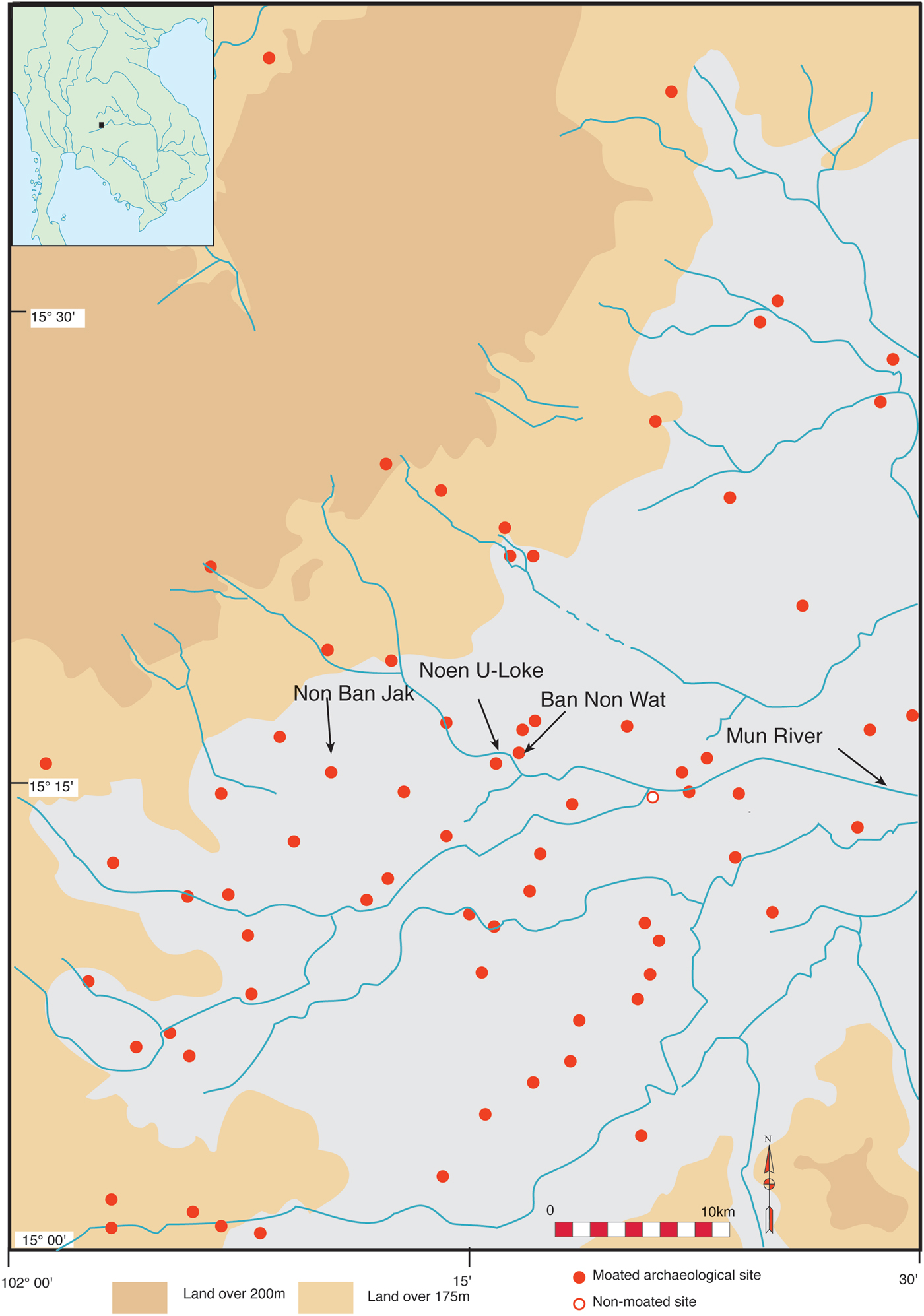
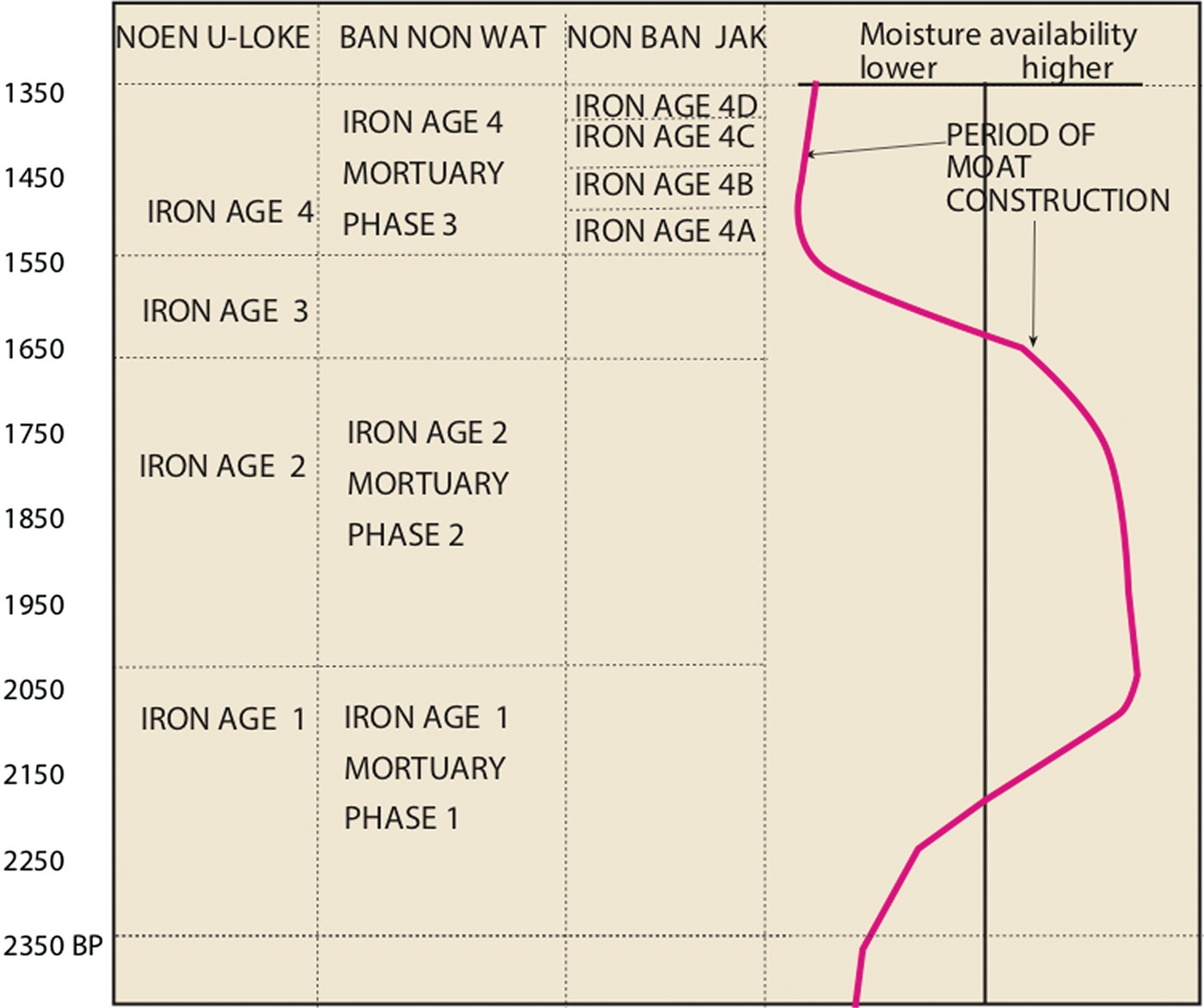
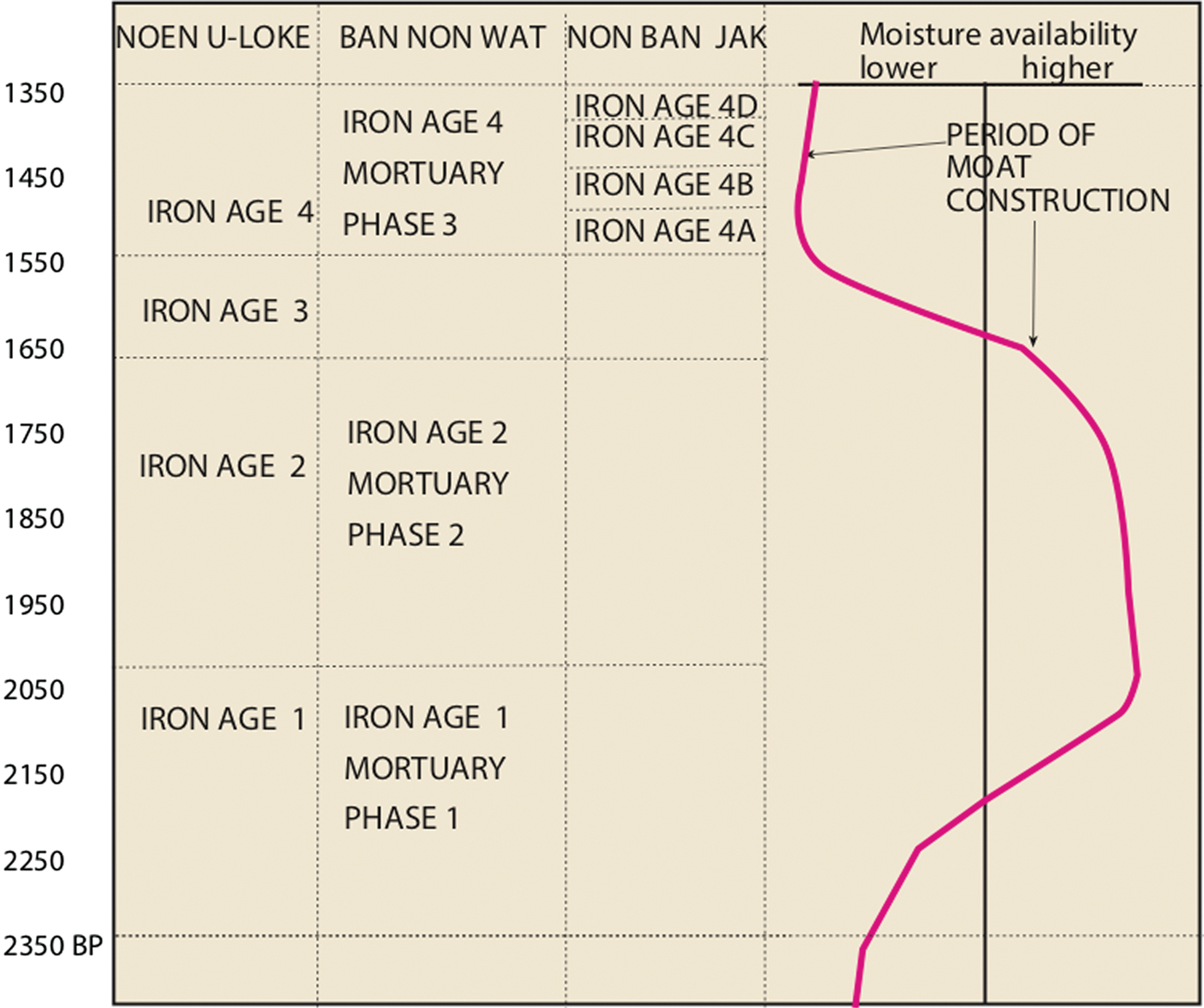
Four mortuary periods have been identified at NUL that encompass the entire Iron Age (IA), and are referred to as IA1–4 (Higham & Kijngam Reference Higham and Kijngam2012). NBJ is located 10 km west of NUL and its IA occupation is confined to IA4 with four burial sub-phases referred to as IA4A–D (Figs. 1–2). BNW has a large number of burials belonging to IA1. These sequences and their chronology are summarized in Figure 3.
The upper Mun Valley, showing the location of the sites mentioned in the text.

The relative chronologies of Noen U-Loke, Ban Non Wat and Non Ban Jak during the Iron Age, together with the estimated rainfall.
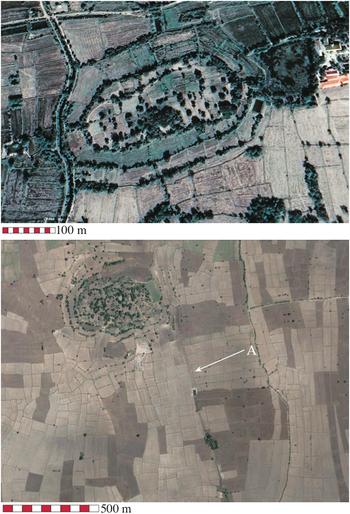
Non Ban Jak (above) and Noen U-Loke. (A) a probable canal linked with the moat. (Courtesy Google Earth.)
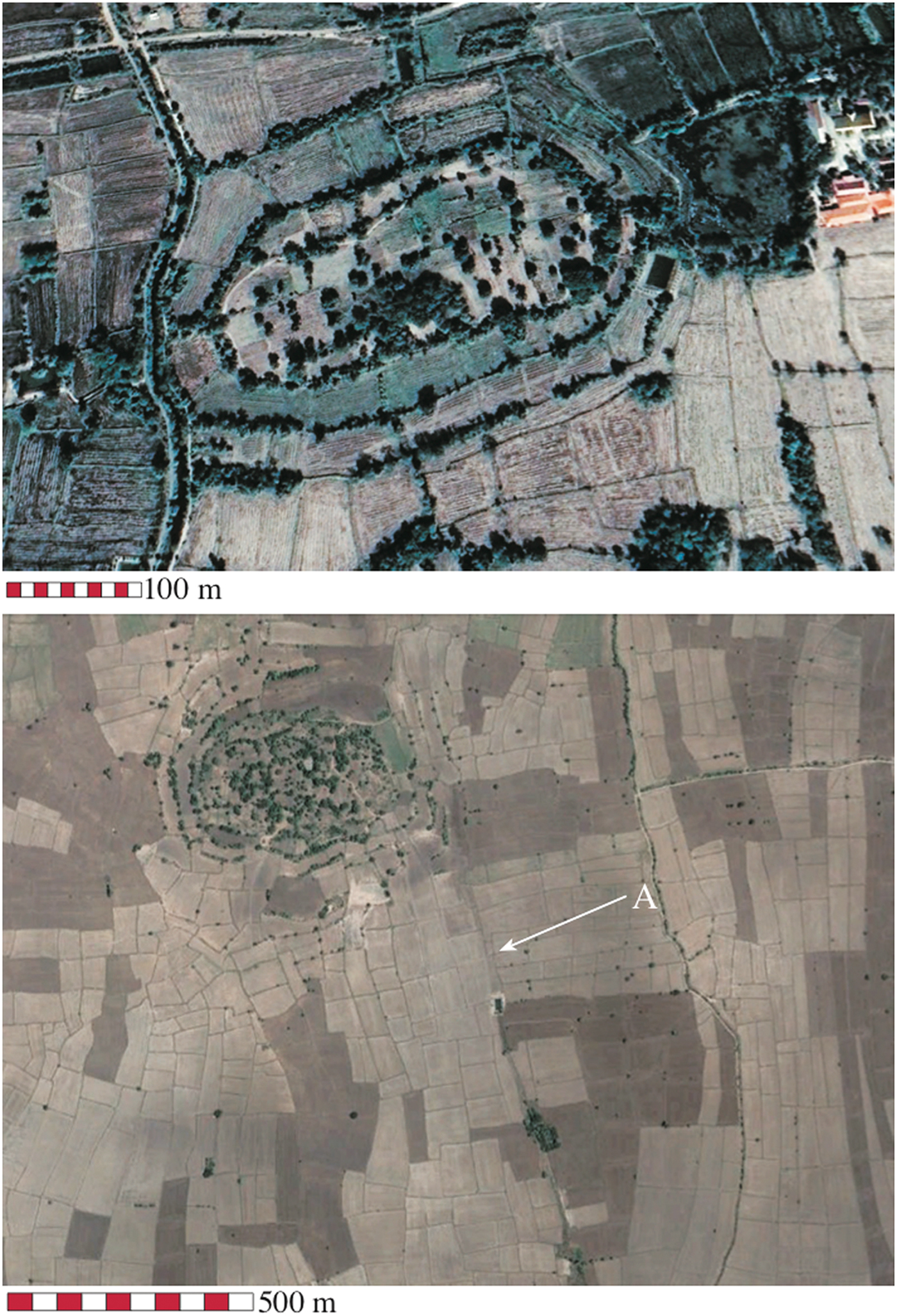
Geoarchaeological, palaeobotanical, mortuary and artefactual evidence has been combined with analyses of archaeological features to create a model of late and rapid social change in the Iron Age (Higham Reference Higham2011; Reference Higham, Cameron and Chang2014; Reference Higham2015). The basis for this model begins with cores taken from Lakes Kumphawapi and Pa Kho 240 km north of the Upper Mun sites which have identified a period of reduced rainfall from the early first millennium ad (Fig. 2; Wohlfarth et al. Reference Wohlfarth, Higham, Yamoah, Chabangborn, Chawchai and Smittenberg2016). Up to this turning point, all evidence suggests that from the initial Neolithic settlement of the region until the early Iron Age, dry-land rice was cultivated in fields watered by natural rainfall (Castillo et al. Reference Castillo, Higham, Miller, Chang, Douka, Higham and Fuller2018). Increased aridity would have presented difficulties to communities practising such cultivation (Weisskopf et al. Reference Weisskopf, Qin, Ding, Ding, Sun and Fuller2015). The contemporaneity of the newly dry conditions and the construction of moats/reservoirs round Iron Age settlements therefore represent a considerable social investment in water conservation and distribution (Scott & O'Reilly Reference Scott and O'Reilly2015). The five moats at NUL are impressive engineering works, extending 200 m beyond the edge of the site (Fig. 3). The botanical samples from the Bronze and IA contexts at the moated site of Ban Non Wat have revealed a transition from weed species adapted to dry rice fields to those that thrive under wet conditions at the same time that aridity took hold (Castillo et al. Reference Castillo, Higham, Miller, Chang, Douka, Higham and Fuller2018).
The tractive power of water buffaloes is a key element in wet rice farming, for they draw a plough and a harrow to prepare fields for transplanting rice. As Goody (Reference Goody1971) has described, ploughing brings far more land under cultivation than a person using a hoe. Late IA smiths forged iron ploughshares and sickles which have been found in mortuary contexts at NUL and NBJ. This new method helps explain the abundance of rice. It was used ritually to fill graves; rice straw was mixed with clay for house and kiln construction and piles of grain littered the kitchens of Iron Age houses at NBJ (Higham et al. Reference Higham, Cameron and Chang2014). The presence of what look like canals issuing from the moats of some sites (Fig. 3) and a dam at Ban Chiang Hian (Parry Reference Parry1992) should be considered in conjunction with the traces of rice-field boundaries at contemporary Iron Age sites in northwest Cambodia (Hawken Reference Hawken2011). Low banks that divide agricultural land into individual plots were the central characteristic of rice agriculture in the early states of Southeast Asia. These fields can both retain rainfall and receive irrigation water. They represent improved land that has the potential for private ownership and concomitant social change. During the Chenla period of early states (c. ad 550–800), such elite ownership was entrenched (Vickery Reference Vickery1998). This raises the possibility that the origins of social inequality took place as late IA aridity set in.
Methods
We first examine the putative rise of social inequality by considering new evidence for social distinctions on the basis of mortuary wealth at NBJ, compared with the published results from NUL and BNW (Higham Reference Higham2011). A wide range of items were placed with the dead at these sites as part of interment rituals. Some were accompanied by few, others by lavish and often exotic offerings. For the first time, it has been possible to compare chronological change in these rituals between infants, men and women across different sites reflected in the quantity of these offerings and access to exotic prestige goods. The number of burials and the range of 46 variables for each mortuary context encourage the deployment of statistical analyses by computing principal components (PC) based on the variance and covariance matrix. Following PC analyses, we used log-linear models to relate the abundance of different artefacts to the burial sites and the mortuary phases. Our statistical analyses involved the numbers of each artefact except for glass, agate and gold beads that were often so numerous that to incorporate the raw numbers would skew results. Therefore, we considered where the beads were found relative to the skeleton and described them collectively as a necklace or a bracelet. We then weighed results in the light of the construction of cemeteries, urban planning and the development of interment within domestic houses.
Following this analysis, we approached the impact of wet rice farming on human health by first identifying the risks of water-borne diseases, the creation of an environment favouring malarial mosquitoes, and increased population densities (Halcrow et al. Reference Halcrow, Tayles, King, Oxenham and Buckley2016; King et al. Reference King, Halcrow, Tayles and Shkrum2017). These preface an examination of infant mortality, since survival pre- and post-parturition is a reflection of female health.
Prelude: mortuary practices in the Mun Valley
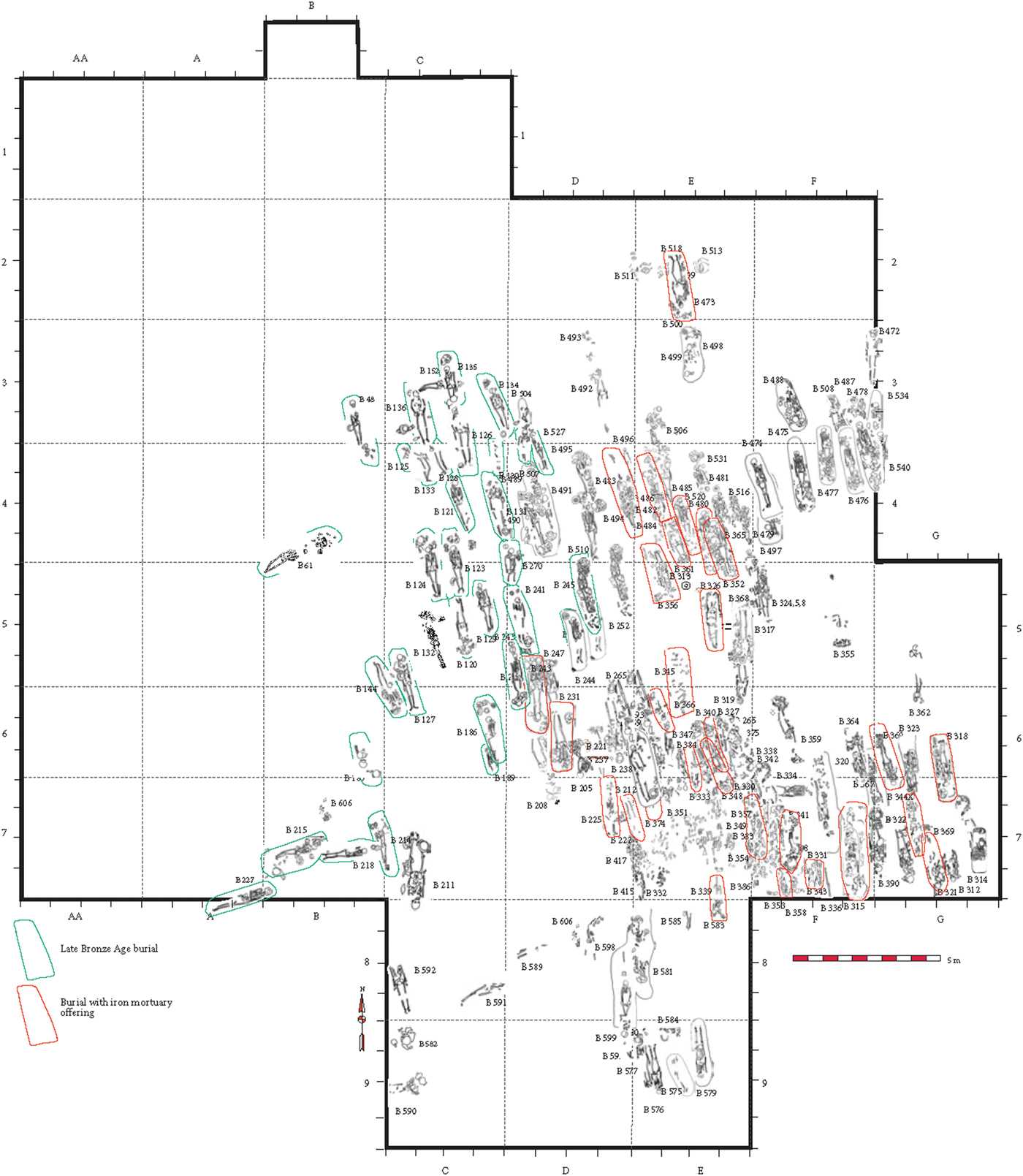
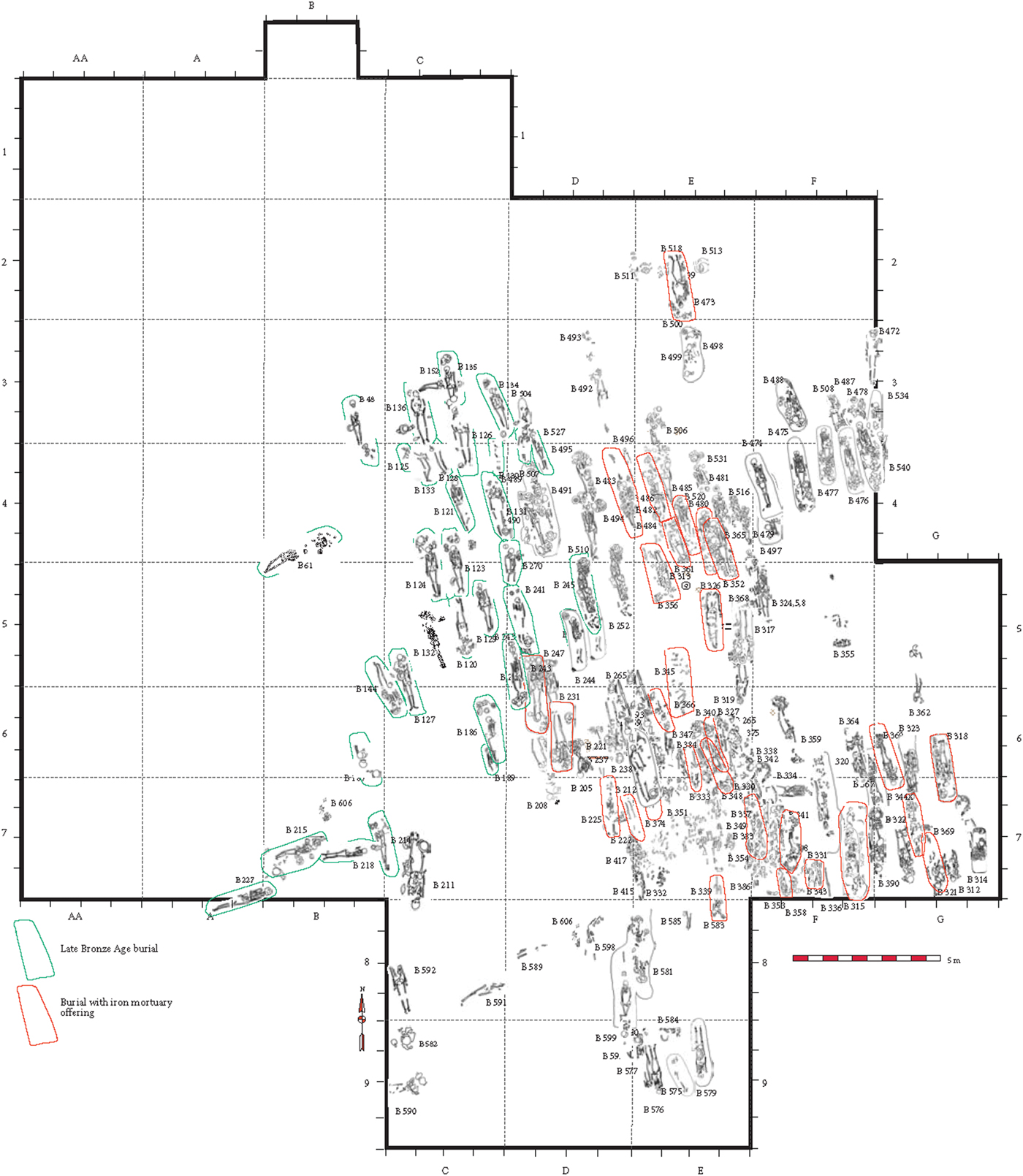
Iron smelting and forging in northeast Thailand began in the fifth century bc, and its advent is best documented at BNW (Higham & Kijngam Reference Higham and Kijngam2012). Here, the burials of a late Bronze Age cemetery merged eastward with the first graves to contain iron mortuary offerings, as well as rare exotic ornaments of agate and glass (Fig. 4). The graves were tightly clustered into two adjacent groups, in one of which the dead were interred orientated with the head to the north, while in the other, the direction was reversed. A statistical analysis of mortuary offerings of each individual interment failed to identify any of unusual wealth (Higham & Manly Reference Higham, Manly, Higham and Kijngam2012). These included iron and bimetallic (iron and bronze) spears, knives and, in terms of potential agricultural application, socketed hoes.
The Late Bronze Age and early Iron Age cemetery of Ban Non Wat. Graves outlined in green are Late Bronze Age, those in red contain iron mortuary offerings.
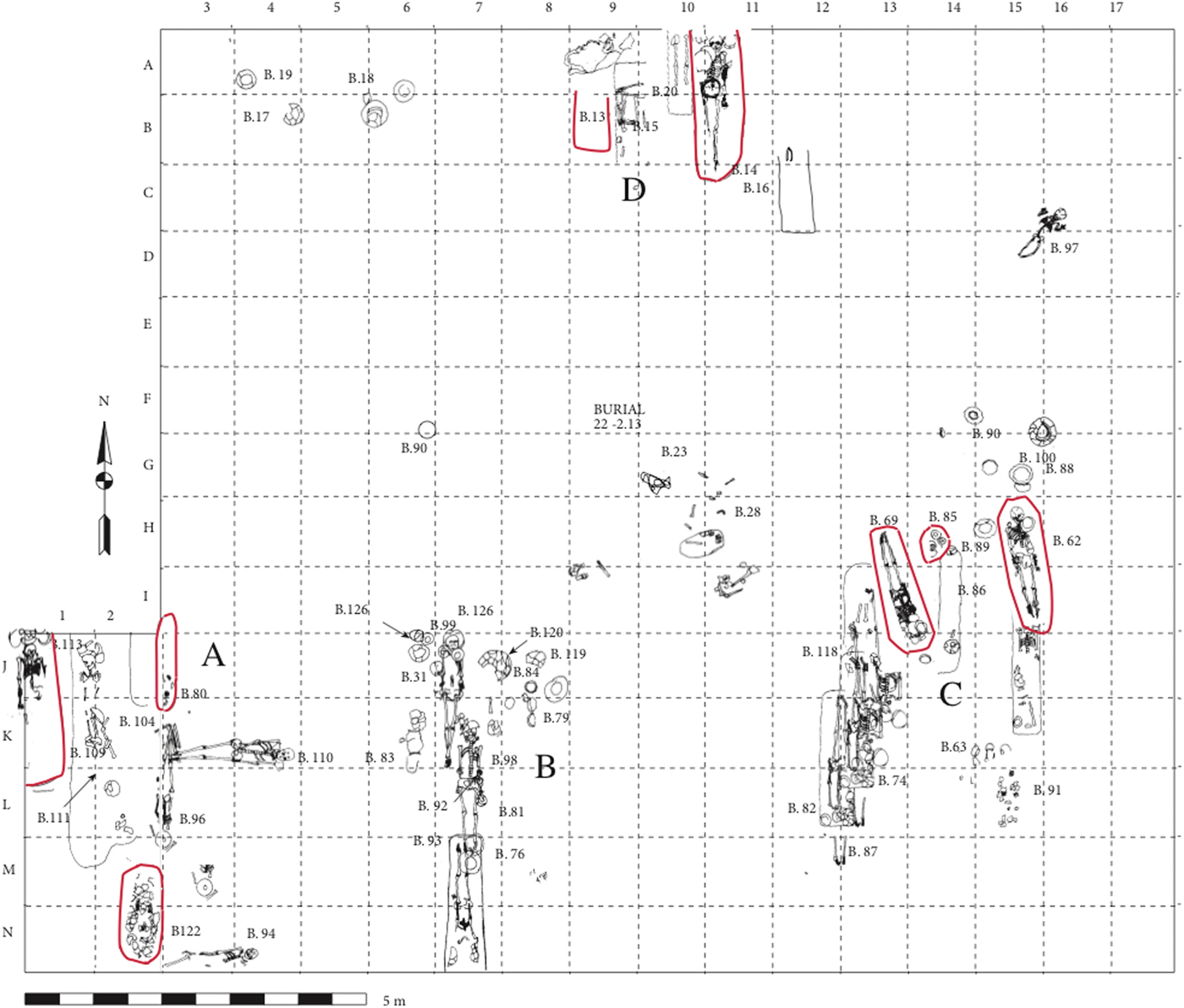
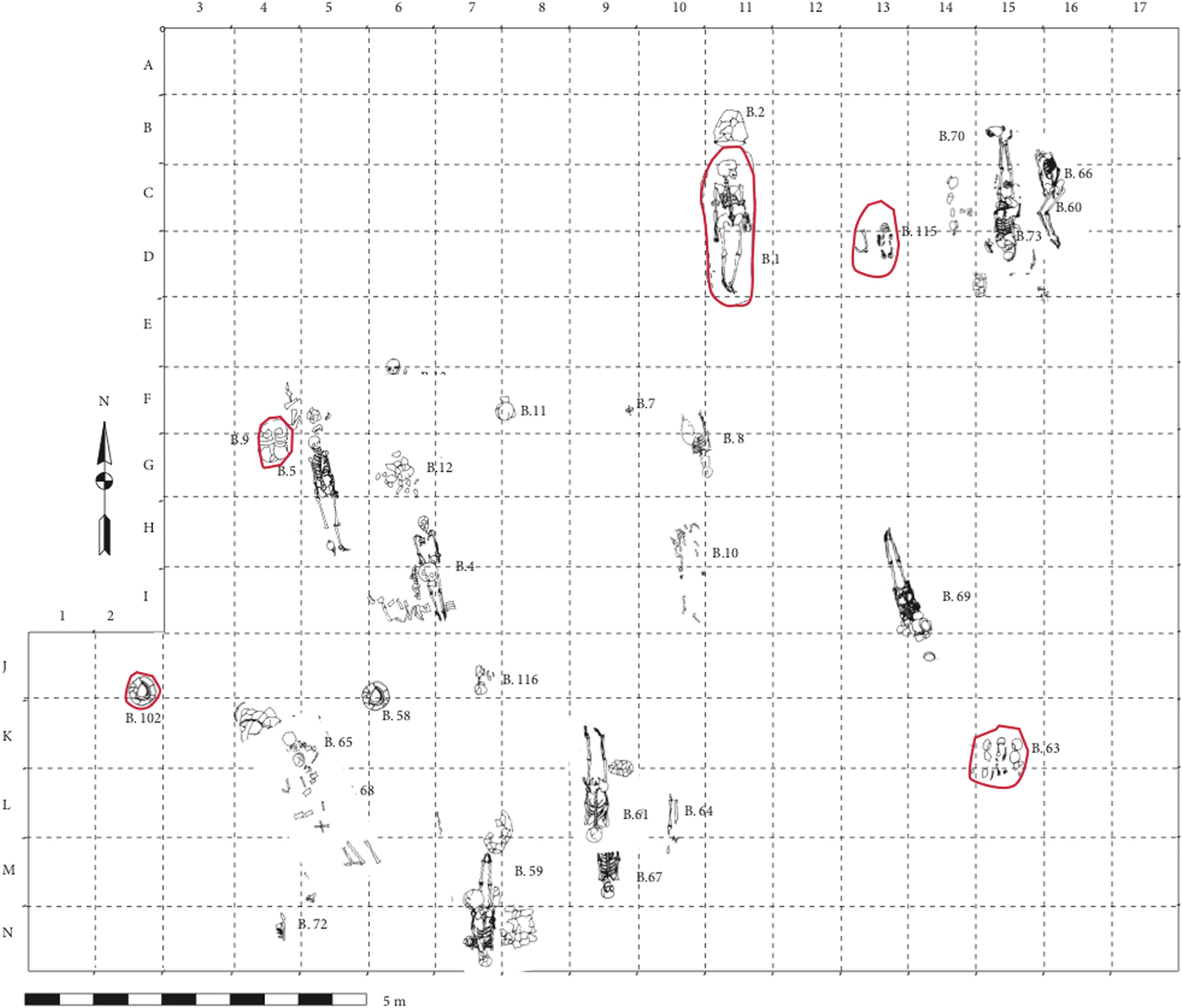
How the dead were interred at NUL changed over the millennium of the Iron Age. After the few and scattered IA1 burials, IA2 saw tight clusters of graves filled with rice. This continued into IA3, when there was a sharp rise in the mortuary wealth of some individuals (Fig. 5). With IA4, the graves were more dispersed and lie in rows (Fig. 6). The dead were interred supine in an extended position during all four phases, with rare exceptions that included a person who suffered from leprosy (Tayles & Buckley Reference Tayles and Buckley2004) and a young man with an arrowhead lodged in his spine, both of whom were found prone. Variable mortuary offerings included ceramic vessels, iron hoes, spears, sickles, knives, arrowheads, chisels, axes, points and a ploughshare. Ceramic spindle whorls reflect a weaving industry, and fabric often survives as impressions on iron and bronzes. Burnishing stones would have been used by potters. Most bronzes were worn as ornaments: bracelets, anklets, finger, ear and toe rings, belts and ear studs. Other exotic jewellery was fashioned from gold, silver, lead, glass, carnelian and agate. Bivalve shells almost certainly fulfilled a symbolic function.
Noen U-Loke during Iron Age 3. Graves outlined in red are particularly wealthy.
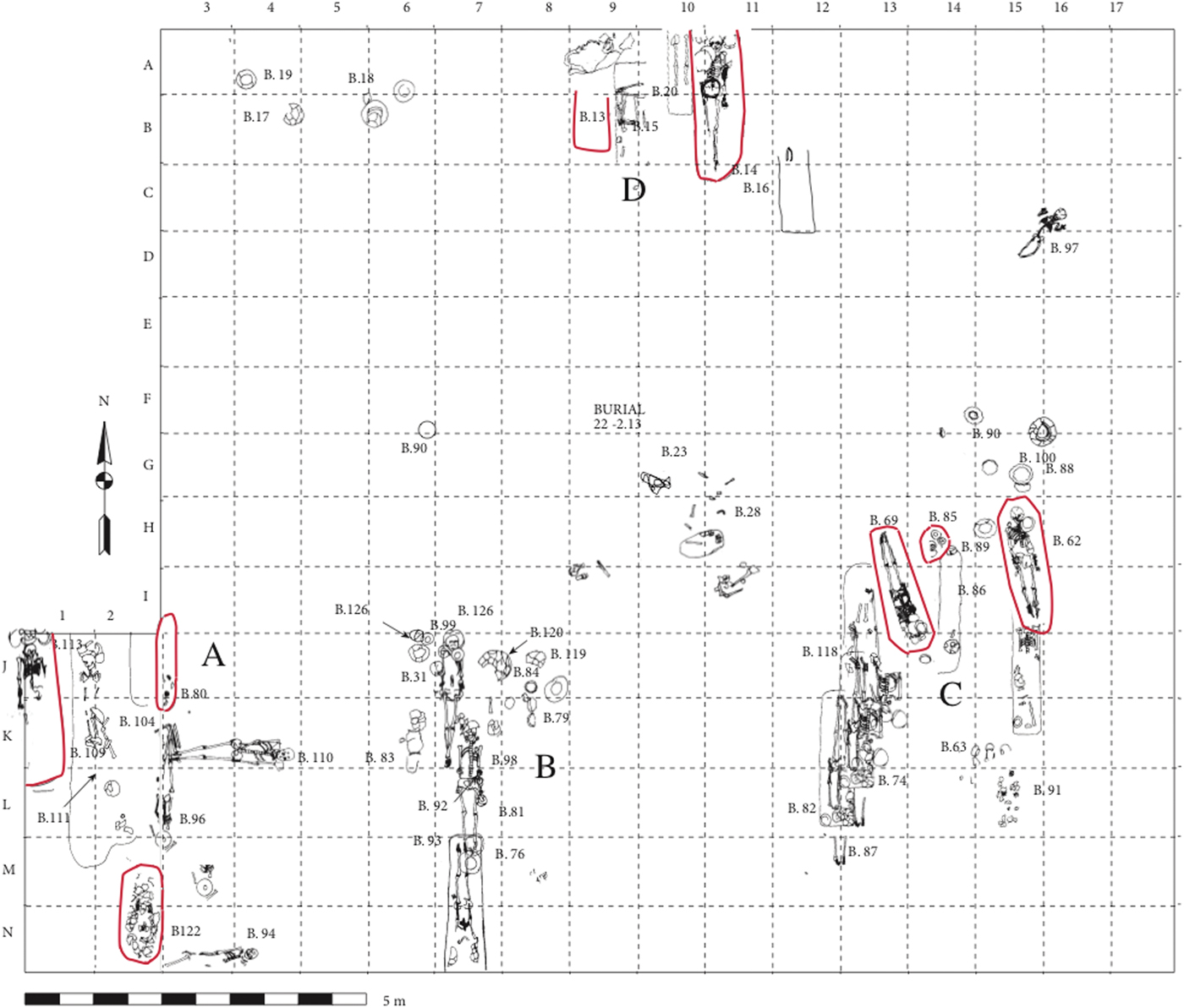
Noen U-Loke during IA4. Graves outlined in red are identified as being relatively wealthy.

NBJ was occupied during the Neolithic (1750–1050 bc), the Bronze Age (1050–450 bc), IA4 (ad 200–600) and the early historic period (ad 600–800). All mortuary and most of the evidence for residential occupation comes from the four sub-phases of IA4. The mortuary rituals for all burials match those of their contemporaries at NUL IA4. Pottery vessels of similar forms were placed alongside or over the corpse. NUL and NBJ have identical iron sickles, knives and spears. Bronzes included belts, bracelets, finger and toe rings and earrings. Agate pendants and beads, glass bead necklaces and rare gold finger rings and earrings were worn. Infants were buried in ceramic mortuary jars that are indistinguishable in form from those at BNW and NUL. At NBJ, the dead were interred within residential rooms during IA4 (Higham Reference Higham2015). The walls of these rooms during the initial settlement phase had wooden foundations, wattle-and-daub walls and clay floors reinforced with bamboo. With time, houses became much more substantial, incorporating compacted clay, laterite and white concreted laterite elements along with wooden and stone strengthening. Foundations incorporated substantial posts to frame the walls. It is possible that similar intramural residential burial was in place at NUL, but the structural remains have not survived to the same extent. Nevertheless, areas of clay flooring indicate the same construction technique during IA4.
Principal component analysis of adult burials from Noen U-Loke and Non Ban Jak
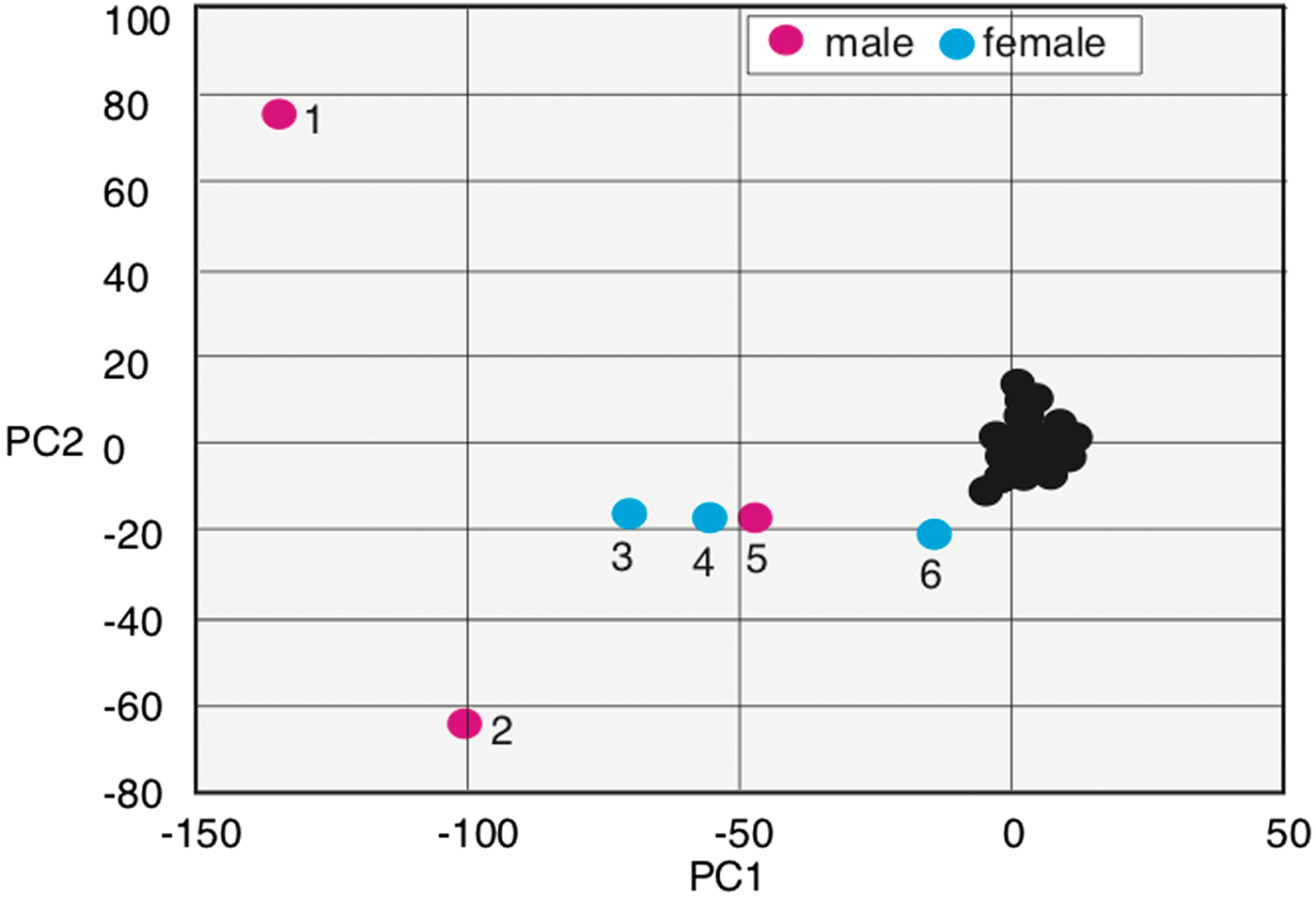
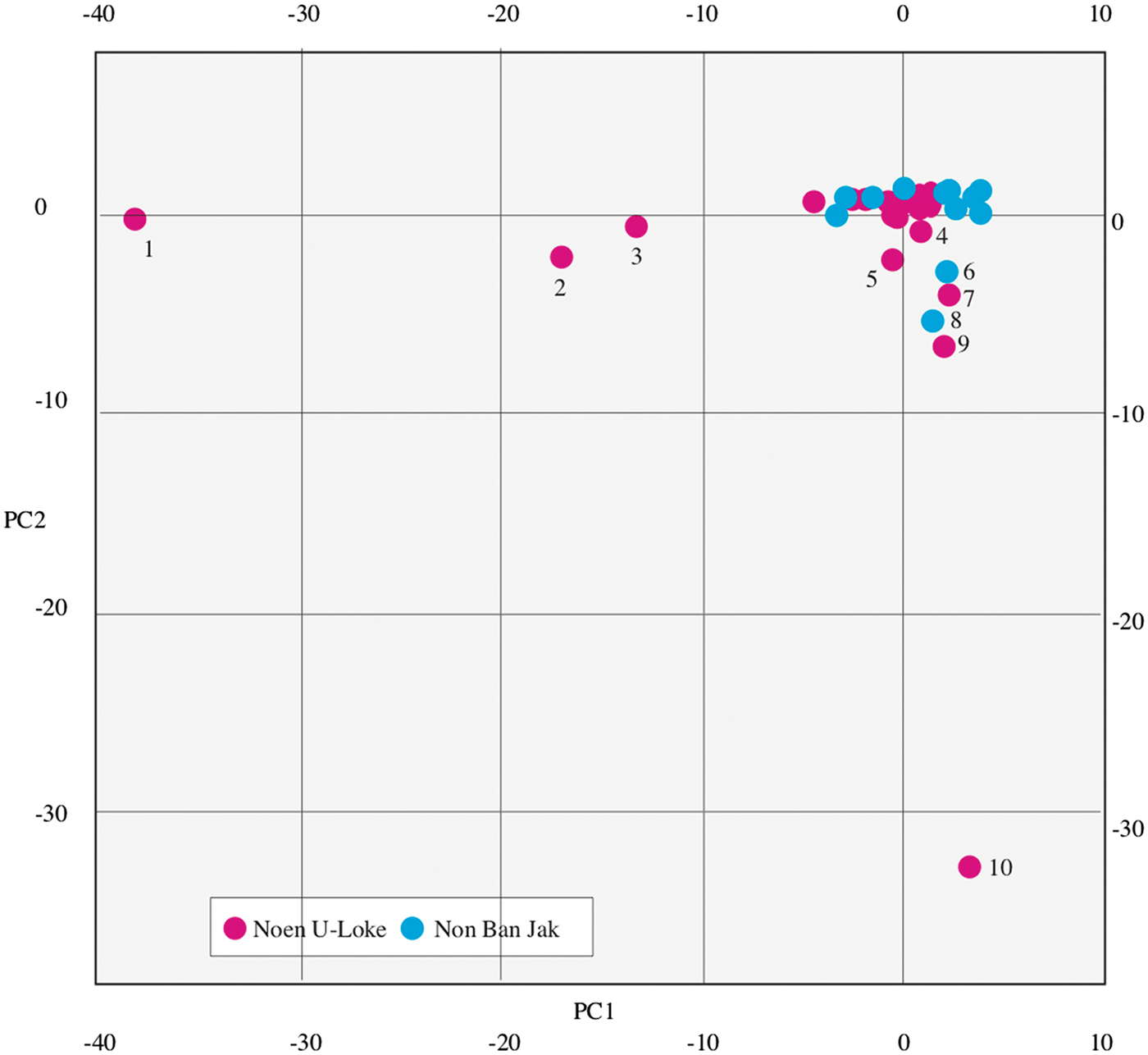
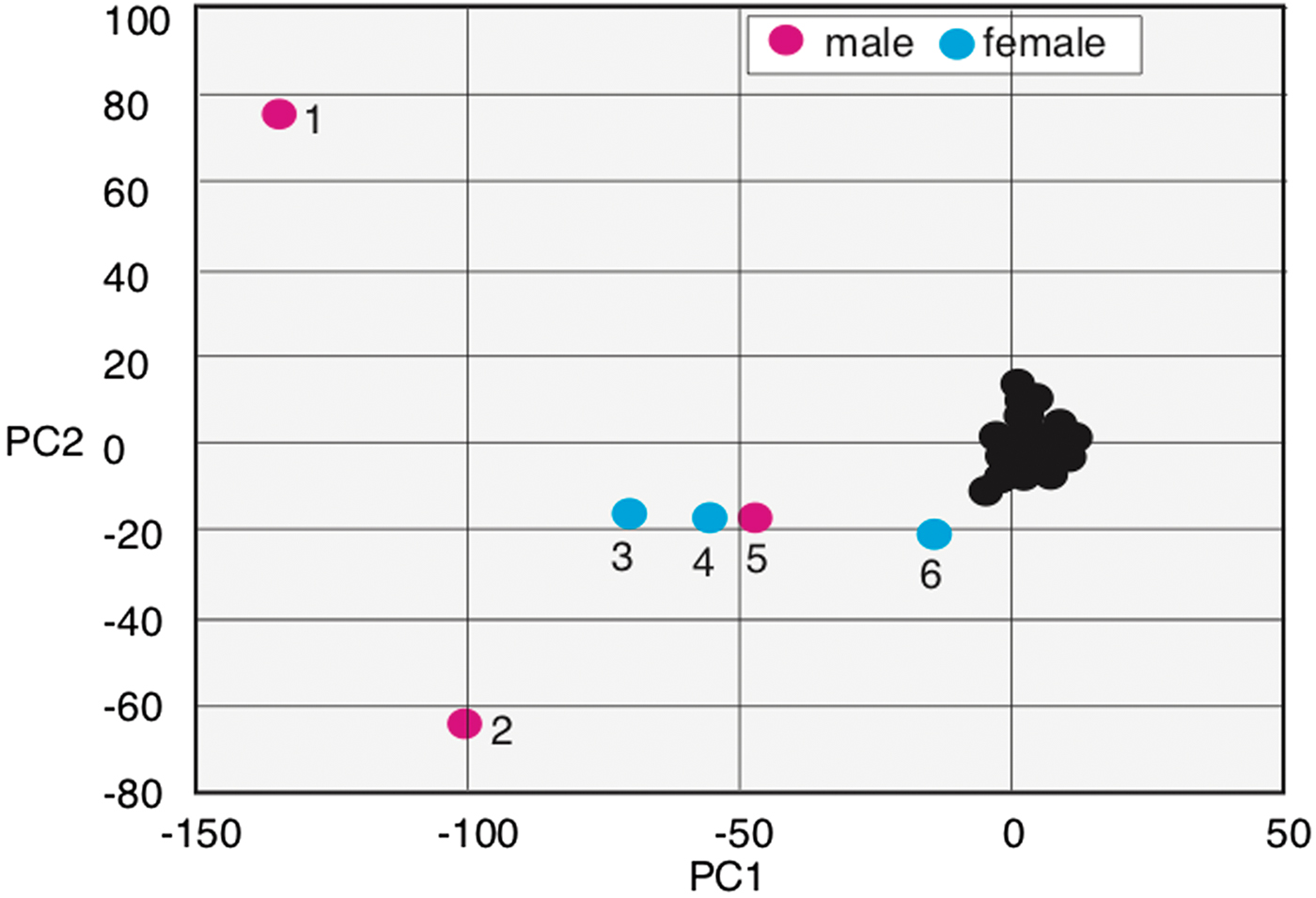
The PC statistic based on the variance-covariance matrix showed that the percentage of variance accounted for by the first two PCs is about 87 per cent, which is very high. PC1 and PC2 constituted 68 per cent and 19 per cent of this total, respectively. The PC1 and 2 coordinates for each burial reveal a tight cluster comprising the majority of graves, with six outliers (Fig. 7). All but one outlier came from NUL, four from IA3 and one from IA4. Graves at NUL IA3 comprised four nuclei, known as IA3 clusters A–D (Higham Reference Higham2011). These are thought to comprise men, women and children related through blood or marriage. Two of these groups contain a particularly wealthy adult, another includes two, but the last group has none.
Principal components 1 and 2 for the adult graves from Noen U-Loke and Non Ban Jak. (1) NUL burial 14, IA3 cluster D; (2) NUL burial 69, cluster 3C; (3) NUL burial 113, cluster 3A; (4) NUL burial 62, IA3 cluster 3C; (5) NUL burial 1, IA4; (6) NBJ burial 190. Number of graves = 65.
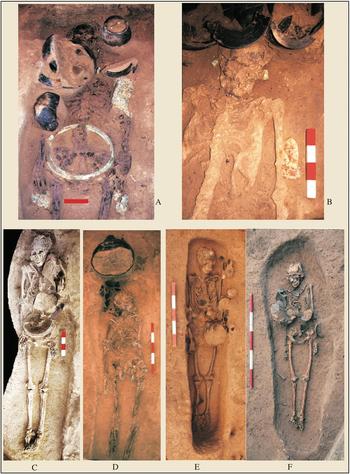
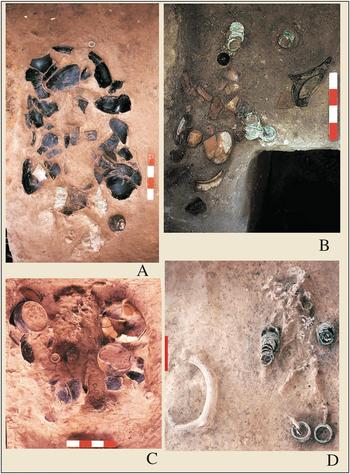
Both men and women were among those buried with wealth, measured in the weight of bronze ornaments and agate, glass, silver and gold jewellery. The bronzes included spirals that were probably inset into the ear lobes, finger and toe rings, bracelets and, in the case of two men, multiple belts (Fig. 8). In contrast, MP3 cluster B graves were dominated by infants, and a woman with several spindle whorls, suggesting that she was a weaver.
Wealthy adult burials from Noen U-Loke and Non Ban Jak. (A) NUL burial 14, IA3 cluster D; (B) NUL burial 113, IA3 cluster A; (C) NUL burial 69, IA3 cluster C; (D) NUL burial 1, MP4; (E) NBJ burial 190, IA4b; (F) NBJ burial 75, IA4c. (Scales: (A) 10 cm; (B–C) 20 cm; (D–F) 50 cm.)
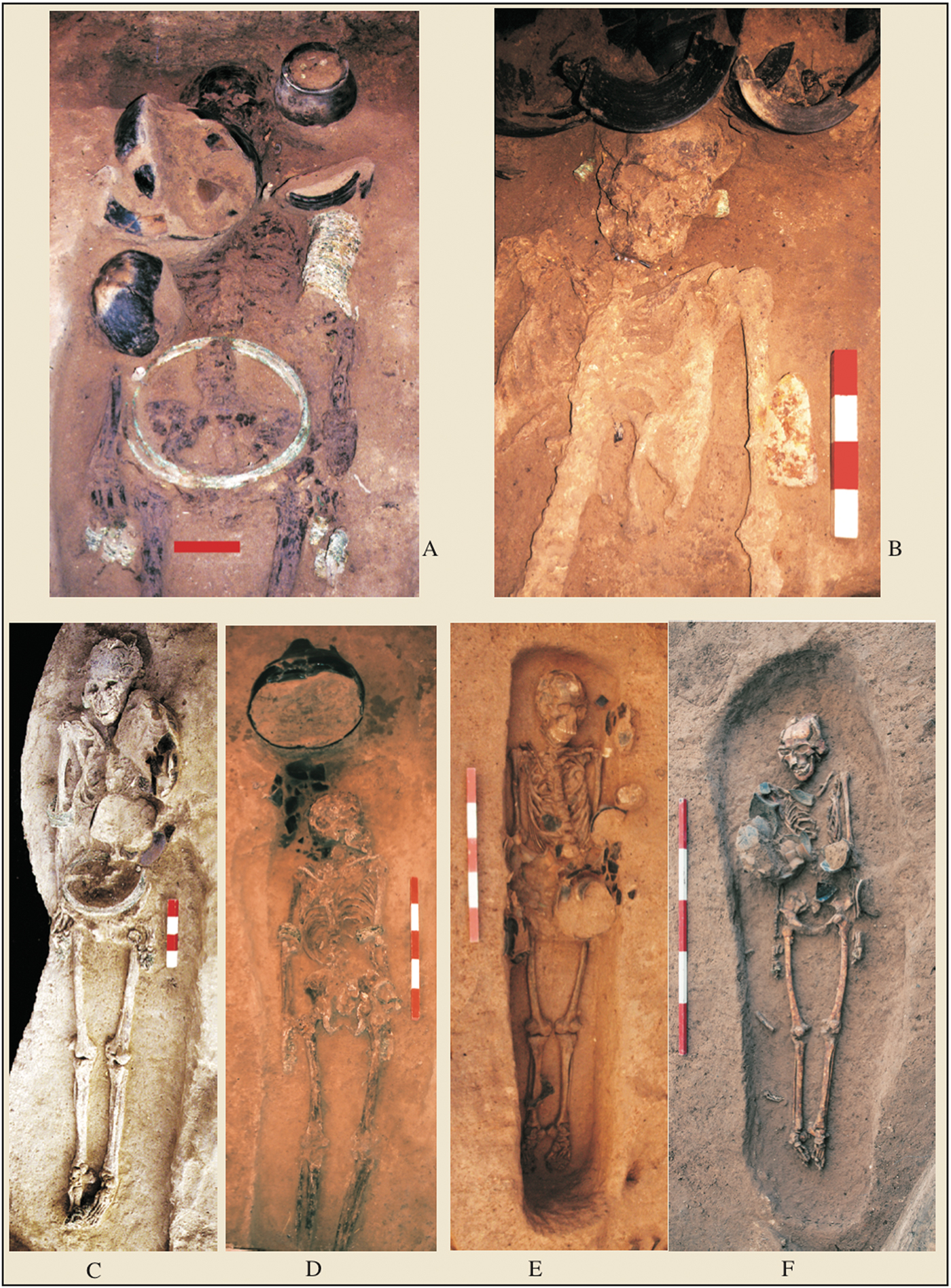
The richest burial comes from cluster D. This man's bronzes were exceptional: 150 bracelets, three belts, 67 finger rings and four toe rings. He wore two silver ear coils sheathed in gold. The remaining burial to be identified as particularly wealthy comes from IA4, a 35–40-year-old male who was interred prone (Fig. 8D). Bronze ornaments incorporated 22 bracelets, two ear coils and 35 finger rings.
Non Ban Jak adults
We then undertook the same PC analysis on all NBJ adults. The plot for PC1–2 places most burials in a tight cluster (Fig. 9). However, eight seem separated from the rest, albeit not to the same extent as the wealthy individuals from NUL. These eight will be examined to seek any distinctions based on chronology, gender and location in the site, for the burials as a whole come from the distinct eastern and western mounds. Six males and two females are in question. One burial comes from IA4A, three from IA4B, four from IA4C and none from IA4D. All but one were found on the western mound, but the few adult graves on the eastern mound belong to IA4B.
Principal components 1 and 2 for the adult graves from Non Ban Jak. (1) NBJ burial 21, IA1a; (2) NBJ burial 81, IA4c; (3) NBJ burial 136, IA4b; (4) NBJ burial 76, IA4c; (5) NBJ burial 139, IA4b; (6) NBJ burial 49, IA4c; (7) NBJ burial 75, IA4c; (8) NBJ burial 190, IA4b. Number of graves = 65.

Burial 76 of IA4C is one of the two females. She died in mid to old age. Three pots were found on the right side of her body, and she wore several bronze ornaments: one earring, five bracelets and five finger rings. She was also interred with an iron knife and a sickle. A lump of red ochre was found by the feet. The second female, burial 75, was also dated to IA4C (Fig. 8F). Like Burial 76, she was interred with a bronze earring and an iron sickle. She stood out from the majority by her 21 bronze finger rings, together with a bronze bracelet.
Burial 21, an adult male of IA4A, wore 16 bronze bracelets. Burial 136 from IA4B is the grave of an old male. He wore 10 bronze bracelets and three finger rings. He was also interred with an agate pendant and a necklace of agate beads. Burial 139 of IA4b contained a young man buried with an iron knife, agate pendant and a lead finger ring. He also wore five bronze bracelets and six finger rings. Burial 190 is the grave of a mid- to old-aged man, the richest individual in terms of mortuary wealth at NBJ (Fig. 8E). Found on the eastern mound cemetery, he dates to IA4B, and was accompanied by 31 bronze finger rings and 14 toe rings, a silver finger ring and a bronze belt.
Like the two relatively wealthy females in IA4C, burial 81, a mid-aged man of IA4C, was distinguished by the number of bronze ornaments: an earring, nine bracelets and three finger rings. He was also interred with an iron knife and sickle. His grave was in the same row as Burial 76 and was precisely opposite Burial 75, and on the same orientation. Burial 49 is a middle-aged male of IA4C. His grave was found in the same row as that for Burial 75. We find multiple bronzes: three earrings, two bracelets and 11 finger rings. There was also an iron knife, a sickle and a spear. Burial 82 does not appear detached from the majority. This reflects the absence of multiple bronze jewellery, but it is noted that this mid- to old-aged man wore two bronze belts, an item in other burials that accompanied considerable wealth, as well as three bronze earrings, an iron knife and a sickle. No individual from NBJ approached in wealth the rich individuals from NUL IA3, or the single wealthy male from NUL IA4.
Coalescing mortuary offerings
There are 47 variables describing the nature of the burial locations and the quantity of different mortuary goods, ranging from agate beads to stone adzes. We reduced these to six: pottery vessels, exotic ornaments, bronzes, iron items, ritual objects and useful artefacts. The numbers of the six types of article were related to the locations of objects, the sex of the burial, the age at death and the orientation of the body, using log-linear models. To select models for the abundances of different types of article to the types of burials, all possible subset selections are considered, with the best models to use being based on the amount of variation accounted for by different models, the significance of estimated parameters, and allowing for the number of parameters estimated (the adjusted variation).
Pottery vessels are significantly more numerous in NUL IA3 clusters A and D, but not in the relatively poor cluster B, nor in any phase at NBJ. This is interesting, given the fact that these three groups of burials include outstandingly wealthy individuals. Examination of the pot forms indicates that at NUL there are fine, eggshell thin vessels decorated with elegant burnished designs. These contrast with those from NBJ adult graves, where there is often one that matches in form a modern rice-cooking vessel, along with a bowl suitable to eat from.
Exotic ornaments include items made from glass, agate, carnelian, gold, silver and lead. NUL IA3 cluster A stands out as being significantly different from any other group based on the quantity of gold, silver, agate and bronze. Those of middle to old age are also more likely to have been buried with exotic ornaments. In terms of bronzes, all mortuary phases at NUL stand out as wealthy relative to NBJ. There was a consistent paucity of bronzes at the latter site. On the other hand, iron artefacts are more frequent in male burials. Males are also more likely to be accompanied by ritual objects, among which bivalve shells predominate. There does not appear to be any difference between the two sites for this variable. There are no significant results for the useful objects, which include burnishing stones and clay anvils.
Principal component analysis of infant burials
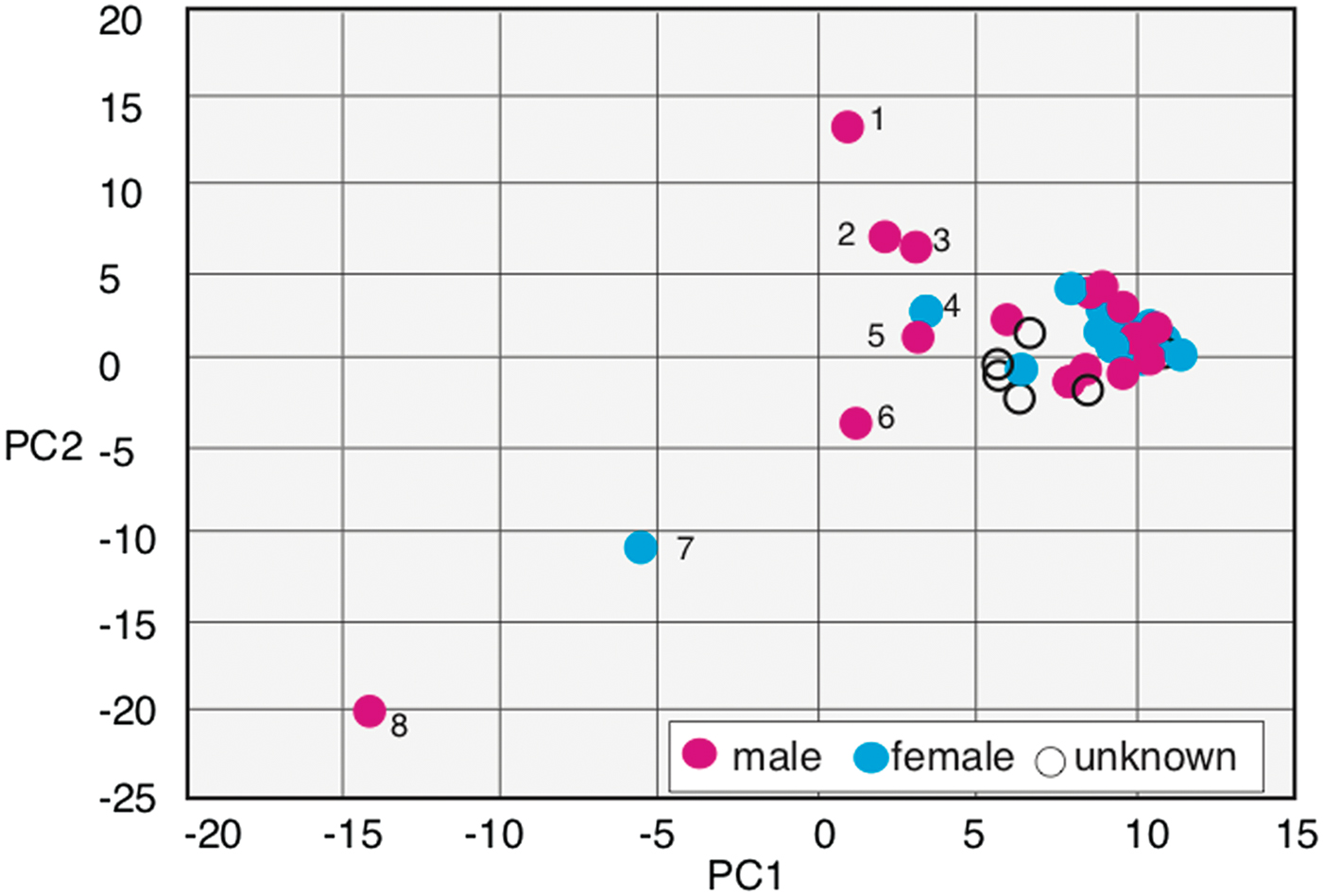
The treatment of infants in death has been seen as a means of assessing social variables reflecting the interests or position of the wider family from the early days of mortuary analysis, since the very young would not have developed their own social persona (Binford Reference Binford1971). We first compared the mortuary offerings from all infant graves at NBJ with those from NUL IA3 and 4 (Fig. 10). There is a marked uniformity in the results for PC1 and 2 except for eight outliers from NUL and two from NBJ. However, 40 per cent of infant burials at NUL are outliers, compared with only 2.5 per cent at NBJ. We thus found a consistent pattern of more wealthy infant burials at NUL, seen in the number of bronzes, glass and agate ornaments (Fig. 11).
Principal components 1 and 2 for the infant graves from Non Ban Jak and Noen U-Loke. (1) NUL burial 122, IA3 cluster A; (2) NUL burial 80, IA3 cluster A; (3) NUL burial 63, IA4; (4) NUL burial 9, IA4; (5) NUL burial 13, IA3 cluster D; (6) NBJ burial 127; (7) NUL burial 102, IA4; (8) NBJ burial 141; (9) NUL burial 85, IA3 cluster C; (10) NUL burial 115, IA4. Number of graves = 100.

Wealthy infant burials from Noen U-Loke. (A) NUL burial 122, IA3 cluster A; (B) NUL burial 80, MP3 cluster A; (C) NUL burial 63, IA4; (D) NUL burial 115, IA4. (Scales: (A–C) 20 cm; (D) 10 cm.)

Infants of Non Ban Jak
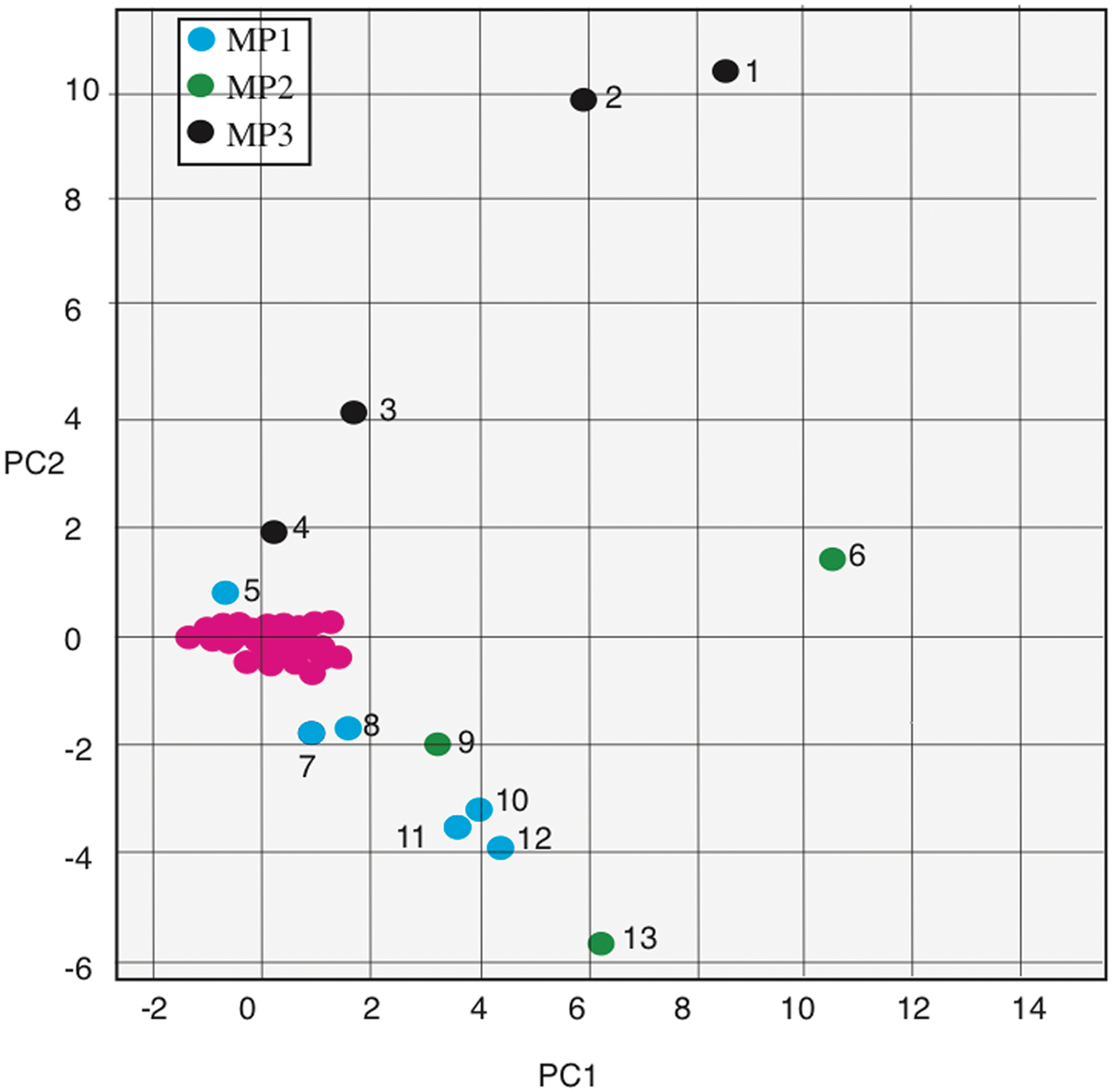
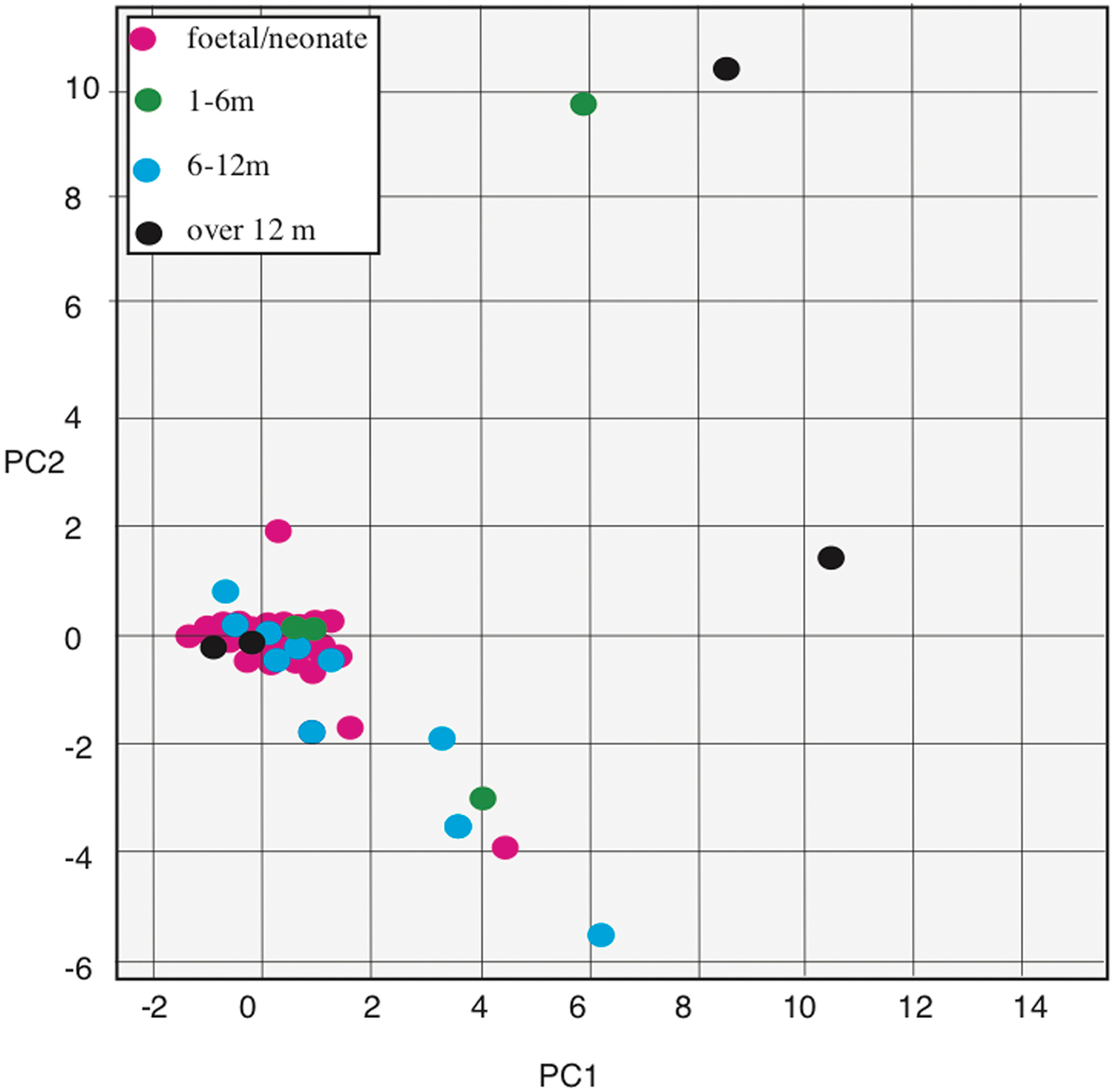
The infant burials from NBJ alone were then considered on the basis of a PC analysis (Figs. 12 & 13). Within this plot, 13 of the 80 burials stand out to varying degrees from the majority. Six come from IA4A, three from IA4B, four from IA4C and none from the final mortuary phase. With one exception, the IA4A infants that stand out are placed in close proximity according to the PC1–2. Burials 16 (6–9 months), 17 (9 months) and 18 (foetal) were also close to each other in the site, and had in common three bronze ornaments, being bracelets, a ring and anklet and glass beads. Burial 16 also had a bivalve shell. Burials 16 and 17 were also interred in identical ceramic vessels. It is possible that they were related. Burial 32 (3–5 months) uniquely wore three bronze belts as well as six bronze bracelets and glass beads. Burial 30 (9 months) was interred supine, with three pots placed beside the body, wearing seven bronze and two iron bracelets and a bronze earring. A bivalve shell also accompanied this infant. Burial 56 (neonate) is another jar burial, with the infant found wearing seven bronze bracelets and glass beads.
Principal components 1 and 2 for the infant graves from Non Ban Jak. (1) NBJ burial 157, IA4c; (2) NBJ burial 117, IA4c; (3) NBJ burial 80, IA4c; (4) NBJ burial 74, IA4c; (5) NBJ burial 17, IA4a; (6) NBJ burial 90, IA4b; (7) NBJ burial 16, IA4a; (8) NBJ burial 18, IA4a; (9) NBJ burial 86, IA4b; (10) NBJ burial 32, IA4a; (11) NBJ burial 30, IA4a; (12) NBJ burial 56, IA4a; (13) NBJ burial 91, IA4b. Number of graves = 100.

Principal components 1 and 2 for the infant graves from Non Ban Jak identified on the basis of age at death. Number of graves = 100.

Two of the three IA4B burials that stand out survived until about 8 months and less than 4 years and both were laid out supine in the same manner as adults. The former, Burial 86 (8 months), was interred with two pottery vessels, four bronze bracelets, a bronze ring and one heavy bronze ring, 10 agate beads and some glass beads. The latter, Burial 90 (12 months), was also well endowed with bronze ornaments: nine bracelets, eight rings, two heavy bronze rings and an earring. There were also glass beads, a pot and a bivalve shell in this grave. Burial 91 (8 months) was found in a mortuary vessel along with nine bronze bracelets, three bronze earrings and glass beads.
Burial 127, IA4B, comprised a lidded infant jar burial. The infant, who died aged about 6 months, was found in an upright position resting against the side of the mortuary vessel. This individual wore two heavy bronze bracelets on each arm, one set having impressions of fabric adhering to the surface. Fifty-nine glass beads were recovered. The infant in Burial 141 died when aged about 6–10 months, and was interred with four pottery vessels. This child wore glass beads disposed as a necklace and belts. A bronze anklet was worn on each leg. Three heavy bronze bracelets were found on each arm, with a further heavy bronze ring at the neck. Rice remains were detected on the long bones.
Four infant burials from IA4C stand out. Burial 157 (12–18 months) was interred with two pottery vessels and many bronze ornaments. A necklace comprised 14 rings, while two toe rings and an anklet were found on each foot. A bracelet was also worn on each wrist and an agate pendant at the neck. Iron artefacts comprised a ring by the neck and a sickle by the left hand. Burial 117 (1–3 months), a double jar burial, contained an infant wearing a necklace fashioned from 11 bronze rings. Another bronze ring was found by the ankles. There was also an anklet on the right foot. Burial 80, interred in a mortuary vessel, was associated with two other pots. It wore five bronze rings. Burial 74 (neonate) was another infant jar burial. Four ceramic vessels were associated with this grave. Two bronze rings were found in one part of the burial, an iron ring in another.
In order to investigate the relationship between the age of an infant at NBJ and the ritual treatment at death, we plotted the first and second principal components having divided the complete sample into four groups: foetal or neonate, 1–6 months, 6–12 months and over one year of age (Fig. 12). It was found that the neonate or foetal infants were accorded very few mortuary offerings other than the pot in which they were interred. The richest group comprised those who reached between six and 12 months before dying. Those living for up to three months, or over a year, occupied an intermediate position.
Finally, we examined infant burials from NUL and NBJ following the assignment of each type of mortuary offering into one of the following groupings: the number of pottery vessels, bronzes and exotic ornaments. There were too few iron or useful objects or ritual items for meaningful conclusions. The log-linear analysis for pottery vessels shows that there is no significant difference between the different sites and mortuary phases. For grouped bronzes, however, the quantity with NUL infants is consistently higher than for NBJ, with a particularly clear concentration in NUL IA3 cluster A. Exotic ornaments are significantly more numerous in IA3 cluster C infant graves.
Social inequality
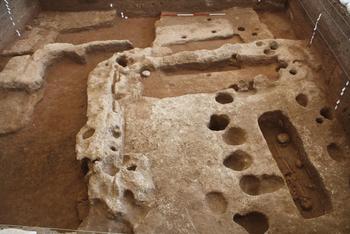
Iron Age burials from three Iron Age settlements have revealed changes in mortuary rituals over time. During IA1 at BNW, men, women and the young were interred in two groups progressively in an easterly direction. We cannot detect any subgroup or individual with significantly elevated wealth. Infants comprised about a quarter of all burials, as in the Late Bronze Age at the same site. Pre-term or neonate infants were rare. There is no evidence that the dead were interred in residential structures; rather, they were found cheek by jowl, often in log coffins, to judge from the disposition of the broken ceramic vessels that accompanied them. With IA2 at NUL, the pattern changed: two tight clusters of burials were encountered, but no individual stood out in terms of mortuary wealth. This tradition of tight clustering continued into IA3 at NUL, but now one or more adults in three of the four clusters were significantly wealthy, as were some of the infants that accompanied them. This period witnessed the climatic deterioration, construction of reservoirs and development of wet rice agriculture. A further change in mortuary rituals took place during IA4 at NBJ and probably also at NUL. The dead were then interred in residential structures (Fig. 14).
The Iron Age 4 mortuary chamber at Non Ban Jak.

Implications for human health and wellbeing
The transition from dry to wet rice agriculture involved the construction of moats/reservoirs round the Iron Age settlements across the entire Mun Valley. The presence of so much water in these, not to mention in the wet rice fields, represents a significant environmental change and potential shift in pathogen load. Two species of shellfish dominate in on-site middens and rubbish pits. Pila ampullacea is well adapted to rice fields, and is a ready source of protein. However, it is also the intermediate host of the liver fluke Echinostoma ilocanum. This causes echinostomiasis, with symptoms that include tiredness and weight loss (Graczyk & Fried Reference Graczyk and Fried1998). Pilids and the swamp eel Fluta alba, both found in IA middens, are also hosts of the nematode Gnathostoma spinigerum, that causes gnathostomiasis (Setasuban et al. Reference Setasuban, Nuamtanong, Rojanakittikoon, Yaemput, Dekumyoy, Akahane and Kojima1991). This disease can be contracted through consuming poorly cooked fish, eels, frogs and birds, exactly the range of species expected in the IA reservoirs. When entering the liver or eye, it will often lead to blindness, coma and death. Filopaludina sp. is adapted to streams, canals, lakes and reservoirs; it dominates numerically in IA middens, and is still widely collected and consumed. It is a second intermediate host for the parasitic fluke Echinostoma revolutum. Infection through consuming contaminated water, vegetables or raw or partially cooked shellfish leads to physical weakness and, in severe cases, angiostrongyliasis. Larvae of this roundworm Angiostrongylus cantonensis can migrate to the central nervous system and cause fatal eosinophilic meningitis.
The species of shellfish recovered from excavations at NBJ during the late Iron Age includes small gastropods that are of no dietary value, but which invade wet rice fields (Petney et al. Reference Petney, Sithithaworn, Andrews, Kiatsopit, Tesana, Grundy-Warr and Ziegler2012). These probably found their way into the site fortuitously attached to rice straw or in fish guts. Their abundance contrasts with their rarity or absence during the Neolithic at BNW, and surely reflects the presence of reservoirs and wet rice fields. Of these, Bithynia siamensis is particularly prevalent in wet rice fields and irrigation is the principal means whereby Bithynia spread into their preferred rice-field habitat, while the low banks or bunds round fields retain water in fields and enhance the preferred habitat for these snails. Duangsong et al. (Reference Duangsong, Promthet and Thaewnongiew2013) have concluded that infection from the consumption of raw or partially cooked fish infected from Bithynia is particularly concentrated among those who live and work in rural wet rice fields. Their abundance in NBJ middens and occupation contexts is most unlikely to reflect collection for consumption. As Wang et al. (Reference Wang, Ho, Feng, Namsanor and Sithithaworn2015) have noted, a mature specimen is only 8 mm long.
Lymnaea (Radix) auricularis is common in the upper Mun Valley today, where it is to be found in small streams, canals and reservoirs particularly where there is well-rooted vegetation. It is the first intermediate host of the trematode Echinostoma revolutum and is contracted through consumption of the snails or frogs as a second intermediate host. The symptoms of infection include vomiting and diarrhoea (Chai et al. Reference Chai, Sohn, Na and Van De2011). Indoplanorbis is found in ponds and rice fields. It has serious health implications as the intermediate host that transmits the parasitic worms which cause schistosomiasis, also known as bilharzia. Symptoms include diarrhoea, liver and kidney failure and bladder cancer. In Southeast Asia, it is particularly common among those accustomed to working in water bodies that contain this snail, particularly rice farmers and fishermen. Bilharzia is second only to malaria in the severity of its impact on rural populations.
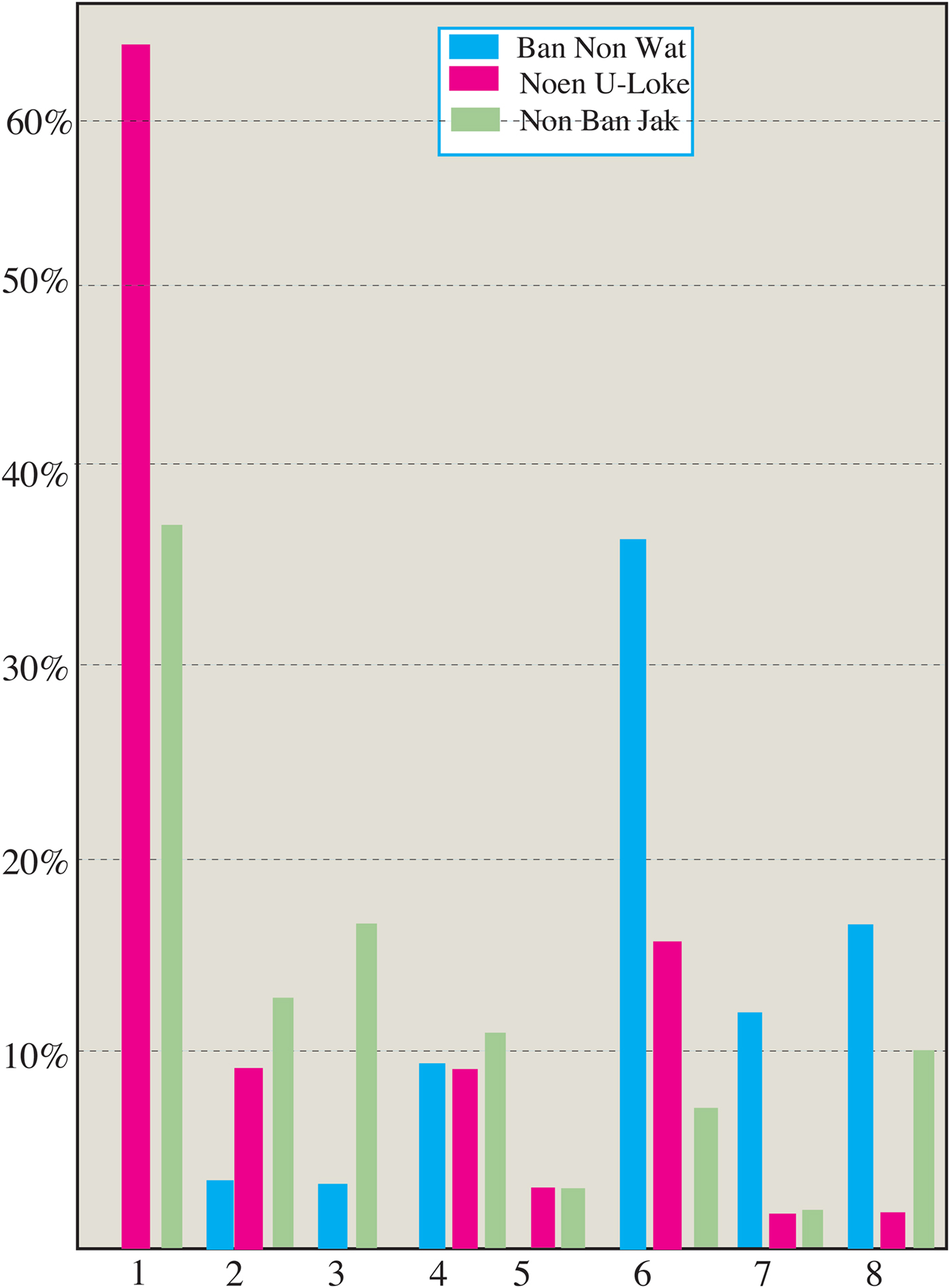
The creation of standing water around sites would also have encouraged the proliferation of malarial mosquitoes. As King et al. (Reference King, Halcrow, Tayles and Shkrum2017) have noted, this particularly affects infants. Moreover, it has a serious impact on the health of pregnant women, that can result in complications, stillbirths and miscarriages (Halcrow et al. Reference Halcrow, Tayles, Elliott, Han, Betsinger and Scott2017; White Reference White, Cook and Zumla2003). As such, infant mortality provides an important indicator on lifestyles and environmental conditions in past peoples, and their effect on health. Halcrow et al. (Reference Halcrow, Tayles, King, Oxenham and Buckley2016) have predicted that the environmental changes will affect the demographic profiles evaluated from mortuary samples. To investigate this, we have considered the percentage of infants and children in the cemeteries of BNW and NUL from the Late Bronze Age to the end of the IA (Table 1). This begins with the transition from the late or terminal Bronze Age cemetery at BNW into IA1. The proportion of infant burials is similar: 22 per cent for the late Bronze Age and 24.6 per cent for the initial IA. The majority of infants in each assemblage survived for over a year, although six died at birth or pre-term in the IA sample. Both these cemeteries were formed well before the onset of aridity and the construction of moats/reservoirs, at a time when the weeds of cultivation at BNW were dominated by dry-land species.
The number and ages of infant and children interred at Ban Non Wat and Noen U-Loke. The percentages calculated omit infants that are too fragmentary to be assigned an age.

Iron Age 2 at NUL saw two tight clusters of burials in which most infants who survived parturition lived to more than one year of age. Clustered burials continued into NUL IA3. This was the period of moats/reservoir construction, as the monsoon faltered, when wetland weeds dominated at BNW, the first ploughshare was identified and burials of exceptional wealth were found in graves filled with rice. There was at this same juncture a sharp rise in infant mortality, more than doubling at NUL from 23 per cent to 53 per cent of all burials (Tayles et al. Reference Tayles, Halcrow, Domett, Higham and Kijngam2007). Moreover, the proportion of neonates or pre-term infants rose to over half of all infants recovered. This continued into IA4 at NUL, when nearly half of the burials were infants, 90 per cent being neonates. There is a consistent pattern: with the construction of moat reservoirs and wet rice farming, infant mortality more than doubled, with a numerical dominance of the newly born (Fig. 15). There is herein a direct link to the health of the Iron Age women, many of whom were accompanied in death with their iron sickles, and who had, presumably, been wading in an aquatic environment laced with pathogenic species, some of which were returned to their homes for consumption.
The age at death of infants and children from Ban Non Wat IA1 (n = 31) and Noen U-Loke IA3 and 4 (n = 39). (1) Neonate or less than full term; (2) 0–3 months; (3) 3–6 months; (4) 6–9 months; (5) 9 months–1 year; (6) 1–5 years; (7) 5–10 years; (8) over 10 years.

Discussion and conclusions
Understanding the IA cultural sequence in the Upper Mun Valley draws on social/mortuary, climatic and economic information. We have found that socially significant changes took place in social/mortuary behaviour during the millennium of the Iron Age, seen in a progression from a cemetery to clusters and, finally, burial in houses. We first outline the changes in the mortuary sequence throughout the Iron Age, before focusing on their social significance. The transition from the Late Bronze Age into the early IA at Ban Non Wat was seamless. The IA cemetery was divided into two groups and no significant differences in mortuary wealth have been identified either within or between them. A subsequent climatic deterioration that brought drier conditions during IA3 (ad 200–400) was accompanied by the construction of moats/reservoirs. At NUL, two men, two women and associated infants, interred in discrete clusters, were now accompanied with considerable wealth defined by their bronze ornaments and exotic glass, agate, gold and silver jewellery. With IA4 at NUL, there was a marked decline in the quantity of such offerings, with just one man being singled out. However, even he was less well endowed with exotic goods than his predecessors. At this juncture, we find that iron sickles and knives were commonly placed with the adult dead, who were no longer laid out in clusters, but in rows.
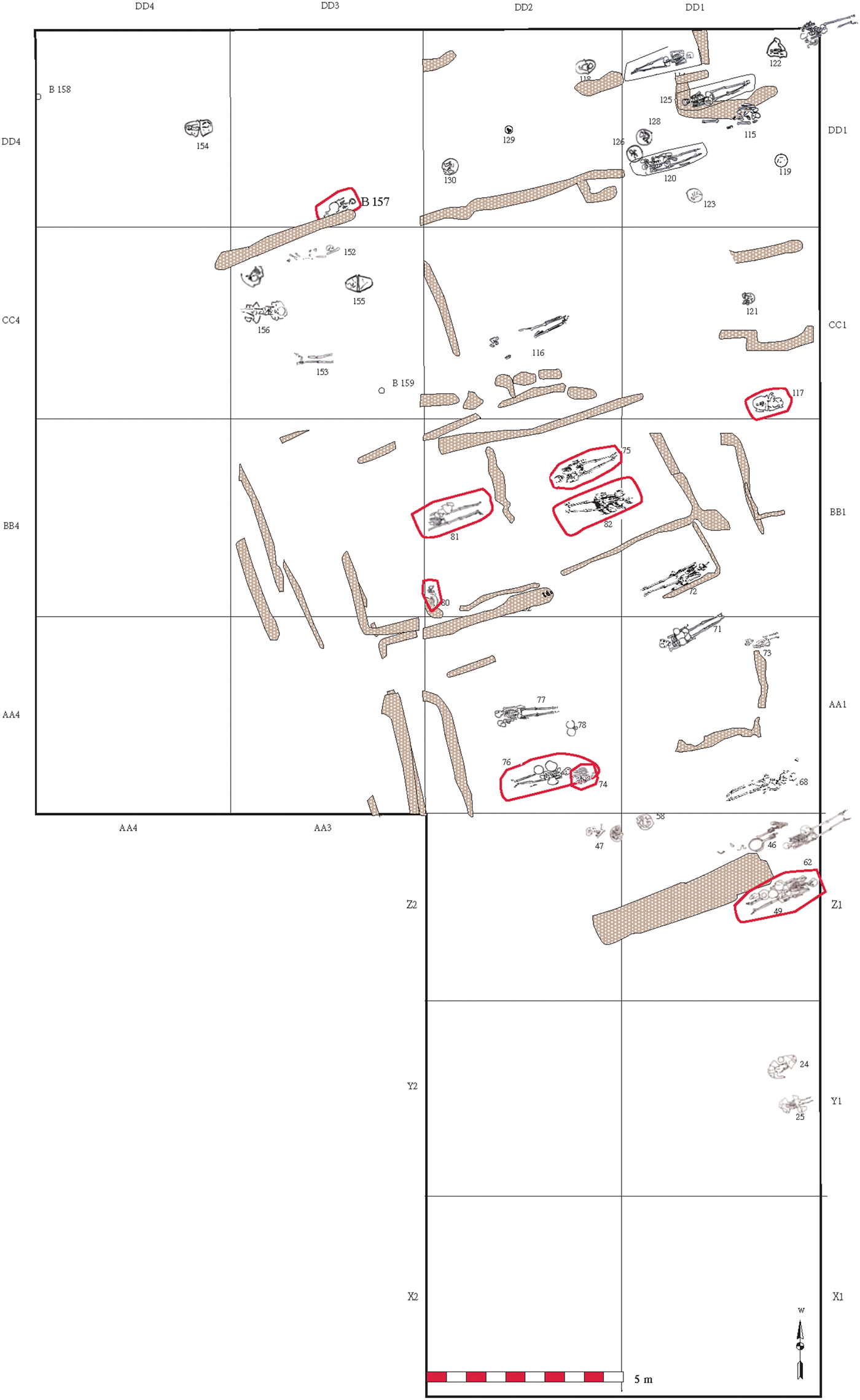
Iron Age occupation of NBJ commenced during IA4. The site comprises a western and an eastern mound with low-lying land between, confined by two moats/reservoirs. Four mortuary phases have been identified. During IA4A on the western mound, the dead were interred in a group with one or two isolated graves. IA4B is well represented on the eastern mound, where houses were rebuilt during the Iron Age sequence. Infants were interred under house floors during IA4B. During IA4C, on both eastern and western mounds, the dead were buried in residential rooms, their plan leading to a linear pattern of graves (Fig. 16). Both parts of the site have revealed residential complexes of rooms separated by lanes. The potential social information provided by the integration between graves and structures is evident in the concentration in two rooms on the western mound of a house containing the graves of three adults and one infant that have been identified statistically as being well endowed with mortuary offerings (Fig. 16). A relationship between walls and graves continued into IA4D.
On the western mound during Iron Age 4C at Non Ban Jak, the dead were interred in residential rooms.

No adult or infant at this site approaches the wealth seen at NUL during IA3. Some exotic glass, agate and gold ornaments were found, but not with consistently wealthy individuals. One man was interred wearing a bronze belt, another with two, and while standing out from the majority of adults, they did not in any way rival the opulence seen at NUL. Men were endowed with more iron objects, but these were of a practical nature, particularly the tanged iron sickles and knives. Rather than expressing a society that incorporated a social elite, the graves seem more reflective of a rice-cultivating community that involved the majority of adults ploughing rather than hoeing their fields.
Our analysis of the IA3-4 mortuary traditions at NUL and NBJ has identified two phases. During IA3, that is the period of initial moat construction and plough cultivation, there was a sharp rise in the opulence of some men, women and infants interred in tightly defined clusters of graves within an Iron Age cemetery devoid of evidence for domestic residences. One man from NUL wore more bronze ornaments than all documented Bronze Age burials in Southeast Asia. During IA4, mortuary wealth declined and now the dead at NBJ were interred in the rooms of houses.
Three results of this research are now discussed further: the social impact of wet rice farming, its influence on health and the development of residential burial. Wet rice agriculture in the Mun Valley today involves the construction of low banks to demarcate each rice field. Successful cultivation of rice relies on a constant supply of water that reticulates through the fields. Monsoon rains are fickle, and a dry spell during the rainy season can lead to crop failure. Therefore supplementing the rains through irrigation greatly improves the value of fields. Cultivation through harnessing the tractive power of the water buffalo to draw an iron plough is a further means of increasing the area that can be prepared for sowing or transplanting rice. The wealth generated by producing a predictable rice surplus, it is suggested, would have facilitated acquisition of their exotic valuables. There was also the stimulus of the need for an elite to implement complex water control facilities. We therefore suggest that the wealth of some individuals might reflect the rising social status of those who owned land improved through access to irrigation water. This premise is supported archaeologically by increased differentiation of mortuary rituals by status group during IA3 at NUL. The ownership of land identified by bunded boundaries and improved through the provision of water is a therefore a strong stimulus to the rise of social inequality (O'Reilly Reference O'Reilly2008; Reference O'Reilly2014).
Whereas NUL enjoyed a millennium of IA occupation and is seen as a long-established and mature town, those who founded NBJ during IA4 and constructed moat-reservoirs round their chosen site after a period of abandonment were pioneers. One of the excavated areas there has revealed a sequence of house building that involved successive construction phases over at least eight generations. The early houses, with thin foundations and wattle/daub walls, incorporated infant under-floor burials, while later houses had thick clay wall foundations that included a ritual room containing the under-floor graves of a woman, child and an infant. During IA4C on the western mound at NBJ, men, women and infants were closely aligned with house walls with graves cut through floors.
Understanding possible reasons for their choice of residential burial is illuminated by reference to the modern practice in Southeast Asian communities that cultivate rice in improved fields. Acabado (Reference Acabado2013) has reported that the Ifagao of the northern Philippines recognize ancestral links back to the initial builder of a rice field, and through ancestor veneration, identify continued ownership through the same bloodline. In this context, houses project group cohesion and are the means for families to retain their elite status over the generations. The underlying significance of residential burial is further demonstrated among the Rotinese. Roti Island in eastern Indonesia has irregular monsoon rains and subsistence based on cultivating rice in wet and dry fields (Fox Reference Fox1968). They bury their dead under their house floors. Infants are interred ‘to facilitate the return of their spirits to a new body’ (Waterson Reference Waterson1990). Relatives are known to battle for a corpse with rival members of the extended lineage in order to secure, by house burial, the right to inherit from the dead individual. Rice is far more than a means of subsistence. Among the Kelabit, it is ‘the axis around which life revolves’ (Janowski Reference Janowksi, Carsten and Hugh-Jones1995, 87). We conclude that there was a direct link between the creation of permanent, watered rice fields, the imperative of ownership and the development of residential burial in which revered ancestors were interred in rice-filled graves wearing exotic finery and accompanied by food vessels.
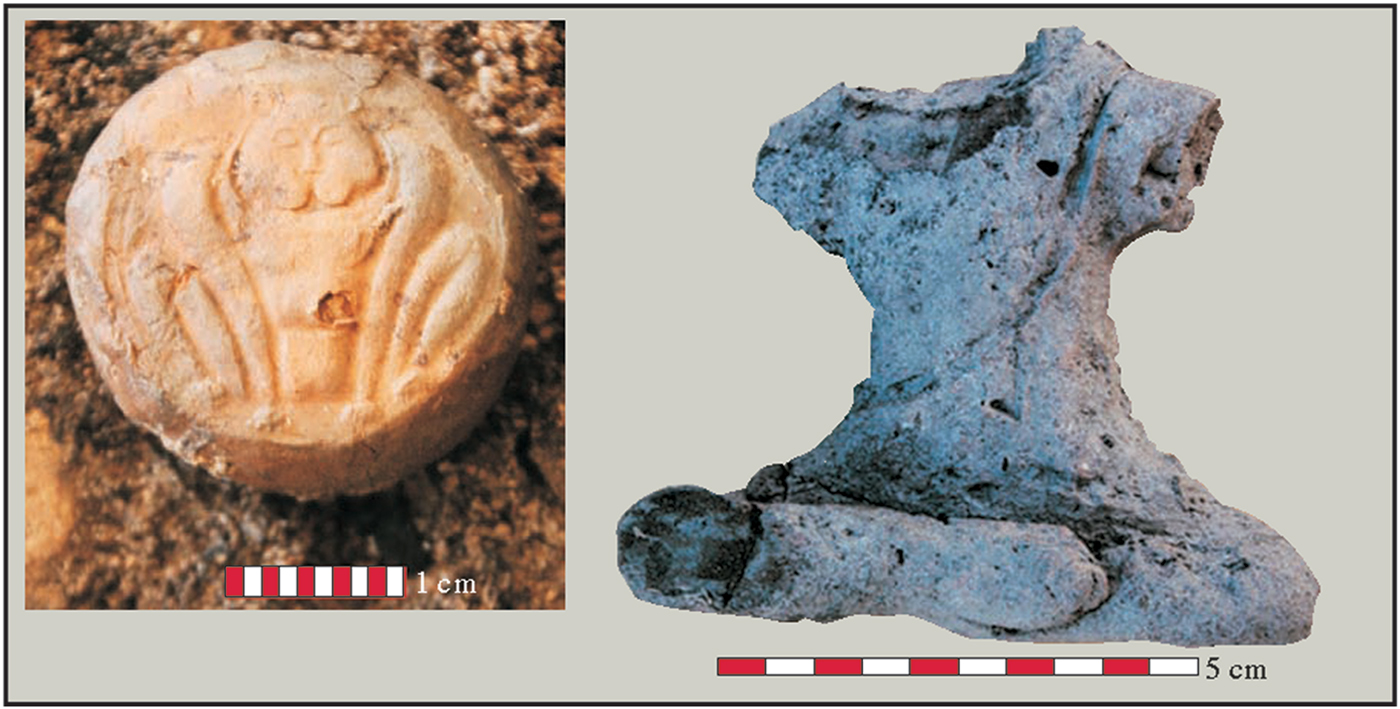
However, exploring possible reasons why residential burial developed as mortuary wealth declined during IA4 must be set against the chronology. IA4 at NUL is dated between ad 400 and 600. At NBJ, IA4 has the same span, but the terminal occupation, which saw a mixture of late Iron Age and historic Dvaravati material culture, lasted until about ad 800. This means that IA4 overlaps with the establishment of early Chenla and Dvaravati states. Indeed, a Buddha figurine and a terracotta plaque from NBJ decorated with the image of a lion reveal contact with central Thai historic polities (Fig. 17). One possible explanation for the decline in wealth could be that, by the fifth and sixth centuries, new elite political centres were crystallizing in the Mun Valley, one candidate being Ban Suay in a suburb of the later Angkorian city of Phimai. In the second half of the fifth century, a ruler named Devanika founded a new city near the junction of the Mun and Mekong rivers (Higham Reference Higham, Cherry, Scarre and Shennan2004). These changes occurred during a period when residential burial within houses took hold.
The occupation of Non Ban Jak extended into the early Historic Period, as seen by evidence for Buddhism: (left) a lion that was often employed to symbolize the Buddha; (right) a clay statuette of a seated Buddha.

As Adams and King (Reference Adams, King, Adams and King2011) have stressed, such a change is widely seen as reinforcing group identity and expressing social continuity with the ancestors. Where a community is divided into distinct descent groups that occupy separate residences, burial in houses is often seen to reflect property rights and display group wealth and status. In the context of NBJ, the concentration of women, a man and infant set apart by relatively high wealth in the house rooms might well reinforce the evidence we have for an increasingly competitive social milieu at the transition from late Iron Age independent communities into the regional dominance of new political centres. What we find accompanying the decline seen at both sites in terms of wealth during the final Iron Age may reflect competition between the descent groups of the rice-field workers we now find interred in their houses accompanied by their iron agricultural tools. Either the elites were interred elsewhere on these two settlements, or there was already, by the sixth and seventh centuries ad, the establishment of one or more top-tier regional centres well documented through inscriptions in Cambodia and the lower reaches of the Mun River. This would have left the Iron Age moated sites as dependent wet rice farming townships comprising solidly built houses separated by lanes, occupied by smiths, potters, weavers and, most crucially, wet rice farmers who, through their irrigation systems, were able to provide a predictable rice surplus.
The human impact of the environmental changes induced by the development of wet rice agriculture was not restricted to social change. We have also identified a doubling of infant mortality that particularly affected pre-term and neonate infants and suggested that this reflects the impact of close contact with pathogenic aquatic species, together with an increased exposure to malarial mosquitoes. These would particularly have affected pregnant women and all who worked in the rice fields to plough, transplant, weed, fish, collect shellfish and harvest. We conclude that the late IA in the Mun Valley was a time of profound technological, cultural and social stress. First, a climatic downturn stimulated an agricultural revolution that invoked the rise of social elites. A new order was rapidly evolving that led to dynastic rule in urban centres dominated by brick shrines to exotic Indic deities. Communities were being absorbed into and controlled by regional polities. Plough cultivation and rice harvesting in wet rice fields brought severe health issues: standing water encourages malaria, and many of the shellfish and fish identified in the house middens harbour deadly pathogens. Infant mortality was very high, reflecting poor health for the women of late NUL and NBJ. After the rise of elites in IA3, there was a fall in disposable valuables, but a move to project ownership of rice fields and status through the interment of the dead in the houses that concentrated within the moats/reservoirs.
Understanding the exact detail, drivers and sequence of a transition from independent Bronze Age communities to a more integrated society dependent on intensive wet rice agriculture will be dependent on even more large-scale excavation the better to evaluate intra- and inter-site variation in the region. However, taking the current interpretation as the most parsimonious current argument, then this adaptation contrasts markedly with the trading sites located on the Maritime Silk Road. Khao Sam Kaeo has been described as a cosmopolitan incipient city state that flourished from the fourth to the first centuries bc (Bellina Reference Bellina2017). Its internal layout incorporated residential areas for the local populace and manufacturing workshops for highly skilled foreign specialists. The organization of labour is evidenced in the construction of city walls and water-control measures. There is, however, no evidence for the development of intensive wet rice agriculture. Indeed, Castillo et al. (Reference Castillo, Higham, Miller, Chang, Douka, Higham and Fuller2018) have found that the agricultural weeds reflect dry rice cultivation. Other dryland crops included millet and mung bean. This is not surprising, given the fact that rainfall in this region today, being more than double that of the upper Mun Valley, obviates the need for irrigation.
Thus, at least two separate trajectories towards social inequality, responding to different combinations of environmental and social factors, are present. Broadening our view, Iron Age sites like those of the upper Mun Valley are found in northwest Cambodia, the heartland of the early states of Chenla (ad 550–800) and its successor, the kingdom of Angkor (O'Reilly & Shewan Reference O'Reilly and Shewan2016). We argue that these later developments were dependent on the long-term stability of an agrarian economy based on water control that had its origins in adapting to a fall in the strength of the monsoon rains during late prehistory. The continuing challenge remains integrating and balancing the influences on the early states of Southeast Asia from indigenous socio-environmental adaptations, as discussed here, and responses to wider exchange and socio-political drivers such as the Maritime Silk Road.
Acknowledgements
We wish to thank the The Fine Arts Department of Thailand and the National Research Council for their support and permission to excavate Non Ban Jak. This research was funded in 2011–14 by the Australian Research Council, in 2014 by Earthwatch and its Research Corps, in 2015 by the University of Otago and in 2016–18 by the Marsden Fund of New Zealand. We thank Jack Wood, Tara Thara, Wilbert Yee, Christina Sewall, Sam Sewall, Helen Bauer, Vickie Jarvis, Roger Prior and Gay Stryker for their consistent support in the field.