Introduction
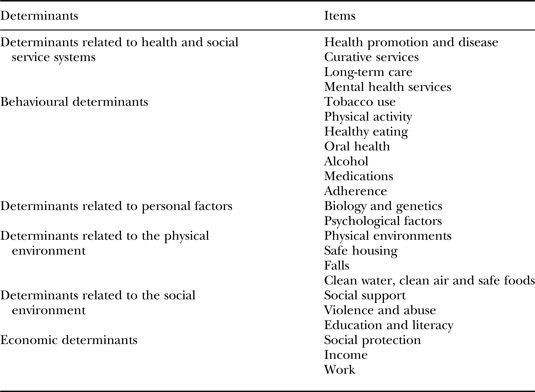
Ageing is one of the most important global issues in the 21st century. With the ageing population, people will be living one-third of their lives after retirement, thus requiring specific global measures to manage this last third of life. Increased longevity is a great success; however, it can become a danger for people who do not realise the necessity of maintaining themselves as independent, active and healthy for as long as possible (Cucinotta Reference Cucinotta2007). In 2002, the World Health Organization (WHO) emphasised the concept of active ageing and defined it as a process in which autonomy and independence are maintained and quality of life is enhanced, thus leading to good health and high participation in society (WHO 2002). The policy framework proposed from the WHO considered three pillars as pivotal for effective actions: health, participation and security. Moreover, it formulated seven sets of determinants that can contribute to the realisation of active ageing (Table 1) (WHO 2002, in Van Malderen, Mets and Gorus Reference Van Malderen, Mets and Gorus2013).

Since 2002, international policies have focused on facilitating the active ageing of the population as a strategy to reduce costs and improve wellbeing and quality of life. For example, the year 2012 was proclaimed the ‘European Year on Active Ageing and Intergenerational Solidarity’, showing the increasing number of countries developing their own national active ageing policies (Ervik, Helgoy and Christensen Reference Ervik, Helgoy and Christensen2006; Perek-Bialas, Ruzlk and Vidovicova Reference Perek-Bialas, Ruzlk and Vidovicova2006). However, to date, different terms have been used to describe a ‘good’ process of ageing, such as ‘successful ageing’, ‘productive ageing’, ‘ageing well’ or ‘active ageing’ and ‘healthy ageing’ (Cosco et al. Reference Cosco, Prina, Perales, Stephan and Brayne2013). This plethora of terms reflects the lack of a model to understand the complex process of active healthy ageing. Furthermore, a lack of shared guidelines exists on promoting preventive interventions aimed at engaging older people effectively in the proactive management of their health and wellbeing (Graffigna et al. Reference Graffigna, Barello, Wiederhold, Bosio and Riva2013). Health actions and literature have focused primarily on optimising treatment management and on behaviours that older patients should adopt to enhance their adherence to medical prescriptions (Villagra Reference Villagra2004; Wagner Reference Wagner2000). However, less attention has been paid to initiatives targeted towards the older population and finalised to improve healthier lifestyles and wellbeing (Kalache, Aboderin and Hoskins Reference Kalache, Aboderin and Hoskins2002; Rowe and Kahn Reference Rowe and Kahn1998). Health promotion initiatives, on the contrary, appear crucial to improve older citizens’ quality of life and to contribute substantially to the goal of reducing chronic diseases and hospital costs (Caprara et al. Reference Caprara, Molina, Schettini, Santacreu, Orosa, Mendoza-Núñez, Rojas and Fernández-Ballesteros2013; Cucinotta Reference Cucinotta2007). International estimates suggest that between 3 and 17 per cent of hospital admissions result from adverse events and between 28 and 75 per cent of these events are preventable (Sari et al. Reference Sari, Sheldon, Cracknell, Turnbull, Dobson, Grant, Gray and Richardson2007). Thus, achieving health behaviour change among older people is crucial to prevent diseases and to improve their health status, wellbeing and quality of life (Fried et al. Reference Fried, Carlson, McGill, Seeman, Xue, Frick, Tan, Tanner, Barron, Frangakis, Piferi, Martinez, Gruenewald, Martin, Berry-Vaughn, Stewart, Dickersin, Willging and Rebok2013).
Against this background, we conducted a systematic review of interventions aimed at promoting healthy and active lifestyles among older citizens. The main focus was to collect evidence related to health promotion interventions, scoping activities, programmes and services that focused on encouraging lifestyle changes among older people (e.g. risk factor prevention, promotion of physical activity and healthy eating, social inclusion programmes, enhancement of psychological functioning and wellbeing).
Methods
Search strategy
Because of the interchangeable and often confusing use of terms synonymous to ‘active ageing’ in both practice and research, we decided to include all synonyms of active ageing in the search strategy referring to Cosco et al. (Reference Cosco, Prina, Perales, Stephan and Brayne2013). Thus, the specific search strategy included active ageing along with seven synonyms: successful ageing, healthy ageing, ageing well, productive ageing, vital ageing, positive ageing and optimal ageing. These phrases were used with both ‘aging’ and ‘ageing’ spelling conventions, and linked via the Boolean operator ‘OR’. We were interested in studying the health components of active ageing interventions; therefore, we connected the mentioned string with ‘health’ using the Boolean operator ‘AND’. Where possible, the search was restricted to the abstract of the article. The literature search for this systematic review was performed in major bibliographical databases, including Web of Science (Web of Knowledge), PubMed/Medline and PsycInfo.
Data selection strategy
When possible, the review was guided by the source of good practice, Undertaking Systematic Reviews of Research on Effectiveness, from the Centre for Reviews and Dissemination (Khan et al. Reference Khan, Ter Riet, Glanville, Sowden and Kleijnen2001). The inclusion criteria were as follows:
-
• Interventions were related in full or in part to older people.
-
• Interventions were intended to promote healthy and active lifestyles in older participants in full or in part.
-
• Articles recorded some form of outcome measures with or without process measures.
-
• Articles had at least two measures (pre- and post-test).
-
• Interventions used experimental, quasi-experimental or before-and-after designs.
-
• Articles were published between 2002 and 2013 (2002 was considered the starting year, since the WHO published a call for actions focused on the importance of active ageing) (Menichetti et al. Reference Menichetti, Libreri, Lozza and Graffigna2014).
In detail, we included studies with a clear and explicit intention to apply the intervention to older people in the title or abstract. We did not restrict the screening to a specific range of ages or to English-written literature. Experimental studies were defined as ‘participants allocated to intervention or control groups by means of randomisation’ and quasi-experimental studies were defined as ‘allocation to groups is under the control of the investigator but falls short of genuine randomisation’. Studies that were not about intervention measurements (e.g. literature reviews, need assessment studies, descriptive studies) were eliminated. We excluded ongoing studies or studies with preliminary results.
Data extraction process
Articles were identified and included in two stages. First, three researchers independently scanned each abstract to make an initial judgement about its suitability for inclusion. Second, the three reviewers read each study independently; one reviewer read all studies. If disagreement occurred between the reviewers, a fourth reviewer assessed the study and consensus was reached through discussion. The screening for relevance was based on title and abstract. Studies that were not retrievable were excluded. Following this process, 20 articles remained and were analysed at the text level.
Data analysis process
The data analysis form was compiled using different categories: year of publication, authors, title, source of study, country of the first author, sample characteristics, intervention characteristics, intervention level, study design, follow-up, objectives, methods of evaluation, assessment measures and results. Furthermore, we analysed the health components promoted by WHO and targeted by the 20 selected intervention studies (Van Malderen, Mets and Gorus Reference Van Malderen, Mets and Gorus2013).
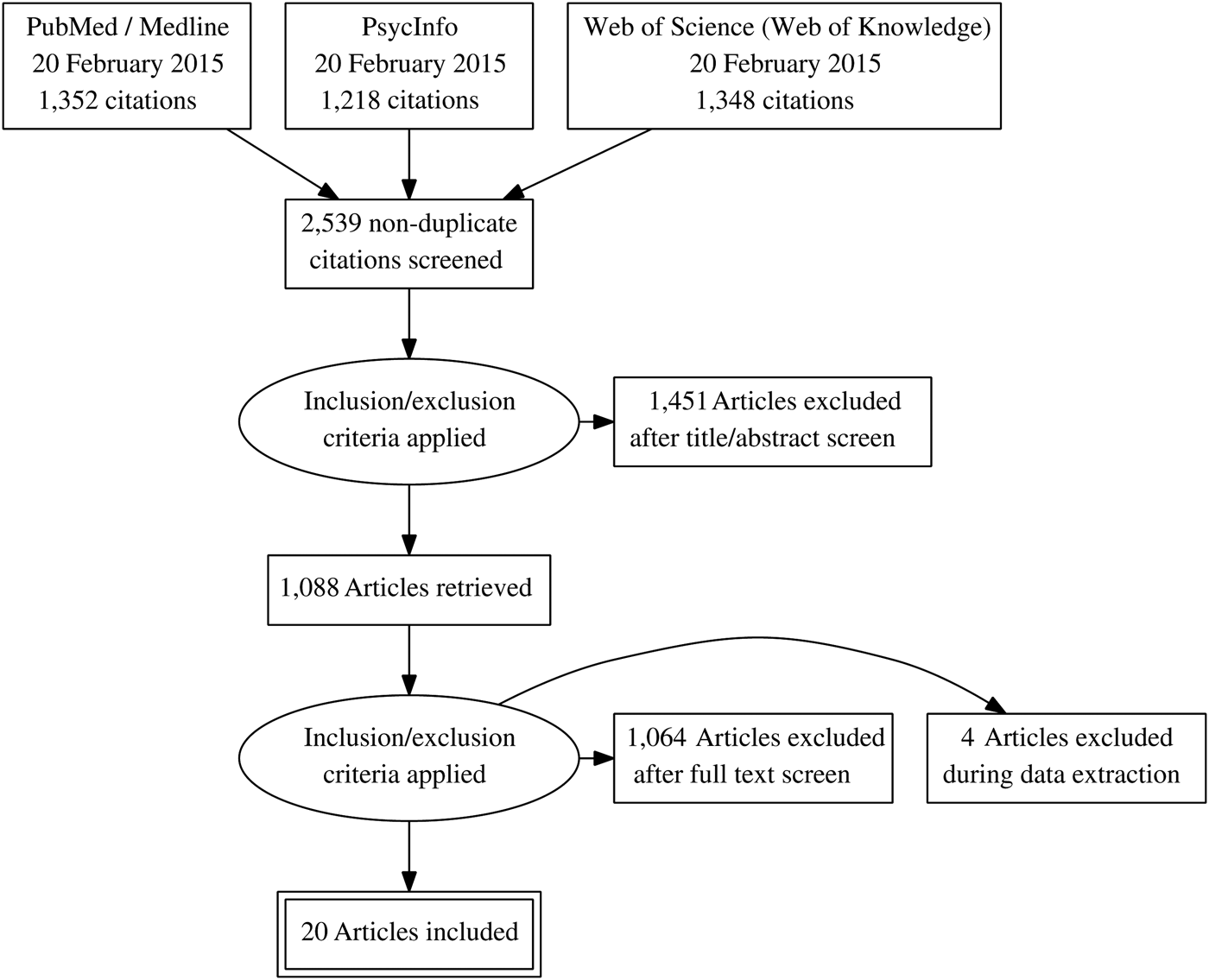
After looking at the included studies in terms of participants, interventions and outcomes, it was not considered appropriate to undertake any formal pooling of data. Thus, a qualitative synthesis of the studies was conducted and the results were compared by grouping studies with similar goals and analysed based on whether the reported outcomes considered all stated aims (see the PRISMA flow chart in Figure 1).
PRISMA flow chart.

Results
Description of studies
A total of 3,918 titles and abstracts were retrieved through online searches and screened for inclusion. After removing duplicates, 2,539 articles were analysed to exclude irrelevant articles, such as those not related to active ageing interventions; 1,451 abstracts were excluded (e.g. studies on mice/rats, literature reviews, studies aimed at understanding active ageing determinants, policy/social strategies articles, and articles aimed at improving treatment management and not lifestyle changes). The remaining 1,088 titles were examined more closely to determine their relevance; 20 articles were finally selected. In this phase, one of the most relevant reasons for exclusion was that the study did not report definitive results (e.g. Fried et al. Reference Fried, Carlson, McGill, Seeman, Xue, Frick, Tan, Tanner, Barron, Frangakis, Piferi, Martinez, Gruenewald, Martin, Berry-Vaughn, Stewart, Dickersin, Willging and Rebok2013; Glass et al. Reference Glass, Freedman, Carlson, Hill, Frick, Ialongo, McGill, Rebok, Seeman, Tielsch, Wasik, Zeger and Fried2004). In Table 2, the analysis of the contents of the studies sorted by year of publication are summarised. As Table 2 indicates, most studies (N = 16) had intervention and control groups; however, four did not include controls (Bode, de Ridder and Bending 2006; Cusack, Thompson and Rogers Reference Cusack, Thompson and Rogers2003; Mathieu Reference Mathieu2008; Wellman et al. Reference Wellman, Kamp, Kirk-Sanchez and Johnson2007). In studies that used a control group study design, assignment to the groups differed. Random assignment was present in nine studies (Fried et al. Reference Fried, Carlson, McGill, Seeman, Xue, Frick, Tan, Tanner, Barron, Frangakis, Piferi, Martinez, Gruenewald, Martin, Berry-Vaughn, Stewart, Dickersin, Willging and Rebok2013; Galvin et al. Reference Galvin, Benson, Deckro, Fricchione and Dusek2006; Hopman-Rock and Westhoff Reference Hopman-Rock and Westhoff2002; Kim Reference Kim2013; Pahor 2006; Noice, Noice and Staines Reference Noice, Noice and Staines2004; Robare et al. Reference Robare, Bayles, Newman, Williams, Milas, Boudreau, McTigue, Albert, Taylor and Kuller2011; Silveira et al. Reference Silveira, van de Langenberg, van het Reve, Daniel, Casati and de Bruin2013; Trudel et al. Reference Trudel, Boyer, Villeneuve, Anderson, Pilon and Bounader2008). Most studies (N = 11) used quasi-experimental designs, five were randomised control trials and four used pre-experimental designs. The length of follow-up in these 20 intervention studies ranged from immediately following the intervention up to 24 months. The duration of the included studies varied from four weeks to three years.
Overview of analysis of the selected studies

Notes: RCT: randomised controlled trial. CIT: community intervention trial. BMI: body mass index. SPPB: Short Physical Performance Battery.
Geographical distribution
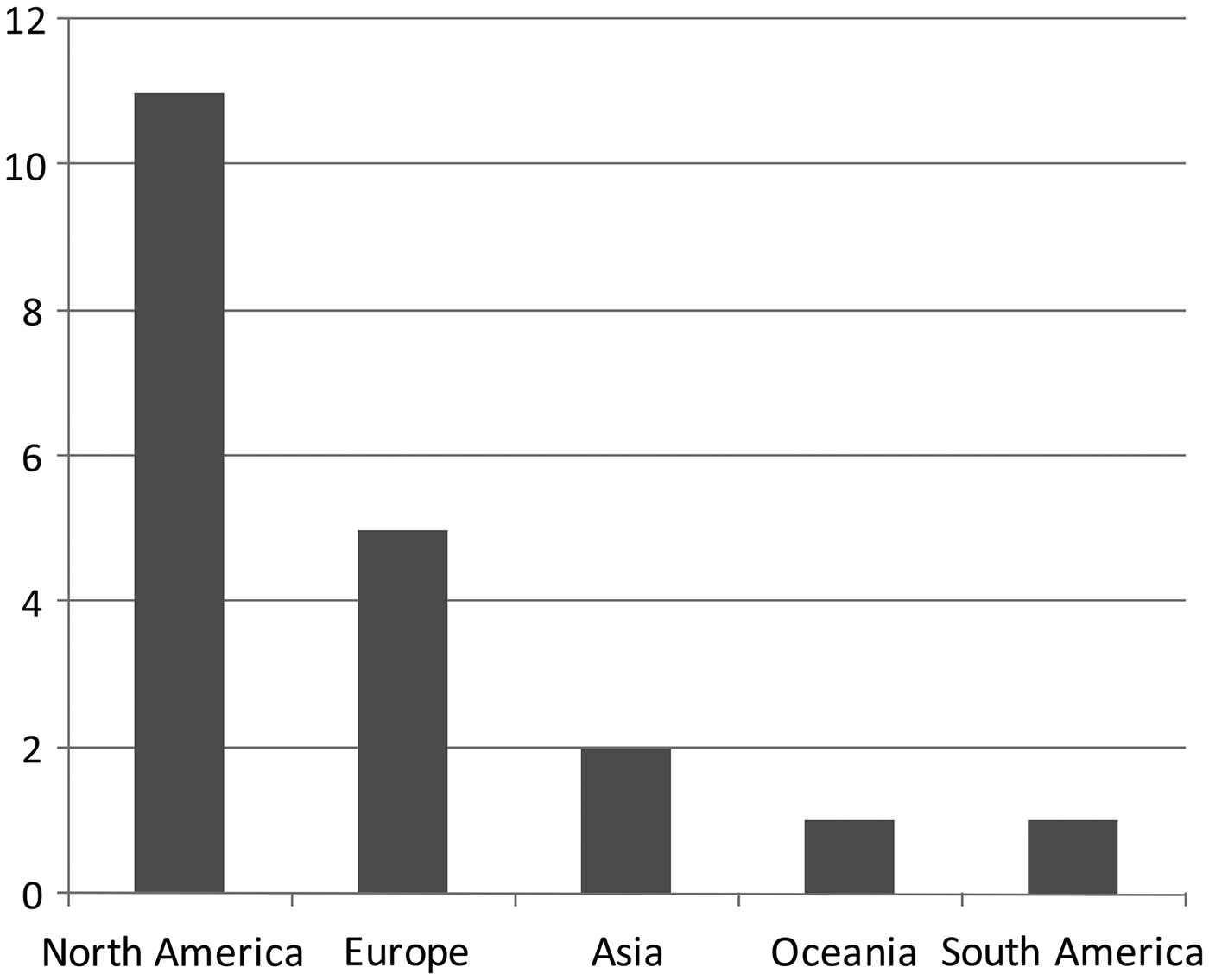
Figure 2 shows the affiliation continent of the first author of each study. North America (United States of America (USA) and Canada) yielded the most studies (N = 11), followed by Europe (N = 5). This finding was not surprising considering that the greatest part of the literature is published in the USA. However, it is possible to observe a great variability between countries, from Asiatic countries to different European countries.
Country of the first author.

Characteristics of an aged sample
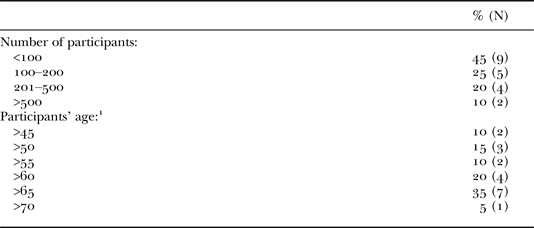
The samples of the selected studies ranged from 15 to 1,549 participants. Almost half of the studies used samples of fewer than 100 participants; only two studies used samples greater than 500 (Table 3).
Sample characteristics

Note: 1. One study did not mention the age of the participants.
Participants in the analysed studies ranged from 45 to 94 years of age. One study did not mention the age of the participants (Lee et al. Reference Lee, Yoon, Lee, Yoon and Chang2012). As shown in Table 3, most studies selected participants older than 65 years (35%).
Four studies screened participants’ cognitive abilities using the Mini Mental State Examination. Generally, the samples were composed of both females and males; however, in 11 studies (55%), the samples were mostly women.
Measures adopted from the performed interventions
The measures adopted from the selected literature to assess improvements in health domains showed great variability, and were divided into four broad groups: standardised measures or logs (i.e. records kept for a specified time-frame) or clinical examinations, validated scales or tests, ad hoc questionnaires, and qualitative instruments. A majority of measures were ad hoc questionnaires, followed by scales or tests and standardised measures or clinical examinations. Looking at the type of active healthy ageing dimensions assessed, physical activity was the most measured dimension, followed by health status, emotional functioning and social activities (N = 7). The measures adopted to assess physical activity were mainly ad hoc questionnaires that were constructed or adapted to self-rate physical activity levels and standardised records of gait speed, physical capability and strength within specific time-frames. Between these, the Short Physical Performance Battery (SPPB) and the 400-metre walk test were used in two studies. The majority of studies assessed psychological components (cognitive, emotional or general) using validated scales and tests (e.g. Positive and Negative Affect Schedule, State-trait Anxiety Inventory, Self-esteem Scale and the Centre for Epidemiologic Studies Depression questionnaire). Some researchers perceived participant adherence to programme goals as relevant to assess continued participation in these programmes during and after the study.
Features of interventions promoting active healthy ageing
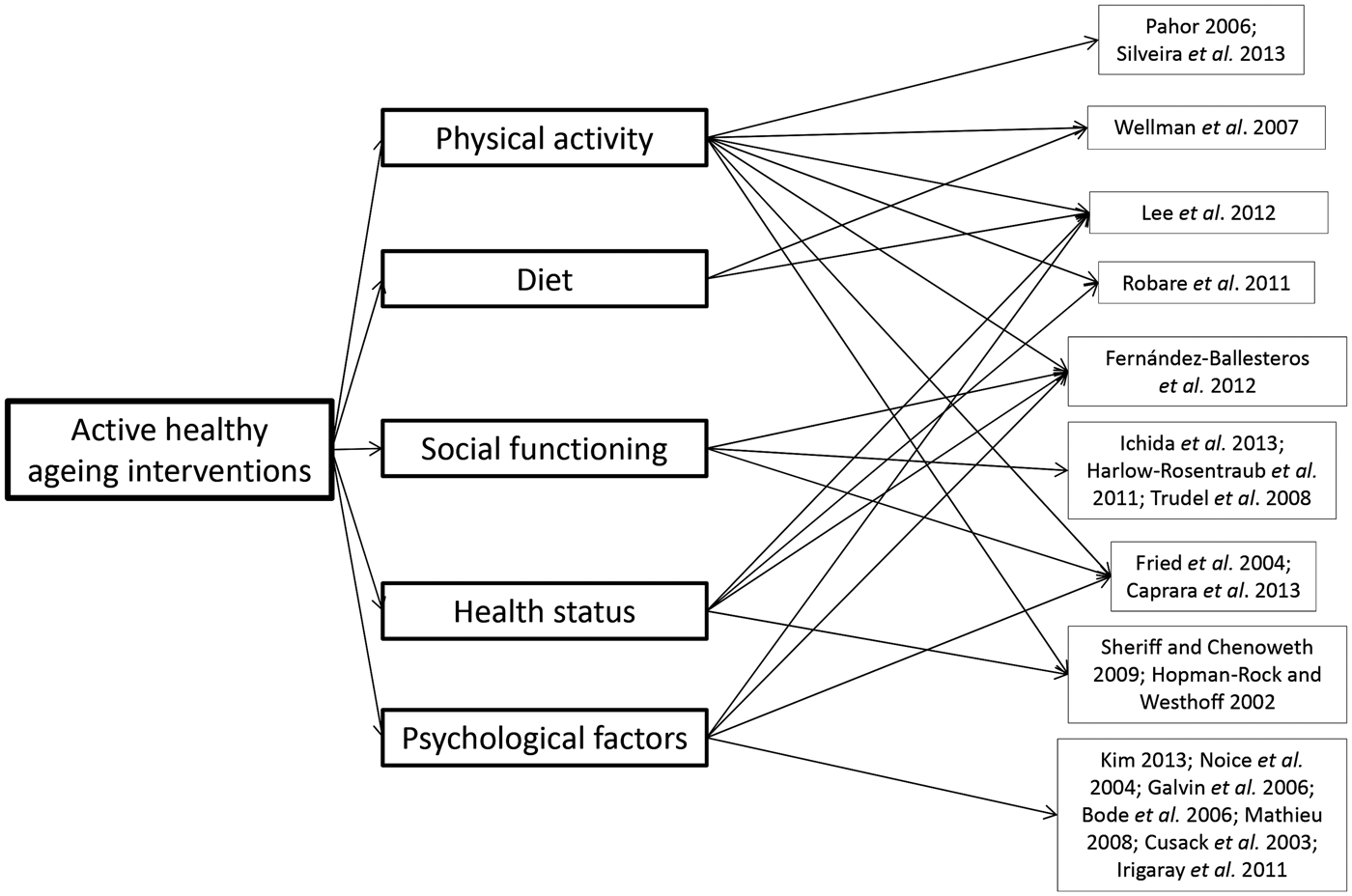
As detailed in Figure 3, the common aim of promoting active healthy ageing was reached in the selected studies through different intervention modalities. Despite the fact that all studies aimed to foster the active ageing of older healthy citizens, interventions differed to reach this common aim. Indeed, programmes ranged from physical activity to social participation or cognitive functioning interventions. Two studies focused on social aspects, such as social participation and civic engagement, as valuable to promoting healthy ageing in participants. One study concentrated on couples’ lives as a crucial aspect of social and psychological functioning to improve active healthy ageing. Four studies used physical activity interventions with the main objective of improving healthy ageing. Five focused on increasing cognitive functioning, such as coping strategies, and one of these studies associated a cognitive aim with a psychological one; specifically, the reduction of anxiety levels. Two studies aimed to reach better health status and reduce disease risk factors. Only one study targeted psychological aspects of health by focusing on life satisfaction and wellbeing. The other studies (N = 5) delivered interventions that focused on different health levels or were globally aimed to promote active ageing through various strategies (e.g. art therapy, university programmes, psycho-social interventions). Most studies targeted specific factors to promote active healthy ageing, whereas a small number of studies focused on different levels of such a process.
Goals of the selected studies.

Because of different programme aims, interventions for active healthy ageing varied in levels of intervention (e.g. community, group and individual) and health goals addressed. Specifically, 12 of the 20 studies used group interventions, five targeted the individual level and three targeted the community level. Moreover, the health goals listed permitted researchers to see which key policy proposals suggested by WHO (2002) have been examined in the intervention literature. Psychological factors were the most targeted elements to promote active healthy ageing. Among these, cognitive elements and emotional factors were the most mentioned psychological components.
Health status, by reducing behavioural risk factors or improving one's general health status, and physical activity were health goals of nine intervention studies. Other studies worked to improve social support, increase preventive behaviours, construct environments for healthy ageing, improve quality of life or adherence, and foster healthy eating. Examining the active ageing determinants formulated from WHO (2002), the researchers found that economic influences, mental and oral health, tobacco use, alcohol and drugs use, medications, and support to care-givers are lacking in extant literature. Generally, studies with a community design showed greater interest on social aspects of healthy ageing (Harlow-Rosentraub, Wilson and Swindell Reference Harlow-Rosentraub, Wilson and Swindell2011; Ichida et al. Reference Ichida, Hirai, Kondo, Kawachi, Takeda and Endo2013) or simultaneously targeted different health levels (physical, social, cognitive) (Fried et al. Reference Fried, Carlson, McGill, Seeman, Xue, Frick, Tan, Tanner, Barron, Frangakis, Piferi, Martinez, Gruenewald, Martin, Berry-Vaughn, Stewart, Dickersin, Willging and Rebok2013). The aims of studies that examined group interventions were very different, and the health goals varied considerably. Studies at the individual level concentrated on specific health objectives (Robare et al. Reference Robare, Bayles, Newman, Williams, Milas, Boudreau, McTigue, Albert, Taylor and Kuller2011; Sheriff and Chenoweth Reference Sheriff and Chenoweth2009) or on improving physical activity among older people (Pahor Reference Pahor2006; Silveira et al. Reference Silveira, van de Langenberg, van het Reve, Daniel, Casati and de Bruin2013).
Effects of interventions
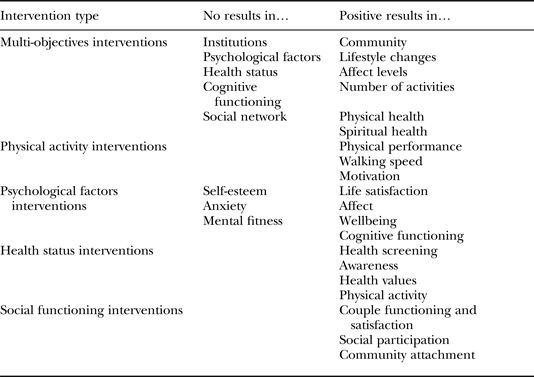
All of the selected studies reported some improvements in the active healthy ageing factors measured (Table 4). We analysed results by examining the main goals targeted in the interventions. Interventions with more than three goals were considered ‘multi-objectives interventions’.
Summary of interventions results

Efficacy of physical activity interventions
In the three intervention studies aimed to improve physical activity, participant outcomes were reported compared to control groups and assessed using standardised measures of physical ability (e.g. 400-metre walk test, SPPB) (Fried et al. Reference Fried, Carlson, McGill, Seeman, Xue, Frick, Tan, Tanner, Barron, Frangakis, Piferi, Martinez, Gruenewald, Martin, Berry-Vaughn, Stewart, Dickersin, Willging and Rebok2013; Pahor Reference Pahor2006; Robare et al. Reference Robare, Bayles, Newman, Williams, Milas, Boudreau, McTigue, Albert, Taylor and Kuller2011). Three studies demonstrated that a structured approach to physical activity improved active ageing among participants. Pahor (Reference Pahor2006) compared health education sessions with structured physical exercises and found that a structured individual Web-based intervention improved performance-based scores (SPPB scores and 400-metre walk speed) more so than an education group intervention.
Fried et al. (Reference Fried, Carlson, Freedman, Frick, Glass, Hill, McGill, Rebok, Seeman, Tielsch, Wasik and Zeger2004) conducted a community-based study and found improvements in physical activity using similar performance-based measures. The researchers found that participation in volunteering activity in elementary schools increased strength, walking speed and general activity at follow-up. However, a structured relatively intensive group programme that promoted physical activity was no more effective than was individual brief counselling and physical encouragement in increasing physical activity as measured using the same performance-based scores of Pahor (Reference Pahor2006). However, health counselling sessions successfully improved adherence to key health goals (Robare et al. Reference Robare, Bayles, Newman, Williams, Milas, Boudreau, McTigue, Albert, Taylor and Kuller2011). In these studies, some overlap in measures adopted was present, which permitted us to compare results. A Web-based individual physical activity structured intervention significantly improved standing balance, walking speed, ability to rise from a chair (SPPB) and 400-metre walk test scores (Pahor Reference Pahor2006) more so than a relatively intensive group programme with health counselling sessions (Robare et al. Reference Robare, Bayles, Newman, Williams, Milas, Boudreau, McTigue, Albert, Taylor and Kuller2011). Although the community-based volunteering study of Fried et al. (Reference Fried, Carlson, Freedman, Frick, Glass, Hill, McGill, Rebok, Seeman, Tielsch, Wasik and Zeger2004) also found improvements in physical scores, they were limited to some physical aspects such as strength and walking speed.
Furthermore, two non-randomised controlled studies targeted physical activity. One study supported the feasibility and motivation to use and adhere to physical activity exercises of a proactive training app, although no physical ability measure was adopted (Silveira et al. Reference Silveira, van de Langenberg, van het Reve, Daniel, Casati and de Bruin2013). Another study implemented a programme with mini-talks and activities for group physical activities and nutrition. The researchers reported changes in both; however, only 62 per cent of participants completed the 12-weekly session programme (Wellman et al. Reference Wellman, Kamp, Kirk-Sanchez and Johnson2007).
Interventions focused on psychological factors
Not all of the objectives were reached and partial results were obtained compared to controls in the study categorised as promoting active healthy ageing by focusing on psychological factors. Kim (Reference Kim2013) observed large effects – an 84.6 per cent positive change in affect and a 70.6 per cent positive change in state of anxiety – for participants in an art therapy intervention group over the control group. Conversely, moderate positive changes were observed in self-esteem and trait anxiety. Noice, Noice and Staines (Reference Noice, Noice and Staines2004) did not observe changes in self-esteem between a theatre course, visual arts course and control group. However, the theatre group performed better than did the other groups on the cognitive measures; specifically, word recall and problem solving. These researchers also found improvements in psychological wellbeing with high maintenance effects (Noice, Noice and Staines Reference Noice, Noice and Staines2004). A mind–body intervention using relaxation techniques was reported; however, only some improvements were seen in the cognitive score (i.e. reaction time on a simple task), with no results for the other cognitive or anxiety measures (Galvin et al. Reference Galvin, Benson, Deckro, Fricchione and Dusek2006). Significant results in cognitive scores regarding mental fitness, together with improvements in depressive rates, were, on the other hand, reported after a programme of eight intensive workshops on mental abilities (Cusack, Thompson and Rogers Reference Cusack, Thompson and Rogers2003). Similarly, 12 sessions of cognitive training were effective in improving cognitive performance, quality of life and psychological wellbeing among 38 healthy older participants compared to the control group (Irigaray, Schneider and Gomes Reference Irigaray, Schneider and Gomes2011). Life satisfaction was a psychological goal of the therapeutic ten-week programme that addressed happiness and humour, with significant improvements using the self-rated Life Satisfaction Scale (Mathieu Reference Mathieu2008). Finally, one study implemented a minimal group intervention with group discussions and personal goals to facilitate proactive activities and coping. The researchers found significant changes in proactive competencies of mid-life persons and older, but not in proactive behaviours and orientation (Bode, de Ridder and Bensing Reference Bode, de Ridder and Bensing2006).
Interventions aimed at reducing health risk factors
Intervention studies that aimed to reduce health risk factors yielded significant results in health measures compared to controls (Sheriff and Chenoweth Reference Sheriff and Chenoweth2009; Robare et al. Reference Robare, Bayles, Newman, Williams, Milas, Boudreau, McTigue, Albert, Taylor and Kuller2011). Sheriff and Chenoweth (Reference Sheriff and Chenoweth2009) analysed a health promotion vehicle, and found that it increased confidence in health screening, monitoring and awareness of health status. Of note, this study was a pilot, thus, the results were preliminary. Robare et al. (Reference Robare, Bayles, Newman, Williams, Milas, Boudreau, McTigue, Albert, Taylor and Kuller2011) reported similar results; brief education and counselling sessions were demonstrated to change health screening (for cancer) and clinical health values (e.g. reduced influenza, low-density lipoprotein, cholesterol). Also a programme consisting of peer-to-peer health education and low-intensity physical exercises found improvements in health values (e.g. blood pressure and glucose, body mass index) and knowledge, and in physical activity levels, both in the randomised controlled trial and in the community intervention trial in eight municipalities (Hopman-Rock and Westhoff Reference Hopman-Rock and Westhoff2002).
Interventions targeting social functioning
The three studies that focused on improving social activity (Harlow-Rosentraub, Wilson and Swindell Reference Harlow-Rosentraub, Wilson and Swindell2011; Ichida et al. Reference Ichida, Hirai, Kondo, Kawachi, Takeda and Endo2013; Trudel et al. Reference Trudel, Boyer, Villeneuve, Anderson, Pilon and Bounader2008) described improved outcomes on social ratings. One study connected social activity with better health status measures (Ichida et al. Reference Ichida, Hirai, Kondo, Kawachi, Takeda and Endo2013). A group intervention aimed to enhance marital and sexual functioning of older people reported significant effects in self-perceived functioning, marital satisfaction, beliefs about marital life, and sexual functioning and satisfaction, which only partially declined at follow-up (Trudel et al. Reference Trudel, Boyer, Villeneuve, Anderson, Pilon and Bounader2008). Ichida et al. (Reference Ichida, Hirai, Kondo, Kawachi, Takeda and Endo2013) found that social participation in community centres was associated with better self-rated health over time (Ichida et al. Reference Ichida, Hirai, Kondo, Kawachi, Takeda and Endo2013). Improvements in community attachment on self-reported life satisfaction and continued volunteer activities were reported after a volunteering programme that adopted a multi-generational approach (Harlow-Rosentraub, Wilson and Swindell Reference Harlow-Rosentraub, Wilson and Swindell2011).
Multi-objectives interventions
Finally, different studies included mixed objectives (e.g. physical activity, social activity, cognitive functioning) and reported only results for some active ageing components (Caprara et al. Reference Caprara, Molina, Schettini, Santacreu, Orosa, Mendoza-Núñez, Rojas and Fernández-Ballesteros2013; Fernández-Ballesteros et al. Reference Fernández-Ballesteros, Molina, Schettini and del Rey2012; Lee et al. Reference Khan, Ter Riet, Glanville, Sowden and Kleijnen2012). For example, Caprara et al. (Reference Caprara, Molina, Schettini, Santacreu, Orosa, Mendoza-Núñez, Rojas and Fernández-Ballesteros2013) designed an active ageing promotion programme in community and institutional contexts with different modalities (i.e. multi-media, e-learning, traditional education course) and objectives (behavioural lifestyle changes, cognitive and emotional functioning, social participation). The researchers found that programmes reported better results when implemented in the community, specifically for lifestyle changes (e.g. diet, physical activity, social activities). Results regarding health and psychological factors were not reported. Fernández-Ballesteros et al. (Reference Fernández-Ballesteros, Molina, Schettini and del Rey2012) examined a university programme for older adults and found significant changes in affect levels, information-seeking, and productive and social activities after the course compared to the control group, but no differences in health levels, social networks or cognitive functioning. Lee et al. (Reference Khan, Ter Riet, Glanville, Sowden and Kleijnen2012) suggested that a 12-week multi-componential health promotion intervention for older adults contributed to physical (overall rating of health, activity levels, sleeping habits, knowledge on nutrition, attitude towards sexuality) and spiritual (peace of mind, life satisfaction, optimism) health, but did not enhance psychological dimensions.
Discussion
The present review was concerned with providing a map of interventions aimed at promoting the active healthy ageing of older citizens. Our first question focused on understanding the characteristics of older samples considered in previous studies. Interestingly, the samples involved in the selected studies were mostly over 65 years; however, the WHO (2002) defined ageing from 60 years and older. Moreover, participants’ ages ranged significantly within studies, which did not allow comparisons between data and showed a lack of shared guidelines when implementing active ageing interventions.
The second objective aimed to map the health domains promoted from the selected interventions. Our results showed that active ageing is composed of different health domains, but only a few are promoted by interventions that foster active ageing. Researchers have made many partial attempts to activate older citizens in their health management. Strategies and interventions that address all health domains and that aim to appeal to personal motivation are lacking. Moreover, examining active ageing determinants proposed by WHO (2002) in detail, no intervention among the selected studies aimed to support and work with care-givers or peers and reduce risk factors such as smoking or alcohol use.
The third point was concerned with describing the key components of active healthy ageing interventions. Results revealed that ad hoc questionnaires were the most commonly used measures. Next to measures to assess specific determinants of active ageing (e.g. physical activity, diet) were those used to assess global components of active ageing. For example, continued participant adherence to the programme was conceived as an important factor to evaluate the effectiveness of the programme and to increase the disposition and motivation of participants to introduce daily healthy behaviours. The selected studies assessed participation during and after the programme using quantitative and behavioural measures. In our opinion, the process of engagement that considers citizens as active actors in partnership with the health-care system fosters a more holistic perspective for older citizens (Graffigna et al. Reference Graffigna, Barello, Wiederhold, Bosio and Riva2013). Indeed, making older citizens co-producers of their health can enhance their satisfaction with life and their engagement in enacting preventive and healthy behaviours, which is vital for achieving successful health outcomes and preventing waste of resources (Wiederhold, Riva and Graffigna Reference Wiederhold, Riva and Graffigna2013).
Despite there being a broad literature on the concept of active and healthy ageing, studies that focus on engaging older citizens in long-term active and healthy behaviours are lacking. Different interventions that promote active ageing have demonstrated effectiveness in improving specific healthy lifestyle behaviours (e.g. physical activity, diet, social participation); however, no study has directly focused on the more holistic process of engagement. Initiatives aimed at promoting healthy ageing, so far, have resulted in partial success, namely promoting one or two components of the older people's health experience; whereas few interventions have aimed to promote this process globally and control the different components of older individuals' experiences with health management. The lack of research may be because the concept of active ageing is new and complex, and it does not have a shared conceptualisation. Moreover, previous reviews have concentrated on quantitative evaluations of effectiveness; however, they have neglected participants’ views about the acceptability of these programmes. As a result, service or guideline developers have little information by which to improve engagement in active healthy behaviours (Bunn et al. Reference Bunn, Dickinson, Barnett-Page, Mcinnes and Horton2008). Our study suggests the need for a composite framework with multi-disciplinary and meta-disciplinary features as part of active ageing interventions. Because of the broadness of the topic of active ageing, a multi-disciplinary approach is required to address all manifold aspects. Furthermore, paying attention to older citizens’ needs and to levers able to engage older citizens actively in healthy behaviours may allow long-term, low-cost and valuable results (Wiederhold, Riva and Graffigna Reference Wiederhold, Riva and Graffigna2013).
This review encountered several methodological problems, the first being the heterogeneity of studies included. Another limitation stemmed from the choice of only mapping health promotion initiatives. Although the goal of the present research was to review interventions focused on encouraging lifestyle changes among older people and not on supporting care management among patients, we have found that it is also important to further the exploration of interventions aimed at fostering the process of engagement in care management among older patients (e.g. older patients with diabetes).
Conclusions
Our literature review highlighted that the interventions so far developed to promote healthy ageing are partial, only addressing singular specific components of such a process, such as the cognitive process of ageing (Noice and Noice Reference Noice and Noice2006). From our perspective, there is a need for a more holistic and complex understanding of the active ageing process, and thus for interventions able to target at once the different components of healthy and active lifestyles. Furthermore, our review cast light on the general lack of analysis of the individual, relational and organisational factors that may sustain the active engagement of older people in healthier lifestyles. Several studies stated the importance of engagement in the management of chronic disease, by elucidating how patient engagement is a complex and developmental process originated by the synergy of cognitive, emotional and behavioural elements of the health-care experience (Graffigna et al. Reference Graffigna, Barello, Wiederhold, Bosio and Riva2013). Fully engaged patients have accepted their patients’ identity as only one of their possible selves, they are managers of their own care, and, as a consequence, they are able to project satisfactory life trajectories for their future (Barello and Graffigna Reference Barello and Graffigna2014). From our perspective, the process of engagement appears pivotal also in the domain of active ageing, in order to really make older people active actors of their health and wellbeing (Graffigna et al. Reference Graffigna, Barello, Riva, Bosio, Riva, Marsan and Grassi2014). Thus, it appears crucial to explore better the subjective experience of older people's engagement in healthy and active lifestyles. Particularly, further studies are needed to explore older people's health and wellness expectations and to sustain interventions really attuned to their needs and their availability to engage in healthy and active lifestyles. Evidence from these studies may support concrete strategies to foster a fully emotional, cognitive and behavioural engagement of older citizens in managing health by their own. The development of an intervention for the engagement of older people in healthy and active lifestyles, which we have reported as lacking and needed in this paper, is one way to plan ahead for the impacts of the global changes we are assisting in and to mitigate this impact on the health-care systems and on the health of older citizens by working more broadly to support active ageing through pivotal motivational strategies.
Acknowledgements
This work was a part of a larger project, ‘D.3.2 Crescere da Anziani: Attivare risorse per stili di vita sostenibili’, that was funded by the Catholic University of Milan. The financial sponsor played no role in this publication; the views expressed in this publication are those of the authors and not necessarily those of the Catholic University.