Although there are numerous, varied, and inconsistent definitions of the term “competency” throughout the literature, it usually refers to a kind of skill, capacity, ability, and knowledge as well as their combinations. Reference Daily, Padjen and Birnbaum1,Reference Crowe, Wagoner and Rodriguez2 Nontechnical competency are the cognitive, social, and personal resource skills that complement technical skills. Reference Jirativanont, Raksamani and Aroonpruksakul3,Reference Flowerdew, Gaunt and Spedding4 Examples include leadership, communication, team interaction processes, and decision-making.
Nontechnical competency is important for emergency health professionals performing urgent and critical tasks under complex, high-risk, time-pressured, dynamic conditions, Reference Daily, Padjen and Birnbaum1,Reference Rosenman, Ilgen and Shandro5-Reference Ellis, Bell and Ployhart7 including in-facility emergency situations (eg, emergency department, Reference Porter, Cant and Cooper8-Reference Munroe, Curtis and Murphy10 intensive care unit [ICU], Reference Zhuravsky11-Reference Kim, Neilipovitz and Cardinal14 , operating room Reference Dedy, Bonrath and Ahmed15-Reference Jankouskas, Haidet and Hupcey17 ) and out-of-facility incident responses (prehospital emergency medical services, Reference Crowe, Wagoner and Rodriguez2 medical evacuation, Reference Jernigan, Wallace and Novak18,Reference Myers, Powell and Psirides19 and on-site rescue, Reference Peller, Schwartz and Kitto20-Reference Cox and Danford22 as well as public health emergency Reference Klein, Ziegert and Knight6 ). With respect to the disciplines and professions, it has been emphasized for physicians, Reference Dent, Weiland and Paltridge27-Reference Schultz, Koenig and Whiteside29 surgeons, Reference Willems, Waxman and Bacon30-Reference Doumouras, Hamidi and Lung32 nurses, Reference Schultz, Koenig and Whiteside29,Reference Mosca, Sweeney and Hazy33,Reference Gordon, Jorm and Shulruf34 anaethetists, Reference Doumouras, Hamidi and Lung32,Reference Yee, Naik and Joo35 public health workers, Reference Tachibanai, Takemura and Sone24,Reference Cope, Frost and Richun26,36 response administration staff, Reference King, North and Larkin37,Reference King, Larkin and Fowler38 and so on.
A common fundamental competency framework would benefit the ongoing standardization process in education, certification, and accreditation in the field of emergency health. Such nontechnical framework must first consider the wide audience because education and training programs for emergency health professionals should be multidisciplinary and transdisciplinary. Reference Ripoll, Djalali and Foletti39
Numerous studies have tried to figure out the construct and structure of task-related or profession-specific nontechnical competency for health workers, Reference Ripoll, Djalali and Foletti39-Reference Mete and Brannick42 which could provide a better understanding of the nontechnical competency but also establish guidance for the education and training programs. Previous reviews are also available on the competences related to disaster health-care providers Reference Daily, Padjen and Birnbaum1 and health-care action teams Reference Rosenman, Ilgen and Shandro5 ; however, they failed to focus nontechnical competency, Reference Daily, Padjen and Birnbaum1,Reference Rimstad and Braut43,Reference Weller, Shulruf and Torrie44 and partially targeted a specific profession or setting. Reference Rosenman, Ilgen and Shandro5,Reference Chalwin and Flabouris40-Reference Mete and Brannick42,Reference Flowerdew, Brown and Vincent45-Reference Rehim, DeMoor and Olmsted47
Despite the crucial link between nontechnical competency and performance of emergency health professionals, the general fundamental components of nontechnical competencies applied to all professions working in emergency remains poorly understood. To address this gap, a systematic review was undertaken to summarize the characteristics of nontechnical competency frameworks designed to various health professionals in all-hazard emergency environment. By examining the domains of nontechnical competency frameworks, the framework structure and application, this review focuses on 2 research questions: (1) what are the common nontechnical competencies of the health professionals in all-hazard emergency environment? (2) How are these nontechnical competencies developed, structured, and applied?
METHODS
The present review was conducted in adherence with the PRISMA (Preferred Reporting Items for Systematic Reviews and Meta-Analyses) standards for systematic review. Reference Rosenman, Ilgen and Shandro5,Reference Liberati, Altman and Tetzlaff48
Data Sources
Relevant English-language studies were systematically searched in the following databases from inception through March 2018: PubMed, MEDLINE, ERIC, Scopus, Cochrane and Google Scholar. The search was carried out using a combination of keywords unique to each database (detailed in Appendix 1, which is available in the Supplementary Material). The major keywords were divided into 4 groups: nontechnical/ social/ cognitive, emergency/ disaster/ crisis/ incident, health/ medicine and competency/ skill/ ability/ knowledge. Finally, reference lists of all included articles were also searched.
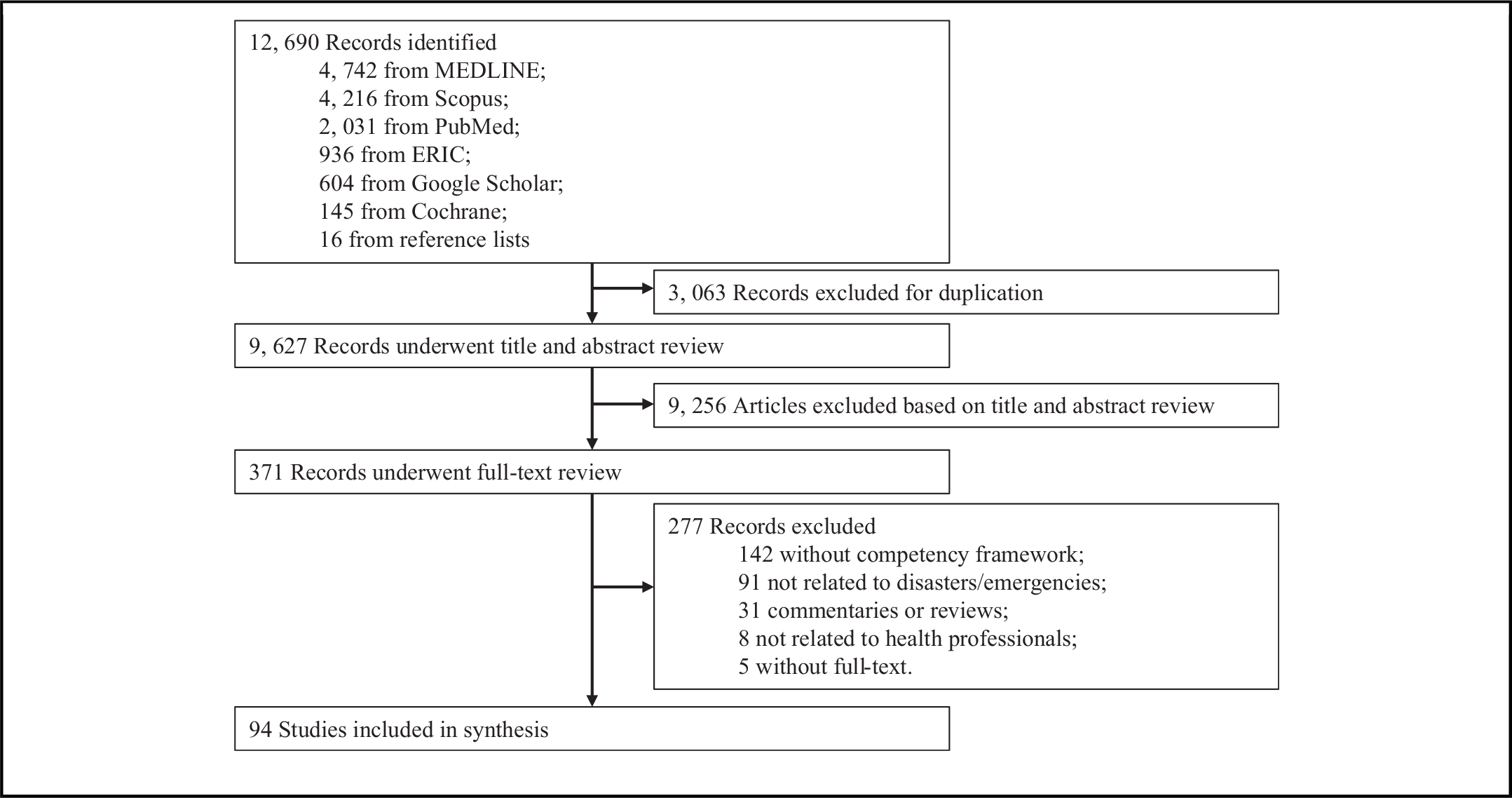
Selection Process Used in A Systematic Review of Non-Technical Competency Frameworks for Health Professionals in All-Hazard Emergency Environment Published through March 2018.

Study Selection
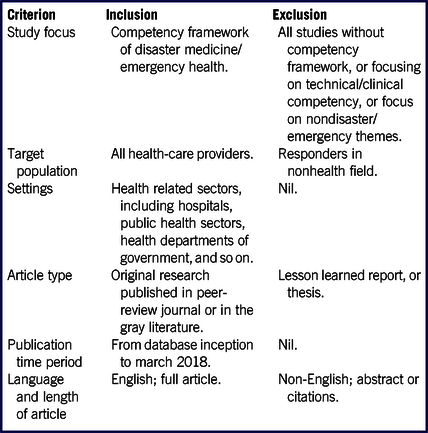
Papers were included if they described nontechnical, social or cognitive competency frameworks, abilities, knowledge, skills, or attitudes for disaster medical team leaders. Papers were excluded that described competency frameworks: (1) limited to clinical skills, (2) not dealing with disasters or emergency environment; (3) not specific to health professionals; (4) case studies; (4) without a full-text available, such as abstracts and citations; and (5) that were not available in English. No publication date or status restrictions were imposed (see Figure 1 and Table 1).
Inclusion and Exclusion Criterion for Studies

The initial search identified 9627 unique records. Eligibility assessment was performed independently by 2 reviewers (Xuejun Hu & Changnan He) and disagreements between reviewers were resolved by consensus.
Data Abstraction
A data abstraction form was developed based on previous relevant systematic review. Reference Daily, Padjen and Birnbaum1,Reference Rosenman, Ilgen and Shandro5,Reference Ripoll, Djalali and Foletti39,Reference Al Thobaity, Plummer and Williams41,Reference Rehim, DeMoor and Olmsted47 Coding metrics of this form were discussed and revised several times by the reviewers. Each of the included articles were independently reviewed by 2 authors using the final data abstraction form. The 2 involved authors discussed and reached consensus on each code metric before a final score was assigned.
Information was abstracted on study characteristics (publication year, study objectives and methods, study settings, and study scenario) and study participant characteristics (professions, types, and specialties). Studies were also reviewed for detailed data on competency frameworks: (1) framework name, (2) scoring system, (3) comprehensive scoring, (4) behavior anchor, (5) assessment level (team or individual), (6) raters (external and self-assessment), and (7) reliability and validity.
A competency framework would be considered modified if its structure (format or item numbers) or anchors were changed. When a framework was modified from an existing instrument, it would be involved as a new one and information of it would be captured separately.
Data Analysis
Meta-analyses were infeasible because of study heterogeneity. Descriptive statistical analyses were performed to summarize characteristics of the studies and frameworks. Competency domains were abstracted from all the included frameworks and synthesized. Representative descriptions of those domains were reported.
RESULTS
Search Results and Study Characteristics
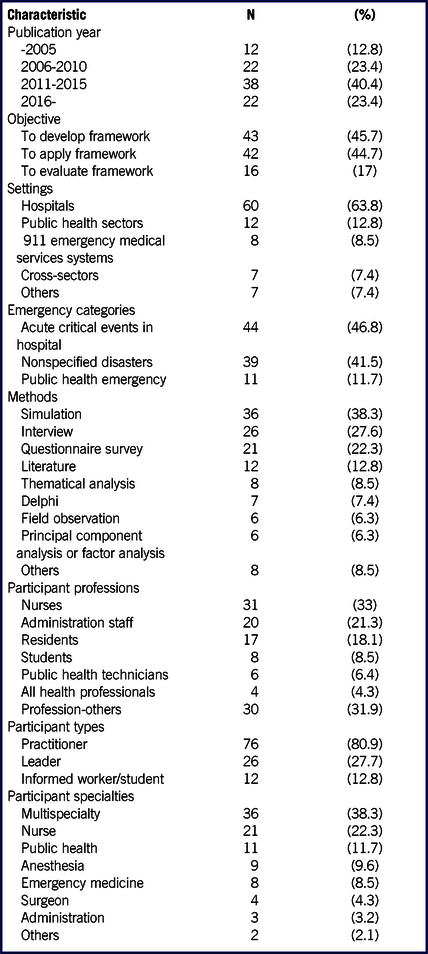
Of the 9627 studies initially identified, 94 met inclusion criteria (see Table 2 and detailed in Appendix 2).
Characteristics of 94 Studies Included in a Systematic Review of Frameworks Used to Describe Nontechnical Competencies for Health Profession Workers in Emergency Environment Published Through August 2018

Table 2 presented the characteristics of the included studies. Studies dated as far back as 1999, although the majority (38; 40.4%) were published during the period from 2011 to 2015. Studies usually intended to develop new competency framework (43;45.7%) or apply existing framework (42;44.7%), while only 16 (17.0%) studies aimed to evaluate the framework. Most (60; 63.8%) of the studies concentrated on hospitals as study settings. Acute critical events in hospital (44;46.8%) or nonspecified disasters (39;41.5%) were the common scenarios. Over 8 methods were applied in these studies, and simulation (36; 38.3%), interview (26; 27.6%), along with questionnaire survey (21;22.3%) were more frequently used. Many studies targeted nurses (31;33.0%), administration staff (20; 21.3%), and residents (17;18.1%) as participants. Most of the participants (76; 80.9%) are practitioners such as nurses, doctors, and other clinical personnel. With regarding to the targeted specialties, the majority (36; 38.3%) were multispecialty, and nurse and public health accounted for 22.3% and 11.7%, respectively.
Competency Framework Characteristics
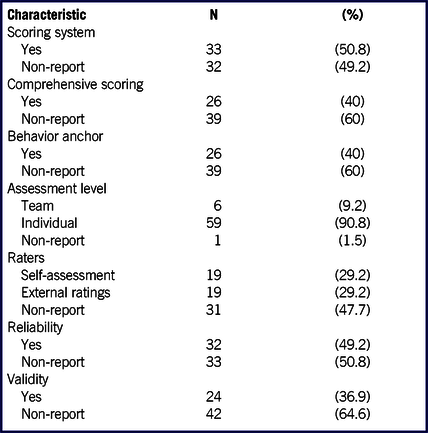
The 94 included studies described 65 unique competency frameworks (see Table 3 and detailed in Appendix 3). Several commonly used frameworks underwent minor modifications resulting in novel, but closely related, frameworks. The most frequently studied competency frameworks were “Anaesthesia Non-Technical Skills (ANTS)” (13; 13.8%), Reference Jirativanont, Raksamani and Aroonpruksakul3,Reference Taylor, Ferri and Yavorska13,Reference Jankouskas, Haidet and Hupcey17,Reference Doumouras, Hamidi and Lung32,Reference Yee, Naik and Joo35,Reference Savoldelli, Naik and Park49-Reference Boet, Bould and Bruppacher56 “Ottawa Global Rating Scale (GRS)” (5;5.3%), Reference Jirativanont, Raksamani and Aroonpruksakul3,Reference Kim, Neilipovitz and Cardinal14,Reference Kim, Neilipovitz and Cardinal57-Reference Clarke, Horeczko and Carlisle59 “Competencies For All Public Workers-1” (4;4.3%), Reference Mosca, Sweeney and Hazy33,36,Reference Gebbie, Merrill and Hwang60,Reference Hites, Lafreniere and Wingate61 and ” Non-Technical Skills for Surgeons” (4;4.3%). Reference Dedy, Bonrath and Ahmed15,Reference Bhangu, Bhangu and Stevenson31,Reference Doumouras, Hamidi and Lung32,Reference Briggs, Raja and Joyce62
Characteristics of 65 Frameworks Used to Describe Nontechnical Competencies for Health Profession Workers in Emergency Environment Published Through August 2018

Of the 65 frameworks, more than half (33;50.8%) reported scoring system, such as 5-point scale, but only 40% presented how to calculate the overall score as a comprehensive result. A little more than 1/3 (26; 40%) of the frameworks described the behavior anchor to the competency domain.
In the aspect of the framework application, most (59; 90.8%) of them were intended to individual. Almost 1/3 of frameworks were used for rating by raters themselves (19; 29.2%) and external raters (19; 29.2%).
Many of the 65 frameworks included multiple forms of validity and reliability evidence. Information on the reliability was reported for less than half of frameworks (32; 49.2%). Most (42; 64.6%) of the frameworks did not see the specific data on validity.
Nontechnical Competency Targeted
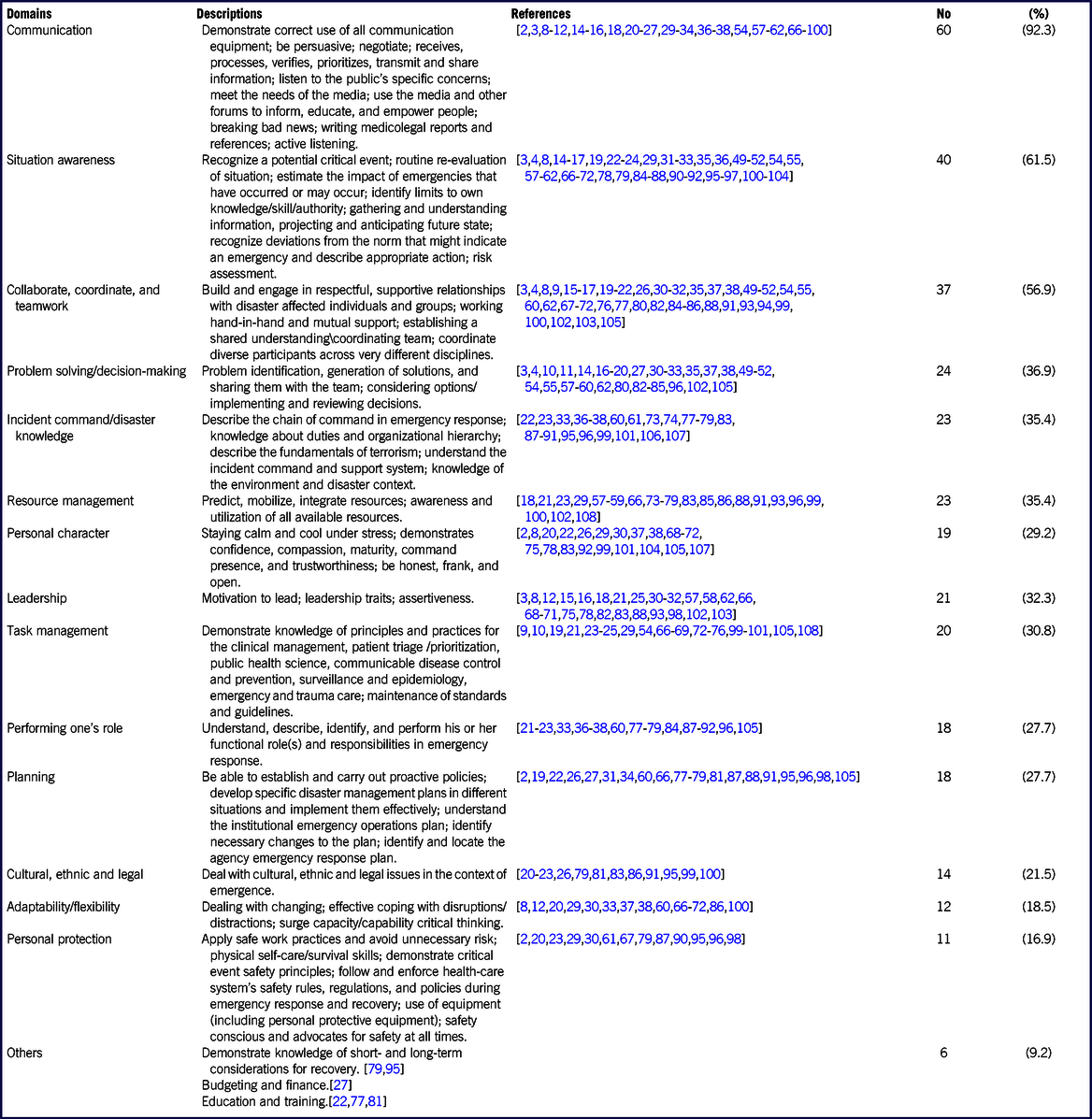
When provided, nontechnical competency themes, behaviors and descriptors were diverse. The 14 most commonly involved domains were identified and summarized based on the primary themes of the frameworks: (1) communication skills (60; 92.3%); (2) situation awareness ability (40; 61.5%); (3) collaborate, coordinate, and teamwork ability (37; 56.9%); (4) problem solving/decision-making skills (24; 36.9%); (5) incident command/disaster knowledge (23; 35.4%); (6) resource management skills (23; 35.4%); (7) personal character (19; 29.2%); (8) leadership (21; 32.3%); (9) task management skills (20; 30.8%); (10) performing one’s role (18; 27.7%); (11) planning skills (18; 27.7%); (12) cultural, ethnic, and legal knowledge (14; 21.5%); (13) adaptability/flexibility (12; 18.5%); and (14) personal protection skills (11; 16.9%) (see Table 4). Some other themes were also reported, although not that frequently, such as knowledge of short- and long-term considerations for recovery, skills of budgeting and finance, and the ability to organize education and training.
Domains, Descriptions, and Frequency of Competencies Included in 65 Frameworks Used to Describe Nontechnical Skills for All Health Professionals in Emergence Response

DISCUSSION
Despite general agreement that nontechnical competency is an essential component of health professionals in all-hazard emergency environment, defining and measuring the universally applicable and fundamental nontechnical competencies remains a challenge, which is, however, significant to strengthen future nontechnical competency research and to provide foundations to educational programs for emergency healthcare professionals and students. This scoping review highlights 65 existing frameworks that articulated the critical constructs of nontechnical competency required for multispecialty health professionals working in crisis environment, and 14 common competency domains were identified from those frameworks.
Targeted Application Level
Included competency frameworks applied to either individual or team. The results of this review showed 90% of those frameworks focused on individuals. However, it is necessary to demonstrate the competency of the whole team which form is common in response to emergency and disaster situations. In some cases, it did not define the targeted audience level of the framework, Reference Hites, Lafreniere and Wingate61 or some frameworks were used to both individual and team. Reference Jankouskas, Bush and Murray50,Reference Flin and Maran55 More studies are in need to specify the nontechnical competency contents for various specialty team as a whole, and the frameworks should note the targeted level to ensure originally intended application. Reference Rosenman, Ilgen and Shandro5
Validity and Reliability Evidence
There is no doubt validity and reliability are the key indicators for a good framework. Among the 94 studies, however, few (17.0%) were aimed to evaluate the frameworks. Also, more than half of the identified frameworks did not see validity (64.6%) and reliability (50.8%) evidence in those studies. Several frameworks (n = 12) were repeatedly used across at least 2 studies, thus potentially providing the chance to build robust validity evidence. Nevertheless, those repeatedly applied frameworks usually underwent behavior anchor or/and even structural modifications with no detailed justifications for the changes. Moreover, the majority of the frameworks (n = 54) emerged in 1 study without reporting validation. In addition, numbers of competencies were proposed using qualitative methods such as focus group, thematical analysis, and Delphi, which is a consensus-building process and relies predominantly on the opinions of nominal experts. Reference Daily, Padjen and Birnbaum1,Reference Shewchuk, O’Connor and Fine63 Above all, a more systematic approach to framework test would help establish more robust and comparable validity and reliability evidence.
Targeted Application Audience
The majority of the included studies (63.8%) were performed in clinical settings (eg, emergency department and ICU) and based on a series of scenarios of acute and critical events (eg, acute shock, hypoxemic respiratory failure, and cardiac arrest). In contrast, there were relatively limited studies involved public health backgrounds. Also, much more included frameworks were designed to nurses, surgeons, physician residents, or other clinical practitioners than public health relevant staff. This may due to it is more practical to make access to the study environment and emergency events inside the hospitals than incident fields (eg, hurricanes and explosions) outside the facilities. Reference Daily, Padjen and Birnbaum1 For example, simulation, which are the most common methods used in the 94 studies, were generally in-hospital clinical scenarios, rather than disasters that infrequently occur in disparate settings and conditions. Future studies should pay more attention to fundamental competency factors that could generalize to multidisciplinary health professionals in all-hazard emergency environment, including in-hospital clinical and out-of-hospital health emergencies.
Application Feasibility
Scoring system and behavior anchor determine the operability of competency frameworks that were designed for ability evaluation. Although half of the included frameworks had a scoring system, most (39; 60%) did not describe the behavior anchor. Another factor that could reduce the framework feasibility is 31(47.7%) frameworks did not specify the assessor (self- /external assessment). To help assessors precisely capture the competency nature, each domain should be defined clearly and the assessor type should also be originally taken into consideration.
Competency Domains
A total of 14 domains were identified. There was broad agreement on 3 domains: communication, situation awareness, collaboration/coordination and teamwork, among the reviewed frameworks. Little agreement was found, however, on the rest of 11 domains. This is possibly due to lack of standard terminology, clear definitions, and detailed articulation, which could lead to missing to precisely capture the domains and impede the comparison and integration of competencies among the frameworks reviewed. Reference Daily, Padjen and Birnbaum1,Reference Ripoll, Djalali and Foletti39,Reference Birnbaum64 Also, it may be related to an incomplete understanding of the a competency hierarchical structure composed by a systematically grouped competency domain, which is further broken down into subcompetencies or specified with behavioral indicators. Reference Daily, Padjen and Birnbaum1,Reference Westera65
Additionally, some competencies are obviously more significant or essential than others for a particular profession, organization, and emergency environment. But it does not mean it is needless to build up a common fundamental competency framework applicable to all levels and functions among various emergency health workers in all-hazards environments. To resolve this issue, proficiency levels for the various behavioral descriptors of the fundamental competencies should be clarified and differentiated according to various targeted groups and specified context. In addition to the fundamental competencies, additional competencies should be figured out, as a supplement package, to meet special requirements related to specific profession, task, discipline, and context.
Despite of the lack of terminology standardization, the variability of competency structures, and diversity in targeted groups, previous works have provided a valuable groundwork for the development of a common framework for cross-cutting competencies applied to all emergency health professionals.
STRENGTHS AND LIMITATIONS
Several limitations to this review should be considered. First, frameworks were limitedly sourced from published literature available in English, thus possibility of publication bias cannot be excluded. Also, while disaster- and emergency-related terms were used for record searching, alternate terms (eg, hurricanes and earthquake) in otherwise relevant papers could not identify them for inclusion. Moreover, this study is restricted to the field of health. Although many of the nontechnical competencies required of other emergency professionals are applicable to health professionals, these were not within the purview of this review. In addition, heterogeneity of the included studies’ designs and the variability in their data reporting make it limited to draw more extensive comparisons across the studies. Accordingly, it leads to being impossible to rate the methodological study quality.
There are several strengths in the present review. A total of 9627 records were widely collected from 6 major data sources as well as the reference lists of the included studies. Search strategy and inclusion/exclusion criteria were developed to reflect the multidisciplinary and cross-sector nature of health professionals, which helped maximize result applicability.
IMPLICATIONS FOR FUTURE RESEARCH AND PRACTICE
This review provides a comprehensive look at competency frameworks for health professionals working in various disaster/emergency environment regardless of their professional sector, discipline, role, or category, and it highlights several important considerations for future research and competency cultivation. The vast majority of competency frameworks reviewed are still directed to specific target groups. Due to imprecise, insufficient, and inconsistent articulation of the competency domain and its corresponding behaviors, reaching consensus on the common fundamental nontechnical competencies for all emergency health professionals is challenging but essential. For universal acceptance and application, further efforts should be directed to setting up standard terminology, clarified definitions, and detailed behavior anchors as well as supplementary competencies for particular targeted groups. Also, methodical collection of validity evidence is required when originally developing or modifying frameworks, which is significant to make comparisons in validity across studies.
Author Contribution
Xuejun Hu and Changnan He are co-primary authors.
Conflicts of Interest
The authors have no conflict of interests to declare.
Supplementary Material
To view supplementary material for this article, please visit https://doi.org/10.1017/dmp.2019.146