INTRODUCTION
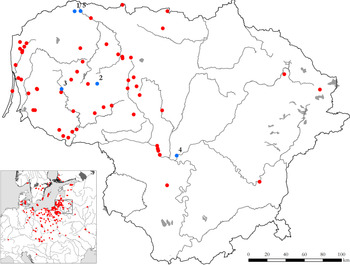
This article examines the technologies of manufacture of the well-known trans-regional Early Roman Iron Age type of jewelry, the so-called eye fibulae, which in the 1st and 2nd centuries were widespread in the vast areas of central and northeastern Europe, including Lithuania (Michelbertas Reference Michelbertas1997; Pfeiffer-Frohnert Reference Pfeiffer-Frohnert1998; Andrzejowski and Cieśliński Reference Andrzejowski and Cieśliński2007; Chilińska-Früboes Reference Chilińska-Früboes2017; Bliujienė et al. Reference Bliujienė, Petrauskas, Bagdzevičienė, Suzdalev and Babenskas2020). Eye fibulae were common objects of adornment to the Baltic people living between the Pasłęka and Daugava (western Dvina) rivers (Figure 1). These simple jewelry items were also spread around the Baltic Sea and commonly used by people living in the Baltic Sea islands (Öland, Bornholm, and Gotland).
Locations of eye fibulae found in Lithuania (sites mentioned in the text are indicated in blue): 1—Kukiai (Petreliai) (Mažeikiai dist.); 2—Paalksniai (Kelmė dist.); 3—Paragaudis (Šilalė dist.); 4—Sargėnai (Kaunas city); 5—Zastaučiai (Mažeikiai dist.). After Michelbertas (Reference Michelbertas1997), Pfeiffer-Frohnert (Reference Pfeiffer-Frohnert1998), and Bliujienė et al. (Reference Bliujienė, Petrauskas, Bagdzevičienė, Suzdalev and Babenskas2020). Drawing by Gediminas Petrauskas. (Please see electronic version for color figures).

Eye fibulae were born on the periphery between the antique and barbarian worlds—in the northern provinces of the Roman Empire, most likely as an amalgamation of the antique and Germanic cultural traditions. Eye fibulae are known from the available archaeological evidence from civilian settlements (vici) and frontier military forts in the northern provinces of the Roman Empire bordering on the river Rhine, dated to the beginning of the 1st century. Their use spread greatly through the reign of the Flavian dynasty (69–96 AD) and up until the rule of Trajan (98–117 AD) (Voß Reference Voß2008; Steidl Reference Steidl2013; Pauli Reference Pauli2019). Approximately at the same time eye fibulae were common in the Central European Barbaricum. In Lithuania eye fibulae became common in the middle—second half of 1st c. AD and disappeared at the end of 2nd c. AD once all the possibilities for developing their design, manufacturing techniques and ornament had been exhausted (Michelbertas Reference Michelbertas1986; Bliujienė et al. Reference Bliujienė, Petrauskas, Bagdzevičienė, Suzdalev and Babenskas2020).
The issues related to the typology, chronology, and distribution of these adornments have been extensively studied since the end of 19th century. The typology and chronology of eye fibulae are defined on the basis of the universally accepted Oscar Almgren’s classification (Reference Almgren1923). According to this classification, eye fibulae are attributed to group III. In Almgren’s typology fibulae, types A45–53 are classified as eye fibulae of the main series, while types A57–61 fall under the so-called Prussian series (Almgren Reference Almgren1923, Tafel III, Karte II). According to the recent studies, to date in Lithuania, a total of 209 eye fibulae from 62 sites are known. Prussian series account for the largest number or 77.0% of all eye fibulae found in Lithuania, with eye fibulae of types A60 and A61 being the most common among them. On the one hand, eye fibulae are trans-regional type of jewelry. The time of their appearance in Lithuania coincides with the onset of the Early Roman Period, while their disappearance coincides with the end of this period. On the other hand, due to development of eye fibulae manufacturing technologies, the construction of the fastening of some eye fibulae acquired characteristics typical of crossbow fibulae (Andrzejowski and Cieśliński Reference Andrzejowski and Cieśliński2007).
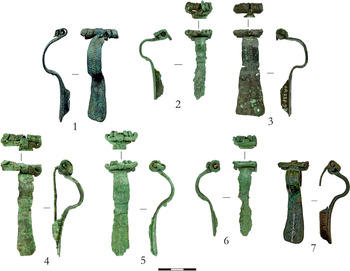
This article presents, based on the examination of eye fibulae of types A57–61 found in Kukiai (Petreliai) and Zastaučiai (both Mažeikiai dist.), Paalksniai (Kelmė dist.), Paragaudis (Šilalė dist.), and Sargėnai (Kaunas city) burial sites, the previously unknown specific features of eye fibulae manufacture, i.e. the use of wooden axes to modify the construction of the fibula and make it more durable and long lasting as well as using forging and casting techniques to craft the fibulae (Figure 2). By conducting morphological analysis, the species of wood used for making the axes were identified and the constructional need for the axis, due to simplification of the shape of the fibulae and change in their proportions, was experimentally confirmed. The wood in the four of the eight remaining fibulae was dated by means of 14C analysis. Due to possible doubts that may arise, 14C dating was applied only to the surviving bone remains of two humans from Paragaudis barrow cemetery. Regrettably, out of 65 graves found and 40 barrows investigated in this barrow cemetery, human bone fragments survived only in two barrows. The X-ray fluorescence spectrometry (XRF) analyses performed on the elemental composition of the copper alloys used in eye fibulae make it possible to classify the copper alloys into groups according to the alloying elements and determine their link with the manufacturing technologies and copper alloys that were common at that time in central and northeastern Europe.
Eye fibulae with wooden axis inserted in the spiral: 1—Kukiai (Petreliai), stray find (MM 4220); 2—Paragaudis, barrow 6, grave 1 (LNM AR 721:20); 3—Paragaudis, barrow 7, grave 2 (LNM AR 721:27); 4—Paragaudis, barrow 37, grave 3 (LNM AR 721:45); 5—Paragaudis, barrow 36, grave 1 (LNM AR 721:93); 6—Paragaudis, barrow 40, grave 1 (LNM AR 721:98); 7—Sargėnai, grave 139 (VDKM AR 1780:10). Photos by Audronė Bliujienė and Gediminas Petrauskas.

MATERIALS AND METHODS
Wood Sampling and Species Determination
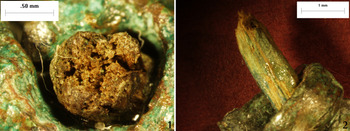
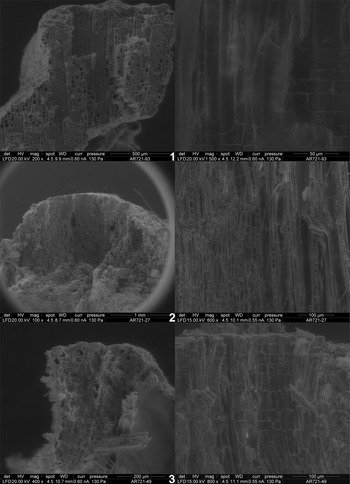
Wood species were determined for the wooden axes—sticks—that were inserted into the springs of eye fibulae (Figure 3). Being surrounded by copper alloy spring, some of the wooden sticks could survive due to mineralization and biocidal properties of the copper alloy as well as specific microclimate conditions in the grave (Cronyn Reference Cronyn1990; Gillard et al. Reference Gillard, Hardman, Thomas and Watkinson1994; Stelzner and Million Reference Stelzner and Million2015). The process of mineralization is known to help preserve fiber morphology and it was therefore decided to resort to analysis of wood anatomical features in order to determine wood species. Only small fragments of the wooden sticks were carefully removed from each eye fibula using needles, leaving the larger portion of the sticks untouched so as to keep fibulae structure intact. Wood fragments were broken to obtain transverse, radial and tangential sections. Microscopic analysis of wood species was performed with the scanning electron microscope Quanta FEG-250. Wood anatomical features were identified with reference to wood anatomy atlases (Schoch et al. Reference Schoch, Heller, Schweingruber and Kienast2004; Wheeler Reference Wheeler2011).
Wooden axis inserted in the spiral of the eye fibulae from Paragaudis: 1—barrow 6, grave 1; 2—barrow 37. For the wood taxa see Table 1. Photos by Tomas Rimkus.

Radiocarbon (14C) Pretreatment and Measurements
Wood and small fragments of human occipital bone and mandible or maxilla were dated at the Mass Spectrometry Laboratory of the Centre for Physical Sciences and Technology in Vilnius. Chemical preparation of wood samples was performed using the base-acid–base-acid-bleaching method (Němec et al. Reference Němec, Wacker, Hajdas and Gäggeler2010). In brief, the samples were treated with 4% NaOH overnight, followed by sequential treatments with 4% HCl and 4% NaOH for 1 hr each; then samples were bleached for 30 min using 5% NaClO2 and 2 drops of 4% HCl. Bone collagen was extracted using an acid-alkali-acid procedure followed by gelatinization (Molnár et al. Reference Molnár, Janovics, Major, Orsovszki, Gönczi, Veres, Leonard, Castle, Lange, Wacker, Hajdas and Jull2013). Samples were treated with 0.5M hydrochloric acid (∼18 hr), 0.1M sodium hydroxide (30 min), and 0.5M hydrochloric acid (1 hr). Bone collagen was gelatinized in pH 3 solution at 70°C for 20 hr. The resulting gelatin solution was filtered using a cleaned Ezee-filter and freeze-dried. Graphitization of the samples was performed using Automated Graphitization Equipment AGE-3 (IonPlus AG). 14C concentration was measured with a single stage accelerator mass spectrometer (SSAMS, NEC, USA). Typical SSAMS system parameters can be found in the paper by Ežerinskis et al. (Reference Ežerinskis, Šapolaitė, Pabedinskas, Juodis, Garbaras, Maceika, Druteikienė, Lukauskas and Remeikis2018). All dates were calibrated with OxCal v4.4.2 (Bronk Ramsey Reference Bronk Ramsey2020), atmospheric data from Reimer et al. (Reference Reimer, Austin, Bard, Bayliss, Blackwell, Bronk Ramsey, Butzin, Cheng, Edwards, Friedrich, Grootes, Guilderson, Hajdas, Heaton, Hogg, Hughen, Kromer, Manning, Muscheler, Palmer, Pearson, van der Plicht, Reimer, Richards, Scott, Southon, Turney, Wacker, Adolphi, Büntgen, Capano, Fahrni, Fogtmann-Schulz, Friedrich, Köhler, Kudsk, Miyake, Olsen, Reinig, Sakamoto, Sookdeo and Talamo2020). FTMC-ZM42-5 sample date was not estimated due to small amount of carbon in the sample for AMS measurements.
X-Ray Fluorescence Analysis
The analysis of copper alloys has been carried out on the artifact surface by portative and stationary XRF devices. This well-known technique of non-destructive surface analysis of objects has already been widely used for several decades (Lutz and Pernicka Reference Lutz and Pernicka1996; Bayley and Butcher Reference Bayley and Butcher2004: 14–22; Voß Reference Voß2016; Pollard et al. Reference Pollard, Bray, Cuénod, Hommel, Hsu, Liu, Perucchetti, Pouncett and Saunders2018: 63–64, Table 1). Elemental copper alloy composition analysis of Paragaudis artifacts was conducted at the Marine Research Institute of Klaipėda University using energy dispersive X-ray fluorescence (EDXRF) method. Artifacts were analyzed by means of a benchtop EDXRF spectrometer Spectro Xepos HE (Kleve, Germany, using the FP alloy F(A) calibration procedure elaborated by manufacturers) so as to determine the contents of Al, As, Au, Bi, Br, Ca, Cd, Co, Cr, Cu, Fe, Ga, Ge, Hf, In, Mg, Mn, Mo, Nb, Ni, P, Pb, Pt, S, Sb, Se, Si, Sn, Ta, Te, Ti, Tl, V, W, Zn, and Zr. The main technical specifications of Xepos HE are as follows: power up to 50 W; electric voltage up to 60 kV; HAPG polarizer for improved sensitivity of elements in the range Na-Cl; bandpass filter for improved performance for elements in the range K-Mn; SDD with Peltier cooling; large detector area (30 mm2, active area 20 mm2); spectral resolution (FWHM) ≤ 130 eV for Mn K-alpha; input count rate up to 1,000,000 counts per second; detector filter changer for active pile-up reduction. Each object was measured in at least two spots; the measuring time was 5–6 min. The examined spots were numbered and photographed.
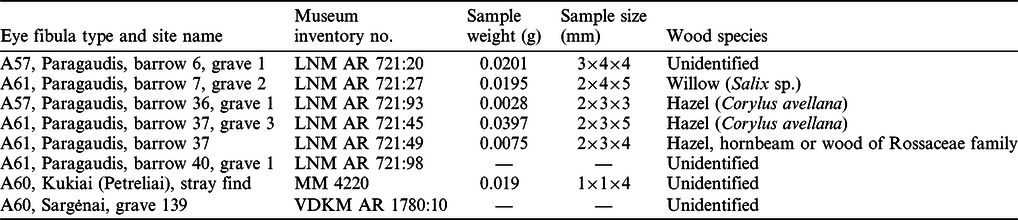
Wooden axes samples removed from the eye fibulae spirals, found in Paragaudis, Kukiai (Petreliai) and Sargėnai cemeteries. LNM—National Museum of Lithuania; MM—Mažeikiai Museum; VDKM—Vytautas the Great War Museum. Wood species identified by Kęstutis Peseckas.

The analysis of eye fibulae found in Kukiai (Petreliai), Zastaučiai, Paalksniai and Sargėnai cemeteries were carried out by means of a portable XRF spectrometer Niton XL3t (power 2 W, voltage—50kV, detector area ∼50 mm2, producer Thermo Fisher calibration mode “General Metals”). Each find was irradiated (for 30 s) in at least two spots for two or three times. The measuring spot has been selected according to the geometry of the artifact and its separate parts, which could be made of a different alloy (Bayley and Butcher Reference Bayley and Butcher2004: 21–25; Roxburgh Reference Roxburgh, Heeren, Huisman and Van Os2016; Roxburgh and Olli Reference Roxburgh and Olli2018).
Copper alloys are characterized by their principal alloying elements (Zn, Sn, and Pb) and the presence of small amounts of the main added elements. Therefore, due to various reasons (recycling, possibility to distinguish brass produced by cementation from brass produced by the direct addition of metallic zinc or, lastly, due to the possibility to define the place of origin of the metal ore) only 15 following elements were included into analysis: Cu, Zn, Sn, Pb, Fe, Ni, Ag, Sb, As, Au, Co, Bi, Mn, Cr, and Cd (Heginbotham et al. Reference Heginbotham, Bassett, Bourgarit, Eveleigh, Glinsman, Hook, Smith, Speakman, Shugar and Van Langh2015). Other elements detected on the surface of the artifacts with a high sensitivity Spectro Xepos HE spectrometer, such as S, Al, P, S, Si, Ca, and V, were the result of contamination from the burial environment and, therefore, not included in the table. Moreover, Si, Al, P, and Mn are encountered only in the modern copper alloys (Heginbotham et al. Reference Heginbotham, Bassett, Bourgarit, Eveleigh, Glinsman, Hook, Smith, Speakman, Shugar and Van Langh2015).
In the present investigations, use has been made of a set of Certified Reference Materials (CRMs), the so-called Cultural Heritage Alloy Reference Material Set (CHARM), originally designed for the analysis of ancient copper alloys, as well as other standard metal reference materials. The CRMs provide the possibility to systematically interlink the analytical results of any study (Pernicka Reference Pernicka1998, Reference Pernicka1999; Craddock and Eckstein Reference Craddock and Eckstein2003; Heginbotham et al. Reference Heginbotham, Bassett, Bourgarit, Eveleigh, Glinsman, Hook, Smith, Speakman, Shugar and Van Langh2015).
The results of the analysis of only Cu, Zn, Sn, Pb, Fe, and Sb were applied in order to compare the composition of all alloys tested by both equipment. The quality of their analysis, corresponding to the sequence of elements listed, can be described by the following MRE values, %: 0.1, 0.3, 1.2, 2.6, 1.2, and 4.3. In order to compare the findings using the amounts of elements determined by both methods, the amounts of Cu, Zn, Sn, Pb, Fe, and Sb were normalized to 100%. This mathematical procedure for processing of the results and proposing principal conversion formulas is recommended by Pollard et al. (Reference Pollard, Bray, Cuénod, Hommel, Hsu, Liu, Perucchetti, Pouncett and Saunders2018: 181–183).
Technological Analysis
The manufacturing techniques and ornamentation of eye fibulae were defined through a visual examination of the artifacts in museums and by photographing with a digital microscope (Q-scope 9.0 MP, 200×). During this survey, the specific manufacturing features and repairs, as well as surface treatment techniques and methods of ornamentation were determined. A detailed visual examination of eye fibulae revealed that the springs of some fibulae contained sticks that looked old in appearance and were difficult to see through the tightly coiled fibulae springs. Thus, a question arose as to what were the reasons for inserting the wooden sticks into fibulae springs. In order to understand eye fibulae manufacturing technologies and the function of the wooden sticks, as an experiment, we made two fibulae of type A61—one by forging from a solid copper alloy piece and the other by lost-wax or cire-perdue casting in a single mould. Both methods have been widely described by different authors and were used for producing different jewelry (Podėnas and Babenskas Reference Podėnas and Babenskas2017; Luchtanas et al. Reference Luchtanas, Podėnas and Babenskas2019; Pauli Reference Pauli2019). Then both thus produced fibulae were fitted with wooden axes. As a result, the fastening of such fibulae became more “springy,” making them easier to pin on clothing and then unpin again.
RESULTS
This study has shown that even small fragments of wood can be used in the analysis of anatomical features and identification of wood species. The results of wood analysis are presented in Table 1 and Figure 4. In three cases out of seven, wood could be identified to species or genus level. In two cases, the wood was identified as hazel (Corylus avellana) and in one case, as willow (Salix sp.). In one case, hazel, hornbeam or wood of Rosaceae family might have been used for making an eye fibula axis. Two more samples were identified as deciduous wood and one could not be identified because of its high fragmentation. The anatomical structure of the wood of the sample from Paragaudis barrow 6, grave 1 was strongly deteriorated and almost no anatomical features were visible in the transverse section of the wood, except several pores characteristic of deciduous species. In the radial section of this specimen possibly homogenous rays were observed. The wood fragments from Kukiai (Petreliai) cemetery were too thin for the observation and evaluation of wood anatomical structure.
Macro-photo of the wood taxa from Paragaudis: 1—fragments of the hazel (Corylus avellana), barrow 36, grave 1; 2—fragments of the willow (Salix sp.), barrow 7, grave 2; 3—fragments of the hazel, hornbeam or Rossaceae family wood, barrow 37. Photo by Kęstutis Peseckas.

Radiocarbon Dating
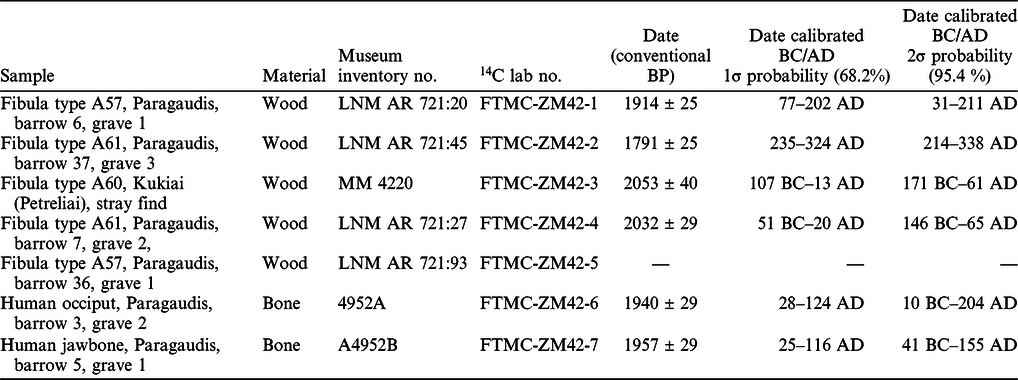
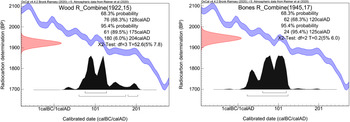
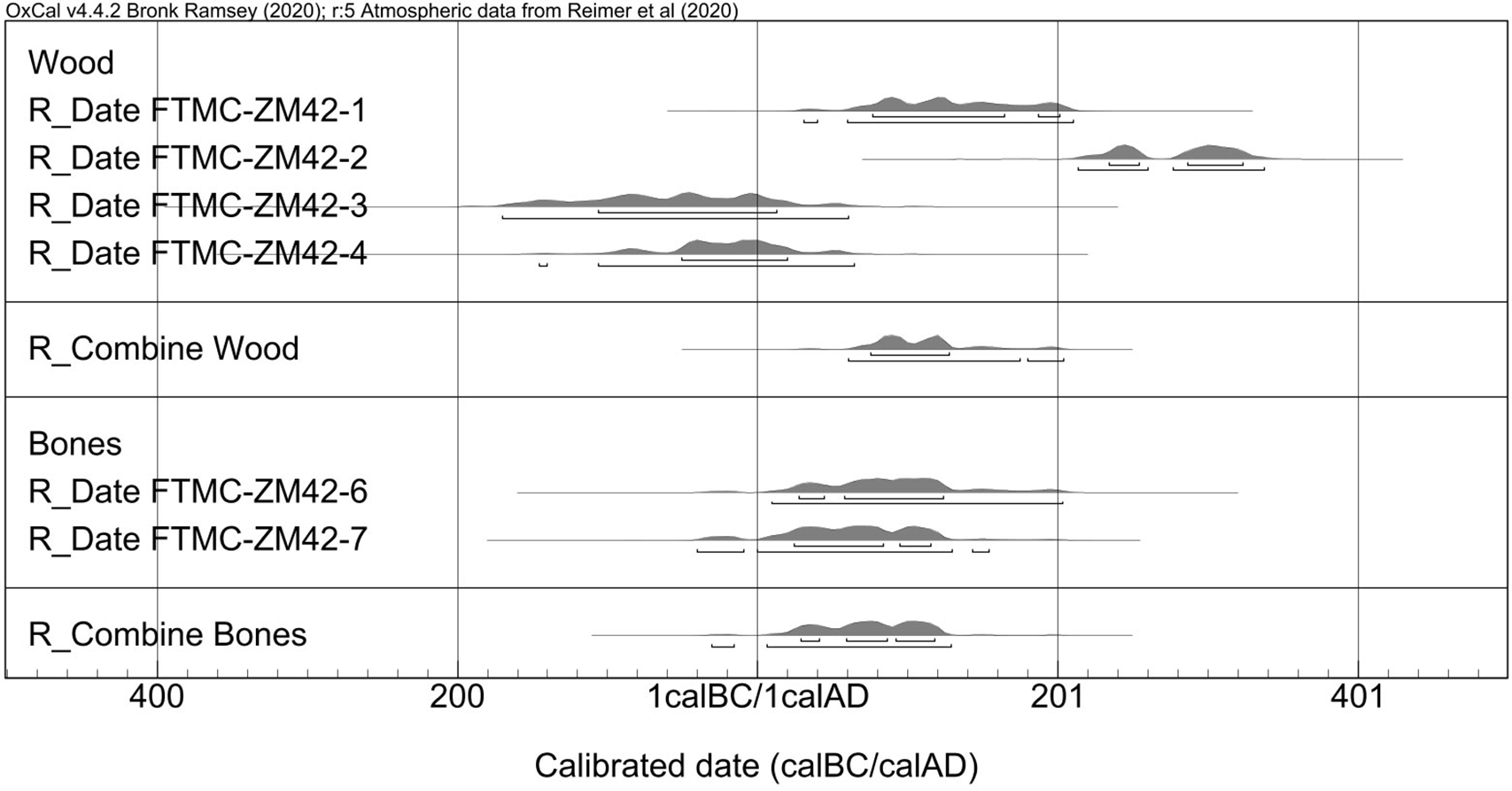
The results of 14C dating are presented in Table 2. 14C dating was applied to four wooden axes found in the springs of fibulae from Paragaudis barrow cemetery and Kukiai (Petreliai) cemetery. The 14C date of the wooden axis from Paragaudis barrow 36, grave 1 was not determined due to very small amount of wood (0.0028 g) and wood structure deterioration as well as due to intermixing with copper alloy corrosion products. The dates were calibrated using Combine OxCal online calibration tool with R Combine function, human bone date indicates a 95.4% confidence interval corresponding to 24–125 AD. The date of the wood lies between 61–175 AD, within the confidence interval of 89.5–95.4% (Table 2; Figures 5 and 6). In other words, the dates of the fibulae determined by means of 14C dating essentially correspond to the dates established using the typological method, i.e., they cover the initial stage of the Early Roman Period and go into the Late Roman Period. This chronology is confirmed by other material from Paragaudis barrow cemetery (Michelbertas Reference Michelbertas1997). The only exception is the 3rd–early 4th c. 14C date of the A61 type eye fibula from Paragaudis, barrow 37, grave 3. It was the only grave good found in the grave (Michelbertas Reference Michelbertas1997). However, the combined date for wood brings this eye fibula into the time when the eye motifs have been in use.
AMS 14C dates of wood and human bones found in Paragaudis and Kukiai (Petreliai). FTMC—Mass Spectrometry Laboratory of the Center for Physical Sciences and Technology, Vilnius; LNM—National Museum of Lithuania; MM—Mažeikiai Museum. Human bones are stored at the Faculty of Medicine of Vilnius University. Calibration according to OxCal v4.4.2 (Bronk Ramsey Reference Bronk Ramsey2020), atmospheric data from Reimer et al. (Reference Reimer, Austin, Bard, Bayliss, Blackwell, Bronk Ramsey, Butzin, Cheng, Edwards, Friedrich, Grootes, Guilderson, Hajdas, Heaton, Hogg, Hughen, Kromer, Manning, Muscheler, Palmer, Pearson, van der Plicht, Reimer, Richards, Scott, Southon, Turney, Wacker, Adolphi, Büntgen, Capano, Fahrni, Fogtmann-Schulz, Friedrich, Köhler, Kudsk, Miyake, Olsen, Reinig, Sakamoto, Sookdeo and Talamo2020).

AMS 14C dates of wood and human bones, part of the calibration curve and the calibrated probability density calculated with OxCal v4.4.2. For more information see Table 2.

Combine data of AMS 14C dates from wood samples and human bones. For more information on the samples see Table 2.

XRF Analysis
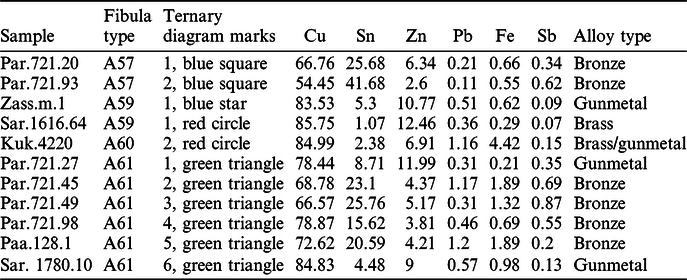
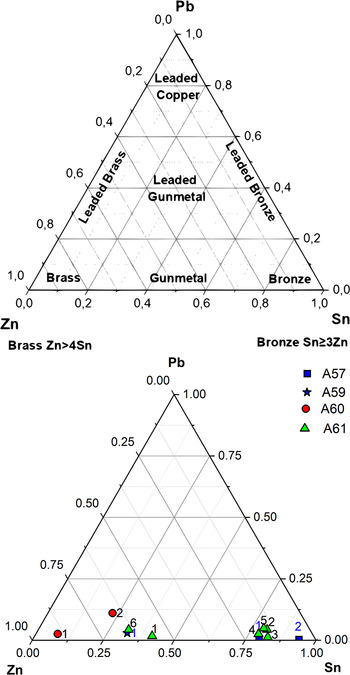
The obtained EDXRF results allow classification of alloys into copper alloy groups according to the alloying elements. Normalized quantities of base metals detected by XRF in eye fibulae findings are given in Table 3 and Figure 7. The results of the analysis clearly indicate that the alloys used for making northeastern European jewelry, including that from Lithuania, are very similar to the alloys that were widely used in Europe at that time (Bliujienė et al. Reference Bliujienė, Petrauskas, Bagdzevičienė, Suzdalev and Babenskas2020).
Normalized quantities of base metals detected by XRF in eye fibulae, found in Kukiai (Petreliai) (Kuk.), Paalksniai (Paa.), Paragaudis (Par.), Sargėnai (Sar.), and Zastaučiai (Zass.), %. Alloy types are given by definitions in Bayley and Butcher (Reference Bayley and Butcher2004: Table 5).

Ternary diagram displaying the XRF results as ratios of alloying elements in Prussian series eye fibulae. Diagram by Jurga Bagdzevičienė.

DISCUSSION
After examining over 170 eye fibulae kept in Lithuanian museums, we discovered that the springs of eight eye fibulae (of types A57–61) contained wooden sticks or “axes” (Table 1, Figures 2 and 3). Yet, in the small group of the main series fibulae excavated in Lithuania, no fibulae containing wooden axes from the Roman Period have been found. At the same time, since part of the fibulae are broken, during their preservation or while preparing them for exhibition, wooden axes were inserted into the surviving fibulae springs in order to join the broken pieces together into a single body. This was noticed when examining the typological characteristics of the said fibulae. This suggests that the wooden axes can be the result of the decision of the present-day restorers to join the fibula’s broken spring and fastening pin to its body (Chilińska-Früboes Reference Chilińska-Früboes2017). Two such fibulae with axes inserted by restorers were found while examining the archaeological collection of Sargėnai cemetery.
Eye fibulae with wooden axes were discovered in the graves of Kukiai (Petreliai), Paragaudis and Sargėnai burial sites. Graves in Sargėnai and Paragaudis sites contained the largest number of eye fibulae—44 and 39, respectively. Fibulae of this type are present in male, female, and child graves, but the largest number of them is found in graves with weapons. Therefore, these graves are interpreted as male graves (Bliujienė et al. Reference Bliujienė, Petrauskas, Bagdzevičienė, Suzdalev and Babenskas2020).
Though Sargėnai cemetery yielded the largest number of eye fibulae, only one eye fibulae that came from grave 139 contained the remains of a wooden axis that was permanently fixed inside its spring. In the case of fibula from grave 161, the “axis” is a thin copper alloy bar. The wooden axes survived only in fibulae with intact springs that were tightly wound around the sticks. It still remains unclear what portion or whether all of eye fibulae of the Prussian series contained wooden axes. To date, it is also unclear whether the said technological innovation—the wooden axis—was characteristic of the whole area of distribution of the jewelry under discussion or whether it was an invention of the Baltic people living between the Pasłęka and Daugava rivers. Though it is impossible to link the use of wood for fibulae axis to later times, it should be noted that wooden axes are found in the springs of bow fibulae of different types dating from the end of the Migration Period until the end of the Viking Age. In those times, however, the wooden axes of the fibulae were fitted with iron rods (Bliujienė Reference Bliujienė2015: Figure 22.3).
Be that as it may, the sticks made of deciduous species and measuring 3–5 mm in diameter were used for eye fibulae axes. Both hazel and willow wood is considered as flexible and relatively easy to work with. The close examination of the transverse section of analyzed samples suggests that the axes were carved out of solid pieces of wood rather than made of thin branches. This can be determined by observing tree ring curvature which is almost straight in most cases suggesting that the analyzed part is further from the wood core. This could have been done in order to increase the strength of the pin and reduce its flexibility. Wooden or copper alloy axes were introduced in order to ensure fibula’s longer life as a clothing fastener. The axis distributes the load between the fibula’s solid alloy body, the spring and the fastening pin, which is created during fastening or unfastening of the fibula. Due to specific manufacturing features the fastening pin is always positioned on the side of the fibula. Thus, the heaviest load occurs on one part of the spring. Fibulae with wooden axes present inside their springs were not broken because the axes fulfilled their function completely, thus preventing the breakage of the fibulae. Eye fibulae of types A57–61 found in Lithuania have characteristic damage signs. Fibulae parts that are most often broken include the spring or its part, fastening pin or its part or part of the spring and fastening pin. Such breakages are typical of all Prussian series fibulae excavated both in Lithuania and in the areas inhabited by Baltic and Germanic tribes as well as in the capital of Roman Raetia province Augusta Vindelicorum (Augsburg) and Roman site of Augusta Raurica (near Basel in Switzerland) (Riha Reference Riha1979; Pauli Reference Pauli2019). In Augsburg, 63 fibulae and 195 broken fragments of different eye fibulae were discovered (Pauli Reference Pauli2019).
Since Paragaudis barrow cemetery is a typical burial site of mid-1st and 2nd c., the chronology of eye fibulae per se does not warrant discussion. However, 14C dating was applied both to the wood axes and skull remains of two individuals. The resulting 14C dates coincide with the period when eye fibulae were used (Table 2; Figures 5 and 6). Kukiai (Petreliai) cemetery is a typical Migration and Early Medieval Period burial site where, as suggested by a single Early Roman type A60 eye fibulae recovered, graves dated to mid-1st and 2nd c. could be present. The obtained relatively early date of wood does not eliminate an idea that the old wood effect may have aged the 14C date by 200 years and more (cf. Bowman Reference Bowman1990); nevertheless, the combined date for wood lies between 61–175 AD.
EDXRF analysis shows that investigated eye fibulae of the Prussian series were manufactured of alloys of different composition, such as brass, brass/gunmetal, gunmetal, and bronze (Table 3; Figure 7), which are likely to have resulted from recycling of different copper alloys (cf. Pollard et al. Reference Pollard, Bray, Gosden, Wilson and Hamerow2015; Roxburgh and Olli Reference Roxburgh and Olli2018). It is important to note that the elemental alloy composition of the second half 1st and 2nd c. eye fibulae found in Lithuania, in general, corresponds to that of the copper alloys used in northern Roman provinces, central and northeastern Europe (cf. Pietrzak Reference Pietrzak1997; Andrzejowski Reference Andrzejowski1998; Gan Reference Gan2015; Pauli Reference Pauli2019). Also, it should be mentioned that the zinc content in Roman brass (auricalcum) was around 17–21%, and it seems that craftsmen could then add further alloying elements, such as tin or lead, when they wished to change the properties or the appearance of the alloy (Jouttijärvi Reference Jouttijärvi2009, Reference Jouttijärvi2017). However, during the 1st and 2nd centuries and later in the Roman Empire and Barbaricum, the zinc content in copper alloys was steadily declining and alloy composition was changing over time due to different reasons (cf. Dungworth Reference Dungworth1997: 907; Pollard et al. Reference Pollard, Bray, Gosden, Wilson and Hamerow2015: 700–706). Another reason for zinc decline is attributable to recycling of copper alloys, which gained momentum already in the Early Roman Period, thereby gunmetal with different percentages of Zn, Pb and Sn was becoming more common (Bayley and Butcher Reference Bayley and Butcher2004; Pollard et al. Reference Pollard, Bray, Gosden, Wilson and Hamerow2015; Roxburgh et al. Reference Roxburgh, Heeren, Huisman and Van Os2016). This trend has also been observed in the composition of the Lithuanian copper alloys analyzed through spectrometric analysis carried out in the last decades (Simniškytė Reference Simniškytė2002; Bliujienė et al. Reference Bliujienė, Petrauskas, Bagdzevičienė, Suzdalev and Babenskas2020).
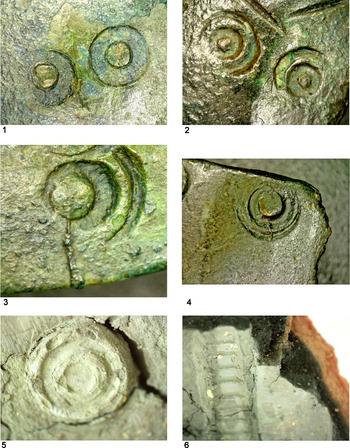
In Lithuania, as well as in the territories inhabited by Germanic tribes, eye fibulae were made by forging a single copper alloy sheet (Pauli Reference Pauli2019). The proof of this fact has been obtained by examining the technology of their manufacture: the back side of the fibula’s body as well as its pin often bear unsmoothed hammer marks. Moreover, the bodies of forged fibulae are typically coarsely modelled (bend of the bow, section of the feet), the pin catch is often forged askew, sometimes with a deep visible triangular crack (Figure 2: 1, 7). In fact, cracks on eye fibulae catch plates were detected not only in some fibulae found in Lithuania, but also in fibulae uncovered in Augsburg (Pauli Reference Pauli2019). Though the feet of fibulae types A57–61 still bear two or three pairs of eyes arranged in a mirror-image fashion, they also feature a rarely encountered triangular engraving. The fibulae bows are adorned with a very irregular vertical ornament (Figures 2: 5, 7 and 8: 1, 2). The results of technological investigations show that more often locally produced eye fibulae of A60 and A61 types are forged (Figure 2: 1, 3, 4, 7).
At the same time eye fibulae might have been cast in a single mould using lost-wax or cire-perdue technology. Evidence of the casting process of eye fibulae of types A57–61 was obtained by observing the surface of the fibulae with a digital microscope. Firstly, it should be mentioned that the bows of the fibulae are often somewhat roughly shaped, with stamping or polishing marks left on the inside. Secondly, the observation detected marks, which had been made during the casting when the mould cracked in the most vulnerable places while drying and/or during the casting process (Figure 8: 3, 4). As a result, the microscopic copper alloy masses trickle down on the surface of the object being cast and can be seen. Such microscopic copper alloy leaks were detected during experimental casting of fibulae. The resulting cracks are clearly visible on the wax model imprint left in the experimental clay mould (Figure 8: 5, 6).
Motifs of the Prussian series eye fibulae: 1, 2—stamped eyes (Sargėnai, graves 76 and 139; VDKM AR 1616:63; VDKM AR 1780:10); 3, 4—cast eyes (Zastaučiai, barrow 2 and Paalksniai, barrow 6, grave 1; MM; LNM GRD 68594); 5, 6—cracks visible on the experimental wax model imprint. Enlarged 50×. Photo by Evaldas Babenskas.

The comparison of both methods of eye fibulae manufacture, i.e., forging and casting, suggests that the casting process was not unreasonable in terms of time and ancillary resources used (such as wax used for the model and clay for the casting mould, clay crucibles, wood charcoal and bellows used for reaching the melting point temperatures of 600–700ºC for brass and 900–1100ºC for bronze) and, also, in terms of more complex manufacturing technologies employed. During the melting of copper alloy required for making an eye fibula in an open mould a certain amount of the alloying element zinc is lost. Some loss of zinc also occurs as zinc is deposited on the inner surface of the casting mould. The loss of zinc in the lost-wax casting amounts to several percent. In our experiment, the percentage of zinc deposited on the surface of eye fibulae casting mould was up to 3.8%. Also, microscopic pieces of the alloy were visible on the mould surface (Figure 8: 5, 6).
This study indirectly confirms the fact that the percentage of zinc content in copper alloys decreases with each subsequent remelting. Therefore, already in the Early Roman Period, the casting technique, which was better suited to working brass type alloys, was becoming more widespread. This fact is supported by the complex manufacturing technology used in neck-rings with hollow trumpet-shaped terminals, which were produced from malleable brass sheets (cf. Bliujienė et al. Reference Bliujienė, Petrauskas, Bagdzevičienė, Suzdalev and Babenskas2020). Regarding the use of several manufacturing techniques, these neck-rings are the most complex jewelry items ever found in the territory inhabited by the Balts whose settlements were situated between the Pasłęka and Daugava (western Dvina) rivers. However, due to gradual spread of copper alloys of bronze, alloy castings naturally became more widespread.
CONCLUSIONS
Eye fibulae of the main and Prussian series enjoyed wide distribution in Lithuania as well as other central and northeastern European regions in the 1st and 2nd c. The prevailing type of fibulae in Lithuania and the Eastern Baltic region are the Prussian series eye fibulae. In order to make the fibulae more durable and long lasting, craftsmen fitted them with wooden axes (made of hazel, hornbeam, or other wood species), thereby modifying the construction of the fibulae. The eye fibulae are one-piece jewelry artifacts produced using two manufacturing techniques—forging from a solid copper alloy piece or single-mould casting using lost-wax or cire-perdue technology. Both production technologies need to have inserted wooden axes into fibulae springs.
14C dating has unambiguously confirmed that the wooden axes are contemporaneous with the time of the use of the fibulae. The results of the XRF analysis of eye fibulae indicate that these fibulae were made of copper alloys which fall under intermediate/marginal groups, e.g., brass, gunmetal, and bronze, which are likely to have resulted from recycling of copper alloys of different composition.
ACKNOWLEDGMENTS
This study was supported by the Research Council of Lithuania under grant number S-MIP-19-50. We are grateful to the National Museum of Lithuania, Lithuanian National Art Museum, Vytautas the Great War Museum and Mažeikiai Museum for the access to the artifacts used in our study.